Chilean-born Francisco Allendes returns to Crosstown Rebels for the first time in six years this May. Serving up the three-track What You Do, the title number has already received global airplay via Damian Lazarus himself. Now, the full release will be made available next month and includes a remix by US-legend Harry Romero.
A contemporary dose of four-on-the-floor house, What You Do leaves few prisoners in its wake, as rampant drum patterns converge on a heady combination of kicks, synths and irresistible vocals right the way through. There’s an infectious energy to the track, paving the way for Harry Romero’s similarly up-tempo remix. It’s feel-good, club-ready dance music at its best, packed full of low-slung groove that opens neatly into the closing sequence: Maratone, a stripped-back, techy cut that bears all the hallmarks of a true Ibiza anthem.
Hailing from Chile and now based in Ibiza, Francisco Allendes is a leading light in today’s scene. Be it Loco Dice’s Desolat, Steve Lawler’s VIVA or Damian Lazarus’ Crosstown Rebels, his productions have graced some of the industry’s most well-respected labels. Such quality hasn’t gone unnoticed - he picked up the ‘Best Ibiza’ DJ Award in September 2019 and has gone on to complete several South American tours. A much loved affiliate of ANTS, Francisco has a long standing residency at both Ushuaïa in Ibiza and their affiliated tours, in addition to hosting the weekly radio show.
Seminal American house talent Harry Romero is a well-established figure on the worldwide music circuit. A prominent global DJ and producer since the ‘90s, early productions on Cutting Records and Cutting Traxx helped set the tone for Harry’s career trajectory, opening the doors to a coveted BBC Radio 1 ‘Essential Mix’ in recent years.
Suche:neat
Enzo Siragusa rounds off another incredible summer with a highly anticipated project, a collaborative FUSE EP with Martin Buttrich. Striking a perfect balance between Enzo's UK rave roots and Martin's matured finesse, the 'Three Squared' EP nestles neatly within FUSE's distinct sonic palette.
Part of the FUSE family from the very beginning and held in high regard by Enzo, the two solidified their watertight bond via the line ups and studio sessions they have enjoyed together over the years, a bond that shines throughout this release.
When Enzo produces music for his label he always has the FUSE dancefloor in mind, aiming to create those immersive experiences for the crowd that he had as a youngster, across many London raves in the mid 90's.
The 'Three Squared' EP deftly encapsulates this approach, from 'Dangerman', a track that melds Jungle's original elements with the sound of today's house scene, via 'Lifted Spirits' adorned with touches of old school Martin Buttrich, to the darker and engulfing 'Apache', a vinyl only exclusive for the wax heads.
This release also marks FUSE's largest London collaboration to date, as they take over Tobacco Dock's Car Park, where these tracks will be doing some serious damage. At this point the two collaborators will meet again, as Enzo invites Martin to play a live set.
finally repressed !
After a lengthy break Mark Henning returns with his new label Swing and four on-point tracks. 'Stash House' kicks things off with a crisply produced groove with snatched male vocals and rounded bass keeping the swing high. 'Exit Acid' ups the energy levels with an acidic tinged b-line proving a grimier feel whilst flip side's 'James Hughes Blues' is all about the breakdown; a neat synth line and huge bass tones lending it a more anthemic edge. Lastly 'The Horror' opts for a lower key ride, fuller male vocal imbuing the track with a sleazier feeling.
New York's P-Sol lands again on their small but already well-formed PS7 label with a pair of smartly crafted and soul-soaked cuts. 'Fat Beatty' comes first and glides in on silky, neo-soul style deep hip-hop with an easy, late-night warmth topped by a few bars of neat rhyming. On the flip is something more playful and funky with jazzy keys dancing over the languid rhythms. 'Legend' features some familiar gravelly but emotive tones as well as some other smart samples from the hip-hop world. Smooth yet substantial, this is P-Sol at his most relaxed and refined.
- A1: Turkish Cotton
- A2: 89 Earthquake
- A3: Solid Plan (Feat. Action Bronson)
- A4: Palisades, Ca (Feat.big Sean)
- B1: Summer Reign (Feat. Ty Dolla $Ign)
- B2: Orange Village (Feat. Slum Village)
- B3: Porsches In Spanish
- B4: Art Talk (Feat. Boldy James)
- C1: Ocean Sounds
- C2: Left No Evidence (Feat. Evidence)
- C3: What Happened To The World? (Feat. Wiz Khalifa)
- C4: Éxito (Feat. Jay Worthy)
- D1: 60 Days
- D2: Barragán Lighting (Feat. Joey Bada$$ & Curren$Y)
- D3: Margie's Candy House
The Great Escape is the debut collaborative album from San Francisco Legend, Larry June & prolific super producer, The Alchemist. Through a process that felt very organic, the two churned out an extra healthy amount of music that resulted in what may be their magnum opus. At 15 tracks, the album includes tasteful features from some of Hip-Hop's most celebrated figures; Action Bronson, Big Sean, Ty Dolla $ign, Slum Village, Boldy James, Evidence, Wiz Khalifa, Jay Worthy, Curren$y & Joey Bada$$. Like a fine wine, sit back, let it breathe, and enjoy the neat yet exquisitely rich complexities of two of Hip-Hop’s smoothest figures.
Grady Steele (Formant Soundsystem) debuts on FELT with the tender spectre of Nausea, poignant patterns captured through the dusk-hued window pane.
Co-founder of the Formant Soundsystem, a travelling rig that’s powered forward-thinking dances in London and Paris, Grady Steele has championed both experimental and club music at the cutting edge. Concurrently to this, he debuted his own productions back in 2024 for Archaic Vaults. Uniquely intimate, his music shone lowkey and warm with an assured glow. It’s no surprise then to find his inimitable sounds land neatly on Fergus Jones’ FELT imprint.
Nausea extends across seven movements, narrating sentimental parallels of familiarity. Grady posits concentrated pangs of post-rave nostalgia with rich melodic sustenance, a vivid introspection tempered with field recordings and live instrumentation. Strummed guitars and aching pads move purposefully with the suspended pace, an immersive beatless vista from its opening quiet moments through to the guttural noise-laden finale. It’s a brief, beautiful collection from Grady Steele and another string to FELT’s unpredictable bow.
Written, recorded and produced by Grady Steele
Mastered by Miles Whittaker
Cover photo by Alex Kurunis
In the spring of 1971, somewhere between Brussels, Paris and a collective pop fever dream, Le Monde Fabuleux Des Yamasuki landed on vinyl. It sounded like nothing else then and it still does not today. More than half a century later, Sdban Records proudly presents a reissue of this singular cult album, available from April 3, 2026 on vinyl.
The album was produced by Jean Kluger and written both by Jean and Daniel Vangarde (aka Bangalter, later the father of Thomas Bangalter of Daft Punk), who were alreadywell ahead of their time, long before electronic music rewrote the rules of pop culture.
Released under the name Yamasuki, also referred to as The Yamasuki Singers, or The Yamasuki's, the project was never intended as a conventional band. It was a studio-born fantasy, a concept album disguised as a pop record. What began as a standalone single quickly expanded into a full-blown pan-cultural pop opera that ignored genres and common sense with joyful abandon.
Musically, the album sits at a delirious crossroads. Psychedelic pop collides with funk rhythms, samba and bubblegum melodies, full of chants and choruses in a phonetic pseudo-Japanese, written with the help of a dictionary. Kluger and Vangarde famously recruited a children's choir to perform the vocals, and for added spectacle, they brought in a Japanese judo grandmaster, whose ritualistic shouts and battle cries erupt throughout the record.
Several singles were released. One of them, Yamasuki, with accompanying dance move, appeared in the United Kingdom and France on John Peel's Dandelion label, a fitting home for a record that thrived on the margins of pop culture. Its B-side, Aieaoa, proved even more potent. In 1975, the song was reborn as A.I.E. (A Mwana) by Black Blood, an African group recording in Belgium, this time sung in Swahili. That melody would travel even further. Aie a Mwana became the debut single of English pop group Bananarama, and in 2010 it resurfaced once more as Helele, an official song of the FIFA World Cup, recorded by South African singer Velile Mchunu with Danish percussion duo Safri Duo. That version became the most widely known incarnation of the song. With Jean Kluger directly involved, it was less a cover than a continuation of the original idea.
The album's afterlife did not stop there. Over the years, Yamasuki has been quietly sampled, covered, and featured across media far beyond the realm of novelty pop. Kono Samourai was sampled in The Healer by Erykah Badu (2007), produced by Madlib, while Yama Yama has found its way into recent pop culture as well: appearing in the television series Fargo, on Angus Stone's project Dope Lemon, and on the 2008 Late Night Tales compilation curated by Arctic Monkeys drummer Matt Helders. Proof, if any were needed, that this strange little record carries a deeper musical DNA than its playful exterior might suggest.
This new reissue of Le Monde Fabuleux Des Yamasuki proves the renewed interest and respect for this cult album, faithful to the original spirit while finally giving it back the physical presence it deserves. In an era obsessed with genres and algorithmic neatness, Yamasuki still laughs, dances and karate-kicks its way past definitions. It reminds us that pop music can be playful without being disposable, strange without being cynical and joyfulwithout explanation. The world of Yamasuki was always fabulous, we are just lucky it found its way back to us!
- A1: Holiday
- A2: Kwajilori
- B1: I Am Your Mind (Part 2)
- B2: I Like The Way You Do It To Me
- C1: Third Time
- C2: Touch Of Class
- D1: Release Yourself
- D2: Come To Me
- E1: Wide Open
- E2: Funk In The Hole
- F1: Liquid Love
- F2: Tarzan
- F3: Sunshine (Demo)
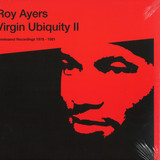
BBE Music announces the first repress of the classic Roy Ayers albums ‘Virgin Ubiquity’ 1 and 2 since 2006, on luxurious 180g vinyl with brand new sleeve notes written by Sean P. The music on 'Virgin Ubiquity' was selected and mixed down from previously unreleased multi-tracks recorded between 1976 & 1981, which Roy had in storage. It's all unmistakably Ayers, but is diverse and fresh enough to be more than a mere adjunct to one of his most productive and popular periods - testament to his and his musicians' creative abilities, as much of most revered Ayers output stems from this time. These discoveries take their place beside some illustrious company in a timeline bookended by 'Everybody Loves The Sunshine' and 'Africa, Center Of The World', several solo and Ubiquity albums, collaborations with Wayne Henderson & Fela Kuti, as well as guesting on LPs by Buster Williams and Herbie Mann. Out of print on vinyl and CD for over a decade now, BBE is delighted to re- present these groundbreaking Roy Ayers titles, neatly coinciding with the 45th anniversary of his classic album ‘Mystic Voyage’ and a UK tour to commemorate it during April 2020.
First release on a new Australian-based vinyl-only record label, Visitors. A various artists from Australian friends in Venda and FLUD (aka Ewan Jansen) accompanied closely by Canadian and Romanian stalwarts, Jay Tripwire and Cosmjn.
Offering four tracks for different moods and grooves that neatly bridge the space between house and techno.
- A1: Brut Thoughts Theme
- A2: Swordfight In A Chicken Shop
- A3: Putting On A Party
- A4: Rna
- A5: Generation Left On Read (Feat. Konopinksy)
- A6: Friends And Family (Interlude)
- A7: Brut Pop (Feat. Meme Gold)
- B1: Running Outta Road (Feat. Trainee)
- B2: Mortgage Guy (Interlude)
- B3: One 4 Me & U
- B4: Money Isn't Real (Feat. Kiddus)
- B5: Brut Thoughts Reprise
- B6: How To Subtly Disappear (Feat. Lauren Auder)
One of the UK’s most singular voices, Murkage Dave has spent the last decade crafting a body of work that refuses to fit neatly into any genre box. His music, loosely pop but informed by indie, outsider art, and an instinct for storytelling, is built on honesty, empathy, and fearless social commentary. Across his career, he has earned a cult following and praise from Pharrel Williams, Iggy Pop, BBC Radio 6 Music, The Guardian, Rolling Stone, Pitchfork, Clash, Complex, Highsnobiety, and Vogue. His debut album Murkage Dave Changed My Life (2018) amassed over 12 million Spotify streams, while follow-up The City Needs A Hero (2022) reached #10 on the UK iTunes Chart and #15 on the UK Independent Chart.
- 1: O.c. Life
- 2: 10
- 3: Yur 2 Late
- 4: Everyday
- 5: One Shot
- 6: Falling Out
- 7: Surfside
- 8: It's Doing Something
- 9: Fast
- 10: Section 8
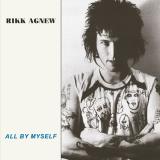
Rikk Agnew's All by Myself is one of those records that feels like a secret you're lucky to stumble upon -- a raw, weird, totally personal snapshot of a restless artist at a pivotal moment. Originally released in 1982 on Frontier Records, the album stands apart from most of what was coming out of Southern California at the time, even though it was born right in the middle of the exploding hardcore punk scene. By 1982, Rikk Agnew was already a big deal underground. As the guitarist for Adolescents, he helped shape the sound of Orange County hardcore with sharp riffs, surf-inflected melodies, and a sense of urgency that became hugely influential. He also played in bands like D.I. and later Christian Death, moving fluidly between hardcore punk, post-punk, and darker, more experimental territory. Agnew wasn't just a fast, aggressive guitarist -- he was a songwriter with range, curiosity, and a strong DIY instinct. All by Myself lives up to its title in the most literal way. Agnew recorded the album largely on his own, playing all the instruments and handling vocals himself. Instead of delivering another straight-up hardcore record, he went inward. The result is a lo-fi, home-recorded collection of songs that blend punk energy with new wave, post-punk, psychedelic touches, and even moments of pop sensitivity. It's rough around the edges, but that's exactly the point -- the album feels intimate, unfiltered, and honest. In the early '80s, Southern California punk was loud, fast, and often confrontational. Bands were pushing against the mainstream and even against each other, racing toward more extreme sounds. While All by Myself shares that DIY spirit, it doesn't fully play by hardcore rules. The tempos shift, the moods wander, and the songs feel more like personal experiments than scene anthems. That made the record a bit of an outlier at the time -- but also what gives it lasting appeal. Frontier Records was the perfect home for a release like this. The label was known for supporting artists who didn't quite fit into neat categories, and All by Myself captured that ethos perfectly. Today, All by Myself is often seen as a cult classic. For fans of early punk, post-punk, or anyone interested in the roots of DIY recording culture, this album is essential listening
If there is a year zero for the introduction of reggae music to Japan, you’d be forgiven for thinking it was 1979 when Bob Marley and the Wailers toured the country, trailed by an entourage of journalists, photographers and fans ready to spread the message of the music into all corners of Japanese society.
But the story of Japanese reggae is not a linear one, and the music that is collected on Tokyo Riddim 1976-1985 captures the moment J-reggae entered the broader public consciousness, merging commercial city pop style with an infectious backbeat, that has drawn comparisons with the emergence of Lovers Rock in the UK.
Rather than look directly to Jamaica, many producers and artists in Japan were inspired instead by the more approachable sounds of The Police and UB40, their reggae fix arriving pre-filtered through the lens of new wave pop from the UK. Playful and groovy, these album deep cuts have been overlooked for too long.
Among them are Miki Hirayama, the idol singer who borrowed the bassline from Bob Marley’s Natural Mystic on ‘Denshi Lenzi’, Chu Kosaka, who headed to Hawaii to cut the Jimmy Cliff-inspired ‘Music’ and Marlene, the Philippine songstress whose cover of Roberta Flack’s ‘Hittin’ Me Wear It Hurts’ owed much to her producer’s obsession with Sly & Robbie’s Compass Point sound.
Then there was Izumi “Mimi” Kobayashi, who enlisted the Babylon Warriors to perform on a dubbed-out version of her own track ‘Lazy Love’, the city pop-meets-new wave reggae sound of Miharu Koshi’s ‘Coffee Break’, Junko Yagami’s anti-apartheid deep cut ‘Johannesburg’ and Lily, whose ‘Tenkini Naare’ was produced by Ryuichi Sakamoto and closes out the compilation with a flourish.
While these stories may not always conform to neat narratives, they do provide a more accurate reflection of the indirect ways in which styles infiltrate one another and, in their naivety, have the potential to create something beautifully strange and entirely new. Previously only available in Japan, the tracks on this compilation are a testament to that curious alchemy.
Tokyo Riddim 1976-1985 is released on vinyl and as a full album download (no streaming), featuring original artwork by Japanese Fukuoka-based artist Noncheleee, whose cover pays homage to the iconic dancehall album art of Wilfred Limonious.
Released on 1st September, Tokyo Riddim 1976-1985 is part of Time Capsule's Nippon Series, a loose series of compilations exploring different musical scenes from Japan between the 1960s and 2010s.
No Fuss is back with a 14th outing that levies up to its name of dealing in only quality, fad-free sounds. Saison kicks off here with 'The Truth' which is a deep, lithe and soulful sound laced with soft acid, before DJ Romain's 'I'm Gonna Love You' taps into 90s New York house depths with neat organ stabs. On the reverse, Manuel Sahagun gets loopy with his bumping and raw 'Rouff' and its deft melodic curlicues while classy house operator Toni Lionni's remix of Deepmore's 'Babe' is a prime slice of serene and gently back-lit deep house hypnosis.
- A1: The Challenge
- A2: In The Trash
- A3: Terror Squad
- A4: Let There Be Sin
- B1: Hunger And Greed
- B2: Therapy
- B3: At War With Science
- B4: Decapitation Of Deviants
Terror Squad is the second album by Danish thrash metal band Artillery. It was originally released in 1987 via Neat Records. It's the successor of Fear of Tomorrow (MOVLP3190) and was later followed by their most succesfull album By Inheritance (MOVLP3935).Terror Squad; the opening track "The Challenge" immediatly kicks your door down and from there on their thrash metal is aggressive, relentless, and executed with deadly precision. At the time it lacked commercial success, but it made up for it with sheer musical intensity. The album's combination of blistering riffs, thunderous drumming, and commanding vocals still leaves its mark decades later. When Artillery hits, it leaves a crater Fun fact: Metal Hammer included the album cover on their list of "50 most hilariously ugly rock and metal album covers ever" Terror Squad is now available as a limited numbered edition of 1000 copies on red translucent coloured vinyl and contains an insert.
Swan Song
The vinyl LP at the heart of this éthiopiques 31 tracks 2 to 11 was one of the very last vinyl records ever released in Ethiopia. But above all it represents, we felt, the absolute masterpiece of the Ethiopian Groove – the Swan Song of Swinging Addis. The album leaves a clear idea for posterity of the level of sophistication and mastery that modern Ethiopian music had achieved, before being crushed under the Stalino-military heel of the Derg – as the bloody revolution that was unfolding came to be called.
Ethiopia1976.
The Revolution that broke out in February 1974 rolled on in a ruthless march. The whole of Ethiopian society was utterly stunned. The bouquets of flowers handed joyfully to the first tanks of the coup d'état were to wilt very rapidly. From September 1976 to February 1978, 18 months of Red Terror (the name given by the junta itself) spilled blood throughout the country. This fratricidal conflict took its heaviest toll among students and youth. The shift from feudalism to a cruel and primitive Stalinism left the country's citizens deeply traumatised, and snuffed out any pretence of activism, whatever the sector of society. This ice age was to last for seventeen long years.
ሙሉቀን፡መለሰ Mulukèn Mellèssè Muluqän Mälläsä
It was three tracks by Muluken that served as the opener for éthiopiques-1 more than 25 years ago. Seven more tracks appeared on éthiopiques-3 and 13, all accompanied by The Equators, which was soon to become the Dahlak Band.
The first track, Hédètch alu, also the very first piece that Muluken ever recorded, left audiences both unsettled and amazed. Reflecting the singer's extremely young age (he was just 17 at the time), this angelic voice mystified many, who thought they were in fact listening to a feminine voice. He was not yet 22 when he released his last vinyl record in 1976 with Kaifa Records (KF 39LP), one of the very last to be issued in Ethiopia, before the cassette tape became the dominant medium for music distribution – and before the new revolutionary regime put a stop to all independent musical life, via an unspeakable barrage of prohibitions and other persecutions.
Mulu qèn, literally, “A well filled day”. This tender maternal intention wasn't enough to ward off the cruelty of fate. His mother's premature death drove Muluken to leave his native Godjam, in northeast Ethiopia, to live with an uncle in Addis Ababa. Born Muluken Tamer, he took his uncle's last name – Mèllèssè.
The spelling Muluken appeared in his administrative records. Transcription of Amharic to the Latin alphabet, both in Ethiopia and for scholars, gives rise to controversies and quibbles that can never be neatly settled. French allows for a closer approximation of the original pronunciation, thanks to its battery of accent marks, confusing as they may be to anglophones.
Between rather accommodating administrative record-keepers and the various versions that pop up in interviews given by the artist, Muluken's year of birth oscillates between 1953 and 1955…
1954? One thing is certain: the artist's talent made itself known very early indeed, because he got his start in 1966-67, at the age of 13 or 14. Photos from the period attest to his extreme youth. It's a strange sort of initiation for a very young teenager to become a sensation in the heart of Addis's nightlife at the time, Woubé Bèrèha – the Wilds of Woubé. And what's more, in the club of the Queen of the Night, the Godjamé Assègèdètch Alamrèw herself, the very same that was portrayed by Sebhat Guèbrè-Egziabhér in his novel-memoir Les Nuits d’Addis Abeba2… The legendary female club owner who is remembered to this day by the capital's ageing boomers.
Muluken first tried his hand at the drums, before he grabbed the microphone. He emigrated briefly to the Zula Club, across the street from the old Addis Post Office, one of the ground-breaking bars of the burgeoning musical scene, before joining the Second Police Band in 1968, for around three years. He spent a few months with the short-lived Blue Nile Band founded by saxophonist Besrat Tammènè. As the musical scene grew increasingly successful, and pulled slowly but decisively away from its institutional ties, Muluken released his first 45rpm single in February 1972 (Amha Records AE 440). It was included in two LP Ethiopian Hit Parade compilation albums in September of the same year. All in all, Muluken released eight two-track 45s and the same number of original cassette tapes between February 1972 and 1984, the year that he departed for permanent exile in the USA. After converting to Pentecostalism in 1980, Muluken gradually abandoned all secular musical activity. In 1985, at the end of a concert in Philadelphia, he decided to quit concerts and recording for good. Mèlakè Gèbré, the historic bass player from the Walias band who was playing with him that night, recalls that everything appeared so irredeemably diabolical in Muluken's eyes, that it was to be the end of his contribution to Ethiopian Groove.
The end of the story, the beginning of a legend.
Dahlak Band, forgotten by History
Aside from his personal history and vocal talents, it must be remembered that Muluken Mèllèssè was one of the biggest names in the musical innovations that marked the end of the imperial period. These éthiopiques aim to convince those who are just discovering this hidden gem... As for Ethiopians themselves, they are to this day captivated by this singular and atypical figure in the Abyssinian pop landscape – even though he withdrew from public life some 40 years ago. Incorrigible devotees of poetic twists, of more or less hidden meanings, Ethiopians appreciate above all the care Muluken took in choosing his lyrics and the writers who penned them, such as Feqerte Haylou, Alemtsehay Wodajo and, here, Shewalul Mengistu (1944-1977). Love songs, written by women, a far cry from the conventional drivel that pleases sappy sentimentalists.
Muluken is equally acclaimed for his perfectionism when it came to music, the opposite of the overly casual approach that is all too common. He remained a faithful partner of musicians who came from a lineage that borrowed from several inventive and pioneering bands (Venus, Equators, Dahlak). Amongst them were certain artists who began their musical lives with Nersès Nalbandian at the Haile Sellassie Theatre and who come of age in around 1973 – at just the wrong time, you might say. Among them were the pillars Shimèlis Bèyènè (trumpet), Dawit Yifru (keyboards) and Tilayé Gèbrè (sax & flute). Most notably Tilayé Gèbrè, certainly one of the most important musicians, composers and arrangers of his generation, of the end of the imperial era, and of the early years of the Derg.
It was only in 1981 that a miraculous opportunity arose for Tilayé to escape the Stalinist paradise of the dictator Menguistou Haylè-Maryam. Once again it was Amha Eshèté (1946-2021) who provided a solution. The spirited and courageous producer, who had been in exile in Washington since 1975, succeeded, thanks to his incredible perseverence, in bringing the Walias Band to the USA. It was, in fact an extended Walias Band comprising ten musicians3, six of whom chose to slip away after a few concerts and the recording of an LP (The Best of Walias, WRS 100). Tilayé Gèbrè was one of these. He has been living in the USA ever since. There he joined the then-nascent Ethiopian diaspora, which lived largely unto itself, and was making only very modest headway in the American musical market. It seems unfair that Tilayé Gèbrè and the Dahlak Band were not able to benefit earlier from the public recognition that they do deserve.
A similar draining away of the top-rate talents would lead to the reorganization of the major groups of the “Derg Time”. The remaining artists spread themselves around between Ibex Band (renamed Roha Band), Ethio Star Band and a remodeled Walias Band. That spelled the end of the Dahlak Band.
With this record, produced by the essential Ali Abdella Kaifa a.k.a. Ali Tango, we can appreciate everything that the Derg not only destroyed, but also prevented from flourishing. This gem of Ethiopian-style afrobeat came out in 1976 (and, by way of a parenthesis, before the FESTAC 1977 in Lagos, which was attended by an impressive delegation of Ethiopian musicians — although Fela was already personna non grata in his own country). Despite everything that might distinguish this ethio-groove from Fela’s music – no colonial axe to grind, no question of political confrontation with the authorities, no claims to negritude or Africanism for the Ethiopian musicians, and less extrovertion! –, this LP fits beautifully into the saga of intense and electrified soul of the new “African” groove that Fela and Manu Dibango embodied so well from that point onwards.
In restoring this record to its place in the afrobeat epic, it can be seen that, if nothing else, the timeline bestows a legitimate pedigree and a historical primacy to works that had no international impact when they were originally released.
Warning! Masterpiece!
- 1: Intro
- 2: Simple Things
- 3: Forever
- 4: Road To Braemar
- 5: Before & After
- 6: Mirrors
- 7: Days Of Lily
- 8: Stepping Stones
- 9: Hope
- 10: Bravery
- 11: Chances
- 12: Stepping Out
Drawing from her constant searching for her own unique sound she filters her love of rhythm and groove through her Nordic sensibility to create an accessible, compelling blend of excitement and introspection. Growing up on the island of Saaremaa in her native Estonia, Britta Virves was a keen piano student playing a strictly classical repertoire. A chance encounter introduced her to jazz: "I wanted to learn guitar. So I went to my teacher Tit Paulus, and he told me to stay with piano, and introduced me to Keith Jarrett, Herbie Hancock, Bill Evans - my mind was blown - a new world opened up." Britta immersed herself in the music and her talent soon attracted attention.
Moving to Sweden to further her studies, she was soon touring Europe with the acclaimed Norrbotten Big Band, under the direction of Joakim Milder, working closely with featured guest vocalist Genevieve Artadi and accompanying Artadi on a duo tour opening for Louis Cole. Each tune on the album draws inspiration from an aspect of Britta's own life. "Simple Things" has the directness of a pop song married to the depth of jazz, as Genevieve Artadi's ethereal vocals float over an insistent backbeat that supports limpid depths of harmony.Other tracks include "Bravery", whoch showcases the subtlety and dynamic control of the rhythm team and is one of Britta's favorite tracks on the album - "I feel it's like a big waterfall that's rushing down and making its path just by flowing naturally." By contrast, "Chances" plays with a neatly delivered set of accents that tie the roots effortlessly
2026 Repress
There's no need to apologise - not when the vinyl in question is as good as this. If you've seen Ricardo Villabos behind the decks of late you'll almost certainly have heard him drop one or more of these superlative edits, as he's been hammering them practically non-stop. You can't blame him. 'Edit 1' is a hypotonic bongo-fest that shimmers and caresses the dancefloor with absolute confidence. 'Edit 2' is a female vocal-led disco-slanted house affair with neatly trimmed, jazzy keys and a perky bassline, while 'Edit 3' looks to the late 70s/early 80s for inspiration with a supercatchy synth motif that Vince Clarke would give his right hand for and some exotic sounding, continental male vocals that round it off superbly. Imagine that Patrick Cowley and Krafftwerk made a tune together and you're in the right area. Put all three together and, well, you've got quite the package.
Peach Discs’ first EP of the post-summer season comes from DJ, producer, and our good pal Amaliah.
The five tracks that make up the Hypnosis EP are a true showcase of Amaliah's rapidly growing skills as a producer, as she picks thoughtfully from her inspirations and flips them into a uniquely Amaliah-coded record – leaning into the housier side of her sound while incorporating elements of bass, garage, UK funky, and prog that have become her calling card.
Lead track "Hypnosis" draws a line straight back to her early UK raving days, with tuff, speed-garage-indebted drums bouncing off prowling subs and emosh, pinging synth lines, while "Watch This" harnesses a similarly heaving bassline but dips towards classic UKG territory with its swinging, broken beat and disembodied vocal chops.
The closest thing to straight-up house on the EP, "Hold Me Closer," features Amaliah's vocals for the first time, as well as additional production from Shanti – an influence evident in the tight, ascending bassline that wraps itself around the stomping percussion.
"Laser Tag" and "Earthling" are maybe the most Amaliah-coded tracks on the record – a pair of highly percussive, UK funky inspired tunes that balance shoulder-bumping drums with wild, arcing synths that prowl across the stereo field, trippy and screwface inducing in equal measure.
Amaliah is also the founder of Borne Fruits, an independent label, event series, and monthly Rinse FM show, showcasing new sounds and emerging talent. This record follows neatly in that vein, as her own emerging talent marries forward-thinking sound design with her roots in raving and soundsystem culture for an EP that's all her own, and one we're thrilled to release.
- Skyfall (Reg+Fast)
- Sk Web Web Sk Feat Nofuturesk
- Disheveled
- Pleading
- Goin Pro
- Txts Red On Imessage (Reg+Fast)
- Crochet - I Swear Feat Tnotsobad
- Offwrld
- Playboy (Reg+Fast)
- Enough
- Is That Watchu See In Mysele (Reg+Slowed)
- Vip (Reg+Slowed)
- Otr Feat Tnotsobad
- Fantasize (Reg+Fast)
- Crazy Keepyaclose (Fast+Reg)
- Whattitdo
- 007: (Reg+Slowed)
- Yw Sa
- Phone
In syrupy slow pursuit of a strong 2023 debut, Yungwebster's somnolent sequel is bolstered by pitch-perfect production from Space Afrika and Nathan Melja, who vaporise the rapper's auto-tuned post-Future drawl with euphoric orchestral drones, brittle micro-trap beats and weightless pads.
Over a decade ago at this point, Future released 'Codeine Crazy', the decelerated finale of 'Monster', one of his best-loved mixtapes. The track neatly summarised themes the Atlanta rapper had been circling for years at that point, layering his slurred, lean-dizzy rhymes over producer TM88's rubbery, melancholy synths. "Take all my problems and drink out the bottle," he moaned robotically, using the track's minor key bounce to represent the crushing delirium that followed fame and its tasting menu of intoxicants. It's still Future's high water mark creatively, and its traces can be observed in a full spectrum of contemporary sounds, from 6LACK's downtrodden, self-aware R&B to Lil Uzi Vert's feverish trap. But it's Yungwebster who's taken the haze to its logical conclusion, reimagining the Magic City-sculpted bumps as hypnagogic Actavis- 'n Xanax-hued ambient music. You could argue it was bound to happen - the more you sip, the slower it gets - and plays as a cracked mirror to cloud rap's long-smoked hybrid of Southern psychedelia and post-OutKast eccentricity.
Webster's opiated POV is clearer than ever before on 'II'. Just peep the cracks in his voice on the Space Afrika-produced opener 'Skyfall' as he coughs and splutters over watery samples, booming subs and SA's patented collage of soundtrack-ready strings and sirens. Presented at regular speed and in chipmunked form, it sets the pace for an album that, like its predecessor, constantly fucks with the timeline, pitching the whole master into doubletime or slowing it down to a crawl to present a curved, inebriated narrative rather than a straight line. Even without the tempo switches, Webster singles out beats that accent his warbled rhymes that sound as if they'll fall apart at any moment. French DJ and producer Nathan Melja backs 'Disheveled' with Black Ark-styled oscillations and airlock'd echoes, filtering the bassline until it almost disappears entirely; with room to breathe, Webster's able to take the lead - you might not be able to pick out the words, not entirely at least, but you get the message.
In fact it's Webster's voice that's the revelation on 'II' - with a coherent mix from producer tnotsobad, the nuances and fluttering tonalities emerge more vividly than they have before. It makes the flip between the regular speed and fast on 'Txts Red on iMessage' a textural decision, the different pace shifting the warbled cadences so Webster's voice becomes far more important than the additional elements. And on the album's Space Afrika-produced eight-minute centerpiece 'Crochet / I Swear', Webster's mumbled bio-mechanical whines create a much-needed foil for the decelerated boom-clack and suspended save room ambience. We get to encounter a personality here, not just an aesthetic, so as the album moves into its twilit fourth side, the beatless, voice-led somniferousness of 'YA SA' and ululating 'Phone' come off like a descent into tranquillised sedation. Rap has rarely sounded so chimeric.