This special limited edition DAVID BOWIE 7" picture disc, is a double A-side of the radio edits of 2018 versions of ZEROES and BEAT OF YOUR DRUM. Both tracks are from NEVER LET ME DOWN (2018), a new version of the 1987 album featured in the forthcoming boxset LOVING THE ALIEN (1983-1988) which is released on 12th October.
NEVER LET ME DOWN (2018), is a new production of Bowie's final 'solo' album of the '80s. Producer Mario McNulty worked on the tracks at Electric Lady Studios in New York with longtime Bowie musicians Sterling Campbell (Black Tie White Noise, Outside, 'hours...', Heathen, Reality and The Next Day) on drums, Reeves Gabrels (Tin Machine, Black Tie White Noise, Outside, Earthling and 'hours...') & David Torn (Heathen, Reality and The Next Day) on guitars and Tim Lefebvre (Blackstar) on bass.
ZEROES, the lyrics of which reference Prince's Little Red Corvette was Bowie's salute to the '60s. He described it as 'The ultimate happy-go-lucky rock tune, based in the nonsensical period of psychedelia'. Mario McNulty commented, "Stripping this song down to its core revealed a track that could have been right at home on Hunky Dory, I kept Peter Frampton's sitar (which was originally owned by Jimi Hendrix) as it still fits against the new guitars from Reeves Gabrels'.
Of BEAT OF YOUR DRUM Mario McNulty says, 'David Torn's ambient guitars start the song that now lead into a much darker world than its shiny predecessor. David sang all the backing vocals on this which I have kept.'
Y
quête:never sol
Thomas Fehlmann steps away as co-member of The Orb following two acclaimed full lengths on Kompakt (COW - 2016, Moonbuilding 2703 AD - 2015) and embarks back on his solo career with a career defining album 'Los Lagos' - from Detroit to Schaffel techno he conducts a broad spectrum of electronic music into a seamless flow.
Thomas Fehlmann has been active since the late 1970's from Palais Schaumburg, the Tresor defnining trio 3MB (with Moritz von Oswald and Juan Atkins), Ocean Club (together with Gudrun Gut) and of course The Orb.
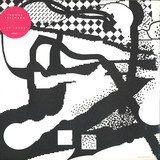
Artwork direction and design by DESIGNERS REPUBLIC.
'Los Lagos' is Thomas Fehlmann's seventh solo full-length, his 4th for Kompakt following his Berlin inspired 2010 full length 'Gute Luft'. in the musician's own words it's about "checking the juice".
Establishing a picture of his current artistic condition, as suggested by the title - los lagos / die lage / the situation (literally translating to 'the lakes' but taking the meaning of 'wassup' in the context of a relaxed discussion between friends), the album refers to Fehlmann's "musical motivation, dreams and wishes" through the language of music exclusively: a way to "allow myself to techno" he says, "to techno as a means to deconstruct and rebuild again. Set up an area of tension, loose it in the flow of the grooves. Magnifying some detail out of proportion, regroup around that and slowly knit a texture. Expand."
"It was time to take a bend and head where the sun rises or sets, wherever my heart drives me." This is pretty much the kind of decision Thomas Fehlmann has made. 61 and shining, longstanding member of The Orb, multi-talented composer and boundless experimentalist, had to make in the twilight of his collaboration with Alex Paterson, eager to taste the flavours of the unknown on his own again. "It was the moment when felxibility would have become compromise'. Far from being the demise of their joint dream, this was bound to split it in two distinct, parallel fantasies - rich of their own singularity.
As goes with that essential love of his for the free-flowing nature of electronic music, a fascination born out of its "lack of borders", capable of "inventing, changing the emphasis, experimenting with an unpredictable outcome", 'Los Lagos' "freely connects disparate extremes. Art, disco, minimalism, schmalz, jazz and funk". As he likes to say, Fehlmann's head functions as a sampler, capturing elements and re-assembling them under his own embracing perspective ; not afraid to leap from a deep, dubbed-out hypnotism ('Window', 'Morrislouis', 'Freiluft') to the playfulness of '90s-style bleepy schaffel ('Tempelhof' featuring Max Loderbauer), through out-there, muscle-flexing dancefloor cuts ('Triggerism') onto the calmness of ambient ('Geworden').
In need to keep his inner balance in check, Fehlmann committed himself to "switch off the control" and follow his intuition, which isn't so much of an easy process as he also wanted to incorporate the side disturbances experienced: "it's a complex process of search and destroy to bring out a new beauty trying to expand my vocabulary". With 'Los Lagos', Fehlmann looked at finding "the structure that's surprising, disturbing and rewarding". The artwork for the record, courtesy of contemporary artist and friend Albert Oehlen whom he shares lots of artistic ambitions with, echoes the producer's "funky use of shape and space, sludge and clarity" like a second skin. A search for light and harmony that Fehlmann sums up eloquently: "Does your inner musical voice respond", that is the question. Then "doors open up in unexpected corners, rays of light appear; you follow through and you're in - in your oasis."
In search of the sublime, contemporary electronic musician Steve Hauschildt has designed grids and panoramas of sound across multiple releases through the rise and dissolution of his former band, Emeralds, an American touchstone of 2000s home-recorded psychedelic noise music. Consistent with his solo work is Hauschildt's ability to coil his craft in precise, varied, and distinctly physical forms. Gently spinning arpeggios converse with post-industrial decay. Sonic bers sway like pendulums from static melancholy to motorik bliss. Dissolvi, the artist's rst full-length with Ghostly International, engages sublimation from an ontological perspective: by dissociating the self. Hauschildt steps out from the singular path, for the rst time in a traditional studio, to compose and arrange contributions from friends. As a result, his most collaborative work to date extends a vast, vibrating framework in which to consider the state of being.
The album's title — a reference to cupio dissolvi, the Latin phrase meaning "I wish to be dissolved" — needn't be taken one-dimensionally or as purely solipsistic. It does, however, serve an apt reference. Physiological phenomena are of interest to Hauschildt. These back-of-mind ruminations nd their way out. Songs are cerebral in orientation, but beyond explanation, the music is truly visceral.
Involuntary eye movement inspires the serene, sanguine-nearing-suspicious "Saccade." Hauschildt feathers soft percussion beneath the echoed refrains of Los Angeles musician Julianna Barwick, together shaping a svelte suggestion of the anxieties brought about by modern-day surveillance; if everyone is being watched constantly, there is no individual, no self, only a broadly monitored and clumsily cataloged populous. The work of Chicago poet Carl Sandburg comes to mind: 'I am the people—the mob—the crowd—the mass.' The individual dissolves into the taxonomic crowd.
Minimalist techno impulses provide a stylistic through-line for Dissolvi. Understated synth phrases and drum grooves take hold in selective moments, like synchronistic structures onto which nebulous mists, like the rapturous voice of Gabrielle Herbst aka GABI on "Syncope," cling to and cloud, producing a dazzling rift in consciousness. The 7-minute centerpiece "Alienself" reiterates this creative logic, burbling like an amorphous body of water on a low-gravity planet, on the verge of dissolving, but never fully dematerializing.
The album was constructed in Chicago (where Hauschildt now resides) and partially in New York. "Much of it was recorded in a windowless studio which removed elemental or seasonal references to time in the music," says Hauschildt. "The focus this time was on mixing the album and incorporating a broader set of instrumentation. I describe my compositional approach as being quasi-generative." Embracing new methods and philosophical curiosities, and in turn, expanding the range of his repertoire, Hauschildt proposes a fascinating and profoundly rich experience in listening, being, and deliquescing.
- Les Soleils De L'île De Pâques A1
- La Brûlure De Mille Soleils A2
- La Brûlure De Mille Soleils A3
- La Brûlure De Mille Soleils A4
- La Brûlure De Mille Soleils A5
- La Brûlure De Mille Soleils A6
- La Brûlure De Mille Soleils A7
- La Brûlure De Mille Soleils A8
- La Brûlure De Mille Soleils A9
- La Brûlure De Mille Soleils A10
- La Brûlure De Mille Soleils A11
- La Brûlure De Mille Soleils A12
- La Brûlure De Mille Soleils A13
- Les Soleils De L'île De Pâques B1
- Les Soleils De L'île De Pâques B2
- Les Soleils De L'île De Pâques B3
- Les Soleils De L'île De Pâques B4
- Les Soleils De L'île De Pâques B5
- Les Soleils De L'île De Pâques B6
- Les Soleils De L'île De Pâques B7
- Les Soleils De L'île De Pâques B8
- Les Soleils De L'île De Pâques B9
- Les Soleils De L'île De Pâques B10
- Les Soleils De L'île De Pâques B11
- Les Soleils De L'île De Pâques B12
- Les Soleils De L'île De Pâques B13
- Les Soleils De L'île De Pâques B14
- Les Soleils De L'île De Pâques B15
- Les Soleils De L'île De Pâques B16
- Les Soleils De L'île De Pâques B17
- Les Soleils De L'île De Pâques B18
- Les Soleils De L'île De Pâques B19
- Les Soleils De L'île De Pâques B20
- Les Soleils De L'île De Pâques B21
- La Brûlure De Mille Soleils A1
WRWTFWW Records is overjoyed to announce the release of two never-released-before soundtracks by French award-winning composer, audio experimenter, electroacoustic and musique concrète magician, and all-around sound visionary Bernard Parmegiani, sourced from the original reels, and neatly packed together in a gatefold sleeve double LP with English and French liner notes. The 2 albums are also available in an all-in-one digipack CD. Les Soleils de l'Île de Pâques (1972), by French director Pierre Kast, is a sci-fi feature which secured itself a well-deserved place in the pantheon of mysterious cult films thanks to hallucinatory (and superb) cinematography, exploration of supernatural phenomenons and occult symbolism, and one hell of a trippy atmosphere. La Brûlure de Mille Soleils (1965) also comes from Pierre Kast, but this time with the help of none other than writer, photographer, multimedia artist, homme à tout faire Chris Mar
The second of Polytechnic Youth's ace new LPs for July, sees a mighty set from Austria based synth pop duo Mitra Mitra. Following previous releases on Peripheral Minimal and their own Micromort label, not to mention a lathe cut right here on PY that sold out in 20 minutes in Dec. 2015.
The band was formed in Vienna in late 2014 by Violet Candide and Mahk Rumbae. Originally from New Zealand, Violet Candide is a founding member of the Crazy Hospital DJ collective, and one of the organisers of the legendary 'Future Echo' club night in Vienna, and is one half of 'Anesthetic Hairpins'; whilst British musician Mahk Rumbae is known for his work as a member of the industrial/experimental project 'Konstruktivists', 'Oppenheimer MkII' (with Andy Oppenheimer of Oppenheimer Analysis) and his solo techno project 'Codex Empire'.
After working together on one of Violet's solo songs, 'Heat', the pair decided to continue working together and formed Mitra Mitra as a more full time project, with the aim of writing electronic songs not tied to any particular influence or style. However, if there was such a thing as a signature PY sound- arguably this LP (alongside last year's Vorderhaus full length), encapsulates it most. Beautifully icy cold synth pop straight outta' early prime era Mute / Blackwing studios output. Serene yet melodic, edgy, dry icy hooks and delicious grooves aplenty all over this record. Eight wonderful tracks where quality and sheer melodic guile of the song writing never dips and attention truly is held across the whole set, ....no mean feat indeed.
Available as a 300 pressing LP only, destined to sell out rapid style as have all previous releases by both artist and label.
- A1: The Lonely Bull (El Solo Toro)
- A2: El Lobo (The Wolf)
- A3: Tijuana Sauerkraut
- A4: Desafinado
- A5: Mexico
- A6: Never On Sunday
- A7: Spanish Harlem (Bonus Track)
- A8: Winds Of Barcelona (Bonus Track)
- A9: Greens Leaves Of Summer (Bonus Track)
- B1: Struttin' With Maria
- B2: Let It Be Me
- B3: Acapulco 1922
- B4: Limbo Rock
- B5: Crawfish
- B6: A Quiet Tier (Lagrima Quieta)
- B7: More (Bonus Track)
- B8: Surfin' Senorita (Bonus Track)
- B9: Crea Mi Amor (Bonus Track)
- B10: Mexican Corn (Bonus Track)
2022 repress
currently the rediscovery of long forgotten japanese electronic, jazz and new age music is at a peak like never before. but although many re-issues already flood the record stores around the world: the large, diverse musical culture of japan still got some gems in store that are really missing.
for example, it is still quiet around the the work of japanese bass player, new-age and ambient musi-cian motohiko hamase. when the today 66-years old artist started to be a professional musician in the 1970's, he quickly gained success as a versed studio instrumentalist and started to be part of the great modern jazz isao suzuki sextett, where he played with legends like pianist tsuyoshi yamamoto or fu-sion guitar one-off-a-kind kazumi watanabe.
he also was around in the studio when legendary japanese jazz records like 'straight ahead' of takao uematsu, 'moritato for osada' of jazz singer minami yasuda or 'moon stone' of synthesizer, piano and organ wizard mikio masuda been recorded.
in the 1980's hamase began to slowly drift away from jazz and drowned himself and his musical vision into new-age, ambient and experimental electronic spheres, in which he incorporated his funky medi-tative way of playing the bass above airy sounds and arrangements.
his first solo album 'intaglio' was not only a milestone of japanese new-age ambient, it was also fresh sonic journey in jazz that does not sound like jazz at all. now studio mule is happy to announce the re-recording of his gem from 1986, that opens new doors of perception while being not quite at all.
first issued by the japanese label shi zen, the record had a decent success in japan and by some overseas fans of music from the far east. with seven haunting, stylistically hard to pigeonhole compo-sitions hamase drifts around new-age worlds with howling wind sounds, gently bass picking and dis-creet drums, that sometimes remind the listener on the power of japanese taiko percussions. also, propulsive fourth-world-grooves call the tune and all composition avoid a foreseeable structure. at large his albums seem to be improvised and yet all is deeply composed.
music that works like shuffling through an imaginary sound library full of spiritual deepness, that even spreads in its shaky moments some profound relaxing moods. a true discovery of old music that oper-ates deeply contemporary due to his exploratory spirit and gently played tones. the release marks another highlight in studio mule's fresh mission to excavate neglected japanese music, that somehow has more to offer in present age, than at the time of his original birth.
Reissue of thisearly 90s Czechoslovakian balearic style oddity. TIP!
.
Jindrich Parma originally created this record as a studio project on his own 'Parma Productions' label in '91. The release was the debut of the musician 'Karya', and although the singer has become fairly prolific, 'Muž Ze Skla' (The Man Of Glass) remains an anomalous release in her catalogue. In fact, the song never actually featured the singer we know as 'Karya' today, and was solely the experiment of Jindrich and Company. With a balearic house sound that never really had a parallel in the country, this remains a truly unique Czechoslovakian record. Reissued for the first time on a 12".
As we celebrate the 25th year of V Recordings, it couldn't be a better time for another release from DJ Patife & Vangeliez. One of the OG's of Brazilian D&B Patife teams up with fellow countryman Vangeliez (formerly one half of Human Factor) once again. Fresh from their last single, as well as features on last year's very well received 'Viva Brazil' compilation released in conjunction with SUNANDBASS, this duo has definitely found their own lane!
* On 'Living Together' they link up with two of the most recognizable voices in the D&B, MC Fats and Stamina MC to create an uplifting summer anthem, that spreads the positivity of music across the globe. These two vocalists need little introduction, but in case you don't know, they are behind some of the most seminal moments in our genre's history, classics like Calibre's 'Drop It Down' , DJ Hype's 'Peace, Love & Unity, DJ Marky & XRS's 'LK', D Kay's 'Barcelona' and so the list could go on... Basically with the coming together of these four names you're in safe hands! 'On The Floor' continues to push a euphoric feeling, but adapts a sub low bass that could tear through any system!
* Teaming up with Manchester's finest for vocals on 'Ain't That Bad', the tracks follow in the vein of their previous collaboration on Soul-R, and DRS delivers a stellar vocal performance that brings the track to life, and is again full of good vibes, definitely something you can never have enough of! 'Unexpected' is dripping with original liquid vibes - think Carlito & Addiction, Calibre, D Bridge Big Bud, Solid State - with a 21st-century twist - one for the those who like it deep.
* Drum & Bass as a genre now has so many different sounds and styles, but one sound that has ridden the waves of fashions and emerged as timeless is on display here as the duo deliver 100% organic, funk-filled Drum & Bass music for the soul.
* LABEL MARKETING: Features on V Recordings Podcast, Dedicated newsletter to 85,000 V Recordings subscribers. 80,000+ Facebook reach through label controlled Facebook and Twitter. Press on websites across the globe.
The music on this EP was conceived in China, between 1989 and 1993. The original tracks were mixed to DAT in real time, in a small neighbour-proof studio inside my apartment in Macau, a 19th floor with a view to the hurricanes. There's a small, unexpected or improbable story behind each track, some little magic fused with the local atmosphere, certainly guaranteeing their lasting authenticity 25 years later.
TAIPEI DISCO
Late 80s Guangzhou was an exotic city where the traditional past coexisted in harmony with the present and even already with the future.
I'd rather spend my weekends in Guangzhou than diving into Hong Kong consumerism - as most ex-pats in Macau did. I took a cab at the border and travelled 150 Km through chaotic roads with family and friends until reaching the hot, humid, mega South China metropolis.
We ate on street joints in the evenings, went on to a karaoke bar and ended up at Taipei Disco, the only proper club in town. All the others were inside hotels and played generic music or they were seedy, sleazy, smoky cabarets.
Taipei Disco used to be a cinema and played cantonese pop music and anglo-saxon pop/rock (that was new). The spacious dance floor was generously lighted, the atmosphere was airy and modern. Boys and girls were in the habit of dancing in pairs, one in front of the other, observing a respectful yet sensual distance. When the girl took a few steps back, the boy went along and vice versa. With legs and feet (more than the upper bodies) synchronized with the music, they never exceeded in extroversion. Cool.
I always carried a MicroComposer and a portable DAT recorder in my travels through China and weekends in Canton. Any spontaneous musical idea was imediately recorded and memorized. The MicroComposer allowed multitrack recording, which was very handy on the road. Based on the emphatic choreography of Taipei Disco's dancers, i started to compose a rhythm track while sitting at a table, with headphones, listening to Cantopop in the background. As if by magic - not a rare occasion in music - everything began fitting together. Odd as it may seem, the track ended up sounding more germanic (Kraftwerkian) than Cantonese pop.
The story ends in a circle: the cantonese DJ at Taipei Disco, whom i used to ask to play certain records, wanted to play my music at the disco when it was basically only just a rhythm track and little else. From a cupboard under his set up he took out a battered keyboard (unrecognizable brand) and invited me to play over the track with the available sounds on the keyboard. The circle was complete, with Cantonese clubbers happily dancing forwards and backwards, as if it were another Cantopop hit.
I didn't get payed but the house offered us free ice cream cups in which little Portuguese flags were sticked.
The track would be finished later, in studio, with vocoder strings ensemble and synth solos.
TAIPEI DISCO (LIVE)
The live version of 'Taipei Disco' was recorded during a live set at the China Pop venue, in Macau, 1993. China Pop was a rock club built in the ample space of an old fishing warehouse, located in the labyrinthic Inner Harbour area. It was decorated with large Mao Zedong and Cultural Revolution posters and memorabilia and had a unique atmosphere, fusing Pop Art with film noir. We began our performance at 1AM, pretty early for Macau's nightlife standards. We were lucky. An audience showed up. And in Macau there were always several friends among the audience, which tranformed a musical performance into a relaxed party.
The atmosphere was particularly surreal on that night. The front row was dominated by French Crazy Horse dancers, a sort of Oriental Moulin Rouge. The girls had finished their last performance of the evening at the Crazy Horse and were still energized from their show. During our performance, right in front of us and perfectly synched, we could hear the famous irreverent screams of can-can dancers. You always had to expect the unexpected in Macau.
RED MAMBO (IMPROMPTU)
I was familiar with the Portuguese-speaking African countries well before having lived in China. I found myself returning several times to one in particular, always attracted by its magic and very distinct, identitary culture and music: Cape Verde.
During the early years of DWART a lot of the inspiration for drum machine rhythms (Roland's TR series) came from African music, especially from new musical trends that gained full autonomy with Cape Verde's independence from Portugal, as was the case with funaná.
I had the privilege of having known and befriended some of the greatest Capeverdian composers, musicians and singers during the 70s and 80s, such as Bana, Luís Morais, Cesária Évora, Paulino Vieira, Chico Serra, Tito Paris, and historical bands such as Bulimundo (ambassadors of funaná) and Os Tubarões (great innovators of morna, coladera and funaná, with the sonic impact of an afro-beat big band).
When Luís Filipe de Barros began playing Os Tubarões for the first time on Portuguese radio, that was the turning point for African music in Portugal. The 'Tabanca' album was so widely heard and talked about that it quickly got a Portuguese release through one of the big labels of the time.
The mystic of this band from the Santiago Island would reach the East. Os Tubarões played to a packed room in Macau in 1992, and after the bombastic gig we arranged a dinner and party at my place.
We ate and drank generously and the moment came for a jam session at the small studio on the 19th floor. Because Os Tubarões didn't all fit in the studio, we recorded an impromptu with only three of the musicians: Tótó Silva (electric guitar), Mário Russo Bettencourt (bass) and Zeca Couto (piano). And there we were improvising without barriers, suddenly detached from cultural roots, labels and constraints, a truly unique moment. The track is now being released exactly as it was recorded, imbued with the real communion between the musicians. And it could only be titled 'Red Mambo'. I wish to dedicate it to the memory of Ildo Lobo and Jaime do Rosário, founders of Os Tubarões, sadly and too soon departed from the land of music.
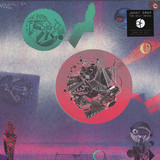
Jonny Drop's debut, Sub Plot, was the very first album release on the fledgling Albert's Favourites label at the beginning of 2016. The initial offering, a 7" of album favourites Mind Field and This Is The One had quickly been picked up on by the good people at BBC Radio 6 Music as well as some of Drop's personal heroes including Kenny Dope, Mr. Thing and Nightmares On Wax.
But when the infectious rhythms and warm production of the beat tape landed, its impact was greater than anyone at the label could have hoped.
Although Jonny never stopped producing beats in the following years, he was also kept busy as a drummer, playing live for Andrew Ashong, The Bongolian and Connie Constance, whose Boring Connie EP he also laid down beats for.
Then in early 2018 his band The Expansions delivered their celebrated Murmuration LP. All the while, with the support of his label family, Drop had been evolving his solo sound too.
'The Only Sound sees a huge progression in my writing direction, as I collaborated with multiple vocalists and musicians, instead of the usual 'one-man band' approach.
The development of these processes make this LP a steady departure from the beat-tape influence of my past releases, and hopefully, showcase the more original sound I've been working to achieve over the past few years.'
The new album is more atmospheric, emotional and expressive. It is filled with beautiful vocal performances, musical contributions from label partners and close friends Deoke and James O'Keefe, and inspirational London jazz composer, flautist and master saxophonist Tamar Osborn (Collocutor/On The Corner).
Voices here include Shea Soul, Grace Walker, former Myron and E soul man Eric Boss with his Lucid Paradise and Pendletons partner Ishtar, plus First Word Records producer/Golden Rules collaborator Sarah Williams White.
While there are thoughtful, down-tempo moments of electronica in abundance here, Drop brings his favourite elements of disco and soul into the picture too.
And there's no shortage of low end throughout. The Only Sound is a welcome next step from Jonny Drop, the sound of a beat maker not just finding his feet as a composer, but thriving in new territory.
Huey Morgan (BBC Radio 6 Music),
Music Is My Sanctuary premiere for All This Trouble, Bonafide Magazine premiere for Looking Glass
'A really talented musician, absolutely loving that" Lauren Laverne on This Is The One, BBC Radio 6 Music
- A1: Music From Installations 1 (Lp 1)
- C1: Music From Installations 2 (Lp 2)
- E1: Million Paintings (Lp 3)
- G1: Lightless - Music For The Marble Palace 1 (Lp 4)
- I1: Lightless - Music For The Marble Palace 2 (Lp 5)
- K1: Dormienti (Lp 6)
- M1: Kite Stories (Lp 7)
- O1: Making Space (Lp 8)
- Q1: Music For Installations (Lp 9)
If you think of music as a moving, changing form, and painting as a still form, what I'm trying to do is make very still music and paintings that move. I'm trying to find in both of those forms, the space in between the traditional concept of music and the traditional concept of painting.' Brian Eno.
Musician, artist, thinker, activist Brian Eno first came to international prominence in the early '70s as a founding member of Roxy Music, and immediately followed by a series of highly acclaimed solo albums. His visionary production work includes albums with U2, David Bowie, Talking Heads, Coldplay and many others.
His recordings and other collaborations are endless and endlessly known, however his visual experiments with light and video covers an even longer span of time and have been exhibited all over the globe - from the Venice Biennale to the Marble Palace in St. Petersburg, from Beijing's Ritan Park to the Sydney Opera House. Eno's installations are the fertile ground from which so much of his other work has grown and continue to parallel his musical career.
Music For Installations is a collection of original recordings from these installations with new and unreleased work covering the period from 1986 until the present and beyond.
________________________________________________
Designed by Brian and long-time collaborator Nick Robertson, this limited edition 9LP Vinyl boxset comes with a 64-page booklet featuring rare and unseen exhibition photographs and a new essay written by Eno.
- 12 x 12 rigid box set of 9 LPs containing music from Brian Eno's installations past, present and future.
- 64 Page book containing a brand new essay by Eno plus rare and previously unseen photographs from his various exhibitions from 1997 to the present.
- Each album is housed in a beautiful die-cut sleeve designed with long-time collaborator Nick Robertson and all music is guaranteed first time on vinyl.
- 50% of the music contained in the box set has never been available in any format and the rest has only ever had very limited cd release direct to consumer release.
- Vinyl mastered and cut by Matt Colton at Alchemy Mastering, London
- 100 % First time on vinyl, strictly limited edition
n5MD is proud to bring you All That Was Lost, The 3rd album from cinematic ambient composer Stray Theories. A treat for for fans of Hammock, Eluvium & the more soothing works of Sigur Ros...
Australian born and current New Zealand resident Micah Templeton-Wolfe is the sole force behind Stray Theories, and this album finds him following-up 2014s We Never Left EP with his first new long-form Stray Theories material, not to mention, his first album to be pressed to vinyl.
Templeton-Wolfe's time away has not been for naught. Composing for films, collaborations with like-minded artists and a plethora of remix projects, all while creating a sample pack for the Noiiz sample app under new project Ocean Lost. So it's been a busy time for Templeton-Wolfe.
While he has seemingly been focusing his efforts else- where, Templeton-Wolfe has been quietly composing for All That Was Lost, an album which is imbued in spades with Stray Theories' signature mood-altering sound- scapes.
Muted electronics have always played a part in the Stray Theories pallet, and some of Templeton-Wolfe's extracurricular work might have something to do with those textures now being brought a bit more to the fore. In Templeton-Wolfe's hand, these fit in perfectly within the personally subjective nature his music has always suggested. All That Was Lost is a cinematic ambient gem brought into the world at a time when we need it most.
On Video Age's forthcoming album Pop Therapy, out June 22nd via Inflated Records, longtime friends and songwriting partners Ross Farbe and Ray Micarelli conjure up a thrilling assortment of experimental pop songs. Using a palette of vintage synthesizers and the propulsion of a Sequential Circuits Drumtraks drum machine, the New Orleans-based group's buoyant synth-pop echoes from some imagined vision of the past, leaning on an invented nostalgia to soundtrack an ideal future that never arrived. Video Age brings that future fully to life on Pop Therapy. Emerging from New Orleans' DIY scene and label collectives, Farbe and Micarelli were intrigued by each other's songwriting among several curiously satisfying guitar pop bands. As a producer and prolific engineer, Farbe has helmed some of the most exciting releases from genre-pushing New Orleans artists, whose singular visions are made possible with his gifted ear and love of tape recording. Micarelli's talent for crafting simple, tangible melodies complements Farbe's studio world-building, letting ideas drift until they emerge into impressive arrangements. The pair's seemingly effortless gift for crafting earworm hooks was glimpsed on their 2016 debut Living Alone, a gorgeous collection of guitar-driven melancholy. On Pop Therapy, they're joined by Duncan Troast, Nick Corson and Jordan Odom, taking inspiration from the limitless possibility on sonic canvases of the late 1970s and early 1980s (Yellow Magic Orchestra, McCartney II, Donald Fagen's The Nightfly). Where Living Alone catalogued the solitude of reflecting on what was and could have been, the sentimental love songs on Pop Therapy gaze longingly at the likeliness of a brighter tomorrow.
At last, the vinyl reissue of this masterwork, adding two hitherto unreleased gems recorded solo for Charles Fox's Radio 3 programme Jazz in Britain, in the same few months of 1980 as the stunning Aida performances.The phrase 'in the moment' is often bandied about with reference to free improvisation, and indeed there's no better way to describe Derek Bailey's playing. The acoustic guitar is notoriously lacking in natural reverberation — notes barely hang in the air for a couple of seconds before they disappear — which explains the almost non-stop flow of new material in these stellar performances. Bailey knew from one split-second to the next exactly where to find the same pitch on different strings, either as a stopped tone or a ringing harmonic, and there's never a note out of place. 'He who kisses the joy as it flies,' in the words of William Blake, 'Lives in eternity's sunrise' — and this music is forever in the moment, constantly active but never gabby, kissing the joy.One of the special pleasures of the BBC set is the guitarist's own laconic commentary, a deliciously deadpan description of what he's doing while he's doing it — 'I like to think of it... as a kind of music' — and the interaction between words and music is a particular delight. 'You may have noticed a certain lack of variety,' he quips, while unleashing a furiously complex volley. Is it a coincidence that the final seconds recall the famous cycling fifths of the coda to Thelonious Monk's Round Midnight Surely not — for Bailey, like Monk, was a note man par excellence. And they're both still alive and well in eternity's sunrise.
Banoffee Pies Records drop their third Beats release 'Samba Del Sol' with Clifford Brown & Jeen Bassa Ft. Ella Mae Sueref - The album is influenced by Carnival and Latin sounds with Hip Hop drums and Soul roots - meeting in middle ground as an expression of the production duos upbringing, John's heritage in Mauritius and Cliffords childhood in South America. Partnered with Ellas Spanish language fluency and soft Badhu acclaimed voice as previously heard on the single 'Stop Rewind' credited by the like of Gilles Peterson and Mr. Scruff.
The tracks were recorded on Garageband by Clifford Brown and Jeen Bassa with 2 Karaoke Microphones, mixed in Bath and later buried on a hard drive for over 6 years never to be heard again. Sliding into the forgotten darkness of lost tracks and rediscovered in 2017. The production, originally just an instrumental, was then found and reignited, revamped with a vocal insert from the wonderful Ella Mae Sueref.
The 10 track album demonstrates a flurry of drums, latin inspired sampling, and mesmerizing vocals from start to finish. For the music and the lovers. Living room jams made in smoke. Banoffee xx
In Loving memory of Anna Sueref.
- A1: Put The Needle On It
- A2: Creep
- A3: I Begin To Wonder
- A4: Hey! (So What)
- A5: For The Record
- A6: Mighty Fine
- B1: On The Loop
- B2: Push
- B3: Mystified
- B4: Don't Wanna Lose This Feeling (Al Stone's Radio Edit)
- B5: Vibe On
- B6: A Piece Of Time
- C1: Who Do You Love Now
- C2: It Won't Work Out
- C3: Just Can't Give You Up
- C4: Come And Get It (Radio Version)
- C5: Hide & Seek
- C6: Goodbye Song
- D1: Put The Needle On It (Jason Nevin's Freak Club Creation Mix)
- D2: Begin To Spin Me Round (Extended Version)
- D3: Don't Wanna Lose This Groove (Extended Version)
The first time the album has been released on vinyl
- Includes bonus tracks and remixes by Tiga, Jason Nevins and Almighty
- The release will be announced by a trailer through Dannii Minogue's Facebook page which has 409K followers
- Dannii will promote the release via Instagram stories and posts to her 276K Instagram followers
- Dannii Minogue is available for promo and interviews throughout pre-order period
- "It's one thing to create an excellent three-and-a-half-minute dance-pop song, but another to sustain the appeal over an entire album. Kylie managed it with Fever, Madonna followed suit on Confessions on a Dance Floor. Dannii's contribution to the genre on Neon Nights is every bit as good as those classics." - IDOLATOR
- A veritable pick and mix of the European dance scene at the time, Neon Nights spawned four Top 10 hit singles in the UK 'Who Do You Love Now' (No.3), 'Put The Needle On It' (No.7), 'I Begin To Wonder' (No.2) and 'Don't Wanna Lose This Feeling' (No.5).
- The album reached No.8 on the UK Official Albums Chart and was certified Gold. In Australia it was nominated for "Best Pop Release" at the 2003 ARIA Music Awards.
- Dannii says: "When I embarked on a solo recording career and released my first album in 1990, music was only released on 7' and 12' vinyl. Fast forward through my album releases and throw in a bunch of technology changes, cassingles, cassette albums, CDs, Mini CDs and we are finally back to vinyl! Neon Nights never had a vinyl release - it was the 90's, and the industry was entering the digital age, and no-one was looking back at this experience of music listening. Thankfully Gen Y has embraced the nostalgia of the record player, so you finally get to Put The Needle On It with these tracks (please turn the volume up loud enough to annoy your neighbours!)."
Bulkhead present their debut album - Aft Pressure - due June 1st on 2MR Records. In 2015, during the coldest Toronto winter on record, two old friends - Pop District and Patrik Benjamin - locked themselves away in the studio to experiment with a medley of hardware. Both solo artists in their own right, they had overseen their own projects prior, but had never considered how a collaboration might sound. Exploring the polarity of extreme cold and immersive warmth with a distinctly analogue feel, the duo carved themselves an aesthetic. And so Bulkhead was born. Using a raw, organic palette they repudiate formal structure and polish, opting instead for a freeform blend of unhindered mechanical techno and fuzzy ambience - slambient, if you will. Debuting in 2016, their 'Worker's Kampf' cassette album on LA imprint Far Away Tapes sold out quickly, warranting another release on 2MR featuring highlights of the cassette on 12' and digital. Continuing with the purveyance of abstract arrangements and machine wizardry, their forthcoming album - Aft Pressure - is a striking exploration of the intersection between frenzied techno and harmonic warmth.Fragments of techno and EBM mutate without strict guidance, rebuilding themselves into new forms with stunning physical qualities. Whilst many of the tracks might file under dance music, the DIY spirit of the album transcends a nightclub, occupying a peculiar space between the uncensored grit of the post-punk scene and some melancholic form of ambient minimalism. Angular percussion slices its way through dizzying synth leads whilst serene harmonies wander on their own accord. Darting melodies are made all the more powerful by their harsh timbre as drum-less excursions provide a cinematic backdrop. Aft Pressure is a statement of intent, blurring the parameters of dance music culture with equal doses of insanity and serenity. At the same time, it's also a hell of a lot of fun...
Only those who read all the credits on record liner notes will know the full details: Areski is of course Brigitte Fontaine's partner in life, but also her creative alter ego, and the composer of the music of most of her songs. Even though it was his wife Brigitte and not him who wrote the lyrics, Areski is a poet in his own right. Furthermore, he is polyvalent: composing, arranging, singing, improvising, playing every possible instrument and even acting! Areski, to sum up, is the perfect mix of the tradition of Munir Bashir with the European sophistication' of someone like Jean-Claude Vannier, one foot permanently in Versailles (where he was born) and the maghreb. Areski, is left bank French songs without the stylistic effects, revised and updated through contact with arab-andalusian music. He is a Living Theatre style happening with a dose of cosmic free jazz, surrealist poetry viewed through the prism of Kabyle culture... All that and a lot more!
Areski honed his talent observing the stars of traditional chaâbi, testing it out in bars and dives before meeting, during military service, the singer Jacques Higelin with whom he would record his first cult album, and who would present him to his wife-to-be, Brigitte Fontaine. Between 1969 and 1980, with her, Areski would contribute an essential chapter to French underground music including classics such as Comme à la radio (with the Art Ensemble of Chicago), Je ne connais pas cet homme, L'Incendie, Le Bonheur and Vous et nous. For all that, Areski has never really tried to have a career under his own name, in spite of the wonderful Un Beau matin first published in 1970, and which it is high time to de (re)discover (better late than never). Those already in the know will not be surprised to see, especially, Jean-Charles Capon, author of the inspired L'Univers-solitude, Brigitte Fontaine of course, or Daniel Vallancien, author of a no-less inspired duo with saxophonist Philippe Maté. All contributing to an acerbic poetic universe, concerned but never militant, and open to worldwide influences long before they became a fashion.
Inspired, poetic, in a word essential: Un Beau Matin is one of the best albums of the French underground produced by Pierre Barouh on his label Saravah, alongside those by Maurice Lemaître, Catharsis, Claude Yvans, Mahjun, Barney Wilen, Cohelmec Ensemble et Michel Roques.
Sing a song fighter have never been more proud and happy than to finally announce and release this unissued and unheard fantastic recording South African in exile Johnny Dyani was one of the greatest bass players. Played with Don Cherry, Chris McGregor, Archie Sheep, Dollar Brand / Abdullah Ibrahim etc etc. He also made many great albums as a bandleader. And a few rare minimal albums where it was mostly him and his upright bass. He died way too early, in 1986. Karl Jonas Winqvist (Sing A Song Fighter) ranks some of Dyani's works ("African Bass", 'Witchdoctor's Son" with Okay Temiz and "Good News From Africa', with Dollar Brand) as "the most natural, creative musical force there is'. KJW investigated for years if there was more recorded Dyani material waiting to be heard. And where After e-mailing endlessly with the National Radio Museum in Switzerland he finally found what he was looking for.In 1978 graphic designer Niklaus Troxler arranged the great Willisau Jazz Festival in Switzerland. A lot of legendary artists like Max Roach, Jan Garbarek, Elvin Jones and Don Cherry were performing, and Johnny Dyani was one of them. He did this rare solo concert with some of the material that two years later would end up on his great album "African Bass". This LP contains the concert from beginning to end, showing Dyani at his very best on piano, gong, bass and vocals. Spiritual, adventurous and truly free,beautiful music.Gatefold cover, with extensive liner notes from Francis Gooding and Niklaus Troxler