“Osondi owendi. What is cherished by some is despised by others. One man’s meat is another man’s poison. Different strokes for different folks. To each their own. Osondi owendi.
It’s a conventional aphorism in the Igbo language but if you utter the word “osondi owendi” in Nigeria today, the first thing that comes to anybody’s mind is the cucumber-cool highlife music maestro Chief Stephen Osita Osadebe and his legendary album that takes its name from the adage. Released in 1984, Osondi Owendi was instantly received as Osadebe’s magnum opus, the crowning event of an exalted career stretching back to the early years of highlife’s emergence as Nigeria’s predominant popular music.
Stephen Osadebe first appeared on the music scene in 1958 as a spry, twenty-two year-old vocalist in the Empire Rhythm Skies Orchestra, directed by bandleader Steven Amechi. With his dapper suits, urbane Nat King Cole-influenced vocal stylings and jaunty, uptempo, calypso-scented dance tunes, he personified the frisky spirit and anxious aspirations of a young, educated generation that had come of age in the wake of the Second World War, in a Nigeria that was rapidly shaking off British colonization and marching towards an independent future. 1959 would be the year that he truly made his mark in the business with his debut solo single “Lagos Life Na So So Enjoyment.” A giddy exhortation of the music, sex, fun and freedom availed by life in the big city, the song became a sensation and an anthem, and Stephen Osadebe became the leader of his own popular dance band, the Nigerian Sound Makers.
Osadebe would ride this wave of acclaim through most of the nineteen sixties, but a change in direction would be called for at the dawn of the seventies. As Nigeria emerged from a devastating civil war, so did a new generation of youth inspired by rock and funk, confrontational sounds reflective of a more violent, less idealistic era. All of the sudden, the idioms of the post-WWII dance orchestras that nurtured Osadebe’s cohort seemed quaint, the stuff of nostalgia. Osadebe needed to evolve to respond to the new tumultuous, turned-up times.
His response? He cooled it down.
Abetted by a new crop of fire-blooded young players, Osadebe slowed his music to a mellow, meditative tempo, brought forward the lumbering, Afro Cuban-accented bass and percussion, from the rockers he borrowed searing lead lines on the electric guitar. Over this musical bedrock, doesn’t so much as sing as he dreamily muses, coos, sighs aphorisms, words of wisdom and inspiration. “When one listens to my music, all I say appears meaningful,” Osadebe explained his lyrical approach, “at times they are in the form of proverbs which provoke much thought afterwards.” The result is a blend that is both rollicking and soothingly languid. Osadebe christened the style Oyolima—a tranquil, otherworldly state of total relaxation and pleasure. Osondi Owendi represents oyolima at its finest, and possibly Nigerian highlife in epitome.
Osondi owendi. What is cherished by some is despised by others. In some way, the album’s title constitutes a paradox. Because Osondi Owendi is a record that it’s almost impossible to imagine being despised by anybody."
Buscar:new age orchestra
Thousand Knives Of Ryuichi Sakamoto's Landmark First Solo Album From 1978 Issued On The Better Days Label And Featuring The Synth Classics "plastic Bamboo," "end Of Asia" & "thousand Knives" Is Reissued Outside Of Japan For The First Time In Decades.
Wewantsounds is proud to announce the release of Ryuichi Sakamoto's first solo album originally released in 1978 on the soughtafter Better Days label. Sakamoto was a member of Yellow Magic Orchestra at the time but the group hadn't released their first album yet. Featuring Sakamoto on a wide range of synthesizers and keyboards programmed by Hideki Matsutake, and accompanied by a few musicians including Haruomi Hosono and Pecker, "Thousand Knives" was a blueprint for the YMO sound and includes cult classics that were to become live favourites. Save for a small-scale release in 1982, this is the first time the album is being released on vinyl outside of Japan. Remastered from the original tapes by renowned producer and engineer Seigen Ono, the LP edition comes with original artwork including OBI and 4p insert with new introduction by Paul Bowler. 1978 was a key year for Japanese music. Haruomi Hosono, one of the country's most innovative musicians had just formed Yellow Magic Orchestra pursuing the sonic experimentation he had started with his solo album "Paraiso." The album, credited to "Harry Hosono and The Yellow Magic Band," had been recorded between December 77 and January 78 and featured both Ryuichi Sakamoto and Yukihiro Takahashi. Hosono quickly invited both musicians to form YMO but before the group could release their first album, Sakamoto entered the Nippon Columbia studios in April 1978 with a plan. Sakamoto had become an in-demand session musician after studying composition at the Tokyo University of Art and had played in many key albums of the time: Taeko Ohnuki's "Sunshower" and Tatsuro Yamashita "Spacy" to name just two famous albums. This led to an invitation by Hosono to feature on "Paraiso". A penchant for avant-garde and improvisation had gotten Sakamoto interested in Electronic Music early on and with “Thousand Knives”, he decided to get Hideki Matsutake on board as he had mastered the art of synth programming following a stint with Electronic Music pioneer Isao Tomita. “Thousand Knives” took several months to record as Sakamoto would be busy during the day with his session work and would only record at night. Named after Belgian-born poet Henri Michaux’s description of a mescaline experience, the album is a reflection on how synthesizer technology might come to change the face of music. The first side conceived as a long suite opens with the title track and a recitation of the Mao Zedong poem "Jinggang Mountain" filtered through a vocoder, before morphing into a mid-tempo synthpop instrumental. It is followed by "Island Of Woods", a ten minute track buzzing with insect-like synth sounds reminiscent of the tropical exotica of "Femme Fatale" on “Paraiso” (also featuring Sakamoto). Side one ends with "Grasshoppers," a beautiful acoustic piano melody underlined by a subtle synthesizer soundscape. Side two opens with "Das Neue Japanische Elektronische Volkslied," acknowledging the influence of the German sound spearheaded by Kraftwerk. The track features a mid-tempo metronomic beat skilfully intertwined with a Japanese folk sounding melody. The album ends with two catchy uptempo synthpop tunes in the form of "Plastic Bamboo" and "The End Of Asia," which both became staples of YMO’s and Sakamoto's live shows. Although "Thousand Knives" sold modestly upon release, it was hugely influential in setting the agenda for what was to follow. YMO's sound included various influences from its three members but there is no denying “Thousand Knives” paved the way for the group's Computer Music sound. Thousand Knives remains a fascinating insight into the making of a music revolution.
360 degrees of freedom is overwhelming in music, and you need not truly begin to find freedom until you put yourself under extremely narrow constraints.” It was with this quote that Don Slepian laid the groundwork for over 40 years of musical output. Slepian’s work draws equally from the harmonic terrain he explored while performing with a Javanese gamelan ensemble, as well as his time spent building and modifying electronic audio equipment for studios and fellow musicians. Gravitating towards improvisation and experimentation, Slepian built a breathtaking sound-world that stretched the briefest of moments into an eternity of detail and depth. In 1980, Slepian self-released a series of cassette albums that built upon and perfected this practice, offering “New Music for Digital Orchestra”.
New Dawn is one of those albums - an enthralling example of New Age euphoria, and early-electronic
experimentation.
New Music For Digital Orchestra? An ironic subtitle for an album without any traces of digital technology found within. The instruments, tools, and recording techniques are entirely analog. A Korg PS3100, Mellotron voices, Mellotron flutes, analog tape echo and analog recorder were used to create both of the pieces found on New Dawn with both tracks being recorded live with no overdubs
The highly anticipated album by Jay-Z's 4:44 soul hurricane Hannah Williams & the Affirmations produced by award-winning composer and multi-instrumentalist Shawn Lee.
Hannah Williams, the British soul hurricane who sensationally became part of Jay-Z's chart-topping 4:44 album, is primed and ready for her own national and international breakthrough.
Williams turned heads worldwide when the hip-hop superstar sampled her heart-stopping vocals on 'Late Nights & Heartbreak' for the title track, '4.44' on his 2017 album. Now Hannah and her exemplary, Bristol-based band the Affirmations deliver a definitive career statement with the drop-dead soulful new album 50 Foot Woman which will be released October 18th on the Milan based imprint Record Kicks.
The album captures all of the visceral power of the band's increasingly legendary live performances. Shades of classic Soul and Psychedelic Funk blend uniquely with modern-day flavours on a record destined to set the soul agenda for 2019 and far beyond. "I've never been as proud of anything in my entire career" says Hannah.
Born in High Wycombe in Buckinghamshire, Williams'father was a musically gifted minister, and her mother let her join the church choir at the age of six. Hannah could read music before she could properly read words, and when she discovered soul by listening with her mum to Motown and Bill Withers, there was no turning back.
After a 2012 debut with her previous band the Tastemakers, it was 2016's Late Nights & Heartbreak that announced the arrival of Hannah Williams and the Affirmations. But little did she know that Jay-Z was listening. One day, at her then-day job running the music department at the University of Winchester, he sent her a text.
Once she'd established that it wasn't a wind-up, and summoned the courage to call him back, she learned that JayZ's producer, No I.D., had played him Hannah's track to inspire his response to Beyoncé's Lemonade, on which she sang of his infidelities.
Williams was as in the dark about how 'Late Nights & Heartbreak' would be used until 4:44 dropped. But the substantial sample of her voice opened doors she never dreamed of. "It was an incredible catalyst," she says, "as a change in our collective career, and getting a global audience. Suddenly, there were millions of predominantly American hip-hop fans listening to my voice, going 'Is this from the '60s? Is she dead?'"
What followed was a year of the band's widest-ever touring including an invitation to perform at Central Park Summer Stage NY, Toronto Jazz Festival and Brooklyn Bowl NY and expanded audiences in continental Europe where she and the Affirmations had already made a mark. Then came the burning determination to make the record of their lives. The captivating 50 Foot Woman is that album, produced by Shawn Lee, a respected presence on the funk/soul scene whose credits include Amy Winehouse, Lana Del Rey and Alicia Keys. Lee has released five solo albums as Shawn Lee's Ping Pong Orchestra on San Francisco label Ubiquity Records and is also one half of the cool melodic pop duo Young Gun Silver Fox.
Now the world will hear what the cognoscenti have known for a while: that Hannah Williams is the real deal, and sings from her very soul. "I feel like my performance comes from my solar plexus," she says. "The emotional side of it is so intrinsic; I can't take it away from what I do."
"Portico Quartet stake claims to territory occupied by Radiohead, Cinematic Orchestra and Efterklang". The Guardian *****
Portico Quartet return with Memory Streams, their fifth studio album and one that continues the journey that first started with 2008's Mercury nominated debut Knee Deep in the North Sea. It's a creative path that has seen the band embrace new technology and explore ambient and electronic influences alongside minimalism, jazz and beyond. It is a process that has encouraged change. Each album has seen the band expand its palate or explore new trajectories. From the gentle charm of their breakthrough's inimitable mix of jazz, world and minimalist influences, to the tight-knit brilliance of Isla, the electronic infused eponymous Portico Quartet to 2016's return Art in the Age of Automation (the band's most electronic statement to date) they have never been a band to look backwards. Each record has been its own world, its own statement and offered its own meaning. It's the mark of a band that has always both stood apart from any scene and been prepared to challenge its self and find new things to say and to push the limits of what they could do.
It is an approach that has encouraged the band to plough their own furrow. Drummer Duncan Bellamy notes that "For better or worse I think we have always been quite an isolated band. Perhaps that comes from never feeling like we really belonged to or fit in to a scene when we first started making music" While for saxophonist Jack Wyllie " I feel more connected to other musicians these days and those relationships influence the sound we have in some way. But I wouldn't say we feel a part of scene, it still feels quite out on its own, which is cool, because it helps the music feel unique".
Yeketelale is the third album from Franco-Ethiopian group uKanDanz, combining a heady brew of rock energy, saxophone zigzags and Ethiopian melodies, all fronted by veteran singer Asnake Gebreyes grooving harder than ever.
In Ethiopia, sons follow fathers and, together, their names tell a story. Some discographies are the same way. After Yechelal (''It's Possible''), Awo (''Yes!''),here's Yeketelale (''It Continues''), the third album from Ukandanz.
The adventure that links Damien Cluzel (guitars) and Lionel Martin (tenor sax), the two founders of the group, with the Ethiopian singer Asnake Guebreyes continues and, with this album, takes on new colors and a new dimension. It is a polished synthesis that keeps the rock energy of their first recordings and gives even more space to the subtle vocal ornamentations that mark great Ethiopian singers. Add to that a groove that is more danceable than ever, carried by Adrien Spirti's synth bass and Yann Lemeunier's drums, and you have the magic formula of Yeketelale.
This came about slowly over the course of a dialogue that began in the early 2000s when Damien Cluzel, arriving with a circus in Ethiopia, met up with the occupant of the next room in their hotel. A stroke of luck: this was Francis Falceto, high priest of the Ethiopiques collection (Buda, 30 volumes to date) which had introduced to the West the treasures of swinging Addis, the capital that vibrates to the sound of big brass orchestras. With him, he dives into the capital's nightlife and meets a galaxy of musicians. The singer Asnake Guebreyes is among them.
Recruited by the famous Police Orchestra at the tender age of 16, he already had all the power, energy and class of his role model, Tlahoun Guessessé ''the Ethiopian James Brown''. He began his solo career at the beginning of the 1990s with several major successes, most famously an explosive duo with the singer Fekker Addis.
This experience made a big impact on the French guitarist. Having learned how to blend in with a uniquely Ethiopian groove, he was now ready to take it to other places and in other directions. In his old friend Lionel Martin, he found an ideal partner to engage in such experiences. But they needed a singer. The idea of Asnake Guebreyes was mentioned. Then Francis Falceto called and suggested going to see him at the Addis Music Festival. Ukandanz, a rock version of Ethiopian groove, was born.
Some pieces, like the disturbing Yene Hassab, call to mind Herbie Hancock's experiments in the seventies, as well as the Juju guitars of the Gulf of Guinea. Others, like the dark Fetsum Deng Ledj Nesh, allow Asnake's voice to soar above the synthetic waves, like a siren song for a freighter in distress. Dance and trance are not left out, with inspiration from the inexhaustible Ethiopian traditional repertoire. In a nod towards Asnaké's first album (Ahadu, also reissued by Buda) Ukandanz returns to its track Ajiré, transfigured by the guitar, claps and synthetic bass and takes us back to the glory days of breakdancing. Listening to the two versions gives the key to understanding the unique touch of Ukandanz and of the rich musical colours of Yeketelale (''It Goes On''), a fusion musical journey that brings the electric spark of the Frendj (Westerners) to Ethiopian lyricism.
Latin orchestra meets Greek bouzouki!!! A true hybrid musical dream, emerging and blending the sound from the migrant communities of 60’s New York. Greek bouzouki wizard Yannis Tatassopoulos injects his electrifying playing into the Latin beats of Roger ‘King’ Mozian. Together these dukes of sound generate a tornado! Non-conventional and ultra refined crossover madness from the Space-Age. Mambo Gitano!
Aggelos Baltas is a veteran of the global electronic music scene, responsible for a handful of celebrated EBM 12”s as Dream Weapons, and a particularly heady and open-ended brand of krautrock as Fantastikoi Hxoi. His newest project, Anatolian Weapons, was conceived as a way to bring together these two seemingly mismatched concepts, with the polyrhythmic percussion and wailing tones of Greek folk music serving as their unlikely bonding agent. His output garners praise particularly around the Golden Pudel scene, such as Vladimir Ivkovic, and Phuong Dan. Lena Willikens, from the same circle, included Baltas’ track “Disillusioned” on her Dekmantel Selectors compilation in 2018.
But where much of what Baltas has released as Anatolian Weapons is instantly recognizable as dance music, To The Mother Of Gods—Baltas’ debut album for Beats In Space—is something else entirely. Created in tandem with Greek folk musician Seirios Savvaidis, it is a work of simultaneous collaboration and subtraction whose meticulous construction becomes more apparent with every listen. An album-length exploration of what happens when the principles of dance music are applied to pre-digital musical modalities. It is a record of psychedelic folk music that has more in common with Kikagaku Moyo, Minami Deutsch, and the Habibi Funk label than it does with anything else Baltas has produced under any alias. It’s difficult to imagine this music in any kind of club setting.
And yet, it’s very much the work of a DJ. Baltas initially heard Savvaidis’ music through a friend, and was absolutely amazed. “It was his very esoteric, pagan [music and] beautiful lyrics that grabbed me,” he writes. Seirios is a composer and performer of traditional Greek folk music with a growing discography of regional psych-rock gems. Baltas reached out to collaborate and the seeds of To The Mother Of Gods were sown.
Savvidis contributed stems of ten songs, which Baltas deconstructs and rearranges with appreciation of the ancestry of their lineage and of the deceptively ancient eerie, droning qualities inherent in the style. Occasionally augmenting Savvaidis’ recordings with his own, Baltas treats these elements as if raw materials for an architectural process.
To The Mother Of Gods showcases Baltas’ arrangement skills. He treats Savvaidis’ songs as landscapes, filling them with slanted, droning light and setting the singer’s vocals in dead center. His years behind the decks have given him an intuitive understanding of dynamics—drums crest and recede like tides, snippets of bassline repeat and swirl. He knows how to entrance, and when to push the music from the head to the body. Opener “Taratchi Katarratchi” (“Stormy Cataract”) is sung as a spell to ward off the fear of death, but Baltas’ orchestration demonstrates that dancing is an equally effective way of dispelling the darkness. The beat he assembles from Savvaidis’ playing recalls the late-night ecstasies of Primal Scream circa Screamadelica.
To The Mother Of Gods is a reminder that folk music and dance music are both powered by their audience as much as the musicians themselves. Savvaidis’ lyrics echo pagan Greek themes, touching on what Baltas calls “the magic of nature.” At times, as on “Kalesma” (“Invitation”), this can feel incantatory. Savvaidis chisels his vocal melodies into hard, clipped syllables, their cadence recalling Gregorian chant, and yet Baltas cloaks these details in washes of distortion. “Ston Stavraito” (“In Stavraithos”) is delivered with a lamentive tenderness that Baltas swells into a prideful stomp, immersing Savvaidis in marching drums and distant vocals that form a resilient protest-song. To The Mother Of Gods is a testament to the ongoing and innate truth that music can take us beyond ourselves. That repetition and drone can shepherd us to a liminal space beyond thought and rationality, where the wall between perception and reality does not exist. Call it spirit, if you want, and watch as it courses its way through modern-day dance music, mid-century psych, and the ancient sounds of the anatol.
Anatolian Weapons’ To The Mother Of Gods will be available from Beats In Space on June 14, 2019 in limited vinyl and unlimited digital forms.
Artist Highlights
• Aggelos Baltas is an Athenian music producer creating and Djing under the monikers of Anatolian Weapons, Fantastikoi Hxoi, and Dream Weapons.
• The Anatolian Weapons moniker is an outlet for Baltas to explore global music—from African to Anatolian and Middle Eastern, while also incorporating sounds from his home country of Greece.
After The First Wave Of Artists That Have Broken The Ice With Their Way Of Combining Contemporary Symphonic Music With Electronica And Jazz On The European Side (olafur Arnalds, Nils Frahm, Max Richter) - Now There Is A New Generation Of Young Musician Breaking Boundaries On A New Level. Especially In Germany There Is A New Wave Of Artists That Bring The Thing On A Whole New Level. These 20 - 25 Year Old People Don't Just Imitate What The Bigger Names In The Scene (the Fathers) Have Done But Develop The Style To A Totally Different Level And Add New Ideas Instead Of Just Copying What The Older Guys Did. This New Wave Of Artists Have A Huge Musical Knowledge, Have Studied At The Best Music Academies, Learned To Play "classical" Instruments And Know How To Improvise On A Very High Level. They Have Been Raised In 2 Different World: Studied The History Of (contemporary) Classical Music And Also Been Influenced By What's Happening In Electronica Evolution Of The Last 25 Years. Ralph Heidel Is One Of These New Kids In The German Scene. Coming From Munich, The 25 Year Old Extremely Talented Musician Studied Saxophone And Composition At The Munich Academy Of Music (known For Being The Best Music School In Germany. Think Julliard Or Berklee). He Graduated In 2018.leering Everything About The Music Of 20th Century Composers (charles Ives, Alfred Schnittke, Giöyrgi Ligeti Etc). At The Same Time He Grow Up With The Music Of Electronic Producers Like Alvo Noto, Boards Of Canada, Jon Hopkins, Jan Jelinek, Four Tet Since Early Days. And: He Comes From A Jazz Musicians Family And Has Grown Up By Listening To The Jazz Collection Of His Father. Studied Saxophone Since Age Of 12 With A Big Passion For The More Advanced Jazz. In His Own Music All This Comes Together. "moments Of Resonance" Are Seven Compositions Full Of Brilliant Little Ideas, Harmonic Complexity, Unheard Music Surprises, Clever Citations, Dramatic Evolutions, Big Explosive Moments, Meditative Moments And Euphoric High Points. This Album Is An Extremely Emotional Work Of Art For Strings, Saxophone, Drums, Bass And Electronics. Ralph Heidel And His 7 Piece Ensemble Homo Ludens Connect Contemporary Chamber Music With Electronica, Ambient, Post Rock And Avant-garde Jazz. On A Highest Possible Musical Level - Without Getting Too Abstract And Incomprehensible. Everything Is Composed And Improvised. Nothing Is Sampled. You Find Wild Punk-jazz Parts That Recall John Zorn Or Mahavishnu Orchestra And Romantic Passages That Make You Think About European Impressionistic Composers Like Ravel Or Debussy. But Nothing Is Imitated, Everything Gets Broken Up Through An Expressive New Way Of Using Harmonization And Melodic Composing. Sometimes The Band Flies Through An Ambient And Drone Universe But One Moment Later The Music Evolves Into An Explosive, Impossible To Describe Musical Moment. One Of Heidel's Biggest Ability Is To Melt Electronic And Organic Elements Into A New Unheard Sound.
- 180 GRAM AUDIOPHILE VINYL
- BRAND NEW 2019 NEO-CLASSICAL ALBUM
- PRINTED INNERSLEEVE
- LIMITED EDITION OF 500 INDIVIDUALLY NUMBERED COPIES ON TRANSPARENT VINYL
Fermata, Pieter de Graaf's debut project and the birth of a new talent in the neo-classical world. 'Filmic,' he replies when asked about the direction he had in his head, and there's an epic grandeur to many of the tracks. 'I have always written music' de Graaf explains, 'but with Fermata I felt that I could do so much more than just being a pianist, so I thought: 'Why shouldn't I try' The songs aren't 'written' in any traditional sense; instead he plays and improvise segments, records them, and listens back over and over before deciding what to use, what to discard, and what to embellish. No stone is left unturned in being guided by what the song requires - he has travelled North to record a church organ, wrote a score for a choir of four sopranos, and enlisted the help of friends and colleagues at Kytopia, the music collective in Utrecht that houses his studio.
It can take a while for an artist to find their true calling. For Pieter de Graaf, he's been searching since he sat next to his father, aged five, and watched him play the classics and the classical. He later immersed himself in the world of jazz, dedicating hours to practice, and studying at the Conservatory of Rotterdam. Several years spent touring with various bands, friends, and hip hop groups including The Kyteman Orchestra taught him an invaluable lesson, something that has informed his new project right from the start. His influences - Miles Davis, Nils Frahm, Rachmaninov, Bach, Herbie Hancock, and above all Keith Jarrett - allowed him to combine easy melodies with more virtuoso passages without losing the meaning, or the essence, of each song.
Fermata is available as a limited edition of 500 individually numbered copies on transparent vinyl.
- A1: A Winter In Los Angeles Feat. Private Agenda
- A2: Trust The Direction Of The Wind Feat. Peaking Lights
- A3: Feel Live
- B1: Villaggio Paradiso (On Acid)
- B2: I Promise
- B3: Geometric Crystal Spaces
- C1: Endless Change
- C2: Raving At The Acropolis
- C3: Fare Spazio
- D1: Properties Of Distance
- D2: Floating Room Feat. Fort Romeau
- D3: Two Weeks Later Feat. Kim Anh
The body never lies. Every dance is a graph of the heart. Nothing is more revealing than movement.
These are the words of Martha Graham, one of the greatest American dancers and choreographers of the 20th century. Massimiliano Pagliara might as well have them tattooed on his chest, close to his heart, being an accomplished dancer, too. He has studied contemporary dance in Milan and Berlin, and went on to dedicate his life to transforming experience into movement, be it musical, physical, or spiritual. Massimilano's message is clear: Don't stand still. Don't keep looking back. Know where you are coming from, but don't remain petrified by the past. Take a chance at Endless Change, instead. Move on! Just like Massimilano did.
Stemming from Lecce province, an area at the south-eastern-most tip of Italy, Massimilano has been based in Berlin for several years where he's been one of the main forces behind recombining the city's hardboiled techno scene with an often overlooked sensibility for the soft and the tender. Call it underground disco passion. Massimilano's last and sophomore album, With One Another, released in 2014, was about celebrating the joy of human encounters and in parts seemed like a big get-together with like-minded artists and friends (among them nd_baumecker, Lee Douglas, and Credit 00). The record quickly hit the number one spot in Groove magazine's album chart - and its creator hit the road.
Besides his busy DJ schedule and far from the usual club circuit routines, Massimilano dedicated himself to intense travelling and exploring the world anew. 'I felt like I have lived more than ever,' he states. 'Getting to discover all these beautiful places around the world and meeting so many lovely interesting people, has inspired me in many different ways. I feel enriched.'
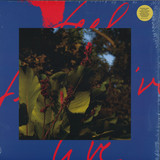
The result of these experiences is Feel Live, Massimiliano's third full-length endeavour. It was recorded in several intimate, sometimes improvised studio settings between Los Angeles, Portland, and Massimiliano's homebase in Berlin as well as at airports and on intercontinental flights high up in the sky. Featuring vocals by Private Agenda, Peaking Lights, Kim Anh and instrumental contributions by Fort Romeau, Tim K, and Jules Etienne, Feel Live is Massimilano's most playful and imaginative work to date. It's as emotional as sensual, as vibrant as the first ray of light after a thunderstorm has cleared the air.
Is it awkward or odd to call this record jazzy Presumptuous to pinpoint its spacial, almost orchestral qualities Unfair on the ruling Cosmic powers to highlight its aspirations of founding a new land of Balearic Harmonia and getting down at a huge fertility rite with electro enthusiasts and house lovers Not one bit. Feel Live is pure grandeur and elegance. It feels like an eternal movement.
Martha Graham has dedicated her whole life to dancing. 'It's permitting life to use you in a very intense way,' she said. 'Sometimes it is not pleasant. Sometimes it is fearful. But nevertheless it is inevitable.' Massimilano couldn't agree more. His advice when facing the inevitable: 'Live what you are feeling, feel what you are experiencing, good or bad, it is an experience.'
Ever since Onom Agemo & The Disco Jumpers broke the dreaded curse of the difficult second album by releasing "Liquid Love", a cocktail so spicy and delectable that it could warm the cockles of the grumpiest man alive's heart, even in the most Arctic conditions, everybody wondered how the Onom crew could top that one. But now you have an opportunity to whip out your "Magic Polaroid" as proof that this wasn't an impossible Project. Never before has the band so successfully captured their full-on live sound as they do here, thanks to three days of recording frenzy at Daniel Nentwig and Sebastian Maschat's Butterama studio, a haven of analog hardware hidden in a remote part of Berlin's Neukölln district. The exploding kaleidoscope of styles that make up this album, perfectly reflected by the stunning cover artwork from Nick Henderson and photography by Christoph Rothmeier, means that they can no longer be confined to their early description as an "Afro-Funk Quintet" or merely described as a lively tribute to the artists which have influenced them: their sound is 100 per cent pure uncut Onom Agemo, even though every track feels like a new beginning. The presence of a charismatic in-house vocalist who brought her own lyrics along has also boosted their confidence considerably and provided a further knock-out punch to their onstage performances.
And no one will be disappointed as soon as the first bars of "The Trumpets Of Denmark" stomp on stage like a boisterous fanfare, with Johannes Schleiermacher's impressive wall of sound production making the musicians sound like a much bigger band than what their line-up suggests (with Maria Schneider from Andromeda Mega Express Orchestra adding some extra percussive clout) and just the right amount of dizzying cross-rhythms to steer it away from potential bombast. When Onom Agemo's powerhouse vocalist Natalie Greffel starts chanting what at first sounds like a string of Onomatopoeia, it soon becomes clear that she's laying down her manifesto for a nostalgic Space-Age yet to come, with a few key words serving as Mantra (Focus, patience, tears and creation): an invitation to drive off the Information Superhighway and its endless litany of polite noises, to redirect our gaze inside ourselves and learn to understand and sometimes question how others perceive us.
The New York Downtown Producer/Composer Returns With His First New Album In 3 Years
EIGHTEEN: the year of release, 2018. EIGHTEEN: the age at which I first used a synthesizer.
In creating EIGHTEEN I worked independently in the studio, initially building up tracks with synthesizers and found sounds recorded in my daily comings and goings. After working with the tracks over a period of months,I shared them with a few musicians, who added their own instrumental layers. Though working independently, we all shared a similar working process: working in our personal recording spaces, as opposed to larger recording studios.
The musicians are: Gabe Gurnsey (drums) of Factory Floor, with whom I collaborated on the Beachcombing EP and performed live at London's ICA. I appear on Gabe's newly released album Physical;
Larry Saltzman (guitar) has played in my Love Of Life Orchestra since the 1970's. Well-known for his work with Arthur Russell ('Kiss Me Again', Flying Hearts), he is in high demand in NYC by acts such as Simon and Garfunkel;
Paul Nowinski, (bass) has played with LOLO since the 1980's. Paul has an impressive list of credits, including Les Paul, Keith Richards, Bernard Purdie and the Boston Pops; Matt Mottel, (electric piano), is the newest addition to the Love Of Life Orchestra. He is half the duo Talibam!, a leading act in the noise jazz scene; Lewin Barringer, (guitar), is a talented guitarist and producer in Philadelphia.
After mixing the final tracks, I brought the mixes to Berlin. There I worked with the brilliant mastering engineer Mike Grinser who helped to give the album a unified sound.
I think of this album as electronic music. It was created in my home studio, using analog and digital synthesizers, found sounds recorded on my phone, and instrumental parts contributed by friends. Finely crafted melodies and harmonies are set against subway noises, street construction, and distant foghorns. Sometimes there are sustained clusters, generated by my leaning against the keyboard. Deliberateness paired with randomness: this is what guided the artistic process.
This album is atypical for me as I am not playing saxophone. (I do play one reed instrument - a harmonica.) I grew up with the sax as my primary instrument. Yet my father was a radio journalist so the reel-to-reel tape recorder was a ubiquitous presence in the family home. From an early age,
I experimented with the tape machine: recording, overdubbing and splicing tape. I learned about Varese from Frank Zappa liner notes; I read John Cage's 'Silence.' Electronic music was on my radar.
My first exposure to an actual synthesizer came when I recorded my first single at the fabled Sound City Studio in Van Nuys, CA. The studio had a custom Neve board, but it also had a firstgeneration Moog modular synthesizer sitting unused in the maintenance room. I asked and they kindly let me experiment with it. Soon, I enrolled at the University of California - San Diego after I discovered they had separate studios for their Moog and Buchla systems. These large modular synthesizers were affordable then only by institutions and rock stars. But these would be soon eclipsed by smaller, cheaper synths in the 70's and early 80's. In the same way, recording studio technology became accessible in the 90's. . And thus the personal computer and digital audio allowed studio quality production in the home studio. Electronic music had become democratized.
Handmade music by way of digital technology: this is the music of EIGHTEEN
Daniel Terndrup Is A Los Angeles-based Dj And Producer. A Longtime Record Collector And
Digger, Daniel Has Become A Local Authority On Bygone Music. He Hosts Regular Radio Shows
On Dublab (crosseyed & Painless) And Nts (heat-wave) While Also Throwing A Weekly Party
For Heat-wave In Collaboration With Wyatt Potts At Former Hollywood Stripclub, Gold
Diggers. Daniel Started Making Music A Decade Ago As One Half Of Cosmic Kids. Alongside
Ron Poznansky, He Made A Name For Himself Producing Heady House And Astral Dance Tunes,
And Releasing Records With Cult Labels Throne Of Blood, Let's Play House And Dfa. In Addition
To Racking Up Plays On Original Cuts, The Duo Was Regularly Tapped To Deliver Remixes For
Heavyweights Like The Rapture, Holy Ghost!, Poolside And Superhumanoids.
After A Handful Of Releases With Cosmic Kids, Daniel Pivoted Toward His Own Project As Daniel
T. His Solo Output Is Inspired By Everything That You Might Find Leafing Through His Record
Collection: Funk, Post Punk, New Age And Pop Of Yesteryear (think: Compass Point All Stars To
Yellow Magic Orchestra). The Music He Releases As Daniel T. Is A Reflection Of His Global Taste,
But Indelibly Filtered Through His Southern California Surroundings
Blurb Attached
Following His 2015 Solo Debut Tetrachromat, Released On Friends Of Friends Sister Label
Young Adults, Daniel T. Returns With A New Album Called Heliotrope, Out This Summer On
Cascine. In Contrast To The Steady Dance-oriented Tempos Of Tetrachromat, Heliotrope
Moves Across More Dynamic Landscapes, All United Under Daniel's Sun-soaked Sensibility.
From The Breezy Bounce Of call,' To The Lithe Cover Of Tatsuro Yamashita's Classic windy
Lady,' He Effortlessly Wades Into Pop Territory. Elsewhere, On The Neon Glow Of moonlight
Bounce' (inspired By Dan's Near-religious Love Of Roller-skating) And The Ebullient First Single
'heat-wave', His Trademark Mid-tempo Swing Shines As Bright As His Synths. Heliotrope Is A
Reflection Of His Global Taste, But Indelibly Filtered Through His Southern California
Surroundings
It is said that every generation casts its mind back to a previous era in times of crisis; the resources that will allow us to decode the questions of our moment may lie in the myths of another era.
Le Renard Bleu, the new musical and cinematic collaboration between Lafawndah and composer Midori Takada, and filmmakers Partel Oliva, takes a cross- generational echo as ground zero for recovering a crucial myth for uncertain times: the blue fox.
As transmitted by Takada, the fox appears in both ancient Senegalese and Japanese folktales as the trickster archetype; belonging both to the heavens and to the earth, the fox is the agent of chaotic good, shaking the world up when its energy has become stagnant. Above all else, the fox is famous for its cunning nature.
Renard Bleu marks the first new music released by Takada in nearly twenty years; it would be difficult to overstate the importance of her return to the public eye. Her first solo record, 1983's Through the Looking Glass, has been rediscovered and heralded as a lost classic; the influence of her percussion trio, the Mkwaju Ensemble, continues to permeate and inspire a new generation entranced by its lucid beauty, playfulness, and sensual patience. Takada has performed in numerous film score orchestras, including the ensemble for Akira Kurasawa's Dreams, coincidentally a key influence on Renard Bleu.
In the ensuing years, Takada has worked closely with theater group the Suzuki Company of Toga on productions of Electra and King Lear, an experience, she says, that allowed her to pursue 'a unity of music, body and space.' Recent live solo performances have evinced the depths of her exploration of all three.
Equally, it is Lafawndah's freedom of tone, decentralized maps of ancient and modern music cultures, and alloying of devotional intensity with modern songcraft casts her as a distinct relative of Midori Takada's.
Over the course of two EPs, self- directed music videos, and countless live performances, Lafawndah has drawn out an uncompromising exploration of how theater, situational intervention, and choreography can amplify the affective palate of forward pop music. One can trace the influence of artists such as Meredith Monk, Carlos Sara, and Andy Kaufman as much as musical antecedents AR Rahmann, Missy Elliott, or Geinoh Yamashirogumi.
It is in a mutual commitment to this unity that Lafawndah, Takada and Partel Oliva find fertile aesthetic common ground.
The music of Renard Bleu originated in Takada's preoccupation with the legend of the fox; after constructing a vivid instrumental composition dramatizing the spirit animal's journeys through waterphone, bells, marimba and various forms of drums, Lafawndah responded - in her inimitable mix of fairytale and undertow-- with melodies and lyrics capturing a dialogue between her and the fox himself. Eventually, the duo met in Tokyo for a week of communing with the material at Avaco Creative Studios, where new elements were composed on site.
Created in partnership with KENZO and premiered today via their channels, it was Partel Oliva who imagined a contemporary cinematic frame for the myth of the fox to re- appear, creating a hybrid of choreography and narrative around Takada and Lafawndah's performance of their joint composition (also titled Le Renard Bleu.) Returning to film in Japan for the third time, Partel Oliva's moving image work (Club Ark Eternal, The Pike and the Shield) has set the standard for and revolutionized the fashion art film. Their deployment of original music, dance, and a highly stylized mis en scene coalesces here in the casting of Los Angeles krump artist Qwenga as the eponymous fox, stalking the halls of the ancient Noh theater in which Takada and Lafawnda's performance takes place.
Why call up the myth of the fox now In Le Renard Bleu, Lafawndah and Takada's collapsing of distance between generations, styles, and milieus intimates that the relationship to time must be shaken. The future lies in fragments in the past; to remember is to recover it; the fox rises to thicken the plot.
- A1: Big City (Everybody I Know Can Be Found Here) (Edited Version)
- A2: Just To See You Smile (Orchestral Mix)
- A3: I Love You
- A4: Set Me Free / I've Got The Key
- A5: Set Me Free (Reprise)
- B1: Feel So Sad (Reprise)
- B2: Hypnotized (5:57) 8. Sometimes
- B3: Feelin' Just Fine (Head Full Of Shit)
- B4: Billy Whizz / Blue 1 (Edited Version)
Following the quickly sold out limited edition red coloured vinyl that was exclusively released for Record Store Day 2017 Space Age Recordings are pleased to announce a new vinyl pressing of Spacemen 3's fourth and final studio album "Recurring'. This album is again pressed on heavyweight 180 gram vinyl with printed card inner sleeve but this version is the standard black vinyl version.
On Video Age's forthcoming album Pop Therapy, out June 22nd via Inflated Records, longtime friends and songwriting partners Ross Farbe and Ray Micarelli conjure up a thrilling assortment of experimental pop songs. Using a palette of vintage synthesizers and the propulsion of a Sequential Circuits Drumtraks drum machine, the New Orleans-based group's buoyant synth-pop echoes from some imagined vision of the past, leaning on an invented nostalgia to soundtrack an ideal future that never arrived. Video Age brings that future fully to life on Pop Therapy. Emerging from New Orleans' DIY scene and label collectives, Farbe and Micarelli were intrigued by each other's songwriting among several curiously satisfying guitar pop bands. As a producer and prolific engineer, Farbe has helmed some of the most exciting releases from genre-pushing New Orleans artists, whose singular visions are made possible with his gifted ear and love of tape recording. Micarelli's talent for crafting simple, tangible melodies complements Farbe's studio world-building, letting ideas drift until they emerge into impressive arrangements. The pair's seemingly effortless gift for crafting earworm hooks was glimpsed on their 2016 debut Living Alone, a gorgeous collection of guitar-driven melancholy. On Pop Therapy, they're joined by Duncan Troast, Nick Corson and Jordan Odom, taking inspiration from the limitless possibility on sonic canvases of the late 1970s and early 1980s (Yellow Magic Orchestra, McCartney II, Donald Fagen's The Nightfly). Where Living Alone catalogued the solitude of reflecting on what was and could have been, the sentimental love songs on Pop Therapy gaze longingly at the likeliness of a brighter tomorrow.
Do you like Love songs After spending a lifetime spent avoiding this subject in song, Joel Sarakula finally admits that he does. On his new album "Love Club" Sarakula relives the golden age of Soulful and Romantic Pop music and connects it with a modern aesthetic. While a deeper message of love and peace flows through the record, Joel Sarakula is no old fashioned hippie: ",Love Club' is about connecting to reality and re-framing the idea of romantic love and loss in the present, loveless age ". Featuring eleven songs touching all genres from disco to blues, from soul to soft-rock, Joel Sarakula's "Love Club" is a profound pop statement.
Joel Sarakula has travelled the world in search of his muse, experiencing everything from being a victim of Caribbean carjackings to performing in the remote fishing villages of Norway, via the dive bars of Europe and the US. It was the hodge-podge musical tapestry of England's capital that finally drew him to a settling point, in the wake of seemingly never ending run of shows. With personal tastes that span from the more avant-garde to soul and pop greats like Sly Stone, Todd Rundgren and Hall & Oates, there are clear nods to contemporaries like Unkown Mortal Orchestra, Erlend Oye and Toro Y Moi in terms of ambition and style.
With his last two albums "The Golden Age" and "The Imposter" collecting strong radio plays at BBC Radio 2, BBC 6, BBC London, XFM Joel Sarakula has been play-listed nationally in Europe including Flux FM, WDR 5, Radioeins, Bayern 2, Deutschlandfunk and Deutschland Kultur Radio in Germany as well as in Benelux and Italy and Spain. He is a regular fixture on the live festival and club circuit in the UK, Europe and internationally including appearances at SXSW, Primavera Sound, Glastonbury, The Great Escape, Liverpool Sound City, Scala London, Tallinn Music Week, V-ROX (Vladivostok) and Reeperbahnfestival Hamburg.
"Love Club" is Sarakula's bold and unashamedly emotional next step. In essence the album is a homage to the soulful singer & songwriter artistry of the Seventies filtered through a darker contemporary lens - fitting for these uncertain times. "I always shied away from generic love songs," the Sydney, Australia born songwriter admits, "but on this record I embraced the subject wholeheartedly... and intellectually, looking at themes of love, lust, loneliness and everything in-between." Take the first single "In Trouble", co-written with Michele Stodart of The Magic Numbers, as the best example for Joel Sarakula's unique, and honest approach to making music. "We Used To Connect" questions the changing nature of relationships in our social-media addicted world: 'We used to connect in the real world too, now the touch of your hand is a digital cue'.
"Coldharbour Man", on the other hand, examines the identity of the song's narrator and the artist vs. fan dynamic all wrapped up in a disco love song: "There's a lot going on in this particular track. I feel my writing has grown emotionally...", explains Joel Sarakula. "Just best to listen yourself and make up your own interpretation!: 'We met in a song come to life like some fantasy cliché, though I'm known for my moves in the dark you flooded sunshine on my day'. Then there's "Baltic Jam", capturing romantic love and loss in authentic 70s confessional singer & songwriter style and of course "Dead Heat", a song about how there is struggle in the most perfect relationship pairings as the match is so even: "I recall an ex-girlfriend of mine... when we first met, we thought we hated each other but we eventually flipped that emotion and realised we had a deep passion and love for each other, there just was a lot of underlying sexual tension!" : 'It's a battle we could only win, if we lose. We'd be stronger if these lonely ones became two'.
More than a year in the making, Joel Sarakula recorded "Love Club" in various studios around London and Berlin capturing soulful performances from his many musical comrades on vintage analogue equipment. "This record has truly been a labour of love. Recording and privately sharing these performances amongst my collaborators started to feel like a bit like a club - I guess that lead to the album title! I was surprised how much I actually enjoyed the 'love-making process' and I look so much forward to playing these new songs on stage with my band." We can't wait, Joel Sarakula.
Lullabies For Insomniacs presents 'For Leena', a collection of unreleased pieces composed between 1991 & 1998 by Dino J.A. Deane for the choreography of Colleen Mulvihill. Gatefold Sleeve
.
Dino J. A. Deane began his professional career, at the age of nineteen, as a musical arranger and multi-instrumentalist (trombone, flutes, keyboards, percussion). He worked in funk bands around Los Angeles before moving to San Francisco in the mid 1970's, where as an improvising artist he became involved in the diverse communities of dramatic theatre, modern dance, free jazz and punk rock.
In the early 1980's Mr. Deane pioneered the use of live-electronics, live-looping and live-sampling in three distinct genres that heavily informed his later compositions: As a member of art-punk band 'Indoor Life', touring and recording with fourth world pioneer Jon Hassell and as an electro-acoustic percussionist in the Conduction orchestras of Butch Morris.
During this period Mr. Deane also worked as a sound designer for the theatre, with directors Sam Shepard, Julie Hebert and Christoph Marthaler. He also maintained a presence in the world ofmodern dance, creating and performing compositions for former Olympic gymnast Colleen Mulvihill.
The couple met in San Francisco in 1979 through his good friend Bruce Ackley, whom was commissioned to compose a score for one of her solo pieces. Colleen, was than a member of the Margaret Jenkins Dance Company and was planning to move to New York City to set out on her own as a dancer and choreographer. Their paths crossed again in 1980 when Dino moved to NYC with Indoor Life, during this time they began a long term relationship both on and off the stage, which continues to this day.
Hailing from Mali, Amadou Bagayoko and Mariam Doumbia first met as children at Mali's Institute for the Young Blind—both lost their vision at an early age. It was here that they started performing in the institute's Eclipse Orchestra, eventually marrying and began recording together in the '80s.
Over the span of three decades Amadou (guitar and vocals) and Mariam (vocals) developed an international following having recorded eight full-length albums and toured around the world. Their album Welcome To Mali (2008) was nominated for the Best Contemporary World Music Album' at the 52nd Grammy Awards. Tour highlights for the duo include supporting U2 on their U2 360 Tour, performing at the 2010 World Cup for FIFA's Kick-Off Celebration and performing alongside major acts across multiple genres such including Blur, Coldplay and Pink Floyd's David Gilmour.
The album also includes the hit single Bofou Safou,' which Stereogum calls the funk, the whole funk, and nothing but the funk.' The band discussed La Confusion and performed new music on a recent stop at KCRW's Morning Becomes Eclectic' during their recent sold out North American seventeen city headline tour — watch HERE. The band played major markets including New York, Los Angeles, San Francisco, Chicago, Washington D.C., Philadelphia, Montreal.
Amadou & Mariam recently released the Bofou Safou EP via Because Music. The EP includes the first two La Confusion singles, Bofou Safou' and Filaou Bessame,' alongside remixes of the EP's title track by Fatima Yamaha, Africaine 808, Henrik Schwarz and more. The term bofou safou' is a Bambara (the Malian national language) nickname given to nonchalant young men who would rather dance than work. Of the new EP, the group notes, We really like the remixes that were made for the EP. You get to hear our music in a different form, which is great. All five remixes manage to catch the essence of our song while really pushing those enticing afro pop and electronic vibes further.'