Search:new funk

Styles
All
Cho & Random Impetus - Brother Sister / Candlelight (Remixed)

Straight out of New York, the debut 7 inch by Cho and Random Impetus was presented by MENACE label and first released in the USA in 2019. Featuring the two singles "Brother Sister" and "Candlelight", the EP is a powerful call to humanity.

Previously released on vinyl, this project was directed by Japanese artist Cho and features local musicians. It was recorded in analog, giving the track a very old school vibe by utilizing jazz, funk, soul and disco melodies to create a rich 1970s-esque sound. "Brother Sister", is a feel-good modern disco that could easily pass as something from the heyday of the genre, and "Candlelight," another sure-shot tune is a funk groover with its jazzy horn harmonies and strong male vocals.

The record also caught the attention of Paris-based French DJ Hugo LX, who is very close to the MENACE collective and also a genuine funk and disco enthusiast. Offering a remix album for Cho and Random Impetus' 7-inch record seemed evident for him. He invited DJ Spinna, the renowned hip-hop and house producer from Brooklyn, as well as his long-time friend and collaborator, to join him on the project.

out of Stock

Order now and we will order the item for you at our supplier.

15,92

Last In: 3 years ago
VARIOUS - FUNK DIGGIN' LP

Various

FUNK DIGGIN' LP

12inch3419766
Wagram
30.09.2022

Some are looking for gold or oil and others are passionately looking for forgotten music treasures! Those who can be described as "sound gold diggers" criss cross record shops or confidential places to unearth musical nuggets previously kept in the dark. This practice began with sampling in the 80s and has now become a way of safeguarding the world's musical heritage. With our new "Diggin' Collection", we invite you to discover soul, funk or disco gems from the 70s and the 80s available on three nice vinyls for your pleasure.

out of Stock

Order now and we will order the item for you at our supplier.

15,34

Last In: 2 years ago
JAZZKANTINE - Discotheque LP

Jazzkantine

Discotheque LP

12inchIN221401
Rap Nation
30.09.2022

Die Jazzkantine hatte nie Berührungsängste beim Manövrieren zwischen den Genres, das neue Studioalbum "Discotheque" stellt dies eindrucksvoll unter Beweis. Gründer und Bandleader Christian Eitner hat es geschafft, die vielköpfige Charaktertruppe im Kern seit fast 30 Jahren zusammenzuhalten. Gestählt durch unzählige Gigs in kleinen schmuddeligen Clubs, aber auch in piekfeinen Theatern und in riesigen Arenen. Die Jazzkantine hat bis dato um die 1.500 Konzerte gespielt, das Schönste und Schlimmste, Aufregendste und Außergewöhnlichste aus allen Musikwelten erlebt. Und sie hat noch lange nicht genug. Wir müssen wieder tanzen. Wir müssen wieder singen. Und so taucht die Jazzkantine ein in die Welt der "Discomusik", die in ihren Ursprüngen vor 50 Jahren im Milieu des New Yorker Undergrounds viel diverser und innovativer ist, als man vermutet. Eine Melange aus ersten DJ-Techniken und neuen bombastischen Sound-Systemen bietet auf privat organisierten House Partys viel Raum zur Entfaltung der LGBT-Community. Noch heute erinnert alljährlich der Christopher Street Day an die Stonewall-Riots und somit an eine Zeit, als noch gleichgeschlechtlicher Tanz verboten ist. Vor allem David Mancusos "Loft" ist Anfang der 70er eine Keimzelle für den Disco-Sound, der erst viel später mit Hits wie "Stayin' Alive" und "Le Freak" zum internationalen Boom wächst - auch die Rolling Stones, Abba und Kiss springen bekanntlich später auf den Zug auf. Parallel verbinden aber auch Jazzgrößen wie Herbie Hancock, Miles Davis und Chick Corea die Raffinesse des Jazz mit der rhythmischen Intensität des Funks zu "Fusion". Und Fred Wesley sagt: "Discomusic ist Funk mit einer Krawatte". Wie es sich für die experimentierfreudige Jazzkantine gehört, entsteht auf "Discotheque" ein Sound, den man "Disco Jazz" nennen könnte - alles im gewohnten Mix aus Funk, Soul und Rap. Songs, die Lust machen, die neun Musiker endlich wieder live auf der Clubbühne zu erleben.

pre-order now30.09.2022

expected to be published on 30.09.2022

21,22
JAZZKANTINE - Discotheque LP

Jazzkantine

Discotheque LP

12inchIN228761
Rap Nation
30.09.2022

Die Jazzkantine hatte nie Berührungsängste beim Manövrieren zwischen den Genres, das neue Studioalbum "Discotheque" stellt dies eindrucksvoll unter Beweis. Gründer und Bandleader Christian Eitner hat es geschafft, die vielköpfige Charaktertruppe im Kern seit fast 30 Jahren zusammenzuhalten. Gestählt durch unzählige Gigs in kleinen schmuddeligen Clubs, aber auch in piekfeinen Theatern und in riesigen Arenen. Die Jazzkantine hat bis dato um die 1.500 Konzerte gespielt, das Schönste und Schlimmste, Aufregendste und Außergewöhnlichste aus allen Musikwelten erlebt. Und sie hat noch lange nicht genug. Wir müssen wieder tanzen. Wir müssen wieder singen. Und so taucht die Jazzkantine ein in die Welt der "Discomusik", die in ihren Ursprüngen vor 50 Jahren im Milieu des New Yorker Undergrounds viel diverser und innovativer ist, als man vermutet. Eine Melange aus ersten DJ-Techniken und neuen bombastischen Sound-Systemen bietet auf privat organisierten House Partys viel Raum zur Entfaltung der LGBT-Community. Noch heute erinnert alljährlich der Christopher Street Day an die Stonewall-Riots und somit an eine Zeit, als noch gleichgeschlechtlicher Tanz verboten ist. Vor allem David Mancusos "Loft" ist Anfang der 70er eine Keimzelle für den Disco-Sound, der erst viel später mit Hits wie "Stayin' Alive" und "Le Freak" zum internationalen Boom wächst - auch die Rolling Stones, Abba und Kiss springen bekanntlich später auf den Zug auf. Parallel verbinden aber auch Jazzgrößen wie Herbie Hancock, Miles Davis und Chick Corea die Raffinesse des Jazz mit der rhythmischen Intensität des Funks zu "Fusion". Und Fred Wesley sagt: "Discomusic ist Funk mit einer Krawatte". Wie es sich für die experimentierfreudige Jazzkantine gehört, entsteht auf "Discotheque" ein Sound, den man "Disco Jazz" nennen könnte - alles im gewohnten Mix aus Funk, Soul und Rap. Songs, die Lust machen, die neun Musiker endlich wieder live auf der Clubbühne zu erleben.

pre-order now30.09.2022

expected to be published on 30.09.2022

23,91
Maston - Panorama

Maston

Panorama

12inchBEWITH110LP
Be With Records
30.09.2022

With Panorama, Frank Maston pays homage to the classic era of library records and Italian soundtracks of the 70s. A blissed-out, grooving collection of filmic cues, it continues the unique brilliance of Tulips and Darkland. Elegant and easy, subtle and stylish, breezy and beautiful; this is his Maston-piece. Commissioned by legendary label KPM, Panorama cements Maston as a master of modern classics and the most mesmeric of contemporary composers.

In early 2020, Be With suggested to Frank that he should make a KPM record. He wasn't aware that they were still putting out new library records - but he was super keen: "It was completely surreal and it still hasn't fully sank in that I have a record in that catalog, sitting alongside those incredible albums that were so influential to me."

Frank was visiting family in his hometown of LA in March 2020 when the world ground to a halt so the KPM project arrived at a fortuitous moment. Having fantasised about committing to a record with no distractions, with a proper budget, access to his gear and space to work in - to really dig in and try to write and arrange the best work he could possibly make - it was a real "be careful what you wish for" moment. But, as Frank explained, "it completely saved my year and sanity to have something to focus on and get excited about. It was my lifeline." He spent seven months on it, working almost every day.

Maston had already been making library-influenced music so when KPM outlined the criteria for the tracks it was exactly what he had been doing all along. He thought the best approach would be to make a follow-up to Tulips that had a parallel life as a KPM record. Enjoying complete creative freedom, “gave me the drive to power through and dig in deep. I'm not sure if I could have kept myself on such a rigorous recording schedule under my own steam, and I think the momentum I had writing and recording it is part of the strength of this record."

Maston’s sleek retro-groove instrumentals emulate the classic KPM “Greensleeve” reel-to-reel recordings that provided mood-setting music for mid-century cinema, television, and radio programs. Apparently in close conversation with the John Cameron-Keith Mansfield KPM pastoral masterclass Voices In Harmony, Maston's Panorama could be heard as that record's funky follow-up. Yes, it's *that good*. Another reference point from the hallowed library would be Francis Coppieter's wonderful Piano Viberations.

Opener "First Class" is a blissed-out groove, featuring the soothing vocals of Molly Lewis and a glistening harp over drums, a two-note bass motif (from Eli Ghersinu of L'Eclair) and an assemblage of guitars, synths, French horn and glowing vibraphone. Acid Lounge, anyone? The irresistibly funky "Easy Money" is a gorgeous cut led by more of Molly's vocals, pastoral flute and Rhodes, underpinned by drums and percussion, grooving bass, chilled guitars and synth strings. Kicking the tempo up, the percussive "Storm" is a vibin' filmic-fusion jam where psychedelic guitars (courtesy of Pedrum of Allah Las/Paint) organ, jazzy flute, Rhodes and vibes all compete for a place in the sun, over drums and walking bassline.

The heavenly "You Shouldn't Have" is a delicate, melancholic wonder; a dreamy instrumental where the melody is shared by a whistle, harpsichord and celeste, over a cyclical piano chord sequence and bass, synths, guitars, organ and distant French horn. The tempo rises again with the passionate, sticky "Fling", a summery, nostalgic groove with skipping drums and percussion, warm bass and electric guitar, yearning flute and synth strings. The brilliantly titled "Fool Moon" has that Voices In Harmony sound down pat. A romantic slow-mo dreamscape of Rhodes and harpsichord, piano, light drums and softly strummed acoustic guitar.

Side B opens with "Medusa", a hopeful, mellowed-out track with shuffling drums, feel-good flute, muted horns, glowing Rhodes and synth strings. The soft and gentle "Morning Paper" is an elegant way to start the day; a beatless blend of flute, guitar, percussion, ambient synths and vibes. The upbeat head-nod jam "Scenic" has that widescreen car-chase feel, uptempo drums and percussion, grooving bass, piano, synths and ambient electric guitar. "Adieu" is a smooth summer vibe, relaxing with brushed drums, Rhodes, flutes and horns. Molly Lewis's gorgeous vocals steal the show, alongside vibes, jamming organ and synth strings.

"Hydra" is another laid-back 70s-sounding retro cinema cue with light drums and percussion, walking bass, spacey synths, clavinet, glowing vibraphone, vintage organ and electric guitar. Closer "Jet Lag" is a laconic bow out; bass-driven drum machine soul, featuring hand percussion, Rhodes, vibes, synths and organ.

Multi-instrumentalist Frank played a bit of everything across Panorama. Yet, humble as ever, he believes the time, energy, and enthusiasm of all of the musicians invited to the sessions helped him realise his vision: "There were two Italian flautists who really understood what I was going for. Two french horn players, cor anglais, a vibraphonist and a flügel horn player. I've never involved this many people in my projects before, and yet the result is the most "me" record I've ever made."

Musically, a strong Italian theme runs through the record. Frank is fascinated by ancient Rome and both his parents are Italian (Maston was originally Mastrantonio before anglicisation). So, it felt natural to fully embrace these strands and tie everything together with the striking artwork. The Romans were influenced by Greek culture, emulating their art and architecture, which, in turn, influenced Renaissance era artists. Frank acknowledged this tradition when reflecting on his place in the lineage of library and soundtrack composers. He then asked his friend Mattea Perrotta, a painter and sculptor, for some sketches. What he received was exactly what he had in mind: "Especially the theater mask, which really captures the range of moods on the album". Frank arranged them as per the cover and it soon felt right: "I wanted to make a cover that was reminiscent of the classic KPM albums without making it too pastiche - so it has its own identity and looks at home alongside other library records, while still fitting in nicely in the KPM catalogue." The last step was for us to introduce Frank to Be With-KPM’s Rich Robinson, who helped put together the back and centre labels and align it all within the KPM standard.

Panorama is a perfect title for the album. With no opportunity to travel for tours or recording projects, Frank arranged postcards from his collection on his desk with beautiful views of the mediterranean coast, the Roman Colosseum and Cinque Terre. These also served as visual prompts: "That was part of the sonic concept - imagining myself driving down the mediterranean coast with this music on, with the top down." Additionally, the range of moods and vibes - "I tried to make each song very different from the previous one in terms of tempo and arrangement and feeling" - speaks to the idea of a Panorama of music and sounds and emotions. The last track was originally called Panorama, but KPM already had that title in their catalogue so it was changed to "Jet Lag", which, as Frank notes, "is perhaps even more fitting, since the trip is over".

out of Stock

Order now and we will order the item for you at our supplier.

23,32

Last In: 3 years ago
JAZZKANTINE - Discotheque LP

Jazzkantine

Discotheque LP

12inchIN228761
Rap Nation
30.09.2022

Gold Vinyl

Die Jazzkantine hatte nie Berührungsängste beim Manövrieren zwischen den Genres, das neue Studioalbum "Discotheque" stellt dies eindrucksvoll unter Beweis. Gründer und Bandleader Christian Eitner hat es geschafft, die vielköpfige Charaktertruppe im Kern seit fast 30 Jahren zusammenzuhalten. Gestählt durch unzählige Gigs in kleinen schmuddeligen Clubs, aber auch in piekfeinen Theatern und in riesigen Arenen. Die Jazzkantine hat bis dato um die 1.500 Konzerte gespielt, das Schönste und Schlimmste, Aufregendste und Außergewöhnlichste aus allen Musikwelten erlebt. Und sie hat noch lange nicht genug. Wir müssen wieder tanzen. Wir müssen wieder singen. Und so taucht die Jazzkantine ein in die Welt der "Discomusik", die in ihren Ursprüngen vor 50 Jahren im Milieu des New Yorker Undergrounds viel diverser und innovativer ist, als man vermutet. Eine Melange aus ersten DJ-Techniken und neuen bombastischen Sound-Systemen bietet auf privat organisierten House Partys viel Raum zur Entfaltung der LGBT-Community. Noch heute erinnert alljährlich der Christopher Street Day an die Stonewall-Riots und somit an eine Zeit, als noch gleichgeschlechtlicher Tanz verboten ist. Vor allem David Mancusos "Loft" ist Anfang der 70er eine Keimzelle für den Disco-Sound, der erst viel später mit Hits wie "Stayin' Alive" und "Le Freak" zum internationalen Boom wächst - auch die Rolling Stones, Abba und Kiss springen bekanntlich später auf den Zug auf. Parallel verbinden aber auch Jazzgrößen wie Herbie Hancock, Miles Davis und Chick Corea die Raffinesse des Jazz mit der rhythmischen Intensität des Funks zu "Fusion". Und Fred Wesley sagt: "Discomusic ist Funk mit einer Krawatte". Wie es sich für die experimentierfreudige Jazzkantine gehört, entsteht auf "Discotheque" ein Sound, den man "Disco Jazz" nennen könnte - alles im gewohnten Mix aus Funk, Soul und Rap. Songs, die Lust machen, die neun Musiker endlich wieder live auf der Clubbühne zu erleben.

pre-order now30.09.2022

expected to be published on 30.09.2022

23,91
The Allergies - Hypnotise

The Allergies

Hypnotise

7"-VinylJAL383V
Jalapeno
30.09.2022

'Hypnotise' is the spellbinding new single from sampler slayers, The Allergies. Who, once again, build funky new worlds out of dope beats and loops from their wild and wonderful record collections.

Here, the Bristol-based duo break new ground, sampling the incredible Deli Sosimi and heading out on the housier side of things, working a deadly dancefloor 4/4 around their signature soulful stylings.

Pulsing kicks and playful percussion keep the pace, as euphoric Afrobeat horns and insistent vocal lines build the energy in the room.

It's a captivating cut, made for discerning DJs and discos. But, as soon as you let the infectious double bass-led groove hit you, you'll mesmerised by the music.

'Vamonos' on the flip laces old school boogaloo and salsa samples with sizzling hi-hats, claps, and club-ready breaks. It's an anthem for beach bodies, holiday heroes, and sun-seekers, hell bent on escaping the rat race.

out of Stock

Order now and we will order the item for you at our supplier.

15,08

Last In: 21 months ago
VARIOUS - SOUL DIGGIN' LP

Various

SOUL DIGGIN' LP

12inch3419776
Wagram
30.09.2022

Some are looking for gold or oil and others are passionately looking for forgotten music treasures! Those who can be described as "sound gold diggers" criss cross record shops or confidential places to unearth musical nuggets previously kept in the dark. This practice began with sampling in the 80s and has now become a way of safeguarding the world's musical heritage. With our new "Diggin' Collection", we invite you to discover soul, funk or disco gems from the 70s and the 80s available on three nice vinyls for your pleasure.

pre-order now30.09.2022

expected to be published on 30.09.2022

15,34
Grotto Terrazza - Kalte Köstlichkeiten LP

Add color, reframe, follow the prism, head to the beach. Not sure we’d ever be talking about Grotto Terrazza, the Munich based art/music/life project of Thomas Schamann, in these terms, but here we are, adjusting to his ever evolving collage of life in the form of his new album ‘Kalte Köstlichkeiten’, an ecstatic uptempo, punchy mitteleuropa celebration of punks in the city.

If his 2019 debut ‘Stumpfer Gegenstand’ (also co-released by Cut Surface and Maple Death) introduced us to Grotto Terrazza’s beautiful intimate translucent dark beat poetry set over art-punk ritmik, foggy nightclubs and musk-induced industrial malaise, Kalte Köstlichkeiten sets the record straight by adding a whole new dimension. Cold Delicacies (the literal translation) delivers so much more, 12 melting popsicles that furiously jump from dancefloor post-punk, brazen EBM, funk sleaze and smoked out cold-wave.

out of Stock

Order now and we will order the item for you at our supplier.

24,79

Last In: 2 years ago
Kalabrese - Independent Dancer LP 2x12"

HOT REPRESS !!!

Kalabrese is a curious tastemaker and bold musical force that dares to tread the murky waters between indie and electronica, playfully emphasising vocals on song based productions and presenting an album that pushes the limits and portrays dance music in a peculiar and natural way. Inspired by blues, funk, and all those beautiful dancers and tragic heroes of the night, 'Independent Dancer' is laced with curiosity and fever inducing productions.

Six years on from his 2007 debut album 'Rumpelzirkus', a critically acclaimed project that was pursued by performances at infamous festivals like Sonar, Mutek in Montreal and Transmediale in Berlin as well as playing nearly every club basement in Europe with his live-project "Rumpelorchester", Sascha Winkler AKA Kalabrese returns with a masterpiece.

Sounding like a soundtrack from James Murphy (in fact Kalabrese played back to back with the LCD Soundsystem lead man in 2012) and Nicolas Jaar, who featured his epic blues solo 'Desperate Man' on his own Resident-Advisor podcast, 'Independent Dancer' commences with an almost euphoric and certainly unpretentious spirit. 'Purple Rose' steps out downbeat with Sarah Palin, the newest Rumpel discovery, singing an astonishing duet with Kala, an almost country-like creation with ringing bells from the Alps and a hypnotic house beat crashing behind. Kalabrese recruits friend and mentor, A.C.

out of Stock

Order now and we will order the item for you at our supplier.

23,49

Last In: 21 months ago
Tonico 70 - Vic'l / Fantasie (Sampled Version)

From an offshoot of Salifornian funk/soul collective Banda Maje, here comes a new 7" single penned by the rapper, producer and band's co-founder Tonico 70. "Vic'l / Fantasie" is a tasty prelude to Tonico 70's forthcoming album "Antonico", due out this November on Four Flies Records.

Like the rest of the album, the two tracks on the single have been co-written and co-produced by Peppe Maiellano, Banda Maje's other founder, and offer a more intimate portrait of the artist. Tonico has put his 'tough-music-smuggler' persona aside to let his soulful side shine through.

"Vic'l", on side A, is a very autobiographical song. The flow of words you hear, almost a stream of consciousness, took place late one night in the privacy of home and was recorded on the spot. Tonico 70 evaluates his personal history, speaking about the people who are or were there for him. The sound is smooth and sweet, rife with contrapuntal notes and harmonies (those played on the Fender Rhodes and the flute especially stand out) and clearly reminiscent of 70s soul.

In the funky, uptempo "Fantasie", on the flip side, Tonico 70 lets his Salifornian flow roam free totalk about the strong bonds that bring us together and make us feel good.

Both tracks evoke images and stories while enveloping you in a warm embrace. Not unlike Banda Maje's music, they have a strong cinematic quality that Tonico 70's rap adds to nicely. We can't wait to listen to what's coming next!

out of Stock

Order now and we will order the item for you at our supplier.

16,60

Last In: 2 years ago
Hip Horns Brass Collective - "Thunder" b/w "Marathon Runner (Street Version)

With the band's first single pressed on wax, Rocafort Records and Say It Loud join forces to bring the sound of Barcelona's finest street brass band to the dancefloors.

'Thunder' is a fresh and energetic tune with jazz and funk arrangements based on a groove that hip-hop music lovers will quickly recognize.

On the B-side, "Marathon Runner" takes the form of a modern New Orleans brass band and its raw sound with all the groove and horn solos you would expect.

out of Stock

Order now and we will order the item for you at our supplier.

9,87

Last In: 3 years ago
The Gqom Trilogy - The Gqom Trilogy	LP 3x12"

DJ Scriby - Izingoma zeGqomu / DJ MARIIO - ZULU MAN / DJ Skothan – Nevegation. Highlighting the continuing evolution of Durban's globally influential gqom sound, this special trilogy of releases showcases three separate artists from South Africa's fertile musical landscape. The set captures a fresh wave of gqom innovation from veteran producer DJ Skothan/DJ Scoturn, DJ Scriby, and 20-year-old DJ MaRiiO. DJ Skothan/DJ Scoturn has been a key figure in Durban's underground scene for many years, producing alongside Phelimuncasi, Bhejani, Tweeyking, Lafaristo, MaRiiO and DJ MP3. His gqom and house tracks have quietly provided a rumbling engine for the city's scene, and "Nevegation" is his debut full-length, providing a complex diagram of his dancefloor versatility. This isn't the gqom you might expect to hear: immediately on opener 'The Gringo' familiar sounds - shovel kicks, chopped vocals, sampled gasps, horror movie strings - are shuffled into atypical patterns, creating jerky soundscapes rather than the expected four-on-the-floor bump. 'Salut to DJ Lag' pays respect to Durban's Beyoncé-approved pioneer, but twists the template into a propulsive new form, adding rolling and evolving percussion that teases fractal shapes each bar. But the album's most unexpected and forward-thinking moment arrives with the aptly titled 'The King of Gqom', a track that simmers the genre's percussive sounds into limber sci-fi club futurism, tweaking the bass sounds into patterns that nod to dubstep, Jersey club and ballroom. 25-year-old DJ Scriby has been working behind the scenes since 2013, assisting the first wave of gqom innovators promote their sound both inside Durban and beyond. In 2017 he joined London's Trax Couture to release "The Clermont EP", and here he introduces his long-awaited follow-up "Izingoma zeGqomu". Scriby's approach to gqom is well-studied and self-aware, which gives him the ability to stretch the sound's scope across the diaspora: just peep the Atlanta trap synths on the dynamic 'Friday 13th', or the absorption of tight grime snares on opening track 'Goi'. Scriby's engineering skill pushes his productions to the next level, lending slithering downtempo tracks like 'Ouuu1' and 'Igqom Libuye' a widescreen, big-room punch without losing the genre's undulating funk. And the producer even eyes the EDM mainstage with 'Qumqum!!', balancing saccharine synths with jerky kicks, claps and rolling toms. The youngest artist featured in the collection, DJ MaRiiO started producing when he was just 12 years old, watching YouTube production videos. "No one told me how to use FL Studio," he admits, "and no one helped me doing different genres." This might be why his music sounds so completely unique; the basic structure of gqom is still present, but MaRiiO augments these elements with youthful energy and carefree use of unusual sounds and production methods. "Zulu Man" opener 'GQom NyeGe' manages to mash together trance synths, DMZ bass and a driving woodblock rhythm that reminds you of its Durban roots, while the bizarre 'Ngom ya Phesh', featuring MaRiiO's regular collaborator Hot Chicks on vocals, pushes the gqom template into the red, with overdriven kicks and disorienting environmental sounds. All three records provide a 360 degree view of Durban's contemporary underground, nodding to the past, present and future of gqom. It's a genre that's constantly in flux as it moves from South Africa's bedrooms and basements to main stages and movie screens across the globe.

pre-order now30.09.2022

expected to be published on 30.09.2022

33,57
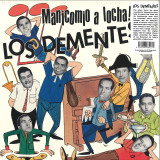
LOS DEMENTES - MANICOMIO A LOCHA LP

This album marks the debut recording for Venezuela's Velvet label by pianist Ray Pérez and his trombone-led salsa band Los Dementes. Heavy dance numbers and the distinctive vocals of Perucho Torcat make this historic 1967 rarity a sought-after collector's item. Now the LP has been lovingly restored, mastered from the original tapes, with its original artwork intact, preserving the legacy of Los Dementes for today's generation of salsa lovers everywhere. First time reissue. Salsa pianist, vocalist, composer and arranger Ray Pérez, acquired his nickname "Loco" by being a free, independent spirit, an innovator and iconoclast who was initially branded as "crazy" for the freshness and audacity of his sound. Amazingly, he is not that well known in the US, where he spent some time in the late 1960s and salsa was king during the 1970s. Yet he was quite popular in his home country from the beginning, especially amongst the working class of Caracas and Maracaibo, who adopted Cuban music played by New York Puerto Ricans as their own and called it "salsa" years before the term was employed by US labels like Fania as a marketing tool. Pérez is revered in Venezuela, as well as in Mexico and Colombia, and his storied career, which spans seven decades and thousands of concerts, has yielded more than 35 albums recorded by his various bands, including Los Dementes, Los Kenya, and Los Calvos, all of which are collector's items today. At the start of 1967 Pérez debuted Los Dementes, with vocalists Claudio Zerpa and Perucho Torcat backed by an ace band featuring only trombones in the brass section. Titled "¡Alerta mundo! Llegaron los 'The Crazy Men'" the record was released on the small Venezuelan label Prodansa. Soon after, Prodansa folded and Los Dementes were left without representation or much compensation for their efforts, being paid only in records. In the end of February of that year, Pérez returned to Caracas from a stint in Maracaibo in order to finish his first LP with the well-established and larger Velvet label, entitled "Manicomio a locha". In the first quarter of 1967, Velvet unleashed a trilogy of salsa records in order to compete with rival label Palacio and their recent success with Federico y su Combo Latino: "Porfi '67 Salsa & Boogaloo" by Porfi Jiménez y su Orquesta, "Guasancó" by Sexteto Juventud and lastly "Manicomio a locha". The LP begins appropriately with the boisterous title track, written by the band's conguero Carlos "Nené" Quintero, who would become a legend in coming years. Torcat describes a jam session in mental institution and introduces the band, with tasty solos by trombonist Rufo García followed by Ray on piano. Already you can hear something was different about Ray and his "Crazy Men"-a sound as wild and innovative as what was happening in New York with Eddie Palmieri, but with a more unhinged, raw feeling in line with Willie Colón and other younger Nuyorican bands. Next up is an intriguing track sung in a mix of Italian, English, Spanish and Papiamento by Pérez himself, performed in the complicated rhythm of the mozambique, an Afro-Cuban carnival beat developed in the early 1960s. This is followed by the heavy dancer 'Rico guaguancó', penned by Angelito Pérez, which changes from the guaguancó to the mozambique rhythm mid-way through, proving that Los Dementes were "different from the rest" as the lyrics say. 'Puerto Libre', sung by Torcat, is dedicated to the Venezuelan island of Margarita in the Oriente region, and the independent spirit of its working people. The rhythm changes from guaguancó to guajira and back again but remains danceable all the way through. The side closes out with a "3 in 1" medley inspired by the popular formula of the mosaicos of Billo's Caracas Boys, seamlessly knitting together several different tempos, rhythms, moods and compositions. Side two starts strong with the fierce yet satirical 'Corte e' patas', then 'Alma Cumanesa', a typical folk song refashioned as a guaguancó. This is followed by the funky 'Guajira con Boogaloo'. The tune echoes the sound of young Latin New York, pointing out the connection between Cuban and African American soul music. The pace picks up again with 'Fiesta de trombones', a hot descarga and then the album closes with another medley. Though this marks the end of a rather short album, it also signaled the emerging success of Los Dementes and their involvement with the salsa boom in Venezuela, quickly selling out of its initial run of 1000 records and making for a memorable debut on the Velvet label. Now this rare and sought-after LP has been lovingly restored, mastered from the original tapes, with its original artwork intact, preserving the legacy of Los Dementes for today's generation of salsa lovers everywhere.

out of Stock

Order now and we will order the item for you at our supplier.

24,58

Last In: 3 years ago
LTJ XPERIENCE - FEELING BETTER EP

Luca LTJ Trevisi (LTJ Xperience) began his dj/producer career in the 80s. As resident dj in two of the most famous Italian clubs of the time, Kinky in Bologna and Cap Creus in Imola, he was one of the first Italian jocks to spin House and to re-propose those black music, jazz and latin-bossa classics from the 70s that at the end of the same decade would have given birth to the Acid Jazz and Rare Groove movements. His first single release in 1988, titled First Job, together with Kekkotronics, was also the first release ever on Bologna based Irma Records. It was featured in a lot of compilations of the time and entered several playlists, rapidly reaching cult status for many UK and US djs. During the early 90s LTJ delivered a couple of singles in a kind of pre-breakbeat style: Dont Stop The Sax, released all over Europe, and Funky Superfly. He also produced US singer Tameka Starrs single Going In Circles, always for Irma Records, still a classic in the downtempo/r&b field. In the second half of the nineties Luca began to produce acid jazz bands like Bossa Nostra, still today one of Irma Records main acts. Their first album had Vicky Anderson as special
guest and today is still considered one of the most important European acid jazz albums. In the following years he concentrated on developing his activity as collector and rare vinyl merchant, which gave him the chance to get in touch with djs from all over the World and to discover many forgotten gems from the past years. Thanks to this experience he was able to create two extremely successful rarities series on Irma Records:

Groovy and Suono Libero. In the meanwhile LTJ started to dj outside Italy too, performing in important venues like the Blue Note and Jazz Café in London, Giant Step in New York and Montreux Jazz Festival in Switzerland. In 1999 saw the release of his first solo album under the LTJ Xperience moniker. The album was produced with the collaboration of fellow Irma artist and producer Ohm Guru and had Taka Boom and Jackson Sloan among the guests. Two of the main tracks on the album are brazil house classic Sombre Guitar and title track Moon Beat, which became a true hit of the Chill Out genre, featured in dozens of important compilations.

After making countless productions for Irma Records, including their second album When The Rain Begins To Fall (with the participation of the historic Spanish-American singer Joe Bataan), and the recents singles as ORGAN MIND / I LOVE YOU (favorite track by Larry Heard ) & ON THE FLOOR / SOUND MACHINE, LTJ is devoted almost exclusively to re-edit and reconstruct tracks from the past with the addition of sounds and rhythms in post production for labels like SUPER VALUE, SMALL WORLD DISCO, HOT GROOVY RECORDS, OH CRISTO! increasing the production of this new musical genre that is currently defined as beatdown/slo-mo, working with international labels such as Far Out Recordings, Sleazy Beats, Future Classics, E.A.R. Music For Dreams, Apersonal Music, Roam Recordings, !K7.

out of Stock

Order now and we will order the item for you at our supplier.

15,92

Last In: 12 months ago
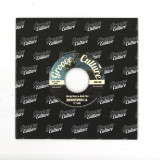
Micky More & Andy Tee - Downtown L.A. / Alright

New 7” record from Italian stallions Groove Culture, serving a high energy, high flying double dose of the good stuff. Funk & disco at its finest from Micky More & Andy Tee - check it out!

Supported by: Dj Rocca, Danny Krivit, The Shapeshifters, Brian Tappert, Hector Romero, Lenny Fontana, Cj Mckintosh, Grant Nelson, Angelo Ferrari, Souldynamic and more…

out of Stock

Order now and we will order the item for you at our supplier.

12,56

Last In: 13 months ago
Khidja - Something In The Water EP

Khidja continue to develop their tripped out vision with their first full EP for Hivern since 2019's 'Impossible Holiday'. In 'Something In The Water' the Romanian duo presents three new tracks that drift between genres and moods through open minded studio experimentation. "The Future Has Disappeared" and "Back To Vid" rely on contrasting sound palettes and a smart use of the stereo field to build up tension while 'Science of Ghosts' is an expansive number of galactic electro-funk. The 12" features a stripped out mystical remix by Azu Tiwaline while the digital release includes two extra oddball dancefloor cuts. Artwork by cm-dp.

out of Stock

Order now and we will order the item for you at our supplier.

13,40

Last In: 2 years ago
Lee Tracy & Isaac Manning - Is it What You Want LP

As the sun sets on a quaint East Nashville house, a young man bares a piece of his soul. Facing the camera, sporting a silky suit jacket/shirt/slacks/fingerless gloves ensemble that announces "singer" before he's even opened his mouth, Lee Tracy Johnson settles onto his stage, the front yard. He sways to the dirge-like drum machine pulse of a synth-soaked slow jam, extends his arms as if gaining his balance, and croons in affecting, fragile earnest, "I need your love… oh baby…"

Dogs in the yard next door begin barking. A mysterious cardboard robot figure, beamed in from galaxies unknown and affixed to a tree, is less vocal. Lee doesn't acknowledge either's presence. He's busy feeling it, arms and hands gesticulating. His voice rises in falsetto over the now-quiet dogs, over the ambient noise from the street that seeps into the handheld camcorder's microphone, over the recording of his own voice played back from a boombox off-camera. After six minutes the single, continuous shot ends. In this intimate creative universe there are no re-takes. There are many more music videos to shoot, and as Lee later puts it, "The first time you do it is actually the best. Because you can never get that again. You expressing yourself from within."

"I Need Your Love" dates from a lost heyday. From some time in the '80s or early '90s, when Lee Tracy (as he was known in performance) and his music partner/producer/manager Isaac Manning committed hours upon hours of their sonic and visual ideas to tape. Embracing drum machines and synthesizers – electronics that made their personal futurism palpable – they recorded exclusively at home, live in a room into a simple cassette deck. Soul, funk, electro and new wave informed their songs, yet Lee and Isaac eschewed the confinement of conventional categories and genres, preferring to let experimentation guide them.

"Anytime somebody put out a new record they had the same instruments or the same sound," explains Isaac. "So I basically wanted to find something that's really gonna stand out away from all of the rest of 'em." Their ethos meant that every idea they came up with was at least worth trying: echoed out half-rapped exhortations over frantic techno-style beats, gospel synth soul, modal electro-funk, oddball pop reinterpretations, emo AOR balladry, nods to Prince and the Fat Boys, or arrangements that might collapse mid-song into a mess of arcade game-ish blips before rallying to reach the finish line. All of it conjoined by consistent tape hiss, and most vitally, Lee's chameleonic voice, which managed to wildly shape shift and still evoke something sincere – whether toggling between falsetto and tenor exalting Jesus's return, or punctuating a melismatic romantic adlib with a succinct, "We all know how it feels to be alone."

"People think we went to a studio," says Isaac derisively. "We never went to no studio. We didn't have the money to go to no studio! We did this stuff at home. I shot videos in my front yard with whatever we could to get things together." Sometimes Isaac would just put on an instrumental record, be it "Planet Rock" or "Don't Cry For Me Argentina" (from Evita), press "record," and let Lee improvise over it, yielding peculiar love songs, would-be patriotic anthems, or Elvis Presley or Marilyn Monroe tributes. Technical limitations and a lack of professional polish never dissuaded them. They believed they were onto something.

"That struggle," Isaac says, "made that sound sound good to me."

In the parlance of modern music criticism Lee and Isaac's dizzying DIY efforts would inevitably be described as "outsider." But "outsider" carries the burden of untold additional layers of meaning if you're Black and from the South, creating on a budget, and trying to get someone, anyone within the country music capital of the world to take your vision seriously. "What category should we put it in?" Isaac asks rhetorically. "I don't know. All I know is feeling. I ain't gonna name it nothing. It's music. If it grabs your soul and touch your heart that's what it basically is supposed to do."

=

Born in 1963, the baby boy of nine siblings, Lee Tracy spent his earliest years living amidst the shotgun houses on Nashville's south side. "We was poor, man!" he says, recalling the outhouse his family used for a bathroom and the blocks of ice they kept in the kitchen to chill perishables. "But I actually don't think I really realized I was in poverty until I got grown and started thinking about it." Lee's mom worked at the Holiday Inn; his dad did whatever he had to do, from selling fruit from a horse drawn cart to bootlegging. "We didn't have much," Lee continues, "but my mother and my father got us the things we needed, the clothes on our back." By the end of the decade with the city's urban renewal programs razing entire neighborhoods to accommodate construction of the Interstate, the family moved to Edgehill Projects. Lee remembers music and art as a constant source of inspiration for he and his brothers and sisters – especially after seeing the Jackson 5 perform on Ed Sullivan. "As a small child I just knew that was what I wanted to do."

His older brother Don began musically mentoring him, introducing Lee to a variety of instruments and sounds. "He would never play one particular type of music, like R&B," says Lee. "I was surrounded by jazz, hard rock and roll, easy listening, gospel, reggae, country music; I mean I was a sponge absorbing all of that." Lee taught himself to play drums by beating on cardboard boxes, gaining a rep around the way for his timekeeping, and his singing voice. Emulating his favorites, Earth Wind & Fire and Cameo, he formed groups with other kids with era-evocative band names like Concept and TNT Connection, and emerged as the leader of disciplined rehearsals. "I made them practice," says Lee. "We practiced and practiced and practiced. Because I wanted that perfection." By high school the most accomplished of these bands would take top prize in a prominent local talent show. It was a big moment for Lee, and he felt ready to take things to the next level. But his band-mates had other ideas.

"I don't know what happened," he says, still miffed at the memory. "It must have blew they mind after we won and people started showing notice, because it's like everybody quit! I was like, where the hell did everybody go?" Lee had always made a point of interrogating prospective musicians about their intentions before joining his groups: were they really serious or just looking for a way to pick up girls? Now he understood even more the importance of finding a collaborator just as committed to the music as he was.

=

Isaac Manning had spent much of his life immersed in music and the arts – singing in the church choir with his family on Nashville's north side, writing, painting, dancing, and working various gigs within the entertainment industry. After serving in the armed forces, in the early '70s he ran The Teenage Place, a music and performance venue that catered to the local youth. But he was forced out of town when word of one of his recreational routines created a stir beyond the safe haven of his bohemian circles.

"I was growing marijuana," Isaac explains. "It wasn't no business, I was smoking it myself… I would put marijuana in scrambled eggs, cornbread and stuff." His weed use originated as a form of self-medication to combat severe tooth pain. But when he began sharing it with some of the other young people he hung out with, some of who just so happened to be the kids of Nashville politicians, the cops came calling. "When I got busted," he remembers, "they were talking about how they were gonna get rid of me because they didn't want me saying nothing about they children because of the politics and stuff. So I got my family, took two raggedy cars, and left Nashville and went to Vegas."

Out in the desert, Isaac happened to meet Chubby Checker of "The Twist" fame while the singer was gigging at The Flamingo. Impressed by Isaac's zeal, Checker invited him to go on the road with him as his tour manager/roadie/valet. The experience gave Isaac a window into a part of the entertainment world he'd never encountered – a glimpse of what a true pop act's audience looked like. "Chubby Checker, none of his shows were played for Black folks," he remembers. "All his gigs were done at high-class white people areas." Returning home after a few years with Chubby, Isaac was properly motivated to make it in Music City. He began writing songs and scouting around Nashville for local talent anywhere he could find it with an expressed goal: "Find someone who can deliver your songs the way you want 'em delivered and make people feel what you want them to feel."

One day while walking through Edgehill Projects Isaac heard someone playing the drums in a way that made him stop and take notice. "The music was so tight, just the drums made me feel like, oh I'm-a find this person," he recalls. "So I circled through the projects until I found who it was.

"That's how I met him – Lee Tracy. When I found him and he started singing and stuff, I said, ohhh, this is somebody different."

=

Theirs was a true complementary partnership: young Lee possessed the raw talent, the older Isaac the belief. "He's really the only one besides my brother and my family that really seen the potential in me," says Lee. "He made me see that I could do it."

Isaac long being a night owl, his house also made for a fertile collaborative environment – a space where there always seemed to be a new piece of his visual art on display: paintings, illustrations, and dolls and figures (including an enigmatic cardboard robot). Lee and Issac would hang out together and talk, listen to music, conjure ideas, and smoke the herb Isaac had resumed growing in his yard. "It got to where I could trust him, he could trust me," Isaac says of their bond. They also worked together for hours on drawings, spreading larges rolls of paper on the walls and sketching faces with abstract patterns and imagery: alien-like beings, tri-horned horse heads, inverted Janus-like characters where one visage blurred into the other.

Soon it became apparent that they didn't need other collaborators; self-sufficiency was the natural way forward. At Isaac's behest Lee, already fed up with dealing with band musicians, began playing around with a poly-sonic Yamaha keyboard at the local music store. "It had everything on it – trumpet, bass, drums, organ," remembers Lee. "And that's when I started recording my own stuff."

The technology afforded Lee the flexibility and independence he craved, setting him on a path other bedroom musicians and producers around the world were simultaneously following through the '80s into the early '90s. Saving up money from day jobs, he eventually supplemented the Yamaha Isaac had gotten him with Roland and Casio drum machines and a Moog. Lee was living in an apartment in Hillside at that point caring for his dad, who'd been partially paralyzed since early in life. In the evenings up in his second floor room, the music put him in a zone where he could tune out everything and lose himself in his ideas.

"Oh I loved it," he recalls. "I would really experiment with the instruments and use a lot of different sound effects. I was looking for something nobody else had. I wanted something totally different. And once I found the sound I was looking for, I would just smoke me a good joint and just let it go, hit the record button." More potent a creative stimulant than even Isaac's weed was the holistic flow and spontaneity of recording. Between sessions at Isaac's place and Lee's apartment, their volume of output quickly ballooned.

"We was always recording," says Lee. "That's why we have so much music. Even when I went to Isaac's and we start creating, I get home, my mind is racing, I gotta start creating, creating, creating. I remember there were times when I took a 90-minute tape from front to back and just filled it up."

"We never practiced," says Isaac. "See, that was just so odd about the whole thing. I could relate to him, and tell him about the songs I had ideas for and everything and stuff. And then he would bring it back or whatever, and we'd get together and put it down." Once the taskmaster hell bent on rehearsing, Lee had flipped a full 180. Perfection was no longer an aspiration, but the enemy of inspiration.

"I seen where practicing and practicing got me," says Lee. "A lot of musicians you get to playing and they gotta stop, they have to analyze the music. But while you analyzing you losing a lot of the greatness of what you creating. Stop analyzing what you play, just play! And it'll all take shape."

=

"I hope you understood the beginning of the record because this was invented from a dream I had today… (You tell me, I'll tell you, we'll figure it out together)" – Lee Tracy and Isaac Manning, "Hope You Understand"

Lee lets loose a maniacal cackle when he acknowledges that the material that he and Isaac recorded was by anyone's estimation pretty out there. It's the same laugh that commences "Hope You Understand" – a chaotic transmission that encapsulates the duality at the heart of their music: a stated desire to reach people and a compulsion to go as leftfield as they saw fit.

"We just did it," says Lee. "We cut the music on and cut loose. I don't sit around and write. I do it by listening, get a feeling, play the music, and the lyrics and stuff just come out of me."

The approach proved adaptable to interpreting other artists' material. While recording a cover of Whitney Houston's pop ballad "Saving All My Love For You," Lee played Whitney's version in his headphones as he laid down his own vocals – partially following the lyrics, partially using them as a departure point. The end result is barely recognizable compared with the original, Lee and Isaac having switched up the time signature and reinvented the melody along the way towards morphing a slick mainstream radio standard into something that sounds solely their own.

"I really used that song to get me started," says Lee. "Then I said, well I need something else, something is missing. Something just came over me. That's when I came up with 'Is It What You Want.'"

The song would become the centerpiece of Lee and Isaac's repertoire. Pushed along by a percolating metronomic Rhythm King style beat somewhere between a military march and a samba, "Is It What You Want" finds Lee pleading the sincerity of his commitment to a potential love interest embellished by vocal tics and hiccups subtlely reminiscent of his childhood hero MJ. Absent chord changes, only synth riffs gliding in and out like apparitions, the song achieves a lingering lo-fi power that leaves you feeling like it's still playing, somewhere, even after the fade out.

"I don't know, it's like a real spiritual song," Lee reflects. "But it's not just spiritual. To me the more I listen to it it's like about everything that you do in your everyday life, period. Is it what you want? Do you want a car or you don't want a car? Do you want Jesus or do you want the Devil? It's basically asking you the question. Can't nobody answer the question but you yourself."

In 1989 Lee won a lawsuit stemming from injuries sustained from a fight he'd gotten into. He took part of the settlement money and with Isaac pressed up "Saving All My Love For You" b/w "Is It What You Want" as a 45 single. Isaac christened the label One Chance Records. "Because that's all we wanted," he says with a laugh, "one chance."

Isaac sent the record out to radio stations and major labels, hoping for it to make enough noise to get picked up nationally. But the response he and Lee were hoping for never materialized. According to Isaac the closest the single got to getting played on the radio is when a disk jock from a local station made a highly unusual announcement on air: "The dude said on the radio, 107.5 – 'We are not gonna play 'Is It What You Want.' We cracked up! Wow, that's deep.

"It was a whole racist thing that was going on," he reflects. "So we just looked over and kept on going. That was it. That was about the way it goes… If you were Black and you were living in Nashville and stuff, that's the way you got treated." Isaac already knew as much from all the times he'd brought he and Lee's tapes (even their cache of country music tunes) over to Music Row to try to drum up interest to no avail.

"Isaac, he really worked his ass off," says Lee. "He probably been to every record place down on Music Row." Nashville's famed recording and music business corridor wasn't but a few blocks from where Lee grew up. Close enough, he remembers, for him to ride his bike along its back alleys and stumble upon the occasional random treasure, like a discarded box of harmonicas. Getting in through the front door, however, still felt a world away.

"I just don't think at the time our music fell into a category for them," he concedes. "It was before its time."

=

Lee stopped making music some time in the latter part of the '90s, around the time his mom passed away and life became increasingly tough to manage. "When my mother died I had a nervous breakdown," he says, "So I shut down for a long time. I was in such a sadness frame of mind. That's why nobody seen me. I had just disappeared off the map." He fell out of touch with Isaac, and in an indication of just how bad things had gotten for him, lost track of all the recordings they'd made together. Music became a distant memory.

Fortunately, Isaac kept the faith. In a self-published collection of his poetry – paeans to some of his favorite entertainment and public figures entitled Friends and Dick Clark – he'd written that he believed "music has a life of its own." But his prescience and presence of mind were truly manifested in the fact that he kept an archive of he and Lee's work. As perfectly imperfect as "Is It What You Want" now sounds in a post-Personal Space world, Lee and Isaac's lone official release was in fact just a taste. The bulk of the Is It What You Want album is culled from the pair's essentially unheard home recordings – complete songs, half-realized experiments, Isaac's blue monologues and pronouncements et al – compiled, mixed and programmed in the loose and impulsive creative spirit of their regular get-togethers from decades ago. The rest of us, it seems, may have finally caught up to them.

On the prospect of at long last reaching a wider audience, Isaac says simply, "I been trying for a long time, it feels good." Ever the survivor, he adds, "The only way I know how to make it to the top is to keep climbing. If one leg break on the ladder, hey, you gotta fix it and keep on going… That's where I be at. I'll kill death to make it out there."

For Lee it all feels akin to a personal resurrection: "It's like I was in a tomb and the tomb was opened and I'm back… Man, it feels so great. I feel like I'm gonna jump out of my skin." Success at this stage of his life, he realizes, probably means something different than what it did back when he was singing and dancing in Isaac's front yard. "What I really mean by 'making it,'" he explains isn't just the music being heard but, "the story being told."

Occasionally Lee will pull up "Is It What You Want" on YouTube on his phone, put on his headphones, and listen. He remembers the first time he heard his recorded voice. How surreal it was, how he thought to himself, "Is that really me?" What would he say to that younger version of himself now?

"I would probably tell myself, hang in there, don't give up. Keep striving for the goal. And everything will work out."

Despite what's printed on the record label, sometimes you do get more than one chance.

out of Stock

Order now and we will order the item for you at our supplier.

23,49

Last In: 3 years ago
The Clash - Combat Rock 40th Anniversary LP

Originally released in May 1982, ‘Combat Rock’ is the final album from The Clash line up of Joe Strummer, Mick Jones, Paul Simonon and Topper Headon. Featuring two of the band’s most well-known songs, ‘Should I Stay Or Should I Go’ and ‘Rock The Casbah’. Now rereleased as a 180gm 3LP special edition, with an additional 12 tracks compiled by The Clash.

Having returned to London following their pivotal 17 show residency at New York’s Bond’s Casino in 1981, the band rehearsed and recorded at The People’s Hall in the squatting Republic of Frestonia near Latimer Road in London and from there they embarked on a tour of the East and South East Asia, during which the album sleeve image was captured by Pennie Smith in Thailand.

The tracks on ‘The People’s Hall’ chart the period from what was their last single Radio Clash right up to the release of Combat Rock, including unheard, rare and early versions of tracks.

Also includes rare Pennie Smith images + history of Frestonia essay by Tom Vague.

out of Stock

Order now and we will order the item for you at our supplier.

26,85

Last In: 3 years ago
The Sure Fire Soul Ensemble - Step Down LP

New edition on Opaque Cream Vinyl, (CLMN12044LPC3) is for Indies only. For Fans of: Menahan Street Band, The Budos Band, Antibalas, El Michels Affair. The Sure Fire Soul Ensemble are definitely on a roll coming off of their third LP, Build Bridges, which debuted at #1 on Billboard's Contemporary Jazz Chart. Their new and fourth LP, Step Down, is a direct reflection of the heavy times they were written and recorded in. Covid-19, two Presidential impeachment trials, the George Floyd murder and resulting social unrest, a seditious attempt to subvert the democratic process at The Capitol… With titles like Step Down, The Other Side, Time To Rebuild, Omnificent, Love Age, and In Common, SFSE uses their music to beautifully paint a picture of societal woes, but also points toward the solution and a better world. Heavy Cinematic Soul, spiritual Jazz-Funk, upbeat Afro-Funk, and deeply introspective rare-groove cuts lace this ten-track transmission vessel. SFSE is deeply defined by the sum of their influences, but always have their eye focused beyond the horizon as well. We think this album will capture your heart immediately, but also provide the depth for discovery upon repeated listens. SFSE have made a true statement here, and we are very proud to present Step Down to the world.

pre-order now23.09.2022

expected to be published on 23.09.2022

28,99
Items per Page:
N/ABPM
Vinyl