A classic album recorded in 1976, featuring a superb lineup including Sam Jones, Kazumi Watanabe, and Fumio Karashima, with expansive cello solos. Highlights include an exhilarating duo number with the seasoned bassist Sam Jones, as well as Kazumi Watanabe’s hip guitar solos throughout.
East Wind was a groundbreaking jazz label established in 1974 through the full cooperation of Ai Music, as it was then known, and Nippon Phonogram, as it was then known. Over a period of about five years, the label produced albums not only by Japanese musicians such as Masabumi Kikuchi, Sadao Watanabe, and Terumasa Hino, but also by musicians who were engaged in creative activity on the global jazz scene at the time. In addition to the quality of the performances, the artwork, created with leading designers and photographers, brought a fresh new image to jazz albums and had a major influence on later record production.
Kosuke Mine’s electric album, with a strong rock and funk flavor, is set for reissue as part of "Spin This Now!" Vol. 9. This classic album shines with the outstanding combination of Mine’s saxophone with a wah-wah pedal and Mikio Masuda’s psychedelic keyboards.
East Wind was a groundbreaking jazz label established in 1974 through the full cooperation of Ai Music, as it was then known, and Nippon Phonogram, as it was then known. Over a period of about five years, the label produced albums not only by Japanese musicians such as Masabumi Kikuchi, Sadao Watanabe, and Terumasa Hino, but also by musicians who were engaged in creative activity on the global jazz scene at the time. In addition to the quality of the performances, the artwork, created with leading designers and photographers, brought a fresh new image to jazz albums and had a major influence on later record production.
World-famous pianist Tsuyoshi Yamamoto’s second East Wind release, "Life," appears in the lineup for "Spin This Now!" Vol. 9. Backed by a golden rhythm section with Sam Jones on bass and Billy Higgins on drums, Yamamoto delivers a supremely swinging performance. His delicate ballad playing on "If You Could See Me Now" is also essential listening.
East Wind was a groundbreaking jazz label established in 1974 through the full cooperation of Ai Music, as it was then known, and Nippon Phonogram, as it was then known. Over a period of about five years, the label produced albums not only by Japanese musicians such as Masabumi Kikuchi, Sadao Watanabe, and Terumasa Hino, but also by musicians who were engaged in creative activity on the global jazz scene at the time. In addition to the quality of the performances, the artwork, created with leading designers and photographers, brought a fresh new image to jazz albums and had a major influence on later record production.
the iconic project returns late September with its milestone 10th studio album, ‘I Wrote You A Letter’.
Twenty-five years after his debut, M83 (Anthony Gonzalez) stands as a genuinely era-defining electronic act, renowned for pushing indie-electronic into the mainstream while maintaining absolute critical credibility. With a massive catalog compounding billions of streams—anchored by the timeless “MIDNIGHT CITY” (1.5B streams)—the iconic project returns late September with its milestone 10th studio album, I WROTE YOU A LETTER’.
Recorded between Los Angeles and Paris alongside BENOIT DE VILLENEUVE, this new record follows the highly acclaimed ‘FANTASY’ (2023) and features striking artwork by celebrated Australian photographer BILL HENSON. This release marks a historic chapter, encapsulating a quarter-century of sonic evolution.
Commercially, M83’s power lies in an unmatched ability to transcend generations. Synonymous with cinematic emotion, nostalgia, and immense scale, M83’s sound is virtually a genre of its own, heavily sought after for film, TV, and sync. Live, the act holds top-tier global status, proven by headlining slots at major festivals like Coachella, Glastonbury, and Primavera.
‘I WROTE YOU A LETTER’ delivers exactly what M83 does best: big emotional scale, breathtaking cinematic atmospheres, and sharp hooks, all pushed into a fresh, modern palette.
Fünfundzwanzig Jahre nach seinem Debüt gilt M83 (Anthony Gonzalez) als ein wahrhaft epochaler Elektro-Künstler, der dafür bekannt ist, Indie-Elektro in den Mainstream zu bringen. Mit einem riesigen Repertoire, das Milliarden von Streams umfasst – angeführt von dem zeitlosen „MIDNIGHT CITY“ (1,5 Milliarden Streams) – kehrt das ikonische Projekt Ende September mit seinem wegweisenden zehnten Studioalbum „I WROTE YOU A LETTER“ zurück.
Das neue Album, das gemeinsam mit BENOIT DE VILLENEUVE in Los Angeles und Paris aufgenommen wurde, knüpft an das hochgelobte „FANTASY“ (2023) an und besticht durch ein eindrucksvolles Cover des gefeierten australischen Fotografen BILL HENSON.
Diese Veröffentlichung markiert ein historisches Kapitel und fasst ein Vierteljahrhundert klanglicher Entwicklung zusammen.
Kommerziell liegt die Stärke von M83 in der unübertroffenen Fähigkeit, Generationen zu verbinden.
Als Synonym für filmische Emotionen, Nostalgie und immense Größe ist der Sound von M83 praktisch ein eigenes Genre, das für Film, Fernsehen und Synchronisation sehr gefragt ist.
Live genießt die Band weltweit Spitzenstatus, was durch Headliner-Auftritte bei großen Festivals wie Coachella, Glastonbury und Primavera unter Beweis gestellt wird.
„I WROTE YOU A LETTER“ liefert genau das, was M83 am besten kann: große emotionale Bandbreite, atemberaubende filmische Atmosphären und eingängige Hooks, alles verpackt in einer
frischen, modernen Klangpalette.
Gilla Band are happy to announce their brand new album ‘Pugnello’ released on the 25th September 2026 on Rough Trade Records. The album was recorded from 2022 - 2026 across three studios, Hellfire, Yellow Door Music Studio, & Sonic Studios in Dublin, the album was produced by Gilla Band & it was recorded and mixed by Daniel Fox.
Gilla Band never know where they’re going next. For over ten years now, the Dublin quartet (vocalist Dara Kiely, guitarist Alan Duggan Borges, bassist Daniel Fox, and drummer Adam Faulkner) have been redefining what you could loosely call “rock music” in the 21st century, influencing a wide swath of similarly forward-thinking guitar acts along the way. Across 2015’s Holding Hands With Jamie, 2019’s The Talkies, and 2022’s Most Normal, the band perfected a vision that wasn’t quite post-punk, wasn’t quite noise-rock, wasn’t quite anything besides an idiosyncratic, ground-breaking hybrid that could only come from the four of them.
In the four years since Most Normal, each member embarked on other artistic endeavors. Kiely fostered a newfound love of painting, Faulkner played drums for Lankum on the road, Fox became an increasingly in-demand producer guiding ascendant acts like Sprints, Lambrini Girls, and Mandy, Indiana, while Duggan Borges launched his solo project the Null Club with collaborations featuring Mandy, Indiana’s Valentine Caulfield, the Horrors’ Faris Badwan, Miss Grit, and Brooklyn MC Elucid. All their extracurricular activity existed in parallel with the exploratory route towards Pugnello, but also informed the band as they reconvened to crystallize the album’s vision.
Gilla Band are happy to announce their brand new album ‘Pugnello’ released on the 25th September 2026 on Rough Trade Records. The album was recorded from 2022 - 2026 across three studios, Hellfire, Yellow Door Music Studio, & Sonic Studios in Dublin, the album was produced by Gilla Band & it was recorded and mixed by Daniel Fox.
Gilla Band never know where they’re going next. For over ten years now, the Dublin quartet (vocalist Dara Kiely, guitarist Alan Duggan Borges, bassist Daniel Fox, and drummer Adam Faulkner) have been redefining what you could loosely call “rock music” in the 21st century, influencing a wide swath of similarly forward-thinking guitar acts along the way. Across 2015’s Holding Hands With Jamie, 2019’s The Talkies, and 2022’s Most Normal, the band perfected a vision that wasn’t quite post-punk, wasn’t quite noise-rock, wasn’t quite anything besides an idiosyncratic, ground-breaking hybrid that could only come from the four of them.
In the four years since Most Normal, each member embarked on other artistic endeavors. Kiely fostered a newfound love of painting, Faulkner played drums for Lankum on the road, Fox became an increasingly in-demand producer guiding ascendant acts like Sprints, Lambrini Girls, and Mandy, Indiana, while Duggan Borges launched his solo project the Null Club with collaborations featuring Mandy, Indiana’s Valentine Caulfield, the Horrors’ Faris Badwan, Miss Grit, and Brooklyn MC Elucid. All their extracurricular activity existed in parallel with the exploratory route towards Pugnello, but also informed the band as they reconvened to crystallize the album’s vision.
Radically exploratory, Raphael Loher’s Figuren is an album shaped by process and experimentation. Guided by intuition, listening, and a deliberate distancing from his primary instrument—the piano—, the LP marks a decisive step in the Swiss pianist and composer’s artistic development, expanding his sonic vocabulary while maintaining a distinct and personal language.
Figuren draws on ten intimate concert recordings from Keemuun—Loher’s debut for Three:four Records—created during the pandemic and performed in his studio for just one or two listeners. This source material was subsequently developed during a residency in the Blenio Valley, where Loher deconstructed melodic elements, isolated individual tones, and extracted resonances, reassembling them into new configurations. The process generated around 30 initial pieces and also informed his sophomore album, Hug of Gravity, released by Hallow Ground in 2025.
In a further stage of transformation, Loher processed these fragments through a Revox B77 tape machine, subtly altering their pitch before digitizing and reshaping them once again. This iterative cycle of manipulation and recombination forms the core of Figuren’s sonic language.
Departing from the more structured frameworks of his earlier work, Figuren foregrounds experimentation as both method and aesthetic. The compositions range from finely layered rhythmic microstructures to sparse, evolving melodic fragments, each unfolding with a precise sense of restraint.
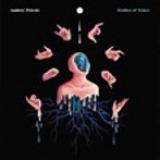
In 2024, Audrey Powne emerged as a compelling new voice in contemporary jazz with the release of her acclaimed debut album From the Fire; a self-produced and self-composed work celebrated for its lush string arrangements, soaring trumpet performances, and emotionally rich songwriting. Now, two years later, Powne returns with Bodies of Water, a bold and deeply introspective follow-up that continues her elemental exploration: from fire to water. An exploration of what it means to exist alongside others in an increasingly unstable world, Bodies of Water reflects on vulnerability, responsibility, and human interconnectedness. The album’s title and conceptual foundation were inspired by a passage from Caleb Azumah Nelson’s novel Small Worlds: “...to make himself a body, like water, a still surface, but beneath this, a ripple, and beneath this, an ebbing tide, and beneath that, a violent, constant tow…” Throughout the record, lyrics ruminate on the idea that like all bodies of water, we are vulnerable to disruption and catastrophe. Unlike inanimate bodies of water, however, we are conscious participants in both the damage and the repair. That tension between what we are made of and what we are responsible for became a grounding and harmonious thought. This album is a meditation on that idea, both in my personal life and in a broader, collective sense. Swollen, Broken Record, and Karma, reflect on moments of cruelty and error including her own that felt unbearable. Viewing them instead as forces moving through the landscape of a life, violent but temporary to survive their immediate impact. More socially conscious tracks Stay Awake, Creeds, RYV, and Two Sides confront frustration with political polarisation and the emptiness of language unaccompanied by action. The title and final track Bodies of Water brings these ideas together, reimagining both personal and societal upheaval as events shaped by bodies of water moving through the world destructive at times, transformative at others, and always in motion. Blending traditional jazz with Afrobeat rhythms, Dilla-inspired grooves, ambient textures, and expansive arrangements, Bodies of Water reveals the breadth of Powne’s artistic vision. The record moves fluidly between spiritual jazz, warped soul and rhythm-driven experimentation, while layered interludes and meticulous production thread its disparate influences into a unified and immersive sonic world.
Some recordings herald the future in ways that are impossible to see in real time. Teodros Makonnen With His Organ (ቴዎድሮስ መኮንን ከኦርጋኑ ጋር), by the artist Teodros Makonnen, also known as Teddy Mak, is one of those. Today, electronic sounds, synthesizers, and digital production are taken for granted in Ethiopian music, but in the early 1980s, they were novelties that polarized opinion. Even to this day, the story of Teodros Makonnen’s legacy has never been properly told. He played a decisive role in defining the sound of the digital era of Ethiopian music that emerged in the 1980s and beyond, both as a keyboard player and as a producer, songwriter, performer, and sound designer.
Ethiopian music was at a crossroads in the early 1980s. Much like music in the rest of the world, technology and automation heralded either a quantum leap in musical development or the annihilation of musicianship, depending on who you’d ask. The changes were incremental nonetheless, but with the benefit of hindsight one can clearly see that the changes meant different things in different contexts. Drum machines and electric organs came to replace many hotel bands because, all of a sudden, one musician could control drums, melody, and accompaniment. Teodros was one of the first musicians in Ethiopia to explore the possibilities this opened up.
Teodros’ father, Captain Makonnen Beri, was a chief pilot at Ethiopian Airlines and a music enthusiast at that. This would prove important to his development, as Makonnen brought back a piano from Germany, which would lead to the first steps in Teodros’ long musical career. Captain Makonnen’s work as Head of Flight Operations and as a pilot exposed him to the wider world that was far from commonplace for most Ethiopians. In a house where music captivated the whole family, the piano gave Teodros’ talent an outlet. Not only was a piano at home rare in Ethiopian households, his father also brought an Indian teacher to their home to teach Teodros and his brother, Captain Samuel Makonnen, music theory (solfeggio or ear training) and piano. Teodros and his youngest brother, the late great Dereje, a member of both the legendary Ibex Band and the Ethiopian reggae group Dallol, took up music from that point onward, with Teodros beginning to develop his proficiency at the age of eight. His father encouraged him to practice tirelessly at home, and Teodros later received musical schooling at the German School in Addis Ababa. His obvious talent led to studies and formal education at the Yared School of Music, followed by continued studies in American jazz at Northern Virginia Community College in Virginia. Teodros cut his teeth professionally in his mid-teens, not only as a keyboardist, but also as an arranger for the Wabi Shebelle and Dahlak bands in the 1970s. He mastered electronic sequencing early, rising to prominence through the midnight recording sessions held during the military curfew. The pressures imposed by the curfew required precise and disciplined recordings, and Teodros delivered just that. This, in turn, led to collaborations with iconic artists such as Mulatu Astatke, Aster Aweke, Menelik Wossenachew, Tilahun Gessesse, Mahmoud Ahmed, and Alemayehu Eshete. In those days, he sat in as a keyboardist with the Dahlak Band when Dawit Yifru took a hiatus to study in Russia, and also with the Ethiostar Band. He secured a residency at the Wabi Shebelle Hotel with the Shebele Band, together with Zelalem Tadese (drums), later succeeded by Elias Bekele, Mulugeta Hailu (bass), Teferi ‘Bibisha’ Mengesha (guitar), Kumelachew G/Selassie (trumpet), and Teshome Deneke (saxophone). A friendly competition developed between the bands associated with the Ras Hotel (the Ibex Band), Ghion Hotel (the Dahlak Band), and Wabi Shebelle Hotel (the Shebele Band). The music scene at Wabi Shebelle saw teenagers commanding the spotlight in an industry otherwise dominated by musicians of an older generation. At the Wabi Shebelle Hotel, Teodros met a diplomat from Saudi Arabia and later visited him at his home in Addis Ababa, a meeting that had unexpected musical consequences. The man owned a Yamaha double-deck keyboard. That evening, they recorded Teodros Makonnen With His Organ (ቴዎድሮስ መኮንን ከኦርጋኑ ጋር) in one take. This recording, a cornerstone in the early digital sound of Ethiopian music, came about almost by chance, simply because Teodros got the opportunity. Traditional Ethiopian songs were cast in a wholly electronic style. Once freed from backing duties, Teodros’ keyboards could explore dreamlike soundscapes that took Ethiopian music in new directions. Even though the cassette contained well-known Ethiopian songs, they were given highly original arrangements, performed on an electric organ with drum machine backing and rhythm patterns that left the listener with suggestive, lingering sounds. “Libesh Kabashen” (also known as “Anchi Bale Game”) and “Odu Gol Golesa” wrap you in the very stuff that dreams are made of. Originally released on cassette only, this recording exudes a mystique that surpasses even some of the most obscure Ethiopian recordings of the day. It remained more or less unknown outside of Ethiopia until now. Some of the tracks, like “Addis Fikir,” are permeated with an almost naive buoyancy, free-floating sounds that lost contact with the ground the moment they were conceived. Others, like “Meche New Hageren Yemayew” and “Lelitu Alnega Alegn,” carry a moodier, quirkier timbre, with pulsating rhythms in the background. Yet even the darker pieces contain an unmistakable wave, something essentially Ethiopian. If most recordings of Teodros’s contemporaries at the time were teeming with atmosphere, his songs seem instead at home in the stratosphere, almost ethereal. Some of the music here could be filed under “lullabies,” were it not for the recurring, almost brooding feeling that engulfs the listener on the aforementioned tracks. You could easily be forgiven for drifting into a blissful haze as the music washes over you.
Up to the advent of electronic music production, Ethiopia was totally dominated by big bands on the one hand, and small groups on the other. The former were tied to large institutions such as the military, the latter emerged from the entertainment industry, in hotel bars and nightclubs. These groups were commercially driven, and bands ultimately had to foster a mercenary approach to employment, albeit not to the passion for music. In the light of this, Teodros’ musical legacy can be seen in two ways. On the one hand, he is a key player in Ethiopian music from the 1970s onwards, leaving an indelible mark through hundreds of compositions and arrangements, including soundtracks for numerous documentary films and advertisements for different companies. On the other hand, the way he and others employed electronics brought Ethiopian music onto a fork in the road.
The replacement of traditional instruments with electronic equipment was seen as impending doom by some. Others, like Teodros, saw new avenues for performance, production, and creativity. Just as later producers like Abegasu Shiota of Admas, Teodros was a trailblazer who opened paths that it took Ethiopian music as a whole more than a decade to rush into. The hotel scene had already been pushed toward electronic music by financial necessity and cost-cutting. Today’s revived global interest in Ethiopian music from the seventies and eighties, alongside a broader resurgence, has changed the reasons for using digital means of music production. They have become tools for musical dreaming. This is where the dreaming began.
out of Stock
Last delivered 12 days ago available to reorder, subject to availability
»Cosmogonical Ears« is Amosphère's first album for Hallow Ground. Following her contribution to the Swiss label’s »Epiphanies« compilation and her 2021 full-length debut »More Die of Heartbreak« on 33-33, it features three expansive pieces. The Paris-based composer and multidisciplinary artist delves deeper into themes of time, space, cosmology, human perception, and psycho-physical effects, crafting profound sonic meditations. Drawing on a minimalist approach while blending electronic and acoustic elements, Amosphère’s long-form compositions are living, breathing entities whose sonic richness and evocative power unfold gradually over time, putting »Cosmogonical Ears« in direct kinship with previous Hallow Ground releases by artists such as Kali Malone and FUJI|||||||||||TA.
The album opens with its longest piece, »Land of eternal delight,« composed for the Buddha10 exhibition at the Museo d'Arte Orientale in Turin. Written during three years of isolation—a period in which Amosphère explored meditation practices and diverse belief systems—it merges mythology with personal transcendental experiences, reflecting on a challenging time for humanity. »By blending Buddhist philosophy and sculpture with my own meditation practices, I sought to explore a way for people to transcend the boundaries of space and time—not as a believer, but as an observer,« she explains. Featuring handmade ceramic instruments and recorded by Thomas Lefevre, the piece combines Amosphère’s electronic organ with Marc Lochner’s flute contributions, creating a sound that is simultaneously minimalist and expansive.
The concept of teleportation and how it challenges traditional notions of time and space serves as the foundation for the second piece. »Recent advances in quantum physics suggest that teleportation might be possible through quantum entanglement,« Amosphère notes. »What if science fiction is becoming reality—or has already existed in ancient times?« Drawing inspiration from theories proposed by physicists such as Roger Penrose, Amosphère again worked together with flutist Lochner, this time using her VCS 3 synthesizer. »Teleportation« weaves single notes into intricate, non-linear patterns that defy conventional logic, creating a complex auditory tapestry. The last piece »Black hole in, white hole out« was recorded on Corsica and features Miao Zhao’s bass clarinet drones alongside Amosphère’s church organ. It imagines the possible sound of crossing a black hole while also suggesting the study of its theoretical exit and its potential applications for large-scale time and space travel.
The questions posed by »Cosmogonical Ears« do not yield straightforward answers. Instead, Amosphère’s restrained yet intricately layered compositions require full immersion and concentration from the listener. As expressed by the album’s title—which envisions the birth of a new universe through listening—»Cosmogonical Ears« offers an experimental approach to auditory perception as a tool for seeking truth, freedom, and harmony between the outer world and the inner self.
American DJ, producer and Lone Romantic / Ellum Audio label boss Maceo Plex joins Radio Slave’s Rekids with the ‘Monster’ EP.
Maceo Plex opens the ‘Monster’ EP with 'Flute Jam', a muscular, progressive cut with broken beats and subtle chords lighting up the airwaves. Drifting vocals and widescreen synths add great scale to this intergalactic journey while textured bass brings the weight. The hyper-real and aptly named 'Baby Monster' then features vocals from Baby Monsta, refracted through a full-bodied Electro-Techno fusion. The chords dance over fizzing bass, all with future-facing sound design and an outer space atmosphere. Closer 'Cold Flow' is a prickly breakbeat cut with dehumanised, trap-style vocals and precision engineering in the groove. It's a cinematic sound that takes breaks, techno and electro into new realms while retaining a soulful, melancholic core.
Active since the 90s, Maceo Plex haș long been operating in his own musical world, where Electro, Techno and House all fuse into something futuristic and fresh. He's been shaping the underground for three decades as a DJ and producer but also head of the infl ential Ellum Audio and Lone Romantic labels. Already this year he has dropped the dark 2-step sounds of his 'The Plan EP' via the latter, which also features Baby Monsta, and continues his purple patch with a standout debut on Rekids that finds him exploring yet more new ground.
out of Stock
Last delivered 11 days ago available to reorder, subject to availability
Do Da Doo' Returns with New Life on Definitive Recordings
SPECIAL VINYL ONLY RELEASE
Definitive Recordings revisits one of its most iconic releases with a fresh reissue of Robotman feat. Marshall Jefferson - 'Do Da Doo', originally released in 1992. A cornerstone of the label's early catalogue, the track returns with newly re-recorded vocals by house legend Marshall Jefferson, bringing renewed energy to a timeless classic.
Robotman, a moniker of Richie Hawtin (aka Plastikman), represents an essential chapter in the evolution of house and techno. As one of the most influential figures in electronic music, Hawtin helped shape the sound of acid and minimal techno while co-founding the legendary Plus 8 label alongside John Acquaviva. His forward-thinking productions and groundbreaking DJ sets have defined generations of dance music culture.
On this release, the original Plastikman Acid House Mix stands as a true highlight. Spanning 12 minutes, it delivers a deep and hypnotic acid journey driven by classic TR-909 drums and a signature TB-303 bassline. The instantly recognizable vocal 'Got the Do Da Doo' sits prominently within the groove, creating a powerful and timeless club moment that defined an era.
On the flipside, Detroit's DJ Minx brings a fresh perspective with a groove-heavy house interpretation. Known as the 'First Lady of Wax' and a key figure in Detroit's scene, Minx reshapes the vocal into a rhythmic element, layering it into a shuffling and classic house framework. Her version adds warmth and swing while staying rooted in the track's original spirit.
With this reissue, Definitive Recordings celebrates a landmark release that continues to resonate across generations, combining legendary artists, timeless production, and the enduring energy of house music.
out of Stock
Last delivered 4 days ago available to reorder, subject to availability
Two of the most prolific remixers in the world of Disco,Dave 'Love' Lee and John Moraleshave teamed up for one of their biggest projects to date - 'Mixed To The Maxxx'. After gaining access from the legendary original artists, the pair take the multi-track tapes of many classic Disco, Funk & Soul tracks and re-work them...to the Maxxx!
Where Remixed With Love stands as Dave Lee's own gold-standard body of work, Mixed To The Maxxx sets that legacy alongside Morales' own decades-deep M+M body of work: Lee brings his musically dense, groove-first touch to the likes of Harold Melvin, Syreeta, Lenny Williams and The Brand New Heavies, while Morales applies his extended, dancefloor-built M+M treatment and crushes the likes of Barry White, The Temptations and Loleatta Holloway, plus Dennis Coffey's breakbeat classic "Scorpio" for the DJs and collectors alike. Both work from original tapes, surfacing parts barely audible or entirely unheard in the source mixes, and both know when to let a classic breathe rather than bury it under modern production. It's a pairing a long time in the making. Lee and Morales first talked about working together around a decade ago, and getting Mixed To The Maxxx off the ground took five years of patient work: tracking down usable stems, securing approvals, and navigating a licensing landscape where much of the best material is now tied up with major labels increasingly cautious about clearing remixes. What's landed here is the product of that graft as much as the pair's shared ear for a great record, the sound of two people who know exactly what they're looking for and are willing to put in the time to find it.
A double 12" sampler in summer 2025 previewed the record's range. A bass-driven overhaul ofThe Brothers Johnson's "The Real Thing" and an extended mix of Philly legends Bell & James' "Livin' It Up (Friday Night)" showcased Lee's side, while an anthemic take on Inner Life's "Ain't No Mountain High Enough" and a tempo-lifted Light Of The World"London Town" flew the flag for Morales. Both drew strong early support ahead of the full LP.
out of Stock
Last delivered 4 days ago available to reorder, subject to availability
"Formed in 1967 as a psychedelic electronic duo featuring Dan Taylor on drums and Simeon on a homemade synthesizer consisting of 12 oscillators (and an assortment of sound filters, telegraph keys, radio parts, lab gear and a variety of second hand electronic junk), Silver Apples quickly gained a reputation as New York's leading underground musical expression. Their pulsating rhythmic beats with the use of electronics laid the groundwork for what would become 'Krautrock'. Silver Apples was released in 1968 and still remains an innovative and revolutionary album. Their highly influential sound has influenced countless bands from Stereolab, Beastie Boys, Blur and more. 'Silver Apples... a beautiful and mysterious artifact.' - New York Times.
Sales points
- New 24 bit /96 kHz transfer taken from the original master tapes.
- Limited Blue Sky Colored Vinyl
- First Reissue from Original Tapes
- Currently Touring in the US and Europe
- 'Oscillations' featured in Pitchforks Top 200 songs from the 60's.
Shaped in the shadows and sounds of the legendary Topanga Canyon, California. The debut album from Biita Houdei is buoyed by a magic that feels wildly and beautifully untamed; wild-hearted sentiments that are shaped by the world around it, fascinated by the enchantment of it all, and delivered via a collective (harmony layered) voice that understands the complex nature of what it means to be alive in the here and now.
Produced by Haley Heynderickx, 'This Bed Was Made For Me' is a striking collection of stirring, signature folk songs animated by subtle instrumentation and orchestral flourishes. It feels lived in: vocals weave together in a beautiful harmonic dance, seasons shift, sunshine appears and bold psychedelic colours warm the horizon.
In the early stages of making her debut album, Biita Houdei knew two things: that she wanted the recordings to feel distinctly and palpably warm, and that she would sew a unique patch for every song on the album. The first of those things is subjective, though brightness pours in from all corners of This Bed Was Made For Me. The second became a laborious task she undertook throughout the process, the completion of which is testament to the slow process of it all, to the physical commitment and patience required to make a full work of art.
The patches she crafted during the making of This Bed Was Made For Me became a full quilt, one that now adorns the album’s front cover. Beneath it sits a striking collection of Houdei’s stirring, signature folk songs, brought into fruition with the help of fellow songwriter Haley Heynderickx, in her first lead production role, and the album’s producer/engineer Sahil Ansari. It’s also the first release Biita (pronounced “bee-tah”) is releasing under her newly-taken name, one that was gifted to her by her auntie and means "unique" in the Farsi language. “I proudly take this name,” Biita says of the change. “It makes me feel that much closer to my Persian heritage.”
Recorded across ten back-to-back and full days, the album touches on themes of love and heritage, of taking chances, the preciousness of time and the impact we all have on the world around us. A number of the songs were written in Topanga, California, while Biita settled into a new home as wild fires raged, and as she adjusted to a life which no longer held distinct seasonal changes, far from the Ozark Mountain home she felt so attached to. Such themes reveal themselves in a variety of ways across the album’s fourteen songs, that key sense of warmth retained in the bones of the album whether they are stepping into darkness or seeking out light.
The album feels lived in and alive; dust swirls, seasons shift, sunshine appears and is held. Biita calls it ‘psychedelic’ and there is indeed a sense of that in the world building, in the way the bold colours are always shifting. Formed of fourteen songs, and filling nearly forty-five minutes, This Bed Was Made For Me not only builds a whole world for listeners to inhabit but also implores you to stay a while. This was deliberate, indeed it’s Biita’s wish that listeners give the album dedicated time; to learn its shape, to explore it fully, away from the instant grab of playlists and skewed algorithms.
“Many of my favourite albums didn’t reveal themselves instantly to me,” Biita, now based in the Catskill Mountains of New York, explains. “Some did, of course, but I had to work to understand the full scope of the piece as a whole. I encourage people to dive deeper into everything that they choose to consume. It is not my intention to sound pretentious, but instead, I am trying harder to explain the gratitude I have for being able to craft every part of this album— using my hands, my brain, my voice, my visions. To me, it is an all encompassing work of art,” she continues. “Making the quilt was laborious. Taking the cover photo was laborious. No shortcuts, but rather a manual and tangible approach. I am thankful for the time it took.”
Seasick Steve returns with the last season of America. In 2024, Steve and his wife Elisabeth took a road trip across America where he witnessed the poverty and divisiveness in the context of the upcoming election. They were in a New Orleans club where a house band leader welcomed two Belgian musicians on stage by saying "welcome to the last season of America." This became the theme for the rest of their road trip and led to him writing the title track to the new album. A deeply personal, heartfelt reflection on the state of his home nation, The Last Season of America is a protest record in the truest sense.
From Berlin to Lagos: Jembaa Groove expand their sound on "Be A Lover"
Berlin-based outfit Jembaa Groove return with "Be A Lover", a four-track EP set for full release on 18 September via global soul imprint Agogo Records. Following two critically acclaimed albums and an intensive period of touring across Europe and the US — including a SXSW showcase and a widely acclaimed KEXP session — this latest release marks a new chapter in the band’s trajectory. Built around highlife rhythms and shaped by Afro-jazz and the more organic edges of Afrobeats, "Be A Lover" unfolds with a warm, languid and deeply soulful feel, capturing different strands of today’s multifaceted Afrofusion scene.
Here, the band strips back from a seven-piece ensemble to its two founding members, while at the same time opening outward into a deeply collaborative space. At its centre is a close creative partnership with celebrated Nigerian highlife revivalists The Cavemen., alongside contributions from London-based, Nigerian born soul artist Azekel, Lagos vocalist Tim Lyre, and Malian icon Fatoumata Diawara.
“This record has a different flavour,” says Owusu. “It’s really about collaboration — different feelings, different thoughts, different energies coming together.” While centred around the Lagos contemporary scene, the record is shaped by a wider diasporic network stretching across London, Lagos, Berlin and Amsterdam, cities producer and bass player Yannick Nolting describes as “the pillars where everything that is happening in today’s highlife and Afro-fusion scene.”
Formed in Berlin in 2020, Jembaa Groove began after a chance meeting between bassist, producer and composer Yannick Nolting and percussionist, vocalist and songwriter Eric Owusu. Drawing on their respective musical journeys — Nolting’s years working with Lusophone artists in Lisbon and Owusu’s deep roots in Ghana’s highlife tradition, including work with Pat Thomas and late highlife legend Ebo Taylor — the project quickly took shape: their debut album Susuma established a powerful, poly-rhythmic sound grounded in highlife, jazz and soul, while 2024’s "Ye Ankasa | We Ourselves" expanded that vision through collaborations with artists across Ghana and its diaspora, including UK based Ghanaian singer, rapper, percussionist, and arranger K.O.G and legendary Ghanaian highlife musician Gyedu-Blay Ambolley.
The collaborative spirit continues on "Be A Lover", most of which grew out of a meeting with sibling duo The Cavemen. at Supersonic Jazz Festival in Amsterdam in 2023, leading to a sustained exchange of ideas between Berlin and Lagos. With two acclaimed albums behind them, The Cavemen. have emerged as central figures in both Lagos’ alternative music scene and the wider contemporary highlife revival, bringing the genre to a new generation through a stripped-back, melody-driven sound. “There was some kind of magnetism towards Lagos,” says Nolting; for Owusu, who is Ghanaian but spent much of his life in Nigeria, the connection runs even deeper. “I feel lucky to be able to bring different cultures together and make something really beautiful,” he says. A key part of that process was a close working exchange between Nolting and The Cavemen.’s Kingsley Okorie, who effectively stepped into a co-producing role on three out of four of the tracks.
The one exception is opener No Pain No Gain, which features Nigerian-born, East London-based Azekel, whose smooth, R&B-leaning vocal moves through a slow-burning arrangement of bright keys, gently rising horns and atmospheric synths, anchored by Owusu’s organic percussion.
The title track Be A Lover, featuring Afro-fusion Lagos artist Tim Lyre, distills the EP’s central message into its most immediate form. Backed by syncopated percussion and a gently smouldering arrangement, Lyre’s voice moves with a laid-back, melodic ease, delivering a simple refrain: “be a lover, not a fighter.” “It’s a very simple message,” says Nolting, “It’s about showing more love, on a personal level but also more broadly… just show love.” That same sense of warmth runs throughout the record, reflecting its core idea.
On Obi, The Cavemen. take centre stage, with Kingsley Okorie leading through melancholic, plaintive vocals rooted in classic highlife. In contrast, his brother Benjamin James punctuates the track with high-pitched vocal interjections, heightening the emotional tension against a backdrop of slow, restrained instrumentation.
Waka follows with a more melodic, hook-led refrain from Eric Owusu, whose loose, almost conversational delivery creates a striking contrast with Fatoumata Diawara’s unmistakably powerful, raspy vocal. The collaboration grew out of a chance meeting while Owusu was on tour, with ideas exchanged quickly and Diawara returning a finished vocal within days. “We are so proud to have her. It’s a privilege” says Owusu. "Be A Lover" is a record shaped by connections like these — between people, scenes, and cities. “It was partly intention, partly destiny,” says Nolting. “We met these people along the way, and somehow Lagos was meant to come into our path.”
Stone Music returns with Into the Cosmic Forest, a deep and patient journey into open-air improvisation. The group was founded in 2022 by Tokio Hasegawa, a core member of the legendary Taj Mahal Travellers, and brings together a wide circle of musicians from Japan’s ambient and experimental scenes.
While the name is new, the spirit continues. Stone Music extends the free-form, site-responsive approach that defined Taj Mahal Travellers — music shaped by environment, duration, and collective awareness rather than fixed structure.
Into the Cosmic Forest consists of two long-form pieces, each exceeding 20 minutes, both recorded live outdoors. Side A was captured at Japan’s Off-Tone Festival. It unfolds slowly and organically — layers of voice, strings, electronics, wind instruments, and percussive textures gradually forming a shifting sonic landscape.
Side B was recorded on the grounds of Mithila Museum in the mountains of Niigata, an art space managed by Hasegawa himself. More intimate in atmosphere yet equally immersive, the piece centers on voice and subtle interplay, allowing space and silence to become part of the composition.
What you hear is direct and unpolished: air moving, sound resonating, musicians responding to each other and to their surroundings in real time.
Following tours in India during 2023–24, with performances in national museums and universities, Stone Music continues to explore music as shared space rather than spectacle.
Into the Cosmic Forest invites listeners into that space — unedited, unhurried, and fully alive.
Lummer is the Swedish name for the now protected family of vascular plants (Clubmoss/Lycopodiaceae). Lummer grows slowly and the spores with which it reproduces can take 12—20 years to develop. These spores, known as Nikt in Swedish, were once ground into an extremely flammable light yellow “old woman’s gunpowder” that was used for early theatrical pyrotechnics. Volatile and explosive, Lummernikt requires careful handling.
There is something of the small scale dangerous in Finn Loxbo’s Lummernikt, too. A not-at-all-risk-free traversal at the limits of technique: building, blowing up and working through a band’s worth of harmonic scaffolding. Eight songs on a stage. Dramatic, breath-taking. At the same time the wild, flickering rush of tones spins up a centrifugal force that suspends a certain calm or sitting still at the music’s core.
On Lummernikt, Loxbo’s guitar often sounds more like a concert harp or the West African kora as he shifts a set of melodic fragments and extended lines through rapid-fire arpeggiated permutations with a spontaneous energy that is countered only by his extraordinary touch on the instrument and an undeniable sensitivity to his material’s dynamic potential.
It’s a glorious extension of the chiming chords and experimental preparations heard in his contributions to Magnus Granberg's Skogen (Another Timbre) or via his own ensemble Kommun (Fönstret, Thanatosis) and in striking contrast to the distorted wail he contributes to Anna Högberg Attack’s Ensamseglaren (Fönstret) or his all-in-the-red trio Kyosaku (Corbett vs Dempsey).
It’s now several years ago that Finn sent me the first recording of his new band Kommun and asked if I had suggestions for a label that might want to release it. I played that recording on repeat until I couldn’t shake the idea that I needed to start a label to put it out myself. Lummernikt is the spark that keeps that fire alive.
With "Jamaican (Bam Bam)," HUGEL and SOLTO breathe new life into Sister Nancy's iconic anthem - a bold, rhythm-charged reinterpretation built for the modern dancefloor. It grips from the first beat: dynamic drumming, crisp claps, and a bassline that rolls deep with sway and sensuality. Layers tighten and unfold, teasing the body as electronic tinctures flicker beneath, building lift and slow, simmering tension. Through it all, Sister Nancy's voice cuts steady and alive, grounding the track in its roots while driving it forward. The energy keeps rising vibrant, climactic, and free. "Jamaican (Bam Bam)" smolders from within, a kinetic force that turns motion into release.
Artwork by Rachael D’Alessandro. Words by Marie Floro. Executive Producer Mimmo Falcone. Distribution by Muting The Noise.
out of Stock
Last delivered 38 days ago available to reorder, subject to availability
With "Jamaican (Bam Bam)," HUGEL and SOLTO breathe new life into Sister Nancy's iconic anthem - a bold, rhythm-charged reinterpretation built for the modern dancefloor. It grips from the first beat: dynamic drumming, crisp claps, and a bassline that rolls deep with sway and sensuality. Layers tighten and unfold, teasing the body as electronic tinctures flicker beneath, building lift and slow, simmering tension. Through it all, Sister Nancy's voice cuts steady and alive, grounding the track in its roots while driving it forward. The energy keeps rising vibrant, climactic, and free. "Jamaican (Bam Bam)" smolders from within, a kinetic force that turns motion into release.
Artwork by Rachael D’Alessandro. Words by Marie Floro. Executive Producer Mimmo Falcone. Distribution by Muting The Noise.
out of Stock
Last delivered 33 days ago available to reorder, subject to availability
The deluxe 10th anniversary edition of case/lang/veirs features the new track "Accidental Tattoo" and twelve never-before-released live recordings alongside the original studio album from supergroup of singer-songwriters Neko Case, kd lang and Laura Veirs. Released in 2016, case/lang/veirs is a true collaboration between three phenomenal, self-driven artists: "the strongest voices in their field - lang the full-voiced seductress, Case the hurricane, and Veirs the wry storyteller" (Pitchfork). The women wrote all 14 songs and shared lead vocals equally, sometimes even within the same track. Full of stunning harmonies and spellbinding rhythms, case/lang/veirs travels through aches and eras, torch songs and tributes to the undersung. "There"s a generosity of spirit to case/lang/veirs," NPR praised upon the album"s release, "a worthy extension of three tremendous catalogs, in which three great singer-songwriters sound enhanced and invigorated by the challenge of living up to each other"s legacies." They worked over two and a half years in Portland, Oregon, where lang and Veirs both live, sometimes in lang"s loft with a view of Mount St. Helens, others in Veirs" dining room or backyard studio. The album was written from the ground up without any real plan beyond a desire to make music together and a faith that it would reveal itself. They produced the album with Tucker Martine, at his Portland studio in November 2015.
The deluxe 10th anniversary edition of case/lang/veirs features the new track "Accidental Tattoo" and twelve never-before-released live recordings alongside the original studio album from supergroup of singer-songwriters Neko Case, kd lang and Laura Veirs. Released in 2016, case/lang/veirs is a true collaboration between three phenomenal, self-driven artists: "the strongest voices in their field - lang the full-voiced seductress, Case the hurricane, and Veirs the wry storyteller" (Pitchfork). The women wrote all 14 songs and shared lead vocals equally, sometimes even within the same track. Full of stunning harmonies and spellbinding rhythms, case/lang/veirs travels through aches and eras, torch songs and tributes to the undersung. "There"s a generosity of spirit to case/lang/veirs," NPR praised upon the album"s release, "a worthy extension of three tremendous catalogs, in which three great singer-songwriters sound enhanced and invigorated by the challenge of living up to each other"s legacies." They worked over two and a half years in Portland, Oregon, where lang and Veirs both live, sometimes in lang"s loft with a view of Mount St. Helens, others in Veirs" dining room or backyard studio. The album was written from the ground up without any real plan beyond a desire to make music together and a faith that it would reveal itself. They produced the album with Tucker Martine, at his Portland studio in November 2015.
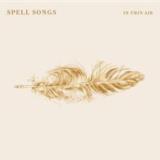
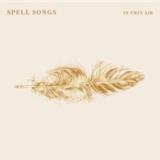
In Thin Air, forms a musical companion piece to Robert and Jackie's book The Book of Birds - a book that is a love letter to the splendours and mysteries of birdlife, and a clarion call to halt the loss of birds from land, sea and sky. The music was created within the contemplative green oak roundhouse of Ty Sanctaidd (Sacred House) in the grounds of Ty Trefacwn in South West Wales, and recorded at Castle Sound Studio in Pencaitland, East Lothian. As with our other albums In Thin Airhas been recorded and produced by Andy Bell of Hudson Records. Throughout The Book of Birds there runs a gentle mantra - " Nest, Egg, Beak, Song, Feather, Flight, Migration -- these are the Seven Wonders that together conjure the miracle of Bird ". Intrigued by this concept, the seven musicians have created an intricate new album that has an overarching narrative, capturing the remarkable world of birds from birth to flight.
In Thin Air, forms a musical companion piece to Robert and Jackie's book The Book of Birds - a book that is a love letter to the splendours and mysteries of birdlife, and a clarion call to halt the loss of birds from land, sea and sky. The music was created within the contemplative green oak roundhouse of Ty Sanctaidd (Sacred House) in the grounds of Ty Trefacwn in South West Wales, and recorded at Castle Sound Studio in Pencaitland, East Lothian. As with our other albums In Thin Airhas been recorded and produced by Andy Bell of Hudson Records. Throughout The Book of Birds there runs a gentle mantra - " Nest, Egg, Beak, Song, Feather, Flight, Migration -- these are the Seven Wonders that together conjure the miracle of Bird ". Intrigued by this concept, the seven musicians have created an intricate new album that has an overarching narrative, capturing the remarkable world of birds from birth to flight.
Son Volt’s latest album, Sound Signal Serenades, will be released as a Record Store Day exclusive. Featuring twelve originals, Son Volt return to the elemental strengths that have long defined their sound—restless guitars, melodic clarity, and songs rooted in the lived experience of American landscapes. Anchored by Jay Farrar’s steady, unvarnished voice, the record balances reflection and resolve, drawing lines between personal memory and the wider currents of history, change, and endurance. The songs move fluidly between stripped-down intimacy and full-band drive, blending folk-rock, country, and electric grit with the confidence of a band that knows exactly who they are. There’s a sense of forward motion throughout the album—never nostalgic for its own sake, but deeply aware of where it’s been. Lyrically, Farrar explores themes of connection, resilience, and place, finding meaning in both the ordinary and the unsettled. This album stands as another chapter in Son Volt’s enduring catalog: honest, grounded, and quietly powerful, reaffirming their role as one of America’s most consistent and thoughtful rock bands.
In 2023 we began our hugely successful 80s 12” series on CD – a year-by-year journey through the greatest 12” singles from the decade, and in 2024 we presented a selection of tracks from 1980-1982 as the first volume in our collectible vinyl boxset series, followed by Volume Two celebrating 1983-1984 in 2025.
This year, Now Music is proud to announce the third instalment in this essential collection, NOW Presents…12" 80s: Volume Three: 1985-1986, as a stunning 5-LP boxset. A limited edition and numbered set with each of the 5-LPs pressed on a different colour vinyl – red, yellow, blue, hot pink and lime green – to be released on July 17th, 2026, and for many of these tracks this marks the first time back on vinyl since their original 12” release!
Opening with one of the decade’s most powerful rock anthems, Queen’s ‘One Vision’ appears in its Extended Version, ahead of Eurythmics’ euphoric ‘There Must Be An Angel (Playing With My Heart)’ in the Special Dance Mix and Dead Or Alive’s irresistible ‘You Spin Me Round (Like A Record)’. Side A closes with Frankie Goes To Hollywood and the epic ‘Welcome To The Pleasuredome (An Alternative To Reality)’. Flip the LP over for more iconic 12” versions from 1985, beginning with Tears For Fears and the UK Extended Version of ‘Shout’, alongside Go West’s ‘We Close Our Eyes (The Total Overhang Mix)’, the massive soundtrack hit ‘Don’t You (Forget About Me)’ from Simple Minds and Arcadia’s sophisticated ‘Election Day (Consensus Mix)’.
LP2 opens with four defining tracks that perfectly capture the electronic and cinematic sound of the mid-80s. Paul Hardcastle’s groundbreaking hit ‘19 (The Destruction Mix)’ leads into two instrumental classics: Harold Faltermeyer’s ‘Axel F’ and Jan Hammer’s ‘Miami Vice Theme’, both featured in their Extended Versions, before Propaganda’s peerless ‘Duel (Bitter-Sweet)’ closes the side. Side B showcases some of the era’s biggest dancefloor favourites, from Mel & Kim’s ‘Showing Out (Get Fresh At The Weekend)’ and Gwen Guthrie’s enduring club anthem ‘Ain’t Nothin’ Goin’ On But The Rent’, to Aretha Franklin’s ‘Who’s Zoomin’ Who?’ in its Dance Mix and the soul-pop brilliance of Loose Ends’ ‘Hangin’ On A String (Extended Dance Mix)’.
LP3 brings together some of the decade’s most beloved pop and rock crossover hits. Side A opens with the powerhouse pairing of Philip Bailey and Phil Collins on ‘Easy Lover (Extended Dance Remix)’, followed by Bonnie Tyler’s dramatic ‘Holding Out For A Hero (Club Mix)’ and Pat Benatar’s classic ‘Love Is A Battlefield (Extended Version)’. Stephen Duffy’s infectious ‘Kiss Me (Mixe Plural)’ precedes The Human League’s U.S. #1 ‘Human (Extended Version)’. Over on Side B, Duran Duran lead with the ‘Extended Mix’ of ‘Notorious’ before a run of timeless dance-pop including Sly Fox’s ‘Let’s Go All The Way’, Jellybean’s ‘Sidewalk Talk’ and Maria Vidal’s ‘Body Rock’, culminating with Ashford & Simpson’s club classic ear-worm ‘Solid (Special Club Mix)’.
LP4 opens with huge examples of sophisticated synth-pop and dance-floor innovation from 1986. Pet Shop Boys’ era-defining ‘West End Girls (Dance Mix)’ is joined by New Order’s influential ‘Bizarre Love Triangle (Extended Dance Mix)’. Up next, Red Box’s pure-pop of ‘For America (Bazooka Mix)’ and Nick Kamen’s breakthrough hit ‘Each Time You Break My Heart (Extended Version)’. The reverse side celebrates some of the biggest floor-fillers of 1986 – all in their 12” Versions, beginning with The Communards with Sarah Jane Morris and their unforgettable #1 version of ‘Don’t Leave Me This Way’, alongside Bronski Beat’s ‘Hit That Perfect Beat’, Bananarama’s global smash ‘Venus’ and Five Star’s ‘Can’t Wait Another Minute’ in its ‘M&M New York Remix’ form.
The final LP opens with a side packed with some of the most enduring dance-pop and of the era. Whitney Houston’s ‘How Will I Know (Dance Remix)’ is followed by Steve Winwood’s uplifting ‘Remix’ of his massive hit ‘Higher Love’, the celebrated ‘Shep Pettibone Remix’ of Level 42’s ‘Lessons In Love’ and Bryan Ferry’s elegant and atmospheric ‘Slave To Love (12" Remix)’, whilst over on the final side some of the years’ most distinctive and innovative sounds are showcased: Big Audio Dynamite’s genre-blending ‘E=MC2 (12 Inch Remix)’ and Furniture’s cult classic ‘Brilliant Mind (12" Mix)’ feature alongside Talk Talk’s majestic ‘Extended Mix’ of ‘Life’s What You Make It’, and to close this superb collection, the full ‘Extended Version’ of Spandau Ballet’s powerful ‘Through The Barricades’ provides a fitting finale, bringing together 42 essential 12” versions from 1985 and 1986 across five superb LPs.
out of Stock
Last delivered 52 days ago available to reorder, subject to availability
Orientation is proud to return with its second release. Rooted in deep, mental, and abstract music, Argentinian producer Forest On Stasys has already established himself through a series of high-quality releases on his own labels, Danza Nativa and Aura Sonora Records. We are delighted to present his new EP, a work that perfectly highlights his talent and creativity for storytelling through music.
out of Stock
Last delivered 30 days ago available to reorder, subject to availability
Matrix Music Arhiv (MMA) are proud to announce a re-issue of the highly sought-after album 'Resistance' by the seminal Yugoslavian electronic rock band Borghesia, originally released in 1989 on Play It Again Sam/PIAS (Europe), Wax Trax (USA) and Jugoton (former Yugoslavia). Available on 2Lp, 2CD & 1MC (MC original album only). The re-issue features a carefully remastered edition along with the exclusive bonus live album "Dal Vivo A El Paso", recorded in December 1988 during their performance in Torino, Italy, on one of their European tours. This recording features very different, raw and at times 'dubbed up' versions of their early tracks such as 'Naked, Uniformed, Dead', Am I? and Him (On). The historical perfectly captures the atmosphere and energy of their live appearances at the time. Borghesia (Italian for 'bourgeoisie'), who were formed in Ljubljana (Slovenia) in 1982, had always considered its art to be far broader than just sonic. Borghesia's transgressive, transdisciplinary alloy of film expression, distinctively physical performative practices, usage of new technology and conveniently abrasive EBM (electronic body music) musical production hasn't only been ground-breaking in terms of the holistic, visual/sonic presence of an art collective, but had a rather decisive influence on the general aesthetics of the immensely important Yugoslav subcultural landscape of the 1980s. Borghesia was one of the first bands from the East of the Iron Curtain who used the VHS video medium to distribute their art and was also one of few projects from socialist Yugoslavia to successfully penetrate the curtain itself, reaching international audiences. A series of their releases in the fruitful period between the years 1987 and 1991, including the Resistance album itself, was released by the legendary Belgian label Play It Again Sam (PIAS). The band dissolved in the mid-1990s and then continued their work in 2014. In line with Borghesia's unique social engagement, progressiveness and political criticism, Resistance is one of their most powerful statements. It's the ultimate fight the power manifesto, which makes punk and hip-hop albums of the time sound like children's songs. This is not music for nodding your head to; it's tactical broadcast for the nocturnal resistance to this very day. Borghesia didn't address control only - they sampled the political top, the secret police and explicitly connected authority with dominance. The production of the album isn't clean or polished. On the contrary - Resistance sounds like it was created in a bunker, using stolen military equipment and synthesisers. Borghesia's genius lies in their understanding that the relentless, mechanical EBM beat was the sound of the State - and by hijacking it, turning the system's own rhythm against itself they created the most powerful form of sonic insurgency. And since history repeats itself while the little man learns slowly, the re-release of 'Resistance' comes at the right time. The dark clouds of violence are already looming over Europe, they've never really left the Middle East, and the levers of power and capital ever so louder, not even covertly at all incite: war, war, war! In these times the only appropriate answer is: revolt, rebel, Resistance!
Matrix Music Arhiv (MMA) are proud to announce a re-issue of the highly sought-after album 'Resistance' by the seminal Yugoslavian electronic rock band Borghesia, originally released in 1989 on Play It Again Sam/PIAS (Europe), Wax Trax (USA) and Jugoton (former Yugoslavia). Available on 2Lp, 2CD & 1MC (MC original album only). The re-issue features a carefully remastered edition along with the exclusive bonus live album "Dal Vivo A El Paso", recorded in December 1988 during their performance in Torino, Italy, on one of their European tours. This recording features very different, raw and at times 'dubbed up' versions of their early tracks such as 'Naked, Uniformed, Dead', Am I? and Him (On). The historical perfectly captures the atmosphere and energy of their live appearances at the time. Borghesia (Italian for 'bourgeoisie'), who were formed in Ljubljana (Slovenia) in 1982, had always considered its art to be far broader than just sonic. Borghesia's transgressive, transdisciplinary alloy of film expression, distinctively physical performative practices, usage of new technology and conveniently abrasive EBM (electronic body music) musical production hasn't only been ground-breaking in terms of the holistic, visual/sonic presence of an art collective, but had a rather decisive influence on the general aesthetics of the immensely important Yugoslav subcultural landscape of the 1980s. Borghesia was one of the first bands from the East of the Iron Curtain who used the VHS video medium to distribute their art and was also one of few projects from socialist Yugoslavia to successfully penetrate the curtain itself, reaching international audiences. A series of their releases in the fruitful period between the years 1987 and 1991, including the Resistance album itself, was released by the legendary Belgian label Play It Again Sam (PIAS). The band dissolved in the mid-1990s and then continued their work in 2014. In line with Borghesia's unique social engagement, progressiveness and political criticism, Resistance is one of their most powerful statements. It's the ultimate fight the power manifesto, which makes punk and hip-hop albums of the time sound like children's songs. This is not music for nodding your head to; it's tactical broadcast for the nocturnal resistance to this very day. Borghesia didn't address control only - they sampled the political top, the secret police and explicitly connected authority with dominance. The production of the album isn't clean or polished. On the contrary - Resistance sounds like it was created in a bunker, using stolen military equipment and synthesisers. Borghesia's genius lies in their understanding that the relentless, mechanical EBM beat was the sound of the State - and by hijacking it, turning the system's own rhythm against itself they created the most powerful form of sonic insurgency. And since history repeats itself while the little man learns slowly, the re-release of 'Resistance' comes at the right time. The dark clouds of violence are already looming over Europe, they've never really left the Middle East, and the levers of power and capital ever so louder, not even covertly at all incite: war, war, war! In these times the only appropriate answer is: revolt, rebel, Resistance!
Matrix Music Arhiv (MMA) are proud to announce a re-issue of the highly sought-after album 'Resistance' by the seminal Yugoslavian electronic rock band Borghesia, originally released in 1989 on Play It Again Sam/PIAS (Europe), Wax Trax (USA) and Jugoton (former Yugoslavia). Available on 2Lp, 2CD & 1MC (MC original album only). The re-issue features a carefully remastered edition along with the exclusive bonus live album "Dal Vivo A El Paso", recorded in December 1988 during their performance in Torino, Italy, on one of their European tours. This recording features very different, raw and at times 'dubbed up' versions of their early tracks such as 'Naked, Uniformed, Dead', Am I? and Him (On). The historical perfectly captures the atmosphere and energy of their live appearances at the time. Borghesia (Italian for 'bourgeoisie'), who were formed in Ljubljana (Slovenia) in 1982, had always considered its art to be far broader than just sonic. Borghesia's transgressive, transdisciplinary alloy of film expression, distinctively physical performative practices, usage of new technology and conveniently abrasive EBM (electronic body music) musical production hasn't only been ground-breaking in terms of the holistic, visual/sonic presence of an art collective, but had a rather decisive influence on the general aesthetics of the immensely important Yugoslav subcultural landscape of the 1980s. Borghesia was one of the first bands from the East of the Iron Curtain who used the VHS video medium to distribute their art and was also one of few projects from socialist Yugoslavia to successfully penetrate the curtain itself, reaching international audiences. A series of their releases in the fruitful period between the years 1987 and 1991, including the Resistance album itself, was released by the legendary Belgian label Play It Again Sam (PIAS). The band dissolved in the mid-1990s and then continued their work in 2014. In line with Borghesia's unique social engagement, progressiveness and political criticism, Resistance is one of their most powerful statements. It's the ultimate fight the power manifesto, which makes punk and hip-hop albums of the time sound like children's songs. This is not music for nodding your head to; it's tactical broadcast for the nocturnal resistance to this very day. Borghesia didn't address control only - they sampled the political top, the secret police and explicitly connected authority with dominance. The production of the album isn't clean or polished. On the contrary - Resistance sounds like it was created in a bunker, using stolen military equipment and synthesisers. Borghesia's genius lies in their understanding that the relentless, mechanical EBM beat was the sound of the State - and by hijacking it, turning the system's own rhythm against itself they created the most powerful form of sonic insurgency. And since history repeats itself while the little man learns slowly, the re-release of 'Resistance' comes at the right time. The dark clouds of violence are already looming over Europe, they've never really left the Middle East, and the levers of power and capital ever so louder, not even covertly at all incite: war, war, war! In these times the only appropriate answer is: revolt, rebel, Resistance!
For Fuse's fifth release, Brussels' Altinbas returns for a whirlwind of meditative and harmonious techno. Solidifying his identity of focused yet vibrant club music, the Fuse resident and label co-curator offers his second contribution 'Sustain' as a dancefloor-enveloping take on modern techno. Known for rich chords, whipping pads, and dry percussion, Altinbas proves once again that his touch as a producer revolves around balance and calculated effect.
'Trail of' kick starts the EP with flourishing synthwork and a taste of dub as has become the Belgian artist's signature. Dotting toms as rhythmic accents and a low to the ground shaker make for a swaying introduction with an infectious groove. Breaking things up in the second track, 'Life Force' presents Detroit style chord stabs and playful rhythmic work. With a mental synth at the foundation, the track presents 909 drums to reinvigorate atmospheric synths that make 'Life Force' a subtle hybrid of classic club genres. With a wink at Fuse's heritage and a peak into its future, Altinbas' focus on enduring music can be felt throughout 'Sustain' and truly understood in the Brussels club. As a fitting follow up, 'Purpose' opens the B-side with illuminating chords and rounded sound design and a pulsating low-end. With almost a lighthearted tone, the record fits across genres and rooms, claiming movement instead of mood as its sole medium. The title track 'Sustain' proves just that - a melodic sequence and progressive arrangement make for an intensely euphoric closing. Evolving melodies, opening filters, and big but calculated buildups sum up Altinbas's work for Fuse's fifth release on the new label. The record brims with warmth and yet it finds its way on darker dance floors with ease, providing a refined style of music that belongs only to him across the international scene.
out of Stock
Last delivered 10 days ago available to reorder, subject to availability
'Devotional music and its devotees all do a bit of "buying in"; that while one's on the ground reality may appear anything but celestial, through this music, one can reach ecstatic space, ecstatic peace. However, devotional music is not solely concerned with a skyward glance - what does it look like to raise up the rust, look upon fractured branches, gaze at the density of a low fog across a field? Instead of us looking up at the land, what if the land was looking back at us? Old Saw brings together a brigade of New England silt sifters to raise up the land not as excavators, but as preparators. Tending and caring for the simple mess that our world discards. Throughout Country Tropics four pieces, the crew stretches and bends chords to their resting place before setting forth towards a new one. Fiddle drone, wistful tape loops of pedal steel, pipe organ hums, and clattering bells call us to scenes of observation, a water tower, a mechanical bull rental agency, a back porch, a taxidermy shop, a local church choir, a garden with singing vines, voltage hum of the electric fence on Pulp mill bridge road.
'The funny thing about devotion is the absence of sight, of source. We place trust in the guide or guides to bring us to a place of seeing, feeling, and hearing. The music on Country Tropics calls out to those in search of such places, but also doesn't demand we conjure some fantastical, celestial vision of understanding. Rather, Old Saw points our gaze downward towards the terrafirma unconsidered, and guides our hands into the dirt.'
out of Stock
Last delivered 65 days ago available to reorder, subject to availability
Recorded April 17 and 18, 1993, at the Union Grove Baptist Church, Ozark, Alabama.
The Wiregrass Singers' Dewey Williams began learning the shape-note tradition in his childhood. He studied under Judge Jackson, who authored the landmark 1934 hymnbook The Colored Sacred Harp. In 1971, Williams formally organized The Wiregrass Sacred Harp Singers to preserve the music full-time. This unified troupe began touring nationally and leading workshops, which ultimately launched them onto stages at the Smithsonian and Newport folk festivals up until Williams' passing in 1995 when the group disbanded. The African-American Sacred Harp tradition in the Wiregrass region has steeply declined since the start of the 21st century, due to an aging generation of singers, and today it is largely sustained through archival preservation and occasional multi-book singing meetups.
This raw recording, made at the Union Grove Baptist Church, Ozark in mid-April 1993 finds the group singing from B. F. White’s The Sacred Harp (1844), which together with his brother-in-law William Walker’s Southern Harmony (1835) formed the musical backbone of generations of Southern music and Southern musical styles.
"On almost any Sunday between the months of March and October, the season most conducive to travel and outdoor dinner-on-the- grounds, Sacred Harp devotés join with fellow songsters at the County Line Church in Slocomb, or the Mount Sinai Church in Henry County, or the Union Grove Baptist Church in Dale County, or at any one of a dozen or so churches in the southeast Alabama counties of Barbour, Coffee, Dale, Geneva, Houston and Pike, to form the square and sing fa-sol-la. Approximately fifteen African-American Sacred Harp singings occur annually in the Wiregrass region of southeast Alabama. A singing tradition characteristically associated with white culture in the Deep South, southeast Alabama has enjoyed a vibrant African-American Sacred Harp tradition for well over a century.
On a day of a typical African-American Sacred Harp Singing, the participants arrive casually in the late morning, seat themselves in the square according to voice part, and begin to sing. A dinner break occurs in the early afternoon, and the singers enjoy a covered-dish "dinner-on-the-grounds" (or in the church basement) prepared by the women. The most intense and emotional singing typically occurs after the dinner break. Each singer takes a turn leading the song of his choice. He walks to the middle of the square, calls out the song's page number and waits for the designated tuner to key the song. Singers are discouraged by the other singers from repeating a song that has already been sung, or "used." This proscription is often dispensed with, however, if the singer is particularly young, particularly old, or if the song has special significance to the individual song leader (perhaps the favorite song of a recently deceased relative).
Every singer is given an opportunity to lead a song. Often, older or more infirm singers will request younger singers to lead their songs for them. The motions of the song leaders are highly stylistic and often emotional. Young children are taught in singing school to mark time with their right arm while holding the book in their left. Typically, a singer will stand in place at the center of the square while leading the singing of the notes. When he begins to lead the lyrics portion of the song, he will often begin to "walk time," rhythmically pacing from one side of the square to the other, being careful never to turn his back on the tenor section. This "walking time" is unique to the African-American tradition. As a singer grows more confident he develops his own distinctive leading style. During fuguing songs in particular, he may gesture to each section of the square as its part joins in. Skilled song leaders often elicit applause or other emotional responses from the group. Occasionally a singer may fall into a state of spiritual ecstasy and "get happy." The episode might include a personal testimonial followed by a repeat of the last verse or refrain from the previous song. The singings break up around 5 P.M."
—Henry Willett, 1997 credits
Skyjack — the borderless five piece band spread across South Africa and Switzerland — announce their fourth studio album, Let The Sky Open Under Your Feet, out 3rd July.
Recorded in December 2025 at a secluded studio outside Stellenbosch, South Africa, the album captures the vibrant live energy of the band at its most expansive — drawing together free improvisation, South African jazz traditions, chamber music, kinetic groove, and ecstatic collective interplay into a singular body of work.
“This record is a very articulate representation of our sound, having grown deep roots into the earth with high branches reaching upward and outward”, says bassist Shane Cooper. “My desire is always to create sonic universes that can envelope the listener.”
The album’s title comes from a line in a poem by the 13th-century Persian poet Rumi, reflecting the music’s balance between groundedness and transcendence. Here, Skyjack move fluidly between meditative improvisation and lush orchestration across twelve tracks of free-spirited, cosmic journeying. Inspired both by the cultural traditions and natural environments of South Africa, Let The Sky Open Under Your Feet is a testament to the band’s intuitive connection and innate musical curiosity.
It arrives just over a year after Light Cycle (2024), a short gap that reflects the momentum built on tour. After exchanging sketches remotely across two continents, the band reunited in Johannesburg in late 2025, workshopped the new material onstage across South Africa, and then headed directly into the studio, where much of the album was recorded live in first takes — preserving the looseness and unpredictability central to Skyjack’s sound.
Comprised of Kyle Shepherd (piano), Shane Cooper (bass), Jonno Sweetman (drums), Andreas Tschopp (trombone), and Marc Stucki (saxophones), Skyjack first formed in Cape Town in 2013 during a fertile moment in South African jazz, as a new generation of musicians pushed against rigid genre definitions and opened the music outward toward broader sonic possibilities. Over the past decade, the band has built a singular sound drawing equally on South African groove traditions and European improvisation.
Individually, the members move between jazz, electronic music, film scoring, rock, hip-hop and experimental composition, with collaborations spanning artists including William Parker, Lionel Loueke, Zim Ngqawana, Ben LaMar Gay, Jorge Rossy, Shabaka Hutchings, William Kentridge, Makaya McCraven and Sylvie Courvoisier.
Since their self-titled debut in 2015, followed by The Hunter (2019) and Light Cycle (2024), the group has developed a reputation for immersive live performances and music that continuously reshapes itself in motion — rooted in what they describe as “warm menacing African grooves,” while refusing fixed stylistic borders.
out of Stock
Last delivered 71 days ago available to reorder, subject to availability
In the early 1960s, beat groups from the Dutch Randstad dominated the national charts. Yet far from the big cities, in the clubs of Drenthe, one band was already being billed as “Beatgroup Number One”: Cuby + Blizzards. But frontman Harry Muskee never embraced that label. Raised on broadcasts from The Voice of America, he possessed a deeper understanding of the blues than most of his contemporaries. Muskee didn’t want to sing ‘songs,’ as he called them, he wanted to sing the blues, raw and unfiltered, in the tradition of Howlin’ Wolf, John Lee Hooker and Muddy Waters.
Their debut single “Stumble & Fall” was recorded in the Bavohuis, a simple gym hall in Amsterdam, with Addy Kleingeld as producer. But the debut album Desolation marked a turning point, recorded at the Phonogram Studios in Hilversum with renowned blues producer Tony Vos, it captured the band exactly as Muskee intended.
The resulting album became a jewel of Dutch music history. Never before had the Netherlands heard a blues singer who poured his emotions into a recording with such conviction and authenticity. Muskee even outshone his British peers. Eric Burdon (The Animals), Paul Jones (Manfred Mann), Mick Jagger (The Rolling Stones) and Van Morrison (Them).
At the 1968 Grand Gala du Disque (the Dutch equivalent of the Grammys), Muskee received an Edison Award for Desolation, handed to him by cabaret artist Wim Sonneveld, whose lukewarm speech couldn’t diminish the significance of the moment.
Sixty years later, the legacy of this groundbreaking album still resonates, an essential document of European blues and a defining moment in the story of Cuby + Blizzards.
This 60th anniversary edition of Desolation is now available as an expanded 2LP-set including the original 1966 album plus fifteen bonus tracks. The gatefold version features songs “Things I Remember”, “Stumble & Fall”, “L.S.D. (Got A Million Dollars)”, is a limited edition on blue vinyl and includes new liner notes by Dutch Blues authority Johan Derksen.
Beefheart & McQuinn is the new project from UK artist Moby Beefheart aka William Murray (formerly of UK outfit Fur) and Melbourne / Naarm musician Winter McQuinn (Sunfruits, jade imagine). Coming together after a chanced coffee meetup, the musical connection between the two artists is palpable. Sharing a love for the folk and rock sounds of yesteryear without pastiche obsession, Beefheart & McQuinn make contemporary psychedelic folk / soft rock, a rich sonic tapestry of vocal harmony blends and deft musicianship / production.
Midtown Downtime is a debut album which explores the tensions of time and productivity in late-stage capitalism. The album is a collection of 10 songs that explore the genres of contemporary psychedelic folk / soft rock, with stacked harmonies over syncopated guitars and occasional synth / drum outbursts.
The album has a sound that is familiar yet unique, harkening to both Crosby, Stills, Nash, and Young and Luke Temple/Carol King. Lyrically the album covers a lot of ground with songs about the squeeze of capitalism coupled with the feeling of isolation and anxiety that the modern world’s political landscape can engender, alongside songs of love, friendship and nostalgia.
There’s a high energy feeling that runs through the 27-minute album's core, an energy that goes hand in hand with the modern era's ever-changing focus & diminishing attention spans, the record asks you to sit down and listen to it all in one go.
In an era of excess and endless distraction, Margaret Glaspy rejects the noise in favor of something far more essential. Before setting to work on her fourth full-length album I Am Both, she stepped away from social media and soon discovered a clarity of mind she hadn't experienced in years, followed by a sustained burst of creative momentum. As she penned her lyrics in longhand and then polished them up on a typewriter, Glaspy assembled a selection of songs that span from fictional vignettes to unguarded self-revelation to empathetic observation of the troubled world around her. Produced by Joe Henry (the three-time Grammy-winning singer/songwriter/producer known for his work with luminaries like Aimee Mann and Joan Baez), I Am Both ultimately stands as a striking new statement from one of the modern music canon's most formidable songwriters.
Leading Danish contemporary jazz label April Records is proud to present Well, actually..., the third album from Polish acoustic jazz quartet O.N.E. Grounded in the spirit of democracy andcollective improvisation, the album offers a tightly woven set of original compositions that blur the lines between modal jazz lyricism and the raw energy of free improvisation.The band name O.N.E. is a clever double entendre: in Polish, "one" (pronounced oh-neh) means "they" in the feminine plural - an apt nod to the all-female lineup. In English, of course, it signifies unity. Both meanings reflect the band"s egalitarian, leaderless approach and cohesive group sound.Almost three years after the recording of their previous release Entoloma(Audio Cave), the group reunited in December 2024 at Studio S4 in Warsaw to record a fresh set of ten compositions. Spread over two sides, the album captures the continued evolution of a band that thrives on interaction, trust, and shared purpose - even in a society fractured by post-pandemic socio-economic uncertainty and political ambiguity. Featuring contributions from all four members - pianist Kateryna Ziabliuk, saxophonist Monia Muc, bassist Kamila Drabek, and drummer Patrycja Wybranczyk - the recordreflects their commitment to artistic democracy. Each voice is given space, yet the music always feels greater than the sum of its parts. Even on the miniature solo track solo form, the other three players remain present, supportive, and responsive. From Ziabliuk"s percussive piano textures and dreamlike voicings on tracks like Osloand Berio, to Muc"s expressive, woody tone on alto and baritone sax, each piece explores dynamic interplay and shifting emotional landscapes. Drabek"s resonant, grounded bass - by turns lyrical and propulsive - provides a central thread, while Wybranczyk"s drumming fizzes with precision and imagination, as heard on Cipherand the angular closer Sneaking Around.Together, these four distinctive creative forces have developed a shared language built on mutual respect, long-term collaboration, and deep listening. Their concerts across Europe (including Jazzahead, B-Jazz, Umea, and the Edinburgh Jazz & Blues Festival) haveaffirmed their standing as a boundary-pushing group with something new to say.
f SOLO FORM
[f] b2 [SOLO FORM]
[f] b2 | [SOLO FORM]
out of Stock
Last delivered 73 days ago available to reorder, subject to availability
In a world currently defined by unrest, uncertainty, and cultural fracture, acclaimed saxophonist, composer, and bandleader Isaiah Collier returns with Joy, a 5-track EP that reframes one of humanity’s most nuanced emotions both as a devotional grounding and political act.
Collier’s deeply personal compositions present joy as an act that isn’t rooted in escapism or abstraction, but rather, as something hard-won rooted in lived experience, shaped by transformation, and sustained through connection. Throughout the album’s five compositions, Collier positions joy as a guiding light during challenging times, an expression of challenging yourself to utilize your gifts, an affirmation of love and discovery, and as an affirmative source of reassurance.
“We are in a paradoxical time, where so much is being revealed to us,” Collier shares. “Everything feels political from every scope… our collective hearts feel the heaviness in the air. Yet I say to you all—don’t despair. For right now, the most political thing we can do is share joy.”
That ethos is made clear in the opening title track and lead single “Joy.” A pulsing rhythmic motif anchors the melody with a sense of both searching and certainty. Collier conceived the piece around 3 years ago reflecting on a time where many people in his life were experiencing loss of family and friends and experiencing profound life transitions. “Everything just felt like it was falling apart with no aim in sight,” he reflects. “Yet, there is a light at the end of it all.”
As he played the chords with a sense of urgency, he could feel the vibration of yellow in the piece. That initial triplet motif serves as the guiding light on the piano and the only word Collier could hear was Joy. In addition to Collier at the helm singing and playing piano and tenor sax on the track, it features an expansive 11-piece ensemble with a full horn and string section allowing Collier’s propensity for composition and arrangement to shine with an eclectic sonic palette.
“Landscape of Dreams” finds Collier serendipitously leaning into utilizing his gifts as a multi-instrumentalist. While he had a sketch of the piece going into the studio, a traffic delay caused musicians to be late arriving at the studio. Never one to waste time in the studio environment, Collier stepped into new creative territory and took up the challenge of executing playing all instruments himself as an act of trust and experimentation. “I’ve never done this before, and so it was a leap of faith for me,” he asserts. “I always dream of doing stuff like this, and being part of the small percentage of people who can do it like Prince, Steve Lacy, Frank Zappa, and Stevie Wonder. The end result finds Collier immersed in a hypnotic soundscape playing layered flutes, drums, Metatron, Wurlitzer, and auxiliary percussion.
Another layer of joy is revealed in “Where I’m Loved” that serves as a love letter and leaning into the process of stepping into the willingness to explore life and love with a partner. On the intimate meditation of vulnerability and connection, Collier's vocal prowess is on full display, exerting effortless falsetto reminiscent of D’Angelo over soulful Wurlitzer and guitar as he crosses over into more R&B-inspired realms. “I believe everyone deserves this feeling or to honor the memories of it. Furthermore, I believe you should also go where you’re celebrated and not tolerated.”
“When the Dust Settles” captures the electricity of live collaboration and Collier further steps out of being confined to any specific genre. He had just gotten a microKORG keyboard from co-producer Sonny Daze and was exploring the vast array of sounds on the instrument. Collier plays synth bass on the microKORG joined by the electrifying improvisation of Cole Runge on guitar and the combustible rhythm of his brother Jeremiah Collier on drums with additional post-production work from Sonny Daze.
The album’s final track “God’s By Your Side” reflects on perseverance and artistic legacy, directly inspired from the passing of D’Angelo, whose life’s work was a huge part of Collier’s childhood growing up in the late 90s and early 00s. With gospel flavor and direct influence both from D’Angelo’s vocal and instrumental arrangements, the track speaks to resilience and persistence in the face of obstacles—an affirmation of source and reassurance. “And what’s better than having God by your side, right?” asserts Collier.
Joy is a through-and-through expression of the arc of joy in its truest form. Joy transcends fleeting happiness and is conscious gratitude shaped by taking chances, leaning into your gifts, fostering community, and lived experiences.
“Joy is partially happiness,” Collier explains. “But to me it means happily being grateful for family, friends, lovers, teachers, and good times. These are the things that anchor us.”
The release of Joy comes off the heels of significant momentum for Collier, whose work continues to garner accolades and resonate across cultural spheres. He was featured on the cover of DownBeat’s April 2025 issue, where he was named “The Next Sax Giant,” and profiled on NPR’s Jazz Night in America for his ambitious 13-movement interdisciplinary suite The Story of 400 Years, that traces 400 years of Black American History. He released two full-length albums in 2024 with The World Is on Fire highlighted in The New York Times’ Fall Arts Preview and The Almighty named among the publication’s Best Jazz Albums of the year.
Beyond performance and recoding, Collier’s influence is recognized in broader cultural and intellectual spaces as he was the recipient of the Jazz Journalists Association’s 2025 Up and Coming Artist of the Year Award, the 2024 Chicagoan of the Year in Jazz, and was named a Steve Jobs Archive Fellow joining an elite cohort of the next generation of artistic visionaries through a yearlong program.
In addition to the release of Joy, Collier is touring his “Collier Plays Coltrane” program throughout 2026 in honor of John Coltrane’s centennial. Rather than presenting Coltrane’s expansive catalog as repertory, Collier approaches this music as something living, reshaping it in real-time with a sense of space and improvisational dialog reflecting both reverence to the past and present times.
out of Stock
Last delivered 68 days ago available to reorder, subject to availability