As Sonny Falls, Ryan Ensley makes rollicking and resonant rock songs that feel like self-contained journeys. The Chicago bandleader combines breezy, timeless songwriting with a bracing emotional potency that sneaks up on you. There are ample power pop hooks, driving riffs, and a consistently tasteful sensibility in these tunes that he’s been honing across four sprawling albums. His latest, Sonny Falls, feels like a new era for Ensley: not for any drastic sonic reinvention but for the fact that he took his time and didn’t rush himself for the first time in his career. The resulting 11 tracks on this album are his most cohesive, engaging, and immediate yet: a testament to Ensley’s patience and maturity as a songwriter.
Suche:new hook
Black vinyl[22,27 €]
First in a series of reissues from Pierre Jaubert’s Parisound studio archive on Strut Record IS Lafayette Afro Rock Band's elusive funk/Afro original album, 'Malik,' originally released in 1974. Transparent blue colored LP
In 1971, an undocumented seven-member Afro-American ensemble known as the Bobby Boyd Congress made a transformative journey from the United States to France. Bandleader Frank Abel recollects, "We sensed that the soul and funk market was saturated back home, and our original plan was a brief 6-month stint in Paris. Surprisingly, we ended up staying for a decade." Upon lead singer Bobby Boyd's return to the U.S., the group rebranded as Ice and crossed paths with independent producer Pierre Jaubert, a seasoned studio professional with credits on groundbreaking recordings alongside Charles Mingus, John Lee Hooker, and Archie Shepp, among others.
Drawing inspiration from Motown's work ethic, Jaubert initiated regular rehearsals with Ice. He recalled, "I didn't want to mimic Berry, but with seven talented musicians collaborating daily, something unique emerged." The band, residing in Paris and immersed in the African-dominated Barbesse district, began infusing African elements into their music frequently performing with Paris-dwelling Camaroonian and legendary composer Manu Dibango.
Under the new moniker Lafayette Afro Rock Band, the group's music transitioned to predominantly instrumental compositions, featuring a denser Afro-funk sound. Their inaugural recording with the new name, 'Soul Makossa,' included a compelling rendition of Dibango's classic and the impactful break in 'Hihache.' The subsequent release a year later, 'Malik,' refined their sound with the percussive Afro party jam 'Conga,' the atmospheric vocoder and piano-led piece 'Djungi,' and the robust funk of 'Darkest Light.' Despite a limited impact upon its initial release, 'Malik' found appreciation as hip-hop culture flourished in the '80s, establishing itself as a rich source of samples and riffs. 'Conga' was featured in the 'Ultimate Breaks And Beats' series, while the opening horn line from 'Darkest Light' became a pivotal hip-hop motif, employed by Jay-Z, Public Enemy, Wreckx 'N' Effect, and many others
Second in a series of reissues from Pierre Jaubert’s Parisound studio archive on Strut Record IS Lafayette Afro Rock Band's elusive funk/Afro original album, 'Soul Makossa' originally released in 1973. Transparent blue colored LP
In 1971, an undocumented seven-member Afro-American ensemble known as the Bobby Boyd Congress made a transformative journey from the United States to France. Bandleader Frank Abel recollects, "We sensed that the soul and funk market was saturated back home, and our original plan was a brief 6-month stint in Paris. Surprisingly, we ended up staying for a decade." Upon lead singer Bobby Boyd's return to the U.S., the group rebranded as Ice and crossed paths with independent producer Pierre Jaubert, a seasoned studio professional with credits on groundbreaking recordings alongside Charles Mingus, John Lee Hooker, and Archie Shepp, among others.
Drawing inspiration from Motown's work ethic, Jaubert initiated regular rehearsals with Ice. He recalled, "I didn't want to mimic Berry, but with seven talented musicians collaborating daily, something unique emerged." The band, residing in Paris and immersed in the African-dominated Barbesse district, began infusing African elements into their music frequently performing with Paris-dwelling Camaroonian and legendary composer Manu Dibango.
Rechristening themselves Lafayette Afro Rock Band, the group's musical direction shifted towards predominantly instrumental compositions, characterized by a weightier, more intricate Afro-funk sound. Their debut recording under this new moniker, 'Soul Makossa,' made a powerful impact with a dynamic rendition of Dibango's classic, coupled with the intense break of 'Hihache' and the contagious 'Nicky.' Initially released by Musidisc in France and later in the U.S. via Editions Makossa, the album omitted the title track due to publishing clearance issues.
Despite modest sales upon its initial release, the album's enduring influence became evident as hip-hop culture surged in the '80s, establishing it as a primary source for samples and riffs. The iconic 'Hihache' break found fame in Biz Markie's 'Nobody Beats The Biz,' and tracks from the album were lifted by LL Cool J, The Beatnuts, Kruder & Dorfmeister, and numerous others.
Ryan Kaiser has already made a name for himself creating daydreamy, sun-blasted, Polaroid-pop as Yot Club. With his second full-length, Rufus, Kaiser is expanding his sonic palette and challenging his own established modes of music making by letting collaborators in. The record includes co-writes with the likes of Tommy English (Carly Rae Jepsen, Kacey Musgraves), and singer Charli Adams, with Patrick Wimberly (formerly one-half of Chairlift) on mixing duties, and the result is a collection of songs that sounds bolder and brighter. From the shimmering surf-pop of opener “Stuntman,” to the minor chord angst and quiet-loud-quiet pulse of “New Day,” to The Strokesian swoon of album closer “Lazy Eyes,” Kaiser lo-fi hooks have a new cinematic scope. It continues Kaiser’s coming of age — looking back, picking it all apart, trying to work it all out, and constantly pushing forward.
Mix aus NDW, New Wave, Punk/Rock und Metal spannend wie die wilden 80er. Konkret bedeutet das: kräftige Gitarrenriffs, Ohrwurm-Hooklines sowie markanter Gesang, der zwischen kraftvoll klar und charmant ungehobelt variiert. Immer getragen von einem druckvoll- treibenden Fundament aus Bass und Drums. PIA UNITED feiert die ,Wiederauferstehung` des klaren und dabei gleichzeitig rotzig-frechen Lebensgefühls der 80er Jahre des letzten Jahrhunderts." Die Protagonisten dieser Band sind vier alte Hasen aus Ost und West, mit musikalischer Vergangenheit in Punk, Rock und Metal (Baujahre zwischen 1969 und 1979) und eine junge Häsin (Erstzulassung 2006). Dabei bringen Mon Général Lütsch, Sir Herrle, Rob a.D. und Costja Chaos Erfahrung aus dutzenden, durchaus erfolgreichen, Veröffentlichungen und mehreren hundert Konzerten (u.a. auch in Dubai und auf Rapa Nui/ Osterinsel) mit. Das junge, selbstbewusst- kesse Frollein Pia Höhne punktet dafür mit ihrer prägnanten Stimme und ihren erstaunlichen Fähigkeiten an Gitarre und Schlagzeug. Außerdem bringt sie als Dorfkind die Zugehörigkeit zur Freiwilligen Feuerwehr und zum lokalen Angelverein mit. Dass sie bei allen Entscheidungen das letzte Wort hat, versteht sich da von selbst. Als weiteres Alleinstellungsmerk: die Wortschöpfungskreativität. ,In der Tradition der Neuen Deutschen Welle, lassen wir Wörter entstehen, die ohne Erklärung auskommen. Und so für sich allein Bestand haben." Inspiriert von Kreationen wie ,Kebabträume" oder ,Mauerstadt" erschafft PIA UNITED eigene Wortschöpfungen. Beispielhaft dafür: ,Sirenendeutschland", ,Notwehrmodus" oder ,Spiellistengeschmack-Gewinnkomposition". Ein eigener Song sowie Feeling B-Cover "Artig auf der Flip.
Portland based act Dancing Plague has been a steady presence in the dark/cold electronic music scene for quite a few years now.
Since 2016 Conor Knowles’ solo project has been putting out one constant flow of independent releases on multiple formats such as vinyl LPs, EPs, tapes and CDs, creating one sonic palette rich with Ebm, goth, industrial and synth influences.
On their 5th studio album, Dancing Plague continues to flesh out and perfect their unique brand of crushing darkwave.
Elogium explores themes of loss, regret, rebirth and growth coupled with throbbing basslines, rave synths, and pounding drums. Knowles balances aggressive waves of electronics with enough pop sensibilities and catchy hooks to be inviting to those new to the genre.
His skills can be clearly appreciated on tracks like the first single Fading Forms which explores the somber feeling of the years passing you by. Knowles’ emotive baritone crooning paints a melancholic picture of the slow fading of time as you feel like you’re fading with it. The words fall like snow onto cold fields of pulsing 80s synths and pounding drum machine rhythms that bring forth nostalgic familiarity but feel fresh at the same time.
Fans of classic icons such as Depeche Mode, Ministry, Nine Inch Nails as well as contemporary torchbearers Cold Cave and Kontravoid do not sleep on this.
Plenty of disturbing beauty to be found in the depths of the underground
Plizzken are back in a big way with their eagerly anticipated second LP, Do You Really Wanna Know? These German punks' debut LP was the first full length where lead singer Sebi sang entirely in English. Since that album's release to great acclaim from the international street punk commu- nity, Sebi suffered the setback of a debilitating workplace accident, but triumphantly rose above all expecta- tions for recovery, making a hard-hit- ting new record with his long-running band Stomper 98 to boot! Returning their focus to Plizzken, Sebi and the crew are locked in and razor tight, crafting 13 brand new tracks of anthemic working class street punk that will thrill their fans while taking them by surprise. What will strike listeners immediately is a renewed focus on melody and hooks. In short, these songs are CATCHY! By the time the handclaps come in on the fourth song, "Memory Lane," you may just find yourself dancing around the room to these tunes. Likewise for the post-punk/new wave influenced groove that drives tracks like "I Don't Wanna. "Without sacrificing the realism and grit with which they face the world and sound the alarms for the working class to rise up, Plizzken sound renewed, positive, and keen to encourage everyone ready "TO FIGHT THE GOOD FIGHT," as the gang vocals on "Mad World" put it. Although they are all punk rock veterans with decades playing music, Do You Really Wanna Know? has the energy of a hungry young band who are not about to waste a new lease on life. Combining street level punk rock 'n roll with a genuine pop sensibility and a rabble-rousing spirit, executed with the chops of seasoned players, Do You Really Wanna Know? is truly a record that will have old fans dancing and singing along with fists in the air, hand in hand with what is certain to be an army of new ones.
One of the most successful and enjoyable debuts in history, The Cars' self-titled album doubles as a greatest-hits collection. That's because not one song here is unrecognized or unknown. A huge reason why the Boston quintet became America's most popular new-wave band, The Cars launched eight tracks still regularly heard on radio stations everywhere. Consider the hit list: "You're All I've Got Tonight." "Good Times Roll." "Just What I Needed." "Moving in Stereo." "My Best Friend's Girl." "Don't Cha Stop." If you're a fan of pop music, this album is mandatory. Just call it the best new-wave rock album ever made.
And now, The Cars sounds better than it has in any previous incarnation. Mastered from the original analogue tapes, Mobile Fidelity's numbered-edition LP allows the music's oscillating rhythms, futuristic keyboard passages, panned stereo images, and rippling textures to be experienced like never before. The songs take on a surreal quality, the Cars manipulating the vibrant music at will to mesmerize the listeners' senses and hold them at bay. Mobile Fidelity's pressing epitomizes the sensation of "moving in stereo."
Led by Ric Ocasek and Benjamin Orr, the Cars managed to unite then-disparate styles: bubblegum pop melodies, angular art rock, progressive arrangements, and terse minimalism. Orr's low, understated singing and Ocasek's cool, detached vocals lend shades of doubt and double meaning to the lyrics, which are further counterbalanced by orchestral keyboard flourishes and electronic beats. The brilliant arrangements also benefit from a laidback cool and understated irony that remain uncommon in the over-the-top world of mainstream music. Obsessed with incorporating the latest technologies and sounds into its palette, the band spiced its tunes with delightfully quirky accents — country-tinged guitar fills, echoing Syndrums, reggae splashes, hard-rock tones, robotic pulses.
The results are the sounds of a creative landmark. At once accessible and eccentric, edgy and catchy, The Cars explodes with emotion, energy, and hooks. It's impossible not to get caught up humming and singing along to every song, an appeal that comes courtesy of Roy Thomas Baker's stellar production. The legendary producer, best known for his work with Queen, ensured that the record seamlessly packed a smooth midrange, spacious imaging, and call-and-answer choruses in one tight package. Baker's trademark touches with harmony vocals abound.
"The MoFi disc is much better than the original in every way. It's more dynamic, much more natural on top, and all three dimensions have a lot bigger space. This disc is great from start to finish, but "Moving in Stereo" will blow you away on a great system in a big room."
—Jeff Dorgay, TONEAudio
Produced by Amir Amor (Rudimental) , the album sees the Kaiser Chiefs return with a fresh and bold new sound. From the Nile Rodgers co-write of new single 'Feeling Alright', to the frantic 'Beautiful Girl', horn-laden Kaiser Chiefs throwback 'Job Centre Shuffle' and joyous punch in the gut that 'Jealousy', these ten tracks are a true statement of intent from a band that continues to deliver the goods again and again. Where 2019's Duck straddled the tide between Northern- Soul euphoria and early '00s antithesis, 2024 will see Kaiser Chiefs stepping into a renewed spotlight; a hook- heightened universe in which Ricky Wilson, Andrew "Whitey" White (guitar), Simon Rix (bass), Keyboardist Peanut and Vijay Mistry on drums, come together to once again create what they craft best; breakthrough belters for the world's dancefloor.
COMA's melodic innovations between indie and electronica have always been incredibly accessible, sparing neither hooks nor emotions, and expanding the scope of what club music can be from album to album. In this respect, the new album 'FUZZY FANTASY' (their 2nd album on City Slang) is the next logical step - away from the dancefloor, closer to life. The Cologne-based duo COMA has firmly established themselves as a household name at the intersection of Indie Pop and Electronic Music. While embracing the incorporation of warmer Pop elements, COMA remains loyal to their artistic essence: meticulously crafted electronic music that has the ability to evoke both joy and melancholy simultaneously.
Tracks like 'Space', 'Hideout', and 'Start/Stop/Rewind' catapult COMA into the musical vicinity of the Pet Shop Boys, Hot Chip, and the more recent Depeche Mode. 'FUZZY FANTASY' is the result of an astonishing transformation, though in retrospect, not entirely surprising.
Los Angeles duo crushed announce their signing to Ghostly International and the first vinyl pressing of their 2023 debut EP, extra life. A love letter to `90s radio, the first collaboration from musicians Bre Morell and Shaun Durkan finds them tuning a shared taste for maximalist dream pop. Open-hearted hooks and melodic riffs move through a haze of breakbeats, spliced sound design, and distortion. Faithful yet fluid in its channeling of golden age alt-rock, Britpop, trip-hop, and electronica, there's a refreshing freedom to the sound, which quickly resonated with fans and critics upon initial release. Pitchfork called it "effortless, widescreen dream pop that's serene without being sentimental," and NPR cited its "deep sense of place and time." The music also struck Ghostly, and the first measure for crushed and their new label home is to give extra life a wider physical release paired with remixes from band favorites Real Lies and DJ Python. The story of crushed is written across midnight transmissions. In the early 2010s, Morell, who fronts the band Temple of Angels (Run For Cover Records), hosted a graveyard shift college radio show and used to play music from Durkan's former band Weekend (Slumberland Records). In 2020, Durkan, having focused on production work (Tamaryn, Young Prisms) following Weekend's run as a formidable shoegaze act, hosted a late-night program on a community radio station in San Francisco. Driving one day, he heard Temple of Angels by chance and was immediately drawn to Morell's voice. He added a song that night to his on-air tracklist. Morell saw it and reached out to thank him and point to that connection made a decade earlier. The exchange sparked a long-distance project. First, they filled an audible moodboard with `90s classics from the likes of Natalie Imbruglia, Sneaker Pimps, and The Sundays. Songs that transported them back to places of comfort and discovery; Morell's memories of a metallic, lavender boombox that dispatched past sounds from a world beyond her Houston suburbia, and Durkan, in his mom's car on the way to band practice. These touchpoints provided a palette for crushed to experiment without expectations, purely for the fun of it. A creative intimacy emerged; stepping outside the reverb walls of her full band, Morell embraced more clarity and a range of emotions in her vocals, while Durkan looked inward as a producer, collaging fragments from their everyday lives: voice memos, piano recordings, even the panting of Morell's late dog on "milksugar." The wistful ballad embodies extra life's feeling as a whole. "I am home again," sings Morell; her refrain cycles above a drum machine beat as Durkan colors their universe with star-lit strums, synth swells, and the crackle of fireworks in the distance. Elsewhere, the duo's uptempo mode is equally effective, like the super-charged duet "coil" or the propulsive opener "waterlily," which sets a cinematic tone for the set. Bold, bright, and replayable, extra life presents crushed as a project of immense promise, two artists unlocking something special within themselves, a space to hold both melancholy and bliss. Durkan adds, "To me, extra life is true and pure - in a way I haven't felt about music in a really really long time."
Meatbodies’ latest undertaking and borderline lost album, Flora Ocean Tiger Bloom, is their most varied and realized work to date. It’s a melodic, hook-filled rock epic in which frontman and lead guitarist Chad Ubovich faces the trials of sobriety, redemption, reinvention while literally learning to walk and play again. Resurrection not only accompanies the record, but its production as well, Flora Ocean Tiger Bloom examines themes surrounding love and loss, escapism, defeatism, hedonism, psychedelics and much more. By 2017, Ubovich had reached a crossroads. After years of increasingly insane shows playing to heaving crowds with an everevolving and rotating door of personnel, fatigue had taken its toll and he realized another change was on the horizon. Retreating to the seedy Los Angeles underbelly—in search of meaning and a reset—he escaped into that world, ignoring his own well being, trying to forget his successes. It was at this point that Flora Ocean Tiger Bloom began to take shape—a project built by a man searching for new beginnings and his own sense of self. After sobering up, sessions began with longtime collaborator Dylan Fujioka. However, due to discrepancies with the studio, tensions were high and the plug was pulled. And as the world took a back seat, so did the idea of Flora Ocean Tiger Bloom. Not wanting to sit still at home, Ubovich began to comb through his previous demos, and, with that, 333 was born, the now de facto third Meatbodies album. Yet Flora was never far from Ubovich’s mind. When restrictions started to lift, Ubovich headed to Gold Diggers Sound in Los Angeles, backed by engineer Ed McEntee and a team of colleagues and friends, and completed the final act to the album. It recalls the searing Blue Cheer-meets-Iggy Pop-with-psychedelia that permeated previous releases, but adds new elements of shoegaze, classic alternative, Britpop, drone, and hints of country. Simultaneously an ode to ’80s LA punk and the rise of indie / alternative music in the U.K., it plays like a radio station broadcasting from the void.
Crypt of the Wizard is proud to present Dipygus - Dipygus on vinyl and digital formats. Breaking bones, sucking the marrow dry and concocting its own mind-bending blend of cryptid death metal mutilations for over a decade now, Dipygus are a North American quartet powerhouse of crushing caveman gore grooves and monstrous neanderthal percussive slaughter. With already a blood hungry host of extended plays, splits and full-lengths under their gut string loincloths, Dipygus burst forth into 2024 with their self-titled third album—pushing the primitive psychosis of their sonic assault into new arenas of hallucinogenic cannibal combat. Rife with the foetid stench of mouldering mammoth corpses, Dipygus have spared no prisoners for their latest album; amping up their jungle fever dead dreams with skull smashing drumwork, monolithic bass brutality, captivating death hooks, venomous hypnotic leads, guttural flesh growls, ancient cryptid thematics and a truly diseased atmosphere, one that is as equally oppressive, as it is ferociously ominous. Freak induced fatalism from the backward fringes of time, Dipygus have once again laid morbid massacre to the audio waves and created their most potent slab of infectious caveman styled death metal to date, one that any cannibalistic monster marauder would be thrilled to sharpen their gnarled bone axes upon.
Italian hard techno DJ-producer MAIKE DEPAS announces EP "Rave the Planet" (out 29 February) ahead of MAIKE DEPAS 2.0 audio-visual makeover
"Depas strikes a fine balance between raw energy and subtle melodic hooks." (DMY)
"Throughout the pounding track Midnight Ride, the Italian beatsmith expertly blends lush synths with intricate rhythmic components and gritty bass." (EDM com)
"Depas' approach to techno is a veritable melting pot of influences, blending sounds from the 80s and 90s with contemporary symphonic and cinematic elements." (Magnetic Mag)
Upon the return from the dark and dreamy regions of his previous EP "Euphoria", Milanese hard techno DJ-producer MAIKE DEPAS (Michelangelo De Pasquale) announces new EP "Rave the Planet", out 29 February via The Innovation Studio, ahead of MAIKE DEPAS 2.0 audio-visual makeover. Sending tremors through the electronic underground scene, Depas joins Kobosil and In Verruf in carrying the torch of uncompromising Berlin techno while keeping his feet firmly planted in the melodic 1990s trance of Push, Jam & Spoon, and Cygnus X.
Introducing his new heavy-duty fusion of face-melting techno and trance carrying "Go Hard or Go Home" warning sign, Depas makes the crowd grind their teeth with a behemoth of an opener "Heartbreaker" only to fill the dancefloor with dread on the shiver-inducing "Vortex", a power move designed to set the scene for the title track"s fervent rave sermon delivered in a cyborg voice by Depas, followed by the erotic undertones of throbbing closer "Float Together" including the blistering remix by the Italian DJ Amstra.
"Rave the planet / Stay together / In techno we trust / Rave the planet" - MAIKE DEPAS, Rave the Planet
At its core, "Rave the Planet" is Depas" personal paean to the true spirit of the original rave culture as represented by Lukas Havlik"s (Ludenworks) Luis Royo-esque artwork of a pulsating cybernetic planet of complex, interconnected nerve fibres wrapped around the Depas globe logo. “As a raver, you feel this sense of unity with community and it"s similar to a religion we"ve had for thousands and thousands of years,” Depas compares. “We are the planet, we are the culture, so both are the reflection of ourselves in the wider world.” For Depas, the concept of solidarity runs deep within techno culture. Coming right from the heart, Depas is driven by the opportunity to bring people together for one thing and one thing only: “Just for the love of techno and to celebrate the music in a club.”
"As a raver, you feel this sense of unity with a community similar to a religion we"ve had for thousands and thousands of years." - MAIKE DEPAS
"Rave the Planet" is released in conjunction with MAIKE DEPAS 2.0, a tectonic audio-visual shift that entails a wide array of digital content as varied as DJ sets live streamed from Berlin"s Teufelsberg and other dystopian locations around Europe as well as enhanced PR-photos featuring cyberpunk-inspired outfits designed by Demobaza, a cyberpunk-inspired casual couture brand best known for their sustainable Dune X Demobaza collection. Over the course of upcoming metamorphosis from a flesh-and-blood individual into a mysterious CGI character, Depas is another step closer to revolutionising the dance music scene through the metaverse.
Brixton-based David Agrella returns after the success of his Baby Ford-remixed 'Modulo 02', with two tracks and a nifty remix of each to boot. 'I Felt It Coming' is a heady peak time track, with Underground Resistance-style drum machine handclaps and an addictive synth hook and all the suspense and drama of a Stephen King horror tale. Domenico Rosa's remix turns that frown upside down, converting it into a perky, cheeky and altogether lighter workout that nevertheless will keep feet on the dancefloor. 'Reflexion Nocturna' (Priori remix) kicks off the B-side with fizzling dub techno stealth, subtly embellished with a smidgeon of 'Funky Drummer' breakbeat, while Agrella's original closes proceedings with head down, echo-set Leftfield-style prog house skank. Not for nothing is this chap known as one of the techno scene's fastest rising new names.
Maybe your demands of punk are a little too high. Maybe they're a little too exacting - you know what you want, but you don't know how to get it. Maybe you've got an itch that's needed scratching since you first heard '(I'm) Stranded' (sounds like a doctor needs to look at that, mind). Maybe all or none of these things are true and you're just in search of three or four chords and some righteous snot. Reader, you have come to the right place. Split System came sauntering out of Melbourne back in 2022 with a self-titled 7" and a debut LP (the sensibly-titled 'Vol. I'), and as a listener of exquisite taste, one or both of those items will have carved out their own spaces within easy access of your record player. With members of acer-than-ace garage punkas Stiff Richards and Speed Week among their number, not to mention the redoubtable Jackson Reid Briggs, they deal in a gloriously back-to-basics take on punk that's part Undertones, part Royal Headache and part Chris Bailey - all hooks and glory, all the time. They're so much more than the sum of their parts and they make this shit sound effortless. Well, here's an update for you: they're back! Second album (the equally-sensibly-titled 'Vol. II') is now upon us, and a thoroughly tremendous follow-up it is too. As soon as opener 'The Wheel' slams into your speakers, it's clear that they've lost none of the pep or power that made their debut such an essential listen; if anything they're even more raucous and revved-up than before. Yep, that's jargon for 'they rule hard', and let me add here that you could listen to this album 100 times in a row or simply try inserting dynamite sticks with lit fuses into your ear canal; either way, your poor little mind is gonna blow. It's an album made entirely of bangers (still on that explosion metaphor, are we?) - the concise questioning of 'End of the Night' is as pure a punk rock nugget as you could ever wish to uncover, and 'The Drain' is just energy distilled to a perfect series of hooks - with a passion for rock'n'roll in its most scintillating form. Just listen to it. That's all you need to do. Your demands have been met - here's your new favourite record.
Red Vinyl[20,97 €]
REKORDER is "a kind of retrospective of myself", says M.RUX about his second, long-awaited solo album. For over 10 years, Marten Rux aka M.RUX appears as a DJ, producer, editor, remixer and multi-instrumentalist all over the world and has developed an idiosyncratic sound that opens up subtle fields of tension: M.RUX mixes a sound between experimental sound design and hooklines that stay in your ears forever. Between wild percussion and contemplative harmonies, between ecstasy and meditative calm. In his DJ and live sets, M.RUX usually steps up to the controls with a smile, discreetly bobbing his head, while the audience goes wild. He circumnavigates clichés with trustworthy certainty and develops his very own guiding threads in his selection beyond BPM or genre straitjackets. One constant is his warm, often stoically slow kick drum, which holds all that playfulness together. REKORDER is a manifestation of this typical M.RUX sound. Similar to his concept album "Vermonische Melodien" from 2020 (on the Pingipung label), the artist's curiosity is directed towards the musical visions of the past. When new music technology projected great visions of the future and when new sounds had not yet solidi ed into clichés. REKORDER refers to the recording device, spelled in a German way, because most of the recordings were made in Germany (and in England as well). Phonography is a miracle that has only been around for 150 years: Technology gifts upon us prosthetics for remembering sound. Every recording is a process, and every playback a new performative act. Recordari (Latin) is a beautiful word. It literally means to take something to heart (cor) once again (re-). This doesn't just refer to remembering, but also to a ponderous, loving, sometimes doubtful contemplation. It is a perfect headline for M.RUX’ approach to processing sound. REKORDER draws deeply from its own archive, which has ourished quite splendidly during the pandemic. Multi-instrumentalist M.RUX mixes his own recordings of banjo, guitar, auto-harp, synths, percussion and jews harp with fragments from sessions with friends that have accumulated since 2020. They unfold in the process of re-listening in the mix and transform into a solid musical tapestry. A typical gesture for this album? M.RUX bows deeply to the history of pop music - especially the blues and its melancholy, coolness and shuf ing groove. The harmonic framework of the album is based on blues scales throughout. Instead of conveying blue emotions via lyrics or the tone of the voice, as the original genre does, the synthesizer takes on this role on REKORDER. With his sound design, M.RUX achieves an ecstatic sorrow in his melodies, this gurgling portamento that is reminiscent of R&B (or even the ingenious title melody of the series "Bojack Horseman”). If voices are heard on REKORDER, then as hypnotic fragments that guide us through the groove as conjunctions: "Because...", says the voice in the track of the same name. That's enough. There are no lyrics, no literal weariness, no love-songs or storytelling, REKORDER processes all of this into timbres and groove as vessels for the album’s individual, contemplative melancholy. Never forgetting, with a gentle smile, to swing a leg.
Black Vinyl[17,61 €]
LIMITED RED COLOURED VINYL!
REKORDER is "a kind of retrospective of myself", says M.RUX about his second, long-awaited solo album. For over 10 years, Marten Rux aka M.RUX appears as a DJ, producer, editor, remixer and multi-instrumentalist all over the world and has developed an idiosyncratic sound that opens up subtle fields of tension: M.RUX mixes a sound between experimental sound design and hooklines that stay in your ears forever. Between wild percussion and contemplative harmonies, between ecstasy and meditative calm. In his DJ and live sets, M.RUX usually steps up to the controls with a smile, discreetly bobbing his head, while the audience goes wild. He circumnavigates clichés with trustworthy certainty and develops his very own guiding threads in his selection beyond BPM or genre straitjackets. One constant is his warm, often stoically slow kick drum, which holds all that playfulness together. REKORDER is a manifestation of this typical M.RUX sound. Similar to his concept album "Vermonische Melodien" from 2020 (on the Pingipung label), the artist's curiosity is directed towards the musical visions of the past. When new music technology projected great visions of the future and when new sounds had not yet solidi ed into clichés. REKORDER refers to the recording device, spelled in a German way, because most of the recordings were made in Germany (and in England as well). Phonography is a miracle that has only been around for 150 years: Technology gifts upon us prosthetics for remembering sound. Every recording is a process, and every playback a new performative act. Recordari (Latin) is a beautiful word. It literally means to take something to heart (cor) once again (re-). This doesn't just refer to remembering, but also to a ponderous, loving, sometimes doubtful contemplation. It is a perfect headline for M.RUX’ approach to processing sound. REKORDER draws deeply from its own archive, which has ourished quite splendidly during the pandemic. Multi-instrumentalist M.RUX mixes his own recordings of banjo, guitar, auto-harp, synths, percussion and jews harp with fragments from sessions with friends that have accumulated since 2020. They unfold in the process of re-listening in the mix and transform into a solid musical tapestry. A typical gesture for this album? M.RUX bows deeply to the history of pop music - especially the blues and its melancholy, coolness and shuf ing groove. The harmonic framework of the album is based on blues scales throughout. Instead of conveying blue emotions via lyrics or the tone of the voice, as the original genre does, the synthesizer takes on this role on REKORDER. With his sound design, M.RUX achieves an ecstatic sorrow in his melodies, this gurgling portamento that is reminiscent of R&B (or even the ingenious title melody of the series "Bojack Horseman”). If voices are heard on REKORDER, then as hypnotic fragments that guide us through the groove as conjunctions: "Because...", says the voice in the track of the same name. That's enough. There are no lyrics, no literal weariness, no love-songs or storytelling, REKORDER processes all of this into timbres and groove as vessels for the album’s individual, contemplative melancholy. Never forgetting, with a gentle smile, to swing a leg.
The Glass Hours are American songwriters Brad Armstrong and Megan Barbera. Their music blurs between Sunday afternoon country-folk and the Golden Age of the 1970s. With the exception of Sue Westcott on fiddle (Chet Atkins, Tom Jones), the album was written, performed, recorded and produced by Brad and Megan in Brad's home studio in Red Hook, New York.
Like much of the work they've done in their respective solo careers, the new album dances between this and that, drinking from the same wells as Gram Parsons and Emmylou Harris, Tom Waits and Lucinda Williams. The songs go where they want to go; Brad and Megan simply try to stay out of the way. Although it is nearly impossible, in this new world of niche artistry, not to pick a genre camp and pitch a tent, The Glass Hours seem intent on trying. Yet, there is a thread that ties the whole thing together: the constant tension and tapestry of their voices harmonizing. Every song on 'The Glass Hours' was written with the idea of this harmony and interaction, point and counterpoint. Two voices trying to come together as one.
Record label boss, producer / DJ, and revered collector Marc Davis returns to his Chi-Talo series with the much-anticipated second volume. A concept of a split EP, taking one ultra-rare Chicago gem and the other a scarce Italian disco record and re-interpreting them for the modern dancefloor aesthetic.
With the first volume, released on Marc’s own Black Pegasus label, now trading hands for considerable amounts of money, round two sees him impart another double dose of digging sorcery for this Mr Bongo 12”.
Marc began his illustrious career in the Windy City in the ‘80s and was one of the first out of Chicago to be recognised for his eclectic approach to DJing. Presenting a global sound palette that took in choice cuts from Brazil, Africa, jazz fusion, house, soul and disco, whilst mixing it together Chicago style. Decades of knowledge and experience that is now distilled down into the Chi-Talo series.
The Italo selection came via a tip from Marc's Swedish friend, Julian Wareing. Hearing the track led Marc down the rabbit hole to secure a copy of this Italo-Disco, album cut oddity by the New Sound Quartet from 1979. The original of 'Bass Construction', measures in at four and a half minutes and is already a feverish funk groover. But Marc saw an opportunity to extend and re-edit the track, keeping in the vein of the original but giving it space to breathe. Tweaking out every last ounce of goodness, Marc locks you into a hypnotic groove for maximum dancefloor deliverance.
The Chicago side is as rare, as the rarest of hens-teeth, only ever existing as a one-off acetate by the band The Saucer Planes. One of the members of the group was the sadly passed-away older brother of Marc’s DJ mentor, Jahmal Anderson. From the very first listen, Marc knew he’d been hooked up with an undiscovered boogie gem. A long-lost track that the world needed to hear. But the project has remained dormant until now, not least due to the fact that the original recording of this low-fi vocal boogie groove is housed on an ever-deteriorating solo acetate. Rescued, restored and given a brand-new lease of life, Marc has turned the track into a low-slung, psychedelic instrumental boogie bounce. Raw, rough and mesmerising, it’s a refreshed relic that is a testament to Chicago’s club sound and swagger.
Whichever side you draw for, this is guaranteed to move bodies as much as it wins over hearts.
From out of nowhere - if nowhere is the febrile, warped and twilit imagination of Julia McFarlane - comes Whoopee, the second album by J.McFarlane’s Reality Guest. Whoopee is an esoteric, kaleidoscopic movie in music form directed by Julia McFarlane and co-conspirator Thomas Kernot. Full of life, breakbeats and smokey vignettes on the fragile nature of interpersonal relationships, Whoopee is a stylistic evolution from everything McFarlane has done before. Surreal, beautiful in parts and replete with the aching wisdom McFarlane’s songwriting has always promised, this Reality Guest pulls back the curtain on a whole scene of naked truth. Recorded in Melbourne in bursts since the release of 2019’s Ta Da, Whoopee features a new sound palette and band member in Kernot. The duo dive deep into electronic pop tropes, mining digital synths, samples, breakbeats and deep bass grooves, largely dispensing with live instrumentation. If Ta Da took twists and turns with your expectations, offering a Dada-ist, monochromatic take on pop music, Whoopee is McFarlane’s subterranean love-sick pinks, reds, greens, purples and blues. Becoming something of a tradition, the album starts with an instrumental intro pilfered from a 90s’ spy film or cinema intro music, puffing up the listener for the heart-squeezing bathos of Full Stops. Over a bleary backdrop of walking bass lines, jazz- inflected keys and smoked-out atmosphere, McFarlane’s poetry narrates the fragile state of a relationship: “You put a full stop where I thought there’d be a comma, I want the story to continue even with all the drama.” Over a palpable pain, the narrator is revelling in the drama of a relationship, addicted to tumult and heightened emotion. On Sensory, a space age bachelor lounge pad ballad, the converse state of the previous song is explored, here the narrator is battling the numbness of being out of the drama, stuck in a sensory-deprivation tank, anaesthesized and battling to emerge from the fog. Wrong Planet explores an otherworldly pop music, hewing a bright hook out of a sense of confusion. A bona-fide, sing-along chorus bursts out of the narrator musing on the absurdity of existing in this reality. It speaks of one of Julia McFarlane’s main talents, her knack of inspecting human relationships and states with a clear perspective, like an alien visiting Earth and realising everything we are is really, really strange. Whoopee is both more accessible than previous Reality Guest work and somehow more obfuscated. Where the production on Ta Da was dry, sharp and strange, this Reality Guest is blurred, almost smeared with the effluvium of 90s+00s culture and existence. Through it all, it’s hard to deny the undeniable pull of the songs. Precious Boy carries on the lounge theme with a whole sampler of cut up sounds fading in and out of the haze as McFarlane’s voice is right up to the speaker cooing and free- associating, maybe in love or maybe in confusion... maybe they’re the same thing? Sometimes the listener is invited to just bathe in the tone of the vocal, as on Apocalypse, where the texture and timbre of the vocal is luxurious, bathing in piano tinkles and double bass throb. On lead single Slinky, a cut up beat reminiscent of Washingtonian Go-Go drum patterns leads, the song slipping through your fingers, elusive and presenting sound as pure pleasure. Closer Caviar jumps back into the broken breakbeats of a surreal funk, fuelled by the sensory pleasure of the music, a hedonistic whirl in rapture, the narrator now living life to the fullest in all its giddy heights and deep troughs. This is the album’s main character fully-actualised and in the terrible, beautiful moment.
Back in 2020 The Whole Truth dropped a heap of gospel inspiration on Parkway in the shape of “Lord, Quench my Soul.” Three years later and they’re back stronger than ever.
The original Believe is an intense call for hope, featuring some amazing hooks and instrumentation that reference the sound of classics yet still bring new flavors.
Parkway boss Mark Seven has stretched the piece out into two further mixes, injecting time and space to create club friendly mixes that are high on hope!
Altogether it’s more timeless magic from the label you rely on
When Mick Mars stepped back from touring with Motley Crue - the band he co-founded more than 40 years ago - following their massive summer 2022 Stadium Tour, it seemed like the end of an era.
It was really the beginning of a new one...
The legendary guitarist, whose riffs, solos and overall devastatingly heavy sound powered the L.A. icons through four decades of world-conquering, multi-platinum sonic mayhem is, as he demonstrates on his debut solo effort, still a serious force to be reckoned with. Only now, listeners are reckoning with more Mars than ever before. "When it comes to my playing, there's the Motley side and the Mars side," the guitarist says. "Either way, I always have a very clear vision of what I want to do."
On the aptly- titled 'The Other Side of Mars', fans get that vision in its full, multifarious glory. To be sure, there are plenty of characteristically riff- tastic, tough-as-nails hard-rock anthems (the rampaging "Loyal to the Lie," the deep-in- the-pocket groove-rocker "Ain't Going Back," the hooky and melodic "Right Side of Wrong") to be heard on the record. But 'The Other Side of Mars' also shows the 71- year- old guitarist heading into new and uncharted territory, tearing through caustic, modern metal ("Broken On the Inside"), conjuring gothic- tinged soundscapes ("Undone"), digging into anguished, slow- burning power balladry ("Killing Breed") and unspooling bluesy, cinematic instrumental workouts (the album- closing guitar showcase, "L.A. Noir"). The music throughout the 10- track collection, meanwhile, is otherwise studded with slide guitars, violins, violas, keyboards, glitchy freak-outs and all manner of sonic surprises
High Roller Records, reissue 2024, black vinyl, ltd 200, 425gsm heavy cardboard cover, insert, black vinyl bonus 7" in p/s (Can`t Get Enough (EP 2010) + Until Death Do You Part (EP 2010), new vinyl mastering by Patrick W. Engel in July 2023
High Roller Records, reissue 2024, yellow/ red splatter vinyl, ltd 300, 425gsm heavy cardboard cover, insert, yellow vinyl bonus 7" in p/s (Can`t Get Enough (EP 2010) + Until Death Do You Part (EP 2010), new vinyl mastering by Patrick W. Engel in July 2023
Philip Sayce's highly anticipated new album, 'The Wolves Are Coming', is more powerful, unique, and brash than anything he has written or recorded to date
"These songs and stories came into focus during my darkest times.
'The Wolves Are Coming' represents a bridge -- a connection between despair and hope -- that invites broken spirits to be transformed and healed," - Philip Sayce.
Songs like "Oh! That Bitches Brew" and "Backstabber" hit like hurricanes, while, "Lady Love Divine" explores the light in contrast to darkness with an uplifting, foot-stomping, funk groove that delivers hooks in all the right places. Ballads like "It's Over Now" and the magical instrumental "Intuition" round out Sayce's signature fuzz tones and sledgehammer mountain- sized drum grooves with delicate, intimate, and dynamic performances.
This vinyl re-pressing of Martin Carthy's Debut album is released to commemorate Topic's 85th anniversary in 2024 - Limited edition of 1000 copies - Black vinyl, standard weight with black, polylined inner sleeves. In the early 1960s, the approach Martin Carthy took to folk music was nothing short of revolutionary, albeit a relatively quiet revolution befitting of his humble nature. You wouldn't find Carthy's music clambering up the singles charts; his was not a face adorning the teen magazines. Instead, his influence was felt at a grass-roots level. He plied his trade in the folk clubs, which is where the likes of Bob Dylan and Paul Simon sought him out, enamoured of his traditional repertoire and keen to learn songs like 'Scarborough Fair' and 'Lord Franklin' directly from him before adapting them for their own purposes.
His debut eponymous album, re-released here, on vinyl by Topic Records as part of their ongoing Topic Treasures series, is a snapshot of the work he was doing at the time.
Originally finding its way into the world in 1965, courtesy of Fontana Records, Martin Carthy pulled together 14 songs from his burgeoning repertoire. Produced by Terry at the Philips Recording Studios in Marble Arch, the album was a must-learn checklist for budding guitarists and folk club orgas, and, to this day, remains an essential listen for anyone attempting to find their way into traditional English folk music. Most people turn up for 'Scarborough Fair', very few leave without getting hooked on 'High Germany', 'Sovay' and 'Ye Mariners All'.
The album also introduces Carthy's earliest collaborations with Dave Swarbrick, an enduring and much-copied partnership that lasted, off and on, until Swarbs death in 2016, and became a blueprint for how guitar and fiddle duos ought to sound. While Carthy had been building up his solo repertoire over the previous five or six years, several of the duo arrangements on this album ('Lovely Joan', 'A Begging I Will Go', 'Broomfield Hill') were thrown together in the studio, adding a fizz and freshness to the recordings. This became the pair's standard way of working. "We used to rehearse on stage, in front of the audience," he explains today.
In the years since, Martin Carthy has become the veteran of over 40 studio albums and a veritable beacon for musicians and music lovers seeking "the real stuff." Pressed to name his favourite, he needs no time to think it over. "I always stand by the first album," he says of his 1965 debut. "I love it. There are some things on it I think I couldn't have done better. There was a clarity of purpose."
And, with this re-release, we can be sure that newcomers get to hear that sense of purpose in the best possible quality, as clearly as Bob Dylan, Paul Simon and a generation of folk lovers did six decades ago.
- A1: Dolly Parton - "Jolene" (2 39)
- A2: John Denver - "Take Me Home, Country Roads" (3 12)
- A3: Glen Campbell - "Rhinestone Cowboy" (3 10)
- A4: The Bellamy Brothers - If I Said You Had A Beautiful Body Would You Hold Against Me (3 11)
- A5: Dr Hook - "When You're In Love With A Beautiful Woman" (2 49)
- A6: Kenny Rogers - "Lucille" (3 36)
- A7: Bobbie Gentry - "Ode To Billie Joe" (4 15)
- A8: Crystal Gayle - "Don't It Make My Brown Eyes Blue" (2 34)
- A9: Shania Twain - "You're Still The One" (3 35)
- B1: Lady Antebellum - "Need You Now" (4 12)
- B2: Lee Ann Womack - "I Hope You Dance" (4 12)
- B3: Trisha Yearwood - "How Do I Live" (4 12)
- B4: Mark Chesnutt - "I Don't Want To Miss A Thing" (4 12)
- B5: Keith Whitley - "When You Say Nothing At All" (4 12)
- B6: Lee Greenwood - "The Wind Beneath My Wings" (4 12)
- B7: Lonestar - "Amazed" (Captain Mix) (4 12)
- C1: Linda Ronstadt - "Desperado" (3 33)
- C2: Debby Boone - "You Light Up My Life" (3 31)
- C3: Juice Newton - "Angel Of The Morning" (4 08)
- C4: Anne Murray - "You Needed Me" (3 36)
- C5: Billie Jo Spears - "Blanket On The Ground" (3 31)
- C6: Lynn Anderson - "Rose Garden" (2 52)
- C7: Johnny Cash - "Ring Of Fire" (2 36)
- C8: Roy Orbison - "Blue Bayou" (2 26)
- D4: Chris Stapleton - "You Should Probably Leave" (3 30)
- D5: Lady Antebellum & Stevie Nicks - "Golden" (3 26)
- D6: Little Big Town - "Girl Crush" (3 14)
- D7: Kacey Musgraves - "Rainbow" (3 26)
- D8: Maren Morris - "The Bones" (3 19)
- E1: Dolly Parton & Kenny Rogers - "Islands In The Stream" (3 37)
- E2: The Charlie Daniels Band - "The Devil Went Down To Georgia" (3 37)
- E3: Shania Twain - "Man! I Feel Like A Woman!" (3 37)
- E4: Carrie Underwood - "Before He Cheats" (3 37)
- E5: Mark Ronson - "Nothing Breaks Like A Heart" (Feat Miley Cyrus) (3 37)
- E6: Kylie Minogue - "Dancing" (3 37)
- E7: Leann Rimes - "Blue" (3 37)
- E8: Eric Weissberg & Steve Mandell - "Dueling Banjos" (3 37)
- F1: Olivia Newton-John - "Take Me Home Country Roads
- F2: The Bellamy Brothers - "Let Your Love Flow
- F3: Eddie Rabbitt - "I Love A Rainy Night
- F4: Glen Campbell - "Wichita Lineman
- F5: Charlie Rich - "The Most Beautiful Girl
- F6: Tammy Wynette - "Stand By Your Man
- F7: Crystal Gayle - "Talking In Your Sleep
- F8: John Denver - "Rocky Mountain High
- F9: Willie Nelson - "Always On My Miind
- C9: Patsy Cline - "Crazy" (2 45)
- D1: Luke Combs - "Hurricane" (3 42)
- D2: Keith Urban - "Somebody Like You" (Movie Edit) (3 48)
- D3: Darius Rucker - "Wagon Wheel" (Radio Edit) (3 59)
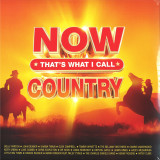
NOW is proud to present the very best of Country music with NOW That’s What I Call Country. 4 CD’s jam-packed full of the biggest Country hits of all time! With 86 tracks and its mix of classic and modern hits, this collection is essential for any Country music and Pop fan! So, grab yours today, and get ready to enjoy the very best of Country also available on a Coloured Triple LP set with 50 tracks and its mix of classic and modern hits, this collection is essential for any vinyl collection! So, grab yours today, and get ready to enjoy the very best of Country across 3-LPs!
Opaque white vinyl in printed innersleeve, includes Bonus 7". A Welsh rock trio with a predilection for delivering stadium-sized riffs with shoegazey vistas and dreamy post-punk riffage, The Joy Formidable return with their new album 'Into The Blue', to be released August 20th 2021. Taking a cue from bands like Yeah Yeah Yeahs, My Bloody Valentine, and Arcade Fire, the trio have continued to push their expansive sound on previous studio albums, from the breakthrough debut 'The Big Roar' (2011), through to the last studio album 'AAARTH' (2018), whilst always maintaining the hook-driven indie rock foundation laid down on their debut EP 'A Balloon Called Moaning' (2009). Currently the band split their time between their native Wales and the closest thing they could find in the U.S, "In the middle of nowhere" Utah, where they recorded the new album 'Into The Blue', which is being released worldwide this summer. March 26 brings us the first single in the campaign, title track 'Into The Blue'; we invite you to hear a band that reflected on where they've been, and where they needed to go for their next chapter. "Into the Blue is about opening your eyes to beauty & love again. Making it to the other side. Whilst not conceived as a metaphor for the times we all live in now, it certainly turned out that way" - Ritzy, Rhydian & Matt - The Joy Formidable
2023 Repress
Frank Maston’s Tulips is a sample-ready film score to the best 70s movie never made. Originally a super-limited self-release on his Phonoscope label in late 2017, Tulips has already become incredibly sought-after. Be With were introduced to Maston by mutual friends Aquarium Drunkard and it didn’t take long before we decided this modern classic deserved a reissue.
Inspired by the deep-grooving soundtracks of Italian cinema - think Morricone, Umiliani and Alessandroni - Maston conceived the entire Tulips project as a continuation of these revered works. Frank designed the artwork and made two 16mm films to accompany the music: “It wasn’t just the LP… it was kind of a whole vibe I was trying to create. Not really trying to emulate the things that influenced me but more trying to make something that could sit alongside those records on a shelf. I’m still very proud of the project.”
There’s a distinct library music feel too, with wiry organ, spacey keyboards and loping 60s guitar hinting at KPM and DeWolfe. Like the best library music, Tulips creates a cinematic universe through sound alone, evoking moving images in the listener’s technicolour imagination. It turns out that was accidentally on purpose: “I was discovering a lot of library music for the first time… listening to a composer’s entire catalog or finding all this obscure stuff. I wasn’t entirely conscious of the influence until I started making this music and realized I was channeling the vibe. That’s when I began focusing more on weaving melodic themes throughout the record to make it function more like a soundtrack”.
Tulips was recorded between 2015 and 2017 in a small studio in a village called Zwaag in Holland, during downtime from Frank’s touring duties with Jacco Gardner’s band. “Tulips” comes from the title of the very first demo he made in Holland, it was the first thing that came to mind. Makes sense.
Recording in Europe with some very European influences in mind, Frank wanted to eschew any American influences. But we can still feel the studio wizardry of the likes of Brian Wilson and Harry Nilsson in there somewhere. A psychedelic bedroom-pop song-cycle, full of hypnotic hooks and dusty drums, Tulips manages to sound charmingly homemade yet wholly widescreen.
Dreamy opener “Swans” is an exquisite soul instrumental and recalls the soft-psych of Koushik, which Be With loves of course. Tropicalia influences abound in the cool and breezy “New Danger” and the KPM-references are loud and proud on the lush organ pop of “Old Habits”. Fast-paced “Chase Theme No. 1” manages to be both tense and laid back, decorated by acid-drenched spaghetti Western guitars. The glorious Gainsbourg-esque melancholia of “Infinite Bliss” is all gauzy flutes and happy-sad vocalizing and the title is almost perfect: it’s bliss, no question; *if only* it went on forever. Side A closes with “Evening”, a subtle bossa nova beat thing. Gorgeous.
Side B opens with the heat-shimmer guitars of “Rain Dance”, evoking an unreleased Byrds or Buffalo Springfield backing track. Yes, it’s that good. “Sure Thing” is music to accompany an elevator ride you never want to end, but in a good way! The ornate “Garçon Manqué” is as beautiful as the instrumentals on Pet Sounds (think “Let’s Go Away For A While”) and the wistful “Turning In” starts like a stroll in the park before Maston introduces a scorched-Earth guitar solo that would startle if it wasn’t so pitch-perfect. “Chase Theme No. 2” is a briefer, more keening counterpart to what we hear on side A. The head-nod bass-drums-keys funk of “Hues” rounds out this staggeringly assured set; still opening each phrase with a plaintive strum, but using vibrato and heavy reverb to accent the electric organ melody. Sublime.
All these top drawer musical references might sound like just more of the usual release notes hyperbole, but there’s a reason that this still-young LP already changes hands for big money. It really is that good. Of course that first pressing didn’t hang around for long and Frank’s regularly been asked about a re-press pretty much ever since.
Re-issuing Tulips on Be With made sense to Frank “because the record would fit in so well with the catalogue”. Having already delved into the archives of KPM and Themes, and beginning to do the same with Coloursound and Selected Sounds, the collaboration “just makes sense and seems inevitable”. We agree.
Frank wasn’t sure a record of instrumentals with obscure soundtrack references would be an easy sell when it was originally released, and was surprised when Tulips turned out to be exactly what some people wanted to hear. We reckon its timeless beauty ensures that it’ll *always* have an audience.
The record was originally cut to be played at 45rpm, a technical quirk that grants the home listener the opportunity to go deeper, for longer. Played at 33rpm, the more languid unfurling of the tracks proves just as wonderful a trip. As a psilocybin-soaked case study from Aquarium Drunkard back in January of 2019 describes, some of the songs sound as if they were intended to be heard that way. The slower speed allowing the listener to step inside and perhaps even “crack the code” of the music’s meaning.
Mastered for this vinyl reissue by Simon Francis and featuring alternative burnt orange artwork from Maston himself, this Be With pressing is limited to just 500 copies. Hypnagogic it may be, but please don’t sleep.
Black Screen Records, Lost In Cult Records and Chuhai Labs are proud to tee up, for the first time, this terrific Cursed to Golf vinyl featuring the complete and unabridged soundtrack from the inimitable Mark Sparling! Captured in its grooves are the energetic chiptunes that goaded you on from course to course, as you ascended from Purgatory to become a Golfing Legend. Relive your finest drives or be introduced to this world of caddie-ridden fantasy in this beautiful collection of fearsome hooks and catchy choruses. Mark Sparling shares with us some insight into his aims for the Cursed to Golf soundtrack: "Cursed to Golf was simultaneously some of the funnest and most challenging music I have had to write in a long time. The original pitch for the music was 'Castlevania meets Mario Golf,' and it took me some time to find a good balance that we were happy with. But I'm really proud of the end result!" Enjoy all your favourite tunes across this 2xLP set, presented in a thematic duo of 180g heavy duty records, one golf course green and the other ghostly transparent magenta. Brought to life with art from Crisppyboat, this playful gatefold reinterprets Cursed to Golf's iconography through a joyous new lens.
Jackie Ross had a storied career that began when the great Sam Cooke recruited her for his SAR label in 1962. After that, she went on to sing with Syl Johnston's band and sign with the notorious Chess label in 1964. It was there she dropped her biggest hit 'Selfish One', which reached number 11 on the U.S. Billboard Hot 100, before many more tunes came on the likes of Brunswick and others.
Her 1980 album A New Beginning For was produced by Chicago soul scene mainstay James Van Lear and now gets its first reissue courtesy of P-Vine. It shows the range and depth of emotion Jackie could tap into with a mix of slow motion stirrers and more funky and upbeat numbers.
DNO welcomes two new signees, Slovenian producer Marka San and UK rapper Axel Holy, for one of the label’s darkest releases yet. The ‘Hidden Knowledge’ EP presents five tracks of dread bass and bad-trip sonics, as the Bristolian MC delivers cut-throat bars with the kind of calm, looming menace of a tomcat toying with its prey.
It was DEDW8, Axel’s horror-touched collab with Split Prophets’ Blanka, that first made him known in Slovenia, prompting Marka San to get in touch about working together. The same sinister vibe that drives that project has spread its tendrils right through the ‘Hidden Knowledge’ EP, from the twisted brass and squirming bass of ‘Where Did You Go’, which drags its feet like some zombified blues track as Axel repeats the titular phrase in his husky drawl, to the equally chilling ‘Classics’— all eerie samples and abyssal lows, with a pitched-down hook and braggadocious bars.
On ‘Patterns’, Axel goes to war, attacking the creeping beat with vicious battle bars and stories of the hustle, while ‘Hidden Knowledge’ sees him flex his vocabulary to take swipes at the powerful, and ‘Robert Downey’ makes his unswerving determination clear over grungy guitar.
Deliciously macabre, with intricate layers and lyrics that’ll have you spotting something new on every listen, yet still heavyweight enough for the dance, this is a match made in the nine circles and we can’t get enough of it.
Rhythms of postmodern realism at the very bottom of the DNO.
Skydaddy, the moniker of London based musician and bandleader Rachid Fakhre, has announced his debut EP, Pilot, releasing on the 2 February 2024. Alongside this announcement, Skydaddy has shared a new single ‘His Masterpiece’
Having spent the last few years writing and producing as one half of the acclaimed musical duo Spang Sisters, Skydaddy’s debut EP Pilot promises to be a ray of light bursting out from an increasingly busy London indie scene. Combining cello, violin, flute, piano and intricate vocal harmonies, Skydaddy cuts an utterly compelling figure, leading a fluid and interchangeable band, at its largest 7 people strong, they delicately glide through intricate passages of chamber-folk-rock, into swelling orchestral crescendos.
Released today is new single ‘His Masterpiece’ a piano driven track bristling with both a sense of hope and of melancholy. Skydaddy’s vocals sit alongside ear worm hooks from violins and flute. Following on from debut single ‘That Morning’ (also on upcoming EP Pilot) Skydaddy manages to capture a sound of yearning and nostalgia, whilst still sounding completely fresh and incredibly exciting. Offering insight on the inspiration on the track, he offers:
“Inspired by the story of Claude Lantier from Emilie Zola’s L'Œuvre (Commonly translated to ‘His Masterpiece’), the song charts the plight of an early impressionist painter in Paris whose works are unappreciated and gawked at by the Parisian artistic elite who are still tethered to the Romantic trend in painting. Lantier (whose character is based on Paul Cézanne) becomes madly obsessed in a painting which he believes to be his masterpiece and the ultimate demonstration of his talent and genius; an obsession which leads to his eventual, self-inflicted demise. The song is ultimately about alienation, bitterness and the struggle of creativity.”
Daniel Land's new album, "Out of Season", is his most ambitious record to date, a series of reflections on history, memory, and post-Brexit Britain, which was inspired by his return to the landscapes of his youth – the rugged, underpopulated west coast of Somerset. The album was written and partly recorded in Daniel’s studio in a static caravan, overlooking the coast, during the period when the UK was tearing itself apart over its relationship to Europe. "I didn't set out to write about Brexit", Daniel says, "I have a kind of horror of political music. But I couldn’t escape the atmosphere of the time – this strange, distorted version of ‘Englishness’ in the national psyche. I’ve always been interested in memory and nostalgia; Brexit illustrates the dangers of taking seductive, possibly false memories at face value”. Songs like “White Chalk”, “Island of Ghosts”, and the album’s title track, represent a series of attempts to reclaim an older, more peculiar idea of England which, Daniel says has been “Lost in the nationalist mythmaking of the past decades” – the island of misfits and outsiders exemplified by the works of Derek Jarman, for example, whom Daniel was rediscovering while working on the album. “I must have read 'Modern Nature' ten times over the years”, Daniel says. “What I love about Jarman is that he had a deep, abiding love for England, but it was a very complicated, critical and a very queer kind of love. That was very much my mood, going into the making of this album”. Like Jarman’s work, "Out of Season" probes national identity whilst also displaying resolutely queer themes throughout. Daniel’s voice – once described by The Guardian as "The spawn of Elizabeth Fraser and Anthony Hegarty” – is less heavily reverbed than before, bringing to the fore his often-confessional lyrics, inspired by the frankness of modern queer poets like Andrew McMillan, Seán Hewitt, and Ocean Vuong. A lyrical highlight is the gorgeous “Southern Soul”, a deceptively straightforward recounting of a decades-old hookup with a closeted guy from his hometown which, Daniel says, “Serves as a metaphor for everything I’m talking about in the album”. And in keeping with the album’s nods to the heroes of gay literature, Daniel’s self-styling of the album as a “Dream Pop Album on National Themes” deliberately references the full title of Tony Kushner’s era-defining play "Angels in America", whose central character is namechecked in the hook-laden “Lemon Boy” – a song which must surely stand as Daniel’s most deliciously pop moment yet. Lauded by Mark Radcliffe, Guy Garvey, Tom Robinson, and many others, Daniel Land makes music that, in the words of BBC Radio 1, "You can't help but think the late John Peel would have loved".
Batov Records' Middle Eastern Grooves 45s series welcomes the latest addition to its eclectic roster - a two-track EP from Eje Eje, the psych and funk inspired project from Şatellites band leader and producer, Itamar Kluger. Featuring the tracks "That Rainy Down" and "Coral Sex," the EP showcases Eje Eje's unique blend of Middle Eastern melodies, soulful grooves, and psychedelic sounds.
On the A-side "That Rainy Down," The electro baglama player takes the lead, building and building as if, “he is pushing himself to his limit”, says Itamar, “seeking catharsis as he walks to the edge of the cliff with confidence”, whilst the a baladi rhythm plays like an immense march of drummers. On the B-side we find the funkier "Coral Sex", which according to Itamar tells a story of a drunk tramp bothering the refined and self-important occupants of an exclusive hotel lobby. Reflecting this friction, the track juxtaposes a silky and sophisticated R&B sound, with loosely, pr even drunkenly, played take on rebetiko, a traditional Greek music associated with the poorest of city dwellers, played on a long-necked Greek lute known as a bouzouki.
As each track develops, new layers are revealed, inviting the listener to delve deeper. The effect is intentional. As Itamar says, "there is this kind of music that hooks you in a different way every time you hear it, different places in the songs lighting up in different colors, like slowly revealed layers. In our (Eje Eje) case, it is just such a hazed blend. It could make a very specific atmosphere, color a very specific movie scene that is lost in time or yet to be directed, or a very specific moment with your headphones on a long bus to the desert."
Itamar Kluger is best known for his work with the Şatellites, a six-piece band whose blend of Turkish folk and psych with funk and disco won them champions and listeners across the globe, from KEXP in Seattle to BBC Radio 6 Music, and FIP in France.
Eje Eje’s first 45 promises to be at least as quirky and original, if not more so, since the project is even more unshackled from traditional concepts of a band.
The vinyl edition of Klein's 2022 album: »STAR IN THE HOOD« plays like a cracked, tarnished mirror of contemporary numbing music, replacing long-form expression with tighter, more explosive and sometimes completely freeform transmissions that will wake you up from your overly comfortable environmental music slumber. Opening with cycling ghost drones, dialog and piano motifs that blur into heartfelt noise, »black star« is all loping, looping piano and chthonic vocals spiked with cheese-grater noise and chipmunked chirps. It’s Klein’s delirious vocal runs that push the album to the next level though; like her style-defining »Lagata« and the Hyperdub-released »Tommy,« she subverts the raw material that makes up R&B, turning memorable hooks into blurry impressions that will glue to your mind like a diva moment on a Suburban Bass cut.
She keels into longform on »schooled,« fogging organ drones into hazed clouds that gust into imposing shapes over a 10-minute duration, rekindling the dialog between contemporary noise and gospel music. Grandiose classical sounds receive a similar treatment on ‘Friend in the Mirror’, pulled into disorienting shapes that dispel any notions of class gatekeeping; in the final third, Klein’s voice interrupts the mood, before machine-gun percussion reminds us not to get too comfortable. If yr in search of beauty, »postcode wars« finds Klein fuzzing euphoric chords into an afterparty woosh of half-heard voices and dribbling synths. She simultaneously channels rapture and wrath, poignantly torching the contemporary societal skeleton without losing her near-at-hand community in the process.
Midway through the album there’s a thematic pivot signalled by the brief »shorty alert,« a trilling mass of carnivalesque vocal quirks that sound like spiders spitting DMT into yr eardrums. From here, things get darker and more unsettling: there’s doomed subterranean ambience on »signed and delivered«, Disney-esque piano motifs, blown-out lo-fi outsider rawk on »Swerve,« and speaker garbling free eccentric soul on »brand new day,« each struck through with that unmistakable high-vs-low culture posturing. It all brings us to the album’s unsettling one-two punch of ‘haha hehe business’, maybe the foamiest track we’ve heard from her this year, and the zonked »winter« - a piece that’s as crystal clear as Klein gets, an unprocessed heartstring-tugging vocal performance over acoustic guitar twangs.
- A1: Please Come Out
- A2: Wicked
- B1: Working With
- IB2: N My Head
- C1: Got Your Money
- C2: Didn't You Know
- D1: Two-Door
- E1: Memory Lane
- E2: Good Girls And Boys
- F1: All I Want From You
- F2: Don't Sell Rock
- G1: What Yours
- G2: Tweets
- H1: You Check
- H2: Hero Forever
- I1: Don't Pick Up
- I2: You Don't Know Me Anymore
- J1: Tenderly With You
- J2: Now Let's Wait
Sasu Ripatti's complete "Dancefloor Classics" series. Music for imaginary dancefloors, released on Ripatti's own label Rajaton.
”Look up, into the light” she said, while the camera shutter clicked. ”Like this? Does it look holy?” His neck felt stiff. Her reply: ”Yes, just like that. What do you mean holy? Like religious? ”No, more like trying to look very far, somewhere beyond what we can see.” ”Okay, stand still, I’m going to come close to you now. The light hits your face great.” click, click, click.
He noticed her fingernails. They were not polished. Natural. Even somewhat rugged, as if something wore out the fingers slightly. What had these hands held besides the camera? What made the edges of her fingernails drift off?
He thought it’s weird to look straight into the camera. The photographer had closed her left eye, the one not looking into the lens. Then it opened, she looked up, perusing the surroundings, then she closed her eye again, then looked up, closed, looking up, very quickly. It all seemed very professional. Maybe she calculated the light, making sure it’s close to perfect. ”What will these photos look like?” – the thought popped into his head briefly. It was liberating to think it wouldn’t matter.
”What’s that song playing?” he asked. ”Wait a sec, Ol’ Dirty Bastard?” she replied. ”Oh yeah, right. But the sample?” ”Hey, could you look up again, like that. No, lower.”
New directions: ”Look out from the window, turn left.” ”My left or yours?” ”Yours, I always try to think from the direction of my model.” How professional! This is a good shoot, so natural. Should I worry about how the photos look like? No, I don’t want to. His thoughts bounced around. What would the story be like? It’s a big newspaper, everyone will read it. Maybe someone drinks coffee and eats a stroopwafel while they do it. Will they place the waffle on top of the mug for a brief while, so that it gets hot and the syrup melts a little? Then it feels wet, and you can bend the cookie.
She broke his train of thought off midway through: ”Now turn right, but look left, and slightly up, but don’t turn your face right.” ”Umm, like this? Sounds like a set of pilates instructions.” she laughed ”You do pilates?” ”Yeah, it’s hard sometimes. Have you tried?” ”No”, she said. ”I’m not good for sports that are done in groups.” ”Yeah, but in pilates you can just be inside your mind, drowning in your private thoughts.”
”What are you thinking in pilates?” she asked, taking more photos. ”Well, mostly just which way is right. And which left.” click, click.
Q&A with Sasu Ripatti:
1) Tell us something about the EP series ”Dancefloor Classics”, what’s the idea and what can we expect?
I’ve been slowly writing these sort of dance music pieces and finally curated them together for a conceptual release. I like to create music for a dancefloor that exists only in my imagination and doesn’t try to suck up to the standardized reality.
2) Your vinyl format is 10” which is quite special (as opposed to LP / 12”). Why did you choose it?
It’s my favourite format, absolutely. The size is perfect, and you can make it sound really good @ 45 rpm. And you still can make great artwork.
3) You seem interested in sampling/repurposing, what does it mean to you as an artist to approach something already existing from a new angle? How does the source material inform you about the approach to take?
I guess i could flip it around and just say I’ve outgrown synths or electronic sounds to a great extend, and having gotten rid off all my synths already good while ago I’ve used samples as my main source material a lot. It’s obvious on this series that i’ve sampled existing music, but I also sample instruments and things in the studio and resample my own library that I have built over the years, it’s quite large. To me the end result matters, not so much how I get there. Once I have something on my keyboard and play around, it’s all an instrument, though with sampling other music it becomes a really interesting and complex one as you’re possibly playing rhythm, but also harmonic content and maybe hooks or whatever, all at once.
I never sample premeditadedly, like listening to records and looking for that mindblowing 3 sec part. I just throw the cards in the air and see what lands where, just full intuition and hopefully zero mind involved, playing tons of stuff, trying things, just recording hours of stuff. Then comes the interesting part to listen to hours of mostly crazy stuff and finding that mindblowing 3 sec part.
4) What is your relationship with the dancefloor (conceptually and/or in experiences / as a performer)?
Very complicated. I have never really felt comfortable on a dancefloor but have always wanted to. There’s something in club music, in theory, that really speaks to me. It has never really materialized for me – speaking mainly from a performer’s point of view who goes to check on a dancefloor for a moment after a concert. I never have DJ’d or felt much interest towards it. But again, I love the idea and concept of DJing. As well as producing music for imaginary DJs. Lately, as in the past 10+ years, I haven’t even performed in any sort of club spaces. So my relationship to the dancefloor is quite removed and reduced, but there’s quite a bit of passion and interest left.
All tracks composed and produced by Sasu Ripatti.
Artwork & photography by Marc Hohmann.
Mastering by Stephan Mathieu for Schwebung Mastering.
Vinyl cut by SST Brueggemann.
Publishing by WARP Music Ltd.
New pressing on limited pink vinyl. "...Holy Wave is certainly dreamy in a sense, but theirs is the kind of dream that's more vivid than blurry, more present than passing." – Consequence // "They've got the far-off, dreamy vocal wash of the shoegazers, but their guitars and hooks are anything but subtle." – Pitchfork // Suicide Squeeze is thrilled to announce a reissue of Holy Wave's Freaks of Nurture! Freaks is a hauntingly hypnotic journey through auditory lands of melodic bliss and passively happy psych rock hallucinatory dreams. Holy Wave is a band of multi-instrumentalists from El Paso, TX. Since moving to Austin in 2008, they have cemented themselves as a unique national and international touring circuit force. After perennial performances at Levitation (Austin Psych Fest) and countless tours and festival appearances in the USA, Europe, Latin America, and Africa, Holy Wave is poised to continue expanding into new spaces and places worldwide. With the recent release of their latest album, Five of Cups, this is the perfect time to revisit this crucial
Irgendwo zwischen Planet Punk, Milchstraße Retro-Pop, Mikrokosmos New Wave und Hinterwelt Thüringen befindet sich das Universum MAMORÉ. Es sendet schrille Signale aus, wird Tag und Nacht von einer rosaroten Sonne beleuchtet. MAMORÉ ist ein Ort, an dem alles erlaubt ist: Zu feierlichen Synth-Melodien und schroffen Rockgitarren wird simultan ruppiger Pogo, romantischer Paartanz und Bowie-esker Hüftschwung praktiziert. Drama und Behaglichkeit, Anachronismus und Innovation, Herzschmerz und Augenzwinkern aggregieren hier zu einem blumigen Gefühlsgewirr. Im Zentrum des Treibens: Fünf in extravagante Outfits aus der Vintage-Kleiderkiste gewandete junge Männer, die hin und wieder selbst nicht so ganz fassen können, was um sie passiert.
Jetzt, im Dezember 2023, legen MAMORÉ endlich ihren langersehnten ersten, nach dem Bandnamen betitelten Langspieler vor. »MAMORÉ« ist eine wilde Experience, ein heißkaltes Wechselbad — hier tippelnd-euphorisch, konsonant und tanzbar, da abgründig-absurd, schnell und kalt. Was alle zehn Anspielstationen eint, ist ihre nonchalante Eingängigkeit: MAMORÉ haben Hits gemacht, die eigentlich gar keine sein wollen, sich keineswegs anbiedern und trotzdem im Ohr bleiben. In manchen Momenten erinnert ihr Album an die ersten Veröffentlichungen der Band Abwärts, hin und wieder scheinen die frühen Die Ärzte durchzuschimmern — und doch ist »MAMORÉ« in seiner Attitüde stets eigenwillig, modern und neu. Der in neuer Bandbesetzung re- ecordete, von hysterischen Klangmustern gespickte Opener »Voll im Visier« signalisiert direkt, wo die Reise hingeht: »MAMORÉ« piepst, knallt und explodiert fortwährend, klingt dabei voll und gravitätisch.
Im bittersüß-verträumten »Du fehlst« crashen harte Brüche in sanfte Schlager-Ästhetik, in »Ich Sehe Dich« treffen raue Gitarrenriffs auf NDW-typisches Synthie-Spiel. Die Neuauflagen der 2021 veröffentlichten Stücke »Meine Liebe Nicht« und »S.O.S« gehen der von seichtem Piano-Spiel eingeläuteten Dark-Wave-Schnulze »Pfeil Ins Herz« voraus. Die bereits erschienene Single »Wolke 7« baut in den Parts kitzelnde Spannung auf, um in Richtung Hook wie ein Vulkan auszubrechen — und auch die darauffolgende Punk-Hymne »Melancholie«, ein Feature mit NNDW-Sternchen Gwen Dolyn, schraubt sich in ihrer Dynamik von Sekunde zu Sekunde weiter hoch. Im Zuge vom hallig-darken, Gitarren-getragenen »Die Hatz« erreicht das Rabbit Hole »MAMORÉ« seinen tiefsten Winkel, bevor das abschließende »Keine Bewegung« dort anknüpft, wo die LP begonnen hat: Auf der klammen Tanzfläche einer Diskothek. »MAMORÉ« kreist inhaltlich stetig um das Thema Zweisamkeit — inmitten von Liebeskummer und Euphorie, gebrochenen Herzen und kochendem Blut, »Rennen gegen Einsamkeit«, Nervendoktor und Oktobertristesse liefert das Album ein geballtes ABC der Gefühlsausbrüche.