
Suche:new religion

Continuing Blueprint's 30th anniversary celebrations, James Ruskin welcomes the return of Oliver Ho, whose relationship with the label is deep-rooted.
Oliver Ho has spent the last 30 years devoting his life to creating some of the most intense and compelling electronic music out there. Debuting his signature raw sound in 1996 on Blueprint Records, he cemented himself in the underground of the '90s UK techno scene. With a plethora of aliases, he has navigated his way through many different genres. From the frenetic tribal sounds of his own Meta imprint, the off the wall house music made as Birdland and Raudive, the grinding industrial of Broken English Club and the heavily textured ambient of his Slow White Fall and Zov Zov projects. While pushing and pulling at the fringes of electronic music, at the very centre has always been the beating heart of hypnotic techno, an art form that is both brutal and bewitching; techno as ritual magic. Oliver's live shows and DJ sets showcase this expression of music as shamanic experience, metallic and relentless, pure and direct.
An integral figure in shaping Blueprint's early sound, Oliver Ho returned in 2016 for their 20th anniversary with the "Burning Heretics EP", which was followed by a remastered reissue of 1999's "Awakening The Sentient". So it's fitting that he's now back for this latest milestone with a new EP, "Our Secret Religion" dropping in May.
- 1: American Wheeze
- 2: Coal Black Horses
- 3: Scrawled In Sap
- 4: Prison Shoe Romp
- 5: I Seen What I Saw
- 6: Neck On The New Blade
- 7: Interview
- 8: South Pennsylvania Waltz
- 9: My Narrow Mind
- 10: American Wheeze
- 1: Shametown
- 2: Train Serenade
- 3: Strong Man
- 4: Interview
- 5: Slow Guilt Trot
- 6: Low Estate
- 7: Pure Clob Road
- 8: Heel On The Shovel
- 9: Sac Of Religion
- 10: Dead Run
Mit "Hoarse" zeigen sich 16 Horsepower in ihrer radikalsten und unmittelbarsten Form. Das Live-Album fängt die Intensität der Konzerte in Denver und Paris ein und präsentiert Songs aus Low Estate und Sackcloth "n" Ashes in Versionen, die härter, wilder und präziser wirken als ihre Studio-Originale. Schon das von David Eugene Edwards" Akkordeon getriebene Intro von "American Wheeze" baut eine Spannung auf, die sich in eruptiver Kraft entlädt. Die Band agiert wie eine perfekt eingespielte Maschine: schwer, aber niemals stumpf; filigran, aber stets von innerem Druck durchzogen. Coverversionen wie "Bad Moon Risin"", "Fire Spirit" oder Joy Divisions "Day of the Lords" werden in eine düster glühende, beinahe rituelle Energie verwandelt. Die Oxblood Vinyl Edition bringt diesen Live-Klassiker zurück - rechtzeitig zur Reunion-Tour 2026 und als essenzielles Dokument der außergewöhnlichen Bühnenmagie der Band.

auch erhältlich
Tape / Cassette[16,51 €]
You can't put Bebe Rexha in a box. From her Grammy-winning songwriting roots on Eminem's "The Monster" to global chart-toppers with David Guetta and Florida Georgia Line, Rexha has established herself as a premier musical chameleon. With her latest project, Dirty Blonde, she officially enters a new era as an independent powerhouse. Now signed to EMPIRE, the Brooklyn-born star has crafted a 13-song "genre kaleidoscope" that serves as her first-ever visual album, representing a total creative rebirth and a departure from the major-label system she's known since she was a teenager.
Recorded across London, Tokyo, and Europe, Dirty Blonde captures the energy of Rexha's global travels. The project seamlessly blends heavy-hitting dance floor anthems with deep, personal storytelling. With the lead single "New Religion" she takes us straight to the club by reimagining the iconic dance record "Insomnia" by Faithless. On "Tokyo," she explores a drum & bass pulse inspired by a late-night rendezvous in Japan, while "Cike Cike" (produced by long-time collaborator DJ Snake) sees Rexha embracing her Albanian heritage by mixing traditional linguistic roots with modern 808 basslines.
At the emotional core of the album is the lead single, "I Like You Better Than Me." The track strips away the pop-star veneer to tackle themes of insecurity and self-scrutiny, blending raw lyrics with a pop-rock edge. From the Jersey-bounce-meets-country vibes of "Drink and a Little Love" to her vulnerable reflections on fame, Dirty Blonde is a celebration of an artist who is finally playing by her own rules. As Rexha firmly asserts, "The old Bebe is dead," leaving behind a focused, stronger creator who is making the music she truly loves.

auch erhältlich
Vinyl[25,00 €]
You can't put Bebe Rexha in a box. From her Grammy-winning songwriting roots on Eminem's "The Monster" to global chart-toppers with David Guetta and Florida Georgia Line, Rexha has established herself as a premier musical chameleon. With her latest project, Dirty Blonde, she officially enters a new era as an independent powerhouse. Now signed to EMPIRE, the Brooklyn-born star has crafted a 13-song "genre kaleidoscope" that serves as her first-ever visual album, representing a total creative rebirth and a departure from the major-label system she's known since she was a teenager.
Recorded across London, Tokyo, and Europe, Dirty Blonde captures the energy of Rexha's global travels. The project seamlessly blends heavy-hitting dance floor anthems with deep, personal storytelling. With the lead single "New Religion" she takes us straight to the club by reimagining the iconic dance record "Insomnia" by Faithless. On "Tokyo," she explores a drum & bass pulse inspired by a late-night rendezvous in Japan, while "Cike Cike" (produced by long-time collaborator DJ Snake) sees Rexha embracing her Albanian heritage by mixing traditional linguistic roots with modern 808 basslines.
At the emotional core of the album is the lead single, "I Like You Better Than Me." The track strips away the pop-star veneer to tackle themes of insecurity and self-scrutiny, blending raw lyrics with a pop-rock edge. From the Jersey-bounce-meets-country vibes of "Drink and a Little Love" to her vulnerable reflections on fame, Dirty Blonde is a celebration of an artist who is finally playing by her own rules. As Rexha firmly asserts, "The old Bebe is dead," leaving behind a focused, stronger creator who is making the music she truly loves.

6
His 2019 debut LP ‘For The Ones...' saw Yelfris delving deep into his Yoruba religion and its shamanic chants, subtly infusing those deeply personal elements with electronica and live instrumentation creating a beautiful pulsating soundscape. In purposefully mutating the acoustic sound of his trumpet he adds depth without losing his power and tenderness. Manifesting an adventurous and experimental shift in his composition, drawing on his classical training and love of jazz whilst at the same time delving further into the world of electronica. With the LP’s impressive palette of epic, cosmos-weaving trumpet melodies, fuzzy keys and psychedelic textures at their disposal, Quantic, K15, LCSM, Osunlade, Maxwell Owin, Contours repurpose and rework some of the album’s key moments, bringing an injection of dancefloor - friendly sensibilities to the proceedings.
With this offering, Yelfris’ incredible musicianship is re-contextualised for a new audience, making itself right at home on the dancefloors of the world.
8
Remix Edition
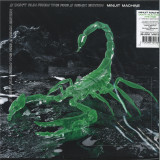
"Don't Run From The Fire" is Minuit Machine's 5th release. It's a four-track EP. One year and a half after coming back from a one-year hiatus, Minuit Machine keeps on transforming and evolving. From dark electronic, to EBM, the duo reasserts its hybrid identity, always dark wave, but with strong touches of techno and EBM. Don't Run From The Fire talks fear and desire. How love, and feelings in general affect us all as human beings. How we try to run away when we feel in danger. We run away, or we stand still, ready to attack, like a scorpio. We hide how much we're afraid, how much we'd like to hide. It's about control, trying to take control when everything is out of control. When the world around us is chaotic and dangerous. Don't Run From The Fire is about fighting, for who we are, who we want to become. It's about understanding what we truly want and embrace it. Don’t Run From The Fire – Remix Edition is a new version of the original EP with 4 additional remixes from Rein, Parallx, Crystal Geometry and Maud Geffray.

QUEENDOM is an album that marks a new era for the project while staying true to the essence of Minuit Machine. Produced under the SYNTH RELIGION label, this opus immerses us in Amandine's introspective realm, oscillating between darkness and light, between doubt and self-conquest. While retaining the emotional DNA of previous productions, QUEENDOM stands out with a more pop-oriented touch, featuring tracks where Amandine sings in French for the first time.
The first single, "HOLD ME," is a powerful pop anthem addressed to the queer community, celebrating the freedom to be oneself and breaking free from societal and patriarchal norms. This track is a true empowerment statement, with striking electro beats supporting a strong message of emancipation and pride.
"Créatures," a collaboration between RAUMM and Minuit Machine, is a modern fairy tale—a timeless love story that could take place in any era. This salvific love, rarely seen today, embodies a poignant depth and beauty.
Continuing the journey, "Cent Fois"—a French-written track—takes us into a techno-pop universe with nostalgic yet hopeful undertones. This song perfectly reflects Minuit Machine's evolution toward a more radiant approach while staying faithful to its dark heritage.
"Party People," on the other hand, is a return to roots with dark wave/italo sounds. This hypnotic and haunting track questions identity in an increasingly robotic society, where individuals are forced to conform to imposed norms. This exploration of the individual versus the collective lies at the core of Minuit Machine's DNA.
"Mes Souvenirs," created in collaboration with Rebeka Warrior, dives intimately into the memories of Amandine and Rebeka. Together, they reveal fragments of their past—precious and vibrant memories that resonate through powerful and melancholic electro sounds.
Finally, the eponymous track "Queendom" invites us to plunge into the depths of Amandine's world—a universe that is both tormented and icy, yet resilient. Supported by a slow and captivating rhythm, this track is designed to grip and haunt the listener, like an incantation.
QUEENDOM is a bold and hybrid work where each track reflects a pursuit of sincerity and artistic reinvention while maintaining the ability to express emotions through rhythms that are both danceable and introspective. The album showcases Minuit Machine's artistic maturity, establishing itself as a must-listen in the darkwave and electronic pop scene.
Amandine entrusted the artistic direction of this album to Manon Dupeyrat, a brilliant young artist who crafted a bespoke universe perfectly aligned with the produced tracks. The album cover, both intimate and anachronistic, invites listeners into Amandine's private world through her bedroom, revealing what she wishes to share.

12
Roberto Musci, born in Milan in 1956, studied guitar, music and electronic instruments. From 1974 to 1985 he traveled the world studying African, Indian, Arabic and Oriental music, recording ethnic music “in the field,” studying and collecting ethnic musical instruments from all over the world. His self-produced debut album, “The Loa of Music,” is a seminal work of staggering originality and extraordinary beauty in which field recordings, musique concrète, electronics, synthesis and instrumentation are interwoven, drawing on the countless musics from around the world that he has recorded. The subsequent “Water messages on desert sand,” composed with Giovanni Venosta, was nominated for a Grammy in the UK in 1987. In the 1980s and 1990s he broadcast ethnic and electronic-experimental music from Rai and Radio Popolare radio stations. He has also composed and played music for videos, commercials, dance, poetry, theater, composed soundtracks and accompanied silent films live. From 1980 to the present, he has played with many Italian and European musicians: Giovanni Venosta, Claudio Gabbiani, Walter Prati, Giorgio Magnanensi, Massimo Cavallaro, Massimo Mariani, Moni Ovadia, Roberto Zorzi, Chris Cutler, Jon Rose David Moss, Steve Piccolo, Elliott Sharp, Keith Tippett and the Third Ear Band.
The theme of travel, ethnicities and mysticism are a pivotal point in this new album of his as well, demonstrating once again how music needs absolutely no sharp lines of demarcation. The music is one.
It goes from the search for deep meanings in a time spent in a Hindu monastery (Ashram) listening to mantras and studying Buddhist philosophy (The Principle Of Things) to space explorations and human settlements on the Moon or Mars wondering how man will live and what he will bring to the new worlds imagining that Sufism, an Islamic mystical religion, will accompany him in the discovery of new worlds (Derviches On Mars). In Goodbye Monsters, harmony and peace are sought. Memories Of A Piano Player is a tribute to Keith Tippett, a great pianist (King Crimson , Centipede, Mujician) with whom he played in several concerts and with whom I spent evenings talking about music, food and Italian wine. Quantum State focuses on how quantum mechanics is creating a revolution in the way of thinking and dividing reality into infinite Parallel Worlds. Panthalassa is the vast ocean that surrounded Pangea and blends South American marimba music and traditional Chinese music. Burn The Shadows is a tribute to the fascinating Indonesian shadow theater, from the stories told and the atmosphere created during the long plays told in the sacred Indian texts of Ramayana or Mahabharata. Shadows are also more or less pleasant memories to which one is attached, and to burn them is still to move on with one's life.
Torajan Funeral Chant: The Toraja are a people living in Sulawesi (Indonesia) who have a special worship of the dead. Funerals are festivals that last several days, the corpses are protected by Tau-Tau (small dolls that watch over cemeteries), and over the years, they exhume the corpses of their relatives and keep them in their homes with them for a time to remember them.
The experimentation goes all the way to modern Artificial Intelligence that 'interrogated' to create something new by inserting conflicting inputs joins them together but nonsensically creating interesting insights; hence A.I. In Confusion. Pangea, named after the continent that contained all the land that emerged between 540 and 200 million years ago, in the Paleozoic and Mesozoic periods, imagined as inhabited by man without divisions created by borders, wars, religions or ethnic groups, is also a tribute to Steve Reich, one of the fathers and a great musician of minimal music. Prophecies, a reading of sacred texts and religious songs from evangelical sects in the United States filtered into granular synthesis with percussion music from South India, closes.

- A1: India
- A2: Child Of Nature
- A3: Anna Was Mine (Demo Version)
- A4: Nature Boy (Mantovani Orchestra)
- A5: Land Of Love (Come My Love And Live With Me)
- A6: Hey Jacque (Hey Jacque)
- A7: Palm Springs (The Ray Anthony Orchestra)
- A8: Umgowah
- B1: Wild Boy ( With Mort Wise & The Wisemen And Rocky Holman)
- B2: Surfer John (Nature Boy & Friends)
- B3: Eden’s Island (Arthur Lyman)
- B4: Monterey (With John Harris And Paul Horn)
- B5: Overcomers Of The World (With John Harris)
- B6: The Clam Man
14
auch erhältlich
Black Vinyl[26,85 €]
“Wild Boy …” is a reissue of the well-known 2016 release curated by Brian Chidester, renowned researcher and biographer of Eden Ahbez. Especially for this album, Brian wrote an interesting text about Abi’s life, which definitely became the decoration of the release.
With the new 2020 re-release, we went a little further and kept what is commonly referred to as studio cuts. It’s a few more minutes in the studio with ahbez himself, full of emotion and life. In addition, to the delight of fans, the edition includes an additional composition Nature Boy (Mantovani Orchestra).
Especially, it is worth noting the outstanding mastering prepared from practically decomposed tapes by the Grammy-nominated Jessica Thompson, which guarantees the deepest and warmth possible sound. Jessica a huge ahbez fan and we’re highly appreciated for what she has done to save his music for the future.
Eden Ahbez is definitely at the origin of psychedelic music and this release can be taken as further proof. Over the past twenty years, the iconic figure of the world’s first hippie Eden ahbez has become famous primarily for his 1948 song “Nature Boy”, praising universal love, and his amazingly solo album from the 1960s called “Eden’s Island” – one from the first concept albums in the history of music and probably the first psychedelic music album. “Wild Boy: The Lost Songs Of Eden Ahbez” deepens understanding of the origins of the psychedelic movement in the 1950s.
The disc contains a musical selection of works by Eden ahbez himself, written by him in the period after Nature Boy. The inclusion of songs such as “Palm Springs” – Ray Anthony Orchestra and “Hey Jacques” by Erta Kitt gives the listener the chance to discover for the first time the little-known recordings of world-famous artists composed by Eden ahbez. Through “Wild Boy” and “Surfer John” you can hear the author’s handling of absurd rock and exotic experimentation, as well as sweet psychedelic pop like Monterey (with Paul Horn on flute). Overall, Wild Boy: The Lost Songs Of Eden Ahbez offers an overview of the lost works of 1949-1971 with seven unpublished recordings and eight rare singles.
If in 2020 you are missing the hallucinogenic content in Eden Ahbez, it amazingly makes up for that deficiency with simple chords, expansive arrangements, and lyrics about travel, relaxation, free love, and spirituality. Thus creating the standard of psychedelic music. Eden Ahbez’s songs weren’t only fantasy and his personal philosophy was the real thing that he lived.
reviews:
“This carefully and extensively researched compilation culls covers by top notch mainstream artists juxtaposed with unreleased Eden recordings. What might sound like a mixed bag is actually more like a chronological, musical non-fiction novel about Eden Ahbez. While Eden was writing hundreds of songs and performing live and making recordings in various styles, his songs were also being picked up by popular artists like Nat King Cole and Eartha Kitt who recorded with a more polished mainstream style. There are also some early rock n roll style recordings here. Eden’s professionally recordings often end up as Novelty Pop records such as “Child of Nature” and “The Clam Man” but if you read between the lines and listen to the lyrics it is pretty eye-opening that he is singing about Eastern-religion-style and pre-hippie philosophies about being at one with the planet Earth.
All of this is explained in the lengthy liner notes inside the lp along with a few choice photos that establish Eden as a founding father of Southern California mystic/psychedelic music.” – Tiki_News
“Eden Ahbez’s life philosophy was summed up in the lyrics of his most famous song, “Nature Boy,” a 1948 hit for Nat King Cole: the song describes a “strange enchanted boy” who wanders the world in search of truth. “The greatest thing you’ll ever learn,” he concludes, “is to love and be loved in return.” Ahbez was a pre-cursor of California’s beatniks and hippies, and an exalted icon of ex-otica via his rare 1960 album Eden’s Island. Beyond “Nature Boy” and Eden’s Island, though, there were nu-merous lesser-known Ahbez record-ings. Ahbez biographer Brian Chidester has been doing an exemplary job of archiving and documenting that catalog of work. The Exotic World of Eden Ahbez (reviewed in UT#38) appeared a few years ago, gathering together 14 Ahbez-related rarities” – Ugly Things

11
Sleep Now Forever is the second and final album released by Sorrow, the post-Strawberry Switchblade group fronted by singer Rose McDowall. Originally released in 1999 and long since deleted it is a cornucopia of pastoral, elegiac folk music, swirling atmospherics, hymnal compositions and above it all the alternating towering and fragile vocal performances of McDowall. Recorded in the late 90s with fellow band member and co-songwriter Robert Lee, Sleep Now Forever is the definitive statement by the now defunct group and Rose McDowall’s most complete long-form work to date.
Released through the group’s own Piski Disk Records, Sleep Now Forever was distributed by World Serpent which struggled through the early 2000s with financial woes, eventually folding due to bankruptcy in 2004. Due to the company’s troubles, Sleep Now Forever was never distributed widely and was a victim of the company’s failure. Released on CD only, original copies are now rare and only traded on second hand channels. Remastered by Mikey Young for a limited vinyl release, Sleep Now Forever will be released on April 20th on double vinyl format, with one side an exclusive etching by Glasgow artist Holly Allan.
Despite its rarity, Sleep Now Forever enjoys a firm cult following. The album’s textures are expansive, lush, deliciously detailed and celestial. Recorded in home study Velvet Hole by Rose McDowall and then-husband Robert Lee, the album enlists an array of players from the underground Neo-folk / industrial scene: Nigel McKernaghan (Uilleann pipes, Whistles), Susan Franknel (Bassoon), John Contreras (Cello) and Lawrence Frankel (Oboe, Cor Anglais). The eleven songs here revolve around McDowall’s instantly recognisable voice. Brought up singing in the Catholic Church, McDowall’s vocals are impeccable and angelic, particularly on tracks like Turn Off The Light where her experiences with religion are canted over soaring oboe and guitar backing. By far the most evolved and realised version of Sorrow’s vision, it feels somewhat criminal that music this beautiful could be lost to time until now.
McDowall’s lyrics throughout Sleep Now Forever deal frankly with mental health, depression, altered states, death and redemption. Wave upon wave of harmony drench each song, McDowal’s vocal multi-tracked and imperious. Opener Soldier benefits from Robert Lee’s use of the studio as instrument, summoning forth a lilting group performance of sparkling guitar and percussion that recalls the Velvet Underground. Mikey Love’s master treats the compositions to brand new frequency dynamics and space. Harmonium and string drones form the counter to McDowall’s vocal on Love Dies, a slow, lurching lament that feels transcendent. On Haunting, the arrangement is orchestral and aching, bleeding into Fear Becomes You, with chord and harmony structure that recalls the baroque sixties pop of West Coast Pop Experimental Art Band or the 60s psychedelic folk movement. A towering, beautiful statement, this elegy for times lost and moonlit-illumination is finally resurfacing from the darkness.

8
repressed !
From samba and bossa nova through to baile funk, with carioca expressions of jazz, rock and hip hop in between, the sound of Rio de Janeiro, while continually evolving, has always held an unnameable quality which reflects the magic and mystique of the city itself. Multi-instrumentalist and arranger Antonio Neves is the city’s newest trailblazer: the enfant-terrible of Rio’s music scene, leading a vital and diverse constellation of both emerging and well-known artists advancing the city’s musical legacy.
“It all started one sleepless night, after watching a Quincy Jones documentary”. Inspired by the legendary music magnate, Neves began writing a list of artists residing in Rio de Janeiro “people that I admire, that I consider geniuses of their instruments, who share with me affinities, anxieties and projects.” The list included some of Brazil’s most revered living musicians who Neves has worked with in recent years: Hamilton de Holanda, Leo Gandelman and Dorival Caymmi. Neves also called on some of Brazil's most exciting emerging talents including Alice Cayymii and Ana Frango Eletrico.
A Pegada Agora É Essa (The Sway Now) is Neves’ second album: a vibrant portrait of the current Brazilian music scene. From the regional to universal, popular to erudite, samba to rap, Latin rhythms to jazz, MPB and pop to good old rock'n'roll, Neves walks with fluency and mastery amongst all the musical genres that Brazil has to offer.
“My offer to the musicians was complete freedom to express themselves through the songs I proposed – classics like “Summertime”, “Luz Negra” and “Noite de Temporal”, and compositions of my own – creating a space of authorship for the band and the guests. A space for inventions, purges, delusions, laughter. The idea was to bring the freedom of jazz crossed by Brazilian rhythms, such as the traditionals Partido Alto (A Pegada Agora É Essa) and Jongo (Jongo no Feudo and Luz Negra); rhythms of African-Brazilian religions like Candomblé (Noite de Temporal) and Umbanda (Forte Apache); and a tribute to newest Rio de Janeiro’s contribution to Brazilian music, the Funk Carioca (Simba)”.
Coming from a musical family, Antonio’s father, Eduardo Neves, was a renowned conductor and a professor at Juilliard School of Music and the California Jazz Conservatory. In the bohemian neighbourhood of Lapa, aged 14, Antonio began his career as a drummer, before experimenting with brass. He would soon become a skilled trombonist and arranger achieving the recognition of his teachers and peers. It wasn’t long before he would be playing with some of the biggest names in Brazilian music, such as Hamilton de Holanda, Leo Gandelman, Moreno Veloso, Kassin and Elza Soares.
His debut album as a trombonist was PA7 (2017, Rock It), released at the same time he was travelling the world playing with artists like Moreno Veloso, Kassin and Leo Gandelman, and recording the albums Jobim, Orquestra e Convidados (2017, Biscoito Fino), with Mário Adnet and Paulo Jobim; and Elza Soares Canta e Chora Lupi (2017, Coqueiro Verde Records). More recently, Neves was the arranger for the acclaimed Little Electric Chicken Heart album, by Ana Frango Elétrico, which has been nominated for a Latin Grammy and voted 2019’s ‘Brazilian Music Revelation’ by The Art Critics Association of São Paulo.

- A1: Les Masques - Il Faut Tenir (1969)
- A2: Isabelle Aubret - Casa Forte (1971)
- A3: Christianne Legrand - Hlm Et Ciné Roman (1972)
- A4: Jean Constantin - Pas Tant D'chichi Ponpon (1972)
- A5: Billy Nencioli & Baden Powell - Si Rien Ne Va (1969)
- B1-: Marpessa Dawn - Le Petit Cuica (1963)
- B2: Jean-Pierre Sabar - Vai Vai (1974)
- B3: Sophia Loren - De Jour En Jour (1963)
- B4: Isabelle - Jusqu’à La Tombée Du Jour (1969)
- B5: Sylvia Fels - Corto Maltesse (1974)
- C1: Frank Gérard - Comme Une Samba (1972)
- C2: Ann Sorel - La Poupée Des Favellas (1971)
- C3: Charles Level - Un Enfant Café Au Lait (1971)
- C4: Andrea Parisy - Les Mains Qui Font Du Bien (1970)
- C5: Audrey Arno - Quand Jean-Paul Rentrera (1969)
- C6: Aldo Frank - T’as Vu Ce Printemps (1970)
- D1: Christianne Legrand - Cent Mille Poissons Dans Ton Filet (1972)
- D2: Clarinha - Lemenja (1970)
- D3: Hit Parade Des Enfants - Aquarela (1976)
- D4: Jean-Pierre Lang - Tendresse (1965)
- D5: Magalie Noël - Une Énorme Samba (1970)
- D6: Françoise Legrand - La Lune
Ever since the late 1950s bossa-nova revolution, Brazil’s influence on French music has been undeniable. Pierre Barouh, Georges Moustaki and a vast array of lesser known artists, all made the Musica Popular Brasileira (MPB) an axis of promotion at the service of a cool and metaphysical, modern and mixed Brazilian lifestyle. Some were seduced by the poetic languors of the bossa, some were looking for fun, and others just loved the American hybridization of jazz-bossa, jazz-samba.
What is bossa nova? One of its creators, Joao Gilberto said: "Its style, cadence, everything is samba. At the very start, we didn't call it bossa nova, we sang a little samba made up of a single note - Samba de uma nota so .... The discussion around the origins of bossa nova is therefore useless”. It is nevertheless useful to remember that these magnificent Brazilian songs, which the guitarist describes as samba, were shifted and balanced around improbable chords. "I like things that lean, the in-betweens that limp with grace," said Pierre Barrouh, quoting Jean Cocteau.
With emotion, arrangements for violin and supple guitar licks, bossa nova rapidly changed. A transformation that can be heard in the Tchic, tchic, French Bossa Nova 1963-1974 compilation, the result of a cultural reappropriation, which traveled through the United States and supplemented itself in France.
A musical revolution that has remained significant, bossa nova was born in Rio. From 1956 to 1961, Brazil lived through its golden years. In five years, the country had invented its modernist style. Elected president in 1956, Juscelino Kubitschek de Oliveira, an elegant man with a broad forehead, brandished a promising slogan: "Fifty years of progress in five years". He quickly got to work. Not worried about increasing debt, he launched the project for a new federal capital, Brasilia, designed by the communist architect Oscar Niemeyer. Volkswagen opened state-of-the-art factories and created the “fusquinha”, the Beetle. In Rio, the Vespa made its first appearance. The Arpoador Surf Club crew run into the “girl” from Ipanema, Helô Pinheiro - the tanned garota ("chick"), between a flower and mermaid, who at 17 walked by the Veloso bar, where the fiery author and composer, Tom Jobim and Vinicius de Moraes, were getting drunk on whiskey. From then on, bossa symbolized cool.
In 1958, Joao Gilberto recorded Chega de Saudade, which the directors of Philips denied, calling it "music for fagots". The marketing director, who believed in it, secretly pressed 3000 78-inch vinyls and distributed them at schools around Rio, creating a tidal wave.
American jazzmen then took over. In particular, trumpeter Dizzy Gillespie and guitarist Charlie Byrd. In November 1962, the Brazilian Ministry of Foreign Affairs funded a "Bossa-Nova" concert at Carnegie Hall in New York, inviting the genre’s pioneers. Unprepared, the show soon turned to disaster. But the troupe was invited to the White House by Jackie Kennedy. The first lady loved "the new beat" and in particular Maria Ninguem, a song by Carlos Lyra, later covered by Brigitte Bardot.
In Brazil, the 1964 military coup quickly ended this euphoria. The destructive atmosphere that ensued pushed many Brazilian musicians to leave, if not to exile. Thus, Tom Jobim, Sergio Mendes and Joao Gilberto arrived to the United States. In New York, Joao Gilberto met saxophonist Stan Getz. At the time, he was married to the Bahianese Astrud Weinert Gilberto, who had a German father. She had never sung before, but she knew how to speak English. Getz therefore asked her to replace her husband on The Girl From Ipanema. The Getz/Gilberto record with Tom Jobim on piano, was released in March 1964. Phil Ramone, the "pope of pop" was in charge of sound.
Bossa nova arrived in Paris through the classic “guitar-voice” channel (Pierre Barouh, Baden Powell, Moustaki…) But France loved jazz and Paris had already welcomed its American contributors. All these good people were to pass through Saint-Germain-des-Prés. The cabaret l'Escale became the Mecca of Latin American sound where one could find Pierre Barrouh and his friends, such as the Camara Trio, samba-jazz aces, whose only record was published by the Saravah label. With a band strangely called Les Masques (a band that included Nicole Croisille and Pierre Vassiliu, among others), the Camara Trio recorded an interesting Brazilian Sound, including the track Il faut tenir which is present on this tasty compilation of rarities.
Other enlightened musicians can also be found on the compilation, such as Jean-Pierre Sabar (songwriter for Hardy, Auffray, Leforestier ...) and the French pop rock organist Balthazar. In 1975, Sabar recorded Aurinkoinen Musiikkimatka on a Finnish label, which featured the crazy Vai, Vai, included on this record. We are now following the footsteps of Brazilian electronic musicians such as Sergio Mendes, Eumir Deodato or Marcos Valle who created funk and disco sounds on their keyboards and synthesizers. A style that influenced Véronique Sanson when she wrote Jusqu’à la Tombée de la nuit in 1969 for Isabelle de Funès, the niece of Louis and a great friend of Michel Berger - Sanson did end up singing this track on her 1992 Sans Regret record.
The pinnacle of exoticism and travel, Sylvia Fels’ Corto Maltese includes bongos, sea mist and ocean sounds. The title was taken from Jacky Chalard’s concept album written in 1974, Je suis vivant, mais j’ai peur (I am alive, but I am scared), based on Gilbert Deflez’s science fiction novel.
However, bossa nova extended the scope of popularity. "In the 1970s, I was a fan of Sergio Mendes, Getz / Gilberto. I fell in love with this music that I knew because I had been an orchestral singer, " explained Isabelle Aubret, who in 1971 delivered a composite record of covers by the very funky Jorge Ben, Orfeu Negro, Tom Jobim, Vinicius de Morais and Jean Ferrat. "I recorded this album for Meys Records in Paris, far from Brazil, with wonderful musicians, François Raubert, Roland Vincent, Alain Goraguer...". The latter wrote the arrangements for Casa Forte, a very percussive title borrowed from Edu Lobo, one of the initiators of the bossa who spent time in California. "Jazz and bossa came together and produced very rhythmic music. I love singing, it allows me to dream, to have fun, to feel a high on stage, and these songs brought me joy, made me swing, my singing felt like a dance.”
The world tours of French singers and their desire for the tropics, often brought them to Rio with its hills, forests, caipirinhas and tanned bodies. There are surprises though, like this Iemenja (Iemenja is the goddess of the sea in the Afro-Brazilian candomblé religion). Not unlike the composer and musician Jean-Pierre Lang, based in Sao Paulo, Claire Chevalier taught Brazil to Brazil. In 1970, the singer and painter published a 45-inch vinyl, Mon mari et mes amants (My husband and my lovers), under the improbable pseudonym of Clarinha (little Claire). She was then living in Rio, with her husband, Joël Leibovitz, who founded a band called Azimuth, and who owned a record label specialized in "sambas enredos" songs for samba school parades.
For its B side, she asked Pierre Perret to come up with lyrics for a song composed by Carlos Imperial: "Oh goddess of the sea, o goddess Iemenja, I bring a white rose to adorn your long hair ..." . "Perret came to see us, and we had fun, remembers Joël Leibovitz. We wrote Lemenja for fun, we recorded it at the Havaí studio, behind the Central do Brasil the central station. Erlon Chaves, the arranger who worked with Elis Regina, joined us" adding his share of Afro-Brazilian percussions and funky brass to the mix.
There is a common misunderstanding in Franco-Brazilian history: that bossa, admittedly hedonistic, is perceived as funny, even though the poets who wrote the texts are often philosophizing on the human condition. Its French interpreters pull it towards a carnival inspired universe, far removed from its fundamental essence. Thus, Jean Constantin covered the famous Samba da minha terra, an ode to the art of samba written by the classic Bahian composer Dorival Caymmi, renaming it with the enticing title of Pas tant de tchi tchi pompon: "On your pier there is no tchi tchi / when you arch your back, you know everything is alright ”(lyrics by Gérard Calvi). This expedited bossa aims for the absurd, but retains a certain elegance.
Indeed, Jean Constantin was not an idiot, the rather large man had a huge mustache and liked fantasy, (Les pantoufles à papa, Le pacha, inspired by cha-cha-cha-cha, salsa and jazz) but he was also the lyricist of Mon manège à moi interpreted by Edith Piaf, the composer of Mon Truc en plume by Zizi Jeanmaire and the soundtrack of François Truffaut’s 400 Blows. Le Poulpe, published in 1970, from which this bossa is extract, was arranged by Jean-Claude Vannier, an accomplice of Serge Gainsbourg’s Melody Nelson. In short: "There is enough of samba / By looking at the parasol / Because my poor cabeza / Is going to die in the sun".
Even the American actress Marpessa Down, who was at the heart of the bossa nova revolution with her role as Euridyce in Marcel Camus’ film Orfeu Negro, winner of the 1959 Cannes Palme d'or, fed the clichée with Je voudrais parler au petit cuica - "Tell me how you manage to always make people want to dance / It's true, I must admit that I cannot resist your magic" - in consequence, once can hear the cuica, a little drum inherited from the Bantu.
But bossa nova had many angles. Societal, of course, pushing actresses who were symbols of women's liberation like Brigitte Bardot, Jeanne Moreau, or Sophia Loren to engage in the exercise of accelerated bossa. In February of 1963, Sophia Loren made a record in French in Rome, Je ne t'aime plus, featuring the song De jour en jour, a bossa written by two Italians, Armando Trovajoli and Tino Fornai, which was released a little later by Barclay. Bossa accompanied the 1960s, a decade of moral liberation. Ann Sorel, who interpreted La Poupée des favellas, caused a sensation with L’amour à plusieurs, a provocative song written by Frédéric Bottom and Jean-Claude Vannier. As for the actress Andrea Parisy, she displayed her bourgeois cheekiness in Marcel Carné's Les Tricheurs before interpreting Les mains qui font du bien. And Magalie Noël, the friend of Boris Vian, who sung Johnny fais-moi mal, was hired to sing Une énorme Samba, composed by Alain Goraguer (arranger to Gainsbourg, Bobby Lapointe and Jean Ferrat) with lyrics by Frédéric Botton.
But in the end, of what wood is bossa nova made of? The answer is given by Christianne Legrand, daughter of Raymond the conductor, and sister to Michel the composer: "With me, with jà" - jà means "immediately" in Portuguese. In 1972, the singer, an expert in vocal jazz and a member of the Double Six, published Le Brésil de Christianne Legrand. Two songs included on the Tchic Tchic compilation that demonstrate how bossa, jazz, funk, rock, etc. work like a swiss army knife: the music is used to denounce broken systems, or miracles, HLM et ciné roman, Cent mille poissons dans ton filet, two songs from the O Cafona soundtrack, a successful telenovela broadcast, at the time in black and white, on TV Globo. The first was adapted in French by the fighter and friend of the Legrand tribe, Agnès Varda. The second is content with a play on words, jostling them into a summer fun.
Véronique Mortaigne

The classic 1988 NOFX album, available on vinyl. First time pressed in Europe on black and colored vinyl. Recorded in 88 by Brett Gurewitz in 3 days at west beach recorders. We we"re all stoked cause we got to meet Brett from bad religion. He asked us if we wanted to put the record out on epitaph, but we wanted to put it out ourselves. What a mistake. It took almost a year to sell 1500 copies at 4 bucks a piece, and we only got paid for half. We ended up giving the record to epitaph like 5 years later with a new cover. I wouldn"t say this record sucks, but it"s still pretty hard to listen to.

- Shutup Already
- Freedumb
- Here Comes The Neighborhood
- A 200: Club
- Sloppy English
- You Put Your Chocolate In My Peanut Butter
- Mr. Jonesside B
- Vegetarian Mumbo Jumbo
- Beer Bong
- Piece
- I Live In A Cake
- No Problems
- On The Rag
- Truck Stop Blues
auch erhältlich
GREEN COLOURED Vinyl[23,49 €]
The classic 1988 NOFX album, available on vinyl. First time pressed in Europe on black and colored vinyl. Recorded in 88 by Brett Gurewitz in 3 days at west beach recorders. We we"re all stoked cause we got to meet Brett from bad religion. He asked us if we wanted to put the record out on epitaph, but we wanted to put it out ourselves. What a mistake. It took almost a year to sell 1500 copies at 4 bucks a piece, and we only got paid for half. We ended up giving the record to epitaph like 5 years later with a new cover. I wouldn"t say this record sucks, but it"s still pretty hard to listen to.

9
“Tunggak Semi” is the third album from Indonesian musician and producer Bambang Pranoto. Originally released in 2000, it’s an exemplary slice of what has become his signature style, a dream-like meditation on aspects of nature, combining elements of accordion, acoustic guitar, flute and percussion. The compositions cross eastern and western notation to inhabit a world of their own, a world between worlds, where harmonies reflect the beauty and joy of nature.
Bambang had a rather atypical entry into music, and studied electronics and telecommunications, before he took advantage of the wave of computer software like Cubase and Protools in the 1990s that enabled him to set about recording his own compositions and soundscapes. After playing in groups, he developed his own approach to constructing his productions. He invites musicians to record interpretations of his themes, which he then pieces together in Protools like a jigsaw puzzle. “The musicians have never even met!” he chuckled on a Skype call.
“Tunggak Semi” refers to the giant trees that appear all over Bali, and their process of renewal and regeneration. “If you cut the tree, and leave the roots, they will grow again. Everytime we cut, they grow again. It’s limitless. This philosophy means there’s always something new coming, whether an idea or music, anything.” This approach has grown out of Bambang’s studies into meditation, including Indian and Chinese scriptures, also Balinese and Indonesian religions. Music, like meditation, is a daily practice, and acceptance of the music and its ‘unfinishedness’, forms a central part of the process.
“We must not just think, but we must also feel, and we must accept that feeling,” explains Bambang, and that’s a step of opening one’s mind to possibility. It seems in keeping with two of Bambang’s musical inspirations, namely Ryuichi Sakamoto and Peter Gabriel, both known for their love of world folk music, and fusion of musical traditions. That’s mirrored in Bambang’s own collage-like approach, recording elements and piecing them together to make something unimagined. While the acoustic sound palette for “Tunggak Semi” is rooted in live recordings, Bambang is not afraid to put the digital technology to good use.
“We have to use the computer as a tool in the best way we can,” Bambang says. “Sometimes people say music is made by people, not by the computer, but it’s just another piece of equipment. What can we compose from this equipment? It’s technology music!”
Written and produced by Bambang Pranoto at interactive garden studio, Depok, Bogor between September and December 2001. 2025 version remastered by Wouter Brandenburg at Brandenburg Mastering.

- I Ride
- Sleeping With My Boots On
- Eagle Eyes
- Old Time Religion
- This Mortal Bed
- Murder In Slow Motion
- Stolen Kiss
- The Life In Me
- I Will Forget You
- The Knife Within
- We've Come A Long Way
- Dark Matter
"After the success of his album Le Bal des Crocodiles in 2023, the Parisian label Teenage Kicks Production has announced the imminent release of the new album by the artist Homme Bleu, titled Dark Matter. Recorded at Garage Studio in Montpellier, this album will feature 12 tracks in English. The mixing was done in New York by Alex Conroy, except for the track The Life in Me, which was mixed by Steve Lyon (Depeche Mode, The Cure, etc.). A resolutely rock album that highlights guitars with modern arrangements. Introspection, existential questions, human relationships, and the passage of time are the artist's favorite themes, with a distinctly pop-rock influence infused with an electro whirlwind. Three singles have already been released from the album: The Life in Me, a high-energy rock track dominated by guitars; I Ride: a groovy mid-tempo ballad reminiscent of Radiohead's universe, an ode to inner freedom and resilience; titletrack Dark Matter, an eponymous track, a piano-vocal ballad. The album cover was designed by Frank Loriou (Manu Chao, Miossec, etc.), with whom Homme Bleu has collaborated since the beginning of his career." Double-LP in gatefold sleeve, blue vinyl.

10
Repress!
In the mid-1970s, a force of nature swept across the continental United States, cutting across all strata of race and class, rooting in our minds, our homes, our culture. It wasn’t The Exorcist, Goodbye Yellow Brick Road, or even bell-bottoms, but instead a book called The Secret Life of Plants. The work of occultist/former OSS agent Peter Tompkins and former CIA agent/dowsing enthusiast Christopher Bird, the books shot up the bestseller charts and spread like kudzu across the landscape, becoming a phenomenon. Seemingly overnight, the indoor plant business was in full bloom and photosynthetic eukaryotes of every genus were hanging off walls, lording over bookshelves, and basking on sunny window ledges. The science behind Secret Life was specious: plants can hear our prayers, they’re lie detectors, they’re telepathic, able to predict natural disasters and receive signals from distant galaxies. But that didn’t stop millions from buying and nurturing their new plants.
Perhaps the craziest claim of the book was that plants also dug music. And whether you purchased a snake plant, asparagus fern, peace lily, or what have you from Mother Earth on Melrose Avenue in Los Angeles (or bought a Simmons mattress from Sears), you also took home Plantasia, an album recorded especially for them. Subtitled “warm earth music for plants…and the people that love them,” it was full of bucolic, charming, stoner-friendly, decidedly unscientific tunes enacted on the new-fangled device called the Moog. Plants date back from the dawn of time, but apparently they loved the Moog, never mind that the synthesizer had been on the market for just a few years. Most of all, the plants loved the ditties made by composer Mort Garson.
Few characters in early electronic music can be both fearless pioneers and cheesy trend-chasers, but Garson embraced both extremes, and has been unheralded as a result. When one writer rhetorically asked: “How was Garson’s music so ubiquitous while the man remained so under the radar?” the answer was simple. Well before Brian Eno did it, Garson was making discreet music, both the man and his music as inconspicuous as a Chlorophytumcomosum. Julliard-educated and active as a session player in the post-war era, Garson wrote lounge hits, scored plush arrangements for Doris Day, and garlanded weeping countrypolitan strings around Glen Campbell’s “By the Time I Get to Phoenix.” He could render the Beatles and Simon & Garfunkel alike into easy listening and also dreamed up his own ditties. “An idear” as Garson himself would drawl it out. “I live with it, I walk it, I sing it.”
But as his daughter Day Darmet recalls: “When my dad found the synthesizer, he realized he didn’t want to do pop music anymore.” Garson encountered Robert Moog and his new device at the Audio Engineering Society’s West Coast convention in 1967 and immediately began tinkering with the device. With the Moog, those idears could be transformed. “He constantly had a song he was humming,” Darmet says. “At the table he was constantly tapping.” Which is to say that Mort pulled his melodies out of thin air, just like any household plant would.
The Plantae kingdom grew to its height by 1976, from DC Comics’ mossy superhero Swamp Thing to Stevie Wonder’s own herbal meditation, Journey Through the Secret Life of Plants. Nefarious manifestations of human-plant interaction also abounded, be it the grotesque pods in Invasion of the Body Snatchers or the pothead paranoia of the US Government spraying Mexican marijuana fields with the herbicide paraquat (which led to the rise in homegrown pot by the 1980s). And then there’s the warm, leafy embrace of Plantasia itself.
“My mom had a lot of plants,” Darmet says. “She didn’t believe in organized religion, she believed the earth was the best thing in the whole world. Whatever created us was incredible.” And she also knew when her husband had a good song, shouting from another room when she heard him humming a good idear. Novel as it might seem, Plantasia is simply full of good tunes.
Garson may have given the album away to new plant and bed owners, but a decade later a new generation could hear his music in another surreptitious way. Millions of kids bought The Legend of Zelda for their Nintendo Entertainment System back in 1986 and one distinct 8-bit tune bears more than a passing resemblance to album highlight “Concerto for Philodendron and Pothos.” Garson was never properly credited for it, but he nevertheless subliminally slipped into a new generations’ head, helping kids and plants alike grow.
Hearing Plantasia in the 21st century, it seems less an ode to our photosynthesizing friends by Garson and more an homage to his wife, the one with the green thumb that made everything flower around him. “My dad would be totally pleased to know that people are really interested in this music that had no popularity at the time,” Darmet says of Plantasia’snew renaissance. “He would be fascinated by the fact that people are finally understanding and appreciating this part of his musical career that he got no admiration for back then.” Garson seems to be everywhere again, even if he’s not really noticed, just like a houseplant.

4
auch erhältlich
EP 2 Green Vinyl[25,17 €]
12" RED Color Vinyl / With Black Solid Jacket and Large Sticker
The Unofficial Edits & Overdubs by Joaquin Joe Claussell
Finally comes the first of a two-part forthcoming EP's, Extended Versions taken from the highly successful Joe Claussell Afro Edits & Overdubs Series previously released on LP and CD.
Influence of hallucinations induced by chewing roots from the iboga plant on the works of Joaquin Joe Claussell's Edits & Overdubs IBOGA Compilation. The iboga plant is indigenous to the humid, tropical climates of West Central Africa, including Gabon, Cameroon, Congo, and Angola, which are home to the 2nd largest rainforest in the world. It has been used for centuries in spiritual initiation ceremonies and practices, particularly by the Bwiti tradition and religion in Gabon.
Joaquin Joe Claussell was inspired by these influences and went into the studio to create a compilation of edits and overdubs of African vibrational sounds and rhythms. The result is a collection of nine compositions that showcase the future possibilities of this influential work.
Tested for months on dance floors across the globe every on this complication are sure to continue setting dance floors on fire where ever spun.
Extended Versions Cuts Taken Limited Vinyl EP featuring selected cuts from the compilation. Listen loudly and enjoy the experience!
Thank You for Listening

Third installment on Raw Elegance is here. MBM delivers a new chapter for the label including 4 track crafted to shake the dancefloors in different moments of the night.
A1 “Dancebreaker” gives the name to the record: deep and focused with some tribal touches and a mesmerizing vocal.
A2 “Smash and Prey” criticizes the behavior of those who do harm and then clear their conscience, as well as the contradiction in accepting violence if it is conveyed by religion.
B1. “Empty Minds” features a vocal guest, with a mental and repetitive yet focus approach that gets the listener lost in the concept of time.
B2. “Vocaltool” closes the release, providing an energetic and muscular vibe with minimalistic and tribal vision.
