Swiss artist Lukas Traxel releases his powerful debut album One-Eyed Daruma on We Jazz Records, March 10. The trio features Traxel on double bass, Otis Sandsjö on sax and Moritz Baumgärtner on drums. Compact, deep, and organic to the bone, Traxel & co's sound echoes the innovations of rhythmically driven avantgarde jazz while keeping things moving at all times. There's both drive and freedom to this sound.
ONe-Eyed Daruma features eight new compositions by Traxel, who crafted the outline for the album while dealing with the loss of his father. The group came together after an open invitation from the Zurich jazz club Moods to present a new group. The trio of Traxel, Sandsjö and Baumgärtner creates a full, symphonic, and powerful body of sound despite the instrumentation without a harmony instrument. The trio functions as a collective where the boundaries between composition, melody, and accompaniment are in flux, while keeping the common goal of creating new music together in sight at all times. Traxel reports that after playing bass in various groups with guitar and/or piano, he wanted to create a counterpoint of sorts with his new group and specifically go about it with a more sparse setup. As One-Eyed Drama proves, the idea behind the trio dynamic is a strong one and the unit makes use of their extra space in creating evocative, moody, swinging creative jazz with a distinguishable fingerprint of its own.
Lukas Traxel says:
"The process of composing this music while dealing with the loss of a loved one resulted in a writer's block at first. The notes would just not flow out of my pen until I noticed a mysterious-looking figure in the right upper corner of my piano. It was a daruma, an eyeless figure that in the Japanese tradition brings luck and prosperity. According to the myth, the first eye must be drawn onto the figure while expressing a wish. The second eye can be added only if the wish comes true. My daruma is meant to stay one-eyed as my wish, strongly connected and intertwined with my now gone father, is not meant to be fulfilled. The feeling of unfulfillment and imperfection of life serves as a common thread throughout this album, right down to its title. In a similar fashion, a composition remains incomplete until it is interpreted by musicians, and given form as music. That being said, for me playing together with this trio symbolises the upside: the sense of fulfillment in music and life.
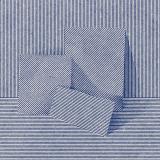
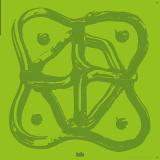
Our musical influences include the American composer and singer Caroline Shaw, Swiss pianist Colin Vallon's trio, and composer/singer-songwriter Gabriel Kahane. In addition, I have listened a lot to the trio albums of Jimmy Guiffre and Sonny Rollins. Besides that, my musical heroes like Charlie Haden, John Coltrane, and Keith Jarrett always flow into the music. Another very important influence in the music is the work of American visual artist Agnes Martin, in whose works the imperfection of a multiplicity of repetitions results in a lively big whole in the end. (See "Wild Flower")
Live, the trio takes a lot of freedom in interpreting this music, yet we have a deeper, almost pop-like attitude towards the live performance as an experience. For me it's always important to build a strong narrative with the band while on stage."
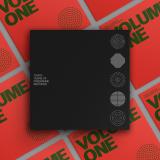
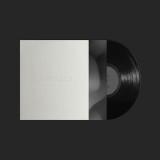
One-Eyed Daruma by Lukas Traxel is released on 10 March 2023 by We Jazz Records on LP/CD/digitally. The LP edition is shelved in an inside-out sleeve and pressed on white vinyl. The CD is housed in a cardboard digisleeve with UV lacquer finish.
Buscar:new rhythmic
JAF Trio emerges on Helsinki's We Jazz Records with their debut LP on 3 July. The young Finnish-Danish band includes saxophonist Adele Sauros (of Superposition), bassist Joonas Tuuri (of Bowman Trio)
and drummer Frederik Emil Bülow. After a string of lauded live performances over the past couple of years (the band was awarded with the "We Jazz Rising Star" accolade at We Jazz Festival in 2017), the trio is now ready to present their first studio work.
Sound-wise, JAF Trio has an approach which brings the band very close to the listener, "loft jazz" style. The sax, bass and drums are right there at the forefront together, creating a remarkably strong presence. The original material of the band has depth and groove alike, at times leaping forward with giant steps, at times calming things down to really stretch time. The music is very melodic and rhythmic, as withnessed by single tracks "Ninth Row of the Fifth Floor" and "Dark Sparkle". There's a sense of playfulness in the repetitive riffing on "Something New" and an air of sombre melancholy on "Shades of Tomorrow".
"JAF Trio" will be released by We Jazz Records on 3 July on vinyl, CD and digital. The vinyl version comes in a heacy-duty "old school" tip-on sleeve. The cover design features the artwork "Red" by Finnish visual artist Maija Lassila.
- More Guitar
- I Wish
- Youth
- Across The Bardo
- Double Bounce
- New Way Up
- Oo
- Follow The Water Down
Guitars On Life solves a nagging mystery about the fate of a musician who stood out as a singularly spectacular bloom even in the verdant creative fields of the San Francisco Bay Area at the turn of the century. After more than two decades of recording silence and about a dozen years away from the bandstand, Jack West is back, still immediately recognizable as a guitarist and composer but miles from the last stop on his ongoing musical journey. There’s poetic symmetry in discovering that his detour from life as a performing musician involved fruitful work devising innovative solar technologies, as he had similarly distinguished himself as an inveterately inventive musician. When we last heard from West he’d carved out a vibrant niche as a guitarist with a percussive attack and lustrous group sound. Wielding a custom-built eight-string acoustic guitar with uncommon rhythmic dexterity, he released six albums featuring his original tunes, mostly recording with his band Curvature (though he also played mesmerizing solo recitals). West’s knack for crafting glistening, minutely detailed soundscapes full of surprising twists and oddly inviting textures prompted NPR to describe his work as “a whole new sub- genre of jazz.” Drawn back to performing in recent years, West saw guitarist Walter Strauss at Berkeley’s Freight & Salvage in 2022 and suspected he’d found a kindred spirit. Intrigued by Strauss’s unusual approach to guitar, West “wondered what a musical conversation might sound like between two guitarists who had developed such uniquely different ways of playing the instrument.” An invitation to play together led to them writing the tune ‘More Guitar,’ the bravura opening track that launches Guitars On Life. Several months later they spent a week in Florida together writing intensively, resulting in most of the material for this consistently thrilling project.
Prolific beat pharmacist par excellence Brendon Moeller continues his hot streak with a return to Samurai to serve up the exquisite craftsmanship of Shadow Language. Across 15 fresh productions the seasoned house and techno producer demonstrates yet more variations on his rejuvenated sound since pivoting towards 160 tempo zones. Heavyweight dub techno pulses collide with D&B pressure and dubstep snarl, delivered with devastating restraint and mediative warmth.
Moeller's dub-informed, high-grade production hit a hot streak as he started to experiment with faster tempos and more broken rhythms, reaching into thrilling new sound fields where fast-slow rhythmic intrigue meets with spatial subtlety and constantly evolving synth voices. The past year has seen him release a swathe of albums, from Further on Samurai to outings on Constellation Tatsu, ESP Institute and Quiet Details that all burst with inspiration, each distinct from the last and offering an original perspective on this rich seam of crossover electronics.
Shadow Language shows Moeller burrowing even deeper into this new era of his work, continuing the hypnotic approach set out on Further while edging more forthright ingredients into the mix. From the outset 'Division By Zero' hits with immediacy even as it dips into a dubwise breakdown, with snatches of vocal and even the iconic loom bird making the slightest of appearances. 'Feral Hymn' finds a curious kind of uplift in the synth chord that twists in and out of the mental techno murmurations of the rhythm section. 'Impermanence' has some snarling bass that belongs in the gnarliest tech-step, while the nagging hats ticking through 'Junkyard Syntax' hint at a shockout without resorting to brute force. The majestic dub techno chords of 'Driftform' create a through-line across Moeller's extensive catalogue, but here they dominate the mix above a spongy bed of sub bass throb and framed by the tiniest slithers of percussion.
Throughout the album, it's the implications Moeller suggests with the tools at his disposal that create a powerful energy. Restraint governs the delivery, guiding the listener in deeper until they find a maximal experience from each elegantly understated roller. The weight and presence is abundant across every track, fuelled by the invigorating power of each tone and frequency while avoiding the clutter of overloaded arrangements.
Finding the notes in between and half-hidden rhythms, Moeller himself perfectly summed up his latest opus as he continues to develop his own compelling Shadow Language.
- A1: Poison Ivy
- B1: Forget About
Her natural command on stage, paired with a voice that feels quietly seasoned, has made her one of the most exciting young live musicians emerging from the region. Now, with her first release, a double single featuring the raw, one-take folk recording 'Poison Ivy' and the dreamlike, psychedelic shimmer of 'Forget About' -- Grant introduces the full spectrum of her sound. One track close to the bone, the other lost in a dream, both unmistakably hers. 'Poison Ivy' was recorded when Grant was just 16, in a spontaneous midnight session after finally playing her songs to her dad. With only one microphone, no click, and a single take, the track became a time capsule of her earliest songwriting voice -- fragile, real, and impossible to recreate.
Now featuring Dan Bridgewood-Hill's evocative violin, it stands as a folk recording filled with warmth, instinct and unfiltered emotion. "I tried re-recording it," she says, "but nothing touched the magic of that first take." In contrast, 'Forget About' showcases Grant's emerging production instincts. Influenced by Zero 7, the song began as a kitchen jam before evolving into a lush mix of psychedelic keys, airy electronics and indie- rock textures. Self- recorded in Logic, the track reveals a new dimension to her writing, cinematic and rhythmically hypnotic
Damian Lazarus reveals the eighth chapter of Crosstown Rebels acclaimed annual ‘SPIRITS’ VA compilation series.
The latest instalment sees the label founder once again curating a carefully balanced lineup of emerging voices and established names, with the eight-track collection set for release on 30th January 2026.
Since its inception in 2017, Damian Lazarus’ SPIRITS series has become a trusted barometer for the year ahead, spotlighting forward-thinking artists and cutting-edge club music from across the global electronic landscape. With ‘SPIRITS VIII’, Crosstown Rebels continues this tradition, delivering a refi ned yet adventurous selection that moves seamlessly between hypnotic house, melodic depth, and late-night energy - building on the momentum of previous volumes and capturing the label’s unmistakable essence.
Opening the release, Raz Alon sets the tone with ‘Hey It’s Me’, a warm and immersive opener that draws listeners in with emotive touches and fluid groove work. Lost Desert follows with ‘Ultima’, leaning into trippy, melodic-tinged sensibilities as tumbling rhythms meet expansive atmospheres and subtly evolving motifs. On the flip, TIMANTI ventures into a captivating voyage with ‘Warrior Spirit’, pairing swirling synths with hazy melodies, before STEB delivers ‘House Of STEB’, a groove-led cut packed with personality, swing, and club-ready flair.
The journey continues with Yuvèe’s ‘Set The Fire’, featuring FADO, a hypnotic and vocal-led track that balances emotional weight with understated rhythmic pressure. Ekoboy then ups the intensity on ‘Lose Control’, combining crisp percussion with infectious momentum designed for peak-time moments. On the final stretch, MADI brings a reflective buy playful touch with ‘Around Me’, weaving lush textures and subtle dynamics into a deeply absorbing listen, before JUAAN closes the compilation with ‘Bass Cliente’, a punchy and bass-forward finale that rounds things out with raw club energy.
With its continued ability to champion new talent while welcoming respected artists into its orbit, Crosstown Rebels remains a vital force within electronic music. SPIRITS VIII stands as another clear statement of the label’s vision, reaffirming its role in shaping the sound of contemporary house and techno.
Now universally recognized as one the great ambassadors of House Music around the globe, Todd Edwards first built his reputation in the early 90’s with a string of 12" releases from some of New York’s more prominent independent labels. This was an era when on any given week you would have up to 100 new 12" releases from New York based producers, all vying for space on the 12" shop walls. In this hypercompetitive environment it was not easy for a new producer to garner a reputation. But Todd’s releases did not sound like anything else. Using an innovative blend of rhythmic, cut-and-paste vocal samples, rubbery basslines, and slapping percussion, he created a 4 track EP for Nervous in 1994 under the production acronym The Sample Choir. This 12" created such a massive buzz in the UK that it is now considered instrumental in helping to propel Britain’s Sunday clubscene into the genuine cultural phenomenon of speed garage.
Nick Holder’s Iconic ‘Dance, Dance, Dance’ Finally Arrives Digitally with New Remixes from Jason Hodges and Trackheadz.
Definitive Recordings proudly presents a long-awaited milestone: the first-ever digital release of ‘Dance, Dance, Dance’ by Nick Holder’s Fruit
Loops project, originally released in 1995 and repressed countless times on vinyl since. This timeless house anthem, a pure expression of discodriven groove, now returns remastered and refreshed — accompanied by two brand-new remixes from fellow Toronto house legends Jason
Hodges and Trackheadz.
The original version of ‘Dance, Dance, Dance’ captures the raw magic of mid-90s house — a stripped yet irresistible jam that fuses classic 70s
disco sampling with a deep, rolling bassline and a straight house groove. It’s simple, it’s soulful, and it’s pure disco-house sexiness.
Jason Hodges delivers a playful rework that modernizes the cut while keeping its soul intact. His remix adds shuffled percussion, chopped vocals,
and a subtly reworked bassline — injecting a fresh rhythmic twist that stays true to the track’s roots while enhancing its dancefloor punch.
Trackheadz then takes the track into deeper territory, layering lush synth chords, organ lines, and sweeping strings over a steady, hypnotic build
— a masterclass in musicality and atmosphere for the late-night crowd.
A true veteran of Toronto’s house scene, Nick Holder rose to international acclaim in the late ’90s and early 2000s with releases on Definitive,
NRK, Stickmen, and Studio K7, shaping the sound of deep and soulful house. As the founder of DNH Records, he’s been a driving force behind
countless underground classics, including ‘Da Sambafrique’, ‘Trying to Find Myself’, and ‘Summer Daze’.
Jason Hodges, another staple of the Toronto underground, is known for his tough yet groovy sound that bridges New York swing and Chicago
grit. Having remixed the likes of DJ Sneak, Derrick Carter, DJ Heather, and Kaskade, Hodges continues to be a name synonymous with timeless,
floor-filling house. Trackheadz, helmed by Kaje Trackheadz, brings decades of experience in blending sweet strings, soulful brass, and deep club
energy. Responsible for underground staples like ‘Our Music’ and ‘Feel’, he has remixed everyone from Todd Terry to The Sunburst Band, and
continues to expand his vision through Trackheadz Records.
Nearly three decades on, ‘Dance, Dance, Dance’ still grooves as hard as ever — now revitalized for the next generation of house lovers.
- 1: Psycho Killer
- 2: Heaven
- 3: Sugar On My Tounge (Dub)
- 4: Born Under Punches (The Heat Goes On)
- 5: Once In A Lifetime
- 6: I Zimbra
- 7: The Book I Read
- 8: Girlfriend Is Better
- 9: Mind
- 10: Burning Down The House
- 1: Uh-Oh Love Comes To Town
- 2: Seen And Not Seen
- 3: Road To Nowhere
- 4: Born Under (More) Punches (The Heat Goes On)
- 5: Take Me To The River
- 6: And She Was
- 7: This Must Be The Place (Naive Melody)
- 8: Crosseyed And Painless
Tape[25,17 €]
Naive Melodies is a bold and visionary tribute to the music of Talking Heads, reinterpreted through the lens of Black musical innovation. Curated by Drew McFadden — the creative mind behind BBE’s acclaimed Modern Love (David Bowie tribute album) — this new collection dives deep into the Afro-diasporic rhythms and experimental soul roots that helped shape Talking Heads’ unmistakable New Wave sound. Inspired by artists like Fela Kuti, Parliament, and Al Green — whose influences loomed large in the band’s rhythmic DNA — Naive Melodies shines a light on the Black music traditions that underpinned their artistry. Far from a conventional tribute, Naive Melodies reframes the band’s catalog through the voices and visions of a new generation of genre-defying artists. These interpretations illuminate the foundational grooves and sonic textures that fueled Talking Heads’ rhythm-forward aesthetic, bringing them full circle with authenticity. “With Naive Melodies, I wanted to spotlight the deep and often overlooked influence of Black music on the sound of Talking Heads, drawing from the rhythmic foundations of Afro-diasporic traditions, soul, gospel, Latin, and spiritual jazz. This project is a chance to reimagine Talking Heads’ legacy through the lens of the very innovations that helped shape it, bringing those influences to the forefront through the voices of today’s most forward-thinking artists.” — Drew McFadden The album features a globally minded lineup, including Liv.e, Bilal, Rogê, Miguel Atwood-Ferguson, Aja Monet, Georgia Anne Muldrow, Theo Croker, Kenny Dope, Rosie Lowe, Pachyman, W.I.T.C.H., and more — spanning Afrobeat, jazz, soul, funk, gospel, dub, electronica, orchestral, and Latin styles. It reflects not only the boundary-pushing ethos of Talking Heads, but also the influence of Black music as a cultural force that helped shape it. This is not just a tribute album — it’s a recontextualization. A cultural conversation. A rhythmic reawakening.
- Yambere
- O' Look Misery
- Se Formó El Bochinche
- Shrimp & Gumbo
- Santa Isabel De Las Lajas
- A Pali Papá
- Mambo Calypso
- Cumbia Sobre El Mar
- Cumbia Del Caribe
- Jamaicuba
- Strip Tease
- Baila Yemayá
- Peanut Vendor
- Ahora Sí Hay Melao
- Besitos De Coco
- Los Chucos Suaves
Zombie Club presents a re-edition (new sleeve art) of "Mambo Calypso" another volume of sonic Caribbean Cruise. Following the approach of the first volume and understanding the Caribbean as a region is not limited to a strictly geographical demarcation but rather a demographic and cultural space where countries, islands and coastal areas may fall into a common Mare Nostrum even arrives in New Orleans. The influence of African drum and the "Cuban clave" makes different music beyond its specific components be they Latinos, Anglos or Frenchie's - look at themselves and recognize a certain family. This is not a coincidence, since the slave trade brought African music from the port of Havana to Cartagena de Indias, Nassau, Port-au-Prince, Salvador de Bahía and the southern United States. The same Blackness, the same rhythm, the same festive mood, spirit of resistance and struggle. And so, Arsenio Rodriguez can be heard without jumps next to a Calypso of Blind Blake, or a tasty Pacho Galán's coastal Cumbia crossover with Dave Bartholomew's Mambo or a Latin Swing of Lalo Guerrero, where the Dominican Merengue sounds Joseíto Mateo in line with that of its Haitian neighbor Nemour Jean Baptiste. A very spicy musical "melting pot," a gumbo of percussion and languages, to enjoy and dance. Re-board the Zombie Club Cruise, mixing different genres of Caribbean music with a high dance and rhythmic component. This selection designed for collectors, Dj's & calypsofied zombie dancers.
DIN SYNC DUB is an exploration of communication through sound. Six tightly packed experimental dub tracks use bass-heavy vibrations to rattle both body and mind, pushing the limits of self-expression in the hope of fostering deeper human connection.
The drive for more efficient and precise communication tools—whether between man and machine or machine and machine—has been a foundational force in the evolution of technology. This duality, the way we interface with computers and the way we speak to one another, is at the heart of DIN SYNC DUB. For this album, N1_SOUND looks back to 1980, drawing inspiration from Roland’s Din Sync—a 40-year-old synchronization technology once used to link musical machines in perfect harmony. While connecting machines to produce precisely sequenced music is nothing new, it’s the tension between perfection and imperfection—the mistakes of both man and machine—that gives DIN SYNC DUB its voice, its emotional rawness.
The journey begins with “Horizontal Hang”, which crashes through the door with a relentless bassline and crystalline synths. “Such Love” introduces a throbbing, guitar-driven groove, while “Intuition Dub” channels the spirit of Jah Shaka, offering a rhythmic pulse that echoes dub’s deep roots. “Us All” provides a moment of introspection with its sparse, three-dimensional melodies, before “Joy” reintroduces chaos, creating a post-dubstep soundscape that dismantles everything in its path. The album closes with “Mauzy” , a hopeful yet fragmented conclusion, reflecting the ever-evolving nature of technology and connection.
By the mid-to-late 1980s, Din Sync was superseded by the more widely adopted MIDI, yet obsolescence is built into the nature of all technology. Just as our relationship with machines shifts and fades, so too does our understanding of how those changes shape us. Before we can grasp the impact, the world has already moved on.
DIN SYNC DUB, the first full-length LP from Spiritual World, pulses with energy, on the edge of malfunction—a manifestation of the tension between the digital and the organic, the past and the present.
Futura Resistenza is pleased to present the latest release from the prolific, restlessly creative composer-performer Anthony Pateras, two side-long pieces - one performed by Callum G'Froerer on double-bell trumpet, the other sung by Clara La Licata - in which soloists are accompanied by numerous pre-recorded tracks of their own instrument or voice, creating acoustic halls of mirrors where the distinction between live performer and recorded accompaniment becomes difficult to perceive. Palimpsest Geometry (2020) for double-bell trumpet & tape works with rapidly pulsed single trumpet notes, at brisk tempos that hover at the perceptual threshold between rhythm and tremolo. The interaction between different rates of pulse produces skittering echoes, as if G'Froerer's layers of trumpets were really a single sound bouncing around the sonic space. There Is A Danger Only Our Mistakes Are New (2021) for voice & tape goes to work on a see-sawing two-note melodic cell, insistently transposed and transposed again, hummed or sung with open vowels, contracting to a semitone and expanding to a minor third. More than anything in the canon of Western art music, the piece calls up the criss-crossing repeated figures of Inuit vocal games or the interlocking repetitions of Banda-Linda music, where rhythmic and harmonic displacements of repeated motifs fuse together individual parts into the illusion of an impossibly rich and multi-faceted unitary sonic organism. Essentially homogeneous in texture yet built up from constantly changing details, broadly static yet always moving and shifting, these pieces exemplify Pateras' recent work while also pushing it into a new, strikingly immediate direction. Here, form grows organically out of the material itself; the results are sparkling, immersive, and quietly uncompromising. (Francis Plagne)
Don Cherry, armed with a voracious musical appetite and boundless imagination, first made a name for himself - though not always fully understood - alongside Ornette Coleman, playing trumpet or cornet. In Los Angeles and then New York, he stood at the heart of a revolutionary approach to improvisation based on melody rather than harmony, later baptized "Free Jazz," the final structural development of American jazz. Over time, he became a champion of improbable fusions - gradually integrating into his style a whole array of "exotic" instruments, and more importantly, the cultures from which they originated. Among them: India, Brazil, Africa, Indonesia, and even China. The time had come for the emergence of "world music": in hindsight, a patchwork rich in imagination and seduction, but once the novelty wore off, often lacking in substance.
In Don Cherry's case, however, the commitment ran deep - tied to his personal engagement with a global vision of art and the human condition. Ustad Ahmed Latif Khan, from the Delhi gharana (a musical lineage), was part of a new generation of accompanists - percussionists, sarangi players, flutists, etc. - who had extended both the technical and conceptual possibilities of their predecessors to gain recognition as soloists and soon to venture onto the international scene. Among them, Latif stood out for his taste for irregular, highly syncopated rhythmic patterns - rich in variety and originality. Don and Latif had never met before the recording session, but the two quickly recognised one another as kindred spirits - calm, focused... and full of laughter. Don clearly knew what he wanted to create, and nothing seemed to pose a challenge for Latif, who grasped the American's intentions immediately, warmed up his fingers at astonishing speed, and with his perfect pitch, naturally took on the role of tuning Don's diverse instrument collection to match whatever was found in the studio - from concert piano and Hammond B3 organ to chromatic orchestral timpani.
- 1: Any God Of Yours (Instrumental)
- 2: Swell (Instrumental)
- 3: Arise Dear Brother (Instrumental)
- 4: Ammi Ammi (Instrumental)
- 5: Buffed Sky (Instrumental)
- 6: Sex With Nobody (Instrumental)
- 7: Eye’s Drift (Instrumental)
- 8: The Sea Liner Mk 1 (Instrumental)
- 9: Empty Vessels (Instrumental)
- 10: New Builds (Instrumental)
- 11: Dull Boys (Instrumental)
- 12: Thames Water (Instrumental)
XL Recordings is proud to mark the 10th anniversary of Archy Marshall’s (aka King Krule) A New Place 2 Drown with the release of a newly remastered instrumental edition.
Originally released on 10 December 2015, A New Place 2 Drown remains a singular entry in the Archy Marshall catalogue. Known to many for his work as King Krule, Marshall released A New Place 2 Drown under his own name, highlighting a different facet of his creative identity. An atmospheric blend of submerged beats, woozy textures, and diaristic storytelling, the project earned widespread acclaim upon release, including Pitchfork’s Best New Music.
Developed in parallel with a visual world shaped with his brother and longtime collaborator Jack Marshall, the quietly influential project stands as a multidisciplinary love letter to their home of South London, originally released alongside a Will Robson-Scott–directed short film and a book of artworks, photography, and poetry by the Marshall brothers.
The 2025 instrumental edition offers a newly illuminated perspective on the record’s sonic core, drawing fresh attention to the production craft that underpins the project. By stripping the songs back to their foundations, the release highlights the intricate textures, rhythmic detail, and atmospheric depth that have helped A New Place 2 Drown grow into a cult favourite over the past decade.
“A New Place 2 Drown evokes a septic world filled with flickering halogen bulbs, sticky synth keys, and corroded outputs. Marshall has made tremendous strides as a producer, gorgeously reproducing the gloom and loneliness of early '90s hip-hop and finding a way to integrate it into his own style.” - PITCHFORK
»Hug of Gravity« is the second solo album by Raphael Loher and his first for Hallow Ground. The Swiss pianist and composer uses piano preparations, tape machines, and digital means to forge an aesthetic of playful reduction and rhythmic abstraction. The source material for these four sprawling pieces was culled from recordings of the artist performing the album’s predecessor, 2022’s »Keemuun.« Loher used them in a painstaking two-part working process to create an album that is both a product of and an ode to transformation, exploring themes of alternative temporalities and spatialities. »Hug of Gravity« oscillates between experimental electronic music, ambient, and minimal music and calls to mind the work of artists like William Basinski, Linda Catlin Smith, or label mate Andrius Arutiunian.
Loher laid the foundation for »Hug of Gravity« in 2020 with ten solo performances at his studio, during which he presented the pieces from his debut album. For these intimate concerts, he prepared the piano with modelling clay in order to move beyond the well-tempered tuning that dominates most of Western music. He then used a consecutive three-month residency in the Blenio Valley to refine the recordings. »I cut up and rearranged the material, then transferred the results—around 30 pieces—to a varispeed tape machine and then back to the computer. After that was done, I cut them up and rearranged them again,« he laughs. By radically reworking the material, he created an album that eschews traditional notions of time and space.
Loher points out the influence that his surroundings had on him. »The process created the music—and the place was essential to the process.« he says. He wandered through the mountains for up to nine or ten hours a day, which gave him a sense of what he calls expanded temporality. »Time just felt longer, my experiences seemed more diverse and nuanced, and it was as if I perceived my environment more clearly,« he explains. This shift in Loher’s perception of time and space—the latter also expressed in the album’s title—influenced his work with the varispeed tape machine. It allowed him to change the pitch of different recordings while layering them to let interference patterns emerge and emphasise the emotional qualities of the unconventional tunings he had used.
In this way, Loher constructed numerous interlocking narrative arcs throughout »Hug of Gravity,« an album that is ever-changing; an exercise in calm ecstasy that provides its audience with the feeling of being removed from conventional time and space. This approach is also reflected in the artwork for »Hug of Gravity,« which is based on drawings Loher made during his residency at Blenio Valley. Their fine hand-drawn lines run in parallel and let incidental patterns emerge, an effect that is only multiplied when the six different drawings that accompany each vinyl copy of the album are overlapping, forming ever-new visual constellations.
Mesh-mainstay Jinjé teams up with A. Montane for a collaborative EP born out of live improvised sessions, and composed over the period of a year.
Taking a slowed approach to the production of Neon Garden EP, the two hardware aficionados met sporadically for live jam sessions - an homage to the importance of not rushing the process, and letting ideas build over time. Each session consisted of an intense burst of musical propositions followed by a careful editing framework, giving space for each moment to flourish. Oscillating between moments of catharsis and intense rhythmic play, the EP merges disparate musical sources into exciting new structures.
‘Ikeya Seki’ launches with glistening arpeggiations and subaquatic frequencies that interact over UKG-adjacent drums. ‘Vrem’ marches to a slow-stepping half time beat, building through yearning vocals before breaking down into a storm of pointillistic percussion. On ‘Yū’, rich melodies and bouncy, bass-led rhythms dance below chopped up vocals. Closing things off, ‘Velvet People’ builds a spatial setting with bells ricocheting through malfunctioning flutters.
A nod to the joys of improvisation, Neon Garden EP takes the spirit of spontaneity and lays out new structures for its ideas to grow.
- Mean Street
- Dirty Movies
- Sinners Swing!
- Hear About It Later
- Unchained
- Push Comes To Shove
- So This Is Love?
- Sunday Afternoon In The Park
- One Foot Out The Door
The song titles on Van Halen's aptly titled Fair Warning don't lie. The likes of "Unchained," "Mean Street," "Push Comes to Shove," "One Foot Out the Door," and more indicate the mood the band channels on its double-platinum 1981 record — the nastiest, darkest, and fiercest album of the group's storied career. For the fourth time in four years, Van Halen throws down the gauntlet to all challengers and emerges victorious.
Sourced from the original analog tapes, pressed on MoFi SuperVinyl at Fidelity Record Pressing, and strictly limited to 5,000 numbered copies, Mobile Fidelity's UltraDisc One-Step 180g 45RPM 2LP set plays with unfettered clarity, dynamics, and immediacy. Benefitting from superb groove definition, an ultra-low noise floor, and dead-quiet surfaces, this vinyl edition captures what went down in the studio with tremendous realism and involving presence.
Taking a more controlled approach in the studio and still completing everything in less than two weeks, Van Halen and producer Ted Templeman relied on studio amplifiers to direct the sound. Further diverging from the live-on-the-floor approach of its earlier albums, the ensemble also employed overdubs to great effect. The result: Dense, stacked architecture that underlines the hard-hitting tenor of the songs — and which comes alive like never before on this reference edition that looks as good as it sounds.
The premium packaging and gorgeous presentation befit the reissue's select status. Housed in a deluxe slipcase, it features special foil-stamped jackets and faithful-to-the-original graphics that illuminate the splendor of the recording. Aurally and visually, it is made for listeners who want to immerse themselves in everything involved with the album, including the iconic cover art adopted from William Kurelek's haunting painting, "The Maze."
Isolated frames from Kurelek's childhood-inspired work — including a man bashing his head into a brick wall, a guy pinning down an adversary as he delivers bare-fist blows to his face and others watch with apparent glee, a boy tied down on a conveyer belt and being sent through the equivalent of a meat saw — adorn the front and back covers. The sunnier visual disposition of Van Halen's prior efforts gives way to something sinister and tortured, traits reflective of the music within. The band members, too, are visually depicted not in glamorous shots but in a serious black-and-white portrait in which the quartet is clad in black leather jackets.
Tough, aggressive, stark: Fair Warning comes on like a series of bare-knuckled punches to the solar plexus and boasts lyrical narratives to match. Though not a concept record, the concise album revolves around themes of roughing it on the streets and struggling to survive amid dim prospects. Singer David Lee Roth reportedly penned many of the initial lyrics after traveling to Haiti and observing extreme poverty. The characters and situations populating Fair Warning reflect hardscrabble existence, last-chance desperation, and underlying danger.
Witness the crazies, poor folks, and hunters of “Mean Street”; the former prom queen turned pornographic actress on “Dirty Movies”; the menace and vice of “Sinners Swing!”; the streetwise hustle of “Unchained”; the isolation and alienation of “Push Comes to Shove”; the desire for escape on “One Foot Out the Door”: A carefree California beach party Fair Warning is not.
Having said he felt angry and frustrated during the sessions, guitarist Eddie Van Halen uses the forceful arrangements as a playground for his seemingly unlimited arsenal. Supported by a crack rhythm section and a hyped-up Roth, he performs with an almost impossible combination of punk-like intensity, technical finesse, lyrical fluidity, and unbridled emotion. The virtuoso was increasingly butting heads with Templeton and seeking a freedom in the studio he believed denied him.
No wonder he plays like a bat out of hell. Listen to the rapid-fire manner in which he slaps the high and low E strings on the 12th fret of his instrument on “Mean Street,” instilling the tune with funk flair and metal-spiked sharpness. For the pouty strut of “Dirty Movies,” Eddie Van Halen contributes slide guitar magic made possible after he sawed off the lower portion of a Gibson SG so he could reach further down the fretboard.
Related intensity, urgency, and daredevil momentum punctuate the surging “Sinner’s Swing!” A heavily flanged, delicately melodic introduction frames the attitudinal “Hear About It Later,” among the most creative arrangements of Van Halen’s career. And do riffs come any bigger or magnetic than those on the high-wire kick of “Unchained”? As for the out-of-left-field “Sunday in the Park,” an instrumental composed on an Electro-Harmonix micro-synthesizer: Who but Eddie Van Halen to supply creep factor in such an ingenious way?
Despite selling fewer quantities than Van Halen’s prior efforts, Fair Warning remains for many diehards the record that epitomizes all of the band’s immense strengths —Roth’s manic energy and tongue-wagging humor, Alex Van Halen’s rhythmic heartbeat-in-your-chest bombast, and Michael Anthony’s lucid bass lines included. Arriving when the New Wave of British Heavy Metal and new-wave movements were taking flight, it signaled a shot across the bow from a band determined to stay a step ahead and provide proof nobody could touch what it delivered.
More than four decades later, Fair Warning still sounds that alarm.
A rhythmic minimal ambient piece played with organic electronic sounds. Elements of electronic, psychedelic, and ethnic music are interwoven. The vinyl debut of Japanese composer / electronic musician NAT000. Mastered by ISAO KUMANO of Phonon, a Japanese audio equipment manufacturer. NAT000 : After performing live as a one-man drone under the name sonic mainly at 20000v in Koenji Tokyo and DOM in Nishi-Shinjuku (now EARTHDOM in Shin-Okubo), he became a band member of the hardcore bands BUTTHEAD SUNGLASS and ABRAHAM CROSS, which gained popularity in the underground scene in Tokyo in the 2000s.The Band has been performing in parks, abandoned buildings, and campgrounds. Since turning solo again, he has been producing electronic music and performing live using analog synths, samplers, drum machines, software, and effectors, and has privately released a CD of self-produced recordings. This album is a compilation of past works from those CDs and newly produced works for the album.
Blue Limited Edition[21,43 €]
Spandau20 delivers its eleventh various artists release, a sonically rich and future-facing blend of broken grooves, spatial moods and modern Detroit romanticism. Four tracks, four new angles on the dancefloor. ANNA Z sets the tone with 'Kabeljau', an eclectic, IDM-flirting workout. On the opening track, elastic rhythms stretch and snap while ethereal pads drift overhead, punctured by sudden turns and glitchy surprises. Moody, weird and beautifully unpredictable. Dajusch continues with 'Fallout', diving into shimmering Detroit-inspired chords and pristine production. Clean yet full of soul, its dreamy propulsion moves with effortless optimism. It's a track that lifts heads and hearts without ever losing its club focus. Flip the record and FJAAK welcome you into a breakbeat-infused haze. 'Your Time' pairs groovy percussion and airy atmospheres with those unmistakable powerhouse vocal chops, a warehouse anthem with a gentle cosmic touch, driving yet deeply emotional. Closing the EP, Claus accelerates the pulse. 'Moist Logic' is a faster, more urgent exploration of the techno continuum. Machine funk encoded into a forward-thrusting groove, a sleek atmosphere swirling around a sharp, kinetic core. With SPANDAU20 011, the West-Berlin collective celebrates a hybrid future that is rhythmically adventurous, melodically rich and rooted in the love for the dancefloor. This record combines Berlin grit with dream-state techno, balancing rough energy and refined emotion across four cuts that leave their mark on the floor.