The second solo chapter in EC13’s trajectory.
Loto Azul (EP) distills EC13’s sonic identity into four focused pieces shaped for the 12″ format: cinematic atmospheres, cosmic resonance, and meticulously crafted rhythmic structures — infused with high-energy dynamics, epic tension, and textured distortions that add depth, grit, and dramatic weight.
From the mystical tension of Astrum Nox (Phase I) to the melodic, ascending narrative of Sinfonía Tercera, the EP moves between introspection and propulsion.
Perdiendo, in both its original version and the Jupiter Rhythms reinterpretation, forms the emotional core of the release — a hybrid between electro, techno, and celestial harmonic design.
A refined work that expands EC13’s role within the Cosmic Tribe universe, reaching toward new sonic dimensions with precision and depth.
Buscar:new rhythmic
- 01: Arp Amp Chasm
- 02: Drift Vector
- 03: Modloop 138 Fragment
- 04: Foldsp4
- 05: Osc Hop (Slow Collapse)
- 06: Tweak 3 Driftmass
- 07: Blurform Dust
- 08: Wogglebug Remembered
- 09: Trippy135 Phase 0
- 10: Nachtgrain
- 11: Chronoroute Fank
- 12: Freeqwarp 2025 Redux
- 13 30: 3 Template Refract
- 14: Dln - Soft Ruin
- 15: Cr78 Mesh
- 16: Volca Signal 06
- 17: Ctrssalms (Cold Render)
- 18: Oceans Past And Present
- 19: Jt33Unstable Core
- 20: Modern Birds (Origin Edit)
Contemplating the role of the album format in an attention-deficient society, Speedy J presents Walkman -- a constantly shifting, 90-minute soundtrack to a journey of your choice. Jochem Paap's first solo album in over 20 years is a freewheeling, 20-track testament to his decades-deep studio skill and sonic versatility, running from skewed rhythmic rabbit holes to exploratory tonal abandon. For Paap, the traditional idea of the album had become obscured by listening habits and the non-stop information barrage of our digital lives. Having moved on from his breakthrough years releasing LPs and touring off the back of them, he was more inspired to develop his many-sided STOOR project and feed into a bigger artistic body of work than the temporary shelf-life of a single release. As is natural for any artist, his perspective shifted over time and he found himself drawn back to the idea of an album, realising he connected best with longer releases while he was on a walk, out for a run or generally in transit one way or another. With an endearing call back to the humble Walkman, he selected an hour and a half of material created during studio sessions at the beginning of 2025, perfectly sized to fit on two 45-minute sides of a cassette tape. As has long been the case for his studio practice, there were no fixed intentions when sitting down in the STOOR lab to start making noise -- just a wealth of experience and an expansive set of tools to start exploring with. From hours of jams Paap pulled together standout moments and moulded them into a mixtape-like narrative ranging from two-minute beat nuggets to full-tilt techno workouts and immersive ambient drops. Every sound is intentional, but the overall delivery is instinctive and curious, showing multiple new dimensions to Paap's sound and offering unpredictability at every turn. 'Arp Amp Chasm' opens the album up in a thick blanket of humming, harmonic waves with an electric emotional charge, while 'Ctrssalms17 (Cold Render)' journeys through evocative blooms of melancholic, gritty pads and rugged, half-submerged tech funk. 'Modern Birds (Origin Edit)' reaches skywards with grand sweeps of dynamic, brilliantly rendered synthesis. From the dexterous drum science of 'Drift Vector' to 'Osc Hop (Slow Collapse)'s lurching, beatless swamp of synths, on Walkman even the briefest snapshots leave an impression that lasts beyond the quick-scan cycle of the modern music experience. With his return to the album format, Paap's message is clear --put your headphones on, get outside and lose yourself in the sound of an artist constantly committed to moving forwards.
Gatefold Sleeve
M’Bamina – African Roll (1975)
The story of an album born between Africa, Italy, and the nightclub culture of the 1970s
In the heart of 1970s Italy — a country undergoing profound social change and a music scene just beginning to open itself to distant sounds and cultures — an extraordinary, almost improbable story took shape. It is the story of a group of young African musicians who found their way to Europe, of a Turin nightclub that became a crossroads for communities and experimenters, and of an album which, released in small numbers and largely unnoticed at the time, is now considered a rare jewel of Afro-fusion.
The band called themselves M’Bamina — an ensemble of musicians from Congo, Cameroon, and Benin, who arrived in Italy in the early Seventies. Settling between northern Italy and the Pavia area, they began performing in small clubs and community events, bringing with them a vibrant rhythmic heritage: African polyrhythms, call-and-response vocals, funk-infused bass lines, and Caribbean or Afro-Latin colours absorbed along their musical journeys. Their raw, contagious energy on stage quickly drew attention.
Meanwhile, in Turin, another story was unfolding. There was a venue becoming almost legendary: Voom Voom, one of the city’s liveliest nightclubs, run by Ivo Lunardi. The club attracted an eclectic crowd — students, artists, foreigners, night owls — and Lunardi quickly understood that the dancefloor wasn’t just a place for music, but a melting pot for a new kind of cultural energy. Out of this vibrant atmosphere came his idea: to turn the club’s name into a small independent record label, Voom Voom Music, capable of capturing the spirit of those years and giving voice to unconventional projects.
When Lunardi heard M’Bamina, he immediately sensed that this was the sound he had been searching for: fresh, different from anything circulating in Italy at the time, and capable of blending African tradition with funk and European sensibility. He brought them into the studio.
Production was handled by Lunardi along with Christian Carbaza Michel, while the engineering was entrusted to Danilo Pennone, a young sound technician with a sharp, intuitive ear.
The recording sessions — held in Turin in 1975 — produced a remarkably warm and direct sound. The music feels almost live: grooves rooted in African tradition, but open to funk-rock structures and modern arrangements. It is a natural fusion, never forced. Tracks move between tribal rhythms, funk basslines, light electric guitars, congas and Afro-Latin percussion, with call-and-response vocals and melodies that echo both Congolese tradition and the lineage of Latin jazz. Not by chance, one of the album’s most striking tracks, Watchiwara, reinterprets a Latin standard through M’Bamina’s own rhythmic language.
The album was titled African Roll — a name that was already a statement of intention. It is African music that “rolls,” that moves, adapts, transforms within a new geographic and cultural setting. It is not strictly Afrobeat, nor Congolese rumba, nor Western funk: it is a spontaneous, hybrid blend, shaped more by lived experience than by any calculated aesthetic program.
When African Roll was released, the world around it barely noticed. Distribution was limited, and 1970s Italy had yet to develop a cultural framework for receiving such music. The national music press rarely paid attention to African or “world” productions. The album slipped into silence — though the band’s own story did not.
M’Bamina continued performing across Europe and Africa, even sharing a stage in Cameroon with none other than Manu Dibango. By the late Seventies, they moved to Paris, signed with Fiesta/Decca, and recorded a second LP, Experimental (1978). Meanwhile, the peculiar record they had made in Turin began to resurface quietly among vinyl collectors, Afro-funk enthusiasts, and DJs hunting for forgotten grooves.
That is when the album’s fate began to shift.
Over the decades, African Roll emerged as an almost unique document: a snapshot of an intercultural Italy before the word “intercultural” even existed, a fragment of migrant history, a spontaneous experiment in musical fusion born far from major industry circuits but rich in authenticity. Original copies began commanding high prices on the collector’s market, and the album became recognized as one of the hidden classics of European Afro-fusion from the 1970s.
Today, more than fifty years later, this reissue finally restores visibility and dignity to a project that deserves to be heard, studied, and celebrated. It is not simply an album: it is the testimony of a rare cultural encounter, born in an Italy unaware of how fertile such exchanges would one day become.
It is the story of a visionary producer, an extraordinary band, and a fleeting moment in which music, migration, and nightlife came together to create something genuinely new.
African Roll is — now more than ever — the sound of a bridge: between continents, between eras, between cultures. A record that, after rolling far and wide, has finally come home.
Wolfgang Haffner is one of Europe's most respected jazz drummers, known for his impeccable sense of timing, groove, and atmosphere. Though rooted in jazz, his musical language transcends genre boundaries, guided by pulse and subtle nuance rather than tradition alone. For Cocoon Recordings, he now enters an entirely new dialogue, offering warm, organic reinterpretations that honor the spirit of the source material while opening a fresh sonic horizon. The result is a meeting of two artistic worlds where Sven Väth's timeless energy and Haffner's refined touch flow naturally into a new musical form, an encounter between two artistic universes, merging into something both unexpected and deeply musical.
Fusion is a groove driven piece built around a clear, flowing melody, allowing Haffner to reinterpret it acoustically through a jazz lens. Its straight, driving pulse lets him explore the track's rhythmic and melodic interplay with clarity and nuance.
L'Esperanza, originally a dreamy, trance like track, envelops listeners in strings, filtered downbeats, and a playful synth melody, a perfect canvas for Haffner's warm, organic touch. Its ethereal layers and subtle tension allow him to explore the track's emotional depth while preserving its entrancing charm.
Barbarella, emblematic of Sven Väth's early 90s vision, carries the energy and innovation of a club classic. Haffner's reinterpretation transforms it into a rich, acoustic exploration that honors its hypnotic essence. By emphasizing the track's iconic motifs and underlying drive, and by drawing out the track's essential elements, he bridges its electronic origins with a new, organic perspective.
Together, these three reinterpretations form a cohesive journey that celebrates the timeless essence of Sven Väth's music while revealing a new dimension through Haffner's masterful touch, a release that invites listeners to experience familiar classics in a completely new light.
In the rapidly shifting tectonic plates of the global Afrobeats scene, few arrivals have been as seismic as that of Ahmed Ololade—better known to the world as Asake. With his breakout project Mr. Money With The Vibe, the artist didn’t merely debut; he effectively recalibrated the tempo of the Nigerian pop soundscape. The EP functions as a masterclass in synthesis, pulling from the ornate, percussive history of Fuji music and grafting it onto the driving, bass-heavy architectures of contemporary Amapiano. It is a calculated, deeply rhythmic hybridization that manages to feel both nostalgic and jarringly modern.
From a critical vantage point, Mr. Money With The Vibe is defined by its brevity and density. Asake treats each track as a focused vignette, utilizing a vocal delivery that oscillates between a melodic, almost liturgical chant and the staccato urgency of a Lagos street orator. The production—characterized by sharp, frenetic percussion and deceptively simple melodic loops—creates a high-intensity atmosphere that mirrors the relentless pace of urban life. He avoids the pitfall of bloated experimentation; instead, he doubles down on a "street-pop" ethos, prioritizing accessibility without sacrificing the complex rhythmic interplay that gives the genre its distinctive texture.
Ultimately, Mr. Money With The Vibe stands as a pivotal document of the current era, capturing the transition of Afrobeats from a regional powerhouse to a dominant global force. By blending the aspirational "hustle culture" narrative with an increasingly sophisticated sonic palette, Asake established a blueprint that has since influenced a new wave of artists. The project is a testament to the idea that authenticity, when paired with relentless precision, remains the most effective currency in contemporary music.
Next up on Acid Pauli's new label All Is Acid is Urwald (engl. jungle). Originally released 2009 on Smaul, the track has been carefully restored and remastered and comes with a brand new remix by French DJ and producer rRoxymore.
Urwald marks an early moment in Acid Pauli's solo work. The track is built on a dry, steady rhythm and a small melodic loop that shifts slowly over time. It does not follow a classic build-up structure and lets subtle changes shape the movement to give it a hypnotic vibe.
The new rRoxymore remix makes the tune even trippier. She loosens the rhythmic grid, softens some of the edges and tell's her own story with lots of off-the-wall elements that guide the listener through the jungle.
ANNE is proudly presents her new imprint Blind Harmonies, shaped by intuition, patience, and a self-taught approach to music creation. The name reflects a journey built without formal training, producing music "blind," guided by listening, experimentation, and trust in instinct rather than rules. The label is built on the belief that harmony is something you sense before you understand. By closing your eyes, sound becomes more honest, rhythms breathe, textures speak, and emotion takes the lead.
With her first release, ANNE presents four dynamic, dance floor - oriented cuts-emotional and seductive at the same time. Opening with A1. Daydream, the EP sets a melancholic yet driving tone, drifting deep into the listener's mind and emotions. A2. Castles in the Air follows with a propulsive rhythm, led by Detroit-influenced synth soul and percussive energy that carries the track forward.
On the B-side, B1. Metallic Tapes delivers a hypnotic, percussive, and trippy groove, maintaining a steady yet intense rhythmic flow. Closing the record, "In the Blink of an Eye" blends powerful drums with a sharp, striking lead-proving that potent techno can be both intense and beautiful. The release it's a personal journey, produced with detail and love and focusing on the dynamic but timeless approach of techno music.
2026 Repress
since his first ep tips' on luciano's label cadenza in 2007 producer and dj petre inspirescu emerged into one of the key figures of the romanian electronic music scene.
so far he released music on labels such as vinyl club, lick my deck or amphia. together with his buddies rhadoo and raresh he also launched in 2007 the label (a:rpia:r) - a platform where he, his two friends and many producers from romania and abroad released detailed grooving house and techno, that stands out with delicate structures and one-of-a-kind grooves.
both of his more dance floor oriented solo albums intr-o seara organica...' and gradina onirica for (a:rpia:r) are enlarged with melodies, sounds and harmonies that go beyond the usual characteristics of a dance album.
furthermore his love for classic musicians like mily alexejewitsch balakirev, alexander porfiryevich borodin or or nicolai andrejewitsch rimsky-korsakow can be felt in the album padurea de aur (opus 2 in re major) and two more eps that he released under the alias pensemble on the romanian label yojik concon in order to unite classical spheres with analogue electronic music production.
in february 2013 he also released his highly acclaimed fabric mix cd that only features dance floor leaning music produced by himself. with talking waters' he published in late 2014 his first 12inch on mule musiq that is now followed by the full-length album vin ploile' which he produced without the intention to entertain with easy to hook up rhythms, melodies and harmonies.
even tough he established himself as a internationally playing house dj that regularly performs at all major clubs, festivals and other party destinations around the globe: as a musician petre inspirescu always tries to enter new territories to explore with a heartfelt human touch the infinite space of sound.
for his latest album the man that originally comes from the eastern romanian town braila stepped away from his former experiments of melting classical spheres with electronic music. instead the 36-years old man from bucharest only used some piano, string and wind instrument elements and analogue electronics to arrange a gracefully deep ocean of sound.
all slow grooving tracks spread the atmosphere of live improvised sessions that are edited, tweaked and mixed to perfection. in-the-moment moods of strange and unusual analogue synth sounds groove in a fluid quality with subliminal bass shapes, latinate percussions, jazz rhythms and acoustic melodies.
together they create a gaseous kinetic atmosphere full of tangible rhythm patterns, delicate chords and ghostly modular synth pads - all mixed subtle to create space for the tones between the tones.
you can call it a hypnotic after hour album for after hours that are dedicated to a deep listening experience. you can tag his arrangements as brilliantly textured and musically super-charged ambient, which goes beyond the usual definition of the genre.
all nine suspenseful compositions seduce with a deep melodic sensibility, harmonic adventures and an overall rhythmic ambiance of freshness and laidback enthusiasm. together they represent a challenging auditory experience that will resonate in your mind long after the music has finished.
- A1: Black Line - Myele
- A2: Mbamina - Nzoumba I-Robots 1975 Unreleased Edit-44100
- A3: Mbamina - Watchiwara
- B1: Oxid - Bright Heron
- B2: Oxid - Oxid Trail
- C1: Stratosferic Band - Nowhere - Reverberated Unreleased Version
- C3: The Boston Garden - Lady Pick-Up
- D1: Mbamina - Nzoumba Unreleased-44100
- D2: Oxid - Oxid Trail Unreleased Extended Version
Daniele Baldelli
"A pleasant surprise to find in this release various atmospheres and sounds that have always been part of my DJing. It even made me rediscover M’Bamina, whom I used to play back in 1974 at the Tabù Club in Cattolica.
There are afro vibes as well, with Black Line – Myele, which is featured on one of my Cosmic tapes, and Nowhere by the Stratosferic Band recalls a track I used to play at the Baia degli Angeli…
Excellent work!"
Voom Voom Music was an independent Italian record label based in Turin, founded and managed by record producer Ivo Lunardi (Turin, December 6, 1940 – December 9, 2010). A pivotal figure in the Piedmont music scene, Lunardi was active both as a DJ and as the owner of several disco clubs.
The label operated for several years in the latter half of the 1970s, releasing mainly productions connected to the Italian dance and pop scene.
Since 2016, the original master tapes from the Voom Voom Music catalog have been owned by Gianluca Pandullo (I-Robots), a close friend of Ivo and Luca Lunardi. Through his labels Opilec Music and Turin Dancefloor Express, Pandullo oversees their preservation and historical enhancement.
The artistic direction of Voom Voom Music was marked by a distinct sonic identity — eclectic yet visionary. The Turin-based label founded by Ivo Lunardi embraced a sound that blended disco, pop, and rock influences, interwoven with African American grooves in a pioneering, international perspective.
Voom Voom Music was among the first Italian labels to introduce this kind of musical language in the country. A prime example is the Italian edition of the debut album by B.T. Express, Do It ('Til You're Satisfied), released in LP, 8-Track Cartridge, cassette, and 7" single formats.
The label’s productions clearly reflected the influence of black and funk music, as evidenced by the references and inspirations running through its catalogue. The track “Lady Pick-Up”, for instance, includes direct nods to “Do It Good” by KC & The Sunshine Band and Manu Dibango’s iconic “Soul Makossa”, revealing a musically refined and contemporary sensibility.
Among the label’s most representative works is Splash (1977) by the Stratosferic Band, a project conceived by Luigi Venegoni — producer, songwriter, and guitarist of Arti e Mestieri. Venegoni’s artistic journey spanned from progressive rock to space and Italo disco. The album artwork was designed by Piero D’Amore (1944 - 2022), a charismatic and multifaceted figure of Turin’s art scene (one of his works was even acquired by the MoMA in New York).
The record includes a disco reinterpretation of Van Morrison’s classic “Gloria”, and “Splashdown”, a track fusing the disco-rock energy of Rockets and Space. In contrast, “Nowhere” revisits the 1975 single by Hokis Pokis, a soul/disco band from Nassau County (New York), transforming it into a vibrant disco-funk number.
Another significant expression of the label’s catalogue is the afro-rock sound of M’Bamina, an Italo-Congolese group whose rhythmic energy and dialogue between African percussion and Western funk evoke the style of international formations such as Osibisa — themselves linked to a rich artistic history in Italy.
Shaped from fragile, emotionally charged piano motifs that distort, disappear and transform into dense, cinematic textures, 'CANALS' is a debut that's finely matured, the result of years of friendship and growth. Italian artist Vanja Sturno and Montréal-based Belgian-Spanish composer Pablo Geeraert (aka Sanea Ima) have worked together extensively on various projects up until now, but 'CANALS' is their first official release as a duo. Having both studied music academically, the pair were eager to work more intuitively, so applied their well-honed set of skills to sound that, instead of fitting into a conceptual box, reflected more personal experiences.
Back in 2023, Geeraert travelled to Rome to support his friend at a difficult time and, during the trip, received some bad news of his own. The complicated feelings unconsciously surged through a series of delicate Ryuichi Sakamoto-inspired piano improvisations and a new project began to coalesce. They didn't realize it at the time, but once the record was finished, Sturno and Geeraert began to understand that the entire process had been a form a joint catharsis - a release of pressure. They were able to function so effortlessly and swiftly because they had already provided the space for each other to resonate emotionally and the music flowed from that point.
So the album's title, while remaining ambiguous, suggests its formation: a sequence of eight interconnected channels that feed a creative whole. On the first segment, Sturno and Geeraert's initial recordings can be perceived most nakedly, the melancholy, Satie-like phrases floating peacefully for a moment before the tranquility is agitated by stormy distortions and swelled into thick waves of harmony. The piano provides the record with its emotional anchor, offering focus and clarity as multi-dimensional noise wells up around it before inevitably dissipating, leaving gentle, unadorned sounds once again.
And the familiar instrument is reshaped into a wheezing artificial organ on the animated 'CANALS III', punctuated by percussive, tape-warped pitch fluctuations that seem to bite into its very essence. Gauzy acoustic granulations snowball into a powerful, bass-heavy crescendo on the fourth part, setting the tenor for the album's second half. But after the crushing 'CANALS VI', possibly Sturno and Geeraert's heaviest track, a brief tremolo-heavy vignette that ripples through experimental rock and ambient music's braided history, the duo clear the air with a jazzy diversion, introducing soft woodwind blasts as a palate cleanser before an epic, widescreen finale.
It's an album that's best absorbed as a whole, a vortex of ritualistic, rhythmic repetitions that Sturno and Geeraert appropriately refer to as "spiral listening".
For the ninth installment of his Hardspace series, Len Faki once again dives into his personal vault to present four reworks that bridge the gap between raw funk and modern, high-impact club dynamics. True to the project's ethos, Faki has selected tracks that have been reshaped through his specific sonic signature to maximize their energy on today's dancefloors.
A1. DJ Assault - U Can't See Me (Hardspace Mix) The release opens with a relentless edit of Detroit legend DJ Assault. Faki takes the raw Ghetto-tech energy of the original and embeds it into a massive, modern framework. While the iconic vocal hook retains its street-level grit, the Hardspace update provides a significantly tighter groove and a powerful low-end presence, propelling the track from the warehouse straight into the present.
A2. Myles Sergé - Trans Milenio (Hardspace Mix) With Myles Sergé, Faki explores more hypnotic territory. He extracts the driving, repetitive elements of the original and sharpens the rhythmic angles. The result is a prime example of the Hardspace sound: a deep, almost meditative loop that gains entirely new spatial depth through subtle filter movements and a crystal-clear percussion layer.
B1. Jad & The - Deep Dark Grimey Dancefloor Moment (Hardspace Mix) On the flip side, Faki leans into the brooding atmosphere of Jad & The. As the name suggests, this mix is crafted for the "wee hours". Faki amplifies the "grimey" textures and contrasts them with a stoic, forceful beat. The trippy, almost menacing synth elements are rearranged within the stereo field, creating an immersive pull that is impossible to escape.
B2. Deepchild - Baller (Hardspace Mix) To close out the EP, Faki brings the jacking spirit of Deepchild's "Baller" back into the ring. Through meticulous re-arrangement and quantization, he gives the track the "tightness" essential for a modern DJ set. The playful, bouncing synths remain, but are now grounded by a heavy-duty beat foundation.
H009 is a hand-picked collection that demonstrates how Len Faki unites diverse musical personalities and eras under the Hardspace umbrella. Whether it's raw ghetto vibes or hypnotic deepness, every track has been transformed with technical precision and deep respect for the original to meet the demands of global dancefloors.
Expanding beyond the West Coast with release number three, Goodtunes invites master of the craft Rob Pearson for a dark & moody EP.
Opener “Odd Job Mischief” bends itself over dubbed out low end pressure as echoic LFOs rip through the groove. A2 “Dodgy Brass” doubles down, forcing hazy horns through truncated rhythmic cracks split from beneath its own weight.
On side B, “The Right Speed” is all gas, no breaks. A moody, stripped back weapon with detailed texture & the dark, tripped out aesthetics of Jayson Walker’s murmurs over the top. “Beautifully Mangled” wraps up the EP with a dark minimal groove & lush atmosphere that slowly builds into a warm driving force.
Third time’s certainly the charm on GT003, with Pearson pushing his productions into new territory with meaningful intention.
Church Andrews and Matt Davies return with Tilt, a pinpoint collection of skewed microtonal and discordant compositions for percussion and digital synth.
Tones ascend but don’t resolve, rhythms loop, collapse and reassemble, patterns wriggle with geometric precision, sounds tilt, the edges fray.
Kinetic, elastic, wonky without being obtuse, Church Andrews (aka Kirk Barley) and Matt Davies new LP Tilt is the culmination of six years of creative collaboration, refining and redrawing the relationship between Davies’ virtuoso percussive practice and Barley’s off-kilter synthesis.
Where their 2024 release Yucca, took rhythmic cues from the Fibonacci sequence, Tilt explores a more intuitive approach, returning the duo to a minimal sound interrogating the interplay of chance and control, system and body, freedom and mechanisation. Featuring prepared guitar, finely resonant muted percussion and a crisp palette of digital synths, it draws on the pair's long-standing interest in alternate time signatures.
Here, a tripped-up 11/8 beat gives ‘Yokai’ a disorientating quality, threading unusual paths through the playful, mysterious 5-note Hirajoshi scale - a pentatonic scale from Japan hinted at in the track’s playful reference to a supernatural spirit in the country’s folklore.
Using a simple on-off system between drum and synth to trigger a Shepard tone - an auditory illusion of a sound that ascends or descends in pitch without actually changing - ‘Shepherd’ revels in the stripped-back simplicity of its sonic palette, where the nuance lies in what Barley calls “subtleties in the timbre of the sounds” as they dialogue with Davies’ warped loops.
It’s these finely tuned melodic drum tones and an eerily abstracted prepared guitar that give ‘Debris’ its uncanny feel, yet never feeling overly controlled. Like the album’s meticulous, graphic artwork, Tilt seeks the shifting ground between the physical and the digital, as acoustic tones are tweaked and disambiguated into new and unexpected forms.
Tilt represents Church Andrews and Matt Davies’ ongoing collaboration in its purest form - a hyper-defined evocation of gravitational potential in their live sound.
Marking their 51st release, long time label collaborator and friend Owain K returns to 200 with a brand new solo 4 track EP, Kinematic Equations.
Having joined 200 back in 2012 with the “Colonius EP”, a lot has happened in that time. With 50+ releases on the imprint and Owain setting up his own blog and a label under the Innate banner. However, some things remain - mutual friendship, a shared love of underground Electronic music and Kölsch!
15 years on the Welsh rooted, Bristol (UK) based artist delivers some of his best music to date in the shape of the “Kinematic Equations”. A four track journey into astral electronics that weave together his take on deep space sounds, fused with a healthy dose of dubby aesthetics that are close to the label’s heart.
Starting with the rhythmic pulse of ‘Axial Shifts’ on side A, chords steadily arc into life as the intensity rises and falls, all whilst keeping a measured trajectory. Drifting into the ether, ‘Open Cluster’ fills the zone where heavy sub meets filtered percussion to a rounded 909 kick, set with dreamy atmospherics and shimmering delays.
On side B ‘Eta Aquarid’ blazes a powerful trail to machine-like rumbling and evolving pads which burst brightly over the course. Last but not least, the magical aura of ‘Ghost Of Jupiter’ appears - a fusion of glimmering melodies that float over driving bottom end and steady percussion, bringing the EP to a perfect conclusion.
Written and produced by Owain Kimber
Mastered by Emanuel Geller at Salz Mastering
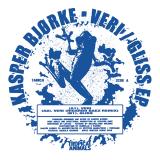
Danish producer Kasper Bjørke returns with a new release on Tropical Animals, the “Veri/Gliss” EP a work that fully captures his signature blend of cinematic depth, refined production, and forward-thinking electronic aesthetics.
“Veri” opens the EP as a richly layered and immersive experience. Built around an evolving tapestry of textures, the track unfolds through pulsating synths, shifting sonic details, and a steady yet powerful rhythm. The result is a truly intergalactic journey, where each element seems to orbit around a constantly transforming emotional core. This is Bjørke at his most visionary-bridging club functionality with intricate sound design in a hypnotic and expansive narrative.
On remix duties, label head Ricardo Baez reinterprets “Veri” with a sharper, more direct approach. Stripping back the original’s layered atmospheres, he delivers a driving electro version that’s lean, tense, and fully focused on the dancefloor. With its tight groove and immediate impact, the remix is built for peak-time energy and club intensity.
On the flip side, “Gliss” reveals a more intimate and emotive dimension of Bjørke’s sound. A modern electronic ballad, the track blends sensual rhythms with delicate, suspended melodies. Its subtle yet captivating groove carries the listener to an unknown planet, where everything moves in sync, locked into the same pulse and flow. It’s a piece that radiates both mystery and warmth, showcasing Bjørke’s ability to craft deeply atmospheric yet rhythmically engaging compositions.
With the “Veri/Gliss” EP, Kasper Bjørke and Tropical Animals reinforce a shared artistic vision where sonic exploration meets club-ready precision, balancing introspection and dancefloor energy, cosmic textures and physical groove.
With CT018, Cosmic Tribe introduces a new editorial format within the catalogue: a focused artist EP on Side A, followed by reinterpretations on Side B — establishing a dialogue between original material and alternative rhythmic perspectives.
Alex Gordiy is a Ukrainian producer currently based in the Netherlands. He has been producing and experimenting across various genres, with a strong focus on electro and techno in recent years. In his music, deep and energetic grooves merge with lush synth textures, creating tracks that unfold with a clear narrative intention.
This release contains two original techno tracks from Alex Gordiy and two electro reinterpretations from EC13 and ROI.
On Side B, the material is reinterpreted through electro. ROI and EC13 reshape the originals into sharper, machine-driven versions, shifting the rhythmic emphasis while preserving the core motifs. The result is a contrast between techno’s linear momentum and electro’s syncopated precision.
Two techno originals. Two electro reinterpretations.
Cosmic Tribe · Research & Development in Sound.
With Cliknopium I, Dr.Nojoke opens a new 12-inch series marking 20 years of CLIKNO — the artistic concept built entirely on field recordings and found sounds. Since its foundation in 2005, CLIKNO has focused on transforming everyday sonic fragments into electronic microcosms, guided by a strict manifesto: no presets, no templates, no classic machines, and every sound crafted from scratch. This approach has shaped Dr. Nojoke’s unmistakable aesthetic — detailed, tactile, and rhythmically unconventional.
Influenced early on by the click-and-glitch lineage of Villalobos, Jan Jelinek, Akufen, and Alva Noto, Dr. Nojoke has long expanded his palette to include dub-infused basslines, delicate percussions, and hypnotic textures. The result is a body of work he describes as “CLIKNO,” where organic sounds meet electronic precision.
Treguja opens the record with a playful, slightly wonky funk, evoking the atmosphere of a clandestine backyard rave. Gragada shifts into deeper territories, its bird calls and floating chords unfolding like a memory of a vanished paradise. On the B-side, Wesikwa propels the listener into a dreamlike, ritualistic groove, carried by Jew’s harps, murmured voices, and a steady, immersive pulse.
Twenty years after the concept began, CLIKNO remains as vital and imaginative as ever. Cliknopium I is both a celebration of this legacy and the beginning of a new exploratory chapter — an invitation to flip the record and let the trip continue.
Ltd Edition 10"
Budapest based concept label Blue Sun welcomes formerly independent local afrobeat-jazz ensemble to its catalogue with a nuanced 4 tracker EP. The release not only marks the beginning of the collaboration, but a definite new musical direction in the band’s life.
Written in a one week jam session retreat in the Hungarian countryside, and recorded at one of the highest peaks of Hungary after a year of global touring, The Garden becomes an amalgamation of the band's personal and artistic experiences. The material conveys a more jazzier approach, with complex harmonies, and an almost cinematic, dreamlike atmosphere, somewhat distancing from (but not completely forgetting) the previously emphasized, dance-oriented Afro- and Latino roots. Song for Ramon serves as the EP’s emotional climax inspired by the passing of a close friend and local underground chef pioneer.
Formed in 2019 in Budapest, Hakumba is a staple of the Hungarian festival circuit, with a growing international presence (SXSW London, SHIP, PIN Music Showcase). They’ve recently finished a tour in Australia this January.
The groove-driven ensemble blends afrobeat, jazz, and various strands of world music into a sound that is both rhythmically powerful and harmonically adventurous. With an eleven-piece lineup featuring an expansive horn section, multiple vocalists, percussion, and keys, the band moves effortlessly between dancefloor energy and more intricate, jazz-influenced musical ideas.
Like the band’s previous album, the EP was again recorded, mixed, and mastered by András Weil, the producer behind The Qualitons, the only hungarian band ever performed Live at KEXP. This continuity preserves Hakumba’s recognizable sonic identity while giving space for new colors and more complex musical ideas to emerge.
Written & performed by:
Soma Számel – drums
Endre Szép – bass
Imre Hegedűs – guitar
Zalán Bendegúz Huff – guitar, vocals
Csongor Mari – keys
Noel Nagy – percussion, vocals
Dorka Foster – flute, vocals
Kristóf Szabó – alto sax
Alpár Sikó – tenor sax
Gáspár Simon – trumpet
András Téglásy – baritone sax
Produced, recorded, mixed and mastered by Andras Weil
Artwork by Eszter Lukács
Graphic design by Péter Tóth
Manufactured by AD Records
Distributed by Rush Hour
Recorded at Galyatető, Hungary
Released under the Blue Sun
What happens when the mathematical rigor of Johann Sebastian Bach is stripped of its classical facade? With the album SRDNG x LPZG, the duo AMAS, together with double bassist Frithjof-Martin Grabner, delivers a radical answer on May 15th, 2026. The work does not merely translate Bach’s legacy; it consistently reimagines it within the aesthetics of Minimal, Dub-Techno, and Ambient. The creation of this extraordinary abstraction spanned three years and two geographical poles: the raw isolation of Sardinia and the academic precision of Leipzig.
The project found its origin in the seclusion of Pula, at the southernmost tip of Sardinia. There, AMAS extracted and digitally dissected the rhythmic and tonal essence of 14 selected works by Bach. In a temporary local studio, these minimalist sequences fused with field recordings of the surroundings to form a hypnotic framework of electronic structures. Back in Leipzig, this foundation met Frithjof-Martin Grabner. In an intense session held in a hall of the historic HMT Leipzig, spontaneous improvisations emerged that breathe the spirit of Miles Davis’ approach to "Ascenseur pour l’échafaud": free play based on rudimentary sketches, an intuitive reaction to the material—comparable to Davis’ iconic scoring of silent film images. It is a deliberate prioritization of atmosphere over technical perfection. Grabner utilizes the full spectrum of his instrument, creating sounds that, in post-production, often blur the line between analog depth and synthetic texture.
The result is an organic symbiosis: the vastness of Sardinia (SRDNG) meets the intellectual density of Leipzig (LPZG), while the strictness of the Baroque dissolves into the repetitive energy of Minimal Techno. To do justice to this conceptual ambition, the album will be released in an uncompromisingly audiophile edition. Limited to 200 copies worldwide, the double LP is pressed on 180g vinyl and features a front cover with a special 3D effect, continuing the visual tradition of the AMAS series. An album for listeners who understand Bach as a living origin of modern sound art—and for lovers of electronic music seeking a new, organic soul within the repetitive depth of techno.
A reflective mood shapes this new ENSOULED compilation, which leans into thoughtful deep house and rhythmic exploration. Italian producer Kikko Esse sets the tone with 'Nightfall Chroma', a spiritual cut guided by warm chords and the sort of slow burn groove that is like sinking into a lush bath, and is later reworked by Alton Miller, whose Detroit-rooted style adds some lovely swing. On the reverse, Cee ElAssaad and Masaki Morii deliver 'Tribe', a more prickly percussive cut underscored by dub effects and spoken word. Hugo LX closes the 12" with a deeper club reinterpretation that keeps you locked.