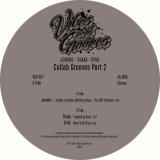
After a short break, Vibes and Grooves is back with Collab Grooves Part 2. Following the success of our initial collaborative venture, we continue our mission of uniting visionary producers under a single sonic umbrella. This time Jemaho, Shaka and DFRA come together for another deep collaboration.
With “Joudia’s Groove (Drifting Away – The DAT Version)” on the A side, we are delighted to have Jemaho on board. He delivers an outstanding, warm and soulful vocal house cut driven by a smooth, uplifting groove and rich musical depth. With its unique tape sound aesthetic, a true masterpiece. Certainly a future club classic.
The B side opens with „Sparkling Soul“ from label resident Shaka. A jazzy house affair that blends vibrant piano melodies, a hypnotic lead synth line, and a tight bassline. It radiates warmth, sophistication, and an ever-present sense of romance.
The second track comes from DFRA, the man from Buenos Aires, who is already well known on the label for his outstanding tracks from the latest Collab Grooves. With “New York Style”, DFRA delivers a deep house tune shaped by warmth, restraint, and a steady underground groove. Subtle textures and raw rhythms create a smooth, flowing atmosphere that feels natural and unforced.
Timeless in feel and refined in production, Collab Grooves Part 2 captures an effortless flow that speaks directly to both the heart and the dancefloor.
Cerca:new sense
Two legends from New York City here for the price of one, as Downside Up Recordings boss Brandon De Carla - noted for his incendiary PAs and DJ sets around the Big Apple from the 90s onwards, as well as releases for labels as luminary as Kevin Saunderson's KMS - enrols the even more celebrated Joey Beltram to add a remix to his three originals here. De Carla's productions sure are uncompromising, not so much as inviting you onto the dancefloor as prodding you on with their itchy, wriggly sense of metallic funk and spaced out atmospherics, especially the latter on the beatless but substantial, grungy DJ tool that is closing track 'Valley Of The'. Beltram's mix, meanwhile, is pinned down by handclaps that sound like they were forged in a steelworks, but again manage to wrangle a sense of irresistible funkiness from the heaviest duty ingredients. Proper 3am techno gear, make no mistake.
- A1: Worms In (Feat Laraaji)
- A2: Beneath The Overpass (Feat Shuta Yasukochi)
- A3: Gravel (Feat Loris S Sarid)
- A4: Highway At Night (Feat James Bernard & Marine Eyes)
- A5: Fading Form (Feat Kmru)
- A6: Death Display (Feat Diatom Deli)
- A7: Bloat (Feat Haruhisa Tanaka)
- A8: Larvae (Feat Ki Oni)
- A9: Autolysis & Putrefaction (Feat Green-House)
- B1: Clouded (Feat Golden Brown)
- B2: Countless Wheels Keep Turning (Feat Early Fern)
- B3: Everyone Passing (Feat Gregg Kowalsky)
- B4: Ways To Be Remembered (Feat Kallie Lampel)
- B5: Fur & Exhaust (Feat Ben Seretan)
- B6: Active Decay (Feat Patricia Wolf)
- B7: Melting Into Asphalt/Springing From The Earth (Feat Nailah Hunter)
- B8: Worms Out (Feat Laraaji)
Constellation Tatsu welcomes US artist Brendan Principato aka Saapato for what is a hugely conceptual new album based around decomposition. It was sparked when Saapato saw a dead fox lying by the side of the road on his way home from a job in a local warehouse. He used that as a jumping-off point to interrogate "transformation, interconnectedness, and renewal" and the five stages of decomposition, namely fresh, bloat, active decay, advanced decay and dry/remains. Several collaborators help him on his way as he sketches out various instrumental textures which variously have occasional shards of light, lingering melancholy and a subtle sense of hope.
Two foundational releases from Toronto's Strobe Records get a well-deserved reissue on the Clone Classic Cuts series, spotlighting a pivotal moment in North American dance music. While often overshadowed by the Detroit and New York scenes, Toronto's underground in the early '90s was brewing its own potent blend of house and techno - and these tracks are prime examples of that cross-border synergy.
The Hayden Andre Project's contributions sit at the perfect intersection of tribal house rhythms and the emotive, machine-driven pulse of early Detroit techno. There's a raw elegance here - a sense of deep groove layered with just the right amount of percussive tension. It's no surprise that these tracks became staples in the crates of DJs both then and now. The production feels timeless, with hypnotic arrangements that still command the floor over three decades later.
On the flip, Kingdom Come, another alias of Ron Allen, delivers lush, blissed-out house music that channels the soulful energy of New York's golden era while adding a uniquely Canadian sensibility. Allen's piano work, layered with warm pads and swinging drums, gives these tracks an unmistakable vibe - equal parts deep house ecstasy and garage swagger. It's the sound of 3 a.m. euphoria, of packed dance floors and emotional peaks.
Andalusian emerging-talent producer GAZZI, a young yet influential figure within the broader Spanish electronic scene, presents an LP that feels like a quiet turning point in his career. Rooted in ambient and new-age minimalism, the record drifts through piano-based textures, soft pauses, and spacious moments that invite deep introspection.
Across its delicate arrangements, GAZZI captures the sensation of slowing down in a world where everything feels fleeting. These tracks hold space for reflection-offering nostalgia, stillness, and the subtle suggestion that hope remains at the edges of even the most ephemeral moments. Each piece unfolds like a landscape suspended in time, shaped by restraint, emotional nuance, and a profound sense of presence.
Presented by Glossy Mistakes, the release reflects the label's ongoing commitment to uplifting a new wave of contemporary Spanish artists, highlighting creators who are redefining the country's sonic identity through experimentation, sensitivity, and forward-thinking sound design.
In GAZZI's own words:
"These songs were made to sit with the wound - to let you drift, to feel scattered, contemplative; they're meant to keep you from thinking too much - or maybe to make you think a lot."
The result is a meditative, deeply personal body of work-one that not only marks a cornerstone in GAZZI's artistic path but also extends Glossy Mistakes' mission to showcase innovative, emotionally resonant voices from Spain's evolving music landscape.
2023 Backstock
New album of one of the biggest Reggae/Dub french soundsystem starring MacGyver, Rooty Step & Pupajim (who worked with Alpha Steppa, Biga Ranx, High Tone, Mungo's Hi-Fi ...).
Since their inception at start of the 2000s, Stand High Patrol have rocked sound systems to their own riddim, assimilating and re-purposing the codes of the genre in their own unique style. From tiny bars in Brittany to huge festival stages, on independent radio or across national airwaves, the crew have quietly trod their own path, never compromising their core value of independence. Connoisseurs have long recognised Stand High’s credentials both as a dub group and a leading sound system, but they stand out from the crowd because of their ability to deliver the unexpected, whether live or on record. Their ability to draw such a diverse audience is testament to this atypical approach to making music.
In 2020, almost 20 years since their humble beginnings, the collective presents their fifth album, “Our Own Way”. As with their first two albums “Midnight Walkers” and “Matter Of Scale”, now considered as classics in their genre, this new opus asserts itself as the latest representation of the crew’s versatile approach to crafting sound. Their music, a blend of its own known as “Dubadub”, has always borrowed influences from multiple sources, and over the course of their career their roots in dub and reggae have intertwined with hip-hop, jazz, new wave, trip-hop and numerous other genres. The ‘Dubadub Musketeers’ have never ceased experimenting, forever seeking to increase the sonic territory they cover, day after day. Both live and recorded, they’ve made it a point of honour to never offer up the same thing twice. Any resemblance that “Our Own Way” might bear to those first two albums is a consequence of this obvious creative continuity, rather than of going “back to basics”.
In contrast to the last two Stand High Patrol records, the hip-hop inspired “The Shift”, or the Bristol indebted “Summer On Mars”, “Our Own Way” doesn’t have a unifying concept or theme. Rather than being limited to a single aesthetic, the LP pays respect to the entire canon of Jamaican music, all unified under Stand High’s inimitable production values. With the wealth of experience gained during the recording of their last two records, the collective decided to aim for a freer project, letting themselves be guided by their own music and their own instincts. The end result is a musical portrait of what Stand High Patrol is in the present moment.
The tracks that make up the new LP burst out of the studio, each born out of unbridled, impulsive creativity. Previously unheard compositions and specially re-tooled dub plates have been assembled into a tracklist that shifts and moves like a classic Dubadub Musketeer live set. Each step of the process has been refined by years of practice : composition, effects, and the final mix. Throughout “On Our Way”, the brutal dub stepper, though still a favourite for sound system sessions, is noticeable by its absence. Instead, it’s the full weight of the crew’s reggae heritage that’s expressed in the mix. It's not just the depth and weight of each tune that strikes the listener, but also the spaces heard between the notes that grab and hold their attention.. The sense of a trip, whether musical, internal or geographic, is omnipresent throughout the LP, linking each track to those before and after. “Our Own Way” finds Stand High Patrol exploring as usual, yet also narrating their journey as they’ve rarely done before.
- A1: Walk Walk Walk
- A2: Too Much Noise (Feat Joe Yorke)
- A3: Dem Try (Feat Nazamba)
- B1: Machines
- B2: In & Out (Feat Marina P)
- B3: This Is Music (Feat Nazamba)
- C1: Lsd Explosion (Feat Jah Thomas)
- C2: Waterhouse Club
- C3: Shaka
- D1: Dem Try (Jeanville Remix)
- D2: Lsd Explosion (Mad Profesor Dub Mix)
- D3: Too Much Dub (Androo Re-Interpretation)
New Stand High Patrol album, featuring Joe Yorke, Nazamba, Jah Thomas - and remixes from Mad Professor, Androo & Jeanville.
Dub and House Music. Two aesthetics born in the shadows, shaped far from the mainstream music industry. Two underground cultures where independence is often a necessity and ingenuity is essential. Two scenes rooted in the margins of society, with dance, sound systems and minorities at their heart.
From the Jamaican sound system sessions of the late sixties, through the nights at Chicago's Warehouse, to the murmurings of the New York house scene in the early eighties — history shows that house, reggae and dub share far more than many people may assume. Collective action, resistance as a driving force, music moving straight from studio to turntable, shared messages: these are the threads that bind these landmark musical movements together. It is at this crossroads, driven by the spirit of experimentation that defines them, that the members of Stand High Patrol found yet another territory worth mapping.
"Skanking & Jacking", the new Musketeerz album, reveals a side of the Dubadub sound never heard on record before. Built for the dancers and for DJs, the LP brings together the pulse of house music and the vibrant groove of reggae. Uncharted territory, never interfaced like this before. The result of a meticulous blending of styles, house, reggae and dub intertwine across 12 extended tracks. The sound is carefully crafted. Built on immersive loops and interlaced with micro-variations that give it an organic texture. Born from the interaction between being and machine. This is not about simply bringing worlds closer together; it's about mobilising influences to chart a new sonic galaxy.
Beyond it's aesthetic statement, "Skanking & Jacking" also stands out for its international cast. The most extensive Stand High Patrol have ever assembled on an album. From England, Italy, Switzerland and Jamaica, the guest vocalists, producers and MCs deepen the sense of dialogue between cultures and styles. At the mic, Joe Yorke, Marina P, Nazamba and Jah Thomas join the Dubadub Musketeerz on their explorations. Each appearance subtly reshaping the contours of the project.
Never fixed, always in motion, "Skanking & Jacking" pays tribute to the traditions that shaped it and closes, as a final nod, with remixes from Jeanville, Androo and the legendary Mad Professor. The album stands as further proof of a crew that shows no signs of stopping its reinvention. Available on stream, digital and double LP on May 29th.
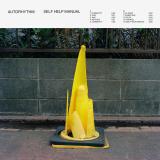
/// First track, Symmetry, debuted on BBC Radio 6 New Music Fix, 10th February: "A beautiful, beautiful album" /// I got my life back. On 17 February 2025, 1024 rays of ultra sound converged at an operation table in Bern, Switzerland, and disconnected a noisy circuit on my brain. 90% of the manifestation ceased – of a disease that I no longer wish to mention by its name. During the same period, I completed my new album: Self Help Manual. I’ve read more current research about the nameless disease than my neurologist, who despite that I didn’t follow his advice on suitable treatment, called me after the successful operation: a brave, brave man. I have composed the music in the same way as in my previous album – Songs for the Nervous System – through layers upon layers of improvisations in dialogue with my synthesizers, most of which are the same age as me. I made the majority of the songs in my studio in the remains of Old Hagalund in Solna. I edited the recordings in my bed during the waking hours of clarity at night. Some songs – NAC, Ketosis, Overkill – were recorded in the basement of my childhood home in Skutskär, in Norduppland, where I’d returned to be nurtured by my retired parents – who during a night when I couldn’t turn over in bed, or pull the blanket over me – made a list of what would happen to my belongings. To my friends who have stood out with me despite my disease, I want to state: you will not inherit me yet. On the new album, the electric bass takes on a leading role. ESG and Liquid Liquid have been important when I reinvented my baselines, limited and liberated by my poor fine motor skills. Plasma is my homage to Summertime Rolls by Jane’s Addiction, that I listened to frequently in my youth. I guess that no one will hear the resemblance. In several songs, the Fender Rhodes plays an important role, a magical instrument that I bought shortly after my diagnosis over a decade ago, and for a long time didn’t dare to touch out of respect for Herbie Hancock and Fela Kuti. A couple of songs draw inspiration from the Horn of Africa – Inner Nile and Delta. At first, subconsciously in the reverb-drenched Inner Nile, then more consciously in Delta. I’m sorry it doesn’t swing the right way, but it was my attempt to return to the cradle of humanity. Longevity is possibly my favourite. The melody is played by an arpeggiator that I controlled by pressing down different keys in an exhilarating sense of freedom. One song in particular, the second track – One – has caused friends to associate freely: one thought it sounded like Patrick Cowley, another like Sly & Robbie meets Kraftwerk, a third like Air – Moonlight Safari. I made one song just before the surgery: opening track Symmetry. It’s the mightiest and most minimal song. I made one song after the surgery: finishing track Self Help Manual. My previous medication pump is heard through the microphone of my Ovation Magnum. It’s the most hopeful song on the album. I took the cover photos with my Hasselblad during walks in Tokyo suburbs of Ōmori and Kamata more than ten years ago. It was something about the faith of the traffic cones that fascinated me – born in the same streamlined form, they had over the years become increasingly individual and lovable. The mixing was finalized by Christoffer Roth in the newly built Studio Dubious in Nacka. Rashad Becker, who in an interview said that he listens as much with his mouth as with his ears, mastered the album at Clunk in Berlin. Right now it feels like anything is possible. My recovery is perhaps a small step for mankind, but a giant leap for me. I hereby leave the music to you. Joakim Forsgren
Since first forming in 2016, London's High Vis have steadily polished their palette of progressive hardcore with shades of post-punk, Brit pop, neo-psychedelia, and even Madchester groove, mapping a middle ground between hooks and fury, melodies and mosh pits. Singer Graham Sayle describes their third album 'Guided Tour' as an axis of competing forces: "It's trying to be a hopeful record, while also being incensed." Rounded out by drummer Edward 'Ski' Harper, guitarists Martin MacNamara and Rob Hammaren, and bassist Jack Muncaster, the band's deep roots in the UK and Irish DIY hardcore scenes have kept them grounded but growing, inspired equally by restlessness and righteous anger. As Sayle puts it, "Everyone's scratching, everyone's working all the time, and their idea of relaxing is just getting fucked and avoiding reality. This album is an escape from that."From its opening seconds of a cab door slamming, a car revving away, and a baggy rhythm swinging to life, 'Guided Tour' sounds like a band reaching for new heights, bristling with energy. Recorded across a few weeks at Holy Mountain Studios in London with producer Jonah Falco and engineer Stanley Gravett, the results feel dynamic and dialed-in, like anthems burned into sense memory through sweat and repetition. Harper cuts to the chase: "We had a clear idea going in, every moment got used. Maybe when we're 60 we can sit around and get a drum sound right, but for now it's about getting things done."The album's 11 songs span the spectrum of contemporary guitar music, sharpened by experience, camaraderie, and societal frustrations. From swaggering street punk ("Drop Me Out," "Mob DLA") to jangling indie sneer ("Worth The Wait," "Deserve It") to heavy alt ("Feeling Bless," "Fill The Gap") to shoegazey spoken word ("Untethered"), the group's chemistry transmutes any style to their unique intensity. Sayle champions this evolving fusion: "For years coming from hardcore, we had pretty clear boundaries - other scenes were separate worlds. Now things are getting more blended, drawing from different places."Nowhere is this sentiment flexed more boldly than on "Mind's A Lie," a dance- punk anthem inspired by Harper's love of house, garage, and pirate radio. Stabs of sampled female vocals (by celebrated South London singer and DJ Ell Murphy) build into a razor wire rhythm of low-slung bass, tense drums, and sparkling guitar before Sayle's staunch voice starts barking harsh truths ("Face to face with all I've known / I can't call these thoughts my own"). After a sudden breakdown, the track regroups and takes off, cruising into the horizon in a haze of chiming guitars and Murphy's ascendant voice, from the streets to somewhere beyond.
- 1: Private Symphony (Feat. Stuart Murdoch)
- 2: The Cold Collar (Feat. Gruff Rhys)
- 3: Love Is A Life That Lasts Forever (Feat. Molly Linen)
- 4: First Moonbeams Of Adulthood
- 5: Road To The Amber Room
- 6: Hachi No Su (Feat. Saya From Tenniscoats)
- 7: In Portmanteau (Feat. Field Music)
- 8: Irreparable Parables
- 9: Spectators In The Absence Of God (Feat. Kathryn Joseph)
- 10: Soul Enters The Ocean Sun Climbs Out The Sea
Pink Vinyl[26,26 €]
Very limited numbers, orders will need to be confirmed.
For his new album, Irreparable Parables, Andrew Wasylyk felt a strong desire to write a set of songs featuring an element hitherto rare in his work: the human voice. Equally strong was the conviction that he did not want to sing them himself.
The Scottish multi-instrumentalist and composer set about assembling a group of guest singers, sending out the songs to wherever they were in the world. The vocals were recorded remotely and then, like migrating birds, winged their way back to Scotland. The result is an album of great beauty which, perhaps preeminently in Wasylyk’s work, expresses the vulnerability and resilience of the human spirit.
Six singers appear on the record, represented by six songbirds illustrated on the sleeve by Clay Pipe Music’s Frances Castle. The cuckoo is a nod to Belle and Sebastian’s 2004 single ‘I’m A Cuckoo’, that band’s Stuart Murdoch being the first voice you hear on the new album. When the vocal for ‘Private Symphony #2’ arrived, says Wasylyk, “it was everything that I was looking for and more. But this is Stuart Murdoch. Of course he’s going to make something incredibly beautiful and thoughtful.”
The song lyrics were, for the most part, written by the singers. The music is Wasylyk’s creation. He navigates a sound world that lies somewhere beyond the borders of classical and jazz, ambient and abstract. It is difficult to describe, but easy to understand, which is to say to feel. That is the way Wasylyk’s work is experienced: as a feeling. It takes you back to childhood, perhaps, to feelings of comfort and safety, or to memories of walks at sunrise and sunset, or to the way a shadow falls on a particular field in a particular place at a particular time in your life. This is consoling music. That is why, though pretty, it is not merely pretty. These are songs to shore up the soul.
Wasylyk writes in a room, in his native Dundee, full of “half broken” instruments. He picks these up, plays a little, seeking an idea, a feeling, a door that lies ajar. The musical palette of Irreparable Parables includes brass and woodwind, a six-piece string section, guitar, bass, drums, vibraphone, Mellotron, Fender Rhodes, tape loops, synthesisers and percussion. The strings were arranged by the cellist Pete Harvey, a long-term collaborator.
Among the other guest vocalists are Gruff Rhys of the Super Furry Animals, Saya Ueno from Japan’s Tenniscoats and Peter Brewis from Field Music. Wasylyk himself takes the lead vocal on the title track, though a throat infection and touch of pitch-shifting have altered his singing in a way that even he, having fallen out of love with his own voice, finds acceptable.
The heart of the record can, arguably, be found in two tracks, ‘Love Is A Life That Lasts Forever’ and ‘Spectators In The Absence of God’, sung respectively by Molly Linen and Kathryn Joseph. The former, bright with trumpets, was inspired by the writing of Derek Jarman. “I was feeling deeply upset about the world and wanted to try and write some- thing that was obviously hopeful,” Wasylyk says.
‘Spectators …’ offers an emotional counterpoint. It is an “apocalyptic hymn” that seems to grapple with watching human suffering from afar, too distant to be at physical risk, but experiencing the psychological wounding, and feelings of helplessness, even complicity, that come with constant awareness of other people’s pain. “Kathryn’s a pal, I love her dearly, and she’s a brilliant artist who really feels what she writes,” Wasylyk says. “The cracked tenderness of her voice is spellbinding.”
The album closes with an instrumental piece, ‘Soul Enters The Ocean Sun Climbs Out Of The Sea’, all piano and strings, that offers a sense of resolution and ascension. A good moment, too, for Wasylyk to reflect upon the artistic companionship that he enjoyed while making this record – the songbirds that answered his call: “These humans are incredible at what they do. I’m deeply grateful and feel so lucky. It blows my mind.”
Marking his vinyl debut on Lowpass, Berlin-based producer APRS steps forward after a run of striking releases on labels such as Soma, ARTS and Sungate.
“Drift” explores human emotions through drums, melodies and textures with five pieces that refuse to settle into one shape. Each track bends the EP in a new direction without breaking its thread, holding onto a sense of vastness, detail and intimacy. Andy Martin closes the record with a remix that widens the palette even further, pushing the material into heavier terrain while keeping its spirit intact.
LWP001 is less a declaration than a first gesture. Intuition over uniformity; a label shaped by instinct, variation and space; a place for artists to wander and for sound to evolve freely.
- A1: Rocking Chair
- A2: Le Train
- A3: Golden Sun
- A4: Miroir
- A5: Voyage Mental
- A6: Surprises
- B1: Je Comprends Pas
- B2: Respire
- B3: Sentimental Lies
- B4: Force Invisible
- B5: C’est Quoi Ces Gens
- B6: My Two Hours Of Sleep
- B7: Astrale Maison
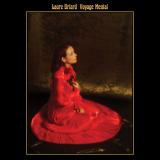
Every so often in music, we come across voices that achieve a certain timelessness, so naturally do they encapsulate both past and present. Laure Briard is one of these voices, retro in form but contemporary at heart, spanning a career rich in aesthetic twists and turns, never without her signature magic, a special kind of eternal filter. Her first album, Révélation (2015), reveals her yé-yé influences, a testament to her love for ‘60s French pop music. Her second studio album, Sur la piste de danse (2016), follows in this vein and finds Laure accompanied as always by her long-time bandmates who share an affinity for warm, catchy arrangements that never lose their appeal. Her tour of Brazil marks a turning point in her career, introducing her to the local indie scene and thus launching her collaboration with the band Boogarins, as well as inspiring the release of multiple EPs composed and performed in Portuguese. Today, her music is embellished by touches of bossa nova and a folk sensibility, boasting increasingly intricate arrangements, as exemplified by her 2019 release, Un peu plus d'amour s'il vous plaît. Several years later, the Californian desert captures the musician’s imagination with Ne pas trop rester bleue, a poignant musical journey inspired by the rich history of Western legends and the role they play in shaping our collective consciousness.
In Voyage Mental, Laure Briard draws upon an inner energy unearthed during a new stage in her life, where the thrill of spontaneous adventure is not accessible in quite the same way. The result is a collection of sophisticated, introspective songs, narrating a young mother’s quest for balance in the face of routine. The album, nostalgic but always tethered to the present moment, is also the fruit of her collaboration with Gaëtan Nonchalant, a talented musician known for coaxing poetry out of the mundane. The two of them co-wrote and recorded five tracks at Studio Nocturne, accompanied by her long-time sidekick Pieuvre, aka Vincent Guyot, Léo Blomov, Pierre-Louis Vizioz, and Hedi Bensalem. The gentle pop opener “Rocking Chair” sways steadily to the rhythm of dynamic drums, followed by “Train,” a ballad that extends an invitation to set sail and daydream alone. The folk escapade continues with “Golden Sun,” a duet featuring the 1960s cult American musician F.J. McMahon, who Laure contacted via the internet on a whim. “Golden Sun” is an unlikely encounter between two generations and two cultures, giving new life to an old forgotten demo on the other side of the Atlantic. And while Laure sings of wide open spaces, cowboys, and sunsets sinking into the sea, we feel the city surrounding her in “Miroir,” a song composed by Hedi Bensalem that laments the suffocation of living in a crowded metropolis where the sky is a distant gray smudge. This pressing need for air, this search for rest and total disconnection, is one of the album's central themes. It may also explain the ever-present sense of nostalgia that pervades the songs, a welcome respite in our current era of doomscrolling and darkness. Along the way, Laure soothes us with melancholy guitar, delivers poetry set to scattered piano notes, and takes us by the hand during lively, uptempo passages. We climb onto her wings, never straying too far from the ground, soaring joyfully above her moods.
- A1: Wishing For Blue Sky
- A2: Does The Shade Choose Who To Comfort
- A3: Two Magpies
- A4: Memorise Your Senses
- B1: Dark Edges
- B2: Keeping You Awake
- B3: I Buried All The Answers
- B4: Spirit Of Place
Winter Gorse coloured vinyl[32,35 €]
These days – on the new, ninth Fink album – Greenall is operating within a lineage of authentic, quietly revolutionary artists from England’s verdant southwestern toe. Artists like Michael Chapman. In 1970, the elusive acoustic guitar wizard released an album called Fully Qualified Survivor. The cult-classic served as a lodestar for Greenall – along with bandmates Tim Thornton and Guy Whittaker – as he began jigsawing together The City Is Coming to Erase it All, the follow-up to 2024’s Beauty In Your Wake. He even considered covering a song from it, but in the process, inadvertently stumbled into what became the album’s opener. ‘Wishing For Blue Sky’ circles a universal teenage ache: waiting for life to start. “No point dying of patience” goes the first lyric as crunching footsteps cue a resonant, open-tuned acoustic swaying into view. By 18, Greenall was fed up with waiting, so he left suburban Bristol and saw the world, sending postcards from the edge, waiting tables, squirreling away tips for the next flight. Thornton had similar experiences when the guitarist/drummer busked across Eur
This is nowstalgia more than nostalgia, though; there’s a parallel between these 18-year-olds and Fink’s autumn-aged family men. “You’re expected to be boring and settling down at this age,” Thornton says. “But we’ve still got this tremendous wanderlust. We want to go and discover, and also achieve things. It’s a nice life – home and family – but fuck, I can’t wait to get back out there.” City is a product of this hunger for discovery, and idolatry of the album as a form – like we had in 1974. City’s cover mirrors its interior, the first song is the greeting, the instrumental closer the conclusion. It’s a story. It’s a record for people who, like its creators, are curious. People who happily face a little cold for music, who light a crackling fire back home, who sit with these songs until they’re ready to chase after their own blue sky
These days – on the new, ninth Fink album – Greenall is operating within a lineage of authentic, quietly revolutionary artists from England’s verdant southwestern toe. Artists like Michael Chapman. In 1970, the elusive acoustic guitar wizard released an album called Fully Qualified Survivor. The cult-classic served as a lodestar for Greenall – along with bandmates Tim Thornton and Guy Whittaker – as he began jigsawing together The City Is Coming to Erase it All, the follow-up to 2024’s Beauty In Your Wake. He even considered covering a song from it, but in the process, inadvertently stumbled into what became the album’s opener. ‘Wishing For Blue Sky’ circles a universal teenage ache: waiting for life to start. “No point dying of patience” goes the first lyric as crunching footsteps cue a resonant, open-tuned acoustic swaying into view. By 18, Greenall was fed up with waiting, so he left suburban Bristol and saw the world, sending postcards from the edge, waiting tables, squirreling away tips for the next flight. Thornton had similar experiences when the guitarist/drummer busked across Eur
This is nowstalgia more than nostalgia, though; there’s a parallel between these 18-year-olds and Fink’s autumn-aged family men. “You’re expected to be boring and settling down at this age,” Thornton says. “But we’ve still got this tremendous wanderlust. We want to go and discover, and also achieve things. It’s a nice life – home and family – but fuck, I can’t wait to get back out there.” City is a product of this hunger for discovery, and idolatry of the album as a form – like we had in 1974. City’s cover mirrors its interior, the first song is the greeting, the instrumental closer the conclusion. It’s a story. It’s a record for people who, like its creators, are curious. People who happily face a little cold for music, who light a crackling fire back home, who sit with these songs until they’re ready to chase after their own blue sky
On June 5th, Tectonic Recordings will release Beatrice M.’s debut LP, Sinking, on a vinyl triple pack and digital download. The vinyl edition will be split across 3 separate 12” vinyl releases, packed in matching printed disco bags. This is part 1 of 3.
Beatrice M. pushes the needle forward for a sound and scene that nestles among a niche that blends UK dubstep, techno, and the golden era of tech house. The Paris-born artist is in their mid-20s and has been building up a grassroots following and plenty of momentum over the last few years, through their Bait label and its output of sonically resonant artists, alongside numerous remixes and collaborative and solo releases for labels such as Tectonic, Tempa, and Rinse. There are plenty of accolades coming in for Beatrice's work too, with notable DJ mixes for respected heavyweights such as Mixmag as well as featuring in Resident Advisor’s best mixes of 2025.
Beatrice is known for making deep explorations into the history of the scenes that have interested them, tracking and highlighting connections between dubstep, tech house, jungle and beyond across various self-produced, one-off radio shows, often taking a journalistic approach to subjects of true passion. They travel across Europe on a packed-out DJing schedule, avoiding air travel, and doing it mainly by train. Many of the LP's tracks started life as sketches put together on these long journeys, as the sights of different countries rolled past the window.
Having taken inspiration from Tectonic artists such as 2562, the label – a home to music that was originally placed in the dubstep-techno crossover spectrum—feels like the perfect place to host Beatrice M.'s debut album Sinking, beginning a new chapter for this kind of sound.
Opening track ‘Ever’ plunges us into deep waters with a sense of dubwise command. The momentum picks up on ‘Ocean’, where the vocal snippet "everyday life" circles around reverbed stabs and intricate hi-hat moves. ‘Motion’ sets the pace with its jumpy but rolling rhythm, leading straight into the eyes-down, party-time energy of ‘Disco Corner’.
The first chapter of a new series exploring identity, temporality and the many dialects of contemporary techno. Four tracks, four distinct approaches, yet bound by a shared pursuit of tension, texture and transcendence.
Chronicles Diary introduces its identity with WAYF VOL1, the first entry in a series asking when, not where, this music belongs. The answer comes in four club pieces that favour impact over ornament, tracing tension, texture and a sense of forward movement.
Boyd Schidt & Uvall's "Bullet Train" is tensile 4/4, serrated hats and a tunnelling bassline pulling the room into a tight zone. Commissar Lag's "Battle Rites" ups the pressure, all offline bass and percussive rhythm. MMSS pares things back on "Aion_01," a looping, hypnotic figure that blurs time without dropping energy. Time Traveller (UK) closes with "Stud," glitched and driving, a roughcast groove that breathes between the hits. Four perspectives, one intent: functional, underground Techno that works.
- A1: C’est Loin
- A2: Là Où Tu Veux (Deixa A Gira Girá)
- A3: Pas Tant De D'chichi Ponpon
- A4: Assez
- A5: Le Soleil En Haut
- A6: Tout L’or
- B1: Désillusion
- B2: Attends-Moi
- B3: O Sapo
- B4: Horssaison
- B5: Presque Rien
- B6: Vou Festejar
For his sixth solo album, Ezéchiel Pailhès returns with a new collection of songs infused by a sunny wandering spirit.
Within each of the twelve songs on SOL is a thread of melancholic happiness that has permeated much of Pailhès’ music and songwriting. He addresses love, the passing of time, hope, lost illusions, fleeting moments of grace, the temptation of forgetting, a need to escape, and desire. All this is
insulated by understated orchestrations that blend acoustic and electronic instrumentation with deft confidence.
The Portuguese and Brazilian concept of saudade—a form of melancholic longing and nostalgia— pervades, thanks in part to Pailhès decision to record the album in Rio de Janiero and to reinterpret some of the finest works of Música Popular Brasileira (MPB). In particular, he revisits a handful of
lesser known classics from the mid-century samba and bossa nova era—originally written or performed by talents including Vinícius de Moraes, João Gilberto, Tom Zé, Dorival Caymmi, João Donato, Os Tincoãs, and Ataulfo Alves.
The shift from Brazilian Portuguese to French and the decision to adapt rather than perform a straightforward cover versions, allows Pailhès to invent a form of prosody and euphony (the musicality and harmonious combination of words) that feels vibrant and unlike anything else in today’s French
chanson landscape.
“Some lyrics are simple translations from Portuguese, in what I’d call an expanded version. For others, I started from a single word or a single phrase and embroidered an entirely new text that carried me elsewhere,” explains Pailhès. “I allowed myself great interpretive freedom, while preserving the humanist dimension of the original songs. I’ve always been deeply moved by the way Brazilians transfigure reality through heightened emotion. I love this visceral and spontaneous country, which always seems to live through emotion. And above all, I love its music both popular and unifying,
bringing together all social classes. In that sense, it’s very political music, but even more so utopian, made by the people and for the people.”
On this new album, however, the French artist was keen to avoid cliché. Each song is therefore built around a carefully balanced interplay between Pailhès’ piano and synthesizers, alongside restrained arrangements of percussion, brass, bass, and cavaquinho (a small four-string plucked guitar). These parts were recorded in Rio de Janeiro with two musicians who regularly perform alongside the legendary Caetano Veloso—Kainã Do Jêje and Alberto Continentino—joined by Thomas Harres, Antônio Neves, Eduardo Neves, and Gabriel Loddo.
Since the 1960s, France and Brazil have shared a long-standing cultural and musical relationship. Some Brazilian artists, most famously Gilberto Gil, took refuge in France during the dictatorship years (1964–1985). But above all, French chanson quickly fell in love with the richness and ingenuity of
bossa nova and samba, translating and reinventing them in the language of Molière. Throughout the 1960s and 1970s, albums and hits by Henri Salvador, Georges Moustaki, Pierre Barouh, Pierre Vassiliu, and Claude Nougaro all drew from the MPB repertoire.
Fifty years later, with SOL, Ezéchiel Pailhès reinvents this rich Franco-Brazilian musical legacy, bringing to it a personality and modernity that stand confidently alongside those of his forbears.
Made across 2024 between London and Amsterdam, WITH A VENGEANCE (or WAV for short) is the sound of uptempo catharsis, of SHERELLE making sense of a turbulent and difficult moment in time in her personal life. Determined to write one track a day, the studio became a safe space for SHERELLE to channel anger and feelings of betrayal, her hard and fast club tracks turning darkness into the cerebral joy of overcoming adversity. From those intense daily writing sessions has emerged a sharp, finely-crafted 10-track LP that is powered by fierce feminine energy and reflects the hard/soft and light/dark dualities of the dancefloor and life itself.
WITH A VENGEANCE is also a rally cry for the 160 scene, designed to push the tempo in new, exciting and as yet undiscovered directions. Inspired by SHERELLE’s foundational influences such as Kode9, Scratch DVA, Machinedrum, Lone and SBTRKT as well as the soundsystem-shaking groove of grime’s R&G sub genre, the album is designed to change perceptions of what 160 can be. But don’t get it twisted: this isn’t a concept album. WAV is for the dancefloor, delivering shades of London, New York, Detroit and Chicago in ways that are guaranteed to raise gun finger salutes.
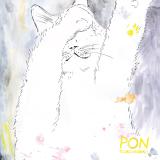
Pon is Tujiko Noriko’s sixth album for Editions Mego and a further extension of her already significant body of work as both a solo and collaborative artist. Dedicated to her cat who she adopted as an infant and passed away due an accident having been born deaf, Pon is imbued with abstraction, tenderness and a deep emotional resonance.
Noriko’s palette of electronics, romantic melodies and surprising sonic details are all fully present here, and like her last full length, 2023’s Crépuscule this is an epic work, released as a 2LP by Editions Mego alongside a Japanese CD release.
The unmistakable hue of Japan hovers throughout this emotional rich landscape. Subtle field recordings and fragile, abstract motifs drift through the album, all cloaked in a warmth and humanity that only Noriko seems able to conjure.
Pon moves effortlessly between the childlike and the obscure. There are moments of deceptive simplicity where unexpected elements suddenly surface — strange voices emerge on Boku Wa Obaka, Knife of Yonder is a standout: a startling ten-minute unfolding that begins with a warm, almost Eno-esque drift before launching into a soaring mid-section and finally landing somewhere unexpectedly blues-adjacent.
Kikoeru Pon is brimming with childlike wonder — a heartfelt ballad that dissolves into domestic field recordings, including sounds of the feline for whom both the album and track are named. A quietly devastating ending that brings the personal nature of the record into sharp focus.
There is a deep sense of the human in the way Noriko embraces technology. This is far from cold abstraction; rather, Ponfeels like a colourful photo album, documenting Noriko’s inner world and instincts with remarkable intimacy. Hovering in liminal states between pop, ambient and abstraction, this is a deeply affective and moving release that reveals new surprises with each listen.
The emotional range of Noriko’s latest offering inspires hope in a world in disarray. It is both gentle and epic and one which we feel embodies the work of an artist fully at the height of her powers.
A rising artist of the French electronic scene, Naajet asserts her identity with The Night Starts Now, a four-track EP that celebrates the freedom and intensity of the night. Co-founder of the Bande de Filles collective and known for her explosive universe blending House, Hardgroove and Breaks, as well as for the unique energy inherited from her dance background, Naajet delivers here a sonic manifesto conceived as an ode to club culture and to the present moment.
“I imagined this EP as an anthem to the world of the night. The night offers us unparalleled freedom, an outlet that allows us to be ourselves, to create, to love. The Night Starts Now captures this celebration of the present moment and this declaration of independence.” Naajet Opening the EP, “Ready To Shine” unfolds radiant House nourished by Pop and 90’s sounds. With a clear and ascending rhythm, the track combines euphoria and introspection. “I composed this track as a joyful and introspective journey that prepares us to embrace the night. For me, it is a call to accept our wounds, to transform them into light and strength, so that we may shine brighter when we enter the club,” explains Naajet. Between ethereal vocal lines and shimmering pads, the track acts as a ritual of entering the night, inviting us to turn wounds into strength and to shine on the dancefloor. The second track of the EP, “Sugar”, embodies the effervescence of the club. Carried by a hypnotic voice and an effervescent rhythm, the track celebrates the communion of bodies and the liberating energy of dance. “It is an ode to dance and to bodies coming together. This track speaks of those moments when, on the dancefloor, boundaries fall: we sweat together, we free ourselves together, and energy flows from one body to another,” says Naajet. A true concentrate of intensity, “Sugar” captures the moment when sweat, rhythm and abandon merge into a collective movement towards freedom.
With “I Can Be Anything”, Naajet changes register and flirts with deeper, even techno textures. Built on a throbbing pulse and sharp synths, this track is meant as a manifesto of identity. “I really wanted to propose a track that claims our right to free and plural expression and sexuality. I Can Be Anything is about our multiple identities, our ability to reinvent ourselves and to refuse any form of formatting,” she says. Between club intensity and political resonance, “I Can Be Anything” questions our multiple facets and embodies the assertion of an elusive and free self. Closing the EP on an euphoric note, “May It Never End” stands out with its broken rhythms and powerful synths. The track conveys the transcendent energy of the end of the night, when dawn arrives but we refuse to leave the collective trance. “I wanted to put into music this feeling of infinite energy, when time is suspended and the party seems to never have to stop. It is this euphoric vertigo that connects us all in the same breath, this utopia of a night that would never end,” says Naajet. A true apotheosis, this track embodies the utopia of an eternal night.
DJ, producer and co-founder of the Bande de Filles collective, Naajet has established herself with a singular universe where House, Hardgroove and Breaks blend, nourished by her background as a dancer and an instinctive sense of groove. For the past three years, she has performed on French and European stages – from Berlin to Amsterdam, via Geneva and Oslo – and has made her mark in clubs such as Rex Club, Le Sucre and Badaboum, as well as festivals like Nuits Sonores and Kolorz. On the production side, she has released several acclaimed EPs on renowned labels such as Shall Not Fade and Monki & Friends. In 2025, she takes a new step with the launch of her label SWEAT Records and a residency at Le Sacré in Paris, affirming her role as an ambassador of a free and intense club culture. She also collaborates with the waacking company MADOKI, for which she composes and mixes projects at the crossroads of dance and music. With The Night Starts Now, Naajet confirms her status as an essential artist of the new electronic generation1