2026 Repress
The clergy is pleased to introduce you to a new initiate: Birds ov Paradise. This highly anticipated Hypnus debut comes split into three separate EP's which will be released one each full moon starting October.
Some of you may be acquainted with the music of Birds ov Paradise already as he's put out two stellar records on Jens and Aniara Recordings in 2016-2017, as well as making a contribution to our podcast series The Memoir where his sound was put on a grand display. Those of you who are new to the fantastic dream world of this very talented artist will quickly get lost in the flowing rhythms that drives his magical deep techno sound.
Early support from Etapp Kyle, Ness, Slam, Iori, Refracted, Svreca, Cio D'Or and Dorisburg to name a few.
We hope that you enjoy the trip into the Bayou.
Поиск:new
Все
2026 repress
The clergy is pleased to introduce you to a new initiate: Birds ov Paradise. This highly anticipated Hypnus debut comes split into three separate EP's which will be released one each full moon starting October.
Some of you may be acquainted with the music of Birds ov Paradise already as he's put out two stellar records on Jens and Aniara Recordings in 2016-2017, as well as making a contribution to our podcast series The Memoir where his sound was put on a grand display. Those of you who are new to the fantastic dream world of this very talented artist will quickly get lost in the flowing rhythms that drives his magical deep techno sound.
Early support from Etapp Kyle, Ness, Slam, Iori, Refracted, Svreca, Cio D'Or and Dorisburg to name a few.
X-IMG presents “SEARCHING HELL” the new album by industrial body music producer SARIN, this 12” full-length LP marks his first release in six years.
SARIN (aka Emad Dabiri) has spent the last years sharpening his teeth on numerous collaborations and dozens of remixes. His evolution and development is displayed in the Gesamtkunstwerk that is “SEARCHING HELL” a nine track cybernetic joyride into oblivion; featuring his distinct militant drumwork, heat-seeking bass lines and surgically interlaced sampling, augmented by deceptively serene atmospheric pads & bloodied vocals. All this composed and assembled with an array of analog, digital and software based weaponry. “SEARCHING HELL” seeks to find meaning in an increasingly meaningless & subjugated world while maintaining a subversive & defiant autonomy.
Comes with download code.
Disco Mind Records impressed everyone with its first EP and now it deals with the pressure of coming back with a second in fine fashion. This one is perfect for warm days and summer nights as it offers four high-impact and gloriously feel-good Brazilian and disco edits all pulled off to perfection. New young talent Brother Julian kicks off with a peak time and groovy burner, then disco don Romand Truth goes a little more deep and smooth with his seductive sound. Delfonic offers the percussive Latin grooves of 'Nada is Going to Change' and 'Grito de Guerra' is another upbeat open-air rhythm.
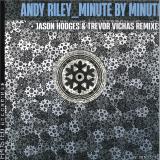
UK house veteran Andy Riley, best known as half of Inland Knights, is back with new solo beats on the Frosted Recordings label. Lead single 'Minute By Minute' is a slow, groovy, sensual sound with 90s downbeat vibes and interesting synth textures. Pacific Northwest native Trevor Vichas steps up with his Dark Deep mix which brings a meandering bassline and more uptempo house drums then Canadian export Jason Hodges steps up with two versions. The first is all silky grooves and filtered vocals that bring some warming soul and the second is a stripped-back instrumental. Timeless house from front to back.
A collection of transfixing, storm-like compositions, "Drifts" draws you into its heightened sense of quiet, reveling in iridescent, tranquilized vapors - one part ambient Classical, one part Club-adjacent ambience.
Pitched, reduced, sampled and re-sampled, the album's glowing, elliptical abstractions - using piano, harp, strings & modular synthesizer - explore the emotional terrain between aftermath and renewal, blending the unstructured immediacy of improvisation with the elegant sculpture of composition.
"Drifts" represents for its maker a newfound interest in shadow and mystery, each track a shifting terrain, a collection of clues, a scene set in a larger story, the effect cumulative.
Featuring collaborations with Patrick Belaga, Marilu Donovan (LEYA), and Takuma Watanabe, the album's cinematic suite of impressionistic, ambient works invites the listener into a vast, mapless space of dreamlike non-linearity where interior and exterior landscapes bristle with intimacy and electricity.
Lempuyang has been at the heart of the second wave of dub techno since day one. It's a label that deals in super deep and high-quality sounds from a range of artists. Now they welcome back Adria, three years after his debut, with a heavyweight follow-up that dives deep into the murky edges of dub experimentation. This new release trades dancefloor immediacy for atmosphere and weight by blending low-slung rhythms, hazy tape hiss and hypnotic textures that nod to classic sound system culture. Each track comes rich in analogue warmth and restrained tension. This is dub crafted with precision and that fully rewards close listening and real exploration of space, texture and bass pressure.
For the fifth release on Silum Records, the in-house production collective Wavetest teams up with longtime friend Lexx for two tracks and completes the 12” with a new creation of their own. “Last Dance at Zukunft” and “Alpine State” were both inspired by the iconic Zurich venue Zukunft which closed its doors in the spring of 2025. Club Zukunft was a cornerstone of Zurich’s underground club culture for nearly two decades. Everyone involved in the making of this record spent countless nights there, whether behind the decks, on stage or dancing in the crowd. This release is both a celebration and a heartfelt farewell to a place whose impact on Zurich’s music scene remains unmatched.
With My Best Friend, CHOP — the duo of Cosmo Dance and Whodamanny — return to deliver a new chapter of their analog-driven dance language on Mirella Records.
Built around warmth, groove, and an unspoken dialogue between machines and emotion, My Best Friend reflects CHOP’s purest intentions: to explore rhythm as a living form, to make the floor breathe, and to connect people through sound. Each element feels carefully shaped yet deeply human — the pulse of friendship and creative trust translated into music.
This 7-inch release, pressed on red transparent vinyl, stands as a statement of authenticity. It’s not about spectacle or nostalgia, but about presence — a timeless moment captured in movement and frequency. CHOP invite listeners to tune into the essence of the dancefloor: where simplicity becomes depth, and truth becomes magic.
A High-Energy Fusion of Past and Present
The collaboration between the Amsterdam and Berlinartists showcases their unique chemistry, blendingcutting-edge production techniques with a deepreverence for the genre's roots. Crafted in the shadows,Accelerate is a meeting of two minds from two citiesknown for their underground energy, each bringing theirunique influence to an exhilarating techno experience.
The reworked classics on Accelerate, which originallygraced some of the most renowned techno labelsbetween 2007 and 2012 on vinyl 12", are newly mixed,edited, and turbocharged, pushing the limits of eachtrack's original energy. All is recalibrated for a newgeneration of listeners-and they hit harder than ever.Alongside these revamped gems, Accelerate introduces
new and previously unreleased material that will takelisteners even further.
Accelerate is a relentless force that demands to be felt inall its depth.
After several remixes for the label, Sestrica returns with her first solo EP — A Way to Ananda. Across three emotionally charged compositions, Sestrica unfolds an intimate sonic journey that mirrors her own path of transformation.
From the raw energy of “Intuitions” to the emotional depth of “Letting You Go” and “Way to Ananda,” the EP captures transformation, freedom, and bliss.
“This EP is my experience of coming back to life after divorce,” says Sestrica. “Intuition was knowing it was the right decision. Letting You Go was leaving my past behind. Ananda is the new bliss I’ve found.”
Closing the release, Not Even Noticed deliver a sophisticated remix—minimal yet powerful, sharp drums and refined sound design perfectly sealing this chapter.
- B2: Grazia Vitale – Poi (1975)
- D4: Daniel Sentacruz Ensemble – Vivo Solo Con Te (1982)
- A1: Cinzia Peloso – Sciogli Le Catene (1980)
- A2: Linda’s Night – Cucciolona (19??)
- A3: Daniela Guerci – Non Ti Resisto Più (1979)
- A4: La Comune Idea – Cuore Di Serpente (1981)
- B1: Tony Ferri – Stella D’oriente (1979)
- B3: Sara Bongiovanni – Casablanca (1985)
- B4: Solimar – Veliero (1980)
- B5: Coscarella & Polimeno - Station To Station 2025 (2025)
- C1: Cap – Alla Porta Del Tempo (1982)
- C2: Francisca – Non Dico No (1983)
- C3: Hyper Drive Band – Hyper Mix (1985)
- C4: Linnel Jones – We’ll Cry Out (1986)
- D1: Jairo – Night Woman (1985)
- D2: Ilaria Berlato – Vincerò (1985)
- D3: Alex P.i. – Free Love (1985)
- D5: Miro – Tu Non Lo Sai (1984)
Everyone knows the story of American disco.
But few are aware that, between the late 1960s and the late 1980s, Italy wrote a parallel one — spontaneous, surprising, and incredibly creative.
It is a story that spans two distinct seasons: the Italian disco of the 1970s — melodic, handmade, sometimes naïve yet always original — and the emerging Italo Disco of the 1980s, electronic, futuristic, and lightheartedly projected toward the future.
Two different languages, yet both driven by the same desire for freedom and modernity. Discoteca Sound — Italian Discoteca Underground 1975–1986 brings together 18 rare tracks — including two previously unreleased — that tell this story of transition: from the orchestral and sentimental disco of Italian dance halls to the synthetic and visionary sound of the first drum machines.
A journey through private archives, local labels, regional studios, and forgotten voices — the sonic map of a country that has always danced, but to its own rhythm. From Mediterranean disco to the first Italo Disco, from the dim lights of provincial dance halls to the early home synthesizers, each track opens a window onto an Italy that dreamed of the dance floor as a universal language of connection during the brief season of revolutionary utopias.
This compilation celebrates ten years of work by Disco Segreta — a decade dedicated to the research, recovery, and appreciation of Italian disco and electronic culture. An act of justice owed to all those artists who had their moment yet were never remembered by history — bringing back to light an essential, still too little known part of our musical heritage.
Because dancing today remains, more than ever, a living act of memory.
Limited edition 2LP, features 2 previously unreleased tracks and a new 2025 version of Coscarella & Polimeno – Station to Station.
f Grazia Vitale – Poi (1975) Previously Unreleased
q Daniel Sentacruz Ensemble – Vivo Solo Con Te (1982) Previously Unreleased
f Grazia Vitale – Poi (1975) Previously Unreleased
q Daniel Sentacruz Ensemble – Vivo Solo Con Te (1982) Previously Unreleased
f B2. Grazia Vitale – Poi (1975) Previously Unreleased
q D4. Daniel Sentacruz Ensemble – Vivo Solo Con Te (1982) [Previously Unreleased]
[f] B2. Grazia Vitale – Poi (1975) [Previously Unreleased]
[q] D4. Daniel Sentacruz Ensemble – Vivo Solo Con Te (1982) [Previously Unreleased]
[f] B2. Grazia Vitale – Poi (1975) [Previously Unreleased]
[q] D4. Daniel Sentacruz Ensemble – Vivo Solo Con Te (1982) [Previously Unreleased]
DJ Support - Alan Fitzpatrick, Ben Sims, Colin Dale, Dave Clarke, DJ Bone, Doc Scott, Dustin Zahn, Ellen Allien, Fear-E, Fixon, Gary Beck, James Ruskin, Laurent Garnier, Luke Slater, Misstress Barbara, Radio Slave, Rebecca Delle Piane, Remy Unger, Rodhad, Scuba, The Advent & Truncate
Hardgroove returns with three powerful new remixes from rising Greek talent ANNE, who twists label boss Sim’s Snapshot ‘99 into a trio of peak-time weapons. Marking her third release on the legendary label, ANNE builds on acclaimed work for Out Of Place, Soma, and Hardgroove sister label Symbolism, seeing her in heavy demand with a packed 2025 touring schedule across the EU and beyond.
VIER - IIII, a project by: Machinedrum x Thys x Holly x Salvador Breed.
Across its eleven tracks, 'IIII' dissolves borders between breakbeat, trap-meets-gabber, skippy UK shuffle, halftime, jungle and cinematic electronica, music that shifts from serious voltage to full-colour euphoria. What ties it together is philosophy, not genre.
The group's working method began playfully in the studio with a ten-minute egg timer: each member would sketch for ten minutes, then pass it on. That rule became a ritual, a way to keep things human, spontaneous and shared. In VIER, every track passes through four sets of hands; every decision is a test of trust. What could have been chaos instead became a flow state, a cycle of surrender and discovery thatdefines their sound.
Following singles such as Frankfurt, Control, Where Were You, Solitu and Vai Pulando, 'IIII' stands as VIER's first full statement, a body of work that feels both playful and deeply considered. Moments of quiet bloom into distorted joy; melody drifts through broken percussion; endings turn into new beginnings.
After teaming up on Smile Sessions with "L'Orologio" last year, JKS and Lacchesi are back at it with their new "High & Dry EP." The four-track project bridges their worlds perfectly. JKS bringing his trademark high-octane energy, Lacchesi diving deep into darker, more textured sound. A sharp mix of dancefloor weapons and introspective moments harmonizing their respective label's artistic directions.
Dropping via both Smile Sessions and Maison Close Records, High & Dry EP is another solid proof of the creative spark between these two French-born producers. Driving rhythms, haunting atmospheres, and a touch of melancholy, all stitched together for an intense, late-night journey.
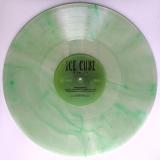
This holiday season, global hip-hop icon Ice Cube makes a powerful return with Man Up — a brand-new album from a cultural trailblazer whose influence spans music, film, and activism. With over 10 million albums sold and six Platinum plaques, Cube’s legacy is undisputed, from his revolutionary work with N.W.A. to timeless solo anthems like “It Was a Good Day.” Now, sharper and more unapologetic than ever, he’s back to deliver a project that fuses his raw lyrical power with a message rooted in resilience and authenticity.
To mark the release, Man Up will be available exclusively as an ultra-limited vinyl drop this holiday season. Each record features a one-of-a-kind hand-crafted cover — a unique blend of artisanal design and proprietary technology (created without A.I.) — alongside city- and country-specific sleeves that pay homage to Cube’s global impact in places like LA, Tokyo, London, and France. The campaign will be amplified through a global social media rollout, city-focused influencer activations, and Ice Cube’s upcoming North American tour. Major press coverage and podcast appearances will further elevate the conversation, making Man Up not just an album, but a collector’s piece and cultural moment fans won’t want to miss.
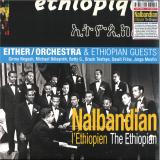
The Éthiopiques series returns! Essential archive recordings from an extremely fruitful period in Ethiopian music.
Before “Swinging Addis” took over the world, there was Moussié Nerses Nalbandian — the Armenian-born composer who shaped modern Ethiopian music. Mentor, arranger, and pioneer, he laid the foundations of Ethio-jazz.
This Éthiopiques volume revives his forgotten legacy, recorded live by Either/ Orchestra First issue ever with new exclusive photos and in depth liner 8-page insert.
“Ethiopian jazzmen are the best musicians that we have seen so far in Africa.
They really are promising handlers of jazz instruments.”
Wilbur De Paris
(1959, after a concert in Addis Ababa)
አዲስ፡ዘመን። *Addis zèmèn* **A new era.**
The time is the mid-1950s and early 1960s, just before "Swinging Addis" bloomed – or rather boomed – onto the scene. Brass instruments are still dominant, but the advent of the electric guitar, and the very first electronic organs, are just around the corner. Rock’n'Roll, R’n’B, Soul and the Twist have not yet barged their way in. Addis Ababa is steeped in the big band atmosphere of the post-war era, with Glenn Miller's *In the* *Mood* as its world-wide theme song, neck and neck with the Latin craze that was in vogue at the same period. Life has become enjoyable once again, with the return of peace after the terrible Italian Fascist invasion of Ethiopia (1935-1941). The redeployment of modern music is part and parcel of the postwar reconstruction. *Addis zèmèn* – a new era – is the watchword of the postwar period, just as it was all across war-torn Europe.
The generation who were the young parents of baby boomers** were the first to enjoy this musical renaissance, before the baby boomers themselves took over and forever super-charged the soundtrack of the final days of imperial reign. Music is Ethiopia's most popular art form, and very often serves as the best barometer for the upsurge of energy that is critical for reconstruction. Whether it be jazz in Saint-Germain-des-Prés or the *zazous* who revolutionised both jazz and French *chanson* after the *Libération*, be it Madrid's post-Franco Movida, or Dada, the Surrealists and *les années folles* that followed World War I, the periods just after mourning and hardship always give rise to brighter and more tuneful tomorrows. Addis Ababa, as the country's capital, and the epicentre of change, was no exception to this vital rule.
**Two generations of Nalbandian musicians**
Nersès Nalbandian belonged to a family of Armenian exiles, who had moved to Ethiopia in the mid-1920s. The uncle Kevork arrived along with the fabled "*Arba Lidjotch*", the** "*40 Kids*", young Armenian orphans and musicians that the Ras Tafari had recruited when he visited Jerusalem in 1924, intending to turn their brass band into the official imperial band. If Kevork Nalbandian was the one who first opened the way of modernism, pushing innovation so far as to invent musical theatre, it was his nephew Nersès who would go on to become, from the 1940s and until his death in 1977, a pivotal figure of modern Ethiopian music and of the heights it. Going all the way back to the 1950s. Nothing less. And it is Nersès who is largely to thank for the brassy colours that so greatly contributed to the international renown of Ethiopian groove. While the younger generations today venture timidly into the genealogy of their country's modern music, often losing their way amidst a distinctly xenophobic historiographical complacency, many survivors of the imperial period are still around to bear witness and pay tribute to the essential role that "Moussié Nersès" played in the rise of Abyssinia's musical modernity.
Given the year of his birth (15 March 1915), no one knows for sure if Nersès Nalbandian was born in Aintab, today Gaziantep (Turkiye/former Ottoman Empire) or on the other side of the border in Alep, Syria... What is certain is that his family, like the entire Armenian community, was amongst the victims of the genocide perpetrated by the Turks. Alep, the place of safety – today in ruins.
Before Nersès then, there was uncle Kevork (1887-1963). For a quarter of a century, he was a whirlwind of activity in music teaching and theatrical innovation. *Guèbrè Mariam le Gondaré* (የጎንደሬ ገብረ ማርያም አጥቶ ማግኘት, 1926 EC=1934) is his most famous creation. This play included "ten Ethiopian songs" — a totally innovative approach. According to his autobiographical notes, preserved by the Nalbandian family, Kevork indicates that he composed some 50 such pieces over the course of his career. This shows just how much he understood, very early on, the critical importance of song as Ethiopia's crowning artistic form. Indeed, for Ethiopian listeners, the most important thing is the lyrics, with all their multifarious mischief, far more than a strong melody, sophisticated arrangements or even an exceptional voice. (This is also why Ethiopians by and large, and beginning with the artists and producers themselves, believed for a long time — and wrongly — that their music could not possibly be exported, and could never win over audiences abroad, who did not speak the country's languages).
Last but not least, one of Kevork's major contributions remains composing Ethiopia's first national anthem – with lyrics by Yoftahé Negussié.
Nersès Nalbandian moved to Ethiopia at the end of the 1930s, at the behest of his ground-breaking uncle. Proficient in many instruments (pretty much everything but the drums), conductor, choir director, composer, arranger, adapter, creator, piano tuner, purveyor of rented pianos,... he was above all an energetic and influential teacher. From 1946 onwards, thanks to Kevork's connexion, Nersès was appointed musical director of the Addis Ababa Municipality Band. In just a few years, Nersès transformed it into the first truly modern ensemble, thanks to the quality of his teaching, his choice of repertoire, and the sophistication of his arrangements. It was this group that would go on to become the orchestra of the Haile Selassie Theatre shortly after its inauguration in 1955, which was a major celebration of the Emperor's jubilee, marking the 25th anniversary of his on-again-off-again reign.
At some point or other in his long career, Nersès Nalbandian had a hand in the creation of just about every institutional band (Municipality Band, Police Orchestra, Imperial Bodyguard Band, Army Band, Yared Music School…), but it was with the Haile Selassie Theatre – today the National Theatre – that his abilities were most on display, up until his death in 1977. To this must be added the development of choral singing in Ethiopia, hitherto unknown, and a sort of secret garden dedicated to the memory of Armenian sacred music, and brought together in two thick, unpublished volumes. Shortly before his death (November 13, 1977), he was appointed to lead the impressive Ethiopian delegation at Festac in Lagos, Nigeria (January-February 1977).
His status as a stateless foreigner regularly excluded him from the most senior positions, in spite of the respect he commanded (and commands to this day) from the musicians of his era. Naturally gifted and largely self-taught, Nerses was tirelessly curious about new musical developments, drawing inspiration from the very first imported records, and especially from listening intensely to the musical programmes broadcast over short-wave radio – BBC *First*. A prolific composer and arranger, he was constantly mindful of formalising and integrating Ethiopian parameters (specific “musical modes”, pentatonic scale, and the dominance of ternary rhythms) into his “modernisation” of the musical culture, rather than trying to over-westernise it. It even seems very probable that *Moussié* Nerses made a decisive contribution to the development of tighter music-teaching methods, in order to revitalise musical education during this period of prodigious cultural ferment. Flying in the face of all the historiographical and musicological evidence, it is taken as sacrosanct dogma that the four musical modes or chords officially recognised today, the *qǝñǝt* or *qiñit* (ቅኝት), are every bit as millennial as Ethiopia itself. It would appear however that some streamlining of these chords actually took place in around 1960. It was only from this time onward that music teaching was structured around these four fundamental musical modes and chords: *Ambassel*, *Bati*, *Tezeta* and *Antchi Hoyé*. A historical and musical “details” that is, apparently, difficult to swallow, especially if that should honour a *foreigner*. Modern Ethiopian music has Nersès to thank for many of its standards and, to this day, it is not unusual for the National Radio to broadcast thunderous oldies that bear unmistakable traces of his outrageously groovy touch.
Blue Lake reveals his most ambitious album yet, which finds its visionary creator Jason Dungan harnessing the collective alchemy of his band, with ten spirited tracks that resonate with a powerful directness, evoking an ecological connection to the wider world.
The solo project (Blue Lake), now on its fifth album, found its name and inspiration via Don Cherry's 1974 live album, sparking a creative epiphany in Dungan, who set off on a path into his own untapped sonic world, guided by what he cited as the emotional potential found within non-lyrical composition. With a newly inspired ethos aimed toward creating direct and simple instrumental music imbued with a deep sense of feeling, Jason began combining an array of musical elements that gave rise to his highly revered album 'Sun Arcs' (2023), with its "ornate, zither-led lattices" (Pitchfork, Best New Music). Conceived in the blissful isolation of a Swedish cabin set in the woods, this was music that soundtracked spring in full bloom. Then, in contrast to the solitary approach of 'Sun Arcs', the highly lauded mini-album 'Weft' (2025) began to set the tone for a more band-oriented approach to delivering the Blue Lake sound. Jason had by this time experienced a special collective energy with his band during a swathe of live performances, which he then sought to harness and distill on 'The Animal', leading him to take the project into a traditional recording studio (The Village) and its limitless potential along with his gifted cohorts.
'The Animal' at its core vividly celebrates human collaboration and is deeply rooted in a sense of community and non-hierarchical connectivity. The group's creative alchemy transcends outwards and beyond the musicians performing together, to summon an inclusive, existential and ecological connection to the wider world and its inhabited spaces. The album contemplates the idea of the human as an animal as Dungan explains: "I'm quite fascinated in thinking about humans more as part of the animal environment and not as something that's so separated into a "human" realm, or sitting on top of a hierarchical pyramid. So the Animal is also me, or us - that we are just living, existing, in the same way as a piece of moss or a sparrow or a cow.
'The Animal' is a form of musical metamorphosis, still acoustic, yet more amplified, elevating it to new dimensions. The Blue Lake project takes on a new lease of life to encompass collaboration with Jason Dungan bound in a universal connectivity, resulting in his most ambitious album to date. A harmonious rejoicing that cements his reputation as a transformative presence in contemporary music.
- 1: Written Down (Feat. Pink Siifu)
- 2: Talk To The Mass (Feat. Fly Anakin, Goya Gumbani & Fatima)
- 3: Serti Dial (Feat. Navy Blue)
- 4: Did You Hear The News (Feat. Ruqqiyah)
- 5: Faith In The Unknown (Feat. Maxo)
- 6: Stay Alive (Feat. Pink Siifu)
- 7: Last Time (Feat. Liv.e)
- 8: Thin Line (Feat. Chester Watson)
- 9: Pray 4 My Friends (Feat. Dreamcastmoe)
- 10: Butterfly (Feat. Zekeultra)
- 11: It Echoes And Sings Like You (Feat. Fatima)
- 12: The Wind Must Have Heard Your Voice Once
- 13: The Devil Might Want Me Gone (Feat. Pink Siifu & Maxo)
- 14: All I Need Was A Little Bit (Feat. Pink Siifu)
Black Vinyl[28,36 €]
“I've always dreamed of making an album where I could bring together artists I deeply admire, curating voices, energies, and sensibilities that have inspired me,” says Brussels-born producer and multidisciplinary artist ShunGu of his new record, Faith in the Unknown. “It took time, and it grew into something very human, rooted in trust, patience, and creative risk. These songs are conversations, not just between me and the artists, but between worlds, eras, and ways of feeling.”
That spirit of dialogue and discovery is what defines Faith in the Unknown. Emerging from years of steady, meticulous work in the underground, the album is both a bold statement of identity and an invitation into Shungu’s world. Across 14 tracks, each a self-contained vignette, ShunGu guides the listener through shifting moods and perspectives- moments of intimacy, defiance, reflection and release, coalescing into a much larger story.
His distinct touch threads through the surefire cast of collaborators - Pink Siifu, Liv.e, Fly Anakin, Chester Watson, Fatima, Maxo, Navy Blue, Dreamcastmoe, Ruqqiyah, Zekeultra and Goya Gumbani — each track unfolding as a new dimension in the same universe.
ShunGu has long been a boundary-pusher, known for weaving jazz-inflected samples, skilfully constructed textures, and MPC-driven grooves into production that feels timeless yet untethered. With Faith in the Unknown he pushes further still: a project as much about collective energy as it is about personal vision. It’s a leap into uncertainty, carried by trust in the process and the people involved.
From the lo-fi beat tapes that first won him a cult following, to collaborations that span the globe, Shungu has forged a body of work rooted in exploration and community. Faith in the Unknown crystallises those qualities into his most ambitious statement yet; a record that doesn’t just blur boundaries between genres, but asks what happens when vulnerability and experimentation are treated as shared ground.
The result is a record that trades in subtlety. Each artistic contribution adds its own shade to the larger mosaic, pulling the listener deeper into an expanding narrative. If Faith in the Unknown has a message, it’s that art can thrive in uncertainty - that in the spaces where trust, risk, and vulnerability intersect, something entirely new can emerge.
- A1: Written Down (Feat. Pink Siifu)
- A2: Talk To The Mass (Feat. Fly Anakin, Goya Gumbani & Fatima)
- A3: Serti Dial (Feat. Navy Blue)
- A4: Did You Hear The News (Feat. Ruqqiyah)
- A5: Faith In The Unknown (Feat. Maxo)
- A6: Stay Alive (Feat. Pink Siifu)
- A7: Last Time (Feat. Liv.e)
- B1: Thin Line (Feat. Chester Watson)
- B2: Pray 4 My Friends (Feat. Dreamcastmoe)
- B3: Butterfly (Feat. Zekeultra)
- B4: It Echoes And Sings Like You (Feat. Fatima)
- B5: The Wind Must Have Heard Your Voice Once
- B6: The Devil Might Want Me Gone (Feat. Pink Siifu & Maxo)
- B7: All I Need Was A Little Bit (Feat. Pink Siifu)
Cassette[16,39 €]
“I've always dreamed of making an album where I could bring together artists I deeply admire, curating voices, energies, and sensibilities that have inspired me,” says Brussels-born producer and multidisciplinary artist ShunGu of his new record, Faith in the Unknown. “It took time, and it grew into something very human, rooted in trust, patience, and creative risk. These songs are conversations, not just between me and the artists, but between worlds, eras, and ways of feeling.”
That spirit of dialogue and discovery is what defines Faith in the Unknown. Emerging from years of steady, meticulous work in the underground, the album is both a bold statement of identity and an invitation into Shungu’s world. Across 14 tracks, each a self-contained vignette, ShunGu guides the listener through shifting moods and perspectives- moments of intimacy, defiance, reflection and release, coalescing into a much larger story.
His distinct touch threads through the surefire cast of collaborators - Pink Siifu, Liv.e, Fly Anakin, Chester Watson, Fatima, Maxo, Navy Blue, Dreamcastmoe, Ruqqiyah, Zekeultra and Goya Gumbani — each track unfolding as a new dimension in the same universe.
ShunGu has long been a boundary-pusher, known for weaving jazz-inflected samples, skilfully constructed textures, and MPC-driven grooves into production that feels timeless yet untethered. With Faith in the Unknown he pushes further still: a project as much about collective energy as it is about personal vision. It’s a leap into uncertainty, carried by trust in the process and the people involved.
From the lo-fi beat tapes that first won him a cult following, to collaborations that span the globe, Shungu has forged a body of work rooted in exploration and community. Faith in the Unknown crystallises those qualities into his most ambitious statement yet; a record that doesn’t just blur boundaries between genres, but asks what happens when vulnerability and experimentation are treated as shared ground.
The result is a record that trades in subtlety. Each artistic contribution adds its own shade to the larger mosaic, pulling the listener deeper into an expanding narrative. If Faith in the Unknown has a message, it’s that art can thrive in uncertainty - that in the spaces where trust, risk, and vulnerability intersect, something entirely new can emerge.