Because you deserve the best music Techno Parade Vinyl has the perfect match. We are excited to present our brand-new 12 inches with curated sounds you’re going to love.
Canadian artist and house friend ANOME crafted this beautiful track which comes with remixes including Robert Armani himself. Techno Parade for techno lovers. We love techno!
Search:new
One of contemporary ambient’s preeminent figures lands on its leading label, enacting a transition into a new phase of rhythmic noise and tonal shadowplay laced with peculiar sensitivities, wrangling Dilloway-influenced tape noise thru ASMR ambience, fritzed dub techno, layered vocal drone and ritualistic mantras.
Perila steps up solo with a heavily satisfying debut for West Mineral, investigating negative space and states of subconsciousness. The shift in tone feeds forward into arcane realms of resonant dark ambient and dream-pop, harnessed in amorphous structures using dub-as-method. It’s wholly immersive stuff in a way that’s long been Perlia’s calling card, but here more careful in its command of personalised, atmospheric physics from the Coil-esque ‘cheerleader’, thru the deeply smudged and sexy trip hop of ‘lava’, and the oozing, sloshing OOBE-like spectres of ‘give it all’.
The title of the album is a reference to Carl Jung’s phrase "all haste is of the devil” which informs Perila’s writing process here; she slows down in an attempt to feel more and tap into her shadow self. Album opener 'cheerbleeder' is a doomed, tremolo-heavy mass of ghost notes, while the rattling chains and strangulated voices on ‘metal snax' sounds like they belong on a Wolf Eyes tape. 'grain levy tep dusk' strikes closer to recently unearthed industrial plates from Tolerance and Mentocome, with rusted clangs threaded into deflated, half-speed pulses. The album keeps growing from there, shifting and expanding as Perila exhales and absorbs her cognitive blind spots. She credits "trance states" for helping her let go, and we broadly get to experience that on the mantra-like 'thunder me' and the blurry all-vocal highlight 'hold my leg', which sounds like it could have been snatched from Grouper's 'Way Their Crept' sessions.
As with all of Alexandra Zakharenko’s work under various aliases - Aseptic Stir, Baby Bong, Wedontneedwords, Perila - her allure is self-evident to lovers of textured, diffuse electronics, and never more so than on this lip-bitingly potent suite of delicacies and primordial urges, perfectly balancing ancient and techngnostic aspects with an x-amount of seductive strangeness left in the margins.
Marcel Dettmann's 'My Own Shadow' is the latest chapter in the Berlin-based legend's illustrious career. The live project is, in his own words, "a space where all of my artistic expressions meet," blending techno with film, sketches and photography. The shows are less club sets and more immersive experiences, where the audience gets lost in a "full sensory narrative." "My solo work has always been open, evolving across records and remixes," Dettmann added.
My Own Shadow's first official release, Approaching, is a five-track EP landing on !K7 Records in November. Complemented by his own photography on the artwork, the music spans techno and ambient, fizzing with a madcap funk and energy quite unlike any of his previous productions.
VITAL SALES POINTS
Renowned Berghain resident and contemporary techno stalwart Marcel Dettmann introduces his brand new project and alias My Own Shadow - after his latest releases on Running Back and Dekmantel. EU, UK and US tour dates during the campaign.
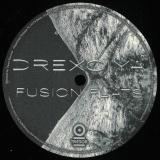
Tresor Records announces the first-ever reissue of Drexciya’s Fusion Flats 12” vinyl, including remixes from Detroit’s Octave One, Kaotic Spatial Rhythms and 043 Chaos.
Originally released in the wake of Drexciya’s seminal 1999 Tresor debut album 'Neptune’s Lair', this release marks its long-awaited return and first appearance on digital platforms. The remastered edition contains the original extended version of Fusion Flats and features new artwork by Detroit-based contemporary artist Matthew Angelo Harrison, whose reimagined covers continue to shape the Drexciya reissue series.
25 years later, Fusion Flats returns to the constellation of Drexciya’s Tresor works, connecting their debut full-length to further explorations that continue to inspire generations.
Pioneer of the electronic scene and co-creator of iconic projects like Age Of Love and BBE, Bruno Sanchioni returns with the fourth installment of his acclaimed series: Capture EP 4.
This new chapter delivers four powerful and hypnotic tracks, each crafted with the precision and flair that define Sanchioni’s legacy. With deep grooves, acid-tinged lines, and a finely tuned sense of progression, the EP invites listeners into an immersive and energetic sonic journey.
Capture EP 4 further cements Sanchioni’s reputation as a master of electronic storytelling—pushing boundaries while staying true to the spirit of the underground. A compelling addition to his ever-evolving discography, and a must-have for those who seek depth and intensity on the dancefloor.
French:
Pionnier de la scène électronique et co-créateur de projets emblématiques tels que Age Of Love et BBE, Bruno Sanchioni revient avec le quatrième volet de sa série acclamée : Capture EP 4.
Ce nouvel opus dévoile quatre titres percutants et hypnotiques, façonnés avec la précision et la sensibilité sonore qui font la marque de Sanchioni. Entre grooves profonds, lignes acidulées et constructions immersives, cet EP embarque l’auditeur dans un voyage aussi intense qu’élégant.
Avec Capture EP 4, Bruno Sanchioni confirme une fois de plus son statut de maître de la narration électronique — explorant de nouveaux territoires tout en restant fidèle à l’ADN de l’underground. Un disque incontournable pour les amateurs de sons authentiques, profonds et puissants.
Tell me something that makes a difference’ demands Gaia Weiss in Tenashee’s debut single. Something that immerses crisp melody into stodgy bass, collides warm dub with icy sound design, all the while slowly expanding like a supernova. ‘Tell me something’ takes the sounds and styles of the past and places them in a gravity-free future, while evoking an ethereal and precise atmosphere.
Gaia Weiss is an actress - not a singer by trade - and summons Charlotte Gainsbourg & Brigitte Bardot to deliver the spoken words as a fractured monologue, guiding us through splintered visions, and detuned chord progressions, in pursuit of the seemingly unattainable; ‘something that can make a difference’.
With this six-chapter journey on the newborn Street Cinema label, Tenashee (DJ Tennis and Ashee, Manfredi Romano and Joseph Ashworth) have crafted and refined - like two artisans from another era - a unique creation: a creature that reconnects electronic music with complexity and richness, fully aware of hyper-contemporaneity, yet capable of resisting surrender to it.
“Blink To Check It’s Real” featuring artist Campbell King - poet and beautiful soul - immediately immerses us in an electronic reality check, with 90s-inspired tweaking and glitching, all woven together with a poem from Campbell that contrasts the dizzying intensity of lust and connection with the comfort of being able to ‘loosen their grip’ and ‘make it safe.’
In ‘I Can See Now,’ Aurelia Ray (the stage name of pop-music-writing powerhouse Caitlin Stubbs) evokes a sense of serenity, pure love, and trust within a refined, spacious piece of minimalist electronica. “Blindsided” is a journey through pure, airy abstraction, a dance floor companion to the glacial trip-hop instrumental “Cold Logic”.
Finally, in “Memories,” the last track in the setlist but actually the first song the duo worked on, conceived and developed five years ago in 2020, the voice of Chinese German artist Mona Yim transports us to a place that is both emotionally introspective and intense, balancing on the edge between desire and reality.
“You should know where I go when I dream,” she states.
Over the course of five years, through exchanges, writing sessions, and fine-tuning in Paris, London, Saint Martin, and Ibiza, the world evolved, but Tenashee’s musical mission remained unchanged. The mini-album reflects the musical backgrounds of its two creators, their unique sensitivity to the present, and their desire to challenge each other with sharp, emotional, yet weightless styles and sounds. It is no longer just DJ Tennis; the successful DJ touring worldwide, organising events, and founding influential labels like Life & Death; nor only Joseph Ashworth with his scientific approach and creativity as a
producer and writer in the competitive world of pop; nor Ashee, with his releases on Circoloco and Aus Music. No, Tenashee is something more.
It is a duet searching for a thread that connects electronic music—past, present, and future—through experimentation, craft, and artistry. The moment has truly arrived for Tenashee to ‘tell us something.’
For their first album as Gilla Band (formerly Girl Band), the
foursome have redrawn their own paradigm. ‘Most Normal’ is like
little you’ve heard before, a kaleidoscopic spectrum of noise put in
service of broken pop songs, FX-strafed Avant-punk rollercoaster
rides and passages of futurist dancefloor nihilism.
Lockdown robbed Gilla Band of any opportunity to try the new
material out live, but the pandemic also incinerated any idea of a
deadline for the new album. They were free to tinker at leisure, to
rewrite and restructure and reinvent tracks they’d cut, to, as
drummer Adam Faulkner puts it, “pull things apart and be like,
‘Let’s try this. We could try out every wild idea.’”
The group also fell under the spell of modern hip-hop, “where
there’s really heavy-handed production and they’re messing with
the track the whole time,” says Fox. “That felt like a fun route to go
down, it was a definite influence.”
‘Most Normal’ opens with an absolute industrial-noise banger that
sounds like a manic house party throbbing through the walls of the
next room as a downed jetliner brings death from above. What
follows is unpredictable, leading the listener through a sonic house
of mirrors, where the unexpected awaits around every corner.
The common thread holding ‘Most Normal’’s ambitious Avant-pop
shapes together is frontman Dara Kiely. Throughout, he’s an antic,
antagonistic presence, barking wild, hilarious, unsettling spiels,
babbling about smearing fish with lubricant or dressing up in binliners or having to wear hand-me-down bootcut jeans (“It was a
big, shameful thing, growing up, not being able to afford the look I
wanted and having to wear all my brother’s old clothes,” says
Kiely).
‘Most Normal’, then, is a triumph, the bold work of a group who’ve
taken the time to evolve their ideas, to deconstruct and reconstruct
their music and rebuild it into something new, something
challenging and infinitely rewarding. It’s a headphone masterpiece.
It’s a majestic exploration of the infinite possibilities of noise. It’s a
bold riposte to your parochial beliefs on whatever a pop song can
or should be. It’s the best work these musicians have put to
(mangled) tape.
Bringing together the elder statesman of the Zulu guitar Madala Kunene and internationally acclaimed Sibusile Xaba, kwaNTU pulls two generations of South African guitar mastery into a single point of focus. Under-represented on recordings outside of South Africa, Madala Kunene (b. 1951), the ‘King of the Zulu Guitar’, is revered as the greatest living master of the Zulu guitar tradition. Sibusile Xaba, whose collaboration with Mushroom Hour Half Hour reaches back to his first recording in 2017 (Open Letter To Adoniah/Unlearning), has garnered international acclaim for his unique voice and virtuoso guitar stylings, which bring together multiple South African guitar lineages in an original, spiritualised fusion. Collaborating with Mushroom Hour and New Soil for kwaNTU, the two players come together to weave a filigree sonic fabric which reaches down to the heartwood of Zulu guitar music but moves resolutely outward, building on the past to create a deeply rooted statement about present conditions and future travels. kwaNTU – which can be roughly translated ‘the place of the life-spirit’ – is also conclave of teacher and student, as Xaba has been taught by Kunene for the last decade. Meditative, rich and sonically sui generis, kwaNTU finds these two musicians linking up within the inimitable space of sound and spirit that they share through Kunene’s teaching.
The great masters of South African music have not all had equal exposure. For many years the generation of musicians who were exiled during apartheid took centre stage, as the regime made it very difficult for those at home to be heard. More recently, a new cohort of important voices, especially in jazz, has broken through to international consciousness. But for the generation of musicians in between – those who shone like beacons in the most difficult final years of apartheid and immediately afterward – international recognition has been slow in coming.
Madala Kunene, ‘the King of the Zulu Guitar’, is among this number. A revered figure for current generations of South African musicians, Kunene began his recording career in 1990, at the bitter end of apartheid, with a now classic self-titled LP for David Marks’ storied Third Ear imprint. Born in 1951 in Cato Manor, near Durban, he had determined to be a musician from early childhood, and by the time he first entered a recording studio he had already had a long career as a popular performer. His virtuoso absorption and transformation of the venerable Zulu maskanda guitar tradition and his richly spiritualised approach to music immediately marked him out as someone special, and in the years that followed, Kunene cemented his position as one of South Africa’s musical elders. He is without doubt the grand master of the Zulu guitar tradition, but his sound and sensibility ranges far beyond it into varied sonic terrain, and he has collaborated with a wide range of musicians both at home and abroad. Now in his mid-seventies, he remains a shining light for those that are making music in contemporary South Africa.
‘He is really an amazing person,’ says the guitarist Sibusile Xaba, who has been mentored by Kunene for over a decade, and now invites a collaboration with him on kwaNTU. ‘As a mentor, he's really powerful in showing us the way. For us to have this opportunity to make music together and have a project together is really a blessing to me.’
Xaba himself grew up in Newcastle, KwaZulu-Natal, where his mother had been in a band and his father sang in a church choir, and from early childhood Xaba played homemade tin guitars. He only later realised that music was his calling. ‘I just loved music. I was fortunate. My parents loved music. And when it was time for me to leave home and go to study outside Newcastle, I knew that music was what I wanted to do. There was no second option. It was just music.’ Moving to Pretoria to study music formally, Xaba committed himself to his craft, developing a unique style that draws on both US jazz masters such as Wes Montgomery and Jim Hall, and the rich and varied heritage of the South African guitar, from inspirational jazz players such as Allen Kwela and Enoch Mthalane, to the music of the Malombo groups and Dr. Philip Tabane (Xaba has previously collaborated with Dr. Tabane’s late son, Thabang), and the Zulu guitar tradition embodied by Kunene.
‘I was really in love with the jazz guitar, I really admired it, and I was digging a lot in that direction,’ says Xaba, recalling his first encounter with Kunene’s music, over a decade ago. ‘And then one day on my timeline, Kunene popped up, and I was like – “What's this sound?” I was so connected to it. It really touched me deep. I started checking out his records, and then I found out he's from the same region as I am, which is Zululand.’ After Kunene played a show at the Afrikan Freedom Station in Johannesburg, Xaba make contact with him, and visited him at home in Durban. They struck up a friendship, and Xaba became the elder’s student, as Kunene began to pass on his knowledge and his inimitable way of playing.
kwaNTU is a tribute to this relationship and the deep learning that has defined it. The album was recorded in Zululand in the town of Utrecht, at a cultural centre called Kwantu Village, which gives its name to the album. ‘It's such a broad word,’ Xaba says, ‘but the elders teach us that Ntu is basically an energy, almost chi, an energy, a force that all living beings have within them. It's a living energy, so kwaNTU is like, almost the place of this energy.’ The two men sequestered themselves for five days of jamming, improvising and planning, and then the session was recorded in one take over a single night, with Gontse Makhene joining on percussion and backing vocals and Fakazile on vocals. Other voices and overdubs were later added in the studio in Johannesburg.
The result is a rich and meditative recording that finds two generations in a deeply engaged dialogue. Teaching and passing on his knowledge, the elder Kunene has brought Xaba into a space of sound and knowledge that they now share; Xaba’s own practice of deep communion with nature and his dedication to his musical craft make him the perfect interlocutor for Kunene. The result is an album that foregrounds the two musicians engaged at the highest levels of responsive listening, sympathetic unity, and collaborative concentration. Bringing an elder statesman of South African music to an international listening audience for the first time in decades by pairing him with one of South Africa’s most important new voices, kwaNTU is a meeting of generations and a powerful demonstration of musical lineage and continuity.
‘Before music, there is sound,’ Xaba observes, speaking of Kunene’s unique approach to music. ‘And sound is like a common compartment…it's not restricted to particular people or particular geographic places, you know what I mean? It's sound. Everybody can hear it. So when he constructs that sound into music, I think everybody resonates with the energy behind his construction of sound into song. Here at home, we really love him for preserving our history through the guitar, through his stories as well the music, the songs that he writes. We really, really admire him.’
- A2: Little Red Corvette
- A3: Delirious
- B1: Let's Pretend We're Married
- B2: D M.s.r
- C1: Automatic
- C2: Something In The Water (Does Not Compute)
- C3: Free
- D1: Lady Cab Driver
- D2: All The Critics Love U In New York
- A1: 1999
- D3: International Lover
a A1 1999; Lead Vocals Co-Lead Vocal – Dez*, J.J.*;Music By All Music, Voice All Voices – Prince
[b] A2 Little Red Corvette; Guitar [Guitar Solos], Soloist [Guitar Solos] – Dez*; Lead Vocals [Co-Lead Vocal] – Dez*, Lisa*; Music By [All Music], Voice [All Voices] – Prince
[c] A3 Delirious; Backing Vocals [Background Vocal] – Lisa*; Music By [All Music], Voice [All Voices] – Prince
[d] B1 Let's Pretend We're Married; Music By [All Music], Voice [All Voices] – Prince
[e] B2 D.M.S.R.; Backing Vocals [Backgroundsinging], Handclaps – Brown Mark*, Carol*, Jamie*, Lisa*, Peggy*, Poochie, The Count (7); Music By [All Music], Voice [All Voices] – Prince
[f] C1 Automatic; Backing Vocals [Background Vocals] – J.J.*, Lisa*; Music By [All Music], Voice [All Voices] – Prince
[g] C2 Something In The Water (Does Not Compute); Music By [All Music], Voice [All Voices] – Prince
[h] C3 Free; Music By [All Music], Voice [All Voices] – Prince; Voice [Background Voices] – J.J.*, Lisa*, Vanity, Wendy*
[i] D1 Lady Cab Driver; Music By [All Music], Voice [All Voices] – Prince; Voice Actor [Lady Cab Driver] – J.J.*
[j] D2 All The Critics Love U In New YorkMusic By [All Music], Voice [All Voices] – Prince
[a] A1 1999; Lead Vocals [Co-Lead Vocal] – Dez*, J.J.*;Music By [All Music], Voice [All Voices] – Prince
[b] A2 Little Red Corvette; Guitar [Guitar Solos], Soloist [Guitar Solos] – Dez*; Lead Vocals [Co-Lead Vocal] – Dez*, Lisa*; Music By [All Music], Voice [All Voices] – Prince
[c] A3 Delirious; Backing Vocals [Background Vocal] – Lisa*; Music By [All Music], Voice [All Voices] – Prince
[d] B1 Let's Pretend We're Married; Music By [All Music], Voice [All Voices] – Prince
[e] B2 D.M.S.R.; Backing Vocals [Backgroundsinging], Handclaps – Brown Mark*, Carol*, Jamie*, Lisa*, Peggy*, Poochie, The Count (7); Music By [All Music], Voice [All Voices] – Prince
[f] C1 Automatic; Backing Vocals [Background Vocals] – J.J.*, Lisa*; Music By [All Music], Voice [All Voices] – Prince
[g] C2 Something In The Water (Does Not Compute); Music By [All Music], Voice [All Voices] – Prince
[h] C3 Free; Music By [All Music], Voice [All Voices] – Prince; Voice [Background Voices] – J.J.*, Lisa*, Vanity, Wendy*
[i] D1 Lady Cab Driver; Music By [All Music], Voice [All Voices] – Prince; Voice Actor [Lady Cab Driver] – J.J.*
[j] D2 All The Critics Love U In New YorkMusic By [All Music], Voice [All Voices] – Prince
This exciting new collaboration between Cara Tolmie and Rian Treanor is a highly kinetic and playful endeavour. Body-centric vocal explorations merge with intricate rhythmic systems forming a deliciously disorientating, hypersurreal space of semantic modulations, concrete poetry, cut-up beats and mimicked samples. Their sound is singular and tactile: dissociative dance music that reassembles contorting vocal lines and knotting biomechanics in an explorative network of unstable forms. It's a blur of bodily fragility and ecstatic disruption, where swells of meaning rise and fall through clouds of synthetic buzz, fleeting breath, and stream-of-consciousness imagery.The duo first performed together when Counterflows Festival paired them for a new commission at the historic Arches venue in 2023. Glasgow-born, Stockholm-based vocalist and performance artist Cara Tolmie brought her hypnotic vocal technique, Internal Singing _ an intimate practice using breath, movement, and touch that explores the subtle binds between voice and body in an unsettling, engrossing sonic space. Treanor's richly innovative work provided a compounding counterpart: radical, rave-infused structures that bent and contorted around Tolmie's incantation.Growing out of a series of charged, improvisational performances, Body Lapse was recorded between Stockholm and Rotherham in 2024. Echoes of their live energy run throughout _ a voice shaking through the body, responding to touch and physical modulation, translating performance into something tactile and immediate. Body Lapse marks their debut release together, it conjures a sound of unsettling beauty and frictional intensity _ a playful, physical mesh of computer music, voice, and speculative storytelling. In this gnawing, dreamlike space, breath and body become sites of both connection and disruption, sparking thrilling encounters with the unexpected, the playful, and the decisively weird
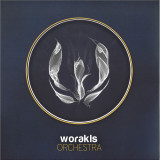
Multi-faceted musician and co-founder of the Hungry Music label, Worakls, has unveiled the full tracklist for his stunning production 'Orchestra', an ambitious project filled with 10 brand-new productions, including recent single 'Cloches.'
Allowing his musical film influences to fully express themselves by incorporating them into his music, 'Orchestra' combines the grandiose feeling of album opener 'Nikki' with the melodic rhythms of 'By The Brook', and wistful yet percussive tones of tracks like 'Detached Motion.' Packed with cinematic elements throughout, Worakls explains his creative process, stating:
'Along the years, I have become more sensible to the emotions of film music, and I wanted to lead my universe into that direction. My aim is to mix in the emotions of this music with the freedom and energy of electronic music.'
With the original music composed to be specifically played with an orchestra, the album is accompanied by a tour of the most prestigious venues in Europe where Worakls will be accompanied by an orchestra formed of 20 musicians. Having recently kickstarted the schedule in Paris, the tour will take in a further 9 sold-out dates across France and Belgium throughout February, March, and April.
Spending the last ten years travelling the globe's most prestigious concert halls and festivals, Worakls' journey into composition started at the age of 3, learning the piano amidst his family of musicians. However, it was the 2015 launch of his 'Hungry Band' group alongside fellow frenchman N'to and Joachim Pastor which earned the French producer widespread acclaim. Proving his skills in composing film scores as well as electronic and orchestral productions, Worakls recently scooped the 'Best Original Soundtrack' prize at the Deauville Green Awards for Ushuaia and InFocus. The accolade was awarded to Worakls for his work on 'Une Oasis d'Espoir' alongside Nicholas Van Ingen & Jean Baptiste-Puchain.
More than a first album, more than a show, 'Orchestra' is the culmination of an inimitable artist whose inspirations touch all generations of music lover. After more than a decade of waiting, 'Orchestra' marks the first solo album from Worakls, and is set for a physical release in Spring 2019.
Comes with DL card & 2P insert / wrapped in shrink + a sticker
At long last, Takao is back with his long-awaited second album, seven years in the making. His 2018 "Stealth" was (and still is) a much-loved set, mixing elements of ambient and environmental music; with this new release Takao breaks free of the gravitational pull of these earlier influences and strides confidently forward. "The End of the Brim" jettisons some of the more abstract elements of his previous work, embracing a “universal listenability” and a more concrete intensity, with a focus on supple rhythms and strengthened senses of melodic development and harmonic sophistication. This musical growth can be linked with Takao’s admiration of composers Ken Muramatsu and Toshifumi Hinata, who are generally associated with commercial “production music” and easy listening. Another contributing factor is his private study with veteran keyboardist Ichiko Hashimoto of Colored Music. The ten tracks here include three vocal tracks, with three different singers (Yumea Horiike, Cristel Bere, Atsuo Fujimoto of Colored Music) and seven keyboard-led pieces. The vocal pieces are integral parts of the album’s flow, rather than typical “songs” driven by the name and personality of the singer. All of these factors, plus the veteran presence of engineer Hiroshi Haraguchi, known for his work with Haruomi Hosono, who mixed half of the album's tracks, along with the use of excellent old-school synths, aligned with Takao’s forward-looking vision, have combined to give us an album with a unique sense of timelessness. A spotlight illuminating future paths for pop music, available on CD/Vinyl LP/Digital, with English/Japanese lyrics, and liner notes by Yuji Shibasaki.
Mieko Shimizu returns with a powerfully cinematic EP, Breathe Out 'Breathe Out' is an intricately crafted double offering that explores stillness and intensity in equal measure and further cements Mieko Shimizu's place at the forefront of experimental electronic music.
The new EP features two immersive tracks that showcase her signature blend of emotional depth and sonic experimentation. Opening with a soft exhale, unfolding slowly with airy textures and gentle pulses that create a sense of calm introspection. 'Breathe In' has a more urgent and restless tone, with shifting textures and a deeper emotional edge that draws the listener inward. Paired together, the two tracks form a striking contrast: Breathe Out will also be released alongside a captivating music video, featuring elegant and expressive movement by rising contemporary dance star Violet Savage, directed by diz_qo. Dropping alongside the visuals, this EP promises to captivate both ears and eyes.
BBC Radio 2 Support Live EP Launch Show in London, UK Press Campaign - with support from Electronic Sound, The Wire & Earmilk
The latest release in the Party Tricks reissue series bridges rediscovery with new horizons.
Sebastian Barrymore plays a role in each project, appearing alongside friends throughout the record with unreleased gems and long-lost favorites.
On the A-side, Spilt Coffee (Barrymore & Steven D Wakeling) present two Electro/Tech-House explorations. One cut (A1) previously appeared on vinyl (SPC 001), while the other (A2) resurfaces after disappearing from their website and the realm years ago.
The B-side reveals two unreleased works from the past, which showcase different shades of Barrymore’s collaborations.
M3 Project - Editors (Barrymore & Dan Braine) blends deep house with strong synthpop influences, echoing the peak era of those sounds that once defined dancefloors.
Closing the journey on a life-affirming moment of calm, Droppenkiken - Take Life (Barrymore) delivers a heartfelt downtempo finale.
Klur (Patrik Kindvall) has quickly become one of the most exciting names in melodic and progressive house. Since his breakout debut, Summit / Odysée, the Swedish producer has captivated listeners with his signature blend of organic textures, meticulously crafted synths, and evolving melodies, garnering over 100 million streams across DSPs and a loyal fanbase of over 1 million monthly listeners on Spotify.
His music across labels including Colorize, Anjunadeep and This Never Happened, has found global resonance, earning radio support from SiriusXM Chill, where he is one of the most-played artists in the last few years, and DJ endorsements from Lane 8, Madeon, Tritonal, Above & Beyond, Black Coffee, Sultan + Shepard, and more. Recognised as one of Sweden’s fastest-rising songwriters (+100! by STIM), Klur continues to push boundaries, proving that electronic music can be both deeply emotional and sonically cutting-edge.
Beyond the studio, Klur has taken his immersive sound to stages worldwide, with performances in New York City, ADE, London, L.A., San Francisco, Seattle, Phoenix, Denver, Austin, Toronto, Montreal and beyond. His music is more than just sound—it’s an invitation to explore a world where the digital and natural coexist in harmony, stirring emotions and inspiring connection.
Klur drops his sophomore album ‘After The Rain’ on Colorize this October, followed by an album tour across Q4 and into 2026.
Gramrcy and John Loveless return to Phantasy with a double-A single, ‘Lucid / Feel So’. Three years on from their festival-rupturing hit ‘Highdive’, which found regular rotation in the sets of 2ManyDJs, Peggy Gou and Daniel Avery alongside soundtracking shows for Moschino and Hugo Boss, two new tracks expand the sound of the Berlin pair’s studio partnership.
‘Lucid’ features a unique vocal turn from Tony Morris, a former teacher, taxi driver and contemporary cult figure in Glasgow’s underground scene. Having begun DIY production only in his late sixties, he has since released on the city’s peerless Optimo Music and has been profiled by the BBC and NPR, alternately described by The Scottish Herald as “Scotland’s most unlikely pop sensation” and by himself as “a deviant cabaret artist”.
Morris’s hypnotic repetitions prove to be an earworming anchor for Gramrcy and Loveless’s pressure-cooker arrangement, a bubbling concoction that represents their most formative influences, combining the sheer bassweight of FWD-era UK dance with the ISDN-line scramble of the most out-there electroclash. Rich in rhythm and textural weirdness, ‘Lucid’ captures the sound of a deeply satisfying intersection of rave outsiders.
Eschewing the dreamy psychedelia of its counterpart, ‘Feel So’ instead tips the scales back toward the outright ecstatic. The influence of esoteric disco and post-punk percussion rides on a throbbing bassline that builds toward supreme dancefloor release, paying tribute to a legacy of hi-NRG, spanning Chicago to Rimini.
Gramrcy & John Loveless - ‘Lucid / Feel So’ will be available to download & stream on October the 10th via Phantasy There will also be a limited-edition run of just 200 hand-stamped 12” vinyl records, including the instrumental cut of ‘Lucid’, available to pre-order from Bandcamp and the Phantasy store.