Time To Get On Board A New Black Universal Express.
With each new recording Anthony Joseph presents an imaginative, personal vision of contemporary black culture, and The Ark is yet another compelling album by the award-winning Trinidadian poet and musician. This second part of a sequence of two albums launched with last year’s Rowing Up River To Get Our Names Back, finds Joseph giving full vent to his desire to explore many thought-provoking themes. However, there is a specific thread running through the glorious offering of sounds.
”I was especially interested in the idea of using Afrofuturism as a means of using the future in order to correct the wrongs of the past,” explains Joseph. “And so a lot of lyrics reimage or imagine an alternate black history. At the same time there are elements of autobiography.” The aforesaid cultural phenomenon, a view of the black experience through the prism of science fiction and ancient Egypt and Africa, as mapped out by visionaries from music and literature such as Sun Ra, Parliament-Funkadelic and Octavia E. Butler, has previously inspired Joseph. His 2006 novel The African Origins Of UFOs was a multi-hued work, and the new music shows how Joseph
has, much like all significant artists, gone on to broaden his conceptual palette, creating beguiling new stories and images set to startling rhythms and tones. Tracks such as ‘James’, with its taut, crisp bass and dubbed-up brass, and ‘Transposition Of Space (Glissant)’, a potent evocation of the influential Martiniquan theorist set in a haze of jazz guitar and ambient synthesizers, are marvels of text-sound painting.
As for ‘Baron Samedi’, shaped by a languid, almost wounded guitar line and slow rise of horns that frame Joseph’s journey to the ‘mountain of fire, almost touching the sky’ it is an epic blend of commanding vocal delivery and dramatic sonic tapestry.
Joseph led the Spasm band in the early 2000s and recorded well-received albums such as Bird Head Son and Time, in which songs were largely based on spirituals or chants enhanced by improvisation. But his musical curiosity has naturally led to collaborations, and the new work is produced by Dave Okumu, the prodigiously talented guitarist-vocalist-composer known as the leader of Mercury Music Prize-nominated The Invisible, and who was also a member of the seminal band Jade Fox.
Having first performed together at a show curated by influential saxophonist-flautist Shabaka Hutchings at the storied Total Refreshment Centre In London during lockdown, Joseph and Okumu struck up a rapport that further developed when the former guested on he latter’s album. With the connection made Joseph knew Okumu was the ideal producer for this latest project, which has a freewheeling, almost black psychedelic thing. After sifting through demos and loops the guitarist made on pro-tools the poet started to live with the music. Many months later words began to take shape. Joseph then went into the studio with Okumu’s band and set about creating a magnum opus. Boasting a stellar cast such as vocalist Eska Mtungwazi, trumpeter Byron Wallen and keyboardist Nick Ramm, The Ark is a highly intricate musical mosaic framed by simmering funk grooves, wily jazz improvisation and haunting dub effects. Through the use of many genres the music has simply become its own genre.
The Ark can be perceived as a vessel or means of transport to new worlds, along the lines of Sun Ra’s Ark or Funkadelic’s Mothership, and the material it contains is a unique blend of who Anthony Joseph is and how he sees the world and society in these stimulating, challenging times. “It balances the personal with the universal in a much more vulnerable, accessible way than on previous albums,” Joseph explains.
“It has become less about a personal experience and more about a collective, communal experience in which the artist is conduit, messenger, urban griot.”
Suche:nick d lite
- 1
Coral Morphologic and Nick León’s Projections of a Coral City marks a series of collisions between distant
worlds: the organic and the artificial, the Eocene and the Anthropocene, sea and cement—and even, perhaps, ambient music and activism.
Coral Morphologic are the Miami duo of marine biologist Colin Foord and musician J.D. McKay; since 2007, they have used a variety of multimedia projects to generate environmental awareness of marine biodiversity—most notably Coral City Camera, an underwater webcam streaming live from an urban reef ecosystem in PortMiami.
Their citymate Nick León is a linchpin of South Florida’s contemporary leftfield electronic scene, with releases for Tra Tra Trax, Future Times, and NAAFI, and credits on records by Rosalía, GAIKA, and Iceboy Violet, among others.
This collaborative project dates back to 2022, when Coral Morphologic mounted a monumental projection-
mapping installation on Biscayne Boulevard. For five nights in late November and early December, macroscopic films of corals played out across the exterior of Knight Concert Hall. The installation was, on the one hand, a glimpse into a possible future, imagining how the city’s skyline might appear if unchecked global warming and rising seas led coral reefs to colonize the built environment. But it also represented a look back into the deep past, a reminder that Miami is literally built from marine limestone mined from the Everglades. Its concrete foundations began life, eons ago, as a marine ecosystem—the same ecosystem that may one day reclaim them. As above, so below.
As an album, Projections of a Coral City is a suite of interconnected movements spread across two sides of vinyl. The tones are watery, the mood elegiac, the colors a washed-out pastel. Forms that appear static on the surface gradually open up to reveal hidden depths teeming with microscopic movement. You might detect resonances with other aquatically minded works—Jürgen Müller’s Science of the Sea, Harold Budd’s liquid piano compositions, even the slow-moving melancholy of Dr. Roger Payne’s Songs of the Humpback Whale. But ultimately Projections of a Coral City creates the impression of a world unto itself—a hauntingly beautiful space at the meeting point between sorrow and hope.
——-
Balmat is a label with a cloudy outline. Jointly shepherded by Albert Salinas and Philip Sherburne, two friends living in Cardedeu, Catalonia, and on the Balearic island of Menorca, Balmat grew out of Lapsus Radio, a weekly show born almost ten years ago. Balmat’s mission is simple: to foster new ideas, expand upon personal obsessions, and put enveloping sounds out into the world.
“Balmat” means “empty” or “void” in Catalan. But quite apart from any negative connotations, we prefer to think of it in terms of possibility: a space waiting to be filled.
Originally Re Eff (pronounced Ri Èf) was a bunch of texts. One hundred and fifty pages that Julien Gasc wrote by trying his hand at the art of cut-up: a literary and political act of counter-fiction based on William Burroughs’s method. It was also Julien Gasc’s response to the isolation of 2020, while he was seeking refuge in the Southwest of France, with time as far as the eye could see, and a piano.
For a long while, it hadn’t been about songs, but about expressing the indescribable by cutting randomly from books and his own notes, attempting to fleetingly strike a balance, find a beauty, a happy accident. Incidentally, it was almost by accident, while recycling a piece that he’d composed for steel guitar pedal, that Julien Gasc sketched the first draft of “Ce soir les bouteilles dansent” (“Tonight the Bottles Are Dancing”). This was combined with a version of “Rosario Bléfari”, recorded on an inexpensive Casio synthesizer. These were Re Eff’s baby steps.
While everything was at a standstill, in stasis, Julien Gasc wanted to send a group message to some friends, to his family, a message from a confinee to those who weren’t answering, friend or foe, imaginary or otherwise. It was this collective recipient that he nicknamed Re Eff. The name comes from “re” (re-) and “effacer” (erase), words found during a cut-up and transformed into ri èf for added euphony, like a facetious grief (grievance, reproach in French) without the “g”.
Like its title, a kind of serious joke, the album is one long interplay between humour and gravitas, sense and nonsense, shadow and light, aiming to fully describe feelings in terms of their ambiguous and contradictory elements.
Through a return to regular piano practice, calm recovered at a holiday resort town, and literary experimentations, to which he added transcribed dreams, as in “La scie de la vision modern” (“The Saw of Modern Vision”), Julien Gasc composed ten demos on his computer. These demos were then rerecorded at Syd Kemp’s Haha Sound studio in London, in December 2021. The mix was completed there again, in February 2022, by Syd and Julian.
Play to play and write to write, those are the keywords of Re Eff, in which memories are freely combined (“À travers le regard de l’indienne” / “Through the Amazon’s Eyes”), the theme of enclosure and passion (“Amour velours” / “Velvet Love”), melodrama ("Délivrance"), and romantic novella (“Tout ne peut pas nécessairement donner quelque chose” / “Not Everything Leads to Something”). Music resolutely oriented towards the piano, towards bold and filmic harmonic movements that make a successful form of lyrical poetry possible. Because all in all, by singing about current events – his own and those of the world – in an elegiac tone, like bards, Julien Gasc was gradually transformed from pop singer into poet.
The perfect accompaniment to that deep fall feeling, Frank Maston's beloved 2025 single finally gets its long overdue vinyl release! As our friends New Commute articulated beautifully, "Foreign Affairs" drifts through London fog and Paris shimmer, its avant-lounge glow wrapping each melody in a wistful ache. On B-side "Liaison," ghostly strings and a solitary piano paint a deserted twilight shoreline, Pacôme Henry's distinct 16mm cinematography hovering nearby." We've pressed just 500 of these gorgeous records so, be quick, Maston always flies.
Originally written for a film Maston was scoring in 2024, he decided to keep it aside for himself. And, well, us all. The song has a vibe Maston has previously flirted with; he wanted to dive in...all the way: "The arrangement is huge, definitely the biggest I've written, and it merited live musicians playing together. Also another experiment, to do it with all live musicians playing my arrangements. I wanted to make something that you'd want to put on when you bring a date back to your place. It's on the edge of sappy but that's sort of the point. I decided to give myself an unlimited budget - just spend whatever was necessary to get the right musicians and record it the best way possible."
It's this dedication to sonic perfection which Maston is rightly lauded for. We couldn't not put this on a cute wee 7" when we heard it.
The A side, "Foreign Affairs", is a brilliant, Bacharach-esque romp with a bit of that unapologetically romantic Morricone angle. Says Frank: "I was trying to synthesize that sort of jazzy/sexy/classy/romantic mature sound, where the edginess is in these surprising chord changes and subtle arrangement cues."
A wonderful complement, the flipside "Liaison", evokes Martin Denny, but Eden's Island was in Frank's head, too. He wanted to take a deep dive into that exotica sound - a genre he'd referenced a bit but never fully committed to - so the piece is lavished with those big sighing strings and a pretty lush arrangement. Happily, it all sounds super rich. Also, "Umiliani is always a reference for this sort of thing (Il Corpo etc.), That almost mechanical arrangement of things moving together and a simple melody over it (something I nicked from Ennio)".
The two songs were recorded in Paris and London in the summer of 2024. Aside from the rhythm section and piano, there's vibraphone, a full string section, trombones and alto and concert flutes. "Liaison" boasts strings, vibraphone, a female choir and tenor sax. Maston played piano and acoustic guitar but that's it (as opposed to playing basically everything on Tulips). His friend Oscar Sholto Robertson played drums and percussion whilst Maston mainstay Elie Ghersinu (formerly of L'Eclair) played bass.
The theme for a lot of Maston's titles is that they have two meanings. So "Foreign Affairs" is both a reference to him living abroad and the idea of constant cultural diplomacy and then there's this sexy/cheeky interpretation of foreign affairs in a literal way - "an affair abroad, ooh la la!". The artwork for this 7" single has Roman campaign flags, referencing the foreign affairs in sort of a sassy way. There's a violence implied. But then if you look from a bit of a distance it looks like a bouquet of flowers. So Frank thought it went with the spirit of the title. Also, he's used a lot of roman motifs now so he kept that theme going, even with the terracotta cover.
This is a vitally important project for our Frank. He explains why, here: "For whatever reason, these songs really resonated with me. I feel like they are either the end of a stylistic era for me or the beginning of a new one. They're sonically the culmination of what I'd been working towards and trying to get better at since I started. If I heard this when I was making Tulips I would have said "YES! *This* is what I want to be doing!". So that's the essence of it. It's a statement and the intended reaction is "This is really good, but why now?". Like the edge to it is the context of someone making this sort of thing in 2025, which I think is a huge strength. The real heads will get it. My music always has like a 2-3 year latency until people really catch onto it, and these ones will have a nice payoff I think."
We couldn't put it better ourselves. So we haven't.
Phylipe Nunes Araújo's songs are as rich and varied as the diverse landscapes they were written in. The hills of Pernambuco, the lagoons of Alagoas, and the beaches of Bahia are all woven into his stripped-back, folk-inspired Brazilian songwriting. As part of a wider movement of musicians originating from Brazil's Northeast, Phylipe sees the process of music-making as the search for beauty itself.
Collaborating with fellow Northeastern artists Bruno Berle, Batata Boy and Nyron Higor among others, Phylipe's debut album represents the latest flowering of this exceptionally talented community's creative search.
The Northeast holds an almost sacred importance in Brazil's collective cultural imagination. The region bore witness to the brutal histories of Portuguese colonization and the African slave trade, while simultaneously amalgamating the diverse cultures, religions and traditions of those who have called it home. Countless Brazilian music greats - Gilberto Gil, Caetano Veloso, Hermeto Pascoal, Djavan and Luiz Gonzaga - have emerged from this vast cultural melting pot.
Born in Caruaru, Pernambuco state, and raised in the city of Santa Cruz do Capibaribe (famed for its textiles industry), Phylipe describes his music simply as "Brazilian music from the Agreste of Pernambuco". His masterful compositions thread together regional rhythm, folk poetry and sophisticated harmony.
Phylipe's musical foundations were laid in youth, listening to the local elders rehearsing their forrós, attending São João street parties in front of his house and watching the Junina Quadrilhas dance through his neighborhood. At street fairs he would read the Literatura de Cordel (handcrafted pamphlets of Brazilian folk literature), and watch the rhyme battles between cantadores, violeiros, and repentistas, who improvise verses on daily life, social commentary and philosophy. This tradition of Northeastern folk poetry proved particularly formative for Phylipe as a lyricist. "I always try to write things as simply as possible. I believe that beauty must be easily understood. If I can facilitate the path to the message, there's no reason not to. It's something I learned from the traditional poetry here: it's more beautiful if everyone understands."
At the age of 11, Phylipe first got access to the internet. As he explains: "Still in adolescence I was also able to discover things like The Beatles and Nick Drake - I started to get to know music from the rest of the world and later to correlate that with my local musical experiences." Rich with extended chords and artful dissonances, it's clear from his compositions that jazz and bossa nova also took hold, but he's quick to eschew stereotypes. "Inevitably, people associate a Brazilian musician playing a nylon-string guitar with bossa nova..." "But the foundation is another story," he asserts, "It's the Northeast."
On the guitar Phylipe experiments with the binary rhythms inherent in traditional Northeastern music. Coco, frevo, maracatu and baião are recontextualised, placed alongside Brazilian popular music (MPB), gentle lullabies and stunning ballads. "In these 10 songs, I am experimenting with making pop music on a nylon-string guitar with my foundation in the Northeastern songbook."
The contemporary musical community which Phylipe belongs to developed initially in Pernambuco's neighbouring state Alagoas. Phylipe lived in its capital Maceió for three years, where he built friendships and musical bonds with Bruno Berle and Batata Boy who together produced his album. Bruno also sings in unison with Phylipe on the duet "Valise", a song Phylipe wrote aged just 15.
In recent years, Phylipe, Bruno and Batata have migrated south to São Paulo, where the majority of the album was recorded. Other collaborators on the album include Alici, who provides vocals for the ebb and flow of "Temperim", Nyron Higor who plays drums on lead single "Asa" and the sweet indie moment "Ziz"", bassist Meno Del Picchia who plays on the mystical baião "Bixin" and the propulsive "Subindo a Ladeira", and Raphael Coelho who joins Bruno and Batata on percussion for "Santa Cruz", Phylipe's hypnotically powerful portrait of his hometown.
Emotional Rescue completes the series of non-defined reissues where the label licenses an all-time favourite, remasters and then reappraised with new interpretations by contemporary producers for today’s collectors.
After the series started back in 2019 with Hawkwind’s sprawling psychedelic electronics, featuring deep drone mixes by the esteemed digger Cherrystones (ERC074), the bouncing cosmic-Balearics of Thomas Leer with wonderful reworkings by friend and producer Bullion (ERC075) and then the post punk dubs of The Embrace and Timothy J Faiplay’s brooding italo-dub excursions (ERC076), there was always one artist and producer left out. Finally, then the percussive excursion of the early 80s band The Impossible Dreamers and their cult B side jam, Spin, coming with 9 minutes percussion-dub extravaganza of an extended reversion, plus a dub heavy reprise, by label go-to Dan Tyler (Idjut Boys /Noid), under his NAD moniker.
Started by a group of friends while at Exeter University that centered around Caroline Radcliffe, James Hood, Justin Adams and Nick Waterhouse, their debut 12” record is one of just three on the 100 Things To Do label. The other two releases have already been covered with the Hamburger All Stars ‘Swinging London’ 12” (ERC114) of 2022.
Recorded before the move to West London, ‘Life On Earth’ was a raw post punk vocal pop cut, with influences of dub, funk, hip-hop and African music shining through, there were in their own words, “young music fans starting out, with no agenda”.
However, it was on the B side that things got interesting. Enamored by the growing trend of extended 12” singles, they decided, with the A side wrapped up, to have some studio experimentation by recording a drumming jam, with all the members playing percussion, followed by some overdubbing. Memories are hazy, but at the time the band was an 8-piece, so the results a chaotic explosion, capturing the essence of that time. Featuring Nick and James on 4 hand piano, plus Caroline on Oboe, with some additional hollering and wooping vocals, Spin was a 5-minute burst of energy.
In effect, self-released in 1982, the band didn’t expect much to come of it, but the 12” acted as a calling card leading them to London and later signing for RCA. At the same time, Spin was being discovered in the early eighties alternative club world. On a trip to New York, the track was heard being played Downtown, and on enquiring it was discovered the DJ was playing a 7” that was never an official release but cut in the US solely for the club DJs there.
Its resonance extended further, to Italy and the Cosmic club of the resident, an ever-searching Danielle Baldelli, before being picked up a few years later by a young Andrew Weatherall during his pursuit of an alternative “Balearic” beat during the late eighties Summers of Love and has even recently received the Joe Clausell edit treatment back again in NYC.
For the remake to fit the label series, it was only right to ask label friend Dan Tyler to do what he does so well, putting the original through his array of dub machines and pedals, extending and cutting with aplomb to create an incendiary ‘Reversion’ that will send dancefloors literally in a spin. Teasing the percussion incandescent, looping and teasing, the piano held back before finally releasing in a haze of dub effects.
This is followed by the ‘Riddim Reprise’. Working with London based drummer Matt Bruce (Claptrap), this is the perfect DJ tool, taking the original idea of the band, to just jam see what happens, twisting it full of space echo and reverb, to offer a perfect 12” Extended Mix.
José James just can’t leave the ’70s alone. Or maybe it’s the other way around. The singer, songwriter, bandleader, and producer was born in 1978, after all, but over his past 17 years of fundamentally forward-looking, blessedly mercurial music, he keeps getting pulled back in. His 2013 Blue Note breakthrough No Beginning No End revisited the hooky, funky, jazz-streaked songcraft of the time through a modern crate-digger’s ears. On 2020’s No Beginning No End 2 — James’ debut on his own Rainbow Blonde Records — he went back through the portal with a small army of fellow celebrated eclecticists. Just last year, there was the album 1978, a richly layered love letter to said year that felt deep, luxe, and cool. It’s as if — vested with the restless fluidity of jazz, the tuned-in sensitivity of soul, and the revisionist grit of hip-hop — he is trying to play his way into the exact moment when, culturally speaking, everything was about to change.
“I'm still so fascinated by the tension in that era of all these seemingly clashing things happening at once,” says James. “The loft scene, the jazz scene, Elton and Billy, Bob Marley, the Isleys, Funkadelic, disco being this behemoth in a way I don't think we even understand today… And then there’s where everybody went from there — into hip-hop, into punk rock, exploding jazz. It's like a summation of the ’70s, and it's about to transform. It's the peak of the rollercoaster.”
Literally breaking into history is impossible, of course, but James’ new LP, 1978: Revenge of the Dragon, does feel like breaking through or bursting out. In loving contrast to its predecessor, the fresh set plays hot, like a Friday night out at the Mudd Club in its prime. Though he’s dreamt up albums with collaborator counts approaching the dozens, James gathered a tight crew for this one. Himself and Taali on vocals. BIGYUKI on keys and analog synth. Jharis Yokley on drums. Bass split between David Ginyard (Blood Orange, Terence Blanchard) and Kyle Miles (Michelle Ndgeocello, Nick Hakim). And an all-star brass lineup: Takuya Kuroda on trumpet, young lion Ebban Dorsey on alto sax, and genre-spanning ronin Ben Wendel on tenor sax. They set up in Dreamland Studios near Woodstock, a restored 19th century church, and recorded live to tape, two tracks, drums pushed to the max — “a small homage to the rise of punk,” says James.
In that place out of time, the band laid down a handful of choice covers and some wild originals, like the single “They Sleep, We Grind (for Badu),” a decades-collapsing cut powered by an ugly groove. Steeped in dub, funk, and sampledelia, James chants an artists’ mantra (“They sleep, we grind / Man, f--- your nine to five”), makes lyrical callouts to Marley and Nas, and channels everything from George Clinton to J Dilla, not to mention the earthy mysticism of Erykah Badu. In 2023, James released and toured his Badu covers LP, On & On. “Living in her musical house for a year was transformative,” he says. “This is my summary of everything I learned through her, tying it to this idea that artists move differently. We are in society but we are outside, too, looking out and in at the same time. Our hours are different, our schedules are different.”
To that point, James and co. actually began each day in the woods, filming the album’s visual companion piece, Revenge of the Dragon, an honest-to-God kung-fu short complete with bad overdubs, training montages, camera tricks, and plot twists. The film pays tribute not only to the genre’s greatest year (1978, of course), but also its cinematic exchange with Blaxploitation, plus James’ own recent Shaolin training and admiration for Bruce Lee as a culture-bridging force (the LP’s cover recreates an iconic shot of Lee). On top of that, says James, “We had this immediacy in the studio. Live, one take, no overdubbing. I feel like that's where the martial arts piece comes in, where it's about being relaxed but also aware, and there's immediacy in your movements.”
Across the project, tribute takes that refracted, multifaceted form. From his personal late-’70s playlist, James chose four covers reflecting the era’s disco-fied churn: the MJ-meets-Quincy dancefloor masterpiece “Rock With You”; Herbie Hancock’s prescient vocoder fever dream, “I Thought It Was You”; and a pair of Black-radio hits from two bands whose fans typically wouldn’t have been caught dead in the same stadium: “Miss You” by the Rolling Stones and the Bee Gees’ “Inside and Out.” All of it gets filtered through a contemporary Black (and beyond) lens, coming out loud, free, funky, and buzzing — dynamic, yes, but also of a joyous piece.
1978: Revenge of the Dragon transports you to a crowded room where all this is playing out in real time. That feeling is helped out by opener “Tokyo Daydream,” a bass-driven swan dive into a neverending night of boutique bar-hopping and neon revelry. Later, “Rise of the Tiger” finds James bringing rare braggadocio to a propulsive track with growling synth lines and a hunger for whatever comes next. And then there’s the closer, “Last Call at the Mudd Club,” which with its upbeat energy and string of Stevie-inspired pickup lines, evokes the sort of unabashedly elated track the DJ throws on at 3:56 a.m. before everyone is kicked out. “I wanted to leave the album on that note,” says James. “If this was a night out in New York, this would be the last thing you hear before you get in that taxi and go back to your apartment.” Or, perhaps, back to 2025.
Mysticisms is delighted to present the music from one of the inspirations for the whole Dubplate series, the lesser known, but admired Digi Dub label. Hailing from the late 80s / early 90s South-East London squat scene, the music of label head Lee Berwick and cohorts was unlike any other at the time. Not simply a retake on digital dub emanating from Jamaica, Digi Dub mixed the heritage of reggae with the alternative-culture of Britain to forge a unique version.
Inspired by punk and the early electronics of the likes of A Certain Ratio, Cabaret Voltaire and Throbbing Gristle, Berwick came to music production later, after first quitting a career as a computer programmer to travel through Asia, returning after several years just as electronic “computer music” was gaining a fundamental new lease in 1988. A regular at Jah Shaka gigs over the burgeoning rave scene of the time, he steadily built a studio centered around the Akai Sampler.
Based, at the time, in South-East London, it’s lack of underground “Tube” lines and challenging transport links, helped create its own social and music eco-system. Squatted houses, shops, clubs and parties all thrived around the triangle of Bermondsey, New Cross and Camberwell. After meeting Kenny Diezel and the Mutoid Waste Company, he started to formulate his “dubby electronic sound” by literally play live to thousands of wide-eyed Ravers at Mutoid Waste parties.
Recording as Launch DAT, the first tracks with Kenny formed, soon joined by Harry and Nick, the trio progressed from building a sound system to L.S. Diezel being created. Friends since their teens Harry and Nik progressed from playing in bands, jamming Sly and Robbie dubs to moving from the countryside of the Home Counties to urban Peckham and into the orbit of Mutoid Waste and the squat and party scene.
Progressing to include Atari S1000HD, Akai S3200XL, Alesis Sequencer and Roland 303, the sound expanded but the raw spirit remained. The early recordings with Berwick, in the beautiful “Lovers style” that is For The Love Of and its stripped-back instrumental “Stepper” dub accompaniment in Bad Boys, as well as an early take on take on the merging of digital dub and hip hop in Skunk Funk, all capture the essence of that London period.
However, the inclusion of the seminal Suicidal Dub, that appeared as the title to their debut album and was recorded on a bus a few years later after Mutoid had relocated to Rimini, Italy, offers a glimpse to the future. Heralded as a proto-dubstep classic it has long been sought after and its inclusion makes for the essential.
Mutate The Mystery.
This edition explores identity, presence and the fragmentation of self.
It features a standout work by iconic Los Angeles photographer Parker Day, whose hyper-saturated portraits dissect the construction of persona and the tension between surface and essence.
Design is handled by legendary New York illustrator Braulio Amado, injecting the project with bold typographic energy and haunting visual language.
The zine includes poetry by Cristiano Grim, alongside original music by:
Foie Gras – drone and reimagined Americana from San Francisco / Los Angeles
Machino – Mexican electronic producer out of LA, blending distorted guitars, psychedelic riffs, and cinematic pulse into a sound that feels like driving through a neon fever dream
Valley Latini – dark Latin pop performer from New York
David Oliver Rose – post-punk rude boy from New York
Nick Hadad – dark ambient producer based in New York
FAKE4-MASK VS PERSONA presents a 25-page, 11x11” offset-printed, paired with a 12” 180g vinyl record featuring all contributing artists.
Audio mastering by Spaventi Studio.
It operates as both an aesthetic object and a critical inquiry, merging the disciplines of literature, music, photography, and design into a single act of publication as performance.
- A1: The Secret Germany (For Paul Celan)
- A2: Solar Caesar
- A3: Ächtung, Baby! (Feat. Alan Averill)
- A4: How Came Beauty Against This Blackness
- A5: Who Only Europe Know
- B1: Kali Yuga Über Alles
- B2: Going Back To Kyiv (Live)
- B3: Parlez-Vous Hate?
- B4: Walking The Atlal
- B5: Evropa Irredenta (Feat. Thåström)
- C1: Todo Es Nada
- C2: Submission
- C3: Celine In Jerusalem
- C4: La France Nouvelle
- C5: Skirmishes For Diotima (Live)
- D1: Hunter
- D2: Coriolan
- D3: The Angry Cup (Feat. Nergal)
- D4: One Lion's Roar
- D5: Alesia
Melancholische Gitarrenakkorde, ein introspektiver Gesang, und immer wieder bedrohliche und energische Ausbrüche mit Percussions und Stakkato. Zwischen intimem Songwriting und Soundtrack-inspiriertem Pathos bewegt sich Jerome Reuter, der nun, 2025, das zweite Jahrzehnt seiner Band ROME feiert.
Zwei Dekaden begleitet das Luxemburgische Bandprojekt ROME nun also die Europäische Tragödie. Und während sich die Alben der ersten zehn Jahre noch vor allem historischen Themen widmeten, treten in der nicht mindert produktiven Ära zwischen 2016 und 2025, die auf dieser neuen "Anthologie" dokumentiert wird, auch aktuelle und grundsätzliche philosophische Fragestellungen ins Zentrum. ROME orientierte sich immer am großen Bild. Im Songwriting deutlich inspiriert vom französischen Chanson, dem späten Johnny Cash und Nick Cave, wurden von Beginn an auch literarische Quellen verarbeitet, und werden sie nicht namentlich genannt (wie bei "The Secret Germany" Paul Celan), so schwingen sie doch zwischen den Zeilen mit, die Denker - nicht nur - des 20. Jahrhunderts. Philosophische und gar okkulte Aspekte werden auf den Alben reflektiert ("The Hyperion Machine", "Hall of Thatch", "The Lone Furrow", "Le Ceneri di Heliodoro"), doch immer wieder wird es konkret, sei es mit Blick auf die russische Invasion in der Ukraine ("Gates of Europe", "World in Flames") und grundlegende Konflikte, die mythisch gelesen werden ("Coriolan", "Hegemonikon"). Wiederkehrend ist das mythische Motiv der Sonne, so auch auf dem jüngsten Werk "Civitas Solis".
Mal als volles Band-Line-Up, mal als Singer-Songwriter, und immer wieder im Austausch mit anderen Musikern (etwa Nergal von Behemoth oder der schwedischen Punklegende Thåström), Jerome Reuter erfindet sich beständig neu, und arbeitet kontinuierlich an einer singulären Stimme in der gegenwärtigen Popkultur. Wie ein Januskopf zurückgewandt in die Zukunft blickend.
Welcome to KOKO, Lottery Winners’ most adventurous album, while also home to their most infectious songs yet. Having played to over half-a-million people at their shows in 2024 alone, it’s a captivating album which will only see that fanbase continue to grow.Short for Keep On Keeping On, KOKO’s 12 tracks include a beautiful ode to friendship, a deliriously catchy duet with Reverend And The Makers’ Jon McClure about being unhealthily obsessed with your ex, a literally escapist chantalong funk anthem, a power ballad featuring Nickelback’s Chad Kroeger, a tender song of regret, plus the most uplifting, celebratory songs about panic attacks, ADHD and being expelled from school you’ll ever hear. There’s even a dance routine. Following on from The Lottery Winners’ third album ART (Anxiety Replacement Therapy) reached No 1 in May 2023. This is set to be another big release.
- Dreams Of Dreams
- Careful Crossers
- Daisy
- Life Coach
- Sideswiper
- The Illinois
- Treeton
- Davy Crockett
- Welcome Wagon
- Dorian
Fang Island's debut record, long out of print and back in stock as daisy pink splatter coloured vinyl in gatefold jacket LP via Joyful Noise, defined the sound of danc-y/math-y indie rock of the early 2010s alongside contemporaries Lightning Bolt, Titus Andronicus, and Japandroids. Fang Island described their music as the sound of "everyone high fiving everyone." No matter where they went, Fang Island's up-with-people approach made them a subversive art project by default. At a time when the belligerent noise-rock of Lightning Bolt and The Body defined Providence, Fang Island played major-key guitar harmonies and flashy tapping riffs. When people tried to call them "math-rock," they thought of themselves as "recess rock." Fang Island shared bills with uber-buzzy bands like Yeasayer and Chairlift at Cake Shop and Santos Party House, crucibles for Brooklyn hype at the turn of the aughts; but their most impactful co-sign came from Andrew WK. At least until Fang Island earned an unexpected Best New Music review at Pitchfork; in the style of the time, the group - now including drummer Marc St. Sauver and guitarist Nick Sadler - were thrust from playing "literally empty shows" at hot dog stands in Ohio to becoming the toast of SXSW and starting their North American tour with psych-rock idols the Flaming Lips in an Atlantic City casino. They would later play sprawling amphitheaters with Stone Temple Pilots, and in perhaps the best demonstration of their ability to wield pop smarts to guitar pyrotechnics, both Matt & Kim and Coheed & Cambria.
Label and collaborative musical collective, +33JOY announce their debut release, this first one from Bopperson & Bikbaye.
Born out of a meeting at New York’s annual Winter Jazz Festival, back in 2020, this 4 track EP entitled ‘The Wellness Project’ is a very personal project.
Neil Bopperson is a DJ, musician and producer originally from Yorkshire. Having travelled the world working as a DJ and chef, he landed in London for a while where he remixed afrobeat legend Dele Sosimi for Wah Wah 45s. Now residing in Paris, France, a sharer and carer of music in every aspect, he chooses not to follow trends but instead follow his heart, with variety being an essential part of his musical DNA.
Based in Los Angeles, Bikbaye Inejnema works as a cultural activist, writer, teacher, counselor and spoken word artist. He has a bachelor’s degree in Sociology boasting over ten years experience in social work. He works as a A.T.O.D. (alcohol, tobacco & other drugs) prevention specialist for Homeless Healthcare in L.A. He is also the Executive Director of The Conscious Youth Global Network (CYGN)
Bikbaye strives to utilize art to equip the youth with the skills to become positive, productive citizens. Focusing on diverse topics ranging from leadership development to financial literacy to health and nutrition, Bikbaye gives youth the tools they need to create empowered and enlightened content.
As Bikbaye says, “The goal is to flood the airwaves, the media, everywhere with enlightened art.”
This first release on +33JOY comes in the form of a collaborative project, with music coming predominantly from Neil, with a little help from some additional players - Sam Crowe; keys (Lianne La Havas, Little Simz & Native Dancer) and the saxophone of Nick Briggs; (Joel Culpepper, Poté & The Last Skeptik). All words and vocals are from Bikbaye.
After a chance meeting in NYC, where Bikbaye was hosting talks at The Winter Jazz Festival, speaking mainly about mental health and wellness in the music industry. His words really resonated with Neil, they connected and this EP is the outcome.
Sitting somewhere in the alternative hip hop world, music is used as a vessel for Bikbaye’s words to ring out. Upon being presented with Bikbaye’s recordings, Neil composed music and collected sound design accordingly.
Starting out the set is the stripped back ‘Wellness Is A Practice’, as the opener to proceedings the vocals take forefront and the message is clear. Found sound, an old crunchy keyboard and some guitar pulses keep the poem afloat.
‘Who Are You?’ raises important questions, directed at other artists and music industry professionals. Flute, choirs and spacy drums come together for an eerie and dubbed out moment.
Third track ‘Consumption’ conveys perhaps the most important memo on the release. Sam Crowe’s grand piano floats beautifully over the reading, really highlighting Bikbaye’s statements.
Finally, and with a more hopeful feel, ‘Changes’ was the last addition to the recording sessions. A sketch Neil had been sitting on for a while, DJ Bobafatt added some cuts and Nick Brigg’s sax solo opens this track out to a goosebumps inducing ending. The most upbeat of the four tracks serves as a perfect prelude to the club-ready remixes that will follow this release.
Jetzt folgt endlich Liana Flores‘ Debüt-Album auf dem berühmten Verve-Label. Musikalisch beeinflusst ist die Songschreiberin mit den hypnotischen Songs und der einschmeichelnden Stimme von britischem Folk der 60er Jahre, Künstlern wie Nick Drake und brasilianischer Bossa Nova. Ihre eigene Melange aus diesen Zutaten erinnert an erfolgreiche aktuelle Zeitgenossen wie Laufey und Faye Webster. Auf ihren Social-Media-Kanälen beschäftigt sich Liana Flores, die nicht nur eine beeindruckend reife Songschreiberin, Sängerin und Gitarristin ist, auch mit Themen wie Literatur und der Natur und ihrer Schutzwürdigkeit, Themen die sie auch in ihren Liedern behandelt.
Hailing from Toronto, the dynamic indie rock quintet, Good Kid, comprises lead vocalist Nick Frosst, drummer Jon Kereliuk, bassist Michael Kozakov, and guitarists David Wood and Jacob Tsafatinos, who thrives as a vibrant community fueled by the boundless enthusiasm of its listeners. Their eclectic blend of J-rock, indie-rock and pop-punk resonates with high-energy riffs, catchy melodies and clever lyricism.
Underground lifer Nick Sakes returns on the debut LP from Upright Forms. The tight-knit Minneapolis trio feels like the culmination of Sakes' varied and prolific career to date, bringing together the unhinged prog-punk ferocity of Dazzling Killmen & Colossamite with the careening chaos of Xaddax and the shout-along hooks and dynamic songcraft of Sicbay. Blurred Wires is skewed yet tuneful, challenging yet compulsively listenable, concise yet brimming with invention. The experience of a lifetime distilled to 33 rotations across a gripping 33 minutes.
Consider “They Kept on Living,” a song that first appeared in an earlier version on the SKiN GRAFT comp Sounds to Make You Shudder!. It starts off with a grinding 7/4 groove, with cryptic lines over scratchy noise-punk chords. After a brief build, the band explodes into a massive chorus, with Sakes shouting the title line against a fist-pumping riff.
The trio sound equally convincing digging into the pummeling aggression of “My Lower Self,” where Sakes’ vocals start off as a feral snarl and then soar triumphantly during the chorus, or the soothing indie-pop hush of the Paster-penned “Drive at Night.”
Various “tug-at-your-heartstrings” touchstones informed “Long Shadow”. Sakes channeled Television Personalities, cult heroes of melodic British post-punk, on “Animositine,” which he accurately labels “our prettiest song.”
Nearly 35 years into his career, Sakes is finding new ways to challenge himself — and in Paster and Westphal, he’s found two musicians who are equally comfortable with both the thorniest and the loveliest manifestations of underground rock. When they reflect on their chemistry, they agree that their openness to collaboration is, as Sakes puts it, “one of our superpowers.”
On Blurred Wires, that superpower yields dynamic, challenging and profoundly memorable results.
Limited Edition MOD Compact Disc in Digipak Lite packaging."
Hailing from Toronto, the dynamic indie rock quintet, Good Kid, comprises lead vocalist Nick Frost, drummer Jon Kereliuk, bassist Michael Kozakov, and guitarists David Wood and Jacob Tsafatinos, who thrives as a vibrant community fueled by the boundless enthusiasm of its listeners. Their eclectic blend of J-rock, indie-rock and pop-punk resonates with high-energy riffs, catchy melodies and clever lyricism.
A jack-of-all-trades ensemble - musicians, programmers and storytellers, Good Kid has carved a unique path for their audience to follow suit. Good Kid's fanbase is not just passive listeners; they are a passionate community, actively contributing to the band's universe. Through platforms like Discord and Iwitch, as well as their strong social media presence, fans create art, animation, videos and covers, reflecting their profound connection to the music. The band's journey is marked by streaming successes with the release of "From the Start" on November 10th, 2023, hitting 1 million streams in just 24 hours, accumulating several million streams and counting. Their reach extends to leading YouTube and Iwitch accounts in the gaming space, aligning them with top content creators
and gamers. Their energetic performances have not only led to two-sold out headline US tours in 2022, but have included supporting sold-out UK and EU tours, as well as a nationwide run on Portugal the Man's Canada tour.
Ivy Falls, the alias of singer-songwriter Fien Deman, will release her first full album in the spring of 2024. 'Sense & Nonsense' sounds mature, with a clear vision and direction. Fien wrote the album after a breakup and leaving her home; she witnessed cracks appearing in her life and found herself in a whirlpool of insecurities. Writing turned out to be the way to reorient herself and discover what she could fill her empty 'house' with. Everything changed: a new life, a new place, new people, and a new view of herself as a musician and writer. Bram Vanparys, aka The Bony King of Nowhere, makes his debutas a producer on Ivy Falls' first release. This unreleased duo impresses with 'the best coda for the confusing time that your twenties can be.'
Sometimes hitting a wall is inevitable. This occurred, partly even literally, in 2020: a broken nose, a painful breakup, and a series of chaotic events shook Fien's foundations. Losing her job, ending her relationship, leaving her home, and returning to her parental home, she hit rock bottom and started her quest to rebuild everything from scratch. After the tumult, Fien decided to shed the oppressive norms and ideas learned as a child and wholeheartedly pursue her own choices and projects.
In the years that followed, each aspect of her life gradually fell into its right place. This extended to her musical identity, themes, and sound. Acquiring some guitars and an upright piano, she endeavored to master them as a self-taught artist. Devoting ample time to her self-made home studio, she returned to the essence, distancing herself from the polished pop sound of her initial work and reconnecting with her first musical love - the singer-songwriters who had colored her teenage years. This rediscovered inspiration marked the first time in her musical career that everything felt perfectly aligned.
The album's artistic approach aligns with a fresh, expansive outlook on life and the future. Fien aims to challenge rigid societal concepts, including the notion of 'golden years.' She questions what and when exactly should be considered the most significant, joyful, and vibrant moments of life. The album delves into topics like the perceived superiority of extroverts, narcotic materialism, and toxic positivity. It's not a lament but rather an ode to what truly matters-the essence, love, and beauty. Fien's perspective encourages finding your inner child and immersing yourself in timeless and profound feelings.
Musically, Fien discovered her perfect match in Bram Vanparys (The Bony King of Nowhere), her newfound love. She wrote the songs, and he took on the role of album producer and co-arranger. Together, they crafted a metaphorical space where every small musical idea has room to flourish, and each insight and effort carries significance. Influenced by indie folk luminaries such as Julia Jacklin, Amen Dunes, Feist, Sharon Van Etten, Sufjan Stevens, and Nick Drake, Ivy Falls has set a high standard for her sound.
The main constant? Fien's distinctive voice commands every song, now revealing greater depth and nuance than ever. In live performances, Ivy Falls is joined by a talented ensemble: Trui Amerlinck (Tsar B, Mayorga), Jasper Morel (Black Box Revelation), Simon Raman (Steiger), and Anton De Boes (Philemon).
In the past, Ivy Falls has launched two EPs, received airplay on Studio Brussels and Radio 1, and shared the stage as supportfor artists like Balthazar, Jessie Ware, Sigrid, and Mabel.
“I like to work with a variety of instruments and set ups,” says Mark Van Hoen, sometimes known as Locust or Autocreation but here working under his own name on the excellent Plan For A Miracle, his first physical release of solo music since 2018’s Invisible Threads. ”Sometimes it’s literally in my studio, with all the hardware electronics available. Sometimes the laptop, using software instruments. Some of the tracks on this record were recorded in the desert (Joshua Tree) using a 4-track tape machine and small modular synthesiser set up. Each track was recorded in different location using different instruments, which accounts for the distinction between each piece. It’s also about my own reaction to my environment, and what’s going on in my life at the time.”
The Croydon-born Van Hoen started musical life in the early 1990s, signing for R&S records in 1993 but developing his own, myriad and distinctive style across a range of releases on Touch, Editions Mego and other labels, using a battery of instruments, including analogue synthesizers and taking a number of different approaches to recording, rather than ploughing a single sonic furrow. He has worked on a number of collaborations, including with Nick Holton and Neil Halstead of Slowdive, under the moniker of Black Hearted Brother - their Stars Are Our Home was released in 2013. “I have known Neil Halstead since 1992,” says Van Hoen. “He shared a house with me for a couple of years, and the music I was making and listening to along with clubs I was attending had an influence particularly on Pygmalion, the final Slowdive album on Creation.”
Each track on Plan For A Miracle does indeed sound like a world unto itself, a mini-environment, a weather condition, an ecosystem created for the moment. It’s a collection of tracks recorded over the past few years, released on Bandcamp - despite his apparent absence, Van Hoen works constantly. Opener “Climates”, in its exquisite limpidity, feels like a homage to Brian Eno, one of his most formative influences in his teen years, commencing with Music For Films, which he bought in 1979. “This Is For Them”, feels like a ghostlike throwback to early drum & bass or electronica, reminiscent of his own, earliest outings. “There have been a number of requests from labels to make some more music like my very early releases on R&S,” says Van Hoen. “This is part of ‘letting go’ and realising that there’s nothing less creative about going back to those styles again.”
“Pencil Of Spheres” is something else again, a magnificent, imaginary glass structure, shimmering, refracting, without visible means of suspension, a thing of impossible beauty. “Electric Lights” evokes an abandoned fairground, its lights still pulsating, its music lingering. “The Underpass”, meanwhile, insofar as it reminds of anything at all, is faintly reminiscent of Cluster or Neu’s! West German ambience, the urban mundane rendered magical, the sodium lights, the whitewashed walls. The reverberant, faintly oriental chimes of “Insight” transport us yet again, burgeoning and intensifying.
The landscapes, the skyscapes rendered on Plan For A Miracle feel unpopulated as a rule - but when he does introduce vocal elements, Van Hoen has a history of doing so to spectacular effect - think of “Real Love” from 1998’s Playing With Time, the seductive intonation of its title recurring throughout like a series of massive holograms, echoing, stuttering, breaking up, surging. Here, there are just the faintest of vocals, barely distinct, disquieting. “There’s been a bit of a game changer in recent times,” explains Van Hoen. “AI software that enables you to extract vocals and instrument parts from virtually any recording. That means sampling individual parts from existing sources is no longer limited to the original mix exposing certain parts soloed. The vocal parts I use are from multiple sources and often pitch shifted altered rhythmically and melodically.“ There’s further vocal chatter on “I Really Do”, proceeding at a faster pace as if giving chase, or being pursued - distant, enigmatic. “The Music”, meanwhile, its beat tolling, lost in its own fog of static, features a curious intonation, like the ghost of a lost Walker Brother.
Sadly, the album’s title is in reference to a personal tragedy on Van Hoen’s part - the loss of his wife. Titles such as “I Won’t Give Up”, which faintly reminds of another Eno masterpiece, Another Green World, in its nautical hurly-bury, or the pastoral strains of “Mrs Who”, heavily clouded with sadness, seem to allude to this. “In fact the record was recorded entirely before she passed away,” says Van Hoen, “most of it before she even became very ill. The title was given to the album when it started to look like she wasn’t going to make it beyond a few months. It was something Osho said - “plan for a miracle” - so it was a statement of hope. Unfortunately it was not to be.” Although the album is non-thematic, non-specific in its atmospheres, sound paintings, elegant structures it most certainly stands as a magnificent monument to Osho’s memory.
-David Stubbs.
- A1: I Still Can't Believe You're Gone – Willie Nelson
- A2: Love Sick - Bob Dylan
- A3: We Had It All - Donnie Fritts
- A4: Magnolia - J.j. Cale
- A5: In The Rain - The Dramatics *
- B1: By The Time I Get To Phoenix – Nick Cave & The Bad Seeds
- B2: I Don't Want To Talk About It - Crazy Horse
- B3: Dark End Of The Street - Ry Cooder
- B4: Kind Woman - Percy Sledge
- B5: Wait And See - Lee Hazlewood
- C1: Strong As Death (Sweet As Love) - Al Green
- C2: Shades Of A Blue Orphanage - Thin Lizzy
- C3: Heart Like A Wheel - Kate & Anna Mcgarrigle
- C4: When My Mind's Gone - Mott The Hoople
- D1: I'll Be Long Gone - Boz Scaggs
- D2: The Coldest Days Of My Life Pt 1 – The Chi-Lites
- D3: Roll Um Easy - Little Feat
- D4: Brokedown Palace - Grateful Dead
- D5: I Feel Like Going Home - Charlie Rich
Following on from the Primal Scream frontman’s brilliantly-received previous release for Ace, ‘Sunday Mornin’ Comin’ Down’ (accolades included being short-listed for Rough Trade’s compilation of the year), Bobby Gillespie brings us another slice of the music that soundtracks his life. And in this case, it’s his touring life. Drawing on the experience of ‘the way that the noise and clamour of the road can tire you out, wear you down and frazzle your nerves to shattered fragments of jangled exhaustion’, these are the records Bobby turns to for solace, for comfort, for empathy and for resourcefulness.
The compilation features an introduction from the man himself, talking us through his personal choices as though he’s sitting cross-legged on the carpet going through records with you in his lounge. Also long-time cohort of the band, Kris Needs has written extensive liner-notes, serving up an intensive track by track insight and analysis.
Titled after and kicking off with the Willie Nelson track of the same name, ‘I Still Can’t Believe You’re Gone’ leads us through a darker and deeper exploration than its predecessor, featuring Nick Cave’s funereal version of ‘By The Time I Get To Phoenix’ and Ry Cooder’s sparse and beautiful reworking of ‘Dark End Of The Street’. And we get there via such greats as Bob Dylan, JJ Cale, Donnie Fritts, Crazy Horse, Lee Hazlewood, Al Green, Thin Lizzy and so many more.
In Bobby’s own words: ‘These songs are soul savers to soothe frayed and battered nerves and to ease and settle the heart. They work on me like medicine every time. I would like to share this wonderful music that has given me strength, joy and inspiration over the years with you the listener, so that you too might get the same feelings of protection and inspiration that I do whenever I listen to these songs. We're all travellers on some kind of road through this life, and we all need respite from time-to-time - the music on this compilation is soul food of the highest order - I hope you enjoy it.’.
Legendary 2010’s indie band Crocodiles’ guitarist Charles Rowell’s new synthpop-meets-gothic rock project. Think Nick Cave crooning over Martin Rev’s minimal electronics or The Lords of the New Church-era Stiv Bators jamming with Wayne Hussey and Douglas Pearce.
After relocating from New York to France, Charles Rowell began stuffing his suitcase with various synths and samplers while taking cheap bus rides to bordering countries.
While living out of a hotel in north east Paris, he played his demos for Third Coming Records who quickly released the Bad Trip EP in 2020. Concerts became more frequent after the pandemic, with the release of Spellwound and a few have become infamous with guitars smashed to pieces, broken glasses, unruly audience front flipping onto the stage.
With Paris providing the background and a scene of friends such as avant-garde drag artist Tuna Mess and industrial techno veteran Poison Point who pushed his creativity even further, Crush Of Souls constant spirit is that it remains unpredictable and thrives on collaboration.
This is even more true with his upcoming album (A)Void Love.
Written over a period of intense insomnia that coincided with a run of shows playing guitar for Australian legend Harry Howard, Crush Of Soul’s main man Charles Rowell finally found rest after writing and recording the last song entitled World of Fear. Six months prior he had quit his job as a chef, traveled east to Prague for inspiration and returned ragged and sleepless.
Rowell’s insistence on keeping the instrumentation simple and clean came from an arduous two years of literal blood, sweat and tears. Every bit of drama, eastern excursion and sleep psychosis can be found within the walls of (A)Void Love.
Acoustic guitars and dramatic synths provide a cold wilderness for the various rhythms to inhabit; touches of minimal electronics, cold wave and synth pop can be found while the song writing remains classic for lovers of Echo & the Bunnymen and Nick Cave & the Bad Seeds.
There’s always been a thread of synth-punk, death rock and DIY noise running through all of Charles’ projects (Crocodiles, ISSUE, Flowers of Evil), however Crush Of Souls pushes harder and further into the darkness with the new album ‘(A)Void Love’.
Deluxxe is a new post punk/new wave band from Buffalo, NY.
It was formed by Mason and Greg, and later completed with Nick, Bailey and Mackenzie, sharing members of Oi and hardcore bands such as Violent Way, Bad Blood and Exhibition. Their punk background can be heard in the music, but it’s the love for new wave, post punk, darkwave, and goth that led to creation of their debut record “If You Were Me”. Written in the cold winters of Buffalo, you can almost feel the harshness of the weather affecting the sounds that propagate from these grooves. Icy and frostbitten but somehow still relevantly civic and urban.
The Chameleons and The Sound are two main references here, but that whole cold dimension is rocked by a strong pop vein reminiscent of After The Snow-era Modern English and occasionally enhanced by an hoarseness typical of a young Paul Weller. Passionate lyricism proper of Echo And The Bunnymen and hopeless romanticism à la Sad Lovers And Giants get balanced by a sharp songwriting which keeps everything in perfect order, giving you exactly what you need, nothing more and nothing less.
You can tell some skinheads are involved here because the outcome is so tidy and neat, without losing one inch of atmosphere or enchantment. If you are wondering how something that was invented forty years ago can still sound, literally, fresh and cool, look no further because what this band delivers lives just up to its name.
Bringing his worlds of words and music together, Colin MacIntyre’s (aka Mull Historical Society) brand new album ‘In My Mind There’s A Room’ features an all-star cast of literary giants who have penned words about a special room that plays or has played a significant part in their lives. Using these words as the lyrics, Colin has then written the musical arrangements to create a 14 track album of personal and thoughtful songs. Featured authors include Ian Rankin, Nick Hornby, Jacqueline Wilson and Liz Lochhead plus many more. Recorded, fittingly, in a room that means a lot to Colin – his grandfather’s flat above the bank in Tobermory, Mull which has now been turned into a recording studio. The album is released on CD, vinyl and digital on 21st July 2023 on Xtra Mile Recordings. Mull Historical Society will be performing at this year’s Hay Festival, Borders Festival
- A1: Renaud Mayeur Dago Theme
- A2: The Nick Leonardo Orchestra Ghost City Blues
- A3: The Nick Leonardo Orchestra The 12 Bastards Of Lucifer
- A4: Jean-Marc Lederman Immaculate
- B1: Moaning Cities Easter
- B2: The Nick Leonardo Orchestra Hellhounds
- B3: Jean-Marc Lederman Man Behind The Curtain
- B4: Jean-Marc Lederman Blackout
- C1: Jack O'roonie Man Alone
- C2: Renaud Mayeur Murder One
- C3: Renaud Mayeur I Wish I Was With You
- C4: Renaud Mayeur Soulless
- C5: Jean Marc Lederman - Raw Deal
- D1: Ashtoreth Threnody V
Director's note : "My encounter with Wild Dee, the main actor in DOUBLEPLUSUNGOOD, was a determining factor in the making of this film. Not only are we strongly influenced by the same literary atmospheres - Among them American authors like Harry Crews, Iceberg Slim, N.Tosches and Belgian horror author Jean Ray - we also share the same cinematic tastes - low budget cinema be it French, Japanese or Spanish. Our main aim was to recreate the spirit, and play with and even subvert, the codes of Exploitation cinema. We also share the same taste for Rock & Roll, as our parallel musical backgrounds show. We were both singers in emblematic Belgian rock bands of the 80's and 90's - Wild Dee in The Wild Ones and me with Marine (79/81 - 3 singles with Les Disques du Crepuscule) and La Muerte (84/94 - 6 albums with Pias). The film's soundtrack, inspired by Francois de Roubaix, John Carpenter, Lalo Shiffrin, is like its second layer of dialogue: the original compositions of Renaud Mayeur (winner of the Magritte 2013 Belgian cinema awards for best soundtrack) and of J-M Lederman (Fat Gadget, TheThe, ... ), Moaning Cities, Ashtoreth, The Nick Leonardo Orchestra, The Manarays, Jack'O'Roonie. " A further thing that brings us together is something that has been with us since childhood and that we Belgians call: Belgitude...
The next chapter of the Natural Information Society is here. Since Time Is Gravity, credited to Natural Information Society Community Ensemble with Ari Brown, presents a newly expanded manifestation of acclaimed composer & multi-instrumentalist Joshua Abrams nearly 15 year, 7 albums &-counting flagship ensemble. Joining the core NIS of Abrams (guimbri & bass), Lisa Alvarado (harmonium) Mikel Patrick Avery (drums) & Jason Stein (bass clarinet) are Hamid Drake (percussion), Josh Berman & Ben Lamar Gay (cornets), Nick Mazzarella & Mai Sugimoto (alto saxophones & flute), Kara Bershad (harp) & Chicago living legend of the tenor saxophone Ari Brown. Recorded live to tape at Electrical Audio & The Graham Foundation, cover painting Vibratory Cartography: Nepantla, by Lisa Alvarado. 2xLP on Eremite USA, 2xLP & CD on Aguirre/Eremite Europe. Out 14-04.
Since first developing Natural Information Society in 2010, Joshua Abrams has been gradually expanding the group’s conceptual underpinnings, its musical references & the sheer number of the group’s members. Its music is, in a sense, an expansive form of minimalism, based in repeated & overlaid rhythmic patterns, ostinatos & modality. Its roots, its scale & its meaning become clearer in time. If time is gravity, it also allows us to carry more. Having begun as fundamentally a rhythm section with Abrams’ guimbri at its core, the version here can stretch to a tentet, including six horns.
Abrams has been expanding his minimalism gradually, but he has long understood a key to minimalism’s potential: the breadth of its roots in the late 1950s & early 1960s, ranging from the dissatisfaction of young European-stream composers with the limitations of serialism to the simultaneous dissatisfaction of jazz musicians with the dense harmonic vocabulary of bop & hard bop. The former began exploring rhythmic complexity & narrow tonal palates in place of harmonic abstraction (Steve Reich’s Drumming, Philip Glass’ Music with Changing Parts; perhaps above all Terry Riley’s In C & his late ‘60s all-night organ & loop concerts); the later reduced dense chord changes to scales (signally with Miles Davis' Kind of Blue, but rapidly expanding with John Coltrane’s vast project). In the 1950s the LP record opened the world with documentation of Asian & African musics, key influences on both minimalists & jazz musicians. If John Coltrane’s soprano saxophone suggested the keening shehnai of Bismillah Khan, the instrument was rapidly taken up by two key minimalists, LaMonte Young & Riley, similarly appreciative of its flexible intonation, the same thing that kept it out of big bands.
If the guimbri, the North African hide-covered lute that Abrams plays with NIS, involves a rich tradition of hypnotic healing music associated with the Gnawa people, Abrams’ music also touches on other musics as well — other depths, memories & healings, different drones, rhythms & modes. As the group expands on Since Time Is Gravity, he has made certain jazz traditions in the same stream more explicit as well. If there is a mystical & elastic quality involved in the experience of time, both in direction & duration, you will catch it here. The parts for the choir of winds expand on the roles of Abrams’ guimbri, Mikel Patrick Avery & Hamid Drake’s percussion & Lisa Alvarado’s harmonium: at times, the winds are almost looping in the tentet version, each hitting a repeating note in turn, at once drone & distinct inflection on temporal sequence. The brilliance of the work resides in Abrams’ compositions, the NIS’ intuitive execution & in Ari Brown’s singular embodiment of the great tenor saxophone tradition, including the oracular genius of Eddie “Lockjaw” Davis, & Yusef Lateef. The three pieces by the expanded NIS featuring Brown —the opening “Moontide Chorus” & “Is” & the ultimate “Gravity”— have an immediate impact, & togther might be considered a kind of concerto for tenor saxophone. Here Brown presses almost indistinguishably from composed melody to improvised speech, getting so close to language that he might have a text. Everything here is a sign. Note the tap of the Rhythm Ace that links “Moontide Chorus” to “Is”, the attentive heart always present, even when signed by a machine. There’s a link here to the methodologies & meanings of dub music & the linear & vertical collage of beats, textures & tongues: treated with reverence, a sample of a beat-box can be as soulful, as hypnotic, as a mbira or a tamboura. If those pieces with Brown are heard as a suspended concerto, the three embrace & enfold the other works, like the sepals of a flower. That placement will also touch on the mysteries of our perception of time.
Particularly in “Is”, but elsewhere as well, a phenomenon of transcendence arises in which time appears to be tripartite, at once moving backwards & forwards & standing still. This is an act of technical brilliance certainly, but also an illumination of music’s ability to represent temporal consciousness through polymetrics. This particular listener has only heard it before in a few places, including the horn shouts & bowed basses of Coltrane’s Africa, in moments of Charles Mingus’ The Black Saint & the Sinner Lady, in certain pieces where tapes were literally running backwards, & earlier still in Dizzy Gillespie’s Cubana Be, Cubana Bop, in which the composer George Russell & conguero Chano Pozo found a music that spoke at once in the voices of Stravinsky’s Rite of Spring & the vestigial rites, rhythms & songs of the Yoruba language & Santeria religion of inland Cuba.
In Joshua Abrams’ compositions & the realization of them by the NIS, in the time of one’s close listening & memory thereof, distinctions between the “natural” & the “social”, the “quotidian” & the “transcendent” are erased, suspended or perhaps irrelevant. Consider two of the ensemble pieces, one named for nature, the other social science. In “Murmuration” the repeated wind figures of flute & alto saxophone combine with the interlocking patterns of harp, guimbri & frame drum (tar) to create a perfect moving stillness, not an imitation but a witness to the miracle of the starlings’ astonishing collective art, a surfeit of beauty that might be the ultimate defense tactic.
“Stigmergy” takes its name & concept from the Occupy movement’s Heather Marsh, who proposes a social system based on a cooperative rather than competitive models, one in which ideas are freely contributed & developed as ideas rather than an individual’s property. In its form, Abrams’ “Stigmergy” is the closes thing to traditional jazz, a series of accompanied solos by each of the wind players. However, the composed accompaniment is a radically collectivist notion: a repeated rhythmic figure, call it ostinato or riff, in which the different winds each play only a note or two of the figure, a concept both more collectivist & individualistic in its conception than any typical unison figure. It suggests another of the underlying recognitions that propel the Natural Information Society, the group as social organism, the teleology of hypnotic anarchy, all parts in place, functioning systematically, evolving & expressing itself, its nature & society, as a transformative organism.
George Lewis has described music as “a space for reflection on the human condition”. This suggests that, rather than a “distraction”, at least some music might serve as a distraction from distraction. It’s a focus, a clarity, a awareness, an external invitation to interiority, as if music itself is a model for form & contemplation, an organism contemplating for us or as us. If that is a possibility, & I am sure I have heard such musics, than this music is among them. How many of our rhythms, melodies & harmonies (cultural, historical, biological, psychic) might such music carry, translate & transform in the particulate ecstasy of our own murmuration? (Stuart Broomer, April 2022)
The first ever complete overview of Goth culture will be released in 2023.
Finally, after a decade of work, countless interviews and immersing himself into the culture, John Robb's definitive book is a journey far into The Art Of Darkness. The first in-depth book on Goth is a deep dive into the enduring culture and the social, historical and political backdrop that created the space for The Art Of Darkness to thrive.
680 pages with interviews with the likes of Andrew Eldritch, Killing Joke, Bauhaus, The Cult, The Banshees, The Damned, Einsturzende Neubauten, Danielle Dax, Johnny Marr, Trent Reznor, Adam Ant, Laibach, The Cure, Nick Cave and many others, this is a deep
dive and walk on the dark side and into the very heartland of Goth.
Every generation has got to deal with the blues - embrace the melancholy. Find a beauty in the darkness, a poetry in sex and death...Whether it’s the Roman love of ghost stories, European macabre folk tales of the Middle Ages, Romantic poets, or the original Gothic tribes sacking the Eternal City, a walk on the dark side has always had its attractions. In the post-punk period, Generation Xerox saw music, clothes and culture come together to create one of the most enduring pop cultures of them all that still resonates to this day..
Goth.
It may have been a retrospective term for a scene that was already thriving, but its back story goes back millennia. The book starts with the fall of Rome and ends with Instagram and Tik Tok influencers, taking diversions through Lord Byron, European folk tales, Indian sadhus, Gothic architecture, Romantic poets, philosophers and idealists before coalescing through the dark end of the Sixties’ youthquake, and then blooming like Baudelaire’s Les Fleurs Du Mal in the post-punk period.
Defying the broken heartland of the post-industrial cities, the semi-forgotten satellite towns and the grim real politic of the Thatcher years, this was a post-punk culture full of dark dance and a death disco. The music soundtracked the style and a Stygian obsidian soundtrack fused the many fragments of culture that had been flirted with in the post-war pop narrative; a darker culture that began to coalesce around the holy trinity of the Doors, the Velvets and the Stooges in the late Sixties before flirting with glam rock, being amplified by punk, exploding as Goth, and then splintering into electronic dance music, industrial, psychobilly and new Goth, before finally filtering through dystopian Hollywood blockbusters, modern literature and throughout the modern world.
In the late Seventies, Goth culture emerged around a clutch of bands who found a new form of beauty in the apocalyptic foreboding, as a new youth tribe took glam rock from the catwalk to the cobbles and onto their own dance floors, creating their own art of darkness.
On his fourth solo album, much as in Oh! (2020), the French composer, pianist and vocalist follows his ongoing exploration of the crossroads between poetry and songs, piano and synth, old-time verses and contemporary sounds. Inspired by the rhythms, effects and speech patterns of urban music, he also delivers, with a warm and moving voice, the texts of three poetesses from the past.
Since 2013, Ezéchiel Pailhès has been crafting a unique French synth pop. On his first three albums, he switched between songs inspired by poetry, instrumental ballads and electronica with hummed
choruses. This latest record is a collection of eleven new songs, two of which he wrote: "Opaline" and "Ni toi, ni moi" (neither you nor me). The others are adaptations of poems written in the 16th, 18th and
19th centuries by French poetesses Louise Labé (1524-1566), Marceline Desbordes-Valmore (1786- 1859) and Renée Vivien (1877-1909).
Poetesses from the past...
From classical music to songs, poetry adaptation is an old French tradition. "My universe has always embraced the musicality of this literary genre," the artist recalls. He actually started this project in 2017 with poems and sonnets by William Shakespeare, Pablo Neruda, Victor Hugo and above all Marceline Desbordes-Valmore, who can be heard again on songs such as "Dors-tu?" (Are you sleeping?),
"Élégie" or "L'attente" (The wait). A figure of romanticism, the author left her mark on the early 19th century through the quality of her texts and her formal inventions, particularly praised by Balzac, and
apparently a decisive influence on Verlaine and Baudelaire. "Marceline's poetry is very musical," says Ezéchiel admiringly. "Her use of rhythm and repetition sounds great and takes on a new perspective when set to music. In fact, she wrote some of her texts with singing in mind.”
“Ces longs secrets dont l'amour nous accuse, Viens-tu les rompre en songe à mes genoux ? Dors-tu, ma vie ! ou rêves-tu de moi ?”
“These long secrets for which love accuses us, Do you come to my knees to break them in a dream?
Are you sleeping, my life! or do you dream of me” (“Dors-tu ?”, after “Les pleurs” (the tears), 1833)
Besides her, we find the more famous, and rebellious, Renée Vivien, whose texts inspired three songs, "Regard en arrière" (Looking backwards), "Mélopée" (Melopoeia) and "La fille de la nuit" (The
night girl). Sometimes nicknamed "Sapho 1900", this figure of lesbian culture and, more broadly, of female genius, combined in her work the themes of desire, dreams, melancholy and the relationship with nature.
“Ta forme est un éclair
Ton sourire est l’instant Tu fuis, lorsque l’appel
T’implore, ô mon Désir !”
"Your shape is a spark of lightning
Your smile, the very moment
You flee, when the calling
Begs you, O my Desire!"
(After “Parle-moi, de ta voix pareille à l’eau courante” (Speak to me, with a voice like flowing waters) and “Ta forme est un éclair” (Your shape is a spark of lightning), Renée Vivien, 1901)
Lastly, with "Tant que mes yeux" (As long as my eyes), Ezéchiel was inspired by a 1555 poem by Renaissance poet Louise Labé, whose main topic explored female love, physical and spiritual desire,
and the torments and pains they generate.
" At the start of the project ", Ezéchiel continues, " I was interested in many poets, men and women, past and present, before my selection was narrowed down to these three female authors. Their works,
often written in difficult or secret conditions, express a raging romanticism, a passionate soul, fuelled by desperate and tormented love. I found it interesting, as a man coming from another world and time, to face this otherness, to trade viewpoints. Obviously, I could loudly claim that the album was the result of a concept, that it reflects today's world, and that it allows me to explore the notion of gender,
giving visibility to the work of a few women, while at the same time pairing these ancient texts with a more modern and rhythmic music, and obviously, there is some truth in that. But more than anything, I
wanted to serve the text itself, to express the emotion and connection I felt with these works.”
Today's rhythms and prosody...
Ezéchiel Pailhès combines texts from French literature with electronic music, its effects and rhythms, as well as a form of scansion that echoes rap, R&B or the current fusion between hip hop and pop,
which is part of our musical background and that of younger generations. "I wanted to cross-reference texts from the beginning of the century with this type of music. I wanted to use today’s techniques to tell the tale of different daily lives and experiences.
The album is thus marked by contemporary electronic orchestrations, in which he drops his favourite instrument, the piano, and his digital collage technique to use more extensive synth melodies, enhanced by drum machines, bringing a gentle and bright vibe to the romantic texts. Lastly, we can hear slight digital tones of Auto-Tune, which Ezéchiel uses sparingly and inventively.
Beyond its sophistication, the term "melopoeia" means a "sung declamation", a "recitative song", sometimes interpreted in a monotonous way. On this album, it could also refer to a sense of phrasing, which does not come from rap, but rather from jazz, Ezéchiel's first love. " In the past, I tried to hide my jazz culture, but it naturally came back on this new album, as can be heard, for instance, in Regard en arrière.” With its verses anchored in our literary memory, the following track "Mélopée", perfectly illustrates the album's vision. It manages to transcend eras, mixing past romanticism with a modern
prosody, fuelled by the nonchalance of hip hop and the warm chords of jazz.
“Qu’un hasard guide enfin mon désespoir tranquille
Vers l’eau d’une oasis ou les berges d’une île,
Où je puisse dormir, mon voyage accompli,
Dans la sécurité profonde de l’oubli”
"May chance guide my quiet sorrow, at last
To the water of an oasis, the shores of an island,
Where I may sleep, having traveled my way,
In the safe depths of oblivion".
(After “Sillages” (Trails), René Vivien, 1908)
Terence Etc., besser bekannt unter seinem Vornamen Terence Nance veröffentlicht sein Debütalbum "V O R T E X", am 19. August auf Brainfeeder. Terence, der sich an der Schwelle zur künstlerischen Form bewegt, ist vielleicht am besten für seine mit dem Peabody Award ausgezeichnete experimentelle Comedy-Sketch-Serie auf HBO bekannt: "Random Acts of Flyness". Aber er ist wirklich multidisziplinär. Er zeichnet. Er schreibt. Er singt. Er spielt Gitarre. Er baut Dinge. Er beherbergt in sich eine Vielzahl von Möglichkeiten, eine Vielzahl von Realitäten, die umherschwirren und nach Ausdruck und Gleichgewicht suchen. Und es ist dieser Wunsch nach Gleichgewicht - Gleichgewicht des Lebens, Gleichgewicht der Emotionen, Gleichgewicht der inneren Energien -, der sein Debütalbum "V O R T E X" hervorgebracht hat.
Das Album entzieht sich einer einfachen Kategorisierung, ist aber vom gleichen Experimentier- und Abenteuergeist geprägt wie Terence' Helden und Zeitgenossen, Künstler wie André 3000, Solange, Serpentwithfeet, Nelson Bandela, Standing on the Corner, Earl Sweatshirt, Nick Hakim und Moses Sumney und sogar der illustre Gründer von Brainfeeder, Flying Lotus. V O R T E X bezieht sich auch auf die Literatur von Louise Erdrich und Toni Morrison sowie auf die Zeichnungen von Ruby Amanze, deren Stimme auf dem Album zu hören ist.
- A1: Signe" (Eric Clapton) - 3:13
- A2: Before You Accuse Me" (Ellas Mcdaniel) - 3:36
- A3: Hey Hey" (Big Bill Broonzy) - 3:24
- A4: Tears In Heaven" (Clapton, Will Jennings) - 4:34
- B1: Lonely Stranger" (Clapton) - 5:28
- B2: Nobody Knows You When You're Down And Out" (Jimmy Cox)
- B3: Layla" (Clapton, Jim Gordon) - 4:46
- B4: Running On Faith" (Jerry Lynn Williams) - 6:35
- C1: Walkin' Blues" (Robert Johnson) - 3:37
- C2: Alberta" (Traditional) - 3:42
- C3: San Francisco Bay Blues" (Jesse Fuller) - 3:23
- D1: Malted Milk" (Robert Johnson) - 3:36
- D2: Old Love" (Clapton, Robert Cray) - 7:53
- D3: Rollin' & Tumblin'" (Muddy Waters) - 4:10
Strictly limited to 10,000 numbered copies, pressed on MoFi SuperVinyl at RTI, and mastered from the original master tapes, Mobile Fidelity's ultra-hi-fi UltraDisc One-Step 180g 45RPM 2LP collector's edition enhances the blockbuster work for today – and the ages to come. Surpassing the sonics of any prior version, it peels away any remaining limitations to provide a transparent, lively, ultra-nuanced presentation of a record that won six Grammy Awards – including prizes for Album of the Year, Best Male Rock Vocal Performance, and Best Rock Song. The expanse and depth of the soundstage, fullness of tones, natural snap and extension of the guitar strings, realistic rise and decay of individual notes, and roll of Clapton's vocals all attain demonstration-grade levels.
Housed in a deluxe box, the UD1S Unplugged pressing features special foil-stamped jackets and faithful-to-the-original graphics that illuminate the splendor of the recording and the reissue's premium quality. No expense has been spared. Aurally and visually, this UD1S reissue exists as a curatorial artifact meant to be preserved, touched, and examined. It is made for discerning listeners that prize sound quality and production, and who desire to fully immerse themselves in the art – and everything involved with the album, from the images to the finishes.
Truly, everything about Unplugged matters. Having sold more than 10 million copies in the U.S. and more than 26 million copies worldwide, the 1992 work resonates with listeners of all generations and speaks a universal language. Recorded for MTV before a very small audience on January 16, 1992, the 14-track set became the signpost for future acoustic-based endeavours that witnessed artists of all stripes re-examining their catalogues and, in many instances, as Clapton does here, placing familiar originals in fresh contexts and unveiling spirited versions of cover material. Needless to say, Clapton's session turned MTV's series into can't-miss programming for which the likes of Rod Stewart, Tony Bennett, Nirvana, Pearl Jam, and more would soon participate.
Kicking off his performance with a spirited instrumental to establish the mood, Clapton immediately wades into the style that originally caught his attention as a British teenager in the early 1960s: American blues. Backed by a superb band that includes guitarist Andy Fairweather Low, pianist Chuck Leavell, bassist Nathan East, and drummer Steve Ferrone, Slowhand delivers a rhythmic, toe-tapping rendition of Bo Diddley's "Before You Accuse Me" that announces he's come to reconnect with his muse. What follows over the course of nearly the next hour stirs the heart, shakes the soul, moves the mind, and invigorates the senses.
Of course, there's no talking about Unplugged without keying in on "Tears in Heaven," the striking ballad Clapton penned about the death of his four-year-old son. More emotional, direct, spare, and healing than the studio version released a year prior, it crackles with an intimacy, maturity, poignancy, honesty, sweetness, and integrity that inform the entire concert. Indeed, how Clapton frames other favorites here – transforming "Layla" into a relaxed, comfortable stroll and ruminating on the seasoned ripples flowing throughout "Old Love," for example – indicate both a creative rebirth and gleeful acceptance of the next phase of his career.
And that very direction (two of Clapton's next three albums would be all-blues projects) is what really makes Unplugged so indispensable. Equivalent in mastery if not in volume to the output that earned him his "God" nickname, interpretations of Jesse Fuller's "San Francisco Bay Blues" (complete with kazoo!), Big Bill Broonzy's "Hey Hey," Robert Johnson's "Walkin' Blues" and "Malted Milk," and Muddy Waters' "Rollin' & Tumblin'" showcase a learned professor in his element and all the wheels turning.
In every regard, Clapton's Unplugged session was appointment listening when it came out in August 1992. With the arrival of MoFi's UD1S pressing, that sensation is more urgent than before.
More About Mobile Fidelity UltraDisc One-Step and Why It Is Superior
Instead of utilizing the industry-standard three-step lacquer process, Mobile Fidelity Sound Lab's new UltraDisc One-Step (UD1S) uses only one step, bypassing two processes of generational loss. While three-step processing is designed for optimum yield and efficiency, UD1S is created for the ultimate in sound quality. Just as Mobile Fidelity pioneered the UHQR (Ultra High-Quality Record) with JVC in the 1980s, UD1S again represents another state-of-the-art advance in the record-manufacturing process. MFSL engineers begin with the original master tapes and meticulously cut a set of lacquers. These lacquers are used to create a very fragile, pristine UD1S stamper called a "convert." Delicate "converts" are then formed into the actual record stampers, producing a final product that literally and figuratively brings you closer to the music. By skipping the additional steps of pulling another positive and an additional negative, as done in the three-step process used in standard pressings, UD1S produces a final LP with the lowest noise floor possible today. The removal of the additional two steps of generational loss in the plating process reveals tremendous amounts of extra musical detail and dynamics, which are otherwise lost due to the standard copying process. The exclusive nature of these very limited pressings guarantees that every UD1S pressing serves as an immaculate replica of the lacquer sourced directly from the original master tape. Every conceivable aspect of vinyl production is optimized to produce the most perfect record album available today.
MoFi SuperVinyl
Developed by NEOTECH and RTI, MoFi SuperVinyl is the most exacting-to-specification vinyl compound ever devised. Analog lovers have never seen (or heard) anything like it. Extraordinarily expensive and extremely painstaking to produce, the special proprietary compound addresses two specific areas of improvement: noise floor reduction and enhanced groove definition. The vinyl composition features a new carbonless dye (hold the disc up to the light and see) and produces the world's quietest surfaces. This high-definition formula also allows for the creation of cleaner grooves that are indistinguishable from the original lacquer. MoFi SuperVinyl provides the closest approximation of what the label's engineers hear in the mastering lab.
SACD
Mastered from the original master tapes, Mobile Fidelity's numbered hybrid SACD enhances the blockbuster work for today – and the ages to come. Peeling away remaining sonic limitations to provide a transparent, lively, ultra-nuanced presentation of a record that won six Grammy Awards (including prizes for Album of the Year, Best Male Rock Vocal Performance, and Best Rock Song), it places Clapton and company in your room. The expanse and depth of the soundstage, fullness of tones, natural snap and extension of the guitar strings, realistic rise and decay of individual notes, and roll of Clapton's vocals all attain demonstration-grade levels. A perennial audiophile favourite, Unplugged now tosses its hat into the ring as a demonstration disc.
The Diva Faïrouz.
Her real name Nouhad Haddad, she was born in the Zokak el Blat district of Beirut. The eldest of a modest Maronite family, she developed a passion for singing very early on. Her parents are too poor to afford the luxury of a radio, so she spends most of her time listening, her ear glued to the wall, to the neighbors. Nouhad quickly memorizes the songs she hears and gives a few samples at parties organized by her school. It was there that she seduced her comrades with her vocal abilities and that she was noticed in 1947 by the composer Mohammed Fleyfel.
The echo of his velvety voice reaches Halim el Roumi, talent scout, renowned singer-songwriter and director of Lebanese Radio, who asks to audition him immediately. Literally fascinated, el Roumi introduced him to the choir of Radio Beirut, baptized it with the name of Faïrouz and became its appointed composer. Then, he introduces her to Assi el Rahbani, a young avant-garde composer who, in the company of his brother Mansour, wishes to renew a Lebanese song under profound Egyptian influence.
The teenager Faïrouz succumbed to the personal charm of Assi, whom she married in 1954, and to that of his compositions (the model couple of Arab song would be separated by the death of their husband in 1986). The heavenly trio causes, from the publication of its first titles, a real musical revolution. Traditionalists howl at sacrilege and distortion while sympathizers of the rejuvenation and modernization of Lebanese folklore, weary of insipid refrains and pale copies, show their enthusiasm.
In 1957, Faïrouz opened the International Festival of Baalbek (a locality mentioned in one of his flagship titles) and sang in the middle of the six columns of the Roman temple. This initial encounter with his audience, who warmly welcomed him, earned him the nickname "seventh column". Faced with this fabulous galloping success, the Rahbanis are stepping up their offensive and courageously playing the card of constant innovation. They wrote for Faïrouz musical sketches, operettas and, from 1962 to 1976, about fifteen sung plays in which she plays the role of a woman in love with Love, the true, the pure, the innocent. , and that of hope. She also appears in a few films but she quickly interrupts her cinematic odyssey.
It is still and always one of the major references of Arabic song and many of its titles, such as "Bint el Chalabia", are hummed as much by the new generation as by the old.
- A1: The Boys Are Back In Town
- A2: Jailbreak
- A3: Don't Believe A Word
- A4: Dancing In The Moonlight (It's Caught Me In Its Spotlight) (It's Caught Me In Its Spotlight)
- A5: Waiting For An Alibi
- A6: Rosalie/ Cowgirl's Song (Live)
- B1: Do Anything You Want To
- B2: Chinatown
- B3: Sarah (Version 3)
- B4: Fighting My Way Back
- B5: Killer On The Loose
- B6: Hollywood (Down On Your Luck) (Down On Your Luck)
- C1: Thunder & Lightning
- C2: Renegade
- C3: Still In Love With You
- C4: The Sun Goes Down
- D1: Whiskey In The Jar
- D2: Bad Reputation
- D3: The Rocker
- D4: Showdown
- D5: Cold Sweat
- D6: Wild One
Formed in Dublin in 1968 few would dispute that Thin Lizzy helped define the genre Hard Rock.
The band scored 8 top 20 hits over 8 years and place no less than 8 albums in the UK top 20, 3 of which would make the top 10 and 4 the top 5.
From the mid-70s onwards, they championed the use of two lead guitars, it gave them a unique sound which evolved down the years and influenced the likes of Def Leppard, Metallica and Iron Maiden
After numerous line-up changes, Thin Lizzy called time in 1983
With 1986 just 4 days young lead singer and main songwriter Phil Lynott died aged 36. All music’s John Dougan wrote, “As the band’s creative force, Lynott was a more insightful and intelligent writer than many of his ilk, preferring slice-of-life working-class dramas of love and hate influenced by Bob Dylan, Bruce Springsteen and virtually all of the Irish literary tradition.”
This 2-LP set contains all that is great about the band – the tracklisting overseen by Lizzy Expert Nick Sharp covers what is the best of the band’s output throughout the years.
Clear Vinyl
Post-punk/new wave hero Ann Margaret Hogan’s second album of solo piano and field recordings for Downwards is a box of subtle wonders, mastered by Veronica Vasicka and highly recommended if yr into Satie, Virginia Astley, Sarah Davachi.
A weight of history flows through Hogan’s keys with a stark intimacy, beautifully illuminated by naturally effortless, quietly grand songwriting. It’s a direct continuation of the landscaped themes
and atavism of 2020’s ‘Honeysuckle Burials’ and the ‘Reversing Into Tomorrow’ collaboration with Karl O’Connor, vividly capturing the slow passage of time in a way that has quite literally compelled
us to stop the relentless mind-grind for its 40 minute duration on more than one occasion.
After previous fixations on the iron age forts and burial mounds of the Clywdian Range in North Wales, Hogan transmutes the scenery of her more immediate locale, Oxton on The Wirral - from the cadence of its red sandstone landmark Thor’s Rock, to memories of its boating lake, for example - into a quiet yet ravishing suite inflected with traces of wildlife and industry recorded on long walks, all subsumed within a deep blue estuarial atmosphere silted by the strange reality of life in
the current era, echoing the surreal, sunny period when the album was conceived.
A generation on from her pivotal work with spar Marc Almond and likes of Deux Filles and Nick Cave, and forty generations since The Wirral hosted, as she says “a Norse parliament at Thingwall”,
Hogan weaves time and place into a reflective, funereal sort of parlour music, turning daily ambulations amid the gorse and under luminous skies into gorgeous, life affirming and intimate self expressions.
The eight pieces are mostly improvised and flow with a free, fleeting concision from the palpable warmth of ‘Forgotten Prelude’ and bluesy ache of ‘Fragile Elements’ to more funereal modes in ’Mesto’ and ‘Funeral Cargo’ suggestive of a Viking burial soundtrack. At its core, ‘Wolfswalzer’, a dedication to her one time collaborator and erstwhile Kraftwerk member Wolfgang Flür - is described by Hogan as “a simple waltz of coffee, food, friends and music”, and ‘Impromptu’ is the
album’s slowest, soaked in the feeling of atmospheric immanence that defines the album’s timeless appeal. It’s an unspeakably moving album, words really do it no justice.
»Dog Mountain« is the second release by the Zurich-based producer and composer Laurin Huber on Hallow Ground. After last year’s »Juncture« saw the Edipo Re co-founder work mostly with synthesizers and programmed rhythms, the four tracks are much more restrained, drawing on tape loops and feedback, recordings of acoustic guitar and synthesizers such as the Korg MS-10 as well as field recordings that relate to the overarching topic that informed the making of the record. While »Juncture« had previously aimed at deconstructing the binaries and dualities that shape our lives and thinking, »Dog Mountain« is dedicated to geographical divisions that result from political processes and social constructions. »›Here‹ means one nation, ›there‹ another,« writes Huber in a literary piece that accompanies the record. »Being in sound, such a separation seems odd.«
While treating the metaphor of the border as a »membrane, registering and translating the vibrations of its surroundings« and thus as something that is constantly (re-)defined, maintained and defended however, the artist also takes into consideration that »one cannot escape one’s standpoint,« as he puts it. The music on »Dog Mountain« may transcend and overcome certain borders, but it does not deny the realities that they impose on each and every one of us – whether in our political lives or in the realm of sound. This is mirrored in Huber’s engaging in the structural and sonic interplay of repetition and difference. Working with slowly evolving and modulating elements that are exposed to slight shifts, »Dog Mountain« puts a focus on the interaction between small elements that together form a bigger whole which is marked by constant evolution and change.
Opener »Raja« (»border« in Northern Sami and Finnish) starts off with a two-note melody played on an out-of-tune guitar. Different field recordings and synthesizer sounds drop in and out of the mix until the dynamic shifts and Huber starts playing more notes on his instrument, thus increasing the tension. It’s a meditation on minimalism, but also a piece that mediates between notions of what constitutes the difference between noise and music or referentiality and abstraction in sound. After »Nickel« (named after a Russian monotown near the border to Norway) dedicates itself to explore the friction between hissing white noise and melancholic tape loops, »A Town Is Not a Town« (a phrase taken from the documentary »Kiruna – Rymdvägen«) structurally mirrors the experiment of »Raja« with very different sonic means.
Closing the record, »Storskog-Borisoglebsk« (the title refers to the northernmost land border between Schengen-Europe and Russia) is the longest and most challenging piece, working with both long-form drones and musique concrète elements. It proposes a synthesis of the opposites that are explored patiently and with much attention to detail throughout this record.
Transmeridian is the first album from Departure Lounge (ex-Bella Union) in 19 years. It features all four original members plus a guest appearance from legendary REM guitarist, Peter Buck, one of many long-standing admirers of a band that embodied a lost age of reflective, experimental pop music coming to the fore at the turn of the Millennium alongside The Beta Band, Tunng, Boards Of Canada and Gorky’s Zygotic Mynci.
The surprise new album, named after the defunct ‘golden age of aviation’ cargo airline for which singer/guitarist Tim Keegan’s dad was chief pilot, is released on Violette Records (formed by Michael Head (Shack, The Pale Fountains) and Matt Lockett ) on digital and vinyl formats on Fri 26 March 2021.
Originally scooped up by Simon Raymonde’s Bella Union label (labelmates with John Grant’s Czars) following the self-funded release of their debut album Out Of Here (1999), Departure Lounge’s sophomore outing, Too Late To Die Young (2002) was equally acclaimed and was honoured as the first ever Album Of The Week on the emergent BBC 6 Music. The band toured extensively in the UK, Europe and the US, including outings with The Go-Betweens, Morcheeba, Paul Heaton and Robyn Hitchcock, peers whose stylistic contrasts reflect the eclectic nature of Departure Lounge themselves.
Calling a halt in late 2002, citing family and geographical reasons (drummer Lindsay lives in Nashville, where their second album Jetlag Dreams (2001) was recorded), the four members remained firm friends and occasional collaborators, before reuniting in late 2019 for shows at The Green Door Store, Brighton and The Lexington, London, ostensibly to support the digital reissues of their first three cult-classic albums. With no plans other than to make some new music, the next day they set off for Middle Farm Studios, Devon.
Tim Keegan (vocals/guitar), Chris Anderson (lead guitars/keyboards/bass), Lindsay Jamieson(drums/keyboards) and Jake Kyle (bass/guitar/drums) channelled their evident joy at being back together into a complete 13-track album, largely conceived and recorded in just one 24-hour session in the company of studio owner and co-producer, Peter Miles. Ranging from soulful Americana to piano and mellotron-fuelled melancholia via pastoral musings on the nature of post-youth and eerie Spaghetti Western-tinged instrumentals, the next leg on the Departure Lounge journey is a multi-mood expression of pure artistic freedom.
The ‘leak’ of instrumental track Al Aire Libre (remixed by Parisian groovemeister Kid Loco) in October 2020 gave little away as to what fans could expect from a new Departure Lounge record, the track going gracefully everywhere and nowhere on a whistled Latino breeze. First single proper, Mercury In Retrograde, covered in the twinkling lights of a music box Casio CZ101 melody, turned the clock back - this was an old live favourite that never got past the studio door. Unfinished business brought to a happy conclusion, the single returned Keegan’s honest and distinctive lyrical voice back to British music at just the time listeners needed it.
It was an emotional thread, rather than one musical style, which gave the first three Departure Lounge albums their coherence. The songs told the story of the band. Transmeridian has the same sense of deeply connected musical energy. The purring, campfire acoustica of Timber and So Long bear no obvious resemblance to the ethereal, end-of-the-evening, piano-led interlude Paging Marco Polo, whilst the quasi-glam stomp of Mr Friendly would normally have no business sharing space with the strange, spacey Gurnard Pines (named after an abandoned holiday camp on the Isle Of Wight). Yet the journey’s ebb and flow, accelerations and pauses make for compelling, grown-up listening. Australia, showcasing the chiming Rickenbacker 12-string of Athens, GA’s finest guitar slinger, leaves no doubt that Departure Lounge’s pop sensibilities also remain solidly intact.
These four friends from different musical backgrounds came together originally with the stated aim of ‘creating music to soothe the troubled soul’. Citing their love of (and placing on record their debt to) influences including Robert Wyatt, Nick Drake, Talk Talk, Lou Reed, Arvo Pärt and Cocteau Twins, the band’s diversity of taste is reflected in the music they create.
Transmeridian is only the second full-length LP released by Violette Records, formed by Michael Head (Shack, The Pale Fountains) and Matt Lockett as a platform for Head’s work and developing into a respected independent label as well as multi-disciplinary event organiser, drawing in outsiders working in music, literature, art and design. The label continues to host live events whenever possible and recently initiated an ELP (halfway between and EP and an LP) vinyl series, putting out acclaimed releases by The Pistachio Kid and Studio Electrophonique.
Bill MacKay and Nathan Bowles’ debut is well titled: keys are what they play
and keys unlock things too. Their trad bonafides are balanced with
inquisitive playing that adds surprise as a formal songwriting and arranging
tool. Spirited 21st Century folk music made of equal parts bluegrass,
classical, country, gospel and improv.
‘Keys’ is, on first blush, a collection of guitar and banjo duets - but from the
opening moment, it is clear that Bill and Nathan’s agreed-upon duo is a
living organism, growing as it goes. Behind the stately figures of ‘Idumea’, a
19th Century southern hymnal played out on their stringed instruments, a
low organ drone hums persistently, signalling that this music, while coming
from traditional places, is asking more of itself, seeking sparks of inspiration
to light the path forward.
Bill and Nathan met a few years back, if time has any meaning. It didn’t
seem to at the time - after the first night they hung out, it seemed as if
they’d known each other for a while already. A year later, in 2018, they
were booked as a duo at Cropped Out. Preparing for the show involved a
correspondence exchanging lots of provisional ideas, thoughts and music
back and forth from Chicago to Durham NC, then dashing through the ideas
again on the festival grounds an hour before the show. From this seemingly
hectic preparation, their playing that night was remarkably serene, a
spiritual treatise clothed in the casual and natural manner of the proverbial
porch, or in this case, riverside-jam, as the stage literally straddled the edge
of the Ohio River. It was a stellar, simpatico first moment that asked for
more moments like it.
After several more sets the following year, they felt ready to roll tape (as the
saying goes) and chose to do so in Chicago, with Nick Broste at The Shape
Shoppe. Again, an easy rapport prevailed, allowing them to work through
their collected ideas quickly and freely, with the moments of spontaneous
decision that can come only with comfort and trust in each other’s presence.
Throughout ‘Keys’, Bill and Nathan propel their power-folk engine with intent
and feeling, joy and solemnity, as images of wariness, wonder, anger,
deliberation, forgiveness, trust and devotion rise up from the music and roll
it forward into the unknown, a place we can sense both players are happy
to go.
Eight of the ten songs featured are originals, with the other two coming
from different centuries to this one. The diversity of song is matched by the
instrumentation: in addition to Bill’s guitar and Nathan’s banjo, they add
voice, piano, percussion, pump organ, requinto and electric organ to the
richness and rusticity, the traditionalism and open space of the
compositions.
- A1: House Gospel Choir & Todd Terry - My Zulu
- A2: House Gospel Choir & Adelphi Music Factory - Hallelujah Anyway
- A3: House Gospel Choir & Todd Terry - Blind Faith
- A4: Latch
- B1: Salvation (Acoustic)
- B2: Salvation
- B3: Gypsy Woman (Place To Stay) (Place To Stay)
- C1: Everything Is Love
- C2: I Don't Know What You Come To Do (Feat Daniel Thomas)
- C3: Gabriel
- D1: No Defeat (Feat Becca Foulkes)
- D2: Most Precious Love
- D3: Battle
MEET THE CHOIR THAT HOUSE BUILT
The late great Frankie Knuckles once called house music: “church for people that have fallen from grace.” Anyone who has been caught up in the rapture of a true house classic can testify to its power to unify and uplift.
HGC is an electrifying House meets Gospel experience that never fails to get audiences clapping, dancing and singing along. HGC shows bring together a group of outstanding singers, a full house band and DJ, creating an effortless live fusion of the biggest house and gospel tunes that never fail to raise the roof!
House Gospel Choir’s magic is their ear for production, thanks to the songwriters, producers, vocal arrangers and selectors who make up the collective. The choir have been bubbling away in studios across London, working with a roll call of iconic dance music producers, from global house icons Todd Terry, DJ Spen, Grammy Award winner Alex Metric, to Toddla T and UK gospel icon Nicky Brown. Their monthly public Mass Choir open rehearsal, at Rich Mix in East London, has featured guest appearances from house and techno icon The Black Madonna, and electro pop singer Georgia.
The current House Gospel Choir has grown to over 150 members of all religions and backgrounds. They take us to church, literally and metaphorically and remind us, whatever spiritual inclination we may have, of the sonic swells in our ribcage that truly great harmonies can inspire.
We Are One has become the choirs mantra, Founder & Creative Director Natalie Maddix explains “We can’t all speak at the same time and have our voices heard, but we can sing together as one voice and be understood”.
“The choir have a really unique energy. Beyond the uplifting vibes of Gospel Music…they’re like family” Annie Mac
“I’m so crazy about them” – THE BLACK MADONNA
Book/ Cd/ 7''/ Flexi
There are still precious few women at the helm of record labels, let alone Indian women, but Vinita stands out as a proud anomaly... a champion of the underdog, an underdog herself, a surrogate mother to unsung musicians, a relentless workerbee, a fan, a carer, a catalyst...' (Richard Milward, from the Rocket Girl 20 book)
2018 marked the 20th anniversary of Rocket Girl, one of the most eclectic and resilient small independent labels in the UK, steered single-handedly by Vinita Joshi. To celebrate this milestone, in March 2019 Rocket Girl will release a very special collection of music and literature, comprising a 16-track CD compilation of Vinita's artists past and present, a collectable 7' and flexi disc, exclusive Anthony Ausgang print, full 20 track download, plus a strikingly illustrated 70-page hardback book uncovering the history of the label.
Based on extensive interviews with Vinita, with contributions from many of her bands (Füxa, God is an Astronaut, Coldharbourstores, Pieter Nooten), the book's text is written by Faber author and long-time Rocket Girl supporter Richard Milward. Beginning with Vinita's formative years in Rugby in the 1970s and 1980s, the story covers not only the eventful history of Rocket Girl but also Vinita's teenage initiation into the music industry: managing The Telescopes, founding Ché with Nick Allport out of the ashes of Cheree, before finally going it alone and setting up her own label in 1998. It is both an inspiring and bittersweet tale. Vinita's staying power alone in such a challenging industry is worthy of its own tribute: she has built a record label on her own terms from scratch, she has overcome the loss of loved ones, survived a breakdown at the height of her label's popularity, and all in all her immense love of music, her strength and positivity in the face of adversity blazes throughout the book. Along the way we learn of the hits (and why Kurt Heasley's vocal cords seemed to be malfunctioning during the Lilys' Top of the Pops appearance), the near-misses (including a never-before-seen letter from Richey Edwards of the Manic Street Preachers), the triumph of Vinita's first self-released LP A Tribute to Spacemen 3, her heartbreak losing Jason DiEmilio of The Azusa Plane in 2006, plus sad revelations concerning Television Personalities' Daniel Treacy's condition following his brain trauma in 2011...
Regular Rocket Girl designer Xiaofei Zhang has been given access to Vinita's vast collection of personal photographs, letters, flyers, press clippings and other keepsakes, arranging these alongside the text to give the book the feel of a technicolour scrapbook, a vivid chronicle of indie music past, present and future.
As Milward writes: 'The artists Vinita has worked with over the years are undisputed luminaries of alternative music, and stand up to any major indie label's roster: Spacemen 3, The Telescopes, Bark Psychosis, Disco Inferno, Lilys, Low, Bardo Pond, Mogwai, Cocteau Twins' Robin Guthrie, My Bloody Valentine's Kevin Shields, Patti Smith, Jonathan Richman, Television Personalities, to name just a handful.' Likewise, the artists featured on the accompanying CD compilation reveal just how far-ranging Vinita's taste is, and how loyal her bands have been to her over the years. The disc opens with a special 'Rocket mix' of Silver Apples' 'Susie' - the band that adorned the A-side of rgirl1, the label's first 7'. From here, there are cuts from Rocket Girl stalwarts like Füxa and Bell Gardens, as well as tracks contributed by friends and supporters of the label, such as Andrew Weatherall and Mogwai. Arguably the most notable track (certainly the most poignant) is the Television Personalities' 'All Coming Back', one of just a few unreleased songs recorded before Treacy's accident, and released here with Daniel's sister's blessing.
Vinita began her career selling Loop/Telescopes flexi discs on New Year's Eve 1988 and, in homage to this bygone format, she has included a 7' flexi (featuring 'Fight For Work', an outtake from Mogwai's most recent LP, Every Country's Sun) as well as a standard 7' bringing together rare tracks from two Philadelphia bands she has championed since their formation: Bardo Pond and The Azusa Plane. The three discs are housed in pockets found in the book's inside covers, and there are yet more gifts: an exclusive print by Anthony Ausgang (the instantly recognisable artist behind MGMT's Congratulations and Füxa's Electric Sound of Summer covers), plus a free download code for all tracks featured across the various formats of the collection.
Vinita's story is anything but ordinary, and this extraordinary collection is the most fitting tribute to the label's legacy so far: a treasure trove of rare tracks and unheard stories for Rocket Girl devotees, a comprehensive introduction to the label for the uninitiated, and both an inspirational chronicle and cautionary tale for anybody interested in the history of British independent music in the past thirty years...
Skin Town's unexpected return with their new album 'Country' finds the duo upping the already high bar set on their striking dark pop gem debut 'The Room' with a dauntless artistic statement that trades clever posturing for vulnerability. Yielding their prowess with more restraint, Skin Town's 'Country' hits harder and cuts deeper - doubling down on their narcotic cocktail of strong R&B hooks, spacious bewitching productions, and marked sense of melody that puts vocalist Grace Hall and multi-instrumentalist Nick Turco in a class of their own.
Many saw that potential on their debut with support from Dazed, Interview, The FADER, KCRW, as well as artists like Tinashe shouting out Skin Town. Lamenting on the duo's unmistakable chemistry, Pitchfork says, "Turco's synthscapes are huge and scene-stealing, while Hall's husky voice strikes a glorious medium between Abel Tesfaye and Sade." Their latest is even more potent, a particular strain of sad dance music that feels timeless and raw.
'Country' refines Skin Town's minimal framework of tethering hip-hop/R&B rhythms to Hall's smoky, precise phrasing exploring richer atmospheres and darker concerns. Written and recorded over 3 years, the album touches upon depression, loss, hedonism, poverty, rebellion, sex work, empowerment, and love's contradictions. The album's completion was sidetracked many times with Hall suffering a string of life-threatening mysterious immune system ailments, as a result there is a lot of pain and joy in this record, made with literal blood and tears.
The opener "Bad" signals at this departure from their upbeat predecessor stripping away the beats, relying on the interplay between Turco's ringing chords, the enveloping synthwork and Hall's melancholic, rhythmic intonations. "Mute" brings back the drums, couched in a slinking hip-hop beat and a creeping synth lead. Throughout the record, Turco's productions glean from an eclectic, disparate mix: melodic Amiga tracker music, Metro Boomin', New Age, The-Dream while Hall seems ever more comfortable exploring syncopation and half-rap/half-sung excursions. This is inventive, uncanny pop music where Enya, Offset, Zola Jesus, and Future inhabit the same space.
Skin Town's unerwartete Rückkehr mit ihrem neuen Album "Country' hebt die sowieso schon recht hohe Messlatte ihres markanten Dark-Pop-Juwelen-Debüts "The Room' noch ein wenig höher. Skin Town's - Country" schlägt härter zu und schneidet tiefer - und verdoppelt ihren narkotischen Cocktail aus starken R&B-Hooks, einer großzügigen, betörenden Produktion und einem ausgeprägten Sinn für Melodie. Das ist erfinderische, unheimliche Popmusik, bei der Enya, Offset, Zola Jesus und Future im selben Raum leben.
Viele sahen dieses Potenzial bei ihrem Debüt und so gab es reichlich support von Dazed, Interview, The FADER, KCRW sowie Künstlern wie Tinashe. Pitchfork hob die unverwechselbare Chemie des Duos vor und sagte: "Turcos Synth-Landschaften sind riesig und szenenraubend, während Halls heisere Stimme eine Klasse für sich ist, angesiedelt zwischen Abel Tesfaye und Sade.'
Country' verfeinert den minimalen Rahmen von Skin Town, Hip-Hop/R&B-Rhythmen mit Hall's rauchigen, präzisen Vocals, die weitere Atmosphären und dunklere Anliegen erforschen. Das Album behandelt verschiedenste Felder von Depressionen, Verlust, Hedonismus, Armut, Rebellion, Sexarbeit, Empowerment bis zu den Widersprüchen der Liebe. Die Fertigstellung des Albums wurde mehrmals aufgeschoben, wobei Hall eine Reihe von lebensbedrohlichen, mysteriösen Immunsystem-Krankheiten erlitt, was dazu führte, dass viel Schmerz und Freude auf dieser Platte zu finden sind, die sprichwörtlich mit Blut und Tränen gemacht wurde.
The final single in a series featuring regular Ghost Box artists, special guests and one-off projects. This time our guest artist is folk singer, Sharron Kraus with a remix by Belbury Poly on the B side.
'Something Out of Nothing' is a beautifully simple yet profound baroque pop folk song. Kraus sings, plays guitar and synth and is ably assisted by a studio band comprising: Jenny Bliss Bennett on Viola de Gamba & Fiddle, Nick Jonah Davis on Slide Guitar, Neal Heppleston on Bass, Oliver Parfitt on Synths, Nancy Wallace on Backing Vocals and Guy Whittaker on Drums.
Sharron Kraus is a singer of folk songs, a songwriter and multi-instrumentalist whose solo work and collaborations offer a dark and subversive take on traditional music. As well as drawing on the folk traditions of England and Appalachia, her music is influenced by gothic literature, surrealism, myth and magick.
In addition to eight solo albums, Kraus has recorded an album of traditional songs 'Leaves From Off The Tree' with Meg Baird and Helena Espvall (Espers, Beautify Junkyards) written an album of songs to celebrate the seasons of the year, 'Right Wantonly A-Mumming', which was recorded with some of England's finest traditional folk singers including Jon Boden, Fay Hield and Ian Giles. She has also recorded and performed with Ex Reverie's Gillian Chadwick as Rusalnaia, with Tara Burke (Fursaxa) as Tau Emerald and with Irish free-folk collective United Bible Studies.
Jim Jupp, co-founder of the Ghost Box label, records as Belbury Poly. His melodic, folk inflected electronica references 70s library music & TV soundtracks. It's music that's both light and weirdly unsettling.
Limited Edition Clear Vinyl
Includes 12' Vinyl and Deluxe CD album, 30 page hard back book
Now that I've been to Nashville,' Kylie Minogue says with audible affection, I understand. It's like some sort of musical ley-line...'
Golden, Kylie's fourteenth studio album, is the result of an intensive working trip to the home of Country music, a city whose influence lingered on long after the pop legend and her team returned to London to finish the record: We definitely brought a bit of Nashville back with us,' she states. The album is a vibrant hybrid, blending Kylie's familiar pop-dance sound with an unmistakeable Tennessee twang. It was Jamie Nelson, Kylie's long-serving A&R man, who first came up with the concept of incorporating a Country element' into Kylie's tried-and-trusted style. That idea sat there for a little while, with Minogue and her team initially unsure about how to bring it to life. Then, when Grammy-winning songwriter Amy Wadge's publisher suggested Kylie should come over to collaborate in Nashville, a city Kylie had previously never visited, something clicked. You know when you're so excited about something,' she recalls, that you repeat it an octave higher and double the decibels I was like that. 'Nashville! Yes! Of course I would!'. I hoped it would help the album to reveal itself. I thought 'If I don't get it in Nashville, I'm not going to get it anywhere.''
Kylie's Nashville trip involved working alongside two key writers, both with homes in the city. One was British-born songwriter Steve McEwan (whose credits include huge Country hits for Keith Urban, Kenny Chesney and Carrie Underwood), and the other was the aforementioned Amy Wadge, another Brit (best known for her mega-selling work with Ed Sheeran). It was then a truly international project: Golden was mainly created with African-German producer Sky Adams and a list of contributors including Jesse Frasure, Eg White, Jon Green, Biff Stannard, Samuel Dixon, Danny Shah and Lindsay Rimes, and there's a duet with English singer Jack Savoretti.
However, the album's agenda-setting lead single Dancing was, significantly, first demoed with Nathan Chapman, the man who guided Taylor Swift's transition from Country starlet to Pop megastar. If anyone knows how to mix those two genres, Chapman does. Nathan was the only actual Nashvillean I worked with. He's got a huge studio in his house, which is probably due to his success with Taylor... there's plenty of platinum discs of her, and others on his walls.' There's something of the spirit of Peggy Lee's Is That All There Is, of Dylan Thomas' Do Not Go Gentle Into That Good Night, even of Liza Minnelli's Cabaret about Dancing, a song which not only opens the album but sets out its stall, providing a microcosm of what is to come. You've got the lyrical edge, that Country feel, mixed with some sampling of the voice and electronic elements, so it does what it says on the label. And I love that it's called 'Dancing', it's immediately accessible and seemingly so obvious, but there's depth within the song.'
The experience of simply being in Nashville was an overwhelming one, before Kylie had even arrived. Once I knew I was going to Nashville, people talked about the place with such enthusiasm. They said without doubt I would love it and, I would come back with songs. They were sending lists of restaurants, coffee shops and bars. It really was a beautiful and genuine response and it felt like I was about to have a life changing experience and in a way, I did.' The reality came as something of a surprise, when she found a far more modern metropolis than the vintage one she'd envisaged. I thought it would be like New Orleans: little houses and bars, with music spilling out onto the street. It reminded me more of Melbourne: apartment blocks going up everywhere! The main strip, Broadway, where the honky tonk bars are, that's where the street was filled with music and it was just amazing.' Mainly, Minogue remembers the heat and humidity. It was 100 degrees. It was like it was raining with no rain.' She also relished the chance to wander around unrecognised, visit a few venerable music bars and soak in the atmosphere. I didn't get to the Grand Ole Opry or the music museums but I managed to go to a couple of the institutions there like The Bluebird Cafe and The Listening Room, and just by being there, through some kind of osmosis, you get this rejuvenated respect for The Song, and the writing of The Song. There's no hoo-hah around it. There's a singer-songwriter there, talking about the song and singing the song, to an audience who are there to listen. Although, I have to confess I was guilty of starting to clap too soon during a long pause at the end of one of the songs. The guy made a bit of a joke out of it and got a laugh from it, but I thought 'Of all people in the audience, no...''
It's probably no coincidence, therefore, that every track on Golden is a Kylie co-write, making it arguably her most personal album to date. The end of 2016 was not a good time for me,' she says, referring to well-documented personal upheavals, so when I started working on the album in 2017, it was, in many ways, a great escape. Making this album was a kind of saviour. I'd been through some turmoil and was quite fragile when I started work on it, but being able to express myself in the studio made quick work of regaining my sense of self. Writing about various aspects of my life, the highs and lows, with a real sense of knowing and of truth. And irony. And joy!'
The songwriting process allowed Kylie to get a few things out of her system. Initially, she admits, it was cathartic, but it also wasn't very good. I think I was writing too literally. But I reached a point where I was writing about the bigger-picture, and that was a breakthrough. It made way for songs like Stop Me From Falling and One Last Kiss. It also meant I had enough distance to write an autobiographical song, like A Lifetime To Repair, with a certain amount of humour. The countdown in that song: 'Six-five-four-three, too many times...'. I don't know if that will be a single, but I can just imagine a girl with framed pictures of past boyfriends, and kind of going 'Oh god, when am I going to get this right'' When she listens back to Golden, Kylie can vividly hear the Nashville in it. It is, she'll agree, probably the first time that a Kylie album has sounded like the place it was made. You wouldn't normally relate my songs to the cities. Can't Get You Out Of My Head sounds more like Outer Space than London. But Shelby '68, for example, was written in London but it was done with Nashville in mind. It's about my Dad's car, and my brother recorded Dad driving it! I don't think I'd have written a number of the songs, including Shelby '68 and Radio On without having had that Nashville experience.'
The latter, she says, is about music being the one to save you.' Throwing herself into the making of the record, she says, crystallised that idea. If there's one love that will always be there for you, it's music. Well, it is for me, anyway.' That song, in particular, carries nostalgic echoes of the golden age of Country, as heard through Medium Wave transistors and tinny home stereos in the distant past. Like any child of the Seventies, Kylie had a basic grounding in Country music, mainly absorbed from older family members. My Step-Grandfather was born in Kentucky and though he lived most of his adult life in Australia, he never stopped listening to his beloved Country artists.' If there's any classic Country singer whose imprint can be heard on Golden, it's Dolly Parton.
Kylie saw Dolly live for the first time at the end of 2016, at the Hollywood Bowl. It was like seeing the light,' she beams. It was incredible. Everyone, whether they know it or not, is a Dolly Parton fan. When I was in Nashville, I did pick up a T-shirt that said 'What Would Dolly Do' Maybe that should be my mantra.' And, whether consciously or otherwise, there's a timbre and trill to Kylie's vocals on Radio On that is distinctly Parton-esque. My delivery is quite different on this album,' she says. A lot of things are 'sung' less. The first time I did that was with Where The Wild Roses Grow. On the day I met Nick Cave, when I recorded my vocals, he said 'Just sing it less. Talk it through, tell the story.' This album wasn't quite to that extreme, but a lot of the songs were done in fewer takes, to just capture the moment and keep imperfections that add to the song. I remember on my last album, a lot of producers were trying to take out literally every vibrato they heard. And that's not natural to my voice. I mean, I can make myself sound like a robot, but it's nice to sound like a human!' Working within the Country genre also gave Kylie permission to write in the Nashville vernacular. Because we were going there, I wasn't afraid to have lines like 'When he's fallen off the wagon we'd still dance to our favourite slow song', 'Ten sheets to the wind, I was all confused', 'I'll take the ride if it's your rodeo'. The challenge of bringing a Country element to the album made the process feel very fresh to me, kind of like starting over. I started to look at writing a different way, singing a different way.'
If ever Kylie lost confidence in the Country-Pop concept, and found herself pondering This is great, but back in the real world - my real world - how will this work', Jamie Nelson was there to badger her into sticking to the path. We found a way to make it a hybrid with what we'll call my 'usual' sound. It had to stay 'pop' enough to stay authentic to me, but country enough to be a new sound for this album. The closer we zoomed in, and the more we honed it, I knew Jamie was right. We sacrificed good songs that weren't right for this album, because we wanted it to be as cohesive as possible. The songs that were hitting the mark were these ones, so we decided to be strong, and that's how we wrapped up the album. What he said, that stuck with me, was that 'I'd hate to get to the end of this and really wish we'd gone for it.'' Having worked with Kylie for so long, Nelson was able to put this latest shift of direction into perspective. He said 'You've traditionally done it throughout your career. You had your PWL time, then you did a complete turn when you went to deConstruction, then another complete turn with Spinning Around, and R&B dance-pop, and then another turn with Can't Get You Out Of My Head, icy synth-pop, and this is another one.' He was right. It felt like the right time to have a change sonically. New label, new stories to tell, and a new decade almost upon me.'
Kylie Minogue will, it's scarcely believable, turn 50 this year. This looming milestone is partly behind the album's title, and title track. I had this line that I wanted to use: 'We're not young, we're not old, we're golden' because I'm asked so often about being my age in this industry. This year, I'll be 50. And I get it, I get the interest, but I don't know how to answer it. And that line, for my personal satisfaction, says it as succinctly as possible. We can't be anyone else, we can't be younger or older than we are, we can only be ourselves. We're golden. And the album title, Golden, reflects all of this. I liked the idea of everyone being golden, shining in their own way. The sun shines in daylight, the moon shines in darkness. Wherever we are in life, we are still golden.' One of the album's shiniest moments is Raining Glitter, an exuberant banger which ventures closest to Kylie's traditional dance-pop comfort zone. Eg White, who is one of the producers and writers and a great character, was talking about disco one day. I said 'I love disco, but you know the brief.' We needed to be going down the Country lane, so to speak. But we managed to bring them both together. When I wrote it, I was thinking about the Jacksons video for Can You Feel It where they're sprinkling glitter over everyone. And I think there's a Donna Summer record that's got that feel to it. I think that's my job: I basically leave a trail of glitter after every show I do anyway.'
Kylie is looking forward to the challenge of incorporating the Golden material into her live shows. Mixing these songs in with my existing catalogue is going to be fun. And it could be fun to do some of those songs with just a guitar. It'll make my acoustic set interesting...'Her incredibly loyal fans - to whom one Golden song, Sincerely Yours, is intended as a love letter' - will, she believes, have no problem with her latest stylistic shift. My audience have been with me on the journey, so I shouldn't be afraid that they won't come with me on this part. I've had fun with it, and I'm sure they will too.'
The time spent making Golden has, Kylie says, been a time of creative and personal renewal. I've met some amazing people, truly inspiring writers and musicians. My passion for music has never gone away, but it's got bigger and stronger.' And if there's an overriding theme to the record, it is one of acceptance. We're all human and it's OK to make mistakes, get it wrong, to want to run, to want to belong, to love, to dream. To be ourselves.'
I was able to both lose and find myself whilst making this album.'
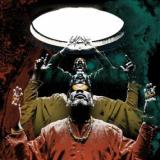
- 1