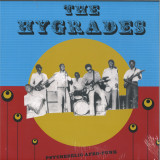
Sleeve Records & Dig This Way teamed back to bring to light the history and the tracks of this iconic early 70' Psychedelic Afro-funk East Nigeria group.
The Hygrades's album will include all 4 rare 45"s united in a single LP with an insert of their story told by a true Uchenna narrator.
Suche:nigeria
- A1: Ant Trip Ceremony – Pale Shades Of Grey
- A2: Heaven – Down By The Ocean
- A3: Christophe - Lo Prego E Pregherò (Je Sais Que C'est L'été)
- A4: Witch – Evening Of My Life
- A5: Pat's People – December Sequel
- A6: 5 Revolutions - Poor Man
- A7: David Lee Jr. - Love Parable
- B1: Joe Lano And Ed Whiting – Faith
- B2: Jose Mauro – Dois Ruas
- B3: Ton E Sergio – Vou Sair Do Cateveiro
- B4: Ofege - Sorrow
- B5: Image – Out Station
- B6: Image – Everybody’s Laughing
- B7: Witch - Evening Of My Life
Repress! Now-Again Records is completing the trilogy started with "Forge Your Own Chains" and followed by "Tickets for Doomsday" with "Pale Shades Of Grey" - another batch of rare, largely uncompiled - and sometimes barely heard - heavy psych-rock. Pounding drums, scathing fuzz guitar and morose, contemplative lyrics will bring you up on a downer. "Pale Shades Of Grey," as the title hints, is and perhaps the most contemplative of the series, heavy on ruminations of dark themes of love, death, pain and triumph, as performed by high school and college bands, Brasilian intellectuals, Nigerian rockers and even an Irish pub band from Michigan. A unique and compelling listen, and surely a worthy companion for these times.
Die erste Singleauskopplung aus Jimi Tenors neuem Timmion-Album "Is There Love In Outer Space?" wirkt wie eine Wüstenbrise aus dem kosmischen Liederbuch des nigerianischen Keyboarders Mamman Sani aus den 1980er Jahren. Vielleicht ist es genau dieses Panorama, das Tenor und Cold Diamond & Mink uns vor Augen führen wollen, während wir die beiden Seiten dieser Vinyl-Single durchqueren. Spätestens das psychedelische Wüstenblues-Gitarrensolo versetzt uns auf eine kalte Sahara-Sanddüne, wo wir einen magischen Sonnenaufgang auf Mutter Erde beobachten, den nur wenige Menschen erleben dürfen. Dies ist die Art von Jam, bei der man die Augen schließen und sich von den Farblandschaften des Geistes erfüllen lassen kann. Die minimalen Gesangsparts wirken wie ein Willkommensgruß an die Sonne, die langsam am Horizont emporsteigt und bereit ist, ihre brennenden Arme um alle Dinge zu legen - lebende und tote gleichermaßen. Mit ihrem neuen gemeinsamen Projekt hauchen Jimi Tenor und Cold Diamond & Mink den bewährten Stilen des jeweils anderen eine neue Art von Leben ein und liefern eine natürliche Verschmelzung von kosmischer und rauer Soulmusik.
Aerials live, dials tuned, Transmission Towers broadcasting. On either side of the river Mersey, transcendental communications are traded back and forth. Two late-night revellers, one firing messages filled with music, the other returning them laced with lyrics. The result, a dopamine hit of oddball machine soul, melded with a highlife, Afrofuturist touch. Wonky and murky yet deeply emotional, Transmission One, is a debut album that also marks the first release on Luke Una’s É Soul Cultura label, encompassing expertly the off-kilter atmosphere the label sets to orbit.
A synthesised landscape with a Northern charm, Transmission Towers marry the musical worlds of two artists that last collaborated over a decade ago. 10 years have passed, lives have been led, but a gravitational pull has placed Mark Kyriacou and Eleanor Mante back in each other’s spheres on opposite sides of the city of Liverpool. Energised with a newfound desire to strip it all back to the sounds that influenced their formative years in the late ‘80s and ‘90s - astral travelling, intoxicated on Motor City techno, Black Dog IDM and mystical Sun Ra.
Mark half Irish, half Greek Cypriot, Eleanor half Nigerian, half Ghanian, the music contained within is an alchemy of those roots and the pivotal acts that buried deep into their minds. A cosmic contrast, part machine-made, part distinctly human. Take the opener ‘UP’, an ESG-channelling, sci-fi punk beatdown or the polychromatic hyperspace anthem ‘Roller Skater 23’.
Transportive throughout, you ride the solar waves, pace and emotion ebbing and flowing. Tracks like ‘Go Slow Heart’ and ‘Cosmic Trigger’ step to a slower beat but hit with a punch. The former, a slo-mo blast of celestial tenderness, the latter an otherworldly, chugged-out lunar excursion, micro-dosing on whacked-out Wah Wah and Eleanor’s ethereal vocals. Beaming love letters to space and back, ‘Sparse’ marries the organic with the artificial, pianos and percussion circling around synth pads and broadcasting bleeps.
Elsewhere, vibrations move faster. ‘Mega’ strikes, fusing sonic tribalism with psychedelic swirls, as ‘Everything’ sweeps you up in its extra-terrestrial new wave grip. Synth stabs and basslines fizzing from every angle.
Demos of Transmission Towers music surfaced on Luke Una’s radar, making him stop in his tracks. Something magical was emerging, perfectly aligned with the E Soul guardian’s tastes. Guidance followed, quickly turning into conversations about Transmission One becoming the first release on Luke’s own label.
Escapist and futurist yet grounded and relatable. Transmission One is synthesis meets sentiment with a deep, spine-tingling soul at its core.
Pull the Rope, the new record by Ibibio Sound Machine, casts the Eno Williams and Max Grunhard-led outfit in a new light. The hope, joy, and sexiness of their music remain, but, further honing the edge of their acclaimed 2022 album Electricity, the connection they aim to foster has shifted venues from the sunny buoyancy of a sunlit festival to a sweat-soaked, all-night dance club. Williams and Grunhard attribute this shift to a matter of collaborators, recording Pull the Rope with Sheffield-based producer Ross Orton (Arctic Monkeys, M.I.A.) over the course of two weeks. The way the pair wrote songs changed significantly_rather than Eno penning lyrics to music generated by Max and company's jamming, Orton started with Eno and Max writing together before adding the band. With less time in the studio and a new way of considering how they built songs, the duo found making decisions about Pull the Rope's sound quicker and more instinctual than before. "Ross is from Sheffield, which has an edgier, more industrial vibe than London," Grunhard explains. "He hears things differently than us, is more grounded in rave and grungier sounds, and knew when to add drums or push the instrumentation more. It was very different for us, but it lends itself to where Ibibio Sound Machine is going." In melding their songwriting process, Grunhard and Williams have, impossibly, pulled the trick of making Ibibio Sound Machine a tighter band than ever before, building out from their core in a way that highlights the electrifying group of musicians they play with. Rather than recording with the full band in the room, Pull the Rope was sculpted, elements added and shaped by Grunhard, Williams, and Orton along the way. As a result, Pull the Rope is a nimble, sleek machine that's thrilling from the first note of the opening title track, Eno's otherworldly voice and PK Ambrose's throbbing bass driving through a kaleidoscopic array of house, post-punk, funk, Afrobeat and disco, bangers and ballads, making an argument for unity that begins on the dancefloor. "We are the places we grew up, the places we've been, and the people we've met along the way," Williams says. "Hopping around the globe, we've found that people are fundamentally the same_they're people. Opposing sides push and pull, but there is an alternative to war, violence, and suffering." Lead single "Got to Be Who U Are" literally globetrots, name checking locales across the world that would feel disparate were it not for how well-traveled they are. Eno growing up in the musical melting pot of the Ibibio region of Nigeria and Max being a conservatory-trained musician from Australia, one could call their meeting in London and formation of Ibibio Sound Machine predestined. "Mama Say" and "Let My Yes Be Yes" touch themes of female empowerment. They're indicative of the band's depth as they push further into the electronic; "Mama Say" hits notes of electropop while "Let My Yes Be Yes" fuses electro to Afrobeat. Ibibio Sound Machine have always imbued their music with political consciousness, and the light that shines through in Williams' vocals and voice has never felt more necessary. The sound of Pull the Rope, then, is hope in darkness, bliss in spite of bleakness. Once again, Ibibio Sound Machine are here to provide the soundtrack to the best night of your life, and the better world to come.
- A1: Magic Momentum
- A2: Rockets To Mars
- A3: The News These Days
- A4: Life (Skit)
- A5: Love Vibration
- B1: Original Flow
- B2: Hold On
- B3: Surviver (Skit)
- B4: Tatamaka Pt.1
- B5: Tatamaka Pt.2
- C1: Time (Skit)
- C2: Time
- C3: Jinja (Skit)
- C4: Kochirakoso
- C5: Our Tactus
- C6: Nah Personal
- D1: No Chains
- D2: Push Comes To Shove
- D3: We No Let Y'all In
- D4: Mexico (Skit)
- D5: Future For Our Children
We Release JAZZ is very happy to announce an exciting new body of work by Joseph Deenmamode aka Mo Kolours. The singular musical spirit’s new 21-track album Original Flow is available as a double LP housed in a heavy 350gsm sleeve with original artwork by Mo Kolours himself and the classic WRJ obi strip, as well as in digipack CD and digital formats.
A catalog of critically acclaimed records, including his self-titled debut (2014), ‘Texture Like Like Sun’ (2015), 2018 album ‘Inner Symbols’ and three companion EPs, established Deenmamode as a prodigious musician and vocalist. Pitchfork extolled his “hypnotic, tribal-infused dance grooves”, DJ Mag appreciated the “colourful celebration of soundsystem culture”, and Resident Advisor advocated that “no one sounds quite like Mo Kolours”. Musical analogies were drawn by The Guardian as “The best album Curtis Mayfield never made with A Tribe Called Quest and Lee Perry” and Mojo as “like Marvin Gaye produced by J Dilla”.
Five years ago, Deenmamode moved to the Japanese countryside. Far away from familiarity, he contemplated his place and further questioned his identity. “I had none of my ‘own’ people around. I had time to really find what makes me tick musically. Japan has helped me go back to those subconscious leanings, really go deep, and reflect the aspects that make up my story”.
The tracks on ‘Original Flow’ have been constructed from sessions, improvisations and soundbites captured around the world during this time; collecting contributions from musicians including Deenamode’s brothers Reginald Omas Mamode and Jeen Bassa plus Andrew Ashong, Charles Bullen, Dwaye Kilvington, Eddie Hick, Stefan Asanovic, Myele Manzanza, Ross Hughes, and Tom Dreissler. Deenamode says “I’m proud of this album’s creative process. Coming from a tradition of scouring through hours of records, I wanted to create my own samples, to find that perfect loop that no other producer could put their hands on. I decided to invite a group of friends and acquaintances, who also happen to be incredible musicians, to a studio in Crystal Palace to improvise based on some loose ideas I had. We spent all day, and recorded everything”.
‘Original Flow’ is an album of UK street-soul nouveau, future indigenous jazz fusion, Rasta Segga, Nyahbinghi jazz, Malagasy Hebrew hip hop. While retaining a spirit of exploration and improvisation, it sees Deenmamode grow and flex beyond beat tape brevity, expanding composition and stretching his musical muscle to play live with other musicians. Themes of empowerment, overcoming adversity, and mental liberation coexist with notes from ancient history, futurism, and science, as well as musings on family and togetherness.
‘Magik Momentum’ springs from a discussion that features at the start of the song, an inspiring mentor answering a question from Deenmamode about improvisation and what role it plays in life when planning and manifesting the future. ‘Rockets to Mars’ questions the lack of care for the billions of people with nothing, while governments plan to explore space. “This sparked a comparison in my mind to a Sonny Okuson song that I would reference when performing. Okuson’s song talked of the lack of resources in many communities in the world, while governments go to the moon”.
He says the music behind ‘The News These Days’ is “possibly my favourite on the album”. Looped like he would a late sixty jazz-fusion sample, there was nothing added and the track was complete within a matter of minutes. “It was the first and best moment from the entire Crystal Palace session”, he adds. The album’s contrasting title track with minimal instrumentation played solo by Deenamode. While frustratingly searching for gems in past recordings, he thought in a burst of ego, “I don’t need no-one else to make a dope beat!” picked up his ravanne, (the traditional frame drum of his fathers home-land of Mauritius), pressed record, and started to play. He says, “In my thoughts were the rhythms of the Nubians in Upper-Egypt and Sudan, the swing of the huge drums played by Mauritanian women, of-course the Sega beat of Mauritius, and the ever inspiring beat of James Yancey”.
Driven by UK broken beat, Cuban congas, Nigerian and Mauritian inflections, ‘Love Vibration’ follows the concept that all emotions carry a vibratory frequency and pays homage to the frequency of creation and the power of love. The two part ‘Tatamaka’ tells of the history of Deenmamode’s ancestors, the maroons of Mauritius. “We are people who managed to run from our oppressors and find refuge in a corner of the island called ‘Le Morne’ where they could not reach us. One bloody day they came in numbers to re-capture, to revenge. Many of us chose to jump to our deaths, rather than be taken back into subjugation. The poem by Creole Richard Sedley Assonne says; “there were hundreds of them, but my people, the maroons chose the kiss of death over the chains of slavery”. Tatamaka was the name of a famed maroon leader who was murdered for claiming his, and our people’s freedom. The song is the imagined journey of escape and freedom by an ancestor of the maroons of Le Morne”.
Born in the west midlands and raised on the traditional sega music of his father’s Indian Ocean homeland of Mauritius alongside records by the likes of Jimi Hendrix, Santana and Michael Jackson; his influences expanded with late 90s jungle and drum and bass nights in Bristol, experiments at art college in Camberwell, and the rich culture of Peckham, “at the time we called it the Afro Quarters of London” says Deenmamode, adding hip hop, dub, soul and soundsystem styles to his individual sound.
He explains, “I love drum music, from hand-drums to 808s. I love music from the ancient past, heritage music, indigenous music, traditional music passed down from the beginning of time. Music from the body, hand claps, grunts and foot stomps. Music with audible depth, busy, bustling, highly charged. Music from the soul, the music from beyond. I love music from the islands and the mountains. The music of the streets, hustle music, alleyway beats. Club music”.
He describes the creative process as thinking in images. “The visual world and the world of sound seem to intermingle in my thought process. When I play the drum with my eyes closed, a world of imagery dances and moves with beat. Improvised drumming feels like I am listening to what I want to hear, rather than trying to play what I want to hear. Following the rhythm and finding new pathways to walk within the patterns is what I experience. In this way I often feel I am just a listener, instead of the player”.
Original Flow is pressed on biovinyl, a sustainable alternative to traditional vinyl. Biovinyl replaces petroleum in S-PVC by recycling used cooking oil or industrial waste gases, resulting in 100% CO2 savings in bio-based S-PVC production. Furthermore, it is 100% recyclable and reusable, embracing the circular economy ideology.
- A1: Never In Doubt - Widescreen Rework
- A2: The Journey - Cardiac Club Remix
- A3: Vibration - Cardiac Club & A J E Rework
- A4: I Saw Stars - Cy Samuels & A J E Rework
- B1: The Journey
- B2: Waiting For Space - Dylan Colby 'Swerve Reunion' Mix
- B3: Jazz Face - A J E Rework
- B4: Quiet Hero - Cardiac Club Remix
- C1: Vibration - Leo Zero Remix
- C2: Cinematize - Curveball Version
- C3: Eyes Wide Open - Ribes Remix
- D1: Jazz Face Simbad Remix
- D2: Quiet Hero - Widescreen 'Healer' Rework
- D3: Hallucinogenic - Spaceface Remix
- D4: Eyes Wide Open - Ribes Remix
repress !
Das Ambient Jazz Ensemble liefert mit "Suite Shop Reworks" elektronische Upbeat-Dancefloor-Versionen seines gleichnamigen Albums aus 2014. Mastermind des AJE ist der Filmkomponist und Musikproduzent Colin Baldry, ihm zur Seite stehen Topmusiker wie Neil Cowley (Adele, Brand New Heavies), Finn Peters (Chick Corea) oder Nichol Thomson (Jamie Cullum). Gemastert wurde das Album von Guy Davie (Jon Hopkins, FKA Twigs, Jamie T) am Mischpult von Fela Kuti in Lagos, Nigeria.
Proudly presenting a new series of Mr Bongo reissues exploring the incredible back catalogue of Sonny Lester’s iconic Groove Merchant record label. First up, the spellbinding funk-fuelled, soul jazz album ‘Simba’, by guitar maestro O'Donel Levy.
Baltimore-born, Levy was already well regarded as one of the best up-and-coming jazz guitarists at the time of Simba’s release. Having toured with George Benson and Jimmy McGriff, as well as featuring on McGriff’s Black Pearl album on Blue Note, he went on to sign with Sonny Lester’s Groove Merchant. Produced by Lester himself and recorded over two back-to-back days of sessions in 1973, Simba features a who's who of ‘70s session players. The album features the legendary studio drummer Steve Gadd, Cecil Bridgewater on Flugelhorn, bass by Tony Levin and arrangements by Manny Albam.
A masterclass in tight yet effortlessly funk-driven rhythms, the tracks showcase these musicians at their zenith. Album opener 'Bad, Bad, Simba' wouldn’t have been out of place on a Lalo Schifrin ‘70s car chase soundtrack. Levy's playing is brilliant, bright and slick, with an infectiously exuberant energy that is complimented perfectly by Gadd's supreme drumming. ‘Playhouse' serves up another vibrant offering, Wah Wah guitars, horns and flutes duelling it out in a fast-paced fashion.
The cinematic thread continues throughout, yet with the tempo taken down a notch. 'Sierra Lonely' and ‘Sad, Sad, Simba’ head into lush ballad territory, with superb arrangements by Albam and beautiful playing by Collins and Bridgewater on Flugelhorn. Here Levy shines without taking any limelight, as the players synergize to a relaxed perfection. ‘Nigerian Knights’ closes the album flawlessly, showcasing once more Levy’s understated yet magnetic flow on the guitar.
Every track on ‘Simba’ is a winner. As with CTI Recordings of the same era, the feel and textures of Sonny Lester's productions have that pre-emptive, hip-hop aesthetic, which later producers would rework and reimagine. This album is expertly balanced, deftly arranged and magically executed, ebbing and flowing with a cool buoyancy that just grooves and grooves.
FRN Dancehall might have emerged in Jamaica, but over the last few decades the popular genre's tendrils have stretched out across the globe. In Kampala, Ratigan Era is adding a distinct Ugandan twist to dancehall, fusing it with East African humor and hyper-melodic afrobeats elements imported from Ghana and Nigeria. The versatile MC grew up listening to Jamaican music like Vybz Kartel, Busy Signal and Mavado - in his hometown of Kawempe there was almost no way to avoid it - and it blurred into the background, blending with local church music, US hip-hop and radio pop. He developed this diverse range of influences into a completely unique Afro-dancehall flow that simmers between Luganda, patois, Spanish and English, reflecting the melting pot of cultures and dialects that characterizes contemporary Africa. Ratigan broke out with a memorable feature on Pallaso's Ugandan hit 'Nsaba', a track that echoed throughout the country booming from nightclubs, motorcycle loudspeakers or from convenience stores. Now he's assembled his first album "Era", a furiously inventive interweaving of rubbery vocals and memorable chants backed by futuristic beats from Hakuna Kulala's most boundary-pushing producers. Congolese producer Chrisman takes the reins on 'Gorilla Attack', providing a downtempo groove that echoes recent Jamaican chop deployments from breakthrough artists like Skillibeng and Skeng. For his part, Ratigan ducks and dives between Chrisman's gqom-inspired low end womps and corrosive synths, commanding attention with his smart, dextrous flow and tongue-twisting lyrics.The Modern Institute and Golden Teacher's Richard McMaster handles 'Top Strike Force' leaving space in his wiry, minimal beats for Ratigan to flit between anthemic repetitions and ice-cold AutoTuned wails. On stand-out track 'Badman Style', Ratigan's guttural patois is measured against a dizzy trap-dancehall hybrid beat from HHY & The Kampala Unit's Jonathan Uliel Saldanha, aka Lithium Beats, while on the surreal 'Drop it Down', Japanese mad scientist Scotch Rolex brings out Ratigan's cheeky sense of humor with toytown bleeps and laser zaps. MC Yallah collaborator Debmaster appears on 'Gan Dem', meeting Ratigan's double-time raps with soundsystem destroying rolling subs, and veteran US noisemaker Kush Aurora sprinkles magic dust on 'Cool and Deadly', galvanizing the link between global bass mutations, Jamaica and East Africa.And despite the grab-bag of producers and inspirations, "Ratigan" is a strikingly coherent listening experience that accurately snapshots Kampala's colorful froth of sounds and phrases. Ratigan's outsized personality is welcoming and captivating, providing the sights, sounds and smells of the city with a frenetic rhythm that's as intimate and local as it is far-reaching. It might just be the future we so desperately need.
Back In Stock!
Ajo Se Po is the third album by alto-saxophonist and percussionist Kevin Haynes, released with his band Grupo Elegua. The album integrates musical elements with references to his deepening spiritual understanding. Haynes has created a modal harmonic language incorporating Afro-Cuban melodies and classical kora playing - his alto-sax, infusing the album with a personal 'voice'.
Yoruba spirituality is at the heart of Haynes' musical thinking which also includes both Nigerian and Cuban dimensions. This is especially reflected by the use of recitation and Cuban bata drumming being employed on all tracks, with each piece growing out of a particular bata rhythm. Each such rhythm is dedicated to a particular Orisha, or divinity.
As well as influences from Afro-Cuban, Native Nigerian and folkloric Bata, Haynes' music is a fusion of contemporary jazz incorporating Mandinga folk and praise songs and hard bop.
Kevin Haynes and Grupo Elegua have performed at renowned jazz festivals including Havana Jazz Festival, Cuba and Salamanca Jazz Festival, Spain. Haynes has also featured on Moses Boyd's hit album Displaced Diaspora.
Previously available on digital only, Ajo Se Po is now released on vinyl.
- A1: Fela Kuti - International Thief Thief (I.t.t.) (Armonica & Moblack Extended Mix)
- A2: Fela Kuti - International Thief Thief (I.t.t.) (Armonica & Moblack Extended Dub)
- B1: Moblack, Emmanuel Jal & Henrik Schwarz - Chagu (Henrik Schwarz Extended Version)
- B2: Moblack, Emmanuel Jal & Henrik Schwarz - Chagu (Moblack Extended Version)
Repress!
These are the words of legendary Nigerian musician and activist Fela Kuti, words that remain as true as ever over two decades since his untimely death. A pioneer of the Nigerian revolution, his fight against police oppression remains an ongoing conversation in the country. Now, Defected pays tribute to the vital work of Fela with a special 12” release, as Armonica and MoBlack revisit Fela Kuti’s ‘International Thief Thief (I T. T.)’ as the fight against systemic corruption continues to be a pressing issue in Nigeria. The A-Side features Armonica & MoBlack’s flawlessly executed and ever respectful remix of the record where Fela called out and directly attacked former Nigerian president General Obasanjo and Moshood Abjola, the CEO of Nigeria’s biggest national telecommunications conglomerate I.T.T and Decca Records. Their homage to Fela brings a powerful and culturally relevant piece of music to the forefront of dance culture in 2020.
On the reverse side is ‘Chagu’, where a powerful and evocative spoken word narration is provided by South Sudanese-Canadian artist, actor, former child soldier and political activist Emmanuel Jal. A collaboration between Emmanuel, MoBlack and Henrik Schwarz, both producers provide their own version of ‘Chagu’, with MoBlack opting for a classic afro-house beat and hypnotic percussion, while Henrik’s signature crisp, harmonious composition makes for a guaranteed dancefloor weapon. Both visionary producers, Henrik and MoBlack’s versions are equally impactful, complementing the immediacy of Emmanuel’s lyrics.
ARN4L2 (pronouced arn-al-dos) aka Arnaldo Berdugo is a producer and DJ from Cartagena, Colombia. He grew up surrounded by music, namely the vinyl treasures that his grandfather accumulated as director of a local radio station in San Estanislao de Kotska, Bolívar, a Colombian Caribbean town with a large Afro-descendant population.
In his productions, ARN4L2 combines Colombian musical traditions such as Bullerengue, Chalupa and Tambora with electronic elements such as synthesizers, samplers, and drum machines, resulting in a unique sound that reflects his own, strongly African- influenced Caribbean vision.
Galletas Calientes is proud to release his first solo project on vinyl: a collection of 5 upbeat tunes for the floor, blending Congolese soukous, Colombian Bullerengue, Nigerian highlife, Caribbean soca, and House; with a uniquely distinctive, progressive and psychedelic touch.
His Colombian, Caribbean and African roots have been shaping this young producer’s personality as an artist and a human being, and the distinguished style he has developed over the years is definitely the result of all these influences.
“Caribe” is the third volume of Galletas Calientes Records “Colombian Singles Series”, a series with a purpose of awakening interest in modern Colombian electronic music.
- A1: Pushing Feat Derane Obika
- A2: Right Of Me Feat Derane Obika (On My Dace Side Version)
- A3: Back In The Underwater Feat Reiwa Pia
- A4: Walkin’ A Dream Feat Derane Obika
- A5: Hold The Line Feat Derane Obika
- A6: Cat With Camera
- B1: Fall Into The Flame Feat Derane Obika
- B2: I Am Believe Feat Derane Obika
- B3: Don’t You Worry Feat Derane Obika
- B4: Are U Ready? Feat Derane Obika
- B5: Watergate Feat Manuela Amalfitano
- B6: I Am Believe Feat Derane Obika (Dreamy Vibe)
The debut album by musician and producer GO.SOUL.MAP. is a little gem in which pop and soul intersect and the clichés between
mainstream and underground leap. A sexy and pensive nocturnal journey, immersed in thirteen songs between soft bass and space disco trips, with the voice of Londonbased Derane Obika of Living Sounds.
The selection of songs in this album were made with the hope to bring the listener to deep thought, the lyrics and melodies seamlessly
married to tracks that drive the listener's emotions.
Produced, written and performed by Derane and Salvo, they came together by chance and were inspired to make the album making
sure to balance the sound between the Lyrics, Melody and Music to insure that not only the songs are heard but the experience
remembered and both spirit and soul are touched.
The album is truly "Music From The Heart"
Behind the alias GO.SOUL.MAP. hides one of the most authentic and purest talents of the current Catania music scene. Of which,
moreover, under other guises and names, he has been an indispensable pillar for over a decade. An artist of immediate sensitivity, not only artistic. His training is fairly canonical: as a child, he studied piano. From there, as if following the movements of concentric circles, the passion for synths, drum machines, the world of samples and the recording studio. Above all, an uncommon ability to breathe in music. Accepted and found without prejudice, but always with the need to reveal a distinctive track, a signature. Touring between bars, streets, concerts and clubbing. An experience very consistent with the subject matter of this disc. Which is, in fact, the debut of a nonrookie. An ambitious record, because it possesses a sound that is as sexy as it is thoughtful and a writing style, exemplary, that lies on that borderline that, in the stereotype, defines underground and mainstream. Fields that instead it crosses naturally and between which it moves without any particular problems. After all, the music comes not from the malice of the intellect but from the nuances, tender or vehement, of naivety.
Peaceful Sound For Broken Minds is a pop record, pop soul, of modern urban pop. Yes, labels, even in the sense of tags, are definitely that. Of course, it is the way in which ideas are rendered that makes the difference. The record is about the need to find one's peace, but it is the fall that it shows and not the landing. With honesty and, above all, style. That is, mastery of means and an important file work with which to decline that therapeutic soul pain in which his songs are immersed.
We wait for hours more, the initial Fall Into The Flame and I Am Believe seem to tell us from there we move on. Hold The Line is where trip hop forgets itself, immersing itself, to the point of blurring, with the retro atmospheres of someone like Curtis Harding. Pushing has a space disco cadence that, more pronounced, we also find in the lunar expedition sound of Watergate. The exotic visions of Back In Underwater, between the stardust of Air and the innocence of Plone, become more jazzy in Cat With Camera. Just as in the urban streaks of Don't You Worry, which in upbeat mode would sound like a great reggae song, or Are U Ready, or in the disco funk of Right Of Me, the soulful accent of Derane Obika of Living Sounds emerges, a Londoner of Nigerian origin who grew up listening to gospel, Prince and Stevie Wonder, whose voice guides us through the songs of Peacefull Sound For Broken Minds. Which is a new point for that work of redefining the standards of pop today that Space Echo is doing. Throwing the clock overboard, because the time it wants to capture is nothing more than the movement of its hands.
Blending sounds of early 70s Funk & Soul, Latin-Jazz, and Afrobeat, Mestizo Beat kicks the year off with a heavy dose of new material. First up is “She’s A Rose b/w Lotsapapa,” their next 45, offering two sides of masterful instrumental soul music written & produced by The Magaña Brothers out of their hillside studio, Spc 166 in Topanga, CA. Side A’s “She’s A Rose” takes us back to the golden years of the Blaxploitation film genre and the soundtracks we have grown to love. This song was inspired by the compositional and orchestral arrangements from the greats, such as Curtis Mayfield’s “Superbad,” Johnnie Pate’s “Shaft in Africa,” and Bobby Womack’s “Across 110 Street.” Featuring Tim Felten of Surefire Soul Ensemble on keys, with horns written and arranged by Jesse Audelo, Mestizo Beat takes the listener on an evolving journey, exploring the mood and cinematic elements of flute, saxophone, and wha’d-out guitar, topped off with a funky drum and percussion break. On the flip, “Lotsapapa” rounds out the B-Side, blending the musical styles of Latin and Nigerian disco-funk into a track that’s perfect for the dancefloor and those late nights out. Written about Bernard “Lotsapapa” Crowe, a notorious drug dealer who survived an attempted murder by Charles Manson, this side is sure to get the body moving with the afro-disco rhythms and chant vocals, dubbed out around a tightly arranged horn section written and arranged by Jesse Audelo and Jason Cressey. “Lotsapapa” features guests Steve Haney from Jungle Fire on Percussion and Cressey of the True Loves on trombone.
With each side highlighting the various talents of the ensemble, Mestizo Beat always stays true to their sound and recording techniques. Both tracks are mixed by Sergio Rios at Killion Sound and are featured on the forthcoming LP, Jaraguá, coming mid-2024.
BlackCat is the sister label to WhiteWolf Records. Its purpose is to
showcase undiscovered NY talent and friends of WhiteWolf. High
quality beats and intrinsic groove for your dancefloor.
With BC001 we introduce Ṣonuga aka Femi Shinuga-Fleming. A NYC
based techno producer and DJ with Nigerian and Caribbean roots and an extensive background in live experimental electronic music.
Ṣonuga is interested in the intersections of deep textural soundscapes, layered percussion and shuffled rhythms.
His debut EP, 'Airing' explores themes of sound and space influenced by his architectural studies, while also exploring and paying homage to contemporary dub techno.
Fela definiert geistige Blindheit als eine Person, die mit weit geöffneten Augen die Richtung verliert und sich im Kreis dreht, ohne je an ihr Ziel zu gelangen. Die Ikoyi-Blindheit bezieht sich auf die nigerianische Elite, die falsche Berufe wählt, weil sie damit eher sozialen Status als berufliche Befriedigung erlangen. Sie üben nicht nur die falschen Berufe aus, sondern sind auch blind für das Leid ihrer Landsleute, die in Ghettos wie Mushin, Ajegunle, Somolu, Maroko und sogar Kalakuta leben. Als Beispiel nennt er den Anwalt, der statt eines Buches den Hammer als Werkzeug wählt, oder den Musiker, der den Schraubenschlüssel als Werkzeug wählt. Fela sagt, dass es für solche Menschen noch Hoffnung gibt, wenn sie ihre Denkweise an ihre Umgebung anpassen. '…them miss road! Them find road again oh!'. Jene sozialen Aufsteiger, die den Status quo und die Tatsache, dass sie in die Fußstapfen der ehemaligen Kolonialverwalter getreten sind, als Zeichen ihres sozialen Aufstiegs sehen. Sie vergessen, dass die Mehrheit ihres Volkes immer noch in den Ghettos kämpft. Diese Menschen müssen erkennen, dass es ihnen schlechter geht als einem Blinden, der am Ufer eines Flusses lebt. Sie werden fallen: "shallow" into more 'Ikoyi mental' Blindness.
Gba Mi Leti Ki N'Dolowo (Schlag mich, damit ich Geld bekomme): Das Jahr 1974 war ein Wendepunkt für das Justizsystem, das sich die Durchsetzung des Rechts auf die Fahnen geschrieben hatte. Vor allem in einem Land, in dem die Reichen die Armen ungestraft ausbeuteten. Eine Reihe von Prozessen, an denen Menschen aus den unteren Schichten der Gesellschaft gegen die Oberschicht und einflussreiche Männer beteiligt waren, führte dazu, dass die Reichen ihren armen Anklägern hohe Entschädigungssummen zahlen mussten. Fela sang darüber und betonte, dass man niemanden ausnutzen und damit davonkommen kann. Wenn du mich schlägst, bekomme ich Geld. Solange ich mich selbst respektiere, werde ich meine Grenzen nicht überschreiten - wenn du mich schlägst, wirst du bezahlen.
Ikoyi Blindness war im Box Set #5 enthalten, das von Chris Martin und Femi Kuti kuratiert wurde. Das Album wurde auf weißem Vinyl neu gepresst und ist untergebracht in einer bedruckten Innen- und single sleeve Außenhülle.
Original Sufferhead beginnt mit einer minimalen Improvisation mit Felas neuer Band Egypt 80 und steigert sich dann zu einer kühnen, komplex strukturierten Afrobeat-Hymne, die die Situation der Massen in Nigeria anprangert. "Lasst uns zusammen ein schönes Lied singen", schlägt Fela vor, während der Refrain parallel zu der lebhaften Melodie seines Saxophons erklingt. Mit Hilfe des Refrains zählt er dann die Probleme auf, die das Volk plagen: keine Wasserversorgung, exorbitante Lebenshaltungskosten, keine Gesundheitsversorgung, zweistellige Inflationsraten. Die "großen, großen Leute" haben das Volk zum Sarg des Staatschefs gemacht: Nach der Plünderung und Verbrennung von Felas Kalakuta Republic 1977 schrieb Fela mehrere musikalische Antworten, in denen er die schuldige nigerianische Regierung direkt angriff, darunter diese traurige Hommage an seine Mutter, Coffin for Head of State. Nachdem seine Mutter an den Komplikationen der Verletzungen gestorben war, die sie erlitten hatte, nachdem sie während des Überfalls auf Kalakuta aus einem Fenster geworfen worden war, trugen Fela, seine Frauen und seine Anhänger den Sarg seiner Mutter zum Eingangstor der Armeekaserne: ein mutiger Akt des Trotzes.
"Coffin For Head of State" ist Felas düstere Anklage gegen diejenigen, die "durch Jesus Christus, unseren Herrn" das afrikanische Volk korrumpieren, bestehlen und berauben. Der wummernde, gleichmäßige Beat und die sich wiederholende Struktur des Liedes ahmen den Marsch zur Kaserne nach, während der Text Felas überwältigende Trauer über den Verlust seiner Mutter und den Zustand seines geliebten Nigerias direkt anspricht: eine Nation von ewig Leidenden. Seid nicht passiv, fordert er: Steht auf für eure Rechte.
Die B-Seite, Power Show, baut auf dem gleichen Thema auf und hebt die Unterdrückung der Massen durch die herrschende Klasse hervor. Der Text handelt von einem reichen Mann in einem schicken Auto, der an den Straßenrand ranfährt, um einen armen, allein reisenden Mann zu beschimpfen. Fela nennt dies die "Power Show" und prangert das Verhalten an. So verhält man sich nicht gegenüber seinen Mitmenschen.
Original Sufferhead war im Box Set #5 enthalten, das von Chris Martin und Femi Kuti kuratiert wurde. Das Album wurde auf opakem, hellgrünem Vinyl neu gepresst und ist untergebracht in einer bedruckten Innen- und single sleeve Außenhülle.
In O.D.O.O. singt Fela über die Auswirkungen der militärischen Machtübernahme und die Zerstörung der jungen afrikanischen Demokratien seit der Unabhängigkeit - insbesondere der jungen Demokratien, die nach langen Auseinandersetzungen und manchmal sogar Kriegen mit den Kolonialmächten ihre Unabhängigkeit erkämpft und gewonnen haben. Er sagte, dass Putschisten, wenn sie an die Macht kommen, Namen annehmen wie: Nigerianischer Oberster Militärrat, Ghanaischer Erlösungsrat, Libyscher Revolutionär usw. In den meisten Fällen wurden die Putschversuche von den ehemaligen Kolonialmächten geplant und finanziert. Für diejenigen, die sich dessen nicht bewusst sind, schafft die Präsenz des Militärs auf der politischen Bühne die Illusion einer friedlichen "demokratischen" Partizipation und einer funktionierenden Regierung. Zumal der größte Teil der täglichen Regierungsarbeit von Zivilisten geleistet wird, die den Militärchefs unterstehen. Für Fela besteht die Aufgabe der Streitkräfte unter normalen Umständen darin, die zivile Regierung zu verteidigen und zu unterstützen, und nicht darin, sie zu stürzen oder die Aufgaben eines Regierungszweiges an sich zu reißen, weil sie kein politisches Mandat haben. Das Gegenteil zu tun - das bedeutet "überholen". Jede Vorstellung von einem wohlhabenden und friedlichen Land, in dem das Militär an der Spitze der Macht steht, ist eine Illusion.
Die anhaltenden Skandale und die Korruption auf höchster Ebene, die alle Regime seit der Unabhängigkeit kennzeichnen, tragen dazu bei, Felas Desillusionierung und sein Misstrauen gegenüber dem Militär ins rechte Licht zu rücken. Er weist auf die Zweideutigkeit hin, daß die Verfassungen der neuen unabhängigen afrikanischen Nationen an die Verfassungen der scheidenden Kolonialherren angelehnt sind. Identifiziert das als Ursache der Probleme. In seiner sarkastischen Art bezeichnet Fela das, was in Afrika als Regierung durchgeht, als: '…soldier go! Soldier come!' Damit meint er, dass die Institution, die die militärische Struktur geschaffen hat, die Armee absichtlich dorthin gebracht hat, um ihr koloniales Werk fortzusetzen. Um die Not der Afrikaner unter einer solchen Diktatur deutlich zu machen, führt Fela eine Liste von Liedern an, die er geschrieben hat und in denen er die Ungerechtigkeiten des Systems kritisiert: Kalakuta Show! Mr. Follow-Follow! Zombie! Shuffering und Shmiling! Leider sind es die armen Massen, die am meisten unter der Misswirtschaft und Korruption der Regierung leiden. Von klein auf müssen afrikanische Kinder lernen, wie man in einem System überlebt, in dem man nicht weiß, woher die nächste Mahlzeit kommt - keine soziale Sicherheit, keine Bildung etc.
Trotz all dieser Rückschläge versuchen die Afrikaner weiterhin, ihre Kinder zu erziehen. Die Kinder wachsen auf, nehmen feste Jobs an, um ihr Leben zu verbessern, sparen hier und dort, um zu überleben. Letzten Endes jedoch machen die Ereignisse der Misswirtschaft verschiedener Verwaltungen alle Opfer und Abstriche, die der Einzelne zur Verbesserung seines Lebens macht, nutzlos.
O.D.O.O. war im Box Set #5 enthalten, das von Chris Martin und Femi Kuti kuratiert wurde. Das Album wurde auf grünem, transparentem Vinyl neu gepresst und mit einem bedruckten Inlay versehen in einer single sleeve Außenhülle.
- Ltd. Col. LP: (Transparent Green Vinyl)


