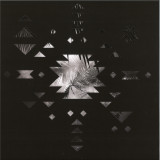
Much of Radio Red, the first full length album Laura Groves has released under her own name, was written, produced and recorded by Groves in her studio, watched over by two radio transmitting towers. “I became very drawn to them and they became like symbols to me; they were always awake, sending their messages, the red lights always came on at night and watched over whatever was going on in my life.” The album deals with themes of communication - missed and intercepted signals, chance meetings, synchronicities, the channels through which we try to express our true feelings, the outside interference that can get in the way and the joy of letting go and allowing the messages to flow freely.
Self-recording and production is a core part of Laura’s songwriting process. “I remember years ago getting hold of some basic recording software and being instantly drawn in. The idea of being able to layer up my voice was a dream, like building an orchestra out of what I had at home.” The passion for home-recording, using the resources available at the time, working through limitations and capturing textures through layering, forms the foundation of Groves’ experimental and off-centre pop music and electrified folk music. The sound world of Radio Red is made up of echoes, and snapshots of half-remembered pop songs, piano ballads, chopped up TV theme tunes, ambient synthesised sounds and electronic music; tuning in between channels without fully belonging to any one of them, with the comfort, familiarity and strangeness that can come with hearing voices on the radio.
Search:night communication
The continuing growth of Maik Krahl as a melodic improviser, bandleader, and composer is distinctly evident in this new release. In-Between Flow, Krahl’s third outing as leader, is a portrait of a young artist who has gone through many years of dedicated hard work, study, experimentation, and refinement in order to achieve this level of instrumental and artistic progress. Krahl belongs to a new generation of improvisers who have acquired a breadth of technical and theoretical facility, while not losing the spontaneity and rawness of this music we call jazz. As a bandleader, he chooses his colleagues wisely and for this date is joined on a few tracks by the visionary guitarist Kurt Rosenwinkel, whose brilliant playing adds a cherry on top of this already delicious line up.
The title In-Between Flow refers to ever evolving progression of our human condition. As in nature, the human spirit can expand and unfold, maturing to a new state where it may settle for a while until some new impulses inspires another transition. These transitions, sometimes subtle, sometimes abrupt; as well as the times of contentedness and serenity are the inspirations for this music.
The record opens up with an ode to the town Krahl calls home. Cologne 4 AM, begins with a haunting melody by Krahl’s soft yet powerful horn before settling into a perfect vehicle to display his command of melodic and motivic story telling. There is something about the time of 4 AM that seems to permeate literature and music, and this track will add to the canon of artistic references to this magical time where the night meets the morning.
Mr. Rosenwinkel joins the band for Slosetta, which is a great example of Krahl’s ability to craft a tune. As is to be expected, Rosenwinkel weaves through the changes with grace and mastery, obviously enjoying the communication with the rhythm section, who are undeniably inspired by his harmonic, rhythmic and melodic ingenuity.
Jakob Kühnemann, a Bandleader and composer is his own right, has been an in demand bassist on the German and European scene for several years, and his contribution to this record is proof of why that is. Although Krahl takes the lead on Drizzle Counter, in a great display of technical virtuosity, it is Kühneman who stands out on this track. It is not only in his improvisation, but more so in his poly rhythmic pulses dancing up from the deep and the harmonic insinuations in his accompaniment of Krahl’s solo that demonstrate his musical mastery.
Rosenwinkel joins again for No Claim Claim, a composition so balanced that I would not be surprised to hear other artists recording or performing it in the future. After Krahl’s melodically inventive statement, Rosenwinkel shifts the band to the next gear building the intensity towards the out head.
Constantin Krahmer has been Krahl´s piano player since his debut record, Decidophobia. His patience, ingenuity, and big ears make him a perfect accomplice to Krahl, and his sensitive yet powerful approach and accompaniment on Reconstruction of a Dream as well as his harmonic and melodic inventiveness on Vinaceous Clouds (where he plays Fender Rhodes) make it clear why he is an integral part of this unit.
Ms Ludgate is a funky composition with angular melody that is another feather in the cap of the band leader. Kurt Rosenwinkel is back, and seems more than willing to engage in some rhythmic dialogue with the spectacular young drummer on the date, Fabian Rösch. Throughout this entire record Rösch is subtly but strongly guiding the band, playing his role as a supportive and interactive proponent to the music. We will surely be hearing much more from this young man with such a refined sound and clear rhythmic conception.
Flawless Sunday, a perfect closing statement for this record. The melody is another great example of Krahl’s growth as a composer. The whole rhythm section really shines on Krahmer’s choruses, where the three colleagues push and dare each other rhythmically as well as harmonically before Krahl enters and brings the record to a close with his beautiful rich tone and melodic playing.
It is a great pleasure to hear the growth of a young artist with such dedication and vision. Hearing how Krahl and his band mates navigate through the vicissitudes of this music is an inspiration that can be mirrored in everyday life. A lesson in accepting the ever changing flow from one state to another. Growing, learning, and evolving into a new state, until the process begins anew. In-Between Flow.
Still transmitting from Lockdown in the UK. Banoffee Pies Records 14th release in the original series comes from London based ANGEL D'LITE. A deep passion for rave and NRG with an established high-octane approach to music, heavily influenced by hardcore and early pop bangers, her debut EP further reflecting this mood. Three heavy club tracks and a broken beat dubbed remix from JAY to round things off.
The A side is laced with harmonic 90's vocals and euphoric trance synth lines with two versions of "CRYSTALZ". The original, heavily packed with punching drum patterns and UK hardcore builds, followed neatly by the "DIAMANTÈ MIX". A nostalgic UK Garage take with building pads and rolling hats, partnered by murmuring emotional vocals. Perfect late night club fodder.
The B side flips the mood with "DANCE LIKE DOLPHIN" - the original version setting the tone for early AM adventures. Junglists, sonic communications and club lazers setting in throughout the growing euphoric 90's blends, aquatic frequencies and swirling sub bass. The remix from JAY, another London based producer, follows with an energy shift to a more minimal and rough edged depth of textures and colour, with splatters of surprise elements throughout. Everyone has a crystal and dolphin side right? Love core music from BP xx
- 1: Raumschiff Galaxy Startet
- 2: The Planet Of Communication
- 3: Elektronenzirkus
- 4: Der Narr Im All
- 5: Raumschiff Galaxy Fliegt In Die Sonne
- 6: Intergalactic Nightclub
- 7: Loving Frequencies
- 8: Electronic News
- 9: Intergalactic Radio Guri Broadcasting
- 10: Raumschiff Galaxy Gleitet Im Sonnenwind
- 11: Interstellar Rock: Kosmische Musik
- 12: Raumschiff Galaxy Saust In Die Lichtbahnen
- 13: Der Planet Des Sternenmädchens
1974 entstanden die Zusammenstellungen Planeten Sit-In und Sci-Fi Party mit der Musik aus den Jam Sessions der Cosmic Jokers. Unter einem konzeptionellen Mantel wurden die legendären Aufnahmen einem jungen Publikum nähergebracht. Unter den Musiker die Elite der damaligen Krautrocker, wie Manuel Göttsching, Klaus Schulze, Jürgen Dollase, Harald Grosskopf und Dieter Dierks der für die Aufnahmen, Arrangement und den Mix zuständig war, aber auch als Musiker mitwirkte. Neu transferiert von den originalen analogen Bändern und sorgfältig und erstmalig remastert. ENG The compilations Planeten Sit-In and Sci Fi Party, both originally released in 1974, are a contemporary document of the legendary jam sessions of the Cosmic Jokers. Under a conceptual mantle, the recordings were brought to a young audience. Among the musicians the elite of the Krautrockers of that time, like Manuel Göttsching, Klaus Schulze, Jürgen Dollase, Harald Grosskopf and Dieter Dierks who was responsible for the recordings, arrangement and mixing, but also participated as a musician. Newly transferred from the original analog tapes and carefully remastered for the first time.
Federico Madeddu Giuntoli is an italian multidisciplinary artist. Mostly autodidact, his art is based on groundedness and simplicity, and focused on the complexity of human journey in a non aggressive, warm and unfiltered way.
His works, ranging from contemporary art, music, writing and photography, are usually delicate and subtle, yet unequivocally tuned into a certain kind of pop communication, however essential and experimental it may be.
"The text and the form" is his first solo album, featuring german e-poetess AGF and japanese artist Moskitoo (12K).
The album is a collection of 11 minimal and intimate short songs, in which piano fragments, lonely guitar solos, spoken words and evocative vocals resonate with processed microsounds and lo-fi field recordings, creating a concise and very deep journey into romance and sense of mystery.
In the artist's words, "the album shaped itself according to a loose process of refinement and layering. A long, undisturbed assembling across more then a decade, often against my own will to reach a definitive form. If any relevance in this work can be found, I would say it resides in its capability to deliver a rare sense of vulnerability, longing and aliveness together, an aroma of improvisation and instability mixed with a unexplicable impression of perfection".
Similar in concept to her earlier classic NIGHTCLUB, CLIQUE! gives Patricia and her long-time band (Jon Deitemyer, drums; Patrick Mulcahy, bass; Neal Alger, guitar; Jim Gailloreto, tenor sax) a stellar showcase for their telepathic musical communication and consummate jazz chops. Barber said of recording an all-standards album:
"The harmonic language of jazz, as well as that of the Great American Songbook, is certainly rich - look how much has come out of it - but it's circumscribed. I started wanting to hear something else."
These are relaxed, communal sessions. Her core trio ride up and down, in and out of Barber's complex, sensitive playing and singing. Their support allows her to shine brightly while digging out striking moments for their own unique contributions. The chemistry is palpable, all encompassing. This group's long-developed synergy - painstakingly curated by these musicians for years - provides both a metaphor and the perfect title for her new album.
Impex Records, Patricia Barber, and Jim Anderson invite you to experience the music, revel in the mastery, and join the Clique!
AI-32 signals the arrival of ‘The Fifth World Recordings’, by Son of Chi (Hanyo van Oosterom) and long-term collaborator Arthur Flink. A tribute to the late Jon Hassell, who passed away in 2021, the album connects a deep running thread that goes back to the source of Chi project. Carrying on from where Hassell left off, the album takes inspiration and references from his Fourth World music concept and the ancient Hopi tradition of Native America. Illuminating the subliminal space of the arising Fifth World, Son of Chi pays respects to an inimitable force in contemporary music.
Hassell’s ‘Dream Theory in Malaya’ forms a touchstone to Hanyo van Oosterom’s musical journey, which soundtracked long, deep and reflective periods living in the cave of the Kallikatsou (Patmos, Greece) back in the early 80s. This period resulted in Hanyo’s track as Chi - ‘Hopi’ - in 1984. Hanyo met Hassell shortly after in 1987 at his “The Surgeon in the Nightsky” concert in Rotterdam - it wasn’t until twenty years later that Hanyo invited him for two magic nights of “Instant Composing Sessions” with the Numoonlab Orchestra (with a host of other artists) at the LantarenVenster, the very same stage where Hassell had performed in 1987 and also where Chi did their first live performance.
Dreamful, mysterious, prophetic, the Fifth World Recordings features the quiet yet elaborate sound of Chi awash with rich instrumentation, field recordings, and old stories by the firelight. Sketches were created with drones, loops, and soundscapes, with which Arthur Flink (also a member of the Numoonlab Orchestra) jammed on trumpet. Channelling Hassell’s idiosyncratic style, floating melodies and lyrical improvisations are parsed into the mix, where Hanyo has processed and manipulated the recordings, also referencing Hassell’s exotic scales and unique harmonics.
Additionally, the wah Bamboo flute at the closing piece is an homage to the works of Chi co-founder Jacobus Derwort (1952-2019). For this piece Hanyo used his first bamboo flute he made at the cave of the Kallikatsou in 1984. Arthur Flink answers in counterpoint with the wah trumpet, almost like the intuitive communication of the nightbirds..
Having initially met more than a decade ago at a local community radio station, sometimes doing guest slots on each other’s live, improvised noise shows, Cormac Culkeen and Dave Grenon knew they had a mutual interest in working with sonic textures. They listened to each other’s bands for a handful of years, and in 2017, “made good on a threat” that they’d been making for quite a long time: to start a band. At Cormac’s gentle but clear urging—declaring that they’d gone ahead and booked a space in which to record a video—the two wrote their first song, “Sebaldus,” an ambitious 12-minute trip, which also serves as the fireworks finale to their self-titled debut album. With surges of pathos that smooth out into something more soothing in turn, Cormac goes: “The hunter, you’ve seen him / The archer, his arrows are strong / And hunger, you’ve known her / I know the winter is long.” The track is as much about enduring a Canadian winter as it is about the eponymous 8th century hermit, shot through with sublimated desire. As Cormac put it, Joyful Joyful’s songs are “a little bit outside of time.” But while the lyrics beg close, oblique reading unto themselves, there’s also a distinct sense that they’re only one of many more ways that the duo shapes sound. Cormac, whose voice is like a sea with irregular tides, lights up about an idea in traditional sean-nós Irish music that songs already exist and are out there; it’s up to the singer to become the conduit. This belief in music as something to be channelled, and something more than sound, resonates with the singer’s fundamentalist religious past. To paraphrase: lots of group singing, harmonies, no instrumentation, totally unmediated, no priest, congregational—not choral, not a performance, not about talent, the spirit moves through people. “Of course that informs how I think about singing,” Cormac says. So, when they were exiled from the church because of their queerness, they took the music with them, dislocating it from its dogmatic bounds but not from its transcendent potential. This record might be thought of, then, as a kind of queering of sacred, devotional traditions—or at the very least, a space where all of these things can be held at once. Perhaps perceivable by some as contradictions, these intersecting influences create the conditions for an incredibly singular sound. Dave is steady and exploratory in his handling of this multiplicity, arranging sounds as they’re revealed, corralling them, coaxing them into form. “Because Dave is there,” Cormac says, “I get to sing three times higher, and three times lower, and faster, and backwards, and all of these sounds! That are there. They’re all there.” When asked about early musical memories, Cormac recalled an immediate fascination with harmony: from demanding that the first person they ever heard singing it explain what they were doing, to always (still, to this day) singing in harmony with their twin sister around the house, to being part of a children’s choir that sang soprano in Handel’s Messiah—not realizing until they entered the room with all the other ranges that their learned melody was but one part of the whole. Just as tellingly, Dave reflects on his early attraction to “abstraction and becoming abstract,” describing childhood afternoons messing with microphone and speaker feedback loops, producing long, enduring sounds with almost undetectable variations. In a way unique to the coalescing of these two listeners, notions of harmony are central to their output. Dave samples field recordings, old keyboards and synths, and vocal drones, running the live singing through four or five parallel effects chains, sampling and treating everything again in the moment. “Another way to put it is that Cormac’s voice comes into the board and then comes back out shifted, delayed, and shattered; Cormac and I hear it, live with it, and respond,” Dave says. This work is contingent not only on a deep intuition (neither of them read sheet music) of polyphony and due proportion (something St Thomas Aquinas famously listed as an attribute of beauty) but also on their connection to each other and ability to read subtle cues. Dave says they’d hold each other’s hands while performing if it was more convenient to do so, riffing on something else Cormac mentioned about traditional Irish singing: that someone would always hold the singer’s hand, for fear that without a tether to the ground they might find themselves utterly lost, unsure how to return. Joyful Joyful doesn’t shy away from offering such experiences of departure; they’re willing to unsettle their audiences because they themselves are unsettled. Their shared penchant for spooky, heavy music, and self-described “omnivorous” listening practices equip them with an array of sonic concepts that support this effort; Diamanda Galás, The Rankin Family, Pan Sonic, Pauline Oliveros, Keith Fullerton Whitman, Yma Sumac, and Catholic hymnody were just a few that came up. Observing their audience gives them insight about the effect of each song—something they considered while arranging the album. Its arc is marked by soft, sometimes sudden oscillations between cacophony and euphony, day and night (listen for insects), and from sexual, visceral entanglements to more ephemeral, celestial ones. Front to back, it arouses expansion, unraveling. Of lightning, Vicki Kirby writes: “quite curious initiation rites precede these electrical encounters. An intriguing communication, a sort of stuttering chatter between the ground and the sky, appears to anticipate the actual stroke.” By all accounts, something similar seems to happen at Joyful Joyful shows, between those on the stage and those off it, between what’s earthly and what’s beyond. “A lightning bolt is not a straightforward resolution of the buildup of a charge difference between the earth and a cloud … there is, as it were, some kind of nonlocal communication effected between the two,” writes Karen Barad, extrapolating on Kirby’s thought. Cormac acknowledges that while they and Dave play a role in this mysterious charge that comes about, they’re not solely responsible. However ineffable it may be, it’s undoubtedly a form of communion—and a sensuously shocking one at that
Breaking News! DJs Pareja and Matias Aguayo have joined to form the dance project MDM Factory!
Modern transcendental Techno music for those who know, and those who want to learn!
In a turmoil of events nightlife would change forever, and confined to their respective places - A flat in Buenos Aires and a house in the jungle Diego Irasusta, Mariano Caloso and Matias Aguayo joined forces to create new communication on distance via music.
Taking all their dance floor knowledge and dreaming of sound systems and togetherness in a better future, DJs Pareja & Aguayo put their minds, bodies and souls to work on this stunning EP that will please the forward thinking underground freaks as well as the big room techno pros.
Let’s dive into this divine mess of glorious dance floor jams from the future...
A1. Curvas Peligrosas
With the first track it becomes clear what this is all about: Wobbly metamorphous sounds from outer space jamming with stomping and bass driven techno beats of tomorrow, a new kind of rave, hypnotic and seductive, utterly strange but wonderfully catchy and contagious in a good sense, harsh shuffled hiatus and alternating kick drums, a relentless bassline and sophisticated electronic sounds in a a permanent evolution resembling and invoking altered states of consciousness.
A2. Love Boat
This new rave anthem seems like a classic you haven’t heard about. Muscle memories from dancefloor days trigger your body as you listen on your headphones, awaiting the chance to play it out soon, hopefully, as the dance floors slowly reopen. Alternating between parts of kickdrum, clap and snare awesomeness, and the mangled rave signals that slowly morph into a more concrete melody reminiscent of ancient dreams of the future, this track has it all for the club kids of today.
B1. La Vida Loca
The title track is a tech banger that will please those who dig Kenny Larkin, Claude Young, The Surgeon, Dave Clark or any other star in the nocturnal sky of Techno Techno, as well as the lovers of DJs Pareja’s classic Cómeme Clubbangers, or the more Techno side of Mr. Aguayo. Definitely has the potential to become a huge hit if enough djs that don’t rely on algorithms get their hands on it
B2. Las Llaves
The closer is hyper modern tech funk at its best. Percussive greatness as you can find it on many Cómeme releases is triggered in a different way, “sabroso” rhythms that are played in the light and purposeful way of an elegant jazz drummer, pave the way for an always evolving psychedelic lead synth sound, that will be a useful tool for the dj who knows when to keep the groove, prolonging those magic times between the risings...
- A1: Sagittarius A (Right Ascension) 05 15
- A2: Pleasure Discipline 05 57
- A3: Ertrinken 05 38
- B1: Growth Cycle (Featuring Robert Owens) 05 52
- B2: Zahlensender 08 04
- B3: The Approach 03 27
- C1: Nylon Mood 06 26
- C2: Alphabet City 05 43
- C3: Don't Ask, Don't Tell 06 10
- D1: No Entiendes 06 56
- D2: Kurzstrecke 06 43
- D3: Golden Dawn (Featuring Stefanie Parnow) 07 14
- E1: Interdimensional Interferenc 05 58
- E2: Distant Paradise 08 05
- F1: Be (Featuring Robert Owens) 04 50
- F2: Vampir 06 29
- G1: Downtown | 161 11 38
H- side is etched
The American cable-television industry exploded in the 1980s, pushing broadcasts of diverse programming and emissions of low-laying cultures into homes. Community stations piggybacked on the digital developments of the time, extending their existence through telephony and broadcast a iliates. For those growing up in this time, in locations such as New York City, the localized communications beamed into their homes exposed them to an impressionable array of disparate sounds and visions.
Move into the 1990s and New York was filled to the brim of emergent cultures drawing from this ebullition of communication. From Rammellzee’s shapeshifting to the late Judy Russell and Frank and Karen Mendez’s Nu Groove imprint fusing reggae, poetry and house, nascent ideas emanated from the city walls, from within stores such as Sonic Groove store and on VHS releases such as Stakker’s The Evil Acid Baron Show, a legendary technicolor psychedelic trip along the wildest frontiers of acid house. As scenes expanded and identities developed, such individuals weather the events of the visceral now, expressing themselves right into an unpredictable future.
Function’s long career has seen him uncover a vast range of sonic identities, a mainstay through house, techno and industrial with collaborations with the likes of Regis, Damon Wild alongside his highly influential Infrastructure imprint. With influences deeply tied to pop art, rave and gay scenes, and early memories of block-parties emitting Kraftwerk and Strafe, he found himself seeking out the undercover illegal nights of the 90s on a quest of sexual unearthing, mixing the ever-yearning escapology mission of disco with the influential DJ sets of Jeff Mills.
For his new album Existenz, he marks a clear step away from the corporeal techno of his recent releases. Pivoting around themes of religion, sexuality, trauma and healing, it is a work expansive and celebratory, a clear liberation from a deeply internalized past. Formed from a collection of recordings made in a period from late 2016 to mid 2019, Existenz takes the form of a creative outburst in reaction to a number of traumas - recent, childhood and throughout Function’s life. Life partner Stefanie Parnow assisted the production process in its entirety, providing inspiration, spiritual healing and featuring vocal contributions.
Cosmic synths soar and swoop in ‘Pleasure Discipline’ through towering stacks of rhythm that stutter and creak to a halt before rebooting, a firm robotic response to human intervention. ‘Zahlensender’ reflects a spatial tetris of urban life, as digitalization set within an XYZ matrix confronts the sprawling city. Constant arpeggiated meditations echo synaptic transmissions, e ecting a dissolution of boundaries. ’The Approach’ recalls the unification of the self, a state of delirium non-subjective and smooth, as all connections and functions give way to simple intensities of feeling, crossing the threshold into spirituality. ’Golden Dawn’, featuring Stefanie Parnow, marks a further elevation of dubbed-out euphoria, as once more positive rays emerge. His ode to the effortless short-trip urban navigation 'Kurzstrecke' finds Function in motion, upfront and bold, snapshots of conversation and flickers of light. 'Ertrinken' finds metallic bass jabs swamping snipped synthetic voices, with hidden stores of emotion set as a nod to the history of vocoders as a tool for encrypted military communication. House icon Robert Owens features on 'Growth Cycle' and 'Be', entrenching a celebratory atmosphere over Function's clubwise leanings. Closing track 'Downtown 161' reflects the unmistakeable filtered and squashed interjections of television, and sampled dance vocals - a sound for the curious, dreamers and dancers.
With Existenz, Function reveals an essential body of work, spread over 4LP - thought experiments on the role of identity and spirituality after a lifetime of upheaval and trauma. Leading up until the release date, Function will undertake an album promo tour with select dates - A/V shows at Berlin Atonal and Rural festival in Japan, and three dates as part of his Bassiani residency.
Lift-top box including the first 10 numbered records and objects, with a 60-page exhibition style book, plus a bonus 12” single and 2CDs of unheard Joy Division interviews. Strictly limited and numbered to 4000 units WW.
Use Hearing Protection: Factory Records 1978-1979 contains facsimile editions of the first 10 numbered Factory items: 4 vinyl records, 3 posters, a short film, Factory stationery and an egg-timer design. The early history of the label is traced in a 60 page book with text by James Nice, photos by Kevin Cummins and archival interviews with Tony Wilson, Rob Gretton, Joy Division and more.
All 3 original Factory posters are contained in the box as well as the first 4 records: The Factory Sample EP (Fac 2), including the Fac2 stickers, All Night Party by A Certain Ratio (Fac 5), Electricity by Orchestral Manoeuvres in the Dark (Fac 6) and classic album Unknown Pleasures by Joy Division (Fact 10).
Bonus items include a white label 12” single by The Tiller Boys (originally intended as FAC3 but ultimately not released), and a lengthy audio interview with Joy Division, Tony Wilson and Rob Gretton, conducted in August 1979 by journalist Mary Harron, never before heard and now restored across two CDs. Also newly restored, and seldom seen since 1979, is evocative 8mm short No City Fun (Fac 9), featuring music by Joy Division.
Where have you gone, Charles Tolliver? There was such promise in the concept of Music Inc., and in Strata East, but evidently the music world's attention was elsewhere and this tremendous live set was probably heard by only a few hundred sets of ears. On the back of the record sleeve, Tolliver undersigned his mission statement: "Music Inc. was created out of the desire to assemble men able to see the necessity for survival of a heritage and an Art in the hopes that the sacrifices and high level of communication between them will eventually reach every soul." And he isn't kidding. You won't find a much higher level of communication than he, Cecil McBee, Stanley Cowell, and Jimmy Hopps engaged in on May 1, 1970 at Slugs' in New York City. This was much more than an attempt to merely 'preserve acoustic jazz' as in the stilted Marsalis vein. This was an attempt to preserve a measure of authenticity while maintaining the notion of forward-thinking, present-tense improvised music. They deserved a greater response than the lukewarm, sparse applause they received that night, and continue to deserve a far more cognizant audience for their efforts.
Tolliver ('Drought"), McBee ("Felicite"), and Cowell ("Orientale") each contribute a track to the set; though very much distinct, each is equally strong. "Drought" is the kind of dark-hued, well-honed burner which Tolliver routinely produced in his fertile years. "Felicite" is a more contemplative affair, a deeply felt and empathically performed piece; the unit here is in particularly sublime form, merging considerable skill with a staggering depth of emotion. "Orientale" falls somewhere in between the pace of the two, with Cowell's Eastern scales establishing an austere, industrious tone throughout its seventeen-and-a-half-minute length.
Through its duration, the music on Live at Slugs' is often riveting and incessantly compelling. Hopps is a lesser-known entity to me, but the other three players featured here are some of the all-time underrated presences in the jazz pantheon, and they play nothing short of masterfully. Always a presence on his recordings, Tolliver demonstrates tremendous range, flair, and command as a trumpeter and leader. Had he not come along at a time when pure jazz was falling out of favour, I have to believe his name (along with Woody Shaw's) would be every bit as prolific as Freddie Hubbard's or Lee Morgan's; the same holds for the always brilliant and expressive McBee on bass.
I feel saddened that Music Inc. fell so far short of "eventually reaching every soul" - yet fortunate that it eventually reached mine.
Indie Retail Exclusive Water Spirits color vinyl LP More Energy Fields, Current is a definitive new peak in the recorded continuum of prolific producer/percussionist Carlos Niño. Featuring contributions from more than a dozen exciting voices in the creative music constellation of Los Angeles (of which Niño's has been a central force for over 2 decades), including Sam Gendel, Nate Mercereau, Jamael Dean, and Jamire Williams, the album collects 10 pristine gems of collaborative communication helmed by the Southern Californian sage, elegantly presented in his unique "Spiritual, Improvisational, Space Collage" style. The album is ripe with "ambient" passages that function like open portals between moments of consonance and clarity, and epic post-hip hop opuses like the heavy/heady "Thanking the Earth." But even in the occasional absence of drums, there is a powerful pulse implicit in the program's frequency of consciousness. It's a testament to Niño's foundations as a DJ. His distinct ability to craft a kinetic, cinematic sonic experience from dozens of independent, often rhythmically-ambiguous improvisational memories is more fluently displayed on More Energy Fields, Current than anything we've heard from him to date. It resonates, lucidly, with the way Niño's mentor Iasos - who is known to the world as an original founder of New Age music - has described his work: "Real Time Interactive Imagination, Flow Texturization." On More Energy Fields, Current, Niño immerses us in the watery depths of his world, spiriting us like a submarine through exotic nether-leagues of untouched sound. And when we arrive at the final, bookending piece "Please, Wake Up." (an extended version of the opening theme, featuring saxophonist Shabaka Hutchings), it's like a return, safely to shore.
Absolutely stunning second album from Trees Speak new on Soul Jazz Records. Trees Speak's new album 'Shadow Forms' is a blend of 1970s German electronic and 'motorik' Krautrock instrumentals (think Harmonia, Can, Cluster, Popul Vuh, Neu!), haunting and powerful 1960s & 1970s soundtracks (think Italian prog-rock Goblin and John Carpenter horror movies, Morricone and existential John Barry spy movies), together with a New York no wave electronic synth and guitar analogue DIY-ness (think Suicide, anything on Soul Jazz's New York Noise series or Eno's New York No Wave)! Trees Speak' segue together all these elements into 'Shadow Forms,' which follows on from their critically-acclaimed debut LP 'Ohms,' released on Soul Jazz Records less than six months ago. Trees Speak are Daniel Martin Diaz and Damian Diaz from Tucson, Arizona and their music often draws on the cosmic night-time magic of Arizona's natural desert landscapes. 'Trees Speak' relates to the idea of future technologies storing information and data in trees and plants - using them as hard drives - and the idea that Trees communicate collectively. The album includes an exclusive bonus 45 single 'Outtake' and 'Transmitter' that will only be available with the first order of this amazing and ground-breaking new album.
- Crimson Sin (1985 Demo)
- My Bone (Live At Full Moon Saloon)
- Veil Of Death (1985 Demo)
- You Do Not Scare Me (1985 Demo)
- Division (1986 Live At Full Moon Saloon)
- Right To The Point (1986 Live At Full Moon Saloon)
- She's Fun (1985 Rehearsal, The Sleepers Cover)
- Slow Death (1985 Rehearsal)
- Vampires (1986 Rehearsal)
- Which Guy (1985 Rehearsal)
- My Bone_Veil Of Death (1985 Live At Club Vis A Vis)
Altar De Fey originated in San Francisco in the early 1980’s as part of the emerging musical form that would come to be
known as Deathrock. Out of the Zeitgeist flash of 70’s Punk Rock the new sound took the darkest elements of the counter
culture into ever deeper, gloomier and more mature territory.
Performing at legendary San Francisco venues Mabuhay Gardens, Graffiti, The Nightbreak and the rest billed with
Christian Death, 45 Grave, and all the fellow architects of West Coast Post Punk.
The original incarnation passed through a rotating cast of characters centered strongly by the vision and experimental
guitar of founding member Kent Cates. Eschewing the conventional chord progression/solo form entirely Cates’s guitar spins
strands of melody and rhythm, tone and texture in a style that to this day is all his own. The mood was perfected with the
innovative tribal drumming of Aleph Kali and Butch Mason’s haunted confrontational vocals.
Though the band had a strong base of support, no original recordings were ever released and the young members
carried on into new musical endeavors. By 1988 ADF disbanded.
Years upon years passed yet the name was never completely forgotten. As Goth Punk culture persisted, grew and
developed over time the band began to take on a kind of legendary hue among fans in the know; The lost mysterious
phenomenon of Altar De Fey. -There was a kind of poetry to it. Finally in 2011, when asked if they would play a reunion for a
festival in San Francisco Kent and Aleph surprised everyone by answering yes.
Reforming originally as a 2 piece with a drum machine Kent on guitar and Aleph on vocals to an enthusiastic reception,
the duo enjoyed it so much they decided to continue the momentum and quickly added Skot Brown on bass, Aleph switched
over to live drums, and Jake Hout was added on vocals. The new line up debuted in April of 2012 and has continued
regularly performing songs from the original 80’s catalogue and steadily adding new material ever since.

A new generation of underground Deathrock music is growing across the world, in closer, more direct communication
than ever before, and interest in the band has quickly escalated.
This unique compilation brings you 11 original ADF songs recorded between 1984-1986 (demos, rehearsal records, live
records). If you are into classic Christian Death, 45 Grave, Kommunity FK, Burning Image etc. grab this gem now before it’s
too late!
If Galaxy Lane’s first EP didn’t send the portals of time and space upside down, then the second EP will throw you down a vortex of hypnotic grooves juxtaposed with eerily erratic rhythms built in outer space.
The first of two EP’s to be trusted in the hands of Lone Romantic, ‘Night’ and ‘Later That Night’ will explore the concept of capturing moments in time.
Maybe Galaxy Lane can best summarise…
“I want people to really feel the mistakes in this music, the dirt, the rough and raw approach, the ‘sitting on the floor surrounded by wires at 3am messing with synths’ approach. That to me is the magic of this music, the interaction of man and machine, to hear the nuances, the tweaking of knobs and pushes of faders. I think we have lost that somewhat with digital technology, and have lost a lot of feeling in the process”
‘Night’ will propel the listener into ethereal textures layered over rough and raw beats, as outlined on opening track ‘Deep Space Nine’. If that sets you up for thinking this will be a dreamy ride, ‘Communication’ hits hard at the rear of the spaceship, coming at you with intergalactic bleeps, zaps and back cracking rhythms made for getting down.
Side 2 sets off on an exploration of wild eyed boundary flexing in the shape of ‘Enter The Light’. Pushing the machines to near breaking point whilst just hanging on, it’s a track that shows what can be done when the spaceship is left to drive itself, you can do nothing more than go with it and and see what happens.
‘Snow Day’ is perhaps the perfect way to round us back in. A more calmer, smoother ride, it’s unmistakable polyrhythms soothing the soul and setting us up for the next chapter…
If Galaxy Lane’s first EP didn’t send the portals of time and space upside down, then the second EP will throw you down a vortex of hypnotic grooves juxtaposed with eerily erratic rhythms built in outer space.
The first of two EP’s to be trusted in the hands of Lone Romantic, ‘Night’ and ‘Later That Night’ will explore the concept of capturing moments in time.
Maybe Galaxy Lane can best summarise…
“I want people to really feel the mistakes in this music, the dirt, the rough and raw approach, the ‘sitting on the floor surrounded by wires at 3am messing with synths’ approach. That to me is the magic of this music, the interaction of man and machine, to hear the nuances, the tweaking of knobs and pushes of faders. I think we have lost that somewhat with digital technology, and have lost a lot of feeling in the process”
‘Night’ will propel the listener into ethereal textures layered over rough and raw beats, as outlined on opening track ‘Deep Space Nine’. If that sets you up for thinking this will be a dreamy ride, ‘Communication’ hits hard at the rear of the spaceship, coming at you with intergalactic bleeps, zaps and back cracking rhythms made for getting down.
Side 2 sets off on an exploration of wild eyed boundary flexing in the shape of ‘Enter The Light’. Pushing the machines to near breaking point whilst just hanging on, it’s a track that shows what can be done when the spaceship is left to drive itself, you can do nothing more than go with it and and see what happens.
‘Snow Day’ is perhaps the perfect way to round us back in. A more calmer, smoother ride, it’s unmistakable polyrhythms soothing the soul and setting us up for the next chapter…
Inspired by warm climates, shaped in a rainy city. Native Cruise's Desert Theory opener Late Nights is a relaxed jam filled with crispy drum-machine percussion and new age-ish pads with delicate nature sounds in the background. The energy rises towards the title track, a marching rhythm characterised by chugging wooden drums and floaty pan flutes. Bermuda Clouds brings you on a shore presenting a dreamy 4 to the floor session with an FM bass line, atmospheric pads and a wave of ocean sounds. The journey ends with Whispers which reminds of an imaginary 80s digital world vaguely influenced by the aesthetic of labels like Innovative Communication or Les Folies Art.
- A1: Intro
- A2: Phone Call
- A3: Communication/Obama
- A4: Prison Break
- A5: Flying Out Of Kansas
- A6: It Took A Miracle
- B1: Enlistment
- B2: Coming Out Trans
- B3: Flashback
- B4: It Might Actually Change Something
- B5: Court Sentence
- B6: New York
- C1: Intelligent Analyst
- C2: Lisa’s Theme
- C3: Haunted
- C4: Icon
- C5: War Requiem
- C6: Mother’s Theme
- D1: Coming Of Age
- D2: Trauma
- D3: New Administration
- D4: Fighting Back
- D5: Running For Senate
- D6: Alt Right
- D7: Night Drive
- D8: Let It Out Ft. Jehnny Beth
Hand-stamped clear transparent vinyl. Limited to 200 copies.
The planet is a wasteland ruled by self-contained, country-sized megacities, each with their own culture and climate, separated by vast, barely-inhabitable spaces. Long reliant on cyberspace as their means of communication, humanity relies on cybernetics to survive in their new environment. Advanced AI competes or conspires with these enhanced beings for control of resources and economy. Within these many-layered Sprawls, ordered chaos reigns, inhabited by many, understood by factions, and controlled by the very few…
Baby Buddha is the experimental new wave duo of Charles Hornaday (vocals, guitar, electronics, drums) and David Javelosa (vocals, electronics, clarinet). Born from late night improvisations of San Francisco synth-punks Los Microwaves with a rotating cast of musicians. Live shows would include music, projections, dance and performance art in both clubs and gallery spaces. In 1980, Howie Klein's 415 Records released their first single of Tammy Wynette's 'Stand By Your Man'. In 1981, 'Music For Teenage Sex' was their first full length album released via Poshboy Records. It featured Los Microwaves' Meg Brazill, Poshboy boss Robbie Fields, and Kathy Peck as "Tammy Why-not", who later went on to found H.E.A.R (Hearing Education and Awareness for Rockers). In January 1983 Kathy, Charles and David went into the studio with a couple of Kathy's original 'country' songs and began working on a sophomore album. They also incorporated songs from a live multi-track recording of a concert at the Graffiti Club on June 6th 1984. The album titled 'Everyone Is My Age' sat unreleased until 1987 due to relocation to Los Angeles and eventually found a home on David's Hyperspace Communications, the original label for the first Los Microwaves singles. For this first time reissue we've added a previously unreleased bonus song 'What's Going On,' a Kathy Peck original. All songs have been remastered by George Horn at Fantasy Studios in Berkeley. The vinyl comes housed in the original jacket featuring a collage by David Javelosa and includes an insert with lyrics, photos and liner notes. Alternative.
Both Stephen Vitiello and Taylor Deupree are seasoned collaborators. Each new collaboration is a new context, a new conversation and a unique opportunity to learn. Vitiello has worked with musicians such as Scanner, Steve Roden, Ryuichi Sakamoto and Machinefabriek. As an artist often
represented in galleries and large scale sound installations he has also had the frequent opportunity to work with visual artists from the likes of Tony Oursler to Julie Mehretu and Joan Jonas. Deupree has a long history of collaboration including early works with Christopher Willits and Richard Chartier as well as Marcus Fischer, Ryuichi Sakamoto, and Bon Iver's S. Carey. Fridman Variations is Vitiello and Deupree's third release
together and continues their tradition of exploring their unique form of experimental improvisation.
Stemming from a live performance at NYC's Fridman Gallery, Fridman Variations was co-produced by the gallery and will remain as part of the gallery's publications. Fridman Gallery is a visual exhibition space that also boasts a unique dedication to experimental music through their annual New Ear Festival, at which Vitiello and Deupree performed and recorded the main piece for this album.
Side A of Fridman Variations is the live recording, edited for vinyl while side B contains two pieces made with some of the same source material as the live performance and intended to be related, but entirely new, works. Guitar, modular synthesizer and a small tape synthesizer are at the heart of these songs. The improved layers draw on buried melodies and hint of feld recordings and found textures. Not overly melodic, not
overly noisy, Vitiello and Deupree like to fnd the edge between the pretty and the obscure, often suggesting more than laying their intentions bare. This type of sound is one that the duo often explores as an opportunity for Deupree to adventure beyond his melodic comfort zone and for Vitiello to work and experiment with new instruments and how they interact with his signature guitar.
One of the biggest inspirations to the artists for this work was the hushed and dreamy state of the audience during the performance. The late-night ambience added to the immersive quality of the surround speakers and helped to channel creativity and a sense of sharing
Both artists feel that recording live performances is an opportunity to capture a unique moment that simply won't happen again. Despite a performance's faws or imperfections the energy and interaction is a special moment in time for the performers and audience. The opportunity to not only document it for the listeners who were present but also to be able to share the moment with those who weren't there is a positive one.
To further be able to expand on the ideas in the controlled studio environment serves to enrich the experience and further the communication.
In folklore, the witching hour or devil's hour is a time of night associated with supernatural events. Creatures such as witches, demons and ghosts are thought to appear and to be at their most powerful and magic is thought to be most effective at this time.
It is also the time when we are at Underground parties, this is considered the main time of the party before it tapers off into the ethereal realm of translucent soundscapes and marionette dance moves. This is when we feast on sound intoxication and our parallel daywalker skins are shed into ancient dances and rites of sacred drums.
The witching Hour takes our souls back to our ancient pagan rituals of music and dance till the cleansing of dawn, this is where revelations happen and where groups of like minded people form a coven of sorts and bond in non verbal communications thru the expression of movement.
This is a new label project from Jay Tripwire and TJ Mc Au, they will be presenting underground minimal sounds specifically designed for the dancefloor and for the DJ.
This EP features Creepshow and Klangtone. Creepshow is a dark bassy roller with an eerie underground atmosphere that holds the groove but it also designed for mixing and layering. Klangtone features a percussive groove, voices from the Tikuna rainforest tribe and a haunting modular flute line with a massive sub bass that is sure to rattle bassbins. This is classic Tripwire with modern production but still keeping the his roots of his trademark sound.
Return of the UK producer Allen Saei aka Aubrey on the mighty Barba label is another bold statement in the discography of this well-versed artist. Building on the relationship with the Burek/Barba/Pomalo family established through remixes of Information Ghetto's "Inspiration" track (Burek 2013), DJ Stingray's "Communication System" (Barba 2015) and his solo "Clock Funk EP" (Barba 2017), for this record Aubrey presents us with a continuation of his previous Barba release, simplistically titled "Clock Funk 2" EP. As is to be expected from a guy who's been spending time in the studio for better part of the last three decades, this 12" is pure techno, in the best sense of the word. As mature and consistent as the previous record of the series, we have Aubrey building on that ground and expanding the range into more abrasive and rough on one side, and even more subtle and humane on the other. A1, titled "Clock Funk 2" is among the subtle ones. Beautiful cascading keys, glitchy synth bleeps and lead lines intertwine into a gorgeous composition grounded by a driving bassline and counterpinted with distorted ride cymbals. Uniquely sounding track which draws influences from many corners of the planet. A2, titled "Sel Moulo" sets a point for the other side of the spectrum. The heaviest and roughest, it locks the frame in which this EP works. Direct, abstract and firmly aimed towards the dancefloor, this cut is for the peak moment of the night when its combination of jacking beats and trippy leads will just push the craziness off the edge. B1, the most humane and gentle track on the EP, "Triads" is a perfect match for the A1 cut, although slower and calmer. Again, the similar approach is used, where the perfectly tuned combination of small synth and keys elements form a complex image which will stay ingrained into anyone's mind once you play it in the right moment. Again, it's hard not to reach for the word "beautiful" when describing this one. B2, Ghost Mist, is on the other hand a match for the heavy A2, but also not as intense. A repetitive affair, with abstract synth lines and disharmonic pads serving as an emotion injection just when they're needed. Common thread moving through all four cuts is an infectious groove intertwined with synth lines that would not be misplaced amongst the best examples of space-influenced techno music firmly grounded on the floor. All that, pressed onto a heavy duty 180 gram vinyl and beautifully packaged in an original artwork by local artist EmaEmaEma.
Crafted in the style of old school dancehall clashing, 'Veteran' is a mixture of classic heavyweight dancehall lyrics and a new school flow. The tune is set to be a timeless banger aiming to keep the dancehall massive rocking and swinging day and night.
Inspired by the riddim and sounds of Blind Prophet, Clinton Sly is ready to run the sound system!
Slowing down the tempo to 120bpm, Blind Prophet delivers a heavy dose of dubwise for the B-side. 'Hugh Dub' starts off with a mutated vocal and quickly drops into a tuff steppers riddim. A distorted bassline and thumping kick drive the track.
Accompanied by plucked guitars, organ skanks and dub FX it's a sound system stomper for sure!
It is Melodies International's greatest pleasure to bring forth its latest reissue comprising two stripped-back, reflective pieces of US folk soul.
Largely forgotten for the past forty-odd years, Bobby Wright (now Abu Talib)'s "Blood Of An American" and "Everyone Should Have His Day" resurface as politically-infused works that shine bright and still hold meaning to this day.
The 60s and 70s constituted an exceptional era for its unique blend of popular culture and political radicalism. Household names such as Sly Stone, Marvin Gaye and Gil Scott-Heron used art to express their discontent with the current state of affairs, namely the US government's involvement in warfare and their inability to deal with critical social issues of the time. Though not a musician, Muhammad Ali (born Cassius Clay Jr) was advocating a similar anti-government stance in the boxing ring, and his objection to serving in the Vietnam War sealed his status as an icon for the wider counterculture generation.
Meanwhile in Queens, New York City, Abu used to work several jobs as a construction worker and cab driver - but still found time to play with his band in clubs for $100 a night to support his family. Against the backdrop of international conflict and violence, most of his surroundings failed to listen to how he felt. However, he considered music to be the greatest form of communication with the world and it was his belief that a positive message should be spread to future generations.
After one band member was killed in Vietnam and another went into the service, Abu resolved to pick up his guitar and record these songs as a duet in 1974 with his bassist - the only other remaining band member. Combining guitar, bass and a voice that quavers with emotion he self-released the record in 1974, one which holds its own alongside the all-time greats.
These songs of introspection remind us of the beauty there is in simplicity and how moving art can be when the feelings expressed come from the heart. MEL009 will be released in its original 7" format alongside a 16-page Melozine, featuring words from Abu Talib, social studies professor Paul Rekret and much more.
Deep Club resident dj and head strobe controller Lone Dancer marks our label's 4th entry with his
first solo 12' on vinyl. After finishing two quality tape albums in 2017 already for Jacktone and Always
Human Tapes, 'House is a Tunnel' arrives packed with 4 club-ready jagged tekno bangers and one cut
for the chillout room. Side A - Communication: The title track is a sure-fire party starter centered around
a thick kickdrum and a repeating synth rhythm laced with weird percussion and synth stabs trickling
through the texture. Next, 'PO12-3' combines crisp claps, hats, and a central synth theme that calls
for an intergalactic rave. 'Colony Dwelling' kicks off the Transportation side, taking our extraterrestrial
dancers to a new dimension steeped in fog juice and flangers. 'Floor' has a chill intro until it launches
into a gritty track that throws broken kickdrums and distorted synths in every direction. Finally, 'Night
Rain' puts the party to rest utilizng soft pads while hinting at moments from the night before.
Overall, 'House is a Tunnel' is a fitting dance-centric conglomeration of Lone Dancer's unique style of
jacking techno, broken beats, and spaced out tracks that has set him apart in 2017.
—Ryan Scannura
Support by:
Jackie House
Derek Plaslaiko
Noncompliant aka DJ Shiva
Heidi Sabertooth
Bil Todd
Dee Washington
The 2nd release from I Walked by Night comes firing out of the southside of Glasgow. A young man by the name of The Burrell Connection has been flying under the radar for a few years now... A Perth native / Glasgow immigrant has been making music since he was 15, his first release came via West End Communications (003) in 2015. Since then he has released most recently with Craigie Knowes on the amazing 2nd annual War Child fundraiser along with Legowelt, Shanti Celeste, Neville Watson and many more. 'Southside' was made with a Juno 6, Yamaha Dx21, Roland TR8, Korg MiniLogue and twisting samples and recording most tracks in one take with little post editing. This EP oozes raw energy and shows off a delicate deft touch. After debuting at the Warehouse Project in 2016, The Burrell Connection will be producing his first live show in 2017.
Gone with the flow - after a little break the German musicians Julius Steinhoff and Abdeslam Hammouda revived their musical adventures and left all electricity untouched this time. For their new acoustic project the duo has chosen the alias Tonight Will Be Fine - a name that is familiar to those who followed their work in the past years. As Steinhoff & Hammouda they used the name for their first 12" on Smallville Records, the worldwide acclaimed house and beyond label and record store that Steinhoff co-runs. Now they reheated the phrase and chose it as the alias for a bittersweet acoustic singer/songwriter project. Their wonderful, captivating new musical venture came into life due to happenstance and old ferventness. After their trips into house music the duo parted geographically. Hammouda moved away from Hamburg while Steinhoff strengthened his label Smallville, built up a global DJ career and produced acclaimed house records on diverse labels - solo" and with his buddy Dionne as Smallpeople. In all the time Steinhoff and Hammouda never stayed out of touch, bound together through deep friendship.
At some point they met again for musical missions and started to record music that had nothing in common with their prior work. Steinhoff re-activated his self-taught guitar abilities and entered the studio of his friend Lawrence in the back of the Smallville record store to capture some steeldrums and vibraphone sounds. Hammouda brought more instruments like a banjo, a violine and tablas and they just started to record sketches and songs. Hammouda's musical backround leads to a widespread range of influences while growing up, before he got into producing hip hop and electronic music. For Steinhoff, the transformation from an electronic music producer into a singer/songwriter wasn't that new too, as his first musical steps have been routed in band music. Until his late teenage years, when he discovered house and techno, he played drums in a local indie group in Freiburg and for Tonight Will Be Fine he now also freed his old drum kit from cellar dust.
After the duo felt that their musical communication elevates into something more profound then a session thing, they provided themselves with additional instruments like new guitars, claves, an accordion, a piano and more. Initially the songs were very rough and sketchy. Musical ideas that did not have a real song structure. Then we started to arrange the tracks and added our voices and lyrics.' both reveal. Their charming singing covers almost the whole album with a characteristic sense of deep winking melancholy. Their lyrics are exercising the possibilities of words and are inspired by life, the world and all the those questions a human can ask in his time on earth. At some point both started to show their new songs to some friends and they liked it and encouraged the duo to move on. Somehow one of the tracks landed in Toshiya Kawasaki's mailbox. He instantly fell in love with it and asked if they would like to do an album for Mule Musiq. They did what was asked and after some reformatting and reinventing Tonight Will Be Fine originated 13 songs full of sweeping acoustic guitars, airy rhythms, piano melodies, gloomy accordion emotions, touching voices and a bunch of other exotic instruments, done without the help of electronics. They all form Elephant Island' - an incredibly inspirational place where impressionistic lyrics dance gently with kinetic acoustic music that comes out of plain jamming fun. The melange of a structured song base and free improvisation injects all songs a loose feeling. And shows two handsome fellas carving out their own musical utopia. It is a warming one, full of hope and musical freedom powered by an unabashed instrumental playfulness.
nstrumental playfulness.
É a5 | soliloquy
Various(Julian M,Ange Siddhar&Illan Nicciani,Jepe,Salvatore Freda)
*2* Ain't No Wall High Enough Part 2
Reminiscent of a time where we were releasing 4-tracks sampler every month (remember the Secret Gems From The Vault) It is naturally that we thought about a various artists sampler in order to introduce the new wild bunch,
Julian M, is french and is taking over right now, releasing here his first track on Briquerouge, But the man is no beginner, having released on Catwash, Homecoming, Denote, to name but a few and of course recently on our own RZ Muzik, His music is deep, acid, techy and ready to please any crowd, Ange Siddhar is working for Laboratory Records and works with legendary artists such as Ron Carroll, Paul Johnson or Chris Count and now teams up with Illan Nicciani on several House project, They have a strong vinyl lovers community following their releases and just joined the label with 'The Show'
Jepe was one half of John Waynes who already release on Brique Rouge and is now one of the most respected producer from Portugal, Actually living in Berlin, he has released on Get Physical, Blossom Kollektiv or MuleMuziq, Jepe's tracks have a very high level of quality, True House Music,
And last but not least, our good friend from Switzerland, mr Salvatore Freda, With the machine-driven futurism of Detroit in his step, and the bounce of Chicago in his shadow, Salvatore Freda is a pure vinyl DJ from Lausanne, Switzerland. With a production career that began in 1997, Freda has built up an impressive discography over the years. His music has touched some of techno and house's most respected labels including Trapez, Music Man Records, Liebe Detail, Freerange, Area Remote, Push Communications, Dessous, Nightvision, and Cadenza.
Early Support:
Dubfire / Nacho Marco / Matthias Vogt / Tyree Cooper / Ame / Clive Henry / Renato Cohen / llorca / Blacksoul & many more