Sirsounds Records returns to the dancefloors with the next instalment of Sirs Cuts, brought forth by one half of Lovebirds, SIRS himself aka Daniel Klein.
A perfectly formed EP delivering four killer Disco, Soul and Balearic cuts, designed to spread love across the dance floor. This one is for the movers n groovers!
Suche:night dance
Charly Records proudly presents Chapter Two in the Wigan Casino Northern Soul series. A very special double-LP gatefold edition celebrating the 50th Anniversary of the legendary Mr Ms club that opened its doors in the early hours of Sunday 22nd September 1974. Every Saturday night, for eight years, the faithful made the pilgrimage to the desolate mill town of Wigan to a pre-war dancehall on Station Road. It was a sanctuary, a place of togetherness, elitism, and the catalyst for the music scenes longest enduring sub-culture… Northern Soul. Our exclusive playlist highlights key records from the thousands played at the famed all-nighters by its original, founding, deejays, Richard Searling. Russ Winstanley, Kev Roberts and Dave “Mr M” Evison. Keep The Faith…
- A1: Jun Sato - Lorang
- A2: Fumihiro Murakami - Miko
- A3: Tadahiko Yokogawa - Stop Me
- A4: Love Peace Trance - Yeelen
- B1: Ichiko Hashimoto - Lete
- B2: Yosui Inoue - Pi Po Pa
- B3: Eiki Nonaka - Phlanged Vortex Clip
- C1: X Cara - Night In Aracaju
- C2: Poison Girl Friend - Nobody
- C3: Dream Dolphin - Take No Michi
- D1: Keisuke Sakurai - Harai Cd Version
- D2: Hiroki Ishiguro - Unity
- D3: Dido Shizuru Ohtaka Michiaki Kato - Mermaid
- D4: Keisuke Kikuchi - Retro Electric
2024 repress
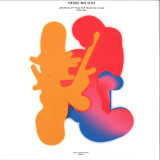
Music From Memory is excited to announce a special compilation that they’ve been working on for some time now; MFM053 – VA – Heisei No Oto – Japanese Left-field Pop From The CD Age (1989-1996). Compiled by long-time friends of the label, Eiji Taniguchi and Norio Sato, Heisei No Oto delves into a world of music released almost exclusively on CD and brings together a fascinating selection of discoveries from a little known and overlooked part of Japan’s musical history.
The last ten or so years have seen a global wave of interest in Japanese music encompassing ambient, jazz, new wave and pop records from the 1980s, some of which is increasingly considered the most innovative and visionary music of that time. Although some music from this period, in the form of ‘City Pop’ or ‘rare groove’ records, had been coveted by collectors and DJs for a number of years, most Japanese music from the time was little known outside and often even within Japan.
Sometime around the mid 2000s, two Osaka record store owners, Eiji Taniguchi of Revelation Time and Norio Sato of Rare Groove, along with a handful of deep Japanese diggers such as Chee Shimizu of Organic Music records in Tokyo, began to explore beyond the typical ‘grooves’ or ‘breaks’. Much like their counterparts in Europe and the US, they began delving into home-grown ambient, jazz, new wave and pop records, discovering visionary music, often driven by synthesizers or drum computers, that broke beyond the typical confines of their genres.
Spending tireless hours in local record stores and embarking on digging trips across the country, Eiji Taniguchi and Norio Sato, much like Chee Shimizu, have been at the forefront of unearthing and introducing many of the very Japanese records now loved and sought after around the world. Yet as YouTube algorithms and vinyl reissues would transport such music into the global consciousness and demand and therefore scarcity intensified for such records, so Eiji and Norio have recently begun to turn their attention to CDs.
The title of the compilation Heisei No Oto refers to the sound of the Heisei era, which began in 1989 and corresponds to the reign of Emperor Akihito until his abdication in 2019. Marking the culmination of one of the most rapid economic growths in Japanese history, 1989 also coincided with the music industry’s final shift away from vinyl in favour of CDs. And, although compact discs were first introduced seven years earlier it wasn’t until late into the ‘80s that, beyond dance music labels, CDs became the exclusive format for major and independent labels in Japan and throughout the world.
This however didn’t signal the end of the innovation in Japan. Many of those same musicians who have become known for their work in the ‘80s would continue to produce outstanding music well into the mid ‘90s, as greater innovation and advances in musical equipment allowed Japanese musicians and producers to refine and explore new sounds. While musicians such as the seminal Haruomi Hosono, whose productions feature on a number of tracks, would continue to push the boundaries of these new technologies, these technological advances also meant less established musicians were able to make use of increasingly affordable but state-of-the-art equipment.
Including music by Haruomi Hosono as well as Yasuaki Shimizu, Toshifumi Hinata and Ichiko Hashimoto who have become known and loved around the world in recent years, Hesei No Oto also features Japanese pop star Yosui Inoue, producers Jun Sato and Keisuke Kikuchi in aaddition to less established artists from the contemporary, jazz, new wave, pop and dance music scenes. Bringing together a selection of tracks that seem to define these specific genres and in fact move fluidly between a number of them, the music on the compilation is again underscored by experimentations with synthesizers and drum computers though with something of a gentle Pop sensibility. Reimagined here then under the encompassing term ‘Left-field Pop’, this is an exciting chapter in Japanese musical history that has only just begun to be fully explored.
VA - Heisei No Oto - Japanese Left-field Pop From The CD Age (1989-1996) is a 2xLP/2xCD that includes liner notes by Chee Shimizu and artwork by Hagihara Takuya and is released on February 28th.
Side A / Double A / Gotta be a Sucka 4 Luv
After almost two years on digital, Double A’s “Gotta be a Sucka 4 Luv” finally gets its vinyl
release. Blending elements of classic funk and soul with “that vocal!”, it’s an instant party
rocker. Snappy drums, bigged up for the dance floor, an unmistakable bass line, and horn
stabs for days are the icing on the cake. You know the sound!
Side AA / King Most / Standing Out
Another long-awaited vinyl pressing for a digital-only sure-shot! San Francisco’s King Most
delivers the goods once again. Classic funk and R&B vibes with a killer male vocal and drums
for the club. This one has been a staple in digital crates for a while now, and hits any time of
night.
First career spanning compilation on vinyl, covering studio albums, singles and unreleased tracks (2009-2023) by the acclaimed Peruvian instro band, Los Protones. A collection of intense recordings - mostly originals - which combine surf music, psych, garage, and tropical & Andean flavors. DESCRIPTION The Protones began their strange journey in Lima, Peru, in early 2007. The band's roots were as a side project for several members of Manganzoides, a well-remembered Peruvian garage rock band, but they quickly consolidated their own instrumental style that, to this day, combines musical genres from the 60s such as psychedelia, surf music and garage rock, sometimes paying tribute to Peruvian rhythms such as chicha and Amazonian cumbia. They are surely the only band in the world that has shared stages with Los Shapis and the New York Dolls, although not on the same night... Over the course of two decades they have played countless concerts, including visits to Europe and other Latin American countries. The music on this compilation comes from their four, full-length studio albums: "Los Protones", "Hijas del Diablo", "Maravilla!" and "Misión: OA4", in addition to the previous CD compilation "20 Monstruos! 2007-2015" and "Double Feature", a split CD with the Brazilian band Os Brutus. The group's current lineup includes Gonzaleo (guitar), Tito (drums), Jimi (keyboards), Andrés (bass) and Lucía (violin). Dance floor oriented tropical music at its best!
- A1: 2 Unlimited - No Limit
- A2: Cappella - U Got 2 Let The Music
- A3: Mc Sar & The Real Mccoy - It's On You
- A4: Haddaway - What Is Love
- A5: La Bouche - Be My Lover
- A6: E-Type - This Is The Way
- A7: Vengaboys - Boom, Boom, Boom, Boom!!
- B1: Captain Jack - Captain Jack
- B2: 2 Brothers On The 4Th Floor - Dreams (Will Come Alive)
- B3: Ice Mc - Think About The Way
- B4: B G. The Prince Of Rap - The Colour Of My Dreams
- B5: Whigfield - Saturday Night
- B6: Dj Bobo - Let The Dream Come True
- C1: Snap! - Rhythm Is A Dancer
- C2: Maxx - Get A Way
- C3: Twenty 4 Seven - Slave To The Music
- C4: Technotronic - Pump Up The Jam
- C5: Mr President - Coco Jamboo
- C6: Corona - The Rhythm Of The Night
- C7: E-Rotic - Max Don't Have Sex With Your Ex
- D1: Captain Hollywood Project - More And More
- D2: Strike - U Sure Do
- D3: Jam & Spoon Feat Plavka - Right In The Night (Fall In L
- D4: Solid Base - Mirror Mirror
- D7: Playahitty - The Summer Is Magic
- D5: T-Spoon - Sex On The Beach
- D6: N-Trance Feat Ricardo Da Force - Stayin' Alive
The vibrant genre Eurodance originated in the late Eighties in Europe and combines many elements of rap and rich melodic vocals with strong bass rhythms and cutting-edge synthesizers. The 2LP Eurodance Collected compiles the best hits from Eurodance, including Snap! ""Rhythm Is A Dancer"", Technotronic's worldwide smash ""Pump Up The Jam"", catchy sing-a-long self-titled Captain Jack track, Dutch group Vengaboys' ""Boom, Boom, Boom, Boom!!, Belgium's hit-wonder 2 Unlimited's ""No Limit"" plus 22 other guaranteed dancefloor fillers. Eurodance Collected is available on black vinyl and includes an insert.
The excellent Minimal Wave serves up a long-awaited LP here that features unreleased treasures from the influential UK duo, Vicious Pink, who first met at The Warehouse night-club in Leeds in the late 1970s and went on to reshape synth-pop. They notoriously lent their backing vocals to friends Soft Cell but went on to have success as a duo with avant-garde singles that defied norms and climbed the UK dance charts between 1982 and 1986. Now, Unexpected offers glimpses into their creative process and is packed with pop experiments recorded on the fly, some of which are with Dave Ball of Soft Vell/Grid fame. Limited to 999 copies on Coke bottle clear vinyl, this release is a true collector's gem that includes an exclusive postcard.
Repress!
HERBERT HUNTER will be forever worshiped by the UK Northern Soul scene for his anthemic 45 'I Was Born to Love You', recorded in the home of country music, Nashville, in 1967. Sometimes things are just meant to be and they collide in perfect harmony. 'I Was Born To Love You' is a case in point. The perfect lyric - 'I Was Born To Love You, You Were Born To Tear My Heart Apart' - the perfect beat, and perfect timing as it crashed onto these shores in the summer of '76 when Northern Soul was at its zenith and Wigan Casino owned the All-Nighter scene! But, Hunter is no one-trick pony, as his list of collectable 45s bears testament, not least 'Happy Go Lucky', also on Spar. Hunter was part of Ted Jarrett's roster of artists and, under Jarrett's stewardship recorded a string of cover versions under the pseudonym Leroy Jones for the neighbouring budget label 'Hit'. He learnt much of his trade from established artists and label mates such as Gene Allison who he toured with as minder and nursemaid, due to Allison's drink problem. Often, when they arrived a venue, Allison was too drunk to perform and Hunter would step in for him.
For our B-side we've chosen a lesser known, but no less wonderful and gritty Northern Soul dancer 'I Know The Feelin'' by THE JADES. Currently very much in demand with a mint copy selling earlier this year for over $900. We know little about The Jades who recorded this incredible slab of up-tempo soul for Ted Jarrett's Poncello label in 1964 featuring, of course, Herbert Hunter's booming lead vocal.
Many thanks to Fred James for making this superb double-sider possible.
Diggers Society is an underground electronic music label based in Barcelona. This debut release encapsulates the label's musical philosophy, featuring two tracks produced by legends Francesco Farfa and Miki (in collaboration with Niki IL B and Andrea Melly), and two tracks produced by talented artists from the new generation such as Luca Piermattei and Lucio. The result is a complete EP, featuring 4 different dancefloor-oriented productions, each one for a different moment of the night.
Artwork by @designattitude_graphic
Next Polyamore Recs release comes from Costariva, a really interesting project from Bologna (ITA).
‘Pantera’ intended to transport the listener into the midst of the vibrant paths of a dancing journey to the sound of Italo-disco rhythms, bringing body and soul back to the belle époque of Italian disco music.
“Miscela originale” is a blend of Catchy bass lines and shimmering melodies, amalgamated by the colours of strings and synths, the track is the result of the artistic blend between the music produced and arranged by Federico Franciosi and the words skilfully framed with an ironic and boisterous vein by Giorgio Michele Longo (aka Giargo) and Francesco Zaniboni (aka Dj Rou).
“Rivisitazione adriatica” has a catchy, sexy groove and a horns part that let you go on summer nights.
“Sam Ruffillo Rework” is a dancefloor ready track for your best peak-time in the next summer season festival.
‘Pantera’ is also intended as a veiled homage to one of the greatest and most underrated innovators on the Italian and international music scene, Pino D’Angiò.
With its infectious rhythm and playful spirit, ‘Pantera’ promises to make listeners dance and smile, instilling a little healthy and amused nostalgia in all travellers of the night.
Two years after the release of the Polarius EP Inner Voices Of A Clown, Danny Wolfers returns to Altered Circuits, this time under his best-known alias Legowelt, for Ruins Of Cracktopolis: a collection of "hymns to survive the dystopian circus of today's techno scene" in the artist's own words. On Do You Know Who You Never Be, a short staccato lead and dark chords revolve around a monolithic kick drum pattern that takes care of the cadence and bass. A mysterious vocoder and a laser sequence that gets torn and twisted to the max join, but the track never loses its steady pace - it gets help from shakers so much mixed to the front they could be lifted from a B'more track.
Amidst the effervescing 303 lines and bold drum sequences of In A Trance Dance All Night" Wolfers finds a canvas for a stretched synthesizer jam with eighties breaking allure. This melody, together with the pads and vocal, are drenched in reverb - they float like mist ascending from the The Hague dunes. Throughout Ruins Of Cracktopolis, more vintage Dutch West Coast, the hiss-laden broken beat that guides the bass sequences and ominous blippy synth patterns switches to a 4/4 structure and back. These make for captivating shifts in pace while the minor progressions continue unfolding. Like Twin Peaks targets prime energy once the arpeggiator sequence present from the start lowers an octave. The track runs smooth like a pomade slick-back; it's only tempered slightly when the crunchy kick and tom change place for a moody chord sequence break. Even if these four tracks target the club, they are equally suited for - quoting Wolfers again - "leisurely home listening". Their greatest strengths are, as so often, their melodic aspects.
The artist is known to be a synthesizer aficionado, but his unique personal touch immediately shines through no matter which gear he works with. The machines never seem to dominate the composing process; quite the opposite: it's as if he isn't programming or registering as much as trying to teach them his take on electronic music.
Or Kantor, a respected tattoo artist and the creative force behind the renowned "Love Light" studio stepping into the music scene for the first time with his debut album "Sarda Sarda" blending the atmospheric tones of surf music with influences from Mediterranean ballads
All Again. That's the title of the upcoming full-length record from Philadelphia's Queen of Jeans. The LP tracks an entire arc that, by the final hazy vibrato wash of "Do It All Again," bleeds back into the ambient first seconds of the record. "Thought I'd call tonight, hear how you're dealing," Miriam Devora sings to a distant lover on opener "All My Friends" in a neon-lit, melancholy tenor, the precise sound of lonesome love. The full band joins her in a beautiful night time sway, but it's still no use: "I got all my friends around, but I'm not home til I'm alone with you."The rest of the record follows this relationship as it tumbles through loneliness and longing, to elation and joy, to pain and anger, and finally to its foggy close, where Devora admits, "If I got to do it all again, I'd find you there like I did back then."Releasing on Memory Music, All Again is principally an enveloping, rich indie-rock record, changing dance partners between cheek-to-cheek '60s pop sweetness, '90s alt-rock dirt, spacious and pained emo, and the songcraft and melodicism of the sharpest acoustic singer-songwriter acts. Devora (vocals, guitar, keys) and Matheson Glass (lead guitar, piano) took extra care this time to create a Queen of Jeans full-length that reflected in sound and structure the emotional depths they were exploring.It's the first time since their 2015 debut, Dig Yourself, that they've had a full band, with drummer Patrick Wall and bassist Andrew Nitz, to build with. Where on releases like 2022's sparkling lockdown-pop Hiding In Place Devora and Glass had gone into producer and mix/master engineer Will Yip's Studio 4 with sketches and worked with Yip to arrange the songs in studio, this time, they went in with a complete vision for the record. That allowed them to use studio time to expand the record's sonic boundaries. "We had a lot more room to play with some of the ear candy we've always wanted to explore and get weirder in the studio," says Glass.Those elements lend a physicality and playfulness to the memory and emotions that unfurl through All Again. "We're trying to tell the story of when you look back at an important relationship," says Glass. "Years go by, and the more you reflect on it, it becomes more warped and the facts become a little bit more murky. We wanted to play with that and get surreal with the story." (Literally: listen for a "monster" voice in the already-released banger "Karaoke.") The record's artwork, conceptualized by Devora, renders this idea with devastating clarity.
Gottwood Festival's imprint Gottwax returns for its eighth installment. At the controls of this release is the London-based duo 'Make A Dance,' whose playful, party-driven sound has been making waves in the underground since their inception. Delivering a lively four-track EP, which includes two originals and two reworks, all of which are club-ready and certainly have 'The dance in mind.' This is going to make it into a lot of DJs' bags this summer and is not one to be missed."
Kicking things off on the A-side is 'Pocket Beagle,' a playful track that exudes energy with its infectious bassline groove and unforgettable vocal. Make A Dance showcases their slick production abilities and sense of humour with this track, which is sure to be a staple at many parties this summer. Moving to the A2, 'Pocket Beagle (Acid Dub)' is the duo's club-ready reimagining of the A1, injecting some serious attitude and character with its acid-infused bassline and metallic top line.
Onto the B-side, we've got 'Woof Doof.' This track is a real groover, with a lively bass and catchy melody. It's a solid addition to any DJ's arsenal and one you can expect to hear at many parties this year.Closing out the EP is 'Woof Doof (Hardcore Labrador Mix),' the duo's haunting rework that cleverly rethinks the B1 but takes you on a deeper journey. With its heavy drum groove, swelling sound effects, and that catchy top line, this track is tailor-made for those late-night dance floors.
We're excited to welcome Make A Dance to the Gottwax family and share the 'Woof Doof' EP with you.
- A1: Dennis Coffey And The Detroit Guitar Band - Scorpio
- A2: The Jimmy Castor Bunch - It's Just Begun
- A3: B T. Express - Energy Level
- A4: James Brown - Get On The Good Foot
- A5: Afrika Bambaataa & The Soul Sonic Force - Planet Rock
- B1: Manu Dibango - Soul Makossa
- B2: Esther Williams - Last Night Changed It All
- B3: The Mohawks - The Champ
- B4: Herman Kelly & Life - Dance To The Drummer’s Beat
- B5: Spanky Wilson - Sunshine Of Your Love
- C1: James Brown - Give It Up Or Turnit A Loose
- C2: Candido - Soulwanco
- C3: Arthur Baker - Breaker's Revenge
- C4: Manu Dibango - The Panther
- D1: Abaco Dream - Life And Death In G & A
- D2: The Jackson 5 - Dancing Machine
- D3: Mongo Santamaria - Cloud Nine
- D4: Edwin Starr - I Just Wanna Do My Thing
- D5: Badder Than Evil - Hot Wheels
Compiled by legendary producer Arthur Baker, ‘Breakers Revenge’ is a near-definitive collection of original Funk, Soul, Latin, Disco and Electro classic tracks from 1970-1984. These tracks, a combination of classics and obscurities, have all since become legendary to Breakdancers everywhere.
First played at South Bronx block parties, community halls and park jams in the 1970s and 80s, spun endlessly by the first three major hip-hop DJs – Kool Herc, Grandmaster Flash and Afrika Bambaataa – and found in the record crates of any DJ of note ever since. Seminal funk and soul tracks such as Dennis Coffey’s ‘Scorpio’, The Jimmy Castor Bunch’s ‘It’s Just Begun’, James Brown’s ‘Get on the Good Foot’, The Mohawks’ ‘Champ’ sit side-by-side here with the ground-breaking, classic electro of Afrika Bambaataa’s ‘Planet Rock’, and Arthur Baker’s own definitive ‘Breaker’s Revenge.’ Breakdancing has come a long way from its New York roots to its respected position as an art form today where, for the first time ever, it is to be featured in the Olympics held in Paris this August 2024.
The ‘breakbeat’ remains at the very heart of hip-hop, the mercurial funk, soul and disco tracks, always 100% guaranteed to get B-Boys, B-Girls and Breakdancers moving at any block party, with the percussive breakdown of each track the pinnacle soundtrack to any dance/battle between Breakdancers of any note. Similarly these tracks have been sampled many 1000s of times over by every hip-hop artist and producer of note. KRS-ONE, Marley Marl, Kanye West, Jay-Z, Public Enemy, Eric B, The Fugees, Outkast, Mos Def, Main Source, Jungle Brothers, LL Cool J, De La Soul and, well, everyone!
Compiler Arthur Baker played a pivotal role in hip-hop history when in 1982 he produced Afrika Bambaataa’s seminal ‘Planet Rock’ (as featured here), introducing electronic instruments into hip-hop for the first time ever and in the process created electro. After ‘Planet Rock’, Arthur Baker went on to remix or produce every major artist of note – from New Order to the Rolling Stones, Al Green to the Pet Shop Boys
DJ Support: Don Letts (6 Music), Piet Blank Blank & Jones / Dj Ease Nightmares On Wax / Macca Nts Radio / Coyote / Mike Salta Music For Dreams / Pete Gooding / Layne Fox 40 Thieves / Chris Coco / Richard Dorfmeister Kruder & Dorfmeister / Bill Brewster / Simon Mills [Bent. Plus Loads More.
DJ Feedback:
Lovely laid-back vibes. Excellent! - Francois K [NYC, USA]
Ay what a beauty! Takes you away from the madness for a moment. - Macca (NTS)
Following on from Los Rayos Del Sol (2021) & the follow up Los Rayos In Dub (2022) NuNorthern Soul presents ‘Moonbeams’ by Ibiza based producer, per-cussionist and sunset selector, George Solar.
Inspired by nocturnal moods and illuminated by the moon in all its phases, this collection follows the vibrations of 'Los Rayos Del Sol.' It's a journey into night-time peace and harmony, embracing the moonlit atmosphere.
MEDIA LUNA (feat. Ken Fan)
Opening with angelic dubby downtempo, this track translated is 'Half Moon,' sets the tone for the night.
MOONBEAMS (feat. Ken Fan)
Featuring love poet JEN, 'Moonbeams' captures the rise of the moon and the message of love.
COUNTERMOON (feat. Ken Fan)
Originally a slower cumbia demo, this track evolved into a retro dance piece with a minimalistic touch. Reflecting the off-center vibe of lunar forces.
LUNATICOTINA (feat. Ken Fan)
A tribute to the global beats scene, this ritual tune incorporates grooves from all continents, dedicated to Ibiza's 'global beats' oasis LAYLAH venue.
O LUAR
Influenced by Samba vibes and the Brazilian approach to moonlight, this track combines Solar dub and cosmic stardust.
MOONBEAMS reprise (for KS)
A tribute to Klaus Schulze, a secret Solar Moon band member, this reprise is a spontaneous improvisation recorded in memory of the spiritual godfather.
Four years after releasing their debut record, Indus are back in 2024 with Negra, their second album. This record explores the essence of the night through dance, seduction and mystery, while paying homage to Colombian amphibious cultures and the land as that place that has seen us moving and that we always return to. With these ten songs Barranquilla producer Oscar Alford, along with Andres Mercado and a select group of collaborators, builds a bridge between the sounds and histories of the Pacific and the Caribbean, bringing together territories like a river running through them and connecting them. Oscar says that on this record "there's this confluence of various cultural universes, on the one hand there's the traditional music of the coast and river areas, there are various maestros who collaborated on the record and they brought that, also there's electronica which is a universal language, and even hip hop and more urban genres like dembow." The record kicks off with "Deja," a ritual of initiation, a galactic, synthetic entrance into a place of plenty, a journey to the ethereal and the night. It's followed, like light and guide, by the song "Alfa Indi," with Gamero singer Nelda Piña, a release of electronic sounds evoking creation in all its senses. The night is an excuse for and a generator of desire, seduction and flirting in "Candela tu Trá," in collaboration with Tomás Llerena, grandson of the legendary Petrona Martínez. The earth is evident in tracks like "Canción del muerto," homage to the marimba maestro Gualajo, with his brother Pacho Torres and Bogotá rapper N. Hardem, a song that could be a farewell ritual and tribute to the land as the place to which we always return, one that holds the history of those who walked that land and left their mark on it. We hear this in "Corre Cimarrón" with Ka Oddun, portraying the journeys of fleeing enslaved ancestors as they tried to survive until they reached the palenque, a place of freedom. Negra explores the mysticism of the night and the cosmos within the Colombian musical tradition. A dialog between root rhythms, voices and synths with bases oscillating between techno-champeta, afro-tech and future-dembow. With this record Indus comes across as one of the most versatile acts on the Latin American scene, especially in the way they reinterpret ancestral music and resignify its sound.
Black Truffle is thrilled to present the first vinyl reissue of David Rosenboom’s unique Future Travel, originally released on the short-lived Detroit label Street Records in 1981 and here presented in an expanded edition with an additional LP of wild, previously unheard live and studio material from the same period.
Future Travel emerged from the confluence of two important streams in Rosenboom’s work at this time. First, his exploration of ‘propositional music’, defined as ‘complete cognitive models of music’ that start from the radical question, ‘What is music?’ In this case, the music belongs to the universe of Rosenboom’s In the Beginning (1978-1981), in which proportional relationships determine the material available to the composer in all musical parameters (harmonic relationships, melodic shapes, rhythmic subdivisions, dynamics, and so on). Second, the work documents a key moment in Rosenboom’s long collaboration with synthesizer pioneer Don Buchla. Having played a role in developing concepts for some of the modules of the Buchla 300 Series Electric Music Box (an innovative analogue modular system controlled by micro-processors), Rosenboom went on to write the software for Buchla’s hybrid analogue-digital keyboard synthesiser, the Touché, the instrument heard most prominently here.
In a way that no purely analogue synthesizer could, the 300 Series and Touché allowed Rosenboom to work with the In the Beginning algorithms in real time, the synthesizers becoming ‘intelligent instruments’ that actively collaborate with the performer. Developing the open structures of the electronic pieces from In the Beginning, Future Travel explored the possibilities of simply ‘playing the system’, recording live at Francis Ford Coppola’s Zoetrope studio in San Francisco. Working from loose sketches, Rosenboom added acoustic instruments to the electronic sounds and, on some pieces, the processed voice of Jacqueline Humbert. Like Rosenboom’s collaboration with Humbert on the abstracted synth-chanson of Daytime Viewing, this music set out deliberately to challenge the ‘stratified and illusorily coagulated identities in the musical culture of the time,’ refusing distinctions between ‘serious’ and popular music. But where Daytime Viewing achieves this in part through genre references, Future Travel is bracingly sui generis, existing in a unique universe where radical formalisation à la Xenakis spontaneously gives rise to expressive jazz harmonies and old-timey folk melodies.
The crystalline quality of many of the Touché sounds gives Future Travel a sparkling, immediately enticing surface, its layers of shifting ostinato patterns pulsating outside conventional meter, rippling like waves on the surface of water. On opener ‘Station Oaxaca’, ping-ponging synth arpeggios and hand percussion accompany a sentimental violin melody, abruptly overtaken by layered keyboard runs, before the entry of tinkling marimba-like sounds reframe the scene as sci-fi Martin Denny exotica. ‘Time Arroyo’ begins as an austere study in staccato synth sounds in multiple overlapping tempi, reminiscent of Ligeti’s famous ‘clock’ rhythmic effects. Before long, it opens up into a melodic passage with the gentle heroism of classic Roedelius, which proves to be only a brief interlude before the layers of rhythmically distinct synthesiser patterns begin to build and accelerate into an increasingly dense cacophony. The wildest twists and turns are saved for the epic closer ‘Nova Wind’, where the arrangement focuses on Rosenboom’s virtuoso piano playing, perfectly embodying the project’s radical disregard of stylistic orthodoxies as he moves from hyperactive pointillistic flurries to a kind of space-age gospel.
At several points throughout the record, the distinctive voice of Jacqueline Humbert is heard reading passages from the text component of In the Beginning, a dialogue between The Double (an embodiment of humanity’s timeless desire to replicate itself in spiritual and technological copies) and two Spirit Characters. Fittingly, as all are conceived as embodiments of a future form of techno-human collective consciousness, distinctions between the three characters are not immediately evident in Humbert’s delivery, just as the music blurs the boundaries between intelligent computing and human spontaneity. Adorned with a striking retro-futurist cover (and here accompanied by extensive new liner notes and archival images), Future Travel is a time capsule of radical imaginings at the birth of our digital age, reminding us of utopian possibilities of which our own present seems so often to fall short.
Malmö’s Mod Sens arrives on Programm LDN with an electric intersection of soundsystem styles and taut techno and electro. Pushing inventive, bassweight dance music through his Melt club night in the city he calls home, the wildly talented Swedish producer brings an international outlook to his subtly crafted workouts.
“These four tracks were all made at a time in Malmö when electro was completely dominating the underground scene,” says Mod Sens. “That had a strong influence on the creation of these tracks, but I was definitely more urgent to create my take on ‘UK’ Sounds.”
The sound on Misperceptions EP is introspective by design, cast in melancholic pads which balance the rugged impact of the crafty drums and upfront low-end. Mod Sens himself describes exploring the tension between wanting to run and feeling ‘stuck’, and that yearning sensation culminates in four elevated cuts that uphold Programm’s commitment to advancements in club music.
Visual director Blackwall and graphic designer Alfie Allen responded to the tangible mood of the EP, resulting in an accompanying visualiser and sleeve design which round out the emotion Mod Sens was reaching for while working on the music. As a complete package, it’s an audio-visual statement which leaves a lingering impression, as any art worth making