Cerca:night demon

Generi
Tutto
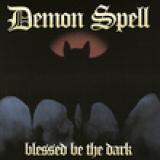
Demon Spell - Blessed be the Dark
  • 1: As Lucifer Smiles
  • 2: Hexes And Horrors
  • 3: Curse Of The Undead
  • 4: High On Sacrifice
  • 5: The Tolling
  • 6: Dive The Hellfire
  • 7: Premonitions
  • 8: Blessed Be The Dark

DYING VICTIMS PRODUCTIONS is proud to present DEMON SPELL’s highly anticipated debut album, Blessed Be the Dark, on CD and vinyl LP formats. After the cursed EP Evil Nights in 2024, the coven of DEMON SPELL returns, unleashing a vision of dark, occult heavy metal born from dust, bone, and shadow. Appropriately titled Blessed Be the Dark, the Italians’ debut album is a descent into ritual fire and ancient doom, where the echoes of the grave sing once more. This is music for disciples of the timeless art of darkness.

With Blessed Be the Dark, DEMON SPELL deepen their devotion to a shadowed form of heavy metal rooted in the classic tradition yet veiled in occult and arcane tones, all performance with a provocative theatrical presence. Wholly untouched by modernity, their sound draws from the primordial essence of early heavy metal; one can imagine the cutoff year at 1985, or perhaps earlier. The record presents a more mature and refined vision of the band’s sound as first displayed on the quick-hitting Evil Nights, here exploring darker, more occult atmospheres while also offering raw, energetic passages that bring moments of levity and drive. Listening to DEMON SPELL in full-length form feels like entering an endless Sabbath, where past and present dissolve and the flame never dies. Blessed Be the Dark stands as a testament to heavy metal as ceremony—timeless, solemn, and possessed by the Spirit of the Night.

pre-ordina ora24.04.2026

dovrebbe essere pubblicato su 24.04.2026

22,65
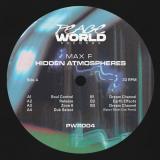
Max F - Hidden Atmospheres

Peace World Records returns with Hidden Atmospheres, the debut release produced by Max F and mixed by Space Ghost. Drawing from classic deep house and esoteric club sounds of the '90s and early 2000s, this seven-track collection channels these influences into fresh territory while preserving the digital grit and dreamlike essence of the era.

The release strikes a delicate balance between the meditative and the kinetic. On the A Side, tracks “Soul Control” and “Zone 6” highlight subtle yet hard-hitting percussion grooves and deep basslines that anchor the mix beneath ethereal pads and sweeps. Each track builds through hypnotic, evolving arrangements that reward close listening. On the B side, “Dream Channel” and “Earth Effects" both feature airy, spectral synth progressions that interweave with ephemeral yet decisive melodies, demonstrating a refined insight of space and dynamics. To round things off, Space Ghost took a crack at an energetic club remix of “Dream Channel. ” Carried by a classic 909 house rhythm and a bubbly bassline, the remix offers a fun, uplifting take on the original, complete with organ stabs and MIDI sax!

As a whole, Hidden Atmospheres delivers something new for fans of 90s and 2000s era house music. Think Ronin, Hanna, Chris Brann, Wamdue Kids—artists whose work holds its own in the club while remaining equally suited for intimate late-night listening. Throughout the record, tracks drift seamlessly between shimmering dancefloor functionality and liminal, introspective ambience, inviting repeat listens that reveal new details and "hidden atmospheres" with eachpass.

Hidden Atmospheres lands on Peace World Records April 9th, 2026.


g B3. Dream Channel Space Ghost Club Remix

In stock dal15.05.2026

16,39
Guilty Razors - Complete Recordings 1977 - 1978

UILTY RAZORS, BONA FIDE PUNKS.


Writings on the topic that go off in all directions, mind-numbing lectures given by academics, and testimonies, most of them heavily doctored, from those who “lived through that era”: so many people today fantasize about the early days of punk in our country… This blessed moment when no one had yet thought of flaunting a ridiculous green mohawk, taking Sid Vicious as a hero, or – even worse – making the so-called alternative scene both festive and boorish. There was no such thing in 1976 or 1977, when it wasn’t easy to get hold of the first 45s by the Pistols or the Clash. Few people were aware of what was happening on the fringes of the fringes at the time. Malcolm McLaren was virtually unknown, and having short hair made you seem strange. Who knew then that rock music, which had taken a very bad turn since the early 1970s, would once again become an essential element of liberation? That, thanks to short and fast songs, it would once again rediscover that primitive, social side that was so hated by older generations? Who knew that, besides a few loners who read the music press (it was even better if they read it in English) and frequented the right record stores? Many of these formed bands, because it was impossible to do otherwise. We quickly went from listening to the Velvet Underground to trying to play the Stooges’ intros. It’s a somewhat collective story, even though there weren’t many people to start it.
The Guilty Razors were among those who took part in this initial upheaval in Paris. They were far from being the worst. They had something special and even released a single that was well above the national average. They also had enough songs to fill an album, the one you’re holding. In everyone’s opinion, they were definitely not among the punk impostors that followed in their wake. They were, at least, genuine and credible.

Guilty Razors, Parisian punk band (1975-1978). To understand something about their somewhat linear but very energetic sound, we might need to talk about the context in which it was born and, more broadly, recall the boredom (a theme that would become capital in punk songs) coupled with the desire to blow everything off, which were the basis for the formation of bands playing a rejuvenated rock music ; about the passion for a few records by the Kinks or the early Who, by the Stooges, by the Velvet mostly, which set you apart from the crowd.
And of course, we should remember this new wave, which was promoted by a few articles in the specialized press and some cutting-edge record stores, coming from New York or London, whose small but powerful influence could be felt in Paris and in a handful of isolated places in the provinces, lulled to sleep by so many appalling things, from Tangerine Dream to President Giscard d’Estaing...
In 1975-76, French music was, as almost always, in a sorry state ; it was still dominated by Johnny Hallyday and Sylvie Vartan. Local rock music was also rather bleak, apart from Bijou and Little Bob who tried to revive this small scene with poorly sound-engineered gigs played to almost no one.
In the working class suburbs at the time, it was mainly hard rock music played to 11 that helped people forget about their gruelling shifts at the factory. Here and there, on the outskirts of major cities, you still could find a few rockers with sideburns wearing black armbands since the death of Gene Vincent, but it wasn’t a proper mass movement, just a source of real danger to anyone they came across who wasn't like them. In August 1976, a festival unlike any other took place in Mont-de-Marsan – the First European Punk Festival as the poster said – with almost as many people on stage as in the audience. Yet, on that day, a quasi historical event happened, when, under the blazing afternoon sun, a band of unknowns called The Damned made an unprecedented noise in the arena, reminiscent of the chaotic Stooges in their early adolescence. They were the first genuine punk band to perform in our country: from then on, anything was possible, almost anything seemed permissible.

It makes sense that the four+1 members of Guilty Razors, who initially amplified acoustic guitars with crappy tape recorder microphones, would adopt punk music (pronounced paink in French) naturally and instinctively, since it combines liberating noise with speed of execution and – crucially – a very healthy sense of rebellion (the protesters of May 1968 proclaimed, and it was even a slogan, that they weren’t against old people, but against what had made them grow old. In the mid-1970s, it seemed normal and obvious that old people should now ALSO be targeted!!!).
At the time, the desire to fight back, and break down authority and apathy, was either red or black, often taking the form of leafleting, tumultuous general assemblies in the schoolyard, and massive or shabby demonstrations, most of the time overflowing with an exciting vitality that sometimes turned into fights with the riot police. Indeed, soon after the end of the Vietnam War and following Pinochet’s coup in Chile, all over France, Trotskyist and anarcho-libertarian fervour was firmly entrenched among parts of the educated youth population, who were equally rebellious and troublemakers whenever they had the chance. It should also be noted that when the single "Anarchy in the UK" was first heard, even though not many of us had access to it, both the title and its explosive sound immediately resonated with some of those troublemakers crying out for ANARCHY!!! Meanwhile, the left-wing majority still equated punks with reckless young neo-Nazis. Of course, the widely circulated photos in the mainstream press of Siouxsie Sioux with her swastikas didn’t necessarily help to win over the theorists of the Great Revolution. It took Joe Strummer to introduce The Clash as an anti-racist, anti-fascist and anti-ignorance band for the rejection of old-school revolutionaries to fade a little.

The Lycée Jean-Baptiste Say at Porte d’Auteuil, despite being located in the very posh and very exclusive 16th arrondissement of Paris, didn’t escape these "committed" upheavals, which doubled as the perfect outlet for the less timid members of this generation.
“Back then, politics were fun,” says Tristam Nada, who studied there and went on to become Guilty Razors’ frontman. “Jean-Baptiste was the leftist high-school in the neighbourhood. When the far right guys from the GUD came down there, the Communist League guys from elsewhere helped us fight them off.”
Anything that could challenge authority was fair game and of course, strikes for just about any reason would lead to increasingly frequent truancy (with a definitive farewell to education that would soon follow). Tristam Nada spent his 10th and 11th unfinished grades with José Perez, who had come from Spain, where his father, a janitor, had been sentenced to death by Franco. “José steered my tastes towards solid acts such as The Who. Like most teenagers, I had previously absorbed just about everything that came my way, from Yes to Led Zeppelin to Genesis. I was exploring… And then one day, he told me that he and his brother Carlos wanted to start a rock band.” The Perez brothers already played guitar. “Of course, they were Spanish!”, jokes their singer. “Then, somewhat reluctantly, José took up the bass and we were soon joined by Jano – who called himself Jano Homicid – who took up the rhythm guitar.” Several drummers would later join this core of not easily intimidated young guys who didn’t let adversity get the better of them.

The first rehearsals of the newly named Guilty Razors took place in the bedroom of a Perez aunt. There, the three rookies tried to cover a few standards, songs that often were an integral part of their lives. During a first, short gig, in front of a bewildered audience of tough old-school rockers, they launched into a clunky version of the Velvet Underground's “Heroin”. Challenge or recklessness? A bit of both, probably… And then, step by step, their limited repertoire expanded as they decided to write their own songs, sung in a not always very accurate or academic English, but who cared about proper grammar or the right vocabulary, since what truly mattered was to make the words sound as good as possible while playing very, very fast music? And spitting out those words in a language that left no doubt as to what it conveyed mattered as well.
Trying their hand a the kind of rock music disliked by most of the neighbourhood, making noise, being fiercely provocative: they still belonged to a tiny clique who, at this very moment, had chosen to impose this difference. And there were very few places in France or elsewhere, where one could witness the first stirrings of something that wasn’t a trend yet, let alone a movement.

In the provinces, in late 1976 or early 1977, there couldn’t be more than thirty record stores that were a bit more discerning than average, where you could hear this new kind of short-haired rock music called “punk”. The old clientele, who previously had no problem coming in to buy the latest McCartney or Aerosmith LP, now felt a little less comfortable there…
In Paris, these enlightened places were quite rare and often located nex to what would become the Forum des Halles, a big shopping mall. Between three aging sex workers, a couple of second-hand clothes shops, sellers of hippie paraphernalia and small fashion designers, the good word was loudly spread in two pioneering places – propagators of what was still only a new underground movement. Historically, the first one was the Open Market, a kind of poorly, but tastefully stocked cave. Speakers blasted out the sound of sixties garage bands from the Nuggets compilation (a crucial reference for José Perez) or the badly dressed English kids of Eddie and the Hot Rods. This black-painted den was opened a few years earlier by Marc Zermati, a character who wasn’t always in a sunny disposition, but always quite radical in his (good) choices and his opinions. He founded the independent label Skydog and was one of the promoters of the Mont-de-Marsan punk festivals. Not far from there was Harry Cover, another store more in tune with the new New York scene, which was amply covered in the house fanzine, Rock News (even though it was in it that the photos of the Sex Pistols were first published in France).
It was a favorite hang-out of the Perez brothers and Tristam Nada, as the latter explained. “It’s at Harry Cover’s that we first heard the Pistols and Clash’s 45s, and after that, we decided to start writing our first songs. If they could do it, so could we!”
The sonic shocks that were “Anarchy in the UK”, “White Riot” or the Buzzcocks’s EP, “Spiral Scratch” – which Guilty Razors' sound is reminiscent of – were soon to be amplified by an unparalleled visual shock. In April 1977, right after the release of their first LP, The Clash performed at the Palais des Glaces in Paris, during a punk night organised by Marc Zermati. For many who were there, it was the gig of a lifetime…
Of course, Guilty Razors and Tristam were in the audience: “That concert was fabulous… We Parisian punks were almost all dressed in black and white, with white shirts, skinny leather ties, bikers jackets or light jackets, etc. The Clash, on the other hand, wore colourful clothes. Well, the next day, at the Gibus, you’d spot everyone who had been at this concert, but they weren’t wearing anything black, they were all wearing colours.”

It makes sense to mention the Gibus club, as Guilty Razors often played there (sometimes in front of a hostile audience). It was also the only place in Paris that regularly scheduled new Parisian or Anglo-Saxon acts, such as Generation X, Siouxsie and the Banshees, the Slits, and Johnny Thunders who would become a kind of messed-up mascot for the venue. A little later, in 1978, the Rose Bonbon – formerly the Nashville – also attracted nightly owls in search of electric thrills… In 1977, the iconic but not necessarily excellent Asphalt Jungle often played at the Gibus, sometimes sharing the bill with Metal Urbain, the only band whose aura would later transcend the French borders (“I saw them as the French Sex Pistols,” said Geoff Travis, head of their British label Rough Trade). Already established in this small scene, Metal Urbain helped the young and restless Guilty Razors who had just arrived. Guitarist for Metal Urbain Hermann Schwartz remembers it: “They were younger than us, we were a bit like their mentors even if it’s too strong a word… At least they were credible. We thought they were good, and they had good songs which reminded of the Buzzcocks that I liked a lot. But at some point, they started hanging out with the Hells Angels. That’s when we stopped following them.”

The break-up was mutual, since, Guilty Razors, for their part, were shocked when they saw a fringe element of the audience at Metal Urbain concerts who repeatedly shouted “Sieg Heil” and gave Nazi salutes. These provocations, even still minor (the bulk of the skinhead crowd would later make their presence felt during concerts), weren’t really to the liking of the Perez brothers, whose anti-fascist convictions were firmly rooted. Some things are non-negotiable.
A few months earlier (in July 1978), Guilty Razors had nevertheless opened very successfully for Metal Urbain at the Bus Palladium, a more traditonally old-school rock night-club. But, as was sometimes the case back then, the night turned into a mass brawl when suburban rockers came to “beat up punks”.

Back then, Parisian nights weren’t always sweet and serene.

So, after opening as best as they could for The Jam (their sound having been ruined by the PA system), our local heroes were – once again – met outside by a horde of greasers out to get them. “Thankfully,” says Tristam, “we were with our roadies, motorless bikers who acted as a protective barrier. We were chased in the neighbouring streets and the whole thing ended in front of a bar, with the owner coming out with a rifle…”
Although Tristam and the Perez brothers narrowly escaped various, potentially bloody, incidents, they weren’t completely innocent of wrongdoing either. They still find amusing their mugging of two strangers in the street for example (“We were broke and we simply wanted to buy tickets for the Heartbreakers concert that night,” says Tristam). It so happened that their victims were two key figures in the rock business at the time: radio presenter Alain Manneval and music publisher Philippe Constantin. They filed a complaint and sought monetary compensation, but somehow the band’s manager, the skilful but very controversial Alexis, managed to get the complaint withdrawn and Guilty Razors ended up signing with Constantin with a substantial advance.

They also signed with Polydor and the label released in 1978 their only three-track 45, featuring “I Don't Wanna be A Rich”, “Hurts and Noises” and “Provocate” (songs that exuded perpetual rebellion and an unquenchable desire for “class” confrontation). It was a very good record, but due to a lack of promotion (radio stations didn’t play French artists singing in English), it didn’t sell very well. Only 800 copies were allegedly sold and the rest of the stock was pulped… Initially, the three tracks were to be included on a LP that never came to be, since they were dropped by Polydor (“Let’s say we sometimes caused a ruckus in their offices!” laughs Tristam.) In order to perfect the long-awaited LP, the band recorded demos of other tracks. There was a cover of Pink Floyd's “Lucifer Sam” from the Syd Barrett era – proof of an enduring love for the sixties’ greats –, “Wake Up” a hangover tale and “Bad Heart” about the Baader-Meinhof gang, whose actions had a profound impact on the era and on a generation seeking extreme dissent... On the album you’re now discovering, you can also hear five previously unreleased tracks recorded a bit later during an extended and freezing stay in Madrid, in a makeshift studio with the invaluable help of a drummer also acting as sound engineer. He was both an enthusiastic old hippie and a proper whizz at sound engineering. Here too, certain influences from the fifties and sixties (Link Wray, the Troggs) are more than obvious in the band’s music.

Shortly after a final stormy and rather barbaric (on the audience’s side) “Punk night” at the Olympia in June 1978, Tristam left the band ; his bandmates continued without him for a short while.

But like most pioneering punk bands of the era, Guilty Razors eventually split up for good after three years (besides once in Spain, they’d only played in Paris). The reason for ceasing business activities were more or less the same for everyone: there were no venues outside one’s small circuit to play this kind of rock music, which was still frightening, unknown, or of little interest to most people. The chances of recording an LP were virtually null, since major labels were only signing unoriginal but reassuring sub-Téléphone clones, and the smaller ones were only interested in progressive rock or French chanson for youth clubs. And what about self-production? No one in our small safety-pinned world had thought about it yet. There wasn’t enough money to embark on that sort of venture anyway.

So yes, the early days of punk in France were truly No Future!

non in magazzino

Ordina ora e ordineremo l'articolo per te presso il nostro fornitore.

21,43

Last In: 31 days ago
Malted Milk - Time Out LP

Malted Milk

Time Out LP

12inchBPLP25001
Blues Productions
10.04.2026
  • 01: What A Night
  • 02: I Feel Numb (Ft. Marco Cinelli)
  • 03: Time Out (Ft. Benin International Musical)
  • 04: Superchild
  • 05: Don&Apos;T You Make Plans On Rainy Days (Ft. Ben L&Apos;Oncle Soul)
  • 06: Midnight Hour
  • 07: Shouldn&Apos;T Talk About It
  • 08: It&Apos;S Alright

Time Out, a pause, like an injunction to suspend the course of events in order to project oneself into a more serene future, is the title of Malted Milk's eighth album. From the haunting Afro beat of the title track to the decadent boogaloo of "I Feel Numb", via the ballad "What a Night" and the funky "It's Alright" , the band demonstrates i ts mastery of arrangements, its creative ability and its talent for revisiting the soul/funk genre. As with the previous album, 1975, Marco Cinelli is back on writing and production duties, bringing undeniable added value to the band's sound and aesthetic. The live translation of this album bears Malted Milk's trademark precision, energy, instrumental talent and group cohesion. Malted Milk once again demonstrates its musical strength and affirms the special place the band occupies on the current soul scene.

pre-ordina ora10.04.2026

dovrebbe essere pubblicato su 10.04.2026

27,31
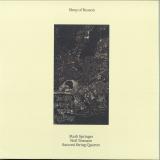
Mark Springer + Neil Tennant + Sacconi Quartet - Sleep of Reason LP 2x12"

I fell into a deep sleep of reason Everything broken and hence when I woke up from that deep sleep of reason it all made sense

A Unique Artistic Partnership This project represents a distinct and carefully considered artistic endeavor. Developed by Mark Springer (Rip, Rig and Panic) and Neil Tennant (The Pet Shop Boys), it combines a suite for piano, quartet, and quintet with vocals, accompanied by lyrics offering thoughtful introspection. The collaboration explores the intersection of divergent creative approaches-one characterized by radical expression, the other by meticulous craftsmanship. The result is a work that invites reflection and demonstrates the potential of disciplined artistic dialogue.

The Sources of the Project Neil Tennant: I bought a book of Goya's print series Los Caprichos which had inspired Mark's music and saw that the artworks were a satirical, cruel, nightmarish portrayal of the politics, corruption and culture of his era, exploring his dreams - or nightmares - while exposing the double standards of the ruling establishment. The lyrics I wrote for "Sleep of Reason", in response to Los Caprichos, are intended to be sardonic and dreamlike, looking back to Goya's nightmares but then reflecting on my experiences in 21st Century popular culture and media in which I have located the "monsters" Goya saw in his dreams. It often feels like we're living in an era dominated by monsters with their grotesque egos hollering through social media, unfiltered and untruthful, leaving a trail of wreckage behind them. Maybe it's always felt like that.

non in magazzino

Ordina ora e ordineremo l'articolo per te presso il nostro fornitore.

23,32

Last In: 61 days ago
Armin van Buuren - A State Of Trance Year Mix 2025 (3x12")
  • A1: Take The Leap (Asot Year Mix 2025 Intro)
  • A2: Let It Be For Love
  • A3: Love
  • A4: Illuminate
  • A5: Love Me Endless
  • A6: Start A Fire
  • A7: Deep Shadow
  • A8: Everything I Wanted
  • A9: Turning
  • A10: I'm A Freak
  • A11: Dust
  • A12: Find You
  • A13: What's The Matter?
  • A14: Heavy
  • A15: Missing Part Of Me
  • A16: Sound Of You
  • A17: Follow The Light
  • A18: Let You Down
  • A19: Take Off
  • A20: Keep The Faith
  • A21: I'm On Fire
  • A22: Shattered
  • A23: We Are Free
  • A24: Taking Back Control
  • A27: Desolate Lands
  • A28: End Of Time
  • A29: Angels (Vip Mix)
  • A30: Utopia (Korolova Remix)
  • A31: Dream A Little Dream (Vip Club Mix)
  • A32: Left Of Us
  • A33: Kidz (Camelphat Remix)
  • A34: The Lines
  • A35: Ta Que Na
  • A36: Ignite
  • A37: My Life
  • A38: Elysian
  • A39: Deepest Blue
  • A40: Super Powers (Giuseppe Ottaviani Remix)
  • A41: Mix The Master
  • A42: The Light On The Other Side (Asot Year Mix 2025 Outro)
  • A25: Let Your Mind Be Free
  • A26: All Night

We stumble, we doubt, we fall - but within those moments lies the spark of transformation. It isn't just change. It's courage. It's fire. And that same bravery is at the core of the twenty- second instalment of Armin van Buuren's annual year mix series. Opening with a powerful narration that sets the stage for transformation, this 113- track journey takes you through the sounds that breathe courage, reinvention, and unshakable energy. From uplifting anthems and emotive vocal tracks to driving, boundary-pushing tech-trance, the mix features productions from Armin van Buuren, Adam Beyer, KI/ KI, Ferry Corsten, Joris Voorn, Hardwell, Svenson & Gielen, Hannah Laing, Factor B, Mauro Picotto, and others. Collaborations with artists such as Bon Jovi, Martin Garrix, Sam Gray, and Malou highlight the spirit of connection and reinvention, while tracks such as "Set Me Free (Rising Star Remix)", "Put Your Bassline", "Holding The Light", "Marama (Moon & Stars)", and "Missing Part Of Me" demonstrate the power to transform moments into memories. Whether through soaring melodies or relentless grooves, this mix invites you to take the leap, embrace the unknown, and let the music guide your own transformation. All together, in A State of Trance.

pre-ordina ora27.02.2026

dovrebbe essere pubblicato su 27.02.2026

49,79
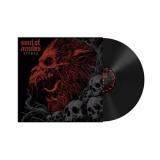
SOUL OF ANUBIS - RITUAL

Red Vinyl. Soul of Anubis is a power duo formed in 2010 from the North of Portugal. Their music is a blast on stage with a ferocity of sound that goes from thrash to sludge, capturing doom and post-metal at same time, performing energetic and contagious live acts. "Ritual" represents the passage from life to death and rebirth into a new cycle. During these last years, we have lost beloved ones, we have lost the freedom to breathe, we have lost some companionship and we had to fight to lift our souls back on trial. In Egyptian mythology, Ra, God of the Sun, goes down to the underworld every night to help the dead cross to the other world and ensure that a new dawn would happen. So, "Ritual" is a memorial to our beloved ones who passed away, speaks for the mental struggle that everyone has to face to overcome their demons and glorifies the victory of rebirth. As we have our demons, this is our ritual to cross our pathway.n. So, "Ritual" is a memorial to our beloved ones who passed away, speaks for the mental struggle that everyone has to face to overcome their demons and glorifies the victory of rebirth. As we have our demons, this is our ritual to cross our pathway.

pre-ordina ora20.02.2026

dovrebbe essere pubblicato su 20.02.2026

26,01
SOUL OF ANUBIS - RITUAL
  • Ritual
  • Mind Crusher (Feat. Keijo Niinimaa From Rotten Sound)
  • Incarnation
  • Vermin
  • Dead Cult
  • God's Burial
  • Human Torch
  • Remnants Of Hatred
  • Shield Of The Son
  • The Evil Within
  • Sands Of Time
  • Beast With Vengeance
  • Back From Beyond
  • Honor The Fallen
disponibile anche

Red Vinyl[26,01 €]


Soul of Anubis is a power duo formed in 2010 from the North of Portugal. Their music is a blast on stage with a ferocity of sound that goes from thrash to sludge, capturing doom and post-metal at same time, performing energetic and contagious live acts. "Ritual" represents the passage from life to death and rebirth into a new cycle. During these last years, we have lost beloved ones, we have lost the freedom to breathe, we have lost some companionship and we had to fight to lift our souls back on trial. In Egyptian mythology, Ra, God of the Sun, goes down to the underworld every night to help the dead cross to the other world and ensure that a new dawn would happen. So, "Ritual" is a memorial to our beloved ones who passed away, speaks for the mental struggle that everyone has to face to overcome their demons and glorifies the victory of rebirth. As we have our demons, this is our ritual to cross our pathway.

pre-ordina ora20.02.2026

dovrebbe essere pubblicato su 20.02.2026

23,11
SAMIAM - TRIPS

SAMIAM

TRIPS

12inchHR1736
Hopeless
20.02.2026
  • 80: West
  • Clean Up The Mess
  • September Holiday
  • Demon
  • Crew Of One
  • Dead
  • How Would You Know
  • Nightly
  • Free Time
  • El Dorado
  • Magellan
  • Did You Change
  • Happy For You

Reissue! Mit der Veröffentlichung von "Trips" (2011) kehrte die einflussreiche Indie-Punk-Band SAMIAM aus Oakland, Kalifornien, zu ihrem charakteristischen Sound zurück, der die bei Fans beliebten Klassiker-Alben "Clumsy" und "Astray" wieder aufnahm. Zum Beispiel mit dem starken Song "80 West", der mit mitreißenden Drums und energiegeladenen Gitarren aufwartet, schaffen SAMIAM nahtlos an ihre früheren Erfolge anzuknüpfen. "Trips" war damals das erste Album von Samiam seit fünf Jahren, und trotz der Pause - und trotz der Tatsache, dass die Band seit über 20 Jahren zusammen ist - hat sich kaum etwas verändert. Ihr Album aus dem Jahr 2011 klingt ähnlich wie das selbstbetitelte Debütalbum der Foo Fighters oder "File Under: Easy Listening" von Sugar, und ist wie eine Mischung aus Alternative Rock und Punk-Pop aus den 90er Jahren. Wie Samiams Karrierehöhepunkt "Clumsy" aus dem Jahr 1994 ist auch dieses Album ein raffiniertes und ausgefeiltes Werk, voller geradliniger, süßer Melodien, sehnsüchtiger Texte und energiegeladener Riffs in mitreissendem Tempo.

pre-ordina ora20.02.2026

dovrebbe essere pubblicato su 20.02.2026

27,69
Sofia Jernberg - Voice

Sofia Jernberg

Voice

12inchSTSLJN408LP
SMALLTOWN SUPERSOUND
20.02.2026
  • Multiphonic I
  • Gurgle
  • Air Hand Whistle
  • Inhale Exhale
  • Birds
  • Multiphonic Ii
  • Mouth Synthesizer
  • Multiphonic Iii
  • One Pitch
  • Throat
  • Whistle Pitch

Un-easy listening from »anti-singer« and improviser Sofia Jernberg, a celebration of the voice in its rawest, most malleable form. Jernberg was born in Ethiopia and grew up in Vietnam and Sweden, so one can only imagine these diverse languages opened up a wealth of phonetic possibilities before she entered academia to study jazz and composition. If you dive into her catalogue you’ll clock her startling range – working as a jazz soprano and as an improviser, collaborating with everyone from Stefan Schneider to Mats Gustafsson, as well as appearances on the stage and screen, most notably in Matthew Barney, Erna Ómarsdóttir, and Valdimar Jóhannsson’s »Union of the North«.

On »Voice«, Jernberg provides a ground-level entry point to her work, meticulously running through a litany of unconventional techniques (non-verbal vocalisation, split tones, toneless singing, and distortion) without any effects, just pure batshit sonics designed to show off the voice’s scope as an experimental instrument. On »Mouth Synthesizer« she purses her lips to make ratcheting pops like some analog oscillator, hoarsely mimicking the sort of blustery, Merzbow-coded distortions you might get if you patched a RAT pedal into a broken guitar amp. It isn’t an act of caricature, it’s Jernberg’s way of demonstrating that expensive modular rigs aren’t an essential tool for experimental music, before throwing a side-eye to the field recording industrial complex on »Birds«, transforming her vocal chords into a nightmare aviary. But it’s Jernberg’s startling »multiphonic« experiments that hit hardest. The album opens on »Multiphonic I«, and it’s difficult to tell that you’re listening to a human voice at first – you could just as well be on Colin Stetson’s overblown sax airstreams. Jernberg creates a captivating spiral of crooked, phased tones and hoarse, guttural croaks that she develops over three movements. On »Multiphonic II«, her voice is turned into a storm of pained shrieks, and on the third and final segment, it almost resembles Arve Henriksen or Jon Hassell’s muted brass curlicues. Each track pulls a different musical muscle, whether it’s »One Pitch« with its unsettling yodel-like quivering drones or »Gurgle«, sounding like a close mic-ed recording of a small pot gently simmering.

pre-ordina ora20.02.2026

dovrebbe essere pubblicato su 20.02.2026

33,19
PLANET FUNK - BLOOOM

PLANET FUNK

BLOOOM

12inchWISEMAMA001LP
WISEMAMA
12.02.2026

The new album by the collective that for
over 25 years has been among the most
representative names of the Italian dance
and electronic scene worldwide.
“BLOOOM”, this is the title of the new release,
will be available in all traditional stores and
on digital platforms starting January 16.
Set against the soundscapes that have become
the Planet Funk trademark, the lyrics by Dan
Black attempt to give voice to a fragile and
contradictory condition of our time: an
intensified sensitivity that, instead of
turning into openness and connection, often
becomes emotional overload. A generation
constantly overwhelmed by excessive stimuli,
relentless information, anxieties, and fears,
called upon to find its way in a world thaoffers neither pauses nor silence. In this paradox, sensitivity is no longer just a natural gift, but
a daily effort: staying open and receptive without being overwhelmed, trying to preserve a human and
vulnerable gaze in order, despite everything, to fully appreciate life and the present moment.
The single’s artwork—like that of the album—curated by Nationhood, visually conveys this tension: the
distant sirens of a city that amplifies feelings of disorientation and loneliness even when we are
surrounded by thousands of people.
“BLOOOM”, preceded by the single “FEEL EVERYTHING”, arrives at the end of an intense, creative year
full of music, which saw Alex Neri (DJ, keyboards, synthesizers), Marco Baroni (keyboards, piano,
programming), Dan Black (vocals and guitar), and Alex Uhlmann (vocals and guitar) engaged between
studio work, collaborations, and live performances in Italy and abroad. A journey that today
transforms into new energy, into an even more open vision oriented toward the future.
Exactly one year ago, PLANET FUNK released “Nights in White Satin”, a single that reached the top
positions of the radio charts and launched a season rich in concerts and DJ sets in Italy and around
the world. The subsequent “I Get a Rush”, the collaboration with Alfa and Manu Chao on the remix of
their hit “A me mi piace”, and the track “È Naturale” together with Francesca Michielin, confirmed
Planet Funk’s ability to renew themselves and engage with different musical worlds while always
remaining true to their own identity.
Throughout this journey, music has inevitably intertwined with life. The memory of Sergio Della Monica
and Domenico “Gigi” Canu, pillars and founding souls of the PLANET FUNK project, is a living part of
this new chapter. Their vision, creative spirit, and way of understanding music continue to be a
constant guide, a deep root from which new ideas and new directions can grow.
“BLOOOM” is also this: a personal and artistic blossoming that, starting from the legacy left by
Sergio and Gigi, transforms into a living process of growth, metamorphosis, and discovery. An album
that does not look back with nostalgia, but forward with awareness, momentum, and a desire for
renewal.
Founded in 1999, for over 25 years PLANET FUNK have represented one of the most important, solid, and
influential realities in the international electronic music scene. Born from the meeting of Souled
Out! (Domenico “GG” Canu and Sergio Della Monica) and Kamasutra (Marco Baroni and Alex Neri), and
following their debut with “Non Zero Sumness” in 2002 (a gold record and a turning point for the
band), PLANET FUNK have managed to reinvent themselves over time while maintaining a unique sonic
identity. This has led them to collaborate with internationally renowned artists, deliver iconic
performances around the world, create soundtracks and international advertising campaigns, and
continue to demonstrate constant creative vitality

In stock dal14.05.2026

22,65

Last In: 31 days ago
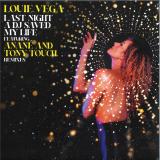
Louie Vega - Last Night A DJ Saved My Life feat. Anané & Tony Touch

The world renowned “Maestro” of the dancefloor Louie Vega continues to deliver Dance Floor gems at a rate almost impossible to conceive, given that he also maintains a weekly touring schedule that regularly takes him around the world. Louie’s upbringing in the Boogie Down Bronx exposed him to the entire evolution of Disco and Funk at a time when those genres were at their peak in the 80’s, and he brings that wealth of knowledge and passion when it comes to remakes of the classics. His remake of “Last Night A DJ Saved My Life” featuring Anané and Tony Touch in its original version on the NYC Disco Album was a masterful update that kept the essence of the original classic, but was imbued with the irresistible House Music energy that Louie and featured vocalists Anané and Tony Touch can bring to a project like nobody else. The remix from Louie himself gives this peak house groover even more pump, while the Dub from Anané demonstrates that this talented performer has a big future as a producer as well. The bonus track on the B-side “In Search Of Peace Of Mind” shows Louie once again creating a unstoppable groove that respects the foundation of House Music but once again inspires an originality that places him firmly at the forefront the Dance Music Producer community.

non in magazzino

Ordina ora e ordineremo l'articolo per te presso il nostro fornitore.

16,18

Last In: 19 days ago
The Creation - Biff Bang Pow 10x7"

The Creation

Biff Bang Pow 10x7"

7"-VinylDEMRECBOX98
Demon Records
04.02.2026
  • A1: Making Time
  • B1: Try & Stop Me
  • C1: Painter Man
  • D1: Biff Bang Pow
  • E1: If I Stay Too Long
  • F1: Nightmares
  • G1: Life Is Just Beginning
  • H1: Through My Eyes
  • I1: How Does It Feel To Feel
  • J1: Tom Tom
  • K1: Midway Down
  • L1: The Girls Are Naked
  • M1: Bony Moronie
  • N1: Mercy, Mercy, Mercy
  • O1: For All That I Am
  • P1: Uncle Bert
  • Q1: Cool Jerk
  • R1: Ostrich Man
  • S1: Can I Join Your Band
  • T1: I Am The Walker
non in magazzino

Ordina ora e ordineremo l'articolo per te presso il nostro fornitore.

62,40

Last In: 3 months ago
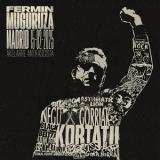
FERMIN MUGURUZA - MADRID 15-02-2025 - AKELARRE ANTIFACISTA LP 3x12"
  • Maputxe
  • Urrun
  • Eguraldi Lainotsua
  • Hay Algo Aquí Que Va Mal
  • Balazalak
  • La Línea Del Frente
  • In-Komunikazioa (Intro Free Nelson Mandela)
  • Desmond Tutu
  • Newroz
  • Azoka Eguna
  • Euskal Herria Jamaika Clash
  • A La Calle + La Familia Iskariote
  • Bizitza Zein Laburra Den
  • Nicaragua Sandinista
  • Dow To The River To Pray
  • Black Is Beltza ·
  • After-Boltxebike
  • Aiako Txikito/Hiri Gerrilaren Dantza
  • Bidasoa Fundamentalista
  • Jon Maia: Versos A Madrid
  • Lehenbiziko Bala
  • Itxoiten
  • Etxerat
  • Zu Atrapatu Arte
  • Kolore Bizia
  • Radio Rahim
  • Dub Manifest
  • Yalah Ramallah
  • (Intro) Gora Herria
  • Sarri, Sarri

The musical legacy of a night that will live on for years - Fermin Muguruza's 40th anniversary roar! Under the title "Akelarre Antifascista" (which literal translation would be "Anti-Fascist Witches' Coven", but loosely translated as Anti-Fascist Celebration), in a reference to the legendary Akelarre, a wild gathering of Basque witches, this album distils all the intensity, sweat and collective excitement of a night when thousands of voices joined together to celebrate not just a career, but a way of seeing art as resistance. On 15th February 2025, Madrid saw more than just a concert: it was a collective ritual, an anti-fascist demonstration in which thousands of voices came together as one to emphasize the tenacity of a voice that never surrendered. Four decades after lighting the fuse of combative rock in Euskal Herria, the Basque Country, Fermin Muguruza chose the capital of Spain, a city that closed its doors to him so many times and that he has described as "the heart of the beast", to make the definitive record of his 40th anniversary tour. The result is "Akelarre Antifascista", a live album that distils the history of a musical and political resistance that has spanned generations, languages and frontiers. The concert, sold out with 15,000 people, was an explosion of energy, memory and future. Right from the first chord, the Sports Palace of Madrid became an open setting, a free territory where bodies, rhythms, languages and flags mixed freely. Triple 180gr vinyl LP in trifold sleeve.

pre-ordina ora30.01.2026

dovrebbe essere pubblicato su 30.01.2026

54,58
Lord Jah-Monte Ogbon - As of Now (Tape)

“My auntie asked me what’s my path?” spits Lord Jah-Monte Ogbon on his debut from the celebrated Lex Records. The lyric relatably references the cross roads he’s at in his current life, especially as someone right on the cusp of rap stardom. “Recently I’ve been thinking more and more about what comes next in my life,” the artist reveals.


It’s fair to say Ogbon’s Lex LP features less of the sh*t-talking court jester of old. Instead, there’s more of an imperfect man re-examining past mistakes so he can avoid any future forks in the road. There’s a particular focus on overcoming heartbreak, inspiring Ogbon to admit he’s haunted by an ex so badly he now needs to call up the Ghostbusters for assistance.

Since emerging in the late 2010s, Lord Jah-Monte Ogbon has consistently lit up America’s underground rap scene and this is thanks to a refreshingly honest writing style. Amid the exquisitely wavy strings of 2021’s The Missing Link / The Sneaky Link, for example, he rapped: “Everyone thinks they’re player, until their bitch doesn’t come home.” Biting and snappy, the nasally vocals carry the playful verve of comedian Richard Pryor bravely excavating personal Demons to solicit giggles.

All this brash, wry Redman-inspired storytelling continues on the new project. Its first single is titled I’m Signed to Lex, Now I’m Up – a name that mirrors what a big moment releasing a project on the label that once housed MF DOOM represents for Lord Jah-Monte Ogbon’s legacy. “I’m really driven by being able to level up and give my family more financial freedom,” he hopes.
And, if auntie asked what his path was right now, what exactly would the rapper say? Lord Jah-Monte Ogbon concludes: “Auntie: this rapping thing feels like it’s finally about to pay off!”

pre-ordina ora30.01.2026

dovrebbe essere pubblicato su 30.01.2026

17,23
Various - Wizzz! French Psychorama Volume 5 (67-75)

The journey through French-speaking pop archives continues with this fifth volume, packed with fuzz, gimmicks, and dissent. Far from the charts, the selected tracks display a great creative freedom, often backed by corrosive humor. Welcome to the surprising, kaleidoscopic, and colorful world of the late sixties and early seventies, Wizzz!
Born in Montauban, Robert Pico stumbled into music by chance when he met René Vaneste, then artistic director at Pathé-Marconi. René brought him to Paris to record his first 45 RPM EP in 1964. A year later, Pierre Perret introduced him to Vogue, where he recorded his second album with Claude Nougaro’s orchestra. Sylvie Vartan then introduced him to RCA, where he recorded four singles, including the astonishing "Chien Fidèle," a track backed by a hair-rising fuzz guitar. Alongside his solo career, he also composed for other artists like Alain Delon (the song was recorded but remains unreleased), Magali Noël, Bourvil, and Georges Guétary. In the Paris of the sixties, he mingled with Mireille Darc, Elsa Martinelli, Marie Laforêt, France Gall, Françoise Hardy, Petula Clark, Régine, Dani, Serge Gainsbourg, Joe Dassin, Franck Fernandel, Charles Level, and Roland Vincent. Despite his efforts and winning a Grand Prix Sacem for his final record, Robert Pico didn’t achieve the expected success in show business and decided to leave Paris and return to the Southwest, where he devoted himself to writing. He is the author of 23 books (including Delon et Compagnie, Jean-Marc Savary Editions 2025, a memoir about his youth and his many encounters). Today, he is relieved to never have become a celebrity and devotes himself to his work with passion.
In 1969, the Franco-Italian movie Erotissimo was released, directed by Gérard Pirès (who later directed Taxi in 1998, written and produced by Luc Besson). This pop comedy features Annie Girardot, Jean Yanne, Francis Blanche, Serge Gainsbourg, Nicole Croisille, Jacques Martin, and Patrick Topaloff. The soundtrack was written by Michel Polnareff and William Sheller, with lyrics by Jean-Lou Dabadie. "La Femme Faux-cils," performed by Annie Girardot. It recounts the feelings of a rich CEO's wife who seeks to develop her sex appeal under the influence of advertisement and magazines. Groovy, sparkling and light, this track, with ITS lush arrangements humorously critiques consumer society and feminine beauty standards.
“Je suis l’Etat” (1967) is the flagship track of the first EP by singer-songwriter Spauv Georges, aka Georges Larriaga, better known as Jim Larriaga (1941-2022). Born into a family of bakers, the young man was initially planning to become a hairdresser when he discovered English-speaking music through Elvis Presley and the Beatles. After this revelation, he decided he would become a songwriter and gave himself five years to succeed. He recorded his first two EP’s independently for RCA under the pseudonym Spauv Georges; meaning “that poor George”, a nickname given to him by the mother of her friend Jean-Pierre Prévotat (future drummer of the Players, Triangle, or Johnny Hallyday). Portraying a depressed and eccentric young man, Spauv Georges created corrosive and amusing songs that didn’t reach a wide audience, despite a TV appearance with Jean-Christophe Averty.
Supported by his loyal friend and fellow songwriter Jean-Max Rivière, Georges Larriaga met the future singer Carlos in the early '70s, then Sylvie Vartan’s assistant. He wrote songs for Carlos, including the popular "La vie est belle," "Y’a des indiens partout," and "La cantine", which went onto become a huge hit in 1972. He also composed for Claude François (“Anne-Marie”, 1971), Charlotte Julian (“Fleur de province”, 1972), helped launch child singer Roméo (who sold 4 million records), and later wrote the hit "Pas besoin d’éducation sexuelle" (1975) for the young Julie Bataille. In 1971, Jim recorded an album for Disc'Az: “L’univers étrange et fou de Jim Larriaga”, which featured pop gems like “La maison de mon père”.
The story of the song "Zoé" began when Pierre Dorsay, artistic director at Vogue Records, asked Swiss singer and musician Pierre Alain to write a song for a new female singer. The inspiration came when he realized that Zoé (the artist's name) was also the name of France's first atomic battery, created in 1948, which consisted of uranium oxide immersed in heavy water! The lyrics reflect a bubbling energy that must be handled with caution, while the instrumentation echoes this atomic theme, notably with the use of a theremin.
Zoé’s career lasted only as long as a single 45 RPM, but it seems Christine Fontane was the vocalist behind this pseudonym, who is known for several EPs, a good "popcorn" album in 1964, and a handful of children’s singles in the '70s. Regardless, the photograph on the cover is of a different girl entirely.
Later, Pierre Alain continued his career, writing songs for himself, Marie Laforêt, Danièle Licari, Alice Dona, Arlette Zola (3rd place in Eurovision 1982), and achieving multiple gold and platinum records in Canada. Also an inventor with several patents, president of the Romande Academy, and head of the French Alliance in Geneva, he now composes atonal music, books, and poetry. Moreover, he is also the host of "Les Mardis de Pierre Alain" at "Le P'tit Music'Hohl" in Geneva.
Filled with oriental choruses and fuzz guitar, "Fou" is from Jacques Da Sylva's only EP released by Vogue in 1967. Despite the quality of this recording, all traces of this singer disappear after this first effort.
Valentin is a baroque pop singer born in Belgium. He is the songwriter and composer of most of the tracks on his three singles released in the late 60s in Canada. A legend says that he reincarnated himself as Jacky Valentin during the 1970s for a rock'n'roll revival career in Belgium, but his older brother sadly debunked this story. Valentin's first two singles were arranged by Claude Rogen, a Parisian session pianist who had come to Canada to promote the song “Mister A Gogo”, a cover of David Bowie’s “Laughing Gnome”, adapted by singer Delphine, his wife at the time. Far from his usual network, Claude Rogen arranged music for Polydor, including the arrangements for “Je suis un vagabond” in 1969, a jerk tune with string arrangements and a furious optimism.
Jacques Malia wrote, composed, and recorded his only 45 EP for Festival in 1966. “Histoire de gitan” is an incredible beat track with bohemian scat that tells the story of a gypsy musician who came to Paris to make it in the Music-Hall, to no avail. The hero of the song and its author probably shared a similar fate, as Jacques Malia faded into anonymity after this remarkable attempt.
Bernard Jamet recorded two EPs for Barclay in the late sixties and co-wrote several songs with Christine Pilzer, Pascal Danel, and prolific songwriters Michel Delancray and Mya Simile. The track “Raison Légale” (1968), his masterpiece, immerses the listener in a courtroom right when a murderer is being judged, with jerk rhythm and free arrangements. A unique, paranoid, judicial, and psychedelic oddity.
Jean-Pierre Lebrot-Millers started his career in show business in 1967 as a singer and songwriter for the Philips label. After three singles, he wrote several songs of a new kind with his friend Pierre Halioche, in the midst of the sexual liberation movement and the democratization of drugs. With provocative lyrics, “Les filles du hasard” and “Barbara au Chapeau Rose” were released on a Philips singles in 1968. The character of Barbara was inspired by a queen of Parisian nightlife during the psychedelic years: model Charlotte Martin, who dated Eric Clapton from 1965 to 1968, then Jimmy Page from 1970 to 1983. Jean-Claude Petit’s arrangements, with a table-filled intro, soul brass, and Hendrixian guitar, emphasize the flamboyance of a hedonistic and sexy character, whose dog is named Junkie because “Junkie est un nom exquis”! The track was recorded live in three takes with a full orchestra.
Upon its release, the record was censored by Europe 1 and RTL due to its references to drug use. Jean-Pierre Lebrot was then banned from the airwaves and later dismissed by his record label. He changed his artist name to Jean-Pierre Millers, while his companion Pierre Halioche became D. Dolby for a new dreamy composition, “Chilla”, which Jean-Pierre produced himself with arrangements by Jean Musy. Once again, the song was immediately censored everywhere. After this setback, he decided to stop singing and started taking on odd jobs to support his Swedish wife and their son until the day he met Jean-Pierre Martin, then production manager at Decca, who had worked with Manu Dibango. Martin offered Jean-Pierre Lebrot-Millers, then employed at Rank Xerox, the position of artistic director at Decca. He accepted and became, a year later, promotion director (radio, press, TV). He worked on Julio Iglesias’s first album for Decca, which became a massive hit and allowed him to meet Claude Carrère. The latter asked him to write new songs and find their performers, much like a “talent scout.” It’s through him that Jean-Pierre discovered Julie Pietri and Corinne Hermès. He composed “Ma Pompadour” for Ringo, Sheila’s husband, and took the microphone again for the syncope hit “Rendez-Vous” in 1982.
That same year, Jean-Pierre Lebrot-Millers tried to release a track for which he had heavily gone into debt: “Si la vie est un cadeau”. Having recorded it in London, he presented it to numerous professionals, all of whom refused to get involved. The same thing happened with Antenne 2 and the Sacem when he proposed the song as France’s entry for Eurovision. He then met Haïm Saban, who was producing cartoon soundtracks and had just launched the Goldorak theme song. Saban, having listened to the song, declared it had the potential to become a hit. He sent Jean-Pierre and Corinne Hermès to meet the CEO of the Luxembourg radio and television network. The latter received them, asked to hear a verse and chorus a cappella in his office, and immediately hired them to represent Luxembourg at Eurovision 1983. They reworked the arrangements and recorded a new version with Haïm Saban as co-producer. The song ended up winning Eurovision 1983, a great comeback for our hero. He continued producing and hung out with the band Nacash in Belgium when a couple came to introduce their daughter for an impromptu audition in a hotel room. The girl sang “Les démons de minuit” while dancing to a radio cassette. Impressed, he had her take singing lessons for a year and composed a song for her (for which he had the melody and title, but no lyrics). This required him to go on the hunt for a lyricist, who ended up being Guy Carlier. They recorded the song, which was initially a ballad, at Bernard Estardy’s CBE studio, and gave the singer a new name: Melody. They showed the song around their industry network without success. Later, Estardy called Jean-Pierre to suggest changing the rhythm and making it pop-rock. Orlando, Dalida’s brother, liked the result and decided to co-produce the track. “Y’a pas que les grands qui rêvent » became a classic hit. The song has since been covered by Juliette Armanet (as a ballad, like the original) and Valentina.

Born into an aristocratic Breton family, Hervé Mettais-Cartier worked as a DJ at Queen Kiss, a nightclub in Poitiers, where he formed the band Les Concentrés with Michel (an actor) and Christian (a radio technician). Together, they created a repertoire of whimsical songs (“Ma bique est morte”, “J’suis un salaud”, “Fils de dégénéré”...) that they performed on stage dressed in white (in homage to “concentrated milk”). They performed at Bliboquet and Olympia in 1968 for the 10th edition of the “Relais de la chanson Française” organized by L’Humanité-Dimanche and Nous les Garçons et les Filles, sponsored by Pepsi Cola. Winners in the author-composer category, alongside Danish singer Dorte, their visibility allowed them to record a 45, and appear on television in Jean-Christophe Averty’s show. The A-side of the disc features Bruno le ravageur, a casatchok dedicated to Bruno Caquatrix, the director of Olympia, nicknamed in the song “Coq Atroce” or “croque-actrices”. The B-side is dedicated to “Fils de dégénéré”, a quirky tribute to Hervé's aristocratic roots, mixing absurdity with sophisticated vocal harmonies.
After Les Concentrés, Hervé Mettais-Cartier formed the duo La Paire et sa Bêtise with his friend Olivier Robert. They performed in Parisian cabarets and toured with Pierre Vassiliu. In the late 1970s, Hervé began a solo career. He recorded two albums for the Motors label in 1978 and 1979, which did not achieve their anticipated success due to lack of promotion. In 1980, he met Bernadette, with whom he started a family and created a “Chansons à voir” (songs to see) show that he performed until his death at the end of 2024.

Publicité comes from the final EP by the Missiles (Ducretet Thomson, 1966), a disc that also includes “La (nouvelle) guerre de cent ans”, featured on Volume 4 of our Wizzz! series. Please refer to the booklet for the story of the band.

“He’s 1.82 meters tall, 28 years old, weighs 135 kg, is black and Belgian”: this is the description of singer Hegesippe on the back of his sole single (Decca, 1967). He appears on the album cover wearing a Greek toga, like a hippie gag – we are at the end of the year 1967. In “Le crédo d’Hegesippe”, this former bodyguard of Antoine and the Charlots plays the delightful card of the thick brute converted to Flower-Power and non-violence, with arrangements by Jean-Daniel Mercier, aka Paul Mille.
“Ethéro-disco” was released on a promotional record for clients of the Maréchal company (Liège, Belgium) for the New Year 1979. Over a funky rhythm, celebrity impersonations (Brigitte Bardot, Jacques Dutronc, Fernandel…) deliver an enigmatic text about pharmaceutical products like ether, bismuth, and aspartate. The track was composed by Dan Sarravah (responsible for Joanna's “Hold-up inusité” featured on Wizzz! Volume 3) and Tony Talado, who was also a singer (one 45 in 1967), songwriter (with over a dozen credits between 1964 and 1985 in various styles from surf music to disco), author (Devenez Végétarien, Dricot Editions, 1985), ad designer, and psychologist.

Décollez-les is on the A-side of Mamlouk's only single, a pseudonym for Marsel Hurten, who is known for his work on several EPs in the late sixties, as well as composing music for Hervé Vilard’s “Capri, c’est fini”, Claude Channes' “La Haine”, Annie Philippe’s “On m’a toujours dit”, and Nancy Holloway’s “Panne de Cœur”.
This strange song, with Afrobeat horns and absurd dialogues between a chef and his kitchen staff, is the result of a collaboration between Marsel Hurten and one of his neighbors, a photographer from Pavillon-sous-Bois (93), where the musician settled after returning from the Algerian War. A music video was shot to promote the record.
Marsel Hurten was born in Tourcoing (59) into a musical family. At a young age, he joined the brass band founded by his grandfather, playing the piston before studying trumpet at the conservatory, as well as teaching himself how to play the guitar. As an orchestra musician, he toured in France, Belgium, Germany, and England. He released a series of solo 45’s between 1965 and 1968 for the DMF and Az labels before stopping recording to focus on working for other artists (Gilles Olivier, Noëlle Cordier…).
“L’amour nu” (Vogue, 1971) is the work of the short-lived Belgian band Mozaïque. The track, written by singer Jacques Albin, closely resembles another of his compositions, “Carré Blanc”, which he recorded in 1969 for Disc’AZ.
Represented by the Lumi Son micro-label based in Marignane (Côte d'Azur), Jean-Marc Garrigues released two 45 RPMs in the late sixties, defending the French jerk sound. The song “Je dis Non” is a short, joyful ode to youth, pop music, and rebellion.
Songwriter and performer Jacques Penuel released three singles. The first one, “Astronef 328” (Fontana, 1969), features a dizzying series of chords punctuated by sound effects, a sci-fi story, and arrangements by Jean-Claude Vannier.

We would like to sincerely thank Pierre Alain, Moon Blaha, Marsel Hurten, Bastien Larriaga, Jean-Pierre Lebrot-Millers, Bernadette Mettais-Cartier, Robert Pico, Olivier Robert, Claude Rogen, Micky Segura.
non in magazzino

Ordina ora e ordineremo l'articolo per te presso il nostro fornitore.

23,11

Last In: 3 months ago
Nightbus - Passenger LP

Nightbus

Passenger LP

12inchMELO146LP
Melodic
16.01.2026
  • Somewhere, Nowhere
  • Angles Mortz
  • False Prophet
  • Fluoride Stare
  • The Void
  • Ascension
  • Just A Kid
  • Host
  • Landslide
  • Renaissance
  • 7: Am
  • Blue In Grey

2026 Repress

Flickering in ultraviolet, there is an elusive place where blue pill meets red, ups become downs, and day merges with night. Those liminal spaces where anything is possible is where you’ll find Nightbus and their hypnotic debut album Passenger. Doom, uncertainty, and opportunity lurk in the shadowy corners of their murky existence with stops at disassociation, co-dependency, and addiction before reaching its final destination - a glimmer of hope.

The in-between of Nightbus’ own Gotham lies where Manchester’s city pulse meets Stockport’s outer realm. An audio-visual entity formed among a musical family of friends, freaks, and foes in messy mills and after hours on dancefloors alike, their sound bleeds from tension where collective creative forces are bound together and collide with the fallout of being torn apart. Before even playing a show, their So Young released single ‘Mirrors’ – a knowing nod of respect to some well-known gloomy Northerners - may have made old school indie heads shimmy at shows in Salford’s The White Hotel but also signalled the duo’s knack for offering listeners a Bandersnatch approach to hitchhiking their own personal Nightbus in whatever direction they choose to take. “Everyone can have their moment with our songs; the music is our response to who we are as young people, living in the city full of this energy right now,” they say.

Whilst reverb hefty melodies and dread-filled loops embody isolation from writing at each of their home studio set-ups, magic happens in the ether across 90s trip-hop, indie sleaze and electronica; Jake’s production layers Olive’s pop sentimentality with drums and samples whilst tales of a cast of faceless characters place Olive as puppet master; her severed self’s perspective manipulating their stringed limbs at arm’s length to see how their stories play out when scenes reflecting her own lie close to the bone. “It’s a bit fucked; like having this out of body experience with a made-up movie running through my head,” she says. “As I write I can see they’re all from a similar world, but they allow me to explore different feelings without giving away part of myself.”

Recorded at The Nave in Leeds with producer-engineer Alex Greaves (Heavy Lungs, Working Men’s Club), surprise and danger lies in every crevice. Brooding whispers turn to chants on 6-minute opus ‘Host.’ Improvised when performed live, its immersive shift in tempo leads to hefty dub courtesy of Jake’s pedals. Even then, you won’t know shit’s hit the fan until its mid-point reveal when ominous bass blasts a thunderous soundtrack as its protagonist defiantly walks away after committing the perfect crime. “It makes you wait, and more songs should have sirens,” Olive grins.

Leaning deeper into alter-egos via the video game-psychological horror of a Silent Hill dystopia, the band’s Fight Club moment ‘Angles Mortz’ turns its literal translation of death angles on its head as it reflects upon kink and internalised shame reincarnated as pride. Elsewhere the ice cool ‘Landslide’ is a Requiem for a Dream about the addiction of being in a band; ‘The Void’ explores co-dependency and estranged relationships; and carefully selected samples revive house track ‘Just A Kid’ from the band’s early incarnation. Passenger’s every direction is to face challenges head on. “That is what’s so great about horror; you can see through predictable patterns so when the unexpected occurs it's more realistic and uncomfortable… I want to own the dark stuff!”

As for Passenger’s first single, the pulsating ‘Ascension’ is a spiralling deep dive into death, suicide, and legacy around who or what we leave behind. A noughties club banger by way of NYC beats - ergonomically designed for those who like to stay out a little too often and too late - it throbs like a house party’s partition wall as the literal levelling up undergoes a neon transformation; blue glitching to pink, diffusing the white construct of the Nightbus Matrix. “It really does feel like the end of something and was purposely written that way,” they say, “the ascension is like a firework going off!”

With wheels in motion, Nightbus has become a movement surpassing sonic realms. Between shows from Porto to Brighton taking in The Great Escape, Rotterdam’s Left Of The Dial and Paris’ Supersonic; DJing; remixing; guesting (BDRMM’s Microtonic album); and even enlisting talented like-minds to craft a 3-part queer coming-of-age music video series which ties in with a new ‘hyperpop’ phase in the evolution of their popular Nightbus Soundsystem club night, heads are now being turned from sports brands to high-end fashion designers. “There are things we can’t reveal just yet,” tells Olive, “but we’re excited about the direction this beast we’ve created is heading.” As the album philosophises and asks one ultimate question; what does it truly mean to be ‘Passenger’? Nightbus may not claim to offer a definitive answer, but it might make you feel a bit better about those demons.

pre-ordina ora16.01.2026

dovrebbe essere pubblicato su 16.01.2026

22,27
Various - Gary Crowley's Punk & New Wave 2 2x12"
  • A1: The Clash - 1-2 Crush On You
  • A2: The Undertones - There Goes Norman
  • A3: The Limit - My World At Night
  • A4: X-Ray Spex - Warrior In Woolworths
  • A5: The Wardens - Do So Well
  • A6: Penetration - Future Daze
  • A7: Magazine - I Love You, You Big Dummy
  • B1: Ramone - Suzy Is A Headbanger
  • B2: The Flys - Love & A Molotov Cocktail
  • B3: Golinski Brothers - Bloody
  • B4: Liquid Stone - Here Comes The Weekend
  • B5: Dolly Mixture - Side Street Walker
  • B6: Basement 5 - Silicone Chip
  • B7: The Subterraneans - My Flamingo
  • C1: The Jam - Away From The Numbers
  • C2: Siouxsie & The Banshees - Desert Kisses
  • C3: Zounds - Demystification
  • C4: Stiff Little Fingers - Barbed Wire Love
  • C5: Shake - Dream On
  • C6: The Times - Red With Purple Flashes
  • C7: The Limps - Someone I Can Talk To
  • D1: The Cure - Play For Today
  • D2: Newtown Neurotics - Hypocrite
  • D3: The Slits - So Tough
  • D6: The Barracudas - I Want My Woody Back
  • D7: Moving England - Moving Back
  • D4: The City Limits - Morse Code Messages
  • D5: Gary Valentine - The First One
non in magazzino

Ordina ora e ordineremo l'articolo per te presso il nostro fornitore.

21,43

Last In: 4 months ago
Various - Gary Crowley's Punk and New Wave 2 (signed)
  • A1: The Clash - 1-2 Crush On You
  • A2: The Undertones - There Goes Norman
  • A3: The Limit - My World At Night
  • A4: X-Ray Spex - Warrior In Woolworths
  • A5: The Wardens - Do So Well
  • A6: Penetration - Future Daze
  • A7: Magazine - I Love You, You Big Dummy
  • B1: Ramone - Suzy Is A Headbanger
  • B2: The Flys - Love & A Molotov Cocktail
  • B3: Golinski Brothers - Bloody
  • B4: Liquid Stone - Here Comes The Weekend
  • B5: Dolly Mixture - Side Street Walker
  • B6: Basement 5 - Silicone Chip
  • B7: The Subterraneans - My Flamingo
  • C1: The Jam - Away From The Numbers
  • C2: Siouxsie & The Banshees - Desert Kisses
  • C3: Zounds - Demystification
  • C4: Stiff Little Fingers - Barbed Wire Love
  • C5: Shake - Dream On
  • C6: The Times - Red With Purple Flashes
  • C7: The Limps - Someone I Can Talk To
  • D1: The Cure - Play For Today
  • D2: Newtown Neurotics - Hypocrite
  • D3: The Slits - So Tough
  • D6: The Barracudas - I Want My Woody Back
  • D7: Moving England - Moving Back
  • D4: The City Limits - Morse Code Messages
  • D5: Gary Valentine - The First One
non in magazzino

Ordina ora e ordineremo l'articolo per te presso il nostro fornitore.

78,36

Last In: 4 months ago
Articoli per pagina:
N/ABPM
Vinyl