When we started Ilian Tape 10 years ago in 2007, we were both basically kids at the ages of 23 (Dario) and 18 (Marco). There was no plan behind it, no concept, no promotion campaign or any budget, but just an early vision of where it could go. We wanted to build something that lasts. After a few years of playing at parties and producing music, it was the next logical step to start a label. You can clearly see us growing up through the label in terms of artwork, compiling the records and handling things. We made some mistakes along the way and there are surely things we could have done better, but looking back after 10 years now it all makes sense as it was a natural and human development with all its ups and downs.It was always a very personal project, never about making money, but about creating a platform for music we believe in and building relationships with artists in a transparent and fair way. We really appreciate that we were able to work with so many great artists, who shared the same vision and trusted in us, over all the years. A while ago we moved away from the ordinary release info write ups, because in general writing about music is tricky and who isn't tired of the typical, full of praise for every detail of a record, release textsBut this might be starting to get boring for you too, so just buy this lovely triple vinyl package including a poster and download code, light one up and turn up the volume!One last thing though - we want to deeply thank our parents for teaching us to live our dreams and find out who we really are, our friends for the vibes and honesty, all the artists releasing on the label, all the supporters & fans for buying vinyl and files, all the DJ's playing out the stuff, all the diggers selling the stuff overpriced on Discogs, all the dancers working out on the dancefloors & all the clubs doing label nights over all the years.
Buscar:night light
NTD005 adds a new artist to the collective - Metamethod aka Simon Haynes.From Adelaide, Australia, Metamethod (Undefined Recordings) returns from a long hiatus with a new EP.
The product of much time refining sounds and ideas, both tracks on the EP are essential synthesis. Sounds primarily sculpted from scratch, resulting in biochemical rhythms and algorithmic loops.
A must have record for anyone wanting to add some raw energy to their collection.
An obscure tape release discovery by Red Light Radio founder and close friend of the label, Orpheu de Jong, led to Music From Memory's latest release.This two track 12' highlights the work of electronic music pioneer Joel Graham, a San Francisco based artist who self released two cassettes in 1984/85.
Originally recorded and performed live on pre-MIDI analogue equipment in 1982 as an outline for a live performance, these visionary tracks provoke much of the same sensibilities found in both contemporary dance music as well as in works of more established vanguard artists of the time. Slowly unravelling and deeply hypnotic, Joel Graham's music seems to manifest a doorway to a profound new world and can be seen as a forerunner of what was to come in electronic music.
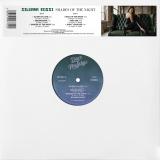
Silvana Rossi emerges from the new wave of Italo revivalists with a sound that feels both timeless and sharply contemporary, where vintage drum machines, analog synth lines and nocturnal romance collide with a modern club sensibility. Rooted in classic Italo disco but filtered through today’s underground circuitry, her music speaks directly to selectors navigating the space between wave, electro and slow-burning techno. The tracks carry a distinctly personal edge—melancholy, desire, and late-night introspection wrapped in icy melodies and hypnotic grooves. This is music made for dimly lit booths, smoke-filled basements, and DJs who still believe in storytelling through vinyl.
A seductive opener “Elixir Of Love” built on cascading arps and a steady pulse, romantic but restrained, like a whispered confession over a rolling bassline. Perfect for setting the tone early set. Tension-driven and emotionally charged, italo anthem “Breakdown” balances crisp electro rhythms with a sense of inner collapse. A cold wave-leaning cut that hits hardest when the lights stay low and the energy turns inward. Shades Of The Night – a cinematic slow-burner drenched in shadow and atmosphere. This one is all about texture and space. Walk In The Night, another italo classic on the EP, stripped-back and hypnotic, with a confident groove that nods to classic Italo while staying firmly rooted in modern club aesthetics. “Bad Girl” brings a sharper, more playful edge, driving, stylish, and slightly dangerous. A weapon with crossover appeal for electro and wave crowds alike. A versatile tool for both warm-ups and deeper moments. Emotionally direct yet sonically controlled lush pads and restrained vocals create a sense of distance that pulls you in “Don’t Leave Me”. A melancholic highlight for DJs who know how to play with tension.
Music To Watch Seeds Grow By continues its second season with Seoul-based left of centre ambient duo Salamanda - Uman Therma (Sala) and Yetsuby (Manda) - and their meditation on the inner life of a basil plant. Seeds 008 is an ambient composition born from quiet domestic observation: a single basil on a windowsill, its days shaped by light, warmth, and the slow passage of time.
The album moves through a full day in the plant's life opening with ‘introduce my atom which is my favorite one’, an act of quiet self-declaration in morning light, before settling into the unhurried rhythmic pulse of ‘to to ki toki tok’- the drip of water, the tick of a clock, the slow beat of photosynthesis. ‘allez, pousse!’ - one of the standouts in this journey - carries the basil's gentle will to grow, to push, to tilt toward the sun, while ‘hungry snail’ captures a moment of creaturely encounter on the glass: an uninvited visitor, moving slowly, wanting. As the afternoon deepens, 'Basil's Ritual' traces the daily ceremony of light and warmth, repeated with calm devotion from root to leaf. Night falls across 'Basil's Dream', and in the stillness something like sleep arrives - the plant resting, imagining tomorrow's sun. The album closes with ‘the blue wine’, a final mysterious reverie in which the basil seems to contemplate its own fate, somewhere between acceptance and wonder.
- A1: Acid Lullaby 12
- A2: Acid Lullaby 3
- A3: Acid Lullaby 15 (N:in Remix)
- B1: Acid Lullaby 6 (Afternoon Lights)
- B2: Acid Lullaby 13 (Philipp Otterbach Remix)
- B3: Acid Lullaby 14 (Museum Of No Art Version)
- C1: Acid Lullaby 4
- C2: Acid Lullaby 5 (Uhlenbusch)
- C3: Acid Lullaby 16
- D1: Acid Lullaby 7 (Birds Inside)
- D2: Acid Lullaby 8 (Rain Outisde)
- D3: Acid Lullaby 1 (47In4 Remix)
During a job in Cologne, I stayed in a room with a loft bed that had no electrical outlets at the top. Every night, I would listen to my TB303, which runs on batteries, through headphones to help me fall asleep. I loved the sequences, it was like meditation. The TB-303 bassline is iconic in acid music, so I created the Acid Lullabies to bring these two elements together. In 2017, the label Doom Chakra Tapes released ten of the Acid Lullabies on tape. Last year, I felt the urge to rework the tracks, so I mixed them again and created some new ones. I also
asked friends to contribute their own versions.
I’m very glad that the following artists contributed the Acid Lullabies: 47IN4 (Pudel Produkte, Doom Chakra Tapes), Museum of No Art (Séance Center, Cosima Pitz), N:in and Philipp Otterbach (Music from Memory, Offen Music). Two violinists from Ensemble Resonanz performed my piece 'Afternoon Lights' for Acid Lullaby 6. Alex Solman designed the cover, which captures the essence of the project perfectly. Have fun with the Acid Lullabies!
- A1: Dean Martin - You're Nobody Till Somebody Loves You
- A2: Tony Bennett - Rags To Riches
- A3: The Ink Spots - Whispering Grass (Don't Tell The Trees)
- A4: The Shirelles - I Met Him On A Sunday (Aka "Da Doo Ron Ron")
- A5: Robert & Johnny - You're Mine
- A6: Howlin' Wolf - Smokestack Lightning
- A7: The Cramps - The Creature From The Black Leather Lagoon
- B1: Jimmy Smith - Walk On The Wild Side
- B2: Jimpson & Group - The Murderer's Home
- B3: Santo & Johnny - Sleep Walk
- B4: Lonnie Johnson - Tomorrow Night
- B5: Glenn Miller & His Orchestra - Moonlight Serenade
- B6: Muddy Waters - Hoochie Coochie Man
- B7: The Berlin Radio Symphony Orchestra - Radetzky March
- C1: The Harptones - Life Is But A Dream
- C2: Bing Crosby With Victor Young's Orchestra - Just One More Chance
- C3: Charlie Parker - I'll Remember April
- C4: Johnnie Ray - Cry
- C5: Benny Goodman - Moonglow
- C6: Lavern Baker - Tweedlee Dee
- C7: Frankie Carle - I Want A Girl (Just Like The Girl)
- D1: Ray Charles - Come Rain Or Come Shine
- D2: Bo Diddley - Road Runner
- D3: Brenda Lee - I'm Sorry
- D4: The Marvelettes - Please Mr. Postman
- D5: Jackie Gleason - Melancholy Serenade
- D6: The Hot Club Of France With Django Reinhardt & Stéphane Grappelli - What Is This Thing Called Love
- D7: The Danleers - One Summer Night
Bright morning. To noon and into afternoon. To dusk and the inky night.
A major new exhibition of Mammo’s music spread across a triple disc, twelve track album. Call it a compendium or summary, a network of sparking neurons and painted landscapes in techno.
It folds in all the aspects of his other identities (self-)released over the last few years into an ultimate package ~ Heaven Smile, A∞x, CoA-A, E35, Puddlerunner; really any other project Fabiano has assumed an identity under. It all finds its way into the code and format of Lateral in some way or another.
Here the ground is given for the listener to hear just how much range and individual language there is in the music he’s been making. Fully immersive, inventive and detailed while also elegant and light of touch. It’s quite a package from one of the most talented techno producers right now, gesturing towards different genres and novel ideas in beautiful and intuitive fashion.
Break the pack down for your preferred disc of the day if you like. It’s designed with that modularity in mind. Disc one sparkles with vitality and a buoyancy. The middle disc has more drive and harder bites that you may want to amplify and split out to slot in a DJ bag. Sides five and six move into deeper, dreamier and more emotional techno in twilight. Each one is a little distinct and has its own orbit.
But give it your full attention on the turntable platter too. A listen from beginning to end. There’s lovely dynamics and interplays in the narrative, and its a remarkable new body of work to let your time dilate to.
Mastered and cut by Rashad Becker.
Art by Mammo.Works.
- 1: Gypsy Woman
- 2: Little Anna Mae
- 3: I Can't Be Satisfied
- 4: I Feel Like Going Home
- 5: Train Fare Home
- 6: Sittin' Here And Drinkin
- 7: You're Gonna Miss Me (When I'm Dead And Gone)
- 8: Mean Red Spider
- 9: Streamline Woman
- 10: Muddy Jumps One
- 11: Little Geneva
- 12: Canary Bird
- 13: Screamin' And Cryin
- 14: Where's My Woman Been
- 15: Rollin' And Tumblin' Part 1
- 16: Rollin' And Tumblin' Part 2
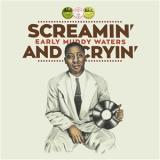
The Definitive Origins of the Chicago Electric Blues. Witness the birth of a legend. This essential collection captures Muddy Waters at the most pivotal moment of his career: the transition from a Mississippi Delta traveler to the "King of Chicago Blues." Muddy Waters was an ambitious young man who saw little future in Mississippi. In 1943, he headed for the bright lights, big city of Chicago, where he soon connected with blues giant Big Bill Broonzy, who began featuring Muddy as an opening act at his club dates. Within a year, Muddy had switched to electric guitar and formed his first blues combo, quickly becoming an established figure on Chicago's club scene. In 1947, Muddy came to the attention of the fledgling Aristocrat Records, just as Leonard Chess-then running a nightclub called the Macomba Lounge-invested in the company. Working frequently with pianist Sunnyland Slim, Muddy recorded a split session with him for Aristocrat in December 1947. This collection begins there: eight Aristocrat 78 rpm releases (sixteen sides), recorded between 1948 and 1950 and presented here in chronological order of release. Just three years later, Leonard and his brother Phil Chess would buy out Aristocrat's remaining partners and rename the label Chess Records-ushering in a new era of Chicago blues that would reverberate around the world. Includes extensive liner notes by Muddy Waters expert Fred Rothwell.
Sasha's collaborative hot streak continues with Manchester-based duo Cortese. The pair were last on Last Night On Earth in 2024.
A big 2025 saw electronic titan Sasha linking up with a mix of fellow pioneers and next-generation stars. He collaborated with the likes of Artche, Henry Saiz, and Joseph Ashworth, always pushing forward his signature sound, steeped in meticulous synth craft, built on transportive grooves, and packed with rare levels of universal emotion.
Cortese are new school artists with an emotionally rich mix of garage, breaks, and house. They head up their own Plaza Recordings and, as well as appearing on Sasha’s LUZoSCURA compilation, they dropped their 'All U Do' EP here in December 2024. Following gigs in support of mainstays like Bicep and Mike Skinner, they now hook up with one of dance music's most recognisable names.
The result is 'One', a deep and heavenly odyssey with warm, supple drums infused with subtle garage swing. Wordless vocals bleed into the mix, heightening the sensuality, as the majestic arps and shimmering chords light up the airwaves. It's an irresistible invitation for the dance floor to take off on a wave of cautious hope and optimism without ever losing sight of the grounding groove.
On the flip and the fantastic 'U Disappear' is an Ibiza anthem in the making - the synths are widescreen and sun-kissed, while the bass is dark and transportive. Balearic piano chords ripple through the mix alongside arching pads and soft, wordless vocals, lending a dreamy edge to what is a powerful track, both physically and spiritually.
- A1: Hìeratico
- A2: Litho Non-Danse
- A3: Blue Hymne (Feat Limpe Fuchs)
- A4: Cuerda De Piedra
- A5: Aranha
- A6: Tombal (Feat Pierre Bastien, Massimo Silverio &Amp; Marco Baldini)
- B1: Boku Ga (Feat Adele Altro)
- B2: Meridiana (Feat Giuseppe Ielasi)
- B3: Lode (Feat Natalia Rogantini &Amp; Jonas Torstensen)
- B4: Sospire (Feat Roberto Musci)
- B5: Muracetra (Feat Vipera &Amp; Dròlo Ensemble)
- B6: Vessel (Digital Bonus Track)
Like its cover, Nicolas Remondino's Hìeratico plays in the rich shades of crepuscular spaces. A night-tuned, percussion led album where prepared drums are accompanied by flickers of spoken word, acoustic instruments and muted electronics,
The title translates to 'hieratic', for Remondino a "black and gold" term laden with dualities and complex connotations. A sense of teetering between sparkling light and richly coloured darkness imbues the music, the compositions simulating a sense of heightened acuity as they convey us through a spooky elemental soundworld. The opening title track begins with a metallic shimmer, a drum skin activated in a way that sounds like it's being smelted. A cushioned rhythm enters, a smothered timbre akin to hearing something lurking around the garden. On "litho non-danse", percussion cracks like branches and dried foliage under foot.
Remondino recorded initial outlines for the pieces at Giuseppe Ielasi's studio in Milan, before fleshing out these ideas with his own additional instrumentation and contributions from a globe-spanning network of collaborators. On "blue hymne", chiming percussion equal parts jubilant and sinister heralds spoken word from Limpe Fuchs. "Tombal" opens with Massimo Silverio whispering in the Carnic dialect, a minority language from the Carnic Alps. Around, Marco Baldini, Pierre Bastien and Remondino construct a somber soundscape that cranks and sighs in the crevices.
Hìeratico is an album of hybrids. Diverse voices, accents and dialects deliver its lyrics, the instrumentation underpinning it crosses idioms. The drumkit at its core is modified to amplify its resonant tones and harmonics. Inspired by natural substances and phenomena: stone, wood, wind, earth, metal, grass, rain, clouds and bark, Remondino explores how percussion could evoke their materiality, treating drums as lucid textural instruments as much as rhythmic timekeepers. It gives the album a finely shaded depth and clarity as it conjures the vibrancies that reside in darkened corners. Hìeratico dwells in a sensation that crosses borders, the speckles of light in the oblique night sky. Listening is an aural equivalent to stepping into a pitch black forest and waiting for your eyes to adjust, a lightless void turning into a spectacular tableau of shadows and glows. Daryl Worthington
- A1: Evangelina - Hoyt Axton
- A2: Lady Love - Lou Rawls
- A3: Castles In The Air - Don Mclean
- A4: Why Have You Left The One You Left Me For - Crystal Gayle
- A5: Lost In Love - Air Supply
- A6: Danny's Song - Anne Murray
- B1: Train In The Distance - Paul Simon
- B2: The Bargain Store - Dolly Parton
- B3: We're Gonna Change The World - Matt Monro
- B4: Run Like The Wind - Barbara Dickson
- B5: Stumblin' In - Suzi Quatro & Chris Norman
- B6: Matrimony - Gilbert O'sullivan
- C1: You Belong To Me - Carly Simon
- C2: The Best Is Yet To Come - Clifford T Ward
- C3: Daylight Katy - Gordon Lightfoot
- C4: Deeper Than The Night - Olivia Newton-John
- C5: Warm Feeling - Lindisfarne
- C6: The Danger Of A Stranger - Stella Parton
- D1: Who What When Where Why - Dionne Warwick
- D2: 99 Miles From La - Art Garfunkel
- D3: Calypso - John Denver
- D4: Old And Wise - The Alan Parsons Project
- D5: Theme From 'Taxi' (Angela) - Bob James
Bob Stanley’s latest compilation “Wednesday Morning 6AM” literally turns back the clocks.
In the late 70s and early 80s, there was a parallel world of hits that people only heard when their clock radio went off. BBC Radio 2 had little time for the Top 40 music played by Radio 1 and beamed into living rooms by Top Of The Pops. Radio 2 effectively created a chart of its own playing singles or album tracks that their DJs enjoyed and wanted to share with their listeners. These tracks were given multiple plays on rotation and became earworms for millions of listeners.
“Wednesday Morning 6AM” is the warming soundtrack of eating breakfast or driving to school or to work in the cold and dark early hours to the sound of Art Garfunkel’s ‘99 Miles From LA’, Dolly Parton’s ‘The Bargain Store’, Hoyt Axton’s ‘Evangelina’, Paul Simon’s ‘Train In The Distance’ and Air Supply’s ‘Lost In Love’.
Other featured artists include Gilbert O’Sullivan, Crystal Gayle, Carly Simon, John Denver, Lou Rawls, Lindisfarne, Bob James, Stella Parton and Dionne Warwick.
The 2-LP version includes the bonus track ‘Danny’s Song’ by Anne Murray.
- 01: Cottongrass
- 02: Tundra
- 03: Cold Blow
- 04: Desolation
- 05: Ascending
- 06: Voices
- 07: Metamorphosis
- 08: First Light
- 09: Kaleidoscope
- 10: Adrift
- 11: White Fields
- 12: Last Light
London-based musician, composer, and NTS resident Kit Grill presents his extraordinary new album 'Andøya', inspired by a solo residency on the eponymous Norwegian island, a profoundly dramatic territory situated in the Vesterålen archipelago, inside the Arctic circle.
With evocative, sonorous ambient, drone, minimalism, experimentalism, and modern classical music, Grill captures the environmental essence of a remarkable region; an isolated Nordic landscape of small coastline villages, raw peatlands and sublime mountain ranges, surrounded by wide, open views of the Arctic ocean.
Drawn from his experience on solitary excursions around the island - hiking, exploring, and encountering the locals - 'Andøya' is a beautifully stark, stirring exploration of acoustic phenomena, seclusion in nature, and the expressive power of unique landscapes. For Grill, the trip entailed a surreal day-night cycle, and his experience has had far-reaching, existential implications, both for his practice and his perspective:
"On the 8th January 2025 I travelled to the Norwegian island of Andøya, in the Arctic Circle for a three week solo residency. Surrounded by sea, snow, and mountains, I lived in isolation and travelled around the island each day documenting the landscape. At 10am, the background light of the sun beneath the horizon would light the day and in the 4 hour window of light, I would hike into the mountains and explore the wilderness. It was a profound experience that changed the way I thought about sound, solitude, and what it means to be alone in nature."
"Since returning, I created a body of music informed by that time to try and capture the vastness and unpredictability of the Arctic landscape. The album moves through the sensory extremes: ice cracking, storms forming and fading, the rumble of tectonic plates, waves crashing, harsh winds, trudging through snow, and the sharpness of freezing air. The album aims to reflect both the landscape itself and the shifting emotions that came with living in isolation and the Arctic environment. The music and photography serve as a recorded diary of my time there, documenting the experience."
UILTY RAZORS, BONA FIDE PUNKS.
Writings on the topic that go off in all directions, mind-numbing lectures given by academics, and testimonies, most of them heavily doctored, from those who “lived through that era”: so many people today fantasize about the early days of punk in our country… This blessed moment when no one had yet thought of flaunting a ridiculous green mohawk, taking Sid Vicious as a hero, or – even worse – making the so-called alternative scene both festive and boorish. There was no such thing in 1976 or 1977, when it wasn’t easy to get hold of the first 45s by the Pistols or the Clash. Few people were aware of what was happening on the fringes of the fringes at the time. Malcolm McLaren was virtually unknown, and having short hair made you seem strange. Who knew then that rock music, which had taken a very bad turn since the early 1970s, would once again become an essential element of liberation? That, thanks to short and fast songs, it would once again rediscover that primitive, social side that was so hated by older generations? Who knew that, besides a few loners who read the music press (it was even better if they read it in English) and frequented the right record stores? Many of these formed bands, because it was impossible to do otherwise. We quickly went from listening to the Velvet Underground to trying to play the Stooges’ intros. It’s a somewhat collective story, even though there weren’t many people to start it.
The Guilty Razors were among those who took part in this initial upheaval in Paris. They were far from being the worst. They had something special and even released a single that was well above the national average. They also had enough songs to fill an album, the one you’re holding. In everyone’s opinion, they were definitely not among the punk impostors that followed in their wake. They were, at least, genuine and credible.
Guilty Razors, Parisian punk band (1975-1978). To understand something about their somewhat linear but very energetic sound, we might need to talk about the context in which it was born and, more broadly, recall the boredom (a theme that would become capital in punk songs) coupled with the desire to blow everything off, which were the basis for the formation of bands playing a rejuvenated rock music ; about the passion for a few records by the Kinks or the early Who, by the Stooges, by the Velvet mostly, which set you apart from the crowd.
And of course, we should remember this new wave, which was promoted by a few articles in the specialized press and some cutting-edge record stores, coming from New York or London, whose small but powerful influence could be felt in Paris and in a handful of isolated places in the provinces, lulled to sleep by so many appalling things, from Tangerine Dream to President Giscard d’Estaing...
In 1975-76, French music was, as almost always, in a sorry state ; it was still dominated by Johnny Hallyday and Sylvie Vartan. Local rock music was also rather bleak, apart from Bijou and Little Bob who tried to revive this small scene with poorly sound-engineered gigs played to almost no one.
In the working class suburbs at the time, it was mainly hard rock music played to 11 that helped people forget about their gruelling shifts at the factory. Here and there, on the outskirts of major cities, you still could find a few rockers with sideburns wearing black armbands since the death of Gene Vincent, but it wasn’t a proper mass movement, just a source of real danger to anyone they came across who wasn't like them. In August 1976, a festival unlike any other took place in Mont-de-Marsan – the First European Punk Festival as the poster said – with almost as many people on stage as in the audience. Yet, on that day, a quasi historical event happened, when, under the blazing afternoon sun, a band of unknowns called The Damned made an unprecedented noise in the arena, reminiscent of the chaotic Stooges in their early adolescence. They were the first genuine punk band to perform in our country: from then on, anything was possible, almost anything seemed permissible.
It makes sense that the four+1 members of Guilty Razors, who initially amplified acoustic guitars with crappy tape recorder microphones, would adopt punk music (pronounced paink in French) naturally and instinctively, since it combines liberating noise with speed of execution and – crucially – a very healthy sense of rebellion (the protesters of May 1968 proclaimed, and it was even a slogan, that they weren’t against old people, but against what had made them grow old. In the mid-1970s, it seemed normal and obvious that old people should now ALSO be targeted!!!).
At the time, the desire to fight back, and break down authority and apathy, was either red or black, often taking the form of leafleting, tumultuous general assemblies in the schoolyard, and massive or shabby demonstrations, most of the time overflowing with an exciting vitality that sometimes turned into fights with the riot police. Indeed, soon after the end of the Vietnam War and following Pinochet’s coup in Chile, all over France, Trotskyist and anarcho-libertarian fervour was firmly entrenched among parts of the educated youth population, who were equally rebellious and troublemakers whenever they had the chance. It should also be noted that when the single "Anarchy in the UK" was first heard, even though not many of us had access to it, both the title and its explosive sound immediately resonated with some of those troublemakers crying out for ANARCHY!!! Meanwhile, the left-wing majority still equated punks with reckless young neo-Nazis. Of course, the widely circulated photos in the mainstream press of Siouxsie Sioux with her swastikas didn’t necessarily help to win over the theorists of the Great Revolution. It took Joe Strummer to introduce The Clash as an anti-racist, anti-fascist and anti-ignorance band for the rejection of old-school revolutionaries to fade a little.
The Lycée Jean-Baptiste Say at Porte d’Auteuil, despite being located in the very posh and very exclusive 16th arrondissement of Paris, didn’t escape these "committed" upheavals, which doubled as the perfect outlet for the less timid members of this generation.
“Back then, politics were fun,” says Tristam Nada, who studied there and went on to become Guilty Razors’ frontman. “Jean-Baptiste was the leftist high-school in the neighbourhood. When the far right guys from the GUD came down there, the Communist League guys from elsewhere helped us fight them off.”
Anything that could challenge authority was fair game and of course, strikes for just about any reason would lead to increasingly frequent truancy (with a definitive farewell to education that would soon follow). Tristam Nada spent his 10th and 11th unfinished grades with José Perez, who had come from Spain, where his father, a janitor, had been sentenced to death by Franco. “José steered my tastes towards solid acts such as The Who. Like most teenagers, I had previously absorbed just about everything that came my way, from Yes to Led Zeppelin to Genesis. I was exploring… And then one day, he told me that he and his brother Carlos wanted to start a rock band.” The Perez brothers already played guitar. “Of course, they were Spanish!”, jokes their singer. “Then, somewhat reluctantly, José took up the bass and we were soon joined by Jano – who called himself Jano Homicid – who took up the rhythm guitar.” Several drummers would later join this core of not easily intimidated young guys who didn’t let adversity get the better of them.
The first rehearsals of the newly named Guilty Razors took place in the bedroom of a Perez aunt. There, the three rookies tried to cover a few standards, songs that often were an integral part of their lives. During a first, short gig, in front of a bewildered audience of tough old-school rockers, they launched into a clunky version of the Velvet Underground's “Heroin”. Challenge or recklessness? A bit of both, probably… And then, step by step, their limited repertoire expanded as they decided to write their own songs, sung in a not always very accurate or academic English, but who cared about proper grammar or the right vocabulary, since what truly mattered was to make the words sound as good as possible while playing very, very fast music? And spitting out those words in a language that left no doubt as to what it conveyed mattered as well.
Trying their hand a the kind of rock music disliked by most of the neighbourhood, making noise, being fiercely provocative: they still belonged to a tiny clique who, at this very moment, had chosen to impose this difference. And there were very few places in France or elsewhere, where one could witness the first stirrings of something that wasn’t a trend yet, let alone a movement.
In the provinces, in late 1976 or early 1977, there couldn’t be more than thirty record stores that were a bit more discerning than average, where you could hear this new kind of short-haired rock music called “punk”. The old clientele, who previously had no problem coming in to buy the latest McCartney or Aerosmith LP, now felt a little less comfortable there…
In Paris, these enlightened places were quite rare and often located nex to what would become the Forum des Halles, a big shopping mall. Between three aging sex workers, a couple of second-hand clothes shops, sellers of hippie paraphernalia and small fashion designers, the good word was loudly spread in two pioneering places – propagators of what was still only a new underground movement. Historically, the first one was the Open Market, a kind of poorly, but tastefully stocked cave. Speakers blasted out the sound of sixties garage bands from the Nuggets compilation (a crucial reference for José Perez) or the badly dressed English kids of Eddie and the Hot Rods. This black-painted den was opened a few years earlier by Marc Zermati, a character who wasn’t always in a sunny disposition, but always quite radical in his (good) choices and his opinions. He founded the independent label Skydog and was one of the promoters of the Mont-de-Marsan punk festivals. Not far from there was Harry Cover, another store more in tune with the new New York scene, which was amply covered in the house fanzine, Rock News (even though it was in it that the photos of the Sex Pistols were first published in France).
It was a favorite hang-out of the Perez brothers and Tristam Nada, as the latter explained. “It’s at Harry Cover’s that we first heard the Pistols and Clash’s 45s, and after that, we decided to start writing our first songs. If they could do it, so could we!”
The sonic shocks that were “Anarchy in the UK”, “White Riot” or the Buzzcocks’s EP, “Spiral Scratch” – which Guilty Razors' sound is reminiscent of – were soon to be amplified by an unparalleled visual shock. In April 1977, right after the release of their first LP, The Clash performed at the Palais des Glaces in Paris, during a punk night organised by Marc Zermati. For many who were there, it was the gig of a lifetime…
Of course, Guilty Razors and Tristam were in the audience: “That concert was fabulous… We Parisian punks were almost all dressed in black and white, with white shirts, skinny leather ties, bikers jackets or light jackets, etc. The Clash, on the other hand, wore colourful clothes. Well, the next day, at the Gibus, you’d spot everyone who had been at this concert, but they weren’t wearing anything black, they were all wearing colours.”
It makes sense to mention the Gibus club, as Guilty Razors often played there (sometimes in front of a hostile audience). It was also the only place in Paris that regularly scheduled new Parisian or Anglo-Saxon acts, such as Generation X, Siouxsie and the Banshees, the Slits, and Johnny Thunders who would become a kind of messed-up mascot for the venue. A little later, in 1978, the Rose Bonbon – formerly the Nashville – also attracted nightly owls in search of electric thrills… In 1977, the iconic but not necessarily excellent Asphalt Jungle often played at the Gibus, sometimes sharing the bill with Metal Urbain, the only band whose aura would later transcend the French borders (“I saw them as the French Sex Pistols,” said Geoff Travis, head of their British label Rough Trade). Already established in this small scene, Metal Urbain helped the young and restless Guilty Razors who had just arrived. Guitarist for Metal Urbain Hermann Schwartz remembers it: “They were younger than us, we were a bit like their mentors even if it’s too strong a word… At least they were credible. We thought they were good, and they had good songs which reminded of the Buzzcocks that I liked a lot. But at some point, they started hanging out with the Hells Angels. That’s when we stopped following them.”
The break-up was mutual, since, Guilty Razors, for their part, were shocked when they saw a fringe element of the audience at Metal Urbain concerts who repeatedly shouted “Sieg Heil” and gave Nazi salutes. These provocations, even still minor (the bulk of the skinhead crowd would later make their presence felt during concerts), weren’t really to the liking of the Perez brothers, whose anti-fascist convictions were firmly rooted. Some things are non-negotiable.
A few months earlier (in July 1978), Guilty Razors had nevertheless opened very successfully for Metal Urbain at the Bus Palladium, a more traditonally old-school rock night-club. But, as was sometimes the case back then, the night turned into a mass brawl when suburban rockers came to “beat up punks”.
Back then, Parisian nights weren’t always sweet and serene.
So, after opening as best as they could for The Jam (their sound having been ruined by the PA system), our local heroes were – once again – met outside by a horde of greasers out to get them. “Thankfully,” says Tristam, “we were with our roadies, motorless bikers who acted as a protective barrier. We were chased in the neighbouring streets and the whole thing ended in front of a bar, with the owner coming out with a rifle…”
Although Tristam and the Perez brothers narrowly escaped various, potentially bloody, incidents, they weren’t completely innocent of wrongdoing either. They still find amusing their mugging of two strangers in the street for example (“We were broke and we simply wanted to buy tickets for the Heartbreakers concert that night,” says Tristam). It so happened that their victims were two key figures in the rock business at the time: radio presenter Alain Manneval and music publisher Philippe Constantin. They filed a complaint and sought monetary compensation, but somehow the band’s manager, the skilful but very controversial Alexis, managed to get the complaint withdrawn and Guilty Razors ended up signing with Constantin with a substantial advance.
They also signed with Polydor and the label released in 1978 their only three-track 45, featuring “I Don't Wanna be A Rich”, “Hurts and Noises” and “Provocate” (songs that exuded perpetual rebellion and an unquenchable desire for “class” confrontation). It was a very good record, but due to a lack of promotion (radio stations didn’t play French artists singing in English), it didn’t sell very well. Only 800 copies were allegedly sold and the rest of the stock was pulped… Initially, the three tracks were to be included on a LP that never came to be, since they were dropped by Polydor (“Let’s say we sometimes caused a ruckus in their offices!” laughs Tristam.) In order to perfect the long-awaited LP, the band recorded demos of other tracks. There was a cover of Pink Floyd's “Lucifer Sam” from the Syd Barrett era – proof of an enduring love for the sixties’ greats –, “Wake Up” a hangover tale and “Bad Heart” about the Baader-Meinhof gang, whose actions had a profound impact on the era and on a generation seeking extreme dissent... On the album you’re now discovering, you can also hear five previously unreleased tracks recorded a bit later during an extended and freezing stay in Madrid, in a makeshift studio with the invaluable help of a drummer also acting as sound engineer. He was both an enthusiastic old hippie and a proper whizz at sound engineering. Here too, certain influences from the fifties and sixties (Link Wray, the Troggs) are more than obvious in the band’s music.
Shortly after a final stormy and rather barbaric (on the audience’s side) “Punk night” at the Olympia in June 1978, Tristam left the band ; his bandmates continued without him for a short while.
But like most pioneering punk bands of the era, Guilty Razors eventually split up for good after three years (besides once in Spain, they’d only played in Paris). The reason for ceasing business activities were more or less the same for everyone: there were no venues outside one’s small circuit to play this kind of rock music, which was still frightening, unknown, or of little interest to most people. The chances of recording an LP were virtually null, since major labels were only signing unoriginal but reassuring sub-Téléphone clones, and the smaller ones were only interested in progressive rock or French chanson for youth clubs. And what about self-production? No one in our small safety-pinned world had thought about it yet. There wasn’t enough money to embark on that sort of venture anyway.
So yes, the early days of punk in France were truly No Future!
Somewhere close to Manchester’s ever changing city centre, as the sun fades and peeks through the newest glass facade, you’ll find Shaking Hand. One part in shadow, the other basking in prisms of light as they sketch out their own sonic landscapes in the dusty redbrick mill they call home. One that is just about clinging on from the encroaching developments that surround them.
Against this back-drop where buildings are constantly torn down & built back again, the three piece craft away. Pulling from early post-rock, and 90s US alternative rock, crafting their own brand of Northwest-emo. Assembling something new, yet nostalgic. Looking ahead towards the transforming horizon. Shaking Hand’s music is built on tension and release – quiets that stretch, louds that overwhelm. Repetition that feels both hypnotic and destabilising.
The band’s musical DNA runs through experimental guitar outfits like Women, Slint, Sonic Youth, Pavement, and Ulrika Spacek, balanced with the melodic sensibility of Big Thief and the dynamic intimacy of Yo La Tengo. Their compositions push against structure: sudden jolts of tempo, polyrhythms that almost fall apart, and riffs that unravel into something fragile or ecstatic. Yet, as Ellis notes, there’s an underlying warmth too: “Like walking through an empty city late at night but catching flickers of life in the buildings you pass.”
Early ideas like ‘Night Owl’ and ‘Sundance’ grew out of George’s lockdown “bedroom years,” where new tunings (open E, drop D, and stranger Pavement-inspired set-ups) opened up uncharted textures. Later, in grim rehearsal rooms, the murky epic ‘Cable Ties’ and the hypnotic ‘Mantras’ absorbed the gloom and grit of the band’s surroundings.
The album was recorded with producer David Pye (Wild Beasts, Teenage Fanclub) at Nave Studios in Leeds, housed in a converted church. “The live room was huge and perfect for capturing our sound,” says George. Determined to bottle their onstage energy, the band tracked the foundations live, layering vocals and guitars later. Soviet-era microphones, odd mic placements, and even phone-recorded demos fed into the mix. “You’ve got to watch out for David though,” Freddie laughs. “He made me play four tambourines in one hand, really hurt, man.”
Lyrically, the record drifts between abstraction and lived moments. George’s words often spill out instinctively, words falling into place before their meaning becomes clear. “A lot of the lyrics look like they’re buried in abstraction,” he says, “but when I look back I can see what they were about — whether that’s an emotional response at the time or just an observation of what was happening around me”. There’s contrast at the heart of it all – optimism vs. doubt, the lightness of youth vs. the monotony of work, a city in constant redevelopment vs. the people drifting through it.
The album artwork is taken from unused plans for the 1970s redevelopment of Los Angeles by architect Ray Kappe, entitled ‘People Movers’. Hypothetical buildings for real people, it feels a complement to the band’s own constructions. One thing’s for sure, Shaking Hand’s debut is built to last.
- Dean Martin - You're Nobody Till Somebody Loves You
- Tony Bennett - Rags To Riches
- The Ink Spots - Whispering Grass (Don't Tell The Trees)
- The Shirelles - I Met Him On A Sunday (Aka "Da Doo Ron
- Robert & Johnny - You're Mine
- Howlin' Wolf - Smokestack Lightning
- The Cramps - The Creature From The Black Leather Lagoon
- Jimmy Smith - Walk On The Wild Side
- Jimpson & Group - The Murderer's Home
- Santo & Johnny - Sleep Walk
- Lonnie Johnson - Tomorrow Night
- Glenn Miller & His Orchestra - Moonlight Serenade
- Muddy Waters - Hoochie Coochie Man
- The Berlin Radio Symphony Orchestra - Radetzky March
- The Harptones - Life Is But A Dream
- Bing Crosbywithvictor Young's Orchestra - Just One Mo
- Charlie Parker - I'll Remember April
- Johnnie Ray - Cry
- Benny Goodman - Moonglow
- Lavern Baker - Tweedlee Dee
- Frankie Carle - I Want A Girl (Just Like The Girl)
- Ray Charles - Come Rain Or Come Shine
- Bo Diddley - Road Runner
- Brenda Lee - I'm Sorry
- The Marvelettes - Please Mr. Postman
- Jackie Gleason - Melancholy Serenade
- The Hot Club Of France Withdjango Reinhardt&Stéphane
- The Danleers - One Summer Night
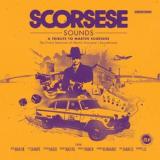
Scorsese Sounds - A Tribute To Martin Scorsese - The Finest Selection of Martin Scorsese"s Soundtracks Martin Scorsese ist nicht nur ein Meister des Films, sondern auch ein Virtuose der Musikauswahl. Mit "Scorsese Sounds" erleben Sie die unverwechselbare Klangwelt seiner größten Werke - von epischen Gangster-Sagas bis hin zu psychologischen Dramen und zeitlosen Klassikern. Diese exklusive Doppel-Vinyl vereint die Essenz der Soundtracks, die Scorseses Filme zu Kult gemacht haben. Jeder Track ist sorgfältig ausgewählt, um die Atmosphäre und Emotionen der legendären Szenen einzufangen - von der rauen Energie des New Yorker Untergrunds bis zur eleganten Nostalgie vergangener Zeiten. Ein Muss für Cineasten, Vinyl-Liebhaber und alle, die die Magie von Bild und Ton schätzen. Tauchen Sie ein in die musikalische DNA eines der größten Regisseure unserer Zeit.
- A1: Gloria Lynne “The Jazz In You” 2.22
- A2: Joe Harrioj Quintet “Señor Blues” 4.02
- A3: Peggy Lee “Black Coffee” 3.05
- A4: Benny Golson “Tippin’ On Thru” 6.41
- B1: Sheila Jordan “Dat Dere” 2.42
- B2: Al ‘Jazzbo’ Collins “Max” 3.04
- B3: Nina Simone “Central Park Blues” 6.49
- B4: John Wright Trio ”South Side Soul” 5.03
- C1: Diane Maxwell “Love Charms” 2.16
- C2: David Michael And Chorale “Wow” 2.36
- C3: The Jimmy Heath Orchestra “Big ‘P’” 3.54
- C4: Bobby Timmons “So Tired” 6.11
- D1: Nappy Brown “My Baby” 2.32
- D2: Sonny Clark “Midnight Mambo” 7.12
- D3: Sabu MarNez And His Jazz-Espagnole “Enchantment” 4.27
- D4: Zoot Sims And His Orchestra “Recado Bossa Nova - Pt.1” 2.36
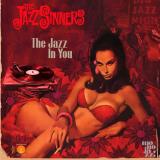
Step into the second chapter of the The Jazz Sinners saga dedicated to cool, groovy and sinful
Jazz. The Jazz In You goes deeper with richer grooves, glamorous moods, pure analog soul.
A cinemac journey through jazz’s most seducve decades, pressed and presented with
uncompromising audiophile standards. This is jazz that moves, seduces, and stays. Every cut is pure
jazz alchemy. Rare, prisne vintage first pressings and top-er sources only. No shortcuts, no
compromises. Mastered organically for a full 360° sound spectrum, where every nuance and every
breath feels as if the players were right there in the room. The mood is cinemac, midnight cool. Jazz with a;tude inspiring shadowed alleys, smoky clubs, late-night elegance.
Music that speaks equally to jazz lovers, lounge selectors, DJs, and serious collectors.
At the heart of the journey, instantly recognizable landmarks light the way:
Gloria Lynne’s “The Jazz In You”, Benny Golson’s “Tippin’ On Thru”,
Nina Simone’s “Central Park Blues”, Diane Maxwell’s “Love Charms”,
Sabu Marnez’s “Enchantment”, and Zoot Sims’ “Recado Bossa Nova – Pt.1”.
Timeless names, meless grooves, each cut is chosen for its power to move and to suggest feeling
and emoons. Behind the selecon stand true masters of mood, with over thirty years of digging,
taste, and style shaping every decision.
On this double vinyl, the experience is treated with the respect it deserves. Pressed under expert
supervision, housed in a premium 100% Italian-made cover on luxurious 350g cardstock, with polylined inner sleeves designed for long-term preservaon. Built for collectors. Made to last
generaons and here is the promise: Triumphant. Timeless. Deeply grooving.
Soulful vocals, hard-swinging combos, cinemac big bands, Afro-Lan heat, late-night Blues. Every
track is a winner. The Jazz In You is feeling. It’s a;tude. It’s moon and emoons.
Now, sit back, close your eyes and get ready to find something captured, once again, that escapes
explanaon … The Jazz Sinners’ way!
- A1: Under The Light, Yet Under
- A2: In The Bird's Beak
- A3: Great Streets Of Silence Led Away
- A4: Faces Of Night
- A5: The Fly
- B1: I Felt A Cleaving In My Mind
- B2: Gusts Of Wind
- B3: A Thought Went Up My Mind Today
- B4: It Was Not Death, For I Stood Up
- B5: Twenty-Four Centuries Ago
Limite is the genre-defying ensemble led by Brussels-based bassist Jordi Cassagne. Alongside him are several familiar faces from the W.E.R.F. Records family, including guitarist Benjamin Sauzereau (REMORQUE) and keyboardist Camille-Alban Spreng (ODIL).
Limite's music embodies a distinctive blend of alternative rock, no wave, and idiosyncratic folk, drawing inspiration from artists such as Blonde Redhead, Big Thief, Daniel Rossen, Joanna Newsom, Leonard Cohen, DavidBowie, Deerhoof, Sonic Youth, and Jim O'Rourke.
- 1: Invocation Of The Abyss
- 2: Three Nails, One Heart
- 3: Incantation
- 4: The Sigil
- 5: A Pearlescent Pulse Of Light
- 6: Ritual Of Night Violence
- 7: Sovereign Of Silence
- 8: Embers Of Calendula
- 9: Echoes Of The Drowned
- 10: Embrace The Abandon
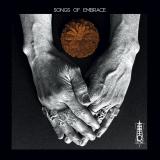
Embrace The Abandon is the new project by THE MON, the solo vision of Urlo, vocalist, bassist, and founding member of the Italian heavy-psych veterans Ufomammut.
Structured in two complementary chapters - Songs of Abandon (November 7th, 2025) and Songs of Embrace (March 6th, 2026) - the project tells a journey of duality: loss and surrender on one side, acceptance and rebirth on the other.
“
Songs Of Embrace” is the second chapter of “Embrace The Abandon”, expanding its emotional landscape rather than closing it.
Where the first part explored abandonment and loss, “Songs Of Embrace” focuses on presence, proximity, and the physical act of staying.
It is the answering breath, the inner voice.
The album avoids resolution and comfort, embracing slowness, repetition, and bodily tension.
It is not just music, it is a stream of consciousness, an inner search, a way of inhabiting what weighs without letting go.
While “Songs Of Abandon” is a collection of songs, nine tracks written in nine days, Songs Of Embrace is a continuous musical flow.
It is a movement that changes, grows, erupts, slows down, settles, and rises again.
It feels like the sea: calm and still one moment, then moved by a simple breath of wind, suddenly breaking into a storm.
“Songs Of Embrace” was conceived more like a ritual, a work of classical music, a suite.
Different parts unfolding one into the next, each a continuation of the previous one, finding meaning only as a whole.
The pieces are deeply interconnected, like embraces: some bring comfort, others carry pain.
These are compositions meant to be listened to in one continuous breath, allowing yourself to be held, rocked, and sometimes pushed away, just like in an embrace.
- 1: Mr. Sentimental
- 2: Saran Wrapped Cash
- 3: Ladies' Night (Feat. Luxury Skin)
- 4: Pay Pigs
- 5: Bedrot
- 6: Monet
- 7: Pretty In Pink (Feat. Luxury Skin)
- 8: Pliers (Feat. Luxury Skin)
- 9: Screentime
- 10: I Have A Key To Your House
- 11: Camgirl
- 12: Sweet Talk (Feat. Ameokama)
- 13: Taravista (Feat. Luxury Skin)
- 14: Mary Kate & Ashley
- 15: Despair (Feat. Latter)
Pleasure, shame, and survival often arrive tangled together, indistinguishable in the moment. Camgirl, from Crippling Alcoholism, takes that entanglement as its starting point. Rather than separating desire from damage, the record allows them to coexist, tracing a path through obsession, performance, and persistence without offering clean resolution.
Camgirl is the 2025 breakthrough album from Boston’s Crippling Alcoholism, a record that frames pop immediacy against obsession, endurance, and collapse. Built from ear-wormy hooks and abrasive noise rock textures, the album smuggles grotesque and confrontational subject matter into songs that remain deliberately melodic. Pleasure and revulsion blend throughout, with choruses that linger even as the lyrics refuse comfort.
Released on September 12, 2025, Camgirl follows a loose narrative centered on a sex worker moving through cycles of exploitation and survival, treating intimacy as spectacle and visibility as threat. Songs flicker between desire and despair, confession and performance, flooded with artificial light. Despite its subject matter, the record resists nihilism. Its closing moments arrive quietly triumphant, not through escape or redemption, but through persistence itself.
Originally released on vinyl by Portrayal of Guilt Records, the first pressing of Camgirl sold out quickly. The Flenser reissue makes the album widely available for the first time, reaffirming it as a defining statement from a band operating at the intersection of pop form, noise, and lived experience.
Press Quotes
Camgirl proves that Crippling Alcoholism can evolve without losing their edge, and this record is a dark, irresistible bop. - Lambgoat
Elements of goth rock and melancholic vocals call back to loud rock while blending with an overall instrumental field brimming with energy. - Outside noise
Blurring the lines between outsider noise rock and dark glamorous synth-laden pop under a deceptively alluring glow… compulsively, squirmingly catchy. - The Progressive