The Telescopes Radio Sessions collects together the essence of three live session recordings in 3 different countries over a three year period between 2016-2019. This is the third in a series of radio session releases from Tapete Records that have so far included The Monochrome Set and Comet Gain. More session releases are being lined up for the rest of the year and beyond - enjoy the sonics and stay tuned. Over the years I have read a lot on people’s impressions of The Telescopes. Some folk think it’s a collective, others imagine it used to be a band and feel nostalgia towards what they consider to be the original line-up (even though many had come before, during and since) and some people refer to it as currently a solo career. In a way this is all true and none of it is. When faced with these kind of questions, along with questions about the style of music that The Telescopes make I often say The Telescopes house has many rooms, which explains things perfectly for me but for people on the outside looking in it only serves to increase their confusion. For me, confusion isn’t such a bad thing. Everything is born into confusion, the sense we try and make of that chaos is interesting and excites me. The universe often disorientates, it sends me a jumble of thoughts and impressions coupled with a feeling of something I need to express… if I could only decipher the encryption. This is how The Telescopes music comes to be and it is also how The Telescopes came to me. I regard The Telescopes as an entity of it’s own that introduced itself in my darkest hour and I was chosen as its vessel. From the second it arrived I was obsessed to the point where there was nothing else. A bit like having an imaginary friend. As the obsession grew it began to infect others, everybody loved my imaginary friend and wanted a piece of it. As its success grew however, so did the corruption, until one day the entity fell silent. The silence lasted for years, I tried everything to reconnect but it was having none of it. I had been a bad caretaker, I had let the house become infested and I had lost my way. This epiphany served to remind me of simpler times when anything felt possible with this entity by my side. It had trusted me with something so simplistically profound and I had let it down. The realisation of this was a eureka moment. I am not The Telescopes, I never was and never will be, I am the caretaker, the lighthouse keeper and if a job is worth doing it is worth doing well. With this dawning, I felt a crack open up in the cosmic egg and a familiar confusion in my head. The entity had returned. It was time to start untangling its tangled threads once more, to make sense of what it was saying, this time without corruption. It’s all about listening. I listen to what my cosmic friend sends me and channel this expression into what you hear through your speakers. It may take one person to achieve this, it may take more. There is no set line up or instrumentation that can hold The Telescopes. Whatever it takes to hit the zone, whatever is available, absolute focus is imperative. Sometimes it takes sabotage to keep that line of vision intact, there is no room for preconceptions or complacency in making the music. The Telescopes music is the now
incarnate and a state of total being is necessary to achieve. From the outside looking in... again, it’s all about listening. What comes through your speakers is the only thing that matters. The music either reaches you or it doesn’t. Everything else may seem interesting or confusing but ultimately it is corruption. So if you’ve bought the record, read the sleeve notes and bought a ticket to see a live show, don’t be surprised if the line-up is or isn’t the same as the recording. The only thing that is for sure is that The Telescopes as an entity is speaking to you in its own voice in every scenario.
Of course the difference between albums and live shows is that you can play the record over and over again to the point where you know every line and every note that was played. Whereas with live events you are left with an impression that can only be replayed in your mind. It can be frustrating at times. When you are touring with a great line-up and feel like something exciting is happening, you want everyone to hear it, not just the people at the shows but the people that couldn’t make it on the night as well. There is no guarantee that there will be the same line-up at a live show as there is on the album. This is why live sessions are important, they document a side of things that is often fleeting. Here we have three sessions, all different people transmitting The Telescopes sound on each. Some are regulars, some dip in and out and some were just passing through. In each case The Telescopes chose them as their vessel and as the lighthouse keeper I did everything I could to help them on that journey while trying to be a good caretaker to the house of many rooms. The Telescopes have been invited in for many sessions over the years, the first two were for John Peel on BBC Radio 1. We also recorded a session for Marc Riley and Mark Radcliffe before their
celebrity when they had a show on BBC Radio Manchester. We could have compiled this album from those sessions, it was certainly considered but Tapete and myself believe this selection gives an exciting glimpse into that fleeting side of The Telescopes in a constant state of flux that is left mostly to myth and imagination. For those who listen to the records but have never had the chance to take in the live experience, welcome to the other side. For those that follow us live, here’s a little reminder and a keepsake. Infinite suns. Stephen Lawrie February 2024.
Поиск:night light
Все
- A1: I'm Your Hoochie Coochie Man
- A2: Baby Please Don't Go
- A3: Rollin' And Rumblin' (Part 1)
- A4: Rollin' And Rumblin' (Part 2)
- A5: Gypsy Woman
- A6: I Just Want To Make Love To You
- A7: You're Gonna Miss Me (When I'm Dead And Gone)
- B1: Mannish Boy
- B2: Smokestack Lightnin
- B3: Standin' Here Tremblin
- B4: Just A Dream (On My Mind)
- B5: She's All Right
- B6: I Want To Be Loved
- B7: The Call Me Muddy Waters
- C1: Got My Mojo Working
- C2: Rock Me
- C3: I'm Ready
- C4: Diamonds At Your Feet
- C5: Mopper's Blues
- C6: Loving Man
- C7: Evil
- D1: Forty Days And Forty Nights
- D2: She Moves Me
- D3: Trouble No More
- D4: Hard Day Blues
- D5: Rollin' Stone
- D6: I Can't Be Satisfied
- D7: Train Fare Home Blues
Black Vinyl[29,20 €]
Color Vinyl[30,04 €]
Turquoise/Black Marble Vinyl[33,19 €]
The phenomenal three-piece band includes members of Oranssi Pazuzu, K-X-P, Grave Pleasures and Aavikko
Svart Records is proud to release the debut album, I, from Haunted Plasma, a powerhouse of futuristic synth in symbiosis with the super violent atmospherics of kosmische Black Metal. Haunted Plasma is “man meets machine” in a cybernetic wasteland, set to a conceptual backdrop of William Gibson and Phillip K. Dick style mind-melt. The highly evolved creatives at the heart of Haunted Plasma’s sound, cite Terry Riley, Massive Attack, a contemporary take on Krautrock hypnosis, psychedelic Black Metal and 90s Techno, resulting in an orgy of mutant sound.
The phantoms at the beating nucleus of this unearthly machine are Juho Vanhanen (Oranssi Pazuzu, Grave Pleasures), Timo Kaukolampi (K-X-P, Op:l Bastards) and Tomi Leppänen (Circle, Aavikko, K-X-P), transmitting a music form evolved from a life of redefining sonic boundaries in their respective projects. Also featuring guest vocals from Mat McNerney (Hexvessel, Carpenter Brut, Grave Pleasures/Beastmilk), Pauliina Lindell (Vuono, Dust Mountain) and Ringa Manner (Ruusut, The Hearing). Haunted Plasma promises an extraterrestrial experience from some of the foremost contemporary musicians at the heart of the Finnish heavy and avant-garde musical underworld.
Haunted Plasma reveals:
“We are liberated futurists, embracing free-form and natural composition, mirroring the merciless forces of cosmic creation. We have a motto to stay true to our feelings, to spawn a sound that’s never been heard before. Servants of music. Energizing, radical and pure”
The first single from Haunted Plasma’s cascading debut, Reverse Engineer, is a creepy, slowly erupting, synthetic nightmare, of a downloaded being waking up in the wrong future. Ghostly vocals demand the listener to “give us what we want” in an Orwellian glimpse into the current dystopia we live in, where information is controlled, and thoughts are bought and sold. As McNerney intones the words “technology of power” he describes the threat of a malevolent and omnipresent artificial intelligence, as much as describing the oppressive and electromagnetic sonar pulse of Haunted Plasma’s sound itself. Psychedelic guitar hypnosis from Vanhanen snakes around Kaukolampi’s molten and morphing synths, while Leppänen’s uncanny man/machine rhythms pull our strings and animate their other-worldly mechanisms. Have a look at the official visualiser of "Reverse Engineer" on the Svart YouTube channel here
Culminating in the full-blown fast Krautrock of the final self-titled track, oozing with blistering noise elements and enigmatic vocals from Ringa Manner, the album's journey reaches its zenith, taking you to unknown territories on a Kubrikian space trip. I is a rare record of talented musicians coming together to create a completely new sound, which is entirely their own, boldly glowing, where no light has shone before. From the dreamy psychedelia of Echoes to the discombobulated Spectral Embrace, Haunted Plasma is a willful force of deliberate sound contortion.
Whether you want to give in to Haunted Plasma’s sound or not, you are being watched, you are being recorded and your every move is monitored. Haunted Plasma will enter your system on the 31st of May 2024. Turn on your phantom circuits and be prepared for an interdimensional excursion into Haunted Plasma’s alien dreams.
The debut album from Haunted Plasma will be packaged in a beautiful tip-on sleeve, swirling fog artwork, complete with 12” booklet and pressed on 3 exclusive vinyl colours: 300 copies on Standard Black Wax, 500 copies in Amber + Black Smoke and 200 copies of Svart exclusive Turquoise/Black Marble. The album will also be available on CD and digital platforms.
Carol Douglas is an American singer known for her contributions to the disco music scene in the 1970s.
During this time, she was signed with Bob Reno's Midland Records where she recorded a string of successful hits, including “Doctor’s Orders”.
This new compilation record showcases the best of Reno's four-to-the-floor 70s productions and remixes, remastered and pressed on fluorescent pink vinyl.
- A1: Barry Woolnough - Great Father Spirit In The Sky
- A2: David Holmes & Steve Jones - The Reiki Healer From County Down
- A3: The Children Of Sunshine - It's A Long Way To Heaven
- A4: Spark Sparkle - Slythtovery
- A5: Alain Maclean - Talking Judgement Day Blues
- A6: David Crosby - Orleans
- A7: Buddy Holly - Love Is Strange
- B1: After Dinner - Paradise Of Replica
- B2: Lullaby Movement - Ru-Ru (Sleep Little Baby)
- B3: Jeff Bridges & Keefus Ciancia - It's In Every One Of Us
- B4: Song Sung - I'm Not In Love
- C1: Neo Maya - I Wont Hurt You
- C2: Bp Fallon & David Holmes - Henry Mccullough
- C3: Documenta - Love As A Ghost (Produced By David Holmes)
- C4: Keith Fullerton Whitman - Stereo Music For Acoustic Guitar, Buchla Music Box 100 Hewlett Packard Model 236 Oscillator, Electric Guitar And Computer Part I
- D1: Eat Lights Become Lights - Into Forever
- D2: Geese - Andrew Parsnip
- D3: Die Hexen - Gloomy Sunday
- D4: Jon Hopkins & David Holmes Feat Stephen Rea - Elsewhere Anchises
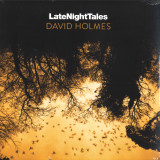
DJ and producer David Holmes is welcomed to the Late Night Tales fraternity with an evocative collection of personal songs and music, peppered with exclusive new material and rare gems. By now, I think we all know David Holmes, right There's acid house Holmes, with bone-rattling Chicago jams and Detroit destroyers, break-digger Holmes responsible for the grittily shaking 'Let's Get Killed' and seminal Essential Mix compilation (which brought Sixto Rodriguez to people's attention, and then there's soundtrack Holmes. His most enduring and vital source of musical inspiration - cinema - plugged into David's rst solo record 'This Film's Crap, Let's Slash the Seats' and inspired 2000's 'Bow Down to the Exit Sign', created as the soundtrack to a not-yet-made movie. Ofcial soundtracks have been bountiful, including scores for Soderbergh's Out Of Sight and Ocean's trilogy, '71, Hunger and Good Vibrations. In a series of personal songs sung by himself, David's last solo album 'The Holy Pictures' explored inuences of La Düsseldorf, The Jesus and Mary Chain and early Brian Eno. His Unloved collaboration with Keefus Ciancia and Jade Vincent then took us on a musical journey full of raw 60s pop-noir, psychedelia and French Ye Ye with a contemporary twist. Somehow he's also found time to produce records by Primal Scream and Jon Spencer Blues Explosion. Unsurprisingly, for someone au fait with matters cinematic, this Late Night Tales conjures up its own mindmovies. It's not only packed with the judiciously selected nuggets for which his mixes are noted but also stuffed with original material, including collaborations with BP Fallon and Jon Hopkins and an amazing new reading of 10cc's 'I'm Not In Love' by Holmes-produced Song Sung. In fact, there's a Celtic thread running through the whole journey with Stephen Rea's reading of an extract from Seamus Heaney's AENEID BOOK VI - Elsewhere Anchises. Among the other gems included here are David Crosby's lush 'Orleans', Buddy Holly's celestial 'Love Is Strange' and the Children Of Sunshine's 'It's A Long Way To Heaven'. David Holmes loves music. It's a way of expressing the sometimes inexpressible or the inconsolable, a questing desire to nd out just what is over the next hill. It's no surprise to learn he's a keen walker. Always on the move, headphones on, lost in some reverie or piece of music, the soundtrack to his life, the stuff that feeds his imagination. I walk a lot. It's amazing for listening to music: your phone or your emails aren't going and you're just in the forest listening to music. It's so intimate. Anyway, I was listening to the KLF's Chill Out album, which still sounds amazing, but it triggered an idea with concrete sounds through travelling and movement. And one of the things I was trying to do was to use this idea not just break up the moods but also as a metaphor for moving through life and arriving in different destinations or arriving at different stages in different parts of your life. Memory, Love, Living, Family, Friendship, Healing, Death and The Afterworld are some of the themes I wanted to explore within this record. Although these strong themes and tracks are personal to me, I also wanted it to be a great listen that was unpredictable yet had a seamless ow - a journey that was personal to me yet to the listener a great compilation of music that they may or may not have heard before. I hope I've succeeded in the later.' David Holmes 2016
Auf seinem elften Studioalbum Transmissions erweitert der Singer-Songwriter Lee seine musikalische Bandbreite und verfeinert gleichzeitig seine genau beobachteten Texte, die sich mit Tod, Altern und Liebe auseinandersetzen. Lee, der hinter so erfolgreichen Alben wie "Mission Bell" und "Mountains of Sorrow, Rivers of Song" steht, ist seit seinem Debütalbum, das 2005 mit Gold ausgezeichnet wurde, für seine Zusammenarbeit mit einer langen Liste von Kollaborateuren und Tourneepartnern bekannt, von Paul Simon bis zur Zac Brown Band.
Für das neue Projekt wollte er zu einem Aufnahmestil der alten Schule zurückkehren und mit seiner langjährigen Band in einem Studio im
abgelegenen Marlboro, New York, arbeiten, das von Schlagzeuger Lee Falco und seinem Vater aus dem Holz einer alten Kirche gebaut wurde ("es ist genau so, wie man sich ein Studio in Upstate New York vorstellt", bemerkt Lee). Sie spielten stundenlang live auf kleinstem Raum, und konnten so die zwölf Songs des Albums in weniger als einer Woche aufnehmen.
Since 2011, the Berlin born and raised producer and DJ Mørbeck has been delivering numerous acclaimed Techno releases via Vault Series and his own Code Is Law imprint as well as making his mark on the global club scene as a DJ. Fast forward to 2023 and we see Mørbeck inaugurate his house guise, Midnight In A Toyshop, aimed to showcase his passion for House productions in a lighter shade, whilst still retaining his signature rawness.
Setting the tone to open the EP is ‘100’s & 1000’s’, laying down warbling pad sequences and crunchy saturated drums in combination with a bouncy bass line and hypnotic vocal hooks throughout. The aptly titled ‘90’s Memento’ follows, encapsulating a classic House sound with bright, mesmeric chords, rumbling subs, processed vocal lines and a bumpy drum machine workout.
On the flip-side title-track ‘Dreams For Sale’ shifts focus to Trance tinged staccato melodies, cinematic atmospherics, acid licks and a heavily swung rhythm before ‘Every Night’ rounds out the EP on a classic Deep House tip via ethereal pads, robust percussion, circling synth lines and a vacillating low-end drive.
Remedy, a dynamic and cutting-edge melodic rock metal band originating from the heart of Stockholm, Sweden, burst onto the music scene in 2022 with an unmistakable presence. Their debut album ‘Something That Your Eyes Won't See' charted in Sweden and had a massive impact, including truly incredible positive feedback from the Rock and Metal World. Now it's the time for the second album ‘Pleasure Beats the Pain', co- produced with the Swedish S-Rock Music Production, a huge sound journey between catchy melodies, powerful riffs, huge sound and mesmerising guitar solos. With these new songs, the band presents a sound even more personal, pushing boundaries even further. Drawing from the lively sounds of the 80s, but adding a modern twist, Remedy captivates listeners with their contagious energy.
Their magic is driven by energetic guitars, powerful vocals, and catchy hooks across Rock, Pop, and Metal genres, blending retro vibes with fresh innovation seamlessly. In line with the production of Remedy's debut album, ‘Pleasure Beats the Pain' is mixed and mastered by Erik Martensson (Eclipse) at Mass Destruction Production. “Fuelled by the success of our debut album, stepping back into the studio felt like the most natural progression for us. With 'Pleasure Beats the Pain,' we reached a defining moment in Remedy's journey, solidifying our sound. With a balance of light and dark, day and night, pleasure and pain, love and hate, our music mirrors life's complexities, melding melodic rock & metal into a harmonious blend. Through this, combined with a distinctive approach to instrumentality and songwriting, Remedy emerges”, Rolli concludes.
Clear/Black Smoke Vinyl[38,87 €]
Svart Records are proud to release the long-awaited full length album "SÁLA" by Kati Rán in May 2024
If the most profound treasures are often the most deeply buried, the journey to uncover them is vital process of discovery. Five years after the 15-minute single “Blodbylgje” signaled the birth of a new, more primordial, and immersive vision after the dissolution of her band L.E.A.F., Nordic dark folk artist Kati Rán has expanded on its oceanic theme for her long-awaited full-length album, “SÁLA”. Embarking on a far-reaching musical and personal travelogue, it’s a reawakening of both the feminine narratives submerged and fragmented within Norse mythology, and the enduring, healing powers held within.
Named after the Old Norse word for ‘soul’ and ‘sea’, “SÁLA” is an act of ‘soul retrieval’, the shamanic art of trauma recovery, be it illness, death, heartbreak or loss, and the reintegration of a splintered self. Across its 13, wide-ranging, elegantly unfolding tracks, the album is an embodiment of different feminine voices and perspectives – from the Norse nine daughters of the sea, or ‘billow maidens’, through various historical and fictional figures to the late-night voices we hear in our most liminal states – all with tales to tell, riddles to solve, challenges to be accepted and guidance to offer. It’s a multiplicity that, like the ocean itself, belongs to a vast, restless dynamic: a matrix of mysteries, unfathomable depths and ever-shifting currents, accumulating into an elemental, regenerative source of power.
Recorded in a barn in Húsafell, Iceland – home to glacier ice caves and a rare lava stone marimba rediscovered for the track “Stone Pillars” – as well as Finland, Norway and at home in Kati’s native Netherlands, “SÁLA” is as much chronicle of Kati’s own perspective-shifting recording process as it as a pilgrimage through different viewpoints and internal states. That itinerate urge is also reflected in the use of different languages, ranging across Norwegian, Old Norse, Icelandic, and, for the first time, English, her combination of ancient texts, historical reimagining’s and unguarded personal reflection backed up by deep research into the most resonant recesses of Nordic lore.
Spun throughout every thread of “SÁLA” is a sense of communion - with the power of stories to offer moral guidance and the thrill of the unknown; with the element of water, recreated across the album both in field recordings and the agelessly organic nature of the music itself; with the archetypes whose qualities we are called upon to embody at our most critical moments; and with the internal hidden realms forever whispering at us from the far edges of our consciousness.
Appropriately, it’s a collaborative venture too. As well as working closely together with Finnish producer Jaani Peuhu, there are contributions from across the musical spectrum, including extreme metal vocalist extraordinaire Gaahl, the Icelandic female choir Umbra Ensemble, renowned Norwegian jazz musician Karl Seglem, Björk and Brian Eno contrabassist Borgar Magnason, members of pagan folk acts Völuspá, Gealdýr, Heilung and Theodor Bastard and even Napalm Death’s Mitch Harris on vocals.
For all the many sources “SÁLA” draws from, the result is a singular, intimately transformative rite of passage, and a retuning of the heart to the reverent continuity of the sacred. It will take you from the opening title track’s chest-pounding rhythmic pulse emerging from a traditional Norwegian bukkehorn (recorded by Karl Seglem), a galloping horse-rider and Kati’s glacial, velveteen chant, through “Kólga’s” recounting of female persecution through the ages borne on the most gossamer-light yet unbreakable of timbres and “Stone Pillar’s” gently percolating, deep wells of abandonment and incantations to recovery. “SÁLA” closes with the track “Sátta” - Old Norse for ‘peace’ and ‘reconciliation’ – ending the album as it began with the bukkehorn, as it weaves rich drones and experience-stamped poems and prayers, Kati’s vocals the most sensitively tuned of emotional barometers. An album made in dedication, and in thrall to, its own sense of destiny, “SÁLA” is, as all quests must ultimately be, a homecoming.
Album introduction written by Jonathan Selzer.
Black Vinyl[34,87 €]
Svart Records are proud to release the long-awaited full length album "SÁLA" by Kati Rán in May 2024
If the most profound treasures are often the most deeply buried, the journey to uncover them is vital process of discovery. Five years after the 15-minute single “Blodbylgje” signaled the birth of a new, more primordial, and immersive vision after the dissolution of her band L.E.A.F., Nordic dark folk artist Kati Rán has expanded on its oceanic theme for her long-awaited full-length album, “SÁLA”. Embarking on a far-reaching musical and personal travelogue, it’s a reawakening of both the feminine narratives submerged and fragmented within Norse mythology, and the enduring, healing powers held within.
Named after the Old Norse word for ‘soul’ and ‘sea’, “SÁLA” is an act of ‘soul retrieval’, the shamanic art of trauma recovery, be it illness, death, heartbreak or loss, and the reintegration of a splintered self. Across its 13, wide-ranging, elegantly unfolding tracks, the album is an embodiment of different feminine voices and perspectives – from the Norse nine daughters of the sea, or ‘billow maidens’, through various historical and fictional figures to the late-night voices we hear in our most liminal states – all with tales to tell, riddles to solve, challenges to be accepted and guidance to offer. It’s a multiplicity that, like the ocean itself, belongs to a vast, restless dynamic: a matrix of mysteries, unfathomable depths and ever-shifting currents, accumulating into an elemental, regenerative source of power.
Recorded in a barn in Húsafell, Iceland – home to glacier ice caves and a rare lava stone marimba rediscovered for the track “Stone Pillars” – as well as Finland, Norway and at home in Kati’s native Netherlands, “SÁLA” is as much chronicle of Kati’s own perspective-shifting recording process as it as a pilgrimage through different viewpoints and internal states. That itinerate urge is also reflected in the use of different languages, ranging across Norwegian, Old Norse, Icelandic, and, for the first time, English, her combination of ancient texts, historical reimagining’s and unguarded personal reflection backed up by deep research into the most resonant recesses of Nordic lore.
Spun throughout every thread of “SÁLA” is a sense of communion - with the power of stories to offer moral guidance and the thrill of the unknown; with the element of water, recreated across the album both in field recordings and the agelessly organic nature of the music itself; with the archetypes whose qualities we are called upon to embody at our most critical moments; and with the internal hidden realms forever whispering at us from the far edges of our consciousness.
Appropriately, it’s a collaborative venture too. As well as working closely together with Finnish producer Jaani Peuhu, there are contributions from across the musical spectrum, including extreme metal vocalist extraordinaire Gaahl, the Icelandic female choir Umbra Ensemble, renowned Norwegian jazz musician Karl Seglem, Björk and Brian Eno contrabassist Borgar Magnason, members of pagan folk acts Völuspá, Gealdýr, Heilung and Theodor Bastard and even Napalm Death’s Mitch Harris on vocals.
For all the many sources “SÁLA” draws from, the result is a singular, intimately transformative rite of passage, and a retuning of the heart to the reverent continuity of the sacred. It will take you from the opening title track’s chest-pounding rhythmic pulse emerging from a traditional Norwegian bukkehorn (recorded by Karl Seglem), a galloping horse-rider and Kati’s glacial, velveteen chant, through “Kólga’s” recounting of female persecution through the ages borne on the most gossamer-light yet unbreakable of timbres and “Stone Pillar’s” gently percolating, deep wells of abandonment and incantations to recovery. “SÁLA” closes with the track “Sátta” - Old Norse for ‘peace’ and ‘reconciliation’ – ending the album as it began with the bukkehorn, as it weaves rich drones and experience-stamped poems and prayers, Kati’s vocals the most sensitively tuned of emotional barometers. An album made in dedication, and in thrall to, its own sense of destiny, “SÁLA” is, as all quests must ultimately be, a homecoming.
Album introduction written by Jonathan Selzer.
This One Is For The Party is the final studio album by The Trammps, originally released in 1984. The Trammps, hailing from Philadelphia, were a prominent fixture in the disco scene of the 1970s. Consisting of Earl Young, Harold Wade, Jimmy Ellis, Robert Upchurch, and Stanley Wade, they were known for their infectious grooves and energetic live performances.
The Trammps earned their place in music history with hits like “Disco Inferno” and “Hold Back the Night”, but also “Shout” and “Move” became disco classics. 40 years after its original release, the tracks of This One Is For The Party continue to fill dance floors at parties and their influence can be heard in modern dance and pop music. The album also features a guest performance by the Dutch female group Mai Tai on “I Don’t Know (One For The Party)”.
World, a commemoration of Elephant Gym's 10th anniversary as a band, expands on their signature elements, the combination of which Pitchfork describes “as close to jazz as rock: virtuosity not as a means of showing off, but approaching the sublime.” World also features a host of international and local collaborators, tapping the varied talents of Seiji Kameda (Tokyo Jihen) Shashaa Tirupati, _te, YILE LIN, Hom ShenHao, and the Kaohsiung City Wind Orchestra.
Aspernamentum is the creation and vision of multi-instrumentalist D. Johansson. In a scene flooded with vague mindsets and a artificial approach to meaningful and pure black metal, Aspernamentum carves it's own path fuelled by the true essence of Satanism. "Primal Judgement Manifesto" is the culmination of a seed planted years ago. It's the first step and presentation of Aspernamentum and it signifies the core elements of the true spirit of black metal. Primal, simple and honest.
Arriving as the third album on Supreems ‘Sweet Sun’ label – an imprint gathering a reputation for future-facing, storytelling electronic music – Sloucho's 'NPC' explores the duality of his main character and non-playable lives. With a strong Irish artistic presence featuring Rory Sweeney, EMBY, Curtisy and more, Sloucho navigates through Cloudcore-inspired broken beats, bass-driven percussion, alternative dreamscapes and wubby fuck-steps on his most complete release to date, laying the foundation for an origin-story in the process.
Garnering support from Surusinghe, Roza Terenzi, Two Shell and more; some of the tracks on NPC have already been heard in clubs around the world - from Antwerp to London and Mumbai to Paris. ‘Mind Traveller’ offers an ambient introduction to ‘Athrú’, Sloucho’s home world, as the artist's pitched vocals act as the listeners guide into the island's core. ‘Mutant’ features experimental electronic artist Rhoshi on a track that follows the kaleidoscopic sonic-themes of Sloucho’s previous Cloudcore releases ‘Slow Feet’ and ‘Silver Veil’, before the Rory Sweeney-featuring ‘Come Around’ ignites the dance with its dutty screw-face two-step, balanced by moments of melodic contemplation before evolving into a techno-dancehall hybrid.
‘Brand New’ stays on the steppy aesthetic, and brings MCs EMBY and Zack Oke into the frame with a 3D Meta-human video created in collaboration with respected, exhibiting digital artist Aisling Phelan. Using a motion capture suit, they captured EMBY and Zack’s performance and imported it into Unreal Engine, using different environments scanned from around the Greek Islands as the backdrop. The result is mind-blowing; a complete digital realm, shot like a real-life rap video as EMBY and Zack spit bars across an elasticated garage riddim. Full video is on YouTube.
‘Super Maramu 2000’ is a cut of alien-club beamed directly from ‘Eile’, the afterlife of Sloucho’s Neolithic ancestors. A waltzer-ride through Latin-bass and techno with an oxymoronic blend of maximalist and minimalist futurism, it’s as silly as it is serious, before the stuttering, juke-influence of ‘Make It Work’ brings the album’s rapid first half (and a bit) to a close.
Sloucho seamlessly weaves from front left of the club to dark, fume-filled rooms on ‘Two Thousands’ (featuring EMBY and Curtisy), ‘Rocks’ (featuring Zack Oke, who sounds remarkably like experimental spoken-word artist Coby Sey here, and Chilean artist Vatican Jail) and ‘Lights On’ (featuring Yamagōchi), Sloucho explores a previously unseen side to his sound, meandering through alternative trap and hip-hop laden beats that are both dreamy and nightmarish, bringing NPC to its starry-skied climax.
Mayday is the third LP by Montreal-based artist, Myriam Gendron. It follows her earlier, critically acclaimed albums, Not So Deep As A Well (2014) and Ma délire - Songs of love, lost & found (2021). Myriam began exploring the complex folk traditions of Quebec (and beyond), with Ma délire, which combines traditional and original songs with arrangements that make space for avant-garde musical interludes by such folks as guitarist Bill Nace (Body/Head) and renowned jazz percussionist Chris Corsano. Mayday presents an even more syncretic fusion of the elements Myriam uses to create her sound. Most of the songs are original, sung in both English and French, and they blend traditional and avant elements with abandon. She is often accompanied on this album by the guitarist Marisa Anderson and drummer Jim White (Dirty Three, Xylouris White), whose work provides a quietly aggressive sort of free-rock base. Additional players include Montreal bassist Cédric Dind-Lavoie, Bill Nace and saxophonist Zoh Amba. Mayday is a thoroughly thrilling effort that manages to create new vistas of sound while maintaining a feel that is both intimate and familiar. The music here certainly possesses a richly serious tone, but Myriam Gendron (like Leonard Cohen) is able to infuse her darkness with a subtle, powerful light that reminds us that even the most pitch-black night is but a transitional state. Beautiful work.
- A1: Goldne Abendsonne, Wie Bist Du So Schön
- A2: Aprilnacht
- A3: Urin Deiner Blüten 1
- A4: Mutter Maria Zwischen Den Himmeln
- A5: Requiem Für Eine Ringelnatter
- A6: Urin Deiner Blüten 2
- B1: Apfelbaum, Kuh Und Backofen
- B2: Nie Kann Ohne Wonne, Deinen Glanz Ich Sehn
- B3: Requiem Für Ein Schwalbennest
- B4: Morgensonne
- B5: Afra Altar Maidbronx
Originally released on tape by SicSic in 2014, Aprilnacht commemorates a decade of music from Brannten Schnüre and marked the spring in a tetralogy of albums about the four seasons when it came out. Back then the Würzburg-based project consisted solely of Christian Schoppik, who later welcomed Katie Rich to take over the vocals. He used to perform as Agnes Beil, but dropped the name when, while making this album realized his music was becoming "much gentler and more fragile". Aprilnacht already captured the particular musical ideas that Schoppik would thoroughly keep exploring, delving deeper and deeper into the use and manipulation of samplers from sources so diverging as to wander between the five continents to post-war German family television and cult cinema. Heir of the ritualistic intensity of Coil, of the intricate sampler assemblies of Ghédalia Tazartès', and of the dusty, dismal old ballads from around the world, Brannten Schnüre manages to make these paths cross in a territory that is as inherent as it is uncanny; sieged by the past and intimate as a hearth. An organic approach to folk, ambient, and sound collage, where ethereal yet thoroughly textured pieces coalesce in enthralling, delicate, and innermost musical rituals.
The album cover paintings reveal the temper: dreary old towns where shadows come to dim the slow passage of crepuscular colors, a soft area of reanimation where wind and light come close and foresee the night of spring. Aprilnacht was inspired by the stories of German philosopher and writer Friedrich Alfred Schmid Noerr, whose work exhaustively examines the conflict between paganism and Christianity, safeguarding myth in a way that Schoppik describes as boldly modern, humorous and unpredictable in its variations of the Germanic folklore motifs. "I wanted to do the same with the music," he states, and the music here could as well be suitable for a night when household deities welcome wandering will-o'-the-wisps, water nymphs, and gyrovagues to discuss Perchta's leadership of The Wild Hunt, but this album is not a folk tale, it's not an elegy to worlds already gone, hidden in years; it's an intersection of routes that open mysteriously before our ears like a congregation of vapors. Aprilnacht is a gathering of voices; "There are too many children, and none of them keeps quiet," reads the last verse of «Requiem für eine Ringelnatter.»
Sensuality drips over the music to celebrate both the voluptuousness and tragic quality of nature; "It's raining on me, urine from your flowers," Schoppik sings in «Urin deiner Blüten» and later on, faced with a snake's erotic features, as if he wanted to be embraced by it: "Your quick, sharp tongue and your warm venom; that's what the pond is missing." Orality is where this profusion of contents thrives. When the voices get closer and condense, the words reveal the saliva employed to pronounce them; we feel the mouth and the tongue, but when breath envelops them in sorrow and softens their edges, they sound distant, diffused in the atmosphere, letting go of the body that held them. These two vocal facets oscillate permanently and interact naturally with the fertile assembly of samplers and instruments that develop throughout the album, which condense and disperse impersonating each other, interweaving to search for a specific syntax. Tangled whisperings of enigmatic phrases, timid voices that stick out to check the scene but hide away quickly, shivering trance chants and monastic ambiances, distant screams and clamors in between chaos and warfare swirl until bursting into subtle songs where even Mother Mary comes forth softly. Soothed by foggy atmospheres and crackling punctuations, these voices shape a vulnerable crowd, an occasion of fragility. Along this swarm of songs thrown into thin air, accordions sound like heavy-breathing lungs; clarinets sigh like curtains shaking; violin solos wander around like bees; Gjallarhorns cries distend like fleeing cattle; glockenspiels evoke remote music boxes and inherited toys; backward emanations emerge like slender waves retreating. On the banks of stretching loops and ember textures is where the songs slowly nest, collecting the words to find their tone.
A poem by Jorge Teillier says, "To talk with the dead you have to choose words that they recognize as easily as their hands recognized the fur of their dogs in the dark. To talk with the dead you have to know how to wait: they are fearful like the first steps of a child. But if we are patient one day they will answer us with a flame that suddenly revives in the fireplace." This may be Brannten Schnüre's main purpose: To find the voice to speak to those of whom we were a vision. Not in mourning, but acknowledging the obscure and volatile nature of spring's regenerative force, searching for the treasure of balance, as evidenced in the lyrics of «Requiem für ein Schwalbennest,» "Its nest was destroyed so many times before it was finished, and despite that, the shallow builds as if it is infatuated." The same idea is here in the words of Schmid Noerr, who made poetry an act of resistance to the horror of Nazism; "Since having seen the ability of a brilliant spirit to die, with a calm mouth that everyone saw, health is true again and we affirm it, even if rivers of blood flow." And as we call for the dusk's kindness, waiting to return home and eat with our kin by the stove, our ears become used to the games of the night. We feel like we're rowing on wetlands, while the "moon musick" keeps us vigilant against the slightest movement of water or sweet moan because eeriness here is imperative for survival. Do not succumb to the insipid howl of death, for nothing may last but mutability. You see, the rock has moved a little during the night; the rest is just wind fleeing from the void.
Underground house heads will very much be familiar with this tune. It has been circulating as a white label owned only by the coolest and most connected cats and now Detroit badman Marcellus Pittman does the right thing and gives it an official pressing on his own Unirhythm label. A-side jam 'Pick Yourself Up' (feat Crystal Procedures) is dusty, loopy, trippy house with swirling vocals adding to the late night feel, then 'Ode 2 Juan' slows things down to smoky basement house vibes with melancholic pads bringing hints of light to the muggy atmosphere.
Pull the Rope, the new record by Ibibio Sound Machine, casts the Eno Williams and Max Grunhard-led outfit in a new light. The hope, joy, and sexiness of their music remain, but, further honing the edge of their acclaimed 2022 album Electricity, the connection they aim to foster has shifted venues from the sunny buoyancy of a sunlit festival to a sweat-soaked, all-night dance club. Williams and Grunhard attribute this shift to a matter of collaborators, recording Pull the Rope with Sheffield-based producer Ross Orton (Arctic Monkeys, M.I.A.) over the course of two weeks. The way the pair wrote songs changed significantly_rather than Eno penning lyrics to music generated by Max and company's jamming, Orton started with Eno and Max writing together before adding the band. With less time in the studio and a new way of considering how they built songs, the duo found making decisions about Pull the Rope's sound quicker and more instinctual than before. "Ross is from Sheffield, which has an edgier, more industrial vibe than London," Grunhard explains. "He hears things differently than us, is more grounded in rave and grungier sounds, and knew when to add drums or push the instrumentation more. It was very different for us, but it lends itself to where Ibibio Sound Machine is going." In melding their songwriting process, Grunhard and Williams have, impossibly, pulled the trick of making Ibibio Sound Machine a tighter band than ever before, building out from their core in a way that highlights the electrifying group of musicians they play with. Rather than recording with the full band in the room, Pull the Rope was sculpted, elements added and shaped by Grunhard, Williams, and Orton along the way. As a result, Pull the Rope is a nimble, sleek machine that's thrilling from the first note of the opening title track, Eno's otherworldly voice and PK Ambrose's throbbing bass driving through a kaleidoscopic array of house, post-punk, funk, Afrobeat and disco, bangers and ballads, making an argument for unity that begins on the dancefloor. "We are the places we grew up, the places we've been, and the people we've met along the way," Williams says. "Hopping around the globe, we've found that people are fundamentally the same_they're people. Opposing sides push and pull, but there is an alternative to war, violence, and suffering." Lead single "Got to Be Who U Are" literally globetrots, name checking locales across the world that would feel disparate were it not for how well-traveled they are. Eno growing up in the musical melting pot of the Ibibio region of Nigeria and Max being a conservatory-trained musician from Australia, one could call their meeting in London and formation of Ibibio Sound Machine predestined. "Mama Say" and "Let My Yes Be Yes" touch themes of female empowerment. They're indicative of the band's depth as they push further into the electronic; "Mama Say" hits notes of electropop while "Let My Yes Be Yes" fuses electro to Afrobeat. Ibibio Sound Machine have always imbued their music with political consciousness, and the light that shines through in Williams' vocals and voice has never felt more necessary. The sound of Pull the Rope, then, is hope in darkness, bliss in spite of bleakness. Once again, Ibibio Sound Machine are here to provide the soundtrack to the best night of your life, and the better world to come.
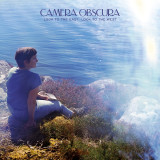
"Look to the East, Look to the West", das neue Album von Camera Obscura, ist eine Offenbarung. Die von Tracyanne Campbell geleitete Band hat sich wieder mit dem Produzenten Jari Haapalainen zusammengetan und ein Album geschaffen, das daran erinnert, warum die langjährigen Fans sie seit Jahrzehnten heiß und innig lieben, und das gleichzeitig ihr bisher anspruchsvollstes Werk ist. Es ist auch das am härtesten umkämpfte Album in der Karriere von Camera Obscura. Nach dem Tod von Gründungsmitglied, Keyboarder und Freund Carey Lander im Jahr 2015 (an den der vorletzte Track "Sugar Almond" gerichtet ist), ging die Band in eine längere Pause. Sie blieben in Kontakt, aber ihr Status war ungewiss. Nachdem sie eingeladen worden waren, im Rahmen von Belle & Sebastians Kreuzfahrtfestival Boaty Weekender 2019 aufzutreten, kündigten sie ihre Rückkehr an. Donna Maciocia (Keyboards und Gesang) stieß bei diesen Shows zu den Gründungsmitgliedern Kenny McKeeve (Gitarre und Gesang), Gavin Dunbar (Bass) und Lee Thomson (Schlagzeug und Perkussion) und ist seitdem Songwriting-Partnerin von Campbell. Aufgenommen im selben Raum, in dem Queen "Bohemian Rhapsody" schrieb, fühlt sich "Look to the East, Look to the West" groß an, eine Breitwand-Neuinterpretation des Camera Obscura-Sounds, bei der die Band paradoxerweise zu den Grundlagen zurückkehrte - es gibt keine Streicher- oder Bläserarrangements, der Schwerpunkt liegt auf Klavier, Synthesizern, Hammond-Orgel und Drumcomputern, und, was vielleicht am auffälligsten ist, die Gruppe hat den Hallschleier fallen lassen, der ihre früheren Alben charakterisierte. Der Hauch von Country und Soul, der Camera Obscuras barocke Interpretation von Popmusik so bittersüß macht, war noch nie so offensichtlich - die Gitarren schimmern in die Ferne, die Tasten spuken, und Campbells Stimme sucht nach dem Herzen, reflektiert über Liebe, Verlust und den Lauf der Zeit. "Look to the East, Look to the West" ist Camera Obscura in seiner besten und eindrucksvollsten Form, ein Album, das den emotionalen Kern des Hörers völlig neu ordnet und ihn gleichzeitig traurig und beschwingt zurücklässt. Der Katalog von Camera Obscura ist voll von Liedern, die Menschen als lebensverändernd bezeichnen, Lieder, die sie ihr ganzes Leben lang begleiten werden. "Look to the East, Look to the West" hat 11 davon zu bieten.