The mighty Channel One Studios,Kingston, Jamaica, has its place set in Reggae's Musical History.Its distinctive sound the studio created on opening its doors in 1972 to its closure in the early 1980's made it the Producers, Singers and Musicians studio of choice during this furtive period. Achieving that vibe and clarity, separated it from the other Kingston establishments.
Run by the Hookim Family's four sons, Jo Jo the eldest followed by Paulie, Ernest and Kenneth. Their father originally came from China and married a Chinese Jamaican lady and settled in the St Andrews district before moving to Kingston Town itself. The family business was built on jukeboxes and one armed bandit machines in and around Kingston. A lucrative venture until the gaming laws changed in 1970, outlawing the gaming machines. So the music side of the business would have to be expanded. So it was decided to open a studio to make the music to supply their already established Jukebox enterprise. The four brothers opened Channel One Recording Studios in 1972 at 29 Maxfield Avenue, Kingston 13. Initially as we stated the purpose of the studio was for the brothers use only, but this would soon change when the various Producers all looking for that Channel One sound came asking for studio time.
The brothers had used the services of Bill Garnet a renowned and well respected technical engineer on setting up the studio. They spent a lot of time laying out the space to get the right acoustics and picking the right quipment. They went with a four track API desk and the best quality microphones such as Neuman, Sony and AKG, vital in obtaining the quality sound and track separation that would prove so worthwhile after the music was recorded to give the best flexibility on the final mix downs. Jo Jo would take over the production duties after the initial hiring of Syd Bucknor a producer who had worked closely with Coxonne Dodds Studio 1 stable. The first release on the Channel One label would be 'Don't Give Up The Fight' by Stranger Cole and Gladstone 'Gladdy' Anderson.The initial two thousand run being swallowed up by their Jukebox interests and so the steady flow of hits would run up to the brake through hit of 1975 'Right Time' by the Mighty Diamonds.
1977 saw Jo Jo extending his stays in New York to a semipermanent status, returning mainly to oversee recording sessions and then taking the results back to America for worldwide distribution. His brother Paulies senseless killing in that year also added to Jo Jo's decision to spend more time with his Hit Bound Manufacturing set up in New York. The Channel One studio would be upgraded in 1979 to sixteen tracks and although Jo Jo and Ernest still covered the mixing and engineering duties Kenneth would now supervise sessions. An often untold part of Channel Ones history is the involvement of Producer Niney The Observer. The mid to late 1970's were heavy times both musically and politically and Maxfield Avenue was in the heart of this crossfire. Some artists and musicians were weary of using the establishment especially when sessions ended late at night and exiting the studio at these times could be somewhat dangerous. But Niney’s fearlessness seen him over running and in many cases running the all night sessions with his trusted set of musicians loosely called The Soul Syndicate. Having the run of the mighty Channel One studio's allowed Niney to build up and work on a stockpile of rhythms that he still has yet to unleash on the world. We have been lucky to select a bunch of material from Niney's vaults for this release. Some great unreleased rhythms and some different cuts to some tracks you might already know. Niney's work with Dennis Brown and his own distinctive heavy roots style productions have been documented and indeed his work on Channel Ones Yellowman releases stand tall also. We hope this fine set of Niney Productions set inside the hollowed walls of Channel One will sit beside them as they so richly deserve.
Поиск:nin
Все
- 1: Greyhound / Amos Milburn
- 2: Let's Have A Ball / The Wheels
- 3: Slow Down Baby / Bob Gaddy And His Keys
- 4: (I'm Gonna) Love You, Love You, Love You/ Walter Sprigg
- 5: Well, Well, Well, Baby- La / Nappy Brown
- 6: I Gotta New Car / Big Boy Groves And Band
- 7: I Want To Do It / Mattie Jackson And The Blues Nighthaw
- 8: I'll Be Oh So Good / Velma Cross And Her High Steppers
- 9: 16 Tons / B B. "Blue Boy" King & His Orchestra
- 10: I Pawned Everything / Walter Spriggs With Jesse Stone O
- 11: Green Town Girl / The Travelers Bumps Blackwell Orch
- 12: Just Say The Word / Frankie Marshall
- 13: Cool Kind Lover / Jesse Thomas
- 14: Baby, Baby, What's Wrong / Earl Gaines Louis Brooks And
Electric Jalaba comprises six accomplished musicians with an empathy thatfeels telepathic and a groove that immerses. In Arabic, the mother tongue ofMoroccan-born singer and guimbri player Simo Lagnawi, a leading practitionerof Gnawa music in Britain, they call this indefinable quality, "El Hal" - "Thefeeling". "It's the feeling that comes when we're playing and totally forgetting where weare," says producer and bassist Olly Keen. "The feeling of being grabbed by themusic and lost in the groove." 'El Hal / The Feeling' is the new third album fromElectric Jalaba and their first release in five years. It's a multi-faceted work thatfinds the band tighter than ever, deploying a vast cache of influences across ninetracks improvised and developed in their south London studio then deftlyproduced by Keen. Some tracks pay homage to the origins of Gnawa music,whose repertoire of Arabic-language praise songs contains remnants of WestAfrican dialects - Bambara from Mali, Fulani and Hausa from the Sahel region -that point to a centuries-old migration. "The trance-inducing effect of Gnawa was what hit us first. It was visceral, heartstopping," continues Olly, whose siblings - producer / keys player Henry Keen,guitarist / multi-instrumentalist Nathaniel Keen and singer / multi-instrumentalistBarnaby Keen - make up Electric Jalaba alongside revered Anglo-Italian kitdrummer Dave De Rose and Simo on vocals, krakeb and guimbri. "Simoselected the chant from the traditional song suites and, as a band, we extendedthese short pieces of ceremonial music and experimented with sound andstructure," explains Olly. Tracks include the Juno-led dancefloor single 'CubailiBa', 'Agia Hausa', a multi-layered wig-out that partly takes its inspiration fromSenegal's fiercely percussive mbalax rhythms and 'Daimla', a gloriously dubbyode to Allah and iconic maalems including the late Mahmoud Guinea. "There's avery strong rhythmic element within the band but because of our differentperspectives but the melodic components are really unique as well," says Henry.That feeling of being outside of yourself but totally within yourself at the sametime... That's what all of us, collectively, are striving for."
With XXI Century remastering: "La Ventana" (1973) by Los Jaivas is released now on vinyl format for the very first time. Los Jaivas has often been considered one of the most important rock bands in Chile and South America. This influential Chilean band formed in 1963 mixes psychedelic rock and progressive rock with Latin American folk instruments and rhythms. In this album Los Jaivas shows many different artistic facets from improvisation and song writing to the first steps of symphonic creation. "La Ventana" version 2020, is the first work of a series to rescue the musical heritage of the band, which includes the search for archival material saved for years and the reissue of other historical titles of Los Jaivas. More info: Finally available on vinyl, 47 years after its original release on the Chilean label IRT, here it is Los Jaivas' "La Ventana", the iconic album that includes the anthems 'Todos juntos' and 'Mira niñita'. Original master tapes have been used for this reissue, following the reels find at the IRT vaults after years unavailable. State of the art technology has also been used to guarantee a top-quality remastered sound that shows music details barely noticeable in the original pressing. The artwork restoration process has been undertaken by Martín Uribe, a member of the band's team, with great attention to detail, by using several copies of the original issue. According to Felipe Domínguez (Al Albordaje Muchachos SPA), supervisor of this reissue project, "we aimed to publish a top-quality release, improving on previous rather average reissue editions. So, when we opened the box containing the tapes of "la Ventana" and found the reels with all the annotations made at the time, we knew we would be able to make a difference." This is the first in a series of various projects that will make the musical heritage of Los Jaivas available again, including recordings that have remained archived for years and the reissue of other historical titles of the band. This is the aim of the Los Jaivas Cultural Foundation: "to pass on its experience to new generations, along with encouraging a love for music without distinction of race, faith, political color or gender", highlights Mario Mutis, bassist and vocalist of the band. This 2020 reissue is presented in its original artwork and complete tracklist.
Cologne’s Feines Tier is delivering the second label compilation Zoo Vol.2. Providing the finest vibes from slow chuggers, Disco and Indie Dance to house and techno on one black and one white vinyl. Only 300 limited pieces available with silk printed and numbered vinyl covers. Don’t miss the quadrophant prints. Plus: Sticker inside!
Anohni has shared an emotive cover of Gloria Gaynor's 1978 classic 'I WIll Survive'. The track was a staple of her early live shows and opens with a graceful string arrangement by Maxim Moston, paired with piano performed by Anohni. Prior to the track being widely available on streaming platforms, Anohni shared a video incorporating live footage alongside messages dedicated to groups and causes that Anohni has long been an activist and advocate for. During the clip, Anohni dedicates the song to "the sacred gay people"; "all endangered Black trans lives"; "those in the US who die from medical neglect"; "the coral reefs of the world, now rotting"; "all those awaiting execution in US death chambers"; "Black lives tortured and stolen by American cops" and more. The messages reflect Anohni's longer values and work as an artist, trans activist, environmentalist and advocate for social justice. Alongside the release is a statement from Anohni, on the track being the subject of a licensing offer she turned down due to the platform in question hosting misleading pro-Trump ads. Further on the track, Anohni explains: "It was the first song I ever sang in nightclubs in NYC when I was 20 years old. I sang it hundreds of times. In those days I sang it thinking of Marsha P. Johnson and the underground queer community struggling to survive in the face of AIDS. Now it seems to me like an anthem for the future of life on earth." 'I Will Survive' follows a brace of releases from Anohni this year: most recently 'R.N.C 2020', a track inspired by the Republican National Convention which took place in August and the dread Anohni felt while watching it. Prior to that, Anohni released a 7" consisting of two covers, one of Bob Dylan's 'It's All Over Now, Baby Blue' with a b-side of Nina Simone's 'Be My Husband'.
Turning into a label and putting out our first record was an exhilarating process. Shoutouts again to everyone who's bought Aroent's "Eleese" EP, gave it airplay or left positive feedback. All of this certainly left us hungry for more, which is why we couldn't be happier to announce our next EP, AWK002 - "Nines" by Lårry.
After solid recent releases on Super Hexagon and Fusion Diagnostics, our dear Lårry goes from strength to strength with this versatile and atmospheric four tracker. From idiosyncratic techno swirls to emotive peak time bangers, every track has its own story and character, all served with immaculate sound design and the inimitable Lårry touch. Without further ado, we'll stop our excited rambles and let the music do the talking.
Thanks for the continued support and we hope you enjoy!
Nino Lepore hails from South Italy, and is best known for his self-titled LP from 1986, as well as for his uncredited work on Dancer Record. The 'Chok Musik' 12" from Best Record Italy focuses on two productions from his sole LP, and in the titular track, sexualized funk basslines join a disco drum strut, as guitar riffs shimmer and brass and string orchestrations swirl deliriously between filmic romance and symphonic madness. And after a breakdown into percussive chaos, smooth piano solos alternate with passages of sizzling sax. As for "Bad Time," an introduction of decaying gongs leads to a broken beat groove, with strings evoking atmospheres of exotic noir and horns soloing softly over subdued funk bass motions and distant flashes of guitar. There are jazz rock breakdowns into liquid riffing and flamboyant brass, and during handclap climaxes, horns swell towards the sky.
Green Man Rising 2020 winner, Nuha Ruby Ra, announces her debut EP ‘How To Move’ out on Brace Yourself Records on 5th March 2021. A visceral and striking debut from the East London avant-punk, Nuha delivers frenzied poetic energy across the seven tracks bearing comparisons to Lydia Lunch and Sonic Youth.
Nuha Ruby Ra has spent the last few months cultivating a dedicated following and racking up an impressive catalogue of collaborators from around the world. Nuha has performed alongside the likes of Bo Ningen, Uncanny Valley, Charlie Boyer and more, and appeared on recordings by Flamingods and Warmduscher. In the short time she’s been playing these tracks she’s amassed support slots with Fat White Family, Surfbort, Amyl and the Sniffers, Bambara, Japanese Television.
The EP 'How To Move' began as bedroom projects, before Nuha developed the tracks in the actual vintage synth cave of the Psychedelic Furs, joined by members of Liars and Insecure Men. It was produced by Tony Visconti protégé Erin Tonkin (David Bowie’s ‘Blackstar’) and mastered by Pete Maher (Patti Smith, Lana Del Ray etc.)
- A1: Ryuichi Sakamoto - First Coronation
- A2: Ryuichi Sakamoto - Open The Door
- A3: Ryuichi Sakamoto - Where Is Armo?
- A4: Ryuichi Sakamoto - Picking Up Brides
- A5: Ryuichi Sakamoto - The Last Emperor: Theme Variation 1
- A6: Ryuichi Sakamoto - Rain (I Want A Divorce)
- A7: Ryuichi Sakamoto - The Baby (Was Born Dead)
- A8: Ryuichi Sakamoto - The Last Emperor: Theme Variation 2
- A9: Ryuichi Sakamoto - The Last Emperor
- B1: David Byrne - Main Title Theme (The Last Emperor)
- B2: David Byrne - Picking A Bride
- B3: David Byrne - Bed
- B4: David Byrne - Wind, Rain And Water
- B5: David Byrne - Paper Emperor
- B6: Cong Su - Lunch
- B7: The Red Guard Accordion Band - Red Guard
- B8: The Ball Orchestra Of Vienna - The Emperor’s Waltz
- B9: The Girls Red Guard Dancers - The Red Guard Dance
The Last Emperor is a lavish historical epic directed by the great Italian filmmaker Bernardo Bertolucci and starring John Lone, Joan Chen, and Peter O’Toole. The film tells the life story of Pu Yi, the last monarch of the Chinese Qing dynasty prior to the republican revolution in 1911. The score for The Last Emperor was created by an unlikely trio: Ryuichi Sakamoto, David Byrne, and Cong Su. The soundtrack is a theme-filled exploration of the sounds and musical traditions of Imperial China, filtered through some very contemporary sensibilities. Sakamoto’s contribution comprises nine cues and is focused around his main theme: a beautiful, lyrical melody for the full orchestra. It’s soft, wistful, and introspective, but becomes increasingly dramatic. Byrne contributes five cues, and the first one is the most recognisable, as it’s the main title theme playing over the film’s stylish opening credits sequence. It emerges from a set of evocative Chinese percussion items, with the melody being carried by a gorgeous, lilting erhu. It’s traditional and wholly steeped in Chinese classical music, but it has a real emotional weight that will connect with westerners. Cong Su’s contribution to the soundtrack album comprises just one cue – “Lunch” – but there is much more of his music in the film; Su was basically responsible for writing all the period-specific Chinese source music one hears in and around the imperial palace during Pu Yi’s childhood. All in all, Sakamoto, Byrne and Cong Su deliver an excellent score.
LIMITED TRANSPARENT RED WITH BLACK SWIRLS DOUBLE VINYL
Nine years after it’s initial release, 'The Ripper At The Heaven's Gates Of Dark' is back. The original black vinyl and CD editions sold out pretty quick, and have been a constant source of repress requests ever since. So, at Makoto’s personal request here it is. And I agree with him that it’s definitely the best AMT studio album from that short lived four piece line up.
With the exception of the album's opener 'Chinese Flying Saucer' and it's unashamedly obvious musical references to Led Zeppelin II (hello 1969!) the rest of the album locks into a much more laid-back groove than on recent AMT releases. This dynamic shift is best displayed on the 22 minute jam, 'Shine On You Crazy Dynamite' and also the album's closer 'Electric Death Mantra'. The band opt for less frantic explosions of electric guitar overload and fuzz, replacing those elements with a more epic, blissed-out and at times brooding Japanese psychedelia, with more emphasis on acoustic guitars, sitar, organ, synthesiser and at times, really trippy vocals (most prevalent on 'Back Door Man Of Ghost Rails Inn'), recalling the twisted psychedelics of early Pink Floyd. Yet still, their sound remains so expansive that it is easy to become totally immersed in this album.
Epic in proportions, cloaked in a cosmic haze and shimmering in a synth utopia. 'The Ripper At Heaven's Gates Of Dark' maintains AMT's status as masters of out-of-this-world music and reveals their darker side of the moon.
Acid Mothers Temple & The Melting Paraiso U.F.O. at the time of this recording were :Tsuyama Atsushi : monster bass, voice, soprano sax, cimpo flute, soprano recorder, acoustic guitar, cosmic joker Higashi Hiroshi : synthesizer, dancin'king Shimura Koji : drums, latino cool Kawabata Makoto : electric guitar, electric bouzouki, sitar, organ, percussion, electronics, speed guru
Recorded at Acid Mothers Temple, Japan Produced & engineered by Kawabata Makoto
Digital mastered by Yoshida Tatsuya.
LIMITED TRANSPARENT BLUE WITH BLACK SWIRLS DOUBLE VINYL HOUSED IN A NEWLY REDESIGNED FULL COLOUR GATEFOLD SLEEVE/JACKET.
Nine years after it’s initial release, 'The Ripper At The Heaven's Gates Of Dark' is back. The original black vinyl and CD editions sold out pretty quick, and have been a constant source of repress requests ever since. So, at Makoto’s personal request here it is. And I agree with him that it’s definitely the best AMT studio album from that short lived four piece line up.
With the exception of the album's opener 'Chinese Flying Saucer' and it's unashamedly obvious musical references to Led Zeppelin II (hello 1969!) the rest of the album locks into a much more laid-back groove than on recent AMT releases. This dynamic shift is best displayed on the 22 minute jam, 'Shine On You Crazy Dynamite' and also the album's closer 'Electric Death Mantra'. The band opt for less frantic explosions of electric guitar overload and fuzz, replacing those elements with a more epic, blissed-out and at times brooding Japanese psychedelia, with more emphasis on acoustic guitars, sitar, organ, synthesiser and at times, really trippy vocals (most prevalent on 'Back Door Man Of Ghost Rails Inn'), recalling the twisted psychedelics of early Pink Floyd. Yet still, their sound remains so expansive that it is easy to become totally immersed in this album.
Epic in proportions, cloaked in a cosmic haze and shimmering in a synth utopia. 'The Ripper At Heaven's Gates Of Dark' maintains AMT's status as masters of out-of-this-world music and reveals their darker side of the moon.
Acid Mothers Temple & The Melting Paraiso U.F.O. at the time of this recording were :Tsuyama Atsushi : monster bass, voice, soprano sax, cimpo flute, soprano recorder, acoustic guitar, cosmic joker Higashi Hiroshi : synthesizer, dancin'king Shimura Koji : drums, latino cool Kawabata Makoto : electric guitar, electric bouzouki, sitar, organ, percussion, electronics, speed guru
Recorded at Acid Mothers Temple, Japan Produced & engineered by Kawabata Makoto
Digital mastered by Yoshida Tatsuya.
Remastered Limited Blue Vinyl with Gatefold Sleeve.
Includes A2 poster and 3 art prints of each individual band member.
Way back in 1982, Battersea based mod heroes The Direct Hits had released one single on Dan Treacy’s Whamm! record label, ‘Modesty Blaise’ earlier in the year. This was singled out in the music press as not just one of your average Jam crash / bang /wallop mod revivalist tunes.
Live gigs showed they had a mighty powerful set of catchy mod / pop tunes in the back pocket. Whamm! were struggling to provide the funds to record an album, the songs were too good not to commit to a full 12’ set, so the Direct Hits pooled their limited resources and self financed a very cheap one day recording session in a tiny studio in Tooting, South London called Broadway Sound.
Early on the morning of August 12th 1982 the band, comprising of Colin Swan, Geno Buckmaster, Brian Grover and their trusty roadie ‘Robbo’ assembled at the tiny studio to begin recording as many of their songs as they could get down on tape for the tiny budget they had scraped together. As most of the songs were already well rehearsed thanks to the band’s busy live schedule, the recording of the first nine songs on this disc were finished by mid afternoon without any problems. Throughout the late afternoon and early evening the band toiled over scant overdubs with limited keyboard facilities and a distinct lack of musical ability. The recordings immediately came to life however, when Colin Swan and Geno Buckmaster’s stage-honed tight harmonies were added, there was no time for vocal overdubs, and the mixing was completed by midnight. Tired and worn out, the band ventured out into the cold night air happy with the days work, clutching the precious reel to reel tape.
Two weeks later the band came back with a friend producing, and recorded the three final tracks featured on this album which have a more rounded slightly less raw sound. All three were completed in an afternoon. Almost two years later they re-recorded some of these songs, and along with a handful of new songs from the pen of Buckmaster and Swan, recorded their ‘Blow Up’ debut album at Rendezvous Studios in Sydenham, South East London, released on Whaam! Records in August 1984.
So what you have here are the roots of some of these great songs. A few didn’t make it to the first album those that did, as you will hear, stayed reasonably faithful to the original arrangements.
The Broadway Recording Sessions take you right back to where it all started!
US Edition[25,17 €]
Architects are back with their ninth studio album "For Those That Wish To Exist". The self-produced record is the follow-up to the band's critically acclaimed 2018 release Holy Hell, which took a look at the pain and despair that lay at the heart of losing a brother, band mate and best friend in Tom Searle, the group's founding guitarist. The band have confirmed their ascent to the very upper echelons of British heavy music. Few bands, of this modern era or any other, can match the quintet's ability to blend uncompromising heaviness with razor-sharp melodic musicianship. A versatile metal group based out of Brighton, England, Architects employ a lethal combination of breakdown-heavy guitars, melodic vocals and symphonic-ambient post-metal. That sonic delivery is conducted from a platform built on veganism and environmental activism.
When I think I refused the first one, what an unconsciousness! "It was in these terms that Serge Gainsbourg expressed, in 1977, his joy at seeing his talents as a composer finally associated with the adventures of Emmanuelle, embodied on screen by the sensual Sylvia Kristel. For a long time, he bit his fingers for declining the offer to compose the soundtrack for the first part of the erotic saga. In France, only one 45 rpm appeared on Philips in 1977, regrouping the song "Goodbye Emmanuelle" and the instrumental "Emmanuelle and the Sea". However, Goodbye Emmanuelle's soundtrack was released in October 1977 as a nine-track LP reserved for the Asian market (Japan and Hong Kong). Enriched with two bonus tracks, this extremely rare LP is finally available in the UK. Reviews in London Macadam, and L’Echo Ads London Macadam and L’Echo
- 1: Bad Man Feat. Million Teeth (Rob Smith Aka Rsd Version)
- 2: Cuss Cuss (Subatomic Sound System Version)
- 3: Wicked Babylon Must Go Down (Dub Spencer & Trance Hill
- 4: Skylarking (Oliver Frost - Eva Be's Dub Version)
- 5: Do You Love My Music (Black Star Liner "Special" Versio
- 6: Money Money (Dreadzone Version)
- 7: Skylarking (Noiseshaper Version)
- 8: Money Money (Dubblestandart Version)
Horace Andy's voice is an instrument that once heard is never forgotten, regardless of whether you first hear it on one of the numerous Jamaican reggae singles that he recorded during the 70s or - like most people - on one of the Massive Attack albums he collaborated on as a vocalist. His falsetto and his characteristic slow-motion vibrato breathed life into tracks like "Spying Glass", "Cuss Cuss", "In The Light", "Skylarking" or "(You are My) Angel", ensuring that they still continue to resonate deeply with listeners. His vocal style influenced countless root singers and the combination of his timbre with Massive Attack's spartan hip hop beats still inspires legions of fans and copyists all over the world. Echo Beach has now picked up on this tradition - and the much older tradition of versioning - by asking friends of the label to rework Horace Andy's classic tracks in their own sound outfit. But this time the label hasn't trawled old Studio One tapes for historic vocal snippets - that would sooo nineties; no, Horace Andy personally put in an appearance to sing new versions of his classic tracks on top of timeless and contemporary riddims. Age may have deepened his voice, but it is by no means weaker, as can be heard on this album, on which Echo Beach welcomes old friends and new faces: there's Rob Smith, who as part of More Rockers and Smith & Mighty was just as crucial for Bristol's musical reputation as Massive Attack or DJ Krust & Roni Size. Today, he ensures continuity by working under the label and producer name.
This new album (the tenth in their discography) was born from two ambitions: to pay tribute to Soft Machine's Third on form (4 sides / 4 titles) and to philosopher Gilles Deleuze (Difference and Repetition is the title of his thesis) on the contents. The 4 long pieces of this double concept album were developed over 2 years and each has a different style and climate. Bold and kaleidoscopic, Difference and Repetition perfectly synthesizes the musical and literary obsessions of Palo Alto.
Formed in Paris in 1989, Palo Alto released his first album (a cassette) on the Italian label Old Europa Cafe in 1990. The year 2020 is therefore an opportunity to celebrate the 30th anniversary of this first stone, the founder of a discography rich with 10 albums. The band is now composed of Jacques Barbéri (also a science fiction author), Laurent Pernice (ex-member of the French industrial band Nox) and Philippe Perreaudin (also coordinator of several compilations and reissues: Legendary Pink Dots, Un Département, Nino Ferrer Revisited, Ptôse, Hardy FoxŠ). Literature, and particularly science fiction, is a leitmotiv in the band's work. Antoine Volodine, Thomas Pynchon, Philip K. Dick, Lewis Carroll or J. G. Ballard have been invoked many times. In recent years, Palo Alto has multiplied musical collaborations with, among others, The Residents, Ptôse, Klimperei, Tuxedomoon... From industrial music to inextricable electronic ramifications, by making a detour through improvisation, the musical universe of Palo Alto is multifaceted. Their new album is no exception to this ruleŠ
Katy Kirby is a Texas-based songwriter and indie rock practitioner with an affinity for unspoken rules, misunderstanding and boredom. She was born, raised and homeschooled by two ex-cheerleaders in small-town Texas and started singing in church, amidst the pasteurised-pop choruses of evangelical worship. Like many bible belt late-millennials, Katy grew up on a strict diet of this dependably uncool genre and accordingly, Cool Dry Place finds her dismantling it. "I can hear myself fighting that deeply internalized impulse to make things that are super pleasant or approachable," she says. Though Katy hasn't fully overcome the itch to please, it's to a listener's benefit. Instead of eradicating the pop sensibilities of her past, she warps them, lacing sugary hooks with sneaky rage, twisting affectionate tones into matter-of-fact reproach, and planting seemingly serene melodies with sonic jabs. The fun is in the clash. The nine tracks that make up Cool Dry Place are miscellaneous in subject (motherhood, late capitalism, disintegrating relationships) but unified by the angle from which they're told: from a person re-learning to process life with intense attention. Each song is a catalogue of fragments, the number of segments in an orange or the cut of an obsessively-worn shirt, distilled into meditations on the bizarre and microscopic exchanges that make up modern life - a relationship splintering, an uncomfortable pause, an understanding finally found. These emotional dioramas are moderated by the angular storytelling that unites Gillian Welch and Phoebe Bridgers, a favour for the conventions of short fiction over confession.
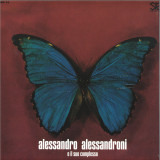
Sonor Music Editions presents the reissue of another holy grail by maestro Alessandro Alessandroni. The first legendary Farfalla release, "Alessandro Alessandroni E Il Suo Complesso" originally released in a few hundred copies on the cult Sermi imprint in February 1968. The seminal debut album realized by the legendary Italian maestro, featuring bewitching scat vocals by his wife Giulia De Mutiis (aka Kema), that truly started the Italian Library production golden era that would culminate in mid ‘1980s. A true landmark of the genre and an Italian discography jewel that spaces among the best Jazz, Bossa Nova and Lounge music; undoubtedly a desirable item of world’s record collecting field. Obsessive Jazz suites, enchanting scats over mind-blowing Bossa tunes, bouncy break-beats drums, groovy Pop and refined loungy atmospheres over some soft Psichedelia arrangements. An essential Italian Library masterpiece.