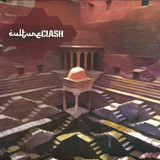
Introducing a new label, Koko Music, founded in West London by a long time friend of ours. Their first release:
'Allegedly Coltrane's favourite singer, Andy Bey recorded as vocalist for Max Roach ('Members, Don't Git Weary'), Horace Silver ('Won't You Open Up Your Senses'), Gary Bartz ('Celestial Blues') and Stanley Clarke in the late sixties / early seventies. He released one solo album and then disappeared from view for 20 years, resurfacing in the nineties.
This 1998 album showcases his four-octave range, the intimacy of love songs and raw power of the blues on a mixture of standards ('Pretty Girl', 'Some Other Time'), Latin ('O Cantador', 'Drume Negrita'), modern (Nick Drake's 'River Man'), and a couple of original tunes. Available for the first time on vinyl, cut at 45rpm, it features Andy on vocals and on piano, with appearances from Gary Bartz and Geri Allen.'
Buscar:nine l
- D2: Johnny Clarke - Time Will Tell
- D3: The Aggrovators - Drums Of Africa
- D4: Dillinger & King Tubby - Jah Jah Dub
- E1: Winston Wright - Marvelous Rocker
- E2: The Mighty Diamonds - You Should Be Thankful
- E3: King Tubby, Prince Jammy & The Aggrovators - A Thankful Version
- E4: Dillinger - Check Sister Jane
- F1: Prince Jazzbo - The Wormer
- F2: The Uniques - You Don't Care For Me
- F3: Shorty The President - Natty Dread Have Ambition
- F4: King Tubby & The Aggrovators - This A The Hardest Version
Johnny Clarke & King Tubby & Dillinger & Prince Jazzbo feat. Tommy McCook & The legendary Aggrovators & The Mighty Diamonds - Soul Jazz Records presents Bunny Lee: Dreads Enter the Gates with Praise - The Mighty Striker Shoots the Hits!
Soul Jazz Records presents this new collection featuring the heavy 70s roots reggae of Bunny
Lee - a living legend, one of the last of the great Jamaican record producers who helped shape
and define reggae music in the 1970s from a small island sound into an internationally
successful musical genre.
From teenage fan to young record plugger for Duke Reid, Sir Coxsone and other early
pioneering Jamaican musical entrepreneurs, Lee has spent his whole professional life inside the
Kingston music industry. In the 1970s he rose up to become one of the major record producers
in Jamaica alongside Lee 'Scratch' Perry and the other 'small axe' producers who broke the
dominance of the 'big tree' producers that had ruled Jamaican music in the 1960s.
Featuring some of the heaviest Jamaican artists, including Johnny Clarke, King Tubby, Dillinger,
Prince Jazzbo, Tommy McCook, The legendary Aggrovators (featuring Sly and Robbie), The
Mighty Diamonds and more, the album is a rollercoaster ride of rare, deep and classic 1970s
roots, dub and DJ sounds.
During this era, 'flying cymbals', crashing reverbs, dark echoing thunderclap gunshots and
other 'implements of sound' filled his record productions as Bunny Lee explored the outer limits
of dub with his friend King Tubby in the mix on wild versions that accompanied any 45. A
Bunny Lee record provides a creative and mysterious hidden guide to reggae music itself, a
double-sided three-minute intangible history lesson etched in wax.
Bunny Lee was one of the first Jamaican producers to travel to England in the late 1960s, at
the beginning of the nascent British reggae music industry as record companies such as
Trojan, Pama and others began licensing Jamaican music in the UK to supply the expanding
West Indian communities living up and down England. Lee encouraged other Jamaican
producers to do the same, including Lee Perry, Harry J and Niney The Observer and also
became a conduit between the British music industry and numerous younger Island-based
producers - a frequent flyer reggae ambassador, a musical courier exchanging tapes for
royalties.
Bunny Lee's first recordings in the late 1960s were mainly rock steady but as the 70s
approached the music soon began to mutate and slow down into 'reggae' as the sound became
heavier, more rootsy and the sound itself began to change with the explosion of dub.
Lee was at the forefront to this dramatic musical shift into roots reggae and by this time had
become a major producer, capable of working with whoever he chose as world-famous singers,
DJs and musicians lined up to work with the charismatic man. Lee also employed a fluid but
stable set of crack session musicians who he named The Aggrovators.
Most of the recordings featured here come from the mid 70s, a time when Bunny Lee was
definitely in the zone, releasing heavyweight singles at an almost unstoppable rate. Bunny
Lee's career stretches over five decades and he has upwards of 2,000 production credits on
vinyl.
This album comes with extensive sleevenotes, an interview with Bunny Lee and exclusive
photography. The album is available as a CD pack with 24-page booklet, massive triple LP vinyl
with digital download code, house inner and full notes, as well as digital album.
Over the past few months, Bajram Bili has been a revelation at Lumière Noire. On the labels compilation From Above, the French producer drew praise from listeners, DJs and critics alike with the eight housey, cerebral minutes of his contribution, Restart.
Bajram Bili is far from being a newcomer: Adrien Gachet has been making music under the exotic moniker for several years, combining krautrock and IDM influences into a rather convoluted genre. On his previous album, 2017s Remembered Waves, he had opted for a metamorphosis, bringing a new sense of freedom to club music, and this debut Lumière Noire EP is bound to elicit further interest in the artist.
Stretching over nine minutes, the playful No Fugue is complemented by a vocal track that seems to encourage the listener to visit the euphoric spaces in between. The Dantean, techno-accented Fluttering maintains this unsettling pace and amplifies, building up anticipation by bouncing from hot to cold and culminating in an epic journey. The beatless Mother presents a complete change of scenery, with Gachet offering up a contemplative composition haunted by tinges of Vangelis and Carpenter. With its acid accents, red-hot closing track Divided Flash completes the EPs musical register, closing the ambitious four-track arc and leaving the listener hoping for more and soon..
Long time unsung UK techno artist Aubrey is to release Gravitational Lensing, a first artist album since 2001 and his third in all. It lands in early 2019 on Out-ER and across 12 tracks it finds him getting more personal and instinctive than ever before with jazz, techno, broken beat and house all colouring this most coherent of musical adventures.
Aubrey s discography dates back to the early nineties, when he was a key part of the UK scene on labels like Solid Groove, Textures and Mosaic. Up there with the greats from Chicago and Detroit, he has turned out a steady stream of music that marries perfect dance floor functionality with real musical invention. Always inspired by anything deep with a good groove, everything from synth band Japan to funk king George Clinton, electro break beats to Jean Michel Jarre all inform his work.
As a DJ, he cut his teeth playing the biggest raves in the UK with names like Carl Cox and Eddie C having been swept up by the acid house records that hit English stores when he was just 15. Add in a love of jazz, ambient and US house, and you have all the eclectic influences that this criminally under-the-radar artist has drawn on for his latest album.
It is one that finds him really put his personal stamp on his sound. It s a chance to be more who you are and what you feel without pressure to conform to a particular sound, it s a chance to be free, says the artist of the album process. It was partially produced at Out-ER s studio in Nard , Lecce over the course of a year s worth of studio jam sessions, and is his finest and most cinematic work to date.
Things kick off with the ambient synth modulations of Aerglo Visible before exquisitely loose jazz drums and sci-fi pads suspend you in the cosmos on Floating to Rigel. There is an experimental feel to the off grid drums, rippling chords and drunken keys of Doctor Portia that keeps you brilliantly off balance, and the first deep techno trip is Journey To the Blue Planet , which has gorgeous ambience swirling over rolling, dubby kicks and soulful Detroit synth work. Carrying on through more lush, musical synth work and inventive drums, there are moments of heads down dance floor power and hi-tech soul, serene techno landscaping and chord-laced deep house that is superbly cerebral throughout the album.
In all, it makes for a complete and storytelling record that draws on a rich variety of genres and reworks them into something deep, multi-layered and hugely emotional that works as well in headphones, at home, as it will in the club.
collecting orders for repress
The Messthetics are an instrumental trio featuring Brendan Canty (drums), Joe Lally (bass), and Anthony Pirog (guitar). Brendan Canty and Joe Lally were the rhythm section of the band Fugazi from its inception in 1987 to its period of hiatus in 2002.
This is the first band they've had together since then. Anthony Pirog is a jazz and experimental guitarist based in Washington, D.C. One half of the duo Janel & Anthony, he has emerged as a primary figure in the city's out-music community.
The trio's debut includes nine songs recorded at Canty's practice space throughout 2017, live and mostly without overdubs. It's a snapshot of a band dedicated to the live ideal, where structure begets improvisation.
Brendan Canty: drums
Joe Lally: bass
Anthony Pirog: guitar
Zodiak Commune Records presents the fifth release of the White Cyclus serie. This is also the 2nd edition of the KORE serie called White Cyclus V EP.
After when his first album The Butterfly Effect LP got released back in June 2018, our label resident 1NC1N (NL) is back with 2 Acidcore/AcidTekno tracks. We also introduce 2 new talents in the scene. AboutBlank (FR) has already released a high energetic EP on Obs.cur's Future Frequencies, now we are infected with his Acid frequencies! The last track is dedicated to the young Gelbkreuz (AU). Member of the Multiplan Kollektiv and with his first solo EP on Violent Cases, this time it's our turn.
1NC1N - A Kind Of Mental Accord
A total new chapter from 1NC1N's Acidstory. Turn the pages to understand this mental accord.
1NC1N - The Alchemyst
Deep spiral Acidtekno. The only person that can brings you back from the netherworld, is The Alchemyst!
AboutBlank - Kyubi No Kitsune
Very nice uptempo Acid! He has been proven that the Nine-Tailed mythology is alive.
Gelbkreuz - Deamons Breath
Dark and mental Acid from Gelbkreuz. Don't look straight into his eyes. Never let him catch his Deamons Breath!
- A1: Learning To Cope With Cowardice
- A2: Liberty City
- A3: Blessed Are Those Who Struggle
- A4: None Dare Call It Conspiracy
- B1: Don't Ever Lay Down Your Arms
- B2: The Paranoia Of Power
- B3: To Have The Vision
- B4: Jerusalem
- C1: Intro (The Lost Tapes)
- C2: May I
- C3: Conspiracy
- C4: Jerusalem (Prototype)
- C5: Paranoia
- C6: Liberty Dub
- D1: Vision
- D2: Cowardice
- D3: High Ideals & Crazy Dub
- D4: The Weight C
'learning To Cope With Cowardice', The Groundbreaking Debut
Solo Album By Visionary Post Punk Iconoclast Mark Stewart, Is To Be Given A Definitive Reissue Alongside 'the Lost Tapes', A Newly Discovered Cache Of Unreleased Material.
'learning To Cope With Cowardice' Is Released On Double Cd,
Double Vinyl With Digital Download Code And Separately As
Digital Download Albums. 'learning To Cope With Cowardice' Is A Vital Chapter In The Legacy Of Mark Stewart & The Maffia, A Project That Would Prove To Be A Revolutionary Benchmark For Many, From The Innovators Of The 'bristol Sound' (the Wild Bunch, Smith & Mighty, Tricky, Massive Attack) Through To The Likes Of Trent Reznor And Nine Inch Nails. Collected Together This Set Realizes An Expansive Restoration Of One Of Stewart's Most Audacious Statements. As It Was In The Early 1980s So It Is Now, 'learning To Cope With Cowardice' Is A Masterwork Of Mutant Design And A Rude Awakening Of Extraordinary Bite.
Mark Stewart Himself Perceives 'the Lost Tapes' As A Document
That Now Possesses A Storied Significance: it Was A Real
Adventure Discovering This Forbidden History, A Twisted Tale Of
Muswell Hillbillies, French Pirates And A Dutch Schizophrenic
Doctor Doing Psychic Archaeology.' Whilst Adrian Sherwood
Describes These Works As Characteristic Of A Distinct Primitivism: ('the Lost Tapes' Represent) The Early Childhood Of The Songs Before Mark And Me Conducted Frenzied, Scorched Earth, Slash And-burn, Twenty Hour Mental, Manic Editing Sessions At Crass' Studios That Led To Birthing The Finished Album.'
Textures records was set up in 1996 as a sister label to Aubreys Solid Groove label and had nine releases including Aubreys second LP. Don Gardon originally releasesd in 1997 on Textures and this is the first Textures release since 2001
Pete 'Bassman' Bain, one of the founding members of the UK cult psych rock band Spacemen 3, formed Alpha Stone after Spacemen 3 and his other band The Darkside split up in the mid-nineties. In 1996 the band recorded the album 'Stereophonic Pop Art Music' and it was released on Bomp! Records on Compact Disc. The album hasn't had a 'proper' vinyl release until now, 2018, when Hoga Nord Rekords continues their collaboration with Pete Bassman by releasing the album.
You can clearly hear that Pete Bassman was the driving force behind Alpha Stone; fuzz, synthesiser -sweeps, programmed drums and processed vocals are the cornerstones in Alpha Stone's sound. Raga-like mantras, heard in Farmer C, lies track to track with more percussion driven grooves and psychedelic pop oriented songs. The album's sound has obviously survived the 20+ years shelved in obscurity and proves the 'Drugby' sound still vital!
It's always hard to sum up a bands particular sound in a few words, but you could say that if you put guitar and bass, synthesisers, a drum machine, and Julian Copes record collection in the hands of an alien, you've got Alpha Stone!
Ian Brown has released a brand new single, 'First World Problems', his first solo material in nine years. The single precedes the new album 'Ripples', which will be released on March 1, 2019. Record Of The Week on Virgin Radio and Radio X (5/11). Added to Absolute Radio Daytime and Radio X Daytime.
This raw, intimate recording, which took place at the start of Prince's career right before he achieved international stardom, is similar in format to the Piano & A Microphone Tour that he ended his career with in 2016. The nine track, 35-minute album features a previously unreleased home studio cassette recording of Prince at his piano captured in 1983.
The private rehearsal provides a rare, intimate glimpse into Prince's creative process as he worked through songs which include "17 Days" and "Purple Rain" (neither of which would be released until 1984), a cover of Joni Mitchell's "A Case Of You", "Strange Relationship" (not released until 1987 on his critically acclaimed Sign O' The Times album), and "International Lover".
The album also includes a rare recording of the 19th Century spiritual "Mary Don't You Weep" which will be featured during the end credits of Spike Lee's BlacKkKlansman in theatres August 2018.
For fans of Prince's spontaneous live medleys, tracks 1-7 of the album are presented in that same format as they were originally recorded.
Having remained continuously active since 1971, the Yoruba Singers are the longest-running musical group in Guyana. Emerging from a music scene mostly dominated by slick, commercial entertainment, the Yoruba Singers brought a new dimension to Guyana popular music, cooking up a potent stew of afrocentric vibes, steeped in a committed invocation of the country's African heritage. The Yoruba Singers released several recordings during their imperial period in the nineteen seventies and eighties, but what is broadly regarded as the group's magnum opus is the 1981 album Fighting for Survival. The album sums up the group's first decade of operation, serving up a heavy mix of calypso, jazzy funk, reggae and afrobeat. Initially released on the short-lived Interculture label and later reissued on a Guyana-only compact disk, the album has long been more talked about than actually heard. But thanks to Cultures of Soul a new edition is now available in wide release, and with it comes the opportunity to experience some of the deepest grooves the Caribbean has to offer!
Lost Futures is a new label that explores experimental and often radical approaches to dance music from the past. In a musical landscape that increasingly claims to seek and reward new forms and ideas, Lost Futures delves into the recent past to revisit forward-thinking, optimistic projects that, owing to the social, musical or outright political climate, perhaps struggled to find an audience. Allowing only time to re-contextualise these leftfield, sometimes misunderstood and ultimately human bodies of work, Lost Futures taps into the inherent idealism of rave.
LF001 trips back until the early nineties to revisit the alternative scene emerging from the Dutch city of Utrecht. Here, three young men - DJ Zero One (Sander Friedeman), TJ Tape TV (Arno Peeters) and DJ White Delight (Richard van der Giessen) - joined forces to form 'The Awax Foundation'. Inspired by the transcendent and revolutionary electronic music arriving on their shores imported from Chicago and Detroit, combining their knowledge, gear and ever-expanding vinyl collection allowed additional freedom in paying sincere tribute to these intoxicating sounds, while also developing their tastes in a more personal, eclectic direction.
The musical flavours of Awax initially leaned toward acid house and the roots of techno. However, with three different mindsets in the mix, their tastes were rarely fixed. One thing each shared in common was a devotion to collecting rare sounds, specifically more adventurous and international samples than those emanating from the increasingly-hard, masculine dance music emerging from the Netherlands during the period. Inspired by the cross-over global sound of bands like Suns of Arqa, or 'World Music', as it was perhaps patronisingly termed at the time, the trio became interested in the idea of making techno with 'ethnic instruments'.
Of course, this being 1992, none of The Awax Foundation had access to such instruments, instead, they had a vast, collective library of samples from all over the world. There were no collaborations and no clear plan. Instead, they set to work using a Yamaha TX16W sampler, the legendary Atari 1040ST computer, a cheap mixing desk and a couple of low-end synths and FX machines. When Richard mentioned the project to his friend, Akin Fernandez, the London DJ and owner of cult label Irdial Discs, Fernandez was intrigued enough to invite the trio to record a one-hour show for his 'Monster Music Radio' series on London's then-burgeoning Kiss FM.
Forced to come up with a name, 'CultureClash' seemed like the obvious choice, even if the members of Awax were only creatively sparring among themselves. Along with the term 'ethno-techno', slightly dubious to a hopefully more conscious Western audience in 2017, these were the only guiding principles to the quietly ambitious project that soon combined cutting-edge machine rhythms with samples sourced from everywhere from Bolivia to Togo, and inspired by everything from Ravi Shankar's epic soundtrack to the Oscar-winning movie Ghandi, to the technical limits of their own setup requiring a dazzling degree of cut-and-paste work. Some tracks even emerged out of academic studies within the ethnomusicology department at The University of Amsterdam.
The show aired on October 2nd, 1992, recorded in one blistering take and without any rehearsals, traversing a huge variety of tempos and styles. If the performance wasn't seamless, it was undeniably thrilling, fresh and ambitious. As such, several labels, including Fernandez's aforementioned Irdial Discs expressed an interesting in commercially releasing CultureClash, while another imprint proposed a series of twelve-inches and an album. But the sheer complexity of the project meant that it never saw the light of day, while the trio embarked on different journeys ahead, both creative and personal.
Twenty five years later, and the original CultureClash lineup and founding members of The Awax Foundation provide the sound of the first release from Lost Futures. An otherworldly, ambitious and optimistic compilation, accompanied by extensive sleeve notes from the trio, CultureClash is a timeless ode to experimentation in dance music's ever-overlapping culture.
Itiberê Zwarg is an award-winning Brazilian bassist and the longest-serving member of Hermeto Pascoal's ground-breaking ensemble 'O Grupo'. Since their first meeting in 1977, the two have been closely collaborating to create a unique musical language: a genre-defying polyharmonic, polyrhythmic music, now widely studied by musicians and musicologists alike, known as 'Universal Music'.
Back in 2001, Itiberê led a workshop at Villa Lobos School of Music, with twenty-nine of Rio de Janeiro's most exceptionally talented young musicians. Employing the principles of Universal Music alongside his long-held belief in the powers of listening and intuition, Itiberê composed and arranged in real time, transcribing the improvisations of the prodigious orchestra while allowing the players total freedom to experiment. The result was Pedra do Espia, an Amazonian orchestral masterpiece which is as difficult to categorise as it is fun to listen to.
Named after the beachside viewing point which translates as 'Spy's Rock', where Itiberê would sit as a child, daydreaming and gazing out over the Brazilian coast, the record harnesses the pure creativity of youth and nature, creating a magical sense of innocence amongst the striking compositions and astonishing musicianship.
The new album from Danish electronic trio System is a special kind of collaborative effort with piano magician Nils Frahm. His purpose-built improvisations on synth, organ and piano served as source material for the members of System (Thomas Knak, Anders Remmer & Jesper Skaaning), who merged his warm acoustic tones with their minimalist digitalism and set out to translate their distinctive clicks 'n' cuts electronics into vivid soundscapes. Over two years in the making, the resulting nine tracks are as sonically intriguing as they are touching. Ranging from the mellow bliss of the title track to echoes of 90's and 2000's electronica and ambient sequences frequented by mesmerizing movements and sounds. The blending of piano and digital tones and noises into emotive pieces might instantly recall the work of Alva Noto and Ryuichi Sakamoto, though System and Frahm come to quite different results.
Thomas Knak met Nils Frahm at one of his concerts in Copenhagen. They stayed in touch, exchanging thoughts and ideas. Two years later, Anders Remmer was also introduced to Nils. From then serious ideas for a collaboration formed. As Nils was a fan of System's self-titled debut album (released in 2002 via Pole's Scape label) their talks centred around Dub and minimalism, elements that constitute most of System's music as well as their side and solo projects. This in mind, System began producing sketches and brought them to Nils´ Durton Studio in Berlin in December 2015, where they recorded ten hours of him playing keys and effects to their drafts. Back in Copenhagen, they decided to change direction. - As Nils had told us about his fascination with our debut album, we tried to rediscover this minimal clicks 'n' cuts era. But hearing Nils playing to our rhythmic beds, we felt the need to scrap those beats and instead head in a more cinematic direction.'
So they started building new pieces from the Durton recordings, maintaining some of the minimal and static quality while new layers of synth sounds and noises created a richer and more organic quality compared to older System albums. The solo projects of Thomas (Opiate), Anders (Dub Tractor) and Jesper (Acustic) always relied on steady beats or rhythmic material, so the productions of 'Plus' with their focus on acoustic and melodic elements, ambient layers and cinematic moods, sees them pushing forward into new areas.
This way, the trio avoided copying what they had already done years ago, when they built a reputation as Denmark's prime originators within electronic music in the 90's and 2000's. 'Plus' is a triumphant example of collaborative experimentation and may be the dawn of a new era for System: - For us it was really satisfying to focus more on actual sound rather than rhythmic aspects. There is a lot of potential in this field, so it would only be natural for us to pursue this, maybe as a series of collaborations with other people who's music we admire.'
Sonnenstadt - We've Been Hiding To Long - Album »in The Depth
Of A Undiscovered Tonal Cosmos, Hidden Beyond The Obstacle
Of Lunar Dust: We've Been Hiding To Long.« Leipzigs Downbeat
Gem »sonnenstadt« Sprinkles Nine Tracks Of Its ¡rst Full Length
Album On A Lovely Tape. Good To Have In A Cozy Mood. First
Release On Newly Founded Label »unforced«.
Portland, Oregon resident Mary Sutton's solo debut materialized in the wake of a performance she gave at a clothing-optional soaking-pool sauna: 'I had never composed for synth before but wanted to make something people sitting motionless and naked in hot bubbly water would want to hear.'
It was while in this headspace that she reconnected with Satie's entrancing cyclical motifs, particularly the way 'he subtly spins melodic fragments, and pivots harmonies and phrases so the repetitions feel new and surprising yet soothingly familiar, as if casting a spell.'
The nine intuitive instrumentals comprising The Deep End accomplish exactly that, threading complementary shades of soft-hued hypnosis, dazed modal introspection, icy amusement park reverie, and lunar lullaby into a prismatic suite of contemplative melody and synthetic communion.
Sutton's songs are active rather than ambient yet their structure is more suggestive than scripted, full of lulls, asymmetries, and daydreams. Each track was written specifically to be played live on an analog synthesizer, with no overdubs or post-production wizardry. The sound of Saloli is one of warm-blooded wiring, turned on and tapped into, emotive and electric, storied machines speaking through all too human hands.
ADULT. '20 years ODD.'
Over the course of the last two decades, Detroit-based duo ADULT. (Nicola Kuperus and Adam Lee Miller) have released six albums and nineteen EPs and singles across some of our favorite labels: Mute, Ghostly International, Thrill Jockey, Clone Records, Third Man Records, and their own label, the revered Ersatz Audio. November 1998 marked their first release: the five-song 12" 'Dispassionate Furniture'. This September, twenty years later, Dais Records is proud to announce ADULT.'s seventh full length album: THIS BEHAVIOR.
The album began as 23 demos written and recorded in a remote cabin in the woods of Northern Michigan during the dead of winter. In total isolation, and with a reduced amount of gear (a modified version of their live setup) on the cabin's kitchen table, the duo were completely immersed in an incessant inescapable studio of their own making - looping, repetitive analogue sequences grinding away day and night. At the end of the intense demo session, a handful of peers were enlisted by the band for the difficult task of paring down the demos into the final album.
The result is 10 tracks of uncompromising dark electronics, showcasing ADULT.'s return to aggressive and energetic dancefloor mastery. Album opener 'This Behavior' alongside the follow-up 'Violent Shakes' (which ascends into synths wailing like warning sirens over Kuperus's commanding vocals) set the stage for an on-edge listen, while the heartbreaking 'Silent Exchange' unfolds as a beautiful sad synth dirge. 'Perversions of Humankind' breaks the mood - driving the listener into a slow and low groove before the frantic album midpoint of 'Irregular Pleasure'. 'Does The Body Know' is the album's post-punk anthem, with irresistible singalong 'we're out of order - we're undefined!' The latter half of the album drives forward with 'On The Edge (You Put Me...)' and 'Lick Out The Content', refusing rest and demanding movement and response. 'Everything & Nothing' emerges slowly from sparkling synth textures, snowballing with nervous energy into an acid techno stomper before the album comes to a close on the icy landscape of 'In All The Debris', a goose-bump inducing slow electronic mantra that closes the curtain on a massive album.
Artist statement on the album's writing process:
'It's confounding how often we negate the importance of disconnecting, getting weird, getting lost. Discomfort and joy intertwined. Day to day, theatrical self-presentation set to rest in our frantic social world. Public becomes private, almost too private. Looking out into frozen woods as you deliver your vocals. For who For what Taking walks along icy shorelines as you try to overcome writer's block, as you try to overcome yourself. Not seeing anyone for days and weeks on end. Overwhelming thoughts and feelings come rushing in; anxiety, fear, purpose, banality, futility of task, power structures, power struggles, pointlessness, collapse.You're faced to face yourself. Your awareness is heightened. You are neither here nor there. You are in a liminal state As you work in this isolated cabin your windows become mirrors.'
"Are we distortions. Are we distortions, perversions of humankind.Are we distortions. Are we distortions, twisted somewhere in time."