The English synthpop, new wave group formed in 1977 in London and was led by Tony Mansfield, who later worked as a producer for furthermore Naked Eyes, a-ha and the B-52’s. Their success already kicked off with the first single, “Straight Lines” entered the UK Singles Chart within no-time.
Their second studio album Anywhere was originally released in
1981 and contained 12 tracks. The expanded edition contains 4
bonus tracks; “The Office”, “From The Village”, “Guitars” and the
12” version of “While You Wait”.
This expanded edition of Anywhere includes the corrected D-side and is available as a limited edition of 1500 individually numbered copies on blue marbled vinyl.
Limited to 1000 copies.
Pressed on Blue Vinyl.
Includes postcard and poster.
The Bluebells have dug deep into their archive to give us the earliest recordings of these tracks, which have never been released before and are exclusive to this 7”
‘Everybody’s Somebody’s Fool’ is longer and more vibrant containing an extra verse and guitar solo which are not on previous versions. This is the closest recording to the one that was originally intended to be released on Postcard in 1981. The sleeve, designed by Bobby Bluebell features 2 of the earliest photos of the band.
THE BLUEBELLS were formed by songwriter / guitarist Robert Hodgens aka Bobby Bluebell in 1980. When deciding to form a group to start performing his songs, Hodgens remembered two punk musicians from Bothwell (brothers Ken and David McCluskey) he had interviewed for his fanzine, 10 Commandments. David (drums/ backing vocals) and Ken (vocals / harmonica) joined Robert and The Bluebells started performing live in and around Glasgow.
The Bluebells were soon involved in the burgeoning scene coalescing around Postcard Records in Glasgow (Orange Juice, Josef K, Go Betweens, Aztec Camera, Jazzateers), and it wasn’t long before The Bluebells were sharing stages throughout the UK with some of the Postcard groups. A single (Everybody’s Somebody’s Fool) was scheduled for release on Postcard, however after appearing on the
front page on Melody Maker and in NME / Sounds etc, major record companies started making serious offers to sign the group. The Bluebells appeared on BBC music program The Old Grey Whistle Test, the first unsigned group to do so, and it wasn’t long after this television appearance that the group signed a major record contract with London Records.
The Bluebells were soon in the studio working on songs for their debut album, with Elvis Costello producing. They were invited to open on UK tours for Haircut 100 and Elvis Costello & The Attractions, and started releasing singles to critical acclaim (Forevermore, Cath, Sugar Bridge). However it was their fourth single I’m Falling (co-written by Robert and Ken) that finally resulted in commercial success, chart success, and appearances on Top of the Pops.
The Bluebells released their debut album, Sisters, in 1984 to further commercial chart success, which was continued when their next single, Young At Heart, gave the group their second big hit single. However, when Young At Heart was reissued
in 1993, it reached number 1 in the chart for a month, making The Bluebells regular fixtures on Top Of The Pops
out of Stock
Last delivered 4 years ago available to reorder, subject to availability
Jacob Gorensteyn is an Israeli saxophonist and producer. Born in the USSR in 1980, his family emigrated to Israel when he was a child, with Jacob picking up the saxophone soon after. A long time member and one of the creative forces behind the well-known Israeli brass band Marsh Dondurma, he co-produced all seven of the band's albums, as well as a solo effort that was released locally in 2006. Over the years Jacob became well known in the Israeli music scene both as a potent multi-genre session player and a mixing engineer and music producer, lending his sound to many recordings over the last 20 years. His main focus in his solo work is funky jazz music, being influenced by soul, R&B and funk music, mostly from the 60s and 70s.
Wooden House is one funky record. It began, as many records did at the time, with a recording session arranged to not feel as useless during the early days of the pandemic, at a time when planned gigs and sessions were falling like dominoes, and most, if not all, working musicians across the globe were in a state of mild shock watching their creative outlets, as well as their livelihoods, crumble away. Jacob assembled a group of friends – all powerhouse musicians, and all some of the most favorite people in the world for him to play with – into a recording studio. Just before the pandemic, Jacob moved away from the city into a little wooden house in a village located in the picturesque Yehuda mountains near Jerusalem. The new location prompted some creative juices in the form of a string of funky tunes, written in his new project studio on the 2nd floor of that very Wooden House. Three of those were the tunes he brought into the studio that day. None of the musicians assembled, including Jacob, knew what the music they came out with would end up sounding like. The music was worked out during the session and then swiftly recorded, all of it live, all of it energetic and groovy. Two more similar sessions followed in the following months, often being rescheduled because of lockdowns. What came out became "Wooden House", a funky, brass-heavy instrumental album, a fun, instant mood improver. Put it on and groove with us.The album was recorded in 2020.
If your inspiration is Herbie Hancock's "Head Hunter", or any of The Meters or The Apples albums – This one is for you.
out of Stock
Last delivered 4 years ago available to reorder, subject to availability
Hotel Paral.lel, released in 1997, marks the full length debut release from Austrian Christian Fennesz, originally released by MEGO, following the twitching drone as found on the 1995 EP Instrument, also included in this deluxe 2LP reissue. Once launched, Hotel Paral.lel was to instigate a sublime exploration of a wide variety of forms, from formal abstraction to shimmering drone around to ground zero glitch pop.
Recorded just before mobile computing devices became omnipresent it was an investigation into the sonic possibilities residing in guitar based digital music. Sz launches the career with a constantly buzzing sound that resembles a fax machine encountering a G3 laptop for the first time, realising the game is up. Nebenraum is the first foray into the style for which one would attribute to Fennesz. A glacial drone unexpectedly morphs into a gorgeous melody and microscopic groove. Adding pulse and melody was hearsay in the radical end of experimental music up until this point and with this single gesture, everything changed, for everyone. Blok M nails this trajectory home with a straight up 4/4 beat. Such rhythm also features on Fa with a euphoric mix of a thudding beat, sharp splinters of noise and a devastating exploding melody. Repetition plays heavily through this album as the hyper metronomic beat on traxdata lays a bed for all manner of buzzing electronics. On the closing “Aus” we see a glimpse of what was to come in the future works of Fennesz, an experiment in popping, bubbling pulse pop. A far more darker and experimental work than Fennesz’ subsequent work. This is an exquisite radical field of freeform noise, sliced techno beats and subtle ambient texture all coming together to create a timeless work. There’s little out there in the world of music, still to this day, that sounds remotely like Hotel Paral.lel.
With a radical reinvention of music Hotel Paral.lel is an essential addition to collectors of pioneering music in the late 20th Century and sounds as enthralling today as it did to the shocked ears occupying 1997.
Remastered by Stephan Mathieu.
out of Stock
Last delivered 4 years ago available to reorder, subject to availability
American thrash metal band Flotsam & Jetsam originally released their second studio album No Place For Disgrace in 1988. It was their first album release on a major label, Elektra Records. The band was led by frontman and vocalist Eric “A.K.” Knutson and have been active since the beginning of the Eighties. The band has been known with their current name since 1984, but started off under the names Paradox, Dredlox and Dogz.
No Place For Disgrace is produced by Bill Metoyer, who also worked for Slayer, Hirax and Morbid Angel amongst others. The album includes the popular titletrack, “Dreams of Death” and “Saturday Night’s Alright”. Three of the included tracks (“No Place For Disgrace”, “N.E. Terror” and “I Live You Die”) were co-written by Jason Newsted (Metallica).
No Place For Disgrace is available as a limited edition of 1500 individually numbered copies on translucent red coloured vinyl
REMASTERED EDITION OF PORCUPINE TREE'S 1995 RELEASE 'THE SKY MOVES SIDEWAYS - 2LP GATEFOLD SLEEVE'."A dreamy, tranquil and heavily atmospheric effort" - Record Collector 'The Sky Moves Sideways' is the third studio album by Porcupine Tree, first released in February 1995
It's the first Porcupine Tree album to be released in the US (albeit with an altered track list), & the first on which Porcupine Tree was a band rather than simply a pseudonym for Steven Wilson.
Regarded by many fans as one of Porcupine Tree's finest releases & a
cornerstone of any Porcupine Tree collection, the album was recorded partly as a Steven Wilson solo project & partly as a full band album, 'The Sky Moves Sideways' is a diverse experimental rock release spanning space rock & progressive rock styles with long guitar led, instrumental sections.
The album is now being re-printed in a gatefold sleeve & presented with Steven Wilson's sonically superb 2017 remasters first heard in the 'Delerium Years' box set. Disc 1 is the original album as conceived for vinyl. Disc 2 includes an alternative version of the title track containing music that was eventually cut from the original album version, as well as different lyrics. It also contains EP tracks
'Stars Die' & 'Moonloop' (the edit presented here is a hybrid which contains all the music from all the previous versions & runs to 22 minutes).
Porcupine Tree are currently gearing up for the release of their new album 'Closure / Continuation', marking another step forward in the incredible journey of the band that began as a solo studio project created by Steven Wilson in the late eighties to a multi grammy nominated act & one of the world's most revered live bands, selling out arenas across the globe & wowing fans with their incredible
performances. TRANSMISSION PRESENTS 'THE SKY MOVES SIDEWAYS' ON GATEFOLD DOUBLE LP
This album doesn't blurt it out: There is no loud "Ta-Dah!", no exclamation mark. "The ghost that carried us away" flatters in a rather unobtrusive way. However, it has encircled you after the third song at the latest. Fragile hymns of nonchalant casualness, created by the 24-year-old Sindri Már Sigfússon. Guitars, piano, his almost bashful and yet so present voice. "Nature, mortality, love", these are the topics of his debut album. Even the one who listens only briefly, is able to make them out within the sounds. "Do you remember how the things look when you were young."
Reykjavik again. Iceland, the musical heartland. On top of that, there is a violinist with her voice in the clouds: Gudbjörg Hlin Gudmundsdóttir (violine, vocals, harmonica). There further are musicians Sindri shared his hometown and his passion: Orn (guitar, lapsteel) who forms together with Sindri and Gudbjörg the inner triangle of Seabear. Or Eiki, Orvar, Gudni and Dóri. One plays the flugelhorn, the slide-guitar or upright-bass. One belong to the live line-up of Sigur Rós (Eiki). Another is part of the sensational múm (Orvar). Some are stage members of Benni Hemm Hemm's Band - the other Icelandic artist on morr music. Sindri Már Sigfusson has invited them into his small studio, placed them in front of the only microphone, let them think about his musical thoughts. He likes the notion and the feeling of LoFi, Sindri says. Only for the recording of the drums three microphones were used. The result is reminiscent of the reduced stereo recordings of the 1960ies.
Libraries is the most direct promise that pop music is able to make. Tiny and gigantic, unobtrusive and exciting at the same time. A song like a blink into the most beautiful sunrise. A tumbling piano, swinging drums. Melodies, melancholy: "My little bird flew away from me". Or "hands remember", the singing being close to one's ear. "The voice of an old friend", a murmur, two violins. There is later "summer bird diamond", birds twitter to the accords of an old banjo, a glockenspiel. It is almost a radio play, chamber folk. And "seashell" at last, a pocket symphony, arranged around jumping drums. Sufjan Stevens would have done it in a very similar way.
Analog Africa delves deep into the scene of the Mexican's sonideros (sound-system operators) to present the "Rebajada" movement they've created using locally made pitch controls, speakers and sound effects.
"In 2010, I had asked Eamon Ore-Giron - aka DJ Lengua - if he would be interested in compiling a Latin project for Analog Africa, and if so, if he had a theme in mind. He replied, “Have you ever heard of rebajada?“ The question mark above my head, together with the wall of China, must have been the only other object visible from out of space because Eamon, probably noticing I got paralysed, continued, “Rebajada in Spanish means “to reduce, to lower”. It’s basically Mexican sonideros (soundsystem operators) slowing down the beat of a Cumbia to create a much more tangible music to dance to. I’ll send you a mix I made last year and let me know what you think.“ And so he did.
That mix was called Rebajada Mota Mix and I began listening to it on a loop. Although I was not immediately hooked it was intriguing from the get-go, and so I kept listening until magic began unfolding. Slowed down music allows you enough time to hear right through it, revealing itself in ways I had rarely experienced before. Everything became more transparent and I was noticing sounds normally only perceptible by bats. A near psychedelic experience. That mysterious mix included a few Ecuadorian songs by Junior y su Equipo - aka Polibio Mayorga (a cult figure in the sonidero scene), a couple of Mexican tunes, one Colombian, and various Peruvian songs, undoubtedly the driving force behind this project.
The sonidero who brought Peruvian and Ecuadorian music to Mexico was the legendary Pablo Perea from Sonido Arco-Iris, and although his fingerprints are all over the compilation Saturno 2000, this selection of songs in rebajada is exclusive to DJ Lengua. With the exception of a few classics from Polibio Mayorga and La Sampuesana – the queen of all rebajadas – most of these songs were probably never performed as such before, let alone released.
So how did rebajada come to be? In a nutshell; Rebajada started with two families of brothers – the Pereas and the Ortegas – who travelled all over Latin America and returned to Mexico with heavy loads of records which they would sell to the various sonideros always on the lookout for new tunes. Colombian beats especially seemed to fit almost perfectly with the Mexican dance steps – but they were just a bit too fast. As a result some sonideros began experimenting with equipment, and Marco Antonio Cedillo of Sonido Imperial created a revolutionary pitching system that could slow records down to an extent other players could only dream about. And so rebajada was born . . . or so we thought.
At the same time in north of the country, in Monterrey, sonidero Gabriel Dueñez almost got electrocuted by a short circuit that nearly set his record player on fire. As a result the platter started spinning in slow motion for the rest of the party, turning Cumbia into a different affair altogether. The youngsters went crazy for it and started harassing the sonidero with requests to record cassettes for them. Reluctant at first, Dueñez finally began recording a series of pirated cassettes called “Rebajada” which included mainly Colombian cumbia and porro in slow-mo exclusively. Those tapes took the city by storm and turned rebajada into a celebrated and defiant movement of the youth.
Of course it would not be a Mexican urban legend if it didn’t include dramaturgical elements, and so for nearly 30 years, until this day and probably for ever, both cities have been arguing and claiming ownership the creation of rebajada for themselves. But sonidera Joyce Musicolor, who never has time for such trivial arguments, got straight to the point: “Rebajada, and the equipment to perform it, is from here Mexico City but it was Monterrey that popularised it.“
out of Stock
Last delivered 22 months ago available to reorder, subject to availability
The Mission are an English gothic rock band formed in 1986, after founders Wayne Hussey and Craig Adams left their previous band The Sisters of Mercy. The band were initially known as The Sisterhood, but changed their name quite early. Aside from Hussey, the line-up has changed several times during the years but remains iconic in its genre. The Mission have released ten studio albums to date and have announced a new tour kicking off in the spring of 2022.
To coincide with their tour, Music On Vinyl proudly presents the Collected compilation album in collaboration with Universal Music. Collected is a compilation featuring The Mission’s greatest songs so far and is a career-spanning 2LP featuring all their hit singles, such as “Wasteland”, “Tower Of Strength”, “Butterfly On A Wheel” and “Deliverance”.
The Mission - Collected is available as a career-spanning 2LP, housed in a gatefold sleeve and features liner notes and personal foreword by Wayne Hussey.
'Live From Blueberry Hill' compiles some of Berry's greatest hits from his epic run of shows played at Blueberry Hill in St Louis alongside his fantastic band including his son Charles Berry Jr and daughter Ingrid Berry
Chuck Berry, the songwriter and guitarist now known worldwide as the Father of Rock & Roll, came from humble beginnings. After an evening in 1996 spent reminiscing about his storied career with his longtime friend Joe Edwards, owner of St. Louis restaurant and venue Blueberry Hill, Berry fulfilled the dream of music lovers everywhere; he started a live residency that spanned 209 shows at the 340-
person capacity club. The club became a modern-day Mecca for rock fans, and a once-in-a-lifetime opportunity to see the legend perform up close and personal.
'Live From Blueberry Hill' compiles some of Berry's greatest hits from this epic residency.
Coverage in The Independent, Classic Rock, Guitarist, Maximum Volume Music, Planet Radio, Rock N Load, Americana UK, Belfast Telegraph, Metal Talk, St Albans Review,York PressConfirmed coverage in Rocking Magpies and Morning Star
Afrociberdelia is the second studio album Brazilian of manguebeat Chico Science & Zombie Nation, released on May 15 of 1996. It was ranked 18th in the list of 100 best records of Brazilian music by Rolling Stone Brasil magazine and 2nd in the election of the best national records of the years dev 1990, carried out by the website “Scream & Yell”. The album was produced by Eduardo BiD and recorded at Nas Nuvens studio, in Rio de Janeiro. With a stronger presence of elements of electronic music and hip hop than its predecessor, Da Lama ao Chaos, he would reach the gold record in April 1997. In interviews, members of the band stated that they preferred the timbre of the drums in Afrociberdelia, which would finally have approached the sound that the group made on stage.
"Long hailed as the audiophile's label, Mercury Living Presence represents an important milestone in the history of classical recording. Since they were first released, Mercury Living Presence LP records have been collected and coveted and 70 years after the label’s first release — Mussorgsky’s Pictures at an Exhibition, with Rafael Kubelík conducting the Chicago Symphony Orchestra — Mercury continues to be admired for the quality of its artistry and recordings: all celebrated for their sheer vividness of sound. This audiophile series sources the original first-generation master tapes. New HD transfers were made at Abbey Road Studios. Master files, including new 3-to-2 mixes for stereo titles, were produced by Thomas Fine, son of the original producer and recording engineer for the majority of Mercury Living Presence titles.
Long considered a benchmark performance and recording, the Mercury Living Presence technique perfectly suits the rich, complex musical textures of Saint-Saens' masterwork. Recorded in Ford Auditorium, Detroit, October 12, 1957, with a Schoeps M201 microphone in the center and Neumann KM-56's on the left and right sides."
"Long hailed as the audiophile's label, Mercury Living Presence represents an important milestone in the history of classical recording. Since they were first released, Mercury Living Presence LP records have been collected and coveted and 70 years after the label’s first release — Mussorgsky’s Pictures at an Exhibition, with Rafael Kubelík conducting the Chicago Symphony Orchestra — Mercury continues to be admired for the quality of its artistry and recordings: all celebrated for their sheer vividness of sound. This audiophile series sources the original first-generation master tapes. New HD transfers were made at Abbey Road Studios. Master files, including new 3-to-2 mixes for stereo titles, were produced by Thomas Fine, son of the original producer and recording engineer for the majority of Mercury Living Presence titles.
Mid-century Modern music, rich in dynamics and orchestral textures. The Wayne Peterson piece was commissioned and received its performance and recording debut by Dorati's Minneapolis band. Bloch recorded April 17, 1960; Peterson recorded April 21, 1959. Both recordings were made in Northrop Auditorium, Minneapolis MN, using three Schoeps M201 microphones."
Spectacular live recording from 1986 of two seminal figures of the Japanese avantgarde - Akira Sakata on saxophone and Takeo Moriyama on drums. Mitochondria captures the reunion of the two free jazz masters, who started playing together in the Yosuke Yamashita Trio in 1972 until 1975. For both, the experience with the trio was an important step in the development of their own career and musicianship. The recordings are a remarkable performance in which each successfully highlights the essential elements of his playing while giving of room for the other musician. Recorded at Kashiwa Church Chiba Pref. In Japan on 24 May 1986 by Yukio Tezuka on Sony stereo cassette recorder. Mixed by Jim O'Rourke, Mastered by Martin Siewert. Graphic design/cover photo by Lasse Marhaug. Liner notes by Kazue Yokoi
Tower Of Power is known to blend soul, funk, jazz and rock like no other band and has done so successfully for the past
50 years. Their debut album East Bay Grease was originally released in 1970 on Bill Graham’s Fillmore Records. The name of the album also describes its genre, which includes a “brass heavy funk-rock sound”. The album features the popular tracks “Sparkling In The Sand”, “Back On The Streets Again” and “Knock Yourself Out”.
2 rare historical recordings (1983 and 1986) originally released as single sides and gathered here for the first time.
"Conductor might be my favourite composition and Life And Death Of Pboc might be my most sincere. Conductor was my first composed piece with no obvious reference points ... Life And Death Of Pboc was the second. These two compositions gave me the title Godfather of Dark Ambient."
Carl Michael von Hausswolff, born in 1956 in Linköping, Sweden, lives and works in Stockholm. Since the end of the 70s, von Hausswolff has worked as a composer using recording technology as his main instrument and as a visual artist using light projections, film/video and still photography as well as other media. He has exhibited at dOCUMENTA (Kassel), the biennials in Venice, Moscow, Liverpool, Istanbul, Sarajevo etc and in Copenhagen, Stockholm, Nicosia, Kaliningrad, Tokyo, London, New York, Philadelphia etc. His music has been played in festivals such as Sonar (Barcelona), CTM (Berlin), L'audible (Paris), el niche Aural (Mexico City), MUTEK, (Montreal) etc. and release works on LP/CD/DL by labels like Erototox (Ashevile), Sub Rosa (Brussels), Touch (London), Pomperipossa (Göteborg) and iDeal (Göteborg). He recently curated the 2nd part the sound-installation FREQ_OUT named freq_wave in co-operation with TBA21-Academy and collaborates with artist Leif Elggren, EVP re-searcher Michael Esposito, composers Hans-Joachim Roedelius, Mark Fell, Jim O'Rourke, author Leslie Winer and as Dark Morph (with Jónsi of Sigur Rós). He has also collaborated with Pan sonic, The Hafler Trio, Freddie Wadling and Erik Pauser (as PHAUSS).
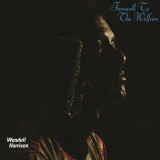
The Tribe Records co-founder’s lost album, rumored to exist no more. Mastered from the original tapes and lacquered by Bernie Grundman. “As I thought about re ecting on an aggregate of music for this album, I projected my attitude and spirit while living and working here, in Detroit, Michigan. We are earning and learning a new way of life, which explicitly tells us to become self-reliant in taking care of our families and each other. Government hand-outs are not an option for us.” -Wendell Harrison The first ever issue of this Spiritual Jazz album. The Tribe label, one of the brightest lights of America’s 1970s jazz underground, receives the Now-Again reissue treatment. This is your chance to indulge in the music and story of one of the most meaningful, local movements of the 20th Century Black American experience, one that expanded outwards towards the cosmos. In the words of the collective themselves, “Music is the healing force of the universe.” Included in an extensive, oversized booklet, Larry Gabriel and Jeff “Chairman” Mao take us through the history of the Tribe, in a compelling story that delves not just into the history of the label and its principals, but into the story of Black American empowerment in the latter half of the 20th Century. The booklet features never-before-seen archival photos and rare ephemera from Tribe’s mid-1970s heyday.
Even in trying times, “there is no love without electricity.” Electricity is the fourth and most progressive album from Ibibio Sound Machine, and like all good Afrofuturist stories, it begins with an existential crisis. “It’s darker than anything we’ve done previously,” says Eno Williams, the group’s singer. “That’s because it grew out of the turbulence of the past year. It inhabits an edgier world.”
Electricity was produced by the Grammy Award and Mercury Prize nominated British synthpop group Hot Chip, a collaboration born out of mutual admiration watching each other on festival stages, as well as a shared love of Francis Bebey and Giorgio Moroder. The fruits of their labor reveal a gleaming, supercharged, Afrofuturist blinder. Electricity is the first album Ibibio Sound Machine have made with external producers since the group’s formation in London in 2013 by Williams and saxophonist Max Grunhard. True, 2017’s Uyai featured mixdown guests including Dan Leavers, aka Danalogue, the keyboard jedi in future-jazz trio The Comet Is Coming, but Hot Chip and Ibibio Sound Machine worked together more deeply throughout the process, collaborating fully. Along the way, the team conjured a kaleidoscope of delights that include resonances of Jonzun Crew, Grace Jones, William Onyeabor, Tom Tom Club, Kae Tempest, Keith LeBlanc, The J.B.’s, Jon Hassell’s “Fourth World,” and Bootsy Collins.
The hook of opener “Protection From Evil” has Williams wielding a massive synth line from Hot Chip’s Al Doyle like a spiritual shield against unspecified, malign forces unspecified because Williams is speaking in tongues. Her lyrics are onomatopoeic: their meaning is defined in her energetic delivery. As Electricity takes off, so do Williams’ words towards a brighter future, alternating between English and Ibibio, sometimes within verses, and propelled by Joseph Amoako’s unabating afrobeat. She digs into this sentiment further on single “All That You Want,” coolly assuring her romantic interest while also requesting reciprocity. Meanwhile, Scott Baylis’ playful Juno synth guides the listener’s feet along the dancefloor.
Electricity is a deep and seamless realization of Williams’ and Grunhard’s ambitious founding manifesto to combine the singularly rhythmic character of the Ibibio language which Williams spoke growing up in Nigeria with a range of traditional West African music and more modern electronic sounds. While the band enjoys veering further into electronic territory with the help of mutuals like Hot Chip, Grunhard emphasizes, “For us, it’s not just a matter of embracing new technology. What’s key is to keep the music grounded in African roots.” Ibibio Sound Machine best exemplify this on Electricity’s “Freedom.” That track was inspired by the water-drumming rhythms of Cameroon’s Baka women, which in turn fueled its lyrics, which in turn prompted Hot Chip and Ibibio Sound Machine to layer joyfully kinetic electronic counterparts on top in the studio. As the track culminates with the mantra of “rage, hope, cope, soul,” it’s clear that Ibibio Sound Machine have channelled, harnessed, and distilled these words as guiding principles, both for the album and for the turbulent world that awaits it.
out of Stock
Last delivered 3 years ago available to reorder, subject to availability
London alt-rock outfit Curse of Lono share brand new single ‘Let Your Love Rain Down On Me’, a hypnotic widescreen teaser for upcoming album ‘People In Cars’, set for release 19th November via Submarine Cat Records (She Drew The Gun, Alabama 3, John Murry).
Recorded during lockdown with long-term collaborator and producer Oli Bayston (Spiritualized, Teleman, Boxed In) and engineer Iain Berryman (Wolf Alice, Arcade Fire, Kings Of Leon), ‘People In Cars’ is a stunningly cinematic record that continues the band’s musical evolution and reinforces their trajectory as one of the most compelling lyrical voices of the British musical underground.
out of Stock
Last delivered 19 months ago available to reorder, subject to availability
Tortoise has spent nearly 30 years making music that defies description. While the Chicago-based instrumental quintet has nodded to dub, rock, jazz, electronica and minimalism throughout its revered and influential discography, the resulting sounds have always been distinctly, even stubbornly, their own. One of the throughlines that create that distinctive sound is what might be called a pervasive element of group play, or ensemble-mindedness, as opposed to emphasis on a virtuoso soloist or frontman. Rhythms, Resolutions and Clusters follows in this line as Tortoise turned their iconic early songs over to their friends to play with. The remixes by other legends including Bundy K. Brown, Steve Albini, Jim O'Rourke, Brad Wood (Liz Phair), Casey Rice, Mike Watt (Minute Men), and Rick Brown (75 Dollar Bill) create a sense of community, and unlimited creativity. It's been out of print since 1995. Tortoise...have spent the past 25 years and seven albums fusing dub, jazz, prog, and indie into an instantly recognizable and much-loved trademark sound. - Pitchfork As with the best of Tortoise, these tracks can be enjoyed on many levels, but when listened to carefully, they reveal seemingly infinite sonic treasures. - Pitchfork
out of Stock
Last delivered 4 years ago available to reorder, subject to availability
Tortoise has spent nearly 30 years making music that defies description. While the Chicago-based instrumental quintet has nodded to dub, rock, jazz, electronica and minimalism throughout its revered and influential discography, the resulting sounds have always been distinctly, even stubbornly, their own. One of the throughlines that create that distinctive sound is what might be called a pervasive element of group play, or ensemble-mindedness, as opposed to emphasis on a virtuoso soloist or frontman. Rhythms, Resolutions and Clusters follows in this line as Tortoise turned their iconic early songs over to their friends to play with. The remixes by other legends including Bundy K. Brown, Steve Albini, Jim O'Rourke, Brad Wood (Liz Phair), Casey Rice, Mike Watt (Minute Men), and Rick Brown (75 Dollar Bill) create a sense of community, and unlimited creativity. It's been out of print since 1995. Tortoise...have spent the past 25 years and seven albums fusing dub, jazz, prog, and indie into an instantly recognizable and much-loved trademark sound. - Pitchfork As with the best of Tortoise, these tracks can be enjoyed on many levels, but when listened to carefully, they reveal seemingly infinite sonic treasures. - Pitchfork
out of Stock
Last delivered 4 years ago available to reorder, subject to availability
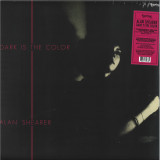
Favorite Recordings presents Dark Is The Color, the first LP by Alan Shearer reissued on vinyl for the first time. Despite being initially composed and produced for the French library label PSI, this rare
and obscure in-demand gem from 1985 sounds retrospectively like a proper album with great coherence and sophistication all along. Indeed, these 11 tracks will delight synthesizers addicts. Expect deeply emotive instrumental compositions, with ingenious analogue sequencing on stimulating chord progressions. The result is a highly retrofuturistic album, sometimes almost anticipating 90's videogames
scores. Just imagine Wally Badarou in a bunker with Talking Heads watching New York 1997 from John Carpenter.
Composed mostly step by step on a Sequential Pro-One synthesizer, Dark Is The Color is the product of the exciting state of mind from the 80's era with new sounds, new tools and new trends on the music spectrum. Influenced by bands like Talking Head or Japan, the sirens of the new wave scene strongly resonate here with Alan Shearer's familiarity and craftmanship with synthesizers.
Back in the days, Alan Shearer aka Frédéric Viger was working for his father’s music label, “Musique Pour L'image”, and their sublabel “PSI”. He started with Marathon Life under his real name before taking the Alan Shearer monitor. These records were produced for radio, TV and cinema industries but as well for companies’ internal communication. They represented a real investment from the label and these catalogues are usually full of amazing music from great artists such as Martial Solal, Vladimir Cosma, Joël Fajerman, Harlem Pop Trotters and even Manu Dibango.
About his musical illustration process, Alan Shearer tells: "Soundtracks are indeed my biggest influences and I'm a real fan of American composers as Jerry Goldsmith or Elmer Bernstein. I've always considered soundtracks as the new classical music or classical music of our century. There is a real state of mind producing music for illustration: you have to stick to the video. You should not tell what the image is saying but accompany what it is saying. You have to find a unique link, people always told me music should not be noticed for itself in a movie, that's what makes it good.”
out of Stock
Last delivered 3 years ago available to reorder, subject to availability
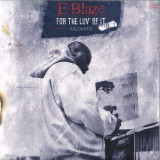
The last and long-awaited third instalment of the trilogy "For The Luv Of It" is finally out, exclusively on vinyl. After Volume 3 and Volume 2, both critically acclaimed and supported by a worldwide audience, E.Blaze just released Volume One, with an emphasis on instrumental versions of some of his classic productions such as "Capital Q" by Infamous Mobb, "Contagious" by D.i.T.C's O.C. and AG from their oasis album, and with a mix of updated bangers from the past alongside some new productions.
The musical cocktail of beats is a feast for the ears, and a truly rare piece of hip hop mastery with a beautiful artwork cover to go with it.
The instrumental record For The Luv Of It - Volume One Reloaded - Part One is a real treasure to be added to any serious vinyl collection of the genre.
Eric Blaze (E. Blaze) is a Paris record shop owner, a worldwide music producer and a label manager at The Group NYC. Before embarking on his New York journey, he co-founded the legendary Hip Hop French group Tout Simplement Noir in 1989 and eventually decided to move to the Mecca of Hip Hop where he has worked for two decades as a vinyl specialist at world-famous A1 and Academy records, and as a music producer, crafting numerous tracks for Hip Hop finest MCs such as Krs one, D.I.T.C., Milano Constantine, OC and AG, Blaq Poet, Infamous Mobb, etc. Over the years, to highlight his skills and efforts, and most importantly recognized and encouraged by his peers. Co-signed by the best original beatmakers in the world, Lord Finesse, DJ Premier, and Large Professor, Eric released on his own New York based company four instrumental records: For the Luv of it Volume Three and Volume Two, Bandwidth and Flip Side
out of Stock
Last delivered 4 years ago available to reorder, subject to availability
Originally released by Victory Music in 1991, Tin Machine II is the second and final studio album by Tin Machine. After this album and the supporting tour, frontman David Bowie resumed his solo career.
Tin Machine II’s reputation has only increased over the years. Uncut magazine placed the album on their list of 50 Great Lost Albums (their list of great albums not currently available for purchase), calling the album “extraordinary”.
As with all Bowie albums, there are plenty of strong tracks here to make this a must have. Opening track “Baby Universal” is pure Bowie. He re-recorded this track in 1996 for his 1997 album Earthling, but the track was not released on the album. It was eventually released in 2020 on the Bowie EP Is it Any Wonder?. The first single “You Belong in Rock n’ Roll” was released ahead of the album and peaked at No. 33 in the UK. The second single “Baby Universal” achieved success on the Modern Rock chart in the USA, where it reached No. 21, and the third and last single “One Shot” became an even bigger hit, reaching No. 3.
RELEASE: 17-7-2020
• 180 GRAM AUDIOPHILE VINYL
• INSERT
• SPECIAL SPOT VARNISHED SLEEVE
• SECOND AND FINAL STUDIO ALBUM BY THE SUPERGROUP TIN MACHINE, ORIGINALLY
RELEASED IN 1991
• TIN MACHINE = DAVID BOWIE, REEVES GABRELS, TONY SALES & HUNT SALES
• LIMITED EDITION OF 5000 INDIVIDUALLY
NUMBERED COPIES ON SILVER COLOURED VINYL
SIDE A
1. Baby Universal
2. One Shot
3. You Belong In Rock N’ Roll
4. If There Is Something
5. Amlapura
6. Betty Wrong
The album’s cover (which was censored for its original USA release!) was created by Edward Bell, who had previously worked with Bowie in making artwork for Scary Monsters. The MOV cover features a spot varnish finish.
Music On Vinyl gives Tin Machine II its first vinyl re-release since the 1991 original, and it’s pressed on coloured vinyl for the very first time. The initial pressing is a limited edition of 5000 individually numbered copies on silver coloured vinyl.
New York-based Synthwave/Italo disco duo, Bunny X, will release their highly anticipated first full-length album, ‘Young & In Love’, on October 5, 2021 through Aztec Records.
Taking inspiration directly from 1980s John Hughes classics such as The Breakfast Club and Sixteen Candles, Bunny X (Abigail Gordon and Mary Hanley) created ‘Young & In Love’ as a concept record oozing with nostalgic and youthful themes such as young love, first crushes, teen angst and anxiety.
“We wanted to take our listeners back to a time when music connected with us in a passionate and relatable way,” says Abigail. “These tracks pay tribute to what made 80s music so special — the fact that it was delivered in an earnest and unironic way.”
The Retrowave 10-track list of “Young & In Love” brings Bunny X together with Synthwave stalwarts Sellorekt/LA Dreams and Don Dellpiero, NYC-based producer Gosteffects and GRAMMY Award-winning engineer, Tony Lake.
Bunny X has been electrifying stages with their live performances in NYC and beyond for nearly a decade. The duo have released Italo disco and 80s-inspired music throughout their career, including two EPs and numerous singles. This is their first LP-length collection.
out of Stock
Last delivered 4 years ago available to reorder, subject to availability
The Hill District were a group of working musicians assembled by bassist Walter “Sonny” Hughes who following one afternoon rehearsal session together the very same evening recorded their only ever 45 outing the somewhat elusive and now sort after amongst group harmony collectors “Your Scared Of Falling In Love”. The other group members were Sonny’s brother Richard Hughes (Lead Guitar), Anthony Law (Keyboards), William M. Standard Jr (Piano), Mark Smith (Drums) and Daniel S. Lee Jr (Lead Vocals). The groups name was taken from a grouping of African American neighbourhoods in the city of Pittsburgh P.A. locally referred to as ‘The Hill’. The recording session was held under the direction of record producer and song writer James Richard Calloway (A.K.A) Rich Calloway. Calloway would go on to release “Your Scared Of Falling In Love” on his own ‘C-Way Records’ label featuring a instrumental version on the flipside. Rich Calloway hailed from Uniontown P.A. with Uniontown being known affectionately by the local black community as ‘Oniontown’ the name which Calloway adopted for his publishing company. Unfortunately for the Hill District the final mastering of their song left something be desired (a scenario we’ve now rectified with our release) and as a result local Pittsburgh Disc jockeys refused to plug their song leaving their one and only 45 outing to fade into obscurity with the group members going their own separate ways to continue their careers as session musicians with other ensembles. Producer and lyricist Rich Calloway also continued with his own C-way Productions company later composing both sides of The Cleveland Ohio group ‘The Entertains’1975 outing for Steel Town records “Love Will Turn It Around/Why Couldn’t I Believe Them”. Calloway was no stranger to Cleveland having been earlier employed by Way Out Records owner Lester Johnson to compose the lyrics to Jesse Fisher’s “Your Not Loving A Beginner”, the songs arrangement’s being originally laid down by members of the Way Out group The Soul Notes, William Bell (A.K.A Bill Spoon), John Washington and Ricki Dannison under the working title of “I’ve Been Waiting For Your Love”. Prior to the Hill’s District release Rich Calloway had penned and released a 45 single on another local Pittsburgh artist Richie Merrett. The 1973 outing You’ll Always Have Yesterday Standing By” b/w “I Gave It Up” (C-Way 103). Merritt a professional singer who performed with several groups including The Electron’s on their 1968 outing “Turn On Your Lovelight (Shock 209) recorded his first solo outing on the Nashville Deltron label “Can I Get A Rebate/It’s Never Too Late” which he later released again on his own R.A.M label followed by two early 90’s outings, the modern soul favourite’s “Where Did I Go Wrong” and “You Got Problems”. Richie still performs today doing one off shows in between his solo performances aboard 7 Day Cruise ships travelling between Los Angeles and Sant Cabos, Mexico. “You’ll Always Have Yesterday Standing By” was later produced by Walt Maddox under the shortened title of “Yesterday’s Standing By” on his own group ‘These Gents’.
Therefore Soul Junction brings you two 70’s soul/Lowrider in demanders back to back for your delectation.
In 1956 "I Put A Spell On You" was released on the Okeh label, this release was what really changed Hawkin's fortunes.
According to legend, Hawkins intended it as a refined ballad, but he and his band were all somewhat the worse for alcoho
when they finally entered the studio. The result was intense and mesmerizing.
Although never a chart hit, the record had a massive impact. Covered by Nina Simone, Marilyn Manson and literally
dozens of others, it became a modern standard. Enjoy it once again on glorious vinyl, along with "Yellow Coat", "Hong
Kong" and "Ol' Man River".
Kadi Yombo, published in 1989, is the most successful album in the quest for a fusion between tradition and modernity in Bwiti harp music of the Tsogho people of Gabon. Combining beating rattles with a layer of synthesizers, Papé Nziengui blends in a contrapuntal dialogue characteristic of harp playing: male song in appeal and female choir in response, male voice of the musical arc and rhythms of female worship. But above all it’s Tsogho ritual music and modern studio orchestration. The result is an initiatory itinerary of 10 musical pieces which are all milestones likely to be simultaneously listened to, danced, meditated on, and soon acclaimed. In the years since, Nziengui has traveled he world from Lagos to Paris, from Tokyo to Cordoba, from Brussels to Mexico City to become a true icon, the emblem of Gabonese music.
Like Bob Dylan, "electrifying" folk and Bob Marley mixing rock with reggae, some purists have criticized Nziengui for having distorted the music of harp by imposing a cross with modern instruments. They even went so far as to claim that Nziengui was just an average harpist covering his shortcomings with stunts that were only good for impressing neophytes; like playing a harp placed upside down behind his back or playing two or three harps simultaneously. Sincere convictions or venomous defamations, in any case, Nziengui never gave in to such attacks, imposing himself on the contrary to pay homage to the elders (Yves Mouenga, Jean Honoré Miabé, Vickoss Ekondo) while instructing the maximum of young people. He is thus the promoter of many young talents, the most prominent of which is certainly his nephew Jean Pierre Mingongué. In a conservative society where the sacred is confused with secrecy, exposing the mysteries of Bwiti in broad daylight can be punished by exclusion or even execution.
Papé Nziengui has always claimed that he faces such risks because he never felt enslaved to a community that governs his life, that regulates his conduct, that has a right of censorship over his activities. Like Ravi Shankar, the famous sitarist, Papé Nziengui is a man of rupture but also of openness, a transmitter of culture. As proof, he has established himself in Libreville, Gabo’s capital, as the main harpist for sessions and concerts, accompanying the greatest national artists (Akendengué, Rompavè, Annie-Flore Batchiellilys, Les Champs sur la Lowé, etc.) as well as foreign artists (Papa Wemba, Manu Dibango, Kassav', Toups Bebey, etc.). In 1988, he was the first harpist to release an album in the form of a cassette produced by the French Cultural Center (Papé Nziengui, Chants et Musiques Tsogho). At the same time, he created his own group (Bovenga), combining traditional music instruments (musical bow, drums, various percussion instruments, etc.) in the framework of a true national orchestra, which gave the first concert and the first tours of a traditional music that was both modern and dynamic, thus "democratizing" the harp, to the dismay of certain purists.
On the other hand, in modern music, dominated by the logic of profit or even commercialism, artistic creation must often be adjusted for a specific audience based on reason rather than heart. But instead of allowing himself to be distorted, Papé Nziengui has always tried to produce music that is not a caricature, worthy in its expression as in its content, of the sacredness and transcendence of the music of the Origins. This is what makes Nziengui not only the musician, but the man someone whose age hasn’t altered any of his freshness or authenticity
Kadi Yombo, published in 1989, is the most successful album in the quest for a fusion between tradition and modernity in Bwiti harp music of the Tsogho people of Gabon. Combining beating rattles with a layer of synthesizers, Papé Nziengui blends in a contrapuntal dialogue characteristic of harp playing: male song in appeal and female choir in response, male voice of the musical arc and rhythms of female worship. But above all it’s Tsogho ritual music and modern studio orchestration. The result is an initiatory itinerary of 10 musical pieces which are all milestones likely to be simultaneously listened to, danced, meditated on, and soon acclaimed. In the years since, Nziengui has traveled he world from Lagos to Paris, from Tokyo to Cordoba, from Brussels to Mexico City to become a true icon, the emblem of Gabonese music.
Like Bob Dylan, "electrifying" folk and Bob Marley mixing rock with reggae, some purists have criticized Nziengui for having distorted the music of harp by imposing a cross with modern instruments. They even went so far as to claim that Nziengui was just an average harpist covering his shortcomings with stunts that were only good for impressing neophytes; like playing a harp placed upside down behind his back or playing two or three harps simultaneously. Sincere convictions or venomous defamations, in any case, Nziengui never gave in to such attacks, imposing himself on the contrary to pay homage to the elders (Yves Mouenga, Jean Honoré Miabé, Vickoss Ekondo) while instructing the maximum of young people. He is thus the promoter of many young talents, the most prominent of which is certainly his nephew Jean Pierre Mingongué. In a conservative society where the sacred is confused with secrecy, exposing the mysteries of Bwiti in broad daylight can be punished by exclusion or even execution.
Papé Nziengui has always claimed that he faces such risks because he never felt enslaved to a community that governs his life, that regulates his conduct, that has a right of censorship over his activities. Like Ravi Shankar, the famous sitarist, Papé Nziengui is a man of rupture but also of openness, a transmitter of culture. As proof, he has established himself in Libreville, Gabo’s capital, as the main harpist for sessions and concerts, accompanying the greatest national artists (Akendengué, Rompavè, Annie-Flore Batchiellilys, Les Champs sur la Lowé, etc.) as well as foreign artists (Papa Wemba, Manu Dibango, Kassav', Toups Bebey, etc.). In 1988, he was the first harpist to release an album in the form of a cassette produced by the French Cultural Center (Papé Nziengui, Chants et Musiques Tsogho). At the same time, he created his own group (Bovenga), combining traditional music instruments (musical bow, drums, various percussion instruments, etc.) in the framework of a true national orchestra, which gave the first concert and the first tours of a traditional music that was both modern and dynamic, thus "democratizing" the harp, to the dismay of certain purists.
On the other hand, in modern music, dominated by the logic of profit or even commercialism, artistic creation must often be adjusted for a specific audience based on reason rather than heart. But instead of allowing himself to be distorted, Papé Nziengui has always tried to produce music that is not a caricature, worthy in its expression as in its content, of the sacredness and transcendence of the music of the Origins. This is what makes Nziengui not only the musician, but the man someone whose age hasn’t altered any of his freshness or authenticity
Kadi Yombo, published in 1989, is the most successful album in the quest for a fusion between tradition and modernity in Bwiti harp music of the Tsogho people of Gabon. Combining beating rattles with a layer of synthesizers, Papé Nziengui blends in a contrapuntal dialogue characteristic of harp playing: male song in appeal and female choir in response, male voice of the musical arc and rhythms of female worship. But above all it’s Tsogho ritual music and modern studio orchestration. The result is an initiatory itinerary of 10 musical pieces which are all milestones likely to be simultaneously listened to, danced, meditated on, and soon acclaimed. In the years since, Nziengui has traveled he world from Lagos to Paris, from Tokyo to Cordoba, from Brussels to Mexico City to become a true icon, the emblem of Gabonese music.
Like Bob Dylan, "electrifying" folk and Bob Marley mixing rock with reggae, some purists have criticized Nziengui for having distorted the music of harp by imposing a cross with modern instruments. They even went so far as to claim that Nziengui was just an average harpist covering his shortcomings with stunts that were only good for impressing neophytes; like playing a harp placed upside down behind his back or playing two or three harps simultaneously. Sincere convictions or venomous defamations, in any case, Nziengui never gave in to such attacks, imposing himself on the contrary to pay homage to the elders (Yves Mouenga, Jean Honoré Miabé, Vickoss Ekondo) while instructing the maximum of young people. He is thus the promoter of many young talents, the most prominent of which is certainly his nephew Jean Pierre Mingongué. In a conservative society where the sacred is confused with secrecy, exposing the mysteries of Bwiti in broad daylight can be punished by exclusion or even execution.
Papé Nziengui has always claimed that he faces such risks because he never felt enslaved to a community that governs his life, that regulates his conduct, that has a right of censorship over his activities. Like Ravi Shankar, the famous sitarist, Papé Nziengui is a man of rupture but also of openness, a transmitter of culture. As proof, he has established himself in Libreville, Gabo’s capital, as the main harpist for sessions and concerts, accompanying the greatest national artists (Akendengué, Rompavè, Annie-Flore Batchiellilys, Les Champs sur la Lowé, etc.) as well as foreign artists (Papa Wemba, Manu Dibango, Kassav', Toups Bebey, etc.). In 1988, he was the first harpist to release an album in the form of a cassette produced by the French Cultural Center (Papé Nziengui, Chants et Musiques Tsogho). At the same time, he created his own group (Bovenga), combining traditional music instruments (musical bow, drums, various percussion instruments, etc.) in the framework of a true national orchestra, which gave the first concert and the first tours of a traditional music that was both modern and dynamic, thus "democratizing" the harp, to the dismay of certain purists.
On the other hand, in modern music, dominated by the logic of profit or even commercialism, artistic creation must often be adjusted for a specific audience based on reason rather than heart. But instead of allowing himself to be distorted, Papé Nziengui has always tried to produce music that is not a caricature, worthy in its expression as in its content, of the sacredness and transcendence of the music of the Origins. This is what makes Nziengui not only the musician, but the man someone whose age hasn’t altered any of his freshness or authenticity
Historically informed violin player, prize-winning street musician, new age experimentalist, chamber ensemble performer and conservatoire deviant. The career of Valentina Goncharova (b. Kyiv 1953) shares parallels with those associated with the broader new music movement of the 20th century and the dissemination of home recording technologies.
Valentina’s was a youth spent immersed in the world of classical music study under soviet rule, first in Kyiv- later in Leningrad & now St. Petersburg, from the age of 16. With the supervision of professors M. Vayman and B. Gutnikov she learned concert violin and developed alternate playing styles alongside skilled pianists. A student of the Leningrad conservatoire during the years 1969 - 1983, her repertoire included music for violin and later expanded to contemporary music composition.
The improvisatory nature of free jazz and then-budding experimental rock circles also intrigued Valentina during this period in Leningrad. Departing from the rules of the conservatoire, she briefly performed in underground rock clubs alongside future members of the industrial group Pop- Mechanika (Popular Mechanics). This perpetual state of flux is central to the variety found within ‘Recordings Vol. 1’, though as opposed to any degree of uncertainty Valentina’s practice is one
in flux by way of earnest curiosity.
Pushing further into an exploration of solo electro-acoustic sounds, she took to home taping on a modified Olimp reel to reel recorder. Intrigued by the manipulability of dubbing and the fresh sounds of DIY effects chains, Goncharova developed pickups alongside her husband Igor Zubkov. Her infatuation with the music of Stockhausen, Xenakis, Ganelin Trio and Pierre Boulez channels through considerations of space and erratic sound design, the 3 movements of ‘Metamorphoses’ embodying this textural approach to musique concrete.
The compositional skills developed in Leningrad unfold in the romantic gestures of ‘Higher Frequencies’, whilst manipulated cello combines with synthesise keys across ‘Passageway To Eternity’.
The slow, pulsating drone soundscapes recall the likes of Robert Rutman’s US Steel Cello Ensemble or even deep listening pioneer Pauline Oliveros.
The juxtaposition of written notation and improvisatory flare is central to Goncharova’s sound world. This period of home recording documents a confluence of minimalism, free form and flirtations
with new age tropes (inc. bell chimes and cavernous vocal mantras).
Experimenting with unusual performance techniques, such as shouting into amplified cello strings, Valentina’s home studio functioned as a place to foster full artistic and creative freedom
away from any academic strictures.
Relocating to Estonia in 1984, and in parallel to the deeply personal music of ‘Recordings Vol. 1’, Valentina performed at jazz festivals and gave classical concerts across Eastern Europe. In a sense, the recordings on these discs offer only a glimpse into her lifelong body of work. Over the past few decades she has taught at Tallinn Music College, expanded and updated post- Soviet popular music repertoire, collaborated with the Russian Philharmonic Society of Estonia and given concerts and charity events alongside the Catholic Church.
Hers is a life dedicated to the exploration of sound, a career forged through careful study and ceaseless intrigue. In a time where technological interconnectedness has allowed for music of the pas
to be continually mined and evaluated through new lenses, Shukai present an artist whose tendency for private home-taping had allowed recordings to go unheard for thirty years.
out of Stock
Last delivered 5 years ago available to reorder, subject to availability
In March 2020, Tahiti 80 had a plan to start recording their new album in the studio. That plan, of course, along with everything else in the world, got derailed. But the five-piece group was resilient and resourceful. They quickly shifted to a socially distanced plan B that included file swapping and virtual sessions, all refereed by producer Julien Vignon. The result, due for release in March 2022, is the buoyant Here With You, a collection of eleven upbeat songs that unfold like a prescription for a post-pandemic panacea.
“When lockdown in France happened, we said, 'We're not going to stay at home not doing anything,'” says singer-guitarist Xavier Boyer. “And our new plan became a hopeful thing, waking up every morning and seeing what the other guys had worked on. It wasn't always easy, but this new method allowed a freer approach where we could really go all the way with an idea without being influenced by each other’s suggestions. It must've been overwhelming for Julien, who ended up selecting all our arrangements. But he stayed positive all the way through.”
To help stay inspired and focused during their time in isolation, the band created a mood board, with the centerpiece a photo of an early '90s rave in the UK.
Boyer says, “Whenever you see pictures from this era, people seem very innocent. There are no cell phones and everybody is in to what they are experiencing. We kept that picture in mind as a kind of mantra that would help everyone feel connected to this idea of people celebrating, gathering and just having fun. We were missing the connection with people, and thought it would be great if we could create music that would inspire that kind of emotion.”
Indeed, the songs on Here With You are brimming the feeling of communion that we've all been missing over the past two years. It's there in the catchy opener Lost in the Sound, which walks the walk with Chic guitar flicks, urban nightfall sparkles and an inviting chorus (“Your heart grooves like a thousand 808s on the right time”). It's there in the Jackson 5-style syncopated bounce of “Vintage Creem,” the lush, dreamy “Breakfast in L.A.” and the panoramic sweep of “UFO.” And it's there in the first single “Hot,” which matches an irresistible groove with a neon-lit, percolating arrangement that evokes the disco clubs of 1979.
What's remarkable is that though Tahiti 80 displays a clear affection for sounds of the past, from bubble gum to '70s soul, they never trade in mere pastiche. Their take is more a slightly warped and playful carnival mirror mash-up of classic pop styles, given depth through Boyer's hang-gliding, coolly emotive vocals and lyrics that often rub against the euphoric grain of the music.
“I like to think of songs as a three-minute drama,” says Boyer. “This concept of drama definitely adds different levels to our music. There's the melody, the lyrics, then the production that can maybe emphasize or counterbalance the interaction between the yin and yang in a song.
“There's a difference between the very upbeat, sunshine-y soft rock and the lyrics, even on our past albums,” he continues. “Not dark, but a little more melancholy, and also looking for some kind of motivation, talking to yourself. Like with a lot of Motown songs, you get that feeling where you body’s dancing while your mind’s reflecting, reminiscing.”
That alluring blend of happy-sad has been a signature part of the Tahiti 80 sound from the time Boyer and bassist Pedro Resende formed the group in 1993, as students at the University of Rouen. Taking their name from a souvenir t-shirt given to Boyer's father in 1980, the duo recruited guitarist Mederic Gontier in 1994, and with the addition of drummer Sylvain Marchand a year later, the lineup was complete. The foursome released a self-produced and self-financed EP, 20 Minutes, in 1996, which resulted a record deal with French label Atmospheriques in 1998. Their full-length debut Puzzle, produced with Ivy's Andy Chase and mixed by Tore Johansson, went gold and featured the international hit “Heartbeat” that established the band throughout Europe and Asia.
In the years since, Tahiti 80 – with the additions of Raphaël Léger on drums and Hadrien Grange on keys - has released eight acclaimed albums. The band has fused what MOJO called a “glorious entente of old and new technology” (including singles like “Yellow Butterfly,” “1000 Times,” “Sound Museum,” “Crush!” and “Big Day,” which was featured on a FIFA video game soundtrack), while collaborating with such producers and arrangers as Richard Swift, Tony Lash and Richard Anthony Hewson, who famously arranged The Beatles' “Long and Winding Road.” Boyer has also put out two solo albums, the first under the anagram Axe Riverboy and the second under his name. In 2019, the band released Fear of an Acoustic Planet, a stripped-down reimagining of some of their best-loved tracks from the previous twenty years. It served not only as a look back but a reminder of their formidable songwriting skills.
Boyer is definitely a student of the timeless three-minute pop song format pioneered by '60s artists like The Beatles and The Beach Boys. He says, “I see it as kind of a frame for a painting. Most of the songs on this album, I wrote a verse, pre-chorus and chorus. There aren't many middle eights. I wanted it to be very concise. I feel like people have less attention. There's so much music. It's too easy to switch off or skip to another track, so I want to hook the listener. The three-minute song is kind of an easy code to crack, but at the same time you have to figure out a new way to tell the stories that we've heard before.”
And the stories on Here With You are very much about the longing for connection. Of the album title, Boyer says, “In the world right now, that can mean a lot of different things. Like missing our fans, missing going to concerts. In a way, it can be a statement of what happened last year, and a wish of 'I want to be here with you again.' It's our ninth album. We've had some had some very open, conceptual titles like Puzzle, Activity Center. Sometimes they were more specific like Fosbury orWallpaper for the Soul. Here with You, seems more personal, more engaging in terms of relationships. When I suggested that title, everyone in the band said, 'Yeah, that's it.'”
Until Tahiti 80 can resume a full tour schedule, Boyer says he hopes the new record will make that personal connection. “If I see from the point of view as a music fan, sometimes I see albums I like as companions throughout my life. So if we can be a part of people's existence, even if it's a song that reminds them of the time they were driving with the windows open and it was sunny. Or a sad song that resonates with them after a breakup. That's what we're all looking for when we're making music. You do this very personal thing and you want it to touch as many people as possible.”
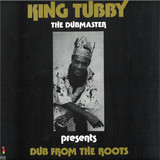
Tubby did three original dub albums, “Dub From The Roots, “The Roots Of Dub” and the third is “Brass Rockers” with Tommy McCook ’pon the flying cymbals. Where he mixed it with the horn going in and out in a dub way and one named “Shalom Dub” you can call Tubby’s too because he mixed the versions as they were off the forty fives.
King Tubby and Producer Bunny “Striker” Lee are intertwined in the birth of Dub Music. After discovering a mistake that made a “serious joke” (more of which later…) they went on to release the first pressings of this new musical genre namely “Dub Music”. Tubby’s vast knowledge of electronics and Bunny’s vast catalogue of rhythms would lay the foundations of what today is taken as a standard…. The Remix / Version cuts to an existing vocal tune.
Osborne “King Tubby” Ruddock was born in Kingston, Jamaican the 28th January 1941 and grew up in the High Holborn Street area of downtown Kingston. He studied electronics at Kingston’s National Technical College and also on two correspondence courses from the USA. When he had qualified, Tubby began repairing radios and other electrical appliances in a shack in the back yard of his mother’s home. His work in the early days included winding transformers and building amplifiers for Kingston’s Sound Systems. Tubby built his first Sound System in 1957 playing jazz and Rhythm and Blues at local weddings and birthday parties His reputation as a man who knew and understood both electronics and music grew steadily and as the sixties drew to a close. Tubby purchased his own basic two track equipment. He installed this alongside his dub cutting machine, a homemade mixing console and his impressive collection of Jazz albums in the back bedroom of his home at 18 Dromilly Avenue which he christened his music room.
Dynamic Sounds upgraded to sixteen track recording in 1972 and Tubby purchased, again with the help of a deal brokered by Bunny Lee. The old four track equipment and the MCI console from their Studio B. The four tracks now gave him far wider scope to work with and he began to create a new musical form where the bass and drum parts were brought up while the faders allowed Tubby to ease the vocal and rhythm in and out of the mix. It was only a matter of time before Tubby’s dub plate experiments began to make it on to vinyl and the first ever long playing King Tubby releases would feature a collection of his mixes to a selection of Striker’s rhythms. So please sit back and enjoy this historic set of sounds. Lovingly restored and with a few extra gems added to the CD editions. These releases were the first to carry the name of King Tubby and the first to credit the great musicians that contributed so much to the rhythms that made these albums possible.
Hope you enjoy the set……
out of Stock
Last delivered 6 months ago available to reorder, subject to availability
Brass Against are back with their 2nd longplayer. Finally. Brass Against covers classics of Rage Against the Maschine along with other protest songs from the whole musical spectre. There are songs from bands like Tool, Black Sabbath, Audioslave and Led Zeppelin. Their videos are guaranteed viral hits. On the microphone you will find singer extraordinary, Sophia Urista. The band says: ,In this politically challenging era, it's time to stand up against the machine. We want the music we perform to sound inspiring and resonate with people's emotions, encouraging them to act. We combine rock and edgy hip-hop to play music that's powerful and empowering. Brass Against is exceptional music with a political edge. We are angry, we are inspired, we are ready for change_and we hope our music amplifies this energy in everyone who listens." The band got quite a name through several viral hits on Youtube. Brass Against`s version of ,Wake up" got more than 19 million views in the meantime.
Finders Keepers present this uber-rare soundtrack to a
film that never existed, performed by an imaginary pop
group. Incredible Polanski-inspired German hip-hop
psychsploitation beats from 1969.
This is the movie soundtrack to a film that never existed.
This is the movie soundtrack by the band that was never
requested. These were the sound library musicians who
had to invent their own clients and imaginary cast, crew
and plot to get their music heard, by a niche audience,
before floating deep into the depths of the rare record
reservoir gasping for breath.
To take a cinematic cue the record in question is the
Eurotrash pop equivalent of Jean Renoir’s
tragic/triumphant Boudu character who as a homeless,
confused and desolate down-and-out plunged to the
depths to be unwillingly rescued, resuscitated then after
gradually winning the hearts of an entire family becomes
respected and revered as royalty. Over twenty years after
the mad scientists, Dr. Horst and Ackermann, first
breathed life into this short-lived beast, brave and intrepid
vinyl explorers have sporadically returned to the doors of
Dracula’s Music Cabinet to resurrect the sonic spooks and
mutated melodies to share with nerds, mods, rockers, hiphoppers, psych nuts and Krautsiders alike. The lifeless
corpses of The Vampires Of Dartmoore that lay six feet
beneath the belly of the Eins Deutschmark bins has since
crept through the record collections of the aforementioned
social circles devouring continental currencies and
demanding random ransoms of €250 plus, not to mention
sweat, tears (of laughter) and a lot of blood.
Revamped, remastered, and re-presented! Available once
again since the initial Finders Keepers’ limited edition 2009
pressing.
out of Stock
Last delivered 4 years ago available to reorder, subject to availability
This recently unearthed recording captures saxophonistAlan Braufman with his five-piece band in an early 1975 live radio session soon after recording his debut album Valley of Search for the India Navigation label. This was the first meeting of William Parker and Cooper-Moore, whose musical partnership has flourished ever since. The 94-minute performance is spread over 5 sides on 3 LPs / 2CDs. Newly mastered with liner notes by the host, Susan Mannheimer. Braufman has earned worldwide acclaim after the 2018 reissue ofValley of Search, and 2020's new album, The Fire Still Burns.
Augustus Pablo's unique sound which was created around playing what could best be described asa child's musical toy, the melodica. It made him a very popular session player in the late 1970's and early 80's.It was not only his unique talent of playing the instrument but also his talents on a piano and the keyboard.
Pablo worked on a varied amount of sessions for all the top Jamaican producers but especially for King Tubby at hi studio in the heart of the Waterhouse district of Kingston Jamaica.
We have compiled a set of rhythms that have King Tubby and Phillip Smart at the controls and Augustus Pablo adding his musical flavour to the mix to make what we believe to be a great album...
Hope you enjoy the set....
Renowned agent and jazz pioneer Wim Wigt founded Timeless Records in 1975. This Dutch record label has specialized in bebop, although it also did a sub-series of releases of Dixieland, Swing and Classical recordings. As of today, Timeless Records has, together with its three sub-labels, released over 900 albums. Notable releases include Dizzy Gillespie Meets Phil Woods Quintet, McCoy Tyner's Bon Voyage, Lou Donaldson's Forgotten Man, Eastern Rebellion and albums by the George Adams-Don Pullen Quartet, Chet Baker, Bill Evans, Art Blakey's Jazz Messengers and many more.
To celebrate the legacy of Wim Wigt's Timeless Records, Music On Vinyl is releasing a 45th anniversary jazz series. The series features albums that are part of the Timeless Records legacy and will be released throughout 2021/2022. To kick off this series, Pharoah Sanders' Africa is released on the 19th of November 2021.
Pharoah Sanders possesses one of the most distinctive tenor saxophone sounds in jazz, which has earned him royal status amongst free jazz players, critics and collectors. Harmonically rich and heavy with overtones, his sound can be as raw and abrasive as it is possible for a saxophonist to produce. His 1987 album Africa is soulful but also searching for a strong groove at the same time. The album is recorded with John Hicks, Curtis Lundy and Idris Muhammad and was an explicit tribute to his late mentor John Coltrane, another giant of jazz.
Africa by Pharoah Sanders is available on black vinyl. The album includes an insert with upcoming Timeless Records titles from the Timeless Records 45th Anniversary Jazz series. The sleeve contains liner notes by Kevin Whitehead.
Prima Materia was a vocal improvisation ensemble, founded by Roberto Laneri in 1973. Composed entirely of vocalists with no academic training, the group developed various techniques – revolving mostly around the use of overtones – that would embody their unique sound. No instruments nor electronic manipulations were ever employed within the group's physiognomy, which was realized purely through the human voice.
La Coda Della Tigre, the group's sole album, was recorded in 1977 by Alvin Curran and released on Ananda, an artist-run label founded by Laneri, Curran and Giacinto Scelsi.
As the original liner notes state, "The music of Prima Materia may sound radically new, yet at the same time it is likely to ring some distant bell and evoke ancient emotions. This is not due to chance: indeed, the very name of the group points to a specific path, namely, the unfolding of the potential implicit in the alchemical symbol as embodying a process of transmutation of consciousness."
Prima Materia's four members (Laneri, Claudio Ricciardi, Gianni Nebbiosi and Susanne Hendricks) combine voices to create a singular, beautiful drone that is (as the group's name suggests) both impossible to define and fundamentally simple.
This first-time standalone reissue is recommended for fans of La Monte Young, Terry Riley and Disques Ocora.
... The Original Release of 'TJJA-10022' was on the 25th May, in 1992. Score by 'Joe Hisaishi', Album including 10 tracks. Based on the original story of Porco Rosso, director Miyazaki’s cartoon “Hikotei Jidai” and his notes of music, this album was created with an image of Italy at the end of 1920’s.