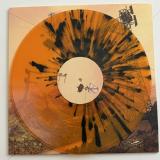
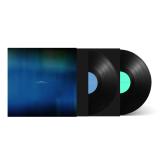
"After being praised as one of the best releases of 2025 by multiple platforms, the highly praised debut album from Obeka lands on vinyl via YUKU.
The rhythmic dynamics and emotive attitudes of A World No More captures the density of soundsystem culture in Obeka's ancestral roots. YUKU presents the Bermudians debut album capturing a Neo-Colonial dystopia, protest and Afro-Futurism hyperextended through decaying sonic structures of a dark past and its grievances which very much exist today.
Growing into adulthood within the walls of British and European Colonial systems meant the disconnection and lostness in a new country hid me from the world at a young age. Unlike London's vast and culturally engaging migrant communities, the industrial milling town of Stockport introduced a coldness towards people from other countries I experienced in my first year after relocating from Bermuda. I couldn't understand why. Whether cold words thrown towards me or actions upon other people who look like me, it has shown to be a dooming societal virus with no cure. The most comfort was found through what was familiar - drums and rhythmic spirituality of my homeland. It was a safe-haven, a place to empty the anger and confusion. It's been 15 years since relocating and as my sound evolved, it seems classism, racism, oppression and civil control of ethnic peoples has become worse - even now more legalised and normalised. Ogun (a powerful Yoruba deity associated with anger, justice and war) acts as the opening sequence of the record and its symbolism. Using distorted bass frequencies and dissected Regga-Dub immersed in live-sampled ghostly voices of the lost ones. This sonic exercising is also applied in Drillaman - a stampede of industrial framework and metallic instruments wielded over moody Dancehall MC'ing, magnifying two parallel worlds in cocooned evolution. The resurrection of Transatlantic African cultures and identity have never been silenced, rather carried elsewhere through trade routes of enslavement, which was pivotal when composing and completing the album upon returning home to the Caribbean for the first time ever. After reconnecting with my heritage my blurred vision of what's wrong in the world became so clear. Guidance in empty plains seek truth throughout the pain - A statement of finding oneself expressed on the poetic closing track A World No More.
On Fawohodie (A West African Adinkra symbol that represents independence, freedom, and emancipation stamped on the album cover) the motive and atmosphere begins to change. Afro-Caribbean idealism which refers to the philosophical concept that emphasizes the interconnectedness of individuals and the importance of community, often contrasting with Western individualism, begins to take shape in a new universe. We can co-exist. The track framework uses machine-led software forming frequencies we have no control over, then manipulated through decomposing soundscapes, scattered hand-drums and human-made weapons of control - exposing the hidden disparity that's been carried over generations whilst balancing hopeful and musical foundations towards equality and peace. On Pressure and Kuduro! the writing direction attempts to wake people up. Not settling for a composed approach like in past projects, quite the opposite. A call for native sonic awareness, dismantled vocals of protests, eroded percussion using chains, gears and motorised harmonies sculpted in challenging abstract behaviors far outside my comfort zone. A direct abrasiveness and weight I want people to feel, whilst finding hope and solace through enchanting choirs and hypnotic basslines in complete synchrony.
"Purity in sound manifests when you least expect it. The smallest memory or feeling grows from a seed into a sonic language that you, and only you can interpret and release back into the world." "
quête:no age
Terrestrial Funk presents a piece of Detroit history. Born and raised in Motor City, Karl Fultz knew at the age of twelve that he wanted to be the most talented and successful DJ in the world. In 1999 he released on Juan Atkins’ Metroplex under the alias People Mover and in 2000 he released as Black Electric on Puzzlebox. Inspired by British synth-pop duo Eurythmics, Fultz says Black Electric was a way to get more women involved in the techno movement. Together alongside vocalists Tiffany Elliott, Kim Glover & Talena Fultz, Black Electric brought sex appeal to the scene. Their first and only release stays in demand and has become inaccessible until now. Terrestrial Funk’s reissue provides two fresh cuts on the new 12”. ‘Purple’ a chugging Detroit acid track describing soul modification to enhance intimacy and a proper bassed out club mix of the nasty electro sex song ‘Work That’, which was only featured as an acapella on the original release. Black Electric stands as a testament to turn of the century Detroit and the city’s undying devotion to expand our connection to music.
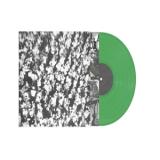
WRWTFWW Records is very happy to announce the release of Interwoven, the deeply moving collaborative album from Ken-ichiro Isoda and aus (Yasuhiko Fukuzono) — now available on limited edition transparent sea green colored vinyl LP housed in a heavyweight sleeve with selective-varnish 3D print, as well as in digipack CD and digital formats.
Recorded between Hachijo Island and Tokyo, Interwoven distills two visionary voices of Japanese ambient and electronic music into a single breath of feather-light and quietly luminous meditative sound.
Isoda is a revered figure of New-age and environmental music whose work on Oscilation Circuit – Série Réflexion 1 (originally released on famed label Sound Process) has long attained mythic status. He composes, notably with harp and wind instruments, produces contemporary music and video game scores, and crafts his very own brand of ambient music from the volcanic island of Hachijo-jima. Tokyo-based electronic composer and synth master aus is known for tender, melody-driven soundscapes. From the two artists comes a dialogue suspended between land and sea, bridging the generation gap and the physical distance between them.
What began as a series of sketches — impressions of water, islands, and shifting light — gradually evolved into an exchange without explanation, a correspondence of sound that dissolved boundaries. In that anonymity, both artists discovered an uncommon freedom: a place where each could move lightly and intuitively, without expectation. The music drifts with a gentle, intuitive grace: lingering piano, soft cinematic synths, and field recordings that unfold like whispered recollections, while flute and saxophone lines pass through like occasional breezes — a human presence felt as warmth more than form.
Interwoven is music for those who cherish stillness and the delicate beauty of the everyday. It’s music for admirers of Satoshi Ashikawa, Midori Takada, Satsuki Shibano, Hiroshi Yoshimura, Takashi Kokubo, Brian Eno, and all who seek a quiet refuge in sound.
- Ripples
- Driving To Austin
- Rewind
- Waiting For Sleep
- Fancy Free
- Water Montage
- Wake / The City / Sleep
- On Glass Ii
- In Motion
- Fancy Finish
- A Late Start
- Leaving Again
- Dazzling Showroom / Future City
- Winter Wave
- Swarm
- On Glass I
- Dap
- Ice Planet (Alt)
- Song From A Bedroom In Podunk Indiana
- Exiting
- Hi And Lo
- Sea Level
- Sequencer Sway
- Moonplay
- Aquarium
Connecters Vol. 1: Original Recordings, 1992-1999 ist die erste Veröffentlichung von Larrison, dem Pseudonym des bildenden Künstlers und Musikers Larrison Seidle aus dem Mittleren Westen. Larrison komponierte, programmierte und nahm alles komplett auf einem Casio CZ-5000 auf, während der guten alten Zeit der selbstgemachten Experimente und Entdeckungen in den frühen 90ern. Er lebte in einer Traumwelt, die er selbst erfunden hatte, mit Soundtracks aus Space-Age-Pop-Vignetten, gespickt mit hypnotischen, überschwänglichen, vielschichtigen Synthesizer-Melodien. Mit 26 Tracks, die alle neu restauriert und aus den Originalquellen gemastert wurden, erfindet sich Connecters Vol. 1 Song für Song neu, überwindet die Zeit und trotzt der vorbestimmten Vergessenheit dieser brillanten, diskreten Musik, die vor drei Jahrzehnten entstanden ist. Larrison Seidle wuchs in den 70er und 80er Jahren in Greenwood, Indiana, einem Arbeitervorort von Indianapolis, auf. Er stammte nicht aus einer Musikerfamilie, aber aus einem Haushalt, in dem Musikalität gefördert wurde. Sein Vater kaufte eine elektrische Orgel, in der Hoffnung, dass Larrison und sein älterer Bruder das Instrument lernen würden. ,Am Ende saß mein Vater einige Abende an der Orgel, improvisierte und spielte immer wieder dieses eine Lied, von dem ich mich noch an die ersten Takte erinnern kann", erinnert sich Larrison. Möglicherweise war es in diesem Moment, in dem es zwar keine formale Ausbildung gab, aber viel Ermutigung und Entdeckungsfreude, dass der Künstler seine ersten musikalischen Experimente machte. Diese Erlaubnis, sich auszuprobieren, sollte seine kreative Arbeit in den folgenden Jahren deutlich prägen. Während in Larrisons Elternhaus klassische Rockplatten leicht zugänglich waren, lieh sich sein Vater 35-mm-Dokumentarfilme aus der Bibliothek aus, um sie im Wohnzimmer zu zeigen, die alle mit skurrilen Instrumentalstücken unterlegt waren. Als Teenager nahm er John Carpenters und Alan Howarths Endthema aus ,Die Klapperschlange" mit einem kleinen Kassettenrekorder neben dem Fernsehlautsprecher auf und liebte Tangerine Dreams Beiträge zu Ridley Scotts düsterer Fantasy ,Legend". Seine Faszination für diese weitgehend textlosen, synthesizerbasierten Kompositionen führte zu einem eigenwilligen Verständnis davon, wie Musik nicht nur das ergänzt, was wir vor uns sehen, sondern auch das, was wir in den Tiefen unseres Bewusstseins erleben. 1985, als er dreizehn Jahre alt war, überzeugte Larrison seinen Vater, ihm ein Casio CZ-5000-Keyboard zu kaufen. Wie zuvor die Orgel war auch dieses Instrument eine Neuheit im Haushalt der Seidles. Erst nach seinem Highschool-Abschluss 1991 und dem Beginn seines Studiums an der Herron School of Art in Indianapolis entdeckte er den in das Casio integrierten Sequenzer und begann, seine Kompositionen auf Band aufzunehmen. ,Das CZ-5000 und sein 8-Spur-Sequenzer sind die einzigen Musikinstrumente, die ich benutzt habe. Es hat eine fast unbegrenzte Funktion zur Erzeugung neuer Klänge", erklärte Seidle. Während seiner Zeit an der Herron School of Art freundete sich Larrison mit seinem Kommilitonen und Klangkünstler Michael Northam an, den er bei einem Konzert auf dem Campus kennengelernt hatte. Nachdem Northam Larrison für die Musik von Severed Heads, Throbbing Gristle und Roger Doyle begeistert und damit seine Zuneigung und sein Vertrauen gewonnen hatte, überredete er ihn, nach Austin, Texas, zu ziehen, das in den frühen 90er Jahren für seine lebendige Kunst- und Musikszene bekannt war. Die beiden wohnten zunächst bei Northams Freund Daniel Plunkett, dem Herausgeber und Verleger von ND, einem einflussreichen Magazin, das sich von 1982 bis 1999 mit DIY-Musik und Tape-Trading beschäftigte. In seiner Blütezeit hatte ND Tausende von Lesern, und Plunkett verschickte die Ausgaben weltweit. In den letzten Monaten des Jahres 1993 und Anfang 1994 schrieb und nahm Larrison mit begrenzten Mitteln und grenzenloser Intuition eine Reihe von Songs mit seinem CZ-5000 in einer kleinen Wohnung nördlich der Innenstadt von Austin auf, bastelte eine farbenfrohe, illustrierte Beilage, in der einige Songtitel durch Linien oder Pfeile dargestellt waren, und gab sie an Plunkett weiter, damit er sie für ND rezensieren konnte. Diese einzelne Kassette mit dem Titel Connecters sic war eine von 1200, die im Laufe des Bestehens der Publikation bei ND eingereicht wurden und die Jed Bindeman, Mitbegründer von Freedom To Spend, 2020 erworben und fast wie durch ein Wunder entdeckt hat. ,Ich hatte große Schwierigkeiten, mir die Kassetten in dieser Sammlung anzuhören", gibt Bindeman zu. ,Aber dann legte ich Larrisons Connecters ein und dachte sofort: ,Wow! Was höre ich da?' Die Kassette war von Anfang bis Ende einfach fantastisch." Mit Musik von genau dieser Kassette und anderen Aufnahmen aus Larrisons Experimenten in den 90er Jahren ist Connecters eine Übersicht über Instrumentalmusik, die sowohl durch vielfältige konzeptionelle Strategien als auch durch spielerische Neugierde geprägt ist. Seidle arbeitete unter Bedingungen, die viele Musiker als Einschränkung empfinden würden, und entwickelte technisch innovative Ansätze, um die Klänge und integrierten Effekte des CZ-5000 zu modifizieren. Das Gerät ermöglichte es ihm, die Wellenform, die Hüllkurve und die Tonart von Klängen mithilfe der Phasenverzerrungssynthese zu verändern und so im Grunde genommen Instrumente zu schaffen, während er Songs komponierte. Die Tracks zeichnen sich durch eine durchdachte impressionistische Vielfalt aus, die mal lo-fi, mal symphonisch klingt. Inmitten der Zerlegung und Verstärkung der Fähigkeiten des CZ-5000 gibt es auch einen geschmackvollen Rückgriff auf eine kindliche Interaktion und Erfahrung von Klang. Vielleicht ist es diese Erfahrungsqualität, die es so schwierig macht, Larrisons Projekt einfach als Ambient oder Elektronik zu verstehen. Sein Wille, die ihm zur Verfügung stehenden Werkzeuge zu transformieren, hebt die daraus resultierenden Kompositionen auf eine persönliche Ebene und verleiht der Musik einen bezaubernden Sinn für Mystik. Connecters ist ein Beweis für eine künstlerische Vision, die sich nicht durch Grenzen einschränken lässt und keine Angst vor Informalität hat. Diese Aufnahmen, die dreißig Jahre nach ihrer Dokumentation auf magische Weise an die Oberfläche kommen, zeigen, wie personalisierte Produktionsmittel die Zeit ausdehnen und verkürzen können. Larrison lädt die Zuhörer ein, sich auf die Wunder der auditiven Vorstellungskraft einzulassen - eine Brücke zwischen visueller Erinnerung, emotionaler Resonanz und der grenzenlosen Möglichkeit, mit den uns zur Verfügung stehenden Mitteln Musik zu machen. Larrison's Connecters Vol. 1: Original Recordings, 1992-1999 wird am 3. April 2026 von Freedom To Spend als Vinyl- und Digitalausgabe veröffentlicht.
Salix is a bold new departure for modular synthesist Loula Yorke, seen here using an antique reed organ to explore the ancient roots of willow trees in magic, myth and medicine, as well as inviting another musician into her recording studio for the first time, clarinettist Charlotte Jolly.
The EP forms a sonic archive of a singular instrument: an antique free reed organ left behind by a previous encumbent of Asylum Studios, (the artists' co-operative in Suffolk where Yorke's Truxalis labelmate and life collaborator, Seiche, has a studio space). The organ is in poor condition and fascinatingly, painfully detuned. Yorke's recordings bring out its host of unusual quirks exacerbated by age and neglect: the powerful rhythmic creaking of the wooden treadles; the bone-shaking resonance emanating from its body at specific pitches; unexpected exclamations of harmonic collision from within the carcass redolent of a human voice; the piercing, shrieking whistles of broken reeds, and the powerful timbres unlocked via Yorke's experiments with various combinations of stops.
The three tracks that form Salix are inspired by a local weeping willow tree, a constant companion photographed over the course of a year. Boughs caught in a gyre. A maiden in mourning. Branches that gesture in the wrong direction. A tree turned upside down. A hand-woven willow basket, an old technology to gather and store. The journey of a lovelorn bard through the underworld, a bundle of willow under one arm for protection.
For the opening track, The Carrier Bag Theory of Fiction, Yorke recorded herself playing a simple unaccompanied improvisation on the organ, the only ornamentation being the processed sounds of the keys being struck and returning to their positions.
For Bundle of Styx, a spell of protection is cast and then broken. Yorke invited virtuoso clarinettist Charlotte Jolly into the studio to test combining the breathy textures of both brass and natural reeds, the instruments uniting and obsuring each other in turn during this one-take improvisation. The organ's unpredictable sharpened tunings take centre stage here, with Jolly using them as a point of departure to conjure a set of peerless harmonic improvisations live in the moment. Throughout the improvisation, Yorke, a self-taught musician, unpracticed on the organ, supports and challenges, freely admitting that she's not always sure what effect her decisions to move up and down the keyboard or pull out certain stops will have. Jolly's genius lies in her ability to meet and build on every uncertain pitch thrown her way, saying of the experience, "I love that Loula isn't classically trained, I can't predict at all what she's about to do."
For the final track, With the Red Dawn, Yorke has come up with another unique combination of textures, this time bringing her own specialism in modular synthesis to the fore. A ten-minute reed organ drone characterised with ever-shifting bass swells and overtones is layered with tuned sines, often shudderingly wave-folded, that ebb and flow both in intensity and harmonic colour according to the duty cycles of eight interrelated LFOs. These recordings are collaged with Yorke's singing voice and a langorous, ascending sequence across two octaves on Jolly's clarinet, all arranged to form a cohesive whole far greater than the sum of its parts. Smatterings of untuned percussion and a fragment of a conversation between the duo left in the final mix cements Yorke's unprecious DIY aesthetic into the release.
At its heart, Salix is like watching the wind in the willows; hundreds of thousands of identical tiny leaves moving in confluence on its branches; at once one thing and many things; moment-to-moment our perception makes out different individuals parts within this expanse of texture, before sinking back into the whole.
2026 Repress
Producer and bassist Huw Marc Bennett presents ‘Tresilian Bay’, a new project that draws from artists such as Tim Maia, Augustus Pablo and Idris Muhammed as much as the jazz scene and community he has found in south-east London. The languid, sultry sound fuses both modern and vintage, travelling from South London electronica, to Brazillian groove, Nigerian Afrobeat and Ghanaian Highlife along with a streak of Welsh psychedelia.
‘Tresilian Bay’ is a nod to hedonistic summer nights, whether spent on the Glamorgan coast or the hot Lewisham streets. The album is titled in honour of the bay near where Huw grew up, an area steeped in stories of ancient Welsh royalty, smugglers and pirates.
The album started out as a lost live session recorded at the Total Refreshment Centre studios, featuring Chelsea Carmichael (sax), Rosie Turton (trombone), Shirley Tetteh (guitar) and Jake Long (drums) with Huw at the helm on bass and compositions. With glorious vocal contributions from Miryam Solomon; Huw utilised his human style of production and multi instrumentality heard in his Susso project (Soundway Records, 2016) to mold these recordings into this mature and emotional debut.
The album was mixed and mastered by Albert's Favourites co-founder Adam Scrimshire with artwork by Jonny Drop.
Solid Red Vinyl Edition - 10@ Mini album. Originally release in 2025 in a painfully limited 2x7" + Book edition.
"Dream of the Egg" is the debut solo album by Tomo Katsurada, known for his work with the Japanese psychedelic band Kikagaku Moyo. This project is a unique fusion of music and visual art, inspired by the Japanese 1920s children's book “Yume No Tamago (Dream of the Egg)”. It reveals a deeply personal journey, reflecting Tomo's dreams and the numerous rebirths experienced in 2024—a year marked by profound new beginnings in every facet of his life.
This mini album was driven by a passion for raw and immediate expression. Every song was crafted and recorded with only the materials available to him at the time, embracing an organic and handmade atmosphere. By eschewing rhythm clicks and standard instrumental tunings, a spontaneous sound emerged, capturing the essence of both uncertainty and immediacy. Adding to this distinctive sonic landscape, guest musician Jonny Nash (UK) contributed ethereal guitar sounds on the first and final tracks, enriching the record's dream-like quality.
The journey begins with the opening track, "Moshimo," which means "If..." in Japanese. Here, Jonny's guitar weaves seamlessly with the vocal melody, creating a harmonious dialogue. The first half of the album concludes with "Zen Bungalow" a cover of Gabriel Yared's “Bungalow Zen” from the soundtrack of the film “Betty Blue 37°2 Le Matin”. This particular track is his partner’s favourite song to listen to every morning and left a profound impression on him. One day, he heard a song in his dream that combined both of these tracks and loved how they blended together. This experience inspired him to create a new arrangement, "Zen Bungalow," which has become a central piece of the “Dream of the Egg” album.
The third track serves as an interlude, printed on a flexi disk attached to the middle of a picture book. This interlude transitions the listener into"Inner Garden," a bittersweet folk song that explores themes of love. The EP's narrative spans 20 minutes, culminating in the final title track “Dream of the Egg”. This piece features a delicate session between Tomo & Jonny, combining cello and guitar to create a spectrum of tones that evoke the imagery of a rainbow. The focus on smooth dynamics and meticulous play reflects an intent to convey a sense of physical trembling. This track sounds like the beginning of a new dream; as if the egg of one’s dream is about to hatch, bringing a sense of anticipation and wonder to the listener. Throughout the album, a variety of instruments come into play, drifting between notes and embracing the beauty of imperfection. By incorporating free-form sounds in a highly technological age, the record aims to reconnect listeners with the tangible, human-made quality of sound.
Special Thanks
Jonny Nash – Guitar
Portuguese techno force Lewis Fautzi debuts under his own name on Mutual Rytm with ‘Beneath The Surface’. Hailing from Barcelos, Portuguese maestro Lewis Fautzi has carved out a formidable reputation through a run of uncompromising releases and a sound rooted in tension, precision and raw power - exemplified by his recent outing on the agenda-setting Hayes Collective. He has previously established his fierce, potent sound on Soma, PoleGroup, Mord, and a number of other influential labels, while also heading up Faut Section. Having previously appeared on Mutual Rytm’s Federation Of Rytm III compilation under his Non Cyclic alias, he now steps out on SHDW’s label with a six-tracker busting full of impactful techno cuts. The heavily-requested ‘Beneath The Surface’ opens the EP with menacing low-end and tightly coiled pressure that's released through simmering valves and hissing synths. ‘The Hollow Cycle’ brings a loopy, tunnelling groove with a snaking lead and snaking metallic percussion, while ‘Inner Mechanism’ keeps things dark, deep and driving with a backlit glow that pulls you in. ‘Nonlinear Form’ is streamlined deep techno that fizzes with texture, spraying chords and a rumbling sub-bass, while closer ‘Anamorph’ rides meticulously designed broken beats with an ever-present sense of bass-driven foreboding. For digital purchasers, sparse and eerie bonus ‘Surface’ slams down with industrial weight and real warehouse grit, shaping up another weighty offering for the label.
- A1: Is This What You Like - Terra
- A2: The Tribe - The Fred Bloggs Band
- A3: Morning Light - Smythe And Rucker
- A4: Zig Zag - David Chalmers
- A5: High Again - Shades Of Rayne
- B1: Animal Talk - Dana Alberts
- B2: Child Of Nature - The Key Of Creek
- B3: Child Of Earth - Chuck Robinson
- B4: Silvery Waterfalls - Luellen Reese
- B5: The Lost Road - Doria
2026 Repress
A further exercise in musical curation, Child Of Nature is our latest sonic confluence of self-released tracks from the loners, hippies and outsiders of the 70s and early 80s. A collection of privately pressed music, able to breathe and be created free from the constraints of heavy handed commercialism, yielding a pure vision of artistic expression. Child Of Nature features ten songs of brooding soft rock and psychedelic folk steeped in melancholia. Some ache for better times or past lovers, while others seek spiritual fulfilment or social progress.
A compilation to evoke the raw and unobstructed, to summon the occult, to fundamentally conjure a vivid portrait of our untamed natural environment. Recorded on the north coast of California, Luellen Reese’s ethereal “Silvery Waterfalls” drifts and swirls with electric guitar as her unearthly vocals transcend across a seven minute opus, fit for the golden age of labels like 4AD or Dedicated. “The flowers are dancing just for you …”, Reggie Russell croons over glistening Key Of Creek’s title track “Child Of Nature”, evoking a utopian world of natural harmony free from the present day realities of industrial decay.
Tap into your inner primal being, to embrace wholeheartedly, with frivolity and without reserve, your own child of nature.
The breakout underground star of the past year, the deservedly hyped Thought Leadership returns with another X ideas: the deck this time chooses the suit of Cups. This new collection is closer to the Post-Punk tonality of Pentacles, than the breezy Balearic Jazz of Swords. Gone are the brushed drum samples and airy synths and in their place are BIG guitars, 808 thumps and a decidedly more prominent use of bass as a melodic device.
As the suit of Cups reflects the emotional heart of the Tarot, presented within are a further X pieces, this time displaying the full range and fervour of Thought Leadership.
You know the drill by now. Originally out on cassette only, we present the first ever vinyl issue. It's a hideously limited pressing of 300 for the world, so don't sleep on this.
Side A explores the emotional levels of consciousness; angst, joy, love, sorrow, relief, regret – they are all represented across the first seven tracks, and often within the same piece. XXI kicks us off with a huge tumbling D minor passage, layers and layers of guitar front and centre, whilst the drums pound away in the distance. Release is provided with a gorgeous G Dorian section, where we hear the bass take flight with a high melodic line.
We’re still in familiar Durutti Column meets Dif Juz territory here, but things switch up with XXII. This piece showcases a darker, more angular palette of guitars; think Alan Rankine (The Associates), or Deb Demure (Drab Majesty) in the unexpected harmonic shifts, knotty arpeggiated patterns and heavy, goth-adjacent modulation. A real love letter to 45+ years of darkly inclined guitar heritage.
XXIII enters the fray with tight, thumping 808s and Marr-esque guitar figures; and again, the bass providing heavy melodic counterpoint to the guitars. Enter chiming, lyrical lead phrasing, reminiscent of the eternal opening to "Everybody Wants To Rule The World". Another accidental perfect pop moment from the Thought Leader. Whilst on the topic of Tears For Fears, XXIV comes swinging out of the gate with some serious Sophisti-chug; we’re reminded of "Shout" in the A section, before being beautifully juxtaposed in the B section with more Vini-eqsue patterns, reminiscent of his timeless classic, Another Setting.
XXV gives us welcome pause to take stock midway through the A side. No drums this time, but instead a heartbreaking conversation between two guitars; think Kevin McCormick and David Horridge’s masterful Light Patterns, or perhaps even the early solo-Bill Connors mid-70s cuts for ECM. The moment of quiet reflection passes, and is quickly shattered by the thudding march of XXVI – this piece comes across like The Associates playing "Wicked Game"; heavy, moody, and utterly compelling. XXVII ends our journey across Side A with more Marr-inspired playing; one for the heads and already featured on mixes, this one is real testament to the vision of Thought Leadership.
Side B again takes us on a trip through three long-form semi-improvised pieces. XXVIII is like those classic Jonny Nash, early Melody As Truth releases, slowly unfurling, additional details introduced deliberately piece by piece, this idea builds across 7+ minutes culminating in some utterly joyous ebow fireworks at the end – well Balearic.
XXIX again, like XXV before it, dispatches the drums with a focus purely on melody and mood. The piece feels like a lost Save Room Theme from the Resident Evil series, pure golden age Capcom Sound Team vibes. Unadulterated aural nostalgia for hours spent with a PS1 in haze of hash.
XXX completes this majestic voyage with another Modal exercise; this time the Thought Leader has opted for the Lydian Mode. Beautifully dreamy, undeniably Soundtrack-y, and arguably the most concise distillation so far of everything this project stands for; drum machines, guitars, pedals, one-take improvised solos – XXX has the lot, and is surely destined for greatness.
So, another X epic statements for guitar, homespun with the humblest of means, for all the dreamers out there. The first ever vinyl release of IV Of Cups has been carefully remastered by Be With's engineer Simon Francis to ensure it sounds better than ever after its initial tape release. Cicely Balston's expert skills have made sure nothing is lost in the cut at Abbey Road Studios whilst the records have been pressed to the highest possible standard at Record Industry, in Holland. The original tape cover artwork, so crucial to Thought Leadership's striking visual aesthetic, has been rejigged for vinyl issue here at Be With.
The last 2 LPs flew. You have been warned.
- A1: Black Line - Myele
- A2: Mbamina - Nzoumba I-Robots 1975 Unreleased Edit-44100
- A3: Mbamina - Watchiwara
- B1: Oxid - Bright Heron
- B2: Oxid - Oxid Trail
- C1: Stratosferic Band - Nowhere - Reverberated Unreleased Version
- C3: The Boston Garden - Lady Pick-Up
- D1: Mbamina - Nzoumba Unreleased-44100
- D2: Oxid - Oxid Trail Unreleased Extended Version
Daniele Baldelli
"A pleasant surprise to find in this release various atmospheres and sounds that have always been part of my DJing. It even made me rediscover M’Bamina, whom I used to play back in 1974 at the Tabù Club in Cattolica.
There are afro vibes as well, with Black Line – Myele, which is featured on one of my Cosmic tapes, and Nowhere by the Stratosferic Band recalls a track I used to play at the Baia degli Angeli…
Excellent work!"
Voom Voom Music was an independent Italian record label based in Turin, founded and managed by record producer Ivo Lunardi (Turin, December 6, 1940 – December 9, 2010). A pivotal figure in the Piedmont music scene, Lunardi was active both as a DJ and as the owner of several disco clubs.
The label operated for several years in the latter half of the 1970s, releasing mainly productions connected to the Italian dance and pop scene.
Since 2016, the original master tapes from the Voom Voom Music catalog have been owned by Gianluca Pandullo (I-Robots), a close friend of Ivo and Luca Lunardi. Through his labels Opilec Music and Turin Dancefloor Express, Pandullo oversees their preservation and historical enhancement.
The artistic direction of Voom Voom Music was marked by a distinct sonic identity — eclectic yet visionary. The Turin-based label founded by Ivo Lunardi embraced a sound that blended disco, pop, and rock influences, interwoven with African American grooves in a pioneering, international perspective.
Voom Voom Music was among the first Italian labels to introduce this kind of musical language in the country. A prime example is the Italian edition of the debut album by B.T. Express, Do It ('Til You're Satisfied), released in LP, 8-Track Cartridge, cassette, and 7" single formats.
The label’s productions clearly reflected the influence of black and funk music, as evidenced by the references and inspirations running through its catalogue. The track “Lady Pick-Up”, for instance, includes direct nods to “Do It Good” by KC & The Sunshine Band and Manu Dibango’s iconic “Soul Makossa”, revealing a musically refined and contemporary sensibility.
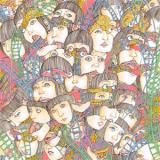
Among the label’s most representative works is Splash (1977) by the Stratosferic Band, a project conceived by Luigi Venegoni — producer, songwriter, and guitarist of Arti e Mestieri. Venegoni’s artistic journey spanned from progressive rock to space and Italo disco. The album artwork was designed by Piero D’Amore (1944 - 2022), a charismatic and multifaceted figure of Turin’s art scene (one of his works was even acquired by the MoMA in New York).
The record includes a disco reinterpretation of Van Morrison’s classic “Gloria”, and “Splashdown”, a track fusing the disco-rock energy of Rockets and Space. In contrast, “Nowhere” revisits the 1975 single by Hokis Pokis, a soul/disco band from Nassau County (New York), transforming it into a vibrant disco-funk number.
Another significant expression of the label’s catalogue is the afro-rock sound of M’Bamina, an Italo-Congolese group whose rhythmic energy and dialogue between African percussion and Western funk evoke the style of international formations such as Osibisa — themselves linked to a rich artistic history in Italy.
- 1-: Fire Graphics
- 2: Secret Speech
- 3: Ex-Human Shield
- 4: History's Biggest T-Shirts
- 5: Not A Sound In Heaven
- 6: Company Town
- 7: You Can't Say Dallas Doesn't Love You
Bristol experimental band SUGAR HORSE are delighted to announce that their third album, Not A Sound In Heaven, will be released on 10th April 2026 via Fat Dracula Records.
To celebrate the news, the band are sharing the bruising lead single ‘Secret Speech’, available to stream on all good digital service providers from 12th February 2026.
Also announced today are a run of April 2026 UK album headline tour dates and an appearance at StrangeForms Festival 2026, with tickets on sale now (see below for full listings).
“We are fortunate enough to live in what is generally known as ‘The West’,” says front man Ash Tubb of the lyrical themes behind the new track. “I say fortunate with gritted teeth, because I know—as I’m sure the reader knows—that living in the West isn’t always rosy. The vast majority of people struggle everyday to feed, clothe and house themselves. Let alone receive adequate healthcare, schooling and workers’ rights.”
“We are, however, where all the world’s wealth is hoarded. We are at the centre of Empire. The people outside of this empire—those of the Global South—have had their resources extracted and their populations exploited by our own governments, with very little given back in return. This won’t go on forever. It will inevitably end, as all great empires do.”
“We in The West have a choice to make in the meantime; either help create a new, fairer world, or let the greed of our ruling classes become the undoing of all of us.”
The first glimpse of new material from the quartet, ‘Secret Speech’ starts as Not A Sound In Heaven means to go on—a politically-charged wrecking ball of a song that smashes its way through the often unbelievable chaos and brutality of the 21st century with vitriolic malice.
How do you capture the machinations of the geo-political industrial war machine—and all the horrors that go with it—in the studio, without seeming trite or crass? That’s the question that Sugar Horse have posed themselves on their forthcoming third album Not A Sound In Heaven, and they must surely be one of the only bands in existence capable of delivering on just that premise with both musical substance and cutting philosophical insight.
“Ever since I was born I can remember visions of war, famine, and death being beamed directly into my living room via the magic of television,” says Tubb of the record. “These visions were accompanied by newsreader narratives designed to either humanise or dehumanise the people involved. We humanise our government’s allies and dehumanise their enemies. This is taken as common sense, or even wisdom to some degree. People watch the news and accept it as fact, simple and true.”
“As a person gets older they move in one of three different directions with this acceptance of reality; They embrace what they’re being told, they fall into a kind of trust free nihilism or they learn that there are deeper narratives at play.”
“Not A Sound In Heaven is an aged acceptance of the latter. An acceptance of sitting at the centre of a global empire of both military and economic dimensions. An acceptance that the stories we’re told as a nation, or what’s generally in the zeitgeist, isn’t necessarily reality itself.”
“How does a person cope with the weight—and, frankly, the guilt—of a society that perpetuates such distinct inequalities? A society that thinks a bit of killing abroad is fine, as long as it improves the lives of people at home. You can see why so many choose to embrace it. Hell, nihilism seems pretty sensible. Once a person decides upon pursuing a degree of truth however, things get a bit depressing. Beyond depressing...maddening.”
“This album explores this kind of breezy, frivolous subject matter in a manner that will no doubt be uplifting to the listener and massively financially rewarding for the artist.”
The new album follows on from their standalone AA single ‘What’s Your ETA? Let’s Have A Tear Up’/‘Would You Like Me To Be The Cat?’ which was released late last year as a surprise double drop.
Andalusian emerging-talent producer GAZZI, a young yet influential figure within the broader Spanish electronic scene, presents an LP that feels like a quiet turning point in his career. Rooted in ambient and new-age minimalism, the record drifts through piano-based textures, soft pauses, and spacious moments that invite deep introspection.
Across its delicate arrangements, GAZZI captures the sensation of slowing down in a world where everything feels fleeting. These tracks hold space for reflection-offering nostalgia, stillness, and the subtle suggestion that hope remains at the edges of even the most ephemeral moments. Each piece unfolds like a landscape suspended in time, shaped by restraint, emotional nuance, and a profound sense of presence.
Presented by Glossy Mistakes, the release reflects the label's ongoing commitment to uplifting a new wave of contemporary Spanish artists, highlighting creators who are redefining the country's sonic identity through experimentation, sensitivity, and forward-thinking sound design.
In GAZZI's own words:
"These songs were made to sit with the wound - to let you drift, to feel scattered, contemplative; they're meant to keep you from thinking too much - or maybe to make you think a lot."
The result is a meditative, deeply personal body of work-one that not only marks a cornerstone in GAZZI's artistic path but also extends Glossy Mistakes' mission to showcase innovative, emotionally resonant voices from Spain's evolving music landscape.
The long-awaited reissue of Toba makes it clear, once and for all, to fans and industry insiders that disco music produced in Italy between the late 70s and early 80s had no chance of success. What was disparagingly called "spaghetti disco", considered a poor imitation of real American disco music, only good for Japanese cartoons. This was the main reason that prompted Italians to record their songs abroad, as Fratelli La Bionda with their pseudonym D.D.Sound in Munich. Luigi Figini, with "Supercool" and "Percussion Sundance" by Edo Martin and Pino Santapaga (the same as "Step By Step" by Koxo), claimed that Kash was a one-off Swedish disco project, a lie that came to light when an Italian test pressing from the previous year, made by GDB, was posted !!! Amin-Peck followed the trend of passing off their songs as foreign music on the intuition of their Roman producers. So ''Love Disgrace'' was released on 7'' by a label called Connection, which never really existed, created for the purpose by Giancarlo Meo, confident that this would bring success to the Bolognese duo who were already creating 'proto Italo-Disco tracks' with a new-wave trend. To make the whole operation seem real, the London agency Ellie Jay Ltd. was involved, contacting Andy Fernbach of Jacobs Studios Ltd. The vinyl was also produced in the UK, otherwise the deception would have been discovered, then imported to Italy by Best Record. Italo-Disco was officially born after this, in 1982, not before! Everything makes sense now ! Real events that actually happened and purely invented names and anecdotes. Just think, even the image of Tony Balch used for the cover of Toba was taken from Grand Theft's 1978 album "Have You Seen This Band?" and reproduced on the new redesigned cover, as were the heads of the other musicians. The idea of a real band called Toba had finally come to fruition and would lead to a second sensational success the following year. Now it all makes sense! Facts and anecdotes that really happened and names and circumstances that are purely fictional. Finally, everything adds up! Real things and invented names of musicians and collaborators. It's important to clarify what we've said above, but we haven't talked about "Make Your Mind Up" and "Don't Take It" and the two masterful remixes performed by Dave Mathmos. In short: with the original versions we'll make Italo-Disco purists happy, with the remix versions we'll please new younger followers with more modern sounds and versions more in line with today's tastes and trends.
Following her debut album, I’ll Look for You in Others (Past Inside the Present), earlier this year, Patricia Wolf joins Spain’s Balmat label with See-Through, her second album. See Through finds the Portland, Oregon musician and field recordist continuing to develop her signature style of ambient, balancing radiant soundscaping with a carefully expressive sensibility. But the new album is also marked by an important difference. Where I’ll Look for You in Others was largely written in response to the death of a loved one, See-Through represents a kind of rebirth.
“After a long period of grief, I had been hoping to find my way to a place of lightness, peace, playfulness, curiosity, and sensuality again,” Wolf says. “What I was surprised and pleased to find is that for the most part, I had.”
She wrote and recorded many of the album’s songs quickly, in preparation for an August 2021 broadcast on the online radio platform 9128 Live. Excited for the opportunity to play live after more than a year of the pandemic, Wolf decided to write all new material for the event, working with a lean setup of Octatrack, Roland Synth Plus 10, Make Noise 0-Coast, and Novation Summit. (In fact, Wolf was the first sound designer invited to create patches for the Summit.) She also picked up an acoustic guitar that her brother had loaned her. “I decided to take the surrealist approach of ‘pure psychic automatism’ to see what poured out of me,” she recalls. “Woodland Encounter,” “Under a Glass Bell,” “The Grotto,” “The Mechanical Age,” “The Flaneur,” and “Psychic Sweeping” are all products of those sessions; the through line holding them together is their exploratory spirit and clarity
of vision.
Other songs, like “A Conversation With My Innocence,” “Recalibration,” and “Psychic Sweeping,” wrestle with the traumas of the preceding year. Though they may linger on the heaviness of loss, Wolf says, “What I discovered is that a stronger archetype had grown inside me to steer my emotions and thoughts to a better place.” Likewise, “Wistfulness” and “Upward Swimming Fish”—her first experiments with VST synthesizers—balance the bittersweet embrace of melancholy with the freedom to choose happiness.
“Pacific Coast Highway,” the album’s lone song with drums, might at first seem like an outlier. But it also signals Wolf’s interest in finding a fusion between the introspection of ambient and the togetherness of beat-oriented music. “Experiencing loss and isolation is what drove me into gentler territories of sound,” she says, “but I want to start making more beat-oriented music. After an extended period of loss and isolation, I’m ready to experience more joyous and social things.”
Listeners with keen ears might recognize the album’s closing song, “Springtime in Croatia”: A different mix of the song originally appeared on the 2021 digital compilation secondnature & friends Vol. II, from the Seattle label secondnature. This marks its first appearance on vinyl, however, and its spiritual home is undoubtedly here, at the close of See-Through. As the bookending answer to the opening “Woodland Encounter”—another song in which field recordings play a crucial role—it closes the circle of an album that is itself keyed to the steadily turning cycles of life.
Following her acclaimed 2023 release Flood City Trax, a dreamy, lo-fi take on footwork inspired by the crumbling rust-belt city she calls home, Nondi returns to Planet Mu with her second self-titled album, Nondi…While Nondi… retains some of the hazy, nostalgic atmosphere of Flood City Trax, it pushes her sound in bold new directions. “I made this album to capture the sense of freedom I used to get from music when I was first discovering it all,” Nondi says. “It’s meant to be cute, fun, kinda weird and emotional — but most of all, it’s a presentation of some of the prettiest tracks I’ve made.” Though she hasn’t really experienced club culture where she lives, her impressionistic productions evoke the surreal, lingering sounds of a night out — the melodic haze that hums in your ears as you drift off to sleep. Lo-fi and melodic, yet fluid and free, her music carries a sense of flight and intuitive logic. Nondi’s influences range widely — Actress, Aphex Twin, footwork, and the stranger edges of dub techno are all felt, yet she hallucinates them through her own weathered, dreamlike lens. Her tracks often build from clashing loops that evolve and transform organically, or from familiar genre elements reshaped by her instinct for misty, heart-wrenching melody. Some moments stay closer to genre, like Broken Future 175, a drum-and-bass tear-out that dissolves into lush, blurred chords, or Just Hanging Out, a bruised and beautiful take on 2-step. Lead single Tree Festival feels like a blown-out fusion of rave energy and sped-up new-age bliss, while Death Juke drifts through off-beat vocal samples, pulsing drums and 8-bit FX, reminiscent of early Steve Reich reimagined through a Game Boy. Nondi… is a uniquely moving and exploratory album that expands her sonic world even further. Lo-fi yet luminous, playful yet profound.
A4 paperback, 120 pages
The second in our series of book relaunches is one of the original books on The Jam ( the first being The Sex Pistols
Retrospective ).
The Jam one of the most important British groups of all time, crashed on the scene with the Punk Explosion, but soon found their own niche. Charting consistently from 1977’s `In The City’ debut to 1982’s `Beat Surrender’ single.
The book details the groups worldwide releases with over 200 colour and black and white illustrations, The Jam 7” worldide release chart and a detailed timeline of the bands history and list of gigs and appearances up to the bands split in 1982.
The Jam are one of the UK’s most loved bands and have been surely missed but more importantly not forgotten.
The Jam were very much a vinyl orientated phenomenon that consisted of great artwork. So sit back and enjoy their story through their releases around the world.
Over 200 pictures of rare and deleted releases throughout the world
Plus history of the band and list of gigs and appearances.
Author: Agent Provocateur
Weight: 550gm
Height: 297mm
Width: 210mm
Depth: 10mm
With Dispersion, Loom & Thread return to the volatile architecture of the expanded piano trio - and quietly fracture it from within.
Daniel Klein (drums), Tobias Fröhlich (double bass) and Tom Schneider (keys, sampler) remain the sole agents on stage and in the final recording. The triangle holds. And yet, the field has expanded. For their second studio album, the trio fed their improvisations with the timbral signatures of guest saxophone and vibraphone players - not just as additional voices to be featured, but also as material to be absorbed, atomized and redistributed. The result is not augmentation but thorough refraction.
Where the debut album explored the recursive labyrinth of Schneider's live sampling of his own piano, Dispersion introduces an external grain into the feedback system. Breath and metal. Reed turbulence and struck resonance. The trio sampled extended improvisations by saxophone and vibes players: Victor Fox, Asger Nissen, Volker Heuken, and L&T's own Daniel Klein; dissected their attacks, overtones and decay curves, and integrated these fragments into the trio's internal circuitry. What emerges is a play of presences without bodies - instrumental ghosts circulating through the dense weave of rhythm and keys.
At first, one might hear the familiar relational tension: Klein's polyrhythmic elasticity interlocking with Fröhlich's tensile double bass figurations, Schneider poised at the hinge between tonal field and percussive impulse. But soon, the surface splinters - again. A vibraphone shimmer appears, yet no mallets are visible. A reed multiphonic surges through the texture, bending space between bass and drums. These events are neither quotations nor overlays; they are redistributed energies, dispersed across the trio's grammar. A digital multidimensional interplay ensues.
If the first album unfolded as a two-tiered game - live phrase and sampled reflection - Dispersion adds a further axis. The sampled materials from other improvisers are stripped of their erstwhile two-way interaction and reconstituted as malleable particles. Signifier detached from origin, resonance detached from gesture. The trio navigates a constantly shifting topology in which acoustic memory and electronic manipulation are indistinguishable.
Crucially, the album never abandons the physical urgency of three musicians reacting in real time. The additional timbral layers do not thicken the texture into opacity; rather, they introduce stark points and arrows of diffraction. Density opens into prismatic clarity. Lines splinter and regroup. What seems like a quartet or quintet collapses back into three bodies negotiating an expanded field.
Dispersion is not about addition but about distribution - of agency, of timbre, of temporal perspective. It is an album in which the trio setting becomes a site of multiplicity without surrendering its immediacy. A dissolution not only of the divide between present experience and memory, but between inside and outside, self and other.
Three musicians. Countless vectors. A music that fractures in order to cohere.
CREDITS:
Tom Schneider: piano & sampler
Tobi Fröhlich: double bass
Daniel Klein: drums & percussion
sample sources:
Victor Fox: tenor saxophone
Asger Nissen: alto saxophone
Volker Heuken: vibes
Daniel Klein: vibes
Recorded by Martin Dressler at Bauer Studios, Ludwigsburg.
Mixed & mastered by Martin Ruch.
Artwork by Viet Hoa Le.
- A1: Original
- B1: Bladerunner Remix
DJ Ron's forgotten classic 21st Century finally gets the release it deserves, arriving on 12" black vinyl alongside a brand-new Bladerunner remix Originally recorded for DJ Ron's debut album Quintessence back in 1997, Hospital Records proudly welcomes it back into the world in style. The A side carries the original in all its glory. 21st Century is a timeless and futurefacing weapon - analogue at heart, hand-controlled automation and carefully curated sounds take you centre stage, giving it a unique, personal texture and depth that has lost nothing with age. Flip it over and Bladerunner steps in with an equally powerful B side remix, bringing his own vision to a track that was always ahead of its time. Born and bred (and still resident) in Hackney, career-long Rinse/Kool FM DJ, the first jungle/ D&B artist to record an Essential Mix for BBC Radio 1, host of the London Something podcast and more, DJ Ron is a multi-faceted creative and an uncontested foundational figure within jungle and drum & bass. This 12" is long overdue. The first time that DJ Ron's '21st Century,' taken from his unsung debut album, will be available digitally & physically alongside a fresh remix from Bladerunner. One for the heads - this one is all about flying the flag for DJ Ron, one of the foundational figures of jungle and drum & bass.
The music of Foreign Material carries an invisible veil: at first glance this is great, potent and highly functional contemporary Techno. But for those willing to see, behind the veil there's more than meets the eye. An old, wise Baba-DJ once claimed that we are merely "redefining the ancient tribal ritual for the 21st century". Titles like "Kantae Niskae" and "Drums Of Kaltjär" alludes to that specific, long forgotten past that we all still carry deep within. The blissful and etheric A-side, contrasted by the caveman mania of "Kaltjär", represent the dualistic nature of our scene, our sound and our aim as a label, and encapsulates everything we love with Foreign Material's unique approach to Dance Music.
On remix duty we have none other than Stockholm based "Deep" pioneer Evigt Mörker. Expertly withdrawn, edited and added, he's created a groovy, yet atmospheric, DJ-tool for the ages. Expect to notice it in a wide array of DJ-sets in the near future.
Lime transparent vinyl, limited edition of 1000) Age Of Love's 3 most famous remixes on 1 record: the legendary 1992 Jam & Spoon 'Watch Out For Stella' Mix, Charlotte de Witte & Enrico Sangiuliano's 2021 Remix & Solomun's 2017 remix.
Age Of Love wrote and released their most iconic track in 1990. It went on to become a stone-cold dance classic that inspired a whole trance movement that has endured throughout the years.
Now its 3 most famous remixes are available on 1 record: the legendary 1992 Jam & Spoon 'Watch Out For Stella' Mix, Charlotte de Witte & Enrico Sangiuliano's 2021 Remix & Solomun's 2017 remix.
Limited to 1000 copies.
It is time for the guitar riffs and the basslines deeper than the Mariana Trench and therefore who can do it better than the Uruguayan born & raised mastermind that stands behind this next next edition - Matole. Hearing the music from this man leaves a great positive feel wanting to dance, live and love life. By perfecting his sound over the years, as soon as it touches the ear canals you can tell that it’s him and can only be him behind the wheel.
By his young age with utmost will to create, the man is leaving disc artefacts all over the globe working with different labels and promo teams. Now the time has come to synergize with XRD and the feeling is absolutely blissful. As the wise people say the algorithm is not going to fight itself, very important to get into battle stance and show these ones and zeros who is the boss around here.
LP in Picture Sleeve
Unearthed from the band’s own archive and signed from the band, these previously unreleased demo sessions capture The Cool-Notes at the height of their Brit-soul creativity in the early ‘80s. This RSD release remasters and reissues this once super-limited release which has been selling for £300. This is exactly the kind of find collectors dream about — unreleased UK soul gold. Remastered, 180g Heavyweight Vinyl, Reimagined Sleeve and Labels.
- 1: Gravity
- 2: What Was I Made For?
- 3: One Bright Star
- 4: That Pleasure
- 5: From The Floorboards Up
- 6: Woo Sé Mama
- 1: Pieces Of A Dream
- 2: Time Of The Season
- 3: That Dangerous Age
- 4: Start!
- 5: Shout To The Top
- 6: Going My Way
- 1: Rise Up Singing
- 2: No Tears To Cry
- 3: Flying Fish
- 4: Wake Up The Nation
- 5: Village
- 6: The Cranes Are Back
- 1: Fat Pop
- 2: Dragonfly
- 3: Around The Lake
- 4: Foot Of The Mountain
- 5: Have You Made Up Your Mind
- 6: The Attic
- 3: Sea Spray
- 4: Days
- 5: Say You Don’t Mind
- 1: I Woke Up
- 2: Burn Out
- 3: Long Time
- 4: These City Streets
- 5: Wild Wood
- 1: Rip The Pages Up
- 2: Cosmic Fringes
Paul Weller releases Weller At The BBC (Vol.2) on Friday 24th April.
This second BBC outing gathers live session and live in concert performances, including intimate stripped back acoustic versions and re-workings of tracks across The Jam, The Style Council and Paul’s extensive solo career.
From timeless classics such as Start!, Shout To The Top and Wild Wood, to deep cuts and covers, like The Zombies’ Time Of The Season and Billie Eilish’s What Was I Made For?
The album also features some beautifully orchestrated tracks with the London Metropolitan Orchestra, arranged and conducted by Hannah Peel, including Aspects, Boy About Town and Have You Ever Had It Blue.
Presenting the 2nd in the series of Persian remix EPs, following the bumping Dub House remakes from Picasso, the label is joined by Yorkshire’s own young electronic folklore master, a fast-rising name, Miles J Paralysis.
Whereas Picasso took the first Dubplate ‘Space Within Art’, here Miles J delves in to the follow up ‘Smoke Dub’, turning out a selection of dubwise cuts that build on the dark electronics of his excellent debut releases for his Crying Outcast label.
Yorkshire born and based, with a love for the Moors, as well as the teachings of lore, magick and mysticism, this young producer has been emersed in music since a young age, with a penchant of Dub, Hip Hop and Reggae.
Starting with Survival Dub, the anthemic Ragga Dub original morphs into 2 parts, first heading down Paralysis’s alley of dark and brooding production marrying perfect touches of the vocal samples, before the amen break builds the track to the light.
Smoke Mari follows, the languid Digibreaks chugger, utilizing Linval Thompson’s iconic vocals, now comes as a deep meditative Dub excursion. Stripped back to a raw essence, the vocals whirl, while hypnotic keys and dub bass complete the psychedelic mosaic.
There Is No Love is modern dub style, off beat syncopation, reverb, tape delays and heavy vocal sampling all in the mix. The breakbeats of the original are jettisoned for a Dub (Drug) Chug, the atmospherics seeking the dark corners. “These are the last days; can’t you see the sunshine…”
Zatoichi’s Troubles ends the pack, the trip hop, Depth Charge dub bass cut transforms at the mixing desk of Miles J in to Dub Techno territory, haunting, melodic. Miles J’s love of the deeper side of electronic music expanded. Club music but not produced for clubs. Made for the discerning.
Paralysis the Mystery.
Over a decade has passed since this was released, and it has truly aged like fine wine. This release features 2 timeless cuts from the mind and soul of intrusion, mixed and recorded near the heart of Detroit. This was beautifully remastered by dub innovator and pioneer, Stefan Betke POLE @ scape mastering in Berlin, DE. The recordings were pulled from the session masters conducted by Bazza @ Alchemy Mastering in London to ensure a perfectly balanced mix and preserving the soul and spirit of the original tape master. The first incarnation of "A Gentle Embrace" came in the form of three extended reshapes from cv313 & variant and now we're proud to offer the original work on beautiful crystal/silver mixed clear 150 gram wax! :)
On side A the most pristine of dub techno is on offer here, this is Detroit techno stripped down to its most minimal core. A gorgeous subtle ambient soundscape exploring the deepest end of dub and house with gentle surges of organic elements, field recordings and modular movements simply out of this world. The "Reduction" mix on side B captures those chilling glacial soundscapes, trademark basslines and mesmerizing gaseous atmospheres subtly layer into the mix. Otherworldly to say the very least, this is music to swim in, breathe in and to pray to - for the spirit and the soul. Essential!
Born Bad Records knew exactly what it was doing when it signed this Nantes-based trio, whose sharply defined sound and raw authenticity stand out. With Rage Blossom, Île de Garde unveils an EP charged with palpable tension, somewhere between dark pop and psycho-wave. A catalogue of modern misdeeds, a David Lynch-like backdrop where Sylvia Plath’s poetry might cross paths with the controlled excesses of Fever Ray.
The EP opens with “Fear The Sun,” its Mike Oldfield-esque soundscapes plunging us into an apocalyptic and unsettling world. “Homicide Volontaire” follows with meticulous narration, a technical exercise evoking the anger and defiant lucidity of a Virginie Despentes. The hallucinatory hit “To Death” snaps like an anthem to collective dancing in the face of the inevitable. Since we’re going to die, let’s dance! On the B-side, “Ageless Woman” weaves together a half-mythological, half-mysterious text, carried by haunting backing vocals. “Birthday Girl,” featuring Kuntessa, radiates an ironic and joyful riot-grrrl energy, an uninhibited celebration of women’s liberation. Finally, “Boy,” a small post-punk jewel, closes the EP with an ending as surprising as it is delicate.
The group’s genius also lies in the complementarity of its musicians. Morgane Poulain anchors the drums with a dynamic that is both subtle and narrative, airy yet jagged. Cécile Aurégan, the architect behind a multitude of synths, builds powerful sonic landscapes, layer upon layer. Klara Coudrais, the band’s poetic figurehead, elevates her texts with a rich and plural vocal palette, giving life to several characters who vibrate with intensity. The band’s writing, hovering between darkness and light, echoes a kind of visceral poetry, exploring the seasons of the soul with authenticity and force.
With this EP, Île de Garde establishes itself as a band to watch closely, capable of translating on stage both the raw energy and the fine craftsmanship that define their music. An immersive journey, full of tension, urgency, beauty, and electric flashes.
Île de Garde, a Nantes-based trio with sharply drawn sonic contours and raw authenticity, unleashes its full arsenal on Rage Blossom, an EP radiating palpable tension between dark pop and psycho-wave. A catalogue of modern misdeeds, a David Lynch-like setting where Sylvia Plath’s poetry would meet the controlled excesses of Fever Ray. An immersive journey of tension, urgency, beauty, and electric sparks.
Opening track “Fear The Sun” plunges us into an apocalyptic and unsettling landscape. “Homicide Volontaire” continues with meticulous storytelling, a crime vignette evoking anger and the fierce lucidity summoned by a situation with no way out. The hallucinatory trance of “To Death” snaps like an anthem to collective dance in the face of the inevitable. Since we are going to die, let’s dance! “Ageless Woman” blends a half-mythological, half-mysterious text, carried by hypnotic backing vocals. “Birthday Girl,” featuring Kuntessa, releases an ironic and joyful riot-grrrl spirit, an uninhibited celebration of feminine liberation. Finally, “Boy,” a small post-punk case study, closes the EP with a simple, sensitive truth.
The three musicians propel and relay one another in this breathless race. Morgane Poulain drives the drums with a dynamic that is both subtle and narrative, airy yet staccato. Cécile Aurégan, architect of multiple synths, builds powerful sonic landscapes, layer after layer. Klara Coudrais, the storyteller, elevates her texts with a rich and multifaceted vocal palette, giving life to all their characters, both mythical and ordinary. The band’s writing, between darkness and light, proclaims a visceral poetry, exploring the seasons of the soul with authenticity and strength.
Cindytalk has remained a majestic proposition over the decades, one marked by a continued process of disintegration and regeneration. Change has been a constant for Cindytalk, as has been the presence of the Scottish musician Cinder, who has fronted the project since the early '80s. The first Cindytalk albums embraced a dark theatricality of post-punk dissonance and abject rock deconstruction that coupled industrial dirges with Cinder's beatific vocals, these same vocals that were once plied to the earliest This Mortal Coil and Cocteau Twins recordings,forever binding Cinder to the 4AD lore. But even on those albums, Camouflage Heart and In This World, Cinder was pushing the band to embrace the studio as a tool for further abstraction of sodden drones, cobwebbed dark elegance, and decayed textures.
By the early aughts, Cinder had reimagined Cindytalk through the granular processes of digitalia with a handful of equally celebrated works of glitch-born expressionism for Editions Mego. Cinder explains that "those elements were growing roots under our sound and had started to organically change the shape of what we were doing. The fucked-up rock music was in retreat and the electro-acoustic abstractions were becoming apparent. Fast forward to the early part of the 21st Century and my first laptop. It seemed natural where I needed to begin that part of my new sonic journey. To further explore those and new territories. Sunset and Forever is intrinsically connected to what came before."
Sunset and Forever is a labyrinthine opus, one that returns to the themes of the sacred and profane that have rippled through all of Cindytalk's recordings, albeit in various guises. The opening track "Embers of Last Leaves" is a haunted piece of undulated, cyclical tones that entwine into a sorrowful chorale with Cinder's own voice. Thumps of electronic drum kicks and bass drops dot the apocalyptic menace of "Tower of the Sun" but serve not as a rhythmic grid, but as painterly noises that further disrupt and disturb the machined dissonance. A cinematic radioluminescence blooms from the tempered electronics within "For Those Eyes, Shadows Of Flowers." The finale "I See Her in Everywhere" bookends the opening number with a seemingly human chorus build from electronic tones cast in cathedral reverence. Sounds throughout may appear adjacent to those of Fennesz, Holly Herndon, or even Lovesliescrushing from time to time, but Sunset and Forever remains purely Cindytalk.
Cover designed by Chris Bigg, known for his iconic design work for 4AD. Mastered by James Plotkin.
Mike Mareen – “Africa” (Previously Unreleased Maxi Single) – A long-lost Italo disco gem finally sees the light of day.
In the mid-80s, Mike Mareen was at the height of his fame, setting charts and dancefloors on fire with hits like “Love Spy” and “Agent of Liberty”. Riding that wave, he began work on his second album “Let’s Start Now”, which featured socially conscious songs addressing issues like the Berlin Wall, German reunification, and famine in Africa.
One standout track, “Africa”, was inspired by movements like Band Aid and USA for Africa. Though recorded and intended as a single, it was mysteriously shelved and never released in maxi format… until now.
Thanks to Vintage Pleasure Boutique, this missing piece of Mareen’s discography is finally available on vinyl, complete with a special DJ Edit crafted for today’s retro selectors. A must-have for fans and collectors of true 80s synth-pop and Italo disco.
Call it soulful dream pop, proto-trip hop or downtempo jazz - "Tender Rain" is the follow-up LP to the successful "This Is" album and continues to deliver Ghia's unmistakable sonic magic. On this release, the band shares a selection of previously unreleased vocal songs alongside instrumental pieces, all carried by their trademark chilled and almost meditative atmosphere. Most of the recordings date from the early 1990s, while early demo versions of "New Love" and "Teardrops in Your Eyes" may reach back as far as the late 1980s.
The album opens with the title track "Tender Rain," where smooth vocal jazz harmonies merge effortlessly with soulful pop elements. The track originally appeared only on CD in 1993 on the small Mikado label run by renowned German guitarist Ulli Bögershausen. The band recalls that the piece was first pre-recorded using MIDI equipment and a Tascam 16-track recorder before being completed in the studio with drums by legendary drummer Mickie Stickdorn (Carsten Bohn's Bandstand, Cyklus, Elephant, Lake), percussion by Corinna Ludzuweit, and the final touch-Lisa Ohm's remarkable vocals.
At the time, Mikado was also looking for instrumental material for radio and synchronization use. They selected the track "Tropfstein" for a sampler CD and requested more pieces. In response, "und recken ihre schlanken Glieder" (roughly translated as "and stretching their slender limbs") was composed especially for the project, as Frank Simon remembers. Both tracks appeared on the now rare Mikado sampler CD under the alias z. Zt., short for "zur Zeit" ("at present" or "these days").
Several further pieces in a similar vein were created during this period, including the previously unissued "Auf unserm grünen Sofa," "Reise bei Nacht," and "Was ich Dir noch sagen wollte." These tracks are beautifully crafted downtempo pieces featuring smooth, jazzy piano lines combined with touches of ambient and New Age aesthetics. "Auf unserm grünen Sofa" stands out in particular and will likely resonate with all downtempo enthusiasts. Lutz Boberg recalls that many of these recordings were captured during a single afternoon in the studio, fueled by spontaneous ideas and creative momentum.
On tracks such as "Teardrops in Your Eyes," "New Love," and the haunting Dark Spirits Mix of Ghia's song "What's Your Voodoo?", singer Lisa Ohm delivers soulful pop performances with her clear and captivating voice. "Change Your Sex," the third track previously featured on the Mikado sampler, leans more toward late-1980s funk and was aimed at radio and DJs at the time. Its subject matter was relatively daring for the period, telling the story of someone contemplating a change of sex "to get rid of the troubles."
Together with "This Is" and "Curacao Blue", "Tender Rain" forms another essential chapter in the rediscovery of the band's work. More than thirty years after their creation, these recordings still sound strikingly fresh, reflecting a unique style that in many ways anticipated the rise of trip-hop in the early to mid-1990s.
2026 RSD Release - GREEN Vinyl
Mark Pritchard (Global Communication / Africa Hi-Tech / Reload / Harmonic 313) produced gem from 2004. Featuring Eska, Nina Miranda and other vocalists. TIP!
An expanded edition of a long out of print Far Out classic. This double vinyl edition will include the track 'Strikehard' for the first time, which was omitted from the original pressing, only released on a separate 12" and CD.
=========================================================
Far Out Recordings announces the Record Store Day 2026 deluxe double LP reissue of Troubleman’s Time Out of Mind. Originally released in 2004, the album marked a distinctive turn in Mark Pritchard’s expansive career, channeling his pioneering electronic instincts through a filter of Brazilian grooves, African rhythms, and global soul. This special edition includes the underground club classic “Strike Hard” (previously unavailable on the original vinyl), alongside the album’s flawless blend of early-noughties space-age bossa, broken beat, future soul, and psychedelic downtempo.
Under the Troubleman alias, Pritchard stretched his focus outward in every direction. From the UK rave continuum to Brazil, the US, Africa, and beyond, he drew on the psychedelic soul of Dorothy Ashby and David Axelrod, the Afrobeat drive of Fela Kuti and Tony Allen, and the samba-doido energy of Azymuth. Filtering golden-era seventies influences through early-2000s pop, club, and rave lenses, the album moves effortlessly between club-ready tracks like “Strike Hard,” and more laid-back, tripped-out moments that highlight Pritchard’s range, shifting seamlessly from dancefloor heat to outer-bongolian cloud watching.
Featuring vocal contributions from Nina Miranda (Smoke City, Da Lata), Steve Spacek (Spacek, !K7), and Eska (New Sector Movements), the record captures Pritchard at a pivotal moment, exploring how electronic production could absorb and expand the rhythmic complexity of global sounds.
One half of Global Communication and Jedi Knights with Tom Middleton, and Harmonic 313 with Dave Brinkworth, Pritchard has since built a dense, acclaimed discography across numerous aliases and labels. His work on Warp Records has included collaborations with Thom Yorke, and his remix portfolio spans Depeche Mode, PJ Harvey, Underworld, Aphex Twin, Lamb, KRS-One, A Tribe Called Quest, The Orb, and The Beloved.
Remastered from the original sources and pressed to vinyl exclusively for Record Store Day 2026, this edition also faithfully reproduces the album’s psychedelic artwork by renowned British artist and designer Swifty.
Certain paths necessitate and call for one singular long sequence in order to arrive at a fully formed conversation or reasoning. Nothing seems to broadcast it more clearly than the trajectory Brussels based Italo-Vietnamese artist Nguyễn Zen Mỹ embarked on during the last decade as Radio Hito.
After a string of highly cherished and sought out tape releases, Radio Hito’s new album ‘L’uso e gli attributi del cuore’, co-released by Maple Death & Meakusma, unfolds with devastating
clarity, a profound balance of depth, minimalism and emotional grounding. A ten-sequence song cycle for voice and MIDI soundfonts adapted from the 2021 book by French poet Claude
Royet-Journoud.
Written and recorded between January 2023 and August 2025, the cycle evolved through nearly 80 live performances from Galicia to Kazakhstan before arriving at its recorded form. Set to an Italian libretto adapted from Royet-Journoud’s text ‘L'usage et les attributs du cœur’ (POL, 2021), the work revisits the tradition of the 19th-century Lied — art song built on existing poetry— transposed into a radically economical contemporary setting: voice and Casio CTK workstations.
"I was interested by this incompleteness CRJ mentions - by the ‘suspension’ of meaning questioning readability and intelligibility. I ‘resisted’ to CRJ’s texts since I met him and got to know his work. … It seems to me that when playing the songs, I submit an object to be completed by the audience."
Radio Hito’s distinctive approach to setting poetry to music — spare arrangements, strophic repetition, and a voice suspended between recital, fm transmission and canzone — creates a language of its own, reaching new heights on ‘L’uso e gli attributi del cuore’, songs that are formally rigorous, emotionally restrained, and shaped by the discipline of sustained live performance, interlocking into a coherent cycle.
Rather than illustrating the poem, Radio Hito approaches it as a space of suspension. Royet-Journoud described poetry as a “profession of ignorance” where meaning remains incomplete; these songs extend that trembling state, allowing repetition, digital timbre, and restraint to hold the text open.
Often misread as minimal synth or romantic chanson, Radio Hito’s practice is rooted instead in the lineage of the art song and song cycle: open structures, close attention to language, and a live performance economy that pushes the voice at the heart of the stage. The choice of accessible keyboard workstations — light, portable, and embedded in contemporary popular culture — replaces the historical piano.
Radio Hito creates fantastical, mirage-like songs, intimate yet elusive. Her music is forlorn chanson for the digital age; bringing her haunting and beautiful vocalisations into conversation with MIDI soundfonts and humble-yet-deep casio compositions. Music that strides for simplicity, yet lands miraculously within an entire new universe, a uniqueness achieved from like-minded spirits such as Ghedalia Tazartès, Savina Yannatou & Lena Platonos, Dorothy Carter, cycles that trickle down into estuaries.
“Radio Hito's set is superb. Sitting on the altar steps with a synth, her fabulously expressive vocals colour sparse, pensive compositions.” The Wire
For Metro Beirut’s latest release, Cem Mo steps forward with his debut vinyl EP, a record that bridges the roots of Chicago and Detroit house with his own deep and textured approach to groove.
Born in Ankara and having taken piano lessons at an early age, Cem drifted from classical into jazz, re-teaching himself harmony and improvisation before finding his way into production. After moving to Amsterdam in 2016, the city’s community and music scene expanded his horizon, shaping a sound that treats producing like improvising, with curiosity for grain, color, and repetition, where subtle shifts make all the difference. Along the way, Cem has released on Handy Records and Rhythm Section, while his project Nowhere People has appeared on Artisjok Records.
This EP brings together a tight circle of artists who deepen its character. Saxophonist Moritz Schuster, known for his work across electronic music and past work with Cem and Malik Kassim, formerly known as Retromigration, delivers a striking, free-flowing performance charged with raw intensity. On “The Hard Way”, Franco Corica joins Cem for a deep, soulful, jazz-leaning moment that feels both reflective and quietly defiant. Finally, longtime friend Malik pulls up with a dancefloor remix that preserves Cem’s melodic sensibility while adding his own loose, resulting in a circular dialogue between two artists who’ve grown side by side.
Artwork: Shahd Issa
- The Age Of Innocence
- Berceuse In A-Flat Minor, Op. 45
- Keepsake
- Untitled Ii
- One Shall Sleep
- Wishful (Draft)
- Cover Me
- Atonement
"I wanted to travel / Home into somewhere,"Ana Roxanne breathes across an eerie suspended drone on "The Age of Innocence". "I wanted to try / And go very far." These are the first words we hear on Poem 1 and reintroduce an artist who's in a conspicuously different phase of her life than she was when her debut album, Because of a Flower, sprouted nearly six years ago.
Heartbroken and reflective, Roxanne surveys the transformations that followed and displays a new-found boldness. Her voice is naked, vulnerable and alive, no longer shrouded in tape noise or looped and echoed beyond recognition beneath layered electroacoustic textures.
Throughout the course of Poem 1, Roxanne displays her skill as a singer and songwriter in the classic sense, using the limited instrumentation simply to accent her exposed tones. Muted piano phrases and plucked bass notes languidly trail her anguished siren song on "Berceuse in A-flat Minor, Op. 45", making each word count.
On "Keepsake" meanwhile, she sounds as if she's alone in an abandoned bar, stroking the dust off the piano's keys as she inventories her emotional scars. There's a smell of old whisky in the air, but Poem 1 is a remarkably sober album; never wallowing in self pity, Roxanne finds catharsis in the logic of her expressions, twisting out the edges of her memories into surreal, cinematic asides. "Untitled II", the album's pronounced, uninhibited centerpiece, delivers on the Lynchian promise that's been present since her first EP, 2019's ~~~. "
And when she interprets the Robert Schumann's lied "Stille Tränen" on "One Shall Sleep", she turns Justinus Kerner's words into a whispered echo of her own grief, narrating the 19th century poem over syrupy synthesizers and strings. There's a light emerging on the horizon, though; burying her past on the choral standout '"Cover Me", Roxanne shifts the pace and the mood on 'Atonement', lifting her voice into a gentle lilt.
- Sea Ceremony (With Karen Vogt)
- Coral And Bones (With Laryssa Kim)
- Heartsea (With Vargkvint)
- Naiade (With Mt Fog)
- Moon And Mirrors (With Elska)
- Daughter Of The Abyss (With Singer Mali)
- Serpentine (With Nightbird)
- Their Voices Rise Above The Waves (With Yellow Belly)
- For All The Sea-Girls (With Nadine Khouri)
- Ondine (With Astrid Williamson)
- Coda (With Camilla Battaglia)
Oceanine, Jolanda Moletta’s third album and her first for Beacon Sound, is a powerful and ethereal statement of artistic community. Expanding on her previous work, each track represents a collaboration with a different female vocalist, with the foundational elements being generated entirely by her own voice. By turns haunting, enchanting, and inspiring, you won’t want to come up for air once you’ve been pulled under. Representing a
musical practice that is distinctly feminist, this is an album with a longer view in mind, to an age when the altars were to goddesses and women were centered as powerful beings representing the earth’s cycles of regeneration and renewal. Oceanine then, in all its beauty, can be viewed as an album of survival. It is deeply transportive, accessing something that lies within all of us. As the late, great Lithuanian folklorist and archaeologist Marija Gimbutas noted, “We must refocus our collective memory. The necessity for this has never been greater as we discover that the path of 'progress' is extinguishing the very conditions for life on earth.”
Jolanda Moletta is a multimedia artist and one-woman electronic choir. She creates wordless compositions through extended vocal techniques, integrating wearable-controlled live processing, alongside symbolic visuals. Moletta considers her performances to be a collective ritual and creates her Sonic & Visual Spells following the cycles of nature and the moon. Jolanda's 2022 critically acclaimed album Nine Spells was released on the Ambientologist label, followed by Night Caves on Whitelabrecs in 2025. Moletta’s artistic practice is a radical and spiritual journey through sound art, ritual, and the symbolic archaeology of the feminine.
Oceanine is inspired by sirens, water nymphs, and the timeless call of the sea. At its core lies Jolanda’s deep, lifelong connection to the Mediterranean Sea and to the ancient and modern myths and folklore that have emerged from its waters. Growing up by the Mar Ligure, Jolanda was surrounded by stories carried by salt, wind, and waves: legends of sirens, echoes of ancient voices, and the sea as both origin and oracle. This intimate relationship with the Mediterranean is not merely a backdrop, but a living source that shapes Oceanine’s emotional, symbolic, and sonic world.
Each track features a different female vocalist, creating a rich tapestry of voices, styles, and perspectives. This artistic choice not only broadens the album’s sonic palette, but also deepens its narrative core: celebrating the power, beauty, and mystique of feminine energy through myth, history, and sound.
The entire album is built exclusively from the human voice, processed and layered, yet always remaining voice, and nothing else. For each piece, Jolanda invited every vocalist involved to contribute a raw stem: a short, unedited melodic fragment of just a few seconds, inspired by the album’s themes. These intimate vocal seeds became the foundation of each track: the guest artists’ voices appear as brief, melodic stems, while the entire surrounding “orchestral” fabric is created solely from Jolanda’s own layered and processed voice. In this way, Jolanda’s voice becomes the Ocean itself, embracing, absorbing, and carrying the sirens’ calls within a vast, immersive soundscape. Every song is a unique expression of the feminine experience, revealing its depth, complexity, and emotional range, echoing the call of the sea and the many faces of the siren archetype.
The figure of the siren has transformed across centuries. In myths of Ancient Greece and Rome, sirens were hybrid beings, part woman, part bird, whose irresistible songs lured sailors to their doom. During the Middle Ages, the image shifted toward the half-woman, half-fish figure, often associated with temptation and danger. Historically, the voice of women has often been feared. Sirens were considered harbingers of misfortune not simply because they seduced or destroyed, but because they were powerful liminal beings.
In Ancient Greek, sirens functioned as psychopomps: figures who existed between worlds and guided souls, especially between life and death. Their songs were believed to carry forbidden knowledge, including prophetic insight and the ability to reveal truths about fate and the future. The danger of the sirens lay in what they revealed: knowledge that humans were not meant, or ready, to hear.
Oceanine confronts this legacy head-on. The voices heard throughout the album are not merely beautiful: they are dark and luminous, wild and enchanting, magical, soothing, dreamy, and at times fractured or distorted. They whisper, lament, beckon, and enchant. Like sirens, they skim the surface of the water and sink into its depths, hovering on the edge between tenderness and danger, vulnerability and power. They rise toward the sky, dissolve into mist, and return as echoes charged with raw, elemental emotion: voices that seduce, warn, mourn, and remember. They refuse to be reduced to decoration.
Alongside the album’s release in May, Oceanine will also unfold as a visual and performative work through a short art film. The film includes a live session recorded inside a sea cave facing the Mar Ligure, the very coastline where Jolanda spent her childhood, dreaming of sirens and listening to the sea as if it were speaking directly to her. This site-specific performance reconnects the music to its place of origin, allowing the voice to resonate within stone, water, and air, and transforming the cave into both a sanctuary and a threshold between myth and reality.
What if the sirens’ songs were considered dangerous because they carried another truth, an ancient truth long forgotten?
Oceanine embraces the idea that we are still deeply woven into myth. Though we may see ourselves as rational and modern beings, our world is saturated with ancient symbols and archetypes, often distorted, simplified, or stripped of their original meaning. And if those symbols are allowed to shift, if the mirror once held by the siren becomes an invitation to look beyond appearances and into what has been obscured, then we may finally uncover a deeper truth and reclaim the voice that was always ours.
Oceanine is not just an album. It is a reclamation, a spell, and a call from the depths.
Gap Mangione's monumentally influential Diana In The Autumn Wind. AKA BEWITH200LP. And, without question, Be With's White Whale.
They said it could never be done. And with good reason.
We've spent the past 12 years trying to license this legendary 1968 recording from Gap and, after much work, it's finally here. Remarkably, this is the first ever vinyl reissue of Gap Mangione's Diana In The Autumn Wind, produced with the full and extensive participation of Gap. An exceedingly rare album, it's been coveted by funk, soul, jazz and hip-hop sample fiends for decades.
It's unarguably *the* most sought after album for J Dilla / Madlib sample collectors. It has also been brilliantly sampled by A Tribe Called Quest, Large Professor, Ghostface Killah, Kendrick Lamar and Talib Kweli.
But this record is so much more than a sample-spotters curio. It's solid gold throughout. Bursting with killer funky-jazz grooves and tracks adorned with warm electric piano, the release is notable for featuring some extremely significant players at the very outset of their careers; Tony Levin, at 21, whose superb playing on both acoustic and electric bass was the harmonic mainstay of the trio and Steve Gadd, at 23, one of the greatest drummers of his generation.
With acceptable copies of this holy grail changing hands for $400, to call this reissue "much-needed" underplays just how vital it is. Gap's story is told in his words alongside rare photos across a sumptuously designed 2-page insert and, to augment this deluxe edition further, its all wrapped up in a beautiful, no-expense-spared luxury tip-on sleeve, as per the original hens-teeth release. And, while we're talking packaging, just take a look at that cover - a work of art in and of itself.
The tracks are short but complex, with that extraordinary rhythm section backing the beautiful piano, organ and electric piano work of Gap. It's like the best ever library funk breaks record you never heard - but all your favourite golden age rap producers were all over it, long ago. It's a stunning blend of the vibrant, driving music of the Gap Mangione Trio coupled with the sensitive composition and superb orchestration of Gap's legendary brother, Chuck Mangione, who helmed an amalgam of seemingly disparate elements – rock, big band jazz, solo improvisation and "classical" music - into a spectacularly cohesive whole that has aged wonderfully well. As Gap himself notes in the liners, "with this group I was able to explore and add new and exciting elements from rock, Brazilian and then-current pop music."
Opener "Boy With Toys" triumphantly swaggers out the gate, all big band horns, flutes and dextrous organ work. The synthesis of everything going on is nothing short of stunning. When one wise YouTube commentator called this tune "old school superhero music", Gap agreed. Rap luminaries did, too, amongst them Talib Kweli, who rapped over DJ Scratch's chopped up intro for "Shock Body" on his Quality album back in 2002.
You've barely recovered from that incredibly affecting opener when you get hit over the head with the exquisite title-track. And now you see how two of the greatest beats of all time emerged from one single track produced nearly 50 years earlier. Unforgettably utilised by Dilla for Slum Village's heartbreakingly good "Fall In Love" and then Madlib for his "Official" beat for Dilla to rap over, on the Jaylib record. Regardless of the records it went on to spawn, this is just a staggering tune in its own right. Be beguiled by the flutes and the flutter tonguing, the counter-melody from the trombones, the soprano sax solo. All of it. Simply beautiful.
The questing organ and horn workout "Long Hair Soulful" deserves a lot more attention, overshadowed somewhat by the opening two monsters but no less fantastic. It swings, it grooves and Gadd and Levin truly cook. Up next, Gap's wonderfully percussive, mellifluously piano-heavy cover of "Yesterday" by some fellas called The Beatles. It's a subtly arresting gem. "The XIth Commandment" is damn fine, with thick, gorgeous electric piano and snappy drum work underpinning chaotic soundtracky horns. To close out the side, "St. Thomas" showcases the "fourth" member of the Gap Mangione Trio, conga drummer Dhui Mandingo. Having performed with the Trio since 1965, Dhui‘s African-based and jazz-latin-influenced style amazed listeners and its way to hear why.
Opening the B-Side, standard "You're Nobody Till Somebody Loves You" breezes along in the late-night jazz club fashion before things get super deep with the outstanding and - up to now - un-sampled "Pond With Swans". It's simply heavenly, and how its moody, melancholic intro has yet to be pilfered is anybody's guess. It oscillates between gentle, sombre movements and bombastic grooves, equally hypnotic and joyous. The rendition of "You Are My Sunshine" is yet another showcase for Gap's virtuoso playing and Gadd's mastery of the pocket. Indeed Gadd's drumming on "Free Again" is nothing short of neck-SNAPPING! Ghostface took it for not one but two "Iron's Theme" tracks across his seminal Supreme Clientele. It's got that Galt MacDermot "Coffee Cold" feel. Suuuuuper cool. The frantic "Dream On Little Dreamer" hurtles along and must've surely had the whole room absolutely swinging from the chandeliers back in Rochester in the late 60s. The album closes with the magnificent Graduate Medley, featuring memorable renditions of "Scarborough Fair", "The Sounds of Silence" and "Mrs. Robinson". The warm electric piano lines of the former were sampled by The Ummah (Dilla again!) for Tribe's "Pad & Pen" from their reappraised final album, The Love Movement, as well as by Large Professor on his much-loved "The LP (For My People)".
Under the watchful eye - and extremely attentive ears - of Gap Mangione himself, the audio for Diana In The Autumn Wind has been carefully remastered by Be With regular Simon Francis, with a few much needed tweaks here and there, according to the artist's wishes. At the prestigious Abbey Road Studios, Cicely Balston's expert skills have made sure nothing is lost in the cut whilst the records have been pressed to the highest possible standard at the always stellar Record Industry in Holland. The artwork restoration has taken place here at Be With HQ and has that drop-dead gorgeous cover artwork popping like new. Buy on sight!
2026 Repress
WOW. Released on Valentine's Day 2025, we're deeply honoured to present the first time reissue of the first *ever* heart-shaped red vinyl 45. Extremely limited!
The smooth titan of blue-eyed soul, Bobby Caldwell transcended genre tags with consummate ease; he was a musical icon of real class and versatility, cherished the world over.
Here we present two timeless masterpieces of sophisticated jazzy soul brilliance that are strictly canonical.
The originals of these red heart-shaped vinyl records go for stupid money - if you can find one in good condition. Here's your chance to snag a real collectors item for fans of Bobby and, well, LOVE, the world over.
The eternal "What You Won't Do for Love" became a national anthem. It remains that way - perhaps even more so in the past year or two. It perfectly captured Bobby's ability to infuse a contagious groove with introspective and relatable lyrics. With its instantly recognisable horn riff and Caldwell's soulful delivery, this timeless, chiller anthem continues to captivate audiences and define his musical legacy.
A perennial favourite, it has been heavily sampled, such is its unique allure; Aaliyah sang over snatches of it on "Age Ain’t Nothing But A Number" and you can hear Caldwell’s vocal sample used for the hook on Tupac’s posthumously released “Do For Love”.
Bobby's dynamite "Open Your Eyes" was immortalised by the eternal J Dilla in the hip-hop canon with his production of Common’s epochal “The Light,” which heavily samples the magical “Open Your Eyes.” On a post paying tribute to Bobby in March 2023,
Dear friends, What’s left of a genre when you drop the posturing and keep nothing but feeling, space and rhythm? Freudenthaler answers that question straight up with a stripped-back, no-nonsense take on UK garage. With a sharp ear for space, swing and restraint, he boils the sound down to its core — nodding to the golden age of sound system culture while lacing it with the jazz-tinged touches that run through his productions. The result is a record that feels both timeless and personal. Freudenthaler plays with expectations, flips them neatly, and leaves just enough room between the beats for the atmosphere to breathe and the dancefloor to lock in. One for lovers of vinyl, heavy sub and subtle moves. Sincerly yours, Brombért P.S.: The physical release comes with handcrafted, screen-printed artwork by the fabulous graphic artist Zatina Kessl
Based in Rennes and founder of the Vives label in 2020, Weever has been exploring the interplay of light and shadow for over 10 years, crafting abstract soundscapes and textured sonic tunnels of unparalleled musical breadth. He elegantly blends industrial and baroque sounds to construct sonic cathedrals. His music is both utterly raw and meticulously crafted.
L’âge de la Galère :
started this EP in 2020. At the time, I had just finished my studies, it was a pretty difficult period and I had made a track, or rather a melody, that I thought was amazing. I held onto it all these years without ever releasing it. 2020 was a tough year overall. The big question was: What am I going to do with my life? Hence the title L’âge de la Galère
The title really started to make sense when I began putting tracks together for Micheal. Around that time, I was reading Those of 1914 by Maurice Genevoix. For those who don’t know it: it’s written as a journal and tells the story of the author and his fellow soldiers in the trenches during World War I.
I’ve always been passionate about the two World Wars, I watch every film, old and new, I listen to the soundtracks, and so on. Same with period films, especially medieval ones. I love drawing inspiration from them.
So naturally, I imagine and create around that. It comes easily because it’s always been my universe. And when I make music, those kinds of images inevitably come out, even subconsciously.
So I created and told an audio story through my 6 tracks.
“It’s 1914. The story of many men who, upon hearing the sound of the bells, are met with the announcement of a war like no other. Most of them are young, some very young, and they are drafted into the French and German armies. They have no military experience, and the first battles are so violent that many won’t make it back. Very few will earn the glory they deserve.
The conditions are appalling, everything is in short supply, and the men are exhausted. Still, they must hold on.
Leaving carelessly from beneath their mothers’ skirts, too few returned. Many were left traumatized, and an entire generation was forever changed.”
2024 repress
In February 2021, Jan Jelinek's seminal album "Loop-Finding-Jazz-Records" turned 20. The anniversary repress, a double LP with two bonus tracks (B-sides from the Tendency EP, 2000), is a little late to the party.
What the press said about Loop-Finding-Jazz-Records:
“Don’t be misled by the title, though for there isn’t a finger-snapping rhythm c bebop lead anywhere on the album. Instead, Jelinek chooses to explore the visual effect moiré - two shifting patterns creating an implied third dimension - in the audio realm.” (Alternative Press)
“The title acts as explanation for the studio technique that provided the basis for this album, snippets of other people’s arrangements deconstructed through a sampler into loops and then splashed onto an audio canvas.” (ATM)
“Jelinek’s sound evolved out of his dislike for (and inability to play) keyboards.” (RPM)
“Jelinek has abstracted his sources beyond recognition, looping his millisecond samples into flickering patterns of sonic moiré laid atop a dub Techno framework. (...) Jelinek might as well have sampled a horn player’s hissing intake of breath – it would have been ‘jazz’ enough for his purposes.“ (The Wire)
“It’s a perfect inversion of conventional music, a sonic negative. Everything that would typically be foreground is moved back or pushed off the screen altogether, and the flecks of sonic debris that would normally be covered by other sounds are left to carry the melody and rhythm.” (Pitchfork)
“All you need to know is that these onomatopoeic non-specific songs (...) are warm, paradisical creations”. (NME)
“Listen carefully and you’ll hear textures slowly unfolding and mutating. Presuming you’ve not fallen asleep of course.” (iDJ)
“At times, it’s all a bit dripping tap Japanese water torture; so sedentary it drowns in its own motionlessness” (DJ)
“Loop Finding Jazz Records' is a genuine modern classic whose re-release is anything but a cynical mortgage repayment exercise. Consider this a second chance, then pretend you had it all along.” (Boomkat)
PS:
“I’ve been fortunate enough to see Jan Jelinek live once, at Tonic NYC (...). Wearing a black and white striped shirt, he looked like a nihilistic Charlie Brown.” (beachsloth)