A real soul gem from 1970 on the James Brown affiliated Deluxe label, the first and only album by this mysterious singer: Marie Queenie Lyons.
It is perhaps apropos that Queenie Marie Lyons’s best known song is titled ‘See And Don’t See.’ For all the acclaim that song has accrued, and all the times it has been compiled, reissued and, yes, bootlegged — for all the times it has been seen — Queenie herself has somehow remained unseen. How did a singer from Ashtabula, Ohio record one of the great female-led soul albums and then simply fall off the map, never to record or perform again? Queenie was a natural performer and a gifted singer. At the age of fifteen, she was doing three shows a week at a local venue. In early 1962, Queenie moved to Queens and was soon playing gigs across the city — an early engagement was with Gene Krupa at the famous Metropole Café in Times Square — as well as touring with established acts like Fats Domino and Ray Charles. The following year, Queenie made her debut recording, for a subsidiary of RCA called Groove, credited to an entirely fictitious “Shelley Shoop and the Shakers.” It remained Queenie’s only presence on wax until early 1968, when a Nashville-based label called Sims gave her her first accurately attributed single, “A Minute Of His Goodtime / Good Soul Lovin’.” Although the 45 is now a highly collectible part of the Northern Soul and Lowrider Oldies pantheons, it made no impact at the time, as Sims was focused on more typical Nashville sounds. A few months later Queenie was back in New York City, performing R&B and pop covers with her band when a man passed her his business card at a performance. The card read James Brown Enterprises. James Brown “was my idol,” she says, and someone whose business acumen and stage presence she strove to emulate. Although Queenie ended up on tour with James Brown for only a month or so, when the group reached Cincinnati in mid-’68 she entered the King Records studio there to record what would become the
album you hold in your hands. The songs were a combination of covers, some of which she’d been doing in her live shows, like ‘Fever’ and ‘Try Me,’ and originals written by producer Henry Glover and pianist Don Pullen, who was the bandleader on the session. The album opener, ‘See And Don’t See,’ was also recorded by the veteran R&B singer Maxine Brown, but Queenie’s version blows hers away. “Soul Fever” is a supremely funky and soulful affair, with Queenie’s powerful and captivating voice magnetically attractive, with an urgency that is impossible to ignore. ‘Your Thing Ain’t No Good Without My Thing,’ ‘Your Key Don’t Fit It Anymore,’ and ‘I Don’t Want Nobody To Have It But You’ are as funky and soulful as the best of Tina Turner and Aretha — a statement not to be made lightly!
The album was critically acclaimed — the October 10, 1970, issue of Billboard listed it as their sole “four star” pick in the Soul category — but perhaps due to the tumult at Starday-King, whose stewardship had turned over several times in only a few years, it never seemed to be able to break through to a larger audience.
Buscar:no fit state
Van Halen did more than announce to the world the earthshaking arrival of a revolutionary guitarist. Performed by an enterprising California quartet that took its name from two of its principal members, the 1978 debut ripped headlines away from punk, injected fresh energy into a then-moribund rock 'n' roll scene, reimagined how heavy music and throwback pop could coexist, and invited everyone to experience the top-down pleasures of a beach-front Saturday night every day of the week no matter where they lived. Painstakingly restored by Mobile Fidelity Sound Lab, and the first of a multi-album series in an exciting partnership between the famous reissue label and Van Halen, Van Halen delivers feel-good thrills and hormonally charged desires like never before.
Limited to 12,000 numbered copies, pressed on dead-quiet MoFi SuperVinyl at RTI, and mastered from the original analogue master tapes, Mobile Fidelity's ultra-hi-fi UltraDisc One-Step 180g 45RPM 2LP collector's edition pays tribute to the record's merit and allows fans to experience Van Halen's original blend of raw power, Hollywood flair, and vaudeville fun for generations to come. Playing with reference-setting sonics that elevate a 10-times-platinum landmark whose importance cannot be quantitatively measured, this definitive version provides a clear, clean, transparent, balanced, and turn-the-volume-up-to-11 view of an album that birthed entirely new styles. Since MoFi's unique SuperVinyl compound allows you to crank the decibels to your wildest desires without risking noise-floor interference, prepare to not only hear but feel Van Halen in your chest, no fifth-row concert seat necessary.
The premium packaging and gorgeous presentation of the UD1S Van Halen pressing befit its extremely select status. Housed in a deluxe box, it features special foil-stamped jackets and faithful-to-the-original graphics that illuminate the splendor of the recording. No expense has been spared. Aurally and visually, this UD1S reissue exists as a curatorial artefact meant to be preserved, touched, and examined. It is made for discerning listeners that prize sound quality and production, and who desire to fully immerse themselves in the art – and everything involved with the album, from the iconic cover art to the meticulous finishes and, yes, of course, Eddie Van Halen's pioneering fretwork and his brother Alex's double-bass percussion.
Indeed, could a piece of music that transformed how countless guitarists approached their instrument be more fittingly named than "Eruption"? Likely not, and in just 102 seconds, Eddie Van Halen rewrote, reimagined, and reconfigured a vocabulary last significantly updated a decade earlier by fellow six-string wizard Jimi Hendrix. Akin to the Washington State legend, Eddie Van Halen developed his own techniques and tones all the while making his seismic accomplishments seem effortless. Devoid of the pretence, ego, and showiness that infected many of his imitators, the Dutch native sticks to a straightforward approach that underlines the authority, prowess, and visionary scope of his playing and then-unheard-of finger-tapping skills. Throughout Van Halen, he establishes himself as an instant idol – a savant whose otherworldly combination of breadth, poise, feel, speed, force, and melody seems beamed in from another galaxy.
As does nearly every song on the record, whose cohesiveness and dynamic put into perspective the advanced chemistry and one-for-all spirit the youthful band had out of the gates. Having paid its dues for years in bars and clubs – going as far as recording a 24-track demo for Kiss bassist Gene Simmons at Village Recorders only to be spurned by management companies that felt its music wouldn't go anywhere – Van Halen finally got a deserved break when Warner Bros. executives signed the group in 1977. The subsequent recording sessions further testify on behalf of the band's synergy and alignment. Completed in just a few weeks with producer Ted Templeman, Van Halen was primarily cut live in the studio with minimal overdubs and edits. The explosiveness, energy, and electricity remain definitive, and as heard on this UD1S set, put the group on a private stage – humming amplifiers, Frankenstrat guitar, bright spotlights, sweaty headbands, and then some.
Van Halen yielded just one hit in the form of a Top 40 single (a breathless cover of the Kinks' "You Really Got Me") but practically every song on the revered LP has become a staple. Named the 202nd Greatest Album of All Time by Rolling Stone and considered by countless experts as one of the best debuts in history, the record displays what can happen with four distinct talents gel and strive for the same purposes. In Van Halen's case, the latter almost always involved partying, freedom, sex, and, in the immortal words of singer David Lee Roth, living "life like there's no tomorrow." The celebration manifests from the opening notes of the strutting "Runnin' with the Devil" – announced with the blare of droning car horns, Michael Anthony's robust bass line, and Alex Van Halen's thumping drumming – and continues through the conclusion of the white-hot "On Fire," goosed by Eddie Van Halen's race-track-ready lines, Roth's flamboyant deliveries, and the rhythm section's cat-like pounce.
Picking out individual highlights on Van Halen is akin to trying to count all the stars in a clear nighttime desert sky: There are far too many to identify, once you see one you notice another dozen you didn't spot before, and the cluster is best enjoyed as a whole. What's evident over repeat listens is the sheer diversity, a fact that's often overlooked: The high harmonies and background funk of "Jamie's Cryin'"; the insistent cane-and-a-tophat shuffle and doo-wop shoo-bop vocal break on "I'm the One"; the throwback acoustic blues that spreads into fast-paced, single-entendre wildfire on the Roth-led standout interpretation of John Brim's "Ice Cream Man." Like the man says, on Van Halen, all the flavours are guaranteed to satisfy.
More About Mobile Fidelity UltraDisc One-Step and Why It Is Superior
Instead of utilizing the industry-standard three-step lacquer process, Mobile Fidelity Sound Lab's new UltraDisc One-Step (UD1S) uses only one step, bypassing two processes of generational loss. While three-step processing is designed for optimum yield and efficiency, UD1S is created for the ultimate in sound quality. Just as Mobile Fidelity pioneered the UHQR (Ultra High-Quality Record) with JVC in the 1980s, UD1S again represents another state-of-the-art advance in the record-manufacturing process. MFSL engineers begin with the original master recordings, painstakingly transfer them to DSD 256, and meticulously cut a set of lacquers. These lacquers are used to create a very fragile, pristine UD1S stamper called a "convert." Delicate "converts" are then formed into the actual record stampers, producing a final product that literally and figuratively brings you closer to the music. By skipping the additional steps of pulling another positive and an additional negative, as done in the three-step process used in standard pressings, UD1S produces a final LP with the lowest noise floor possible today. The removal of the additional two steps of generational loss in the plating process reveals tremendous amounts of extra musical detail and dynamics, which are otherwise lost due to the standard copying process. Every conceivable aspect of vinyl production is optimized to produce the most perfect record album available today.
MoFi SuperVinyl
Developed by NEOTECH and RTI, MoFi SuperVinyl is the most exacting-to-specification vinyl compound ever devised. Analogue lovers have never seen (or heard) anything like it. Extraordinarily expensive and extremely painstaking to produce, the special proprietary compound addresses two specific areas of improvement: noise floor reduction and enhanced groove definition. The vinyl composition features a new carbonless dye (hold the disc up to the light and see) and produces the world's quietest surfaces. This high-definition formula also allows for the creation of cleaner grooves that are indistinguishable from the original lacquer. MoFi SuperVinyl provides the closest approximation of what the label's engineers hear in the mastering lab.
Javier Jiménez Rolo surprises with Saint Malo, a project that explores the intersections of neoclassicism, folk, ambient and electronic textures.
That Saint-Malo is a town in Brittany is the least of it. Even the fact that it exists is unimportant. Javier has never been there. Similarly, his album takes us to remote or not so remote places without moving from where we are. Javier composed these twelve songs between 2019 and 2021 from his room: "One of the problems with recording at home rather than in a studio is that when you move, your recording space changes too. In the case of this album, I was involved in three moves during its whole process. Trying to see the positive side of this situation, I realised that, as well as a collection of songs, it was a testimonial to the different places where I had lived during those years and their respective views: 'Promenade' is an imagined walk from an interior flat; 'Picture In A Frame' is a sunny afternoon in a park in Ciudad Lineal, Madrid, and 'Bells Of Nowhere' is a stroll through the neighbourhood that was once my grandparents' and is now mine."
It's an eminently evocative album but also powerfully narrative, which moves through different emotional states. Along the way, references as heterogeneous as Javier's own tastes come up. From the inevitable Arvo Pärt, Max Richter and Steve Reich to the more unsuspected Thom Yorke, Burial, Caribou, Vulfpeck or even Dua Lipa. Stéphane Grappelli, Andrew Bird, Nils Frahm, Olafur Arnalds or Rene Aubry are other names Javier mentions when he talks about something similar to influences.
The journey, during which the songs miraculously fit with magical precision to the landscapes we are travelling through, begins with the promising 'Beware Of The Dogs' and 'Maltravieso'. It is followed by the obsessive arpeggios of 'Le Havre' that give way to the luminous 'Fields Of Gold', the emotion of 'Cais do Sodré' and the passionate 'Le pont roulant', reminiscent of a restrained Alexandre Desplat. Along the way, dogs will bark, rain will fall on the 'Promenade' and the sun will come out with the perfectly playful 'Dolce Far Niente' ("a mix between elevator music and a song announcing the arrival of summer" according to Javier) in which echoes of Isao Tomita and Raymond Scott resound.
The result of this captivating, unexpected and suggestive mixture is Saint Malo, Javier Jiménez's first album and the empirical demonstration that he does not have, despite his classical training, any red lines. "I've always flirted with jazz, with swing... Then I moved on to messing around with loops, to doing more ambient and experimental things. I also had my folkie phase with the klezmer group Barrunto Bellota Band..."
In Saint Malo the melodies grow, become small, return and intertwine with loops and improbable aromas, to form an album that describes a journey through emotions. From melancholy to joy and the surprise of first discoveries.
Javier Jiménez Rolo surprises with Saint Malo, a project that explores the intersections of neoclassicism, folk, ambient and electronic textures.
That Saint-Malo is a town in Brittany is the least of it. Even the fact that it exists is unimportant. Javier has never been there. Similarly, his album takes us to remote or not so remote places without moving from where we are. Javier composed these twelve songs between 2019 and 2021 from his room: "One of the problems with recording at home rather than in a studio is that when you move, your recording space changes too. In the case of this album, I was involved in three moves during its whole process. Trying to see the positive side of this situation, I realised that, as well as a collection of songs, it was a testimonial to the different places where I had lived during those years and their respective views: 'Promenade' is an imagined walk from an interior flat; 'Picture In A Frame' is a sunny afternoon in a park in Ciudad Lineal, Madrid, and 'Bells Of Nowhere' is a stroll through the neighbourhood that was once my grandparents' and is now mine."
It's an eminently evocative album but also powerfully narrative, which moves through different emotional states. Along the way, references as heterogeneous as Javier's own tastes come up. From the inevitable Arvo Pärt, Max Richter and Steve Reich to the more unsuspected Thom Yorke, Burial, Caribou, Vulfpeck or even Dua Lipa. Stéphane Grappelli, Andrew Bird, Nils Frahm, Olafur Arnalds or Rene Aubry are other names Javier mentions when he talks about something similar to influences.
The journey, during which the songs miraculously fit with magical precision to the landscapes we are travelling through, begins with the promising 'Beware Of The Dogs' and 'Maltravieso'. It is followed by the obsessive arpeggios of 'Le Havre' that give way to the luminous 'Fields Of Gold', the emotion of 'Cais do Sodré' and the passionate 'Le pont roulant', reminiscent of a restrained Alexandre Desplat. Along the way, dogs will bark, rain will fall on the 'Promenade' and the sun will come out with the perfectly playful 'Dolce Far Niente' ("a mix between elevator music and a song announcing the arrival of summer" according to Javier) in which echoes of Isao Tomita and Raymond Scott resound.
The result of this captivating, unexpected and suggestive mixture is Saint Malo, Javier Jiménez's first album and the empirical demonstration that he does not have, despite his classical training, any red lines. "I've always flirted with jazz, with swing... Then I moved on to messing around with loops, to doing more ambient and experimental things. I also had my folkie phase with the klezmer group Barrunto Bellota Band..."
In Saint Malo the melodies grow, become small, return and intertwine with loops and improbable aromas, to form an album that describes a journey through emotions. From melancholy to joy and the surprise of first discoveries.
- A1: Brandnewtrumpets & Macc - We Are The Tightrope Walkers 06 30
- A2: Arkaik, Dexta & Fearful - Old Skool (Feat Mc Gq) 05 32
- A3: Lakeway - Even Though 07 40
- A4: Dexta & Hyroglifics - Boxgroove (A Fruit Remix) 04 16
- A5: Amir De Bois & Fearful - 73 05 18
- A6: Itti - Rumbling 05 25
- A7: Cuelock - Pages Of Snow 05 31
- A8: Illexxandra & Tgrbass - Swampy Swami 02 55
- B1: Crypticz - Could Have Been (Eusebeia Remix) 04 15
- B2: Dexta - Se4 (Silent Dust Remix) 05 50
- B3: No Nation, Sheba Q & Bk Balance - Too Late 05 37
- B4: Gaunt - Firefloor (Pepsi Slammer Remix) 04 09
- B5: Cuelock - Departed (Mauoq Remix) 05 19
- B6: Dexta - Giraffes On Acid 06 50
- B7: Chills - Everyone's Mad (Spaja S.e. Remix) 06 10
- B8: Sense Mc Vs Dexta - Please Hang Up 02 13
- B9: Beezy X Mntx - Aftaparty 03 25
Diffrent Music roars back into action after an extended hiatus to raise a couple of young giraffes with the electrifying new compilation, ‘Revolution Of The Giraffe’ LP.
Launched in 2010 with the aim of bringing something new to a drum & bass scene that had become overly formulaic, the label has continuously pushed in new directions, often incubated tomorrow’s stars, and evolved beyond even that original grand ideal. ‘Revolution Of The Giraffe’ unleashes 17 tracks of bleeding-edge electronic music, proving that after 13 years, Diffrent still sounds like nothing else.
Core artists from the label’s distinguished history bring their expertise, such as drum & bass mainstay Arkaik and sound architect Fearful, who team up with label boss Dexta for the MC GQ-sampling ‘Old Skool’ — a new track with a classic Diffrent sound. And there are numerous debuts: A.Fruit reworks an all-time Diffrent classic, ‘Boxgroove’ by Dexta & Hyroglifics, into a glitchy halftime stomper; none60 bosses Silent Dust turn Dexta’s ‘SE4’ into a rebellious dancefloor juggernaut; and the mysterious Gaunt’s ‘Firefloor’ becomes locked ‘n’ loaded rave artillery in the hands of Pepsi Slammer.
Label stalwart Mauoq puts his signature psychedelic future dub spin on ‘Departed’ by Cuelock, who in turn delivers the ice-cold, grime-indebted ‘Pages Of Snow’. Lakeway conjures the epic ‘Even Though’, nearly eight minutes of ecstatic, spell-binding, hyper-rave wonder. Dexta goes solo with squelchy techno jungle stormer ‘Giraffes On Acid’. Even Sense MC makes an… appearance.
New-gen Diffrent acts are in fine form too. The inimitable BrandNewTrumpets opens the album alongside Macc; ‘We Are The Tightrope Walkers’ is a powerful spoken word piece that erupts into a hail of punishing breaks. No Nation, Sheba Q and BK Balance, meanwhile, turn out explosive, hi-tek junglism on ‘Too Late’. From Diffrent’s industrial-toned sister label Are We Really Alone? (A.W.R.A.), Amir De Bois joins forces with Fearful for the paranoid, jittering ‘73’; Tokyo’s Itti summons thunderous bass on the ritualistic ‘Rumbling’; and Croatian artist Spaj.A.S.E.’s competition-winning, mind-mashing remix of the first ever Diffrent release, ‘Everyones Mad’ by Chills, finally sees the light of day.
Always looking to the future, Diffrent also welcomes modern jungle visionary Eusebeia, who puts his ethereal touch to Crypticz’s ‘Could Have Been’, and Stateside up-and-comers Illexandra & TGRbass, who deliver the supercharged, elastic bounce of ‘Swampy Swami’.
Closing out with one from deep within the vaults, ‘Aftaparty’ is Beezy and MNTX’s ode to seeing where the night takes you. It’s a fitting note to end on, as a new era of Diffrent Music begins. Where will it take you? Join us on the ride and find out.
"I've loved every moment of the label so far: the fast-paced release schedules, the slow years, the podcasts, albums, singles, EPs, parties, etc. This compilation album signposts where we are at — a bunch of classic Diffrent artists, a load of new faces, and a few remixes thrown in for good measure. Each tune stands alone, but stands tall next to each of its siblings. I hope you all enjoy it as much as we have! The revolution is here, join the revolution!"
- Dexta
Circular patterns morphing through time, loop and ritual form the fabric of Proserpine, the latest work by Leeds-based musician, Teresa Winter. Recorded from a summer to a winter through 2021 and 2022, Proserpine is Winter's most cohesive, focused music to date: confidently revelling in space, fixating on isolated sounds and giving way to satisfying, swirling waves of vocal and electronic buzz. Proserpine is Teresa Winter's debut recording for Glasgow-based label, Night School.
On Proserpine, musical patterns revolve and intersect with each other, transmogrifying the music's narrative. Over-arching themes emerge: continual change, elusiveness. Insubstantiality emerges into concrete reality in the form of recognisable field recordings: the purring of a pet cat, the hum of a live cable. The loops and patterns are sometimes just out of sight, the click and whirl on Child Of Nature is the backdrop to hymnal vocalisations by Winter, who intones spell-like text in conversation with herself. On opener Circles, Winter's vocal is pre-linguistic, detached syllables falling into flowing streams, before Plume's field recordings seem to juxtapose nocturnal and diurnal wildlife. "You said I was a Flower Of The Mountain" sings Winter, as James Joyce's Molly Bloom does but the carpe diem desire in Ulysses is dissipated here, spread out by gauzy, droning organs. Here desire is blown up and out, changed into something undefinable but no less powerful.
Change is at the heart of the album. The Roman goddess Proserpine, herself a reimagined version of the earlier Greek goddess Persephone, is always between: between summer and winter, the land of the living and the underworld, constantly emerging into new states of being. It's a fitting metaphor for Winter's work. Like an Apple feels like it soundtracks this in-between state, long, trailing reverb smudging synth keys and Winter's achingly beautiful vocal performance. The effect is stirring but flitting in and out of perception, sometimes Winter's presence feels of this world, of musical instruments and practises and at others it feels like the music is about to phase into a different plane, a different universe.
While Proserpine references the myths and cults of the classical, pre-Christian era, Winter's restless preoccupation with the mechanics of religion informs the album in other ways. Ritual is present through out, either in the mantra-like vocalisations or even the private rituals we are invited to witness: on Fireworks the listener eave drops into the protagonist's private bonfire. On the stunning Lamento, layers of Choral vocal interlock in celestial patterns that recall catholic mass: it's an overt effect that simulates the ecstasy of religious fervour and also reminds the listener of the use of vocal that runs through Proserpine. Winter's vocals often echo with the euphoria of obliteration, of disintegrating in an awful bliss. It's an effect achieved with finality by the closer New Water as the piece begins with voice before burning up in the atmosphere of elegiac violins and enveloping undertows of whirring synth patterns and ghostly pads. Proserpine is forever turning, changing, always elusive and quietly revelatory.
Anything Can’t Happen is the long-awaited debut album from Dorothea Paas, one of Canada’s most beloved singer-songwriters. For over a decade, Paas has played her unique, prismatic style of folk songcraft for audiences across North America, and lent her talents as a guitarist and vocalist to artists like Jennifer Castle, U.S. Girls and Badge Epoque Ensemble. The songs on this album have been through a near-infinite number of forms – Paas has played them solo and with a full band, electric and acoustic, at house shows and in sold-out venues. they manage to fit inside each context, like water taking the shape of its container.
All of this makes Anything Can’t Happen feel far more mature and complex than a debut album. It’s a statement of purpose, a next step in a decade-long process of artistic growth and evolution, and a bridge between the DIY style of Paas’s previous cassette releases and a more refined studio sensibility. Recorded in studios in Hamilton and Toronto, and mixed by Max Turnbull of Badge Epoque and U.S. Girls and Steve Chahley, these songs bring a diverse range of musical influences into conversation: inflected with the layered reverberations of Grouper, shot through with the piercing harmonies of the Roches, electrified with the searing energy of Sonic Youth. You can hear Neil Young in the grittiness of the title track’s guitar; Joni Mitchell’s Hejira in the album’s lyrics, Fairport Convention in Paas’s voice. The influence of Stevie Wonder - one of Paas’s greatest musical role models - is present too, in the album’s conceptual foundations.
Tenor saxophonist Ben Webster (born Kansas City, 1909) needs little introduction, Webster is regarded as one of the three foremost swing era tenor saxophonists - the two others being Coleman Hawkins and Lester Young. His ballad playing and sound inspired such later fellow saxophonists as Archie Shepp, Sonny Rollins and John Coltrane. Webster became famous for his unique sound, quick tempos, his solos that contained great virile rhythmic momentum, a rasping timbre and an almost brutal aggressiveness filled with growl, while his ballad playing was breathy, tender and sensual. The list of his collaborations is long, Ben Webster worked, recorded and played with legends from the likes of Art Tatum, Count Basie, Cab Calloway, Roy Eldridge and Dexter Gordon_but a dream came true when he was offered a permanent job in Duke Ellington's orchestra where his personal style matured. Webster stayed with Ellington until 1943, after which he formed his own groups and played with other small ensembles. From 1952 on he spent his time between Los Angeles and New York playing, freelancing and recording with a variety of soloists, among them high-profile singers like Billie Holiday, Ella Fitzgerald, Carmen McRae and Frank Sinatra. Despite excellent reviews of his albums, it was difficult for Webster to find steady work in the US during the early 1960's, and when in 1964 he got offered to play for a month in London he accepted and sailed to England. Webster never returned to the United States. In Europe he found plenty of work, playing residences in Scandinavia, settled in Amsterdam (1966-69) and then in Copenhagen (where he even has a street named after him). He toured frequently, playing in clubs and at big festivals with local bands or with visiting American musicians. Ben Webster suffered a stroke in Amsterdam in September 1973 following a performance in Leiden and died on September 20. Even when his health started to decline during his last years, his playing never did. To the last day Webster played with passion and intensity, delivering weight on every note. Webster is the subject of two renowned documentaries and two extensive biographies have been published about his legacy. Responsible for a plethora of excellent recordings he remains THE best-selling tenor saxophonist in jazz. Ben Webster was one of those unique jazz musicians whose presence came through on every recording (He recorded for prestigious labels including Verve, Impulse!, Prestige, Reprise, Blue Note_and countless others. On the album we are proudly presenting you today (Wayfaring Stranger recorded in 1970 by the NPS Radio network in The Netherlands) you will find mind-blowing high-quality Dutch sessions that were left dormant on a shelf and weren't commercially released for over 30 years! On 'Wayfaring Stranger' the listener is treated to no less than nine sublime tracks that document Webster's trademark relaxed-swinging but imaginative playing style that never gets boring. The album features an all-star line-up from the likes of Rob Langereis (Toots Thielemans), John Engels (Chet Baker, Dizzy Gillespie) and Cees Slinger (Dexter Gordon, Slide Hampton). Expect a 61-year-old Ben Webster in excellent form giving a warm, dusky, gritty yet funky performance where he delivers everything from up-tempo material, 12-bar blues jams to soulful expressive ballads. Webster's quartet is in constant musical dialog with each other, creating a unique back and forth between musicians at the top of their game. Tidal Waves Music now proudly presents the FIRST EVER vinyl release of this fantastic album (originally released as a limited Compact Disc edition back in 2000). This unique record comes as a deluxe 180g DOUBLE vinyl edition (strictly limited to 1000 copies) with obi strip.
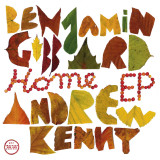
Originally released in 2003 on CD via Post-Parlo Records, and two years later on vinyl via Morr Music, the »Home EP« sees Benjamin Gibbard (Death Cab for Cutie, The Postal Service) and Andrew Kenny (The American Analog Set) each contributing three original tracks and playing one of the other's songs. This 2023 vinyl edition is released via Morr Music (EU+UK) and Barsuk Records (US). It features the artwork by Jan Kruse, that was originally made for the 2005 Morr Music version.
The EP was released as the fifth and final volume of the early-’00s series of split albums on Austin, TX indie Post-Parlo, the Gibbard/Kenny pairing followed short contributions in the series from such varied notable early-aughts indie artists as Kind of Like Spitting, Britt Daniel (Spoon), Bright Eyes, Pavo and Super XX Man.
Gibbard and Kenny’s installment came out during a prolific era for both writers: The American Analog Set had released the classic »Know By Heart« album in 2001 and followed it in 2003 with the acclaimed »Promise of Love«, while Gibbard’s profile was rising significantly via the critical and commercial success of The Postal Service’s »Give Up« and Death Cab’s »Transatlanticism«. Unlike the more lush arrangements of their main projects, both Kenny and Gibbard took a simple approach for their entry into the Home series, recording on cassette four-track machines in their respective living rooms in New York and Seattle and each performing four exclusive stripped-down tracks (including a cover of one of the other’s songs – Kenny choosing a rendition of Death Cab’s »Line of Best Fit« and Gibbard delivering his version of AmAnSet’s »Choir Vandals«).
»Home EP« showcases two brilliant songwriters whose legacies continue to shine twenty years later. The American Analog Set recently announced »For Forever«, their seventh album and first new music in 18 years, which was released last week and followed the band’s announcement earlier this year that The Numero Group will reissue their first three albums »The Fun of Watching Fireworks« (1996), »From Our Living Room to Yours «(1997), and »The Golden Band« (1999) as a vinyl boxset in early 2024.
Benjamin Gibbard has recently finished fronting both bands on the sold out Death Cab for Cutie / The Postal Service co-headline tour of arenas and amphitheaters in the United States celebrating the 20th anniversary of »Give Up« and »Transatlanticism«.
GER "Wir suchen nach Glitzer, nach dem hellsten Geröll und Blitzen. Wer sich heute Nacht verliert, wird sich nicht finden. Ihr sucht in uns die Perfektion der Generation Maximum.." An was noch glauben. Mit ihrem dritten Album Generation Maximum nehmen CULK den Druck von einer Generation, die den Horror der Gegenwart wie durch Magie doch noch zu etwas Positivem wandeln - und richten ihn bewusst auf diejenigen, die ihre Zukunft zerstört haben. "... Ihr sucht in uns die Revolution, bürgt uns auf, was ihr nicht leisten wollt. Wer sich heute nicht mehr wehrt, wird übrigbleiben." Generation Maximum ist sicherlich kein Album, bei dem im SUV laut mitgegrölt wird, weil der Refrain so schön in die Sonnenuntergangsstimmung passt. Niemand klatscht vor Freude über den nächsten Waldbrand die Hände zusammen. Stattdessen beobachtet Sängerin Sophie Löw ihre Umwelt durch ein Brennglas und nimmt die Zuhörer:innen mit auf eine lyrische Rückblende der letzten zwanzig Jahre, in denen sie selbst vom Kind zur Zeugin wurde. Das selbstbetitelte CULK Debut (2019) erschien beim Wiener Label Siluh Records, einer der verlässlichsten Quellen für spannende Indie-Musik in all seinen Facetten. Vom Spiegel-Magazin gab es dazu das Attribut "Suchtsound". Mit ihrem zweiten Album "Zerstreuen über Euch" (2020) schuf die Gruppe ein famoses Konzept-Album. Es wurde von vielen Seiten als eine Kampfansage an tiefverwurzelte patriarchale Strukturen gedeutet und schaffte es u.a. in die TOP 5 der Jahresbestenliste des Spiegel-Magazins. Mit "Generation Maximum" übernimmt Jakob Herber die Rolle des Bassisten von Gründungsmitglied Benjamin Steiger. Herber ist von Anfang an ein wichtiger Wegbegleiter im engen Zirkelder Band, Sängerin/Gitarristin Sophie Löw hat im August 2022 als SOPHIA BLENDA ihr Solo-Debüt-Album "Die neue Heiterkeit" veröffentlicht. "Die neue Heiterkeit" ist eines der stärksten deutschsprachigen Pop-Statements der jüngeren Zeit" - Spiegel. Für ihr neues und nun drittes Album "Generation Maximum" hat sich die Band mit dem Produzenten Wolfgang Lehmann, vormals Wolfgang Möstl, zusammengetan, der unter anderem für seine Arbeit mit Voodoo Jürgens, Clara Luzia, Jungstötter, Dives uvm. bekannt ist. Und bringen es musikalisch nach draußen zu den Menschen, die vor lauter Existenzkämpfen fast vergessen hätten, die Revolution zu starten ("Generation Maximum"). Kein Ausbaden. Generation Maximum ist ein progressiv lauter werdendes "Nein" zur auferlegten Bürde, ein Appell an mehr Verletzlichkeit ("Eisenkleid") "Jede Rüstung erzählt von Verletzlichkeit. Stärke zeigt, wer Narben teilt." und weniger Elend im Privaten wie im Öffentlichen. Letztlich aber auch eine Suche nach einer neuen "Ode an die Freude" und Mut um uns. "Wir erheben Stimmen, auf dass sie für immer klingen. Wo sollen wir heute Zukunft finden?" Wer genau hinhört, findet sie: Lieder über unausgesprochene Träume, die durch epische Gitarrenklänge und Löws entrückten Gesang näher wirken, als sie eigentlich sind. LP klassisch schwarzes Vinyl.
With their third album Generation Maximum, CULK take the pressure off a generation that magically transforms the horror of the present into something positive after all - and deliberately direct it at those who have destroyed their future."... Ihr sucht in uns die Revolution, bürgt uns auf, was ihr nicht leisten wollt. Wer sich heute nicht mehr wehrt, wird übrig bleiben." Generation Maximum is certainly not an album to be bawled along to loudly in the SUV because the chorus fits so nicely into the sunset mood. No one claps their hands together in joy over the next forest fire. Instead, singer Sophie Löw observes her environment through a burning glass and takes the listeners on a lyrical flashback of the last twenty years, during which she herself went from child to witness. The self-titled CULK debut album (2019) was released on the Viennese label Siluh Records, one of the most reliable sources for exciting indie music in all its facets. Spiegel magazine gave it the attribute "addictive sound". With their second album "Zerstreuen über Euch" (2020), the group created a fabulous concept album. It was often viewed as a declaration of war against deeply rooted patriarchal structures and made it to the TOP 5 of the Spiegel magazine's best of the year list and gained the band a following in various scenes and audiences. With "Generation Maximum", Jakob Herber takes over the role of bass player from founding member Benjamin Steiger. Herber has been an important companion from the beginning. Singer/guitarist Sophie Löw released her solo debut album "Die neue Heiterkeit" as SOPHIA BLENDA in August 2022. "Die neue Heiterkeit" is one of the strongest German-language pop statements of recent times" - Spiegel. For their new and now third album "Generation Maximum", the band teamed up with producer Wolfgang Lehmann, formerly Wolfgang Möstl, who is known for his work with Voodoo Jürgens, Clara Luzia, Jungstötter, Dives and many more. And they take it musically outside to the people who almost forgot to start the revolution because of all the struggles for existence ("Generation Maximum"). No payback Generation Maximum is a progressively louder "no" to the burden imposed, an appeal for more vulnerability ("Eisenkleid") "Every armour tells of vulnerability. Strength shows who shares scars" and less misery in private as well as in public. But ultimately also a search for a new "Ode an die Freude" and courage around us. "Wir erheben Stimmen, auf dass sie für immer klingen. Wo sollen wir heute Zukunft finden?" Wer genau hinhört, findet sie: Lieder über unausgesprochene Träume, die durch epische Gitarrenklänge und Löws entrückten Gesang näher wirken, als sie eigentlich sind. RIYL Nu Wave, Independent, Shoegaze
GER "Wir suchen nach Glitzer, nach dem hellsten Geröll und Blitzen. Wer sich heute Nacht verliert, wird sich nicht finden. Ihr sucht in uns die Perfektion der Generation Maximum.." An was noch glauben. Mit ihrem dritten Album Generation Maximum nehmen CULK den Druck von einer Generation, die den Horror der Gegenwart wie durch Magie doch noch zu etwas Positivem wandeln - und richten ihn bewusst auf diejenigen, die ihre Zukunft zerstört haben. "... Ihr sucht in uns die Revolution, bürgt uns auf, was ihr nicht leisten wollt. Wer sich heute nicht mehr wehrt, wird übrigbleiben." Generation Maximum ist sicherlich kein Album, bei dem im SUV laut mitgegrölt wird, weil der Refrain so schön in die Sonnenuntergangsstimmung passt. Niemand klatscht vor Freude über den nächsten Waldbrand die Hände zusammen. Stattdessen beobachtet Sängerin Sophie Löw ihre Umwelt durch ein Brennglas und nimmt die Zuhörer:innen mit auf eine lyrische Rückblende der letzten zwanzig Jahre, in denen sie selbst vom Kind zur Zeugin wurde. Das selbstbetitelte CULK Debut (2019) erschien beim Wiener Label Siluh Records, einer der verlässlichsten Quellen für spannende Indie-Musik in all seinen Facetten. Vom Spiegel-Magazin gab es dazu das Attribut "Suchtsound". Mit ihrem zweiten Album "Zerstreuen über Euch" (2020) schuf die Gruppe ein famoses Konzept-Album. Es wurde von vielen Seiten als eine Kampfansage an tiefverwurzelte patriarchale Strukturen gedeutet und schaffte es u.a. in die TOP 5 der Jahresbestenliste des Spiegel-Magazins. Mit "Generation Maximum" übernimmt Jakob Herber die Rolle des Bassisten von Gründungsmitglied Benjamin Steiger. Herber ist von Anfang an ein wichtiger Wegbegleiter im engen Zirkelder Band, Sängerin/Gitarristin Sophie Löw hat im August 2022 als SOPHIA BLENDA ihr Solo-Debüt-Album "Die neue Heiterkeit" veröffentlicht. "Die neue Heiterkeit" ist eines der stärksten deutschsprachigen Pop-Statements der jüngeren Zeit" - Spiegel. Für ihr neues und nun drittes Album "Generation Maximum" hat sich die Band mit dem Produzenten Wolfgang Lehmann, vormals Wolfgang Möstl, zusammengetan, der unter anderem für seine Arbeit mit Voodoo Jürgens, Clara Luzia, Jungstötter, Dives uvm. bekannt ist. Und bringen es musikalisch nach draußen zu den Menschen, die vor lauter Existenzkämpfen fast vergessen hätten, die Revolution zu starten ("Generation Maximum"). Kein Ausbaden. Generation Maximum ist ein progressiv lauter werdendes "Nein" zur auferlegten Bürde, ein Appell an mehr Verletzlichkeit ("Eisenkleid") "Jede Rüstung erzählt von Verletzlichkeit. Stärke zeigt, wer Narben teilt." und weniger Elend im Privaten wie im Öffentlichen. Letztlich aber auch eine Suche nach einer neuen "Ode an die Freude" und Mut um uns. "Wir erheben Stimmen, auf dass sie für immer klingen. Wo sollen wir heute Zukunft finden?" Wer genau hinhört, findet sie: Lieder über unausgesprochene Träume, die durch epische Gitarrenklänge und Löws entrückten Gesang näher wirken, als sie eigentlich sind. LP klassisch schwarzes Vinyl.
With their third album Generation Maximum, CULK take the pressure off a generation that magically transforms the horror of the present into something positive after all - and deliberately direct it at those who have destroyed their future."... Ihr sucht in uns die Revolution, bürgt uns auf, was ihr nicht leisten wollt. Wer sich heute nicht mehr wehrt, wird übrig bleiben." Generation Maximum is certainly not an album to be bawled along to loudly in the SUV because the chorus fits so nicely into the sunset mood. No one claps their hands together in joy over the next forest fire. Instead, singer Sophie Löw observes her environment through a burning glass and takes the listeners on a lyrical flashback of the last twenty years, during which she herself went from child to witness. The self-titled CULK debut album (2019) was released on the Viennese label Siluh Records, one of the most reliable sources for exciting indie music in all its facets. Spiegel magazine gave it the attribute "addictive sound". With their second album "Zerstreuen über Euch" (2020), the group created a fabulous concept album. It was often viewed as a declaration of war against deeply rooted patriarchal structures and made it to the TOP 5 of the Spiegel magazine's best of the year list and gained the band a following in various scenes and audiences. With "Generation Maximum", Jakob Herber takes over the role of bass player from founding member Benjamin Steiger. Herber has been an important companion from the beginning. Singer/guitarist Sophie Löw released her solo debut album "Die neue Heiterkeit" as SOPHIA BLENDA in August 2022. "Die neue Heiterkeit" is one of the strongest German-language pop statements of recent times" - Spiegel. For their new and now third album "Generation Maximum", the band teamed up with producer Wolfgang Lehmann, formerly Wolfgang Möstl, who is known for his work with Voodoo Jürgens, Clara Luzia, Jungstötter, Dives and many more. And they take it musically outside to the people who almost forgot to start the revolution because of all the struggles for existence ("Generation Maximum"). No payback Generation Maximum is a progressively louder "no" to the burden imposed, an appeal for more vulnerability ("Eisenkleid") "Every armour tells of vulnerability. Strength shows who shares scars" and less misery in private as well as in public. But ultimately also a search for a new "Ode an die Freude" and courage around us. "Wir erheben Stimmen, auf dass sie für immer klingen. Wo sollen wir heute Zukunft finden?" Wer genau hinhört, findet sie: Lieder über unausgesprochene Träume, die durch epische Gitarrenklänge und Löws entrückten Gesang näher wirken, als sie eigentlich sind. RIYL Nu Wave, Independent, Shoegaze
A collection of structured piano improvisations and their surrounding sonic environments, an album in four parts: Songs From a Distant Summer | From November For Snow | Together Recorded between 2011-2013, the album was never intended to be a direct response to the seasons. The coincidence of the recordings having been made at points within the seasons was only pointed out at a later date by a friend. Alongside wishing to avoid any parallels or associations being drawn with Vivaldi’s masterpiece, the title - “The Seasons Are Not Four” - a line from a poem by Syrian poet Adonis , appeared to fit perfectly - recognising our relationship to time but also alluding to the impossibility of truly categorising it. Due to label arrangements and complications the majority of these recordings have remained unreleased for a decade. One notable exception being the piece “I Promise”, that went on to amass in excess of 24 million streams - an unfathomable prospect for a piano-less pianist recording a reunion between himself and a piano at a point of not having played one for several months. The Seasons Are Not Four serves as a sonic record of real-time responses to the character of a piano, to transient states of being and to disparate, fleeting moments in time - some will hear Summer in Winter, others- Autumn in Spring; distant conversation beyond the sounds of a hesitant human shuffling fingers against wooden keys, the ticking of a grandfather clock or the song of birds outside masking passing traffic. - ‘The Seasons Are Not Four, a week is not seven days, a year is more than it is, and less’ Adonis
Black Truffle is thrilled to present a previously unheard performance by rudra veena master Ustad Zia Mohiuddin Dagar, recorded in the North Indian city of Vrindavan at the Druhpad Samaroh festival in 1982. Z.M. Dagar was a nineteenth-generation descendant of the Dagar family of musicians, famed for their profoundly meditative approach to the tradition of Hindustani court music. Perhaps the most revered members of the family were the brothers Mohinuddin and Aminuddin Dagar, who played a key role in reawakening interest in dhrupad in the mid-20th century. The great exponents of the tradition from whom Z.M. Dagar descended were all singers, and dhrupad is essentially vocal music. However, as Z.M. Dagar explained, the veena family of instruments plays an important role in the education and practice of dhrupad singers, especially as an aid to mastering the fine microtonal nuances of pitch essential to the genre. Introduced as a child by his father to the rudra veena, a large and low-pitched veena amplified by two enormous gourds, Z.M. Dagar became the first modern dhrupad musician to perform with it as an instrumental soloist, giving his first recital at the age of 16. Devoted to the instrument throughout his life, he made innovations to its design and materials, as well as introducing novel techniques (such as playing without the use of the traditional wire plectrum, resulting in the remarkable warmth of his tone). In the great Dagar family tradition, his approach to the various ragas that make up the dhrupad repertoire was stately, slow, and considered, with a great emphasis on the alap, the heavily improvised exposition section. True to form, in this recording of Dagar performing the night raga Yaman Kalyan, the alap section stretches out to more than forty minutes of slow-motion bliss, a frozen tanpura drone hovering above Dagar’s gracefully bent notes and elegantly twisting phrases. In the alap’s first half, Dagar’s figures are so intently focused on the lower reaches of the rudra veena’s range that they register more as shudders and moans than melodic patterns. As the performance continues, he slowly climbs in pitch, though continuing with the same intent focus on the articulation of single notes and subtle microtonal variations. This leads to the jod section of the performance, which, though still accompanied only by the tanpura, gradually takes on a more rhythmic character. Developing almost imperceptibly over the course of nearly thirty minutes, the jod moves from the stillness of the opening alap to a rapid pulse that announces the closing section of the piece, where Dagar is joined by Shrikant Mishra on the pakhawaj (a double headed hand drum). Where many performers use the final section of the raga as an exercise in unrestrained virtuosity, Dagar and Mishra subtly weave a web of finely shifting accents and hypnotic melodic variations, bringing the recording to a fitting conclusion while remaining within the meditative space occupied by the performance as a whole. Adorned with beautiful archival photographs of Dagar taken by Swedish percussion legend Bengt Berger and accompanied by detailed notes from Bradford Bailey, Vrindavan 1982 is a stunning document of music unmatched in its patient focus and mysterious emotional depth. .
DEVO’s Hardcore documents the group’s beginning as pre-punk outcasts in the fertile Akron, Ohio, underground rock scene. Spawned at the nearby college of Kent State, site of the infamous May 4 Massacre, DEVO formed as a conceptual art project armed with the radical philosophy of de-evolution. Brothers Mothersbaugh (Mark, Bob and Jim) and Brothers Casale (Jerry and Bob) along with drummer Alan Myers soon whipped up an otherworldly brand of “devolved blues” that could hold its own alongside the beatnik groove of 15-60-75 (a.k.a. The Numbers Band) or the primal rock poetry of The Bizarros. Recorded on various four-track machines and in tiny studios, basements and garages between 1974-1977, Hardcore reveals their strikingly clear vision: rock ’n’ roll stripped bare of its collective cool and jerked back into propaganda fit for post-modern man. It’s no surprise that these transmissions would soon catch the eye and ear of Brian Eno, who later produced their landmark 1978 debut album. Noisy synth, strangled guitar chops and a primitive rhythmic thud power the early DEVO sound. Threaded beneath it all are lyrical themes of post-McCarthy paranoia, middle-class ephemera and DEVO’s long-running topic of choice: sex, or lack thereof. Few moments in pop music history can match the grinding, pent-up energy of “Mongoloid” and the spastic bounce and sputter of “Jocko Homo” (two anthems presented in their earlier and superior versions here). Cult favorites like “Mechanical Man” and “Auto-Modown” make Volume 1 essential listening. Superior Viaduct and Booji Boy Records are proud to present DEVO’s Hardcore to a new generation of spuds, lovingly packaged with Moshe Brakha’s stunning cover photography. As David Bowie said in 1977, DEVO is indeed “the band of the future.”
Oblako Maranta is the collaboration between Radial Gaze and A-Tweed. The duo has already released several tracks in different compilations by Samo Records, Electric Shapes, Playground Records, as well as their debut EP “Maranta Kicks” on Duro.
In their new EP “Trance Beckenbauer”, the St-Petersburg-based Radial Gaze and Rome-based A-Tweed produced 4 original tracks that finely blend the sound of each artist, where slow tribal techno meets acid weird disco.
Starting off with the title track “Trance Beckenbauer”, Oblako Maranta brings us through a cinematic voyage, paced by percussive wonders and catchy bass lines, hypnotizing the listener from the first kick on. The atmosphere is dark, trippy, beautifully loved in an analog synth “duvet”. With that feeling of timelessness, “Trance Beckenbauer” sounds like the perfect fit for the next Blade Runner´ s soundtrack.
Next on the tracklisting is “Putos Mosquitos”, a tune that gives a feel of crossing a jungle full of wild life, with weird acid patterns on repeat, groovy percussions, and that sense of limitless adventure as the track plays on.
“Congarella di Luna” is a bewitching tune blending a mesmerizing melody with dreamy pads, finely arranged as the drop brings the energy down before reaching its paroxysm: an irresistible melodic pattern that will leave no one still on the dancefloor.
The fourth track “Analog Garbage” ´should bring any human being on the planet to an ecstatic state as it infuses that energy that makes you move fast and forward, without looking back. Indeed, “Analog Garbage” is driven by a fat bass riff and a kick-drum that tirelessly hammers the pace, while acid melodies are raining as the track unfolds. And there is that drop…
The EP is completed with first-in-class remixes by Inigo Vontier and Zillas on Acid, who reworked “Putos Mosquitos” and “Congarella di Luna”, respectively.
Artwork by Danish artist Christoffer Budtz.
Jorja Smith is officially back. Further to making a recent return to the musical sphere with her singles ‘Try Me’ and ‘Little Things’, today she has confirmed the details of her highly anticipated second album, ‘falling or flying’, set for release globally on September 29th 2023 via FAMM and available to pre-order now - here.
Alongside the announcement, Jorja has also unveiled the album's poignant artwork; a stunning portrait of her, shot on film by the prestigious British photographer, Liz Johnson Artur. In addition, Jorja has also announced a series of UK live shows in September, commemorating the release of the album. Further details below.
Through her new record, Jorja has delivered an undeniable modern classic, effortlessly condensing any number of disparate styles and genres into music which thrillingly broaches any gap between Jazz, Soul, R&B and Funky House. A bold, brave and courageous leap forward from her critically acclaimed debut album ‘Lost and Found’ - ‘falling or flying’ is an album that speaks to the musical and emotional era where Jorja is now, and how she got here. It isn’t so much an exploration of how she’s found herself but more a statement that she has arrived, and that her understanding of her life, her relationships, and her feelings, have deepened, matured and crystallised as she enters her twenty six year. ‘And despite it all,’ she says, ‘it's definitely a journey I've just started. That's what's crazy.
It's only just begun.’ Sonically, this album, a no-skips body of work, isn’t like anything you’ve heard before. It sits masterfully in this same space of excitement, self-exploration and self-assertion that Jorja does. Compromised of deep, thumping drums, racing basslines, irresistible hooks and distinctive beats, ‘falling or flying’ runs at the same pace that Jorja’s mind does. ‘I don't slow down enough’ she says. ‘This album is like my brain. There’s always so much going on but each song is definitely a standstill moment.’
Much of the creative energy that shaped the album emerged from studio sessions with the producer duo DAMEDAME* back in her hometown of Walsall, where, to Jorja, the heart is. The album is both a sonic and an emotional tour of where she’s been, and what she’s been about, in the two years since she dropped her latest offering, ‘Be Right Back’. ‘It touches on breakups, relationships with my friends, relationships with old friends, relationships with myself.’ She says. ‘It's definitely about a lot of relationships, but every song I write I can sing it to myself.’
Of the many British voices in music today, Jorja is among the most commanding, writing at a pitch of intensity and urgency that few can match. Over the past five and half years, since the release of her debut album ‘Lost & Found’, she has been celebrated unanimously across the world for her evocative song-writing, powerful delivery, pure emotion and unbridled talent as a young woman navigating her way through life and in 2021 was the year Jorja’s hiatus from music was broken. Enter ‘Be Right Back’, the holding space between the sensation that was ‘Lost & Found’, and ‘falling or flying’. ‘Be Right Back’ was born from playing, jamming, freestyling, and sounding out what Jorja had been on the edge of expressing all her life. It was a project entirely for her fans. “Be Right Back did exactly what I wanted it to do. It was a little waiting room so people knew I was coming back.”
And come back she has - entering a chapter of her return to music that’s certain to draw in and intoxicate Jorja’s fans and new listeners alike. And what has changed for her, in the five years since ‘Lost & Found’ dominated the charts and the soundscape? “I like this world that I've just come into. And I’m still figuring things out. Always figuring things out.” Jorja says. “This is the first time I’m putting stuff out there that I can connect with right now.” Over the last few years, it’s been a reflective and transformative step into her mid twenties for her.
She’s been able to step into herself and evolve as a songwriter and a woman despite an ever-changing musical landscape.
While she recognises that the global pandemic has been completely devastating, she acknowledges that it allowed her to stay still, to come more into herself, and to be more in control of the person she is, and of her musical output. Like some of the legendary musicians that came before her, Jorja is looking at the chaos and disorder in the world right now with resourceful, refined eyes, and she sees the glorious opportunity and enormous responsibility that affords. The net result is that while ‘falling or flying' sounds very much like Jorja Smith, it sounds like no Jorja Smith album you have ever heard before.
‘falling or flying’- released on September 29th
Alan Abrahams aka Portable returns to the label in fine form with his latest full-length LP, Augmented Dreams. The title refers to the use of everyday technological advancements to achieve what were once
only dreams or visions of past generations, making this an explorative concept album that is equal parts not-too-distant science fiction, and about as topical as it gets.
From the gorgeous opening string layers of “The Pull of Time” to the classy 4/4 grooves of “Begin Again” or lead single “Guiding Me”, into the apropos and angular sci-fi broken beat feels of “Parallax” and “The Color of Static”, fitting Detroit-influenced love taps like “Beacon” and “The Mycorrhizal Network”, the politically-inspired “Are We Not Above It?” referencing the lingering effects of colonization featuring NiQ E from South Africa on vocals and L_cio from Brazil on flute, through to the futurist pop elegance of the dreamy duet recorded with Alexey Kochetkov “I Need You” and the conclusive titular track, it is clear that both the in-depth concept and immaculately-crafted musical content in Portable’s inimitable style are balanced in significance and expressive effect. This also functions as a timely statement in itself, as today’s iceberg-tip evolution of AI technology is currently impending over the arts and many of our existing realities.
This ten-song album serves as an imaginative yet hyperrealist narrative on how humanity’s fascination with and reliance on ever-advancing technology defines the times we find ourselves in, while the skillful sonic displays and present-era production techniques along with Abraham’s knack for timeless emotive songwriting offer up this solid soundtrack for the ages.
Dirty Dollhouse is the multi-genre music of Philadelphia-based artist Chelsea Mitchell, a folk chanteuse with classical training and a retro-pop composer with a soft spot for country. After releasing her first lo-fi EP, Married in the Aviary, Mitchell received the Tri-State Indie Vocalist of the Year award and the lyrics to her song Nobody's Daughter were showcased in American Songwriter Magazine. Her follow-up EP, 25 Shades, saw a departure from traditional folk and embraced a Nashville vibe while 2017's full-length album Vinyl Child was a mixture of darkly contemplative pop songs and quiet, intimate confession. Drawing from many muses has produced a uniquely diverse catalogue, but it has also made it near-impossible to pin down who Mitchell sounds like. In sultry-toned moments you might hear Nicole Atkins, a soft bird-like peak could make you think of Kacey Musgraves, and a certain belt may summon Brandi Carlile. Though her vocals range from soft twang to unabashedly operatic, it would suffice to say that Mitchell's songs all fit under the same 'singer-songwriter' umbrella as her lyrics weave a diary page to life and her band expands on structural simplicity with subtle grace. As bassist Joshua Machiz, drummer Eric Lawry, and lead guitarist August John Lutz II are now full-time members, Dirty Dollhouse has found a new and exciting momentum, opening for rising stars like Nikki Lane and Amanda Shires and playing to a wider audience.
- 1: The Last Time
- 1: 2Let It Slide
- 1: 3Moonshine
- 1: 4Nobody's Cryin
- 1: 5You Don't Even Know Me
- 1: 6Somebody's Baby
- 1: 7Out Of My Head
- 1: 8Half Moon
- 1: 9Again, I Need Your Lovin
- 1: 0Lucky
- 1: Dreams & Dreams Of You
- 2: 1Sidecar
- 2: Love You Anymore
- 2: 3Underdog
- 2: 4Honey, They're Onto Us
- 2: 5Hollywood Lovesong
- 2: 6Keep It Together
LTD. TURQUIOSE MARBLE VINYL[46,18 €]
Dirty Dollhouse is the multi-genre music of Philadelphia-based artist Chelsea Mitchell, a folk chanteuse with classical training and a retro-pop composer with a soft spot for country. After releasing her first lo-fi EP, Married in the Aviary, Mitchell received the Tri-State Indie Vocalist of the Year award and the lyrics to her song Nobody's Daughter were showcased in American Songwriter Magazine. Her follow-up EP, 25 Shades, saw a departure from traditional folk and embraced a Nashville vibe while 2017's full-length album Vinyl Child was a mixture of darkly contemplative pop songs and quiet, intimate confession. Drawing from many muses has produced a uniquely diverse catalogue, but it has also made it near-impossible to pin down who Mitchell sounds like. In sultry-toned moments you might hear Nicole Atkins, a soft bird-like peak could make you think of Kacey Musgraves, and a certain belt may summon Brandi Carlile. Though her vocals range from soft twang to unabashedly operatic, it would suffice to say that Mitchell's songs all fit under the same 'singer-songwriter' umbrella as her lyrics weave a diary page to life and her band expands on structural simplicity with subtle grace. As bassist Joshua Machiz, drummer Eric Lawry, and lead guitarist August John Lutz II are now full-time members, Dirty Dollhouse has found a new and exciting momentum, opening for rising stars like Nikki Lane and Amanda Shires and playing to a wider audience.
This session, recorded at Studio Pathé-Magellan October 11 and 14, 1955 in Paris, is the first of three recordings released for the Barclay label between 1955 and 1956.
For his first recording-date in Paris Chet decided to tackle Bob Zieff’s compositions, the same ones that Dick Twardzik had picked up in a hurry at the Alvin Hotel on his way to board the liner Ile-de-France. Violonist Dick Wetmore had just recorded the eight tunes, and Bob Zieff had had just enough time to revise the arrangements. Chet neither a champion sight-reader nor a big fan of rehearsals, hadn’t yet played them in front of an audience. From that first French session only the reel referred to as a ‘production tape’ remains.
This ‘complete Bob Zieff’ gives an impression of unity that wellmatches the suite concept intended by the composer; as for “The Girl From Greenland”, its role comes as a codicil. The record of Chet’s quartet with Twardzik has now appeared in Ben Ratliff’s book “Jazz, a Critic’s Guide to The 100 Most Important Recordings” (The New York Times Essential Library); it’s a fitting mention for an album that was long-unrecognised in the the United States…