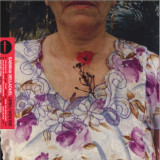
'Dark Hands, Thunderbolts' is Devon punk-roots trail-blazers, Crazy Arm's fourth album for Xtra Mile Recordings, and comes cold on the calves of 2013's 'The Southern Wild'. A return to the rowdy guitars, epic choruses and Americana twang of their first two albums, this collection of songs finds the band in a reflective but no less indignant mood. Despite spending only three weeks in the studio, it took the band four years to complete. 1ST SINGLE: Brave Starts Here - 20th November 2020 The lead track from the album, 'Brave Starts Here', will be available to stream/download from 20th November (with an accompanying video from film-maker, Russell Cleave). Rigorously road-tested, 'Brave Starts Here' is a breathless ode to heartbreak, loneliness, ageing and self-determination, occupying that sweet spot between bluegrass and punk rock. It's also a tribute to their good friends and label-mates, Larry & His Flask. 2ND SINGLE: The Golden Hind - 11th December 2020 Second single to be lifted from the album and is an acerbic take on the band’s Brexit majority hometown. Punk rock riffola, Appalachian harmonies, syncopated rhythms and anthemic singalongs. 3RD SINGLE: Fear Up - 15th January 2021 The third single out before the album’s release ‘Fear Up’ betrays the band's oft-mentioned fondness for Ennio Morricone, Murder By Death and Constantines with a strong cinematic influence fused with their trademark riffs and choruses. FOCUS TRACK FOR ALBUM RELEASE: Blessed & Cursed - 29th January 2021
Cerca:no home
'Dark Hands, Thunderbolts' is Devon punk-roots trail-blazers, Crazy Arm's fourth album for Xtra Mile Recordings, and comes cold on the calves of 2013's 'The Southern Wild'. A return to the rowdy guitars, epic choruses and Americana twang of their first two albums, this collection of songs finds the band in a reflective but no less indignant mood. Despite spending only three weeks in the studio, it took the band four years to complete. 1ST SINGLE: Brave Starts Here - 20th November 2020 The lead track from the album, 'Brave Starts Here', will be available to stream/download from 20th November (with an accompanying video from film-maker, Russell Cleave). Rigorously road-tested, 'Brave Starts Here' is a breathless ode to heartbreak, loneliness, ageing and self-determination, occupying that sweet spot between bluegrass and punk rock. It's also a tribute to their good friends and label-mates, Larry & His Flask. 2ND SINGLE: The Golden Hind - 11th December 2020 Second single to be lifted from the album and is an acerbic take on the band’s Brexit majority hometown. Punk rock riffola, Appalachian harmonies, syncopated rhythms and anthemic singalongs. 3RD SINGLE: Fear Up - 15th January 2021 The third single out before the album’s release ‘Fear Up’ betrays the band's oft-mentioned fondness for Ennio Morricone, Murder By Death and Constantines with a strong cinematic influence fused with their trademark riffs and choruses. FOCUS TRACK FOR ALBUM RELEASE: Blessed & Cursed - 29th January 2021
- I Remember Clifford (Benny Golson)
- Pandemic Of Ignorance
- (David Helbock)
- Prelude In E-Minor, Op
- 28: No. 4 (Frédéric Chopin)
- Truth (David Helbock)
- Hymn For Sophie Scholl (David Helbock)
- Time After Time (Cyndi Lauper & Rob Hyman)
- Solidarity Rock (David Helbock)
- I Feel Free (Jack Bruce)
- On The Shore (Arne Jansen)
- Korona Solitude #1 (Sebastian Studnitzky)
- Angel Eyes (Matt Dennis)
- Surrounded By The Night (Peter Madsen)
“It was my wish to cool things down a bit,” says David Helbock. The
Austrian-born pianist has formed a new trio with guitarist Arne
Jansen and trumpeter Sebastian Studnitzky and it is clear when he
talks about it how far he has already moved on since his previous
group: “In the Random Control Trio we had a lot of instruments on
the stage, there was a lot of changing from one instrument to
another… and a lot of notes.” And the new group? “It is more about
emotions. And emotions are the most important thing in music.”
There are other differences too. Whereas Helbock’s previous groups
have consisted of musicians from his native Austria, he has now lived
in Berlin for five years, and ‘The New Cool’ presents his first group
formed with players who have also adopted Berlin as their home city.
With Arne Jansen, originally from Kiel, what appeals to Helbock is
that “he is such an unselfish player, very centred and very calm - and
subtle too. With him it’s all about the music.” Studnitzky is originally
from the Black Forest and Helbock liked “his style of playing with that
very airy sound” and the fact the range of timbres and moods he
creates with just one effects device. And how does it work in the
trio? “All three of us are melody players, but we are all capable of
holding back and giving space to the others.”
It would be wrong, however, to see the elegiac feel of much of this
album as a response to the pandemic. Helbock and producer Siggi
Loch were having “a productive and fruitful discussion” about these
ideas a full year before the recording sessions took place at the Emil
Berliner studios in August 2020. Loch has a fascination for the way
cool jazz “turned the wheel around” to connect with a wide audience
and references and connections with the cool jazz movement are
scattered throughout this album. It is also the very first time that
Helbock has included a tune by his teacher for over a decade,
American pianist Peter Madsen, who toured extensively with Stan
Getz and also taught Maria Schneider.
Helbock has been inspired by the innovations and concepts of Lennie
Tristano and his sense of affinity with the Chicago-born genius runs
deep. Tristano once decreed that “the jazz musician’s function is to
feel.” Helbock, Jansen and Studnitzky have taken that maxim to their
hearts.
LP pressed on 180g vinyl with digital download included.
At the Moonbase, the fourth full-length album from Slaughter Beach, Dog, is a return to form for Philadelphia bandleader Jake Ewald. Written and recorded alone at home and at The Metal Shop, Ewald’s East Kensington recording studio, the album tracks an exercise in solitary production not unlike Slaughter Beach, Dog’s 2016 debut Welcome or 2017’s Motorcycle.JPG. On the heels of 2019’s Safe and Also No Fear, Ewald’s latest offering brings expanded arrangements and sharpened storytelling as he taps into salad days over slacker rock (“Do You Understand”), the dark grooves of seedy city life (“Song for Oscars”), and even a barroom-piano-driven “escapade through the great American bedroom” (“A Modern Lay”). At the Moonbase arrives March 26th on Lame-O Records.
- A1: Intro Snippet
- A2: No Peace
- A3: Say It Loud
- B1: Comin Outta The Rain
- B2: Black Love
- B3: Home Vacation
- C1: Really Real Out Here
- C2: Until This Day
- D1: Strange Fruit
- D2: Is It Because Im Black
- E1: Afrikan Children
- E2: Push Time
- E3: Yonder
- F1: Black Progress
- F2: Live From Soul In The Horn
- F3: Tear It Down
- F4: Black On Purpose Outro
Florence Adooni shares a long history with Philophon. Being part of Guy One's group she is the voice on his radio hit "Estre". Furthermore, she is a member of Alogte Oho's Sounds of Joy and can be heard on his smasher "Mam Yinne Wa". Last but not least, Jimi Tenor chose her to sing on his instant club classic "Vocalize My Luv". In addition to all these cooperations, Florence has locally released a series of albums under her own name and with no doubt she can called the queen of Frafra-Gospel.
"Mam Pe'ela Su'ure" is a typical Frafra-Gospel Hymn, sung during Sunday services accompanied only with shakers and hand clapping. Our version here is backed up by Kumasi's finest High Life players, who transform the song into a massive wave of groove. "Naba Aferda" is a homage to the Chief of Zuarungu, Florence's home village, which was also the home village of the legendary Christy Azuma, who became the first international Frafra-Star in the 70s. Christy was always a big inspiration for Florence and makes her proud to be from a small village called Zuarungu.
Lunar Tredd – Fimber Bravo’s first album on Moshi Moshi since the much acclaimed Con-Fusion – tells the tale. The highlife fusion of You Can’t Control Me resonates in the wake of the global Black Lives Matters protests. There is fire in these impactful clarion calls to resist oppression, recognise strength in resilience and fight against the corruption of power.
Bravo’s been a constant collaborative force - as his time as leader of 20th Century Steel Band, as musical director of Steel ‘n’ Skin, and appearances with everyone from Sun Ra Arkestra to Hot Chip, shows. Lunar Tredd reflects the influence of the music handed down to him by “ancestors” . Helped by an enviable cast of friends and collaborators, Fimber has shifted those touchstones to create something that sounds resolutely like the here and now.
Those friends that appear on Lunar Tredd, include Alexis Taylor of Hot Chip and The Horrors’ Tom Furse; The Invisible drummer Leo Taylor and Senegalese percussionist, Mamadou Sarr dropping in on rhythm duties, while there are also appearances from Susumu Mukai aka Zongamin, the brilliant Kora player Kadialy Kouyate, vocalist Cottie Williams, Vanishing Twin’s Catherine Lucas, and production from Lapo Frost and Ghostpoet producer Shuta Shinoda. Some, like Zongamin and Williams go way back with Fimber, other connections are newer, but all have quickly become part of the London-based musician’s musical family.
Indeed, Fimber never loses sight of where he’s come from on LUNAR TREDD - even as he looks to where he might go next. As a musician, he’s still finding new creative peaks nearly 50 years after he began.
The first two EPs of rising French-Algerian singer-producer-songwriter Sabrina Bellaouel on InFiné are now available on a single 12" vinyl edition for the first time. At the crossroads of modern electronic production, alternative RnB & North African beats, Sabrina Bellaouel offers her listeners an unprecedented mix of grand emotion of the Pop stage and the cutting-edge underground flair of buzzing nightclubs
Textextext - (add your write up)
2020 saw Sabrina Bellaouel step out of her cocoon a fully formed artist. First, there was "We Don't Need To Be Enemies", a powerful and brave record - directing the limelight away from her talent as a singer and focusing on her honed, meticulous production skill and ingenuity in making demanding, forward thinking music. Bellaouel managed to tell stories of her identity and place in the world almost without a single vocal.
Then, there was "Libra" - fusing her own production with that gorgeous voice - showcasing a fully formed, trailblazing, independent artist. Sabrina jumps effortlessly between empowering trap on "Arab Liquor" to luscious RnB on "Float" and ends the record with "She Don't Care", a peak time house curveball that you can picture heating up the festival dance floors around Europe. The diverse and powerful EP united different sides of the press in its critical acclaim, receiving accolades from Resident Advisor, Mixmag, The Quietus, Metal Magazine and Pan African Music - just to name a few.
Both of these records then, represent a side of the coin - and are now available as a 12" Vinyl combining them to a singular listening experience. And when the clubs slowly open up again, you will surely see this secret weapon make it's way some well assorted DJ bags.
Mia Maria Johansson has been active on Sweden’s underground scene since the early 2000s, both as a part of indie/electro/punk band Meine Kleine Deutsche and critically acclaimed and award winning punk act Snake but also choring with Swedish indie rock star Hurula. On March 19, her debut LP ‘Slay’ is out on Lazy Octopus Records (MANKIND, Holy Now, The Presolar Sands etc.)
‘Slay’ was written at home after a messy break-up, the Garageband home recordings have then been perfected in the studio with the ambition to keep the simple and direct feeling of the beats and melody.
Mia Maria Johanssons’ debut is a record that treats the subject of owning your own destiny and allow yourself to dream. To let go of the thoughts that hold you back. This have been melted down into eight straight-forward alternative rock anthems that are instantly
memorable.
It took Sibille Attar five years and a lot of soul searching to produce Paloma’s Hand, the 2018 EP that served as the long-awaited follow-up to her debut album, Sleepyhead. Both that record and her first EP, 2012’s The Flower’s Bed, seemingly left her with the world at her feet, with widespread critical acclaim, television appearances and a Swedish Grammy nomination for Best Newcomer. The years that followed, though, involved both creative and personal turmoil, and left her feeling increasingly adrift musically as the uglier side of the industry reared its head.
“For a long time in my life, I tried to sit in certain constellations to please other people,” she says. “And it didn’t work, because I could only do it for a little while before I’d get frustrated and want to do things my own way. There was a time when I felt like I couldn’t trust the business, and it was draining me of my love for the music. Eventually, I realised you can’t live your life trying to fit into somebody else’s mould all the time.”
Paloma’s Hand, a six-track pop odyssey that slalomed through genres, brought years of struggle to a long-overdue end. Just as importantly, though, it served as a much-needed palate cleanser for Attar, breaking through the barrier of writer’s block. Just two years later, she’s back with her second full-length, the aptly-titled A History of Silence, a reference to that long period of searching for her voice. “I thought about calling it A History of Violence, because in many ways, the album is like a violent attempt to tell my own story when I’ve been silenced,” she explains.
Key to the pace at which she was able to work this time around was a realisation that she functions best on her own - “I just felt like, “fuck it - I can’t be bothered dealing with other people and their opinions.” Accordingly, A History of Silence was written, recorded and mixed entirely by Attar herself, and where she needed a little bit of outside help - sweeping strings on the epic "Dream State", for instance - she penned the arrangements herself and had friends record them exactly as directed. “It seems like that’s the way I have to work to get things done, and it helped things come together really quickly - the first song was done at the start of 2019, and the last one was finished around the time the pandemic was taking hold. It was frantically fast, but I work one song at a time, so it was never too chaotic."
The album never sounds too chaotic, either; like Paloma's Hand, it takes a broad approach to pop, but one that’s anchored by the key through-lines of sharp melodies and atmospheric soundscapes. Largely recorded in Attar’s Stockholm apartment, A History of Silence finds room for everything from sparse alt-rock ("Go Hard or Go Home") to spacey, electropop (the Madonna cover "Oh Father"), via the more up-tempo likes of "Somebody’s Watching". “On some tracks, I had really specific influences in mind,” says Attar. “There’s a lot of eighties stuff going on, and I was deliberately tracking down those kinds of synthesizers to try to capture that sound.”
Attar shies away from talking in too much detail about the themes that run through A History of Silence - she wants the record to be received as universally as possible - but it’s clear that the album marks the beginning of a hugely exciting new chapter after the rebirth that Paloma’s Hand represented. “If anything, it’s like a preacher’s album,” she says. “I’m preaching to myself, teaching myself, telling myself off in the lyrics. It’s about accepting loss of power, changing expectations, and getting rid of some heavy baggage. That’s the way I made the album, and it meant I had no limits - every single idea I had, I tried. When I said I was falling out of love with music, that feels like a very long time ago now.”
Calgary songwriter Chad VanGaalen’s new album, ‘World’s Most Stressed Out
Gardener’, is a psychedelic bumper crop. A collection of tunes that does away with
obsessiveness, the anxiety of perfectionism, in favour of freshness and immediacy -
capturing the world as it was met while recording alone at home over a period of
years. “Don’t overthink it,” VanGaalen told himself again and again, despite the
push/pull love/hate of his relationship with songwriting. “I’m always trying to get
outside of the song - but then I realize I love the song.”
This is a record that gleams with VanGaalen’s musical signatures: found sound,
reverb, polychromatic folk music that is by turns cartoonish and hyperphysical - like
ultra-magnified footage of a virus or a leaf. Apparently, the album began life as a
“pretty minimal” flute record. (There’s only a vestige now, on ‘Flute Peace’, one of
three instrumentals.) Later it became an electronic record “for a while” and finally,
“right at the last second,” it “turned into a pile of garbage.” The good kind of
garbage: glinting, useful, free. Music as compost - leaves and branches ready to be
re-ingested by the earth, turned into a flower.
Throughout these 40 minutes, VanGaalen floats from mania to solace to oblivion,
searching for zen in all the wrong places. “Turn up the radio / I think we’re dead,”
he sings on ‘Nothing Is Strange’; or, on the inside-out rocker ‘Nightmare Scenario’:
“You’re stressed out when you should be feeling very well.” The singer’s mental
landscape is rotting and redemptive, beautiful in spite of itself - and his soundscapes
reflect this fertile decay.
He has been influenced by his instrumental work on TV scores (Dream Corp’s third
season began this fall) but still “nothing can really replace the human voice,” he
admits. Like Arthur Russell or Syd Barrett, it’s VanGaalen’s vocals that shine a path
through the swampland - from the cello-lashed ‘Water Brother’ to ‘Starlight’’s
krautrock pipe-dream.
These days, VanGaalen cherishes the privacy of the studio, the capacity to wander
around, get distracted, and “move at the speed of life.” Whereas once he would
obsess over mic techniques, now he puts the microphone in the same place every
time - trying to capture a song quickly, the idea at its heart. He’ll act on his
infatuations - for the flute, a squeaky clarinet, his basement’s copper plumbing
(remade into xylophones for ‘Samurai Sword’) - and then he’ll try to get out, “veering
away from responsibility,” before he overdoes his stay.
In the end, it’s like gardening. You have to live with your horrible decision-making;
the weather’s going to mess with you if it wants to; and if you plant a hundred
heads of broccoli, “now you gotta eat a hundred heads of broccoli - or watch them
go to seed.” But mostly VanGaalen just tries to be a deer: “I remember seeing some
deer come out in the Okanagan Valley once,” he says, “watching them wait for a
sunbeam to hit a perfect bunch of grapes - and then eating them right out of the
sunbeam. I’d recommend that.”
Initial LP copies pressed on clear with gold, red and blue high melt coloured vinyl.
Back in 2015, to celebrate the 50th anniversary of the BBC broadcast of Delia Derbyshire & Barry Bermange’s “Inventions For Radio: The Dreams”, The Eccentronic Research Council released their own super-limited edition cassette soundtracking the recalled dreams (and nightmares) of friends, artists, actors, musicians, scientists, poets and filmmakers. The release was called “The Dreamcatcher Tapes Volume 1”. Five years on, and with a large part of the planet under lockdown and with nowhere to go but within their imagination, the ERC put a call out once again to music collaborators, nurses, teachers, truck drivers, writers, journalists and shop workers to upon waking, record their dreams straight into their phones and to then send them to the ERC to soundtrack. And thus, Volume 2 of The Dreamcatcher Tapes was born!
How did you make the album during lockdown?
“We got around 26 dreams sent to us via email over the space of a couple of weeks then Dean Honer my partner in The ERC and I revved up the old analogue equipment and would record music and collage sounds to the dreams (remotely) from our home recording studios and bounce them back and forth to each other till they were done. It was a really good way to work actually, sometimes I didn’t even have to put on any trousers!” says ERC/ Moonlandingz founder Adrian Flanagan. Why a second volume of The Dreamcatcher Tapes? “I was really interested to see how the enforced lockdown and the removal of people’s basic needs such as human contact and hanging out in close proximity to friends was affecting the dreams of my friends, peers and those at the very front line of this horrible pandemic”, Adrian continues. “The Important shared experiences for people’s mental health such as going out to gigs, the pub, the cinema etc. ”It was an interesting experiment. Nurses dreaming of inadequate PPE and having to use blow up Elvis costumes to protect themselves. Teachers dreaming of zombies and lots of people dreaming about sex - where the hair of Greek sorceress’s Circe meets bouncy castle breasts and where other dreamers dream of serial killers or seeing dead family members, or taking baby elephants for a walk, or having discos for one in the middle of the ocean and so much more. I’m really proud of this record. It’s psychedelic in its truest most cerebral form”
Who’s on “The Dreamcatcher Tapes Volumes 1 & 2”? Who are the dreamers?
“Although our long time collaborator Maxine Peake wasn’t on the very first tape (her dream ended up on LTD edition split 7” ERC single we did with Pye Corner Audio) - she was the first dream that we soundtracked when I came up with the idea of doing the concept record. However, on the new vinyl and tape box set - she opens volume 1. Across the 2 volumes there’s film maker Carol Morley, Andy Votel from Finders Keepers records, John Doran from The Quietus (who also wrote the albums brilliant sleeve notes), acclaimed writers Benjamin Myers & Adelle Stripe, musicians such as Evangeline Ling from the group Audiobooks, Lias Saoudi from my ‘semi fictional band’, The Moonlandingz and fat white family, Sidonie from The Orielles, journalists /writers Wyndham Wallace (he wrote lee Hazelwood’s brilliant biography) and Daniel Dylan Wray amongst a whole array of musician friends, eccentrics and people with actual proper jobs!”
Why did you chose Castles in Space for this release?
“Jim Jupp at Ghost Box records suggested them to me so I looked into them and saw they were doing loads of really great strange little bespoke electronic record releases. I think that because this is a very niche limited run release, it required a label that was willing to treat it like a piece of art and not a throwaway mass produced commodity. So making sure the packaging was special, the artwork was bang on point and the sleeve notes were written by a writer we like all were very important to us. “It was also important that we could turn it around from the finished recording to being in people’s hands really quickly as Dean and I have another ten projects between us on the boil - and so far, Castles in Space have been true to their word. It’s an artists label done with love and there’s not many of them about anymore - believe it or not.“
“The Dreamcatcher Tapes Volumes 1 & 2” is an immense collaborative achievement which makes for a thoroughly compelling, and gloriously disorientating listening experience.
It is released as a double coloured vinyl LP in deluxe gatefold sleeve w/insert and a highly limited deluxe double cassette box set. The album is released on March 19th, 2021.
- 1: Capitalism A..f
- 2: The Flood
- 3: Two Minutes To Midnight
- 4: Riffin On Jimi
- 5: De-Escalate And Dialogue Now
- 6: Music Is The Sound Of Life
- 7: I Nt Ernationalism
- 8: Mutual Aid
- 9: Weed
- 10: Lamenting Autotuned Life
- 11: Musica Sin Fronteras
- 12: Noise Dancer
- 13: Who Controls The Past
- 14: The Ol' Mass Extinction Blues
- 15: Robot Flamenco Shit
- 16: The Chickens Are Coming Home
- 17: The Machine
- 18: From Civilization To Barbarism
Consolidated, the political dance/industrial music band from the early 90ties joined again for a studio session in San Francisco last summer, resulting in a new album. 'We're Already There'. The first release on Consolidated's own label 'The End Of Records'. What else to expect, the new recordings are an innovating mix of industrial, to hip-hop, to rock and funk with mixtures of live instruments and electronics. Topped with left political activism and politically radical lyrics address issues such as America, Covid and ecocide with song The Flood, demand *'Free Music, Stop America'* with Musica Sin Frontieras & welcome guest vocalist GRETA THUNBERG on the track The 'ol Mass Extinction Blues. The album starts in 'traditional Consolidatedgroove' with the song 'Capitalism A.F.', a mix of beats, industrial sounds and hiphop. Followed by funkypop songs, danceable industrial jams, techno beats, reggae and blues influences plus a remarkable noise track. Main musicians are Adam Sherburne (guitar/vocals) and Mark Pistel (synths/beats) backed by Lynn Farmer (Meat Beat Manifesto) on drums, who replaces the original drummer Phil Steir. The complete album is recorded, mixed and mastered by Mark Pistel at 'Room 5' in San Francisco. The cover shows art paintings from Ayelet Hay (front) and William Kendall (back). On 'We're Already There' Consolidated plays more music than ever. "I have zero interest in being in a band, especially my own_" "I had to develop a different way to be involved with music for aesthetic and mental health reasons_" "FREE MUSIC! is not to the detriment of artists, it's literally the end of artists-as anyone perceives them in the last 500 years" -Adam Sherburne - Consolidated are known for their live performances, in which a microphone is passed among audience members to discuss, rebut, argue or elaborate on song topics. Consolidated: Adam Sherburne & Mark Pistel.
“Walk the dog. Exercise. Make art.’The mind is happy when the body
is.’ Things I can potentially fill my days with if I am stuck at home
for months on end…Then, one day, I hear a frenetic, free drummer
playing in his garage a few blocks from me. And I think ‘interesting’.
I stand outside his garage staring at the wall, like a fool, for a minute,
then decide to leave a note on the car parked there. This is how I ended
up meeting and working with Ted Byrnes. He wasn’t creeped out, and
he ended up sending me a pile of truly spontaneous drums recordings
from the carport to work with. I decided to have every musician
come in one at at time and just take a wild pass at their track over the
drums. None of these people had ever met or played together. I was
the connecting thread. I scratched the surface initially with electric
bass, saxophone, guitars, cuica, synthesizers, flute and effects, but
soon realized I would need heavy hitters to make this place habitable.
“Greg Coates, upright bass expressionist extraordinaire, hacked
through the dense weeds, vines and frayed cabling. He lays the map
out and makes breathing room. Space to swing a cat. Tom Dolas
(keys), my often foil, came in and began tip-toeing through the rubble
and refuse. Dotting the layout with flecks of light, flights of fancy and
potential tangential trajectories. Then the finisher, Brad Caulkins on
horns. As always, Brad came in like grace itself, scanned the floor
for food, and huffed and puffed and blew the house down. He takes a
bruiser situation and lends it some warmth and hospitality, old school.
“After I spent a bit of time mixing and editing this down to a
palatable offering I couldn’t help but think about human consumption.
...Endless Garbage seemed a fitting title. A cacophonous and glorious
sketch of ourselves. For fans of Albert Ayler, ECM records, Gong,
improvisation, sustainability and consumption” —John Dwyer
Dream Violence, Michael Beach’s fourth full-length, is an epic album that explores the duality of the human condition. Or, as Beach himself puts it, the album is about “human futility, passion, desire, anger, frustration, and the struggle to maintain hope in a somewhat hopeless time.” Dream Violence, then, addresses the existential crisis of being an artist in 2020.
Known for his work touring with the Australian guitar pop band Thigh Master and the late, brilliantly eccentric Israeli guitarist Charlie Megira, currently the focus of a number of reissues by the Numero Group, Beach is the architect of a sound that is both well-built and ramshackle, straightforward and indeterminably complex, out of the norm yet familiar in all the best ways.
Dream Violence unfolds like a revelation, filled with sonic tumbleweeds that reference Neil Young’s On the Beach, Bruce Springsteen’s Nebraska, the Velvet Underground’s Loaded, and the Go Betweens’ Before Hollywood. Influences ranging from the enigmatic outlier Megira to Glenn Branca to the Oblivians are combined to create a new, exhilarating sound, part of the path that Beach has been on since 2008’s Blood Courses. A veteran of year-end indie rock round ups beginning with Golden Theft in 2013 and continuing with Gravity/Repulsion, released in 2017, Beach distills the best of those early albums and adds sharpened intent.
Dream Violence works beautifully as a start-to-finish album. There are magnificent stand-alone moments: “Spring,” a raggedly building ballad that perfectly captures the ennui attached to new beginnings; “De Facto Blues,” a born-to-lose anthem that, says Beach, “is the sound of people totally at their wits end;” “Curtain of Night,” a simultaneously derelict and bright tribute to the late Megira, which sounds like it could’ve been cut at Muscle Shoals Sound Studio after the Rolling Stones wrapped up sessions for Sticky Fingers; and the delicately vulnerable “You Found Me Out,” which evokes equal parts Lou Reed and Joni Mitchell. On the latter, the lyrics “You found me out, on a ship at sea, you pulled me in, made a wreck of me,” encapsulate “the aimless of a modern world view in a future without hope and the draw/dependence of love in those times,” Beach explains.
Through music, Beach strives to convey both passion and compassion, energy and action. “My hope is that something gets communicated that makes people think outside of themselves or their surroundings,” he says. “To ask questions, and consider the effects of their decisions. To communicate some essential part of the human spirit that understands intuitively how to feel connected to each other rather than divide, exploit, separate, ignore, and all the other heinous shit we have the ability to do with each other.”
Recorded on two continents, Dream Violence documents Beach’s move from Oakland, California to Melbourne, Australia as he navigated a new music scene, plenty of bureaucratic red tape, and, ultimately, citizenship. Parts of the album were recorded and mixed at Tiny Telephone Recording in Oakland, at the end of a 2019 tour with Kelley Stoltz producing. Other tracks were recorded at Beach’s new home in Melbourne, where he could be “relaxed and sloppy in all the right ways,” and partially remixed at Phaedra Studios.
At the Memphis-based Goner label, Beach joins an increasingly unique roster of international musicians that reaches far beyond garage or indie rock to encompass artists like gospel singer Rev. John Wilkins, Kentucky rockers Archaeas, New Orleans iconoclasts Quintron and Miss Pussycat, and no-wavers Optic Sink.
New Pagans create music that's not only vivid and engaging but also home to massive riffs and rare dynamics. The bands audible influences range from PJ Harvey to Sonic Youth while lyrically the band deliver protest songs, songs about women, songs about mothers and songs about conversations overheard on Belfast's public transport systems. Their live shows are also something to behold and have just been the recipients of the best live act at The Northern Island Music Prize 2020. Music is the focus and an important vehicle for the healthy message the band promotes. New Pagans is a proud advocate for women’s rights, visibility and inclusion in the global music industry – an industry dogged with a history of stark gender inequality. The arts community and media have responded to the bands refreshing social and historical lyrical stance which includes protest songs, songs of suffrage and an ode to Lily Yeats, the often overlooked sister of Jack and William B and a key mover in the world of Irish arts and crafts back in the day along with her younger sister, Elizabeth. New Pagans have headlined events as part of Women’s Work and Lyndsey McDougall has proudly embraced the demands of live performance and recording whilst pregnant twice!. The band are committed to promoting honest inclusion, demonstrating the female force and showing that you can be born as or identify as female, raise a family and have your place as a career musician. Young women, young mothers see Lyndsey as a symbol of strength and hope in her fearless and forthright attitude to motherhood whilst fronting a band. A lot of young mothers feel the need to hide that aspect of their personal life for fear of how people may perceive it as a limit in achieving creative breakthroughs. New Pagans are that breakthrough, a visible work in motion
Highly acclaimed Doom Metal follow up remastered! For fans of: Candlemass, Paradise Lost, Cathedral, Anathema and more!
Pale Spring wrote and recorded CYGNUS in Baltimore, whose fertile music scene has seen acts like Lower Dens, Ami Dang and Beach House build rich, self-contained worlds of sound.
CYGNUS expands on this foundation, with stately, smooth pop songs incorporating layered harmonies, glitches, and, on “Old Sounds” dog barks. Music runs in Harper Scott’s family: a classically trained musician herself, her grandfather studied at Juilliard under his uncle, who played for the New York Philharmonic.
Scott’s grandfather sang doo wop, and his influence paved the way for Scott to explore music; eventually, he taught himself how to sample. His accompaniment provides an underpinning for Harper Scott’s vocals and instrumentals.
Critics noticed CYGNUS when it first came out last year, with glowing reviews in Bandcamp, Tiny Mix Tapes and DAZED.
American Dreams Records’ vinyl reissues of CYGNUS and DUSK mark the first time they’ve been made widely available as physical media.
Still only 29 years old when composing and recording this album, Kjetil Mulelid is one of the brightest talents in Norwegian jazz, and these days that really says something. In Kjetil's childhood home they had a subscription for a "Classical Masterpieces" CD collection. One that especially caught his attention, and would be played repeatedly, included the most melodic piano music of Beethoven, Chopin and Debussy. At the same time his elder brother introduced him to "old" rock like Led Zeppelin and Queen, winning him over and getting him interested in the guitar rather than the piano. When he later applied to music education in high school with electric guitar as his main instrument, the teachers asked if he played other instruments. He duly played a song on the piano, and heard nothing more of it. Months later, thinking he was enrolled as a guitarist, he was (to his horror) introduced to the class as a pianist. While he loved listening to classical piano music, playing it he felt tied up in the "rules" and the sheet music. It was simply more fun to play rock music on electric guitar_ surely a familiar story! Later a classically trained piano teacher played him some gospel and boogie woogie and introduced him to some simple pentatonic hooks on a C major blues. He hadn't really touched the piano in a very long time, but the same night he started experimenting and improvising around what she had shown him, and from that moment he was all into the piano and would dig further into improvisation and jazz. And the rest is history, as they say. Kjetil was sceptical when we first suggested a solo piano record back in early 2018, but the idéa slowly grew on him and when the pandemic exploded and other plans had to be scrapped, he suddenly had the time as well as the means to do it. So the bulk of the album was written in a hectic lockdown period and recorded on a steaming hot June day in the legendary Athletic Sound studio on their unique and characteristic Bösendorfer grand piano from 1919. Of the piano Kjetil says the sound is one of a kind, very clear and not typically "perfect" like most new ones. We can only wholeheartedly agree, it sounds great and is also very well recorded and mixed, giving the impression that you sit next to him, and not in a concert hall. In turn joyful, playful and elegant, the album fully shows Kjetil's harmonic and melodic mastery and the influence from those early introductions to the classical masters. Whether staying with the tune or taking off on improvised flights, there is an ease and assurance in his playing that betrays his young age.Kjetil has a bachelor degree in jazz performance from NTNU in Trondheim, has played in most European countries, Japan and USA, released two acclaimed albums with his trio on Rune Grammofon, and is also a member of Wako.