- One 140 gram RED Vinyl Disc in plain white paper inner sleeve
- 4/color Single-pocket jacket - shared with 093624903444
- 4/c over 4/c Lyric Insert - shared with 093624903444
- 2/c (PMS 186 + Black) 2.0' x 4.0' FYE Exclusive Marketing Sticker
- 1/c (Black) UPC sticker and affix directly on jacket over existing barcode.
Global superstar Michael Bublé is scheduled to release(pronounced love) as his first studio album in two years on November 16th following a two year break from public life to spend time with his family.
The Canadian singer-songwriter returned to the studio with a new perspective on life and a renewed commitment to honouring the music he has always loved.
I didn't anticipate returning to recording or performing and I was fine with that. My entire world view has changed completely these last few years. I wanted to spend all my time with my wife and kids. That was my focus. During that time, I also learned how much love and humanity is out in the world from the prayers and good wishes we received. But slowly, along with understanding what my priorities in life are, I began to feel a new commitment to express the emotions and lessons I've embraced. Whether I am the narrator, the observer, the main character, the dreamer, the broken hearted guy at a bar or having the night of a lifetime, I have stories to tell on this record. It's all there in the songs. I have had so many blessings in life and one of them is that I hold the torch to keep these songs alive for generations to come. I take the responsibility very seriously. My end game for the new record was to create a series of short cinematic stories for each song I chose and have it stand on its own. I'm so proud of what we accomplished,' commented Bublé.
Bublé co-produced his new album and brings new love to several rich classics from the American Songbook. The album opens with the idealistic and dreamy 'When I Fall In Love.' It also includes a haunting take on another Rogers & Hart standard, 'My Funny Valentine.' Other standouts are an ebullient 'When You're Smiling,' a swinging 'Such A Night' as well as Bublé's hand-picked favorites including 'Unforgettable,' 'Help Me Make It Through The Night,' and 'I Only Have Eyes For You.' Two standout tracks are Charlie Puth's swinging 'Love You Anymore' and an achingly poignant 'La Vie En Rose' -a Bublé duet featuring singer Cecile McLorin Salvant. A touching Bublépenned original 'Forever Now' demonstrates his songwriting skills, which were previously shown in such Bubléwritten hits like 'Home,' 'Haven't Met You Yet' and 'Everything.' The album closes with a show-stopping version of 'Where or When.'
was produced by David Foster, longtime collaborator Jochem van der Saag and Michael Bublé. The trio brought Bublé's visions to life with luscious arrangements surrounding his rich vocals. Michael Bublé has sold over 60 million records worldwide, performed hundreds of sold-out shows around the globe, and won four Grammys and multiple Juno Awards during the course of his extraordinary career.
Suche:no home
Mount Liberation Unlimited are Tom and Niklas, two Swedes from space who have spent the last 5 years
carving out a particularly vivid niche in contemporary electronic music. Their previous work has seen them
connect with an impressive list of global dance powerhouses: New York's Beats In Space, Melbourne's
Superconscious and Munich's Permanent Vacation have all released 12'' heat from the duo, while their
hometown buddies at Studio Barnhus provided an outlet for what has been perhaps their biggest and boldest
release yet, 2017's double smash single Double Dance Lover. Their live shows are fervent, fast-paced and very
multi-instrumental affairs, performed non-stop at an increasingly prestigious list of clubs and festivals, serving
as prime examples of the MLU boys' core obsession: the interaction of human rhythm and electronic pulse.
They have their own great little radio show on Gilles Peterson's Worldwide FM! Australia loves them! They
got their artist friend Tom-Hadar Elde to sculpt their heads for their debut album cover!
That self-titled debut, to be released May 31 on Studio Barnhus, has been in progress since the very formation
of the MLU project in 2014. It contains some of their earliest work and of course their very latest – all perfected
at the Neve desk of legendary Gothenburg studio Svenska Grammofonstudion, in cahoots with mix engineer
Christoffer Berg (Depeche Mode, Robyn, Fever Ray).
The result is a sonically fascinating, endlessly generous and straight up FUN record that takes the listener on a
joyride through bittersweet stoner disco, frenzied scando-kraut jams and some of the sweetest dance pop to
come out of Sweden this side of Super Trouper.
The record is preceded by a limited 10'' release of album track Climb Me Up, complete with an exclusive club
mix of the song.
Listen! Lord Jabu synthesises 64-bit dream-ware with solid-state trap in his crystalline 3-track release, ‘Yagoda’. In ‘Folklore’, colourful cubist polygons dance beneath festival-drunk Hyrule twilight. ‘Threehead’ goes grim, watching purple-skinned ogres bang distorted djembes in the lost woods. ‘Yagoda’ burrows deep, plucking the melodic soul of an abandoned young hero with no way home. Electrifying the murky, the lost and the lonely, Lord Jabu’s debut on Albion Collective opens the dancefloor up to a full-scale adventure.
Numero's "Planisphere", für diejenigen innerhalb der 30-40 Grad Zone, wird Ihnen ein ziemlich erkennbares Diagramm liefern, um sowohl Deep-Sky-Objekte als auch tellurische emotionale Impulse zu entdecken. Statisch gefüllte Signale, die tief aus dem Inneren der Wände des Laurel Canyon kommen und von Clustern der beginnenden Technologie des späten Jahrhunderts abprallen, werden durch die verdrehten Kaninchenohren eines Chevy Astro Van gezogen. Der zweideutige Klang von Hippies frisch aus dem Hinterland schaukelt Trommelmaschinen durch herzzerreißende Aspirationen, als ob die Musikabteilung des Whole Earth Catalog zum Leben erwachte. Diese 9 Nomaden, die aus dem Astronomieunterricht mit einem Arm voller Brain and Sky Label-Releases hervorgehen, kritzeln Plein Air Narrationen über eine Landschaft, die der Sonne den Rücken kehrt. Genießen Sie den Nachhall unseres himmlischen Heims.
> Individuelle gestanzte 2-farbiges Cover im Spanplatten Look
> Klar bedruckte Hülle mit radialem Kalenderzifferblatt
> Picture Disc LP mit Sternenkarte der Sterne, die am Nachthimmel in der 30¢ª-40¢ª Zone sichtbar sind
Celebrating its 25th anniversary, Far Out Recordings proudly presents two albums of previously unheard Azymuth demo recordings from 1973-75
Since their debut album release in 1975, Azymuth have risen to rank alongside the world’s greatest jazz, funk and fusion artists. As young men in Rio de Janeiro, they stood out for both their exceptional talent as musicians, and their wild rock ‘n’ roll antics in the predominantly middle-class worlds of bossa nova and jazz. Their signature ‘Samba Doido’ (crazy samba) sound ruptured the tried and tested musical structures of the day, resulting in what can only be described as an electric, psychedelic, samba jazz-funk hybrid.
Before they became Azymuth, José Roberto Bertrami (keyboards), Ivan ‘Mamão’ Conti (drums), Alex Malheiros (bass) and Ariovaldo Contesini (percussion) played backing band to just about every major artist in Brazil. Bertrami was also contracted as an arranger and songwriter at some the biggest labels of the era: Polydor, Philips, Som Livre, and EMI being just a few. Azymuth’s name can be found on record sleeves by the likes of Jorge Ben, Elis Regina, Marcos Valle, Ana Mazzotti and countless others. But at the dawn of the seventies, fascinated by developments in improvisational music - from jazz in the US, to progressive rock in the UK and of course samba, bossa and tropicália on home turf - the energetic young group were inspired and ready to move forward. Any spare moment in which they weren’t in sessions and writing music for other artists, they would be carving out their own sound.
These previously unheard recordings took place between 1973-75 at Bertrami’s home studio in the Laranjeiras district of Rio de Janeiro. At the time of recording, there was nothing in Brazil, less the world that sounded anything like them, so perhaps it’s unsurprising that when Bertrami presented his demos to the record companies he had been working for, he was turned away, and told in effect that the music was ‘wrong’.
One of the demos ‘Manhã’ would be picked up by Som Livre and Azymuth released their seminal debut album in 1975. Throughout the late seventies and eighties, the group released a series of now classic albums for Milestone Records, before taking an indefinite hiatus to pursue their individual careers.
When English producers Joe Davis and Roc Hunter arrived in Brazil in 1994 to record the first Azymuth album in over a decade, Bertrami dug out the demos which had sat virtually untouched for over twenty years. Joe recalls how he was “blown away by the freedom and intensity of the music, as well as the genius of the ideas musically.” Beginning a long and fruitful relationship, ‘Prefacio’ would be the first track Azymuth recorded for Far Out Recordings and was released on the Carnival album (1996).
Along with ‘Manhã’ and ‘Prefacio’, only a handful of these demos were ever professionally recorded and released, making this the first opportunity to hear many of these early Azymuth compositions in their raw, original form.
On every track the frenetic energy in the studio is palpable, giving the recordings a beautifully personal feel and a sense of the phenomenally creative vision Bertrami, Malheiros and Conti were realising at the time. Fifty years on, Azymuth’s earliest recorded music retains an ineffable, futuristic quality, standing amongst their most captivating and moving work.
Credits:
Keyboards: José Roberto Bertrami (Mini Moog Series One, Arp Omni, Arp 2600, Arp Solina Strings, Fender Rhodes 88, Hammond B3 with box speaker, Clavinet with Wah Wah)
Drums: Ivan ‘Mamão’ Conti
Bass: Alex Malheiros
Percussion: Ariovaldo Contesini
Produced by Azymuth and Jose Roberto Bertrami
Recorded at José Roberto Bertrami’s home studio in Laranjeiras, Rio De Janeiro, Brazil between 1973–1975.
Issue and project co-ordinator: Joe Davis
Tape transfers by Roc Hunter (thanks to Simon Hitner)
Mastered by Daniel Maunick at the Sugar Shack, Lanark, Scotland
Mastered by Frank at Carvery Cuts
All tracks published by Far Out Music Publishing/Westbury Music LTD
Celebrating its 25th anniversary, Far Out Recordings proudly presents two albums of previously unheard Azymuth demo recordings from 1973-75
Since their debut album release in 1975, Azymuth have risen to rank alongside the world’s greatest jazz, funk and fusion artists. As young men in Rio de Janeiro, they stood out for both their exceptional talent as musicians, and their wild rock ‘n’ roll antics in the predominantly middle-class worlds of bossa nova and jazz. Their signature ‘Samba Doido’ (crazy samba) sound ruptured the tried and tested musical structures of the day, resulting in what can only be described as an electric, psychedelic, samba jazz-funk hybrid.
Before they became Azymuth, José Roberto Bertrami (keyboards), Ivan ‘Mamão’ Conti (drums), Alex Malheiros (bass) and Ariovaldo Contesini (percussion) played backing band to just about every major artist in Brazil. Bertrami was also contracted as an arranger and songwriter at some the biggest labels of the era: Polydor, Philips, Som Livre, and EMI being just a few. Azymuth’s name can be found on record sleeves by the likes of Jorge Ben, Elis Regina, Marcos Valle, Ana Mazzotti and countless others. But at the dawn of the seventies, fascinated by developments in improvisational music - from jazz in the US, to progressive rock in the UK and of course samba, bossa and tropicália on home turf - the energetic young group were inspired and ready to move forward. Any spare moment in which they weren’t in sessions and writing music for other artists, they would be carving out their own sound.
These previously unheard recordings took place between 1973-75 at Bertrami’s home studio in the Laranjeiras district of Rio de Janeiro. At the time of recording, there was nothing in Brazil, less the world that sounded anything like them, so perhaps it’s unsurprising that when Bertrami presented his demos to the record companies he had been working for, he was turned away, and told in effect that the music was ‘wrong’.
One of the demos ‘Manhã’ would be picked up by Som Livre and Azymuth released their seminal debut album in 1975. Throughout the late seventies and eighties, the group released a series of now classic albums for Milestone Records, before taking an indefinite hiatus to pursue their individual careers.
When English producers Joe Davis and Roc Hunter arrived in Brazil in 1994 to record the first Azymuth album in over a decade, Bertrami dug out the demos which had sat virtually untouched for over twenty years. Joe recalls how he was “blown away by the freedom and intensity of the music, as well as the genius of the ideas musically.” Beginning a long and fruitful relationship, ‘Prefacio’ would be the first track Azymuth recorded for Far Out Recordings and was released on the Carnival album (1996).
Along with ‘Manhã’ and ‘Prefacio’, only a handful of these demos were ever professionally recorded and released, making this the first opportunity to hear many of these early Azymuth compositions in their raw, original form.
On every track the frenetic energy in the studio is palpable, giving the recordings a beautifully personal feel and a sense of the phenomenally creative vision Bertrami, Malheiros and Conti were realising at the time. Fifty years on, Azymuth’s earliest recorded music retains an ineffable, futuristic quality, standing amongst their most captivating and moving work.
Credits:
Keyboards: José Roberto Bertrami (Mini Moog Series One, Arp Omni, Arp 2600, Arp Solina Strings, Fender Rhodes 88, Hammond B3 with box speaker, Clavinet with Wah Wah)
Drums: Ivan ‘Mamão’ Conti
Bass: Alex Malheiros
Percussion: Ariovaldo Contesini
Produced by Azymuth and Jose Roberto Bertrami
Recorded at José Roberto Bertrami’s home studio in Laranjeiras, Rio De Janeiro, Brazil between 1973–1975.
Issue and project co-ordinator: Joe Davis
Tape transfers by Roc Hunter (thanks to Simon Hitner)
Mastered by Daniel Maunick at the Sugar Shack, Lanark, Scotland
Mastered by Frank at Carvery Cuts
All tracks published by Far Out Music Publishing/Westbury Music LTD
Following on from big recent releases from Neue Grafik & Oliver Night, CoOp Presents Sivey, with an all-new double-header of heat, 'Nobody Else' and 'Somebody Samebody'.
For those that don't know, Manchester-based Sivey became a player in the future beats scene a couple years back, releasing music with the LA-based collective Soulection, as a solo artist and via collaborations with Evil Needle, which came to fruition after a series of online beat battles, as well as releases and remixes with labels like Astral Black and Ninja Tune.
His last wave of output was greeted with enthusiasm by fans of soulful beats championed by artist collectives such as HW&W and Darker Than Wax, and saw Sivey subsequently spinning at events across the UK, and perform shows as far afield as Los Angeles and Tokyo.
Rooted in hip hop production, Sivey's largely instrumental tracks have brought together elements of millennial R&B, neo-soul, UK garage, jazz and 80s funk. In the few years since his previous releases, Sivey has continued to experiment with new ways of exploiting his diverse influences in his productions. As his listening habits became increasingly orientated around jazz and obscure 70s fusion records, his own productions began to reflect the shift.
The recent resurgence of the broken beat movement was something that also inspired him, admiring the balance between musicality and danceability of the genre. He made his first experiments with bruk in 2017 and found that it mixed perfectly with what he'd already been creating. Eager to share the results with the world, it made perfect sense for his first offerings of this ilk to find a home here with us at CoOp Presents.
These two tracks exemplify the ever-evolving progression of Sivey's sonics; the familiar deep keys and synth sounds of his previous productions are there, but nestled alongside more uptempo grooves, and the lush rhythmic complexity of bruk. Tied in with his love for jazz fusion, 'Somebody Samebody' sees Sivey reinterpret a late 70's track by Japanese guitarist, Kazumi Watanabe; this one also enlisting the help of Trian Kayhatu on keys. As well as the original tracks, prolific Selectors Assemble crew member Danvers adds in his own tasty heads-down version of 'Nobody Else', and label co-founder IG Culture (who recently received a Worldwide Award for 'lifetime achievement'!) provides a dope bruk-funk flip of 'Somebody Samebody' to close out the set.
Cochemea Gastelum is coming home to connect with his roots. After nearly 15 years of touring the world with Sharon Jones and The Dap-Kings, the saxophonist offers a deeply personal album of jazz and indigenous-influenced rhythms. All My Relations¸ out February 22 on Daptone Records, is 10 tracks of mesmerizing and spiritually ascendant instrumentation. The first single 'All My Relations' is available now.
'All My Relations is a way for me to explore my roots through music. Some of it is a memory that is imagined from a time and place I've never been ('Sonora') or a musical impression of ritual ('Mitote'),' Cochemea says. 'I felt compelled to add the way I feel when I go to ceremony, when I feel connected with my ancestors, to the musical narrative.'
A California native with Yaqui and Mescalero Apache Indian ancestry, Cochemea grew up surrounded by music but without knowing much about his heritage. Both his parents were musicians, and they gave their son a heavy name meaning 'they were all killed asleep.' Cochemea has spent much of his diverse musical career - as a soloist, musical director, composer and ensemble player - exploring and iterating on roots music, and All My Relations is a capstone meditation on his own ancestry.
Originally conceived during Sharon Jones and The Dap-Kings' final year of touring, Cochemea and Daptone's Gabe Roth cast a varied but familial set of New York musicians to bring All My Relations to life. A large portion of the album was created through improvisation and collective writing, where its 10 musicians created a melodic, percussive conversation. 'It was a beautiful experience - people would start playing and we'd work up these arrangements on the spot, then record it.'
'In a sense, this record is a prayer for unity, love and the recognition that we are all part of a web, and everything we do effects everything else,' Cochemea says. 'These days there's so many lines being drawn, I wanted to focus on what unites us.'
Cochemea has a long history of uniting multiple genres with his powerful polyrhythmic sensibilities. His roots in jazz, Latin, funk and rock led to multiple tours with funk-jazz organist Robert Walter's 20th Congress, and connected him with Sharon Jones & the Dap-Kings for their 2005 Naturally tour. Cochemea also played tenor sax with The Budos Band and Antibalas, and Baritone sax on the Amy Winehouse sessions, before becoming a full-time Dap-King in 2009.
In between marathon tours, Cochemea recorded a critically acclaimed solo album of soul, funk, and afro-Latin jazz, The Electric Sound of Johnny Arrow, all while doing session work for the likes of Mark Ronson, Rick Rubin and Quincy Jones. He's performed alongside Archie Shepp, Beck, David Byrne, Public Enemy and The Roots. Cochemea was also a featured soloist in the award-winning Broadway play Fela!, which led to historic performances in Lagos, Nigeria.
Thomas Lea Clarke returns to the wider Optimo Music family with his third offering as MR TC for us and his first on Against Fascism Trax. This collection of five tracks (4 on the vinyl release + 1 digital exclusive) were recorded over the past couple of years in Clarke’s home studio and sees him diving deeper into the psychedelic dance explorations that you heard on ‘Soundtrack For Strangers’ and ‘Surf & Destroy’.
AF Trax’s message is very simple. The far right ultimately wish for the destruction of our way of life and indeed the lives of many of the people we love. The message is love. The message is solidarity. The message is No Pasaran – They shall not pass. It is a call to stand together, it is a call to stand up, it is a call to ACT. Individually we may be powerless, but together we are strong.
If you’re not outraged, you’re not paying attention!
Under the alias Ciel, Xi'an-born/Toronto-based producer, pianist, DJ, and Discwoman affiliate Cindy Li embodies the social conscience of progressive electronic music. She is at once a local and global artist, having flourished at the fringe of cutting-edge club culture since 2015, firmly rooted in her adopted city while reaching increasingly outward, her sets echoing from Berlin’s Berghain to Chicago’s Smartbar to Lisbon’s Lux Fragil. Back in Toronto, she co-runs the label Parallel Minds and event initiative Work In Progress, an extension of her radio show in both name and M.O. to improve female representation in the scene. She’s helped write safe space policies, hosted DJ workshops, and applied activist pressure on promoters through varying methods with a single-minded resolve. Those efforts have evoked responses, which Li has spent time reckoning with over the past two years. Now, manifesting as a self-guided reaction to her experiences as an artist and activist is Ciel’s Spectral Sound debut, Why Me?, a deeply personal and physical work.
Ciel’s stylistic pocket as a producer remains that of “soft-touch slammers,” but fans will note the material on Why Me? hits harder. “I wanted to write something that was heavy,” she says of the title track, the result of processing the noise leveled at her specifically after she amassed a database of female and nonbinary talents to highlight the lack of bookings amongst a subset of clubs in the community. “I was dealing with a lot... anger, despair, paranoia, feeling unjustly targeted.” She channeled these antiphons into her art. The cut’s namesake is sourced from the foregrounded sample, a snippet of dialogue from an old film about a man who believes he’s been abducted by aliens. Pulsing metallic drum patterns steer through the hypnotic passage; permeating beneath the beats are lush pads, washing the rattled urgency with unease.
Hardware-built tracks “Go Fish” and “Uri’s Song” came together over studio time with friend and occasional collaborator Colin Sims aka Wiretapping. Ciel brought her sampler to the sessions, with Sims contributing additional drums, which she’d arrange further at home, adding synth parts and basslines and effects, distilling it all down to its most potent core. The latter track — an effervescent minimal techno exercise both tender and tough — expresses Li’s reflections on today’s cyclical conditions for activism, dissension, and, ultimately, optimism. “These are harsher sounds but they also have elements that are really beautiful about them. I wanted to communicate that nothing is permanent, that there’s always hope for understanding and resolution.”
- A1: Noel Kelehan Quintet - Spon Song
- A2: John Wadham - Floatin
- A3: Louis Stewart - Araby
- B1: Joe O'donnell - Caravan
- B2: Taste - On The Boards
- B3: Granny's Intentions - Nutmeg, Bitter-Sweet
- B4: Mellow Candle - Lonely Man
- C1: Sonny Condell - Red Sail
- C2: Supply, Demand & Curve - When You're By Yourself
- C3: Rosemarie Taylor - Mister Sleep
- C4: Apartment - Weekend
- D1: The Plattermen - Africah Wah Wah
- D2: Jonathan Kelly's Outside - Misery
- D3: Dr. Strangely Strange - Mary Malone Of Moscow
- D4: Stacc - Holy Smoke
- D5: Zebra - Silent Partners
'Buntús Rince' translates from Irish as 'basic rhythms', and this new compilation explores how Irish musicians were influenced by strands of different genres of music from around the world, merging them to create their own unique sounds. The compilation features some of the most innovative and talented figures in the history of Irish music and includes rare Irish jazz, fusion and folk outliers from the 1970s and early 1980s from musicians relatively unknown outside of Ireland.
Often regarded as a musical backwater, the 1970s finally saw Ireland begin to make its mark on international music. The nature of this feat is all the more commendable, considering how isolated and conservative the country still was in the middle of the last century. The emergence of acts like Skid Row, Thin Lizzy and Van Morrison instilled in budding young Irish musicians the belief to dream big.
Unlike many other European countries, Ireland had not benefited from the cultural impact of immigration. Pioneering Irish musicians did not have access to the type of vibrant music scenes ubiquitous to most European cities at that time. With no talented players or even in some cases recordings of the music, they had to cultivate and invent their own small scenes.
A jazz scene had begun to blossom in Dublin in the late 1950s. Self-taught players like Noel Kelehan and Louis Stewart emerged as the Irish standard-bearers. Their level of musicianship saw them play with some of the world's most renowned artists. The 1960s would see the emergence of the 'beat' scene in Ireland, with groups like Granny's Intentions, Taste and Eire Apparent finally challenging the hegemony of Irish Showbands. Change was in the air.
The late 1960s also saw many Irish emigrants returning home, bringing with them inspiration from the new styles and sounds of London and further afield. The arrival in the late 1960s of pirate radio stations like Radio Caroline, new music magazines and the availability of music on vinyl meant that different genres were now becoming more accessible. The musical landscape of the country began to transform and evolve, influencing a new generation of musicians in the process.
The 1970s saw advancements in studio technology. 8-track studios began appearing in Dublin, offering more opportunities for groups to record singles and albums. Synthesizers and other instruments were also becoming easier to acquire as the younger generation turned to electric jazz and fusion music.
While the level of musicianship was high, the levels of opportunities in Ireland were still very limited. Many groups and solo musicians had to emigrate to try and succeed.
Thankfully for those who remained, this new emerging scene didn't go totally unnoticed and local labels began to take a chance on more obscure Irish groups. Labels like Mulligan and also producers like John D'Ardis and Terri Hooley championed and documented music from the Irish underground of the 1970s.
Their valuable work is a common thread which connects many of the tracks on this compilation. From the soaring flute playing of Brian Dunning, to the swinging piano of Noel Kelehan and the sonic force of Jolyon Jackson's synthesizers; 'Buntús Rince' lifts the lid on a vastly underappreciated period of Irish music history.
One for the collectors.
- A1: Heroes
- A2: Post Requisite
- A3: Heroes In A Half Shell
- A4: More Feat. Anderson .Paak
- A5: Capillaries
- A6: Burning Down The House Feat. George Clinton
- A7: Spontaneous Feat. Little Dragon
- A8: Takashi
- A9: Pilgrim Side Eye
- A10: All Spies
- A11: Yellow Belly Feat. Tierra Whack
- A12: Black Balloons Reprise Feat. Denzel Curry
- A13: Fire Is Coming Feat. David Lynch
- A14: Inside Your Home
- A15: Actually Virtual Feat. Shabazz Palaces
- A16: Andromeda
- A17: Remind U
- A18: Say Something
- A19: Debbie Is Depressed
- A20: Find Your Own Way Home
- A21: The Climb Feat. Thundercat
- A22: Pygmy
- A23: Carrots Feat. Toro Y Moi
- A24: Ff4
- A25: Land Of Honey Feat. Solange
- A26: Thank U Malcolm
- A27: Hot Oc
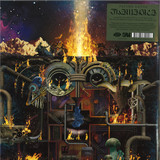
Sein letztes Werk "You're Dead" (2014) bescherte ihm eine Grammy-Nominierung, sein Brainfeeder-Label ist zu einem der innovativsten Klanglabors der Welt avanciert, er co-produzierte Kendrick Lamars mit fünf Grammies ausgezeichnetes Meisterwerk "To Pimp A Butterfly" (2015). Nun veröffentlicht Flying Lotus sein neues Album für Warp: "Flamagra" greift alle kreativen Quantensprünge und innovativen Elemente aus 12 Jahren FlyLo-Karriere auf und denkt sie weiter, größer, epischer und universeller: Hip-Hop, Funk, Soul, Jazz, Electro, IDM, die Ansätze der befreundeten Beatmaker aus L.A., Tribal-Elemente, Polyrhythmen. Aber selbst diese Liste reicht nicht aus, um "Flamagra" auch nur ansatzweise zu verorten, weil es immer wieder ausbricht aus diesem Koordinatensystem. Die Gästeliste liest sich wie ein Traum: Anderson .Paak, George Clinton, Little Dragon, Solange, Tierra Whack, Denzel Curry, Ishmael Butler (Shabazz Palaces), Toro Y Moi, sein musikalischer Stammesbruder Thundercat, ja selbst David Lynch ist zu hören. Der legendäre Regisseur steuert ein paar schaurige Worte bei, eine düstere Erzählpassage, mit der er uns eindringlich warnt: "Fire is coming". "Flamagra" ist die Essenz des letzten Jahrhunderts im Bereich der afroamerikanischen Musik, vollkommen neu und weitergedacht, kollektiv gefiltert und feingeschliffen. Auch wenn Flying Lotus ein Nachkomme seiner ehrwürdigen Großtante Alice Coltrane ist, die mit John verheiratet war (wobei auch Miles und Madlib, Dilla und DOOM als seine Vorfahren gelten dürfen), hat er inzwischen seinen eigenen Kult geschaffen: Eine Gefolgschaft, die alles Geniale aus der Vergangenheit absorbiert und in Bereiche überführt, die sich die genannten Vorfahren nicht mal im Traum hätten ausmalen können. Flying Lotus ist zurück. Fire is coming.
Repress available in early May.
Faitiche releases a new collaboration between the Japanese sound artist ASUNA and Jan Jelinek: the album Signals Bulletin brings together joint improvisations and compositions made over a period of three years in Berlin, Kyoto and Kanazawa. ASUNA’s meandering organ drones merge with Jelinek’s pulsating synthesizer and field recording loops to create dense superclusters that span broad harmonic arcs.
"Watching the Japanese sound artist ASUNA playing the organ, some people might be surprised. ASUNA is no virtuoso flying over the keyboard in a rage. Instead, with the calm gestures of an office worker, he cuts strips of adhesive tape to the correct length before sticking them onto the keys of his instrument. In this way, large clusters of keys are held down, creating a dense and sustained range of frequencies, while the sound artist continually prepares further sets of keys or removes tape again. I have rarely seen a more convincing performance concept, with such a power to fascinate.
I first met ASUNA when we both gave a concert at the 21st Century Museum of Contemporary Art in Kanazawa, his home city. He performed the organ drones as described above and I immediately knew I wanted to collaborate with him. Six years and five meetings later, we completed Signals Bulletin. The album includes both joint improvisations and compositions, recorded in Berlin, Kanazawa and Kyoto.
Whether using prepared organ, Casio keyboards or mechanical plastic toys, ASUNA creates rich textures of sound that barely change over long stretches of time. It is a music without breaks. For a while, I was unsure how my loops made using modular synthesizers and live sampling fitted here – until I realized the role I had to take in this duet: I would provide the rhythmically pulsating foundation over which his dense continuums could unfold.
The result is harmonically drifting superclusters that put us into a meditation-like state. It can perhaps be compared to Automatic Writing – a mode of creative expression floating somewhere between concentration and distraction. Both the structure of our pieces and our approach to our instruments allow a similar “absence”: we let the machines play and repeat themselves – while we, in a mild form of trance, adopt the role of observers, intervening only occasionally.
It is no coincidence that ASUNA owns a collection of Doodle Art – drawings jotted down during conversations or while talking on the phone. It is said that works made like this point to the unconscious and reveal pet motifs – because a doodler always inadvertently returns to his or her favourite themes. The artwork for Signals Bulletin features pictures from the collection, in this case sheets of paper from the pads provided in stationery shops to test out pens. The special quality of such doodles is that the jumble of drawings is the work of a collective whose individual members do not know each other. Layer by layer is added, by someone different each time – until it becomes a dense cluster of lines and symbols ..."
Jan Jelinek, Berlin 2018
AKMÊ is now called RODMIN, nothing else is changing.
We’re delighted to present the first full artist-ep release of our resident. With good reason, of course, it could be asserted that this is a great, deep and timeless techno record, which never loses sight of the dancefloor but still is sophisticated enough to listen it outside the clubs.
The first track love has a good acid drive, which—because of it’s echo chamber—will feel more at home at larger floors. The second track of the A-side reflect is a rather introvert and very hypnotic one and according to really lives to its name.
Coins opens the B-side with a heavy peak time breaker, which gives and demands everything! With his riot version, ALEX.DO puts the pressure even higher.
Rave on, ravers!
From the artist:
"pootek" - Paul (Solpara) and I laid down the majority of this track one November night in Berlin. We lived in the same dorm in university nearly 10 years ago and bonded over weird electronic music. We hadn't seen each other in a while and had never made music together. We got so rowdy making this my neighbour who I had never seen before came up to complain we were being too loud.
"whendialupbecomeform" - I was thinking a lot about dial-up modems, especially after I heard a Lana Del Rey song that featured that sort of sound in the background, whether intentionally or not. I woke up in the middle of the night and laid down the main arrangement in a couple of hours. I later added some vocals, random sounds from freesound.org, and what might be described as "dreamy pads."
"dosheepdreamofandroidelectrics" - I don't think the song has much to do with Philip K. Dick. I wanted to make something that someone could introspectively zone out to, maybe under the influence of a plant, either at home or at the club.
Pontchartrain's second release on home label Lovedancing dives deep into his Detroit roots with two big house tunes that nod to his motor city influences.
1515 Broadway Revisited is a sparkling, chord-heavy track featuring local vocalist Larry Love, made for peak-time play.
Javonntte is up on remix duties with a dark groaning version for the true afterhours feel. On the flipside, 'Head Up' pays tribute to the late queen of soul with a classic house vibe that feels right at any time, but an ending that'll keep you saving it for just the right moment.
- A1: The Flood Feat Silka
- A2: May I Assume Feat. Jimetta Rose & Fatima
- A3: My-Story Of Love / Starring You
- A4: Dmt (The Whill)
- B1: Between Us 2 Feat. Bilal
- B2: Mrs Crabtree Feat. Erykah Badu, N\\'Dambi & Aset Sosavvy
- B3: On Our Way Home Feat. Fatima & Jimetta Rose
- B4: Walking Round Town Feat. Silka
- C1: Cycles Feat. Hiatus Kaiyote
- C2: Message In A Bottle Feat. Coultrain
- C3: Its Better For You Feat. Anderson Paak
- C4: Show Me How You Feel Feat. Karen Be
- C5: Hours Away Feat Om\\'Mas Keith & Coultrain
- D1: Twelve Feat. The Dove Society
- D2: Picking Flowers Feat. El Sadiq
- D3: Optimystical Feat. Robert Glasper
- D4: New Worlds Over
'The Loop' is the new LP by Los Angeles based polymath Shafiq Husayn, an epic project which saw its inception in 2012 through a series of studio sessions at Shafiq's home, including collaborations with the likes of Thundercat, Erykah Badu, Flying Lotus, Bilal and Anderson Paak. Amongst a close knit circle of friends and family the golden tones of The Loop were created, deeply rooted in ideas of song, story, history, guidance and spirituality. The album bumps, jumps and jangles through progressions in jazz, hip hop, soul and funk, following on from his debut album 'Shafiq En' A-Free-Ka' and adding further to his rich history of timeless, unique music. On The Loop past, present and future are brought together through a psychedelic concoction of time traveling drum machines, celestial string sections and trails of synthesizer vapour. Inflections of Sly Stone, Pharaoh Sanders and Earth Wind And Fire traverse with Marley Marl and Dilla-esqe drums making for an organic yet LA-trifying experience.
Shafiq has brought together an impressive array of LA's musical royalty, enlisting the likes of Thundercat, Miguel Atwood-Ferguson, Kamasi Washington, Chris 'Daddy' Dave, Eric Rico, Coultrain, Computer Jay, Jimetta Rose, Om'Mas Keith, Kelsey Gonzalez, I-Ced and more to provide the backbone to his recording sessions. Drawing in features from an international cast of performers and artists like Erykah Badu, Robert Glasper, Hiatus Kaiyote, Fatima and Karen Be amongst others. Now complete and finally ready for release in 2019 The Loop is truly something to behold. The records is accompanied by a series of paintings by acclaimed Japanese visual artist Tokio Aoyama, who worked in tandem with Shafiq to create a painting for each song on the record.
The new album by Juno Award and Polaris Music Prize-nominated Canadian soul star Tanika Charles.
Produced by a stable of some of Canada's finest musical minds including among the others Chin Injeti (DJ Khalil, Eminem, Drake, Aloe Blacc..), Record Kicks proudly presents "The Gumption" the awaited new album by Canadian soul star Tanika Charles that will hit the streets worldwide on May 10.
"What gave you the gumption?" Tanika Charles rhetorically asks during the introductory notes of her sophomore album appropriately titled The Gumption. While the apprehensive lover at the receiving end of that inquisition should feel slighted by the remark, it also alludes to the assuredness Tanika has gained since the release of her Juno Award and Polaris Music Prize-nominated debut Soul Run. The Gumption picks up where Soul Run left off, continuing her tradition of marrying classic soul with modern production styles. Across a dozen songs spanning 38 minutes, Tanika addresses moments of vulnerability, vindication, uncertain love, forbidden fruit and the state of the world today. "It's a little more mature. It's not feeling guilty about being up front, not being afraid to address situations that aren't comfortable for me. I'm comfortable in my skin now in a way I never was before. The overall theme is growth. I feel the music reflects that, and my words reflects that. Even the album cover tries to convey the feeling too. I'm not putting up with unnecessary nonsense anymore."
Predominately guitar-driven mid-tempo soul, with a handful of dance floor friendly tunes and some psychedelic leanings, The Gumption was indirectly influenced by the likes of Alabama Shakes, The Supremes, Khruangbin, D'Angelo, and Moses Sumney. It is sonically moody at times, but with consistent silver-lining arcs. "I've grown up and learned to deal with situations significantly better. We have a tendency to hold back our innermost feelings for fear of hurting others. Even when we're happy we worry about over-sharing, as if joy is a competition you don't want to gloat about."
The success of Soul Run propelled Tanika in front of new audiences far and wide, with extensive touring in North America and Europe. "I've been touring, experiencing new places and meeting new people. And in that time also worked on completing this album". While criss-crossing Canada with festival appearances on both the east and west coasts, Tanika also embarked upon four overseas tours for a combined 45 European shows within a one year period. This included performances at the prestigious Trans Musicales Festival in France, the Lärz, Germany Fusion Festival, Mostly Funk & Soul and Jazz Festival in UK, the Holy Groove Festival in Switzerland, and the Canarias Jazz Festival in Spain.
We swallow asphalt, we travel open heart, we run closed eyes. An hypnotic rhythm, some textured notes from Arp Odyssey, and a guitar that capsizes. Ashinoa. Ashinoa. Ashinoa.A last cigarette. We hang on the wheel. And we surrender on the highway of lights and vertigo, again »Ashinoa is a krautrock dementia that fans of the genre will recognize. An artistic atavism in the footsteps of the post-Stockhausen generation, a kind of round table of geniuses Klaus Dinger (Kraftwerk, Neu!), Edgar Froese (Tangerine Dream), Schulze (Ash Ra Tempel)... but also a kosmische musik of modern times, with a touch of electronic influences in the most experimental way.Part of the collective Misère Records from Lyon, which also includes the bands Abschaum (who released its first album in late 2017 on Macadam Mambo) and Pratos, Ashinoa started at the end of 2015 and occupes a special place in the Lyon alternative scene. So it's a real pleasure to welcome on board a band with such qualities from Macadam Mambo's hometown. Don't miss the trip !
Alt-rock icon Josephine Wiggs is best known as bassist in The Breeders, rising to superstardom in the '90s and continuing to draw crowds and critical acclaim in the wake of their 2018 album All Nerve.
But over the years, Wiggs has released several of her own albums, all of which delightfully defy genre. Her new solo record, We Fall, is both a departure and a distillation of an enduring personal aesthetic: moody and spare but also melodic, at once contemporary and nostalgic.
Some influences are clear: We Fall is reminiscent of the experimentalism of Brian Eno's Another Green World and recalls the delicate, languid minimalism of Harold Budd. The album's classical inflections, sharpened by a dialog with electronic elements, evoke Alva Noto and Ryuichi Sakamoto. This is an album of juxtapositions: minimalist at moments, richly layered in others; ambient while also sharply focused; melancholy yet resolute.
There's something both dreamy and scientific about We Fall. Wiggs, an enthusiastic amateur mycologist, has an impressive collection of mushrooms she's photographed in her travels. We Fall could be the soundtrack to what can't be captured in a single photo—the growth and decay of miraculous creatures that a less astute and sensitive eye might overlook entirely.
Composed, performed and recorded by Wiggs, with drums and electronics by her longtime friend and collaborator Jon Mattock (Spacemen 3, Spirit , We Fall is a lyrical, bucolic album with an undercurrent of disquiet. Think of a wintertime walk in the woods as dusk falls too soon. True to the classic album form, the 10 almost entirely instrumental tracks on We Fall form a compelling whole: a crystalline meditation on paths not taken and words unspoken, an elegy for moments lost and last embraces.
JOSEPHINE WIGGS BIO
Josephine Wiggs grew up in an unconventional family north of London. Returning home from a summer holiday with a donkey riding in the back of the family's 1927 Rolls Royce was not considered at all bizarre. Wiggs studied cello as a child, segued from college in London to undertake a master's degree in Philosophy, and then, in a move few would have predicted, joined a rock band.
After making three albums with The Perfect Disaster (1987-1990), Wiggs left to join Kim Deal (Pixies), Tanya Donelly (Throwing Muses), and Britt Walford (Slint) in forming indie supergroup The Breeders, whose debut album Pod came out in 1990. Following a shift in line-up—with Kelley Deal on guitar and new drummer Jim Macpherson—The Breeders released Last Splash in 1993; with its hit single 'Cannonball' and 'Divine Hammer,' they became alternative rock superstars.
During the same period, Wiggs released two lower-key albums with Jon Mattock (Spacemen 3, Spiritualized): Nude Nudes (1992) under the name Honey Tongue, and Bon Bon Lifestyle (1996) using the moniker The Josephine Wiggs Experience. She also recorded and produced Klassics with a K (1996), the beloved and only album by the Kostars (Luscious Jackson's Jill Cunniff and Vivian Trimble). During a brief run of shows, Wiggs joined the band on drums, showing her range of musical ability.
In the late '90s Wiggs collaborated with Vivian Trimble as Dusty Trails, whose eponymous 2000 album is an homage to neo-noir soundtracks, spaghetti westerns, and Gallic pop. Time Out described it as 'one of the most subtly suggestive, understatedly elegant...things likely to have caressed your cochlea in years.'
Allusions in Dusty Trails to film music foreshadowed the next stage of Wiggs's career, writing scores for feature and documentary films—from Happy Accidents by Brad Anderson in 1999 to Appropriate Behaviour by Desiree Akhavan in 2014. Her new album We Fall began as a suite of short pieces for the documentary film Built on Narrow Land. Wiggs has also composed and recorded music to accompany live performance and short films by the acclaimed Brazilian choreographers chameckilerner.
In 2013, following the 20th anniversary of Last Splash, the classic lineup of The Breeders reunited for a world tour. Five years later in 2018 they released All Nerve, with Wiggs co-writing two songs and singing lead on the standout track 'Metagoth.' We Fall, Josephine Wiggs' third album of her own design and ninth album in a career spanning three decades, will be released on vinyl and available for download and streaming on April 12, 2019 by Sound of Sinners.