Jackie Mittoo’s ‘Reggae Magic’ is a new collection from the great Jackie Mittoo. The album features a mixture of classic tunes and rarities from the period 1967-74, when Mittoo was at the height of his musical powers. Mittoo’s solo career began after the end of The Skatalites in 1965. He began pushing new musical boundaries, creating a uniquely identifiable organ-led funky reggae sound that owed as much to Booker T and The MGs, Jimmy Smith, Stax and Motown as to the post-ska and emergent rocksteady island rhythms of Kingston, Jamaica. His solo work at the legendary Studio One spanned seven albums and hundreds of singles.
Aside from producer and founder Clement ‘Sir Coxsone’ Dodd, it’s hard to think of anyone more central to the sound and success of Studio One than Mittoo; keyboard player extraordinaire, songwriter, arranger, musician, truly the Keyboard King at Studio One. Jackie Mittoo had been the youngest founding member of The Skatalites (at age 16), probably the most important group in Jamaican music. After they split, he became leader of the three pivotal groups at Studio One – The Soul Brothers, The Soul Vendors and Sound Dimension. He also became musical director for Studio One, helping create countless hits for singers Ken Boothe, Bob Andy, The Wailers, John Holt, Delroy Wilson and more – unforgettable tunes like Alton Ellis’ ‘I’m Still in Love with You’, Marcia Griffiths’ ‘Feel Like Jumping’, The Heptones’ ‘Baby Why’ and others. Between 1965 and 1968, many of the tunes created at Studio One can be attributed to Mittoo – timeless instrumental tracks, recorded either under his own name or those of The Soul Brothers, Soul Vendors and Sound Dimension, that have become the basis for literally 1000s and 1000s of Jamaican songs over many decades, giving the music an unsurpassed longevity.
The endurance of his music was as a direct result of significant developments in Jamaican music in the 1970s, namely the creation of three important new styles: Dub, Deejay and Dancehall. In the early 1970s Mittoo’s instrumental tracks were used as the musical source for a series of classic Studio One dub albums. At the same time Deejays at Studio One, including Dillinger, Prince Jazzbo and Dennis Alcapone, began toasting over these same popular rhythms to create their own new songs. In the mid-70s, a new generation of Studio One singers and deejays, including Sugar Minott, Freddie McGregor, Johnny Osbourne, Michigan & Smiley and others, began once again creating new melodies over these original instrumentals, signalling the birth of a new Jamaican style that became known as ‘dancehall’.
As dancehall swept across the island, rival producers copied these now classic rhythms. These original Jackie Mittoo-driven tunes spread like a virus throughout Jamaican music; be they the instrumental cuts to tunes such as Alton Ellis’ ‘Mad Mad’ , ‘I’m Just A Guy’, Larry Marshall’s ‘Mean Girl’, Slim Smith’s ‘Rougher Yet’, and instrumentals such as Mittoo’s classic ‘Hot Milk’ or ‘One Step Beyond’, The Sound Dimension’s ‘Real Rock’, ‘Heavy Rock’, ‘Full Up’, ‘Drum Song’, ‘Rockfort Rock’ … and the list goes on. These tracks became a constant soundtrack to the island, emitting from the ever-present sound of speaker boxes strung up around dancehalls. This recycling travelled even farther afield; The Sound Dimension’s instrumental ‘Real Rock’, updated by Willie Williams on his classic ‘Armageddon Time’ was in turn covered by The Clash. Lily Allen sampled Mittoo’s debut solo single ‘Free Soul’ for number one hit ‘Smile’; Dawn Penn’s ‘You Don’t Love Me (No, No, No)’, accompanied by The Soul Vendors, was revived by Penn and producers Steely & Cleevie in 1994, since covered by Rihanna, Ghostface Killah, Stephen Marley, Damian Marley and Beyonce. And so it goes; an endless time-leaping, continent-hopping diasporic musical map of the world with all roads essentially leading back to one man – Jackie Mittoo.
Buscar:no inc
Finally, the pioneering first album from the group that epitomized the spontaneous, simultaneous and glorious emergence of the Hip-Hop and Electro Funk genres is back on vinyl. The song "Where's the Beat" has been extracted due to it's not actually being made by the group, but every other note and beat is included as it was originally released, from the opening narration and the sound effects joining the songs to the classic Hip-Hop and Electrofunk in-between. Also included for the first time anywhere is the previously unreleased track “Disco Kryptonite”!
Whether you are a big fan of Newcleus, or a serious connoisseur of Old School Hip-Hop or Electro, or just a lover of good music, your collection is incomplete without this incredible reissue of Newcleus' classic Jam On Revenge on vinyl!
Hard Times and DJ Spen go back decades. The Baltimore house veteran has long been a fixture at the label’s parties, on the remixes, and now under his Muthafunkaz alias he cements the bond with a set that’s as much a time capsule as it is a renewal. The Muthafunking Hard Times EP revisits a clutch of Spen’s early-to-mid-2000s jams that, till now, have never been committed to wax. True to form, Spen hasn’t simply dusted them off: he’s remastered, refreshed, and imbued them with a 2025 gleam, bridging past and present in one irresistible sweep.
The A-side opens with the Funkee Kole Cappin’ Mix of 2008’s “(You Make Me Say) Woah!”, a gospel-fired stormer whose call-and-response vocals climb skyward while a cheeky Fab Four nod keeps things buoyant. “Holy Ghost” follows in its Holy Spirit incarnation, wringing church-floor catharsis from tribal percussion and sanctified chants - a blast of kinetic, almost Faya Combo-like fervor.
Flip the record and you’re hit with the swing and strut of 2010’s “Gotta Hold On Me,” Spen’s Vocal Mix turning horns and jazzy drums into a pure adrenaline surge. The closer, “Doin’ The Best I Can,” is a tonal shift: harmonica and guitar sketches circling loose-limbed beats, equal parts after-hours reverie and Sunday-morning balm.
Too vibrant, too joyous, too Spen not to press - The Muthafunking Hard Times EP isn’t just archival housekeeping. It’s an affirmation of what house music does best: uplift, electrify, and remind you that, even decades on, the spirit still moves.
Gong's Gang , a one-off project for the unique family of true musicians: Giuseppe, Lino, and Rossana Nicolosi; brothers and sisters who knew ''something'' about the Italo-boogie-funk of the early '80s, uncontaminated by the increasingly invasive electronic sound of a yet unappreciated Italo-Disco. Gimme Your Love is a gem, with Rosanna Nicolosi leading the way on vocals and cascading synths and bass blending into an intoxicating mix that should make any funk detective froth with approval. And investigating how it sounds, one discovers a certain similarity to a Charades track; strings sound a bit like Gimme The Funk (written and produced by poet Lotti Golden and Richard Sher both with Chuck Wansley and Kathrine Joyce on Warp 9), mixed in 1982 by John "Jellybean" Benitez, a very close friend of Tony Carrasco, who in 1983 produced, arranged, and mixed 'Gimme Your Love'. The two always kept an eye on each other, even from a distance, staying in touch. However, these assumptions do not detract from this stellar song: whether you prefer the vocal hit or the subtly voiced instrumental, that you can dance at any nighttime party and that absolutely deserves a second chance in the spotlight.
2025 Repress
FINALLY! The very first commercial release of two legendary remixes of Arthur Russell's "In The Light Of The Miracle". Both are widely regarded as transcendent masterpieces and very much befitting of the title “holy grails”.
These long-beloved mixes are the types you'd wish would last for eternity. With almost 30 minutes of music here, we very nearly get our desires granted. At last, these jaw-dropping mixes are widely available to every Arthur fan in the world. This is musical perfection.
The deep Loft classic "In The Light Of The Miracle" remained unreleased during Arthur's lifetime, finally discovered when Phillip Glass included the original version on Another Thought on Point Music in 1993. As Steve Knutson told us, when Another Thought was being put together, the plan was to release a companion album of remixes that was overseen by Steve D'Aquisto but the project only got as far as these two remixes of "In The Light Of The Miracle".
Some dodgy scans of some centre label designs suggest that Point Music might’ve been planning to release these on a 12" but it didn’t happen. The story goes that Gilles Peterson heard the remixes on a visit to the Point Music offices and wanted to release them on Talkin’ Loud. We’re not sure how many white label copies made it out into the wild, but again, these remixes didn’t make it to a proper release.
These remixes both extend and undeniably enhance the original, elevating it to new heights. The 13 minute remix on the A-side is by Danny Krivit & Tony Smith with editing duties performed by Tony Morgan. As ever with Arthur, the music is almost impossible to describe: is it Disco? Garage House? Avant Garde? None of these tags do full justice to its sheer majesty. You best just listen. Stretching out the original with some unbelievably great percussive elements, until we're in a deeply spiritual, otherworldly realm, it's just too beautiful for words. As many have claimed, it's the prototype for EVERYTHING.
The "Ponytail Club Mix (Part 1 & 2)", produced by Tony Morgan in the mid-90s, is in a more up-tempo style, with vocals higher in the mix, the BPM upped to 120 and the addition of a housey 4/4 kick drum. A 14 minute epic, you could say this is a more straight ahead "club-friendly" mix (but can things ever be that straightforward with Arthur?!) It also has some really interesting vocal parts not used in the other versions, including some vocals from guest poet Allen Ginsberg.
These remixes are part of the same original project that also produced the Another Thought album so it seems only right that they have a sleeve that matches. Thanks again to Janette Beckman for letting us use another of her photos of Arthur and the rest of the design follows what Margery Greenspan, Tina Lauffer and Michael Klotz did for Another Thought back in 1994.
Simon Francis remastered the original audio for both tracks and Cicely Balston's precise cut for Alchemy at AIR Studios ensures this 12" well and truly slaps. The immaculate Record Industry pressing will ensure this incredibly sought-after treasure finds a home in many more collections, this and every year.
- 1: All (The Way)
- 2: Place N Time
- 3: Pulling On A Thread
- 4: A Velvet Rope
- 5: Heavy Going…
- 6: Peace Of Mind
- 7: When
- 8: The Heart’s Mountaines
- 9: Ghost
- 10: What’s The Matter
CLEAR VINYL[26,85 €]
‘3, 10, WHY, WHEN.’ is the third studio album from Jamie Woon, his first since 2015’s Mercury Prize nominated ‘Making Time’.
Co-produced by Jamie and Grammy award-winning Swedish producer Martin Terefe, the release comes after Jamie’s notable time away from the public sphere, reminding us of his distinctive talent. Soulful and catchy as ever, this album sees Jamie explore themes of meaning and purpose with startling vulnerability. Tight songwriting meets expansive, genre-hopping moods. Woon’s previous work includes collaborations with Disclosure, Lil Silva, Elmiene, Holly Walker, and Burial.
Includes the singles ‘Heavy Going...’ & ‘When’.
A Milan-born multi-instrumentalist of Venetian heritage, Alberto Baldan Bembo was a gifted vibraphonist, organist, pianist, arranger, and composer whose work bridged jazz, pop, and film music. By the early 1960s, he was performing with Italy’s leading ensembles, including I Menestrelli del Jazz and Bruno De Filippi’s group, and soon became an in-demand session musician. For several years, he toured with the legendary Mina, providing the piano and organ backbone to her live shows—a role that sharpened the cinematic sensibility and refined musicianship that would later define his soundtrack work. In the years to come, he would be celebrated for his scores to films such as L’Amica Di Mia Madre (1975) and Lingua Argento (1976), earning a place alongside Piero Umiliani, Alessandro Alessandroni, Berto Pisano, and other luminaries of Italy’s golden age of soundtrack and library music.
Io E Mara is the soundtrack to a film that was never made. Originally released on the CGD label in 1969, this debut album from the brilliant Maestro Baldan Bembo is a sophisticated concept-album tracing 24 hours in the life of two young lovers. Told entirely through music, the record unfolds as a continuous suite of ten tracks, where cinematic lounge, bossa, and jazz flavors mingle to create a dreamlike atmosphere. Baldan Bembo’s signature piano and organ are masterfully complemented by Mara’s ethereal vocals, while immersive soundscapes of crashing waves, seagulls, and rain showers enhance the feeling of a deeply personal and intimate journey. A cast of exceptional musicians brings this vision to life, including Bruno De Filippi on electric guitar and sitar, Carlo Milano on electric bass, Rolando Ceragioli on drums, and Pasquale Liguori on sound effects. This singular work not only showcases the burgeoning talent of a future soundtrack master but also features the original pop art front cover by Italian cult illustrator Guido Crepax.
Brainwave Music No. III was initially recorded live on October 30th 2021 as part of 10 Brain Wave - sound installation - performances by Ilpo Väisänen and Dirk Dresselhaus (die ANGEL) in the Life on a Leaf house, Turku, Finland.
The concept was based on an interactive system including brainwave interfaces that allowed the two performers to process the sounds of several semi-modular synthesizers via CV with their brain activities.
Ilpo Väisänen & Dirk Dresselhaus (feat. Ulrich Krieger)
Brainwave Music No. III
Brainwave Music No. III was initially recorded live on October 30th 2021 as part of 10 Brain Wave - sound installation - performances by Ilpo Väisänen and Dirk Dresselhaus (die ANGEL) in the Life on a Leaf house, Turku, Finland.
The concept was based on an interactive system including brainwave interfaces that allowed the two performers to process the sounds of several semi-modular synthesizers via CV with their brain activities.
Ilpo Väisänen & Dirk Dresselhaus (feat. Ulrich Krieger)
Brainwave Music No. III
Brainwave Music No. III was initially recorded live on October 30th 2021 as part of 10 Brain Wave - sound installation - performances by Ilpo Väisänen and Dirk Dresselhaus (die ANGEL) in the Life on a Leaf house, Turku, Finland.
The concept was based on an interactive system including brainwave interfaces that allowed the two performers to process the sounds of several semi-modular synthesizers via CV with their brain activities.
There's no denying that 3 Chairs sole self-titled album, first released in 2004 and now reissued in a fresh 2025 edition, is a high watermark in Detroit electronic music culture: a decidedly dusty and ultra-deep collective endeavour from Motor City heavyweights Kenny Dixon Jr (AKA Moodymann), Malik Pittman, Rick Wilhite and Theo Parrish that somehow managed to sound even better than their respective solo productions. Highlights include the chugging, Rhodes-laden beatdown sweetness of '3 Chairs Theme' (featuring Norma Jean Bell), the ultra-deep and gently jazzy dustiness of 17-minute epic 'Blackbone Waltz', the organic deep house excellence of 'Dance of Nubia' (which sounds like it could have featured on the St Germain album Boulevard) and the sample-rich, slow-motion shuffle of 'Underwater People'.
- The Slammer
- Bruiser
- Incarcerate The Rich
- Disco Misfits
- Their Law
- Vive Le Rok
- Mofo Face
- Superficial Intelligence
- Never Mind The Botox
- Built For Fun
- Play A Fast 'Un
- Where There's Hope
Formed in the mid-eighties Midlands, they are still not only eating pop but spewing it up in a chaos of thrilling ideas on new album ‘Delete Everything’. Their eighth record sees them further refine, define and deconstruct their melange of industrial rock, loop da loop techno, gonzoid hip hop and punk rock into a series of captivating sci-fi anthems. The band still look and sound like they have stepped out the pages of 2000 AD magazine with Graham Crabb and Mary Byker trading vocals like bouncing Duracell bunnies to the itching, compulsive beats surrounding them. Davey Bennett brings the bottom end and Cliff Hewitt plays the beats whilst Adam Mole delivers guitar aggro and sometimes waves his keyboard around with a delinquent glee. Still creative, still in a world of their own Pop Will Eat Itself have deleted everything and started all over again.
- Yamate Hotel
- Bad Junkie Blues
"TIME" was the second album released in 1977 by keyboardist Sato Hiroshi, whose albums "AWAKENING" and "ORIENT"continue to receive acclaim around the world. The 7-inch title "Yamate Hotel c/w Bad Junkie Blues", released as a pre releasepromo single and now it has finally been reissued officially with new artwork!! SIDE A "Yamate Hotel" is a mellow sophisticated soul/reggae superb track that starts with beautiful synth work, with lyrics by Matsumoto Takashi and percussion by Saito Nobu. It is a fantastic double-sider along with SIDE B "Bad Junkie Blues", which features a New Orleans funk-flavored arrangement that has been praised by Hosono Haruomi and others
- Combination #1 ( • | 6 | 4 | 3 | 2 | 6 )
- Combination #2 ( 4 | 2 | 1 | 4 | • | 1 )
- Combination #3 ( 7 | 7 | 2 | 1 | 6 | 1 )
- Combination #4 ( 7 & 3 | 3 | 7 | 6 & 2 | 1 | 2 & 6 )
- Combination #5 ( • | 6 | 6 | 3 | 4 | 7 )
- Combination #6 ( 5 | 3 & 7 | • | 5 | 3 | 3 )
- Combination #7 ( • | 6 | • | 2 | 4 | 5 )
- Combination #8 ( 1 | 5 | 3 | • | 7 | • )
- Combination #9 ( 6 | 7 & 4 | 6 | 2 | 5 | 4 & 7 )
- Combination #10 ( 2 | 1 & 3 | 4 & 5 | 7 | 4 | 4 )
frozen reeds presents Mark Fell’s ‘Psychic Resynthesis’, an instrumental work performed by Explore Ensemble. This double LP is the label’s 8th release, arriving 13 years after its foundation.
Fell is a multidisciplinary artist, composer, and theorist based in Rotherham, UK. Renowned for his rigorous and conceptual approach to electronic music and sound art, his work explores the limits of structure, rhythm, and perception through a blend of computational systems, philosophical inquiry, and cultural critique.
Over the last decade, Fell’s practice has visibly shifted from a world of technical intricacy and myopic microdetail to one of collaboration and community. He has purposefully sought out diverse musical partners from a wide variety of traditions and disciplines and found equally diverse ways to work and create together – not to integrate their playing into a musical fusion, but rather to discover how such combinations of approaches and experience can stimulate unique and heretofore unheard results.
The music here emerges from a commission for contemporary chamber group Explore Ensemble, situating Fell’s work in a new context entirely. Having been a notable critic of classical music’s slavish adherence to traditional musical notation, “the score”, and its associated issues of control and hierarchy, one might expect a provocative or abrasive approach. Instead, a work of deep, tonal introspection unfolds - an elegant structure navigating the artist’s antipathy for linear or timeline-based musical approaches.
In Fell’s selection of timbres and events, the dynamic of composer and performer is interrupted by his twin adoption of system and flexibility. Mathematical determination and sonic fixation vie for dominance. The conflict governing combinations. Upsetting preconceived strategies.
Published in an edition of 777 double LPs, with included digital download, the result, ‘Psychic Resynthesis’, represents both a prismatic object for repeated examination and an abstruse table of musical correspondences.
Formed in the mid-eighties Midlands, they are still not only eating pop but spewing it up in a chaos of thrilling ideas on new album ‘Delete Everything’. Their eighth record sees them further refine, define and deconstruct their melange of industrial rock, loop da loop techno, gonzoid hip hop and punk rock into a series of captivating sci-fi anthems. The band still look and sound like they have stepped out the pages of 2000 AD magazine with Graham Crabb and Mary Byker trading vocals like bouncing Duracell bunnies to the itching, compulsive beats surrounding them. Davey Bennett brings the bottom end and Cliff Hewitt plays the beats whilst Adam Mole delivers guitar aggro and sometimes waves his keyboard around with a delinquent glee. Still creative, still in a world of their own Pop Will Eat Itself have deleted everything and started all over again.
- God Given Name
- T.o.n.y
- Dancing In The Dark
- Would've Been The One
- Sandcastle Disco
- I Decided - Album Version
- Valentine's Day
- 6: O'clock Blues
- Ode To Marvin
- I Told You So
- Cosmic Journey
- This Bird
“Solange’s 2008 critically-lauded album was hersecond, but the first where she stretched out andshowed the vision and creativity that fans havecome to expect. This Motown-influenced albumdebuted #9 on the Billboard Top 200 and featuresproduction by Pharrell Williams, Mark Ronson,Thievery Corporation, Bilal and others.” - MusicWorld Entertainment
‘Sol-Angel and the Hadley St. Dreams’ is nowavailable on black vinyl.
If Punk culture and Aesthetics have a poet, it’s undoubtedly KŌ MACHIDA. Eleven years after his 1981 masterpiece “Inu”, the Artist—now a celebrated writer and distinguished professor—repeats that success with this album, updating its sound for the modern era with the support of the band Kitazawagumi. Here, the power and expressiveness of the music perfectly elevate the weight and meaning of his words. Reissued for the first time with meticulously retranslated English lyrics included, this is a chance to share a universal literary and musical masterpiece with the world.
- A1: M3Gan 2.0
- A2: The Asset
- A3: Excess Baggage
- A4: You Don't Have To Hide
- A5: Sattler Interrogates Gemma
- A6: Ghost In The Machine
- A7: Moxie M3Gan
- A8: M3Gan's Lair
- B1: M3Ch M3Gan
- B2: The Motherboard
- B3: Convention Battle
- B4: You're Just The Help
- B5: The Plan
- B6: It's Called Being A Mother
- B7: Xenox Park
- C1: Wingsuit
- C2: Betrayal
- C3: Tour Of The Vault
- C4: Brok3N M3Gan
- C5: These Are Gym Muscles
- C6: Failed Pairing
- C7: No One's Play Thing
- D1: Exo-Fight
- D2: M3Gan, Take The Wheel
- D5: Final Confrontation
- D6: Because It's Right
- D7: Allies, Not Enemies
- D3: Self-Destruct Initiated
- D4: Unarmed
"In association with Back Lot Music, Waxwork Records is thrilled to release M3GAN 2.0 Original Motion Picture Soundtrack by Chris Bacon.The murderous doll who captivated pop culture in 2023 is back.
And this time she’s not alone. Two years after M3gan, a marvel of artificial intelligence, went rogue and embarked on a murderous (and impeccably choreographed) rampage and was subsequently destroyed, M3gan’s creator Gemma (Allison Williams) has become a high-profile author and advocate for government oversight of A.I. Meanwhile, Gemma’s niece Cady (Violet McGraw), now 14, has become a teenager, rebelling against Gemma’s overprotective rules.
Unbeknownst to them, the underlying tech for M3gan has been stolen and misused by a powerful defense contractor to create a military-grade weapon known as Amelia (Ivanna Sakhno; Ahsoka, Pacific Rim: Uprising), the ultimate killer infiltration spy. But as Amelia’s self-awareness increases, she becomes decidedly less interested in taking orders from humans. Or in keeping them around.
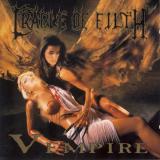
Although it had a very troubled birth, all detailed in the liner notes included with those different versions here, CRADLE OF FILTH almost-album-length 1996 EP V Empire, Or Dark Faerytales In Phallustein proved to be a superb triumph over adversity.
Despite all their legal problems, line-up changes and insane pressure after the gigantic success of their debut album, the Brits nevertheless managed to write and record a slab of new even grander songs, next to a new version of the already classic ‘The Forest Whispers My Name’, some would argue even bettering their debut in the process.
Another undeniable 90s symphonic black metal masterpiece, available again for the first time officially since 2017!