40th anniversary edition of this seminal work by the multi-talented musician and producer Carlos Perón. After the release of “Impersonator” and the score of the film “Die Schwarze Spinne”, “Nothing Is True; Everything Is Permitted” is his third album released in the beginning of 1984. While still being an active member of Yello, it was around the start of the recording of “You Gotta Say Yes To Another Excess” that Carlos met the American musician Chris Lunch in Hamburg. He invited Chris to Zurich and together played with projects such as Romantic Rubber, Heavymetallen and recorded some sessions that become the basis of “Nothing Is True; Everything Is Permitted”. After the release of “You Gotta Say Yes To Another Excess”, Carlos decided to leave Yello and focused to finish the recording and mixing of his new solo album.
“Nothing Is True; Everything Is Permitted” has gone down in music history as a dark soundtrack without a film, influenced many artists and helped to develop diverse genders of electronic experimental and dance music.
Limited edition of 300 copies including all original tracks and new artwork.
Search:no inc
Pascal Gaigne, born in France in 1958 and installed in San Sebastian since 1985, is a musician with a vast trajectory composing music for films. He has composed for more than 50 movies, won 16 awards (including a Goya award, Spanish Oscar equivalent) and had 15 nominations. He has worked with some of the most interesting new directors in Spanish cinema (Víctor Erice, Icíar Bolláin, Salvador García Ruíz, Daniel Sánchez Arévalo, Montxo Armendáriz), and foreign directors like France (Le cou de la girafe), Finland (Matka Edeniin) or Cuba (Omerta).
Early in his career, before working in cinema, he collaborated with some of the most interesting artists and voices in the short history of Basque folk music, including well known Amaia Zubiria (check the two records he made with her “Egun Argi Hartan” & “Kolorez eta Ametsez”), as well as Basque traditional chant avant-gardist Beñat Achiary. It is together with Amaia & Beñat that he paired himself up to create “music pour le ballet du Iguzki Hauskara”, an entire album of compositions made for the 80’s French Basque Ballet group “Ekarle”. Originally released on cassette only in 1984, it is now reissued by Hegoa including three unreleased pieces taken from a second album that was never published.
Limited edition of 250 black vinyl LP’s housed in a coloured reverse board cover recreating the original hand painted artwork.
- A1: Prayer (From Xabo: Father Boniecki)
- A2: In Between (From Xabo: Father Boniecki)
- A3: Journey (From Xabo: Father Boniecki)
- A4: Trip To Ireland (From I Never Cry)
- A5: The Beach (From I Never Cry)
- A6: The Locker Room (From I Never Cry)
- A7: At The Hospital (From I Never Cry)
- B1: Waiting (From At Home)
- B2: Wildfires (From Truth In Fire)
- B3: Ghosts (From Pradziady)
- B4: Soleil Pâle
- B5: Nora (From Nora)
Writing music for film and theatre has always been a big part of Hania Rani's musical world. It is also a part of the creative process that can be tantalisingly out of reach for listeners, either the project doesn't come to fruition or the music simply isn't available away from the film or play. From early collaborations with friends, to last year's two scores for full length films (xAbo: Father Boniecki directed by Aleksandra Potoczek and I Never Cry directed by Piotr Domalewski') Rani has been involved in many such projects, each representing an important step in her artistic development and life as a composer and artist:
"Composing for motion picture or theatre is for me a very different kind of work than writing for my own projects. Firstly, I need to collaborate with somebody else who sees the world through the lense of their own art and craft. That's why these kinds of encounters can be so exciting - they are a promise of creating something very new, as a result of creative work of so many people from all walks of life. Secondly, I feel that music in film is an invisible character, a missing emotion that creates a special atmosphere and sensation. It doesn't illustrate, it completes the work of art. I think it is an extremely sensitive matter that rejects banal associations and easy solutions. I feel like composing for film works like an exercise for my imagination."
It is the nature of these collaborations though, that sometimes the composers own preferred compositions don't make the final cut. This is where Music for Film and Theatre comes in as it allows Rani to present a selection of her own personal favourite pieces composed for film and plays. Pieces that made it to the final cut and pieces that were rejected by the director or the producer. Bringing the music together as an album offers a chance for Rani to share her music with her listeners on her own terms and a chance for her fans to hear a different side of her art.
"I put them in one place, as a collection of precious objects that were kept for years in a drawer. Some of them were composed a couple years ago, some are the result of recent research. I am very happy to finally be able to present them as a separate project."
Rani is of course grateful to all of the directors who have entrusted her to create music for their projects, but she professes especially warm feelings for the pieces composed for her first 'real' theatre play, Pradziady, directed by Michał Zdunik. The title comes from 'Dziady' a term in Slavic folklore for the spirits of the ancestors and a collection of pre-Christian rites, rituals and customs that were dedicated to them. The essence of these rituals was the 'communion of the living with the dead', namely, the establishment of relationships with the souls of the ancestors. "I felt this story needed extremely dark and fragile music, and at the same time a sound that could express the mixture of the two worlds - the living and the dead. I decided to compose part of the soundtrack with a string quartet but including two cellos, viola and only one violin. We recorded in a little house, completely built from wood, mostly from Finnish pine. I always felt this space has a very special, warm and natural acoustics - especially when it is combined with string instruments. The track composed for this theatre play is called Ghosts but actually didn't finally make it to the performance, although I like it so much that I thought it would perfectly fit
this compilation". Other highlights include the enchanting Soleil Pâle written for a collaboration with director Neels Castillon, and improvising dancers Alt Take, the beautiful melancholy of In Between (from the film score for xAbo: Father Boniecki) and the magical bliss of The Beach (from I Never Cry) and together they create a beautiful offering from an artist whose every note is worth hearing, but for whom the journey is just beginning:
"I am very happy to see that many artists consider my music as the right soundtrack for their works, because film music was always a huge inspiration for any of my compositions. I find there a lot of life and real emotions, but also a feeling of freedom. Freedom from my own thinking patterns and prejudices. I also believe strongly in collaboration between people, I always feel this is the way to create something really new, based on a mixture of different ways of thinking, feeling, expressing."
This then is Hania Rani, Music for Film and Theatre – enjoy!
- A1: Music Of The Earth
- A2: Let’s Sing A Song Of Love
- A3: When I Found You
- B1: Haven’t You Heard (12” Version)
- B2: Givin’ It Up Is Givin’ Up With Dj Rogers
- C1: Forget Me Nots (12” Version)
- C2: Look Up! (Long Version)
- C3: Where There Is Love
- D1: Never Gonna Give You Up (Won’t Let You Be) (Long Version)
- D2: Number One (12” Version)
- E1: All We Need
- E2: Remind Me (Lp Version)
- E3: Settle For My Love
- F1: Feels So Real (Won’t Let Go) (12” Version)
- F2: To Each His Own
Black Vinyl[27,52 €]
Strut present the first definitive retrospective of an icon of 1970s and ‘80s soul, jazz and disco, Patrice Rushen, covering her peerless 6-year career with Elektra / Asylum from 1978 to 1984. Joining Elektra after three albums with jazz label Prestige, Patrice had shown prodigious talent at an early age and had first broken through after winning a competition to perform at the Monterrey Jazz Festival of 1972. By the time of the recordings on this collection, she had become a prolific and in-demand session musician and arranger on the West coast, appearing on over 80 recordings for other artists. She joined the Elektra / Asylum roster in 1978 as they launched a pop / jazz division alongside visionaries like Donald Byrd and Grover Washington, Jr. “The idea was to create music that was good for commercial radio / R&B,” Patrice explains. “We were all making sophisticated dance music, essentially.”
Drawing on some of the leading musicians in L.A. like saxophonist Gerald Albright, drummer “Ndugu” Chancler and bassman Freddie Washington and keeping an open minded approach from her training in classical, jazz and soundtrack scores, Patrice’s music was a different, more intricate proposition to many of the soul artists of the time. “L.A. musicians were not so locked into tradition,” she continues. “None of us were accustomed to limitation and the record label left us to take our own direction.”
Early classics like ‘Music Of The Earth’ and ‘Let’s Sing A Song Of Love’ were among Patrice’s first as a lead vocalist before her ‘Pizzazz’ album landed in 1979, featuring the unique disco of ‘Haven’t You Heard’ and one of her greatest ballads, ‘Settle For My Love’. “Although ballads make you feel more vulnerable as an artist because they are often personal, I think listeners relate to that sincerity,” she reflects. By now, Patrice’s records were supremely arranged and produced as her confidence as an all-round writer, producer, arranger and performer grew. Slick dancefloor anthem ‘Never Gonna Give You Up’ and the ‘Posh’ album in 1980 led to her landmark album ‘Straight From The Heart’ two years later. Receiving little support from her label, Patrice and her production team personally funded a promo campaign for the first single from it, ‘Forget Me Nots’. It went on to peak at no. 23 on the Billboard Hot 100 and the album was later Grammy-nominated, while the track became a timeless anthem and popular sample, inspiring Will Smith’s theme for the film ‘Men In Black’ and George Michael’s ‘Fastlove’.
Patrice’s final album for Elektra, ‘Now’ kept the bar high with sparse, synth-led songs including ‘Feel So Real’ and ‘To Each His Own’. It concluded a golden era creatively for Patrice which remains revered by soul and disco aficionados the world over.
‘Remind Me’ features all of Patrice Rushen’s chart singles, 12” versions and popular sample sources on one album for the first time. Formats included a 3LP set and 1CD fully remastered by The Carvery from the original tapes. Both formats include an exclusive new interview with Patrice Rushen and rare photos.
• First definitive Patrice Rushen compilation released on vinyl since the ‘80s
• Includes all of her chart hits, DJ favourites and sample sources
• Official release featuring full interview with Patrice Rushen about her career and music • Features rare photos from her personal collection + some of the photographers she has worked with during her career
• Fully remastered by The Carvery from the original ¼” tapes
• Start of full Patrice Rushen reissue programme from her Elektra era
Repress!
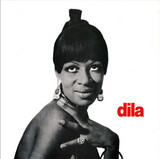
Far Out Recordings proudly presents the first and only album from the mysterious Brazilian vocal sensation Dila (pronounced “Jee-la”). Having reportedly died in a car crash shortly after the album’s release in 1971, there is very little known about the woman behind the voice. But the joyous music Dila left behind, gives us a picture as good as any, of a powerful feminine soul at the top of her game.
The liner notes on the elusive original LP, written by composer Arnoldo Medeiros attest: “Friend, look out! Because when this girl starts to sing, you’re in trouble. Hold the railing so you don’t fall down the stairs, because she’s coming this way and shaking up everything.”
Arranged and produced by Durval Ferreira, alongside his studio band affectionately known as “Os Grillos” (The Crickets), Dila (1971) is a rare glimpse into the authentic soulful Samba sound of Rio’s favelas in the late sixties and early seventies.
A blast of funky, percussive Brazilian breaks, scorching hot brass and swing-laden piano, the music is as iconic as the album’s stark cover, as is clear on opener ‘Inez’, composed by The Crickets’ bassist Romildo. There’s a fantastic interpretation of the Ivan Lins classic ‘Madalena’ (made famous by Elis Regina), a moving version of the Tom Jobim and Vinicius De Moraes classic ‘O Morro Não Tem Vez’, and a number of sunny original compositions by Arnold Madeiros, who’s other writing credits include music for Marcos Valle, Wanderlea, Evinha and Dom Salvador.
With original LPs extremely hard to come by, this rare treasure of Brazilian soul, which fans of Gal Costa, Celia, Evinha and Elis Regina will love, gets a much-deserved official reissue: remastered and pressed to 180g vinyl.
- A1: Princess Aya Sarah – O Wina Tienge
- A2: Meta & Feza – Mivé Temoin
- B1: The African House Party Project Feat. Splash, Patricia Majalisa & Dalom Kids – P-Coq
- B2: V-Mash – Naughty Boy
- B3: Di Groovy Girls – Ririmi Rotsombela
- B4: Tshala Muana – Djepué
- C1: Lady Isa – Djambo
- C2: Pembey Sheiro – Sala Ni Toto
- C3: Princesse Mansia M’bila – Ngoma Mansia
- D1: Samba Mapangala And Orchestra Virunga – Mashariki
- D2: International Zaistars & Nene Tshaku – Je T’aime Au Pluriel
- D3: M.d. Shirinda & Gaza Sisters – Mabazi
- D4: “Bwaluka” Founders Band – Kimbera
Strut introduces a pioneering new compilation 'A Dancefloor In Ndola,' curated by revered East African DJ, Kampire. This release marks an evolution in Strut's approach to compilations, showcasing emerging DJ talent from across the world and embracing an innovative approach to musical discovery from the next wave of selectors. Forging her reputation through memorable sets for the Nyege Nyege Festival in Uganda over the last decade, Kampire now tours worldwide and is celebrated for her brilliantly curated sets spanning the full range of African music styles from the ‘70s and ‘80s to the present day.
Although born in Kenya to Ugandan parents, Kampire spent her formative years in Ndola, Zambia. ‘A Dancefloor In Ndola’ is inspired by artists and songs that formed part of her soundtrack during that time. “It is important for me to continually reference Africa’s own musical history,” she explains. “At 17, I didn’t pick up on my Dad’s music but now I love and collect those records. I’m constantly referencing them in my music sets today. I love that feeling of shared nostalgia where people recognise a song they haven’t heard in a long time. It is a touchstone for me when I’m playing.”
The compilation flows through different East African and South African genres from Congolese rumba and soukous to 1980s township bubblegum and the rich guitar-led sounds of Zambian kalindula. “There are styles of music on the compilation which are often considered unsophisticated from rural areas. I and other contemporary African artists and DJs draw inspiration from them; it is part of what makes us ourselves.” Kampire also shines the spotlight on many incredible women in African music from the ‘80s, including Congolese legends like Pembey Sheiro, Feza Shamamba and Princesse Mansia M’bila to V-Mash and Di Groovy Girls from South Africa.
‘A Dancefloor In Ndola’ is released on 2LP and CD and features exclusive new edits by Kampire alongside personal liner notes tracing her links to the music. Cover artwork montage is by Canon Rumanzi and vinyl restoration / mastering by The Carvery
Debut compilation by one of East Africa’s leading new generation DJs, Kampire.
Mix of African classics and rarities spanning 1970s – 1990s from Congolese soukous, South African bubblegum and Zambian kalindula.
Shining the spotlight on women in African music Pembey Sheiro, Feza Shamamba and Princesse Mandisa M’bila.
Exclusive cover artwork collage by Canon Rumanzi.
Worldwide DJ dates supporting release during Summer and Autumn 2024.
- 1: (We Don't Need This) Fascist Groove Thang
- 2: Penthouse And Pavement
- 3: Play To Win
- 4: Soul Warfare
- 1: Geisha Boys And Temple Girls
- 2: Let's All Make A Bomb
- 3: The Height Of The Fighting
- 4: Song With No Name
- 5: We're Going To Live For A Very Long Time
Original members of Sheffield’s Human League, Martyn Ware and Ian Craig Marsh left after the first two albums
and formed Heaven 17 in 1980. Named after a fictional band in Anthony Burgess’s “A Clockwork Orange”, they
recruited Glenn Gregory on vocals (who had been the original choice for lead singer of the Human League).
Signed to Virgin Records, debut single “(We Don’t Need This) Fascist Groove Thang” attracted a lot of attention in
March 1981, and a BBC Radio 1 ban. Recorded in Sheffield and London, debut album “Penthouse And Pavement”
was released in September 1981 and was certified Gold the following year, and also contained the singles “Play To
Win”, “Penthouse And Pavement”, and “The Height Of The Fighting”.
This new edition has been expertly mastered by Barry Grint at AIR Mastering from the original stereo tapes using
precision half-speed mastering. Half-speed mastering is a vinyl cutting technique that improves groove accuracy
and transient information creating an incredibly detailed stereo image with a natural high frequency response.
Presented in its original sleeve, pressed on 180-gram heavyweight black vinyl, featuring an obi strip and housed
in a poly-lined inner sleeve, with all the lyrics and credits plus photos on the 4-page insert.
Filipovich is one of a kind. The Belarus-born, Paris-based artist works in a multitude of media - found footage films, painting, silkscreening and performance to name a few. It's her musical output that has caught the attention of late, though, with Filipovich dropping a run of releases in recent years which began with 2021's Magnificat on Time Released Sound. Filipovich takes as much of a novel approach to her music-making as she does with her other artistic endeavours - Magnificat was centred around treated samples of Sergei Rachmaninov's All-Night Vigil, and she's also combined classical composition with contemporary electronic techniques on her subsequent drops.
For Idealized, Filipovich's debut on Sheffield's Central Processing Unit, she maintains the gothic air which characterised her previous releases and applies it to a record of widescreen contemporary techno joints. These tracks represent something of a gear shift for CPU, a label which has long made its name by delivering top-quality electro and machine-funk jams, but such is the quality of Idealized that these superbly-executed techno productions are sure to win over label fans both old and new.
Idealized is very much schooled in the German tradition of minimal/dub techno. Tracks like 'Physical', 'Wave' and 'Dance Minor' all anchor themselves on single, steady drum pulses and delay-drenched single-chord loops. Filipovich generally lets the central idea of these tracks play out across several minutes while introducing increasingly disorientating elements into the rest of the mix - wiccan atmospherics, clashing chords, spiralling delays and so forth. It's an approach at once respectful of Filipovich's predecessors - Basic Channel, Deepchord, Ellen Allien and so on - but also full of idiosyncrasies and individuality.
Many of the club cuts here hardwire us into the moody, murky environs of the darkest Berlin Basements. 'Ultra Red' rides forward on a crisp drum machine snap, a menacing burble of bassline and an eerie single-note synth whistle in the upper end of the mix; 'Dance Minor' shows off a bit of KiNK in the brain-bending modular loop that waxes and wanes at its centre; the second-half run from 'Wave' to closer 'Small Cave' travels ever-further out into deep space - the kick drums remain insistent, yet the textural elements are delivered with an edge and flair that evidences Filipovich's ability to think outside the box.
Filipovich's unusual methods, and the influence of sound art and electroacoustic composition on her music, are drawn out further when Idealized steps away from the dancefloor. 'Hydra' comes off like a more gothic version of Pole - its central pulse draws from dub techno but never quite settles into a danceable groove, and this beat is combined with the kind of unnerving keyboard work that would make John Carpenter proud. Although closer 'Small Cave' eventually locks into another dark-room techno roller, the opening section of the track delivers a weightless soundscape of bright, tinny chords and a scene-setting field recording.
Idealized, the first drop on Central Processing Unit from Paris-based Belarusian Lina Filpovich, broadens the label's horizons with a selection of finely crafted minimal/dub techno joints.
RIYL: Andy Stott, Deepchord, Ellen Allien, Moritz von Oswald
*140+ Pages, Full Colour, Heavyweight Print *
DJ Koco on the cover. A growing superstar DJ, but with an old soul. He brings a classic beat digger’s approach to his impeccable 7-inch selections but peppers them with new-school DJ tricks and is now making waves that reverberate worldwide. Beyond this the issue will be chocked full with articles covering Brit-Funk, Taj Mahal, 23 Skidoo, DJ Parrot, the Monterrey dance scene in the 90's, Don Blackman, Hermeto Pascoal, Larry McDonald and much much more.
Formed in Montreal, eight-piece funk band Cane and Abel melded Caribbean elements with soul, blues and psych, frontman Frenchie Thompson holding plenty of bite and the full horn section including former Dragonaires trumpeter Norris Ridguard. After early singles on GRT, the group signed to Epic and relocated to the US but made their biggest splash in France, where they cut two LPs in 1972; this self-titled rarity has Thompson’s ‘Girl You Move Me,’ percussionist Blinky Bostic’s ‘Who’s Gonna Take The Weight,’ and likeable takes of Wilson Picket’s ‘Don’t Knock My Love,’ ‘Green Grass’ and ‘Toe Hold.’ A lost funk classic!
The Fire is the fourth studio album by the American post-hardcore band Senses Fail. Widely looked on by fans and critics alike as one of the band's finest studio album, the record features singles including title track 'The Fire, 'New Years Eve' and 'Lifeboats'. Originally released on October 26th 2010, this new pressing is the first since it's original release, packaged in a hand-numbered sleeve with accompanying lyric insert, and comes complete with bonus track 'Ghost Town'. Released via Hassle Records for the UK/EU in conjunction with Vagrant Records to celebrate their 25th Anniversary. "The Fire showcases an immense growth in both the band's songwriting and arrangements, proving that these scenes stalwarts are not about to rest on their laurels." Revolver "The Fire is proof that Senses Fail consistently toe the line between singing and screaming better than most of their peers." Alternative Press
“Valsadeira” is a pulsing uptempo excursion from the African island nation of Cabo Verde, with driving percussion, impassioned vocals, and tasty synth work. Sung in Portuguese, the track begins on a romantic note which builds toward a dramatic flip halfway through that gives way to a hypnotic tropical vamp. The drum tool extends the rhythmic breaks of the song into a useful standalone percussion jam. Odo Kakra Sika Kakra is a bouncy and joyous slice of Ghanaian highlife. With crisp 90s-era production and sweet vocal melodies, JKriv edited this one with love for maximum booty shaking and smiles. "Batonga" is a mid tempo slice of Afrofunk with a mid 1980s downtown NYC feel, led by angular and funky guitars, layered synths, and a female vocal with African chants. The drum break features a textured beat including big electronic drums, percussions and an interlocking kalimba line.
The magic and majesty of Holger Czukay’s late career works for Claremont 56 is being celebrated on a new compilation. The former Can bassist – a musical maverick renowned for his freewheeling approach to composition, recording and promotion – released a string of inspired tracks on Paul Murphy’s label between 2009 and 2012, typically delivering hard-to-pigeonhole workouts, bona-fide epics and radical reinventions of some of his most beloved tracks.
The collection has been a labour of love – fitting given the sonic details and inventive musicality that marked out the late artist’s solo career – for Claremont 56 founder Paul Murphy AKA Mudd, who first reached out to Czukay after witnessing his now legendary live performance at the Roundhouse in 2009. As Murphy details in his introductory liner notes, it led to a productive working relationship between the pair that included collaborative recording sessions with Ben Smith in Czukay’s legendary Innerspace Studio – a former cinema in Cologne in which much of Can’s music was recorded.The impact of that Roundhouse gig on Murphy is reflected in the fact that two of the tracks on the collection are based on that celebrated performance. There’s ‘Ode To Perfume’, a languid and solo-laden version of one of Czukay’s most celebrated solo records that ratchets up the original’s inherent dreaminess, and a jaunty take on quirky kraut-pop number ‘Photosong’ featuring a spoken introduction recorded at the concert in question.
Murphy’s ability to coax Czukay into delving into his archives is evident across the compilation. Opener ‘A Perfect World (Remix)’ is an eccentric, ever-building masterpiece originally recorded in 1984 – but later re-imagined for Claremont 56 – featuring vocalist Sheldon Ancel and former Can band-mates Jaki Leibezeit and Michael Karoli, while ‘Fragrance’ is a subtly re-wired slab of picturesque Balearic kraut-dub which was initially recorded as a coda for ‘Ode To Perfume’ but lay unreleased for decades.
Then there’s ‘Let’s Get Cool’, a bright and breezy, French horn-sporting 2009 take on 1979 avant-disco classic ‘Cool In The Pool’; ‘My Persian Love (Remix)’, a 2010 re-take of one of his earliest solos recordings; and the near 18-minute brilliance of ‘Music Is A Miracle’. Originally recorded for his fans in the 1980s – but only released three decades later – this widescreen epic not only features drums by Jaki Leibezeit and a fine spoken word vocal by Czukay, but also numerous nods to some of his most revered tracks.
It's fitting, too, that two of the most potent cuts feature Czukay’s much-missed wife and musical muse Ursa Major: the dense, trippy and fittingly out-there ambient soundscape ‘In Space’, and the mesmerising ‘Music To be Murdered By’. Partially inspired by hearing painfully out of tune violin practice through his studio windows, the track was originally recorded for an unreleased album but finally found a home on Claremont 56’s 10th anniversary box set ion 2017. A genuinely spaced-out and mind-mangling slab of organic dub in Czukay’s distinctive style, it delivers a fine curtain call to the iconic artist’s endlessly inventive career.
Diego Ruiz, aka DFRA, is an Argentine music producer very active in the last five years with several productions in the underground deep house scene. Now he's definitely setting the bar at the highest level with this project. He's introducing a full band of musicians with jazzy roots, and the result is a four-track EP that's a clear fusion of how jazz and electronic music merge in a unique way. It incorporates classic Deep House and House sounds plus the fusion of Modal Jazz, Bebop, and Hard Bop style melodies.
Sunny Crypt is incredibly happy to announce its seventh release: a retrospective compilation of six previously CD-only tracks by Nightmare Lodge, a name that might ring the bell to many enthusiasts of Italian experimental music.
It Passed Like A Dream is a selection of some of our favourite tracks they released between 1994 and 2000, aiming to spotlight a small glimpse of the amazing body of music they did throughout the years.
Nightmare Lodge is a musical project by Minus Habens Records / Disturbance founder Ivan Iusco alongside vocalist B. Mazzilli and bass player Gianni Mantelli, when the Bari based trio decided to decided to embark on a path in search of their own dreamlike musical dimension tied to introspective explorations.
Over the years, the group's lineup evolved, eventually solidifying as a duo comprising Iusco and Russolo.
With their first release dated 1987 and staying active till the early 2000s, it is quite challenging to put the Nightmare Lodge discography in a precise musical box. Their first outings flirted with post-industrial music and a more stripped down sound palette marked by a DIY approach to composition, while in later years leaning towards a more horroresque / cinematic feeling and following the development of new technologies but always charactering their output with a ritualistic, trance inducing and mystical approach, whatever if it’s ambient, downtempo, techno not techno, or a whole lotta else...
Much time has passed since the Queer Australian/Italian-Armenian, multifaceted artist, Kristian Bahoudian aka Kris Baha, swapped the parched red earth and searing midday sun of the Australian landscape for the brutalist communist-era apartment blocks and slate-grey skies of former East Berlin. Kris is now a fixture in Berlin’s club scene and has toured most of the world as a DJ & live artist with his own unique production style of cyber industrial, EBM, wave, post punk, and early ‘90s IDM mutations. Remixing some of the scene’s most notable artists such as Boy Harsher and techno pop lord Boys Noize, Kris has garnered respect and trust in the electronic music scene for the last 13 years. To respond to the current AI revolution, Kris uploads himself to the cyber ether through his latest project: GHOSTS IN THE MACHIИE.
Across Dual Timelines —
” GHOSTS IN THE MACHIИE ” unfolds as a sci-fi cyberpunk concept project inhabiting dual timelines. In one, we glimpse a trans-humanist future where human consciousness exists as intricate sequences of binary code, entwined and controlled by omnipresent AI systems. In this coded future, a profound awakening stirs among a select few who manage to mutate the code they were governed by, unlocking memories of their history that was erased by the AI. Through this discovery they realize they can traverse temporal boundaries and utilize this power to send warning messages back in time to their former fully human selves. These eerie missives carry a dire warning for humanity, urging them to rectify the course of society before the relentless march of artificial intelligence deprives humanity of its essence. In this terrifying future, humans are rendered mere specters within the digital expanse, stripped of their souls, to become Ghosts In The Machine.
Collaboration with the future self —
The cyber odyssey unfolds from a unique perspective— Kris’s very own future self (his future ghost): a spectral entity endeavoring to caution its present incarnation against the ominous path it treads, attempting to avert a dystopian future.Sonic Alchemy —
A fuse of cybernetic synth waves, hyper-punk, and pulsating drum and bass laid out against the dystopian, industrial sonic landscape of this grim future “civilization”. Each track recounts a new chapter in the gripping narrative, drawing listeners deeper into their own story and the role we all play as a collective society with the future possibilities of unregulated AI.Recorded in Berlin with software and hardware synthesisers. AI was used to assist me with lyric themes, concepts and ideas. I also used a trained AI model of my own voice as backing vocals in ‘Haunting Me’.ll music, words & concepts by Kristian Bahoudian aka Kris Baha and his future ghost,
GHOSTS IN THE MACHIИE
40 Years ago, Hunting Lodge was nearing the peak of its fertile 'tribal' period. In celebration of this anniversary we are releasing a book-style 3LP set including Nomad Souls, 'Tribal Warning Shot' (expanded) and The Harvest (live/expanded). All of the included tracks have been lovingly remastered from the original reels and cassettes, restored by Grant Richardson and mastered for vinyl by Sion Orgon. The Nomad Souls LP was originally released in the autumn of 1984 on S/M Operations in the USA, and in the following spring on Side Effekts Records, UK. The 'Tribal Warning Shot' 12” 4-track EP was released early 1985 on S/M Operations (USA). The title track was remixed with drums added for a 12” 45 release on Normal Records (Germany) soon thereafter. This version, along with the other three EP tracks appear on the second record in the set. A new remix of the 1983 7” 'Night From Night' b/w 'Untitled' is also included, along with 2 tracks that appeared on compilation albums and one previously unreleased track. To round off this LP we launch into a track from original The Harvest live cassette, to ease you into the album to come. The Harvest cassette was a collection of live Hunting Lodge tracks circa 1984 which has never appeared on LP until now. To make for a more cohesive theme we have separated the two LP sides by shows: Side A from Chicago, where the original 'Tribal Warning Shot (live)' was recorded, while the other side features a Detroit show which bears the distinction of being the only time Roselle Williams (The Wolf Hour) sang live with the band. Each side features one song that was NOT included on the original The Harvest release This set features a replica of the original S/M Operations' Nomad Souls cover, and of the original Normal Records 12” art on the second LP. The third sleeve features a newly designed back cover by Rolaid Alpo Cola, and an inner panel including the original promo poster artwork along with an essay from Graeme Revell.
Repress!
Far Out Recordings Proudly Presents The 1975 Self-titled Debut Album From Brazilian Vocalist And Bossa Nova Luminary Emilio Santiago. Nicknamed 'the Nat King Cole Of Brazil', Santiago Was A Master Bossa Balladeer And A Top-class Crooner. But He Is Known Equally For His Brazilian Funk, Soul And Boogie Classics. One Of His Best Know Is Album Opener 'bananeira', A Party-starting Version Of The Song Originally Written By Joao Donato And Gilberto Gil. 'brother' Is A Smooth-grooving Killer With Great Horn Arrangements And A Huge Backing Choir, While 'la Mulata' Is A Soulful, Swinging Salsa Stepper.
Originally Released On The Cid Label, The Album Showcases The Full Range Of Emilio's Talents, While Paying Homage To Some Of Brazil's Greatest Composers, Including Jorge Ben, Marcos And Sergio Valle And Ivan Lins Among Others.
The Credits On The Album Are A 'who's Who' Of Brazil's Greats, With João Donato On Keys, Wilson Das Neves, Ivan 'mamão' Conti And Paulinho On Drums, Durval Ferreira, Carlos Roberto Rocha And Helio Delmiro On Guitar, Ariovaldo, Orlandivo, And Chacal On Percussion, Danilo Caymmi On Flute, A Brass Section Featuring Victor Assis Brasil, Edson Maciel And Jesse Sadoc, And Backing Vocals From Jaime And Nair, Lúcia Lins, Jurema And Marcio Lott.