Buscar:no money

Estilos
Todo
Various - With Love: Volume 1 Compiled by Mich 2x12"

Here we are at the dawn of a new compilation series and we’re kicking things off with an absolute gem that features a selection of hard-to-find records (some impossible to find) and some that have been hiding in plain sight all along. They all share common qualities, being that they are beautiful, soul quenched songs that sing of love, peace and unity.

‘With Love: Volume 1’ has been compiled by Miche and presents a curated selection of rare Brazilian, gospel, modern soul and jazz-fusion fire. We have Brazilian rarities by Alcione and Quientaessencia, UFO gospel by Keith Chism & Light, the jazz-funk/AOR sounds of City Lites taken from a Radio Station album, and the anthemic feel-good emotional soul of Belita Woods to name but a few.

Tracking down artists and musicians from the past is an art form. Like a seagull swooping for treats, sometimes the prizes are easily found, and at other times, it’s the result of very late nights trolling through Facebook profiles, message boards, hitting dead ends and following red herrings, and yet still the search goes on. This compilation is a true labour of love with all the artists tracked down and licensed by Miche. It has long been an ambition of the London based musical connoisseur to compile an album, and like anything that requires craft, care, and knowledge - it takes time. There are many twists and turns in the hunt for those records that make your jaw drop.

In 2018, when just 24, Miche became a music programmer for London’s illustrious Spiritland group of venues. From this musical sanctuary, he was able to listen, learn and meet some of the best selectors from around the world. It was a musical education, and he was particularly drawn to the deep sessions by DJs such as Mark Taylor, George Arthur, Kev Beadle, Patrick Forge, Dr. Bob Jones, and Colin Curtis to name a few. He also used this time to begin running his re-issue label Discs of Fun and Love with co-owner and friend Frederika.

Sometimes the cynical knock compilations, there is certain snobbery amongst some about the original pressing, but music shouldn't just be about lucky collectors giving over large sums of money to record dealers. It's also about a bridge to the past, a celebration of the legacy of somebody’s art, and a second chance for initially overlooked work to shine. As with all the best compilations, it has been compiled with love…

Disponible

En el almacen y preparando para el envío

26,85
Easy Star All Stars - Dub Side Of The Moon (special Anniversary Edition)
  • A1: Speak To Me/Breathe (In The Air) (Feat. Sluggy Ranks)
  • A2: On The Run
  • A3: Time (Feat. Corey Harris & Ranking Joe)
  • A4: The Great Gig In The Sky (Feat. Kirsty Rock)
  • A5: Money (Feat. Gary "Nesta" Pine & Dollarman)
  • A6: Us And Them (Feat. Frankie Paul)
  • A7: Any Colour You Like
  • A8: Brain Damage (Feat. Dr. Israel)
  • B1: Eclipse (Feat. The Meditations)
  • B2: Time Version
  • B3: Great Dub In The Sky
  • B4: Step It Pon The Rastaman Scene (Feat. Ranking Joe)
  • B5: Any Dub You Like
  • B6: Breathe 2014 (Feat. Sluggy Ranks, Metric Man, Eric Rachmany Of Rebelution & Ruff Scott)
  • B7: Brain Dubbage

As the liner notes in this special Anniversary Edition of DUB SIDE OF THE MOON begin: This is the reggae record that changed it all. Some day music histortians may look back and divide a time in reggae before Dub Side and after. Celebrate a decade plus of this timeless and ingenious musical experiment with this release, which includes two new bonus tracks (including a new version of 'Breathe' that features Rebelution's Eric Rachmany along with Metric Man, Ruff Scott and Sluggy Ranks), new artwork, and a 12 page booklet that tells the history of the project and catches fans up on what the people involved have been up to in the years since.

Disponible

En el almacen y preparando para el envío

21,64
Various - A Decade Ilian Tape

Various

A Decade Ilian Tape

3x12inchITLP03
Ilian Tape
22.02.2017

When we started Ilian Tape 10 years ago in 2007, we were both basically kids at the ages of 23 (Dario) and 18 (Marco). There was no plan behind it, no concept, no promotion campaign or any budget, but just an early vision of where it could go. We wanted to build something that lasts. After a few years of playing at parties and producing music, it was the next logical step to start a label. You can clearly see us growing up through the label in terms of artwork, compiling the records and handling things. We made some mistakes along the way and there are surely things we could have done better, but looking back after 10 years now it all makes sense as it was a natural and human development with all its ups and downs.It was always a very personal project, never about making money, but about creating a platform for music we believe in and building relationships with artists in a transparent and fair way. We really appreciate that we were able to work with so many great artists, who shared the same vision and trusted in us, over all the years. A while ago we moved away from the ordinary release info write ups, because in general writing about music is tricky and who isn't tired of the typical, full of praise for every detail of a record, release textsBut this might be starting to get boring for you too, so just buy this lovely triple vinyl package including a poster and download code, light one up and turn up the volume!One last thing though - we want to deeply thank our parents for teaching us to live our dreams and find out who we really are, our friends for the vibes and honesty, all the artists releasing on the label, all the supporters & fans for buying vinyl and files, all the DJ's playing out the stuff, all the diggers selling the stuff overpriced on Discogs, all the dancers working out on the dancefloors & all the clubs doing label nights over all the years.

Disponible

En el almacen y preparando para el envío

31,72
Guilty Razors - Complete Recordings 1977 - 1978

UILTY RAZORS, BONA FIDE PUNKS.


Writings on the topic that go off in all directions, mind-numbing lectures given by academics, and testimonies, most of them heavily doctored, from those who “lived through that era”: so many people today fantasize about the early days of punk in our country… This blessed moment when no one had yet thought of flaunting a ridiculous green mohawk, taking Sid Vicious as a hero, or – even worse – making the so-called alternative scene both festive and boorish. There was no such thing in 1976 or 1977, when it wasn’t easy to get hold of the first 45s by the Pistols or the Clash. Few people were aware of what was happening on the fringes of the fringes at the time. Malcolm McLaren was virtually unknown, and having short hair made you seem strange. Who knew then that rock music, which had taken a very bad turn since the early 1970s, would once again become an essential element of liberation? That, thanks to short and fast songs, it would once again rediscover that primitive, social side that was so hated by older generations? Who knew that, besides a few loners who read the music press (it was even better if they read it in English) and frequented the right record stores? Many of these formed bands, because it was impossible to do otherwise. We quickly went from listening to the Velvet Underground to trying to play the Stooges’ intros. It’s a somewhat collective story, even though there weren’t many people to start it.
The Guilty Razors were among those who took part in this initial upheaval in Paris. They were far from being the worst. They had something special and even released a single that was well above the national average. They also had enough songs to fill an album, the one you’re holding. In everyone’s opinion, they were definitely not among the punk impostors that followed in their wake. They were, at least, genuine and credible.

Guilty Razors, Parisian punk band (1975-1978). To understand something about their somewhat linear but very energetic sound, we might need to talk about the context in which it was born and, more broadly, recall the boredom (a theme that would become capital in punk songs) coupled with the desire to blow everything off, which were the basis for the formation of bands playing a rejuvenated rock music ; about the passion for a few records by the Kinks or the early Who, by the Stooges, by the Velvet mostly, which set you apart from the crowd.
And of course, we should remember this new wave, which was promoted by a few articles in the specialized press and some cutting-edge record stores, coming from New York or London, whose small but powerful influence could be felt in Paris and in a handful of isolated places in the provinces, lulled to sleep by so many appalling things, from Tangerine Dream to President Giscard d’Estaing...
In 1975-76, French music was, as almost always, in a sorry state ; it was still dominated by Johnny Hallyday and Sylvie Vartan. Local rock music was also rather bleak, apart from Bijou and Little Bob who tried to revive this small scene with poorly sound-engineered gigs played to almost no one.
In the working class suburbs at the time, it was mainly hard rock music played to 11 that helped people forget about their gruelling shifts at the factory. Here and there, on the outskirts of major cities, you still could find a few rockers with sideburns wearing black armbands since the death of Gene Vincent, but it wasn’t a proper mass movement, just a source of real danger to anyone they came across who wasn't like them. In August 1976, a festival unlike any other took place in Mont-de-Marsan – the First European Punk Festival as the poster said – with almost as many people on stage as in the audience. Yet, on that day, a quasi historical event happened, when, under the blazing afternoon sun, a band of unknowns called The Damned made an unprecedented noise in the arena, reminiscent of the chaotic Stooges in their early adolescence. They were the first genuine punk band to perform in our country: from then on, anything was possible, almost anything seemed permissible.

It makes sense that the four+1 members of Guilty Razors, who initially amplified acoustic guitars with crappy tape recorder microphones, would adopt punk music (pronounced paink in French) naturally and instinctively, since it combines liberating noise with speed of execution and – crucially – a very healthy sense of rebellion (the protesters of May 1968 proclaimed, and it was even a slogan, that they weren’t against old people, but against what had made them grow old. In the mid-1970s, it seemed normal and obvious that old people should now ALSO be targeted!!!).
At the time, the desire to fight back, and break down authority and apathy, was either red or black, often taking the form of leafleting, tumultuous general assemblies in the schoolyard, and massive or shabby demonstrations, most of the time overflowing with an exciting vitality that sometimes turned into fights with the riot police. Indeed, soon after the end of the Vietnam War and following Pinochet’s coup in Chile, all over France, Trotskyist and anarcho-libertarian fervour was firmly entrenched among parts of the educated youth population, who were equally rebellious and troublemakers whenever they had the chance. It should also be noted that when the single "Anarchy in the UK" was first heard, even though not many of us had access to it, both the title and its explosive sound immediately resonated with some of those troublemakers crying out for ANARCHY!!! Meanwhile, the left-wing majority still equated punks with reckless young neo-Nazis. Of course, the widely circulated photos in the mainstream press of Siouxsie Sioux with her swastikas didn’t necessarily help to win over the theorists of the Great Revolution. It took Joe Strummer to introduce The Clash as an anti-racist, anti-fascist and anti-ignorance band for the rejection of old-school revolutionaries to fade a little.

The Lycée Jean-Baptiste Say at Porte d’Auteuil, despite being located in the very posh and very exclusive 16th arrondissement of Paris, didn’t escape these "committed" upheavals, which doubled as the perfect outlet for the less timid members of this generation.
“Back then, politics were fun,” says Tristam Nada, who studied there and went on to become Guilty Razors’ frontman. “Jean-Baptiste was the leftist high-school in the neighbourhood. When the far right guys from the GUD came down there, the Communist League guys from elsewhere helped us fight them off.”
Anything that could challenge authority was fair game and of course, strikes for just about any reason would lead to increasingly frequent truancy (with a definitive farewell to education that would soon follow). Tristam Nada spent his 10th and 11th unfinished grades with José Perez, who had come from Spain, where his father, a janitor, had been sentenced to death by Franco. “José steered my tastes towards solid acts such as The Who. Like most teenagers, I had previously absorbed just about everything that came my way, from Yes to Led Zeppelin to Genesis. I was exploring… And then one day, he told me that he and his brother Carlos wanted to start a rock band.” The Perez brothers already played guitar. “Of course, they were Spanish!”, jokes their singer. “Then, somewhat reluctantly, José took up the bass and we were soon joined by Jano – who called himself Jano Homicid – who took up the rhythm guitar.” Several drummers would later join this core of not easily intimidated young guys who didn’t let adversity get the better of them.

The first rehearsals of the newly named Guilty Razors took place in the bedroom of a Perez aunt. There, the three rookies tried to cover a few standards, songs that often were an integral part of their lives. During a first, short gig, in front of a bewildered audience of tough old-school rockers, they launched into a clunky version of the Velvet Underground's “Heroin”. Challenge or recklessness? A bit of both, probably… And then, step by step, their limited repertoire expanded as they decided to write their own songs, sung in a not always very accurate or academic English, but who cared about proper grammar or the right vocabulary, since what truly mattered was to make the words sound as good as possible while playing very, very fast music? And spitting out those words in a language that left no doubt as to what it conveyed mattered as well.
Trying their hand a the kind of rock music disliked by most of the neighbourhood, making noise, being fiercely provocative: they still belonged to a tiny clique who, at this very moment, had chosen to impose this difference. And there were very few places in France or elsewhere, where one could witness the first stirrings of something that wasn’t a trend yet, let alone a movement.

In the provinces, in late 1976 or early 1977, there couldn’t be more than thirty record stores that were a bit more discerning than average, where you could hear this new kind of short-haired rock music called “punk”. The old clientele, who previously had no problem coming in to buy the latest McCartney or Aerosmith LP, now felt a little less comfortable there…
In Paris, these enlightened places were quite rare and often located nex to what would become the Forum des Halles, a big shopping mall. Between three aging sex workers, a couple of second-hand clothes shops, sellers of hippie paraphernalia and small fashion designers, the good word was loudly spread in two pioneering places – propagators of what was still only a new underground movement. Historically, the first one was the Open Market, a kind of poorly, but tastefully stocked cave. Speakers blasted out the sound of sixties garage bands from the Nuggets compilation (a crucial reference for José Perez) or the badly dressed English kids of Eddie and the Hot Rods. This black-painted den was opened a few years earlier by Marc Zermati, a character who wasn’t always in a sunny disposition, but always quite radical in his (good) choices and his opinions. He founded the independent label Skydog and was one of the promoters of the Mont-de-Marsan punk festivals. Not far from there was Harry Cover, another store more in tune with the new New York scene, which was amply covered in the house fanzine, Rock News (even though it was in it that the photos of the Sex Pistols were first published in France).
It was a favorite hang-out of the Perez brothers and Tristam Nada, as the latter explained. “It’s at Harry Cover’s that we first heard the Pistols and Clash’s 45s, and after that, we decided to start writing our first songs. If they could do it, so could we!”
The sonic shocks that were “Anarchy in the UK”, “White Riot” or the Buzzcocks’s EP, “Spiral Scratch” – which Guilty Razors' sound is reminiscent of – were soon to be amplified by an unparalleled visual shock. In April 1977, right after the release of their first LP, The Clash performed at the Palais des Glaces in Paris, during a punk night organised by Marc Zermati. For many who were there, it was the gig of a lifetime…
Of course, Guilty Razors and Tristam were in the audience: “That concert was fabulous… We Parisian punks were almost all dressed in black and white, with white shirts, skinny leather ties, bikers jackets or light jackets, etc. The Clash, on the other hand, wore colourful clothes. Well, the next day, at the Gibus, you’d spot everyone who had been at this concert, but they weren’t wearing anything black, they were all wearing colours.”

It makes sense to mention the Gibus club, as Guilty Razors often played there (sometimes in front of a hostile audience). It was also the only place in Paris that regularly scheduled new Parisian or Anglo-Saxon acts, such as Generation X, Siouxsie and the Banshees, the Slits, and Johnny Thunders who would become a kind of messed-up mascot for the venue. A little later, in 1978, the Rose Bonbon – formerly the Nashville – also attracted nightly owls in search of electric thrills… In 1977, the iconic but not necessarily excellent Asphalt Jungle often played at the Gibus, sometimes sharing the bill with Metal Urbain, the only band whose aura would later transcend the French borders (“I saw them as the French Sex Pistols,” said Geoff Travis, head of their British label Rough Trade). Already established in this small scene, Metal Urbain helped the young and restless Guilty Razors who had just arrived. Guitarist for Metal Urbain Hermann Schwartz remembers it: “They were younger than us, we were a bit like their mentors even if it’s too strong a word… At least they were credible. We thought they were good, and they had good songs which reminded of the Buzzcocks that I liked a lot. But at some point, they started hanging out with the Hells Angels. That’s when we stopped following them.”

The break-up was mutual, since, Guilty Razors, for their part, were shocked when they saw a fringe element of the audience at Metal Urbain concerts who repeatedly shouted “Sieg Heil” and gave Nazi salutes. These provocations, even still minor (the bulk of the skinhead crowd would later make their presence felt during concerts), weren’t really to the liking of the Perez brothers, whose anti-fascist convictions were firmly rooted. Some things are non-negotiable.
A few months earlier (in July 1978), Guilty Razors had nevertheless opened very successfully for Metal Urbain at the Bus Palladium, a more traditonally old-school rock night-club. But, as was sometimes the case back then, the night turned into a mass brawl when suburban rockers came to “beat up punks”.

Back then, Parisian nights weren’t always sweet and serene.

So, after opening as best as they could for The Jam (their sound having been ruined by the PA system), our local heroes were – once again – met outside by a horde of greasers out to get them. “Thankfully,” says Tristam, “we were with our roadies, motorless bikers who acted as a protective barrier. We were chased in the neighbouring streets and the whole thing ended in front of a bar, with the owner coming out with a rifle…”
Although Tristam and the Perez brothers narrowly escaped various, potentially bloody, incidents, they weren’t completely innocent of wrongdoing either. They still find amusing their mugging of two strangers in the street for example (“We were broke and we simply wanted to buy tickets for the Heartbreakers concert that night,” says Tristam). It so happened that their victims were two key figures in the rock business at the time: radio presenter Alain Manneval and music publisher Philippe Constantin. They filed a complaint and sought monetary compensation, but somehow the band’s manager, the skilful but very controversial Alexis, managed to get the complaint withdrawn and Guilty Razors ended up signing with Constantin with a substantial advance.

They also signed with Polydor and the label released in 1978 their only three-track 45, featuring “I Don't Wanna be A Rich”, “Hurts and Noises” and “Provocate” (songs that exuded perpetual rebellion and an unquenchable desire for “class” confrontation). It was a very good record, but due to a lack of promotion (radio stations didn’t play French artists singing in English), it didn’t sell very well. Only 800 copies were allegedly sold and the rest of the stock was pulped… Initially, the three tracks were to be included on a LP that never came to be, since they were dropped by Polydor (“Let’s say we sometimes caused a ruckus in their offices!” laughs Tristam.) In order to perfect the long-awaited LP, the band recorded demos of other tracks. There was a cover of Pink Floyd's “Lucifer Sam” from the Syd Barrett era – proof of an enduring love for the sixties’ greats –, “Wake Up” a hangover tale and “Bad Heart” about the Baader-Meinhof gang, whose actions had a profound impact on the era and on a generation seeking extreme dissent... On the album you’re now discovering, you can also hear five previously unreleased tracks recorded a bit later during an extended and freezing stay in Madrid, in a makeshift studio with the invaluable help of a drummer also acting as sound engineer. He was both an enthusiastic old hippie and a proper whizz at sound engineering. Here too, certain influences from the fifties and sixties (Link Wray, the Troggs) are more than obvious in the band’s music.

Shortly after a final stormy and rather barbaric (on the audience’s side) “Punk night” at the Olympia in June 1978, Tristam left the band ; his bandmates continued without him for a short while.

But like most pioneering punk bands of the era, Guilty Razors eventually split up for good after three years (besides once in Spain, they’d only played in Paris). The reason for ceasing business activities were more or less the same for everyone: there were no venues outside one’s small circuit to play this kind of rock music, which was still frightening, unknown, or of little interest to most people. The chances of recording an LP were virtually null, since major labels were only signing unoriginal but reassuring sub-Téléphone clones, and the smaller ones were only interested in progressive rock or French chanson for youth clubs. And what about self-production? No one in our small safety-pinned world had thought about it yet. There wasn’t enough money to embark on that sort of venture anyway.

So yes, the early days of punk in France were truly No Future!

No en stock

Haga su pedido ahora y le encargaremos el artículo en nuestro proveedor.

21,43

Ültimo hace: 6 Días
Kool G Rap - Last of a Dying Breed LP

Hip Hop’s golden era constituent, Queens’ native, the godfather of Mafioso rap, legendary and influential emcee, Kool G Rap, broke out in the late 80s and early 90s as one half of the duo with DJ Polo. Together, Kool G Rap and DJ Polo released three undisputed classic albums; beginning with their debut album, Road To The Riches (1989), Wanted: Dead or Alive (1990) and Live and Let Die (1992).

Simultaneously, G Rap and DJ Polo gained notoriety as members of the Juice Crew, whose noteworthy membership includes DJ Marley Marl, Big Daddy Kane, Masta Ace and Roxanne Shante At the height of hip-hop’s golden age, The Juice Crew was the definition of innovative and not only influenced the culture as a whole (style, lyricism, creativity), but also impressed the importance of style, substance and technique upon the next wave of street ambassadors.

After a successful run with DJ Polo and the Juice Crew, G Rap embarked on a solo-career, with his solo debut, 4, 5, 6, (1995), which was preceded by Roots of Evil (1998) and The Giancana Story (2002). Since then, we’ve only been intermittingly blessed by bodies of work from the Kool Genius Of Rap; Half a Klip (2008), Riches, Royalty, Respect (2011), Return Of The Don (2017) and Son Of G Rap with 38 Spesh (2018).

Now, the recent National Hip-Hop Museum inductee returns with his first solo-album in

five-years with Last Of A Dying Breed, entirely produced by Domingo, which features collaborations with AZ, NEMS, Vado, 38 Spesh, Royal Flush and Big Daddy Kane; with production supplied by Domingo. Kool G Rap’s "Last Of A Dying Breed" is now available on limited edition vinyl, digipack CD and cassette.

Reservar03.04.2026

debe ser publicado en 03.04.2026

27,69
Warren Zevon - Epilogue:Live At The Edmonton Folk Music Festival LP 2x12"

long content, you may need to expand row to see all... • Warren Zevon’s final concert, recorded August 9, 2002 at the Edmonton Folk Music Festival, available for the first time
• Features “Werewolves Of London,” “Poor Poor Pitiful Me,” “Lawyers, Guns & Money,” “Play It All Night Long,” and more
• Double LP with etched 4th side and liner notes fromlongtime Zevon band member and friend Matt Cartsonis, who accompanied Warren during this performance
• Available for on opaque metallic silver vinyl

One of my favorite repeatable moments in our sets was looking over when he was singing that line from “Don’t Let Us Get Sick”: “I’m lucky to be here with someone I like . . .” to find him looking at me. That’s some pure and precious stuff, and I’m immensely grateful for the memory.
—Matt Cartsonis from his liner notes

Luckily, 2025 Rock & Roll Hall of Fame inductee, Warren Zevon left us with a treasure trove of nearly four decades of incredible songs and performances. Neither Warren, nor his long-time band member, accompanist, and friend Matt Cartsonis, nor the 14,000 people in attendance at the Edmonton Folk Music Festival knew this would be Warren’s final concert—it was just another great performance from an exceptional songwriter and artist. Epilogue: Live At The Edmonton Folk Music Festival offers you the chance to experience it for the first time, or relive it if you were there.

Featuring Warren on guitar, harmonica, and piano, with Cartsonis adding guitar, dulcimer, fiddle, harmonies and more, the pair run through classics like “Werewolves Of London,” “Poor Poor Pitiful Me,” Lawyers, Guns And Money,” and “Play It All Night Long.” The set also features a performance of the song “Dirty Life And Times,” only ever played twice! The pair found room in the set to pay tribute to Canada with a cover of Joni Mitchell’s “A Case Of You” and the traditional, “Canadee-i-o.”

Available on double metallic silver Vinyl (with etched fourth side), Epilogue: Live At The Edmonton Folk Music Festival has been mastered and restored by multiple Grammy-winning engineer Michael Graves and Jordan McLeod of Osiris Studio with Matt Cartsonis. Cartsonis also adds poignant liner notes about the performance, and insight into his musical relationship and friendship with Zevon.
Epilogue: Live At The Edmonton Folk Music Festival is a gift from a truly legendary singer and songwriter. Play it all night long, indeed.

Reservar30.03.2026

debe ser publicado en 30.03.2026

27,94
RAMI GABRIEL - TUNDERIZER
  • Majesty And Misery
  • Tunderizer
  • Out Of Our Bed
  • Waiting For The Drugs
  • 680:
  • Ain't I Worth That
  • Whiskey On The Rocks
  • Greece Without The Greeks
  • Chennai
  • Nothome
  • Select A Room
  • Approaching Ramp
  • Money And Blood

Rami Gabriels zweites Album ,Tunderizer" bringt den harten Experimentalismus des Post-Punk-Industrial in die gemütliche Atmosphäre von zu Hause. Wie Schatten, die durch Spiegel huschen, verdeckt ein Mix aus Lo-Fi-Noise-Art und Feldaufnahmen das super abgestimmte Songwriting. ,Tunderizer" rockt in allen Bereichen, von mitreißenden Melodien bis hin zu dekonstruktivem Rauschen, von Country bis Tarab, von Skronk bis Delta Blues. Der in Beirut geborene Rami Gabriel ist Komponist und Songwriter und spielt Oud, Buzuq und Gitarre. Er lernte Blues und Jazz, indem er mit legendären Musikern aus Chicago auftrat und diese Musikstile mit arabischen Traditionen verband. Rami tritt häufig in Nordamerika und international auf, unter anderem in Europa, Indien, der Türkei, dem Libanon und Ghana. Kürzlich spielte er beim Portland Jazz Festival, dem NYC Arab Festival und dem Festival International De Louisiane. Rami leitet die in Chicago beliebten Bands The Arab Blues und das R&B-Quartett Rami & the Reliables. Er stand schon mit Größen wie Buddy Guy, Zakir Hussein, Bela Fleck, Edgar Meyers und Rakesh Chaurasia auf der Bühne. Er war Vorband für den britischen Songwriter Nick Lowe und nimmt regelmäßig mit Mitgliedern der amerikanischen Rocklegenden NRBQ auf. Außerdem stand er schon mit Prostitute, Marvin Tate und anderen Punk- und Noise-Künstlern auf der Bühne. Seine Musik wurde von experimentellen Künstlern wie Fire-Toolz, Beau Wanzer, Sen Morimoto, Lynyn, k-rAd und Alex Hall von Reliable Recorders aus Chicago remixt.

Reservar27.03.2026

debe ser publicado en 27.03.2026

22,65
Iivana Mišukka & Arja Kastinen - Iivana Mišukka (Tape)
  • 01: Maanitus &Amp; Tšiižik
  • 02: Markka
  • 03: Melkutus
  • 04: Letška
  • 05: Kuuen Parin Hoirola
  • 06: Brišatka
  • 07: Tšiižik
  • 08: Kirkonkellot
  • 09: Kirkonkellot Korkea
  • 10: Hoirola, 3 Parin
  • 11: Lippa
  • 12: Kyngäkiža
  • 13: Ristakondra
  • 14: Vanha Polkka
  • 15: Viistoista
  • 16: Vanha Valssi
  • 17: Kiberä
  • 18: Maanitus Kuokan Kanteleella
  • 19: Tuuti Lasta Nukkumahe
También disponible

Vinyl[22,65 €]


Death Is Not The End present a further volume of Arja Kastinen's eerie amalgamations of 110 year old wax cylinders with her own meticulously transcribed takes, this time focussing in on Armas Otto Väisänen's field recordings of kantele player Iivana Mišukka (b. 1861 d.1919).

"Ivana Mišukka (1861–1919) was one of the Karelian kantele players recorded by the folk music researcher Armas Otto Väisänen on wax cylinders in 1916 and 1917. In the early 20th century, the remote areas of Border Karelia were undergoing the final phase of a transformation in musical culture, with the ancient runo song tradition giving way to newer forms of music. This transition is reflected in Mišukka's repertoire and choice of instrument. The ancient small kantele, hollowed out of a single piece of wood, was already rare at the turn of the century. Mišukka's kantele was a new type of instrument with 26 strings, constructed of several parts, but he played it using the traditional plucking technique. Like other Border Karelian kantele players, his repertoire consisted of music rooted in runosong culture, as well as newer dances and songs from the east and west. Most of the recorded material falls into the latter category.

Ivan Bogdanov Mišukka was born out of wedlock in Suursara village, Suistamo, on 1 May 1861. He began playing the kantele at the age of five or six, quickly mastering the instrument. In adulthood, he was considered one of the area's best master players. Mišukka was landless for most of his life and lived in different parts of the Suistamo parish. His first wife, Tekla Markintytär, died in 1897 at the age of 40, and his second wife, Jevdokia Filipintytär Jeminen, died in 1907 at the age of 50. Seven children were born from the first marriage, two of whom died young. The third wife, Maria Ignatintytär Gurnan (Kuurnanen), was a well-known master of lamentations. Together with Maria, Iivana Mišukka worked as a tenant farmer in the village of Suursara. Mišukka suffered from rheumatism, which prevented him from participating in physical work like Maria. This was apparently partly the reason why Iivana Mišukka went to earn extra money by playing the kantele on gig trips. He often had other traditional artists from Suistamo as his travelling companions, such as the runosingers Konstantin Kuokka and Iivana Onoila. Iivana Mišukka died in Leppäsyrjä village, Suistamo, on 18 May 1919 at the age of 58, and his kantele was donated to Teppana Jänis.

Mišukka only used 14 of the 26 strings on his kantele, playing the same tunes either a fourth higher or lower. He tuned his kantele to the major scale using fifths, except for a low seventh scale degree on the upper strings, but not below the fundamental. Since he did not use the seventh note of the scale on the upper strings at all, he could use the major scale both lower and a fourth higher with this tuning. According to Mišukka, the sound of higher, or 'finer', strings is 'more beautiful', while that of lower ones is 'greater'. Among runosingers, the size of the thirds varied, ranging from major to minor to neutral. A similar phenomenon can be observed in kantele tunings, where the third, sixth and seventh scale degrees vary in a comparable way.

During a meeting, Väisänen suggested that Mišukka play the smaller kantele belonging to Konstantin Kuokka. The idea was to bring it closer to the horn to improve the recording quality. However, the kantele was completely out of tune, and now Mišukka tuned it to the Lydian scale (track 18).

Using the old plucking technique, Mišukka placed his right middle finger on the fundamental tone, his right index finger on the second scale degree, his left middle finger on the third scale degree and his left index finger on the fourth scale degree, and his right thumb on the fifth. The thumb also played the notes above the fifth note of the scale. As Mišukka remarked to Väisänen: 'Peigaloll' tuloo enemb ruadoa' (the thumb has to do more work). However, he did not use the seventh note of the scale on the upper strings at all. Below the fundamental note, he played the seventh and sixth notes of the scale with his right middle finger of and the fifth note of the scale with his right ring finger. This fifth scale degree below the fundamental is almost always used as a drone. Sometimes, when the melody required it, Mišukka, like other players, also varied the fingering. He would also occasionally strike the same string with the side of his fingernail after plucking it.

The wax cylinder recordings of Karelian kantele players are kept in the archives of the Finnish Literature Society in Helsinki, Finland. Copies were made of them onto reel-to-reel tapes in both the 1960s and 1980s. The 1960s copies are mono and the 1980s copies are stereo. However, not all kantele recordings from these decades have survived.

The sound of the kantele is difficult to hear in wax cylinder recordings due to its low volume, and it occasionally becomes completely obscured by noise. During the copying process, the cylinder sometimes rotates unevenly, resulting in breaks or jumps in the music. Additionally, the rotation speed of the cylinder in the copies does not correspond to the performance speed of the original music, which alters the pitch. However, since Väisänen's precise notes are available in the archive, it is possible to deduce the melodies, their speed, and the tuning level of the kantele in the recordings. Of the copies of the original recordings from the 1960s and 1980s, I have selected the one that best met the requirements of this publication and adjusted the speed of the recording to align with Väisänen's notes. To enhance the listening experience, I have replayed the songs, which now partly overlap the old recordings on this release."

— Arja Kastinen

Reservar27.03.2026

debe ser publicado en 27.03.2026

16,39
Iivana Mišukka & Arja Kastinen - Iivana Mišukka LP

Death Is Not The End present a further volume of Arja Kastinen's eerie amalgamations of 110 year old wax cylinders with her own meticulously transcribed takes, this time focussing in on Armas Otto Väisänen's field recordings of kantele player Iivana Mišukka (b. 1861 d.1919).

"Ivana Mišukka (1861–1919) was one of the Karelian kantele players recorded by the folk music researcher Armas Otto Väisänen on wax cylinders in 1916 and 1917. In the early 20th century, the remote areas of Border Karelia were undergoing the final phase of a transformation in musical culture, with the ancient runo song tradition giving way to newer forms of music. This transition is reflected in Mišukka's repertoire and choice of instrument. The ancient small kantele, hollowed out of a single piece of wood, was already rare at the turn of the century. Mišukka's kantele was a new type of instrument with 26 strings, constructed of several parts, but he played it using the traditional plucking technique. Like other Border Karelian kantele players, his repertoire consisted of music rooted in runosong culture, as well as newer dances and songs from the east and west. Most of the recorded material falls into the latter category.

Ivan Bogdanov Mišukka was born out of wedlock in Suursara village, Suistamo, on 1 May 1861. He began playing the kantele at the age of five or six, quickly mastering the instrument. In adulthood, he was considered one of the area's best master players. Mišukka was landless for most of his life and lived in different parts of the Suistamo parish. His first wife, Tekla Markintytär, died in 1897 at the age of 40, and his second wife, Jevdokia Filipintytär Jeminen, died in 1907 at the age of 50. Seven children were born from the first marriage, two of whom died young. The third wife, Maria Ignatintytär Gurnan (Kuurnanen), was a well-known master of lamentations. Together with Maria, Iivana Mišukka worked as a tenant farmer in the village of Suursara. Mišukka suffered from rheumatism, which prevented him from participating in physical work like Maria. This was apparently partly the reason why Iivana Mišukka went to earn extra money by playing the kantele on gig trips. He often had other traditional artists from Suistamo as his travelling companions, such as the runosingers Konstantin Kuokka and Iivana Onoila. Iivana Mišukka died in Leppäsyrjä village, Suistamo, on 18 May 1919 at the age of 58, and his kantele was donated to Teppana Jänis.

Mišukka only used 14 of the 26 strings on his kantele, playing the same tunes either a fourth higher or lower. He tuned his kantele to the major scale using fifths, except for a low seventh scale degree on the upper strings, but not below the fundamental. Since he did not use the seventh note of the scale on the upper strings at all, he could use the major scale both lower and a fourth higher with this tuning. According to Mišukka, the sound of higher, or 'finer', strings is 'more beautiful', while that of lower ones is 'greater'. Among runosingers, the size of the thirds varied, ranging from major to minor to neutral. A similar phenomenon can be observed in kantele tunings, where the third, sixth and seventh scale degrees vary in a comparable way.

During a meeting, Väisänen suggested that Mišukka play the smaller kantele belonging to Konstantin Kuokka. The idea was to bring it closer to the horn to improve the recording quality. However, the kantele was completely out of tune, and now Mišukka tuned it to the Lydian scale (track 18).

Using the old plucking technique, Mišukka placed his right middle finger on the fundamental tone, his right index finger on the second scale degree, his left middle finger on the third scale degree and his left index finger on the fourth scale degree, and his right thumb on the fifth. The thumb also played the notes above the fifth note of the scale. As Mišukka remarked to Väisänen: 'Peigaloll' tuloo enemb ruadoa' (the thumb has to do more work). However, he did not use the seventh note of the scale on the upper strings at all. Below the fundamental note, he played the seventh and sixth notes of the scale with his right middle finger of and the fifth note of the scale with his right ring finger. This fifth scale degree below the fundamental is almost always used as a drone. Sometimes, when the melody required it, Mišukka, like other players, also varied the fingering. He would also occasionally strike the same string with the side of his fingernail after plucking it.

The wax cylinder recordings of Karelian kantele players are kept in the archives of the Finnish Literature Society in Helsinki, Finland. Copies were made of them onto reel-to-reel tapes in both the 1960s and 1980s. The 1960s copies are mono and the 1980s copies are stereo. However, not all kantele recordings from these decades have survived.

The sound of the kantele is difficult to hear in wax cylinder recordings due to its low volume, and it occasionally becomes completely obscured by noise. During the copying process, the cylinder sometimes rotates unevenly, resulting in breaks or jumps in the music. Additionally, the rotation speed of the cylinder in the copies does not correspond to the performance speed of the original music, which alters the pitch. However, since Väisänen's precise notes are available in the archive, it is possible to deduce the melodies, their speed, and the tuning level of the kantele in the recordings. Of the copies of the original recordings from the 1960s and 1980s, I have selected the one that best met the requirements of this publication and adjusted the speed of the recording to align with Väisänen's notes. To enhance the listening experience, I have replayed the songs, which now partly overlap the old recordings on this release."

— Arja Kastinen

Reservar27.03.2026

debe ser publicado en 27.03.2026

22,65
HOUSE OF ALL - INKLINGS LP
  • 1: Spirit Salient
  • 2: The Rebel Duke
  • 3: Wrecked
  • 4: Valiant Heart
  • 5: Prince Of This World
  • 6: Time Is Out Of
  • 7: Joint
  • 8: My Throbbing Heart Shall Rock Thee
  • 9: Ours Is The Fall
  • 10: Sweet Remembrencer
  • 11: I Am Thine

It's hard to fathom Martin Bramah's trajectory from his beginnings as a guitarist/writer behind two crazily influential postpunk albums - The Fall's Live At The Witch Trials and Blue Orchids' The Greatest Hit (Money Mountain) (vocalist on the latter too, of course) - then nearly three decades of sporadic-at-best activity, offering releases just frequently enough to remind fans of his peculiar brilliance . . . before another stay in the void. Chalk it up to what you want - Mark E. Smith's utter usurpation of The Fall, his split from partner Una Baines after Blue Orchids' debut, the vague collapse of rash experimentation in `underground' music as early `80s nu-pop and American college rock diluted any real spirit, a few failed attempts at working with with Mark again . . . and maybe just life getting in the way. A sense of lost opportunities isn't tough to justify. Inasmuch as Martin was originally the singer for The Fall - Mark began as guitarist but couldn't play! - and given that the group's mythology was born in an era before that gang of Mancunian misfits had even thought of playing, it's high irony that 49 years after The Fall began, Martin has both become wildly prolific and the leader of a band with more rights of inheritance to The Fall's credibility than any other living person could justify . . .yet the band isn't remarkable for that as it is for the range and wealth extent of their collective powers and talent: two great and original guitarists, three of the UK's most daringly-skilled drummers, a genuine bass legend, and a brilliant spare Blue Orchid guitarist. Four albums in, the HOUSE Of ALL is getting ambitious, with each album a subtle improvement on the last, forging a path away from their pasts without denying a thing. Inklings differs from the first three for not having being largely improvised at first, with sounds, rhythm, groove and melody later forged into songs. They rehearsed! They had fun doing it! They're going on an extended tour! There were even extra tracks! We'll leave it to fans and critics to sit down and analyse the specifics of it all, but Steve, Si, Pete, Phil, Karl and Martin have made a bold and powerful album unlike any other you'll hear in 2026 . . . stately, majestic, bold and worthy of a group of real survivors. In perverse form, the album will be officially announced and preceded by a song not on the album!

Reservar20.03.2026

debe ser publicado en 20.03.2026

22,06
VARIOUS - CHICAGO SOUL '62 (LP)
  • A1: The Town I Live In Mckinley Mitchell
  • A2: I'm The One Who Loves You The Impressions
  • A3: Shake A Tail Feather The Five Du-Tones
  • A4: Mama Didn't Lie Jan Bradley
  • A5: Make It Easy On Yourself Jerry Butler
  • A6: Seven Day Fool Etta James
  • A7: The Blues Don't Like Nobody Tony Adams
  • A8: I've Got To Get Away From It All Mitty Collier
  • A9: How Much Longer Geraldine Taylor
  • A10: I'm On The Prowl Roberta
  • B1: Fat Boy Billy Stewart
  • B2: Can't Take No More Ted Taylor
  • B3: I Don't Want To Suffer Walter Jackson
  • B4: Open Your Heart Sugar Pie Desanto
  • B5: Shook Up Over You Dee Clark
  • B6: Something's Got A Hold On Me Etta James
  • B7: Why Not Tonight Dorothy Prince
  • B8: Delilah Major Lance
  • B9: Money In My Pocket Moss Tolbert

In 1962, Black Music was making its transition from R&B to soul and the Chicago music industry was exploding, producing thousands of records and dozens of new labels. The two biggest black labels Vee-Jay and Chess led in the creation of the distinctive, smooth, Chicago soul brand with names familiar and not so familiar: the former with Curtis Mayfield and Jerry Butler and the latter with Mitty Collier, Etta James and Billy Stewart. And yet it's the smaller labels that make up the bulk of the Chicago story: Hawk with Geraldine Taylor, Lu-Cee with Roberta, M-Pac with Dorothy Prince and it's here that we explore some of the finest sounds of the era in this collection. Extensive liner notes written by Robert Pruter, author of the acclaimed 'Chicago Soul'. Side One. 1. The Town I Live In - McKinley Mitchell 2. I'm The One Who Loves You - The Impressions 3. Shake A Tail Feather - The Five Du-Tones 4. Mama Didn't Lie - Jan Bradley 5. Make It Easy On Yourself - Jerry Butler 6. Seven Day Fool - Etta James 7. The Blues Don't Like Nobody - Tony Adams 8. I've Got To Get Away From It All - Mitty Collier 9. How Much Longer - Geraldine Taylor 10. I'm On The Prowl - Roberta. Side Two: 1. Fat Boy - Billy Stewart 2. Can't Take No More - Ted Taylor 3. I Don't Want To Suffer - Walter Jackson 4. Open Your Heart - Sugar Pie DeSanto 5. Shook Up Over You - Dee Clark 6. Something's Got A Hold On Me - Etta James 7. Why Not Tonight - Dorothy Prince 8. Delilah - Major Lance 9. Money In My Pocket - Moss Tolbert

Reservar13.03.2026

debe ser publicado en 13.03.2026

12,40
KILLING JOKE - EXTREMITIES, THE ALBINI DEMOS AND LIVE BEGINNINGS '88
  • Money (Demo)
  • Unreleased (Demo)
  • Scrape/North Of The Border
  • Money (Reflex Mix)
  • Extremities
  • The Fanatic
  • Intravenous
  • Beautiful Dead
También disponible

Clear Vinyl[32,98 €]


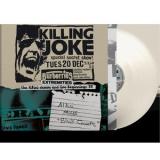
A journey into the raw and visceral origins: from the demo sessions mixed by Steve Albini to the night of the very first secret show on December 20th, 1988. In the heart of Chicago, Geordie and Martin Atkins turned frustration and distance into pure creative energy, recording the now-legendary "Black Cassette" demos at Albini"s house. Distorted, menacing bass lines, unruly oscillators, and Albini running endlessly up and down the stairs between the basement drum room and the pantry control room defined a sound that was brutally direct and uncompromising. The first interactions with the Yamaha drum machine foreshadowed elements that would later shape parts of the album. Those sessions sparked essential ideas, while the future studio - purchased from Steve and moved to Wabash Ave - would soon become the core of Invisible Records and Killing Joke"s operations. On the other side, a truly rare document: excerpts from Atkins"s very first show with the band, at Burberries in Birmingham on December 20th, 1988. In a small, mirror-lined club filled with tension, adrenaline, and inevitable collisions with the walls, Extremities, The Fanatic, Intravenous, and The Beautiful Dead were performed publicly for the first time. It was the night when everything ignited: the blast beat still in its embryonic stage, the controlled fury Geordie demanded - "can you go a bit more Moonie on it?" - and above all Jaz"s theatrical yet strikingly genuine laughter. Not just joy, but a declaration: a giant "fuck off" to the doubters and a prelude of what was about to come. A raw, essential, indispensable testimony: the birth of an era.

Reservar13.03.2026

debe ser publicado en 13.03.2026

32,98
KILLING JOKE - EXTREMITIES, THE ALBINI DEMOS AND LIVE BEGINNINGS '88

A journey into the raw and visceral origins: from the demo sessions mixed by Steve Albini to the night of the very first secret show on December 20th, 1988. In the heart of Chicago, Geordie and Martin Atkins turned frustration and distance into pure creative energy, recording the now-legendary "Black Cassette" demos at Albini"s house. Distorted, menacing bass lines, unruly oscillators, and Albini running endlessly up and down the stairs between the basement drum room and the pantry control room defined a sound that was brutally direct and uncompromising. The first interactions with the Yamaha drum machine foreshadowed elements that would later shape parts of the album. Those sessions sparked essential ideas, while the future studio - purchased from Steve and moved to Wabash Ave - would soon become the core of Invisible Records and Killing Joke"s operations. On the other side, a truly rare document: excerpts from Atkins"s very first show with the band, at Burberries in Birmingham on December 20th, 1988. In a small, mirror-lined club filled with tension, adrenaline, and inevitable collisions with the walls, Extremities, The Fanatic, Intravenous, and The Beautiful Dead were performed publicly for the first time. It was the night when everything ignited: the blast beat still in its embryonic stage, the controlled fury Geordie demanded - "can you go a bit more Moonie on it?" - and above all Jaz"s theatrical yet strikingly genuine laughter. Not just joy, but a declaration: a giant "fuck off" to the doubters and a prelude of what was about to come. A raw, essential, indispensable testimony: the birth of an era.

Reservar13.03.2026

debe ser publicado en 13.03.2026

32,98
E L U C I D & Sebb Bash - I Guess U Had To Be There LP
  • 1: First Light
  • 2: Cantata
  • 3: Hands N Feet (Feat. Estee Nack)
  • 4: Make Me Wise
  • 5: Coonspeak
  • 6: Equiano (Feat. Shabaka Hutchings)
  • 7: The Lorax (Feat. Billy Woods)
  • 8: Fainting Goats (Feat. Breeze Brewin)
  • 9: I Say Self
  • 10: Visitation Place
  • 11: Alive Herbals
  • 12: Parental Advisory

Two turntables and a microphone. There is a truth in the clarity of that simple coda, a truth that also belies the breadth of what is possible within its confines. Sometimes you gotta get reminded. I Guess U Had To Be There, the new album from NYC rapper ELUCID and veteran producer Sebb Bash, is one of those ones. So fresh it sounds like it was made tomorrow, but bet money you could put this on in ’89 and get heads bopping.
There are moments in music when masters of their craft cross paths at the height of their respective powers—records like Madvillainy, Liquid Swords, Dr. Octagonecologyst, and Hell Hath No Fury—where the result is more than the sum of its parts. ELUCID and Sebb Bash find themselves in this heady, seemingly effortless ephemera on I Guess U Had To Be There. Everything is both familiar and groundbreaking. The beats shift and flip under ELUCID’s feet but he tightropes it all, delivery nimble as a mountain goat, producer and rapper moving in perfect synchronization. Some shining stars make memorable appearances: billy woods, Breezly Brewin, Estee Nack, Shabaka Hutchings. But this is a two-man show, and the duo keep the spotlight where it belongs. I Guess U Had To Be There is a captivating, convention-defying listen and a high-water mark for two of the best artists in the genre.

Reservar13.03.2026

debe ser publicado en 13.03.2026

35,25
Keefy G / Joejoemojo / Kerouac / Geeson3003 - Audial VA1

Audial is a party in Leeds that has made great moves in recent times and has become an essential night out for those who like heady underground sounds. It now takes the natural next step by branching out with a new label and a fresh VA to kick it off. City mainstay Keefy G serves up the first cut 'After Diz' - a raw, gritty garage house slammer with naughty bass. Joejoemojo's 'Moneymaker' spins out on dusty breaks and warped low ends that bring the filth and on the flip Kerouac drops the late night and eerie tech of 'Broken' with bleepy synths and sultry spoken words. Geeson3003 shuts down with a rework of a Streets classic that hits hard with a UKG twist.

No en stock

Haga su pedido ahora y le encargaremos el artículo en nuestro proveedor.

13,87

Ültimo hace: 27 Días
Panic! At The Disco - A Fever You Can't Sweat Out LP 2x12"
  • LP 1: A Fever You Can’t Sweat Out (20Th Anniversary Remaster) A1. Introduction
  • A2: The Only Difference Between Martyrdom And Suicide Is Press Coverage
  • A3: London Beckoned Songs About Money Written By Machines
  • A4: Nails For Breakfast, Tacks For Snacks
  • A5: Camisado
  • A6: Time To Dance
  • A7: Lying Is The Most Fun A Girl Can Have Without Taking Her Clothes Off
  • A8: Intermission
  • B1: But It’s Better If You Do
  • B2: I Write Sins Not Tragedies
  • B3: I Constantly Thank God For Esteban
  • B4: There’s A Good Reason These Tables Are Numbered Honey, You Just Haven’t Thought Of It Yet
  • B5: Build God, Then We’ll Talk
  • LP 2: A Fever You Can’t Sweat Out (Demos) C1. The Only Difference Between Martyrdom And Suicide Is Press Coverage (Demo)
  • C2: London Beckoned Songs About Money Written By Machines (Demo)
  • C3: Nails For Breakfast, Tacks For Snacks (Demo)
  • C4: Camisado (Demo)
  • C5: Time To Dance (Demo)
  • D1: Lying Is The Most Fun A Girl Can Have Without Taking Her Clothes Off (Demo)
  • D2: But It’s Better If You Do (Demo)
  • D3: I Write Sins Not Tragedies (Demo)
  • D4: I Constantly Thank God For Esteban (Demo)
  • D5: There’s A Good Reason These Tables Are Numbered Honey, You Just Haven’t Thought Of It Yet (Demo)
  • D6: Build God, Then We’ll Talk (Demo)

Die Standard-Doppel-LP-Version enthält das Remaster zum 20-jährigen Jubiläum und die A Fever You Can't Sweat Out (Demos).
Nach ihrem aufsehenerregenden Auftritt beim When We Were Young Festival in Las Vegas feiern Panic! At The Disco weiterhin die zwei Jahrzehnte seit der Veröffentlichung ihres bahnbrechenden, mit Mehrfach-Platin ausgezeichneten Debütalbums mit der Ankündigung der A Fever You Can't Sweat Out (20th Anniversary Deluxe) Edition.


Das wegweisende Album, hervorgehoben durch den neu mit Diamant-Status ausgezeichneten Hit „I Write Sins Not Tragedies“, katapultierte die Band aus Las Vegas zum Rock-Star-Ruhm und etablierte sie als eine der prägendsten Acts ihrer Generation.


Entdeckt von Pete Wentz von Fall Out Boy, als die Bandmitglieder noch Teenager waren, explodierten Panic! At The Disco mit der Veröffentlichung von A Fever You Can't Sweat Out im Herbst 2005 in die Musiklandschaft. Das Album erreichte die oberen Ränge der Billboard 200 und feierte Mehrfach-Platin-Erfolge.


Die Breakout-Single der Veröffentlichung, „I Write Sins Not Tragedies“, wurde zu einem der bekanntesten Songs dieser Ära, erreichte die Top 10 der Billboard Hot 100 und wurde ein Radiohit in verschiedenen Formaten. Die ikonische Hymne findet weiterhin großen Anklang bei Musikfans und erhielt kürzlich eine RIAA Diamant-Zertifizierung für über 10 Millionen Streams/Verkäufe.


Angetrieben von Hymnen wie „Build God, Then We’ll Talk“, „The Only Difference Between Martyrdom And Suicide Is Press Coverage“ und „Lying Is The Most Fun A Girl Can Have Without Taking Her Clothes Off“, hat das Album bis heute Verkäufe von über 5 Millionen Alben und fast 4 Milliarden globale Streams generiert.

Reservar27.02.2026

debe ser publicado en 27.02.2026

43,66
Bettye Swann - Feel The Feeling LP

Bettye Swann possessed one of the most emotive voices in soul music’s cannon but her recording career was that of a shooting-star; it blazed at the start, then illumined brightly before abruptly dissipating, all in just eleven years. In 1975 she ceased recording, moved to Las Vegas and retired her Bettye Swann persona.
The Louisianan Betty Jean Champion had relocated to Los Angeles as a young woman where in around 1964 she was introduced to Al Scott, owner of Money Records. It was her fourth Money 45 “Make Me Yours” that propelled Swann into the stratosphere. One of the defining songs of the era, it was her pathway to Capitol Records with whom she signed in 1968.
By 1972 Bettye was at Atlantic Records. The initial Atlantic 45 “Victim Of A Foolish Heart” b/w “Cold Day In Hell” recorded at Fame with Mickey Buckins and Rick Hall, made for a promising debut reaching #16 on the Billboard chart. It was followed by Bettye’s version of Merle Haggard’s “Today I Started Loving You Again” and “Til I Get It Right”, a gentle country-soul labour. “I’m Not That Easy To Lose” also dates from those sessions.
In an attempt to broaden her appeal Atlantic sent Swann to Sigma Sound in Philadelphia where she cut Phil Hurtt’s’ and Tony Bell’s “Kiss My Love Goodbye”, “Time To Say Goodbye” and “When The Game is Played On You”. Her fortunes continued to wane so Swann was next placed with Nashville producer Brad Shapiro. The results were artistically stellar and included three unissued gemstones in The Isley’s “This Old Heart of Mine”, a definitive version of Maxine Weldon’s “I Want Sunday Back Again”, and “Either You Love Me Or Leave Me”.

Reservar27.02.2026

debe ser publicado en 27.02.2026

43,28
Warren Zevon - Excitable Boy LP 2x12"
  • A1: Johnny Strikes Up The Band
  • A2: Roland The Headless Thompson Gunner
  • A3: Excitable Boy
  • B1: Werewolves Of London
  • B2: Accidentally Like A Martyr
  • C1: Nighttime In The Switching Yard
  • C2: Veracruz
  • D1: Tenderness On The Block
  • D2: Lawyers, Guns And Money

A Consummate Fusion of Wit, Humor, Satire, Honesty, and Chaos: Warren Zevon’s Excitable Boy Captures Dark Elements of American Culture with Uncanny Insight

• Sourced from the Original Analog Tapes for Definitive Sound: Mobile Fidelity’s Numbered-Edition 180g 45RPM 2LP Set and Hybrid SACD Play with Explosive Dynamics and Airy Openness

• Jackson Browne-Produced Album Includes “Werewolves of London,” “Lawyers, Guns, and Money,” and “Roland the Headless Thompson Gunner”

Excitable Boy established Warren Zevon as rock’s gonzo figurehead — or, as Jackson Browne aptly called him, “the first and foremost proponent of song noir.” A supreme collision of over-caffeinated energy, acerbic wit, dark humor, irreverent reporting, bittersweet romance, swept-under-the-rug truth, and illicit desire sent up with booze, pills, and therapist confessions, the breakthrough album zeroes in on frightening aspects of American culture with an incisiveness that’s even sharper today than upon the effort’s release in 1978. Its hard-boiled narratives owe to a tradition established by Raymond Chandler, continued by Hunter S. Thompson, and carried into the 21st century by Breaking Bad and Better Call Saul creator Vince Gilligan. And the music has never sounded so excitable. Sourced from the original analog master tapes, Mobile Fidelity’s numbered-edition 180g 45RPM 2LP set and hybrid SACD elevate the best-selling album of Zevon’s career to audiophile status.

Co-produced by Browne and Waddy Wachtel — and featuring contributions by members of Fleetwood Mac plus Linda Rondstadt, J.D. Souther, and Browne — the platinum-certified record now plays with a verve and explosivity that match its subject matter. Listeners will experience wide separation between the instruments; full-range dynamics; sterling transparency that draws a through- line to the original sessions at the Sound Factory; and a presence that enhances the body and tenor of Zevon’s vocals. Like the hairy creatures in “Werewolves of London” and the ghosts wandering the corridors of Excitable Boy, Zevon’s legacy still runs amok via the grooves of his finest studio work. Draw blood, indeed.

No en stock

Haga su pedido ahora y le encargaremos el artículo en nuestro proveedor.

82,56

Ültimo hace: 50 Días
Yolanda Be Cool - Yolanda Be Cool EP

The Yolanda Be Cool EP captures the playful energy and globally-inspired grooves that define their sound.

Leading the charge is the iconic multi-platinum hit ‘We No Speak Americano’, complemented by the equally infectious ‘Dance And Chant’.

The flip side features the massively recognisable ‘Sugar Man’ and club favourite ‘Soul Makossa (Money)’.

These four tracks are a true representation of the innovative sound design that cemented Yolanda’s status in house music.

Limited Pressing act Fast.

No en stock

Haga su pedido ahora y le encargaremos el artículo en nuestro proveedor.

13,87

Ültimo hace: 55 Días
Artículos por página
N/ABPM
Vinyl