GRAMMY® Award winning duo Twenty One Pilots released their new album, Scaled And Icy, earlier this year and it reached #3 in the UK Official Album Chart. They are now releasing the album on vinyl for the first time, set for release on 19th November. Scaled And Icy is Twenty One Pilots’ first studio album in three years and follows their RIAA Platinum certified LP, Trench.
Written and largely produced by Joseph in isolation over the course of the past year at his home studio, with Dun engineering the album’s drums from across the country, Scaled And Icy is the product of long-distance virtual sessions and finds the duo processing their upended routines along with the prevailing emotions of 2020 - anxiety, loneliness, boredom, and doubt. The duo had to forgo their normal studio sessions but reached a new of level of introspection in the process, adopting a more imaginative and bold approach to their songwriting. The result is a collection of songs that push forward through setbacks and focus on the possibilities worth remembering.
In 2020, Twenty One Pilots surprised fans with standalone singles “Level of Concern” and “Christmas Saves The Year.” “Christmas Saves The Year” arrived at the tail end of 2020 and debuted on Billboard’s “Alternative Airplay” chart becoming the first holiday-themed song to make the list since 2012.
Furthermore, Twenty One Pilots scored one final accolade in the final moments of 2020, officially breaking the GUINNESS WORLD RECORD™ for the longest music video with their history-making regenerative visual for “Level of Concern.” Besting the previous record holder, Pharrell and his 24-hour long video for “Happy,” Twenty One Pilots’ ‘Never-Ending Music Video’ for “Level of Concern” broadcasted for 177 days straight with a total run time of 4,264 hours, 10 mins, 25 seconds.
Twenty One Pilots’ 2018 LP Trench ushered in a new era for the duo from Ohio. A true global phenomenon having surpassed two billion streams worldwide, Trench is highlighted by the alternative hits “The Hype,” “Chlorine,” and “Jumpsuit.” “Jumpsuit” stands as the decade’s fastest rising song to reach #1 on Billboard’s “Alternative Songs” chart and earned the duo their fourth GRAMMY® nomination (Best Rock Song).
out of Stock
Last delivered 4 years ago available to reorder, subject to availability
Far Out Recordings presents a double bill of two monumental Brit funk classics. Keep In Touch and Stay were the first two 12” singles by the iconic Freeez, both self-funded passion projects of its founding member John Rocca, for his own Pink Rhythm imprint.
It all started over the counter at Derek’s Records on Petticoat Lane, London in the mid-70s. Rocca - at the time a budding teenage percussionist - met the prolific guitarist, composer, producer and all round brit funk fixer Jean-Paul “Bluey” Maunick (also the father of Far Out producer Daniel Maunick). Best known as the founding member of Light of the World, Incognito, and more recently Str4ta, Bluey’s involvement in the origins of Freeez are lesser known, but no less crucial. Bluey invited Rocca to a weekly jam session in an East London basement, where they would develop their craft, form their first band Freeez and develop the idea for ‘Keep In Touch’: “Back in the basement there was this one particular track we were playing that I really loved. It had a groove that I thought I could sell” Rocca reminisces.
Going against the advice of all the musicians involved, who thought he was mad and set to lose all his money, John decided to go full DIY, hire out a high end studio in the West End to record ‘Keep In Touch’ and release it as a private press, birthing his now famed Pink Rhythm label. Featuring Bluey on guitar, Peter Maas on bass, Paul Morgan on drums, Jason Wright on keyboards, and John Rocca on percussion, Keep In Touch was a surprise underground hit selling over 5000 copies and reaching #49 in the UK, leading Freeez into a record deal with Pye / Calibre.
Still giddy from the experience of having produced and pressed his first record at the age of just 19, John set out to do it all again with ‘Stay’ and ‘Hot Footing It’, enlisting Bluey & co once again. This time Rocca attempted to take things to the next level by adding vocals into the mix. Though this new arrangement initially backfired and cost John the deal with Pye / Calibre who weren’t feeling the slight change of vibe, original copies of the Stay 12” have become one of the most in demand from the brit funk canon.
These foundational DIY 12” singles paved the way for Freeez to become a household name in the history of British funk who went on to record hits like ‘Southern Freeze’ and ‘IOU’ as well as underground cult classics like ‘Melodies of Love’ and ‘India’ as Pink Rhythm, John Rocca’s later formation of Freeez named after his imprint.
out of Stock
Last delivered 4 years ago available to reorder, subject to availability
French producer and remixer Nicolas Laugier aka The Reflex is a name synonymous with supreme remixes and reimaginings of disco, soul, funk and dance classics. This brand new and essential double-pack sees Laugier take on some of the immense Salsoul catalogue, lovingly reworking classics alongside deep digs from the seminal NYC disco labels vaults. There's something for every dancefloor occasion here with Inner Life, Metropolis, Leroy Burgess and Aurra all getting The Reflex touch. These new versions are more than just re-edits, these are proper remixes utilising master stems, session tapes and the original spirit of these incredible recordings. It's no wonder The Reflex's 'revisions' have found themselves in the hands of tastemakers, DJs and hardcore record fiends alike! You need these....
These brand new mixes have been mastered with love, care and respect for Salsoul / BMG. Artwork and design courtesy of Al Kent / Million Dollar Disco. Worldwide manufacture and distribution courtesy of Above Board distribution, 2021.
out of Stock
Last delivered 4 months ago available to reorder, subject to availability
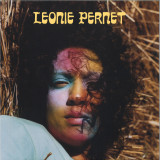
Léonie Pernet's second album Le Cirque de Consolation, to be released November 19th on InFiné & CryBaby, inhabits a world where borders dissolve and everyone makes their own unique and singular utopia. Hereby, the record questions the links between pop music, African cultures and electronic music, neo-classical music or the role of voice, whether human or synthetic. Sophomore albums can be a painful process for an artist - how refreshing it is to hear one so decidedly optimistic.
Textextext - (add your write up)
The sought after whirlwind of French Pop that exploded onto the scene with her debut "Crave", Leonie Pernet, returns with her second album, "Le Circque de Consolation", a sort of double negative of her first. While the yearning that sat at the center of "Crave"might not have been resolved, the young multi-instrumentalist and singer has found a new perspective - a more open and positive outlook on her own life and work. Perhaps telling, then, that the title was the first element of the album to exist: as it is and has always been a journey of personal (and collective) consolation first, a musical confrontation with the self.
"This record parallels my life's journey," confirms Léonie, "it reflects what has happened in my life since 'Crave' came out and how I feel today. There's still a lot of melancholy, but a lot more sunshine and light. In four years, I've become sober, which has saved me; I've worked a lot on my voice, which is a part of a desire to speak, to address my audience more directly, and also a more pronounced pop desire." In line with her new-found "openness", Leonie invites another musician into her creative process for the first time on "Le Cirque de Consolation": Jean Sylvain le Gouic, who lended his coproduction and perspective to her, while Leonie still plays almost all instruments herself with an astounding prowess.
Leonie's voice oozes with a new-found self-confidence and takes center stage amidst eclectic, distinctively fun and open-minded production. Sometimes she sings in English, mostly in French: "I worked a lot on my voice," confirms Léonie, "I didn't dare to sing before, neither live, nor on record, nor in the studio." Surrounding her astounding, intoxicating voice are forays into any direction imaginable: from harsh, experimental electronics to the more sombre, organic and quiet moments - and everywhere, there is the vision of Africa, (also Middle East) it's many sonic gifts and cultures.
Leonie has found a universal utopia that she craves for - a musical, cultural amalgamation that is decidedly non-western, political and poetic, rooted in self-discovery and the connection with other humans: African and oriental percussion, synthesizers, drum-machines; Léonie mixes genres and instruments with ease and precision. The French novelist and philosopher Édouard Glissant - whose work and writing had a big influence on Pernet - coined the term "Creolization ", the "bringing together of several cultures or at least several elements of distinct cultures, in one part of the world, resulting in new data, totally unpredictable in relation to the sum or the simple synthesis of these elements."
From "Hard Billy ", a techno-influenced rebellious anthem, to "Les Chants de Maldoror," a club and dance song propelled forward by feverish derboukas, to the deeply moving "A rebours" and its Afro-electronic rock. Léonie Pernet inhabits a world where borders dissolve and everyone makes their own unique and singular utopia. Hereby, the record questions the links between pop music, African cultures and electronic music (Intérieur Négro), neo-classical music (Le Cirque de consolation, Dandelion), or the place of the voice, whether human or synthetic as in the atmospheric "Vowel". Sophomore albums can be a painful process for an artist - how refreshing it is to hear one so decidedly optimistic.
out of Stock
Last delivered 4 years ago available to reorder, subject to availability
Does returning to a place have a sound? Can the ear have a memory? And what if places which we return to are just empty shells? Choreographed rooms which we need to play, fill from scratch each time with fragments from the past and present, layer upon layer, familiar and still somehow always new and differently assembled. Paula Schopf’s Espacios en Soledad are acoustic walks around present day Santiago de Chile, the city where she was born - which she always left, had to leave and to which she always returns - but more than anything also through her own memories which resonate throughout the public places, squares, streets though still in their own way remain strange.
„Every immigrant in the world has a piece like this - a kind of missing link, something which is incomplete. And every time one returns to the home country you are looking for it. For me it was a matter of sound.“ (Paula 2019).
In the mid 70s leaving Santiago was a flight of exile as a child with her family. Leaving in 1990 was an autonomous decision to head for Europe, Berlin, where the wall fell, where the heavens opened up all at once and electronic music became a kind of new home to so many. Paula Schopf belonged there. For her the Ocean Club at Tresor club was a central place where friends and mentors like Gudrun Gut and Thomas Fehlmann made it possible for her to get really into it. Dancing, being and feeling your body, forgetting oneself in the bass and beats, who one is and where one’s from, to becoming the DJ Chica Paula. Chile was very far away during this time, Latin America was more just a code, a musical and habitual cliche to be cautious of. This was especially true for the culture of the Chilean exile, the pathos of the “Canto Nuevo”, the sound and ideologically charged instruments of the „música andina“, for example the Zampoña, Quena or Charango. Techno was the greatest thinkable alternative to this even if or perhaps because so many kids exiled from Chile became key figures in the German and European scene: Ricardo Villalobos, Dandy Jack, Cristian Vogel, Matias Aguayo and many more.
How does returning to a place sound? Does the ear have its own memory? The field recordings which were recorded in Santiago de Chile in 2016 and form the central sonic material for Espacios en Soledad represent the paradox for Schopf’s return to her home country after emigrating: the inevitable drifting apart of her own lived time from that of her former home. Already the Venezuelan and Colombian hawkers are unmistakable signs of the deep change in Chilean society which has happened in recent years due to immigration. Which is in contrast to the old lady who sits on the floor in a pedestrian zone and without break sings the same three songs by Violeta Parra and then keeps falling asleep while doing so. The fragile presence of her voice is joined with a repertoire which is almost mythologically timeless in Chile in a particularly moving way.
By layering, ordering and conjoining such found sounds from modern day Santiago this piece become about the urban sound of Chile’s present. But more than anything by doing this Paula Schopf becomes an arranger of her own sonic memory or sound-triggered memories of returning to this city. Just as techno and Berlin helped her for such a long time to get away from too strong of an identification as a Chilean in exil, now with Espacios en Soledad she has found a way to bring these two seemingly disparate lives and remembered worlds together.
Matthias Pasdzierny
out of Stock
Last delivered 16 months ago available to reorder, subject to availability
nown for her delicate compositions, soaked in dream-like surrealism, Icelandic musician Sóley has attracted a huge following since launching her solo career back in 2010. Her 2012 single ‘Pretty Face’ went on to generate an enormous amount of buzz, and quickly became a viral sensation. Now, with three solo LPs under her belt, Sóley is preparing to debut a completely new sound via the release of her new concept album, Mother Melancholia, on October 22nd.
Described by the artist as "Nosferatu meets Thelma and Louise in a vampire church under the watchful eye of David Lynch", Mother Melancholia is the soundtrack to the end of the world as we know it. As a self-confessed news addict, Sóley became obsessed with the idea that the world is ending. Having surrounded herself with real-life stories of global warming and patriarchal politics she couldn’t shake the feeling that she was going to die. This feeling was so all encompassing that it sparked the idea for a new project. Could there be a soundtrack for the last days of humans on earth? How would that sound?
“I read books about possible dystopian worlds and started writing poems about irrational and in love characters who live in gray and cold imaginary loneliness. In each other’s burning arms. Walking in circles with no way out” she explains. “After all, the album reflects our life here and now. Our life and reality is a kind of dystopian world.”
Whilst writing the album, which serves as a tongue-in-cheek eulogy to our planet, Sóley began reading about ecofeminism, a branch of feminism which uses the concept of gender to analyse the relationship between humans and the natural world. Ecofeminism emphasizes that both women and nature must be respected but also separated. Since the beginning of time, the natural world has been synonymous with female identity, phrases like Mother Nature are commonplace. “The patriarchy views women as volatile and hysterical. Earth and women are either our saviours or our destroyers,” explains Sóley. “It’s so easy to abuse the earth, like the patriarchy has abused women since the dawn of time, then ask for forgiveness afterwards and promise they´ll never do it again”.
The new album sees Sóley move away from the indie-pop of her previous releases. She began by experimenting with writing songs on the accordion, allowing her a new sense of freedom in her writing. The process allowed her to broaden her horizons even further and experiment with a whole range of new and exciting sounds. “I bought myself a theremin as I was really excited about the unpitched sound and there is no perfect pitch during the end of days,” she laughs. “I also bought a mellotron, my first moog and a cello and taught myself how to play each of them. All of these new instruments are particularly suitable for the kinds of aesthetic inconveniences which I have learned to embrace.”
Album opener ‘Sunrise Skulls’, one of the most cinematic moments on the album, was inspired by the Me Too and SlutWalk movements and tells the story of a group of women who rise up and fight the patriarchy. ‘Blows Up’, a track that would be at home on any horror soundtrack, is a sarcastic love letter from the Earth to humans. Standout track ‘Desert’ is an incredibly moving song dedicated to the next generation. “It’s about the guilt you feel, as a mother, for having children and leaving them on the frontline. My daughter, for example, will take over this inevitable war” explains Sóley.
In true soundtrack style, the album flows through the end of the world in chronological order, closing with the Earth’s final moments. ‘Sundown’ is a dark piano ballad detailing human kind’s final day on Earth. “And everyday, I dig my own grave, and as I dive in you´ll hold my hand” she sings, over twinkling piano and swirling synths. We then hear the world end on ‘XXX’, a dark and swirling soundscape that swells before fading to silence. On ‘Elegía’ the silence then turns to the sound of the ocean, as we hear the Earth, like a woman finally free from a violent relationship, healing on her own.
Mother Melancholia is the mark of an artist confidently striding into more experimental territory. With a lengthy and successful career behind her, Sóley felt compelled to try something new and express the real her. The music might be shrouded in darkness but it’s a move that fills her with joy and freedom. “I hope that people not only enjoy the new sound, but also that Mother Melancholia might raise some questions in people, particularly women,” she says. “I’m under no illusions that this album will change the world but I hope that people can connect with the idea”.
out of Stock
Last delivered 4 years ago available to reorder, subject to availability
For a year, in 2015, Matthew Sage (aka M. Sage) cataloged near-daily recordings made with a very narrow creative constraint; electric guitar and a few pedals, all recorded and mixed directly to cassette 4-track. Eschewing the often complex studio gadgetry and computer editing that he relies on for his primary project, Free Dust became a respite that offered room for technique to fall away and for pure expression to surface. He collected and released more than two-and-a-half hours of this material throughout the year as quarterly digital downloads; this body of work was then re-released as a double-CD in 2019 on his now-defunct label Patient Sounds. Now, Past Inside the Present presents a new collection of Free Dust material, the first proper LP for this project.
out of Stock
Last delivered 4 years ago available to reorder, subject to availability
The rarefied music of Ramuntcho Matta returns to Emotional Rescue with the first ever reissue of his album, 24 hrs. Recorded in 1986 - the same year as his influential Ecoute... - the album finds Matta working in a less playful, more experimental framework but with the same ground breaking results.
Again collaborating with a selection of accomplished players, 24 hrs sees Matta (electronics, guitars, marimba, melodica, sanza, vocals) work again with Cacau de Queiroz (flute and saxaphones) and Elie Meideros (vocals), plus Guillermo Fellove (trumpet), Ahmeed Kawa (tablas) and Polo Lombardo (konks) to deserne 6 pieces as part of a performance of Labyrinth by Joan Baixis' (backing vocals) Teatre de la Castra, Barcelona's acclaimed puppetry and visual troupe.
Centred as before, on Matta's guitar, the approach is playful, inventive, a foundation for a texture of musical aphorisms. Against a background of tabla, the elegance of versatility builds, intertwining the players via moods and textures of various traditions in a unique way that is his signature.
An album to be appreciated as one, this archival offered up additional surprises when the Master tapes were examined and so presented here is a longer form, unreleased version of Before Sunrise, as well as the previously unreleased Ramon (Digital only).
out of Stock
Last delivered 4 years ago available to reorder, subject to availability
Back in 2018, previously unheard artist James Infiltrate impressed via a punchy EP of club-focused electro numbers. It later emerged that the mysterious producer was none other than Constant Sound founder Burnski. Here he dons the alias once more for a full-length excursion three years in the making. It's a fine album, too, with the long-serving producer delivering a winning combination of punchy, club-ready beats, sci-fi fired synth sounds, moody Michigan bass and the kind of authentically spacey atmosphere that has long been associated with the greatest electro records. There's also enough subtle variety in terms of tempo and style to guarantee that you'll not get bored of it any time soon. Highly impressive, but did we really expect anything less?
out of Stock
Last delivered 2 years ago available to reorder, subject to availability
AUF TOGO is the long-time collaboration of Sasa Crnobrnja
(from In Flagranti and Mytron & Ofofo) and Clement Cachot-Coulom
(from The Fabulous Penetrators and Big Girls).
After multiple singles and EPs on Leng Records and SaS Recordings, including two collaborative EPs with the tentacular outfit Becker & Mukai, acclaimed by fans and DJs alike, most of their time has been spent writing, recording and bringing to life the 8 amazing tracks that form their debut album “Movements”.
“Movements” follows in the steps of Auf Togo’s previous releases and won’t disappoint the early fans, but it also offers a completely new proposition. Their signature blend of slamming percussion, driving bass lines, psychedelic guitar hooks, fat analogue synths are expertly mixed with new musical ventures across the tracks: from the louche Hawaiian jazz of Along The Dotted Line to the psych-funk of Pan Con Tomate, the electronic wanderings of Mexico to the cinematic intensity of Radical Departures.
The result is a spell-binding summer album, one to listen to on a coastline somewhere under the Mediterranean sun, and one that is not afraid to wear its many influences on its sleeve, from 70s psych-rock to Balearic Beat, Space Disco and Afro Beat. The scope of “Movements” is wide and proves a captivating and gratifying listen.
Debut album from supergroup with members of In Flagranti and Mytron & Ofofo Pressed on 12” vinyl with artwork drawn and designed by Award winning animator Erica Russell UK/EU marketing campaign led by Neighborhood and specialist press/DJ by Your Army, with previous support from Mixmag, Trax, Ransom Note, NTS, Bill
Brewster, Andrew Weatherall and more.
out of Stock
Last delivered 4 years ago available to reorder, subject to availability
Since her debut onto the techno scene with the 2018 release of her EP 'Post-Traumatic Rave Syndrome' on Paula Temple's "Noise Manifesto" and a string of international festival and club appearances, Femanyst has gained a reputation for militant individuality. Akua Grant sets herself apart from the crowd with her aggressive & unrelenting industrial techno sets tinged with elements of Hardcore and Gabber. She has become known for her rebellious and innovative style in her adopted home of Berlin. Her self-assured approach to gripping and brawling techno tension sees her perform a fast paced and fervent flow on the dance floor. Femanyst continues to bring her unapologetically bold signature sound with her own techno imprint "Dark Carousel" as an extension to her much revered DJ sets of twisted and aggressive, high octane electronic music.
A2 Fluid - Post Industrial Transformation
Fluid is a queer DJ and producer based in Berlin. Supporting FLINTA* DJs, producers and party events are one of his priorities. His first release begun in January 2021 and he is still modelling his sound. His interest in electronic music goes from industrial techno to ebm to trance to hypnotic techno.
Post Industrial Transformation is a track which combines aggressive sounds and a lot of industrial elements. The transformation refers to Fluid's evolving own path. This evolution is similar to the tension that builds up all through the track. This track evokes change, modification, passage from one form to another.
B1 Hybral - Unheard Voices
Hybral is a Berlin-based non-binary DJ and producer drawn to eerie energetic industrial techno. They mix and produce haunting techno, EBM, and noisy-driven experimental sounds. Hybral's productions are made of dark atmospheric patterns linked with pushing percussions and basslines as well as heavily distorted kicks and harsh industrial noises. Mixing DJ sets the track selection is ranging from contemplative ambient to stern and fast techno - connecting vast influences from Hybral's personal experiences of spending days and nights on Berlin's dancefloors. They are founder of the queer label, podcast, and event series 'Subverted' which focuses on a distinct program aiming to lead dance music back to its roots of resistance and diversity.
B2 Marsch - Mrs. Jones
Marsch is a Berlin-based dj and producer from France, who initially began 8 years ago as a music curator and selector. She started to produce when she moved to Berlin, and has mostly been focusing on this for the past few years. She would define her music as a balance between melody, energy and texture, with a blend of minimalistic elements, rhythmic and percussions, and voices and futuristic synths.
DURCH BLN/TLV is a queer collective with a clear vision of solidarity and community building. DURCH operates in Tel Aviv and Berlin trying to bring queer people together, building a culture of inclusion, diversity and tolerance. In the tradition of original raves DURCH organizes solidarity events ranging from parties, to art and community events, with the strong belief that raves are a much needed place for people to come together, celebrate their diversity and learn to respect each other. Musically DURCH is eclectic inspired by hardcore, straight forward techno, ghetto and scouse house and 90s acid.
We proudly announce the release of our first vinyl record "dogged boldness". This is a long held dream by the entire crew. With Femanyst, Hybral, Marsch and Fluid we are happy to showcase four artists that are close and dear to DURCH BLN/TLV. The record is a compilation of four hard-hitting, inciting techno tracks. Rough, bold and aggravating, just the way we like it. We are proud that we are able to continuously work with queer artists and to be a platform to further queer artists visibility.
Disclaimer: The world needs more queer artist, more queer music, more queer techno, more queer perspectives, more queer love and more queer intimacy.
No place for any racist, sexist, trans- or homophobic shit.
Artwork by Rory Midhani
Mastering by Chlar
out of Stock
Last delivered 4 years ago available to reorder, subject to availability
Ten years after its release, the reissue of this fabulous Matt Elliott record seemed essential to us since it was eagerly expected! It is undoubtedly the most dramatic sequel to the songs trilogy being outstanding for its darkness, from which he has progressively turned away. The Songs Trilogy is over, A new chapter entitled 'The Broken Man' is about to open and is the most delicate of Elliott's albums to date. The angry noise has all but abated, making way for more fragile melodies and a more subtle approach to intensity to immerse the listener. Ideally listened to in total darkness to discover the hope hidden deep within the guitars, voice, choirs, bells, ethereal trumpets, the howl of the dog beneath the skin, in the sincerity of the music. Inspired by the ghosts of European folk music, the voice often resigned but always expressive. Always finding new ways of working, Elliott collaborated with Katia Labeque who interpreted an improvisation of his that became the backbone of one of the central epic pieces on this album 'If Anyone Ever Tells Me That it is Better to Have Loved and Lost Than to Have Never Loved At All I Will Stab Them in the Face'. 'Dust Flesh and Bones', another of the epic pieces on this album, is perhaps Elliott's most beautiful and moving work to date, simple in it's form but emotionally profound. 'The Pain that's Yet to Come' hints at a new almost psychedelic era to come. 'The Broken Man' is an album to be discovered gradually over many listens, and with each one a new depth is surrendered until one can appreciate the panorama in it's entirety. Each track is an invitation to explore one mans analysis of his own descent reflecting the frustrations and sadness that touch us all at some point. Mixed by Yann Tiersen this album is a bridge between the more acoustic work of 'Songs' and the more electronic, ethereal work of Third Eye Foundation. It is finely balanced in the centre of Matt's musical universe.
Germany-based metal band OBSCURA launch trilogy concept on stunning new album “A Valediction”. The group’s first (sixth overall) album for Nuclear Blast pivots on many fronts. Advanced, elegant, and yet refreshing, “A Valediction” sums up past endeavors effortlessly as it gazes with purpose and conviction into the future. OBSCURA are fan-renowned and critically acclaimed for challenging and then expanding upon norms. From “Cosmogenesis” (2009) through “Diluvium” (2018), the band flourished and made significant progress in a musical genre unprepared for a creative shot of German invention. “A Valediction” spearheads OBSCURA into a new era of extreme metal.
Guitarist/vocalist Steffen Kummerer founded OBSCURA in 2002. Early on, he set out to improve, redefine, and push forward. Under his self-label creation, the Bavarian released debut album “Retribution” (2006), followed by heavy touring throughout Europe. Word quickly spread that a brand-new band from the south of Germany was on the rise. Buzz lead to a deal with U.S.-based Relapse Records. The first record out was “Cosmogenesis”. In Europe, Metal Hammer Germany awarded the album 6/7 while in the U.S., “Cosmogenesis” hit the Billboard charts at #71. The cross-continental praise and fevered momentum landed OBSCURA on high-profile tours in Europe, North America, and Japan.
When follow-up “Omnivium” arrived in 2011, they upped their chart success (Billboard #11; Media Control #14), received more accolades from publications like Terrorizer, Rock Hard, and Decibel, had another massive round-world tour cycle, while enhancing and making progress on their clever brutality. OBSCURA further developed their sound on “Akróasis” (2016). Moored by jaw-dropping tracks like ‘Sermon of the Seven Suns,’ ‘Ode to the Sun,’ and the title track, “Akróasis” elevated OBSCURA to the highest levels of international renown, having climbed up the Billboard charts (#5) as well as earning top marks in Rock Hard (8.5/10), Metal Hammer Germany (6/7), and Revolver (4/5). The Germans toured the world yet again, playing over 100 shows in support of “Akróasis”.
OBSCURA’s most significant accomplishment was, however, just around the corner. The final part of a tetralogy, “Diluvium” (2018), fiercely pursued OBSCURA’s multi-album transformation into musical innovators and metal powerhouses. Music videos for the title track, ‘Emergent Evolution’ and ‘Mortification of the Vulgar Sun,’ in concert with a substantial interest in virtuosic, forward-thinking metal, posited OBSCURA in the good graces (yet again) of the worldwide press in addition to rocketing up, for the very first time, the official album charts in Germany (#58) and Switzerland (#93). The Germans also topped out at #3 on the Billboard Heatseekers chart with “Diluvium”.
OBSCURA‘s stats have been impressive: Twenty years active; six highly prized albums; over 600 shows on four continents. Worldwide fan and press engagement—the videos for ‘The Anticosmic Overload,’ ‘Akróasis,’ and ‘Diluvium’ have over 4.5 million views—is only getting stronger the longer OBSCURA continue to offer up and interact with (via play-throughs and member/gear spotlights) their very captive audience. This is only the tip of Kummerer’s custom ESP guitar, however. A Valediction finds OBSCURA turning the page to a new chapter in the band’s evolution. A year in the works, the songwriting sessions followed a new approach, where the framework was relaxed, allowing new inspirations, imagining, and opportunities to arise. Songs like the opening epic ‘Forsaken,’ the '80s-tinted ‘When Stars Collide’ (featuring Soilwork/The Night Flight Orchestra frontman Björn Strid), the brutal groove of ‘Devoured Usurper,’ the ethereal artistry of ‘Heritage,’ and the fleet-fingered title track benefitted compositionally (refined structures) and aesthetically (more dynamism) from OBSCURA’s restyled songwriting stratagem.
OBSCURA wrote, recorded, and finalized “A Valediction” during the pandemic. The stipulations of working during this time allowed OBSCURA to work cross-country, tracking each respective part—drums, guitar, and bass—in national studios across The Netherlands, Austria, and Germany. Once the pieces were completed, the recordings were shipped off to award-winning producer Fredrik Nordström and Studio Fredman (In Flames, Architects) in Gothenburg, Sweden, where Kummerer and Münzner completed vocals and acoustic guitars using custom-built ENGL amps. Nordström was also tapped to mix and master. The final result is a deeper, heavier, yet more rounded production.
Lyrically, “A Valediction” is layered in structure and meaning. The word ‘valediction,’ by definition, deals with goodbyes and farewells. In a way, this is auf wiedersehen to the four-part album series while also addressing complex topics of Kummerer’s personal life. Instead of obscuring issues of loss, death, and abandonment in metaphor and allusion, the German laid bare his torment across songs like ‘Forsaken,’ ‘Solaris,’ ‘In Unity,’ ‘The Neuromancer,’ and ‘In Adversity.’ But for every line of desperation, he also offers positivity. Indeed, new beginnings—physical, emotional, or environmental—can provide light in the darkness. Lauded artist Eliran Kantor (Testament, Helloween) was brought on board to visualize the leitmotif. The bronze-themed colourway Kantor used exemplifies OBSCURA’s resistance to individual and sonic corrosion.
In 2021, OBSCURA will lighthouse their musical prowess, thematic complexity, and lyrical ambition on “A Valediction”. The group continue to be a beacon for change. No doubt OBSCURA’s new stats will amaze, but what they’re focused on is the release of “A Valediction” and then taking it on the road. Several high-caliber tours of Europe, North America, and Asia are planned through to 2023, with routes are in the works for the band to visit Australia, South America, and beyond. Truly, there is no band quite like OBSCURA. “A Valediction” proves that persistence, perseverance, and enterprising minds can achieve anything. Welcome to the next level!
ALTER- : A REACTION TO THE ALTERMODERNISM IN SOUND ART
For the Automatisme - Alter- album. I am inspired by how the art historian Nicolas Bourriaud defines the Altermodernism. Bourriaud understands the term "Alter" as a way to mean "other". The altermodernism would be another modernity that is different from the avant-garde modernism and post-modernism. More precisely, this is a new paradigm from the XXIe century with alternative ways to motivate artists to be more radical in art by traveling in the physical and digital world, by cutting the frontiers and by creating other time lines. I apply the "alter" subject to time and to landscape and those, to the rhythmic and the ambient glitch music.
1- THE ALBUM HAS A RHYTHMIC SIDE AND A LANDSCAPE SIDE.
1- a : The rhythmic tracks are named Alter-Rate. That means that I offer other types of rhythms by calculating beats with time rate experimentations. The form of the rhytmic tracks, expresses a course, a wandering, which, in the altermodern life, is not just in a standard 4/4 , or just grid based or non-grid based, but it's in a complex hybrid of all of those.
1- b : The ambient tracks are named Alter-Scape. That means that I offer another type of landScapes by a paused temporality and not by a random time or by the time of the nature. Alter-Scape tracks mimic the saturated globalized soundscapes of the XXIe century.
2- THE GLOBALISED AND SATURATED TIME
For Bourriaud, the artists respond to a new globalised perception. They traverse a cultural landscape saturated with signs and create new pathways between multiple formats of expressions and communications1. The Alter- album tracks have saturated rhythms Rates and static ambient soundScapes. The specific context within which we live is the age of globalisation2. In this album, it means that globalised or always evolving rhythm Rates are in constant movements and are also different every time an Alter-Rate track is exported or performed. On the other hand, a globalised landScape is an ambient track with a motionless temporality. In the era of the altermodern, displacement has become a method of depiction3. The movement of the sound in the Alter- album is two sound spaces. The first is the rhythms that make time movement become apparent and the second is an ambient paused or static time that makes possible to feel and to analyze the movement effect of our surroundings.
3- THE CONSTANT TENSION STATE OF ART
For Gilles Deleuze, art is in a constant state of tension, in as much as it oscillates between the poles of chaos and order4. The Alter- album is a tension between chaos and order in rhythmic beat tracks and ambient soundscapes tracks. It is a deterritorialization of the rhythms and the ambiences of today's natural and digital landscapes and it brings them into the computer glitch music format.
By pushing new softwares to their limits, I push at the extreme the software capacity to calculate and to generate sounds. The Alter-Rate tracks are experimentations with time rates and rhythms with the use of probability and artificial intelligence based sequencers. The partition signal starts from a master sequencer that gets into all instruments on a track. Each instrument receives this signal and modulates it with other sequencers that are each programmed differently for every instrument. Finally, all the instruments signals return to a master output that contains a stutter effect. This master channel is sequencing all other channels into one single rhythm. In short, a single rate merges and expands into a vast archipelago of rates and the transformed signal becomes a new single rate. The Alter-Scape tracks are experimentations with midi triggers that give the sensation of a timelessness. Multiple reverb effects are also routed into each other to create soundscapes of continuity. About the type of sounds created in this album, I do experimentations with deep frequency modulation synthesises (FM) on all Alter-Rate and Alter-Scape tracks.
I put a few layers in the tracks to be able to focus on the time space and perception. The tracks are generative and every parameter uses probabilities to be programmed. This is something that was not possible some years ago. The computers are enough powerful to generate that now. I export many times the tracks and i push the computers to their limits by making hard for them to calculate and to generate the tracks with a deep, a pointillist and an extreme software programming. These techniques do different versions every time that I export or perform a track and in my opinion, that opens a fresh and innovative way to do new experimental club music and ambient music. The computer has its own limits too.
Reviews in The Wire, Gonzo, A Closer Listen, Datacide, African Paper, Silent and Sound, and more
out of Stock
Last delivered 6 years ago available to reorder, subject to availability
1. Some records hit you with an instant impression of timeless brilliance, and Low Life’s Dogging is one of those records, what the wise call “an instant classic”. 2. From Squats to Lots: The Agony and the XTC of Low Life is more like their second album Downer Edn (read Edition), a little more withdrawn, a little more textured. Complex. Rich. Which is to say: you’re going to need some time with it. 3. Some show, some grow. Low Life have done both. This one is a grower. Spend some time with this one. It’s got that nuanced flavour. Don’t guzzle. Sip. Savour. 4. Sip it, and sense the recurring brilliance of Mitch Tolman’s lyrics, exploring the usual territory of gutter life, lad life, punk life, low life. The dirge. Disgust and shame in white Australia. Council housing, bills piled to the neck, substance abuse and rehabilitation, the fallen lads and lasses who stood too close to the flame, loss and loneliness, from squats to lots. Un-Australian gutter symphony. 5. There is a celebration of resilience and that’s a central theme of this record and a time like ours needs a record like Agony & XTC. Low times are coming through, but if you’re low they won’t get to you. 6. Iggy Pop’s Bowie produced studio rock masterpieces ‘The Idiot’ and ‘Lust For Life’ are important reference points to the 3rd album sounds of Low Life. Here comes success! 7. ‘The Agony and Ecstasy’ is a 1985 novel by Irving Stone about the life of Italian Renaissance painter Michelangelo. Stone wrote another novel about the single eared painter Vincent Van Gogh called ‘Lust For Life’. This synchronicity hit me. 8. Iggy and the Stooges are a pretty safe reference for Low Life (and all good rock music). Iggy and the Stooges are a low life’s Michelangelo, but solo Iggy like Lust for Life is a better reference for this particular incarnation of Low Life, which is to say they are studio rock albums. 9. Bowie later referred to this period of his life as profoundly nihilistic. But Iggy looked at it as the period of his life that saved him from an early grave. This confrontation is Low life lore. 10. Let’s stick to this, because there’s something about this era of Bowie that makes sense with Low Life’s new album, particularly Low. One should never miss the Low in our new album from Low Life. Producer and studio boss Mickey Grossman has the ear for the Low, and he has carved out a little statue of David right here. 11. Mickey’s ears are recording, mixing and producing the best of Sydney, most notably the Oily Boys Cro Memory Grin. A great companion record to this one. Use Agony & XTC AFTER Oily Boys. Not on an empty stomach, and don’t try to operate heavy machinery (bobcat, bulldozer etc). 12. The relationship between Low Life and Sydney hardcore should not be understated, but it also shouldn’t guide how to listen to Agony & XTC. This is not austere, disciplined music. 13. Think, like, if Poison Idea were given the kind of studio time and budget as Happy Mondays. You wouldn’t play it to a teenager. It’s not for children. This is a mature flavour, one for the adults who have had to contend with failure and hardship, medical bills and disappointed family members, betrayed lovers and worrisome growths, police brutality and tooth decay, humiliating bowels and collapsed septums, detoxing and drying out, for those who have seen themselves as corrupted and putrid and unloveable, for those who endure all of this and aren’t willing to lie down and cop it sweet: Low Life are still here and they ain’t going nowhere. NOTES ON HOW NOT TO LISTEN TO AGONY AND XTC OF LOW LIFE: 1. Don’t think of shoe-gaze. It suggests a safe passage to 90’s reminiscences, a vogue style of our time, but nothing to do with Low Life style. Low Life style is always of its time. The content changes. Agony & XTC shares weight of records like My Bloody Valentine’s Loveless and Slowdive’s Kebab, records that were laboured on after the songs were recorded, songs that were written as they were recorded. 2. We can call these “studio albums” as opposed to albums built in the heat of live performance. Studio albums from the 90’s are called shoe-gaze by some journalist nerds, but we know better than to use words like this. 3. Studio albums are excessive and, at the same time, so empty. Agony & XTC, Loveless, Kebab, Rumours: excessive! And empty. This is not to suggest this is Low Lite, some throwback, soft. A band like Low Life can make an overproduced studio rock album without having to use the word shoe-gaze. So, don’t think studio albums mean anything especially 90’s. Don’t look back. 4. Let’s lose these distasteful labels, like “shoe-gaze”, “rehab rock”, “stab”, “guitar OD overdrive”, “western Sydney wonder”. They can fade out. A low life was once referred to as a vagabond. Who uses this term today? Nobody. Language can murder. Words can die. Kill ‘em all! - Daniel 'DX' Stewart, Melbourne, 2021.
We used to enjoy presenting Chapelier Fou's work using the idea of music in the form of a treasure hunt. However, while the phrase in itself it still just as relevant today, we would never have imagined that it would become such an integral part of one of his albums. Or two of his albums to be perfectly exact - Méridiens and Parallèles. Two records with twelve songs each which answer each other back in the form of anagrams. They are like the two sides of the same planet - similar but simultaneously so different. They need to be discovered one after the other taking the time necessary to travel through the sound territories produced by his imagination. The starting point is a sombre night in Uqbar… Chapelier Fou's opening reference to Borgès was obviously not made by chance. He subsequently confided in us the objective of his diptych, namely to combine reality with fiction to question certainties and our relationships with the imaginary sphere. He has continued with his traditional classical-contemporary electronic approach which, although now known to a wide audience, has the advantage of opening up a whole range of possibilities right up to the infinite scale. Moving away from an "État Nain" (Dwarf State) to take refuge on an asteroid...Throughout Méridiens, each composition can be seen as a universe in itself or a specific landscape with its own temporality. Proof of this is the introduction to the chamber music format composed for and performed by only strings which can only be given the date we want to give it. This is "État Nain" in which violins are played like guitars. In some parts we find the spirit of the Penguin Cafe Orchestra and the idea of cheering up classical instruments and not taking everything too seriously. In other parts, we find something close to a mischievous and childish unplugged grunge anthem that could be from the French series Les Shadoks. This mischievous view of things is shown to full effect in Am Scharchtensee. The introduction shows Chapelier Fou's whole classical universe and mastery of orchestration in which "modular" electronics provide a subtle and discreet backdrop. Then, the record suddenly switches to a surrealist dialogue between these classical sounds and modular synthesizers with the flavour of the German pioneers Kluster/Harmonia to name but one example. Timelessness and imaginary places. La vie de cocagne confirms this choice of total freedom. It's traditional music with old sounds, a kind of forgotten bourrée (old French dance) in which electronic sounds disturb the established order and thus reach another musical dimension. Le méridien du Péricarde followed by Désert de Sonora push this idea of a trompe l'oreille and a hall of mirrors even further. The latter track ends almost like a catchy 80s melody and we can no longer find any logical meaning. We let ourselves be carried away by this profusion of madness and are a little amazed by this mastery of sound, composition and space. It sometimes all seems like a succession of conjuring tricks. Chapelier Fou takes not being serious very seriously indeed. The end song Everest trail is the perfect conclusion, a deadpan track in which the primary aspect of a totally classical melody in all its straightness is underpinned by a permanent exchange of electronic tweets which mocks the main musical posture. This impertinence harks back to Pierre Schaeffer who directed the ORTF's very serious experimental department in another era and allowed the development of Jacques Rouxel's series Les Shadoks thus introducing the general public to the notion of concrete music. This is also perhaps why Louis Warynski's stage name is French – because he has opted to use his French musical heritage. Thus the first singles selected from this album, Constantinople with its groovy and jazzy allure and Le Triangle des Bermudes evoke composers like Michel Magne or Michel Colombier both of whom have totally open minds and consider all music to have the same importance, namely that of sound. In absolutely all the tracks that make up Méridiens, you will find at least one detail - a pattern, melody, sometimes a simple sound - that will draw you back to explore it a little more. And the words are carefully weighed for sure. It's quite simple. This is undoubtedly his most hypnotizing and catchy album. Chapelier Fou has become a complete master of his own universe. He draws the start and finish lines himself and no one can follow him in a field that now belongs to him alone. Composed imaginary spheres, illustrated territories...Music is just as meaningful as the more visual arts. Therefore the artwork of Méridiens had to project each of the twelve tracks considered individually and not just the whole album as such. Chapelier Fou therefore asked his old friend the contemporary artist Corentin Grossman to create twelve windows to represent glimpses of the twelve worlds composed for the record. Windows or mirrors when it comes to that? You can never be sure of anything...Space OK. But what about time? The years go by and sometimes we forget that fact. But a simple glance back is often enough to gently touch the time that has passed. It is over 10 years since his first official record and he has been composing, recording and sharing his music for almost 20 years. 20 years is a long time. It makes some people look old while others fall into reassuring but sterile nostalgia. Chapelier Fou, on the other hand, has released his most ambitious project and tried to take a higher view of his discography that was itself nevertheless irreproachable. Although the journey is over we can see Parallèles universes on the horizon. Chapelier Fou has announced 12 additional tracks which are like echoes of the compositions on Méridiens' and will be released on the album Parallèles next spring. They are neither twins nor opposites – they are instead totally original new compositions which go further in exploring a universe which is already richly abundant.
After delaying the inevitable for over half a decade, the west coast's most versatile indie rock everyman (Rob Crow, co-creator of Touch and Go sentimental pop superstars Pinback) and the world's most left-of-everything drummer (Zach Hill, one-half of the outlandish noise duo Hella and drummer for Deftones side-project Team Sleep) have joined forces to unite the disparate worlds of noise and pop as The Ladies on the stunningly addictive and efficient They Mean Us. More adventurous than Pinback, and more accessible than Hella, The Ladies prove to be the best of both worlds. It's even better than the ideal album you've been making up in your head for the last half decade or so.
SPICE singer Ross Farrar speaks of the band’s ambition to forge a sort of aesthetic patois: a mode of expression as strikingly regional as it is recognizable. Last year’s self-titled debut, released in the depths of the pandemic, fully achieved this goal, distilling decades of North Bay punk and post-hardcore into an urgent, artful set of emotive unrest. Their latest single, A Better Treatment b/w Everyone Gets In, further refines the group’s singular mix of weathered melody and abrasive poetics, equal parts bracing, bruised, and cryptic.
“A Better Treatment” began as a song about a friend who died but through the turmoil of collaboration transformed into something more macroscopic and opaque, blurring the boundary between hopeful and defeated (“I thought loving someone would cure my self-hatred”). Bass and drums build against walls of guitar while the violin threads its own melancholy within the noise; Farrar is blunt about the intention: “The violin is an instrument of death you know.”
“Everyone Gets In” is both poppier and more pained, an anthem for angst aging into the reverie of regret: “We lose our strength / along the way / we lose each other / the funeral sways.” The tempo sways too, gradually slowing to an anxious crawl before finally revving back into a storm of shimmering guitar and splashing drums, fighting against the dying of the light. It’s music of raw truths and
rejected pedestals, storied but unswerving, a revolt against the great regress: “and my / my time is spent / adoring seasons / that I / I never should’ve.”
SPICE singer Ross Farrar speaks of the band’s ambition to forge a sort of aesthetic patois: a mode of expression as strikingly regional as it is recognizable. Last year’s self-titled debut, released in the depths of the pandemic, fully achieved this goal, distilling decades of North Bay punk and post-hardcore into an urgent, artful set of emotive unrest. Their latest single, A Better Treatment b/w Everyone Gets In, further refines the group’s singular mix of weathered melody and abrasive poetics, equal parts bracing, bruised, and cryptic.
“A Better Treatment” began as a song about a friend who died but through the turmoil of collaboration transformed into something more macroscopic and opaque, blurring the boundary between hopeful and defeated (“I thought loving someone would cure my self-hatred”). Bass and drums build against walls of guitar while the violin threads its own melancholy within the noise; Farrar is blunt about the intention: “The violin is an instrument of death you know.”
“Everyone Gets In” is both poppier and more pained, an anthem for angst aging into the reverie of regret: “We lose our strength / along the way / we lose each other / the funeral sways.” The tempo sways too, gradually slowing to an anxious crawl before finally revving back into a storm of shimmering guitar and splashing drums, fighting against the dying of the light. It’s music of raw truths and
rejected pedestals, storied but unswerving, a revolt against the great regress: “and my / my time is spent / adoring seasons / that I / I never should’ve.”
Flashes of light rarely burn for long. Bush Tetras exploded into
New York in 1979 and flamed out just a few years later. Yet
somehow this lightning-quick band have risen from their own
ashes again and again for four decades. The spark that ignited
Bush Tetras tapped into a deep grid of power, fuelled by
guitarist Pat Place, singer Cynthia Sley and drummer Dee Pop.
That chemistry is palpable on ‘Rhythm and Paranoia: The Best
of Bush Tetras’, which features 30 tracks across 2CDs in a 4-
panel digipack / 29 songs across 3LPs pressed onto 180gram
vinyl in a rigid lift-off box with lift ribbon, remastered by Carl
Saff, plus a 40-page (2CD) / 46-page (3LP) book with neverbefore-seen photos, an original essay on the band by Marc
Masters and micro essays by Sonic Youth’s Thurston Moore,
R&B legend Nona Hendryx, The Clash’s Topper Headon and
more.
From the band’s earliest recordings to their current, vital-asever incarnation, ‘Rhythm and Paranoia’ - for the first time ever
- showcases their unique, influential and body-shaking meld of
rock, punk, funk, reggae and more in one cohesive, immersive
and meticulously constructed box set.
“Coupled with ‘Too Many Creeps’’ dancey arrangement, Sley’s
monotonous tone signaled that within the Tetras’ newly staked
safe space, misogyny wasn’t a threat: it was just a boring,
predictable damper on the party. Like the rest of their peers, this
band was over it.” - Pitchfork (The History of Feminist Punk in
33 Songs)
“The Bush Tetras are a national treasure” - VICE
“Renowned at the dawn of the eighties for pairing the disjoined
guitar skronk of the inaccessible No Wave scene with
irrepressible, funk-infused rhythms, the Bush Tetras were
remarkably influential without ever really receiving their due” -
The New Yorker
“Bush Tetras bridge the gap between the Ramones and Sonic
Youth.” - NY Post
IDLES return with their new album, ‘CRAWLER’, an album of reflection and healing
amid a worldwide pandemic that stretched the planet’s collective mental and physical
health to the breaking point.
Frontman Joe Talbot says: “We want people who’ve gone through trauma,
heartbreak, and loss to feel like they’re not alone, and also how it is possible to
reclaim joy from those experiences.” IDLES albums have always been anchored by
these overarching themes, but the ability of the band to juxtapose beauty and rage
with humour and drama has never felt more satisfying than on ‘CRAWLER’.
These stories are vividly brought to life through IDLES’ most soul-stirring music to
date, recorded with co-producers Kenny Beats (Vince Staples, Freddie Gibbs) and
IDLES guitarist Mark Bowen.
Previous album ‘Ultra Mono’ was Number 1 album in the UK, with over 35k sales
week one.
Huge 2022 January UK tour including five Brixton Academy dates, three at Glasgow
Barrowlands, two at Manchester Warehouse and more. Over 20k UK tickets sold in
the first hour of release.
Three high budget music videos, written and directed by LOOSE (Lucy Hickling,
Stink Films).
CD in digipak packaging.
Deluxe LP mastered at half-speed (45rpm), pressed on deluxe heavyweight 180g
black double vinyl and housed in a gatefold jacket with printed inner sleeves.
Eco-Mix coloured vinyl LP housed in a single-sleeve jacket and printed inner sleeve.
Eco-Mix vinyl production uses leftover wax that’s already in the factory, meaning
each record is different and the colour is completely random and unique.
Standard black vinyl LP housed in a single-sleeve jacket and printed inner sleeve.
There are records with empathy, records which are your friends and then there's the others... There might be little difference between them, a certain "je ne sais quoi", an "almost nothing but still something" which makes the difference between almost pointless and vital records. Despite, or rather thanks to his cynical despair, Matt Elliott's music never holds up a moralizing mirror to us - on the contrary, it creates a compassionate dialogue with listeners like the rhythm of two steps that synchronize to become as one. In 2016, Matt Elliot brought out his seventh solo album The Calm Before whose obscure title is neither exactly threatening nor comforting... the calm before what? Before the storm for sure but maybe also before the great record, the immediate classic we felt might be coming for a long time in the dual discography of the Bristol-born artist working under his own name and his electronic alias Third Eye Foundation. The elegant details and perspectives of Little Lost Soul (2000) already hinted at the upcoming masterpiece from the English singer-songwriter. The Mess We Made (2003) was Matt Elliott's first solo album and portrayed a universe in a kind of flight towards Balkan horizons made up of visceral despair. With the Songs trilogy, he put aside the electronic side of his work to continue working with a minimalist, stark and lucid style of writing. The Broken Man (2012) was full of tears and long laments sometimes carried by Katia Labèque's piano on a record which painted new shades of grey. On this record Matt began working with the producer, arranger and multi-instrumentalist David Chalmin (La Terre Invisible) who has kept on collaborating with the Bristol-born singer since then. Their partnership continued on Only Myocardial Infection Can Break Your Heart (2013) and The Calm Before (2016). Stéphane Grégoire is the head of the Ici D'Ailleurs label which has accompanied Matt Elliott since 2005 and perhaps he describes this album the best: "This new record by Matt is without a doubt his best album to date, a record that takes him into another dimension where he fully asserts himself as a songwriter and singer of the calibre of artists like Bill Callahan, Leonard Cohen or Johnny Cash." Matt Elliott's other records all seemed like empathic links between each other. Farewell To All We Know is an instant classic based on the sensitive piano and superb arrangements of David Chalmin, the sensitive cello of Gaspar Claus, the subtle bass of Jeff Hallam (who has also played with Dominique A and John Parish). There is a clear form of alchemy in all of this and still we find Matt Elliott's usual atmospheres and scenery, the same Eastern European folk music, long songs that take time to settle over time. Everything is the same but also is transfigured. By making his music stark and purifying and redefining the subject matter, Matt Elliott's work became so much more delicate. However this work is never frail nor really turned in on himself and thus becomes like a vital tune that vibrates and unfolds. The opening song Farewell To All We Know seems torn between the fear of what tomorrow may bring, inevitability and hope for the future in a permanent and progressive dramatic tension expressed by his Spanish guitar, the impressionist style piano and Matt's voice teetering on the edge of whispers. A funereal tribute to endless twilights and the dawns we all dream of seeing. There are touches of Leonard Cohen from Songs from a Room or Thanks For The Dance in The Day After That with Gaspar Claus's counterpoint cello. There is no spirit of resignation in Matt Elliott's work - life's path has to be followed against all odds. We have to follow the river's flow to reach the immense ocean and its infinite freedom. The haunted instrumental Guidance Is Internal harks back to the atmospheres of Howling Songs (2008) with its guitar parts full of scansions and muted threats. The music is transcendental but never seems afraid of the risk of falling. This is also what Bye Now tells us with its quasi-obsolete simplicity and sunburst melancholy reminiscent of the work of Luiz Bonfá, Bill Evans on Peace Piece or laidback crooners of the 50s. In Farewell To All We Know, Matt Elliott incessantly alternates between the dual desires to face up to the world or to protect himself from it. Hating The Player, Hating The Game is a lucid statement about the dullness of our daily lives sometimes, our right to get out of the game and no longer want to be part of it. Matt Elliott is tender but spares no one, particularly himself. Aboulia speaks of the tiredness of living and of looming death while Crisis Apparition says that there is always a time for reconstruction after chaos. This is like initially wearying wandering in the ruins of Aleppo with the slow dilution of the melody into a hallucinated drone. However the smell of great fires always fades and the earth always regenerates. Matt Elliott seems to suggest that the survival instinct is stronger than any cold winds could ever be. Matt Elliott never sings of certainties and prefers possibilities. Possibly the worst is over? Maybe... Maybe the storm has passed and devastated everything, now we just have to rebuild and live again. Farewell To All We Know shows us the distance that still needs to be walked and he walks next to you - right next to you, he is the friend who doesn't spare you the truth like all true friends really do.
After having sold more than 3 million albums Nolwenn Leroy is making a resounding comeback with a new hit single, “Bresil, Finistère”. Fruit of a collaboration with Benjamin Biolay, who has written several songs on the new album, the single is one of the eleven new titles on"La cavale", the 8th album from Nolwenn Leroy. Reviews and Ads – R2 and London Macadam
Oak Corridor is the second full-length album from Newcastle, Australian duo Troth (Amelia Besseny & Cooper Bowman). It follows 2020’s warmly received album, Flaws In The Glass (Altered States Tapes) and 2021’s Small Movements In Radiance mini-album (Not Not Fun). While the same themes and intentions remain, this time Troth channel their ambient experiments into an environ located somewhere closer to minimal-wave and synth-pop.
While Oak Corridor is their most ‘song-based’ album to date, it continues the respectful treatment of natural themes found in their previous releases, further tying in elements of balance, truth, justice, humility, strains of mysticism from varied origins and an opposition to the encroachment of ill-advised development surrounding them in Newcastle (and Australia more broadly). The album is a truly collaborative affair and offers something of a sound-diary of the two’s relationship.
out of Stock
Last delivered 4 years ago available to reorder, subject to availability
This is a special one. Very much indeed. I was on a train on my way to Galicia earlier this year when my phone started off. It was Mike. Me and him exchange a call every now and then, so I thought it was the classic how-you-doing thing, which of course was. Only that this time the call ended with him saying “I’ve emailed you something, a couple of vocal takes plus the only music line that survived that session which is some great drumming by Gad”. Nothing more. Gad (scratches head)? Who the hell is Gad? When I arrived at destination and found some steady wifi connection I downloaded the stuff and found out “who the hell” Gad was. Nothing less than the “most recorded drummer in the history of soul music” aka James “Big Foot” Gadson who, beside the Kirklands, in his career has been drumming for the likes of Marvin Gaye, Charles Wright, Bill Withers, The Temptations, Martha Reeves, Quincy Jones, you name a Soul Star or a famous album, or a legendary recording session, he was there beating snares and kicks. Having been much satisfied by our work on the “Love Scenario” release Mike wanted us, and I quote him literally, “to do our magic”. We did our best of course, but you just can imagine the pressure. This time we went the extra mile though because at some point, listening again and again to the verses and choruses I figured out it would have been a great experiment to give an ultra retro feel to an original recording of 1980. So, while we were doing our thing I’ve asked my mate Paul from Blue Lotus Recordings in Saint Louis, if they could “do their magic” themselves. They gladly accepted the challenge, I handed them over the vocal takes and Gad’s drumming and the result is this 4 tracks 7”/33 rpm biscuit which we hope you will enjoy as much as we all have enjoyed producing it.
Over the course of the decade, Meatbodies’ Chad Ubovich has been
a perennial candidate for MVP of West Coast’s fertile rock scene. The
LA native could be seen peeling off guitar solos in Mikal Cronin’s
backing band, supplying the Sabbath-sized low end for Ty Segall and
Charlie Moothart as the bassist for Fuzz, and, of course, fronting his
own Meatbodies. Today the recently dormant experimental noise /
freak-rock outfit has announced their return with 333—a corrosive
stew of guitar scuzz, raw acoustic rave-ups, and primitive
electronics that charts Ubovich’s journey from drug-induced darkness
to clear-eyed sobriety. 333 simultaneously reflects on how the world
he re-entered was still pretty messed up—if not more so. “These lyrics
are dark, but I think these are things that a lot of people are feeling
and going through” he says. “Here in America, we’re watching the
fall of U.S. capitalism, and 333 is a cartoonish representation of that
decline.”
In mid to late 2019, the band—Ubovich and drummer Dylan
Fujioka—had a new album in the can, ready to be mixed. But
when COVID hit, like so many other artists, they put their release
on hold as they rode out the pandemic’s first wave. During that idle
time, Ubovich discovered a cache of demos that he and Fujioka had
recorded in a bedroom back in the summer of 2018, and he really liked
what he heard. In contrast to Meatbodies’ typical full-band attack, it
was deliriously disordered. “It sounded gross, like a scary Magical
Mystery Tour,” he recalls proudly. After subjecting them to some
mixing-board freakery, Ubovich fast-tracked the songs into becoming
this third release of theirs, 333. It proves Meatbodies have greatly
expanded their palette, opening new portals to explore. And for an
album that wasn’t supposed to exist, 333 is the ultimate testament to
Meatbodies’ renewed vitality.
Restlessly awakening from the depths of a feverish slumber, doomed heavy metal masters KHEMMIS return to reveal their fourth full length studio album, DECEIVER, arriving via Nuclear Blast Records in November 2021. Six tracks of desolate, soul-awakening heaviness encapsulate a project that has been nearly three years in the making. With a title that reflects the internal struggles that many of us battle in our daily lives, DECEIVER is a ferociously honest and appetizingly raw piece of musical artistry.
The first single LIVING PYRE signifies far more than just the beginning of another musical endeavour for the band; it is a substantial benchmark for emotional struggle and growth. “When it comes to my own mental health, when I’m in a bad place, I can’t access the part of me that creates art. After reaching that understanding of myself, the bulk of this song came out in one sitting. I was feeling stable. I was feeling hopeful–even though so much outside in the world was not exactly inspiring. All of us needed a reason to feel a glimmer of hope,” recounts Hutcherson. With a big, quintessentially KHEMMIS chorus embellished by a swampy sorrow, this song incorporates familiar elements of the band’s sound with a touch of Swedish death metal in its latter half. “The reason that this was the song that came first lyrically was because I was juggling all the things that were happening with the inside and outside world intersecting. All the lyrics for me feel very ‘of the time.’ So much was happening in this world, and they were just my efforts to contend with it,” explains Pendergast. “Like Ben, this was a breakthrough moment for me. Once I got the song out, it allowed me to write other songs for the album. It’s less about the fire metaphor implied by the title than about the fact that in order to escape fire you have to find water. You find the deepest, darkest cavern…you just want to stay there forever. It slowly fills up and you eventually drown.”
HOUSE OF CADMUS was another deeply collaborative writing effort between all three members of KHEMMIS. “I thought the opening riff had this cool almost-swing to it...but evil,” recalls drummer Zach Coleman. “I was drawn to the atmosphere of that first riff, and it felt like it needed to be a song that was dark the whole way through. Ben and I discussed getting some New Orleans-style sounds somewhere on the album, and I think this is where we were able to sneak some in to tie together other aspects of the song.”
“I knew that I wanted the lead guitar line in the second half of the song to tie two very different parts together,” explains Hutcherson, “but the idea was all really abstract until we were in a room together. It wasn't until we jammed out that big funeral/death doom bridge and the slow, sad coda that we found out what we wanted that lead line to be: memorable and emotive. It was a very honest musical moment together.” The writing and recording processes of HOUSE OF CADMUS were so emotionally driven that even producer Dave Otero of Flatline Audio (Cephalic Carnage, Cattle Decapitation, Act Of Defiance) encountered his own deeply personal and intense connection with the song. “With the lyric turn at the end, I was inspired by Dave’s imagery,” says Pendergast. “This idea of a person leaving some important part of themselves behind as they float away and leave the thing they love on the shore. The sound of this song is like a lighthouse beam cutting through the fog in a dark night on the ocean.”
While the lyrical themes of DECEIVER;sorrow, pain, longing for hope, will no doubt be familiar to longtime fans, these six songs display a broader collection of musical influences than on any other KHEMMIS record to date. “It being our 4th album, especially after the transition between the last two albums, it felt really freeing. We felt that we could really do anything on this record,” explains Coleman. “There’s a lot here that we’ve never done before,” adds Pendergast. “In some areas it gets darkly psychedelic. I think we found a cool way to mutate things using transitions that feel really natural. There is a subtle symmetry between the first and last songs which is one of the things that makes listening to the full album a satisfying holistic experience. It builds from almost nothing, becomes very dark, and then you slowly crawl out of that lowest circle of hell.” KHEMMIS’s DECEIVER is a beautiful, musically ambitious journey from beginning to end drenched in impassioned melody and complex, unrestrained variations of sonic savagery adorned with chilling, intensely tragic cover art by frequent collaborator Sam Turner.
Restlessly awakening from the depths of a feverish slumber, doomed heavy metal masters KHEMMIS return to reveal their fourth full length studio album, DECEIVER, arriving via Nuclear Blast Records in November 2021. Six tracks of desolate, soul-awakening heaviness encapsulate a project that has been nearly three years in the making. With a title that reflects the internal struggles that many of us battle in our daily lives, DECEIVER is a ferociously honest and appetizingly raw piece of musical artistry.
The first single LIVING PYRE signifies far more than just the beginning of another musical endeavour for the band; it is a substantial benchmark for emotional struggle and growth. “When it comes to my own mental health, when I’m in a bad place, I can’t access the part of me that creates art. After reaching that understanding of myself, the bulk of this song came out in one sitting. I was feeling stable. I was feeling hopeful–even though so much outside in the world was not exactly inspiring. All of us needed a reason to feel a glimmer of hope,” recounts Hutcherson. With a big, quintessentially KHEMMIS chorus embellished by a swampy sorrow, this song incorporates familiar elements of the band’s sound with a touch of Swedish death metal in its latter half. “The reason that this was the song that came first lyrically was because I was juggling all the things that were happening with the inside and outside world intersecting. All the lyrics for me feel very ‘of the time.’ So much was happening in this world, and they were just my efforts to contend with it,” explains Pendergast. “Like Ben, this was a breakthrough moment for me. Once I got the song out, it allowed me to write other songs for the album. It’s less about the fire metaphor implied by the title than about the fact that in order to escape fire you have to find water. You find the deepest, darkest cavern…you just want to stay there forever. It slowly fills up and you eventually drown.”
HOUSE OF CADMUS was another deeply collaborative writing effort between all three members of KHEMMIS. “I thought the opening riff had this cool almost-swing to it...but evil,” recalls drummer Zach Coleman. “I was drawn to the atmosphere of that first riff, and it felt like it needed to be a song that was dark the whole way through. Ben and I discussed getting some New Orleans-style sounds somewhere on the album, and I think this is where we were able to sneak some in to tie together other aspects of the song.”
“I knew that I wanted the lead guitar line in the second half of the song to tie two very different parts together,” explains Hutcherson, “but the idea was all really abstract until we were in a room together. It wasn't until we jammed out that big funeral/death doom bridge and the slow, sad coda that we found out what we wanted that lead line to be: memorable and emotive. It was a very honest musical moment together.” The writing and recording processes of HOUSE OF CADMUS were so emotionally driven that even producer Dave Otero of Flatline Audio (Cephalic Carnage, Cattle Decapitation, Act Of Defiance) encountered his own deeply personal and intense connection with the song. “With the lyric turn at the end, I was inspired by Dave’s imagery,” says Pendergast. “This idea of a person leaving some important part of themselves behind as they float away and leave the thing they love on the shore. The sound of this song is like a lighthouse beam cutting through the fog in a dark night on the ocean.”
While the lyrical themes of DECEIVER;sorrow, pain, longing for hope, will no doubt be familiar to longtime fans, these six songs display a broader collection of musical influences than on any other KHEMMIS record to date. “It being our 4th album, especially after the transition between the last two albums, it felt really freeing. We felt that we could really do anything on this record,” explains Coleman. “There’s a lot here that we’ve never done before,” adds Pendergast. “In some areas it gets darkly psychedelic. I think we found a cool way to mutate things using transitions that feel really natural. There is a subtle symmetry between the first and last songs which is one of the things that makes listening to the full album a satisfying holistic experience. It builds from almost nothing, becomes very dark, and then you slowly crawl out of that lowest circle of hell.” KHEMMIS’s DECEIVER is a beautiful, musically ambitious journey from beginning to end drenched in impassioned melody and complex, unrestrained variations of sonic savagery adorned with chilling, intensely tragic cover art by frequent collaborator Sam Turner.
THERION have always been a band that have challenged themselves to explore new paths, while remaining true to their musical core values. For their 17th studio album, mastermind Christofer Johnsson and his collaborator Thomas Vikström have created something that has been previously unthinkable to the guitarist and the singer. "We have done the only thing that was left of all the different angles to explore", explains Christofer. "We have decided to give the people what they kept asking for. 'Leviathan' is the first album that we have deliberately packed with THERION hit songs."
True to the Swede's words, the album opens with the catchy and swift tune 'The Leaf Of The Oak Of Far' featuring female and male antiphonal singing as well as a choir that seems to have evolved straight out of THERION's breakthrough full-length "Theli" (1996). This is immediately followed by the obvious highlight 'Tuonela', in which Christofer cleverly underscores this hit-track's Finnish vibe by employing NIGHTWISH’s "metal voice" Marko Hietala. Next up in this parade of future fan-favourites is the title track 'Leviathan' that offers classic THERION material with operatic female vocals and a massive choir.
Christofer Johnsson's passion for classic voices, choirs, and orchestral elements as well as his penchant for epic melodies in combination with rock and metal shines clearly through the following sing-along ballad 'Die Wellen Der Zeit', which indicates another nod to German romantic composer Richard Wagner. "Ever since 'Theli', Wagner has been and will always be at the core of THERION", emphasises Christofer. "When we started to combine metal and opera, it was something new and original. Today, symphonic metal has long been a firmly established genre." When THERION came into being in 1988 by changing name from the already existing band BLITZKRIEG, which was founded a year earlier, Christofer had rather taken inspiration from SLAYER's "Reign In Blood" among other classic metal albums.
At the beginning, the Swedes were firmly rooted in death metal, a genre which they helped to define, as witnessed by their debut album "Of Darkness...." (1991). Yet even back then, there were hints of "something else" lurking beneath the rough surface. The use of female vocals is another core ingredient of THERION today, which developed gradually. CELTIC FROST had basically introduced the female element to extreme metal on "To Mega Therion" in 1985. THERION began with both a female and male vocalist emulating a church like choir already in their sophomore full-length 'Beyond Sanctorum' (1992). With Symphony "Masses: Ho Drakon Ho Megas" (1993) and "Lepaca Kliffoth" (1995), Christofer continued to developed his trademark sound by gradually drifting towards cleaner vocals and more keyboards.
With "Theli", the Swedes had firmly established a reputation of pushing the boundaries of metal in the 90s –among such acts as their compatriots TIAMAT, THE GATHERING, and MOONSPELL that were often referred to as "gothic metal" at the time. THERION continued to break new ground leaving inspiration for others to follow in their wake: On "A'arab Zaraq -Lucid Dreaming" (1997), Christofer further explored the use of Near Eastern music in metal which he had already begun in 1992, while "Secret Of The Runes" (2001) dared to have Swedish lyrics in some songs.
While critics were left confused and fans challenged, THERION were often ahead of their times and vindicated in hindsight. Even the band's 25th anniversary excursion "Les Fleurs Du Mal" has by now overcome the initial shock the album caused and is only beaten in terms of streaming by the classic "Vovin" (1998). When Christofer faced the question of where to go next after the dramatic "Beloved Antichrist" (2018) had finally fulfilled his musical mission, his answer is "Leviathan" named after a giant sea monster from Judeo-Christian myth that has roots in Babylonic lore: THERION have created a giant hit album –and for the first time in the history of the Swedes, their fans are not asked to explore something new, but simply to lean back and enjoy the best from their band!
Ferocious Dog have been putting lockdown to good use by writing and recording their fifth studio album 'The Hope'. Instantly recognisable as a fusion of folk, punk and ska - but with newer members Ryan and Johnny really putting their stamp on evolving their sound further - the former adding much more bite to the electric guitar, with the latter juxtaposing this aggression with softer folky sounds.
The ever-present traditional cover is here, right on-trend with a sea shanty vibe, the rest of the album flows irresistibly through tales of historical observations to biting commentary on the plights facing the world today. The songs follow a rollercoaster of pace and sentiment which will have you wanting to mosh one moment before having a moment to contemplate, coupled with a surprise collaboration and an overdue catch-up with how Mairi is getting on.
A great follow-up to Fake News and Propaganda - Ferocious Dog seem to have the knack of evolving their sound enough to pique your interest, without losing any of the sound or attitude that made you fall in love with them in the first place. Once they’re allowed out to play again they’ve given themselves a real headache in trying to pick a set list from their now burgeoning back catalogue.
Ferocious Dog have been putting lockdown to good use by writing and recording their fifth studio album 'The Hope'. Instantly recognisable as a fusion of folk, punk and ska - but with newer members Ryan and Johnny really putting their stamp on evolving their sound further - the former adding much more bite to the electric guitar, with the latter juxtaposing this aggression with softer folky sounds.
The ever-present traditional cover is here, right on-trend with a sea shanty vibe, the rest of the album flows irresistibly through tales of historical observations to biting commentary on the plights facing the world today. The songs follow a rollercoaster of pace and sentiment which will have you wanting to mosh one moment before having a moment to contemplate, coupled with a surprise collaboration and an overdue catch-up with how Mairi is getting on.
A great follow-up to Fake News and Propaganda - Ferocious Dog seem to have the knack of evolving their sound enough to pique your interest, without losing any of the sound or attitude that made you fall in love with them in the first place. Once they’re allowed out to play again they’ve given themselves a real headache in trying to pick a set list from their now burgeoning back catalogue.
Ltd White vinyl LP w/ printed inner sleeve lyric insert (1000 copies ww)! Emma Ruth Rundle's forthcoming Engine of Hell is stark, intimate, and unflinching. For anyone that's endured trauma and grief, there's a beautiful solace in hearing Rundle articulate and humanize that particular type of pain not only with her words, but with her particular mysterious language of melody and timbre. The album captures a moment where a masterful songwriter strips away all flourishes and embellishments in order to make every note and word hit with maximum impact, leaving little to hide behind. "I really wanted to capture imperfection and the vulnerability of my humanity," Rundle says of the album's sonic approach. "Here are some very personal songs; here are my memories; here is me teetering on the very edge of sanity dipping my toe into the outer reaches of space and I'm taking you with me and it's very fucked up and imperfect.'" Emma Ruth Rundle has always been a multifaceted musician, equally capable of dreamy abstraction (as heard on her album Electric Guitar: One), maximalist textural explorations (see her work in Marriages, Red Sparowes, Nocturnes or collaborations with Chelsea Wolfe and Thou), and the classic singer-songwriter tradition (exemplified by Some Heavy Ocean). But on Engine of Hell, Rundle has opted to forego the full-band arrangements of her previous albums in favor of the austerity of a lone piano or guitar and her voice, which creates a kind of intimacy, as if we're sitting beside Rundle on a bench, or perhaps even playing the songs ourselves. It's an extremely up-close and personal confessional with a focus on the rich subtleties and timbre of Rundle's graceful performances. "For me this album is the end of an era to the end of a decade of making records. Things DO have to change and have changed for me since I finished recording it." In essence, Engine of Hell signifies a major turning point for Rundle as both an artist and as a person. The catharsis of this type of songwriting has effectively served its purpose, and to continue ruminating on the past going forward is less of a healing process and more like picking at a scab and refusing to let it heal. This may help explain why Rundle is less than enthusiastic about divulging the details about her muses, but it doesn't alter the fact that these songs served a purpose in their creation, and that they may continue to bring comfort to others.
Muscle Shoals singer-songwriter Dylan LeBlanc releases his new EP,
‘Pastimes’, a self-produced collection of covers of songs from Glen
Campbell, Bob Dylan, the Rolling Stones, Led Zeppelin, Buffalo
Springfield and JJ Cale that inspired him to create his own acclaimed altcountry sound.
‘Pastimes’ is released on orange coloured vinyl.
LeBlanc shared his thoughts about his cover of Led Zeppelin’s ‘Going to
California’: “When I was 15 years old I got my first paying gig at a local
coffee shop called Juri’s,” says LeBlanc. “I remembered this girl that sat
behind me in class and I bonded over Led Zeppelin ‘IV’. I remember I
had gotten a Led Zeppelin box set that year for Christmas, and her
favorite song was ‘Going to California’. I rushed home to learn that song
for her and spent hours in my room at my grandmother’s house where I
lived at the time so I could play it for her and impress her. This song will
always hold a special place in my heart. I love this record and this era of
music that I think will always remain untouchable forever and always.”
Each song was chosen for its deeply personal impact: JJ Cale’s
‘Sensitive Kind’ takes LeBlanc back to the smoky dive bars his father
would bring him along to as a child. Buffalo Springfield’s ‘Expecting to
Fly’ reminds him of teenage joyrides, speeding through the country and
listening to music to escape life’s harsh realities. He learned the art of
storytelling through songs with the Rolling Stones’ haunting ‘Play With
Fire’ and Bob Dylan’s ‘Blind Willie McTell’ - a track that he compares to
reading a Southern Gothic Faulkner novel. And Glen Campbell’s ‘Gentle
on My Mind’ is a song he remembers from his early childhood, when his
grandfather, also a guitarist, would throw parties where friends would
gather to drink and sing and forget their troubles.
‘Pastimes’ was recorded at Fame Recording Studios in Muscle Shoals,
live and with as few takes as possible in order to capture a sense of
authenticity. Says LeBlanc, “I feel like music is nothing more than a
spiritual endeavour to widen the horizons and heighten the senses of the
things inside of everyone that sometimes feel unreachable.”
Dylan LeBlanc has spent the last decade releasing four acclaimed
albums, winning praise for his arresting alt-country style, collaborating
with the likes of Emmylou Harris and Brittany Howard, and sharing
stages with heavyweights like Bruce Springsteen and Lucinda Williams.
“One of modern country’s most interesting voices, in both senses of the
term.” - Uncut
“Sublime voice and evocative songwriting.” - Nashville Scene
Triple Black Vinyl, 12”x24” Poster, Vinyl “Bumper” sticker, DL card. An essential rock artefact tracing The Groundhogs from their pre - ‘Thank Christ For The Bomb’ blues roots to the final live show for the classic line up of Tony McPhee (guitar and vocals), Pete Cruikshank (bass) and Ken Pustelnik (drums). Never before heard recordings from the Warner Brothers’ vaults including a vintage 1969 set from their show at the Richmond Athletic Ground (AKA The Crawdaddy Club) and their final explosive set at the Pocono Raceway track. Includes the live debut of what would become the anthemic ‘Cherry Red’ and McPhee’s seismic destruction of ‘Amazing Grace’. A career-spanning gem from the ultimate heavy rock power trio book-ending 976 days and 250-plus live shows. “In their stage act they concentrate on being as heavy and as hard-hitting as possible.” The Scene magazine. “Performing on stage we feel that the emphasis is on excitement so we play the numbers that involve the greatest amount of movement and dynamics,” Tony McPhee told Star Pop.
Five years after the release of "Je vous dis" in 2018, Geins't Naït and L.Petitgand's second album from the "Mind Travel" and "Make Dogs Sing" collection on the German label "Offen", the duo are now writing a new chapter in their story with this fascinating poetic tale. The same mysterious and heady atmosphere which characterises the two musicians is present in this new work but clearly they have never ceased refining and polishing their sounds to give their compositions even more power and depth. Geins't Naït and L.Petitgand here offer twelve new tracks with names as enigmatic as the title "Like this maybe or This" itself and the record's whole universe. In reality, these mysterious names lead us to let ourselves be taken to the deep meaning of their creation. The subject matter is certainly difficult to grasp and invites us on an inner journey while leading us to doubt and question ourselves incessantly. There is a perfect alchemy between these two artists though this was far from self-evident as they come from two very different schools. Thierry Merigout, who is now the only representative left from the late 80's experimental project Geins't Naït in Nancy, comes from the post-industrial scene. As for Laurent Petitgand, he is a pure melodist who is best known for his work as a composer of music for films and live shows and has collaborated with Wim Wenders and Paul Auster in particular. "Like this maybe or This" is a fully accomplished symbiosis between Geinst Nait's industrial and experimental tonalities and the celestial melodies of Laurent Petitgand. "Shape of the storie" starts the album with a bewildering atmosphere which mixes a sample of a guttural voice with cavernous resonances thus prefiguring the album's general atmosphere. However, while some tracks like "HAC" fuel our existential anguish, other tracks have a poetic and melancholic tonality which touches our deepest humanity. This is the case of "Dustil" whose subtle piano notes combined with the melancholy violin show us a sublimated world. This fascinating blend of violence and gentleness makes this record an atypical work which enables listeners to lose themselves in an emotional nebula where they can perceive the turbulence and also the intensity of our inner life.
Following March’s 9696 Dream mixtape and July’s Flex Time EP, this new album sees 96 Back shine the spotlight on his own vocals for the first time, at points (such as on lead single ‘9 To Find 6’) operating fully in the realms of experimental pop. At other times, such as on ‘Teach Me Tenderness’ and ‘Feel Hard’, 96 Back stretches and processes his vocals to almost breaking point, while album closer ‘Melt You’ sees him duet with past collaborator Iceboy Violet, ending Love Letters on a sombre but romantic note. That’s not to say Love Letters is fully removed from the dancefloor, however: tracks like ‘Don’t Die’ and ‘Love Compact’ are precision-tooled for the club, while the likes of ‘Felzin’ and ‘Vibrant Colours’ continue to explore the intricate but emotive electronics that 96 Back has been so successful with in the past. More varied and vivid than any of 96 Back’s releases to date, Love Letters feels like a coming of age moment. It casts its net incredibly wide at points, and it’s an album full of ambition, but it meets every challenge it sets itself — as affecting in its quieter, tender moments as during its dramatic peaks. In 96 Back’s words: “This is a record I feel like I’ve been trying to write for years, it feels like the most accurate body of work to match the ideas in my mind. Trying to project a lot of the records I hold very dear to me through this lens, interpreting how they sound to me and merging them with ideas of finding the drama and excitement in the full spectrum of emotions on the tip of my tongue, that’s what ended up being Love Letters, Nine Through Six.”
Both noted for strikingly forward-thinking bodies of solo work dating back to the 1990s, the duo of Andrew Pekler & Giuseppe Ielasi - collaborators for the better part of a decade - reemerge with 'Palimpsests’, their first outing with Shelter Press. Built from deconstructed layers of texture, tone, and arrhythmic percussiveness, the album’s 2 sides distill 6 years of work into 9 splintered, airy reimaginings of minimalism - each surprising, creatively rigorous, and startlingly beautiful - that rest at the outer reaches of contemporary electroacoustic practice and musique concrète.
Based in Berlin and Milan respectively, Andrew Pekler and Giuseppe Ielasi have individually carved singular paths across numerous disciplines within experimental music for more than 20 years, each deploying sampling, synthesis, and acoustic sources to weave their own, distinct worlds of sonorous abstraction. Brought together by years of friendship and a shared devotion to layered texture and complex, fractured structure, the pair first joined their creative energies in 2013, a collaboration that culminated as the LP, ‘Holiday For Sampler’, issued by Planam.
'Palimpsests’, the duo’s second outing, draws its material from a series of improvisations made by the Pekler and Ielasi in Milan during 2015. Over the ensuing six years, those recordings would undergo various transformations - cut, reworked, sampled, and added to by each artist, working at geographic distance between Berlin, Kyoto and Monza - before culminating, like the album’s title suggests, as a unique manifestation of musical palimpsest; “an object reused and altered, while still bearing visible traces of its earlier form”.
With each of the album’s compositions nodding toward a city with which Pekler and Ielasi hold biographical connections, 'Palimpsests’ constructs sound as poetic metaphor; a series of ghosts - traces of memory, image, and action - cut and reassembled, in cycling permutations, before been set into action at a glacial pace with layered, transparent forms.
Defined by remarkable restraint and pointillistic precision, across the album’s two sides Pekler and Ielasi weave the fractured remnants of their sessions - reduced to glitches and warbling fragments of texture and tonality - into pulsing expanses of spatial ambiance that defy imagism, blur the boundaries between the synthetic and organic - reducing their sources to a series of unknowns - recast the boundaries of electroacoustic practice on markedly singular terms.
Shelter Press is thrilled to present 'Palimpsests’, another brilliant outing from the duo of Andrew Pekler and Giuseppe Ielasi. Issued in a limited edition of 500 copies on black vinyl, with artworks on printed inner and outer sleeves by Traianos Pakioufakis.
Time and life has happened and memories fade. These recordings were made in 1991 and 1992 when we were proudly surfing our mid teens and spending enormous amounts of time in the studio. Every weekend was spent upstairs at Zwarre’s house with analogue synths, VHS sessions watching splatter movies and Psychic TV’s ”8Transmissions8”, going through the Paul Kelday and Sound of Pig cassettes, reading zines to find out more about bands and labels operating the experimental music world, and dreaming about a life away.
Alvars Orkester had been going since ’87 and we had lost a few members so we were down to a duo. We had gone from being kind of all over the place, to investigating how sound affect your mind, and narrow it down. Recording together were magic moments, and it did change me to whoever I am today. These vague memories are dear to me.
After a monster year for Vince Watson, with releases on Get Physical, Tronic, SushiTech, All Day I Dream alongside his own Everysoul Audio and a host of remixes, he now ends 2021 brining his label’s biggest and most adventurous release to date: ‘DnA reSequenced’.
After the massive response to his 18 track ‘DnA’ album in 2019, Vince had a vision of having some of the tracks remixed by his favourite Detroit ‘flavoured’ artists from the 3 places that musically have made it all possible for him: Scotland, Amsterdam, Detroit.
So it is with great pleasure that Everysoul can announce remixes by none other than Carl Craig, Claude Young, John Beltran, Jon Dixon, Shawn Rudiman, Stephen Lopkin, Steve Rachmad and Stephen Brown.
Planet E boss Carl Craig is no stranger to Vince’s work, having released 4 of his singles on Planet E and previously remixing his track ‘It’s Not Over’. His remix of ‘Holographic’ takes the heavy synth lines into typical C2 remix territory, building and building with layers into a crescendo.
Jon Dixon may be one of Detroit’s rising stars as a solo artist, but as a band member of Underground Resistance and Timeline, he plays with some of the best Detroit Techno groups around: Galaxy2Galaxy and is a classically trained pianist. Jon’s releases over the last few years now showcase his personal styles and Vince was desperate to work with him, with a keen respect for his musicianship. His Remix of
John Beltran has been one of Vince’s favourite producers for over 25 years and his Pan Am remix is a journey of blissful Beltran fusion styles.
Claude Young takes his remix into a completely new and different direction, moving from the Electro of the original into an experimental masterpiece, respecting the tricky chord programming of the original and adapting into sounds that only Claude Young is able to extract.
Steve Rachmad is one of Vince’s closest allies in Amsterdam and having worked together on many projects over the years, Steve was the first name on the list. His 4/4 edition of Second Wave takes the deep Detroit chords and harmonies into a much darker and groovier direction, with early Transmat character and the funk that Steve Rachmad is known for.
Shawn Rudiman’s remix is a no nonsense straight to the floor banger, taking all the elements of the original into a much more streamlined and live improv version for the floor rather than the head.
Stephen Lopkin is one of Vince’s favourite Scottish producers and his remix takes the original into his own unique style and identity. The original had very unique chord progressions and timing and Lopkin was able to successfully extend this to make it even more complex but with a seamless flow that keeps the groove flowing.
Stephen Brown is also a top Scottish producer who Vince has been supporting and spinning for over 20 years, and his remix of Immersion removes the fluffy jazzy elements from the original and opts directly for the dancefloor, taking Immersion into new territory.
DnA
out of Stock
Last delivered 16 months ago available to reorder, subject to availability
WAR’s head-nodding mix of music and message started a revolution 50 years ago that continues to win over the hearts and hips of fans around the world. “Greatest Hits 2.0” will be available 29th October and is a new, career-spanning collection that expands on WAR’s platinum-certified 1976 greatest hits album, featuring the legendary songs “Spill The Wine,” “Low Rider,” “Galaxy,” and “Why Can’t We Be Friends?”
WAR’s “Greatest Hits 2.0” 2LP contains 20 tracks, 2CD contains 24 tracks recorded between 1970 and 1994, including the gold-certified singles “Slipping Into Darkness,” “The World Is A Ghetto,” “The Cisco Kid,” and “Summer.” Another gold single, “Why Can’t We Be Friends?” stayed on the charts for 31 weeks and became the soundtrack to the US-Soviet space mission where astronauts and cosmonauts linked up in the spirit of friendship. In the modern era, it has been streamed more than 100 million times. Also included is the #1 R&B smash “Low Rider,” which was inducted into the Grammy Hall of Fame in 2014.
In the collection’s liner notes, Los Angeles Times columnist Gustavo Arellano says GREATEST HITS 2.0 does more than capture WAR at its creative and commercial peaks. He writes: “All the big hits are here, of course, in chronological order from the Eric Burdon days up through cuts from 1982’s underrated Outlaw…But what I love about this collection is that it’s a symphonic suite for a perfect Southern California Sunday afternoon, the kind the rest of the world wants to experience but can only dream about. You can envision it by playing these albums from start to finish.”
out of Stock
Last delivered 4 years ago available to reorder, subject to availability