"I have two new records, just full of smells. "
from Scanners Live in Vain by Cordwainer Smith
Lutto Lento's new 2568 E.P. is an album in 7-inch single form. Lutto, real name Lubomir Grzelak, has for years been one of the most acclaimed sonic storytellers around. His first outing on Meakusma is another trip beyond the constraints of musical logic, interweaving elements from industrial music, early avant-garde influences, post-club tendencies, and more, conjuring up a mini-album of huge scope.
Not unlike The Residents, 2568 E.P. touches upon stories from the deep, with an absurdist touch that is at the same time forgiving and inviting. It has a hauntological feel to it, but contradicts it at the same time. It is purring and cold, whispering and layered. Beatific and up close. There is a space ship in the swimming pool, but the cocktail party goes on, kind of. On the edge of industrial music, with a choir thrown in for good measure. On the fringes of club music. Toss the wire-sphere into the air and pay the price for space. Fake composure and dive in.
Lutto Lento is Lubomir Grzelak, a sound artist, composer, music producer, and DJ. Known for his idiosyncratic productions and eclectic sets that break barriers between genres, he has steadily built a reputation for adventurous electronic music that resists easy categorization. Beyond records, he composes for theatre, film, and contemporary dance, weaving diverse influences into a distinctive sonic language.
quête:no nam
In 1978 a newly formed Augusta, Georgia group Marshall, Donovan and Broomfield chose to record cover versions of two songs previously recorded in 1973 and 1974 respectively by Florida siblings group Cornelius Brothers and Sister Rose. These Eddie Cornelius penned songs “Let me Down Easy” and “Since I Found My Baby” would form both sides of Marshall, Donovan and Broomfield’s first 45 single, released on group founder John Marshall’s own Augusta label. The flipside “Since I Found My Baby” would eventually gain popularity across the pond with aficionados of the UK modern soul scene of the early 1980’s and beyond.
John Marshall began his musical career in a high school group called The Fabulous Gardenias who recorded the doowop ballad “It’s You, You, You” backed with the up-tempo R n B mover “What’s The Matter With Me” released on Tommy Brown’s local Liz label (named after his wife future Motown recording artist, Liz Lands) in 1961.The Fabulous Gardenias featured John Marshall, the late Atlanta alumni Calvin Arnold, “Little” Joe Jones Jr (later of the Tams) and a fourth guy only remembered as Harold. John Marshall later sang with another Atlanta group The Tams of “Hey Girl Don’t Bother Me” fame from 1970 through to 1978.
Later in 1978, John Marshall having relocated to Augusta, GA the previous year was casually emptying the contents of his mailbox outside his home when a car suddenly pulled up. The driver called out “Hey I recognize you, you’re John Marshall you used to be with the Tams!” The driver continued to introduce himself as John Donovan stating that he too was a singer, followed by an impromptu performance, and hey! sure enough he could sing! A later introduction to Charles Broomfield (John Marshall’s next-door neighbour at that time) would lead to the formation of the group Marshall, Donovan, Broomfield with the addition of Mary Marshall and Pat Donavan (the then, two John’s respective wives) as backing vocalists. The previously mentioned group’s first release the John Donovan led “Let Me Down Easy/Since I Found My Baby” was recorded at the now defunct Jam Studio’s in Atlanta. Upon release, the “Let Me Down Easy “side received considerable local radio play but only led to the group performing a handful of local shows. On the strength of the group’s first release a second 45 release followed in 1980 “Let’s Dance/That’s Love” both sides of this 45 were penned by Charlston, South Carolina native, Harold Thomas who John Marshall knew from his time with the Tams, Thomas having once been part of Bill Pinkney &the Original Drifters and later the Tams management teams. This second 45 never gained the same local attention of “Let Me Down Easy” and after three years together the Marshall’s, Donovan’s and Charles Broomfield went their separate ways. John Marshall lost contact altogether with his former group members and left the music business taking up employment at International Paper Mill until his retirement in 2013.
Due to the current resurgence in popularity of “Since I Found My Baby” with copies regularly selling for four figure sums, Soul Junction have reacquainted ourselves with John Marshall to you bring you “Since I Found My Baby” backed with “Let Me Down Easy” with the addition of the excellent and lesser, known stepper “That’ Love” making this an excellent value 45 release.
FJAAK return with FJAAK014, a four-track EP packed with their signature analogue energy, funk-driven grooves and unmistakable Detroit-inspired synth work. This release is raw, percussive and unapologetically dancefloor-focused: Across four tracks, FJAAK once again prove why they remain one of the most vital voices in electronic music. The EP kicks off with 'Soulfriction', a cut built on a groove where power house meets jungle. It's a pure body-mover, all pulse and propulsion, with layered percussion that nods to classic warehouse sets while pushing things forward in true FJAAK fashion. On 'Run To Me', the duo bring soulful vocals in, weaving them into a driving rhythm that fuses housey breakbeats and thick analogue grooves. The result is a warm, kinetic blend of Detroit flair and modern funk sensibility, tailor-made for peak-time dancefloors. The B-side starts with 'Keep The Balance', a track that strips things down a touch. More introspective, but still locked into a deep, funky flow. It's mellow without losing movement, full of crisp drums and glowing chord progressions that let the groove breathe. Closing the EP is 'What's My Name?', a true FJAAK-style banger: Punchy kicks, sharp vocal cuts and a commanding low-end give it that warehouse edge. It's a punchy blend of groove and raw-energy, making it the perfect club weapon. The Berlin duo has been sculpting their sound identity with hardware-heavy, genre-blurring releases that span techno, breakbeat, house and jungle. With FJAAK014, they further refine their groove-forward vision, blending soulful vocal textures, infectious breakbeat energy and timeless Detroit-style synth work, making this EP another bold statement from a duo that remains on the frontlines of electronic music evolution.
DYSTORTION
Extrawelt's Latest and Longest-Brewing Album Lands This December on Cocoon
In this beautiful world marked by rising chaos, sometimes the simplest way to escape its troubles is through sonic relief. Germany's renowned electronic duo Extrawelt will offer exactly that with their 5th full-length album, DYSTORTION, via Cocoon Recordings this December.
For over two decades, the humble duo behind Extrawelt, who shy away from making music for clicks, have been a steadfast presence in electronic music. Known as serious studio and tour-focused artists who craft timepiece albums, each a work of enduring craft, that go on to create atmospheric, out-of-the-box live acts, they've been shaping and redefining electronica since their first release.
DYSTORTION is their most diverse and evocative album to date. Imagined over six years and shaped by a world in flux through COVID, political upheavals, social media, and AI, it reflects the contrasts and twists we've all felt while offering surges of serenity and hope. From brooding tension to playful relief, it moves through different states in an evolved Extrawelt manner.
The album's opening credit, "Grand Départ," as if a cinematic prelude, invites us into a world of creeping bass, an explicitly Extrawelt sound that's synonymous with the "anti-genre genre" they work within. The album's second track, "Clapland," sees Extrawelt joining forces with Jimi Jules, a name synonymous with excellence in electronic music, creating a rare collaboration that is felt in every note. Soon, the mood shifts into softer melodies as heard in "Surrounded By Miracles," "Hope Sounds Good," and "Sir Stringalot," which bring bright euphorics to balance the darker moments in an album echoed by industrial influences. Later, as "Dystortion" (the album's title track) unfolds, we're drawn into something few electronic artists can create: raw emotion. This is a gritty landscape as reflective as it is pulsing, glitchy, intense, and richly textured.
DYSTORTION is a reflection of a complex, divided world, carried through dramatically with Extrawelt's signature techno tension. Like the world right now, it is full of contradictions, surprises, and moments of introspection, an essential listen for fans of mature electronic music that may or may not need a reminder of why, after 20 years, we're still listening.
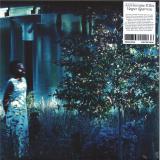
Das Werk von JJJJJerome Ellis bewegt sich mühelos zwischen Stille und Möglichkeiten. Der schwarze, behinderte Künstler mit grenadischen, jamaikanischen und amerikanischen Wurzeln schafft mit Saxophon, Orgel, Hackbrett, Elektronik und Stimme atmosphärische Klanglandschaften. Improvisation ist der Kern - oft werden große Teile von Aufnahmen bearbeitet, um das Werk wie ein Marmorbildhauer freizulegen. Es ist eine expansive und interdisziplinäre Praxis, die es JJJJJerome ermöglicht, sich an jedes Medium und jede Form anzupassen, darunter aufgezeichnete Musik, Live-Theater und Performance-Kunst, Filmmusik, Spoken Word und Storytelling sowie multimediale/visuelle Werke, die Klang integrieren. Als Mensch, der stottert, fiel es ihm in der Kindheit schwer, sich mit dem Mund auszudrücken. Den Künstlernamen ,JJJJJerome" zu buchstabieren, rührt von der Erkenntnis her, dass das am häufigsten gestotterte Wort der eigene Name ist. Trotz einer kurzen Sprachtherapie als Kind - als er in der siebten Klasse zum Saxophon griff, machte es plötzlich Klick. ,Ich stottere immer noch beim Saxophonspielen, aber es ist anders." Als Künstler dreht sich sein kreatives Ethos nun um die Erforschung des Stotterns durch Musik, wobei er die Fähigkeit jedes Einzelnen, Zeit zu gestalten, näher erläutert. Er ehrt das Stottern durch Kunst. Er begann damit, zu CDs von John Coltrane und Billie Holiday auf dem Horn zu improvisieren. Aber als jemand, der sich gerne mit Grenzen auseinandersetzt, hat sich JJJJJerome seitdem zu einem versierten Multi-Instrumentalisten entwickelt, wobei jedes Instrument einen Wendepunkt darstellt, der neue Wege zu potenziellen Klangwelten ebnet. Seine Stimme wird zusätzlich von einer Ehrfurcht vor der Erde und den Vorfahren - sowohl menschlichen als auch anderen - geleitet. Aufgrund der familiären Verbindungen seiner Mutter zur Kirche und den unvergesslichen Geschichten seiner Großmutter, die als Pianistin und Organistin auftrat, hat JJJJJeromes jüngste Affinität zu Tasteninstrumenten eine bedeutende Gewichtung. Das kommende zweite Album ,Vesper Sparrow" (Shelter Press) ist aus dieser Verbindung zur schwarzen religiösen Tradition und zum Erbe entstanden. Es ist eine Fortsetzung der fortlaufenden Auseinandersetzung des Künstlers mit den Schnittstellen zwischen Musik und Klang, Stottern und Schwarzsein aus der Perspektive der Zeit. Das Album besteht aus zwei vollständigen Gedanken und dreht sich um ein aufgezeichnetes Stottern. JJJJJerome teilt die vierteilige Komposition ,Evensong" auf, indem er das Stottern in Teil zwei ausblendet und die Tracks drei und vier (,Vesper Sparrow" und ,Black-Throated Sparrow") dazwischen einfügt. ,Das Stottern wird zu einem strukturierenden Moment", erklärt er in Bezug auf die Möglichkeit, die entstandene Zeit zu füllen. Die Aussetzung wird somit zu einem integralen Bestandteil der musikalischen Sprache von JJJJJerome. Sowohl Stottern als auch Granularsynthese können Momente in der Zeit aussetzen und ,zu vielfältigen Arten des Verweilens, Durchquerens und Verbindens mit anderen in diesen Momenten einladen". Der Künstler greift auch auf Elemente der Pop-Produktion zurück - elektronische Texturen und Verzerrungen, die teilweise vom Indie-Rock inspiriert sind, sowie Spoken Word, Sampling und Audiomanipulationen, die aus der karibischen und afroamerikanischen Musik stammen.
We The People were a vocal quarter who recorded a handful of singles between 1969 and 1976. Their most prolific release is this release from 1973 produced by Landy Mcneal. The music arranger was prolific Bert DeCoteaux Ace Spectrum (“Don’t Send Nobody Else”). Also Patti Austin, The Main Ingredient, Roy Ayers, Ramsey Lewis, Ben E.King, Sister Sledge, Lonnie Liston Smith and Marlena Shaw to name a few
Now a regular on the label, scene stalwart Chronicle continues his joyful journeythrough a landscape of dancefloor-friendly atmospherics.
A1 - Air Temple
Chronicle opens the EP with Air Temple, an immensely playful track with a superb 2-step hot pants break, programmed superbly with layers of depth generating anenergetic and immensely danceable tone, following the deliciously smooth late 90'sGLO-style intro. Lush female vocal samples perfect for the vibe are present and correctwhile micro melodies pan across the mix adding a wonderful texture.
A2 - Everblue
A delicately ominous intro with pads, whooshing samples and rustic synths precede adensely crafted slew of old-school analogue breakbeats laid in a subtle arrangement,bringing a blend of energy perfect for dancefloors and home listeners alike. Vocalsamples are programmed and twisted like instruments as Chronicle embarks on aspace odyssey with memorable melodies you'll keep discovering listen after listen.
AA1 - Encarta
Next up we have Encarta, which sets out intentions quickly in the introduction with abouncy, clean breakbeat which is quickly bolstered by a superb 2-step old school drumloop to create a pulsating energy. A myriad of samples are collected and fleckedthroughout the mix, while Chronicle's editing techniques mimic a skilled DJ cuttinganother break in and out to satisfying effect towards the back end of the main phases.
AA2 - Angular Momentum
Closing a diverse and uniquely atmospheric EP, Chronicle opens Angular Momentumwith a patchwork of synths and pads, ushering in a serene, simple high note melodyabove the driving breaks - detailed with distinctive cymbals that give the track's nameserious validity. With a slew of samples darting in both the foreground and backgroundfor the listener to enjoy, this is a piece which will live long in the memory.
Words by Chris Hayes (Spatial / Red Mist)
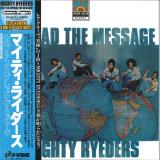
The Mighty Ryeders' rare groove classic Help Us Spread the Message has been remastered and reissued here because it forever remains a favourite with DJs and dancers. It's a timeless soul and funk blend with many a standout jams, not least 'Evil Vibrations,' a super cool and breezy groove famously sampled by De La Soul in 'A Roller Skating Jam Named Saturdays' and later covered by The Rebirth. Alongside funk staples like the aching beauty of 'Help Us Spread The Message' and the collector-favourite 'Let There Be Peace' the album blends rich horns, clavinet and deep grooves with great songwriting and vocal harmonies. Do not sleep on this masterpiece of funk.
In the late summer of 1994, Upadhmanyia (John Mackaay & Michel Rehatta) invited Leo Verhoef (LFU) to collaborate on a track. They met a few more times afterward at a power station converted into a studio in IJsselstein, The Netherlands. "Hasiya" was quickly born and was already in stores by early November 1994. John & Leo drove to house club iT in Amsterdam, where they gave the track to DJ Marcello, resulting in an iT hit! The track was quickly picked up by DJs worldwide, and Richie Hawtin used it in a live set in Denver on November 19th of that year, which can be heard on SoundCloud (Hasiya is mixed around 43:00). The track was also a huge hit on dance floors in England and Spain.
In late 1994, Hasiya appeared on a CNR Music EP titled "Welcome To The Club," along with four other hits from producers like Pete Lazonby, The Shaker, and Drum Club. A double CD of the same name followed in early 1995, released in Belgium, featuring Hasiya alongside artists like Robert Miles, Digital Express, Aura, Natural Born Grooves, and other hits of the era. In early 1995, Arcade released "House Party '95 the Kinky Klubmixx," mixed by Koen Groeneveld & Addy van der Zwan. The same CD was released in Scandinavia as "House Party '95 (5)." Hasiya flourished among the most popular house tracks of the time. The record spent three weeks in the Dance Music Mega Top 30 and peaked at number 22 around the holidays of late 1994.
For 31 years, Hasiya was only available on record, CD, tape, or YouTube. Starting November 21, 2025, it will be resurrected from the underground into the world of digital downloads and streaming. The 2025 Remaster, along with five new mixes, will be widely available, including a limited vinyl release of 350 copies. The 30 test pressings have already been received with open arms by various DJs and received immediate support from Eris Drew and Octa Octa during ADE.
Because Hasiya was created in 1994, the only available remix material is the original DAT tape, which, thankfully, was still stored in an old box in a dusty attic. Most of the sounds for the new versions have been recreated and re-recorded.
Rehatta's Reanimated Mix:
This remix - created by one of the two founders of Upadhmaniya - combines driving, percussive beats with a thrilling, progressive break featuring ascending, dizzying strings. This trick returns shortly afterward to rev things up again. An accessible remix for dance floors worldwide.
LFU 2025 Version:
This straightforward, raw techno version with a touch of acid is ready to rock dance floors. LFU's updated version of the 1994 original, which he created with Michel & John, will undoubtedly remain a head shaker from here on out.
John Consemulder Metaphysical Mix:
With a pumping groove and a funky bassline as an intro, John Consemulder's remix immediately strikes a chord. A refined and elegant approach to the original, with sounds as mysterious and exciting as the flowing lava in the 'Gruta das Torres' - a cave in the Azores - the setting where this tech-trance remix was created.
Davje Remix:
Davje's version begins with the typical club and hard-trance bassline of the late '90s. You're drawn into a trance journey where beat changes sometimes try to throw you off track. Davje's creative Hammond organ interpretation of the Hasiya theme surprises and transports you back to the hippie era by the end of his remix.
Bojcot Remix:
Junglist Bojcot creates an exciting, nuanced, and mathematical remix with a beat that feels like jungle and half-tempo. He conjures up the sounds of LFU's 2025 Version, creates a bassline that sounds like a disturbed bumblebee, and adds a surprising string section. Massive!
2025 Repress
"Cake" was a New York band formed in 1973, following a line-up tweak and a change from their previous name "Mixed Company» (referring to the racially mixed personell). At Arabellum Studios in Colony, Albany, NY, the band recorded their only 7-inch single. "Make Up Your Mind" / "Let Your Body Go» was released on Key Records in 1979.
Half a life time later, after appearing in DJ mixes and online auctions in the late 2000s, the single started gaining notoriety among DJs and diggers. Working its way up to "holy grail" status on the modern soul and disco collector scene, original copies of the sought after record would eventually sell for as high as $1000.
In 2012, Hans Jørgen Wærner (Mutual Intentions Co-Founder and notorious disco collector) got in touch with Arabellum studio owner Art Snay who produced the record. This lead him to lead singer Bob Treffiletti who had a cassette tape with unreleased long versions of the songs. The sound quality of the tape was not adequate for what Hans had in mind, and so the hunt for the original master tapes began! Unfortunately, Art Snay later passed away. At one point chances of finding the original recordings seemed so slim, the project was all but abandoned….
Luckily, Bob managed to get hold of the master tapes via Art's wife and they were sent away to legendary disco mixer / remixer John Morales, who transferred the tape to digital format. After several rounds in one of Norway's best mastering studios (Strype Audio), noise reduction and sound surgery were done while retaining the soul of the original recordings. The songs were finally ready to be pressed on the format they have always deserved: the 12-inch disco single!
The 12-inch comes with four 5 min + long songs and can be pre-ordered now. The high-quality lacquer cut pressing is produced at Optimal Media in Germany and limited to 300 copies worldwide.
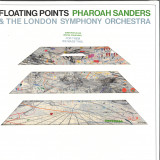
Promises is an extraordinary, collaborative album by the electronic giant Floating Points and saxophone titan Pharoah Sanders. The album features the London Symphony Orchestra and cover art by the acclaimed American artist, Julie Mehretu. Five years in the making, it will be released on Luaka Bop, March 26, 2021. The album is composed and engineered by Sam Shepherd aka Floating Points, who's second album Crush earned Best New Music from Pitchfork and a major feature in the New York Times, and placed him on several 2019 critics lists. His debut album Elaenia, released by Luaka Bop, was another Best New Music pick and hailed as one of the best debuts of the decade. It is also the release that made Pharoah Sanders want to work with him in the first place. A restless, ever- evolving producer and composer, Shepherd has toured with the xx, and also holds a doctorate in neuroscience. For Pharoah Sanders, who recently turned 80, this is a rare outing and his first album in fifteen years. One of the last icons of his generation, Pharoah performed with John Coltrane on his late-career free jazz masterpieces, and released a string of expansive recordings under his own name for the Impulse! label which have been cited as a pivotal influence by everyone from The Stooges to Marvin Gaye. Most recently, he was featured in a 2020 Supreme campaign. The music unfurls, patiently, over nine movements, and 46 ever-undulating minutes. It's a work of pure feeling, like no other record you'll hear this or any other year.
MAXED OUT MAXI EP OF THE HIGHEST ORDER FROM TAPES, HONOURING JAHTARI'S 20 YEARS OF D.I.G.I.T.A.L. BUSINESS IN FINEST STYLE...LOADED WITH RIB-8-BIT PRESSURE!
Four digital dancehall scorchers with two accompanying 8-bit versions meticulously crafted with the soundsystem session in mind!
Tapes has been spreading wonky saturated riddim goodness since his ground breaking “Hissing Theatricals” EP in 2009. Now, after a brief hibernation in the northern spawning pools, he’s spinning up his reels once again to present a new killer set of amphibian friendly, nintendo-fied sound system depth charges!
The “Photos of My Frog EP” is croaking off with its oddly addictive namesake: a surefire pond party starter – Ribbit! Hopping along, the adorable but tuff “Cleat Skank” and its gameboy driven pollywog follow, swinging their 8bit melody lasso till the cows come home. Yeehaw!
“Ramp Up” on B is a dense and raw FM synth digi banger, sure to fry any nearby circuits, so best beware! “Back Cramp Riddim” then turns up the low end even more and swirls its drums and synths into the next delay vortex, warping into a pixelated 8bit conclusion.
Whatever your taste in insects there’s something on this record for any lover of vintage dancehall and amphibious wild life alike!
These are going to fly out - sticky tongues at the ready!
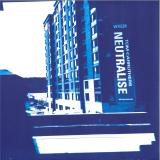
UK producer Tom Carruthers returns with a scorching 5-tracker for Skylax Records, diving headfirst into the primal roots of jackin’ house, proto-italo, and early machine funk. Known for his raw MPC-driven grooves on L.I.E.S., Clone Jack For Daze, Syncrophone, and Craigie Knowes, Carruthers channels the energy of the underground circa ’86—pure drum machine soul for the dancefloor faithful. Side A kicks off with the title track “Neutralise”, all sharp snares, warped synths and hypnotic repetition—a jack track in the truest sense. “Deep North” follows with ghostly pads and relentless drum programming, while “No More” brings metallic tension and stripped-down funk with a heavy nod to Chicago’s original blueprints. On the flip, “Pascals” weaves cosmic arps through rugged percussion, merging italo sensuality with bleep-era minimalism. The closer, “Cosmic Ride”, is exactly that: a journey through spacey chords, dusty rhythm boxes, and that unmistakable feeling of warehouse euphoria at 4 a.m. Neutralise EP is a raw, timeless record that strips dance music down to its essence—jacking, emotional, physical. To match the sonic purity and timeless aesthetic of the release, we enlisted the iconic H5 studio—a name synonymous with visionary design in music and culture. Known for their groundbreaking work with Daft Punk, YSL, and numerous award-winning visual campaigns, H5 brings a level of artistic sophistication that elevates this EP into a complete sensory object. Their clean, modernist design echoes the stripped yet futuristic vibe of Tom Carruthers’ sound—a perfect fusion of form and function, underground and high art. Vinyl only. No digital. No compromise. For fans of: Virgo Four, Baby Ford, Larry Heard, early Warp, Mr. Fingers, and Beppe Loda.
Molecular Recordings Presents "Structure Series 2" — Continuing a Legacy of Techno Innovation
Following the success of the first volume, Molecular Recordings returns with Structure Series 2, the next chapter in its celebrated vinyl series that honors the label’s enduring influence on underground techno.
This 12" release deepens the label’s exploration of forward-thinking sound, pairing iconic names from the Molecular archive with groundbreaking contributions from the new vanguard of producers. Each track reflects the uncompromising spirit and sonic evolution that have defined the label for over three decades.
Structure Series 2 is both a continuation and a progression — a curated fusion of past and future that underscores Molecular’s role as a pioneer and incubator of techno culture. It stands not only as a collector’s item but as a bold artistic statement.
With Structure Series 2, Molecular Recordings reaffirms its commitment to pushing boundaries while remaining rooted in the authenticity that has shaped its legacy since day one.
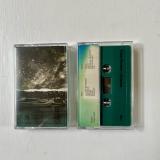
The electronic producer Franz Kirmann returns to Bytes for his eighth solo album. The “Almadies” are long wooden boats used by Senegalese fishermen. It is also the name of the neighborhood where Kirmann grew up, in the suburbs of Dakar, Senegal, near the Atlantic Ocean. "These new compositions are the result of sound experiments conducted over the past few months and reflections on the concept of mind-constructed geographies," Kirmann explains. "The way memories and souvenirs shape an image of a place or country that is part reality, part fantasy, part cliché, yet also deeply personal. This experience is influenced by education, social background, history, and other socio-economic factors. " The ten tracks are crafted from collages of electronic sounds blended with field recordings from various places Kirmann has visited — from Dakar to the Caribbean, as well as London and Paris. His aim is to blur the line between electronically generated sounds and real soundscapes, creating music where it becomes difficult to distinguish the real from the constructed. All the sounds on the album were produced using synthesizers and field recordings. No drum machines, percussion or traditional acoustic instruments were used. Influences include Brian Eno and John Hassell’s Fourth World, Vol. 1: Possible Musics (1980), described by Hassell as "a unified primitive/futuristic sound combining features of world ethnic styles with advanced electronic techniques" , which also works in the context of Almadies. Another big influence was Ariel Kalma’s Le Temps Des Moissons (1975) as well as artists including O Yuki Conjugate and Robert Aiki Aubrey Lowe to Susumu Yokota and Michael Banabila.
Esteemed soul man of Panama Mr. Ralph Weeks has in recent years been enjoying a much overdue retrospective of his remarkable six decades-long musical journey with the help of Names You Can Trust. Now onto their fifth record release together since 2019, the label has covered both Weeks' original holy grail material as well as re-cuts and reimagining of some of his rarefied and unreleased songs.
One of Mr. Weeks' two iconic 45 releases on Panamanian label Sally Ruth was a funky soul side called "Let Me Do My Thing," originally recorded in 1971 as Weeks' answer to Charles Wright's big tune "Express Yourself," which had just hit the airwaves in 1970. Weeks' musical response would help define his legacy. He was gonna express himself, he was gonna Do His Thing. This golden age ultimatum recorded with the Dynamic Exciters of Panama as the backing band was a simple, straight ahead number with a defining message that would be carried on throughout Weeks' independent career. The funkified air and creative freedom of the original tune is a prime example of the crossover Combos Nationales sound that flourished in the prolific Panama recording industry of the era, and in the ensuing decades Weeks' tune would live on as a cherished rare groove for souleros, funk fans, and bootleggers alike.
Fast forward to 2023, when Ralph Weeks and Names You Can Trust prepared for a Bay Area appearance at the wonderful Latinos Con Soul weekender put on by San Francisco's Discodelic record shop, the groundwork was laid in the studio for a revival, a reawakening of Weeks' funky fan favorite. A spectacular ensemble of NYCT's All-Star artists and alumni was convened in the studio, including Caito Sánchez on drums, Victor Axelrod (Daptone Records) on clavinet and Sam Day Harmet (La Banda Chuska) on guitar. Anant Pradhan (The Skatalites), Eric Biondo (The Budos Band) and Alex Asher (Los Cumpleaños) occupied the brass section, and Ralph Weeks even lent his still formidable chops on electric bass and keyboards, a little OG flare to back up his silky voice with a deft musical touch. What came out of the sessions was a chance for NYCT to pay homage to Weeks' iconic original, without replacing it, and build a brand new version from the ground up with the maestro and composer himself!
- A1: Countrymusicdisco45 4 08
- A2: Sometimes Shooting Stars 2 57
- A3: Short Cut Home 3 25
- A4: Disappointment 3 00
- A5: Days Are Mighty 2 46
- B1: Don't Dance With Me Tonight 3 27
- B2: You Got It Wrong 2 39
- B3: Ring The Bells 3 57
- B4: Let's Make It Up 2 49
- B5: When Did You Stop Loving Me 3 54
- C1: Just Beginning 4 00
- C2: Wintering Of The Year 3 16
- C3: Let It Rain 3 04
- C4: We Tell Each Other Who We Are 3 27
- C5: Trip To You 4 06
- D1: Dirt 2 54
- D2: Heaven Right Here 3 38
- D3: If Later Ever Comes 3 03
- D4: Remember The Season 3 10
- D5: A Little Love 3 35
- D6: Weary Traveller 3 20
“The high priest of country cool” - Rolling Stone
“I like him very much. He’s very special. He’s singing with a voice I never heard before” - Townes Van Zandt
“A conscious, soulful brother” - Horace Andy
“He’s a brother to me - one of the best singer/songwriters I’ve ever met” - Adrian Sherwood
“Unearthed mine of gems from inner Wales - a songbook of ideas - that's Jeb!” - Gilles Peterson
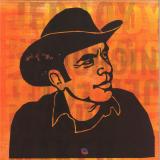
Jeb Loy Nichols is a bonafide Country (Got) Soul legend. The Music Maker presents 21 incredibly deep, grooving and soulful songs from the cream of Jeb's catalogue; from its earliest days to his latest unreleased gems via countless rare and unbelievably good lost-classics. This 2LP set is presented in a gatefold sleeve complete with freshly commissioned artwork courtesy of Jeb himself.
In collecting these uncut, under-heard gems, we hope to do justice to Jeb's jaw-dropping artistic brilliance. A man who, in working with Adrian Sherwood, Dennis Bovell, Dan Penn, Larry Jon Wilson and countless other legendary characters, has crafted some of the most deeply affecting folk, country, soul, funk, blues, dub, reggae, gospel, rap and electronic music, ever heard.
The first music Jeb really felt a connection with was southern soul: "I used to listen to the radio at night and fell in love with Bobby Womack and Al Green, The Staple Singers and Joe Simon – that whole Nashville/Memphis/Muscle Shoals thing.” But Jeb was so much more than a soul boy, Indeed, he "went to bluegrass festivals with my dad and come home and listened to jazz records with my mother.” And, when he was fifteen, he heard his first punk record: "God Save The Queen" by The Sex Pistols. “That and The Ramones completely changed me.” In 1979 he got a scholarship to go to art school in New York: “A great time. Punk was over but hip-hop was starting and I got into that in an obsessive way.”
His first recording, in 1980, was an unreleased rap song called "I’m A Country Boy". If that isn't an insight enough into Jeb's kaleidoscopic path through music, in 1981 he visited friends in London and found himself living in a squat with Adrian Sherwood, Ari Up (from the Slits), and Neneh Cherry. “Adrian put me to work immediately, moving boxes of records all across London. It was Adrian that was and is my biggest influence – in his complete disregard for genre purity.” So, presumably you're getting the picture? A veritable musical magpie with a voracious appetite and unimpeachable taste.
"Mine has always been a meandering career. I've done what I've done, and made the music I've made, due to chance meetings. I'm not particularly ambitious; it's more important to me that I work with friends and like-minded people. I've been a big fan of Be With for years. Everything they release is essential. When they asked about rereleasing "Countrymusicdisco45" I was both pleased and flattered. We began talking about how we'd do it; two years and twenty-one tracks later, here we are. I've always thought of the music I make as Country Music. Music conceived in the country, written in the country, recorded in the country. I left London and moved back to the country so I could live among the trees, the grasses, the animals, those things that don't go to war and get greedy. This compilation is the story of that life. Hand made, lo-fi, ramshackle, stripped down, real deal music. Heartworn and funky. Music made in the kitchen, not in the studio. As the great Skip Mcdonald said, Perfect ain't perfect. It's great to see all these tracks gathered together. It feels like a family reunion. Some older members of the tribe, some newer arrivals."
Opener "countrymusicdisco45" is a song Jeb wrote about how his crew lives, tucked up blissfully in the hills: "House parties full of country folk dancing to disco, reggae, soul, country, hip-hop. All night. I recorded it at home under the influence of Stevie Wonder." It's one of the funkiest records you'll ever hear. "Sometimes Shooting Stars" was recorded in Nashville and mixed by the legendary Dennis Bovell. It's deep, dubby, majestic. A thing of fragile, melodic beauty. The party ramps back up again with the undeniable groove of "Short Cut Home" before the profoundly moving "Disappointment" arrives. One of many songs he's recorded with good buddy Benedic Lamdin (aka Nostalgia 77): "We were going for a Leon Thomas meets Richard Brautigan meets Alice Coltrane kind of thing". We think they nailed it. "Days Are Mighty", like a lot of the tracks on this collection, "started life as a demo, an attempt to get something down while it was fresh. No frills, nothing fancy, just feel." And what feels!
The irrepressibly funky "Don't Dance With Me Tonight" is a deeply moving, slow-mo organ-drenched head-nod-funky country-ballad. Next up, the breezy "You Got It Wrong" was recorded in Wales with some of Jeb's good friends and neighbours, The Westwood All Stars, featuring Clovis Phillips and Will Barnes. Skanking fiddle-flecked gem "Ring The Bells" was the first thing Jeb recorded when he moved to Wales. A combination of all his loves; country, reggae, soul. It's followed by "Let's Make It Up", a truly sumptuous string-drenched emotional groover. "When Did You Stop Loving Me" is another Nashville track, written and recorded during a time Jeb was spending a lot of time with the Muscle Shoals crew, Donnie Fritts, Spooner Oldham, George Soule and Dan Penn: "It shows, I'm sure, their influence." Oh, you bet it does!
The swaggering country-funk of "Just Beginning" should grace many groove-focused DJs' sets whilst "Wintering Of The Year", again made with Clovis, is pastoral, campfire soul. The glacial, gorgeous "Let It Rain" is from an unreleased record Jeb made with the great British jazz bass player Andy Hamill and "We Tell Each Other Who We Are" is freaky country-soul made by a man with a love for strutting, wonky hip-hop stylings. Rounding out the side, "Trip To You" is pure, uncut amphetamine-propelled drum-machine soul.
The spare, beautiful "Dirt" is from an EP Jeb made with Julian Moore in his house in South London: "All first takes, straight to tape." Swoon! "Heaven Right Here" was a very minor league hit in America: "It was produced by the brilliant and much missed Wayne Nunes. It was started in the countryside of Missouri, finished in the countryside of Wales, and recorded in the countryside of Sussex." Double swoon! "If Later Ever Comes" is electronica meets J.J. Cale business whilst "Remember The Season" is truly wonderful and breezy guitar soul. "A Little Love" was made with Wayne Nunes as well, after a night of listening to Studio One and Northern Soul. Bouncy dub closer "Weary Traveller" was written by Bill Monroe, the hero of Jeb's youth: "Monroe's music was heavily influenced by black southern churches; I've tried to keep some of that feral feel." This was the final recording by Jeb's 1990s Country-Dub band, Fellow Travellers.
The name of this compilation comes from a time when Jeb lived in Peckham, south London and he used to DJ and sometimes perform at a local bar: "The owner of the bar, a Jamaican named Count Percy, once asked me what I called my music. I told him I wasn't sure, I guess just pop music. He thought about it for a minute and then said, 'no, more like mom and pop music'. Rather than call me a country singer or a folk singer he always referred to me as The Music Maker."
With the long overdue deluxe overview of his beloved music, we hope to finally shine a light on the unheralded genius of Jeb Loy Nichols. RIYL Larry Jon Wilson, Townes Van Zandt, Bobby Charles, country got soul artists, dub, deep soul, disco, dancing, heartbreak. This deluxe collection, spellbinding from beginning to end, should hopefully go some way to ensuring Jeb reaches an ever bigger, ever more appreciative crowd of followers. Mastering for this special double vinyl edition was overseen by Be With regular Simon Francis and it was cut by the esteemed Cicely Balston at Abbey Road Studios to be pressed in the Netherlands by Record Industry. The artwork has been lovingly put together by The Music Maker, himself, Jeb Loy Nichols. "Be With is the perfect home for this mongrel music. I am forever in their debt." The pleasure is all ours, Jeb.
2025 Repress
When people think of Tough Gong they usually think of Bob Marley and rightly so, as he was nicknamed and often called Tough Gong and from this his early releases which came out on the Tough Gong label. But Tough Gong was also the name of a recording complex named after Bob Marley hat included a top level recording studio, pressing plant and distribution centre that would allow reggae music to carry on many years after his sad and too early demise.
Bob Marley had take over the former residence of Island Records boss Chris Blackwell the Island House, 56 Hope Road around 1974. Just before the 'Smile Jamaica' concert on 03rd December the same year the house was ambushed by gunmen. Bob's manager Don Taylor was hit 5 times AND Bob was shot in the arm and his wife Rita Marley was hit in the head by a stray bullet. How no one was fatally injured is staggering. Immediately after the concert Bob Marley started his self imposed exile from Jamaica, settling in London, England. This would lead to the aptly named exodus album being recorded there in the summer of 1977. It would not be until the 'One Love' peace concert in Kingston's national arena on the 22nd April 1978 that would see Bob's return to the island. Marley felt is was important to show his commitment to the people of Jamaica and on his return to 56 Hope Road he began construction of his own recording studio with the help of music mogul Tommy Cowen. Unfortunately Bob Marley's short life would end on the 11th May 1981 from cancer which originated form a football injury. His passing would lead to 56 Hope Road being turned into a museum to the legend of reggae music.
A new location would have to be found to carry on Bob's work which was 220 Marcus Garvey Drive, Kingston 11. The buyer would be Rita Marley and the Tough Gong International Organisation.
Engineers working at the new facility included Errol Browne who had worked at Treasure Isle studios and Hopeton Overton Browne known as 'Scientist', named by the great producer Bunny 'Striker' Lee who worked with him previously at King Tubbie's and Channel One's studios described his ground breaking style as being like that of a scientist.
We focus for this release on the work carried out by the great Scientist on the songs of the Black Solidarity Label run by Ossie Thomas (aka Joe The Boss) recorded at Tough Gong studios. One of the foremost recording, pressing and distribution facilities on the Jamaican island set up from the work of Bob Marley to carry forward reggae music. Hope you enjoy this set......
Bread&Butter Records celebrates its 10th EP with a powerful statement from Romanian duo NTFO, a name synonymous with precision minimalism and timeless groove. The release unfolds across four masterfully produced tracks, each one engineered for those moments when the dancefloor turns into something deeper, heavier, and unforgettable.
Calibre sets the tone in classic NTFO fashion. Its stripped-bacb bassline rolls with hypnotic intent, carrying just enough weight to lock the floor in. By the three-minute mark, subtle shifts into a trance-like state, gently elevating the room into waves of euphoric release. It’s understated yet devastatingly effective, the type of cut that DJs treasure for its power to transform the atmosphere without ever shouting too loud.
Electr pares things back even further, pushing into pure minimal territory. Built on a sleek harmonic groove, it’s a masterclass in restraint, every sound feels perfectly placed, every movement precise. This is a track that thrives in the early hours, where tension, patience and subtle shifts in rhythm rule the floor.
Forap flips the script, injecting an upbeat energy that hits with instant impact. Around the three-to-four minute mark, a vocal element cuts through, commanding attention before the groove locks back in with unstoppable momentum. Hypnotic yet uplifting, it’s the perfect peak-time tool a track that lifts the room into a collective high, as though flying on pure feeling.
Nanomos closes the EP with finesse. A deeper, darker exploration, it glides through murky textures and intricate percussive details, carrying an otherworldly atmosphere that keeps the listener suspended in motion. It’s a slow-burner that lingers long after the last note fades, a testament to NTFO’s ability to balance groove and emotion in equal measure.
With this release, Bread&Butter not only cements its reputation as one of London’s most exciting underground imprints but also showcases NTFO at their most refined. Four cuts, four moods, all bound by that unmistakable Romanian touch that continues to set standards worldwide.
Sex Tapes From Mars presents Outdom Records' boss, LATENT, who shares a brand-new four-track EP that spars with breakbeat, electro, house, and left-field electronics, neatly centring them all into a steady, sexy collision. The record as a whole captures genuinely original-sounding, rough-edged b-boy breaking badness - nostalgic, but never polite. It's a few BPMs slower than Sex Tapes' last few outings, but no less effective. Arguably, it's more late '80s sounding than ever, although, in fact, it's a brand-new, stonking release that showcases the label's versatility and unpredictability.
The opening track, "Break Machine", sets the pace with a clear nod to the '80s US group of the same name, bringing tidy drum workouts and clipped vocal samples that recall early Chicago, as well as choppy rave and street party energy at its most unfiltered.
"Disco Hijack" pushes the clutch into a more functional gear, merging delay-heavy, druggy, chuggy, sludgy bass with more robotic vocoder tropes, sharing something playful but IDM and European skewed. It's a dancefloor tool with a wink - just the style this now accomplished label has made its identity. Oh, don't forget the amens and clattering jungle breaks. 1990 or 2040? Fuck knows.
On "Distress Robot", pneumatic percussion and malfunctioning android chatter bring a darker, more mechanical edge, while "Virtual Body" closes with a spacious, garage-leaning shuffle that pulls the EP into recognisable contemporary yet still very much peak-time territory.
LATENT gives lean grit, pushes the edges, and lets the tracks feel alive in their imperfections. It’s music that thrives on tension between old-school reference points and modern floor pressure.
Bristol's label head Elon Dust HAS done it again.
Vinyl-only as per, don't sleep."