2026 Repress
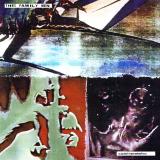
Lars Huismann returns to Mutual Rytm as he delivers the second instalment of his "Sounds From The Past" trilogy on the label.
As SHDW & Obscure Shape's Mutual Rytm imprint continues to grow, it's clear that the DJ and producer pairing have a strong vision for the label and are building an equally impressive roster of artists to form the imprint's core family members. One of the early standouts is Lars Huismann, who arrived to deliver a selection of impactful offerings influenced by the "golden years" of techno in his own unique style crafted by various production techniques. Having featured on the label's opening VA and delivered the first EP for MR002, racking up a wealth of global support in the process, mid-November welcomes a return for the Berlin-based talent as he serves up six fresh cuts in his signature sound for "Sounds From The Past II".
Opener "Sounds From The Past II" is an action-packed title cut fusing typically slick rolling grooves with hazy melodies and atmospheric releases of tension, while "Propulsion" takes cues from its title and sees precise drum shots, echoed background vocals and a tunnelling groove taking the track right into the thick of the action.
On the flip, B1 "Loucura" brings a percussive workout as frantic organic drums and resonant brass melodies bring a party
to proceedings, with "Stroke" and "Nudge" both armed with tough kicks, zipping synths and more subtle vocal work.
Digital buyers get an extra exclusive in the form of "Dub Division", welcoming a slightly more subdued but equally as impactful track guided by dubby chords and peppy hi-hats to close the show.
Suche:no one
Whilst considering the “Hutson Sevens” series, there was a LeRoy Hutson record that stood out like a sore thumb for us when sifting through the amazing LeRoy Hutson portfolio to identify which pieces of music had not yet been made available on 7-inch vinyl. Many of you will know the story of LeRoy Hutson and Donny Hathaway being roommates at Howard University and together writing the legendary rare groove track "The Ghetto". In 1974, LeRoy Hutson used his artistic licence and adapted the track to feature on his album "The Man!" and subtly retitled the track "The Ghetto '74".
Home of The Good Groove Records are delighted to include this magnificent track on 7-inch vinyl for the very first me.
We are always trying our best to compliment each side of the 7-inch records we are releasing in the "Hutson Sevens" series. For the A-side on our third release we have chosen an outstanding track, which again is previously unreleased. Recorded at the Curtom studios in April 1977 "Thank You" is a fabulous “easy to the ear” piece of smooth soul music that has the classic Hutson groove. One for the soul music lovers, and a possible future sing along favourite to end a night of dancing.
- A1: A Festa Do Santo Reis 02 41
- A2: Não Quero Dinheiro (Só Quero Amar) 02 31
- A3: Salve Nossa Senhora 01 56
- A4: Um Dia Eu Chego Lá 02 06
- A5: Não Vou Ficar 02 57
- A6: Broken Heart 01 16
- B1: Você 04 05
- B2: Preciso Aprender A Ser Só 02 46
- B3: I Don’t Know What To Dowith Myself 03 42
- B4: É Por Você Que Vivo 02 33
- B5: Meu País 01 35
- B6: I Don’t Care 02 38
Tim Maia’s second album, published in 19671, deepened and refined the Brazilian artist’s groundbreaking fusion of soul, funk, R&B, and MPB, firmly establishing him as a unique voice in Brazilian music. Compared to his 1970 debut album (HE70014), this second album features more sophisticated arrangements, tighter grooves, and a stronger command of American soul influences, reinterpreted through a distinctly Brazilian sensibility. The alcum features Tim Maia’s most widely recognized hit “Não Quero Dinheiro (Só Quero Amar)”. This vinyl edition is the first after 10 years and the first European one.
MTY-3.14 “π”, released on March 14, 2026, is the fifth and final chapter of a journey begun fifteen years ago.
This standard edition presents the final form of Polar Inertia across three 12" vinyl records, featuring 11 tracks. Nothing added, nothing removed—only the music, unfolding in full.
Images dissolve, words fall away. What remains are faint echoes, like footprints slowly erased in fresh snow.
This final opus does not close the path. It fades into it. π is not an ending, but a state: the moment where movement continues, even as the world turns silent.
A last step.
A final trace.
Still moving, beneath the cold.
POLAR INERTIA
We are no one because we want to be no one,
And to be no one we have to be everywhere and nowhere- Polar Inertia examines the enigmatic and blurry realms, embracing the art of obscured vision.
Encountering the collective Polar Inertia is much like being absorbed by fog and captivated by its ever-shifting forms and densities, with things being as indistinguishable as in a whiteout.
Formed in 2010 by a group of artists, Polar Inertia transcends visibility, delving into structures that lie beyond the public gaze. Layers upon layers intertwine within the fabric of Polar Inertia, extending beyond their profound electronic compositions and live performances. It manifests as a conceptual universe, where sound, monochrome aesthetics, and elusive narratives converge, much like trying to grasp the intangible fog. The entity that is Polar Inertia is involved in installations, print- and video work and texts created for different contexts and live in different spheres such as Palais de Tokyo in Paris or the Lyon Biennale of Contemporary Art. Still, clubs and festivals are perfect spaces to experience these nebulous soundworlds and immerse in them. Fittingly, some of Polar Inertia’s appearances include the colossal halls of Berghain and Bassiani and at experimental festivals like Mutek Montreal and Atonal Berlin, that like to break with the classic club conventions.
Polar Inertia's sonic landscape unfolds with wafting textures accompanied by resonating beats and drones, reverberating through empty spaces, merging with the vast expanse of nothingness. Their sound exists at the crossroads of ambient, experimental, and deep techno, interwoven with vocal narratives. Since their inaugural release “Indirect Light“ on Dement3d Records in 2011, they remain a stronghold of relevance and captivation in the electronic domain.
Mastered by sixbitdeep, with artistic direction by Diplomatie Studio.
Solo 500 delivers another irresistible donut that takes the form of this 2-sided celebration of afro-latin & jazz-funk classics. GSC dusts off 2 deep catalog selections here — & part of the appeal is that neither side is a played-out sample cliché. This one is for heads who already burned through the obvious joints.
Side A digs into Manu Dibango beyond the endlessly flipped “Soul Makossa” universe. “The Panther”, from the 1973 album “Africadelic”, isn’t one of his commonly sampled tracks — & that’s exactly why it hits so hard. Low-slung Afro-funk, stalking bass & suspense-building horns that feel like a break record even if they haven’t been rinsed by every golden-era producer. Selectors who chase texture over recognition will understand the power here immediately. It’s the kind of cut hip-hop heads love not because they’ve heard it before — but because they haven’t.
Side B moves into Latin jazz-funk royalty. Ray Barretto is one of the most sampled percussionists of all time, but “Together” (from the 1969 album of the same name) sits slightly off the obvious break-beat path. Instead of a clean, isolated drum loop, you get rolling congas, warm keys & a communal groove that’s been DJ-tested far more than it’s been sampled. This is the type of Barretto cut that crate-diggers pull when they want rhythm to breathe — bridging jazz floors, disco-leaning sets & hip-hop selectors who think like musicians, not beat miners.
The long-awaited reissue of Another Song by Music Service, one of the finest Italo-Disco tracks goes to Antony Soumas, the amazing Greek DJ owner of Disco Time Records in Athens. Tony's passion for Italo-Disco style is known worldwide and is worth further amplifying. Among the spin-offs conceived by Amin-Peck (editor's note: in strict Bolognese dialect means "I hang myself!"), Another Song turns out to be the favorite of the "purists" of Italo. The synthesizers of George Fyron and Leonard Parker are excellent as always, but here we also find awesome sauce male voices! In a certain sense you have the sensation of listening to Big In Japan, but perhaps it is just a suggestion of the dee-jays who push one record after another. One last curiosity dictated by the sagacious dj-writer Antonio Stanzani, better known as Ciancio DJ: the Music Service band proposed to Luca Zanarini to sing Another Song, but the lyrics of the song did not yet existed His friend Gianni Ruberti made himself available and by isolating in a room for two hours he made the lyrics that all of us after more than 40 years enjoy.
Tim Maia’s self-titled 1973 album is one of those records that hits you from the very first groove and doesn’t let go. Originally released on Polydor Brazil, this was the fourth in a series of Tim’s self-titled albums and many fans and critics still consider it the crown jewel. Packed with irresistible hooks, lush arrangements, and that unmistakable Tim Maia swagger, the album captures the singer at the peak of his creative powers.If you’re new to Tim Maia, here’s the quick story: born in Rio de Janeiro, Tim was a larger-than-life icon whose music married American soul and funk with Brazilian samba and pop long before “fusion” was a buzzword. A true musical polymath, he absorbed everything from Curtis Mayfield to Motown and translated it into a sound entirely his own, gritty, passionate, and full of groove.
He didn’t just introduce soul to Brazil; he made it Brazilian.On this 1973 release, Tim pushes everything up a notch. The arrangements are bigger, slicker, and surprisingly majestic, without losing the raw spirit that earned him a devoted following. From the moment ‘Réu Confesso’ opens the album, you know you’re in for something special—smooth, funky, and heartfelt in all the right ways. The bittersweet ‘Gostava Tanto de Você’ remains one of his most beloved classics, while ‘O Balanço’ bursts with Brazilian flavor that practically dares you not to move. And with tracks like ‘Do Your Thing, Behave Yourself’ and ‘Over Again,’ Tim shows just how naturally the soul idiom fit him, even when he switched to English.This record has everything: deep grooves, soaring strings, magnetic vocals, and that unmistakable sense of joy that Tim Maia carried into every session. It’s a front-to-back winner—one of those albums that deserves a spot not just in Brazilian music history, but in any collection that celebrates great soul, funk, and timeless grooves.If you’re a longtime fan, it’s a reminder of why Tim Maia is legendary. If you’re discovering him for the first time, this is the perfect place to start. Either way: press play, turn it up, and let Tim do his thing.
INDUSTRIAS MEKANIKAS is back with the third instalment of the ANTIKHRIST VISIONS saga. This release is particularly symbolic: it’s the ninth in the catalogue, marked by the infernal numerology that runs right through the whole series. It’s a descent into a sonic underworld, where noise becomes ritual and pleasure is just pure agony.
The artist tasked with opening this new chapter of the saga is the mighty Óscar Mulero, an essential figure on the national electronic scene and one of our biggest international ambassadors, whose career has left a deep mark on contemporary music. Here, with Faceless, he delves into dark, precise, and devastating electro territory; a spiritual machine that dictates the pulse of chaos.
Next up, we’ve got Pressurized Modulator with Reddrum: hard, crunchy, industrial electro, absolutely buzzing with electrical tension and twisted sonic matter.
Closing out the A-side is Jacko Volvone (aka Hoax Believers) with Quieren Cerrar Las Fábricas: a track that expertly blends electro, techno, and post-punk echoes, resulting in a tense, distorted, and combative sound, like a working-class echo shouting from the abyss.
Flipping over, the B-side opens with Hanging Nuts (made up of Waje Martín, Fake Robotik, and Ruben Montesco). They unleash a murky descent of filthy, distorted, primal electro, slashed through with guitars and raw, guttural vocals: a genuine chant from beyond the grave. The second cut marks the debut of Techselektah & Phil Fork with Champagne No Potable: a raging street anthem packed with fury, energy, and social criticism, where Spanish vocals emerge amidst EBM structures that have that ‘80s spirit, reinterpreted with today’s raw edge. And the big finish is down to HBK1 alongside Rigor Mortis, with Instinto Caníbal: a full-on explosion of electro-industrial and EBM that awakens the body’s most primitive urges.
Antikhrist Visions Vol. III is a sonic summoning from the lands of Hades: ritualistic matter, organic sound, and primal force. A testament to pleasure and torment—Tormento do Gostar—etched into the vinyl as if it were molten iron.
Memento Mori.
REISSUE
Originally released in 2000, World Of Love caught the spirit of the balearic progressive house of that time and the trance epic new coming movement. Being the second single from Clublanders and performed by Irene Cesar (top italo sabadell sound singer) is still today one of the most wanted tracks from the band.
Melodize is bringing the world back on the dance floor with Lauer and his 4-track “K1m Fantasy” EP. Behind the label is Brooklyn-based DJ and musician Beartrax, who is known for his groovy yet moody compositions. Philipp Lauer, known as Lauer, is a true veteran in the electronic music sphere, with over 20 years of experience, yet his sound remains novel and fresh.
This time, Melodize and Lauer shape the world of a fantasy dance floor where everything is possible. “K1m Fantasy” starts with Lauer letting his confidence shine through as an experienced professional with a signature sound in the first track “Boss Electro”, which will inevitably showcase why he’s the boss.
The playful tune of “Rabbits” takes the listener on a journey through electro-induced synths much like the image of curious rabbits playing on a grass field. The eponymous B-side “K1m Fantasy,” with its steadily unfolding mellow soundscape, is an introspective piece exploring the fantastical world of the techno dance floor where all becomes one.
Lauer’s last treat is “Choirs,” where brassy exclamations take turns with a haunting choir of electronic voices, reminding us that unity is key to pleasure and existence.
- 1: Enjoy The Silence
- 2: Icon
- 3: Nothing Else Matters
- 4: Precious
- 5: One More Time
- 6: Nessun Dorma
- 7: Hydra
- 8: Handpan Horizon
- 9: Boom-Whaka
- 10: Big Five
- 11: Beat It Up!
- 12: Baumarkt
Two percussionists, one sound universe. With “All you can BEAT,” Double Drums serve up an energetic and surpri-singly versatile percussion album. The two exceptional musicians have been performing together on stage for 20 years now. In addition to numerous concerts in Germany, they have also performed throughout Europe and Asia.
Now Alex Glöggler and Philipp Jungk are celebrating their anniversary with a work that showcases their entire musi-cal range: from driving rhythms to a multifaceted soundscape to moments of great emotion. “All you can BEAT” is a tribute to everything percussion can be: powerful, delicate, wild, and touching at the same time.
On the one hand, there are rousing original compositions such as “One More Time” and “Hydra,” about which the rhythm artists say: "The music is inspired by the many-headed monster Hydra from Greek mythology. When it loses a head, two new ones grow back. Musically, new patterns or rhythmic elements are constantly being added, overlap-ping each other and pushing others into the background. The result is minimal music based on an energizing flow with a focus on the marimba."
Black Vinyl[26,68 €]
Multi-coloured vinyl LP or CD. For fans of Nektar, Van Der Graaf Generator and Progressive Rock! Formed in Germany in 1969, Nektar favoured extended compositions and concept albums over the constraints of pop. They were among the progenitors of the progressive rock movement of the 1970s as well as the jam-band scene that arose in the late 1990s. Their sound travelled well to the States, where they enjoyed Top 40 success with "A Tab in the Ocean" (1972) and "Remember the Future" (1973). Nearly 20 albums and a half-century later, the band's artistic and personal charisma has earned them masses of devoted fans. Now Nektar is broadening their horizons with the first in the "Mission To Mars" trilogy. Their first to feature new drummer Jay Dittamo, alongside longtime members Ryche Chlanda (guitars),Kendall Scott(keyboards), and original members Derek "Mo" Moore(bass) and Mick Brockett (visual environment).From the rocking title track "Mission To Mars" to the beautiful "I'll Let You In", Nektar covers all of the prog rock bases while venturing into some new melodic territories. Track listing: Mission To Mars; Long Lost Sunday; One Day Hi One Day Lo; I'll Let You In
- 1: Carrion Crawler
- 2: Contraption / Soul Desert
- 3: Robber Barons
- 4: Chem-Farmer
- 5: Opposition
- 6: The Dream
- 7: Wrong Idea
- 8: Crushed Grass
- 9: Crack In Your Eye
- 10: Heavy Doctor
What's the first thing you think of when someone mentions Thee Oh Sees? Probably their riot-sparking live show, right? Visions of a guitar-chewing, melody-maiming John Dwyer careening across your cranium, rounded out by a wild-eyed wrecking crew that drives every last hook home like it's a nail in the coffin of what you thought it meant to make 21st-century rock 'n' roll? Yeah, that sounds about right. But it misses a more important point-how impossible Thee Oh Sees have been to pin down since Dwyer launched the project in the late '90s as a solo break from such sorely missed underground bands as Pink and Brown and Coachwhips. (While Dwyer still records songs on his own, Thee Oh Sees is now a five-piece featuring keyboardist / singer Brigid Dawson, guitarist Petey Dammit, drummer Mike Shoun and multi-instrumentalist / singer Lars Finberg.) That restlessness extends to everything from the towering, thirteen-minute title track of 2010's Warm Smile LP to the mercurial moods of 2008's The Master's Bedroom Is Worth Spending a Night In. Now, Thee Oh Sees chase the home-brewed symphonies of Castlemania with the scrappy, high-wire hooks of Carrion Crawler / The Dream. Originally envisioned as two EPs, it was cut live to tape in less than a week at Chris Woodhouse's Sacramento studio in June, reflecting the battering-ram bent of the band's live show better than any bootleg ever could. "As I'm sure most would agree," explains Dwyer, "Castlemania was more of a vocal tirade. This one's meant to pummel and throb." That it does, whether one blasts the slow, speaker-bruising build of "The Dream," the sunburnt organs and dovetailing guitars of "Crack in Your Eye" or the interstellar instrumental "Chem-Farmer," a perfect example of what happens when one takes a well-oiled machine-a gang of rabid road warriors, really-and adds a second, groove-locked drum set to the mix. To listen is to realize that Dwyer's music is as manic as the underground comic inclinations of his artwork; colorful and confusing in a way that's more than welcome. It's downright refreshing, like a slap in the face at 5:00 in the morning. Or, as Dwyer puts it, "You have to leave a mark somehow."
- A1: A Bureaucratic Desire For Revenge Part 1 (Black Noi$E Inversion)
- A2: A Bureaucratic Desire For Revenge Part 2 (Black Noi$E Inversion)
- B1: Ouroboros Is Broken (Black Noi$E Inversion)
- C1: Geometry Of Murder (Black Noi$E Inversion)
- C2: German Dental Work (Black Noi$E Inversion)
- D1: Divine And Bright (Black Noi$E Inversion)
- D2: Dissolution I (Black Noi$E Inversion)
New “Inversions” of drone rock pioneers Earth’s debut release. A collaboration between Dylan Carlson and Black Noi$e (Armand Hammer, Danny Brown, Earl Sweatshirt) formed in mutual respect and appreciation for one another. Both artists were intrigued by the creation of vast musical landscapes and the connection of music, with its ability to transport the listener. The music of Earth was recognised and celebrated for moving at a glacial pace and yet this new collaboration surprisingly saw Black Noi$e slowing things down even further.
The debut, which originally came out in 1991, notably featured Kelly Canary and Kurt Cobain on vocals on the tracks “A Bureaucratic Desire for Revenge Part 2” and “Divine and Bright”. Black Noi$e reimagines the original recordings with his experimental sensibility and innovative multi-instrumental, cross genre exploration. Applying contemporary electronics to the heavy droning bass and guitars and languid rhythms, this inversion oscillates and reverberates with a different kind of energy whilst simultaneously highlighting the much loved low slow and distorted properties of the original.
‘Extra Capsular Extraction’ was the first music Dylan made with Earth and his first time in a recording studio, which he recalls at the time as being “terribly exciting”. It also marked the first time collaborating with others and seeing it reified into a tangible object or product, a spirit that Dylan has carried through to the present. The original album is a document of a specific period and Dylan’s creative development. These inversions of Extra Capsular Extraction are, to quote Dylan, “an exciting way to reintegrate them into the present time and with my more expanded conceptions of musical endeavours”.
"Doom-metal innovators" Pitchfork.
"With guitars ramped up to the nth degree, but tuned to gut-wrenchingly low frequencies, Earth carved out a veritable canyon of pure molten drone, one which would have a profound influence on modern metal music." The Quietus
»Low Tide, Hi Grypus!« is the new live-iteration of JC Leisure as JC Leisure Group. Documenting an encounter and a communication between human improvisers and atlantic grey seals. The record presents responsive improvisation as a form of cross-species collaboration.
The project began on Porthdinllaen, Wales, where Leisure recorded seal vocalisations from a local colony at low tide. Back in their Liverpool studio, Leisure developed a performance system that translates human musical gestures – pitch, timbre, rhythm, density, presence - into triggers for these seal expressions. The resulting system is dual-active, as in it simultaneously acts and is acted upon in the horizontal instance. It creates a new-music non-linear threshold that cannot be replicated.
»Low Tide, Hi Grypus!« was recorded live at 1210 Berlin and captures one instance of this concept. Local improvisers were invited to encounter the performance system. Recorded in one take, pedal-steel, woodwinds, strings, piano, organ, and electronics gradually learn to listen and respond to the marine voices. This interspecific group moves from intimate duets (that's human, seal) into full ensemble works (humans, seals) over the course of one night.
Rather than treating field recordings as static material, the extensive seal archive functions as an active collaborator: shaping form, pacing, and interaction in real-time. Now that’s marine biology meets human communication!
JC Leisure has previously released work on Sun Ark, Warm Winters Ltd, Not Not Fun and collaboratively with Dialect as Raft of Trash. He has composed a radio play commissioned and broadcast by BBC Radio.
- 1: ) Decaying Dust
- 2: ) Hide (Raw)
- 3: ) Change Blindness
- 4: ) In A Mist
- 5: ) Space Ii (Raw)
- 6: ) Second Nature
- 7: ) Play Instinct
- 8: ) Everyday Lies
- 9: ) Swarm
- 10: ) Deformance
- 11: ) Rock Won’t Shine
- 12: ) Unknowing Action
- 13: ) Common Good
- 14: ) Low Hope
- 15: ) Live Weight
- 16: ) That Small Door
- 17: ) Shelf Life
- 18: ) Old Beginnings (Raw)
- 19: ) Façade
- 20: ) Blind Eye
- 21: ) Forever Tired
- 22: ) We Leave
- 23: ) Breathe
- 24: ) An Unopened Letter (Feat Bibio)
Dorian Concept returns with "Miniatures," a collection of his renowned one-take synthesizer recordings that he’s been known for sharing online since the mid-2000s. “This release was right under my nose” he says. Over the past two decades, Dorian Concept has uploaded videos of himself "fooling around" on various synthesizers and keyboards – long before the rise of short-form content. These signature one- to two-minute performances have sparked countless covers, remixes and reinterpretations by musicians and producers alike. Through this project, Dorian Concept aims to celebrate a long-standing bond with his instruments and honor it in the form of a photo album.
In his own words:
As a kid, every night before bed, I would sit in the same place and draw a comic. I rarely finished them, but I couldn’t go to sleep without having started one. These "Miniatures" and the preceding videos I’ve recorded come from the same place. They’re the expression of a ritual.
Around 2020, I created a compact setup using three devices – a mono synthesizer, an analogue reverb and a looper –which I separated from the rest of the studio. Every day, before I started working, I would improvise on this small setup and at the end of every month, I would record a video and share it with the world. These songs were made in front of you, in a Truman-Show like fashion.
Now they feel like diary-entries that capture the timeline of a deepening relationship, the harvest of limitation and repetition, and the beauty of simplicity.
The cover art is a drawing by the esteemed Austrian artist Leopold Strobl (courtesy of Gallery Gugging), who is known for his distinctive small-format work. The closing track, “An Unopened Letter,” features the genre-defying guitarist and producer Bibio.
- 1: In The Morning, The Mist Will Fade
- 2: Heartbeat
- 3: Take My Head
- 4: Mosaics Of Madness
- 5: Lies In Ink
- 6: Trust Me, I Love You
- 7: Make Up Your Mind, Before You See Us Fall
- 8: Pandaemonia
- 9: End Of The Road
- 10: Dantes Goodbye
- 11: Playbill
- 12: The River Styx
- 13: Th0Rns
- 14: Orpheus
With “chapters left unread” , 22-year-old Berlin artist Dust of Apollon presents his debut album: an electrifying yet deeply emotional work that moves between electronic and rock elements. Across 14 tracks, the album revolves around themes such as identity, inner conflict, love, depression, and healing. Throughout, there is a recurring sense of looking back on the unread chapters of one’s own life: moments that once felt impossible to understand, and wounds that only years later found their words. The focus track, “end of the road, ” stands as one of the album’s most intense moments. It tells the story of two lovers who draw closer to each other in the night, only to drift apart again when daylight breaks. A raw and honest conflict between hope and letting go, between closeness and the fear of reopening a wound that may never fully heal Thus, “chapters left unread” becomes not only a musical debut, but an intimate self-portrait: a look back at what once was, and an attempt to make peace with one’s past...chapters left unread that are now finally being read!
Introducing the 4th instalment of the Pacific Coast House rebirth. We bring back another much sought-after 12” from The Coastal Commission & Jesse Outlaw. “Bring down the Walls” was a nod to Raze’s “Break for Love”, Robert Owens “Bring Down the Walls” and Ritchie Hawtin’s use of the Roland 606 throughout “Sheet One”. Long out of reach and fetching $100+ on Discogs, Atjazz’s freshly remastered editions are finally available .. “Let it Go” was never mastered & only ever cut to dub-plate. It has now been mastered & available in all it’s glory.
Coastal Commission “Bring Down the Walls” “Bring down the Walls” was a nod to Raze’s “Break for Love”, Robert Owens “Bring Down the Walls” and Ritchie Hawtin’s use of the Roland 606 throughout “Sheet One.” We gave the tune a Californian psychedelic twist with conga laden drums, a moody synth, low pulsing 303 patterns + Benjamin Zephaniahs patois call to “Move the Body Rhythmwize!” The first PCH releases had dropped Worldwide to International acclaim from DJ’s far and wide across the Globe with support in London, Paris & New York. However the local scene here in L.A that preached “Love, inclusion & Unity” was anything but that. L.A at that time was very tribal & divided up into 3 camps. If you weren’t affiliated with any of them (aka independent) then you were pretty much locked out of getting any kind of gig support or the Dj’s from those camps actually playing the music. The local feedback from Dj’s was that what we were making wasn’t “house,” but “Techno” which was absurd to me. “Bring Down the Walls” was a mantra to “move the bod”y and in doing so “bring down the walls” of separation not just in L.A but throughout society in general. Thank goodness for support from people like Terry Francis, Eddie Richards, DJ Deep & Philly Stalwart King Britt. After years of copies going for upward of $100+ on Discogs the now freshly remastered copies by At Jazz’s Martin Iveson are finally hitting the platters this Spring.
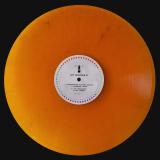
Jesse Outlaw “Let it Go” I met Jesse at Beatnonstop Records on Melrose Ave with Miguel Placencia in the late 90’s. Miguel (RIP) was a mainstay in the Underground scene and had always been very supportive of my endeavors. He had had success with a huge release on Yellow Orange and was working with Jesse under the moniker “When Worlds Collide.” I signed “Brighter Days” & “Set you Free” from them and released the tracks on my Seductive imprint. They told me that they were making the tracks on a Sony Playstation “Music Now” program and I was like FFS “What.s more Underground than that!?” Later Jesse gave me some of his solo work. The track “Let it Go” was never mastered & only ever cut to Dub-plate and featured on my 1st PCH mix “Pacific Coast House Sounds.” It has now been mastered by Martin Iveson and is available in all it’s glory. The dreamy vocal “You need to let it go” beckons over the top of driving percussive Latin beats and church organ which is a great compliment to the flip side of “Bring down the Walls.” All in all two West Coast stompers now finally available remastered on PCH in Orange vinyl.
In 1955 Miles Davis played an all-star jam session at the Newport Jazz Festival with Thelonious Monk on piano, Gerry Mulligan on baritone sax and Zoot Sims on tenor sax. This performance immediately drew the attention of Columbia Records' George Avakian, who was so impressed that he immediately offered Davis a contract if he could form a regular band. The group he then assembled would go down in history as Davis' so-called "First Great Quintet", consisting of John Coltrane on tenor sax, Red Garland on piano, Philly Joe Jones on drums, Paul Chambers on bass and of course Miles himself on trumpet. 'Round Midnight is Miles Davis' first record for Columbia and also the first studio recording of the First Great Quintet. The recording sessions began on October 26 1955 but the album wasn't released until 1957 as Davis was still under contract at Prestige at the time. These respective sessions yielded Steamin', Workin', Cookin' and Relaxin'; albums that would go down in history as quintessential blueprints of late 1950s hard bop.
The record is made up of a collection of standards and one traditional song ("Dear Old Stockholm", from the 19th century). Notably, it features what may be considered the most well-known versions of Thelonious Monk's "'Round Midnight" and "Bye Bye Blackbird". That Avakian made a golden signing was sufficiently clear from the start, but no one could foresee that it would be this quintet on Columbia that would go on to change the course of modern jazz forever with Kind of Blue. 'Round Midnight is available as a limited edition of 1500 individually numbered copies on crystal clear vinyl.
- 01: Bunny&Apos;S Pie (Feat. Bruce Johnson, John Abercrombie &Amp; Chip White)
- 02: Trial N. 5 (Feat. Bruce Johnson, John Abercrombie &Amp; Chip White)
- 03: Dimenticare Stanca (Feat. Bruce Johnson, John Abercrombie &Amp; Chip White)
- 04: Katcharpari (Feat. Bruce Johnson, John Abercrombie &Amp; Chip White)
- 05: Fluid Connection (Feat. Bruce Johnson, John Abercrombie &Amp; Chip White)
- 06: Cheerin&Apos; Cherry (Feat. Bruce Johnson, John Abercrombie &Amp; Chip White)
- 07: Peace (Feat. Bruce Johnson, John Abercrombie &Amp; Chip White)
The breakthrough album. Enrico Rava's second solo record, recorded in Milan in January 1973 and released on the German BASF label, is nothing less than a cornerstone of Italian jazz-rock - the record that caught Manfred Eicher's attention and opened the doors to ECM. Rava himself has called it his breakthrough, and history proved him right.
The lineup is killer: John Abercrombie on guitar, Bruce Johnson on bass, Chip White on drums. Four musicians operating at the absolute peak of early seventies fusion energy - electric, cosmopolitan, burning with that particular fire that only existed in that brief window when jazz met rock and nobody knew the rules yet. Abercrombie, already on his way to becoming one of the most distinctive voices in electric jazz guitar, delivers some of his most ferocious early work here. White's drumming is relentless, pushing the music forward with an intensity that never lets up.
If Miles' Bitches Brew-era speaks to you, if Ian Carr's Nucleus gets you moving, if you know Sun Ra's Lanquidity and Don Cherry's Relativity Suite by heart - this is essential listening. Rava's vision was already fully formed: South American rhythms, Mediterranean warmth, free jazz ferocity, rock power - all flowing together without borders or categories. By the early seventies, Rava had absorbed everything - the New Thing, the European free scene, the electric revolution coming out of Miles' studio - and forged something entirely his own.
The seven tracks cover serious ground. "Bunny's Pie" introduces the music with an almost cosmic atmosphere of suspense, hovering in that liminal space before it trails off into the up-tempo vibrant frenzy of "Trial N. 5" - Abercrombie and Rava trading swirling solos at full intensity, the rhythm section locked in tight. "Dimenticare Stanca" moves from Rava's expressive balladic intro into pure funk, guitar and trumpet steering over the rhythmic drive with absolute confidence. The title track carries the lyrical feel and cadence of an Incan-Peruvian folksong - that cosmopolitan spirit made audible. "Fluid Connection" rides a funky bass riff into fusion heaven, with standout trumpet and guitar solos that build and release with perfect tension. "Cheerin' Cherry" pays homage to the great Don Cherry - Rava's spiritual mentor and fellow traveler in world music - exploring a North African soundscape that points toward the global jazz to come. Johnson's "Peace" closes the album with a minute and a half of serene, blissful calm - a moment of stillness after the storm.
This audiophile reissue - cut from the original masters, pressed by Pallas in Germany on 180gm vinyl, housed in a thick laminated hand-glued gatefold - does full justice to an album that remains a collector's holy grail.
Don't sleep on this one. Limited Edition.