A revelatory collection of recordings from Japanese free-sound quintet Gu-N. Formed in 1994 by Fumio Kosakai (Incapacitants, Hijokaidan, C.C.C.C.) and Hidenobu Kaneda (Yuragi), alongside Ikuro Takahashi (Fushitsusha, Kousokuya, LSD March), Ryuichi Nagakubo (C.C.C.C., Yuragi), and Morihide Sawada (Yura Yura Teikoku, Marble Sheep), Gu-N played regularly at Plan-B in Tokyo, but released little during their relatively short time together. Hazy and hypnotic, their laminar improvisations, four of which appear on this untitled album, are compelling, oneiric visions for the ear.
In his liner notes for the album, Michel Henritzi writes that these Gu-N recordings situate the group within a broader trajectory of free improvisation and collective sound within Japan – Taj Mahal Travellers, East Bionic Symphonia, Marginal Consort, each of whom sprung, in many ways, from the radical vision and creativity of Takehisa Kosugi. But there’s a unique spirit here that aligns Gu-N with these predecessors, while also marking out singular territory.
Kosakai’s background in noise, via his participation in Hijokaidan and Incapacitants, can be heard in the unrelenting oscillations and heavyweight drones that purr throughout each of these four tracks. Both Kosakai and Nagakubo were members of C.C.C.C., perhaps the clearest precursors to Gu-N in their psychedelic density, though Gu-N trade in C.C.C.C.’s volcanic energy for a more tempered, sensuous exploration of tone and time.
There’s also a brutish element to Gu-N’s improvisations – see the saturated spectrum, rumbling and phasing throughout the album, and the crushing, almost Amon Düül-esque drum tattoos that Takahashi pounds out on the second track (recorded in 1998), punctuating the music from deep inside its hallucinatory murk. Elsewhere, as on the third track (one of three recorded in 1994), Kosakai’s cello scrapes out armfuls of buzz-tone as Sawada’s bouzouki trills out, elastic and vibrant, across spindrift electronics and lung-spun winds.
What’s most impressive here, though, is the way each player, formidable musicians in their own right, defers to the might of the communal and the collective. The quintet broke up in 1998, leaving behind scant recorded evidence – just one, self-titled CD, on Pataphysique, released in 1995. This LP is a most welcome addition to the small but blissful body of recorded work made public by this mysterious quintet of spirit channelers.
Suche:no regular play
Dallas-born Roger Kynard Erickson, better known as Roky Erickson, is a legend of psychedelic music and culture. Playing piano at five years old and guitar at ten, he dropped out of high school in Austin shortly before graduating, since the school dress code demanded short hair. In 1965, his group, The Spades, made an impact with “We Sell Soul” and the following year, The 13 th Floor Elevators burst onto the scene with debut album The Psychedelic Sounds of the 13 th Floor Elevators, but the band’s non-conformist attitude and open endorsement of drugs such as marijuana and LSD put them in repeated conflict with the authorities. Then, in 1968, during a performance at the San Antonio edition of the World’s Fair, known as HemisFare, Erickson began speaking incomprehensible nonsense on stage, leading to a diagnosis of paranoid schizophrenia and confinement in a Houston psychiatric hospital, where he was forcibly given electroshock therapy. The following year, after being busted with a single joint, Erickson pleaded not guilty by means of insanity, leading to a 3-year stay in Rusk State Hospital, with further electroshock and Thorazine treatments. Following his release Erickson formed a group initially called Bleib Alien, which evidenced a more hard-rock orientation, later renamed The Aliens, though Erickson was also working with Austin’s The Explosives in the same era. Aliens material produced by Stu Cook of Creedence Clearwater Rival was issued by CBS and an independent, 415 Records. Then, in the early 1980s, Erickson became fixated with junk mail and unsolicited letters, writing to lawyers and celebrity figures on a regular basis; in 1985, solo mini-LP Clear Night For Love was produced at Music Tracks in Austin by bassist/guitarist Speedy Sparks, with former Joe “King” Carrasco and Delbert McClinton drummer, Ernie Durawa, plus Supernatural Family Band alumnus John Reed on guitar. Released by France’s New Rose label in small numbers, the release found Erickson back in semi-psychedelic/country rock mode on opening track “You Don’t Love Me Yet,” the plaintive “Starry Eyes” and the anthem-like title track, while “The Haunt” is more in swamp/horror rock vein and “Don’t Slander Me” has heavy blues leanings.
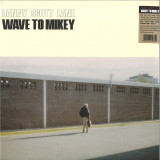
Wave to Mikey, the fourth album from the Los Angeles-based actor, musician and photographer Danny Lane is a nocturnal, neon-lit ode to the friendships that shape us. “I made this album for my friend Mikey from back home,” Danny explains. “We were pretty much inseparable for a large part of our lives, and our musical and social minds were always in sync in a special way. Then with age, we drifted apart, especially since I moved to Los Angeles. This album is just a little wave hello to an old friend and a kindred spirit.”
Equal parts avant-garde composition, instrumental city-pop, ambient, Kankyō Ongaku (environmental music) and Fourth World music, Wave to Mikey is an impressionistic and reflective cycle of eleven richly detailed memory portraits. Throughout the album, the influence of Jon Hassell, Arthur Russell, Hiroshi Yoshimura and Yellow Magic Orchestra hangs in the air like late-night mist, adding character but never overshadowing the rhythmic ambience of Danny’s musical visions.
Wave To Mikey began as a series of sketches on analog synthesisers, guitar, sample and found percussion sketches, initially recorded in Danny’s home studio. Once he’d located the vibe, Danny called on his friends E Talley II, Solange collaborator John Carroll Kirby and Destroyer session musician Joseph Shabason, who respectively added flute, spiritual synth textures and saxophone to the record.
For Glossy Mistakes founder Mario G.R., who originally discovered Danny through his photography, Wave To Mikey captures a vivid feeling of melancholy and peace. “He's able to encapsulate emotions in a very straightforward way, either in his portrait or songs,” Mario says. “I think that's a kind of virtue or skill given to talented artists, no matter the field.”
Born and raised in Staten Island, New York, Danny began playing music with his friends when he was thirteen, before putting that passion on pause to study Fine Arts (Theatre) at Rider University in Lawrence Township in pursuit of an acting career. Acting led him to photography, after playing a photographer in a film, he was inspired to pursue the medium. Danny began shooting photos on film for magazines and lifestyle brands, spent a stint living in New York’s Chinatown neighbourhood, and eventually relocated to Los Angeles in 2017.
Four years ago, Danny started recording and releasing music under his own name, leading to the trilogy of releases that preceded Wave To Mikey, How To Empty A Cup (2019), Memory Record (2019) and CAPUT (2021). Over the course of these releases, he’s revealed himself to be a sophisticated composer and producer with a studied ear from years spent digging through record bins for ambient, experimental, new age, jazz and electronica records from around the globe, with a particular emphasis on Japan.
“Music is something that’s always been involuntary for me,” Danny reflects. “It’s unconditional, always there. It’s something I just have to do. I’ve taken breaks and it’s always gloomy when I’m not playing. I just want to get better and better and understand more and more.”
Here at Glossy Mistakes, Wave To Mikey marks our second contemporary album release, following on from Evenings by Japanese composer Metoronori. We’re proud to be able to present Danny, Metoronori and other modern musicians' work alongside reissues of classic works from Stevia aka Susumu Yokota, Akira Ito, Yuji Toriyama & Ken Morimura, and Takashi Kokubo.
Mastered by Damian Schwartz, Wave To Mikey will be released on Vinyl LP Glossy Mistakes on June 27 2022. Besides the regular black vinyl, a limited clear vinyl will be available in an edition of 100 copies. Both editions come packaged with original cover art photography shot by Danny.
Listening pays off. This is evident not least in the debut EP of Golden Pudel Club barman Paul Speckmann.
Long years behind the bar of the Hamburg club pub made him a willing listener to the numerous and diverse events there - from start to finish, something that very few "regular" clubbers can claim.
And these influences, from indie concert to electronica crunch, from jungle breakbeat massacre to dignified house groove, not only led to his varied DJ sets, with which Speckmann also made his house club happy, but certainly also served as inspiration for these wonderful tracks, which skil-fully oscillate between deep-dusty house, angereak indie dance and playful IDM jingling, often varying different elements in one track.
There is, for example, the delicately dreamy house hit "On The Flip", the latenight funk of "Star-ship", which would not be out of place on the Sunday MFOC floor, or the blurred indie ambient tune "Return", which captivates with campfire guitar and Sophia Kennedy on the vocals.
And these are just three of the seven tracks (or eight on the digital release) on the EP, none of which disappoint. Someone has listened carefully and learned his lessons. Chapeau!
"The dazzling symphonic album he always threatened to produce" UNCUT 5/5
"A soulful symphonic masterpiece" ROLLING STONE
Originally released in Japan only on CD in 2002, Plush's Fed lives up to the cult-like adulation it has garnered ever since. A stunning symphony of Bacharach-inspired pop, Toussaint-swing andMelody Nelson-era-Gainsbourg, it's an album bound together by Liam Hayes' maverick genius, an uncompromising Brian Wilson-esque quest for sonic perfection. Positively indulgent in every way, this sumptuous record has long deserved to be treated to a deluxe vinyl edition. Lovingly overseen by Hayes and recent collaborator Pat Sansone (Wilco/The Autumn Defense), it will finally be available on the format it should've always been, this Record Store Day 2018. Remastered and presented as a double LP - cut specially at 45rpm - it comes housed in a beautiful gatefold jacket with expanded artwork throughout.
Its expansive, singular vision infamously took years to realise, involving Earth Wind & Fire's horn arranger (the legendary Tom Tom MMLXXXIV) amongst other elite personnel. Recorded with five different engineers (including Steve Albini and John McEntire), Hayes meticulously extracted every ounce of pop from each note. A long list of renowned studio ringers (including soul drummer Morris Jennings) and Chicago regulars (McEntire, Rizzo, Parker) among many others provide playing of demonstrably professional precision. As such, Hayes' complex, meandering melodies are rendered far more coherent and satisfying than they otherwise might have appeared, bringing his epic, anguished pop to a rarely seen level of perfection and depth. This unstinting dedication to the overarching vision was rewarded handsomely - artistically, at least.
However, as might have been expected, his deluxe approach resulted in a bill too steep for any American or European label to ultimately support. It has since seemed unlikely that it would see the light of day on either side of the Atlantic. Yet we were determined not to allow Hayes' lifetime achievement to go unnoticed or let music fans across the world miss out on one of the finest albums of this century.
A wide-eyed opus of stunning intensity, Fed oozes Hayes' impeccable influences without ever becoming overwhelmed by them. Incredibly, it touches upon Blaxploitation soul, Boz Scaggs-soft-rock, hints of jazz and blues, timeless baroque and skewed pop. In one long minute, the stabbing, soulful "So Blind" moves through five different melodic segments, horns shift easily from haunting backdrop to explosive forefront, smoothly giving way to strings as Hayes' voice casts its bewitching spell. The ambitious soul of "Having It All" has been described as the diffident cousin of Marvin Gaye's "Save The Children" whilst the breezy "Greyhound Bus Station" is pure 70s AM Gold, evoking the easy warmth of Jimmy Webb's beloved Land's End period. The sublime resignation of "No Education", a beautifully slow number that begins, "Never read a book in my life/ But I feel just fine" is post-rock ballad heaven. Arriving towards the end, the title track arrives as a majestic suite, moving from a horn-and-guitar-led instrumental via shifting melodies to Hayes' compelling vocal bursts.
An album of such brilliance, Fed can comfortably sit alongside such staggering statement pieces as David Bowie's Young Americans, Randy Newman's 12 Songs or Harry Nilsson's Nilsson Schmilsson. Indeed, for all the sprawling elements that went in - lengthy guitar builds, exploding horn sections, solemn strings, female backup chorus - it is a deeply personal and original record. Employing a distinct "more is more" aesthetic, he demonstrates remarkable restraint in producing an album of such intimacy. "My creation has drowned me," he memorably sings on languid opener "Whose Blues", yet he navigates the shifting styles and ideas with enviable ease.
A product of generations of underground music in L.A. and beyond, The Linda Lindas' debut, Growing Up, channels classic punk, post punk, power pop, new wave, and other surprises into timelessly catchy and cool songs sung by all four members-each with her own style and energy. A handful of cuts have already been previewed at shows and enthusiastically approved by diehard followers in the pit at L.A.'s DIY punk institution The Smell and Head in the Cloud festival goers at The Rose Bowl alike. The Linda Lindas are stoked to unleash Growing Up. The Linda Lindas first played together as members of a pickup new wave cover band of kids assembled by Kristin Kontrol (Dum Dum Girls) for Girlschool LA in 2018 and then formed their own garage punk group just for fun. Sisters Mila de la Garza (drummer, now 11) and Lucia de la Garza (guitar, 14), cousin Eloise Wong (bass, 13), and family friend Bela Salazar (guitar, 17) developed their chops as regulars at all-ages matinees in Chinatown, where they played with original L.A. punks like The Dils, Phranc, and Alley Cats; went on to open for riot grrrl legends Bikini Kill and architect Alice Bag as well as DIY heavyweights Best Coast and Bleached; and were eventually featured in Amy Poehler's movie Moxie. When the pandemic put a pause on shows, The Linda Lindas went on to self-release a four-song EP, make their own videos and grow a following beyond Los Angeles. But they never expected or could have even dreamed that their performance of "Racist, Sexist Boy" for the Los Angeles Public Library in May 2021 would take them from punk shows to TV shows. A month later, when the school year ended and summer began, The Linda Lindas got to work on their first full-length LP. Having written a mountain of new material individually while sheltering in place and attending class virtually, the band was more than ready to enter the studio where Mila and Lucia's dad (and Eloise's uncle and Bela's "uncle") Carlos de la Garza oversaw recording and production. The Grammy-winning producer's work includes Paramore, Bad Religion, Best Coast, and Bleached.
Hospital Records proudly present the debut solo album from drum & bass icon Grafix. ‘Half Life’ is an introspective glimpse into the influences and sonic development of the Bristol-based producer, who over the years has established himself as a pinnacle of the dance music world. Grafix’s first ever studio longplayer as a solo artist consists of 14 hotly-anticipated pulse pounding anthems, featuring killer collaborations from the likes of Metrik, Lauren L’aimant, Reiki Ruawai and Chrissie Huntley in his hit singles ‘Somewhere’, ‘Feel Alive’ and ‘Skyline’.
High-octane dancefloor energiser ‘Skyline’ sees drum & bass titans Grafix and Metrik collide for a third time on this futuristic drum & bass cut infused with pure uplifting soundscapes. Enter a world of powerhouse synthesis, relentless basslines and Metrik’s very own vocal performance. This is just the follow up you needed from the mammoth success with the duo’s previous collaborations ‘Overdrive’ and ‘Parallel’.
Grafix draws upon his love for rave culture on the acid heavy ‘Blast Out’ - a no-holds-barred drum & bass system shocker. Skittery vocal chops, shredding bass hits and minimal-funk drums show the side of Grafix well known for tearing up the dance - never afraid to drop a wild card.
From the hypnotic and distorted energies on the likes of ‘CTRL’ and album title track ‘Half Life’, to the forward-facing vibes on LP numbers such as ‘Accelerate’ and ‘The Chance’, the versatile flavours supplied by Grafix throughout are a testament to his years of experience in the studio.
Other album highlights include two tracks with the immensely talented Lauren L’aimant who boasts previous releases on staple dance imprints including Anjunadeep, Colorize and Protocol Recordings. ‘Watch The Sky’ is an anthemic stepper home to Lauren’s spine-tingling vocals and Grafix’s catchy synth hooks. ‘Feel Alive’ captures the pair’s undeniable ability to strike up a euphorically cutting-edge dance music banger.
The ‘Half Life’ LP also features the previously released tracks ‘Radiance’ as well as radio hit ‘Somewhere’ featuring New Zealand’s very own Reiki Ruawai. Both tracks of which are no stranger to worldwide drum & bass listeners.
Grafix’s debut album marks a signature milestone within his musical journey as a solo artist and his achievements so far only scratch the surface. The first single ‘Somewhere (feat. Reiki Ruawai)’ to drop from his album racked up global airwave support with an impressive number of plays from radio tastemakers including Danny Howard, René LaVice, Mollie Collins, the George FM crew in New Zealand and of course, Fred V. With regular support from big hitters including Sub Focus, Wilkinson, Friction, Camo & Krooked and more, Grafix’s music continues to talk for itself when racking up countless DJ spins as well as consistent landings across pinnacle industry platforms such as UKF. Keep an eye out for Grafix at Snowbombing, Hospitality On The Beach Albania and more throughout 2022!
In the years since their formation, WhoMadeWho have established themselves as one of the most important underground bands of their generation. The Danish group, consisting of Tomas Høffding, Tomas Barfod and Jeppe Kjellberg, has an exceptional sense of emotional depth, heartbreaking melodies and brilliant songwriting, boasting an expansive discography currently spanning a total of six albums and a plethora of EPs, singles and remixes released on labels such as Kompakt, Innervisions and Life & Death. On the road, they are internationally renowned for their professionalism and outstanding live performances and have become regular fixtures at some of the world’s most notable musical festivals, including Roskilde, Sonar, Melt! and Burning Man to name just a few.
The in-demand Scandinavian outfit now confirm details of their upcoming long player, UUUU. Set for worldwide release on Friday, May 27, via long standing German record label Embassy One, UUUU is the seventh full-length studio album from WhoMadeWho. A beautifully crafted record featuring thirteen original productions.
HIGHLIGHTS: 1967 descargas album by Peruvian percussionist Coco Lagos y Sus Orates, featuring Alfredo Linares, Charlie Palomares, Otto de Rojas, Mario Allison_ This album was recorded following the success of the descarga sessions released by New York label Alegre Records. It includes a version of Cal Tjader's 'Mamblues' and 'Brava pachanga', an original by the Father of Boogaloo, Joe Cuba, among many other stand-out tracks. Quality official reissue on 180g vinyl after years unavailable. Includes insert with liner notes. Details: 1966 was a prolific year for the MAG record label. The microphones were constantly on at the label's studios, recording timeless hits by Los Demonios de Corocochay, Betico Salas, Cholo Berrocal, Mario Allison, Alfredo Linares, Carlos Muñoz and Los Pacharacos, just to mention the most successful ones. The percussion playing by 29-year-old Peruvian Coco Lagos stands out on a number of these recordings. Coco continued his early career, and he played the conga drums for artists who passed through Lima, accompanying Pérez Prado, Oréfiche and Chano Scotty, among others. In the late 50s, he started working as a regular musician in the recently founded record company MAG, alongside musicians such as Ñiko Estrada, Mario Allison, Lucho Macedo...
Ex RSD LP on transparent red vinyl, gatefold sleeve with lyric inner sleeve and DL card. Final copies now reduced to £7.99. The tracks on this album have never been officially released before now. The eight songs on this album were recorded in 1978 on a 2-track stereo Revox A77 tape recorder. The recordings are unashamedly analogue, using one microphone and guitars plugged directly into the tape recorder. Bouncing down tracks irreversibly as they went on, forced to make creative decisions that could not be undone. Some hard choices had to be made with the mix, but with no record company meant no record company agenda. TV Smith & Richard Strange could write and record whatever they wanted – and did! It has been an enormous pleasure to rediscover these recordings, the result of a friendship of two artists emerging from broken bands and each about to embark on a lifelong adventure in words and music. TV SMITH - I wasn’t having a lot of fun in 1978 when Richard asked me to collaborate on a song he was writing called “Summer Fun.” I was in the final stages of songwriting for the second Adverts album “Cast Of Thousands,” a project that already seemed doomed to failure given an unenthusiastic record company, a band in the throes of falling apart, and a dwindling audience - but my creative juices were in full flow and I was ready for something different. I already knew Richard, of course, from the Doctors Of Madness, who I’d followed in the years before punk when I was still living in Devon and they were one of the few bands to come and play in the area. I considered them a warped poetic glam band with gothic leanings, and was slightly surprised when the song I’d been invited to work on turned out to be a kind of California surf pastiche. But I was game to get involved, and after we’d finished it and ventured forward with regular writing and recording sessions over the following weeks it soon became clear that “Summer Fun” was just a gateway drug, and the songs that were emerging from our combined forces were going to quickly become much deeper and much darker // RICHARD STRANGE - Watching the remnants of a musical dream being swept away by the juggernaut of corporate punk rock in 1976, I felt a combination of jealousy and resentment towards many of the key players who had been responsible for our demise. The Sex Pistols had supported my band Doctors of Madness early in their career and nicked not only our future but £12.00 from a pair of trousers in our dressing room in Middlesbrough Town Hall! The Jam, who supported us over four shows at London’s fabled Marquee Club, were how I imagined The Who would be if they’d joined the Young Conservatives. Warsaw, our go-to support band in Manchester, had just changed their name to Joy Division, and Johnny and the Self-Abusers, our Scottish flag wavers, had become Simple Minds. All were being feted by the all-powerful music press, while we were being buried. But there was one punk band for whom I never had anything but the greatest affection…The Adverts.
This first-ever vinyl reissue, remastered from the original analog tapes, includes a gatefold jacket and inner sleeve with restored, new, and alternate art and photos by Terry and Jo Harvey Allen; an insert with lyrics, original notes, and Terry’s letter to H.C. Westermann about the songs; and a high-res download code. Deluxe CD edition features a trifold jacket and inner sleeve. Recorded exactly two years after acclaimed visual artist and songwriter Terry Allen’s masterpiece Lubbock (on everything), the feral follow-up Smokin the Dummy is less conceptually focused but more sonically and stylistically unified than its predecessor it’s also rougher and rowdier, wilder and more wired, and altogether more menacingly rock and roll. Following the 1973 Whitney Biennial, in which songwriter and visual artist Terry Allen and fellow iconic artist Horace Clifford “Cliff” Westermann both exhibited, Allen maintained a lively long-distance correspondence and exchange of artworks and music with Westermann, whose singular and highly influential art he admired enormously. In a February 1981 letter to his friend and mentor, written shortly after the late 1980 release of his third album Smokin the Dummy, while he and his family were living in Fresno, California, Terry explains the genesis of the album title: Westermann died shortly after receiving this letter, enclosed with a Smokin the Dummy LP, the minimalist black jacket of which Allen suggested that Cliff fold into a jaunty cardboard hat if he didn’t like the music. That response was unlikely, since Westermann loved Terry’s music, calling his debut record Juarez (1975) “the finest, most honest and heartfelt piece of music I ever heard.” The Panhandle Mystery Band had only recently coalesced during those 1978 Lubbock sessions, Lloyd Maines’s first foray into production. Through 1979, they honed their sound and tightened their arrangements with a series of periodic performances beyond Allen’s regular art-world circuit, including memorable record release concerts in Lubbock, Chicago, L.A., and Kansas City. Terry sought to harness the high-octane power of this now well-oiled collective engine to overdrive his songs into rawer and rockier off-road territory. His first album to share top billing with the Panhandle Mystery Band, Dummy documents a ferocious new band in fully telepathic, tornado-fueled flight, refining its caliber, increasing its range, and never looking down. Alongside the stalwart Maines brothers co-producer, guitarist, and all-rounder Lloyd, bassist Kenny, and drummer Donnie and mainstay Richard Bowden (who here contributes not only fiddle but also mandolin, cello, and “truck noise theory,” the big-rig doppler effect of Lloyd’s steel on “Roll Truck Roll”), new addition Jesse Taylor supplies blistering lead guitar, on loan from Joe Ely (who plays harmonica here). Jesse’s kinetic blues lines and penchant for extreme volume were instrumental in pushing these recordings into brisker tempos and tougher attitudes. Terry was feverish for several studio days, suffering from a bad flu and sweating through his clothes, which partially explains the literally febrile edge to his performances, rendered largely in a perma-growl. (By this point, he was regularly breaking piano pedals with his heavy-booted stomp.) Like the album title itself, the songs on Smokin the Dummy ring various demented bells. The tracks rifle through Terry’s assorted Obsessions especially the potential energy and escape of the open road, elevated here to an ecstatic, prayerful pitch and are populated by a cast of crooked characters: truckers, truck-stop waitresses, convicts, cokeheads, speed freaks, greasers, holy rollers, rodeo riders, dancehall cheaters, and sacrificial prairie dogs, sinners seeking some small reprieve, any fugitive moment of grace. A reigning deity of a certain kind of country music since the mid-70s. – The New York Times // The kind of singular American artist who expresses the fundamental weirdness of his country. – The Wire
Continuing with the theme of finding and releasing quality 21st century CD-only tracks on to 7” vinyl, Jai Alai now are proud to present their fourth release which showcases the stand-out tracks from the only two albums released under the name Sir Wick.
Chad ’Sir Wick’ Hughes is probably best described as a musician (trombone, piano, percussion), composer, teacher, adjudicator and clinician, but somehow that doesn’t seem quite enough to describe such a unique musical talent. Born in Detroit, and graduating from the same High School as Diana Ross, Paul Thompson, & Ron Carter, he went on to study composition and arranging, and holds regular clinics around the north and mid-west US states sharing his expertise.
The topside on this limited edition release is the lead track from his debut album “An Interpretation Of A Universal Language” (2007 Sir Wick Entertainment LLC) which features the sublime vocals of Sedalia Marie, a beautiful mid-pacer, whilst the other side “I Love You” features the mellow vocals of Anthony Saunders on a track from Chad’s opus work “A Tale Of Two Fools”, which he began in 1996 but only finally orchestrated and released as his second album in 2017 - a soundtrack featuring a full orchestra comprising eight woodwind parts, full strings, big band brass, and seven-piece rhythm section.
Originally intended as an operetta, it was evolving into something bigger; an opera, musical or stage play maybe, but he finally referred to it as a ‘novical’ (a musical novel), which best describes this story of a young musician falling in love for the first time. A biopic, maybe?
One could easily take these two fabulous tracks at face value as simply just another great double-sider, but isn’t it nicer to know the full story?
Steve Hobbs (Solar Radio, Totally Wired Radio)
- A1: Three King Fishers
- A2: Love Is Blue
- A3: Theme From Valley Of The Dolls
- A4: Bacchanal
- A5: Sunshine Superman
- B1: Some Velvet Morning
- B2: The Look Of Love
- B3: Divided City
- B4: Theme From Valley Of The Dolls (Single Version)
- B5: Sunshine Superman (Single Version)
- B6: The Look Of Love (Single Version)
- B7: Bacchanal (Single Version)
The long-awaited reissue of this rare Eastern and psychedelic Jazz LP by the famous Hungarian guitarist, originally
released in 1968. For the first time and as extended Edition with four bonus tracks: radio version from 1968/69 7”
singles 7”. Deluxe 6-sided Digipak CD with 20 page booklet and Gatefold Vinyl comes with long, exclusively written
inner notes by the famous researcher and biographer Douglas Payne.
“The performances on this LP have a restrained, introspective quality. Szabo’s work is lyrical, rather economical, and
somewhat angular, and his tone is warm and glowing.” – Harvey Pekar, DownBeat
“Gabor Szabo is at the musical zenith of his career. This album could rank as his best to date.” - Billboard
“But for sheer lyrical beauty, few players are in Szabo’s class. His startling use of dissonance is a delight, too, and
time and again he will alter a final phrase just slightly, totally reorienting a familiar tune.” – Alan Heineman, DownBeat
“This is definitely one of my ‘go to’ Gabor albums.” Mike Stax, Ugly Things
"Gabor Szabo’s Bacchanal documents one of the earliest and finest examples of what was then known as “jazz rock.”
Years before this new jazz style evolved – or devolved, according to some – into “fusion,” jazz rock was mostly
fashioned by younger jazz players whose ears were open to the emerging sounds coming out of rock and roll,
especially those of the Beatles and, later, Jimi Hendrix. " - Douglas Payne
After recording four albums for Impulse in 1967, the distinctive guitarist Gabor Szabo cut three strongest records for
the Skye label in 1968-1969: "1969", "Dreams" and "Bacchanal" all of them became a legendary classic. This time
EBALUNGA!!! are rediscovers "Bacchanal". Szabo's regular group of the era is heard on record for the last time:
guitarist Jimmy Stewart, bassist Louis Kabok, drummer Jim Keltner and percussionist Hal Gordon. With the exception
of two Szabo originals, the material is comprised of current pop tunes including two songs by Donovan, "Love Is Blue,"
"The Look of Love" and "Theme from the Valley of the Dolls."
Gabor Szabo was one of the most original guitarists to emerge in the 1960s, mixing his Hungarian folk music heritage
with a deep love of jazz and creating a distinctive, largely self-taught sound.
Born in Budapest, on March 8, 1936, Szabo was inspired by a Roy Rogers cowboy movie to begin playing guitar when
he was 14 and often played in dinner clubs and covert jam sessions while still living in his hometown. He escaped
from his country at age 20 on the eve of the Communist uprising and eventually made his way to America, settling
with his family in California.
He attended Berklee College (1958-1960) and in 1961 joined Chico Hamilton's innovative quintet featuring Charles
Lloyd. Urged by Hamilton, Szabo crafted a most distinctive sound; as agile on intricate, nearly-free runs as he was
able to sound inspired during melodic passages. Szabo left the Hamilton group in 1965 to leave his mark on the popjazz of the Gary McFarland quintet and the energy music of Charles Lloyd's fiery and underrated quartet featuring Ron
Carter and Tony Williams.Szabo initiated a solo career in 1966, recording the exceptional album, Spellbinder, which yielded many inspired
moments and "Gypsy Queen," the song Santana turned into a huge hit in 1970. Szabo formed an innovative quintet
(1967-1969) featuring the brilliant, classically trained guitarist Jimmy Stewart and recorded many notable albums
during the late '60s. The emergence of rock music (especially George Harrison, Eric Clapton, and Jimi Hendrix) found
Szabo experimenting with feedback and more commercially oriented forms of jazz.
During the '70s, Szabo regularly performed along the West Coast, hypnotizing audiences with his enchanting,
spellbinding style. From 1970, he locked into a commercial groove, even though records like Mizrab occasionally
revealed his seamless jazz, pop, Gypsy, Indian, and Asian fusions. Szabo had revisited his homeland several times
during the '70s, finding opportunities to perform brilliantly with native talents. He was hospitalized during his final visit
and died in 1982, just short of his 46th birthday.
Second release of the new "Live At Fabrik Hamburg" series on Jazzline in
cooperation with the legendary venue and NDR Kultur - is this previously
unreleased concert from jazz great Gil Evans with a 16-strong all-star
cast from 1986
It will be released as a double CD in a three-piece digipak and as a triple LP in a
triple gatefold cover that includes detailed liner notes by Michael Laages. By the
1980s, the Gil Evans Orchestra's repertoire had developed into a distinctive blend
of Jimi Hendrix melodies, the band members' own compositions and occasional
references to Gil's older recordings. This concert in Hamburg contained four
songs by Hendrix, with only one ("Up From The Skies") being part of an original
studio album. The regular performances in Europe meant that the audience of the
band was getting younger and was also well acquainted with rock music.
A year and a half after this performance, Gil Evans passed away. He will rightly be
remembered forever for the brilliant albums he recorded with Miles Davis and
under his own name. In reality, however, he lived three quite contrasting musical
lives. As was the case with his Monday evening concerts in New York's Sweet
Basil, this Hamburg performance is a reminder of the lively late phase of Gil
Evans. Here a great all- star ensemble played an outstanding concert of eight
pieces in over two hours.
- A1: Intro
- A2: I Know That You've Been Wounded (Church Hurt) (Church Hurt)
- A3: He'll Make A Way (Trust In The Lord) (Trust In The Lord)
- A4: Talk To God
- A5: In The Name Of Jesus (Everytime) (Everytime)
- B1: To Be Used By You (I Want To Be A Good Man) (I Want To Be A Good Man)
- B2: Who Do Men Say I Am?
- B3: Storm Of Life (Stand By Me) (Stand By Me)
- B4: In The Service Of The Lord
- B5: I Just Want To Be A Good Man (To Be Used By You) (To Be Used By You)
This album is a tribute to Pastor Wylie Champion, who died while we were in the process of releasing this, his first record, and his wife, Mother Champion, who died a few months earlier. We met Pastor Champion a few years ago while we were putting together another release, The Time for Peace Is Now: Gospel Music About Us. We found him in a collection of YouTube videos from the 37th Street Baptist Church in Oakland, California, put together by the pastor there, Bishop Dr. W.C. McClinton. There was quite a lot of talent in those videos, and among them was Pastor Champion whom we liked so much that we decided to make a record with him. Pastor Champion wasn’t like any other pastor you’ve ever met. As an itinerant preacher, a carpenter, and a father of five, he made a name for himself traveling up and down the California coast with his electric guitar. He traveled alone and he played alone, well into his seventies. The easiest way to describe him would be as an outsider gospel artist. Other than these bare facts, we never learned much about him—except that he was also the brother of the well-known soul singer Bettye Swann. In fact, most of what we knew about him we got from his sister’s Wikipedia page. We decided that because we met Champion through the 37th Street Baptist Church, we would record him there too. We recorded him live on a two-track Nagra reel to reel, as we wanted the album to be analog in the style of traditional gospel recordings. Over the course of two evenings (when the workday was done), Champion taught his band—musicians who had never played together before—a handful of songs, a small selection of the nearly 2,000 fragments of songs and sermons that he regularly performed. We listened in as they all got more familiar with the material and each other over time. At some point, we mentioned to Champion that he would have to be interviewed by someone to write notes for the album. He wasn’t too pleased with this idea, saying he’d had a hard life and he didn’t want to talk about it. Over the next few months, we kept asking Champion to talk to someone about his life. He told us that he didn’t want to talk about growing up in Louisiana, his mother being accosted by the Klan, or that his father was a gambler. He didn’t want to talk about being jailed for 90 days for using a whites only bathroom, being in gangs or having a street name. We told him that was fine—he could talk about what he wanted to talk about. And he told us that he didn’t want to talk about anything. You know, there are times when you make a record where it’s already made in your mind before you start. But then in the end, the record you thought you were making is not the record you made. We spent years puzzling over this one, trying to figure out what it was saying, who it was for, and how to get people to pay attention to it. But Champion knew that this record wasn’t going to be for everyone. He didn’t really care. The important part for him was just getting the message out there in the same way that he always had, travelling alone with his electric guitar. “I want to say what I mean,” he said, “be practical, precise, to the point, and, at the same time, diplomatic.” In other words, he just wanted to be a good man. God bless Pastor Champion and Mother Champion, peace be with them and their family. Love to all.
- A1: Assimilation (Feat Dylema)
- A2: His Mother's Eyes (Feat Jermain Jackman)
- A3: The Investigator (Feat Brother Andrew Muhammad)
- A4: Break The Chains
- A5: A Police Service, Not A Police Force (Feat Lee Jasper)
- A6: Hackney Ain't Innocent (Feat Yolanda Lear)
- B1: On The Daily (Feat Ugochi Nwaogwugwu)
- B2: Say Black (Feat Dylema)
- B3: The Babylon Encounter (Feat Janette Collins & Leroy Logan)
- B4: Witness The Whiteness (Feat Adam Elliot Cooper)
- B5: Lifeline (Feat Zara Mcfarlane)
Red vinyl[27,35 €]
The Brkn Record is a new project led and produced by Jake Ferguson, the co-founder and bass player for the UK's foundational deep jazz outfit the Heliocentrics. With fellow Heliocentrics co-founder and legendary drummer Malcolm Catto, Ferguson has been a regular collaborator with globally recognised artists including Archie Shepp, Mulatu Astatke, Melvin Van Peebles, Orlando Julius and many others. The Architecture of Oppression Part 1 represents Ferguson's debut as a bandleader and orchestrator, and manifests as a committed and soulful response to ongoing and systemic anti-black racism, social oppression and state violence both at home in London and across the globe. Combining poetry, testimony and song with rich and cinematic backdrops, Ferguson has produced a sui generis sound that conjures flavours of Arthur Verocai, Ennio Morricone, classic library productions, Madlib-style deep-jazz beat science, and psychedelic soul. With bandmate Malcolm Catto on drums, Ferguson draws on their long years of collaborative experience in the Heliocentrics to build an album of striking texture and depth.
- A1: Assimilation (Feat Dylema)
- A2: His Mother's Eyes (Feat Jermain Jackman)
- A3: The Investigator (Feat Brother Andrew Muhammad)
- A4: Break The Chains
- A5: A Police Service, Not A Police Force (Feat Lee Jasper)
- A6: Hackney Ain't Innocent (Feat Yolanda Lear)
- B1: On The Daily (Feat Ugochi Nwaogwugwu)
- B2: Say Black (Feat Dylema)
- B3: The Babylon Encounter (Feat Janette Collins & Leroy Logan)
- B4: Witness The Whiteness (Feat Adam Elliot Cooper)
- B5: Lifeline (Feat Zara Mcfarlane)
Black vinyl[25,42 €]
The Brkn Record is a new project led and produced by Jake Ferguson, the co-founder and bass player for the UK's foundational deep jazz outfit the Heliocentrics. With fellow Heliocentrics co-founder and legendary drummer Malcolm Catto, Ferguson has been a regular collaborator with globally recognised artists including Archie Shepp, Mulatu Astatke, Melvin Van Peebles, Orlando Julius and many others. The Architecture of Oppression Part 1 represents Ferguson's debut as a bandleader and orchestrator, and manifests as a committed and soulful response to ongoing and systemic anti-black racism, social oppression and state violence both at home in London and across the globe. Combining poetry, testimony and song with rich and cinematic backdrops, Ferguson has produced a sui generis sound that conjures flavours of Arthur Verocai, Ennio Morricone, classic library productions, Madlib-style deep-jazz beat science, and psychedelic soul. With bandmate Malcolm Catto on drums, Ferguson draws on their long years of collaborative experience in the Heliocentrics to build an album of striking texture and depth.
The Kenya born, Berlin based percussionist, vocalist, DJ, producer and "musical witchdoctor" Alai K releases his red hot debut album'Kila Mara', via On the Corner Records. Sonically speaking, this vivacious collection of frenetic, polyrhythmic and percussive workouts link the spirit of Jeff Mills, DJ Rush, DJ Bone and K Handwith beats from The Bajuni Islands, Mozambique, Malawi and the maritime Swahili coastline north of Mombasa. On moving to Berlin, Alai went raving regularly and became enamoured with underground dance music culture. "I love techno and believe that African drums influenced the percussion and programming: lt'scoming from the same place; with both you get extended periods with no chorus or verse, just occasional chanted or chopped vocals. In Africa people play drums and dance for hours, which is the same experience as western electronic music", says Alai.
On a balmy Brazilian night in February, 1981, a crowd gathered in Rio de Janeiro's Gávea neighbourhood under the iconic dome of the city's Planetário (Planetarium). Alongside musicians like Helio Delmiro and Milton Nascimento (who were in the audience that night), they were there to see the great "Bruxo" (sorcerer) Hermeto Pascoal live in concert, with his new band formation which would become known simply as "O Grupo" (The Group).
Growing up on a farm in Brazil's northeastern state of Alagoas, Hermeto has always been deeply in tune with, and inspired by nature. In his youth he would make his own flutes to play call and response with the birds and frogs. He would build scrap-metal instruments in his blacksmith grandfather's forge, and sit for hours by the lake listening to the sounds of nature. On the Planetário Da Gávea recordings though, Hermeto is cast as the "sorcerer" or the "cosmic emissary" (as the great Brazilian guitarist Guinga once called him), exhibiting an intuitive sense of harmony and melody beyond that of our own world.
"Tudo e Som" (All is Sound). It's a phrase Hermeto regularly returns to, and it points to the fact that not only can music be made from anything, but also alludes to something much more profound. It's an understanding of the universe as being in a state of constant movement, forever vibrating at the quantum level, like the string of a guitar, or a saxophone's reed. "Tudo e Som" is a declaration of the mystical and spiritual power of sound, as a fundamentally vibrational force.
The series of concerts at the Planetário marked the birth of "O Grupo" which would last with the same line-up (apart from Zé Eduardo Nazário) for the next eleven years. Every member of O Grupo was a phenomenal musician in their own right. It was one of saxophonist/flautist Carlos Malta's first gigs with the group, and the concert unusually featured two drummers, Zé Eduardo Nazário and Marcio Bahia. Nazário, from São Paulo, had played with Hermeto during the mid-70s (as well as with Milton Nascimento, Egberto Gismonti and Toninho Horta, to name a few). Bahia though had just joined the group. Acclaimed keyboard player Jovino Santos Neto was on keyboards, piano and organ, and the great Itiberê Zwarg (who remains in Hermeto's band to this day), played bass. Rounding the group off was the percussionist Pernambuco. During this period (up until the early 90s) the group would rehearse for hours on end, virtually seven days a week, with a total dedication to music and Hermeto's musical vision.
Most of the compositions performed that night at the Planetário had never been recorded before, and many are unique to this album, including the wild 'Homônimo Sintróvio', the exaltant 'Samba Do Belaqua', 'Vou Pra Lá e Pra Cá' and 'Bombardino', which features Hermeto's wonderfully absurd call and response mouthpiece soliloquy. Then there's the stunning 7/4 Samba 'Jegue' which builds with inventive dissonance, before releasing yet another celestially colourful, celebratory refrain. The show also features the first recorded performances of 'Era Pra Ser e Não Foi' and 'Ilza na Feijoada' (inspired by Hermetos' wife Ilza's famed black bean and meat stew), which Hermeto later recorded on his 1984 studio album "Lagoa Da Canoa Município De Arapiraca".
Dubbed by Miles Davis as "one of the most important musicians on the planet", a Hermeto Pascoal live show was (and still is) an experience like no other. Across the recording of the Planetário concert, wild improvisation meets groovy, virtuosic vamping on progressive, extended psychedelic jams. The tracks are generally built around a beautiful, transcendent melody; instantly recognisable as being Hermeto's, and for the most part, the musicians then solo over extended two chord vamps. There's a plethora of powerfully delivered rhythms, wild solos and the performances are punctuated by Hermeto's unpredictable, at times comical sonic antics.
Over forty years since this historic happening, Far Out Recordings is overjoyed to release this magical recording of Hermeto Pascoal e Grupo Live at Planetário Da Gávea, on double vinyl LP, CD and digitally for a February 4th 2022 release.
New limited pressing on 180g Electric Blue Vinyl. L.A. Witch’s self-titled debut album unfurled like hazy memories of late-night revelries in the city center creeping back in on a hungover Sunday morning. Guitarist/vocalist Sade Sanchez purred and crooned over jangling guitar chords, painting pictures of urban exploits, old American haunts, and private escapades with a master’s austerity. Bassist Irita Pai and drummer Ellie English polished the patina of the band’s vintage sound, adding a full-bodied thump and intoxicating swing to the album’s dusty ballads, ominous invitations, and sultry rock songs. The album had an air of effortlessness like these songs were written into the fabric of the Western landscape by some past generation and conjured into our modern world by three powerful conduits. The band readily admits that L.A. Witch was a casual affair and that the songs came together over the course of several years. That natural flow hit a snag when the band’s popularity grew and they began touring regularly, so a new strategy became necessary for their sophomore album, the swaggering and beguiling Play With Fire
With her very own musical language, pianist Julia Kadel has become a
regular talking point in jazz circles, releasing her first two records on Blue
Note/Universal she and her trio were nominated in 2015 for the
prestigious German Music Award Echo Jazz as "Newcomer of the year"
and Julia Kadel as "Female instrumentalist of the year"
Julia Kadel's variable competitions, her imaginative playing and the band's
striking improvisations became more courageous over time. On 'Kaskaden' they
have now reached a new dimension of detail and intensity. More determined than
ever, the trio balances the fine line between harmony and atonality, intuition and
reflection, poetry and austerity.The live qualities of the trio, which was founded in
2011, its subtle interaction and intuitive understanding encouraged the trio to
produce the new album under live conditions - especially as it took place in the
legendary MPS studio in Villingen (Black Forest, Germany). Its history dates back
to 1958, great jazz pianists such as Oscar Peterson, George Shearing, Monty
Alexander and Bill Evans once recorded here. With the Bösendorfer Grand
Imperial grand piano - once acquired for Friedrich Gulda - in the center
surrounded by classic analogue technology, Kaskaden was captured to tape oneto- one. This influenced not only the charismatic sound but also the special
atmosphere that characterises the album.
Furthermore, the location of the recording not only came as a surprise but
probably also as a small sensation to every fan of MPS as the Julia Kadel Trio is
the first MPS act after over 35 years recording again in the historic studios; the
popular German magazine Der Spiegel reported about it.
His last LP has barely touched record store shelves and Ivan ave is back with a EP for Mutual Intentions. Mid Season finds Ivan Ave in bloom as he evokes the sounds of
spring on his latest offering. The EP title also refers to a mid-album-recording process, which Ave currently finds himself in. Mid Season gives the listener insight into a
forthcoming full length album, entitled All Season Gear.
The prolific Norwegian rapper continues to charm with a seductive baritone that blows like a cool breeze through the production’s warm accompaniment. Dusty drum
machines under glacial keys and guitars offer a platform from which Ivan waxes lyrical about everything that touches him. He has crafted a unique voice in Hip Hop echelons, finding quirky analogies in the mundane. While in the past, he could find a parable for love in a bicycle lock or existential questions in an worn out sock, he turns his
attention increasingly to social realities.
He regularly takes aim at the ridiculous aspects of our contemporary society throughout Mid Season, with lyrics that poke fun as much they ask what the fuck?
“Spotify owner 'bout to buy a whole ball team… That mean I own a corner flag or some seats at least?,” he sings on «What a Day!!!». The record is peppered with these
types of anecdotal metaphors that come together like a social media story through a bionic AI. Ivan Ave is the product of this generation and it’s only right he should reflect
that. He does it in a unique way that requires the listener to untangle these preternatural allegories.
Playing with a dichotomy of words, he doesn’t labour on a thought before he’s lazily propelled onto the next at the turn of each bar. His laissez faire approach is only
emboldened by the slow moving percussion and keys that have come to define his sound. Picking up on early nineties influences from the likes of Native Tongues or Dilla,
the music on Mid Season continues to reassess and revolutionise these archetypes. It’s in the keyboard sounds of this latest EP, that Ivan Ave and producers have found
yet another new evolution in his sound.
Synthesisers that sound like they belong to a Maynard Ferguson record rather than a Hip Hop EP make the record come alive over a chugging and forceful rhythm section. It provides an airy and playful contrast to the more serious elements on the track, and much like Ivan Ave’s lyrical prowess offers an extra layer of depth that often
eludes Hip Hop’s most successful stars. The more you listen to Ivan Ave the more you get entrenched in his work and Mid Season continues to send the artist on an
exciting trajectory.
Pressed on pink marbled vinyl
Shall Not Fade's garage and breaks sublabel, Time is Now, has been a great success in its first year, and now starts 2021 with the first in a series of hand-stamped white label releases. London via Madrid up-and-comer Tower Block Dreams makes his debut for the label with five killer cuts, backed with a weighty remix from Manchester-based garage maestro and Time Is Now regular Interplanetary Criminal.
The A-side is all reliable garage bangers; the opener, "Wicked Ya No" is a rude wobbler for the early hours, with rave piano stabs and a dirty drop. Track two "Keep Coming" loses none of the pace, chopping up playful R'n'B diva vocals to a hard bassline; and the A-side ends with a sidewinding beast of a track in "Soundboy". Think retro synths paired with timestretched ragga vocals - it's unashamedly filthy.
Onto the B-side with gun fingers out for "Truss We", which plays again with ravey stabs and staccato female vocals for an instant dancefloor banger. Tower Block Dreams' last offering on the record is much darker; a forward stepper that cruises along at half-time, creating an ominous atmosphere on which to lead into Interplanetary Criminal's remix of "Wicked Ya Know". This one reimagines the record opener in the producer's trademark high-octane style, smattering hyper breakbeats across the track and turning up the wobble to end the record with a stinker
- A1: Tyrell (2021 Remaster) 03 42
- A2: Take The Bus (2021 Remaster) 05 14
- A3: Rollen Rink (2021 Remaster) 06 09
- A4: Close, But Not Quien (2021 Remaster) 06 01
- A5: The Official Gm Ski-Wm Theme (2021 Remaster) 01 07
- B1: Temko (2021 Remaster) 05 20
- B2: Boom (2021 Remaster) 06 33
- B3: Madshoes (2021 Remaster) 05 38
- B4: Obvious (2021 Remaster) 03 36
- C1: No Ketting (2021 Remaster) 05 30
- C2: Blob Return (2021 Remaster) 02 12
- C3: Bonden (2021 Remaster) 04 54
- C4: Mimi (2021 Remaster) 01 41
- C5: 11 25 (2021 Remaster) 04:40
- D1: Die Mondlandung (2021 Remaster) 11 00
First time vinyl issue of this 1997 Mego classic. General Magic, the duo of Ramon Bauer and Andi Pieper, who, alongside Pita, first pioneered the classic Mego sound on the Fridge Trax 12” in 1995. The following year proved to be formulative when Mego released Frantz alongside a slew of game changing releases from Farmers Manuel, Pita and Fennesz.
Originally released as MEGO 010 Frantz presented a thrilling digression from what was in vogue in music at the time. This was the advent of portable computing and the Vienna based label was at the forefront of harnessing the potential of audio within this new technology.
At once smart and playful these releases reconfigured once disparate genres such as industrial, techno, glitch and the avant garde, folding them into a bright, audacious and euphoric new system of sound. The music on Frantz (named after the Austrian skier, Franz Klammer) still pushes the boundaries of acceptable audio constructions with it’s startling fried electricity and twisted sensibility. The sense of joy in the audio discovery is palatable as techno laced explorations unfold a variety of unexpected and unprecedented sonic manoeuvres.
Tyrell launches proceedings as schizophrenic stuttering handclaps simultaneously slice into pieces as it propels forward. The bending of the brain is on display with the likes of ‘Obvious’ and ‘Close, But Not Quien’. Temko skewers digital debris in which a ghost melody comes to the fore. Brazen rhythms mobilize the tracks ‘No Ketting’ and ‘Bonden’ whilst the Official GM Ski-WM Theme is a short stab of priceless pop wizardry skittering about a strange exhilarating melody in homage to the finest of winter activities.
This reissue also includes ‘Die Mondlandung’ which was released as a 12” in 1995 (MEGO 002), and has never been released anywhere, physical or digital, since. This track is based on the live German TV coverage of the moon landing. An apt theme for the abundance of exploration contained within this classic release.
--
About Frantz ... and Peter (by Ramon Bauer & Andi Pieper, November 2021):
Listening to the test pressings of the remastered Frantz album for the first time on vinyl, 25 years after the original release on the then still young Mego label in 1997, felt like uncovering an ancient artefact. In those exciting days during the mid-1990s, together with the late Peter Rehberg, we founded a label called Mego to further explore the wonders of electronic music. And that is what we did for the next 10 years until everything became too much with the label in somewhat rough waters. So we dropped out of music business and pursued different things. It was Peter who continued producing and releasing music with the restarted label, now called Editions Mego. Until his unexpected death in July 2021, he developed Editions Mego into the grown-up and much acclaimed outfit for which it is known today. We will forever miss Peter’s inspiring personality and his uncompromising creativity. His legacy will live on in his music and in the vast and rich Mego and eMego catalogues. We are humbled and proud to have played a role in those formative years of the label.
Peter approached us in October 2020 with the idea to do a vinyl reissue of Frantz, just in time for the 25 year anniversary of its release. That came as a complete surprise for us, General Magic had not released any music or performed live for over 15 years. Anyway, we were delighted with the prospect of having that General Magic "classic" remastered (by the exceptional Russell Haswell) and released for the first time on vinyl on Editions Mego.
Frantz is a collection of tracks that we produced in 1995 and 1996 right after recording “Fridge Trax” (with Peter) and “Die Mondlandung” (which comes as a bonus track on this reissue). At that time, we started to migrate our analogue gear to 64 MB RAM computers and used almost every other digital thing that yielded a sound by any means. We even deliberately crashed our then so-called "Powerbooks" and scratched self-produced CD-Rs until they produced previously unheard sounds. Real time audio processing with computers was barely a thing back then (before SuperCollider was released), but cheerful massaging of sound files yielded interesting results and the future looked bright. Listening to Frantz today, with decades of distance, there are some parts that might appear dated by modern standards, but the energy and the general magic of that period is well captured.
All Frantz tracks were produced in Andi's studio in Berlin and at Mego Vienna. The Mego studio/office was a vivid place located in an old factory on the outskirts of Vienna. We shared the place with Tina Frank, who created most of the early Mego covers and videos. Other artists, musicians and friends were hanging out there almost every day. Many ideas on Frantz are a product of that particular environment. “Mimi”, for example, is based on a field recording in the backyard of the factory, where we also shot the video for “Tyrell”. “11.25” contains sounds from the Prague train station we regularly passed through on the night train travelling between Vienna and Berlin. Other sounds were sourced from the early internet and mangled on the computer, carefully preserving those early audio codec artefacts. While working on the Frantz tracks at the Mego Vienna studio, Peter was usually around, as he was literally working and living there. And so, of course, he also made an impact on that album: It might not be widely known but Peter even appeared on Frantz contributing his voice to the choir on “The Official Ski WM Theme”.
Let there be Frantz!
- A1: Audiobooks - Dance Your Life Away
- A2: Saint Etienne - Heart Failed (In The Back Of A Taxi) (In The Back Of A Taxi)
- B1: Doves - Compulsion
- B2: Toy - Dead & Gone
- C1: Confidence Man - Out The Window
- C2: Lcmdf - Gandhi (Andy Weatherall Remix Ii)
- D1: Espiritu - Bonita Manana (Sabres Of Paradise Remix)
- D2: Unloved - Devils Angels
Heavenly Recordings announce the release of ‘Heavenly remixes 3&4 - Andrew Weatherall volume 1&2’, a brace of compilation albums collecting together some of the finest remixes from the label’s long-time friend, collaborator and go-to remixer. These compilations follow ‘Heavenly remixes 1 & 2’, which showcases some of the label’s other great remixes.
By the time Heavenly was born in the spring of 1990, Andrew Weatherall was already an inspirational sounding board, as well as a fellow traveller on the bright new road that stretched out ahead, thanks to the massive cultural liberation of acid house. Back then every energised meeting could be turned into a fortuitous opportunity in this burgeoning new underground economy. Bored of your job? Start playing records out! Start a club night! Get in the studio!
Start a label! Just don’t stand still. Commandments Andrew would follow for the rest of his life.
At the start of things, Andrew was a regular visitor to Capersville - the pre-Heavenly press office run by label founder Jeff Barrett (soon to become Andrew’s manager). It was there that he famously picked up a copy of Primal Scream’s unloved second album and singled out a
track that would later become ‘Loaded’, after being given an instruction to “fucking destroy” it by the band’s Andrew Innes; it was there too that the idea to remix the first Heavenly release
came about.
Andrew’s mix of that first Heavenly record is very much a product of its time. ‘The World According To Sly and Lovechild’ is a swirling bass punch topped with a hypnotic marimba line and the kind of ecstatic diva vocal that you’d hear coming out of the speakers all night at postShoom clubs like Yellow Book.
His take on the label’s next release - Saint Etienne’s ‘Only Love Can Break Your Heart (A Mix of Two Halves’) - would set the template for his next three decades of audio exploration. A drawn-out imperial dub, the track builds and builds with a moody intensity (partly down to the
melodica played by Weather Prophets legend Pete Astor) that’s far more Kingston JA at dusk than Kingston-upon-Thames at kicking out time. It’s both a dancefloor record to get lost in and
headphone psychedelia of the highest order - a perfect example of what he did better than anyone else.
Between 1990 and his untimely death in 2020, Andrew fed more Heavenly bands through the mixing desk than those of any other label. Consistently, he returned visionary music to the
office, often in person for (at least) one ceremonial playback - a ritual that would involve the volume cranked up high and Andrew rocking back on his heels, eyes closed, lost in the alchemy of it all.
Each time, he would warp and twist originals into beautiful new shapes - elasticated club records that might evoke Detroit techno one second and Throbbing Gristle the next, before wheel-spinning into something akin to The Fall produced by King Tubby.
Andrew’s studio adventures would always be guided by that early advice to destroy the source material. It’s why he was the first name that came up when remixes were discussed; the first number on the speed dial. Listening back to these remixes now - to thirty years of glorious outsider sounds - it bangs home again just how fucking good Andrew was.
Norwegian duo Lost Girls, artist and writer Jenny Hval and multi-instrumentalist Håvard Volden, release their first album after collaborating for more than ten years. Volden has been playing regularly in Hval's live band for more than a decade, and their duo project goes back to an acoustic collaborative album from 2012, using the moniker Nude on Sand. Instead of resurrecting the previous band, Hval and Volden opted for a fresh start for their 2018 EP Feeling, taking nomenclatural inspiration from the 2006 graphic novel by writer Alan Moore and comics artist Melinda Gebbie.
For their first LP, Hval and Volden booked an actual studio (Øra studios, Trondheim, Norway), which they had never done before. Recording sessions took place in March 2020, even if they felt like the material wasn’t really ready for recording. This left a lot to improvisation, and so Menneskekollektivet was created in-between set structures and the energy of collective exploration.
Perhaps this is what makes Menneskekollektivet unique: The quality of trying something, to see if the structures fit. In a way this is a more physical version of what Hval has been exploring lyrically over the past decade in her solo work. The title is Norwegian and translates to human collective, which adds to the feeling of a recording made as part of a strange, improvised performance project.
The music flickers; between club beats and improvised guitar textures; between spoken word and melodic vocal textures; between abstract and harmonic synth lines. Throughout the piece, Volden’s guitar and Hval’s voice come across as equals, wandering, wondering, meandering. Sharing the space.
Deluxe LP features 140g virgin vinyl; heavy-duty board jacket, artwork by Art Rosenbaum + DL. RIYL: Bob Dylan, John Prine, Townes Van Zandt, Ry Cooder, Michael Chapman, Michael Hurley, The Youngbloods & Bonnie “Prince” Billy. Jake Xerxes Fussell’s 4th album finds the acclaimed folksong interpreter, guitarist, and singer navigating fresh sonic and compositional landscapes on the most conceptually focused, breathtakingly rendered, and enigmatically poignant record of his wondrous catalog. Produced by James Elkington and featuring formidable players both familiar (Casey Toll, Libby Rodenbough) and new (Joe Westerlund, Bonnie “Prince” Billy), it includes Jake’s first original compositions; atmospheric arrangements with pedal steel, horns, and strings. One of the most striking and strangely moving moments on Jake Xerxes Fussell’s gorgeous Good and Green Again an album, his fourth and most recent, replete with such dazzling moments arrives at its very end, with the brief words to the final song “Washington.” “General Washington/Noblest of men/His house, his horse, his cherry tree, and him,” Fussell sings, after a hushed introductory passage in which his trademark percussively fingerpicked Telecaster converses lacily with James Elkington’s parlor piano. That’s the entire lyrical content of the song, which proceeds to float away on orchestral clouds of French horn, trumpet, and strings, until it simply stops, suddenly evaporating, vanishing with no fade or trace, no resolution to its sorrowful minor-key chord progression, just silence and stillness and stark presidential absence. It feels like the end of a film, or the cold departure of a ghost, and is unlike anything else Jake has recorded. In all his work Jake humanizes his material with his own profound curatorial and interpretive gifts, unmooring stories and melodies from their specific eras and origins and setting them adrift in our own waterways. The robust burr of his voice, which periodically melts and catches at a particularly tender turn of phrase, and the swung rhythmic undertow of exquisite, seemingly effortless guitar-playing here he plays more acoustic than ever before pull new valences of meaning from ostensibly antique songs and subjects. On Good and Green Again, Jake not only ventures beyond his established mastery of songcatching and songmaking into songwriting, but likewise navigates fresh sonic and compositional landscapes, going green with lusher, more atmospheric and ambitious arrangements. The result is the most conceptually focused, breathtakingly rendered, and enigmatically poignant record of his wondrous catalog. It’s also his most deliberately premeditated album, representing his fruitful return to a producer partnership after two self-produced projects, What in the Natural World (2017) and Out of Sight (2019) (William Tyler produced his friend’s self-titled 2015 debut.) This time James Elkington produced and played a panoply of instruments, bringing to Jake’s arcane song choices his own peerless sense of harmony and orchestration, balance and dramatic tension. The pair enlisted a group of formidable players including regular bandmembers Casey Toll (Mt. Moriah, Nathan Bowles) on upright bass, Libby Rodenbough (Mipso) on strings, and Nathan Golub on pedal steel. They were joined by welcome newcomers Joe Westerlund (Megafaun, Califone) on drums, Joseph Decosimo on fiddle, Anna Jacobson on brass, and veteran collaborator and avowed Fussell fan Bonnie “Prince” Billy, who contributes additional vocals. Album opener “Love Farewell” (featuring some beautiful singing by Bonnie “Prince” Billy), an elliptical tale of the folly of war, set to the world’s most heartbreaking goodbye march for a lover left behind. “Carriebelle” and “Breast of Glass” each similarly concerns, in its own way, romantic love and leavings. All three songs highlight Jacobson’s diaphanous, understated brass parts, tying them together in a true lover’s knot. “Rolling Mills Are Burning Down,” with its distant keening strings and capacious sense of space, observes and mourns the loss of work and community in the wake of elemental disaster. Nine-minute tour de force “The Golden Willow Tree,” the sole explicitly narrative song herein, is a hypnotic, minimalist rendering of a tragic maritime ballad about scuttling an enemy ship in exchange for wealth and glory and a captain’s inevitable betrayal. “Fussell is creating his own legacy within the long lineage of traditional folk musicians and storytellers that have come before him.” The New York Times // “So elegant … It’s relaxing in the way that pondering a Zen koan is relaxing, and sweet in the way that the wounded, honey-voiced blues of Mississippi John Hurt are sweet.” Pitchfork // “Music that resides at the seams of Appalachia and the cosmos.”
Having produced the Emskee – Wall To Wall 12” released early 2021, AE boss Mr Fantastic is back with another slab of essential Hip Hop made without pretence or adhering to modern trends – in others words, how it used to be. Featuring Teekay of Dragon Fli Empire, hailing from Calgary, Canada, ‘Breakdown’ is a stand-alone single with no plans as being part of any album release right now and comes with the Instrumental version on the flip. Pressed on black vinyl and supplied in full colour card sleeve, as is the standard high-quality packaging from AE Productions.
Although only being acquainted via the internet, Mr Fantastic and Teekay have mutual admiration for each other’s work which lead to this collaboration. This funky 45 features crisp drums and disco funk samples that have been chopped into that good old Hip Hop. The beat has a reasonably sparse stabbing feel with subtle wah-wah guitar between the stabs which bounces along not just at a perfect tempo for DJ’s but also sonically perfect for a big sound system, hence this track being picked for a single release and packs that punch that sounds best played loud. No moody introspective thing here, this is crowd rocking Hip Hop.
Teekay’s rhymes flow over the beat like it is 2nd nature to him because, well, it is 2nd nature to him, and is further evidence of why his group Dragon Fli Empire alongside DJ Cosm, have been able to maintain a steady string of superb releases going all the way back to 2002 and have toured Canada, USA and Europe. The chorus features Mr Fantastic’s turntable skills backing up Teekay’s vocal giving a nicely conceived and executed song structure with a little help from 2 of Soul and Funk’s legends.
The artwork for this one was hand painted by Bristol graffiti heavyweight Turroe who favoured a nod to comic book covers for the theme which was then scanned and arranged into the sleeve format with courtesy of AE artwork regular Nick Pointon of Fine Print.
A variety of ambient and experimental cuts to be found here. A re-release of sorts, all original tracks were done by Enitokwa (Takashi Hasegawa) as rehearsal for a live performance at Tokyo - Batofar Festival in Paris in 2001 and were released on a limited CDR "promo." in 2002. All 8 tracks were recorded and mixed live in one sitting, and have been remastered, given names and pressed on heavy vinyl with a beautiful cover design by Berlin artist Nik Patrick.
The sample sources were largely inspired by records that Takashi listened to in High School - and feature two hugely well known British hands (one of whom have just reformed and have a new album out…), some old Jazz, Bossa Nova and Hawaiian records, as well as samples from ambient legends Deep Forest and Brian Eno. The result is an earthly nostalgic feel with deep moods to match the times we are living in.
The first track ‘Pop’ bursts into life with an etherial presence. ‘Ssab’ and ‘Chinese Girl Goes to Hawaiii’ have a rather filmic quality to them, whilst ‘Resonating’ seems to float over the wreckage of human activity, a post apocalyptic vision of Planet Earth. ‘Liquid Sky’ is a minimal groove which could be a sonic report from an eerie space station, which is itself a remix of Dub Sonic aka Takehito Nakazeto’s ‘Donigma Dub’.
‘Hope on Hop’ will appeal to today’s generation with its Techno and D’n’B influences, and features voices taken from Wim Wender’s ‘Paris Texas’. Track 7, ‘Mingos’ turns Gal Costa’s voice into a soaring atmospheric haze of digital memory, and the track ‘Holy Spiral’ is a combination of this one and ‘Resonating’, an ascendent 12 minute march to the release’s final close.
Takashi Hasegawa is a respected DJ, producer and live performer who plays live electronic and DJ sets regularly today in venues and festivals across Japan. He has been producing house, techno, experimental and ambient music since the 90’s - spending some of that time in the United States, including working in the music scene in the New York, before returning to Japan working as a sound engineer, A&R and producer for the famous Tokyo-based record label Club Yellow. Now based in Osaka-Fukuoka, Takashi’s music is still resonating with fellow music lovers around the world.
Now, 20 years on from its creation, this music is rediscovered and given a wider audience. The sound on ’Re-Promo’ interestingly gives an insight into the music Enitokwa is currently working on - reflecting the cyclical nature of creative output - and represents a slight departure from the swirling delicate ambient textures that you can hear in o.n.s.a and on the intricate and more musical 2069, released in 2017 and 2016 respectively.
Each track has a video accompaniment to be released in various media outlets, the label head Tom Ransom having partnered with diverse artists in Colombia, Denmark, Japan, Poland, France, Britain and China to create a wide range of visual outputs.
The release also sees two digital only remixes, one coming from London and Wigan’s enigmatic Isherwood (Edward Regan), and the other from Mat Fink - a unique DJ and up and coming producer raised in Pittsburgh and Berlin. Watch out for these…
Machines used:
Yamaha SU700
Sequential Circuits Pro One
Roland TR909
Roland TR808,
TC Electric D-Two
MAM RS3
Pedals
Remastering and additional audio treatment by Kabamix (LMD) on Dec.4.2017.
Dedicated to Takehito Nakazato (SONIC PLATE)
London-based record label Wisdom Teeth kicks off 2021 with something close to home: Blush - the playful, dynamic debut LP by label co-founder, Facta. Recorded unusually quickly over a short stint in early 2020, the record is the product of a period of refreshed and unfussy creativity. It’s an innovative and distinctly contemporary album that moves a good few steps beyond the artist’s work to date - loosely rooted in UK dance music but taking added influence from ambient, modern classical, dreampop, Balearic, folk music and beyond. The result is a lush, ornate record populated by aqueous pads, bleeping arps, wandering melodies and sparse broken rhythms; acoustic instruments that play out alongside FM synths, all processed with a pristine UV sheen inherited from modern pop music. The record opens with ‘Sistine (Plucks)’ - a crystalline synth piece with a stumbling, shifting metre revolving around an odd-ended MIDI harp loop, coloured through with washed-out pads and snatches of found sound. This breezy mood follows through to ‘On Deck’, where an FM vibraphone rings out on top of woozy, warping chords and a subby soca groove. Moving forward the record moves cohesively through a range of shifting moods and hues. The machine jazz of ‘Brushes’ is tense and coiled, with nods towards Burnt Friedman, Photek and Eli Keszler. ‘Iso Stream’ sees a rich, colourful sprawl of arpeggiated synths and dissociated vocal chops unspool slowly to form pooling, lowlit melodies. Title track ‘Blush’ is a forlorn Autonomic love song built from clicks-n-cuts - like dBridge & Instra:mental reduced and reinterpreted by SND. Throughout, bold, broad melodies take centre stage, and the tracks build like compositions rather than loops or club tools. There are echoes of the dancefloor - particularly in the slo-mo bruk of ‘Verge’ and the glacial subs underpinning ‘Diving Birds’ (a collaboration with friend and Trilogy Tapes regular Parris) - however the end results find us somewhere far off. ‘Blush’ is the second long-form release to come from Wisdom Teeth following K-LONE’s 2020 debut album, ‘Cape Cira’, which was widely ranked as one the best LPs of 2020.
Cosmic disco classic played regularly by Baldelli, Lodola and in the underground scene, produced by John Kongos in 1981and released on 7 inch, containing only the short vocal version. Now remastered and reissued by Best Italy on 12" containing the full vocal original version plus the instrumental version on the flip.
Moscow-based producer and Mutabor resident Zots is a regular guest of the EYA Records universe. He already contributed to two highly successful releases and is now back on Lonewolf 008 to showcase his unique sound once again.
‘Molecules of Life EP’ is fresh and playful. Zots skilfully blends acid lines, spooky vocals, and eerie melodies into groovy and ready for the dance floor drum patterns...it’s a cosmic mind affair. Don’t miss it.
Back in 2004, Vampisoul was extremely honoured to play a role in the return to recording of the legendary Joe Bataan, which fully materialized in the lauded 2005 album "Call My Name", written and produced by Daniel Collás.After being out of print for a while, the LP has now been revamped featuring new artwork and liner notes written by Andrew Mason and Daniel Collás, plus photos from the sessions.
“This whole project grew out of a song called 'Cycles Of You', which I had written around 2000-2001 with the guitarist and bassist of my band at the time, Easy. The chord progression and vocal melody really reminded me of Bataan, and it occurred to me that it wouldn't be impossible to get him into the studio to do a guest vocal if we ever recorded it. I had met Bataan a few years before at a small, family-reunion style show at the Nuyorican Poets Cafe in my neighborhood, where he not only still sounded great, but was also gracious and easy to talk to.
He was agreeable, so we decided to turn it into a Joe Bataan session and do 'Cycles Of You'. The funny thing is, 'Chick-A-Boom', a live favorite with Easy, was hastily added so we could have a B-side, but it ended up chosen to be the A-side of the single. When I got the opportunity from Vampisoul to do a full album, I was hoping Bataan and I could write some songs together, but our schedules proved tough to coordinate. I figured the best way to go about it was to do most of the work and just have him come sing on it. I thought this might be a little weird for him, since he is used to writing and producing most of his own records, but he was open to it.
The reactions to this album were gratifying. Diehard fans accepted it as a welcome addition to the canon and regularly compared it to some of my favorite records of Bataan's. At one point a New York radio station's listener poll listed two songs off of the album in the top ten of all-time best-loved Joe Bataan songs, and Ry Cooder enthusiastically mentioned "Call My Name" in a Wall Street Journal interview.” Daniel Collás, producer of "Call My Name".
Five years after the release of volume 1 of the collection “Collected Tape Experiments 1980-1984”, further sound experiments by this incredible Milanese duo re-emerge, never sufficiently valued and who in a few years managed to create hundreds of tracks, synthesizing different influences such as Throbbing Gristle, Residents, Kraftwerk and the arty extremisms of the “No New York” scene.
In November 1976, Jef Gilson’s phone rang. What a surprise! It was Serge Rahoerson, one of the musicians he had met in Madagascar at the end of the 60s and who had played on his first album “Malagasy”. Rahoerson announced that he was in Paris for a few days.
Immediately, Jef wanted to organise a recording session, starting the next day. He thought of a trio including Serge, Eddy Louiss on organ and cellist Jean-Charles Capon, who had also been on one of the trips to Tananarive and so had also known Rahoerson there. Unfortunately, Eddy Louiss –who had already played with Gilson and Capon on the album “Bill Coleman Sings And Plays 12 Negro Spirituals” in 1968- had to drop out at the last minute: he was delayed by a session with Claude Nougaro. Jean-Charles Capon had also become a sought-after studio musician since his trip to Madagascar in 1969. He appeared on several key albums on the Saravah label including the now famous “Comme À La Radio” by Brigitte Fontaine, “Un Beau Matin” by Areski and “Chorus” by Michel Roques, without mentioning the album by his own Baroque Jazz Trio. He was also to be found with Jef Gilson for his album on Vogue with the ex-drummer from Miles Davis’ first great quintet, Philly Joe Jones, or also in the orchestra led by Jean-Claude Vannier for the album “Nino Ferrer & Leggs”. He also played regularly on albums by Georges Moustaki.
Jean-Charles Capon and Serge Rahoerson found themselves thus in the studio, with Jef at the controls. He had decided to record the rhythmic structure right away. He would find the soloists later, that didn’t worry him. Serge Rahoerson was on drums. Though a saxophonist by training, Jef remembered that Serge was also capable of great things behind a drum kit: he was the improvised drummer on their cover of “The Creator Has A Master Plan” on the album “Malagasy”... The great memories came flooding back (the nod on the title “Orly - Ivato”), and the old magic worked again.
Brought in momentarily from Europamerica, Gilson’s new big band, in which JC Capon also played, the saxophonists Philippe Maté, from France (another Saravah stablemate) and the American Butch Morris (soon to be a key member of David Murray’s band) were invited to record their parts later and Gilson mixed it all as if it had been one single session (as he had already done on other albums, with the tracks by Christian Vander recorded before the creation and success of Magma).
The album would not appear until 1977, on Palm, Jef’s own label, and was dedicated to the memory of Georges Rahoerson, Serge’s father, who had also played on the album “Malagasy” and who had died prematurely at the age of 51 in 1974.
“I only received my own copy of the album in 1981 when I came to live in France definitively”, a still-moved Serge Rahoerson told us in 2013. “I was playing in a club one night and Jef turned up by surprise with a copy of the album for me, I was so pleased to see him again. When I arrived in France, I told everyone that I had played with Jef Gilson a few years previously, and I was surprised to learn that so few people knew of him. For us, he was of one of the great jazz visionaries.” (Jérôme "Kalcha" Simonneau)
- A1: Ke Ke Ke Ke Ke Ya
- A2: Talk To Tapestries
- A3: The World Is Round
- A4: The Old Man Carrying A Black Bag Is In Their Garden
- A5: Chihuahua Talking Dog
- A6: St Mar
- A7: Meshes Over Morning
- A8: Offerings
- A9: Sang Sang
- B1: Shaking Johnny
- B2: The Tattoo Breathes
- B3: Little Red Sports Car (From Psycho Boys) (From Psycho Boys)
- B4: Commit To Fire
- B5: Authoress
BERTIE MARSHALL is a writer/ performer. He is also an acclaimed memoirist, most well known for his book ‘Berlin Bromley’ (2006) about his transformation from Bertie, an anxious, androgynous, depressed teenager, into Berlin, a teenager who would reject suburban values and become a founding member of punk’s ‘Bromley Contingent’, alongside Siouxsie Sioux, Steven Severin and Billy Idol.
October 29th sees Upset The Rhythm release ‘Exhibit’ by Bertie Marshall, collecting for the first time his songs and spoken word tracks from this fertile period of the 80s-90s.
He’s currently working on ‘Looking: Backwards To Go Forwards’, picking up from where ‘Berlin Bromley’ left off. His other books include the debut novel ‘Psychoboys’ (1997), ‘Nowhere Slow’ (2014), ‘From Sleepwalking to Sleepwalking’ (2016), ‘Wild - re write’ (2017), ‘The Peeler’ (2018) and ‘Pete’s Underpants’ (2019). In 2015 the British Library purchased his writing archive.
From 1980-83, Bertie was the frontman for post-punk boundary-pushers Behaviour Red - they released one single (favourably played by John Peel), did a mini-tour and broke up. At various times Behaviour Red featured Noel Blanden of Normil Hawaiians and fine artist Nicola Tyson. Their sound was characterised by looseness and freedom, boasting at times tribal drumming, streams of vocals, dazed guitars and feedback. Bertie continued sketching out atmospheric compositions afterwards too, walking a tightrope between bewildered pop and gothic folk. Central to everything is Bertie’s commanding voice; heartfelt, impassioned and masterfully leading you through the story.
Bertie became interested in spoken word and performance poetry in the 90s, which then led him into writing and performing in his own plays and devised theatre pieces. He did regular readings and performances in NYC and began writing books inspired by the visceral talents of Acker & Burroughs. Having lived in Berlin, San Francisco, and Brittany, Bertie now lives in London.
* Limited edition vinyl release presented in full colour sleeve.
* Suv & Dr Meaker link up to create a 3 track project, complete with 2 additional mixes from Jungle D&B don Bladerunner.
* As part of the V, Reprazent, Full Cycle, Dope Dragon and Playside Recordings camps Suv has always forged his own path within D&B. Experimentation has always been at the core of his musical journey and, over the years he has been behind some of the freshest and most forward-thinking music this genre has to offer.
* Dr Meaker has built up an impressive CV, gaining nods from the likes of Annie Mac, Zane Lowe, DJ Target, Mistajam, support from UKF, Mixmag, DJ Mag, DNBA and more, as well as regular bookings at festivals such as Glastonbury and Boomtown.
Richard Ashcroft is set to release the new album ‘Acoustic Hymns Vol. 1’ on October 29th via RPA / BMG. The album features twelve newly recorded acoustic versions of classic songs from his back catalogue spanning both his solo career and his time with The Verve.
ABOUT
After lockdown was lifted, Richard decided to start the project as a way to reunite the community around him, bringing a selection of great musicians and old friends back together again. As the project took shape, they discovered just how varied their new approaches could be. Some of the arrangements proved to be timeless and remained similar to the originals, with years of experience and a new found passion that saw Richard’s vocals express a fresh empathy within their lyrics. Meanwhile, other songs took on a new shape in this stripped-back set-up.
The rebirth of the iconic ‘Bittersweet Symphony’ was an emotional moment for Richard. It felt particularly poignant re-recording a song that he had written almost twenty-five years ago, especially as it's now officially his composition after Mick Jagger and Keith Richards relinquished their writing credits to him.
Another big moment comes with the new version of ‘C’Mon People (We’re Making It Now)’, a duet with Richard’s old friend Liam Gallagher. The pair have often talked about recording or performing the song together since it was first released in 2000, and now it’s finally happened - the sheer energy and delight that they shared during the session is palpable as the new recording beams with a joyous feeling of optimism.
‘Velvet Morning’ is another track that has been transformed. The vocals on the original version, as featured on The Verve’s classic ‘Urban Hymns’, were sung via a megaphone that Richard had purchased from a car boot sale the day before the recording session. Now Richard’s vocal really shines as it unleashes the song’s full magnitude.
The biggest surprise on ‘Acoustic Hymns Vol. 1’ is the inclusion of ‘This Thing Called Life’, a song which Ashcroft has rarely played live. It was originally recorded with No I.D. in the USA as a highlight of his soul-tinged RPA & The United Nations Of Sound project. Now taken back to basics, the new arrangement reveals a song that feels perfectly at home alongside Richard’s most highly regarded work.
Produced by Richard with regular collaborator Chris Potter, the album features his regular live band boosted by some special collaborators. Wil Malone provides the string arrangements, which were recorded at Abbey Road Studios. In addition, Chuck Leavell (The Rolling Stones, The Allman Brothers) performs piano, Roddy Bloomfield leads the brass section, and Steve Wyreman (Leon Bridges, Vic Mensa) contributes acoustic guitar and backing vocals.
Richard Ashcroft recently announced details of four special shows, each billed as “An acoustic evening of his classic songs.” After quickly selling out two nights at London’s Palladium, he subsequently added two bigger shows at the Royal Albert Hall and the M&S Bank Arena in Liverpool to fulfill huge public demand for tickets. He will play:
In 2020 Sunnyboys will celebrate 40 years since their inception (though a mere 12 years of actual existence) via a new release SUNNYBOYS 40 that brings together the first ever re-release of the band’s much loved 1980 eponymous debut 7” - featuring the original version of the classic Alone With You - alongside four new recordings culled from the archives of chief songwriter Jeremy Oxley.
Recorded over two days in October 1980 and released via independent Sydney label Phantom Records on December 31st the same year, the four songs featured on the EP were essentially the first songs Jeremy Oxley had presented to the band on his arrival in Sydney from Kingscliff just a few months earlier. Alongside Alone With You they included Love to Rule, What You Need & The Seeker.
The debut ‘yellow’ ep was an instant underground smash selling out its initial pressing of 1000 copies in just 2.5 weeks. A further pressing of 1000 would follow but then all further attempts of a repress were quashed when the ep master mysteriously disappeared after band signed to Mushroom Records in February 1981. The tapes having never been recovered these masters have been taken from the cleanest vinyl available and appear here for the first time ever outside the 7” ep format and that limited run of 2000.
Fast forward 40 years (as you do) and Sunnyboys are enjoying a renaissance rarely seen for any band from any era. In truth their popularity now eclipses what it did in 1980-1984 with each successive tour selling more tickets and faster than the tour previous. Why not then give the people new music?
Part 2 of Sunnyboys 40 was recorded between touring commitments in 2018 at Airlock Studios, Brisbane. Overdubs were added over the following twelve months at locations in Sydney & Brisbane and the mixing completed in the summer of 2019 by current in-demand producer Konstantine Kerstin. The idea being to tackle some material Jeremy had written for other projects post-1984 and to complete some unfinished business from back in the band’s original lifespan.
Can’t You Stop is a reworking of a song Jeremy recorded as The Fisherman in 1986. The short-lived trio were Jeremy’s immediate post-Sunnyboys band and the original version was released on the Waterfront label the same year. In this guise Can’t You Stop features an all new arrangement plus those trademark Sunnyboys harmonies.
Lovers (On Another Planet’s Hell) meantime, is a reworking of a track from the Sunnyboys third album Get Some Fun. The original version featuring a 4/4 beat often referred to as the “AC/DC beat” which never sat well with the band. The opportunity to readdress that all these years later proving irresistible. The added keyboards of Alister Spence and brass playing of Eamon Dilworth and young Nico Oxley (Peter’s son) also adding a new dimension to the original.
Strange Cohesion was actually written post-Get Some Fun in 1984 and was performed by the band regularly during their final tour. It would feature on the band’s swansong release, 1984’s Real Live but was never recorded in the studio. 40 gives the track its recorded debut and gives some small hint as to what Sunnyboys album no.4 may have sounded like.
Originally released as a solo recording back in 1991 under the banner Jeremy ‘Ponytail’ Oxley Way After Five shares perhaps the strongest relationship to the ‘40’ concept. Jeremy’s voice at times just a croak - a by-product of the life he has lead for much of last 40 years - adding further poignancy to the songs lyric; and it’s another Oxley classic.
And what better way to celebrate both the new release and the milestone anniversary than by doing what Sunnyboys do best - play live! And so Sunnyboys hit the east coast this February including first time ever shows in Torquay and for Sydney’s Twilights @ Taronga. Special guests Painters & Dockers will join Sunnyboys for the shows in Victoria while garage rockers Rocket Science will join the birthday boys in Sydney.
“We really didn’t think we would ever play again as a band. But wow, we have and we sure are having a bloody great time doing it.” - Peter Oxley
Over the past decade or so, Chris Forsyth has produced a series of perennially year-end list haunting studio albums of expansive art-rock, from 2013’s Solar Motel to 2019’s All TimePresent , in the process becoming one of the leading lights of the so-called “indie jam” scene, musicians combining omnivorous influences with post-Dead sprawl.
These critically lauded albums have established Forsyth as one of today’s most unique and acclaimed guitar player/composers - a forward thinking classicist synthesizing cinematic expansiveness with a pithy lyricism and rhythmic directness that makes even his 20-minute workouts feel as clear, direct, and memorable as a 4-minute song.
Pitchfork has called his music “a near-perfect balance between 70s rock tradition and present day experimentation,” NPR Music named Forsyth “one of rock’s most lyrical guitar improvisors,” and the New York Times calls him “a scrappy and mystical historian… His music humanizes the element of control in rock classicism (and) turns it into a woolly but disciplined ritual.”
But the studio records are just the tip of the iceberg.
You see, in a live setting Forsyth’s music is never really finished.
He hasn’t had a fixed band in years and plays with a rotating cast of characters. Regulars in Forsyth’s bands have included bassists Doug McCombs (Tortoise) and Peter Kerlin (Sunwatchers), and drummer Ryan Jewell (Ryley Walker, too many others to mention), among others - basically, whoever is available for the given gig or tour.
These are not groups that rehearse, exactly. Operating more like a jazz band, Forsyth and his players treat the songs as frameworks that remain identifieable but morph based on who’s playing them, like weather to a landscape.
Embracing this flux has become a cornerstone of Forsyth’s live sets, rendering every performance special and thereby catching the attention of tapers from his home base in Philly to New York City, Chicago, and Minneapolis. In fact, most of his live performances over the last few years are recorded and posted on the Live Music Archive site.
But the taper recordings, though many are high quality and full of character, are not professionally recorded and mixed multi-tracks.
Which brings us to Peoples Motel Band , the new live LP culled from a set that Forsyth played with NY-based group Garcia Peoples as his band, and is self-releasing on his own Algorithm Free label in a limited pressing of 500 copies.
Recorded September 14, 2019 before a packed and enthusiastic hometown crowd at Johnny Brenda’s in Philadelphia, Peoples Motel Band catches Forsyth and Garcia Peoples (plus ubiquitous drummer Ryan Jewell) re-imagining songs from Forsyth’s last couple studio albums with improvisatory flair.
Forsyth and Garcia Peoples played a number of 2019 shows together, beginning with a semi-legendary jam set at Nublu in NYC in March, through a couple dates on Forsyth’s month-long weekly residency at Nublu in September and concluding with a five-date tour of the Northeast in December. The chemistry between the players is tangible.
As is often the case with Forsyth shows, the gloves come off quickly and the players attack the material - much of it so well-manicured and cleanly produced in the studio - like a bunch of racoons let loose in a Philadelphia pretzel factory.
Recorded and mixed with clarity by Forsyth’s longtime studio collaborator, engineer/producer Jeff Zeigler, the record puts the listener right in the sweaty club, highlighted by an incredible side-long take of the chooglin’ title track from 2017’s Dreaming in The Non-Dream LP (note multiple climaxes eliciting wild shouts and ecstatic screams from the assembled).
This is not the new Chris Forsyth album, exactly, but then again, it kinda is because whenever he sits down to play, something new comes out.