
Поиск:no sister
Стили
Все


Olsen's first release on vinyl, surely not his last. Melodic, dreamy and understated.

- A1: Up Above My Head, I Hear Music In The Air
- A2: Shout, Sister, Shout!
- A3: Down By The Riverside
- A4: Ain't No Grave Hold Body Down
- A5: Didn't It Rain
- A6: Trouble In Mind
- A7: Strange Things Happening Every Day
- B1: This Train
- B2: Everybody's Gonna Have A Wonderful Time Up There
- B3: God's Mightly Hand
- B4: Teach Me To Be Right
- B5: That's All
- B6: Don't Take Everybody To Be Your Friend
- B7: My Journey To The Sky
Females have never figured strongly in the ranks of blues and rock guitar players, but the woman featured on this LP can claim to be one of the formative influences on modern rock 'n' roll guitar. Sister Rosetta Tharpe is remarkable, not just because she was an acclaimed gospel singer from the late Thirties to her death in 1973, but because she was also one of the earliest exponents of the electric guitar. In fact she helped to invent the whole concept of rock lead guitar. Her guitar-playing, which featured a fingerpicking style unusual at the time, strongly influenced Elvis Presley, Johnny Cash, Jerry Lee Lewis, Etta James, Little Richard and Bonnie Raitt. Enjoy some of those moments on this collection selected from her prolific first recording decade.

- A1: Drum Introduction
- A2: U Ma Ngi Hamba Nawe Thuli U Bizwa I Peacock (When I Walk With Thuli, They Call Her Peacock)
- A3: Thembalami (My Trustworthy)
- A4: Sesi U Hi Komba Mihlolo (My Sister, She Is A Miracle)
- A5: Mandela U Humile Jele (Mandela Is Released From Jail)
- A6: Koko Ribulelele (Please Open The Door For Us)
- A7: Tanda Tula Se Yi Cincile (Tanda Tula Is Change)
- A8: Musadi Ye Muvutsi (A Beautiful Woman)
- A9: Tamanini (Hello, Hello)
- A10: Drum Interlude
- A11: Nwamaxalana A Nga Al Ntumbuluko (Nwamaxalana Refuses The Nature)
- A12: A Kuri Na Xinyenyana (There Was A Bird In The Garden) Dolphin
- A1: Mukutsuri Hosi Ya Mina (You Are My Saviour) Eric
- B2: Yehova Xikwembu Xanga (God Is My King) Eric
- B3: Rirandzu Ra Yesu (Love Of Jesus) Pretty
- B4: U Nga Rili Nwana Sesi (Please Don't Cry My Baby Sister) Chris
- B5: Lo Machine Wa Khuluma (Talking Machine) Chris
- B6: Ngiri Ngiri Wo Ngirimele Kaya (I'm Walking Home) Chris
- B7: La La Go Nna (Rest With Me) Clenny
- B8: Joko Ya Kgaho Yi Bobebe (God's Belief Makes My Heart Free) Clenny
- B9: Tatana Hi Vana Va Wena (Father, We Are Your Children) Chris
- B10: Xisaka Xa Tuva Manguvalawa (The Nest Of A Bird) Magie
- B11: Tanda Tula Se Yi Cincile (Tanda Tula Has Changed) Jenette
- B12: Modimo A Li Teng A Kgo Na Matata (When God Is Around There Is No Problem) Harry
- B13: Keya Morata U Wa Ntata (I Love God And He Loves Me) Stars
- B14: Wa La Matsidiso (Matsidiso Is Crying)
- B15: Madume Dume Dume (Hello Everyone)
27
Recently, Superpitcher was invited to go on a safari in South Africa. He bought a custom made safari hat at his favorite milliner in Cologne (Ju¨rgen Eifler) and set off with big eyes and a pair of binoculars. It was wild and wonderful and he saw many exotic (and big!) animals, even a leopard in a tree that told him the secret of the universe. He forgot what the leopard said because his mind was still playing and replaying the sound of what he heard on the first night of his arrival - the hypnotic and moving sound of the voices of Africa, the voices of the wonderful Tanda Tula staff choir. There, the choir members work during the day at the camp and at night entertain the guests with their captivating voices and energetic dancing. So impressed was he with their songs and beautiful Shangaan language that he decided to record a CD for them to sell in the shop at their camp and now this precious recording is also available through Hippie Dance / Bush Recordings on vinyl and CD for you in whatever wherever camp you are. The LP of the Tanda Tula Choir comes with a very pretty poster.

11

There’s this feeling that House Music is sometimes diluted into a pleasant, non-offensive and conformist formula. Well, Jackie Gritness - you may have heard of her big bro Gary - is bringin’ all the sweat, the attitude and the filth down - take it or leave it.
Jackie introduces herself from both sides on this well-strapped debut 12” - the slick swingin’ & sangin’
on the bass-heavy A side, and the raw clave trax and cunty snarls of the acid-laced B side.
No trace of over-production or tired sampling here: this is just Jackie, her mic and her lil’ groovebox -
gettin’ raw in the studio just like she does onstage. Only thing added is some wall-shaking mastering by New York OG Dietrich Schoenemann.
This is the kinda House that’s supposed to make regular folks wanna turn it off. This ain’t rated E for Everyone, it’s rated F for Freaks.
It’s music from the underground, for the underground - as it was first revealed on the runway of Glastonbury’s infamous NYC Downlow last summer.
And if that’s more than you can take - it’s alright. It’s not like Jackie will hold it against you.
Jackie Gritness
“Gary’s little sister.” His studio session resume reads like a House music who’s who - from David Morales to Fred P. He’s also been rockin’ clubs with the Playin’ 4 The City and MLIU crews - but she’s also been seen on Gideon’s fierce Homo-Centric Records. See, this bitch’s true feelings about House are stripped-down, bare-bones, and unapologetically sexual. With a radical ‘live’ attitude, she’s serving the realness with an irresistibly acidic zing.

4
Boogie Vice & N-You-Up Return to Definitive Recordings with 'Decadisco EP'
Definitive Recordings continues its run of forward-thinking house releases with DEF2603, the new four-track 'Decadisco EP' from Boogie Vice and N-You-Up. Following their 2025 collaboration 'Come On Closer', the duo returns to the label with a fresh collection of groove-driven club tools that balance modern energy with classic house foundations. Recent releases on sister label Get Physical Music further underline the duo's strong creative momentum.
Boogie Vice is a French DJ and producer known for his groove-led house sound that blends funk, soul, and percussive club energy. With releases on labels such as Get Physical, Rekids, and Definitive Recordings, he has built a reputation for warm, dancefloor-focused productions supported by tastemakers worldwide. Now based in Cape Town, Boogie Vice has expanded his creative work into film scoring and executive production, adding new depth to his already rich musical palette.
N-You-Up, Southern France native Nick, brings decades of DJ experience and a deep-rooted love for jazz, funk, and disco. Formerly known as The Beatangers, he now channels those influences into a refined house fusion under his N-You-Up alias. Alongside Boogie Vice, his collaborative releases have appeared on labels such as Nervous Records and Get Physical Music, with their joint productions receiving support from key artists including Solomun, Dennis Ferrer, Jamie Jones, Pete Tong, Laurent Garnier, Radio Slave or Mita Gami, firmly establishing the duo as a reliable source of dancefloor-ready house music.
The EP opens with 'Game Concept', a driving house cut built on percussive drums, a rolling classic house bassline, and catchy vocal samples. Dreamy, deep synth chords float above the groove, creating a hypnotic yet energetic opener. 'Wurkin Like Dat' follows with a disco-infused house vibe, stacking groove upon groove as vocal snippets and disco elements take center stage, delivering pure dancefloor momentum. Rounding out the EP are two DJ-focused versions of 'Wurkin Like Dat'. The Invasion Tool strips the track back into a flexible club weapon, while the Drumapella isolates the rhythm and percussion, offering maximum versatility for creative mixing.
With 'Decadisco EP', Boogie Vice and N-You-Up once again showcase Definitive Recordings' ability to deliver modern house weapons that honor the genre's past while pushing the sound firmly forward.

8
Belgian minimalist, Dutch-language new wave/synth pop, since 1981! The historic album ‘Jonge Helden’ (1981) brought them instant eternal fame, the single ‘Lekker Westers’ (1983) a Belpop classic & the line-up changed wildly with icons such as Luc Van Acker (Revolting Cocks), Dani Klein (Vaya Con Dios), Willy Willy (The Scabs) or Andrew Chi Claes (Stuff) ...
However, MARCEL VANTHILT (lyrics & music) continues to rock the anarcho-Dadaist-electro-super-tronica scene to this day. Side note: Vanthilt often strayed into TV land (BRT, VPRO, MTV-EUROPE, BBC) and is now a DJ at Radio WILLY with the alternative ‘De M-Show’.
AA! is once again performing frequently in the best clubs (Depot, Casino, Macca) and on major stages (Pukkelpop, Villa Pace, Paulus Oostende). This will also be the case in 2026! This is due to the fresh and spicy new album ‘AA!PKPP’ in collaboration with PARKAPARAPLU.
PARKAPARAPLU: New dark wave duo from Antwerp. With ...
> EMMA ROTSAERT, singer and actress. She plays the lead role in the Ensor-nominated TV drama series ‘How To Kill Your Sister’ (2025). And comes from the same absurd planet as Vanthilt.
> GEERT VANBEVER, veteran of Wizards Of Ooze, Rudy Trouvé Septet, Dead Man Ray, Tuff Guac, among others... worked with Hugh Cornwell (The Stranglers) and Budgie (The Banshees), among others. Together, Emma & Geert also have a Sisters Of Mercy tribute band: Body Electric.

- A1: Les Masques - Il Faut Tenir (1969)
- A2: Isabelle Aubret - Casa Forte (1971)
- A3: Christianne Legrand - Hlm Et Ciné Roman (1972)
- A4: Jean Constantin - Pas Tant D'chichi Ponpon (1972)
- A5: Billy Nencioli & Baden Powell - Si Rien Ne Va (1969)
- B1-: Marpessa Dawn - Le Petit Cuica (1963)
- B2: Jean-Pierre Sabar - Vai Vai (1974)
- B3: Sophia Loren - De Jour En Jour (1963)
- B4: Isabelle - Jusqu’à La Tombée Du Jour (1969)
- B5: Sylvia Fels - Corto Maltesse (1974)
- C1: Frank Gérard - Comme Une Samba (1972)
- C2: Ann Sorel - La Poupée Des Favellas (1971)
- C3: Charles Level - Un Enfant Café Au Lait (1971)
- C4: Andrea Parisy - Les Mains Qui Font Du Bien (1970)
- C5: Audrey Arno - Quand Jean-Paul Rentrera (1969)
- C6: Aldo Frank - T’as Vu Ce Printemps (1970)
- D1: Christianne Legrand - Cent Mille Poissons Dans Ton Filet (1972)
- D2: Clarinha - Lemenja (1970)
- D3: Hit Parade Des Enfants - Aquarela (1976)
- D4: Jean-Pierre Lang - Tendresse (1965)
- D5: Magalie Noël - Une Énorme Samba (1970)
- D6: Françoise Legrand - La Lune
Ever since the late 1950s bossa-nova revolution, Brazil’s influence on French music has been undeniable. Pierre Barouh, Georges Moustaki and a vast array of lesser known artists, all made the Musica Popular Brasileira (MPB) an axis of promotion at the service of a cool and metaphysical, modern and mixed Brazilian lifestyle. Some were seduced by the poetic languors of the bossa, some were looking for fun, and others just loved the American hybridization of jazz-bossa, jazz-samba.
What is bossa nova? One of its creators, Joao Gilberto said: "Its style, cadence, everything is samba. At the very start, we didn't call it bossa nova, we sang a little samba made up of a single note - Samba de uma nota so .... The discussion around the origins of bossa nova is therefore useless”. It is nevertheless useful to remember that these magnificent Brazilian songs, which the guitarist describes as samba, were shifted and balanced around improbable chords. "I like things that lean, the in-betweens that limp with grace," said Pierre Barrouh, quoting Jean Cocteau.
With emotion, arrangements for violin and supple guitar licks, bossa nova rapidly changed. A transformation that can be heard in the Tchic, tchic, French Bossa Nova 1963-1974 compilation, the result of a cultural reappropriation, which traveled through the United States and supplemented itself in France.
A musical revolution that has remained significant, bossa nova was born in Rio. From 1956 to 1961, Brazil lived through its golden years. In five years, the country had invented its modernist style. Elected president in 1956, Juscelino Kubitschek de Oliveira, an elegant man with a broad forehead, brandished a promising slogan: "Fifty years of progress in five years". He quickly got to work. Not worried about increasing debt, he launched the project for a new federal capital, Brasilia, designed by the communist architect Oscar Niemeyer. Volkswagen opened state-of-the-art factories and created the “fusquinha”, the Beetle. In Rio, the Vespa made its first appearance. The Arpoador Surf Club crew run into the “girl” from Ipanema, Helô Pinheiro - the tanned garota ("chick"), between a flower and mermaid, who at 17 walked by the Veloso bar, where the fiery author and composer, Tom Jobim and Vinicius de Moraes, were getting drunk on whiskey. From then on, bossa symbolized cool.
In 1958, Joao Gilberto recorded Chega de Saudade, which the directors of Philips denied, calling it "music for fagots". The marketing director, who believed in it, secretly pressed 3000 78-inch vinyls and distributed them at schools around Rio, creating a tidal wave.
American jazzmen then took over. In particular, trumpeter Dizzy Gillespie and guitarist Charlie Byrd. In November 1962, the Brazilian Ministry of Foreign Affairs funded a "Bossa-Nova" concert at Carnegie Hall in New York, inviting the genre’s pioneers. Unprepared, the show soon turned to disaster. But the troupe was invited to the White House by Jackie Kennedy. The first lady loved "the new beat" and in particular Maria Ninguem, a song by Carlos Lyra, later covered by Brigitte Bardot.
In Brazil, the 1964 military coup quickly ended this euphoria. The destructive atmosphere that ensued pushed many Brazilian musicians to leave, if not to exile. Thus, Tom Jobim, Sergio Mendes and Joao Gilberto arrived to the United States. In New York, Joao Gilberto met saxophonist Stan Getz. At the time, he was married to the Bahianese Astrud Weinert Gilberto, who had a German father. She had never sung before, but she knew how to speak English. Getz therefore asked her to replace her husband on The Girl From Ipanema. The Getz/Gilberto record with Tom Jobim on piano, was released in March 1964. Phil Ramone, the "pope of pop" was in charge of sound.
Bossa nova arrived in Paris through the classic “guitar-voice” channel (Pierre Barouh, Baden Powell, Moustaki…) But France loved jazz and Paris had already welcomed its American contributors. All these good people were to pass through Saint-Germain-des-Prés. The cabaret l'Escale became the Mecca of Latin American sound where one could find Pierre Barrouh and his friends, such as the Camara Trio, samba-jazz aces, whose only record was published by the Saravah label. With a band strangely called Les Masques (a band that included Nicole Croisille and Pierre Vassiliu, among others), the Camara Trio recorded an interesting Brazilian Sound, including the track Il faut tenir which is present on this tasty compilation of rarities.
Other enlightened musicians can also be found on the compilation, such as Jean-Pierre Sabar (songwriter for Hardy, Auffray, Leforestier ...) and the French pop rock organist Balthazar. In 1975, Sabar recorded Aurinkoinen Musiikkimatka on a Finnish label, which featured the crazy Vai, Vai, included on this record. We are now following the footsteps of Brazilian electronic musicians such as Sergio Mendes, Eumir Deodato or Marcos Valle who created funk and disco sounds on their keyboards and synthesizers. A style that influenced Véronique Sanson when she wrote Jusqu’à la Tombée de la nuit in 1969 for Isabelle de Funès, the niece of Louis and a great friend of Michel Berger - Sanson did end up singing this track on her 1992 Sans Regret record.
The pinnacle of exoticism and travel, Sylvia Fels’ Corto Maltese includes bongos, sea mist and ocean sounds. The title was taken from Jacky Chalard’s concept album written in 1974, Je suis vivant, mais j’ai peur (I am alive, but I am scared), based on Gilbert Deflez’s science fiction novel.
However, bossa nova extended the scope of popularity. "In the 1970s, I was a fan of Sergio Mendes, Getz / Gilberto. I fell in love with this music that I knew because I had been an orchestral singer, " explained Isabelle Aubret, who in 1971 delivered a composite record of covers by the very funky Jorge Ben, Orfeu Negro, Tom Jobim, Vinicius de Morais and Jean Ferrat. "I recorded this album for Meys Records in Paris, far from Brazil, with wonderful musicians, François Raubert, Roland Vincent, Alain Goraguer...". The latter wrote the arrangements for Casa Forte, a very percussive title borrowed from Edu Lobo, one of the initiators of the bossa who spent time in California. "Jazz and bossa came together and produced very rhythmic music. I love singing, it allows me to dream, to have fun, to feel a high on stage, and these songs brought me joy, made me swing, my singing felt like a dance.”
The world tours of French singers and their desire for the tropics, often brought them to Rio with its hills, forests, caipirinhas and tanned bodies. There are surprises though, like this Iemenja (Iemenja is the goddess of the sea in the Afro-Brazilian candomblé religion). Not unlike the composer and musician Jean-Pierre Lang, based in Sao Paulo, Claire Chevalier taught Brazil to Brazil. In 1970, the singer and painter published a 45-inch vinyl, Mon mari et mes amants (My husband and my lovers), under the improbable pseudonym of Clarinha (little Claire). She was then living in Rio, with her husband, Joël Leibovitz, who founded a band called Azimuth, and who owned a record label specialized in "sambas enredos" songs for samba school parades.
For its B side, she asked Pierre Perret to come up with lyrics for a song composed by Carlos Imperial: "Oh goddess of the sea, o goddess Iemenja, I bring a white rose to adorn your long hair ..." . "Perret came to see us, and we had fun, remembers Joël Leibovitz. We wrote Lemenja for fun, we recorded it at the Havaí studio, behind the Central do Brasil the central station. Erlon Chaves, the arranger who worked with Elis Regina, joined us" adding his share of Afro-Brazilian percussions and funky brass to the mix.
There is a common misunderstanding in Franco-Brazilian history: that bossa, admittedly hedonistic, is perceived as funny, even though the poets who wrote the texts are often philosophizing on the human condition. Its French interpreters pull it towards a carnival inspired universe, far removed from its fundamental essence. Thus, Jean Constantin covered the famous Samba da minha terra, an ode to the art of samba written by the classic Bahian composer Dorival Caymmi, renaming it with the enticing title of Pas tant de tchi tchi pompon: "On your pier there is no tchi tchi / when you arch your back, you know everything is alright ”(lyrics by Gérard Calvi). This expedited bossa aims for the absurd, but retains a certain elegance.
Indeed, Jean Constantin was not an idiot, the rather large man had a huge mustache and liked fantasy, (Les pantoufles à papa, Le pacha, inspired by cha-cha-cha-cha, salsa and jazz) but he was also the lyricist of Mon manège à moi interpreted by Edith Piaf, the composer of Mon Truc en plume by Zizi Jeanmaire and the soundtrack of François Truffaut’s 400 Blows. Le Poulpe, published in 1970, from which this bossa is extract, was arranged by Jean-Claude Vannier, an accomplice of Serge Gainsbourg’s Melody Nelson. In short: "There is enough of samba / By looking at the parasol / Because my poor cabeza / Is going to die in the sun".
Even the American actress Marpessa Down, who was at the heart of the bossa nova revolution with her role as Euridyce in Marcel Camus’ film Orfeu Negro, winner of the 1959 Cannes Palme d'or, fed the clichée with Je voudrais parler au petit cuica - "Tell me how you manage to always make people want to dance / It's true, I must admit that I cannot resist your magic" - in consequence, once can hear the cuica, a little drum inherited from the Bantu.
But bossa nova had many angles. Societal, of course, pushing actresses who were symbols of women's liberation like Brigitte Bardot, Jeanne Moreau, or Sophia Loren to engage in the exercise of accelerated bossa. In February of 1963, Sophia Loren made a record in French in Rome, Je ne t'aime plus, featuring the song De jour en jour, a bossa written by two Italians, Armando Trovajoli and Tino Fornai, which was released a little later by Barclay. Bossa accompanied the 1960s, a decade of moral liberation. Ann Sorel, who interpreted La Poupée des favellas, caused a sensation with L’amour à plusieurs, a provocative song written by Frédéric Bottom and Jean-Claude Vannier. As for the actress Andrea Parisy, she displayed her bourgeois cheekiness in Marcel Carné's Les Tricheurs before interpreting Les mains qui font du bien. And Magalie Noël, the friend of Boris Vian, who sung Johnny fais-moi mal, was hired to sing Une énorme Samba, composed by Alain Goraguer (arranger to Gainsbourg, Bobby Lapointe and Jean Ferrat) with lyrics by Frédéric Botton.
But in the end, of what wood is bossa nova made of? The answer is given by Christianne Legrand, daughter of Raymond the conductor, and sister to Michel the composer: "With me, with jà" - jà means "immediately" in Portuguese. In 1972, the singer, an expert in vocal jazz and a member of the Double Six, published Le Brésil de Christianne Legrand. Two songs included on the Tchic Tchic compilation that demonstrate how bossa, jazz, funk, rock, etc. work like a swiss army knife: the music is used to denounce broken systems, or miracles, HLM et ciné roman, Cent mille poissons dans ton filet, two songs from the O Cafona soundtrack, a successful telenovela broadcast, at the time in black and white, on TV Globo. The first was adapted in French by the fighter and friend of the Legrand tribe, Agnès Varda. The second is content with a play on words, jostling them into a summer fun.
Véronique Mortaigne
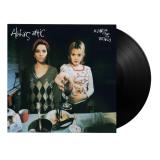
- A1: Irresistable U Are
- A2: Intense
- A3: I Am, I Feel
- A4: Alisha Rules The World
- A5: White Room
- A6: Stone In My Shoe
- B1: Personality Lines
- B2: Indestructable
- B3: I Won't Miss You
- B4: The Golden Rule
- B5: Just The Way U Like It
- B6: Air We Breathe
- B7: Adore U
Alisha's Attic were one of the defining English pop duos of the late 1990s and early 2000s. Formed by sisters Shelly and Karen Poole, the pair first appeared in 1988 under the name Keren & Chelle, releasing their single "Sugar Daddy". In 1996 Alisha's Attic released their debut single "I Am, I Feel" which reached the #14 in the UK Singles Charts. Their debut album, Alisha Rules the World was released in November 1996, produced by Dave Stewart of Eurythmics. The album became a major success, achieving Platinum in the UK and generated a string of single "Alisha Rules The World", "Indestructible" and "Air We Breathe" all of which reached the UK Top 15.
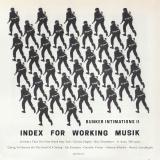
- 1: In Order That The First World May Fail
- 2: Clown Utopia
- 3: Rice Timeshare
- 4 11: Days, 700 Years
- 5: Going To Heaven On The End Of A String
- 6: Ick Fantasia
- 7: Geordie Vision
- 8: Athena Allenby
- 9: World Goodnight
Bunker Intimations II by London-based anti-formalists Index For Working Musik is a sister record to their second album Which Direction Goes The Beam, originally issued as a limited edition cassette with early copies of the vinyl pressing of that record. The 50-minute long collection of recordings was made across an intense three day period in March ‘25 under the duress of a very strict deadline. All tracks were improvised and mixed-down on the spot, a genuine document of a moment in time. Some of us think that it’s better than the record that it was trying to sell. And so here it now stands for wider judgment. Bunker Intimations II is released digitally and on vinyl via Tough Love.

- 1: Ibo Lele 3:57
- 2: Seychelles Coconut :56
- 3: Janine :0
- 4: Full Moon Dance 2:19
- 5: Mahea 3:08
- 6: Ibo Lele (Reprise - Short Version) 2:31 *
- 7: Janine (Orchestral Reprise) 1:54 *
- 8: Mahea (Version With Organ) 4:15 *
- 1: Kalù 4:46
- 2: Coconut :5
- 3: My Sweet Brown Sister 1:47
- 4: Ibo Lele At Night 2:5
- 5: Jungle Hevea 3:08
- 6: Full Moon Dance (Wild Take) 3:30 *
- 7: Kalù (String Version) 5:11 *
- * Bonus Tracks
Amore Libero – Free Love marks the first film score composed by Fabio Frizzi, written in 1974 for the movie of the same name directed by Pier Ludovico Pavoni. Set against the exotic backdrop of the Seychelles, the film tells the story of Simo, a free-spirited young woman played by Laura Gemser in her cinematic debut, blending sensuality and the spirit of liberation so typical of the 1970s.
Frizzi’s score perfectly captures the film’s atmosphere, weaving together evocative melodies, funky grooves, and progressive textures — an elegant, psychedelic soundscape that reflects both the tropical setting and the film’s themes of freedom and desire. The recording features the Goblin in their classic line-up: Fabio Pignatelli (bass), Massimo Morante (guitar), Walter Martino (drums), and Claudio Simonetti (keyboards), with Vince Tempera handling arrangements and orchestral direction.
Long regarded as a true holy grail for collectors, now, for the first time ever, it is officially reissued on vinyl, bringing back to light a fundamental chapter in Italian film music and progressive sound. An essential record that merges Frizzi’s melodic genius with the visionary energy of the Goblin, Amore Libero – Free Love stands as a timeless document of an extraordinary era in Italian cinema and its music.
A Record Store Day 2026 exclusive / Pearly light blue vinyl edition / 30x30cm insert with extensive liner notes

There’s this feeling that House Music is sometimes diluted into a pleasant, non-offensive and conformist formula. Well, Jackie Gritness - you may have heard of her big bro Gary - is bringin’ all the sweat, the attitude and the filth down - take it or leave it.
Jackie introduces herself from both sides on this well-strapped debut 12” - the slick swingin’ & sangin’
on the bass-heavy A side, and the raw clave trax and cunty snarls of the acid-laced B side.
No trace of over-production or tired sampling here: this is just Jackie, her mic and her lil’ groovebox -
gettin’ raw in the studio just like she does onstage. Only thing added is some wall-shaking mastering by New York OG Dietrich Schoenemann.
This is the kinda House that’s supposed to make regular folks wanna turn it off. This ain’t rated E for Everyone, it’s rated F for Freaks.
It’s music from the underground, for the underground - as it was first revealed on the runway of Glastonbury’s infamous NYC Downlow last summer.
And if that’s more than you can take - it’s alright. It’s not like Jackie will hold it against you.
Jackie Gritness
“Gary’s little sister.” His studio session resume reads like a House music who’s who - from David Morales to Fred P. He’s also been rockin’ clubs with the Playin’ 4 The City and MLIU crews - but she’s also been seen on Gideon’s fierce Homo-Centric Records. See, this bitch’s true feelings about House are stripped-down, bare-bones, and unapologetically sexual. With a radical ‘live’ attitude, she’s serving the realness with an irresistibly acidic zing.

- 1: Come Away
- 2: Dance
- 3: You Make No Sense
- 4: Parking Lot Blues
- 5: Chistelle
- 6: About You
- 7: It’s Alright
- 8: Moody (Spaced Out)
- 9: Tiny Sticks
- 10: The Beat
- 11: My Love For You
Repressed LP on Neon Orange Vinyl. Come Away With ESG - 35-year anniversary release of the classic genre-busting debut album by the Bronx sisters ESG. The sample-friendly opus that’s the inspiration for hip-hop, house and post punk. Music that falls outside of the no wave, new wave and post punk library, it’s for the dance floor but it’s not funk, there’s no horns, no driving organ; it’s the opposite of Sly And The Family Stone but no less cool and no less groovy. “A lasting document of their unique brand of minimal funk that would influence subsequent post-punk, hip-hop, and dance music acts. Stripped down to the most basic of drumbeats and rudimentary bass lines, ‘Come Away’ confirms the notion that the real rhythm is what happens between the beats. AllMusic // “This is dub disco with a punk edge.” Paste // “Uncut punk-funk straight off the streets of the South Bronx.” Record Collector // “ESG are that rare thing” Guardian // “Come Away with ESG sounds so shockingly current.” Paste // “A musical snapshot of New York City at the beginning of the '80s.” Allmusic

- Thursday's Bells
- 2: X1
- Fog (You Just Don't Know)
- X Says
- 1898:
- Sparrows Hill
- Sister
- Halb Leib I
- Brain Pan Farmer
- Purple Born
- Atahualpa
- Pugilist
также имеющийся в продаже
Red Vinyl[18,45 €]
In this post Sounds world, the boundaries of Post Punk have not only broadened but splintered. And over the course of (now) four releases, Index For Working Musik have seen to using the sprawling boundaries to great effect, flexing a polyglot of styles to convey the language of the moment. On Which Direction Goes The Beam, the murky, distant ambience that was 2023's Indexé has been fleshed out, incorporating everything from the Brian Aldiss laced, ground lightning shudder of Dome, to the chamber-like arrangements of This Kind Of Punishment. There's even a candle flickering in the window for Think Fellers Union Local 282 that warmed these ears. And if you're a fan of the great Dutch band, Trespassers W (who isn't?), the collective consciousness IFWM enunciates on here is a similar testament of a band growing more sure footed in the pursuit of not only knowing all the ways in, but carving a few of their own on the way out. And it's discerning releases like Which Direction Goes The Beam that keep us in the hunt. Long may they forge. - Tom Lax. RIYL: Brian Jonestown Massacre, Velvet Underground, TOY, John Cale, Wire, Dome
3
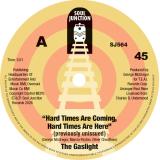
The earliest foundations of the Detroit Harmony group ‘The Gaslight’ came when future lead singer Oliver “Butch” Cheatham via an introduction by his sister Jackie joined a group known as ‘The Young Sirs’ who recorded, “There’s Something The Matter (With Your Heart/African Love” for Magic City during 1969. The group included Oliver’s future brother -in-law Allen Cocker (Jackie’s future husband).
Oliver and Allen went on to form a new vocal quartet with Curtis “Kippy” Anderson and Michael Eatmon. Under the group name of ‘The Gaslight’ they signed to Uptight Productions Incorporated, a local production company founded by local businessmen Marvin Figgins and Arnold Wright. The Gaslight were the only vocal harmony group signed to Uptight Productions and as such, it was they who made the most recordings across two label imprints Grand Junction and Black Rock. The Gaslight’s first single “I Can’t Tell A Lie/Here’s Missing You” was released on Grand Junction (GJ1001) in 1970, For the groups second single Figgin’s placed them under the guidance of legendary producer/songwriter, the late George McGregor under whom they recording “Drifting Away/If You See Her” Grand Junction (GJ1002) released in 1971 For their next release Figgin’s switched the group to his Black Rock label to record “Out Of My Hand/I’m Only A Man” Black Rock (2002) under the pseudonym of Butch & The Newport’s With “Butch” being Oliver’s nickname. A later, second release of “I’m Only A Man” but with a different flip side “I’m Gonna Get You” came out on Grand Junction (GJ1100) in 1973 with the performing artist credits reverting back to ‘The Gaslight’.
Upon leaving Uptight Production’s the group found a new home when George McCregor took them to a new fledgling label T.E.A.I (an abbreviation for “Tellin’ Everybody About It”) owned by ‘The Dramatics’ Road Manager Charles Underwood. ‘The Gaslight’s’ first and only release for T.E.A.I, was the mellifluous 1975 double sider “Just Because Of You/It’s Just Like Magic”. Underwood had precured a working relationship with Polydor Records who picked the release up for national distribution three months later. As good as the record was due to poor promotion it failed to make any notable noise and eventually sank with the group soon after breaking up.
During Soul Junction’s later dealings with the late Oliver Cheatham, respected UK Collector Andy Rix mentioned he owned a three track acetate containing the two mentioned T.E.A.I/Polydor tracks plus a third unissued dance track “Hard Times” which through a licensing deal with Charles Underwood Soul Junction now present to you on a three track 45, released under its full title “Hard Times Are Coming, Hard Times Are Here” backed with a previously unissued mix of “Just Because Of You” alongside the issued 45 version of “It’s Just Like Magic”.

9
An album Maximum Rock 'N' Roll deemed not punk enough to review, Unwound's 1994 sophomore effort was a lethal depth charge aimed at major label grunge and independent hardcore alike. From the off-kilter, vertiginous rhythm of "Entirely Different Matters" to the neck-snapping velocity of "What Was Wound" to the relentless pounding at the end of "All Souls Day," New Plastic Ideas is the Sonic Youth-loving older sister to Fake Train's postpunk- obsessed little brother.
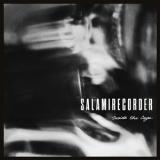
- 1: Brothers & Sisters
- 2: Lies Of My Own
- 3: Love
- 4: Black Clouds
- 5: Swim O Swim
- 6: Theme From The Dropouts
- 7: All Over The World
- 8: Gimme Some
- 9: Fight 'Em
- 10: Goodbye
Der Wiener SALAMIRECORDER präsentiert mit seinem aktuellen Album "Inside The Cage" wieder einmal stilsicheren 60s-Garage Sound. Nach seiner letzten LP auf Bachelor Records, die er noch mit seiner Band "The Hi-Fi Phonos" eingespielt hat, hat er für "Inside The Cage" zehn Songs zur Gänze allein mit 4-track Taperecorder aufgenommen. "If you have to describe the music, its probably like a weird slightly annoyed outsider but with a melting heart for love songs. A perfect shake between 60s Back from the Grave Garage punk and a little breeze of early trash mixtape Powerpop. or something... ...weird, loud, rocknroll noise!!!" (Elmar, Bachelor Rec.) Natürlich ist der 23-jährige SALAMIRECORDER viel zu jung, um selbst die weltverändernden Zeiten des Rock'n'Roll erlebt zu haben. Doch seine Persona als trägt dessen historisch aufsässiges Programm in sich. Stilprägend war dabei seine beim Skateboard-Fahren entwickelte frühe Leidenschaft für Genre-Größen der 2010er wie Ty Segall oder Bass Drum of Death. Dieser Tage ist Salamirecorder bestens vernetzt, aber weniger per Sozialen Medien als im echten Leben. Er genießt Respekt, sowohl bei Beat-begeisterten jungen Kids als auch bei ergrauten Szene-Altvorderen wie Wild Evil & The Trashbones oder den Jaybirds, spielt bejubelte Gigs mit seiner perfekt eingespielten Begleit-Combo The Hi-Fi Phonos und gehört als Schlagzeuger, Gitarrist und Sänger Bands wie Laundromat Chicks, Sux Sux Sux und Telebrains an. Als Produzent hat er neulich das Solo-Debüt von Vic Velvet auf Band gebannt. Das Analoge ist ihm dabei nicht bloß puristisches Glaubensprinzip, sondern eine ebenso praktische künstlerische wie - ja doch! - politische Entscheidung. In einer Welt endloser digitaler Möglichkeiten findet der Salamirecorder eine paradoxe Freiheit, indem er sich selber auch ein bisschen limitiert.

With "Jamaican (Bam Bam)," HUGEL and SOLTO breathe new life into Sister Nancy's iconic anthem - a bold, rhythm-charged reinterpretation built for the modern dancefloor. It grips from the first beat: dynamic drumming, crisp claps, and a bassline that rolls deep with sway and sensuality. Layers tighten and unfold, teasing the body as electronic tinctures flicker beneath, building lift and slow, simmering tension. Through it all, Sister Nancy's voice cuts steady and alive, grounding the track in its roots while driving it forward. The energy keeps rising vibrant, climactic, and free. "Jamaican (Bam Bam)" smolders from within, a kinetic force that turns motion into release.
Artwork by Rachael D’Alessandro. Words by Marie Floro. Executive Producer Mimmo Falcone. Distribution by Muting The Noise.
