Search:no use for a name

Styles
All
Jinjé - A Brief Utopia EP

Kicking off proceedings on new label, Scene Unseen is Yorkshire’s finest, Jinjé a.k.a. Lee J Malcolm.

Scene Unseen will focus on exploring and showcasing scenes from around the world (some seen or some maybe unseen), as well as releasing music from artists who incorporate sounds from across the globe within a music style that's closer to home. This is where Jinjé steps in, delivering an EP of Afro-funk and Afro-tech. He draws upon his usual duties as a fine Techno, House and Electronica producer and combines them with rhythms inspired by African and Indian music, using instruments (played and recorded live by Jinjé) and field recordings from both regions.

Jinjé (Lee J Malcolm) has released on labels such as Messrs. Kicks & Drums, EPM Music, Mesh and Ostgut Ton. He was also a founding member and mainstay in the Leeds band, Vessels (Different Recordings), until leaving a couple of years ago to concentrate on solo projects.

The track names tell all, as Jinjé gives a clear nod to the Africanism is his music. First track, 'Ngoma' is a name used across Africa to describe certain drums and percussive instruments, which can be heard here, like Djembes from the Conga region, as well as live and acoustic components, blended with modular and other electronic sounds.

'Burkina Faso' takes us west and hits the ground running with a vocal sample of Tribal women from the area, singing praise and joy to engineers who have come to provide fresh water to the village: "Praise God for they have come to build us a well." The progression of the track is based around this joy and develops nicely alongside some intense bass and drums.

'Dusk' is inspired by thoughts of the Serengeti planes at night fall, all built around Jinjé's live M'bira plugged into a modular synth, grouped with live flute and field recordings from India which provide additional percussion.

'Ya Maji' is a collection of high energy rhythms from a Moroccan frame drum, congas, clapping, live bass, distorted marimba and the mighty Korg Ms20 playing the lead synth lines.

Last up is 'Jara', a nod to Steve Reich and his six marimbas, as well as drawing inspiration from Fela Kuti. Vocal samples bring in more of the field recordings Jinjé made in India, as well as the clapping elements. Acoustic and electronic sounds intertwine to great effect and sum up the EP as a whole.

Look out for more from Jinjé in this musical direction as he seeks to bring these tracks and future ones to a live band setup.

out of Stock

Order now and we will order the item for you at our supplier.

14,24

Last In: 3 years ago
A.B. CRENTSIL'S AHENFO BAND - OBI BAA WIASE

A.B. Crentsil is a heavyweight of Highlife music and the main vocalist of Sweet Talks, one of the most popular Ghanaian bands of the 1970’s. In 1992, musician Charles Amoah and producer Richie Osei Kuffour offered him the opportunity to explore a new popular sound: Bürger Highlife. Little did he know these studio sessions would give birth to the biggest song of his career.
Charles Amoah, who had released his Sweet Vibrations LP in 1984 to great acclaim, extensively toured in Europe with bands such as Black Earth and Saraba, was eager to bring a new sound to Crentsil, an artist he had admired for years. Throughout the 1980’s, Highlife had been changing pretty radically, following the same evolution as Congolese Soukous, Caribbean Zouk and most popular black music
genres of that era: Heavy use of drum machines, synths and digital technology was conveniently replacing big bands and expensive
analog studios and equipments. Mostly recorded, produced or mixed in Germany, this new breed of electric Highlife dubbed ‘Bürger Highlife’ could be defined as a fusion of Disco, Jazz, Funk and Pop with the popular Highlife beats, rhythms and lyrics.
According to A.B. Crentsil, the name was a reference to the ever present American cultural influence on Ghanaian musicians. Charles
Amoah has his own take: “I initially called this particular kind of Highlife ‘Ethno Pop’. Bürger is the German word for citizen, and that’s how Ghanaian musicians living and working in Germany were calling each other”.
The music for both “Obi Baa Wiase'' and “Sika Be Ba” was entirely composed and played by Charles Amoah, using minimal equipment: a
DX7 synth, a Korg M1, a Yamaha RX5 drum machine, and an Akai 1000 sampler. A.B. Crentsil provided the lyrics for both tunes on the spot. Obi Ba Wiase’s message is one of gratitude and faith: it says we should appreciate our life way more and follow the example of people who have a lot less but still praise God all day.
Charles remembers fondly Crentsil’s larger than life personality: "A.B. slept a lot, he really loved sleeping. His lack of punctuality was easily dismissed by his wonderful sense of humour and it wasn't uncommon to find musicians rolling with laughter on the studio floor."
Charles also remembers vividly the "Obi Baa Wiase" session: he could feel the magic in the air while working on the soon to be hit, and
knew something special was happening. A.B. asked for a break in the middle of the session, which Charles adamantly refused until the song was finished and the magic fully captured.
Success was not immediate, and Charles was first a little concerned by the lack of buzz following the immediate release of the Gyae Me
Life Ma Me album. But a few months down the line, the situation took a new turn. "Obi Baa Wiase" was making its way into radio playlists,
weddings and festive celebrations. It was covered by local bands, and soon most of Ghana and its European and American diasporas were hooked. It became A.B. Crentsil’s most requested song at live events for the following decades.
As producer Richie Moore wrote on the album back cover : "A perfect integration of two musical geniuses, the result of which are the
scintillating tracks of music on this record… so all you party fans go onto the floor and dance the body music"

out of Stock

Order now and we will order the item for you at our supplier.

15,92

Last In: 3 years ago

107-34-8933 - Numbers

107-34-8933

Numbers

12inchLPS197
WAH WAH RECORDS
17.06.2022

If you check the credits of The Rolling Stones' Goats Head Soup LP from 1973 you'll find a certain "Pascal" listed on the percussion section. That is none other than Los Angeles based artist Nicolas Pascal Raicevik (1933-1994), aka 107-34-8933, aka Head, aka Nik Pascal, aka Nik Raicevic. Besides his hitting the bongoes on the Stones album, Nik was a great artist on his own, both as a painter and as a musician. As a musician, he was a pioneer in the use of synthesizers, preceeding the Berlin school by some years when his Head LP was released on on Buddah in 1970. Buddah probably saw in Head the opportunity to cash in some money from the remains of the psychedelic scene - the three tracks on the LP are named after drugs used in the late sixties. The sounds, however, are accomplished works that show Raicevic as one of the most interesting pioneers in the use of synths. The album probably didn't do too well, since Buddah didn't renew the contract with Raicevic, who instead took his own way releasing his works on his very own Narco Records and Tapes label. Between 1968 and 1975 Narco would issue 4 LPs credited either to Nik Raicevic (Beyond The End... Eternity) or Nik Pascal (The Sixth Ear, Magnetic Web and Zero Gravity) plus one credited to 107-34-8933 (Numbers, which is in fact the same LP as Buddah's Head, albeit with different cover art). Copies of these LPs came with an ironic sticker over the shrinkwrap that read "Do not listen to this LP if you are stoned".

Numbers was the first reference in the Narco catalogue (NR101), each of the three tracks it contains is named after a drug: Cannabis Sativa, Methedrine and Lysergic Acid Diethylamide. The album was credited to 107-34-8933, there is no date of release on the disc, some sources take it as back as 1968 - in any case, this is the same record that was issued on Buddah in 1970 credited to Head and eponymously-titled. The Wah Wah reissue features the original cover artwork from the Narco edition.

Besides his musical explorations, Nik was also an interesting painter. His paintings are auctioned from time to time, and are consciousness expanding works influenced by abstract cubism and surrealism, some kind of Salvador Dalí on drugs exploring the outter and inner space. All the artwork on the sleeves of his LPs is done by himself. Spacey landscapes and psychedelic colours that fit perfectly to the music they contain.

"Nik Raicevic's music is at the intersection of radical psycho-electronic weirdness and kraut kosmische music (in particular the scifi-hypno-minimal modules of Conrad Schnitzler in Grun, Rot and Blau). It presents mega epic & tripped out electronic improvisations.


"This is an absolute must for collectors and fans of visceral, neurotic soundscapes."

"As far as late-60s / early-70s American Bedroom' Electronic Music goes, these LPS have to be among the first transmissions from this sector, made all the more attractive when coupled with Raicevic's alien topographIes - the covers are high-color portrayals of Venusian lanes, knotted growths, & future-past architecture in a style you might equate with Vintage' sci-fi pulp-novel covers - & copious Downer' sentiment. This music is imbued with a sort of lonely, anti-social sensibility that's about as far as you can get from the Academic' Early Electronic vector. I will say that if the Steve Birchall, Cellutron & the Invisible, and/or Pythagoron™ seed your garden, this will likely do the same."

Never reissued before on vinyl format, the Wah Wah reissue features original sleeve artwork made of paintings and drawings by Nik himself and reproduction of the famous ironic "Do not listen if you are stoned".
Limited edition, 500 copies only.

pre-order now17.06.2022

expected to be published on 17.06.2022

24,16
Nik Raicevic - Beyond The End, Eternity

If you check the credits of The Rolling Stones' Goats Head Soup LP from 1973 you'll find a certain "Pascal" listed on the percussion section. That is none other than Los Angeles based artist Nicolas Pascal Raicevik (1933-1994), aka 107-34-8933, aka Head, aka Nik Pascal, aka Nik Raicevic. Besides his hitting the bongoes on the Stones album, Nik was a great artist on his own, both as a painter and as a musician. As a musician, he was a pioneer in the use of synthesizers, preceeding the Berlin school by some years when his Head LP was released on on Buddah in 1970. Buddah probably saw in Head the opportunity to cash in some money from the remains of the psychedelic scene - the three tracks on the LP are named after drugs used in the late sixties. The sounds, however, are accomplished works that show Raicevic as one of the most interesting pioneers in the use of synths. The album probably didn't do too well, since Buddah didn't renew the contract with Raicevic, who instead took his own way releasing his works on his very own Narco Records and Tapes label. Between 1968 and 1975 Narco would issue 4 LPs credited either to Nik Raicevic (Beyond The End... Eternity) or Nik Pascal (The Sixth Ear, Magnetic Web and Zero Gravity) plus one credited to 107-34-8933 (Numbers, which is in fact the same LP as Buddah's Head, albeit with different cover art). Copies of these LPs came with an ironic sticker over the shrinkwrap that read "Do not listen to this LP if you are stoned".

"Raicevic is clearly still in the early learning-curve stages," which it a key LP to understand Nik's evolution and setting the path for more evolved works to follow.

Besides his musical explorations, Nik was also an interesting painter. His paintings are auctioned from time to time, and are consciousness expanding works influenced by abstract cubism and surrealism, some kind of Salvador Dalí on drugs exploring the outter and inner space. All the artwork on the sleeves of his LPs is done by himself. Spacey landscapes and psychedelic colours that fit perfectly to the music they contain.

"Nik Raicevic's music is at the intersection of radical psycho-electronic weirdness and kraut kosmische music (in particular the scifi-hypno-minimal modules of Conrad Schnitzler in Grun, Rot and Blau). It presents mega epic & tripped out electronic improvisations.

"This is an absolute must for collectors and fans of visceral, neurotic soundscapes."

"As far as late-60s / early-70s American Bedroom' Electronic Music goes, these LPS have to be among the first transmissions from this sector, made all the more attractive when coupled with Raicevic's alien topographIes - the covers are high-color portrayals of Venusian lanes, knotted growths, & future-past architecture in a style you might equate with Vintage' sci-fi pulp-novel covers - & copious Downer' sentiment. This music is imbued with a sort of lonely, anti-social sensibility that's about as far as you can get from the Academic' Early Electronic vector. I will say that if the Steve Birchall, Cellutron & the Invisible, and/or Pythagoron™ seed your garden, this will likely do the same."


Never reissued before on vinyl format, the Wah Wah reissue features original sleeve artwork made of paintings and drawings by Nik himself and reproduction of the famous ironic "Do not listen if you are stoned" sticker. Limited edition, 500 copies only.

pre-order now17.06.2022

expected to be published on 17.06.2022

24,08
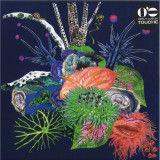
O’o - Touche LP

O’o

Touche LP

12inchIF1074LP
InFiné
17.06.2022

O’o share many of the musical characteristics of their ornithological namesake. The Kaua’i O’O produced the most exquisite birdsong before its extinction in Hawaii in the late 1980s. The beauty and character of its voice was delicate and mysterious, tuneful and surprising. You can experience it with just a cursory websearch, a haunting cri de coeur from the last century. If the poor O’O is consigned to history, then life is just beginning for this French duo, based in Spain, who’ve won plaudits and awards already in their short musical lifespan.

O’o are about to release their sublime debut album Touche. This is not an endling, it’s just the beginning: “I found the name on a website of weird English language words, and I loved the way the letters were arranged like a pair of glasses,” says O’o singer Victoria Suter. “Afterwards, I went onto YouTube and started listening to the last bird of its species, calling for a mate that would never come. I thought: ‘Oh my God, that’s so sad’. Then we talked about the name and we thought it could be a nice thing to honour it and keep it alive in some way.”

Suter met her musical partner Mathieu Daubigné at college in Agen, South West France, when the pair were studying music theory in their teens. Victoria moved to Barcelona in 2010; Mathieu followed six years later. Their debut EP, Spells, appeared in 2018 a beautifully crafted patchwork of vocals and samples that is redolent of the uncanny vocalese of Laurie Anderson. The bird makes an appearance at the beginning of the EP: “Sweet tooth beak. Soft melody peak / Oh O’o, go round and round in circles / Looking for a honeydrop, til you vanish, til you drop”.

That sense of profound longing for something lost is carried over to Touche, as well as the same heightened sensory awareness of the world around them. What has developed in spades is the creative process. O’o have blossomed organically, augmenting their pop sensibilities. Avant-garde techniques have been brought to heel as the pair create off-kilter pop music that warms the heart and nourishes the brain. The catalyst that enabled this bold pop transformation came with the song ‘Touche’ itself, a saucy chanson at the heart of the album. Suter’s wry narrative about a botanical femme fatale is inserted into a lithe and skittish song with reggaeton beats and an inviting, balmy atmosphere.

“The song is about a flower which attracts male insects, producing the very same smell as the female of the species,” explains Victoria. “The poor male is fooled by the sex-appeal of this botanical trap, and gets so excited that he exhausts himself and wastes all his other chances of ulterior mating and having any offspring. The flower entices the insect in in mermaid-like fashion, to come nearer and touch her. It’s the hot track!”

‘Touche’ reaches into hitherto unexplored areas of pop, while the rest of the album is accessible in the way that James Blake, Radiohead or Kate Bush are accessible, and it always challenges, in a way that pop isn’t supposed to. Suter writes playful, poignant, observational songs that tell stories as well as tell us something about ourselves. Songs like ‘Dorica Castra’ are built upon the voice as an instrument, centrifugal and layered from its core.

Complimentary to this method is Daubigné, who brings startling innovation with found sounds, samples and clever vocal manipulations—creating unique, otherworldly sonic flourishes. A guitar whirs like a musical spinning top on ‘Spin’, created in Ableton; an Ondes Martenot appears to make a guest appearance on the title track, though it’s the ingenuity of the Prophet 8 synthesiser. “I’ll often say to Mathieu, ‘what’s that?’” says Suter, He’ll reply, ‘that’s your voice’.”

O’o found their own voice when they won a competition held by the legendary festival organisers Primavera Sound. Victoria entered the band into a competition she saw on Instagram, sending off rough demos on the final day of entry, thinking little more about it other than the fact Mathieu might be annoyed. Soon they would have to build a live set from scratch and figure out how to present their music for the first time. At stake was seventy hours of recording time at Aclam studios, used by Rosalía and Kendrick Lamar, and for the winner a coveted spot at the festival. A pool of 350 acts were whittled down, and then O’o triumphed at a Battle of the Band style face off.

The O’O might be extinct, but O’o the band have learned how to fly. Just watch them go.

out of Stock

Order now and we will order the item for you at our supplier.

19,75

Last In: 3 years ago
Half-handed Cloud - Flutterama LP

The (seventh) new Half-handed Cloud album, ‘Flutterama’, is
a record of 18 jubilant indie-pop songs by John Ringhofer
that investigate spiritual incompetence with lively
arrangements and radiant melodies that skilfully dissolve into
deterioration using herky-jerky tape manipulation, analogue
wow-and-flutter, and an animated orchestra of homerecorded sound effects.
 Ringhofer’s work on ‘Flutterama’ was inspired by Frances
Mary Hunter Gordon’s adolescent liturgies (recorded at
Abbey Road during The Beatles era), turbid sights and
sounds in Guy Maddin films, audaciously bold forms in Sister
Corita Kent’s devotional printmaking, the exquisite brittleness
of Elizabeth Cotten’s voice, Alberto Burri’s stitched wound
burlap assemblages, Alvar Aalto church design, Andrea
Büttner’s poverty-informed artwork, Lou Barlow/Dinosaur Jr’s
lo-fi ‘Poledo’ sound collage (which namechecks Jesus), Julie
Canlis book ‘A Theology of the Ordinary’, Wallace Berman’s
visual collage, and The Raincoats’ magnificently shaky DIY
aesthetic.
 The album’s tape-fiddled tunes - recorded on the very same
16-track recorder last serviced by a sound technician who
also worked with The Beach Boys in their home studio -
employ surprisingly little synthesizer (“it felt like cheating,”
says Ringhofer) - he preferred to craft most of the album’s
effects the long way, frequently going behind the back of rock
instrumentation by hand-feeding ½” magnetic reel recordings
of chord organs, deflating balloons, some guitars, piano
(occasionally tracked with a baby on his lap), brass,
tablecloth swipes, and a quickly-cranked half-speed music
box. He was assisted by long-time Half-handed Cloud
contributor Brandon Buckner on drums, and single song
backing vocals from Anacortes, WA songsmith John Van
Deusen.
 LP pressed on Opaque Brown vinyl

pre-order now17.06.2022

expected to be published on 17.06.2022

22,90
JASMYN - IN THE WILD

Jasmyn

IN THE WILD

12inch278341
Anti
15.06.2022

Jasmyn is the new solo project created by Jasmyn Burke, former singer-songwriter and frontwoman of the critically acclaimed Canadian band, Weaves. Having two JUNO nominations for Alternative Album of the Year and two SOCAN Songwriting Prize nominations, Burke has established herself as one of Canada's most exciting and fresh voices. With this new project, she has decided to use her own name, Jasmyn, to mark the start of exploring her own unique sound as a solo artist. Collaborating remotely with Los Angeles-based producer John Congleton (St. Vincent, Angel Olsen, Sharon Van Etten) on a body of work she had compiled over months of being in lockdown. Finally in the Spring of 2021, Jasmyn went to LA to record with Congleton, exploring themes of finding patterns in life and how to perhaps change them. On the general direction of her new album In the Wild, Jasmyn said, "This was written during the Fall of 2020; The world was feeling pretty heavy, and I felt myself wanting to write music that created a mood of happiness and space to grow. I feel like I have grown and changed as a person over the last few years and wanted to write songs that created a sense of confidence and well-being." With Weaves receiving worldwide support from the likes of Rolling Stone Magazine, NPR, Pitchfork, and more, Jasmyn is excited to share a new side of herself, perhaps her most honest and raw work to date.

pre-order now15.06.2022

expected to be published on 15.06.2022

22,90
Anthony Moore - Flying Doesn't Help LP

40-plus years since its original release, the pop-punk-new wave inventions of Anthony
Moore’s ‘Flying Doesn’t Help’ are freshly remastered, blasting the sparkling, angular
sounds into today with perfect vitality.
 After spending the early years of the 1970s making experimental music first as a solo
artist, then with Slapp Happy and Henry Cow, 1976’s ‘OUT’ sessions had reinvigorated
Anthony’s youthful love of the naive pop melodies of pop radio, the undeniable excitement
of songs. While ‘OUT’ ultimately went unreleased at the time, the iconoclasm clouding the
late ’70s air was addictive and transformative for Anthony. England seemed to be roiled
as violently as it had been in counter-cultural days a decade earlier; the UK pop charts
breathlessly reflected the changing spectrum with equal parts aging hippie and prog
delicacies alongside new ascendant sounds: rough-hewn pub and punk rock, plus dub
reggae and disco and ska and Stiff and Krautrock. This proved to be an ideal environment
for Anthony to make records by exploring, as he puts it, the “deep connection between
minimalism, repetition, working with tape and celluloid and forming the modules of a
three-minute pop song.”
 Caught up in a no-holds-barred era, Anthony was more than happy to play the out-of-hishead madman, raving through outrageous exchanges with the press, while ‘Judy Get
Down’ received Single Of The Week honours from the NME (with review penned by Brian
Eno). Represented by Blackhill Enterprises, Anthony did production work throughout
1978-1979, on Kevin Ayers’ ‘Rainbow Takeaway’, Manfred Mann’s Earth Band’s ‘Angel
Station’ and the first This Heat album, meanwhile cutting his own songs on a dead time
deal at Workhouse Studio with engineer / producer Laurie Latham. Through the wee
hours of countless nights, the two pieced together ‘Flying Doesn’t Help’, with a little help
from friends (an inspired bunch, including Bob Shilling, Charles Hayward, Chris Slade,
Robert Vogel, Festus, Matt Irving, Sam Harley, Bernie Clark, Edwin Cross and Martine
Moore on the telephone).
 Building upon the axis of pop and experimental impulses that distinguished ‘OUT’, and
informed further by the raw sensibilities exploding everywhere, ‘Flying Doesn’t Help’
blasts out of the speakers with its own unique blend of sophistication and aggression,
Anthony’s keyboard flashes between arpeggiations and outright stabs among the noise of
slicing guitars, funk basslines and the reverbed blare of the drumkit. Opening with
Anthony’s greatest hit, ‘Judy Get Down’, and containing a noise-laden remake of the
Slapp Happy/Henry Cow number, ‘War’, among other delightful sweet-and-salty
confections, ‘Flying Doesn’t Help’ never stops moving, fuelled with raw outrage and dark
satirical intent, churning with the energy of next-gen types like Tubeway Army and DEVO,
while shimmering with the elegance of the still-challenging old guard types, like Cale and
Bowie.
 Clearly, ‘Flying Doesn’t Help’ was steeped in the time, and the original release reflected a
deep mistrust of the corporation mindset. Information was a dubious concept, and
connections to any recognizable organization were seen as untrustworthy, so facts like
musician credits were left out of the package, and even Anthony’s name was altered (he
was credited as A. More on the album and Tony More on a single release). The label
name QUANGO was conceptual as well, standing for ‘Quasi Autonomous NonGovernmental Organization’; each record was sealed with red tape that the listener was
required to cut through in order to get to the music. Rather than recreate the conditions of
the original release of ‘Flying Doesn’t Help’, this reissue instead embraces the changed
environment of the current time and place: instead of no credits, now they are complete,
with Anthony’s full name restored and even the artwork subtly ‘relocated’ to reflect a new
set of relationships. All of which brings the forward-looking sounds of ‘Flying Doesn’t Help’
into the more independent-minded 21st Century syntax where it belongs.

pre-order now10.06.2022

expected to be published on 10.06.2022

25,84
Billie Holiday - The Complete Commodore Masters

Limited edition 180g bronze coloured vinyl, includes a unique sticker
"These are top- notch performances at the very peak of Holiday's power as an
artist." (Thom Jurek)
Billie Holiday was probably the most lyrical and expressive female vocalist in jazz
history. This set compiles her complete sessions for the legendary Commodore
label. Made between Billie's contracts for Columbia / Okeh and Decca, these
recordings present her in top form, backed by excellent small groups featuring
such names as Frankie Newton, Freddie Webster, Tab Smith, Vic Dickenson, Eddie
Heywood, and Sidney Catlett.
Among the highlights of the set are Billie's first version of the shocking "Strange
Fruit", which she used to conclude her stage performances, as well as readings of
famous standards she would never record again, such as "As Time Goes By" and
"I'll Be Seeing You".
Tracks: Side A: 1 Strange Fruit / Yesterdays / Fine And Mellow / I Gotta Right To
Sing The Blues / How Am I To Know? / My Old Flame / I’ll Get By / I Cover The
Waterfront / I'll Be Seeing You / I’m Yours / Embraceable You / As Time Goes By /
He’s Funny That Way / Lover Come Back To Me / I Love My Man (Aka Billie’s
Blues) / On The Sunny Side Of The Street

pre-order now10.06.2022

expected to be published on 10.06.2022

22,48
Subjective - The Start of No Regret LP (2x12")

The album, which features some incredibly exciting and varied names including neo soul up-and-comer Greentea Peng, American jazz & soul vocalist Lady Blackbird (on ‘Sunlight’) and British blues vocalist Natalie Duncan, shows off both the rich history and calibre of Goldie and James Davidson’s individually but also how they can create something together that’s so cohesive and forward thinking. The sound the duo have been able to create is also partly due to their geographical locations over the past 18 months, bouncing ideas between Davidson’s studio in Bournemouth on the south coast and Goldie’s house in Phuket, Thailand; showing two songwriters and producers at the top of their game responding to a year and a half in very different atmospheres but similar trying circumstances.
Lead single from the album ‘Dassai Menace’ (released with double A-side ‘Fathoms’) was picked up by Virgil Abloh who used it to soundtrack his Louis Vuitton SS22 fashion film ‘Amen Break’ (watch here), with Goldie walking in the accompanying catwalk show. Goldie will also be in residence throughout the month of February 2022 on BBC Radio 1 alongside the likes of world renown DJ’s Sama' Abdulhadi, Folamour, Or:la, LCY and Scratcha DVA.

out of Stock

Order now and we will order the item for you at our supplier.

32,31

Last In: 3 years ago
Evan J Cartwright - bit by bit

"bit by bit" is the first full-length release from Toronto-based singer-songwriter Evan J Cartwright. This self produced album from the go-to drummer/collaborator (The Weather Station, U.S. Girls, Brodie West) presents a highly singular songwriting vision that combines existential lyrics with masterful musicianship. Steeped in jazz melodicism, Cartwright’s trumpet-like phrasing mixed with contemporary composition presents an eclectic art song performed by an artist that could perhaps be best described as a post-modern Chet Baker. Deep poetic observations on love and time paint an affecting picture of an artist reflecting on life’s universal truths. Visual in nature, "bit by bit" places its audience within a world of musical leitmotifs extracted from field recordings of bells and birdsong. Collected during years of touring, these sounds evoke extant spaces beyond that which the music inhabits. The use of this source material in its unaltered form evokes the feeling of a technicolour European film at one moment and then, as the extrapolated melodies are meticulously translated into electronic tone bank sequences, a modernist setting the next. One carillon melody is used as the basis for a wealth of the album’s musical material before its origin is finally revealed by the chiming of bells in the last seconds of the album. The result is a fragment of space between the constructed world of the musical compositions and the candid world of documentation, inviting the listener to ponder whether those two worlds are distinct or whether the songs and music are not simply “field recordings” themselves. Throughout "bit by bit" Cartwright drops staggering revelations hiding in plain prose that often involve the contemplation of time. In I Don’t Know he states “if I only trusted time / then I would wish it all away” and nearing the album’s end he opens impossibly blue with the phrase “the impossible truth of time”, playfully inserting a pregnant pause before the word time. A drummer’s fixation, to be certain, the album’s recurring theme of time is eclipsed only by Cartwright’s contemplation of human relationships. Here he elaborates on some of the album’s subjects: “Many of the lyrics circle, and try to give a name to the illegible space between human beings. “i DON’t know” celebrates the fact that we will never truly understand what love is. Its message is one of assurance. It says that we can never really touch love, and that is ok. “and you’ve got nobuddy” refers to life’s great tragedy: that we are unable to read each others’ experiences, and in reaction to this, we separate ourselves.” The entirety of "bit by bit" is a continuous work. There is seldom a clear demarcation of where one piece ends and another begins and when this does occur, it is done crudely, as if someone is flipping through a series of broadcasted channels. At times words are sliced right out of their lines and replaced by pure tones. This is both a comical interpretation of censorship and a reminder that there are things in life that will forever remain unseen and illegible. In fact, this statement lies at the centre of the LP and although hidden beauty does reveal itself through repeated listenings, "bit by bit’s" eccentric world remains just out of reach — an imaginary second story room viewed from a crowded city street.

pre-order now10.06.2022

expected to be published on 10.06.2022

23,32
Bobby Cole - A Point Of View

LIMITED TO 500 COPIES // HIGH-QUALITY TIP-ON COVER // INCL. DOWNLOAD CODE

OFFICIAL RE-ISSUE, DONE IN COOPERATION WITH THE FAMILY OF BOBBY COLE !!!

If you lived in New York during the 1950s through the 1990s and liked jazz, you knew about Bobby Cole. He played piano, sang, composed, arranged and, in 1967, released an album of original compositions titled "A Point of View" (Concentric Records). He had fans but avoided becoming mainstream. He stayed contemporary without becoming current. Jazz, folk, rock, modern dance scores…he wrote and performed them all. He smoked too much, drugged too much, drank too much. He was also cerebral, curious, a prodigious reader of poetry, philosophy, theology, and an uncommonly intelligent and literate lyricist.

On a December night in 1996, he had a heart attack while walking to work. An ambulance brought him to New York Hospital where, a few hours later, he died. Bobby Cole performed throughout Manhattan for forty years, but he spent most of the 1960s headlining at Jilly's, the midtown bistro owned by Frank Sinatra and his friend Jilly Rizzo. Sinatra called Bobby "my favorite saloon singer."

Bobby Cole caught the attention of Judy Garland, who visited Jilly's one night in 1964. She was hosting a weekly television show, and in the midst of a feud with her special materials arranger, Mel Torme. Three weeks later, Mel was out, and Bobby was in. He performed on Judy's show with his Trio. Bobby was scarcely 30 years old and it was his first time on television, but he was unruffled, sophisticated, and so damn cool. After Judy's show ended, Bobby occasionally arranged and conducted for her until she died.

Today, Jilly's is called the Russian Samovar and the piano is in the same spot. My husband and I ate there a few years ago. As we enjoyed our meal, I talked about Jilly's in the Sinatra era. Jilly had an apartment on the upper floor. I pointed up to the apartment and the balcony, where Jilly and Frank would sometimes drop water-balloons on unsuspecting pedestrians below. Another story described Jilly's as "tough, and you had to be tough to work there. Bobby Cole was tough. Frank and Jilly used to throw firecrackers at him to see if they could rattle him, but nothing rattled Bobby Cole. He ignored them and kept on playing." In the 1980s, Bobby headlined at a club called the Café Versailles. His daughter sometimes visited with her friends. She recalled that when she and her father would exit the club after work, a panhandler would be waiting for him. Bobby, who fought his own losing battle with the bottle, would slip the guy twenty dollars and wryly admonish him, "Be sure not to spend it on food." The night my husband and I visited the Russian Samovar there was a guy playing piano there, very young, and trying hard. I talked to him a little bit between his numbers about Bobby and the history of Jilly's and he was sweet, but I could tell he didn't care. I felt like one of those old people who bore young people to death with stories about things that happened before they were born – which, let's face it, is what I was. Nonetheless, when we were ready to leave, I put twenty dollars in his tip jar and said, "This is with compliments from Bobby Cole." After we left my husband said I should have added, "Be sure not to spend it on food."

Marie Hegeman (December 2021)

pre-order now03.06.2022

expected to be published on 03.06.2022

26,85
Jackie Mittoo - Organ Super Powered

Jackie Mittoo, organ and piano maestro, was not only a founding member of the legendary Jamaican Ska group The Skatalites, but through the course of Jamaican music’s long history has produced a body of work under his own name and of that with his various group incarnations, The Soul Brothers, Soul Vendors and the Sound Dimension. His distinctive organ and piano sound and musical arrangements have all played a major part in Jamaica's musical history.

Jackie Mittoo (born 1948, Kingston, Jamaica) began playing musical instruments at a very early age. Taught piano by his grandmother he was performing live by the age of 10 and recording by the age of 15. Two Kingston bands that he played with the Rivals and the Sheiks brought him to the attention of Studio 1's founder Coxsone Dodd. Who at the time was putting a group of musicians together to be his studio band. Impressed by his skills on both the organ and the piano, Jackie was asked to join in what would become Jamaica's foremost band The Skatalites. The fellow band members were Lloyd Brevett (bass), Lloyd Knibbs (drums), Don Drummond (trombone), Tommy McCook, Roland Alphonso and Lester Sterling (Sax), Johnny Moore (trumpet), Jah Jerry(guitar) and Mr Mittoo (piano). This line up ruled the Jamaican scene between 1964 - 1965 as well as inventing the Ska sound, they also performed the backing duties for the other top labels of the time including Duke Reid's Treasure Isle and Justin Yap's Top Deck label.

1965 saw The Skatalites disband, and Jackie Mittoo move on to his next musical project The Soul Brothers. Formed with fellow Skatalite Roland Alphonso,this band would back all the hits coming out of Studio 1 for the next three years with Jackie Mittoo working as band leader and musical arranger. Around this time Jackie also had his own single released, a Ska underground classic called 'Got My Bugaloo'. Rare, as it also features Jackie in the unusual role for him, as lead singer!!!!. 1966 saw the Ska sound evolve into Rocksteady, again with Jackie's band at the helm, and his first hit single the Rocksteady cut 'Ram Jam'. The success of which would lead to a solo career and album releases under his own name such as 'Now', 'Macka Fat', 'Evening Time', 'In London' and 'Keep on Dancing', to name but a few. In 1967 the hits at Studio 1 were still flowing when The Soul Brothers morphed into The Soul Venders and began backing such luminaries as Ken Boothe, Alton Ellis, Delroy Wilson, The Heptones, The Cables, The Wailers and many other of the label’s solo artists.

By 1968 Jamaican music was ready for another change and Rocksteady rolled into a slower groove soon to be called Reggae. Jackie Mittoo would be at the forefront with his latest band The Sound Dimension. A line-up that included Leroy Sibbles (bass),Roland Alphonso and Cedric Brooks (saxophone),Eric Frater and Ernest Ranglin (guitar) and Bunny Williams (drums). Being the house band at Studio 1 they backed all the leading names of the time, John Holt, Horace Andy and Alton Ellis, all of Studio 1's output carried his sound. Jackie Mittoo emigrated in the late 60's to Canada but travelled to Jamaica and London to record with many of the big new names, who were trying to redress Studio 1's supremacy and needed his magic touch. Such producers as Bunny Lee used Jackie Mittoo on many of his sessions,Sugar Minott among others were always glad of his services.

For this release we have put together a selection of some of his finest recordings done with legendary reggae producer Bunny Lee. 1970’s cuts that feature Jackie’s numerous talents, showing his ability to embellish tracks with a feel few could better. Musical arranger, band leader and all around studio ace.

We hope you enjoy this great set with Jackie Mittoo in fine style and his organ super powered indeed…

out of Stock

Order now and we will order the item for you at our supplier.

13,40

Last In: 3 years ago
Wire - Not about To Die (STUDIO DEMOS 1977-1978)
  • A5: French Film
  • A10: Chairs Missing
  • B2: Ignorance No Plea
  • B5: Stepping Off Too Quick
  • A1: Oh No Not So
  • A2: Culture Vultures
  • A3: It's The Motive
  • A4: Love Ain't Polite
  • A6: Underwater Experiences
  • A7: Stalemate
  • A8: Options R
  • A9: Indirect Enquiries V1
  • B1: Being Sucked In Again
  • B3: Once Is Enough
  • B4: The Other Window
  • B6: On Returning
  • B7: Former Airline
  • B8: Two People In A Room

The original Not About To Die was an illegal bootleg, released at some point in the early 80s, by the dubiously named Amnesia Records. The album was made up of selections from demos recorded by the group for their second and third albums: Chairs Missing and 154. These demos had been recorded for EMI, with cassette copies circulated amongst record company employees. However, they were never intended for release. A typically shoddy cash-in, the songs on Not About To Die were taken from a second or possibly third generation cassette, with the album housed in a grainy green and red photo-copied sleeve. Compared with the high standards of production and design Wire have always been known for, it was something of an insult to band and fans alike. Now, in a classic act of Wire perversity, the group have decided to redress the balance and reclaim one of the shadier moments of its history, by giving Not About To Die its first official release on the bands own pinkflag imprint.. All the tracks have been properly remastered, with the relevant recording details in place. As for the sleeve artwork, whilst it strongly references the original, it is decidedly more artful in its execution. Not About To Die emerges as a fascinating snapshot of Wire in transition with embryonic versions of classic songs such as ‘French Film (Blurred)’, ‘Used To’ and ‘Being Sucked In Again’, that the group would develop considerably for their epochal 1978 album Chairs Missing. Later demos such as ‘Once Is Enough’, ‘On Returning’ and ‘Two People In A Room’ would surface in radically altered form on 1979’s 154. Some songs, such as ‘The Other Window’, are virtually unrecognisable from their later iterations but the biggest prizes here may well be the tracks that were omitted from Wire's later studio albums... Highlights include ‘Motive’, which has an undeniable power. Robert Grey’s drumming is crisp and minimal, and Graham Lewis’s bass runs are particularly ear-catching. Despite its distinctly un-Wire title, ‘Love Ain't Polite’ is also something of a gem. Meanwhile, the track which gives the album its title Not About To Die (officially known as ‘Stepping Off Too Quick’) possesses what Colin Newman half jokingly calls “The best intro to any song ever”. The intro is so good in fact, that it takes up a third of the song’s entire time frame. These properly mastered tracks have never been available on vinyl before, and they provide an opportunity to hear Wire at a point in their development when they were bursting with fresh ideas and a will to communicate them. This is post-punk at its very finest.

a A1 Oh No Not So [save The Bullet]


[e] A5 French Film [blurred]


[j] A10 Chairs Missing [used To]

[l] B2 Ignorance No Plea [i Should Have Known Better]


[o] B5 Stepping Off Too Quick [not About To Die]

pre-order now30.05.2022

expected to be published on 30.05.2022

25,67
BERNARD XOLOTL - MUSIC BY XOLOTL

After moving to California, he was introduced to the Serge Modular Synthesizer through Eliane Radigue and registered for classes in all the colleges of the Bay where there was an Electronic Music Department so that he could use their various electronic instruments. At first, he often plugged in his electric guitar into these monsters rather than use the rather rigid sequencers, but through tape recorders and the delay techniques used by Terry Riley, he was able to quickly combine these “sound producing devices” to create his own music.

He eventually released his first “official” album named simply Music by Xolotl in 1977. Originally issued only in cassette, Wah Wah offers the chance of listening to these works on vinyl format for the first time ever on an LP + bonus 7" edition to fit all the sounds from the cassette.

A strictly limited edition of only 500 and with new artwork featuring one of Xolotl's cosmic paintings and an insert with photos and liner notes.

out of Stock

Order now and we will order the item for you at our supplier.

23,99

Last In: 3 years ago
RADA (ANGEL RADA) - UPADESA

Rada(Angel Rada)

UPADESA

12inchLPS239
WAH WAH RECORDS
23.05.2022

Ángel Rada is one of the most interesting music experimantalists of Venezuela. He started his career in the late 1960s as a member of The Gas Light, one of the big names on Venezuela's live circuit in the era, sharing the stages with other artists such as Apocalipsis, Un Dos Tres y Fuera, Vytas Brenner, Daniel Grau, Pablo Schneider, Miguel Ángel Fuster... Rada is one of the three basic artists who set an electronic music scene in Venezuela, along with Miguel Ángel Noya and Vinicio Adames.


Rada had attended the Escuela Superior de Música José Ángel Lamas and then continued his studies in Germany, where he was impressed by krautrock music, especially by its more electronic side. He met Kraftwerk when they were recording at Kling Klang Studio, and also knew Klaus Schulze–who would become an example for him to to follow. This contact with the Kraut scene would be the biggest influence on his works from the 1970s, which would end synthesizing in Rada's first record: 1983's Upadesa, originally released on his own independent label Uranium Records. Since then he has released more than 20 albums up to date, making him one of the most prolific experimental musicians not only in his country but also in the whole world.


Rada's aproach to electronic music is based in what he calls ethnosonic music. He is interested in the mixture of various styles which he filters through the use of technology, so in his electronic compositions one can hear echoes of ethnic sounds from all over the globe as well as some jazz influenced improvisation, ambient and synthesized sounds.


The Wah Wah edition is the first ever vinyl reissue of this landmark LP and has been remastered for vinyl by Roger Prades @ Prades Mastering. Includes an insert with liner notes by Salvatore Maldera.


It is a strictly limited edition of 500 copies only.

pre-order now23.05.2022

expected to be published on 23.05.2022

24,08
Various - NEOACID VA08

Various

NEOACID VA08

12inchNEOACID008RP
NeoAcid
20.05.2022

purple marbled vinyl

VA - 08
Creating a distorted reality, Jacidorex chose to reunite various artists from different horizons with strong personalities bringing all bunches of stuff to the table, creating a dark reality helped with sonorities reaching from trance to UK dubstep.

Disk Space - Matrix
A good introduction to what trance blended with techno can do and how a repetitive beat can sharpen a track transcending trance, techno and more. This track will definitely create a matrix in you, thanks to the use of low and quick riffs creating a tension that will keep you dancing.

Charlie Sparks - Senshi
Charlie Sparks may have discovered how to break jaws with the simple use of a baseline. Starting with a Japanese sample and a mysterious vibe, this track sound like a heart warming remembrance of hooligans songs, and the 90's Gabber spirit all mixed to create a new GTO manga soundtrack, but better.

Axyom - Blackout
It all started with a dark riff and a sharp voice, then it went crescendo creating a UK dubstep Burial kind of track in a more rhythmic way. A melodic synth and a whispering female voice achieving to create a forgotten memory lost on the dance floor, served with a crunchy acid side. This track mold with concrete and sounds, will surely leave a loud deeper feeling in your mind.

Dorian Parano - Locked Down
After years of lockdowns and stay at home jobs, there's one sentence that nobody wants to hear anymore, and as you may imagine reading the name of this track, French artist Dorian Parano have is own way to cope with the pandemic. Hopefully, his cinematic piece makes things much easier using a synthetic voice and a dark futuristic aesthetic. This track will definitely be locked in your mind!

out of Stock

Order now and we will order the item for you at our supplier.

11,81

Last In: 4 months ago
Maurice Louca - Elephantine

Maurice Louca

Elephantine

12inchSR474
Sub Rosa
20.05.2022

2022 Repress On Elephantine, Cairo-based Maurice Louca guides a 12-piece ensemble through a 38-minute masterwork that might best be described as panoramic. Elements of free improvisation, Sun Ra's cosmic jazz, gorgeous Arabic melody, trancelike African and Yemeni music and minimalism meet in his wholly unique compositional vision. Louca also makes vital contributions on guitar and piano, and inspires stirring performances from a global lineup.

One of the most gifted, prolific and adventurous figures on Egypt's thriving experimental arts scene, Louca has in recent years garnered a global reputation through two previous solo albums and an expanding, evolving lineup of genre-defying collaborations. The Wire called his 2014 sophomore solo effort, Salute the Parrot, "remarkable music-dense, driven and splashed with colour." In 2017, the self-titled debut by Lekhfa, the trio of Louca and vocalists Maryam Saleh and Tamer Abu Ghazaleh, was praised as an "edgy triumph" in The Guardian and picked by BBC Radio 3's Late Junction as one of the very best 12 albums of 2017.

For Louca, 36, Elephantine serves as both the pinnacle of his wide-ranging experience and a bold next step in his development as a composer, arranger and bandleader. The celebrated Egyptian visual artist Maha Maamoun has created the album cover art, following her contribution to Salute the Parrot. "There was a blessed thing about the process of making this record," Louca says of the sessions, held last year in Stockholm and featuring the leader on guitar and piano. "The dynamic between us musically but also as people ...What these musicians delivered was really more than I could ask for, Everyone played their hearts out on this record."

The music-from its pensive lulls through its stretches of hard-grooving hypnosis and moments of avant-jazz catharsis-testifies to that rapport. Best absorbed as a continuous performance, Elephantine's six individually named tracks nonetheless present striking self-contained landscapes. "The Leper" entrances through a deft use of repetition that Louca gleaned from cosmic jazz, African and Yemeni music and other transcendental modal traditions. (Those who've followed Louca's work might be reminded of the Dwarfs of East Agouza, his mesmeric unit with Shalabi and Sun City Girls' Alan Bishop.)

"Laika" manages to evoke the minimalists, though on the combustible terms of '60s and '70s free jazz; "One More for the Gutter," on which Louca ingeniously pits one half of his ensemble against the other, albeit in a synergistic way, mines similarly fiery terrain. "The Palm of a Ghost" distills the band to a Cairo-rooted core, featuring stirring spontaneous melodies from oud player Natik Awayez, violinist Ayman Asfour and vocalist Nadah El Shazly. The album's title track follows, and it too blurs the border between composition and improvisation with gorgeously atmospheric results. "Al Khawaga," with its colossal ensemble riffs, beautifully dirty swing and impassioned blowing, is an ideal finale.

out of Stock

Order now and we will order the item for you at our supplier.

16,60

Last In: 3 years ago
Earth Trax - The Sensual World 2x12"

Clear Vinyl

Bartosz Kruczynski - the sometimes-ambient producer also known by his more club-ready moniker, Earth Trax - returns to the Shall Not Fade catalogue with his third full-length album. The Sensual World LP draws from both the moody, industrial soundscape of the cold wave-inspired LP1; and the warmer, more ethereal undertones of its successor. Whilst lending stylistic aspects from both, his latest release maintains their mercuriality and textural complexity whilst at the same time resembling something distinctly new. This 13-tracker sees the Warsaw producer continue to prove himself as one of the most versatile and consistent producers in the game.

Composed and produced during the 2020 pandemic, The Sensual World contemplates eco/environmental aesthetics and recontextualizes the genres that Kruczynski took as a springboard for the inception of his musical career. The aptly-named "Dream Pop" and "Fireflies" use arpeggiated melodies, vocal chops and luscious pads to capture the transportive allure by which early Earth Trax releases have been recognised; whilst later in the record, "Pearl" and "Splash" pair these tropes with those of industrial techno to create two pulsating dancefloor heaters. Elsewhere, the focus is on sound design and rhythmic complexity, with sharp, crystalline acid melodies ("Metal") and "Dreams Made Flesh's" broken drill beats and epic synths. Whilst other tracks see Kruczynski tap into the "bittersweet dance floor moments" for which he has become renowned over the course of his illustrious career ("Nowhere"), The Sensual World also offers its listeners sonic respite with some stripped-back, down-tempo slow burners "Nowhere" and "Everlong".

A protean producer who nonetheless has succeeded in helming a truly inimitable and idiosyncratic sound, The Sensual World LP sees Kruczynski cater for everyone - from the emotional ravers to the more hard-faced warehouse dwellers.

out of Stock

Order now and we will order the item for you at our supplier.

25,67

Last In: 17 months ago
VOX POPULI! - PSYKO TROPIX LP

Touch Sensitive is honoured to dig into the vaults of legendary cult French group Vox Populi! with a collection primarily pulling from their creative highpoint of 1986-1990. The vast majority of the works are unreleased and all make their first appearance on vinyl. The recordings have been licensed from the group's extensive archive, mastered by Rupert Clervaux and cut by Andreas Kauffelt at Schnitstelle. The release is completed by liner notes focusing on Vox Populi!'s creative process and prolific output. Springing from the rip it up restart of post-punk in 1980 and primarily active throughout that decade, Vox Populi!'s discography is a perfect showcase of an almost unclassifiable group. The often-used 'ethno-industrial' tag - even if not approved by the group - goes some way to describing a melting pot of primarily self-taught techniques and vast cultural influences. Founding member Axel Kyrou's parents were avant-garde musicians and filmmakers resulting in a heavy cultural immersion from a young age. His partner and bandmate Mitra moved from Iran to Paris in 1978 - followed a few years later by her virtuoso brother Arash who joined the group at the age of 14. Based in their 14th arronidissement studio - previously Axel and his brother's family playroom - Vox Populi! quickly became a lynchpin in the Parisian experimental scene and beyond through the burgeoning mail-art scene. The group contributed work to a huge number of independent labels. Their music and approach quickly progressed from rudimentary experiments to harness transcendental spiritual qualities and moments of intense beauty. In this collection, we can feel the vibrations of Don Cherry's Organic Music Society, Faust's communal explorations and King Tubby's forward-thinking studio experimentation. "We recorded everything - every idea. We would always have a cassette or a reel running. We made such different styles - freaky, alternative, experimental, industrial etc. We had no rules and no plans - our main motives were play and pleasure. I think that many people can feel that in the music." Three tracks recorded in 2017 by a reconfigured Vox Populi! sit perfectly with music from 30 years previous - "We were never defined by fashion or the zeitgeist. So we remained ourselves. Our sound is still natural. We had to be turned on by our own music and we wanted the music to have an impact on consciousness. We were the subjects of our own experiments and there was also a kind of mystery - even for us." The Psyko Tropix collection is another magical and mysterious addition to the open-hearted and open-eared world of Vox Populi! "The music of Vox Populi! found me several years ago and it was one of my record digging highlights. Their stark contrast of dark and light paints a beautiful picture of the physical and mental world we all live in. This new album doesn't miss a step in exploring further in both directions" Cut Chemist

out of Stock

Order now and we will order the item for you at our supplier.

29,83

Last In: 3 years ago
Items per Page:
N/ABPM
Vinyl