Suche:no use for a name

Styles
Alle
SAM SNITCHY - 2 HORSE FORCE
  • 1: Throw It Out
  • 2: Cockroaches
  • 3Rabbit
  • 4: She Used To Love Me
  • 5: Killing Me
  • 6: Two Horse Force
  • 7: Show Me
  • 8: Till 3
  • 9: Lame
  • 10: Head Up
  • 11: No Struggle

Lange bevor er jemals ein Studio von innen sah, war Sam Snitchy auf der Straße unterwegs und schrie unter dem Namen Maniporno Gedichte - roh, furchtlos und im Einklang mit dem Chaos um ihn herum. Dann begann er, diesen Lärm in Platten zu verwandeln - zuerst als Melker, später als Sam Snitchy. Im April 2026 erscheint nun das dritte Snitchy-Album bei Voodoo Rhythm Records - ein weiterer Schritt auf diesem Weg, tiefer hinein in den Lärm, den Puls, die Verwirrung, mit der alles begann. Das neue Album ist ein klanglicher Exorzismus, aufgenommen mit Marco Fuorigioco, der Bass, Synthesizer und Gitarren verzerrt und das Tonband zerreißt, Philipp Schlotter (Me&Mobi, Music Against Airports) der den Raum mit geisterhaften Synthesizer- Halluzinationen erfüllt, und Domi Chansorn (Sophie Hunger, Knackeboul, Fai Baba, Bonaparte, Marie Krüttli, Béatrice Graf) der die Drums wie einstürzende Türme hämmert. Gemeinsam zerren sie dich durch psychedelische Punkwut, verschmelzen mit den Schatten dunkler Waves, mutieren zu Industrial Noise und Dub-Nebel, verwandeln sich in einen verzerrten Techno-Puls, bis du nicht mehr unterscheiden kannst, wo das eine aufhört und das andere anfängt - alles nährt das Feuer. Und über diesem Sturm spuckt Sam Snitchy seine Worte wie zerbrochene Spiegel - verzerrte und selbstreflexive Geschichten über Menschen, die in ihren eigenen Widersprüchen gefangen sind, über leere Routinen und bedeutungslose Lebensstile, die als Erfolg getarnt sind, über den absurden Tanz zwischen Ekstase und Verzweiflung. Die Texte erklären nicht - sie verstören. Sie halten dir ein zerbrochenes Glas vor und zwingen dich, dich selbst anzusehen, bis du nicht mehr weißt, ob du lachen oder schreien sollst. In VVR's own words: "Sam Snitchy transforms chaos into sound. Once a street poet known as Maniporno, he now blends punk energy with techno pulse, industrial grit, dub tension, and psychedelic garage haze. It's raw and hypnotic _ words like broken glass, beats like heartbeat and collapse spring to mind."

vorbestellen13.03.2026

erscheint voraussichtlich am 13.03.2026

19,96
Various - 12 INCH LOVERS 11 LP 2x12"

Since 2020, 12 Inch Lovers have been releasing new samplers every year, eagerly anticipated by collectors. These samplers have now become a staple and are easily added to vinyl collections across Europe. They offer timeless classics and rare tracks that are often hard to find elsewhere.

With Samplers 11 & 12, they surprise again with a mix of modern classics and tracks that have never been released on vinyl or are difficult to find. By adding unique and exclusive tracks, the 12 Inch Lovers samplers remain innovative and high-quality. They are a must-have for DJs, collectors, and fans of contemporary classics!

SAMPLER 11

A1) Paul Kalkbrenner - No Goodbye (2019)

Berlin techno producer Paul Kalkbrenner became world-famous with his 2008 hit Sky & Sand. Since then, he has released one record after another and performed all over the world in the biggest venues and at the most renowned festivals. No Goodbye is one of his more recent hits, released in the summer of 2019.

The track was created using an a cappella he received on a demo tape while on tour. He was immediately inspired by the vocal and built his own sound and production around it. Interestingly, Kalkbrenner rarely uses vocals, but for No Goodbye he collaborated with Australian singer Chiara Hunter, giving the track a unique and instantly recognisable character. The result is a stylish, dance-floor-friendly track with a rolling house groove that quickly became a modern classic on dance floors worldwide.

A2) Water World - Give Me Love (2000)

This trance classic by Water World appeared in 2000 on the French label Adequat Records and is the perfect tune for a sunny summer evening. Warm melodies and pulsing beats instantly create that beach feeling, as if you were dancing with your feet in the sand. The record recalls Beachball by Nalin & Kane, sharing the same dreamy, sun-drenched vibe.

Behind Water World were producers Laurent David and Frédéric De Backer-names well known to many trance fans. In the nineties De Backer was active with projects such as Global Trance Mission (Dream Mission) and Y-Traxx, the trio that released the 1997 classic Mystery Land.

Give Me Love clearly bears their combined signature: euphoric, warm and melodic, with a timeless build that perfectly balances emotion and energy. The track was released on vinyl as part of Trance E.P. Vol. 01 and remains a fixture in retro-trance sets to this day.

B1) Panoramic - Colors (1996)

Colors by Panoramic is a Belgian trance classic released in 1996 on the legendary label XTC Records, a sub-label of Bonzai Records. Panoramic was a collaboration between Belgian techno icon Marco Bailey and Mauro Mirisola. The duo, also known under playful aliases such as The Coke Man & Sniff, released an EP featuring two powerful trance tracks.

We chose Colors, a tune with pure Belgian trance DNA: driving rhythm, dreamy synths and a catchy female vocal. The combination of Bailey's production expertise and Mirisola's creative touch resulted in a timeless track that still appears in many classic playlists.

B2) Natasha Bedingfield - Pocketful Of Sunshine (StoneBridge Club Remix) (2008)

British singer-songwriter Natasha Bedingfield released the album Pocketful of Sunshine in 2008, featuring the title track as a single. The original pop version became a major hit in North America, reaching the Top 5 in the US. Swedish DJ and producer StoneBridge (Sten Hallström) reworked the song into a groovy house version, released in the summer of 2008.

StoneBridge gave the upbeat pop tune a club-ready beat and an infectious piano riff that made it shine on dance floors worldwide. It was not his first time transforming pop into house gold-he had already achieved global fame with his remix of Robin S - Show Me Love (1992), one of the greatest house anthems of all time. He also remixed Sia - The Girl You Lost to Cocaine in 2008, another club favourite.

The StoneBridge Club Remix of Pocketful of Sunshine appeared on a special remix EP in July 2008 and was played endlessly in clubs-by us too, in the venues where we performed. The result is a timeless, sun-soaked house classic thatmakes sitting still impossible.

C1) Y-Traxx - Mystery Land (Fred Baker vs Mr Sam's Magical Mystery Dub Mix) (original release 1995)

Y-Traxx was a nineties trance project by DJs Laurent David and Fred Baker. This trance classic first appeared in 1995 as a B-side but gained real attention when it featured on a Paul Oakenfold mix album. Thanks to that success it received an official re-release in 1998 on the respected French label FFRR (Full Frequency Range Recordings).

In 2003 an excellent remix by Mr. Sam & Fred Baker followed on the Nebula label. That version is highly sought after on vinyl by trance collectors, and we are proud to feature it on our new sampler.

C2) Weiss - Feel My Needs (2018)

Feel My Needs by British producer Weiss (alias Richard Dinsdale) is the tune with that unmistakable old-school piano and catchy vocal that instantly pulls you onto the dance floor. Released in May 2018on the UK label Toolroom Records, the track is pure feel-good house with a modern touch. From the very first piano riff, hands go up in the air.

Toolroom even called it a "future anthem" for the summer of 2018, and indeed Feel My Needs became a huge floor-filler. The record charted high on global dance lists and gained massive popularity at festivals and clubs that year. With its warm piano chords, tight beat and soulful vocal, this is a modern house classic that will stay in the collective club memory for a long time.

D1) The Killers - Mr. Brightside (Jacques Lu Cont's Thin White Duke Mix) (2005)

American band The Killers formed in 2001 and scored a massive hit a few years later with Mr Brightside. Taken from their debut album Hot Fuss (2004), it became their biggest and best-known track-a true rock-pop anthem.

In 2005 the song was given an electronic twist when renowned producer and remixer Jacques Lu Cont (the alias of Stuart Price) created an eight-minute dance version titled Mr Brightside (Jacques Lu Cont's Thin White Duke Mix). This remix replaced the raw rock energy with a more progressive and electronic vibe, driven by a steady beat and long build-up.

The track found a second life in club culture and quickly became a dance-floor favourite. For vinyl collectors it was an instant must-have, and to this day it stands as the perfect party closer. The Killers themselves loved it so much that they often used the remix live as an outro, followed by the original version. A remix that perfectly bridged rock and club culture-and has since become a genuine classic.

D2) Sia - Drink To Get Drunk (Different Gear Remix) (2001)

The legendary ice-cube sleeve says it all: Drink to Get Drunk was a huge club hit in the early 2000s. Released in 2001 on the UK label INCredible, a sub-label of Sony Music, it was a collaboration between British DJ duo DifferentGear (Gino Scaletti & Quinn Whalley) and singer Sia.

The producers took Sia's original song Drink to Get Drunk from her album Healing Is Difficult and gave it a complete transformation, keeping her distinctive vocal and placing it over a hypnotic progressive-house groove.

The combination of Sia's unmistakable voice and the deep, driving production hit hard: the track became hugely popular in Belgian clubs and turned into an anthem of its time. In Belgium it even reached number one in the dance chart in early 2001, and it also performed strongly in the UK and the Netherlands.

To this day it remains a nostalgic crowd-pleaser that perfectly captures the atmosphere of the early 2000s.

nicht am Lager

Bestelle jetzt und wir bestellen den Artikel für dich beim Lieferanten.

26,26

Last In: vor 66 Tagen
Arthur Russell - Another Thought 2x12"

2026 Repress


Another Thought was the first collection of Arthur Russell’s music to be released after his death in 1992. Released in 1993 on Point Music it marked the beginning of nearly 30 years of work to let the world hear the enormous archive of unreleased recordings Arthur left behind. Be With revisits this first compilation for a new gatefold double vinyl version and a triple-fold digipak CD reissue.

Both versions of Be With’s 2021 reissue of Another Thought have been mastered by Simon Francis and the vinyl cut by Pete Norman. The original artwork has been restored and tweaked at Be With HQ for the gatefold sleeve and the triple-fold digipak, with the essential help of Janette Beckman. Each version comes with an insert reproducing the liner notes and lyrics from the original CD release.

Together with Calling Out Of Context, Soul Jazz’s World of Arthur Russell, and much of the ongoing work of Audika, Another Thought is absolutely essential for even the most casual Arthur Russell collection. In fact we’d argue it’s essential for any fan of non-obvious pop music. This is the only place where you can hear some of Arthur’s most recognisable tunes and it’s an album that absolutely deserves to be kept in press.


We’ll assume that by now you’re all at least a little familiar with the story of Arthur Russell, the farm boy from Iowa who moved to 1970s New York. Arthur Russell the genuine musical genius who died just 40 years old, leaving behind a wealth of music that dwarfed the few 12"s and LPs that were released during his short life.

Although Arthur had been working on an album for Rough Trade during his last years, with the label no-longer operating it was Point Music (Philip Glass and Michael Riesman’s label set up together with Philips) who stepped in to help Arthur’s partner Tom Lee start working out exactly what Arthur had left behind.

Tom suggested that Arthur’s friend Mikel Rouse was the right person to make the first catalogue. Working in Tom and Arthur’s apartment he had only two weeks to go through what turned out to be around 800 tapes.

As Tom explained “at the end of each day he would generally wait for me to come home and I would, to the best of my knowledge, name and identify pieces in question from that day’s work. As he worked Mikel compiled about a dozen cassettes that he thought would present the most finished sounding songs for Don/Point to use. As Don listened he would then suggest and ask me and thus we collaborated on the choices.”

Don is Don Christensen, Another Thought’s producer. With a final selection of songs from recordings made between 1982 and 1990, including sessions with some of Arthur’s regular collaborators Peter Zummo, Steven Hall, Mustafa Ahmed, Elodie Lauten, Julius Eastman, Jennifer Warnes and Joyce Bowden, it was then Don’s job to turn these into a finished album.

Another Thought is a little different from the compilations of Arthur’s music that came out since. In our conversations with Steve Knutson (who founded Audika Records and who manages Arthur’s estate together with Tom), he explained that “more than any project released by Arthur during his lifetime or posthumously by Audika, ‘Another Thought’ is the most worked over. The material was significantly edited and rearranged from the original source tapes”.

If the aim was to release a comprehensive exploration of every facet of Arthur’s music, from the most avant-garde of his avant-garde compositions through to the most disco-not-disco of his disco-not-disco tunes then the project was a spectacular failure. But as a coherent album of non-obvious pop music Another Thought is wonderful.

Starting with the sparse voice-and-cello of the title track, A Little Lost adds some guitar along with the sneaking suspicion that we’re listening to something nowhere near as simple as it first sounds. By the time we get to This Is How We Walk On The Moon - it could be the moment you notice the congas, or the percussion that’s been building behind them, or maybe it’s that blast of trumpet and trombone - we realise we’ve gone from splashing around to being completely submerged in the musical world of Arthur Russell.

From here the album heads off on its journey around the sounds of the left-field contemporary classical music of the time, re-directed towards pop ears, with minor detours through the swirling woozy disco of the half-remembered night before on In The Light Of The Miracle and My Tiger, My Timing. Whether it’s just Arthur, his cello and some bleeps on Just A Blip, or whether he has some vocal help as he does on the bounding Keeping Up, this is difficult music made so, so easy. And through it all is Arthur’s voice and cello. Sometimes drowned in distortion and sometimes clear as a bell, but always there somewhere.

A Sudden Chill finally returns us to the calmer waters we started in and this last track closes the album with a melancholy that’s not surprising given how soon after Arthur’s death the album was put together.

Whilst Another Thought holds together with the consistency of a proper album, there’s still no getting away from the fact that this was put together from audio recorded in different ways, in different places, with different people at different times. Those with keen ears will hear traces of tape hiss, the occasional blown-out note and some digital fuzz, all fingerprints of those original recordings as well as of the 1990s digital equipment that was used to piece Another Thought together.

Add to this Arthur’s obvious pleasure in making music from the sort of sounds that can make microphones, speakers and ears uncomfortable, it’s no surprise that Another Thought isn’t glossy and pristine. Don Christensen’s productions have been careful to not scrub up those original recordings so much that they lose their original vibe, understandable given that Arthur wasn’t around as a guide. We’ve applied a similarly light touch with the mastering for these Be With versions, just working to make sure they sound like they should on both the vinyl and the CD.

Despite the Discogs rumours, Another Thought was never originally released as an LP. So when it came to the sleeve for this Be With vinyl version we took the original CD artwork as a starting point to come up with something that looks like it could have been in the record racks back in 1993.

We have to thank Janette Beckman for helping us reproduce her iconic photograph of Arthur in his newspaper boat hat. One of many photographs she took of Arthur, Janette shot this in her New York studio back in 1986 for a short article in the January ’87 issue of The Face Magazine. Those with eagle-eyes will notice we’ve used an ever-so-slightly different shot from the one that appeared in The Face and then again on the original cover of Another Thought. The original has long since been lost so we’ve worked with what is left in Janette’s archives. And we also have to thank Tom Lee for giving us permission to reproduce his liner notes from the original CD booklet, together with Arthur’s lyrics.

nicht am Lager

Bestelle jetzt und wir bestellen den Artikel für dich beim Lieferanten.

28,19

Last In: vor 4 Jahren
HATING LIFE - REVENGE FROM BEYOND
  • Into The Grave
  • The Eternal Embrace
  • A Somber Night
  • Rebellion Against The Vile
  • Revenge From Beyond
  • The Sense Of Fear

If you know your death metal history, you are then well aware that 'Hating Life' stands for one of GRAVE earliest and gnarliest demo days classics, later on rerecorded on their immortal debut 'Into The Grave', later on once again used as the title of their fourth full-length, back in 1996. So when a brand new entity proudly waving an old-school death metal flag and bearing the same name seemingly creeps out of nowhere, you're entitled to except the same kind of HM-2 drenched, tribute-in-disguise and downtuned death metal innit? Well, for the time being, the answer would be yes. And no at the same time. Not so hidden behind the whole thing is Santi, guitar player and founding member of ATARAXY, one of Spain most respected and relentless old-school death metal outfit since 2008. "The whole process was very spontaneous, the result of me jamming with a Gibson Les Paul and a HM-2 pedal and ending up soon with great riffs, melodies and plenty of ideas. With ATARAXY having now a very specific personality, it felt great to rediscover primitive death metal roots." Describing HATING LIFE overall sound as "putrid and raw", he doesn't deny the obvious GRAVE nod, especially since the opening track/intro of their debut recording is simply called 'Into The Grave'. "You can call it a tribute or a declaration of intent. The first GRAVE material was and remains a clear exponent, among many others, of the kind of death metal that truly motivated me to compose the tracks for this."

vorbestellen27.02.2026

erscheint voraussichtlich am 27.02.2026

26,01
DJ Quik - Rhythm-al-ism 2x12"

DJ Quik

Rhythm-al-ism 2x12"

2x12inchBEWITH098LP
Be With Records
20.02.2026

2026 Repress

DJ Quik is a giant of West Coast hip-hop. With his fourth album Rhythm-Al-Ism he created his masterpiece, a perfect hip-hop album. As Quik explains, “the name Rhythm-Al-Ism alone tells you what I was doing. I was mixing up rhythms. I was meshing R&B with hip-hop and jazz. And a little bit of comedy”. It’s absolutely sensational and as with a lot of mid-90s albums those original vinyl copies are now rare so here’s the Be With re-issue.

A preternaturally gifted producer/rapper, DJ Quik has produced scores of LA gangsta rap classics. He’s released platinum and gold records of his own, as well as helped craft them for the likes of Tupac, Snoop Dogg, and Dr Dre. Quik has always been quirkier and more interesting than his gangsta rap peers, both musically and lyrically. An old-school funk producer at heart, he’s also incredibly nice on the mic. His raps often deal in boasts, jokes and good times but also cover his beefs, his trials and his trauma. Partying and pain, all mixed up. DJing and producing hype beat tapes from age 14, Quik’s tracks blended the languid funk and rubbery synths of Zapp and George Clinton with a gangsta aesthetic, creating a more danceable foil to Compton’s more typical nihilistic hedonism. Ultimately, his records sound custom engineered to drift out over sun-soaked barbecues.

Released in 1998 on Profile, Rhythm-Al-Ism was the closest Quik ever got to making a commercial splash. “You’z A Ganxta” and “Hand in Hand” made radio waves across the country and the less radio-friendly tracks like “Medley For A ‘V’” were bumping out of car stereos. Combining his soulful, jazzy P-Funk/G-Funk beats with his effortlessly smooth flow, Rhythm-Al-Ism was the quintessential West Coast Party. Squelchy synths, bouncy bass, monstrously knocking drums and freaky keys - this is peaking acidic party-rap, straight out the gate. Music for gliding, for skating, for time with your people and your poison. Sunshine. No cares. BBQs. Heavy smoke in the air. Dripping with wit and good humour. A real swing to the vibe.

The album opens with Quik setting out his mission statement with “Rhythm-Al-Ism (Intro)”, telling us what this is all about before the self-explanatory “We Still Party” rocks the spot. It’s definitely all about the party here, complete with Quik’s signature head-nod/body-moving beat. Next up, the undeniable laidback funk and dripping swing of groove-laden “So Many Wayz”. This positively slaps.

Then we get to the three huge singles. The R&B-tinged radio-friendly minor-hit “Hand In Hand” closes the first side only for the flip to get straight into the rolling and scratching of bleepy computer-funk banger “Down, Down, Down” (featuring a particularly nice use of Howard Johnson’s epochal “So Fine”). The effortlessly smooth, flute and guitar-laced “You’z A Ganxta” completes the trio. Next up the fast-paced, vocoder-enhanced, woulda-beena-global-hit “I Useta Know Her”. This coulda (shoulda) been a single too. Head-nod funk workout “No Doubt”, with its ace sample of Prince's “Sexy Dancer”, closes out the second side.

“Speed” races out the gate on the second disc, sampling Edwin Birdsong’s “Rapper Dapper Snapper” in a harder, better, faster, stronger way than those daft Parisian punks. Amphetamine-swift raps over soaring, string-drenched b-boy beats. A total anthem. Up next, the staggering, near 8-minute laconic, lounge-y sax-rap of “Whateva U Do” cools things down and smooths things out with its flute wrapping around a sample of Smokey Robinson’s “So In Love” and some oh-so-classy lounge-piano tinkling. And speaking of smooth, things don’t get much smoother than the blissfully melodic glider-anthem “Thinkin’ ’Bout U” riding that ace flip of SWV’s “Use Your Heart”. Exceptional.

The exquisite funky-flute-slapper “Medley for a ‘V’ (The P***Y Medley)” opens the fourth and final side, with star turns from Snoop Dogg and a typically suave Nate Dogg. It’s followed by the supremely skanked-out “Bombudd II”, a beautifully sweet reggae-fuelled ode to the herb. “Get 2Getha Again” is slick funk. Stunning.

This 2022 Be With double LP re-issue has been mastered for vinyl by Simon Francis, cut by Pete Norman and pressed at Record Industry. Unusual for the time, Rhythm-Al-Ism was originally pressed as a double and we’ve reproduced the original LA vibe picture sleeve and insert to match.

As that original front cover says, this is “over 70 minutes of commercial free music” and it’s absolutely perfect from start to finish. There are no stand-out tracks here. It’s all gold.
: Rhythm-al-ism (2LP)

nicht am Lager

Bestelle jetzt und wir bestellen den Artikel für dich beim Lieferanten.

27,69

Last In: vor 14 Monaten
The CABILDOS - Cross Fire LP
  • 01: Cross Fire
  • 02: Barrio Bueno
  • 03: African Jewel
  • 04: Borderland
  • 05: The Smallest Share
  • 06: Max&Apos;S Movida
  • 07: Devilry Time
  • 08: Habana Keynote
  • 09: Softly Sonora
  • 10: Kigis Konar Story

The Cabildos remain one of the most enigmatic names to emerge from the 1970s library music scene. Little is known about the group, except that their name was inspired by Johnny Cabildo, an Italian keyboardist and composer who had relocated to Florida. Their recorded legacy is strikingly concise: just three albums—Yuxtaposición (1972, released under the name Cabildo's Three), Cross Fire (1974), and the later Where Is the Cat? (1979).

Entirely instrumental, the Cabildos' music is driven by deep grooves and a vibrant blend of Latin influences, funk, and jazz fusion, often enhanced by Afro-tribal percussion. Conceived primarily for use in films, documentaries, and advertising, their work naturally belongs to the world of synchronization music.

Cross Fire stands out as a particularly compelling chapter in their catalog, distinguished by an impressive range of textures and moods achieved through the minimalist interplay of bass, drums, and keyboards alone.

Now reissued by Redi Edizioni on clear red vinyl, this excellent record returns with a faithful reproduction of the original artwork, offering a renewed opportunity to appreciate one of library music's most elusive gems.

vorbestellen20.02.2026

erscheint voraussichtlich am 20.02.2026

28,36
Sylvain Chauveau - Politique du silence LP 3x12"
  • A1: Des Plumes Dans La Tête (Variation 1) 1:15
  • A2: Situation Initiale 1:20
  • A3: Pour Les Oiseaux 1:16
  • A4: Feu 0:24
  • A5: Le Brasier De Tristesse 3:36
  • A6: Ferme Les Yeux 1:08
  • A7: Des Plumes Dans La Tête (Variation 2) 1:15
  • A8: Les Débutants 1 1:50
  • A9: Pour Les Oiseaux (Variation 1) 1:17
  • B1: Anthracite 1:28
  • B2: Nocturne Urbain 2 0:59
  • B3: Pour Les Oiseaux (Variation 2) 0:39
  • B4: Sinon Le Vent Qui Passe 0:41
  • B5: Noir 1:19
  • B6: Ferme Les Yeux (Variation) 0:42
  • B7: Les Débutants 2 1:16
  • B8: Pour Les Oiseaux (Variation 3) 0:36
  • B9: Blanche Comme L'infini 1:58
  • B10: Situation Finale 2:02
  • B11: Des Plumes Dans La Tête 1:20
  • Un Autre Décembre Lp
  • C1: Minéral 3:28
  • C2: Sous Tes Yeux Probablement 1:16
  • C3: Granulation 1 1:38
  • C4: Neuf Cents Lunes 3:56
  • C5: Alors La Lumière Vacille 1:07
  • C6: Granulation 2 0:56
  • D1: Il Fait Nuit Noire À Berlin 2:12
  • D2: La Lettre Qu'il N'envoya Jamais 2:00
  • D3: Granulation 3 1:35
  • D4: Un Autre Décembre 2:24
  • D5: Granulation 4 1:26
  • D6: Du Rève Dans Les Yeux 1:30
  • Nocturne Impalpable Lp
  • E1: Blanc 2:23
  • E2: Cet Enfer Miraculeux 2:59
  • E3: Radiophonie N°1 2:54
  • E4: Doucement, Le Grain De Sa Peau 3:41
  • E5: 0:36
  • E6: Ocre 2:47
  • E7: 0:35
  • E8: Radiophonie N°2 3:15
  • E9: Adieu Miséricorde 1:14
  • E10: 0:31
  • E11: Léger 2:25
  • E12: 0:40
  • F1: Le Monde Intérieur 4:01
  • F2: Arachnéenne Encore 1:29
  • F3: 0:27
  • F4: Je Me Suis Bâti Sur Une Colonne Absente 4:04
  • F5: 0:33
  • F6: Radiophonie N°3 2:07
  • F7: Nocturne Urbain 4:56

Minority Records is releasing a unique boxset Politique du silence with three early albums from Sylvain Chauveau, French composer of minimalist neoclassical music.
“When I made my first albums as a composer, I was obsessed with minimalism, and this quote from the film director Robert Bresson summed up my state of mind. I set myself three principles: 1) Use silence as a starting point, 2) Only add sound when it's absolutely essential, 3) Don't imitate the Anglo-Saxon musicians I admired, but draw on the musical culture of my country, France which lead me to listen intensively to Satie, Debussy and Ravel.” Chauveau explains the background to his work.

The collection Politique du silence contains the recordings of Des plumes dans la tête (2004), Un autre Décembre (2003) and Nocturne impalpable (2001) on coloured 180 gram vinyls. The cover features artwork by French photographer Valéry Lorenzo.

“When I discovered the simple and powerful black and white pictures by Valéry Lorenzo, in the 90s, I immediately fell in love with them. We became good friends and since then I ask him to let me use one of his photos for most of my album covers, or to make my portrait for press shots. It has become a real collaboration, music and images, for more than 25 years. It was then logical to ask him again for the cover of this boxset, like a gentle reflection on my piano and strings era. It's a true honour for me to see my early music recollected, repackaged, remastered after all this time. Which gives me hope that this music, in which I've put all my soul and heart during the years 2001 to 2003, is maybe not forgotten yet.” Chauveau himself adds of his collaboration with Valéry Lorenzo.
Nocturne impalpable and Un autre Décembre were re-issued by Minority Records in 2014 and 2015 and both titles completely sold out. This year’s release also includes the album Des plumes dans la tête in its world premiere on vinyl.

Nocturne Impalpable is a world of minimalism, abstraction, and contemporary rendition of classical music with variations for the piano, clarinet, strings, and accordion which are often compared to the compositions of composers Harold Budd and Claude Debussy. Here, Chauveau partially reveals his versatility as a composer by connecting electronic elements, noises, and ambient planes with monumental strings and piano preludes. The
album of piano variations Un autre Décembre is interspersed with field recordings and electronic noises. The inspiration for the recording of the album and for its name was the song Jaurès by the Belgian singer and composer Jacques Brel. This song tells the story of the grandparents’ generation who toiled in the mines. “Comfort and health won’t protect our generation from sadness and discontent. We also live through winter times, even if these are slightly warmer due to the current climate.” An album of 20 short instrumental sketches with several delicate intermezzos for the piano, string quartet, and the clarinet, Des plumes dans la tête, was composed for the eponymous film by director Thomas de Thier.
Sylvain Chauveau was born in 1971 in the French town of Bayonne and currently lives in Barcelona. His extensive discography of mainly meditative neo-classical recordings for the music labels FatCat, Sub Rosa, Sonic Pieces, and Flau is enriched by several collaborations and his participation in the Ensemble 0, Arca, and On projects. Chauveau has also composed many film soundtracks as well as music for the theatre. He has presented his works in Prague several times, most recently in the spring of 2024 at the Spectaculare festival. His compositions get tens of millions of streams on streaming services, and he’s been called the French king of minimalism.

vorbestellen19.02.2026

erscheint voraussichtlich am 19.02.2026

105,84
NINEY THE OBSERVER - Soul Syndicate Dub Classics LP

Reggae music in many ways reminds us of America’s Motown records. The music comes out of its stable fast and furious we tend to know the songs, the artists, the
studio but who? are the players. The unsung heroes that in many cases, cut most of our favourite tracks One such band this applies to in the Reggae field is the Soul Syndicate Band.

Each Jamaican record producer would have their favourite set of musicians they would use, availability permitting. Although several musicians crossed over into different named bands. For example, a set of players working with Producer Bunny 'Striker' Lee would go under the guise of The Aggrovators. The same group working with Producer Joe Gibbs would work under the name The Professionals. Soul Syndicate were the band of choice for Producer Niney the Observer, who used them for his own recordings and when you put that aside the other artists Niney produced, Dennis Brown, Max Romeo, Michael Rose, I Roy, The Ethiopians, Barry Brown, Gregory Issacs and Freddie McGregor.  To name a few and not necessary all, you begin to see the amount of material this set of musicians played on.

Built around the rhythm section of Calton 'Santa' Davis and George 'Fully' Fullwood, drums and bass respectfully. They were usually accompanied by Earl 'Chinna' Smith, Tony Chin on guitars, Keith Sterling, Gladstone 'Gladdy' Anderstone, Bernard 'Touter' Harvey, organ/keyboards and Noel 'Skully' Simms, percussion. Niney's tracks tended to be rhythm heavy and thus Sound System favourites.But when brass was needed/called for ,this was provided by the likes of Tommy McCook, Bobby Ellis, Felix ' Deadley Headley' Bennett. Niney not having a studio of his own at the time used most of Kingston's studios, again availability and money providing. But most of these cuts
selected for this release were cut at Channel 1 and a few exceptions at Randy's Studio 17 and at Joe Gibbs studio at Burns Avenue.

Niney also worked closely with King Tubby on his dub plates, so tracks after the recording sessions were taken to King Tubbys for reconstruction and sometimes
re-voicing over an existing rhythm. These were then used as version sides to the vocal cuts, but most importantly used to nice up the dances, being played out on King Tubbys Hometown Hi-Fi Sound System. We have pulled together a selection of such dub plate specials cut by the Soul Syndicate band for this release. Dub sides that emphasise how well the band worked together, and with Niney at the reigns and the added bonus of some Tubby magic sprinkled on top. Please see our Niney the Observer at King Tubbys 1973-1975 (JRO11) for further examples of this work.

We at Jamaican Recordings hope we are not alone in saluting the musicians, that played such a big part in producing many of our favourite Reggae Sounds. Having released titles by The Revolutionaries (JR003), The Aggrovators (JR005), Sly and Robbie (JR006), we are now pleased to release a selection of rare Dub cuts by another one of Jamaica's finest, the Soul Syndicate band to our catalogue...

Respect Jah Floyd.

nicht am Lager

Bestelle jetzt und wir bestellen den Artikel für dich beim Lieferanten.

13,40

Last In: vor 79 Tagen
Jackie Mittoo - Rides On LP
  • A1: Jah Jah Harmony
  • A2: Natty Congo Rides On
  • A3: Soulful Times
  • A4: Jumping Up
  • A5: Freedom Smile
  • A6: Taking You Somewhere
  • B1: Nanny Skank
  • B2: Look At Life
  • B3: Hard Times
  • B4: Pray To Play
  • B5: Too Bad Bull
  • B6: No Get Dub Over

Jackie Mittoo, organ and piano maestro, was also one of the founding members of Jamaica's top session band The Skatalites. Musical arranger for Studio One he provided the backbone to so many of Jamaica's finest tunes. The invention of Ska music and the sounds that rode through the Rocksteady and Reggae period all carry his stamp. Whether it be in his various incarnations, the aforementioned Skatalites, The Soul Brothers, Soul Vendors and the Sound Dimension or under his own name, his distinctive organ and piano sound and musical arrangements have all played a major part in Jamaica's musical history.

Jackie Mittoo (born 1948, Kingston, Jamaica) began playing musical instruments at a very early age. Taught piano by his grandmother he was performing live by the age of 10 and recording by the age of 15. Two Kingston bands that he played with the Rivals and the Sheiks brought him to the attention of Studio One's founder Coxsone Dodd. Who at the time was putting a group of musicians together to be his studio band. Impressed by his skills on both the organ and the piano, Jackie was asked to join in what would become Jamaica's foremost band The Skatalites. The fellow band members were Lloyd Brevett (bass), Lloyd Knibbs (drums), Don Drummond (trombone), Tommy McCook, Roland Alphonso and Lester Sterling (Sax), Johnny Moore (trumpet), Jah Jerry (guitar) and Mr Mittoo (piano). This line up ruled the Jamaican scene between 1964 - 1965 as well as inventing the Ska sound, they also performed the backing duties for the other top labels of the time including Duke Reid's Treasure Isle and Justin Yap's Top Deck label.

1965 saw The Skatalites disband and Jackie Mittoo move on to his next musical project The Soul Brothers. Formed with fellow Skatalite Roland Alphonso, this band would back all the hits coming out of Studio One for the next three years with Jackie Mittoo working as band leader and musical arranger. Around this time Jackie also had his own single released, a Ska underground classic called 'Got My Bugaloo'. Rare, as it also features Jackie in the unusual role for him, as lead singer!!!!.

1966 saw the Ska sound evolve into Rocksteady, again with Jackie's band at the helm, and his first hit single the Rocksteady cut 'Ram Jam'. The success of which would lead to a solo career and album releases under his own name such as 'Now', 'Macka Fat', 'Evening Time', 'In London' and 'Keep on Dancing', to name but a few. In1967 the hits at Studio One were still flowing when The Soul Brothers morphed into The Soul Venders and began backing such luminaries as Ken Boothe, Alton Ellis, Delroy Wilson, The Heptones, The Cables, The Wailers and many other of the labels solo artists.

By 1968 Jamaican music was ready for another change and Rocksteady rolled into a slower groove soon to be called Reggae. Jackie Mittoo would be at the forefront with his latest band The Sound Dimension. A line up that included Leroy Sibbles (bass), Roland Alphonso and Cedric Brooks (saxophone), Eric Frater and Ernest Ranglin (guitar) and Bunny Williams (drums). Being the house band at Studio One they backed all the leading names of the time, John Holt, Horace Andy and Alton Ellis, all of Studio One's output carried his sound.

Jackie Mittoo emigrated in the late 60's to Canada, but travelled to Jamaica and London to record with many of the big new names, who were trying to redress Studio One's supremacy and needed his magic touch. Such Producers as Bunny Lee used Jackie Mittoo on many of his sessions, Sugar Minott among others were always glad of his services.

We have captured some fine 1970's cuts that feature Jackies numerous talents, showing his ability to embellish tracks with a feel that few could better, Musical arranger, band leader all round studio ace. We hope you enjoy the set and I'm sure you'll agree with us Jackie Mittoo does indeed Ride On.........

vorbestellen13.02.2026

erscheint voraussichtlich am 13.02.2026

13,24
Dark Horse - Listen

Dark Horse

Listen

12inchWJLP29
WE JAZZ
06.02.2026

Gothenburg trio Dark Horse present their new album "Listen", released by We Jazz Records on 13 November. The band, comprising of John Holmström (piano), Alfred Lorinius (bass) and Mårten Magnefors (drums) recorded their second album in a remote cabin by the ocean in Norway, owned by Holmström's family. The natural sound of the album owes a lot to the relaxed surroundings and the result is some high degree of improvised music turning into collective composition as the music unfolds.

The album recording took place at a very active spot in the trio's calendar, following extensive touring in Europe, Japan and their native country Sweden. The two days of improvising were edited down to highlights that easily fill an album's worth of quality listening and reveal what playing live brought to the three musicians: A natural ability to react to ideas, build on them and form coherent, compositional tracks on the spot. A task much easier said than done.

"We're a non-conceptual basement band all the way", laughs pianist Holmström. "We have been moving from free form music into collective composition and this is our pinnacle recording with that idea thus far. We just set out to play as honestly as possible and this is what followed."

A testament to the power of a fixed band unit developing over time, "Listen" comes across as a work by a group constantly keeping its nose to the wind when it comes to developing their music. The long-form opener "Allas Favorit" is a monumental piece building and releasing tension along its 12+ minute length. First single "Brutet Groove" assumes a fascinating, almost mechanic-sounding swing while assembling and reassembling the pieces of the puzzle, and the closing track "Fjäll-låten" gives us something of an ever-shifting sonic landscape in glorious colors, much akin to its name ("Mountain Song" in Swedish).

"That one Fjäll-låten includes some of the best musical moments of my life so far" confirms bassist Alfred Lorinius. "It's actually an edit of a 20-minute improvised sequence, and it has the real feeling of the band coming together and doing something new and fresh in the moment. I feel it's something you can revisit as many times as you like and there's always something to find in there."

Dark Horse formed in 2012 after Lorinius joined Holmström and drummer Mårten Magnefors to complete the group. Things quickly started taking shape musically from there on, but the group took their time in honing their craft with a method they now refer to as "tryout development". Their self-titled debut album appeared in 2015 and the current We Jazz album "Listen" marks the first internationally distributed release for the trio.The roots of Dark Horse lay firmly in the buzzing creative music scene of Gothenburg, Sweden, where the members have close ties with local establishments such as the legendary venue BrÖtz, and the city's vast scene of highly-regarded musicians.

In brief, "Listen" presents Dark Horse gloriously putting into use their musical philosophy what they describe "improvising as composing together".

"Listen" by Dark Horse is released by Helsinki's We Jazz Records on 13 November 2020 on vinyl and digitally. The vinyl comes in a heavy duty tip-on sleeve and the album design features the painting "Overwhelming Structure" by the Helsinki-based visual artist Maija Lassila.

nicht am Lager

Bestelle jetzt und wir bestellen den Artikel für dich beim Lieferanten.

20,80

Last In: vor 5 Jahren
Shye Ben-Tzur & Jonny Greenwood & The Rajasthan Express - Junun (2x12")
  • A1: Junun
  • A2: Roked
  • A3: Hu
  • B1: Chala Vahi Des
  • B2: Kalandar
  • B3: Eloah
  • C1: Julus
  • C2: Allah Elohim
  • C3: Ahuvi
  • D1: Azov
  • D2: Junun Brass
  • D3: There Are Birds In The Echo Chamber
  • D4: Modeh

Junun is the debut collaborative album by composer Shye Ben Tzur, Radiohead guitarist Jonny Greenwood, and the Indian ensemble the Rajasthan Express. Originally released in November 2015, the album was recorded in a makeshift studio within the 15th-century Mehrangarh Fort in Jodhpur, India. Radiohead's longtime producer Nigel Godrich worked on the album, creating a 2LP/CD release. World Circuit is set to reissue Junun on 16th January 2026, marking the album's 10th anniversary. This special edition will be available as a 2LP Gatefold Yellow & Orange Marble vinyl and a CD digisleeve. The album features Ben Tzur's compositions, which incorporate devotional Sufi qawwal musicians singing in Urdu and Hebrew. Greenwood contributed guitar, bass, keyboards, ondes Martenot, and programming, aiming to use chords sparingly and instead focusing on North Indian ragas. The recording process sought to capture the ""roughness"" of Indian music, avoiding the high fidelity often found in world music recordings. The making of Junun was also documented by acclaimed filmmaker Paul Thomas Anderson, offering an intimate look at the creative process and vibrant daily life during the album’s production. His film, also titled Junun, debuted at the New York Film Festival in October 2015. Junun (an alternate spelling of ""junoon,"" meaning ""mania"" or ""the madness of love"") received widespread critical acclaim—including Album of the Year honors from The Sunday Times, who called it “one of the most inspired releases of the year” and “intriguing, sinuous, and essential listening”. The group also supported Radiohead's 2018 Moon Shaped Pool tour, performing under the name Junun.

nicht am Lager

Bestelle jetzt und wir bestellen den Artikel für dich beim Lieferanten.

35,71

Last In: vor 3 Monaten
Various - Wizzz! French Psychorama Volume 5 (67-75)

The journey through French-speaking pop archives continues with this fifth volume, packed with fuzz, gimmicks, and dissent. Far from the charts, the selected tracks display a great creative freedom, often backed by corrosive humor. Welcome to the surprising, kaleidoscopic, and colorful world of the late sixties and early seventies, Wizzz!
Born in Montauban, Robert Pico stumbled into music by chance when he met René Vaneste, then artistic director at Pathé-Marconi. René brought him to Paris to record his first 45 RPM EP in 1964. A year later, Pierre Perret introduced him to Vogue, where he recorded his second album with Claude Nougaro’s orchestra. Sylvie Vartan then introduced him to RCA, where he recorded four singles, including the astonishing "Chien Fidèle," a track backed by a hair-rising fuzz guitar. Alongside his solo career, he also composed for other artists like Alain Delon (the song was recorded but remains unreleased), Magali Noël, Bourvil, and Georges Guétary. In the Paris of the sixties, he mingled with Mireille Darc, Elsa Martinelli, Marie Laforêt, France Gall, Françoise Hardy, Petula Clark, Régine, Dani, Serge Gainsbourg, Joe Dassin, Franck Fernandel, Charles Level, and Roland Vincent. Despite his efforts and winning a Grand Prix Sacem for his final record, Robert Pico didn’t achieve the expected success in show business and decided to leave Paris and return to the Southwest, where he devoted himself to writing. He is the author of 23 books (including Delon et Compagnie, Jean-Marc Savary Editions 2025, a memoir about his youth and his many encounters). Today, he is relieved to never have become a celebrity and devotes himself to his work with passion.
In 1969, the Franco-Italian movie Erotissimo was released, directed by Gérard Pirès (who later directed Taxi in 1998, written and produced by Luc Besson). This pop comedy features Annie Girardot, Jean Yanne, Francis Blanche, Serge Gainsbourg, Nicole Croisille, Jacques Martin, and Patrick Topaloff. The soundtrack was written by Michel Polnareff and William Sheller, with lyrics by Jean-Lou Dabadie. "La Femme Faux-cils," performed by Annie Girardot. It recounts the feelings of a rich CEO's wife who seeks to develop her sex appeal under the influence of advertisement and magazines. Groovy, sparkling and light, this track, with ITS lush arrangements humorously critiques consumer society and feminine beauty standards.
“Je suis l’Etat” (1967) is the flagship track of the first EP by singer-songwriter Spauv Georges, aka Georges Larriaga, better known as Jim Larriaga (1941-2022). Born into a family of bakers, the young man was initially planning to become a hairdresser when he discovered English-speaking music through Elvis Presley and the Beatles. After this revelation, he decided he would become a songwriter and gave himself five years to succeed. He recorded his first two EP’s independently for RCA under the pseudonym Spauv Georges; meaning “that poor George”, a nickname given to him by the mother of her friend Jean-Pierre Prévotat (future drummer of the Players, Triangle, or Johnny Hallyday). Portraying a depressed and eccentric young man, Spauv Georges created corrosive and amusing songs that didn’t reach a wide audience, despite a TV appearance with Jean-Christophe Averty.
Supported by his loyal friend and fellow songwriter Jean-Max Rivière, Georges Larriaga met the future singer Carlos in the early '70s, then Sylvie Vartan’s assistant. He wrote songs for Carlos, including the popular "La vie est belle," "Y’a des indiens partout," and "La cantine", which went onto become a huge hit in 1972. He also composed for Claude François (“Anne-Marie”, 1971), Charlotte Julian (“Fleur de province”, 1972), helped launch child singer Roméo (who sold 4 million records), and later wrote the hit "Pas besoin d’éducation sexuelle" (1975) for the young Julie Bataille. In 1971, Jim recorded an album for Disc'Az: “L’univers étrange et fou de Jim Larriaga”, which featured pop gems like “La maison de mon père”.
The story of the song "Zoé" began when Pierre Dorsay, artistic director at Vogue Records, asked Swiss singer and musician Pierre Alain to write a song for a new female singer. The inspiration came when he realized that Zoé (the artist's name) was also the name of France's first atomic battery, created in 1948, which consisted of uranium oxide immersed in heavy water! The lyrics reflect a bubbling energy that must be handled with caution, while the instrumentation echoes this atomic theme, notably with the use of a theremin.
Zoé’s career lasted only as long as a single 45 RPM, but it seems Christine Fontane was the vocalist behind this pseudonym, who is known for several EPs, a good "popcorn" album in 1964, and a handful of children’s singles in the '70s. Regardless, the photograph on the cover is of a different girl entirely.
Later, Pierre Alain continued his career, writing songs for himself, Marie Laforêt, Danièle Licari, Alice Dona, Arlette Zola (3rd place in Eurovision 1982), and achieving multiple gold and platinum records in Canada. Also an inventor with several patents, president of the Romande Academy, and head of the French Alliance in Geneva, he now composes atonal music, books, and poetry. Moreover, he is also the host of "Les Mardis de Pierre Alain" at "Le P'tit Music'Hohl" in Geneva.
Filled with oriental choruses and fuzz guitar, "Fou" is from Jacques Da Sylva's only EP released by Vogue in 1967. Despite the quality of this recording, all traces of this singer disappear after this first effort.
Valentin is a baroque pop singer born in Belgium. He is the songwriter and composer of most of the tracks on his three singles released in the late 60s in Canada. A legend says that he reincarnated himself as Jacky Valentin during the 1970s for a rock'n'roll revival career in Belgium, but his older brother sadly debunked this story. Valentin's first two singles were arranged by Claude Rogen, a Parisian session pianist who had come to Canada to promote the song “Mister A Gogo”, a cover of David Bowie’s “Laughing Gnome”, adapted by singer Delphine, his wife at the time. Far from his usual network, Claude Rogen arranged music for Polydor, including the arrangements for “Je suis un vagabond” in 1969, a jerk tune with string arrangements and a furious optimism.
Jacques Malia wrote, composed, and recorded his only 45 EP for Festival in 1966. “Histoire de gitan” is an incredible beat track with bohemian scat that tells the story of a gypsy musician who came to Paris to make it in the Music-Hall, to no avail. The hero of the song and its author probably shared a similar fate, as Jacques Malia faded into anonymity after this remarkable attempt.
Bernard Jamet recorded two EPs for Barclay in the late sixties and co-wrote several songs with Christine Pilzer, Pascal Danel, and prolific songwriters Michel Delancray and Mya Simile. The track “Raison Légale” (1968), his masterpiece, immerses the listener in a courtroom right when a murderer is being judged, with jerk rhythm and free arrangements. A unique, paranoid, judicial, and psychedelic oddity.
Jean-Pierre Lebrot-Millers started his career in show business in 1967 as a singer and songwriter for the Philips label. After three singles, he wrote several songs of a new kind with his friend Pierre Halioche, in the midst of the sexual liberation movement and the democratization of drugs. With provocative lyrics, “Les filles du hasard” and “Barbara au Chapeau Rose” were released on a Philips singles in 1968. The character of Barbara was inspired by a queen of Parisian nightlife during the psychedelic years: model Charlotte Martin, who dated Eric Clapton from 1965 to 1968, then Jimmy Page from 1970 to 1983. Jean-Claude Petit’s arrangements, with a table-filled intro, soul brass, and Hendrixian guitar, emphasize the flamboyance of a hedonistic and sexy character, whose dog is named Junkie because “Junkie est un nom exquis”! The track was recorded live in three takes with a full orchestra.
Upon its release, the record was censored by Europe 1 and RTL due to its references to drug use. Jean-Pierre Lebrot was then banned from the airwaves and later dismissed by his record label. He changed his artist name to Jean-Pierre Millers, while his companion Pierre Halioche became D. Dolby for a new dreamy composition, “Chilla”, which Jean-Pierre produced himself with arrangements by Jean Musy. Once again, the song was immediately censored everywhere. After this setback, he decided to stop singing and started taking on odd jobs to support his Swedish wife and their son until the day he met Jean-Pierre Martin, then production manager at Decca, who had worked with Manu Dibango. Martin offered Jean-Pierre Lebrot-Millers, then employed at Rank Xerox, the position of artistic director at Decca. He accepted and became, a year later, promotion director (radio, press, TV). He worked on Julio Iglesias’s first album for Decca, which became a massive hit and allowed him to meet Claude Carrère. The latter asked him to write new songs and find their performers, much like a “talent scout.” It’s through him that Jean-Pierre discovered Julie Pietri and Corinne Hermès. He composed “Ma Pompadour” for Ringo, Sheila’s husband, and took the microphone again for the syncope hit “Rendez-Vous” in 1982.
That same year, Jean-Pierre Lebrot-Millers tried to release a track for which he had heavily gone into debt: “Si la vie est un cadeau”. Having recorded it in London, he presented it to numerous professionals, all of whom refused to get involved. The same thing happened with Antenne 2 and the Sacem when he proposed the song as France’s entry for Eurovision. He then met Haïm Saban, who was producing cartoon soundtracks and had just launched the Goldorak theme song. Saban, having listened to the song, declared it had the potential to become a hit. He sent Jean-Pierre and Corinne Hermès to meet the CEO of the Luxembourg radio and television network. The latter received them, asked to hear a verse and chorus a cappella in his office, and immediately hired them to represent Luxembourg at Eurovision 1983. They reworked the arrangements and recorded a new version with Haïm Saban as co-producer. The song ended up winning Eurovision 1983, a great comeback for our hero. He continued producing and hung out with the band Nacash in Belgium when a couple came to introduce their daughter for an impromptu audition in a hotel room. The girl sang “Les démons de minuit” while dancing to a radio cassette. Impressed, he had her take singing lessons for a year and composed a song for her (for which he had the melody and title, but no lyrics). This required him to go on the hunt for a lyricist, who ended up being Guy Carlier. They recorded the song, which was initially a ballad, at Bernard Estardy’s CBE studio, and gave the singer a new name: Melody. They showed the song around their industry network without success. Later, Estardy called Jean-Pierre to suggest changing the rhythm and making it pop-rock. Orlando, Dalida’s brother, liked the result and decided to co-produce the track. “Y’a pas que les grands qui rêvent » became a classic hit. The song has since been covered by Juliette Armanet (as a ballad, like the original) and Valentina.

Born into an aristocratic Breton family, Hervé Mettais-Cartier worked as a DJ at Queen Kiss, a nightclub in Poitiers, where he formed the band Les Concentrés with Michel (an actor) and Christian (a radio technician). Together, they created a repertoire of whimsical songs (“Ma bique est morte”, “J’suis un salaud”, “Fils de dégénéré”...) that they performed on stage dressed in white (in homage to “concentrated milk”). They performed at Bliboquet and Olympia in 1968 for the 10th edition of the “Relais de la chanson Française” organized by L’Humanité-Dimanche and Nous les Garçons et les Filles, sponsored by Pepsi Cola. Winners in the author-composer category, alongside Danish singer Dorte, their visibility allowed them to record a 45, and appear on television in Jean-Christophe Averty’s show. The A-side of the disc features Bruno le ravageur, a casatchok dedicated to Bruno Caquatrix, the director of Olympia, nicknamed in the song “Coq Atroce” or “croque-actrices”. The B-side is dedicated to “Fils de dégénéré”, a quirky tribute to Hervé's aristocratic roots, mixing absurdity with sophisticated vocal harmonies.
After Les Concentrés, Hervé Mettais-Cartier formed the duo La Paire et sa Bêtise with his friend Olivier Robert. They performed in Parisian cabarets and toured with Pierre Vassiliu. In the late 1970s, Hervé began a solo career. He recorded two albums for the Motors label in 1978 and 1979, which did not achieve their anticipated success due to lack of promotion. In 1980, he met Bernadette, with whom he started a family and created a “Chansons à voir” (songs to see) show that he performed until his death at the end of 2024.

Publicité comes from the final EP by the Missiles (Ducretet Thomson, 1966), a disc that also includes “La (nouvelle) guerre de cent ans”, featured on Volume 4 of our Wizzz! series. Please refer to the booklet for the story of the band.

“He’s 1.82 meters tall, 28 years old, weighs 135 kg, is black and Belgian”: this is the description of singer Hegesippe on the back of his sole single (Decca, 1967). He appears on the album cover wearing a Greek toga, like a hippie gag – we are at the end of the year 1967. In “Le crédo d’Hegesippe”, this former bodyguard of Antoine and the Charlots plays the delightful card of the thick brute converted to Flower-Power and non-violence, with arrangements by Jean-Daniel Mercier, aka Paul Mille.
“Ethéro-disco” was released on a promotional record for clients of the Maréchal company (Liège, Belgium) for the New Year 1979. Over a funky rhythm, celebrity impersonations (Brigitte Bardot, Jacques Dutronc, Fernandel…) deliver an enigmatic text about pharmaceutical products like ether, bismuth, and aspartate. The track was composed by Dan Sarravah (responsible for Joanna's “Hold-up inusité” featured on Wizzz! Volume 3) and Tony Talado, who was also a singer (one 45 in 1967), songwriter (with over a dozen credits between 1964 and 1985 in various styles from surf music to disco), author (Devenez Végétarien, Dricot Editions, 1985), ad designer, and psychologist.

Décollez-les is on the A-side of Mamlouk's only single, a pseudonym for Marsel Hurten, who is known for his work on several EPs in the late sixties, as well as composing music for Hervé Vilard’s “Capri, c’est fini”, Claude Channes' “La Haine”, Annie Philippe’s “On m’a toujours dit”, and Nancy Holloway’s “Panne de Cœur”.
This strange song, with Afrobeat horns and absurd dialogues between a chef and his kitchen staff, is the result of a collaboration between Marsel Hurten and one of his neighbors, a photographer from Pavillon-sous-Bois (93), where the musician settled after returning from the Algerian War. A music video was shot to promote the record.
Marsel Hurten was born in Tourcoing (59) into a musical family. At a young age, he joined the brass band founded by his grandfather, playing the piston before studying trumpet at the conservatory, as well as teaching himself how to play the guitar. As an orchestra musician, he toured in France, Belgium, Germany, and England. He released a series of solo 45’s between 1965 and 1968 for the DMF and Az labels before stopping recording to focus on working for other artists (Gilles Olivier, Noëlle Cordier…).
“L’amour nu” (Vogue, 1971) is the work of the short-lived Belgian band Mozaïque. The track, written by singer Jacques Albin, closely resembles another of his compositions, “Carré Blanc”, which he recorded in 1969 for Disc’AZ.
Represented by the Lumi Son micro-label based in Marignane (Côte d'Azur), Jean-Marc Garrigues released two 45 RPMs in the late sixties, defending the French jerk sound. The song “Je dis Non” is a short, joyful ode to youth, pop music, and rebellion.
Songwriter and performer Jacques Penuel released three singles. The first one, “Astronef 328” (Fontana, 1969), features a dizzying series of chords punctuated by sound effects, a sci-fi story, and arrangements by Jean-Claude Vannier.

We would like to sincerely thank Pierre Alain, Moon Blaha, Marsel Hurten, Bastien Larriaga, Jean-Pierre Lebrot-Millers, Bernadette Mettais-Cartier, Robert Pico, Olivier Robert, Claude Rogen, Micky Segura.

nicht am Lager

Bestelle jetzt und wir bestellen den Artikel für dich beim Lieferanten.

23,11

Last In: vor 3 Monaten
Any Young Mechanic - There's A New Place On The Market (7")
  • A1: There's A New Place On The Market
  • B1: Every Time You Put Me Up, I Get Down Some New Way

Having taken their name from a line in Hooray For Hollywood – inspired by the song’s jarring use in Robert Altman’s Philip Marlowe detective movie The Long Goodbye – there is an aptly cinematic quality to Any Young Mechanic’s music.
With intricate scenes, enthralling narratives and unique characters cropping up across the lyrics, and a kaleidoscopic yet coherently interwoven spectrum of moods and emotions stretching through the music, the Adelaide five-piece bring a fresh language to folk music’s natural propensity to spin a good yarn.
So rather than offering borrowed references illuminated by the cosy flickers of campfire flames, on their debut album The Modern Shoe Is Ruining The Foot, the Australian band’s urgent songs conjure up vivid, widescreen vistas that blend the genre’s enduring charms with a musical dexterity and sharp vision reaching beyond folk’s usual corners.
“We are trying to make folk music for now,” suggests frontman Sam Wilson. “Turning it on its head in a new, sometimes uncanny way, because we don't want to just do the old thing again. I don't think it’s interesting to make things again, so we’re searching for a contemporary edge.”
The roots of this original yet inclusive approach, in part, go back to the Adelaide music scene that helped to forge Any Young Mechanic.

vorbestellen30.01.2026

erscheint voraussichtlich am 30.01.2026

20,38
Weston Olencki - Broadsides

'In 2023, sound artist and composer Weston Olencki toured across the American South. Beginning in their hometown in South Carolina, they snaked a circuitous path from the mountains of West Virginia to the banks of the Mississippi River. As the miles accumulated, so did the initial seeds of new work.
'Instruments and artifacts they acquired hitched a ride in the backseat, while songs and sounds filled their portable recorder: water in its various states, the familiar insectoid buzz of those summer nights, trains cutting through the landscape, the traditional music that lived alongside the communities that kept it. Olencki took it all in, and over time, found ways that these experiences coalesced into a bramble-like perspective of time, where past, present, and future intersect in ways both barbed and beautiful.
'Broadsides, Olencki’s newest solo full-length is the multilayered result of this journey. The album follows their landmark release Old Time Music from 2022, which presented radical interpretations of traditional tunes from Appalachia and throughout the South alongside original compositions that drew significantly on archival recordings. On Broadsides, Olencki rejects delineations between the unmoored avant-garde and the rootedness of one’s cultural heritage, revealing their porous and intertwined nature. “My mother was a quilter. Her mother before that,” they write in the album’s liner notes. “Quilting, like music, is a practice of embedding knowledge and remembrance into the very core of the thing you are making. It’s not just about the materials, but how they’re reassembled, recontextualized, stitched, woven to form new patterns - the minutiae of craft holding significance to those looking to find it. Stories woven from stories, never told the same way twice.”
'Like all great road trips, Broadsides unfolds slowly and continuously, with moments of dramatic reverie punctuating the endless melt of highway in the rearview. We’re immediately confronted by the uncanniness of revisiting old haunts, as Southern storms break through the initial churn of the freight locomotives of Alabama. Olencki’s interpretation of the bluegrass standard “Foggy Mountain Breakdown” captures the euphoria of melancholy in motion. The permutational plucks of banjo are bounced around the frame by a computer, its pitches determined within algorithmic sequences and transcriptions of classic three-finger licks. The tonalities of old-time are smeared and stretched until all that’s audible is the insistence that Heaven might be real.
'In the album’s second half, “Omie Wise,” a murder ballad made famous by Doc Watson, follows an interlude recorded on the river in North Carolina in which the titular character’s body was laid. Ghostly echoes of a dozen other renditions float through the substrata as Tongue Depressor’s Henry Birdsey accompanies them on the pedal steel guitar. The album’s central composition, “all my father’s clocks,” is a profound meditation on entropy and impermanence. The sound of their father’s extensive clock collection ticks away as Olencki pulls a bow across the length of an autoharp sourced from a rural strip mall. The instrument was left as detuned as it was found, the resonance of its deep bass drone and clanging high-end the result of years of neglect and the warping effects of Southern humidity.
'Historically, broadsides were an early form of broadcasting, an often- musicalized telling of current news pasted in the public square. The name was later taken up by Sis Cunningham and Gordon Friesen in the 1960s, whose Broadside magazine published songs and social commentary when American folk music resurfaced as an urgent way of communicating the multifaceted politics of its time.
'Olencki borrows the phrase to recall both this old form of songmaking and that later prominent reexamination of traditional music’s role in modern life, but also to draw attention to the fragmented and machine- mediated way heritage is diffused in this very different, but no less pivotal, moment.
'As a sanitized past is used as justification for current violence and domination, we can turn to these artifacts to better understand the history of ourselves, but only if they are consciously pushed to evolve. Broadsides represents one personal, striking vision of what far-flung futurisms could be respun from = these high, lonesome sounds: a reflection of the unbridled joy and deep sorrow inherent to living together through time, and a desire to push further into the untold and unknown.'

vorbestellen30.01.2026

erscheint voraussichtlich am 30.01.2026

24,16
Cristi Cons - Give Me Love EP

Cristi Cons makes his Crosstown Rebels debut with his latest EP, ‘Give Me Love’.

The three-track exploration of rhythm, tension, and hypnotic club craft lands on 16th January 2026.
Damian Lazarus’ Crosstown Rebels imprint opens its 2026 release schedule with a special label debut from Romanian favourite Cristi Cons, as he delivers a magnetic three-tracker in the form of his ‘Give Me Love’ EP. Known for his precise, minimal-infl ected approach and unwavering command of groove, Cristi’s arrival onto the label brings a release that distils his signature tension-and-release architecture into some of its most direct club form yet.

The title track, ‘Give Me Love’, unfolds with subtle vocal refrains, shadowy atmospheres, and a rolling, elastic groove built for late-night momentum. On the B-side, ‘Can You Hear Me’ channels a sleeker, more hypnotic pulse, with dubby textures, restrained bass pressure, hooky vocals, and a snaking groove to keep dancers moving. Closing the EP, ‘You Ain’t Got Nothin’ brings vibrant synths, tight drum programming, and more captivating vocal use into a head-down trip that leans into Cons’s innate ability to craft late-night and early-hours journeys.

A longstanding architect of Romania’s influential underground, Cristi Cons has carved a reputation through his solo work, his collaborative SIT project with Vlad Caia, and their shared imprint, Amphia, which now stands as a true force within the minimal landscape. Alongside regular appearances across Europe’s key institutions and collaborations with revered names, including Raresh as part of their Verico project along with Caia, Cristi continues to evolve with each release - and ‘Give Me Love’ delivers yet another side to his diverse sound as he steps into the Crosstown Rebels fold to open the year.

nicht am Lager

Bestelle jetzt und wir bestellen den Artikel für dich beim Lieferanten.

13,66

Last In: vor 25 Tagen
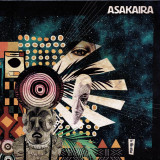
Asakaira - Asakaira

A great mixture of jazz, funk, afrobeat and house on new album by Italian outfit Asakaira for Quattro Bambole. "Asakaira is the name of a place that does not exist, an "invisible city" that is the backdrop to the meeting of four musicians. Michele Vassallo (sax and efx), Giuseppe Desiderio (bass), Francesco Fasanaro (percussion) and Giuseppe Limpido (drums) who together have already gone through various experiences to immerse themselves in an imaginary space, of the border! So, they exploit this nature to transcend the limit, throwing caution to the wind with carefree abandon, but not before carefully noting the history and legacy of jazz, hip-hop and afrobeat. Asakaira' s sound is psychedelic, fluid, constantly evolving: afrobeat & jazz punk alternate with funk, electronic music of Mediterranean culture. An absolutely "stateless" sound, while maintaining its own timbre and stylistic coherence to make it recognizable. The choice of not having a harmonic instrument present in the lineup gives ample space to electronic effects and the groove, creating a sort of modern ritual. The eponymous debut album, released by Quattro Bambole Records, consists of seven tracks, in which the ability to reinterpret their native sounds with polysemic rhythms emerges in a work where layered drums and percussions intertwine with effected saxophones and psychedelic bass lines. A path that moves between songs with a more "ethereal" ancestry, such as the opening track "Night Tales", an acoustic groove that rests on the use of the handpan, an idiophone instrument that gives the song a psychedelic vibration and like "Chatting With You" where a soft and extended overlapping of multiple musical meters emerges, between neo soul, jazz and hip-hop."

vorbestellen23.01.2026

erscheint voraussichtlich am 23.01.2026

20,59
FEX - Skyscraper LP

Fex

Skyscraper LP

12inchEDGE-033
The Outer Edge
21.01.2026
 
6
auch erhältlich

Yellow Vinyl[25,17 €]


The incredible story that began with The Most Mysterious Song on the Internet (TMMS) now enters an exciting new chapter: Skyscraper, the debut album by FEX.

Skyscraper features ten original tracks recorded in the early to mid-1980s-carefully re-transferred, remastered, and brought back to life. The album cover, designed by Darius S., brings the story full circle. Darius is the very person who preserved the now-iconic track Subways of Your Mind by recording it from NDR radio in the mid-80s. Without him, FEX may never have been discovered.

FEX's debut opens with its namesake, Skyscraper-a brooding, previously unreleased track the band once described as part of their "psychedelic phase." With haunting synth-helicopter textures and deep guitar riffs, it immediately sets the tone and raises tension.

The release flows naturally into the energetic and fully remastered studio version of Subways of Your Mind. This version of the TMMS - re-discovered on the "yellow label tape" by Reddit user Marijn-was long believed to be from a smaller home studio, but was actually recorded in November 1984 at Hawkeye Studios in Ganderkesee, near Hamburg.

Goldrush, first teased in raw form on FEX's YouTube channel, bends toward mechanical rhythm and shimmering synths, a snapshot of the band's experiments with programmed drum machine sound. Rückwardt's lyrics point to greed and criticizes materialism, and while the music leans toward pop sensibilities, it carries a raw, fractured edge.

Heart in Danger and I've Got My Eyes On You offer contrasting experiences-one rooted in classic post-punk tension, the other floating in melodic synth layers. The latter in particular feels like a fragment from a parallel radio history: a precise and one of a kind synth pop love song with a progressive touch.

From a rehearsal tape comes Dirty Slapstick, its urgency intact. Missing keyboard parts were later reconstructed by Michael Hädrich using his original DX7 synthesizer-recovering lost elements without rewriting the past. The lyrics take a wry look at forced optimism. Also included are the songs Talking Hands, Jenny and Strange Feeling, the latter being a slower blues-tinged cut, revealing yet another facet of the band's reach and Rückwardt's songwriting diversity.

The album closes where the legend began-with the original radio recording of Subways of Your Mind from Darius' cassette. This version of The Most Mysterious Song features alternate vocal effects, contributing to the track's enigmatic aura. Digitally transferred using a high-end Revox machine and carefully remastered, it now has its long-deserved official release.

The cover features a photo of the Eichenberg Bunker in Kiel-one of FEX's original rehearsal spaces and a symbolic monument to their sonic legacy.

vorbestellen21.01.2026

erscheint voraussichtlich am 21.01.2026

23,95
Bart De Paepe - Zürahümnah

For 20 years Bart De Paepe has carved a distinctive trace in the realm of psychedelic underground and counterculture. With several outstanding solo albums on a.o. Astres d’Or, Ultra Eczema, No Basement Is Deep Enough and with many studio and concert ventures with Sylvester Anfang’s funeral folks, Louise Landes Levi, Timo van Luijk, Raymond Dijkstra to name a few, Bart De Paepe developed a wide and sharp spirit within the orbit of psychedelic improvisation. Since 2007, Bart also curates the Sloow Tapes and Sloowax labels with an impressive catalog of music and poetry by a wide range of resonating artists. Bart’s visual work (drawing and painting), parallel to his musical universe, has been used on many of these releases. He is a genuinely curious traveler, always discovering new dimensions, which is clearly to be heard on the four tracks of this album.

Zürahümnah is an immediate and immersive dive into solitary inner and outer worlds of light and darkness. Zürahümnah is a floating vibration of flickering twilight. Zürahümnah is a mysterious journey through detached time and space. Equipped with Hawaiian guitar, piano, organ and cymbal, Bart De Paepe sets the controls for the heart of the sun.

vorbestellen16.01.2026

erscheint voraussichtlich am 16.01.2026

26,68
MF DOOM - MM..FOOD (2x12")
  • A1: Beef Rapp
  • A2: Hoe Cakes
  • A3: Potholderz Feat Count Bass D
  • B1: One Beer
  • B2: Deep Fried Frenz
  • B3: Poo-Putt Platter
  • B4: Fillet-O-Rapper
  • B5: Gumbo
  • C1: Fig Leaf Bi-Carbonate
  • C2: Kon Karne Il - Guinnessez Feat Angelkia & 41Ze
  • C3: Kon Queso
  • D1: Rapp Snitch Knishes Feat Mr. Fantastik
  • D2: Vomitspit
  • D3: Kookies

Cross merchandise with Rhymesayers, KMD, Viktor Vaughn, Madvillain, JJ DOOM, King Geedorah & Dangerdoom. LP packaging: Case wrapped tip-on gatefold vinyl jacket, new purple vinyl colour double vinyl, 2000 only for the UK. In celebration of the album’s 20th anniversary, MM..FOOD has been repackaged with all new artwork by Sam Rodriguez! Produced by MF DOOM, except "One Beer" produced by Madlib, and "Kon Queso” produced by PNS of the Molemen. Guest features include Count Bass D, Mr Fantastik, Angelika and 4ize. QR-activated immersive AR experiences with album artwork. Brand new music video for "Hoe Cakes" planned for album street date. Originally released in 2004, MF DOOM's MM..FOOD is hailed as a classic hip-hop album full of inventive production, brilliant wordplay, and unique themes. Celebrated for its seamless blend of humor, wit, and social commentary, the album ushers listeners into a bizarre world of food-related metaphors, painting a bitterly comedic portrait of a life tainted by vice, violence, and jealousy. It was a brilliant and novel concept that gave DOOM plenty of room to explore the album’s subjects. Throughout MM..FOOD, DOOM embeds complex ideas within seemingly simple narratives. Album opener “Beef Rapp” is a multi-pronged metaphor reminding listeners of the dangers involved in the glorification of conflict, especially within the rap game. “Hoe Cakes” borrows its name from the sweet, hot water cornmeal patties, which he uses as a symbol to rhyme about indulgence and excess. Continuing the motif, DOOM uses the Madlib-produced “One Beer” to fold layers of depth about escapism and ego, while the popular “Rapp Snitch Knishes” critiques the self-incrimination and contradictory behaviors of some rappers. Overall, MM..FOOD is both a social commentary and a piece of social satire, showcasing MF DOOM’s ability to blend serious themes with his unique, playful lyrical style. MM..FOOD album sales history over 820K+ units sold (RIAA-certified gold). MM..FOOD streaming history over 1.2M+ streams. MF DOOM’’s catalog sales history over 1.7M+ units sold. MF DOOM’s catalog streaming history over 3B+ streams.

nicht am Lager

Bestelle jetzt und wir bestellen den Artikel für dich beim Lieferanten.

38,03

Last In: vor 4 Monaten
JAD FAIR & YO LA TENGO - STRANGE BUT TRUE
  • Helpful Monkey Wallpapers Entire Home
  • Texas Man Abducted By Aliens For Outer Space Joy Ride
  • National Sports Association Hires Retired English Professor To
  • Name New Wrestling Holds
  • Dedicated Thespian Has Teeth Pulled To Play Newborn Baby In
  • High School Play
  • Three-Year-Old Genius Graduates High School At Top Of Her Class
  • Embarrassed Teen Accidentally Uses Valuable Rare Postage Stamp
  • Principal Punishes Students With Bad Impressions And Tired Jokes
  • Retired Grocer Constructs Tiny Mount Rushmore Entirely Of
  • Cheese
  • X-Ray Reveals Doctor Left Wristwatch Inside Patient
  • Clumsy Grandmother Serves Delicious Dessert By Mistake #2
  • Retired Woman Starts New Career In Monkey Fashions
  • Circus Strongman Runs For Pta President
  • High School Shop Class Constructs Bicycle Built For 26
  • Clumsy Grandmother Serves Delicious Dessert By Mistake #1
  • Ohio Town Saved From Killer Bees By Hungry Vampire Bats
  • Nevada Man Invents Piano With 21 Extra Keys
  • Clever Chemist Makes Chewing Gum From Soap
  • Minnesota Man Claims Monkey Bowled Perfect Game
  • Ingenious Scientist Invents Car Of The Future
  • Car Gears Stick In Reverse, Daring Driver Crosses Town Backwards
  • Shocking Fashion Statement Terrorizes Town
  • Feisty Millionaire Fills Potholes With Hundred-Dollar Bills

In den 90ern hatte Jad Fair fünf Lieblingsbands und Songwriter: Daniel Johnston, The Pastels, Sonic Youth, Teenage Fanclub und Yo La Tengo. Das ist echt eine coole Liste, aber das Besondere daran ist, dass Fair im Laufe von etwa zwölf Jahren mit allen in irgendeiner Form Musik gemacht hat. Jad Fair ist seit einem halben Jahrhundert produktiv, lange bevor das Internet ein simultanes und scheinbar ewiges Archiv von allem schaffen konnte, was jemand mit seinen Vorlieben gemacht hat. Er war an mindestens mehreren hundert Titeln beteiligt, von denen viele bei kleinen Labels erschienen, die es heute nicht mehr gibt, und die vergriffen sind. Tatsächlich ist eine dieser Kollaborationen, die Fair in den 90er Jahren gemacht hat - Strange But True mit Yo La Tengo - schwer zu finden, obwohl sie am 20. Oktober 1998 in den USA bei Matador Records erschienen ist. Jetzt wird das Album zum ersten Mal von Joyful Noise und Bar/None auf Vinyl neu aufgelegt. Als Fair Mitte der 90er Jahre mit Yo La Tengo auf einer Party spielte, waren sie alle Freunde, Fans und Kollaborateure, die gemeinsam an Platten gearbeitet oder diese veröffentlicht hatten. Als Fair vorschlug, gemeinsam ins Studio zu gehen, war das Trio sofort dabei. Das Ergebnis, ,Strange But True", ist so wunderbar, abwechslungsreich und wild wie eine riesige Wiese mit einheimischen Gräsern. Dieses Kollaborationsalbum zeigt die unglaubliche Bandbreite der Künstler und versetzt uns zurück in eine Zeit, in der Indie-Rock noch so seltsam und widerspenstig sein durfte, wie seine Schöpfer es wollten.

vorbestellen12.12.2025

erscheint voraussichtlich am 12.12.2025

24,79
Artikel pro Seite:
N/ABPM
Vinyl