One of the most prolific and celebrated blues-rock artists in the UK,
Danny Bryant is to release a brand-new album - 'Rise' - on 29 September through Jazzhaus Records
His 13th album, it is Danny at his dynamic best - his distinctive guitar once again complementing his gravel tone vocal that exudes with the raw emotion this new body of work intended.'Rise' follows the release of his critically acclaimed 2021 album 'Rage To Survive' which Blues Matters! Magazine described as"... everything I part with money for and this will be played and played" and Classic Rock Magazine noted Danny's true blues- rock credentials by describing it as"... new songs with blues- rock provenance." Written by Danny (except for the Bob Dylan cover 'I Want You') and co- produced with Ian Dowling and mastered by Gwyn Mathias, 'Rise', like all twelve albums previous, further deepens Danny's authority as one of the leaders in British blues- rock proving his genuine authenticity.
The album opens with title track 'Rise' - 2 mins 52 of pure blues-rock with Danny's playing evolving throughout to then fade and almost blend into 'Animal In Me' which raises the tempo with its more classic blues rhythmic pattern allowing his vocal to stretch and shine before track three - 'Louise' - slows the album back down with a more solemn acoustic feel that brings anguish out in the track.
Track four - 'Hard Way To Go' - goes back to the more riff- heavy- guitar playing Danny is known for before beautifully contrasting with the toned down acoustic playing of 'Scarlett Street'. 'Into The Slipstream' moves the album into a positive optimistic direction beautifully encapsulated by a gospel vocal accompaniment that supports and builds the track throughout before once again contrasting yet blending brilliantly with track seven 'Julienne' that is more piano focused, relying on Danny's vocal to bring the emotion while still running gospel vocal through the track.
The final three tracks of the album are almost an encapsulation of the whole album. 'Silver and Gold' has a more traditional, stripped back blues feel, whilst Bob Dylan cover 'I Want You' follows a simple acoustic chord pattern and once again Danny's vocal carries the tracks passion throughout with light and shade demonstrating his vocal power before going into the final track 'Drown Jam' that as the title suggests, is Danny playing with pure feel. The album's final trio of
tracks is testament to why Danny is one of Britain's great blues-rock artists.
Buscar:no way back magazine
Wisdom Teeth co-founder K-LONE returns with his second full length project, ‘Swells’: a kaleidoscopic and expansive record that looks to deep house, synthpop, leftfield R&B and beyond for a spellbinding masterwork of melodic electronica.
His debut LP ‘Cape Cira’ became the accidental soundtrack of the long strange summer of 2020 - its lush marimbas, hazy atmos and synthesised bird calls providing the ideal soundtrack for some much needed collective escapism. The record was widely deemed one of 2020’s standout electronic LPs, gaining glowing reviews in Pitchfork, DJ Mag, Mixmag and Resident Advisor, and ranking highly in end of year lists by Crack Magazine.
Approaching its follow up, the Brighton-based producer felt a fresh perspective was needed. Originally landing on the name ‘Swells’ as a secret pen-name to write the record under, the intention was to keep the project as separate as possible from ‘Cape Cira’ to avoid settling into familiar territories - but as the record took shape it became clear that it made perfect sense amongst his already diverse discography.
Like ‘Cape Cira’, there is a distinct and intentionally limited sound palette at play on ‘Swells’. Looping vocal cuts, rich cluster chords and undulating arpeggios sit front and centre here - as does the lo-fi plonk of of the CR78 drum machine. But while the record clearly takes influence from a range of vintage sound sources, its overall aesthetic is unmistakably contemporary. Sounds are not artificially degraded nor obscured under washes of sampled tape hiss. Rather, everything is processed with a gloss, hi-fidelity sheen. The record’s rhythms are bright, dry and snappy, and its melodies are processed with a neon poppy glow.
The producer’s unabashed love of contemporary pop music is most obviously exemplified by the appearance of British singer-songwriter Eliza Rose. The pair met for a session at a North London studio back in 2021, and the now Brit Award-nominated singer’s warm, emotive vocal takes became an immediate source of inspiration early in the record’s conception. As such, Rose’s voice is heard in various states of manipulation throughout its duration - initially as reduced and looped phrases, and then finally in full form on ‘With U’: a low-lit, dubbed-out slice of leftfield R&B that beckons comparisons with Tirzah, Little Dragon and even Erykah Badu.
Elsewhere, there are references to G-Funk (‘Oddball’), Autonomic drum and bass (‘Shimmer’), hip-house (‘Love Is’) and even Metronomy-era electro pop (‘Love Me A Little’).
As always, the true magic of K-LONE’s artistry is to present complex, subtle and original ideas in ways that feel familiar and immediate. Melodies are introduced as effortless earworms, only to be twisted out of shape into strange and unusual formulations. Looping rhythms unspool into washes of hazy, dubbed-out ambience before rebuilding themselves. Refined and endlessly creative, ‘Swells’ marks a captivating next step for a producer and record label that have both reliably positioned themselves at the very forefront of contemporary electronic music.
Marc Richter aka Black To Comm released his debut record 20 years ago. In 2023 he is still busy releasing music under various disguises and is currently signed to the Thrill Jockey label. To celebrate this anniversary his own Cellule 75 label is re-releasing some classic out-of-print vinyl albums that originally came out on the defunct Type and De Stijl labels. The LP will feature a full-colour printed inner sleeve exclusive to this edition.
In 2009 the Type Recordings label run by John Twells had just released seminal records by Grouper, Jóhann Jóhannsson and Yellow Swans when they signed Richter and put out his breakthrough Alphabet 1968 album. The LP sold out within two weeks, receiving a glowing full-page review in The Wire Magazine by the late Mark Fisher (later reprinted in his book Ghosts Of My Life), was selected for Boomkat's Top 10 releases of the year (alongside debut albums by Leyland Kirby, Demdike Stare and Oneohtrix Point Never) and was greeted with universal praise in the underground blog network as well as established magazines such as The New Yorker and Pitchfork.
The music itself played with the notion of nostalgia without being nostalgic itself. It's the sound of half-remembered dreams, a surreal distorted vision of the past, an aural polaroid of long forgotten musics, a ghostly voice from a non-existent era.
From the original Type one-sheet:
"The mission statement for Alphabet 1968 was to write an album of "songs" for want of a better word. Short tracks which represented genre points, the milestones which stuck in Richter's mind when he thought back to his favorite records. What we arrive at is a breathtaking 10-track album which, over the course of 45 minutes, explores world music, techno, noise, avant-garde, ambient music and even exotica. Each track is linked with a loose thread of radio static or environmental sound, dragging you through the album, as if tuning in to a stray broadcast or a particularly adventurous mix. Richter has pieced the album together from hours of recordings made at his studio with home made gamelan, small instruments and loops gathered from a collection of ancient vinyl and 78 records. The scope of the album is admirable, but ignoring this, it is simply a shockingly arresting collection of experimental oddities, with references ranging from Moondog to Basic Channel by way of Bernard Herrmann. It's not hard to fall in love with Alphabet 1968, far harder would be to place exactly where the record should fit into your collection."
Mark Fisher in The Wire:
"But what if we were to take Richter's provocation seriously - what would a song without a singer be like? What would it be like, that is to say, if objects themselves could sing? It’s a question that connects fairy tales with cybernetics, and listening to Alphabet 1968, I’m reminded of a filmic space in which magic and mechanism meet: JF Sebastian’s apartment in Blade Runner. The tracks on the LP are crafted with the same minute attention to detail that the genetic designer and toymaker brought to his miniature automata, with their bizarre mixture of the clockwork and the computerised, the antique and the ultramodern, the playful and the sinister. Richter’s musical pieces have been built from similarly heterogeneous materials - record crackle, shortwave radio, glockenspiels, all manner of samples, mostly of acoustic instruments. ….. JF Sebastian's apartment was itself an update of older spaces in which science and sorcery co-existed: the workshops of ETA Hoffmann's inventor-magicians, or of Pinocchio's creator, Geppetto. I think, too, of Auguste Villiers de l'Isle-Adam's astonishing 1886 tale The Future Eve in which Edison, using the expertise he has recently acquired from inventing the phonograph, sets himself the task of constructing an artificial woman. But if there are songs here, they are sung by the gramophone and other recording and playback machines. Richter so successfully effaces himself as author that it is as if he has snuck into a room and recorded the objects as they played (to) themselves. Rather than simply automating his music, as in the case of Pierre Bastien and his mechanical machines, Richter makes us feel that he has merely recorded the unlife of objects. ….. Indeed, the impression of things winding down is persistent on Alphabet 1968. Entropy has not been excluded from Richter's enchanted soundworld. It feels as if the magic is always about to wear off, that the enchanted objects will slip back into the inanimate again at any moment."
- 1: Helplessly - Moment Of Truth
- 2: After You've Had Your Fling - The Intrepids
- 3: Welcome To The Club - Blue Magic
- 4: I Can't Move No Mountains - Margie Joseph
- 5: Supernatural Thing Part 1 - Ben E King
- 6: Mellow Me - Faith, Hope & Charity
- 7: Georgia's After Hours - Richard "Popcorn" Wylie
- 8: Date With The Rain - Eddie Kendricks
- 9: Just As Long As We're Together - Gloria Scott
- 10: Wendy Is Gone - Ronnie Mcneir
- 11: Got To Get You Back - Sons Of Robin Stone
- 12: Night Of The Wolf (Tema Del Lupo) - Ivano Fossati
- 13: Good Things Don't Last Forever – Ecstasy, Passion & Pain
- 14: Tell Me What You Want - Jimmy Ruffin
- 15: Keep It Up - Betty Everett
- 16: Free & Easy - Satyr
- 17: Each Morning I Wake Up - Major Harris
- 18: It's The Same Old Story - Act I
- 19: You Can't Hide Love - Creative Source
- 20: The Whole Damn World Is Going Crazy – John Gary Williams
- 21: If That's The Way You Feel - White Heat
- 22: Wake Up Everybody - Harold Melvin And The Bluenotes
Before there was Saturday Night Fever there was underground disco. DJs across America went out and found the music to play; dancers went out and found the clubs. At this point, in the early seventies, the disco was the venue and not a genre of music.
By the time Nik Cohn’s short story Tribal Rites of the New Saturday Night was published by New York magazine in June 1976, disco was the biggest genre of music on the charts and was about to get bigger still, becoming an all-enveloping cultural phenomenon. Cohn sold the film rights to Robert Stigwood, and his classic club yarn became Saturday Night Fever.
“Tribal Rites Of The New Saturday Night” is the soundtrack to Cohn’s story, where disco began; a 1975 score for the underground clubs of Brooklyn and Queens that played R&B, soul and Latin beats to people who lived for the weekend.
Bob Stanley has put this collection together, sourcing what was actually played in Brooklyn discos in 1974 and 1975. Only a few specific records were mentioned in Cohn’s feature, but two of them – Ben E King’s ‘Supernatural Thing Part 1’ and Harold Melvin’s ‘Wake Up Everybody’ - were cosmically great and both are included here, alongside underground favourites like Moment Of Truth’s Four Tops-like ‘Helplessly’ and Gloria Scott’s Barry White-produced modern soul classic ‘Just As Long As We’re Together’. Ivano Fossati’s incredible ‘Night Of The Wolf’ has fans in northern soul, disco and prog circles.
Without Cohn’s original story, it’s quite possible that disco would have remained an underground phenomenon – “Tribal Rites Of The New Saturday Night” paints a scene in full flower. Saturday Night Fever would eventually, if unintentionally, wreck the underground nature of this scene, and clubs like Studio 54 would destroy the democracy of the party, but for two or three years the scene was largely undocumented and magical. This album is the sound of disco before it was captured.
- A1: Lynyrd Skynyrd – The Seasons (4.09)
- A2: Barefoot Jerry – Smokies (2.14)
- A3: Joe South – Hush (3.47)
- A4: Bobbie Gentry – Papa, Won’t You Let Me Go To Town With You (2.34)
- A5: Area Code 615 – Stone Fox Chase (3.17)
- A6: Cher – I Walk On Guilded Splinters (2.32)
- B1: Cowboy – Please Be With Me (3.48)
- B2: The Allman Brothers – Ain’t Wastin’ Time No More (3.40)
- B3: Link Wray – Be What You Want To (4.29)
- B4: Boz Scaggs – I’ll Be Long Gone (4.08)
- B5: Lynyrd Skynyrd – Comin’ Home (5.29)
- C1: Bobbie Gentry – Seasons Come, Seasons Go (2.52)
- C2: Leon Russell – Out In The Woods (3.37)
- C3: Tony Joe White – Polk Salad Annie (3.42)
- C4: Barefoot Jerry – Come To Me Tonight (4.43)
- C5: Dan Penn – If Love Was Money (3.29)
- C6: Linda Ronstadt – I Won’t Be Hangin’ ‘Round (2.59)
- D1: Waylon Jennings – Big D (2.30)
- D2: Big Star – Thirteen (2.37)
- D3: Bobbie Gentry – Mississippi Delta (3.06)
- D4: Travis Wammack – I Forgot To Remember To Forget (2.54)
- D5: Johnny Cash & June Carter – If I Were A Carpenter (3.01)
- D6: Billy Vera – I’m Leavin’ Here Tomorrow, Mama (4.13)
Black Vinyl[29,62 €]
Long out of print (10 years!), this new edition of Soul Jazz Records' classic Delta Swamp Rock, features a killer all-star line-up of seminal artists who all first blended rock, soul and country together to create a stunning new sound of southern American music in the 1970s.
Featuring the Allman Brothers, Dan Penn, Leon Russell, Tony Joe White, Johnny Cash, Bobbie Gentry, Big Star, Link Wray, Area Code 615 and loads more!
This album comes as a superb limited-edition gold vinyl double vinyl release complete with extensive original sleevenotes, interviews and exclusive photography, all spread over a 12-page full-size magazine and two bespoke inner sleeves. The works!
Delta Swamp Rock is an interstate southern road-trip through the United States of America where country, rock and soul met at the crossroads - an exploration of the musical and cultural links between the cities of Memphis, Muscle Shoals and Nashville in the 1960s and 70s.
At the start of the 1970s, a new type of music emerged out of the southern states of Alabama, Tennessee, Georgia, Mississippi and Florida. Southern rock, the creation of young blue-collar white Americans, blended rock, soul, country and blues music together to present a new vision of the south – a post-civil rights southern identity complete with a celebration of the regions natural landscape and its way of life.
The Allman Brothers and Lynyrd Skynyrd epitomised the definitive southern rock groups – a mixture of blues-rock and country with a southern rebelliousness and attitude. Unfortunately both The Allman Brothers and Lynyrd Skynyrd were to be struck by tragedy, which would affect the movement’s rise and fall.
The backstory to southern rock is the fact that a number of the people involved in its creation had been central to the production of southern soul music in the 1960s mainly in Memphis, Tennessee, and the small town of Muscle Shoals (population around 10,000) deep within the bible-belt, liquor-free, deeply segregated state of Alabama, creating 100s of R&B hits on an almost daily basis.
Here in Muscle Shoals, with its proximity to Memphis and Nashville, an all-white group of in-house musicians, (famously referred to by Lynyrd Skynyrd in the song ‘Sweet Home Alabama’ as the ‘Swampers’), created countless classic soul records for the likes of Aretha Franklin, Wilson Pickett, Etta James, Clarence Carter and more during the 1960s.
This album charts the rise and fall of southern rock from its funky swamp roots in southern soul to its phenomenal success in the first-half of the 1970s, including its influence on Nashville’s ‘outlaw’ country and tracing it right back to the arrival of rock and roll in the 1950s - the first meeting of black and white American music at the crossroads.
Tidal Waves Music proudly presents ‘Fly By Night’ for the FIRST TIME on vinyl (the album was only released as a limited compact disc back in the early nineties).
This unique record comes as a deluxe 180g vinyl edition (strictly limited to 500 copies) with obi strip.NonReturnable.
This vinyl edition also features the original painted front cover artwork by Virgil Grady (known for his work with Tribe records) and back photography by acclaimed Detroit scene photographer & author Barbara Barefield, whose work has appeared in many renowned publications such as The New York Times, LA Times, People magazine and countless others.
Released exclusively for Record Store Day 2023 (UK/Europe) and available in participating stores on April 22, 2023.
Wendell Harrison was born in Detroit in 1942 where he began formal jazz studies for piano, clarinet and tenor saxophone. At 14, while still in high school, Harrison started performing & recording professionally with artists such as Marvin Gaye, Grant Green, Sun Ra, Hank Crawford … and many others.
In 1971, Harrison began teaching music at Metro Arts (a multi-arts complex for youth) where he also connected with Marcus Belgrave, Harold McKinney and Phil Ranelin…soon after they formed the (now
legendary) Afro-centric TRIBE record label and artist collective. TRIBE used the Metro Arts complex as a vehicle to convey a growing black political consciousness. Wendell Harrison also published the very popular TRIBE magazine, a publication dedicated to local and national social and political issues, as well as featuring artistic contributions such as poetry and visual pieces.
In 1978 Harrison and McKinney co-founded REBIRTH, a non-profit jazz performance and education organization, in which many notable jazz artists have participated. Around the same time Wendell Harrison
also created the WENHA record label and publishing company, which released many of his (now classic) recordings as well as those of other artists, such as Phil Ranelin, Doug Hammond and Reggie Fields (The Real ShooBeeDoo).
In the early 1990s, Wendell Harrison was awarded the title of “Jazz Master” by Arts Midwest. This distinction led Harrison to collaborate with fellow honorees and gave him the chance to tour throughout the UnitedStates, Middle East and Africa. Even to this day Wendell Harrison's recordings for the TRIBE, WENHA and REBIRTH labels have a large worldwide fanbase.
It is on WEHHA in 1990 that Harrison released (and self-produced) the opus: ‘Fly By Night’ which we are proudly presenting you today. ‘Fly By Night’ is a monster of an album featuring an all-star line-up that
includes Doug Hammond (Mingus, Lonnie Liston Smith) on drums, Kirk Lightsey (Chet Baker, Calvin Keys) on piano, Cecil McBee (John Hicks, Pharoah Sanders, Alice Coltrane) on bass, Jaribu Shahid (Sun Ra) on contrabass and Pamela Wise (Tribe) on Piano. Harrison is killing it here with this selected ensemble (guys he grew up with in Detroit in the late 50’s, when hard bop was the thing and Miles and Coltrane were the heroes of the day). This group of talented veterans are taking this classic album to unseen heights.
On ‘Fly By Night’ the gloves come off…no more jazzy-funk or poppy-jazz. Wendell picks up his tenor for one tune but the remainder of the sessions he performs on clarinet. Wendell’s mastery coaxes the sweet piquant sound of the instrument and as it re-emerges in the contemporary jazz scene. The eight handpicked tunes demonstrate the fertile new directions Wendell Harrison has been working on, combing standards with a fresh new approach.
On these amazing recordings (recorded at the Rebirth Studios in Detroit) the listener is invited to experience a synthesis of what has been and what is now. The record shows Wendell’s trademark proficiency. All of the above makes this incredible record both timeless and as relevant today as it was back when it was initially
released.
Nearly five years on from their acclaimed debut, Bennett Wilson Poole reveal the follow up. It's been a long time coming, but...
That eponymous first album was only ever intended as a one-off collaborative project — a serendipitous series of events which began with a late evening session where the trio wrote ‘Hate Won't Win’. A response to the murder of MP Jo Cox, it was something of a fresh take on Crosby Stills Nash and Young’s classic protest song ‘Ohio’. The release saw Bennett Wilson Poole embraced by the Americana community, playing live on the Andrew Marr show and crowned as ‘UK Artist of the Year’ at the 2019 UK Americana Awards, in front of a watching crowd including Graham Nash himself.
The new album came together in similar fashion; Robin (Bennett) and Danny (Wilson) started writing new songs late into the night whilst on tour to promote the first record — a tour which unfolded from a three-night residency in a London pub into a year-long odyssey culminating in a headline show in Hall One at King’s Place — and before they knew it, there were enough songs to begin recording an unplanned second album.
Where the first record drank deep from 70s US west coast folk-rock, the second has been heavily spiked with 1960s British psychedelia, even featuring a cover by legendary counterculture artist John Hurford (whose credits include 60s artwork for Oz Magazine and International Times).*
Tony Poole’s meticulous and inspired production has spun Robin and Danny’s fresh batch of songs into a delicate web of musical delight. Fans of the ‘spot the reference’ game Tony started on the first record won’t be disappointed this time either, as there are plenty more to be found here.
As with the first album, the lyrics don’t shy away from current affairs – by the end of that year of touring, the band were already playing “I Wanna Love You (But I Can’t Right Now)”, reflecting on the state of US politics, yet optimistic that the problems are only temporary.
Many of the tracks on the new album feature live rhythm section Fin Kenny (drums) and Joe Bennett (bass) for the first time on a BWP record.
The title of the album comes from the lyrics of ‘Help Me See My Way’, the first single, a prayer for strength in difficult times, the trippy animated video for which was originally issued during lockdown. The dreamy positivity of the line "I saw a star behind your eyes" is tempered with the plea "don't let it die away", a message which feels as important as ever two years on.
All three collaborators have had critical acclaim in their own right. Danny Wilson’s credentials go back to his days in Grand Drive with brother Julian, and his consistent high calibre output with his Champions of the World led them to sweeping the board at the first UK Americana Awards with Album, Artist and Song of the year awards richly deserved; Tony Poole’s Starry Eyed and Laughing were hailed as “the English Byrds” on the back of their two CBS-released albums in the mid-seventies and he has since built an enviable reputation as producer and engineer; Robin Bennett has been relentlessly turning out timeless songs from his Oxfordshire base in bands from Goldrush to The Dreaming Spires
Never Sleep present Paula Temple 'Live from the Mill".
Recorded live in the UK's oldest rave capital Preston in the beautiful summer of 1995.
One of Paula Temple's earliest gigs, this mix was recorded at a rave in Preston 27 years ago when she was 18 years old.
Vinyl only at the time, this mixtape embodies the style she is consistently known for, a mix of raw relentless techno and rave.
In 1995 making mixtapes was the only way to go, so Paula would make mixtapes to give to her friends at clubs around the North of England such as Bugged Out (Manchester), The Orbit (Morley) and Voodoo (Liverpool).
Paula submitted this mixtape to MUZIK magazine to spend a day with techno artist Dave Angel.
Triumphantly she spent the day with Dave in his studio, was featured in the magazine and was just a young girl chasing her dream.
When we asked for this possible collaboration she dug deep and found a forgotten tape from long ago that had been lost but recently found, Archivio has brought it back to life for you to hear the younger Paula Temple's passion for the underground.
All proceeds go the amazing Womenonweb charity which supports women rights across the globe and provides abortion care for the most in need.
We are truly honored to put out a small testament in time and help those in the future.
French pianist Melaine Dalibert, known for his releases on contemporary music labels such as Another Timbre and Elsewhere, his work with David Sylvian, Ensemble 0, Sylvain Chauveau, and world premieres from Gérard Pesson, Giuliano D'Angiolini, Michael-Vincent Waller, Tom Johnson, has signed with FLAU in Japan to release a new album Magic Square.
Across the album's eight tracks, the French pianist and composer takes listeners on a "fantasy journey". Travel is at the heart of Magic Square, but not of the physical kind. Instead, his emotive and intriguing piano pieces inspire inward travel and daydreaming, reflecting the past two years of pandemic and introspection.
Having received his training in Rennes and the conservatories of Paris, Dalibert has a musical background that is naturally entrenched in the technical aesthetic of classical music. However, experimenting with algorithmic ways of writing and other mathematical concepts such as fractals, Dalibert's music combines emotion and logic for captivating results. His music has been played on BBC Radio, Radio France and NTS Radio, among others.
“Melaine Dalibert, himself a composer whose works similarly deal in patience and space, is an ideal interpreter « As with his other releases, Dalibert breaks boundaries difficult to define but easy to hear, rendering and dissolving their polarities with a new iteration of his already luminous language. » (Mark Medwin, Dusted Magazine, juillet 2021) of such beguilingly modest music, and this sensitive recording lets every detail resound.”
Steve Smith — The New-Yorker
“compositions by French pianist Melaine Dalibert, is a warm stream of harmonious ripples that echoes the graceful postclassical music of Max Richter, Ólafur Arnalds, Jóhann Jóhannsson, etc, but the economy and precision, combined with Dalibert’s calm hands on the keys, put it on a whole other level of beauty.”
Derek Walmsley — the WIRE
“As with his other releases, Dalibert breaks boundaries difficult to define but easy to hear, rendering and dissolving their polarities with a new iteration of his already luminous language.”
Mark Medwin — Dusted Magazine
“Dalibert is one of the most effortlessly talented and subtlety creative pianists at work today”
Roger Batty — Musique Machine
“Au-delà des genres et au dessus de ce monde, le pianiste français Melaine Dalibert continue d’échafauder une œuvre d’un autre temps, d’un futur à construire avec une musique qui doit autant à Federico Mompou qu’à l’Acousmatique. Night Blossoms, son dernier disque en date (avec la participation de David Sylvian sur deux titres) est une pure merveille !”
Greg Bod — Benzine Mag
“La musique de Melaine Dalibert, héritière de cinquante ans d’expériences minimalistes, correspond à l’impérieux besoin du public d’aujourd’hui de cultiver un hors-temps et de se plonger au cœur du son. Elle y répond parfaitement”
Guillaume Kosmicki — Res Musica
“Comment des pièces reposant sur des constructions aussi abstraites et rigoureuses peuvent-elles susciter autant d’émotion à l’écoute ? La musique de Melaine Dalibert projette l’auditeur dans un univers où l’assommant temps quotidien n’a plus cours. Plus de mesure, plus de début ni de fin : pour qui accepte de se laisser prendre, Night Blossoms fait perdre tous les repères du commensurable”
Guillaume Kosmicki — Hémisphère Son
dreamcastmoe is the recording project of singer, songwriter, producer, and DJ Davon Bryant, a lifelong resident of Washington, DC. His music moves freely between moods and modes, hypnotic, romantic, traversing electronic, R&B, funk, soul, and hip-hop... Resident Advisor dubs it "soulful, cross-genre dance music." This ability to adapt and finesse, to twist in different directions while staying true and coherent in vision, can be traced to his home city and its complex cultural history. "Most Black kids in DC don't ever get to this point," he says. "This is what I am making this music for, in the DC tradition of soul and empathy and love that is rooted in this city. My music is for real people dealing with shit every day." A versatile, modern artist and collaborator, dreamcastmoe has thrived in the underground since his first uploads to Soundcloud and Bandcamp in 2017 and subsequent releases with labels like People's Potential Unlimited, Trading Places, and In Real Life Music. Bryant's laid-back personality, emotional honesty, and infectious energy shine through his work and how he talks about it, as Crack Magazine notes in their 2021 Rising feature: "a steady combination of confidence, creativity, and calmness." He grew up playing drums in church; he's worked dead-end jobs, had ups and downs, even sold off all his gear one time, but never stopped reinvesting in himself. He is quick to praise his co-producers, rattle off influences _ the visual feel of NBA 2K, the comedic timing of Bernie Mac, the savvy legacy of Duke Ellington, for starters _ and credit resourceful DC breakouts like Ankhlejohn that showed him the roadmap. His voice, a steady instrument, seemingly connects it all, capable of slow falsetto flow, swaggering talk-rap, and outright croon. His storytelling style is choppy yet fluid, like a mixtape, which is how Bryant sees Sound Is Like Water, his debut on Ghostly's International's freeform label, Spectral Sound. The two-part project culminates as a full-length LP release in November 2022. The first side, released as Part I, opens on the blurred beats of "El Dorado," which dreamcastmoe dedicates to his journey. It's a head-nodder, an off-kilter earworm co-produced by Max D (Future Times, RVNG Intl, etc.), with Bryant harmonizing hooks with synth jabs and a pitched-down presence. "Complicated" is the slow jam, delivered smoothly from a Saturday night crossroads. dreamcastmoe is contemplative and committed... gliding and locking ad-libs into skittering rhythms courtesy of co-producer Zackary Dawson _ but also willing to let something go, "acknowledging that everything in life IS NOT easy." "RU Ready" takes off from the jump as a tribute, challenge, and promise to his partner and his city ("The times you sat with me when I needed you the most / Told me the things that I needed to see / Young black man, really trying to be what I can be / And I'm really from DC). In its potent two-plus minutes, the sonics (co-produced by ZDBT) press the message, all cymbal crashes, breakbeats, and serrated synth lines. "Cloudy Weather, Wear Boots" is a blitzing dance-punk track made in collaboration with Jordan GCZ on Bryant's first trip to Amsterdam. The album's flipside opens on "Much More," the first of two synth-and-beat ballads co-produced by ZDBT. Later on "Long Songz," he claims, "I'm not writing love songs no more," prioritizing the vibe with "all my day ones." He calls it "a cry for more normal moments. Everything doesn't have to be a fantasy love story, more time spent getting to the money, growing, and making a way." He saves two of his most propulsive cuts for the finale, co-produced by Sami, co-founder of DC dance label 1432 R. As their titles suggest, "Take A Moment" and "Make Ya Mind" operate as anthems for movement, with Bryant free-flowing commands above wildly-styled percussion. Per Bryant, the latter is both "wake & bake jam" and a "dance floor bomb." His parting line: "Action / You got to show me action / Reaction." The world of dreamcastmoe straddles virtual reality and the realness of DC, images both imagined and lived-in. Bryant has a knack for unexpected melodies but what makes his music so exciting is his capacity to defy the expectations of genre and image. A fluid ingenuity and vulnerability bottled by Sound Is Like Water, and this is just the beginning.
Nathan Fake's fourth album, Providence, crafted in the wake of a crippling two year spell of writer's block. Is his most personal and profoundly emotional work to date.
.
Providence sees the British producer collaborate with vocalists for the first time, joining forces with Prurient (aka Vatican Shadow / founder of Hospital Productions) and Raphaelle Standell-Preston from Braids. Both arose from chance meetings in Geneva and Osaka as their tour schedules crossed. Prurient contributed the heavily distorted vocal to 'DEGREELESSNESS' - I was a huge fan of Dominic's (Prurient) music before we met and I love the way he situates his vocals in his productions. I really like how you can't make out what he's saying at all...' - whilst Raphaelle, who lends her voice to 'RVK', was introduced to Nathan by their mutual friend Jon Hopkins. I deliberately kept the first half of the track instrumental and I love the way her vocal lands,' he says. It's quite unexpected when she starts singing.'
It's the quickest album I've written and because of that it's got a close thread running throughout,' says Nathan of his creative process. It also has a distinct sonic signature as a result of the producer refreshing his set-up. I was feeling nostalgic and bought a cheap Korg Prophecy on a whim and it ended up being the backbone of the album,' he explains. I remember reading an article in Sound On Sound back in 1995-96 and I didn't really know much about music production then, but I remember thinking that it must be AMAZING. As it turns out, it's actually quite crap really... It's very hard to program, looks unimpressive, doesn't sound great (laughs), but I recorded it through loads of different pre-amps and tape and mixers and roughed it up. I'm always intrigued by low-end gear, I like the challenge and the limitations it poses.'
Norfolk born and bred, Nathan's first encounters with electronic music came via the radio (hearing the likes of Aphex Twin and Orbital) and reading about the equipment that they used in magazines. This was the stimulus for him to buy some gear and begin his own sonic experiments and, linking with James Holden in 2003, Nathan's early output came via his fledgling Border Community label. His debut album Drowning In A Sea Of Love' (2006) was a triumphant record, drawing a rapturous reception from the likes of Pitchfork, The Guardian and Mixmag (who hailed it among the best of the year). Recording two further albums for Border Community, Hard Islands' (2009) and Steam Days' (2012), Nathan found himself in frantic touring mode for two years and, in this nomadic state, found it impossible to write any new music. On his return, events in his personal life intertwined with, and exacerbated, this creative block. I didn't write any music at all for about two years,' Nathan explains. Overall there was roughly a three year break from writing.'
Emerging from this extended period of inactivity with renewed vigour and lust for life, Providence was recorded during the first six months of 2016 in Nathan's home studio / living room. The meaning behind the title is two-pronged: on the one hand it's a nod to the aforementioned Korg Prophecy synth that features so heavily on the record. But on a deeper level it means guidance or divine guidance' - not necessarily in a religious sense but more to be guided by a higher power - or more specifically to Nathan, music as therapy and a path out of a dark period in his life.
‘Complex and dangerously catchy, lyrically sophisticated and provocative, noisy and somehow serene… Yankee Hotel Foxtrot… is simply a masterpiece.’ – Pitchfork, 10/10, April 2002
‘The looped chaos and plangent melodies... effectively heralded the birth of a new band, as Jeff Tweedy overhauled his compositional modus operandi. So tender was the emotional core of songs like ‘Jesus, Etc.’ that the record became wrapped up in America’s post-9/11 cultural discourse... Yankee Hotel Foxtrot embedded Wilco’s great American songwriter status.’
– Mojo
‘It's as if the Flying Burrito Brothers suddenly decided to cover Pavement songs. There is a gentle, rootsy beauty here that Wilco has buried in a box of vulnerability and covered with a handful of dirt.’ – New York Times
‘Born out of turmoil, Wilco’s fourth album was a stone-cold classic.’ – Uncut
Nonesuch releases seven special editions of Wilco’s landmark 2002 album Yankee Hotel Foxtrot. The now-classic record has been remastered and will be available as part of each set. The Super Deluxe version comprises eleven vinyl LPs and one CD – including demos, drafts, and instrumentals, charting the making of Yankee Hotel Foxtrot – plus a live 2002 concert recording and a September 2001 radio performance and interview. That box set includes eighty-two previously unreleased music tracks as well as a new book featuring an interview with singer/songwriter/guitarist Jeff Tweedy, drummer Glenn Kotche, and Jim O’Rourke, who mixed the acclaimed 2002 album; an in-depth essay by journalist/author Bob Mehr; and previously unseen photos of the band making the album in their Chicago studio, The Loft. For the Yankee Hotel Foxtrot recording, Wilco was Jeff Tweedy, John Stirratt, Leroy Bach, Glenn Kotche, and Jay Bennett with Craig Christiansen, Ken Coomer, Jessy Greene, Fred Lonberg-Holm, and Jim O’Rourke.
A live version of ‘Reservations’ from a legendary concert contained on Snoozin’ at The Pageant – Live 7/23/02 at The Pageant, St. Louis, MO – a recording that is part of the Super Deluxe LP and CD sets as well as the Deluxe LP and digital sets – is now available. A limited-edition vinyl 7” with versions of ‘I’m the Man Who Loves You’ and ‘War on War’, from the Super Deluxe box set, is available now from wilcostore.
Wilco marked the anniversary of Yankee Hotel Foxtrot – which was released commercially on April 23, 2002, after a circuitous and storied gestation, including a period of streaming for free on the band’s website – with a performance of the album’s ‘Poor Places’ on April 18’s Late Show with Stephen Colbert, which may be seen here. The band is currently performing Yankee Hotel Foxtrot in its entirety (plus a mix of concert favourites and rarities) in two limited runs at New York City’s United Palace and Chicago’s Auditorium Theatre. The Chicago show on April 23 will be available as a live stream here.
Yankee Hotel Foxtrot was widely acclaimed as one of 2002’s best albums, appearing in year-end lists of Mojo, NME, Q, Rolling Stone, and Uncut, among many others. Yankee Hotel Foxtrot also was featured in multiple decade-end lists, with Rolling Stone naming it #3 Album of the 2000s, as well as many Greatest Albums of All Time lists, including in the NME.
Among Yankee’s inspirations was a recording Tweedy bought at Tower Records in the late 1990s, The Conet Project: Recordings of Shortwave Numbers Stations. As Bob Mehr points out in his new album note, the record got “deep under Tweedy’s skin.” Tweedy said in his 2017 memoir, Let’s Go (So We Can Get Back), “It was as fascinating to me as anything being made by actual musicians using actual instruments… I wanted to know why it was so hypnotic to me. Why could I listen to hours of this stuff, even though I had no clue what any of them were saying. That question became the foundation for Yankee Hotel Foxtrot… the way people communicated or ultimately failed to communicate.” The album takes its title from a haunting recording of a woman repeating those words that is included in The Conet Project; that recording is sampled in the penultimate song on Yankee Hotel Foxtrot, ‘Poor Places’.
“Conceptually, Tweedy had decided to focus on a big idea for the next album: the state of America. His lyrics – often distilled from scribbled pages of free verse or poetry – became a form of inquiry,” Mehr continues. Tweedy said, in 2004, “I wanted to write about the stuff right in front of my eyes, microscopically looking at America and asking questions about each little thing… How can there be all these good things and things that I love about America, alongside all of these things that I’m ashamed of? And that was an internal question, too; I think I felt that way about myself.”
Mehr says, “Exploring those questions, while weaving in strands of Eastern philosophy and bits of autobiography – Yankee lyrics would be loaded with the pained imagery of someone suffering from migraines and mental health issues – Tweedy would conjure a deep examination of both country and self.”
Describing the uncanny, strangely prescient feeling of the album, which Wilco began offering as a free stream on its website in 2001, Mehr notes: “In the wake of 9/11, Yankee Hotel Foxtrot would be burdened with unintended meaning. The disc had originally been scheduled for a September 11 release. Its cover – a Sam Jones-shot image of Chicago’s twin Marina Towers angled in looming fashion – bore an eerie resemblance to the felled World Trade Center towers. And the songs – with titles like ‘Ashes of American Flags’ and ‘War on War,’ and lyrics about how ‘tall buildings shake, sad voices escape’ – took on a terrible new resonance.”
Yankee Hotel Foxtrot was the first Wilco release on Nonesuch Records following the band’s infamous split with Reprise (both labels are part of Warner Music Group). It was also the first release featuring the line-up of drummer Glenn Kotche and multi-instrumentalist Leroy Bach joining founding members Jeff Tweedy and John Stirratt. The 2002 Sam Jones film I Am Trying to Break Your Heart documented the fraught recording and mixing process, personnel changes, and label issues.
The relationship with Nonesuch would last nearly a decade and include three more studio albums – the Grammy Award-winning A ghost is born, Sky Blue Sky, and Wilco (the album) – along with a live album and a live DVD, plus reissues of earlier records, before Wilco began its own label, dBpm. The band’s current lineup of Jeff Tweedy, John Stirratt, Glenn Kotche, Mikael Jorgensen, Patrick Sansone, and Nels Cline has been together for nearly twenty years.
DISC 5: HERE COMES EVERYBODY – BUILDING YANKEE HOTEL FOXTROT (PART 2)
Side I: (TRAIN)
1. Radio Cure (Here Comes Everybody Version) *
2. War on War (Here Comes Everybody Version) *
3. Venus Stopped the Train (Here Comes Everybody Version) * #
4. I'm the Man Who Loves You (Here Comes Everybody Version) *
5. The Good Part (Here Comes Everybody Version) * #
Side J: (KETTLE)
1. Pot Kettle Black (Here Comes Everybody Version) *
2. Ashes of American Flags (Here Comes Everybody Version) *
3. Poor Places (Here Comes Everybody Version) *
4. Shakin' Sugar (Here Comes Everybody Version) *
5. Reservations (Here Comes Everybody Version) *
DISC 6: HERE COMES EVERYBODY – BUILDING YANKEE HOTEL FOXTROT (PART 2) / THE UNIFIED THEORY OF EVERYTHING – BUILDING YANKEE HOTEL FOXTROT (PART 3)
Side K: (ESCAPE)
1. Cars Can't Escape (Here Comes Everybody Version) * #
2. A Magazine Called Sunset (The Unified Theory of Everything Version) ** #
3. Remember to Remember (Hummingbird) The Unified Theory of Everything Version ** #
4. I Am Trying to Break Your Heart (The Unified Theory of Everything Version) ** #
Side L: (WAR)
1. Kamera (The Unified Theory of Everything Version) ** #
2. Radio Cure (The Unified Theory of Everything Version) ** #
3. War on War (The Unified Theory of Everything Version) ** #
4. Jesus, Etc. (The Unified Theory of Everything Version) ** #
DISC 7: THE UNIFIED THEORY OF EVERYTHING – BUILDING YANKEE HOTEL FOXTROT (PART 3) / LONELY IN THE DEEP END – DEMOS, DRAFTS, ETC.
Side M: (DRUMMER)
1. Ashes of American Flags (Stravinsky Mix) ** #
2. Heavy Metal Drummer (The Unified Theory of Everything Version) ** #
3. I'm The Man Who Loves You (The Unified Theory of Everything Version) **
4. Pot Kettle Black (The Unified Theory of Everything Version) ** #
5. Poor Places (The Unified Theory of Everything Version) ** #
Side N: (RESERVATIONS)
1. Reservations (The Unified Theory of Everything Version) ** #
2. Love Will (Let You Down) [Lonely in the Deep End Version] *
3. Lost Poem Demo (Lonely in the Deep End Version) *
4. I’m The Only One Who Lets Her Down (Lonely in the Deep End Version) *
5. Has Anybody Seen My Pencil? (Lonely in the Deep End Version) *
DISC 8: LONELY IN THE DEEP END – DEMOS, DRAFTS, ETC.
Side O: (MAGAZINE)
1. The Good Part (Lonely in the Deep End Version) *
2. A Magazine Called Sunset (Lonely in the Deep End Version) *
3. A Magazine Called Sunset (Backing Track) [Lonely in the Deep End Version] *
4. Anniversary (Nothing Up My Sleeve) (Lonely in the Deep End Version) *
5. Kamera (Lonely in the Deep End Version) *
Side P: (DOOBY)
1. I'm The Man Who Loves You (Lonely in the Deep End Version) *
2. I Am Trying To Break Your Heart (Lonely in the Deep End Version) *
3. Jesus, Etc. (Lonely in the Deep End Version) *
4. Reservations (Backing Track) [Lonely in the Deep End Version] *
5. Let Me Come Home (Synth) [Lonely in the Deep End Version] *
6. Ooby Dooby (Lonely in the Deep End Version) *
DISC 9: SNOOZIN’ AT THE PAGEANT – 7/23/02 THE PAGEANT, ST. LOUIS, MO
Side Q: (SNOOZIN)
1. I Am Trying to Break Your Heart (Live at The Pageant, St. Louis, MO 7/23/02) **
2. I’m the Man Who Loves You (Live at The Pageant, St. Louis, MO 7/23/02) **
3. War on War (Live at The Pageant, St. Louis, MO 7/23/02) **
4. Kamera (Live at The Pageant, St. Louis, MO 7/23/02) **
Side R: (PAGEANT)
1. Radio Cure (Live at The Pageant, St. Louis, MO 7/23/02) **
2. A Shot in the Arm (Live at The Pageant, St. Louis, MO 7/23/02) **
3. She’s a Jar (Live at The Pageant, St. Louis, MO 7/23/02) **
DISC 10: SNOOZIN’ AT THE PAGEANT – 7/23/02 THE PAGEANT, ST. LOUIS, MO
Side S: (RUSTY)
1. I’m Always in Love (Live at The Pageant, St. Louis, MO 7/23/02) **
2. Sunken Treasure (Live at The Pageant, St. Louis, MO 7/23/02) **
3. Jesus, Etc. (Live at The Pageant, St. Louis, MO 7/23/02) **
4. Heavy Metal Drummer (Live at The Pageant, St. Louis, MO 7/23/02) **
Side T: (SWING)
1. Pot Kettle Black (Live at The Pageant, St. Louis, MO 7/23/02) **
2. Ashes of American Flags (Live at The Pageant, St. Louis, MO 7/23/02) **
3. Not for the Season (Laminated Cat) [Live at The Pageant, St. Louis, MO 7/23/02] **
DISC 11: SNOOZIN’ AT THE PAGEANT – 7/23/02 THE PAGEANT, ST. LOUIS, MO
Side U: (OUTTASITE)
1. Reservations (Live at The Pageant, St. Louis, MO 7/23/02) **
2. California Stars (Live at The Pageant, St. Louis, MO 7/23/02) **
3. Red-Eyed and Blue (Live at The Pageant, St. Louis, MO 7/23/02) **
4. I Got You (At the End of The Century) [Live at The Pageant, St. Louis, MO 7/23/02] **
Side V: (WHEEL)
1. Misunderstood (Live at The Pageant, St. Louis, MO 7/23/02) **
2. Far, Far Away (Live at The Pageant, St. Louis, MO 7/23/02) **
3. Outtasite (Outta Mind) [Live at The Pageant, St. Louis, MO 7/23/02] **
4. I’m a Wheel (Live at The Pageant, St. Louis, MO 7/23/02) **
BONUS CD: 9/18/01 SOUND OPINIONS WXRT-CHICAGO, IL WITH GREG KOT & JIM DEROGATIS
1. Interview, Pt. 1 **
2. War on War (Live in Studio) **
3. Interview, Pt. 2 **
4. Interview, Pt. 3 **
5. I'm the Man Who Loves You (Live in Studio) **
6. Interview, Pt. 4 **
7. Should've Been in Love (Live in Studio) **
8. Interview, Pt. 5 **
9. She's a Jar (Live in Studio) **
10. Interview, Pt. 6 **
11. Ashes of American Flags (Live in Studio) **
[l] E1. Anniversary (Nothing Up My Sleeve) [American Aquarium Version] *
[v] G2. Not for the Season (Laminated Cat) [American Aquarium Version] *
[y] H2. Not for the Season (Laminated Cat) [Here Comes Everybody Version] * #
[xe] K3. Remember to Remember (Hummingbird) [The Unified Theory of Everything Version] ** #
[xq] N2. Love Will (Let You Down) [Lonely in the Deep End Version] *
- E1: Anniversary (Nothing Up My Sleeve)
- G2: Not For The Season (Laminated Cat)
- H2: Not For The Season (Laminated Cat)
- K3: Remember To Remember (Hummingbird)
- N2: Love Will (Let You Down)
- A1: I Am Trying To Break Your Heart (2022 Remaster)
- A2: Kamera (2022 Remaster)
- A3: Radio Cure (2022 Remaster)
- B1: War On War (2022 Remaster)
- B2: Jesus, Etc. (2022 Remaster)
- B3: Ashes Of American Flags (2022 Remaster)
- C1: Heavy Metal Drummer (2022 Remaster) #
- C2: I'm The Man Who Loves You (2022 Remaster) #
- C3: Pot Kettle Black (2022 Remaster) #
- D1: Poor Places (2022 Remaster) #
- D2: Reservations (2022 Remaster) #
- E2: Venus Stopped The Train (American Aquarium Version) *
- E3: Poor Places (American Aquarium Version 1)
- E4: I Am Trying To Break Your Heart (American Aquarium Version) *
- F1: American Aquarium *
- F2: Cars Can't Escape (American Aquarium Version) *
- F3: Kamera (American Aquarium Version) *
- F4: War On War (American Aquarium Version) *
- F5: I'm The Man Who Loves You (American Aquarium Version) *
- G1: Ashes Of American Flags (American Aquarium Version) *
- G3: Shakin' Sugar (American Aquarium Version) * #
- G4: Let Me Come Home (American Aquarium Version) *
- H4: I Am Trying To Break Your Heart (Here Comes Everybody Version) *
- H5: Kamera (Here Comes Everybody Version) *
- K1: Cars Can't Escape (Here Comes Everybody Version) * #
- K2: A Magazine Called Sunset (The Unified Theory Of Everything Version) ** #
- K4: I Am Trying To Break Your Heart (The Unified Theory Of Everything Version)
- L1: Kamera (The Unified Theory Of Everything Version) ** #
- L2: Radio Cure (The Unified Theory Of Everything Version) ** #
- L3: War On War (The Unified Theory Of Everything Version) ** #
- L4: Jesus, Etc. (The Unified Theory Of Everything Version) ** #
- M1: Ashes Of American Flags (Stravinsky Mix) ** #
- M2: Heavy Metal Drummer (The Unified Theory Of Everything Version) ** #
- M3: I'm The Man Who Loves You (The Unified Theory Of Everything Version) **
- M4: Pot Kettle Black (The Unified Theory Of Everything Version) ** #
- M5: Poor Places (The Unified Theory Of Everything Version) ** #
- N1: Reservations (The Unified Theory Of Everything Version) ** #
- N3: Lost Poem Demo (Lonely In The Deep End Version) *
- N4: I’m The Only One Who Lets Her Down (Lonely In The Deep End Version) *
- N5: Has Anybody Seen My Pencil? (Lonely In The Deep End Version) *
- G5: Poor Places (American Aquarium Version 2) *
- H3: Remember To Remember (Hummingbird) (Here Comes Everybody Version)
‘Complex and dangerously catchy, lyrically sophisticated and provocative, noisy and somehow serene… Yankee Hotel Foxtrot… is simply a masterpiece.’ – Pitchfork, 10/10, April 2002
‘The looped chaos and plangent melodies... effectively heralded the birth of a new band, as Jeff Tweedy overhauled his compositional modus operandi. So tender was the emotional core of songs like ‘Jesus, Etc.’ that the record became wrapped up in America’s post-9/11 cultural discourse... Yankee Hotel Foxtrot embedded Wilco’s great American songwriter status.’
– Mojo
‘It's as if the Flying Burrito Brothers suddenly decided to cover Pavement songs. There is a gentle, rootsy beauty here that Wilco has buried in a box of vulnerability and covered with a handful of dirt.’ – New York Times
‘Born out of turmoil, Wilco’s fourth album was a stone-cold classic.’ – Uncut
Nonesuch releases seven special editions of Wilco’s landmark 2002 album Yankee Hotel Foxtrot. The now-classic record has been remastered and will be available as part of each set. The Super Deluxe version comprises eleven vinyl LPs and one CD – including demos, drafts, and instrumentals, charting the making of Yankee Hotel Foxtrot – plus a live 2002 concert recording and a September 2001 radio performance and interview. That box set includes eighty-two previously unreleased music tracks as well as a new book featuring an interview with singer/songwriter/guitarist Jeff Tweedy, drummer Glenn Kotche, and Jim O’Rourke, who mixed the acclaimed 2002 album; an in-depth essay by journalist/author Bob Mehr; and previously unseen photos of the band making the album in their Chicago studio, The Loft. For the Yankee Hotel Foxtrot recording, Wilco was Jeff Tweedy, John Stirratt, Leroy Bach, Glenn Kotche, and Jay Bennett with Craig Christiansen, Ken Coomer, Jessy Greene, Fred Lonberg-Holm, and Jim O’Rourke.
A live version of ‘Reservations’ from a legendary concert contained on Snoozin’ at The Pageant – Live 7/23/02 at The Pageant, St. Louis, MO – a recording that is part of the Super Deluxe LP and CD sets as well as the Deluxe LP and digital sets – is now available. A limited-edition vinyl 7” with versions of ‘I’m the Man Who Loves You’ and ‘War on War’, from the Super Deluxe box set, is available now from wilcostore.
Wilco marked the anniversary of Yankee Hotel Foxtrot – which was released commercially on April 23, 2002, after a circuitous and storied gestation, including a period of streaming for free on the band’s website – with a performance of the album’s ‘Poor Places’ on April 18’s Late Show with Stephen Colbert, which may be seen here. The band is currently performing Yankee Hotel Foxtrot in its entirety (plus a mix of concert favourites and rarities) in two limited runs at New York City’s United Palace and Chicago’s Auditorium Theatre. The Chicago show on April 23 will be available as a live stream here.
Yankee Hotel Foxtrot was widely acclaimed as one of 2002’s best albums, appearing in year-end lists of Mojo, NME, Q, Rolling Stone, and Uncut, among many others. Yankee Hotel Foxtrot also was featured in multiple decade-end lists, with Rolling Stone naming it #3 Album of the 2000s, as well as many Greatest Albums of All Time lists, including in the NME.
Among Yankee’s inspirations was a recording Tweedy bought at Tower Records in the late 1990s, The Conet Project: Recordings of Shortwave Numbers Stations. As Bob Mehr points out in his new album note, the record got “deep under Tweedy’s skin.” Tweedy said in his 2017 memoir, Let’s Go (So We Can Get Back), “It was as fascinating to me as anything being made by actual musicians using actual instruments… I wanted to know why it was so hypnotic to me. Why could I listen to hours of this stuff, even though I had no clue what any of them were saying. That question became the foundation for Yankee Hotel Foxtrot… the way people communicated or ultimately failed to communicate.” The album takes its title from a haunting recording of a woman repeating those words that is included in The Conet Project; that recording is sampled in the penultimate song on Yankee Hotel Foxtrot, ‘Poor Places’.
“Conceptually, Tweedy had decided to focus on a big idea for the next album: the state of America. His lyrics – often distilled from scribbled pages of free verse or poetry – became a form of inquiry,” Mehr continues. Tweedy said, in 2004, “I wanted to write about the stuff right in front of my eyes, microscopically looking at America and asking questions about each little thing… How can there be all these good things and things that I love about America, alongside all of these things that I’m ashamed of? And that was an internal question, too; I think I felt that way about myself.”
Mehr says, “Exploring those questions, while weaving in strands of Eastern philosophy and bits of autobiography – Yankee lyrics would be loaded with the pained imagery of someone suffering from migraines and mental health issues – Tweedy would conjure a deep examination of both country and self.”
Describing the uncanny, strangely prescient feeling of the album, which Wilco began offering as a free stream on its website in 2001, Mehr notes: “In the wake of 9/11, Yankee Hotel Foxtrot would be burdened with unintended meaning. The disc had originally been scheduled for a September 11 release. Its cover – a Sam Jones-shot image of Chicago’s twin Marina Towers angled in looming fashion – bore an eerie resemblance to the felled World Trade Center towers. And the songs – with titles like ‘Ashes of American Flags’ and ‘War on War,’ and lyrics about how ‘tall buildings shake, sad voices escape’ – took on a terrible new resonance.”
Yankee Hotel Foxtrot was the first Wilco release on Nonesuch Records following the band’s infamous split with Reprise (both labels are part of Warner Music Group). It was also the first release featuring the line-up of drummer Glenn Kotche and multi-instrumentalist Leroy Bach joining founding members Jeff Tweedy and John Stirratt. The 2002 Sam Jones film I Am Trying to Break Your Heart documented the fraught recording and mixing process, personnel changes, and label issues.
The relationship with Nonesuch would last nearly a decade and include three more studio albums – the Grammy Award-winning A ghost is born, Sky Blue Sky, and Wilco (the album) – along with a live album and a live DVD, plus reissues of earlier records, before Wilco began its own label, dBpm. The band’s current lineup of Jeff Tweedy, John Stirratt, Glenn Kotche, Mikael Jorgensen, Patrick Sansone, and Nels Cline has been together for nearly twenty years.
DISC 5: HERE COMES EVERYBODY – BUILDING YANKEE HOTEL FOXTROT (PART 2)
Side I: (TRAIN)
1. Radio Cure (Here Comes Everybody Version) *
2. War on War (Here Comes Everybody Version) *
3. Venus Stopped the Train (Here Comes Everybody Version) * #
4. I'm the Man Who Loves You (Here Comes Everybody Version) *
5. The Good Part (Here Comes Everybody Version) * #
Side J: (KETTLE)
1. Pot Kettle Black (Here Comes Everybody Version) *
2. Ashes of American Flags (Here Comes Everybody Version) *
3. Poor Places (Here Comes Everybody Version) *
4. Shakin' Sugar (Here Comes Everybody Version) *
5. Reservations (Here Comes Everybody Version) *
DISC 6: HERE COMES EVERYBODY – BUILDING YANKEE HOTEL FOXTROT (PART 2) / THE UNIFIED THEORY OF EVERYTHING – BUILDING YANKEE HOTEL FOXTROT (PART 3)
Side K: (ESCAPE)
1. Cars Can't Escape (Here Comes Everybody Version) * #
2. A Magazine Called Sunset (The Unified Theory of Everything Version) ** #
3. Remember to Remember (Hummingbird) The Unified Theory of Everything Version ** #
4. I Am Trying to Break Your Heart (The Unified Theory of Everything Version) ** #
Side L: (WAR)
1. Kamera (The Unified Theory of Everything Version) ** #
2. Radio Cure (The Unified Theory of Everything Version) ** #
3. War on War (The Unified Theory of Everything Version) ** #
4. Jesus, Etc. (The Unified Theory of Everything Version) ** #
DISC 7: THE UNIFIED THEORY OF EVERYTHING – BUILDING YANKEE HOTEL FOXTROT (PART 3) / LONELY IN THE DEEP END – DEMOS, DRAFTS, ETC.
Side M: (DRUMMER)
1. Ashes of American Flags (Stravinsky Mix) ** #
2. Heavy Metal Drummer (The Unified Theory of Everything Version) ** #
3. I'm The Man Who Loves You (The Unified Theory of Everything Version) **
4. Pot Kettle Black (The Unified Theory of Everything Version) ** #
5. Poor Places (The Unified Theory of Everything Version) ** #
Side N: (RESERVATIONS)
1. Reservations (The Unified Theory of Everything Version) ** #
2. Love Will (Let You Down) Lonely in the Deep End Version *
3. Lost Poem Demo (Lonely in the Deep End Version) *
4. I’m The Only One Who Lets Her Down (Lonely in the Deep End Version) *
5. Has Anybody Seen My Pencil? (Lonely in the Deep End Version) *
[l] E1. Anniversary (Nothing Up My Sleeve) [American Aquarium Version] *
[v] G2. Not for the Season (Laminated Cat) [American Aquarium Version] *
[y] H2. Not for the Season (Laminated Cat) [Here Comes Everybody Version] * #
[xe] K3. Remember to Remember (Hummingbird) [The Unified Theory of Everything Version] ** #
[xq] N2. Love Will (Let You Down) [Lonely in the Deep End Version] *
Bristol-based singer, songwriter and bandleader, who has powered her
way to the-forefront of the British blues and roots scene in recent years,
unveils her eagerly-awaited third album 'Shining in the Half Light'
Crammed with vibrant originals brought to life with her A-list touring band, it's yet
another significant step forward in a career already feted with awards and
acclaim.'Shining in the Half Light' is Bailey's first full length album recorded in the
UK & feature's Joe Wilkins on Guitar, Jonny Henderson on Ivories, Matthew Waer
on Bass duties and Matthew Jones on drums. It was recorded in deepest Devon
in December 2020 at Middle Farm Studios and produced by Dan Weller, best
known for his long working relationship with Enter Shikari. Elles wanted this
record to feature 'gospel style vocals' so in steps Izo Fitzroy, an incredible artist in
her own right, who arranged the stunning background vocals on 'Shining In The
Half Light', and performed them alongside Jade Elliot and Andrusilla Mosley.
An exciting team of co-writers feature with three credits for Ashton Tucker & Will
Edmunds, who both wrote with Elles for 'Road I Call Home', plus she teamed up
with longtime guitarist Joe Wilkins to write the slow-flowing, philosophical 'Riding
Out The Storm'. Other kindred spirits include guitar maestro Martin Harley, for the
gentle and romantic 'Different Kind Of Love' and Matt Owens, co-founder of the
hugely successful indie- folk outfit Noah and the Whale, on the aforementioned
'Sunshine City'. The album comes to a striking conclusion with its title track, cowritten with Nashville's Craig Lackey, written over Zoom in May 2020.
Front cover features in Blues in Britain (Jan) and MNPR (May) Features in Record
Collector, Rock and Reel, Blues Matters, HRH Magazine, Fireworks Mag,
Powerplay, and Maverick
Reviews in Record Collector, Maverick, Powerplay,Fireworks,Blues Matters,HRH
Mag
Online press in Music News, Maximum Volume, Rush On Rock, All About The
Rock, Vents, Bluesdoodles, Rock and Blues Muse,Blues Rock Review, Blazing
Minds, Decibal Report, Maverick Country
Radio- BBC Radio 2 Cerys Matthews and Johnnie Walker, Planet Rock A playlist.
Bristol-based singer, songwriter and bandleader, who has powered her
way to the-forefront of the British blues and roots scene in recent years,
unveils her eagerly-awaited third album 'Shining in the Half Light'
Crammed with vibrant originals brought to life with her A-list touring band, it's yet
another significant step forward in a career already feted with awards and
acclaim.'Shining in the Half Light' is Bailey's first full length album recorded in the
UK & feature's Joe Wilkins on Guitar, Jonny Henderson on Ivories, Matthew Waer
on Bass duties and Matthew Jones on drums. It was recorded in deepest Devon
in December 2020 at Middle Farm Studios and produced by Dan Weller, best
known for his long working relationship with Enter Shikari. Elles wanted this
record to feature 'gospel style vocals' so in steps Izo Fitzroy, an incredible artist in
her own right, who arranged the stunning background vocals on 'Shining In The
Half Light', and performed them alongside Jade Elliot and Andrusilla Mosley.
An exciting team of co-writers feature with three credits for Ashton Tucker & Will
Edmunds, who both wrote with Elles for 'Road I Call Home', plus she teamed up
with longtime guitarist Joe Wilkins to write the slow-flowing, philosophical 'Riding
Out The Storm'. Other kindred spirits include guitar maestro Martin Harley, for the
gentle and romantic 'Different Kind Of Love' and Matt Owens, co-founder of the
hugely successful indie- folk outfit Noah and the Whale, on the aforementioned
'Sunshine City'. The album comes to a striking conclusion with its title track, cowritten with Nashville's Craig Lackey, written over Zoom in May 2020.
Front cover features in Blues in Britain (Jan) and MNPR (May) Features in Record
Collector, Rock and Reel, Blues Matters, HRH Magazine, Fireworks Mag,
Powerplay, and Maverick
Reviews in Record Collector, Maverick, Powerplay,Fireworks,Blues Matters,HRH
Mag
Online press in Music News, Maximum Volume, Rush On Rock, All About The
Rock, Vents, Bluesdoodles, Rock and Blues Muse,Blues Rock Review, Blazing
Minds, Decibal Report, Maverick Country
Radio- BBC Radio 2 Cerys Matthews and Johnnie Walker, Planet Rock A playlist.
- 1: Connais Tu L'animal Qui Inventa Le Calcul Integral?
- 2: Evariste Aux Fans
- 3: Les Pommes De Lune
- 4: La Chasse Au Boson Intermédiaire
- 5: Dans La Lune
- 6: La Faute À Nanterre
- 7: Ma Mie
- 8: Wo I Nee
- 9: Si J'ai Les Cheveux Longs C'est Pour Pas M'enrhumer, Atchoum!
- 10: La Révolution
- 11: Je Ne Pense Qu'a Ça
- 12: Je Chante Pour Vous Faire Marcher
- 13: Je Ne Suis Pas Simple
- 14: Si Les Étoiles Pouvaient Parler
Évariste is one of the rare specimens of artist-cum-scientists. Among his kind stand others like Pierre Schaeffer, a Polytechnique graduate (an engineer but also the father of musique concrète) and the eccentric Boby Lapointe (graduate of the École centrale and inventor of the Bibi-binaire system, patented in 1968). Évariste's songwriting, joyful and full of energy (albeit extremely critical), shrouds an original tragedy: born in 1943 among résistants, Joël Sternheimer (aka Évariste) grew up without a father, lost to Auschwitz. Although he makes little reference to Jewish culture in his music, his origins leave their mark: in 1974, he sings a Hebrew song on television. In 1966, the young Joël sports Princeton's colourful paraphernalia - that's because he's freshly returning from the US, where he was sent to pursue his research on "particle mass and the interpretation of observed regularities, such as the effects of a wave" (will understand who may). When he gets there the country's in the midst of the Vietnam War. With McNamara keen to find an alternative to the nuclear weapon and calling upon the country's biggest brains to undertake the task, there's a "fund shift" within the university - a diplomatic way to give notice to whoever may not be disposed to follow the government's scheme. Joël, who's under the supervision of a rebellious physician, is dismissed. He regardless keeps following the prestigious seminaries of the Institute for Advanced Study, chaired by Oppenheimer, inventor of the atomic bomb. Likely inspired by the hippie movement and music, Joël buys a guitar and starts playing in Washington Square - after all, Bob Dylan himself started there. He blithely skips Oppenheimer and receives a warm (though surprised) welcome from a crowd thoroughly unfamiliar with French. When the ageing physicist questions him about his decreasing attendance, Joël explains how drawn he is to music, and how he thinks it could help him in self-financing his research. Évariste recalls seeing the sickened man, his face torn by remorse, lighten up to his words and say: "What's keeping you - go for it! If I was still young that's exactly what I'd do." The student takes these words as a testimony from his professor - and it's enough to convince him . And so he takes the leap during the Christmas vacations he spends in Paris. A journalist friend he often sees around the Sorbonne introduces him to the artistic director of Disques AZ. The latter passes the tapes on to the label's boss, Lucien Morisse, also program manager on Europe N°1. Morisse is blown away - and signs him onto the label right away. Michel Colombier, arranger for Serge Gainsbourg and co-author of "Psyché Rock", with Pierre Henry, contributes some of his original ideas to the 7 inch "E=mc2": Évariste's preoccupation with the percussion sound on the track "Le calcul intégral" is that it goes "poom poom" and not "tock tock" - Colombier is aware of the issue and records Évariste's guitar like a percussion in an isolated booth. The organist Eddy Louis, who is to participate, in 1969, to the success of Claude Nougaro's "Paris mai", also appears on the record. It's 1966 and the Antoine phenomenon (signed on Vogue) storms through France. The two singers share similarities: Antoine is an engineer of the École centrale, gifted with a great originality in his song-writing. A godsend for the two labels who turn this resemblance into a commercial strategy, setting them out as rivals. To this day though, Évariste still denies what was little more than slushy tabloïd gossip. Success comes around swiftly and in 1967 Évariste launches into a second 7 inch, "Wo I nee", again arranged by Michel Colombier. Quantum mechanics fans finally get their anthem with "La Chasse Au Boson Intermédiaire" (or the "Intermediary Boson Pursuit"). To sum up what's a boson, say he's a close pal of the meson, photon and other gluons. A few months later, it's May 68 and everything's turned upside down. Évariste writes a series of songs inspired by the events, which he immediately submits to Lucien Morisse. When the man behind "Salut les copains", once married to Dalida, hears the song "La révolution" - a father and son dialogue - he can't take any more: AZ simply cannot release this. But there and then Lucien Morisse makes a gesture which will remain engraved in French music's history: sorry to be unable to officially stand by the singer, he encourages him to self-produce the record, but with his tacit support. He calls the pressing factory and asks they apply the same rate for Évariste as they would for AZ. The singer and his musicians use the same studio as for the previous record, all of them playing for free awaiting a return on investment. Évariste keeps singing at the Sorbonne with "Jussieu's gang" and "the young Renaud" he nicknames "le p'tit gavroche" (or "street urchin"). Renaud volunteers to type the lyrics of the song "La révolution" so that the chorus can be sung and recorded. A boy in the group is related to Wolinski and introduces them. The two get along so well that Wolinski ends up drawing the cover for the record "La révolution", for free. The self-released 7 inch "La révolution / La faute à Nanterre" is sold under the table and door-to-door for half the price of a standard record, on and around the boulevard Saint-Michel; and it runs out fast. In the end, there will be 6 releases of the record, and 25000 copies sold. When the theatre director Claude Confortès decides to adapt Wolinski's drawing series titled "Je ne veux pas mourir idiot" ("I don't want to die a fool"), he asks Évariste to write the original soundtrack. His friend, now cartoonist for Hara-Kiri Hebdo, often promotes him in accordance with a principle dear to him by virtue of which he gives a special place to his friends. Dominique Grange (writer of the song "Nous sommes les nouveaux partisans") soon joins the team. After 150 performances, Évariste leaves his place to Dominique Maurin (brother of Patrick Dewaere). Évariste composes the songs for Claude Confortès' next play, "Je ne pense qu'à ça" ("That's all I think about"), co-wrote with Wolinski in 1969. The comedians of the play record the songs on a 7 inch, with a cover signed, again, by Wolinski. In 1971, French television produces the documentary "Évariste et les 7 dimensions", but doesn't air it. Indeed, the scientific sub-comity of the programming comity (sic) censors the show. The given justification is that "Évariste dangerously mixed science with science-fiction, numerology and other non-scientific disciplines". The underlying motive might have been a will to censor the singer-mathematician's political discourse. In the documentary and among other things, Évariste discusses hierarchy, alienation and revolution. Half a century later the documentary remains invisible, though some excerpts resurfaced in 1992 in the cult show "L'oeil du cyclone", on Canal +. Though flourishing, Évariste's career is nearing its end. 1970 is the beginning of a decade in the course of which he is to make a decisive discovery in the musical and scientific domains. Following this breakthrough, he moves away from self-produced music and gaucho magazines to focus on science. He keeps Oppenheimer's encouraging words in mind, now freely pursuing his research thanks to the sales of his records. Joël realises that when decoding protein sequences, one finds musical sequences recognisable to humans. He names them "proteodies". If, when listening to a proteody, one responds by being so sensitive as to finding it beautiful, then it reveals a deficiency of the related protein - and this peculiar music may be the cure. We could trace back the music history in light of proteins lacking in a given artist, or within a public's majority. You always thought these hysterical groupies who'd throw their underwear with passion and faint in the pit had miraculously appeared because they had never heard anything as wonderful as the Beatles? Make no mistake! For Évariste, it all boils down to an intro's protein content. Indeed, the beginning of their first hit "Love Me Do" corresponds to dopamine, the neurotransmitter linked to compulsive buying. An intro like this could only unleash the fervour of groupies, victims of fashion and biology. Évariste's success is such that the income from his sales gives him the autonomy to which he had aspired when confiding to Oppenheimer. It made it possible for him to pursue his research without any institutional constraints. He now devotes himself to his proteodies, sat in the offices of the European University for Research, just around the corner from the Sorbonne he knew so well. Évariste is no more. Joël regained control of this strange and comical beast.
Cardiff alternative rock duo James and the Cold Gun are pleased to announce the details of their debut EP False Start, set for release on April 29th 2022 through Gallows' label Venn Records and Seattle-based label Loosegroove Records, owned by Stone Gossard (Pearl Jam) & Regan Hagar (Malfunkshun, Brad, Satchel). False Start is available to digitally pre-order now, with a vinyl release scheduled for the summer: https://orcd.co/falsestartep Speaking of the new partnership between the band and Loosegroove Records, the influential indie label that was founded back in 1994, which has issued records from acts such as Critters Buggin, Malfunkshun, Weapon of Choice and Devilhead, and was the launching point for Queens of the Stone Age’s debut album in 1998, Stone Gossard said: “I heard James and The Cold Gun’s ‘Long Way Home’ on KEXP last year and thought this band fricken rocks! Who are these upstarts?! "This new track, ‘It's Mutual’ takes it to another level. Totally unhinged and letting it all hang out. Loosegroove Records is thrilled to be working with James and the Cold Gun on this new EP with a future full-length coming soon.” On 'It's Mutual', James Joseph said: "It's a song that embodies the feeling that you get when you hit a stalemate in a relationship, that feeling when you're both sat together but neither person is able to speak. We've all had those awkward silent car journeys where there has been an argument or something isn't right but we can't even chat about it. Next time you have an awkward car journey, grab the aux and chuck some Cold Gun on." James Biss adds, "We wrote these songs for False Start in our flat in 2020 during the pandemic and our first time playing them live as a band was to record them. It was pretty mad recording live around our drummer, hearing the songs played loud with real drums for the first time after months of being stuck inside writing them on the computer. Recording with Adrian Bushby was a dream though, he was bopping around the control room and egging us on to play louder and harder, he's technically the first person we ever played in front of." Taken from the EP, lead single 'It's Mutual' is out now: https://orcd.co/itsmutual The band have rapidly been building support from some of rock’s most respected taste-makers, including Kerrang! Magazine, Rock Sound, Punktastic, Dead Press, Running Punks, BBC Introducing Wales, Deezer’s Hot New Rock playlist, Triple J’s Short Fast Loud, Apple Music’s New In Rock, Beez at Mosh Talks on Twitch, Alex Baker at Kerrang! Radio, John Kennedy at Radio X, and Daniel P Carter on the BBC Radio One Rock Show.
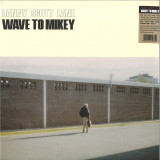
Wave to Mikey, the fourth album from the Los Angeles-based actor, musician and photographer Danny Lane is a nocturnal, neon-lit ode to the friendships that shape us. “I made this album for my friend Mikey from back home,” Danny explains. “We were pretty much inseparable for a large part of our lives, and our musical and social minds were always in sync in a special way. Then with age, we drifted apart, especially since I moved to Los Angeles. This album is just a little wave hello to an old friend and a kindred spirit.”
Equal parts avant-garde composition, instrumental city-pop, ambient, Kankyō Ongaku (environmental music) and Fourth World music, Wave to Mikey is an impressionistic and reflective cycle of eleven richly detailed memory portraits. Throughout the album, the influence of Jon Hassell, Arthur Russell, Hiroshi Yoshimura and Yellow Magic Orchestra hangs in the air like late-night mist, adding character but never overshadowing the rhythmic ambience of Danny’s musical visions.
Wave To Mikey began as a series of sketches on analog synthesisers, guitar, sample and found percussion sketches, initially recorded in Danny’s home studio. Once he’d located the vibe, Danny called on his friends E Talley II, Solange collaborator John Carroll Kirby and Destroyer session musician Joseph Shabason, who respectively added flute, spiritual synth textures and saxophone to the record.
For Glossy Mistakes founder Mario G.R., who originally discovered Danny through his photography, Wave To Mikey captures a vivid feeling of melancholy and peace. “He's able to encapsulate emotions in a very straightforward way, either in his portrait or songs,” Mario says. “I think that's a kind of virtue or skill given to talented artists, no matter the field.”
Born and raised in Staten Island, New York, Danny began playing music with his friends when he was thirteen, before putting that passion on pause to study Fine Arts (Theatre) at Rider University in Lawrence Township in pursuit of an acting career. Acting led him to photography, after playing a photographer in a film, he was inspired to pursue the medium. Danny began shooting photos on film for magazines and lifestyle brands, spent a stint living in New York’s Chinatown neighbourhood, and eventually relocated to Los Angeles in 2017.
Four years ago, Danny started recording and releasing music under his own name, leading to the trilogy of releases that preceded Wave To Mikey, How To Empty A Cup (2019), Memory Record (2019) and CAPUT (2021). Over the course of these releases, he’s revealed himself to be a sophisticated composer and producer with a studied ear from years spent digging through record bins for ambient, experimental, new age, jazz and electronica records from around the globe, with a particular emphasis on Japan.
“Music is something that’s always been involuntary for me,” Danny reflects. “It’s unconditional, always there. It’s something I just have to do. I’ve taken breaks and it’s always gloomy when I’m not playing. I just want to get better and better and understand more and more.”
Here at Glossy Mistakes, Wave To Mikey marks our second contemporary album release, following on from Evenings by Japanese composer Metoronori. We’re proud to be able to present Danny, Metoronori and other modern musicians' work alongside reissues of classic works from Stevia aka Susumu Yokota, Akira Ito, Yuji Toriyama & Ken Morimura, and Takashi Kokubo.
Mastered by Damian Schwartz, Wave To Mikey will be released on Vinyl LP Glossy Mistakes on June 27 2022. Besides the regular black vinyl, a limited clear vinyl will be available in an edition of 100 copies. Both editions come packaged with original cover art photography shot by Danny.
Rock'n'Roll hits adapted and sung in Italiano to seduce an exotic and difficult music market. A tradition that saw many stars (Mick Jagger, Françoise Hardy...) test their pronounciation skills with swinging (but always very fun) results. Now its The Courettes' turn, to translate two of their newest songs for a special limited single 7'', released in time for their southern Europe tour and the Record Store Day 2022. Anzi, LE FAVOLOSE COURETTES, volevamo dire “the real deal” (Vive Le Rock, UK) “the real sound of now busting through your door” (Rolling Stone, USA)! “the world’s greatest two person rock n’ roll ensemble” (The Next Big Thing, UK) “Your new favourite band once you ve heard them!” (Louder Than War, UK) The Courettes. “A force to be reckoned with. Matching the garage rock ferocity of The Sonics to prime early 60s girl group, the band’s output is utterly feral in the most addictive possible way. Reminiscent of The Ronettes given a Ramones style overhaul, their evil charms arrive covered in blood-soaked glamour. Twanging guitar and raucous percussion, a wild head-long charge into the unknown.” (The Clash Magazine, UK) The Courettes is an explosive rock duo from Denmark and Brazil who found the perfect blend between garage rock, 60s Girl Group, Wall of Sound, surf music and doo wop. Like The Ronettes meet The Ramones at a wild party at Gold Star Studios echo chamber. Praised by the biggest music magazines around the world, in 2020 the band signed with legendary British label Damaged Goods, putting them on the same roster as top international rock icons like Buzzcocks, Manic Street Preaches, Atari Teenage Riot, New Bomb Turks, Amyl and the Sniffers, Billy Childish, Captain Sensible and many others. Their last and third album, “Back in Mono” was released in the Fall 2021 and is a truly milestone in the career. The album brings the band in top form, showing great songwriting skills and with broader nuances, influences and sound qualities to their garage rock recipe. Their last singles, “Want You! Like a Cigarette”, “Hop The Twig” and “R.I.N.G.O.” all got airplay at BBC 6 Radio in England and radio stations in Europe and the USA. “Back in Mono” got top reviews in the main music magazines like Mojo, Classic Rock and Shindig and was featured in countless Best Albums of 2021 lists: “Exuberant third release, a giddying rush of noise” (MOJO, UK) 4 out of 5 stars “Seems like the best record you’ve ever heard. A rock n’ roll sacrament from your new favourite band.” (Classic Rock Magazine, UK) 9 out 10 stars “Sensational good album!” (Ox Magazine, Germany) 9 out of 10 stars “Just keeps getting better and better” (Shindig!, UK) 4 out of 5 stars “Fantastic album” (Louder Than War, UK) 4,5 out of 5 stars “A complete riot” (The Arts Desk, UK) 4 out of 5 stars “14 new original tracks–all killer” (Add to want list, UK) “The whole album is one long highlight” (UK Rock n’ Roll) “Exciting combination of Wall of Sound and Fuzz” (El Periodico, Spain) 4 out of 5 “A collection of perfect songs, full-blown instant classic” (Triste Sunset, Italy)
Famed free jazz concert registration of an early New Direction for the Art performance. Recorded in 1971. Old-style Gatefold LP, with rare photographs & extensive liner notes by Alan Cummings.
The performance by Takayanagi Masayuki New Direction for the Art at the Gen’yasai festival on August 14, 1971 was an intense, bruising collision between the radical, anti-establishment politics of the period in Japan and the febrile avant-garde music that had begun to emerge a few years before. The ferocious performance that you can hear here was received with outright hostility by the audience, who responded first with catcalls and later with showers of debris that were hurled at the performers. Takayanagi though described the group’s performance to jazz magazine Swing Journal as a success, “an authentic and realistic depiction of the situation”.
In 1962, Takayanagi, bassist Kanai Hideto and painter Kageyama Isamu went on to form an AACM-style musicians’ collective called the New Century Music Research Institute. Every Friday, members gathered at Gin-Paris, a chanson bar in the fashionable Ginza district of Tokyo, to push the outer limits of jazz creativity.
But the pivotal moment for his music was the creation a new trio version of his New Directions group in August 1969, with the free bassist Yoshizawa Motoharu and a young drummer Toyozumi (Sabu) Yoshisaburō. Experiments eventually led to the creation of two basic frameworks for improvisation that Takayagi referred to as Mass Projection and Gradually Projection.
“La Grima” (tears), the piece that was played at the Gen’yasai festival, is a mass projection and listening to it, you can get a clear sense of what Takayanagi was aiming at. Mass projection involves a dense, speedy and chaotic colouring in of space that destroys the listener’s perception of time, and thus of musical development.
The ferocity of the performance of “La Grima” at the Gen’yasai Festival in Sanrizuka on August 14, 1971 was consciously grounded by Takayanagi in a particular historical moment, ripe with conflict and violence. A month after the festival, on September 16, three policemen would die during struggles at the site. This was the context that the three-day Gen’yasai Festival existed within. The line-up reflected the radical politics of the movement, with leading free jazz musicians like Takayanagi, Abe Kaoru, and Takagi Mototeru appearing alongside radical ur-punkers Zuno Keisatsu, heavy electric blues bands like Blues Creation, and Haino Keiji’s scream-jazz unit Lost Aaraaff.
New Direction for the Arts trio topped the bill on the opening day, playing an aggressive, uncompromising “mass projection” set of polyphonic improvisation. Alongside drummer Hiroshi Yamazaki and saxophonist Kenji Mori, Takayanagi soloed hard and continuously for forty minutes. This was performance as precisely calibrated metaphor: three musicians responding to the demands of the moment with instinctive force and fury, untethered by rules, leaderless yet not rudderless (the direction part of the group’s name was no accident). The piece was entitled La Grima – tears - and the fusion between the palpable anger of the performance and hopeless sadness of its title were also perfectly apt for the situation. This was a fight that the state was always going to win. Yet, by all accounts, the band’s set went down like a fart at a funeral. The band were showered with catcalls and debris throughout, and by chants of “go home” when the music finally came to an end.
However, looking back at the event in the year-end issue of Japan’s leading jazz magazine, Swing Journal, Takayanagi was surprisingly upbeat: New Directions brought a solid political consciousness to our performance and succeeded in an authentic and realistic depiction of the situation. But journalism revealed its superficiality in its inability to penetrate the core of the music. I don’t know much about anyone else, but we at least left behind a competent record.
It’s a fascinating statement in many ways. Perhaps on one-hand it can be read as stubborn, solipsistic and self-justifying, yet in conjunction with his statement in 1971 there are points that guide us towards an understanding of just what Takayanagi intended with his performance at the festival. As Kitazato Yoshiyuki has argued, it becomes an almost religious act, directed at the earth deities of the land. A union of anger, sorrow and malevolence that can be placed nowhere effective, all it can do is find expression and channeling. The forcible land seizures at Narita, the eviction of farmers from land that had been in families for generations, the destruction of communities: none of this can be prevented, not least by an artistic action. All that can be done is an attempt to mark the land itself, to soak it with the combined force of emotions and the volume of the performances, to bury something there that cannot be drowned out, even by the coming roar of jet engines.