Rights: World excluding FR & UK
Packaging: 2 x Gold-On-Clear Splatter Vinyl, 5mm spine sleeve, 2 x printer inner sleeve, marketing sticker
SHORT BIOG & KEY POINTS
" Goldie's 1995 debut Timeless is often described as one of the greatest dance music albums of all time. As one of the founders of Metalheadz, one of the most influential drum and bass labels, Goldie helped shape the sound of a generation, and a genre that has spanned over 3 decades.
" "Listening to Timeless is like taking an adventure. If the limits of music are the limits of society, then Timeless is going to create new worlds. It's a record that travels from darkness to light across electronic oceans, across streetsoul, ambience and jazz."
" London Records celebrate 30 years of Timeless with limited edition vinyl formats, re-imagining the original white sleeve and putting the album on double vinyl for the first time since '96, with new liner notes from Tim Carr. Remastered audio.
Cerca:no
Emily Jeanne returns with Past Through Desire, the second release on her quỳnh imprint. Four advanced experiments in tripped-out rhythms, kinetic crossroads through the lunar-lit abyss.
What blossomed with quỳnh’s debut Call Of The Sea, now further develops with follow up Past Through Desire. The second edition on Emily Jeanne’s imprint truly clarifies her sound, an emblematic swirl of experimental nodes bunched tight into a nocturnal bouquet.
Twice Not Nice shimmers within its percussive hive, a psychedelic wormhole that furrows taut towards the circular infinite. Vague Gestures cuts sharper, a snarling stepper etched finely into its minimalist holding pattern for a proper skank-out. On the flip, Fire Lily marches a stranger; a psychoactive chant summoning the percussive half time with an eerie glint. Closer Traversal returns to the dimly lit dancefloor path, writhing around in slippery configurations until the broken loop reaches its end. A mesmerising second instalment from Emily Jeanne and her quỳnh stable.
After releasing on some of your favorite labels, Paradise City Breakers start their own imprint with a very personal, no-compromise attitude.
The label exists to release timeless work, uninfluenced by the market or by what the audience thinks it wants.
The A-side is strongly influenced by early European club music, with a harder and more ravey attitude that culminates in Destroy the Power, while Dissociazione Jonica takes you on a stripped-down progression.
On the B-side, the sound becomes more modern, while still drawing from vintage influences. If What U Want is tight and enriched by clear melodies, Your Soul opens up a more oneiric dimension.
The first statement of many. Listen closely — the rest will follow
Marcel Dettmann's 'My Own Shadow' is the latest chapter in the Berlin-based legend's illustrious career. The live project is, in his own words, "a space where all of my artistic expressions meet," blending techno with film, sketches and photography. The shows are less club sets and more immersive experiences, where the audience gets lost in a "full sensory narrative." "My solo work has always been open, evolving across records and remixes," Dettmann added.
My Own Shadow's first official release, Approaching, is a five-track EP landing on !K7 Records in November. Complemented by his own photography on the artwork, the music spans techno and ambient, fizzing with a madcap funk and energy quite unlike any of his previous productions.
VITAL SALES POINTS
Renowned Berghain resident and contemporary techno stalwart Marcel Dettmann introduces his brand new project and alias My Own Shadow - after his latest releases on Running Back and Dekmantel. EU, UK and US tour dates during the campaign.
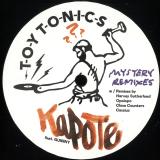
Big remix package for TOY TONICS'S boss KAPOTE. His song "Mystery" from the last album reworked by HARVEY SUTHERLAND, OPOLOPO, CLOSE COUNTERS with a bonus remix by french house master CASSIUS. Turning Kpaote's New school house anthem into super fresh jazz-funk disco, NYC 1990ies House hit and proto-dance bangers. There is no way there is not one version that every good DJ with an interesting fresh sound can't play.
It's 2025 and Toy Tonics one more time tries to define what are the perfect vibes for the "post-dark-electronic music age". Yes. After 10 years of explosion of hard techno, dark trance and fast race sounds Toy Tonics is trying every month to bring ideas for a more positive, high quality, forward-thinking dance music.
Opolopo: Opolopo brings his legendary touch to "Mystery." With a career spanning decades and a reputation for fusing boogie, funk, and broken beat, his remix promises a soulful journey. An artist who's famously remixed everyone from Gregory Porter to Stevie Wonder, Opolopo's version is pure, unadulterated groove.
Harvey Sutherland: Straight from the heart of Melbourne's electronic underground, Sutherland delivers his signature "Neurotic Funk." The celebrated synthesist and producer, known for his distinctive analog textures and a discography that's earned him ARIA Award nominations, is sure to inject his unique genre-bending energy into the track.
Close Counters: The duo from Melbourne, Close Counters, are set to turn "Mystery" into an electrifying fusion of house, soul, and jazz. Known for their dense synths and infectious energy, they have earned praise from tastemakers like Gilles Peterson and have wowed crowds at festivals like Splendour in the Grass.
Finally, the package features "Berlin Boogie Town" with a new interpretation from Parisian legend Cassius, adding some uplifting French Touch filter vibes.
Pioneer of the electronic scene and co-creator of iconic projects like Age Of Love and BBE, Bruno Sanchioni returns with the fourth installment of his acclaimed series: Capture EP 4.
This new chapter delivers four powerful and hypnotic tracks, each crafted with the precision and flair that define Sanchioni’s legacy. With deep grooves, acid-tinged lines, and a finely tuned sense of progression, the EP invites listeners into an immersive and energetic sonic journey.
Capture EP 4 further cements Sanchioni’s reputation as a master of electronic storytelling—pushing boundaries while staying true to the spirit of the underground. A compelling addition to his ever-evolving discography, and a must-have for those who seek depth and intensity on the dancefloor.
French:
Pionnier de la scène électronique et co-créateur de projets emblématiques tels que Age Of Love et BBE, Bruno Sanchioni revient avec le quatrième volet de sa série acclamée : Capture EP 4.
Ce nouvel opus dévoile quatre titres percutants et hypnotiques, façonnés avec la précision et la sensibilité sonore qui font la marque de Sanchioni. Entre grooves profonds, lignes acidulées et constructions immersives, cet EP embarque l’auditeur dans un voyage aussi intense qu’élégant.
Avec Capture EP 4, Bruno Sanchioni confirme une fois de plus son statut de maître de la narration électronique — explorant de nouveaux territoires tout en restant fidèle à l’ADN de l’underground. Un disque incontournable pour les amateurs de sons authentiques, profonds et puissants.
Latest record off the Kalahari production line comes courtesy of a real one. Klon Dump in the building, moving like a madman across four barrelling tech house scorchers.
Part-producer, part-engineer and a long time co-conspirator of A Colourful Storm’s Moopie. Better known to some under the alias Mark, but always surefire for some serious dancefloor potency. Doubters, look no further-this is another demonstration of his mastery.
Big with the radiant stabs, even bigger on the earworm groove. Ploughing the furrow of tough, direct but deft as the Klon Dump faithful will have come to expect by now. Proper belters.
Always flexing outstanding rhythmic ingenuity, whether it’s hardcore hybridity as Mark or the tech house innovation shown here. If anything in life is certain, it’s that a KD record will lay down some serious torque.
There’s also an off-kilter playfulness that kinda feels reminiscent of T+++’s ‘Space Pong’ or Fiedel and Errorsmith’s MMM project. Another ace in the hole from the Antipodean shapeshifter.
LOS AMIGOS INVISIBLES
THE NEW SOUND OF THE VENEZUELAN GOZADERA 2x12"
- A1: Güelcome 00 18
- A2: Ultra-Funk 03 38
- A3: Mi Linda 03 46
- A4: Sexy 03 24
- A5: Las Lycras Del Avila 03 01
- A6: Groupie 04 40
- B1: Otra Vez 06 20
- B2: Cachete A Cachete 04 47
- B3: Baiada De Chusy 03 52
- B4: Asomacho 01 16
- C1: Ponerte En Cuarto 04 32
- C2: Mango Cool 02 54
- C3: Nerio Compra Una Contestadora 00 24
- C4: Quiero Desintegrar A Tu Novio 03 26
- C5: El Disco Anal 06 14
- C6: No Me Pagan 03 20
- D1: Cha-Chaborro 02 44
- D2: Aldemaro En Su Camaro 03 31
- D3: The New Sound Of The Venezuelan Gozadera 12 10
Gold colored vinyl[36,09 €]
When Los Amigos Invisibles first released "The New Sound" (1998) - more than a quarter of a century ago!) - was the ultimate party album. Time has passed, but the party has kept on - and this party music, full of non-stop funked out grooves-traveling through house, funk, acid jazz, and bossa nova, to name a few musical avenues - is a journey deep into the pants of rhythm. (We won"t even mention the old sound of the Venezuelan Gozadera).
Auf ".5: The Gray Chapter" zeigen die Maskenmänner aus Iowa, was sie drauf haben, und präsentieren gleichzeitig ihren aktuellen Drummer Jay Weinberg.
Musikalisch orientiert sich das Album weniger an seinem Vorgänger "All Hope I Gone" als vielmehr an Slipknots musikalischen Wurzeln zur Zeit von "Iowa" (2001) und "Vol. 3: The Subliminal Verses" (2004).
Mit hohen Chaftplatzierungen und guten Reviews reiht sich ".5: The
Gray Chapter" deshalb in die Liste der Slipknot Klassiker ein.
The prolific, party-starting Det Gode Selskab collective continues to strengthen its wax artillery with another spaced-out exploration from label affiliate A:G. Based in Oslo, the label and artist have built a strong affinity over the years, with DGS regularly releasing his music and inviting him to perform at a host of events. His “Time Factor” EP is essential electro listening, wandering between rippling shades of acid and tripped-out minimalistic movements, synonymous with the Norwegian beatmaker’s sound. It’s a hazy quest through four original cuts, packed with raw and gritty attitude.
The slinky first outing of the EP goes by the name “Crash.” Anticipation builds as the winding bassline and quirky drum patterns create a sense of retro gaming exploration. “Sleepwalking” is another diverse entry from the talented producer—a pensive yet driven motion propels the track’s energy, laced with slick hi-hats and acid-laden beats.
On the B-side, outer-galaxy transmissions go full steam ahead with the title track “Time Factor”, animated grooves and continuous evolution, climaxing with bright, uplifting synths. Plucky, tight drums lead the way in the final frontier, “Cognitive Resonance”—another classy dance floor outing from A:G, once again showcasing why he’s a producer to keep close tabs on.
Striking while it’s hot, A:G delivers another heater on a label that shows no signs of slowing down in the years to come, and if their previous releases are anything to go by, this one will be moving fast!
- A1: Czarface Theme
- A2: First Weapon Drawn
- A3: Czartusi
- A4: For The Title
- A5: Kick It Up A Notch
- A6: A Falling Czar
- A7: Funky Premonition
- B1: Squared Portal
- B2: This Fight Ain't Scripted
- B3: Godspeed Solider
- B4: Something Once Human
- B5: What The Problem Is
- B6: Death Of A Comrad
- B7: Night Of/Mourning After
Comes with DL card & 2P insert / wrapped in shrink + a sticker
At long last, Takao is back with his long-awaited second album, seven years in the making. His 2018 "Stealth" was (and still is) a much-loved set, mixing elements of ambient and environmental music; with this new release Takao breaks free of the gravitational pull of these earlier influences and strides confidently forward. "The End of the Brim" jettisons some of the more abstract elements of his previous work, embracing a “universal listenability” and a more concrete intensity, with a focus on supple rhythms and strengthened senses of melodic development and harmonic sophistication. This musical growth can be linked with Takao’s admiration of composers Ken Muramatsu and Toshifumi Hinata, who are generally associated with commercial “production music” and easy listening. Another contributing factor is his private study with veteran keyboardist Ichiko Hashimoto of Colored Music. The ten tracks here include three vocal tracks, with three different singers (Yumea Horiike, Cristel Bere, Atsuo Fujimoto of Colored Music) and seven keyboard-led pieces. The vocal pieces are integral parts of the album’s flow, rather than typical “songs” driven by the name and personality of the singer. All of these factors, plus the veteran presence of engineer Hiroshi Haraguchi, known for his work with Haruomi Hosono, who mixed half of the album's tracks, along with the use of excellent old-school synths, aligned with Takao’s forward-looking vision, have combined to give us an album with a unique sense of timelessness. A spotlight illuminating future paths for pop music, available on CD/Vinyl LP/Digital, with English/Japanese lyrics, and liner notes by Yuji Shibasaki.
- A1: The Chambers Brothers– Uptown
- A2: B B. King– Why I Sing The Blues
- A3: The 5Th Dimension*– Don't Cha Hear Me Callin' To Ya
- A4: The 5Th Dimension*– Aquarius / Let The Sunshine In (The Flesh Failures)
- B1: David Ruffin– My Girl
- B2: The Edwin Hawkins Singers*– Oh Happy Day
- B3: The Staple Singers– It's Been A Change
- B4: The Operation Breadbasket Orchestra & Choir* Featuring Mahalia Jackson & Mavis Staples– Precious Lord, Take My Hand
- C1: Gladys Knight & The Pips*– I Heard It Through The Grapevine
- C2: Mongo Santamaria– Watermelon Man
- C3: Ray Barretto– Together
- C4: Herbie Mann– Hold On, I'm Comin
- D1: Sly & The Family Stone– Sing A Simple Song
- D2: Sly & The Family Stone– Everyday People
- D3: Abbey Lincoln And Max Roach– Africa
- D4: Nina Simone– Backlash Blues
- D5: Nina Simone– Are You Ready?
Nottingham's Balearic dons Coyote have been digging around in the vaults and turned out four more masterful edits for a grown-up get-together. The fourth edition of this crucial series opens with the gentle guitar strums of 'Back To The Wall', which is intimate and perfect for gathering around the campfire. 'Easy' brings Americana and folky vibes with a lead harmonica and slow grooves, while 'Moon' is a lighter sound with more masterful plucking and undulating grooves with subtle funk and a nice breezy vocal. 'Taling The Veil' shuts down with some late-night yearning and proggy guitar hints that will have you gazing at the stars.
This exciting new collaboration between Cara Tolmie and Rian Treanor is a highly kinetic and playful endeavour. Body-centric vocal explorations merge with intricate rhythmic systems forming a deliciously disorientating, hypersurreal space of semantic modulations, concrete poetry, cut-up beats and mimicked samples. Their sound is singular and tactile: dissociative dance music that reassembles contorting vocal lines and knotting biomechanics in an explorative network of unstable forms. It's a blur of bodily fragility and ecstatic disruption, where swells of meaning rise and fall through clouds of synthetic buzz, fleeting breath, and stream-of-consciousness imagery.The duo first performed together when Counterflows Festival paired them for a new commission at the historic Arches venue in 2023. Glasgow-born, Stockholm-based vocalist and performance artist Cara Tolmie brought her hypnotic vocal technique, Internal Singing _ an intimate practice using breath, movement, and touch that explores the subtle binds between voice and body in an unsettling, engrossing sonic space. Treanor's richly innovative work provided a compounding counterpart: radical, rave-infused structures that bent and contorted around Tolmie's incantation.Growing out of a series of charged, improvisational performances, Body Lapse was recorded between Stockholm and Rotherham in 2024. Echoes of their live energy run throughout _ a voice shaking through the body, responding to touch and physical modulation, translating performance into something tactile and immediate. Body Lapse marks their debut release together, it conjures a sound of unsettling beauty and frictional intensity _ a playful, physical mesh of computer music, voice, and speculative storytelling. In this gnawing, dreamlike space, breath and body become sites of both connection and disruption, sparking thrilling encounters with the unexpected, the playful, and the decisively weird
Bringing together the elder statesman of the Zulu guitar Madala Kunene and internationally acclaimed Sibusile Xaba, kwaNTU pulls two generations of South African guitar mastery into a single point of focus. Under-represented on recordings outside of South Africa, Madala Kunene (b. 1951), the ‘King of the Zulu Guitar’, is revered as the greatest living master of the Zulu guitar tradition. Sibusile Xaba, whose collaboration with Mushroom Hour Half Hour reaches back to his first recording in 2017 (Open Letter To Adoniah/Unlearning), has garnered international acclaim for his unique voice and virtuoso guitar stylings, which bring together multiple South African guitar lineages in an original, spiritualised fusion. Collaborating with Mushroom Hour and New Soil for kwaNTU, the two players come together to weave a filigree sonic fabric which reaches down to the heartwood of Zulu guitar music but moves resolutely outward, building on the past to create a deeply rooted statement about present conditions and future travels. kwaNTU – which can be roughly translated ‘the place of the life-spirit’ – is also conclave of teacher and student, as Xaba has been taught by Kunene for the last decade. Meditative, rich and sonically sui generis, kwaNTU finds these two musicians linking up within the inimitable space of sound and spirit that they share through Kunene’s teaching.
The great masters of South African music have not all had equal exposure. For many years the generation of musicians who were exiled during apartheid took centre stage, as the regime made it very difficult for those at home to be heard. More recently, a new cohort of important voices, especially in jazz, has broken through to international consciousness. But for the generation of musicians in between – those who shone like beacons in the most difficult final years of apartheid and immediately afterward – international recognition has been slow in coming.
Madala Kunene, ‘the King of the Zulu Guitar’, is among this number. A revered figure for current generations of South African musicians, Kunene began his recording career in 1990, at the bitter end of apartheid, with a now classic self-titled LP for David Marks’ storied Third Ear imprint. Born in 1951 in Cato Manor, near Durban, he had determined to be a musician from early childhood, and by the time he first entered a recording studio he had already had a long career as a popular performer. His virtuoso absorption and transformation of the venerable Zulu maskanda guitar tradition and his richly spiritualised approach to music immediately marked him out as someone special, and in the years that followed, Kunene cemented his position as one of South Africa’s musical elders. He is without doubt the grand master of the Zulu guitar tradition, but his sound and sensibility ranges far beyond it into varied sonic terrain, and he has collaborated with a wide range of musicians both at home and abroad. Now in his mid-seventies, he remains a shining light for those that are making music in contemporary South Africa.
‘He is really an amazing person,’ says the guitarist Sibusile Xaba, who has been mentored by Kunene for over a decade, and now invites a collaboration with him on kwaNTU. ‘As a mentor, he's really powerful in showing us the way. For us to have this opportunity to make music together and have a project together is really a blessing to me.’
Xaba himself grew up in Newcastle, KwaZulu-Natal, where his mother had been in a band and his father sang in a church choir, and from early childhood Xaba played homemade tin guitars. He only later realised that music was his calling. ‘I just loved music. I was fortunate. My parents loved music. And when it was time for me to leave home and go to study outside Newcastle, I knew that music was what I wanted to do. There was no second option. It was just music.’ Moving to Pretoria to study music formally, Xaba committed himself to his craft, developing a unique style that draws on both US jazz masters such as Wes Montgomery and Jim Hall, and the rich and varied heritage of the South African guitar, from inspirational jazz players such as Allen Kwela and Enoch Mthalane, to the music of the Malombo groups and Dr. Philip Tabane (Xaba has previously collaborated with Dr. Tabane’s late son, Thabang), and the Zulu guitar tradition embodied by Kunene.
‘I was really in love with the jazz guitar, I really admired it, and I was digging a lot in that direction,’ says Xaba, recalling his first encounter with Kunene’s music, over a decade ago. ‘And then one day on my timeline, Kunene popped up, and I was like – “What's this sound?” I was so connected to it. It really touched me deep. I started checking out his records, and then I found out he's from the same region as I am, which is Zululand.’ After Kunene played a show at the Afrikan Freedom Station in Johannesburg, Xaba make contact with him, and visited him at home in Durban. They struck up a friendship, and Xaba became the elder’s student, as Kunene began to pass on his knowledge and his inimitable way of playing.
kwaNTU is a tribute to this relationship and the deep learning that has defined it. The album was recorded in Zululand in the town of Utrecht, at a cultural centre called Kwantu Village, which gives its name to the album. ‘It's such a broad word,’ Xaba says, ‘but the elders teach us that Ntu is basically an energy, almost chi, an energy, a force that all living beings have within them. It's a living energy, so kwaNTU is like, almost the place of this energy.’ The two men sequestered themselves for five days of jamming, improvising and planning, and then the session was recorded in one take over a single night, with Gontse Makhene joining on percussion and backing vocals and Fakazile on vocals. Other voices and overdubs were later added in the studio in Johannesburg.
The result is a rich and meditative recording that finds two generations in a deeply engaged dialogue. Teaching and passing on his knowledge, the elder Kunene has brought Xaba into a space of sound and knowledge that they now share; Xaba’s own practice of deep communion with nature and his dedication to his musical craft make him the perfect interlocutor for Kunene. The result is an album that foregrounds the two musicians engaged at the highest levels of responsive listening, sympathetic unity, and collaborative concentration. Bringing an elder statesman of South African music to an international listening audience for the first time in decades by pairing him with one of South Africa’s most important new voices, kwaNTU is a meeting of generations and a powerful demonstration of musical lineage and continuity.
‘Before music, there is sound,’ Xaba observes, speaking of Kunene’s unique approach to music. ‘And sound is like a common compartment…it's not restricted to particular people or particular geographic places, you know what I mean? It's sound. Everybody can hear it. So when he constructs that sound into music, I think everybody resonates with the energy behind his construction of sound into song. Here at home, we really love him for preserving our history through the guitar, through his stories as well the music, the songs that he writes. We really, really admire him.’