On May 20th On Rotation returns for their first VA release - Genetic Memories Vol. 1.
Anderson opens the release with the mystical ‘Polymorphic Magic’ - a low-slung builder combining deep synths with sampled instrumentation.
“I’m a huge fan of self resonating / overtone instruments so using the Fujara was a no brainer. A naturally psychedelic sounding instrument, I wanted to accompany the flutey pipe with a deeper and low-mid tempo chug.” - Anderson
Next up is Musty Head Records main man Jamie Leather - combining the tight drums and skilful melodic work of his previous releases with all the influences we love, ‘Discovery’ is sure to get any party going.
Leading the B-Side of the record is Ed Hodge's ‘Atreides’ - a tough yet playful banger drawing influences from across the spectrum of UK music. Gun fingers guaranteed!
“It’s probably the fastest, rowdiest track I’ve made under the Ed Hodge moniker and pulls influences from house, trance and speed garage.” - Ed
Closing the release, we speed things up and travel deep into the past with Phazma's ‘Arrakeen’. Featuring ethereal synths, driving rhythms and beefy low end, this floaty number works just as well at home as in the club - a perfect way to round off the EP!
“After some help from my musical peers and some heavy inspiration from the release of the new Dune movie, I managed to come up with something that I’m pretty stoked with!.” - Phazma
Cerca:no made
“I’m closing a chapter in my life,” Barbie Bertisch says to me from a park bench in Greenpoint, “I spent the last four years working towards gaining confidence around my ideas and my creative perspective. This feels like a culmination of that process” The “this,” in question is Bertisch’s debut record Prelude, a collection of eleven songs that chronicle 5 years of Bertisch’s life. The legendary musician Anna Domino describes the record best: “Prelude is a record of layers and depths. The melting phases and soaring distances.”
Raised in Buenos Aires and Miami, Bertisch has called New York home for most of her adult life. When she started piecing together Prelude, she was in her Brooklyn kitchen. It was early quarantine. Stuck at home instead of DJing at clubs, she found the space to parse through the archives. What she previously considered unworthy of attention in the era of distractions, finally made sense as a whole once all the noise was turned down. Compiling a list of songs in various states of completion, Bertisch dreamed up an album, a chronicle in growth and healing frustrations of the past, an honest account of someone trying to find her own voice. That in and of itself was a journey. It took years for Bertisch to accept that she was an artist. “I felt like I was surrounded by men who ruled every space. I constantly felt like I had to ask permission to enter, always around bands but never the girl in the band” she says.
Prelude is an introspective record. It explores all of the valences of being and feeling. Some songs are chaotic and choppy. Others are soft and searching. There is rage and innocence, and moments of forced stillness, like capturing the aftermath of panic attacks, as in “After The Storm”. Bertisch also focuses on rhythm, bass guitar being her main instrument, and no stranger to the power of the beat. The record also draws on influences as varied as Kaitlyn Aurelia Smith, Cocteau Twins, Berlin School, and pioneering producer François Kevorkian. Both sonically and conceptually, Prelude is a portrait of who Bertisch is as a person.“Is This What You Wanted?” is fiery, a pointed provocation to domineering figures from her past. It’s full of strobing, strident synths, and heady lines of bass. It gives off the same vibe as a fire alarm, as a big room dance track that subverts your expectations of what it means to dance in a sea of bodies. “28,” the record’s opening track is more peaceful. It’s all languid keyboard arpeggios with the occasional flourish of a cascading synth effect.
Since most of the songs already existed in some form or another, Bertisch’s job on Prelude was to refine and reimagine music that had previously been private. She spent time rearranging, rewriting, adding elements newly available to her, such as the saxophone, and pushing the limits of the rough mixes to mold the universe she envisioned. Along the way, Bertisch grew more excited about her abilities as a musician. The resulting record is one that is inherently confident.
Prelude is also a homespun release. It’s coming out on Bertisch’s own label, Love Injection Records, which she runs with her partner Paul Raffaele. The two also DJ and make zines under the name, which started in 2015. Love Injection is a love letter to New York. Prelude is a word of encouragement to those struggling with self-actualization. The record was mixed by Justin Van Der Volgen and mastered by Walter Coelho. Love Injection Records holds the remix tradition in high regard, and they’ve enlisted reworks by some of Barbie’s favorite producers. It’s all a labor of love for Bertisch. Prelude is her: Barbie the musician.
©℗ Love Injection Records 2022
‘Self Oscillation’ is made up of 5 club-ready psychedelic workouts swaying with natural momentum, from
Ecuadorian superstar Nicola Cruz, who makes his 2nd appearance on London’s Rhythm Section INTL.
The internationally renowned producer, Nicola Cruz, has been instrumental in pioneering the sound of Andean music over the last decade. Born and raised in Ecuador, Nicola has found his own unique way to tap into Latin America’s illustrious musical past to create something utterly contemporary. His previous projects have had the 4 elements running through as major themes: Fire and lava erupted during his sophomore album, Siku, with an Ecuadorian volcano doubling up as a recording space. And now, with his second Rhythm Section release, we are met with sounds of flowing water that Nicola describes as “aqueous explorations”. On this EP, ‘Self Oscillation’, Nicola Cruz fuses experimental production techniques with underwater, bass-heavy constructions. Moods change like the tides; from euphoric highs with acid riffs and latin drum patterns, the music quickly dives to moody submarine basslines and dark, frenetic rhythms.
‘Self Oscillation’ sees Nicola’s production move to new heights as he expertly bridges the gap between natural and mechanical sounds. With the help of iconic 80s and 90s synths and the retro colours of a Roland Space Echo, his newest work is a hybrid of electronic dance music and a synaesthetic image of nature. In the spirit of his previous EP on Rhythm Section INTL, ‘Self Oscillation’ showcases the synergy - or rather ongoing battle between the organic and inorganic, the analog and digital, civilisation confronted and confounded by nature. It’s within this dichotomy that Cruz revels, and manages to say so much, without words.
‘Bye Bye’ is a three-track offering from Philadelphia-based
sextet Blood, that rarely stays put in one style for long.
All three songs were recorded by the band throughout the
pandemic, providing a uniting force whilst touring remained
impossible.
The tracks are a testament to the unforgiving and rewarding
process of self-recording. The band found great relief in
finally having the time to flesh out an experimental
atmosphere without the constraint of paid studio time.
Blood are proud of the work they’ve made, but it is
imperative to mention that all three tracks were brought to life
in a way not formerly thought possible, by the mixing
brilliance of Nancy Conforti.
‘Money Worries’ finds Blood slingshotted over an open letter
to their landlord. What starts as a clear threat to an obvious
albeit deserving villain, soon caves into an acoustic respite,
in which the nightmare of financial ruin becomes lullaby.
Blood began as a solo project of current lead singer Tim
O’Brien in the winter of 2017. After going through several
line-up changes throughout 2018, the current iteration began
making waves in the bijou punk scene of Austin. They were
considered “a live staple in their own prospective scene” and
“one of Austin’s buzziest new acts” by press nationally and
locally.
After twice touring the US, Blood were poised for a big 2020
when plans were altered drastically by the pandemic. They
then self-released their debut EP, ‘Why Wait Til’ 55, We Might
Not Even Be Alive’, in April of that year.
In 2021, the sextet made a move to West Philadelphia and
began recording their upcoming release, ‘Bye Bye’, while
also playing shows throughout the North Eastern United
States. At this time, the group live in a seven-bedroom house
with a converted basement for recording and rehearsing.
He may not have known it before, but Toronto-born, New York-based
guitarist Matthew Stevens, prized for his forceful, distinctive electric
sound was an ideal candidate to make an album fully devoted to solo
acoustic guitar: the intimate, unadorned, straightforwardly titled
'Pittsburgh'
September 2020, Stevens was hunkering down in his wife's family's hometown of
Pittsburgh, while navigating his way through the crisis. He had with him a vintage
Martin 00-17, a small- body mahogany guitar. Practicing daily on the Martin, he
began generating a series of short song "starts" - ideas and sketches he thought
might lead somewhere. Then one rainy Pittsburgh day, Stevens' bike slid out from
under him and he broke his right elbow. Rather than getting derailed musically, he
became immersed in a creative process that led straight to 'Pittsburgh': a
document of those short song "starts" from the notebook, now hatched as
completed compositions. "Playing this music became a big part of my rehab,"
Stevens recalls.
As the album took shape, it became clear to Stevens that he was headed in the
direction of a wholly unaccompanied recital, with no overdubs or sound layering
of any kind. Just him and this special Martin, two Neumann U89 mics and enough
peace of mind across two separate sessions to make 'Pittsburgh' the triumph that
it is.
In addition to his extensive high-profile work with Esperanza Spalding (serving as
co- producer on 'Exposure' and '12 Little Spells'), Stevens is also a member,
songwriter and co-producer of Terri Lyne Carrington's GRAMMY-nominated Social
Science band. He has made vital contributions to groups led by Dave Douglas,
Linda May Han Oh, Christian Scott aTunde Adjuah, Ben Williams and more. With
tenor saxophonist Walter Smith III he co-leads the In Common collective. Stevens
has also amassed many credits beyond the jazz world, collaborating on
forthcoming releases by Anna B Savage, Jamila Woods, Tyler Armes
(Murdagang) and Berlin-based electronic artist Robag Wruhme.
Katy J Pearson shares details of her stunning new album,
‘Sound of the Morning’, released on Heavenly Recordings.
Written and recorded in late 2021, Katy’s latest effort is coproduced by Ali Chant (Yard Act and the helm of Katy’s debut,
‘Return’) and Speedy Wunderground head-honcho Dan Carey
(Fontaines D.C.).
Katy’s recent extracurricular activities have shown that she can
dip a toe into a multitude of genres - providing guest vocals on
Orlando Weeks’ recent album ‘Hop Up’; popping up with Yard
Act for a collaboration at End of the Road festival; singing on
trad-folk collective Broadside Hacks’ 2021 project ‘Songs
Without Authors’. ‘Sound of the Morning’ takes that spirit and
runs with it.
‘Sound of the Morning’ is an album that’s as comfortable
revelling in the more laid-back, Real Estate-esque melodies of
lead single ‘Talk Over Town’ - a track that attempts to make
sense of her recent experiences, of “being Katy from
Gloucester, but then being Katy J Pearson who’s this buzzy
new artist” - as it is basking in the American indie pop of ‘Float’,
penned with long-time pal Oliver Wilde of Pet Shimmers, or
experimenting with the buoyant brass of ‘Howl’, in which
Orlando repays the favour with a vocal guest spot.
‘Sound of the Morning’ is available on CD and on clear vinyl in
‘Tip on’ sleeve with folded poster insert and digital download
code. (Once the above vinyl format has sold out, a standard
black vinyl version - HVNLP204 - will be made available.)
Katy heads out in September for a headline UK tour, before
which she plays a number of summer festivals across the
country.
Tourdates - August 19 Green Man, 21 Beautiful Days Devon,
September 8 Trinity Bristol, 9 Cornish Bank Falmouth, 10 Cavern
Exeter, 11 Joiners Southampton, 13 Chalk Brighton, 14 Olby’s
Margate, 15 Electric Ballroom London, 17 Brudenell Social Club
Leeds, 18 The Cluny Newcastle, 20 Voodoo Rooms Edinburgh, 21
Mono Glasgow, 22 Gorilla Manchester, 24 Float Along Sheffield, 25
Rescue Rooms Nottingham, 27 Clwb Ifor Bach Cardiff, 28 Hare &
Hounds Birmingham, 30 The Bullingdon Oxford.
Leeds art-rock group Mush (Dan Hyndman vocals / guitar, Phil Porter drums,
Nick Grant bass, Myles Kirk guitar) are set to return with album ‘Down Tools’
via Memphis Industries. The new record marks the prolific band’s third album
in as many years, following hype-building early singles ‘Alternative Facts’
and ‘Gig Economy’, 2020’s debut album ‘3D Routine’ and 2021’s acclaimed
‘Lines Redacted’, which pushed their sound further and, as Uncut wrote, saw
them become “kindred spirits to Wand and King Gizzard & The Lizard
Wizard, two other bands prolifically honing their sound and approach,
steadily developing their voice.”
On ‘Down Tools’, this voice grows again into a more brilliantly singular
sound. It sees Mush getting loose, moving away from the defined moods and
textures of ‘Lines Redacted’ with a musical openness, straddling genres
while avoiding pastiche. Hyndman says of the lyrics on ‘Down Tools’ that
“there was a conscious decision to retreat further from an observational
approach” with vocals being ad-libbed lending the record a more abstract
feel. Hyndman continues: “this album is less dark than the previous one. The
Armageddon obsession has eased, or at least the symptoms have become
milder due to saturation. Musically there’s a lot more chill on the record -
there’s a few more mellow tracks out there and the most astute listener may
even be able to decipher some of the words, fingers crossed.”
While grief and work balance form themes on the record, Hyndman’s
approach is largely made up of abstract, disconnected streams of
consciousness and lines liberally taken from books, paintings, films and
beyond. On ‘Human Resources’, Hyndman dramatically retells a battle he
had with an HR department at a job in a David and Goliath style. The song
‘Group Of Death’, a phrase chillingly familiar to any football fan, is
emblematic of the turn towards softer, more considered sounds. Hyndman
says: “In my warped imagination it just sounds like a Paul McCartney song,
but it won’t to others. I initially had the idea of doing a World Cup song called
‘Group of Death’, but by the time it was written nothing beyond the title had
any relevance to football. Anyway, the next World Cup is in Qatar so fuck
that shit.”
‘Northern Safari’, meanwhile, is a song about the way the North of England
has been portrayed in the media and used as a mirror to reflect some of the
nastier elements of what’s going on in society, in particular vox pops around
Doncaster, portraying a particular narrative of the collapse of the red wall and
the disgruntled ex-miners.
‘Down Tools’ sees Mush idiosyncratically ping-pong from finger picked
looseners to noise-rock bangers to brilliantly entertaining effect, avoiding
post punk saturation with an easy style and wit.
Listening pays off. This is evident not least in the debut EP of Golden Pudel Club barman Paul Speckmann.
Long years behind the bar of the Hamburg club pub made him a willing listener to the numerous and diverse events there - from start to finish, something that very few "regular" clubbers can claim.
And these influences, from indie concert to electronica crunch, from jungle breakbeat massacre to dignified house groove, not only led to his varied DJ sets, with which Speckmann also made his house club happy, but certainly also served as inspiration for these wonderful tracks, which skil-fully oscillate between deep-dusty house, angereak indie dance and playful IDM jingling, often varying different elements in one track.
There is, for example, the delicately dreamy house hit "On The Flip", the latenight funk of "Star-ship", which would not be out of place on the Sunday MFOC floor, or the blurred indie ambient tune "Return", which captivates with campfire guitar and Sophia Kennedy on the vocals.
And these are just three of the seven tracks (or eight on the digital release) on the EP, none of which disappoint. Someone has listened carefully and learned his lessons. Chapeau!
Canadian songwriter and producer Jeremy Haywood-Smith needed an escape from his state of mourning when he began working on Slingshot, his most recent LP as JayWood. After the loss of his mother in 2019, and a global standstill with multiple social crises throughout 2020, Haywood-Smith yearned for some forward momentum. "The idea of looking back to go forward became a really big thing for me _ hence the title, Slingshot." Feeling disconnected from his past and ancestry after the death of a parent, Haywood-Smith made a conscious effort to better understand his identity and unique Black experience living in the predominantly white province of Manitoba. Merging fantasy scenarios, personal anecdotes, and infectious pop and dance instrumentals, Slingshot is a self-portrait of JayWood at his surface and his depths. Musically, Slingshot reaches into sounds and styles Haywood-Smith has continued to explore throughout his catalog. "I think I made a really big deal to not pigeonhole myself," he explains. "Whatever is inspiring me at one point will work it's way into whatever I'm creating." Slingshot is an amalgamation of Haywood-Smith's many musical sensibilities, achieved with help from a crew of talented peers. Haywood-Smith wrote and performed a bulk of the track's instrumentations, but the LP has notable appearances from Canadian contemporaries Ami Cheon (on "Just Sayin") and Mckinley Dixon (on "Shine.") The album's penultimate track, "Thank You," was co-produced with Jacob Portrait of Unknown Mortal Orchestra. The song brings JayWood's sound full circle, offering something reminiscent of Haywood-Smith's earliest recordings, while flaunting that "The best is yet to come."
"The past 5 years we have taken our music all over the world: Europe, Asia, Africa besides our homeland Denmark, and even though we cannot speak with many of the people we meet, our music is a universal language that transcends borders. The meetings we have had (and continue to have) all over inspire us to create new music. But of course we are the composers of the music, so this is our representation of those meetings.
Our 3rd album is called AFROTROPISM. Tropism is a biological phenomenon that indicates growth of a plant in response to the environment; so when you see a plant turning for the sunlight, this is tropism. In other words, this is not so much about the plant's roots but more about how it reacts when it touches the air, feels sunlight or rain - in other words the outside world. So AFROTROPISM refers to the fact that we are drawn towards the African traditions, but we are "growing" our own music.
On our first two albums we have recorded extensively with African musicians, and AFROTROPISM is centered around The KutiMangoes (TKM) as a band. We are developing our artistic direction by going more in depth with how we can mix our inspirations with our own musical heritage. Our musical mission is (and has always been) to mix cultures and create our own sound.
With our background in jazz music, TKM counts virtuoso instrumentalists with a heartfelt intent and sound innovators with our horns, effect pedals, synthesizers, drums and percussion from all over the world. AFROTROPISM is a further and deeper development of our trademark bold sound that experiments with synthesizers, soundscapes and a bit of electronic effects without losing it's focus on groove, melody, atmosphere and musicianship."
The KutiMangoes, July 2019
About each track:
STRETCH TOWARDS THE SUN
This track opens up with a synthesizer groove that is inspired by the polyrhythmic grooves played by the balafon (a predecessor of the piano) from West Africa. Our rolling sequence could not be played on the balafon because of the key changes, but the basic idea comes from that instrument. Quick and light, we wanted to write a song where you can feel the sun coming out and feel the energy it's rays give. The combination of the programmed groove, the horn-arrangement, the huge percussion section and the live instruments makes for a sound that we have not heard before, and it illustrates what this album is all about (and what the track's title refers to): that we stretch towards the things that give us energy – and that although our roots are in Denmark, when we encounter a musical tradition as rich as in West Africa, it changes us and our music.
A SNAKE IS JUST A STRING
The first time we saw Mali-bluesman extraordinaire Vieux Farka Touré on stage was just after we had played at a huge festival in Burkina Faso, and we almost literally caught on fire. Their groove was so strong and insistent that we were mesmerized, and it inspired us to come up with the opening guitar part of this song. Basically a bluesy tune with some unusual chord changes and a crazy synthesizer solo by Johannes Buhl Andresen reminiscent of that fuzzy guitar-sound we love so much in the Mali blues. The title is an homage to the Nigerian writer Chinua Acheba, who in his masterpiece novel "Things Fall Apart" tells that in the village during the night, to ward off the fear of darkness, people would call dangerous animals by a different name: don't be afraid, a snake is just a string.
KEEP YOU SAFE
It is a basic human necessity to have a place where you can feel safe. But there are far too many people in our world that fear for their safety, their livelihood, their children, their relatives – and this is surely not a feeling that helps us to flourish as humans. With this song we are saying that we all need to make it a priority to help our fellow humans to feel safe. And of course, if our song can offer a feeling of safety and comfort for a short time to those who listen, we are truly thankful.
MONEY IS THE CURSE
This track is directly inspired by Fela Kuti's ability to create music that is both physical and political. Dance music with a serious message about our times. For the solo part we wanted a more melancholy, pensive feel (than the full-on baritone-trombone melody) and also wanted to experiment with some choppy, stuttering effects to make the horns sound desperate. Money is the curse because it can become the objective of our life; money is the curse because it changes the relationships we have with our fellow humans. Money is the curse.
THORNS TO FRUIT
This melody is inspired by the scales and developments of a traditional Bambara folk-song. We love the way these melodies constantly evolve with small developments and changes. We felt like an accompaniment that is really dry, sparse and earthy would fit well and then made a contrasting solo part. As a group we are interested in how to develop our improvisations together and create sonic landscapes that evoke a distinctive atmosphere – so here, we have no soloist, but a collection of synthesizer parts, saxophone lines and guitar-sounds that together create a dreamy and lush ambience.
SAND TO SOIL
We started out with a short ngoni riff played by our good friend and master musician Aboubacar Konaté. We then sampled it, built soundscapes and our own both meditative and pumping groove around it. We created a melody with both melancholy and joy, with afterthought and impulse and then the brilliant Aske Drasbæk added an emotive and blistering saxophone solo. The title refers to the contrasts in our humanism. As part of our human nature, we have a dark side that drives us (and each other) towards destruction – making the fertile soil into barren sand. The title is an encouragement to emphasize the opposite movement in our nature: to create life and help it flourish. We keep ourselves human by insisting that we must never forget this side of our nature no matter how tough, tiresome or trying it might be. Let's keep our focus on the light, the warmth, the positive energy – that can turn the cold stone into fertile ground.
Black vinyl[22,65 €]
2LP[36,56 €]
Turquoise and Black splatter vinyl[27,69 €]
Gold LP[25,63 €]
Forest Green Vinyl[39,08 €]
Red / Blue Splatter Vinyl[29,37 €]
Black Vinyl[29,37 €]
Vinyl[35,92 €]
Clear Vinyl[28,53 €]
Clear Vinyl[30,21 €]
LP[30,21 €]
LP2[38,87 €]
Black Vinyl[29,37 €]
Creme White Vinyl[31,89 €]
Clear Green Vinyl[31,89 €]
Lavender Marble[30,63 €]
Yellow w/ red & black splatter[30,63 €]
Black VInyl[30,21 €]
Cassette[15,08 €]
Black Vinyl[33,19 €]
Tidewater Tri Color Vinyl[34,87 €]
Available on vinyl for the first time since it's original CD-only release in 2007. Tenor saxophonist Fred Anderson and drummer Hamid Drake had the closest of relationships, as close as a father and son might have. Their communication was at a higher level musically and emotionally. The music on this album reflects not only their masterful musical skills, but a conversation in music that is exceptionally powerful and unique. For From the River to the Ocean, they assembled a band consisting of fellow Chicagoans to record the most relaxed, perfectly balanced album they made together. It may seem hyperbolic to call From the River to the Ocean Fred Anderson's greatest album, but the empathy and cohesiveness of the ensemble, coupled with the saxophonist's brilliant, searching improvisations, makes it a powerful contender. From the River to the Ocean is an especially varied outing, ranging from Anderson's classic set-closing blues "Strut Time" to the meditative, spiritual, modal track "For Brother Thompson," dedicated to the late trumpeter Malachi Thompson and featuring bassist Harrison Bankhead on brooding piano and Drake chanting in Arabic. The record's title track and the closer, "Sakti/Shiva," find bassist Josh Abrams laying down an astounding bed on guimbri, the threestringed Moroccan acoustic bass familiar to fans of Gnawa music. Another of the album's delights is guitarist Jeff Parker, well known Jazz guitarist as well as member of Tortoise. Here, Parker displays an immense sensitivity and melodic genius, sharing solo spotlight with Bankhead's cello on "From the River to the Ocean" and sculpting a stunning array of shapes on the group's swinging take on Anderson's "Planet E." Underneath it all is Hamid Drake, an intensely creative soul continuing to challenge himself. Drake's growth is not measured in how many different instruments he plays - indeed, he's scaled back his arsenal over the years - but in the depth and musicality of his feeling. On this record he is remarkably light and airy, playing with tremendous delicacy and clarity. Propulsion can be introduced without a pneumatic drill, and Drake instigates an avalanche of rolling forward momentum on the opening moments, inspiring the two basses and guitarist to move, to make something moving, and in turn to further inspire Fred Anderson to some of his most forceful and imaginative playing ever documented. If the individual is a small receptacle of expressivity, a mountain spring if you will, then it is in ideal settings like this one that the springs join forces, turning into streams, then bigger and bigger tributaries, finally swelling into rivers that open into the oceanic creative waterways. Thank goodness Anderson and Drake tapped into that wellspring, drawing directly from the source
Black vinyl[22,65 €]
2LP[36,56 €]
Turquoise and Black splatter vinyl[27,69 €]
Gold LP[25,63 €]
Black Vinyl[26,85 €]
Red / Blue Splatter Vinyl[29,37 €]
Black Vinyl[29,37 €]
Vinyl[35,92 €]
Clear Vinyl[28,53 €]
Clear Vinyl[30,21 €]
LP[30,21 €]
LP2[38,87 €]
Black Vinyl[29,37 €]
Creme White Vinyl[31,89 €]
Clear Green Vinyl[31,89 €]
Lavender Marble[30,63 €]
Yellow w/ red & black splatter[30,63 €]
Black VInyl[30,21 €]
Cassette[15,08 €]
Black Vinyl[33,19 €]
Tidewater Tri Color Vinyl[34,87 €]
Available on vinyl for the first time since it's original CD-only release in 2007. Tenor saxophonist Fred Anderson and drummer Hamid Drake had the closest of relationships, as close as a father and son might have. Their communication was at a higher level musically and emotionally. The music on this album reflects not only their masterful musical skills, but a conversation in music that is exceptionally powerful and unique. For From the River to the Ocean, they assembled a band consisting of fellow Chicagoans to record the most relaxed, perfectly balanced album they made together. It may seem hyperbolic to call From the River to the Ocean Fred Anderson's greatest album, but the empathy and cohesiveness of the ensemble, coupled with the saxophonist's brilliant, searching improvisations, makes it a powerful contender. From the River to the Ocean is an especially varied outing, ranging from Anderson's classic set-closing blues "Strut Time" to the meditative, spiritual, modal track "For Brother Thompson," dedicated to the late trumpeter Malachi Thompson and featuring bassist Harrison Bankhead on brooding piano and Drake chanting in Arabic. The record's title track and the closer, "Sakti/Shiva," find bassist Josh Abrams laying down an astounding bed on guimbri, the threestringed Moroccan acoustic bass familiar to fans of Gnawa music. Another of the album's delights is guitarist Jeff Parker, well known Jazz guitarist as well as member of Tortoise. Here, Parker displays an immense sensitivity and melodic genius, sharing solo spotlight with Bankhead's cello on "From the River to the Ocean" and sculpting a stunning array of shapes on the group's swinging take on Anderson's "Planet E." Underneath it all is Hamid Drake, an intensely creative soul continuing to challenge himself. Drake's growth is not measured in how many different instruments he plays - indeed, he's scaled back his arsenal over the years - but in the depth and musicality of his feeling. On this record he is remarkably light and airy, playing with tremendous delicacy and clarity. Propulsion can be introduced without a pneumatic drill, and Drake instigates an avalanche of rolling forward momentum on the opening moments, inspiring the two basses and guitarist to move, to make something moving, and in turn to further inspire Fred Anderson to some of his most forceful and imaginative playing ever documented. If the individual is a small receptacle of expressivity, a mountain spring if you will, then it is in ideal settings like this one that the springs join forces, turning into streams, then bigger and bigger tributaries, finally swelling into rivers that open into the oceanic creative waterways. Thank goodness Anderson and Drake tapped into that wellspring, drawing directly from the source
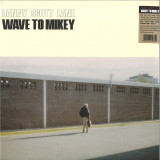
Wave to Mikey, the fourth album from the Los Angeles-based actor, musician and photographer Danny Lane is a nocturnal, neon-lit ode to the friendships that shape us. “I made this album for my friend Mikey from back home,” Danny explains. “We were pretty much inseparable for a large part of our lives, and our musical and social minds were always in sync in a special way. Then with age, we drifted apart, especially since I moved to Los Angeles. This album is just a little wave hello to an old friend and a kindred spirit.”
Equal parts avant-garde composition, instrumental city-pop, ambient, Kankyō Ongaku (environmental music) and Fourth World music, Wave to Mikey is an impressionistic and reflective cycle of eleven richly detailed memory portraits. Throughout the album, the influence of Jon Hassell, Arthur Russell, Hiroshi Yoshimura and Yellow Magic Orchestra hangs in the air like late-night mist, adding character but never overshadowing the rhythmic ambience of Danny’s musical visions.
Wave To Mikey began as a series of sketches on analog synthesisers, guitar, sample and found percussion sketches, initially recorded in Danny’s home studio. Once he’d located the vibe, Danny called on his friends E Talley II, Solange collaborator John Carroll Kirby and Destroyer session musician Joseph Shabason, who respectively added flute, spiritual synth textures and saxophone to the record.
For Glossy Mistakes founder Mario G.R., who originally discovered Danny through his photography, Wave To Mikey captures a vivid feeling of melancholy and peace. “He's able to encapsulate emotions in a very straightforward way, either in his portrait or songs,” Mario says. “I think that's a kind of virtue or skill given to talented artists, no matter the field.”
Born and raised in Staten Island, New York, Danny began playing music with his friends when he was thirteen, before putting that passion on pause to study Fine Arts (Theatre) at Rider University in Lawrence Township in pursuit of an acting career. Acting led him to photography, after playing a photographer in a film, he was inspired to pursue the medium. Danny began shooting photos on film for magazines and lifestyle brands, spent a stint living in New York’s Chinatown neighbourhood, and eventually relocated to Los Angeles in 2017.
Four years ago, Danny started recording and releasing music under his own name, leading to the trilogy of releases that preceded Wave To Mikey, How To Empty A Cup (2019), Memory Record (2019) and CAPUT (2021). Over the course of these releases, he’s revealed himself to be a sophisticated composer and producer with a studied ear from years spent digging through record bins for ambient, experimental, new age, jazz and electronica records from around the globe, with a particular emphasis on Japan.
“Music is something that’s always been involuntary for me,” Danny reflects. “It’s unconditional, always there. It’s something I just have to do. I’ve taken breaks and it’s always gloomy when I’m not playing. I just want to get better and better and understand more and more.”
Here at Glossy Mistakes, Wave To Mikey marks our second contemporary album release, following on from Evenings by Japanese composer Metoronori. We’re proud to be able to present Danny, Metoronori and other modern musicians' work alongside reissues of classic works from Stevia aka Susumu Yokota, Akira Ito, Yuji Toriyama & Ken Morimura, and Takashi Kokubo.
Mastered by Damian Schwartz, Wave To Mikey will be released on Vinyl LP Glossy Mistakes on June 27 2022. Besides the regular black vinyl, a limited clear vinyl will be available in an edition of 100 copies. Both editions come packaged with original cover art photography shot by Danny.
Otis Spann is widely recognised as one of the greatest blues pianists of all time. Although Spann made a name for himself in Chicago by the mid 1940s, it wasn't until 1960 that he got the opportunity to record an album of his own. Otis Spann Is The Blues is not only the first solo album ever recorded by Otis Spann, it is also the first album ever recorded for the fledgling New York City based Candid Records label. Stripped down to just the two musicians this magnificent set showcases Spann's voice and piano.
It's dark in the forest. Especially in the »northwest«. You have to adjust all your senses. But once you have, the forest will take you in his arms. The forest will protect you. Just like Daniel Herrmann's first album for Live At Robert Johnson will protect you.
Herrmann is far from being unknown in the world of music - let alone in the art or photography world. In the music field, he is probably much more known under his Flug 8 moniker where he released five albums on Disko B, Doxa Records, Ransom Note, and Acid Pauli's Smaul Recordings. Under his given name, Daniel Herrmann's relationship with LARJ's label boss Ata Macias goes way back. As an artist and photographer Herrmann was the only one allowed to take pictures inside Ata's ROBERT JOHNSON club, thus creating an iconic series of pictures of clubbers and club life in general. Herrmann’s pictures of the partying punters themselves were presented as wallpaper all over Robert Johnson back in 2002.
With »Enroute« Herrmann enters new territory: It is his most ambient work up to today. And yes, it is a piece of work created during the lockdown. Herrmann's studio is situated in the outskirts of Frankfurt, near the forest - a quite remote place already in-between the Taunus mountain range. Imagine life during the lockdown in such a place … This is where Herrmann set up his former basement studio in the large living room with a variety of instruments besides a cozy fireplace spending warm light and warmth. A warmth that despite its seemingly rather "cold" atmosphere can be heard all over »Enroute«. Once you soak in the sounds (or get soaked into the sounds) of the first tracks like album opener »northwest«, »Fly By Wire« or the 11min »Dark Trace« you might feel this warmth too. A cold warmth you could say, yet a warmth that only modular systems and synthesizers can create.
There is a change of mood with »Intercontinental« - literally as it seems that Herrmann indeed is on an intercontinental journey here despite the strolls and long walks in silence through the Taunus forest. This is also the place where Herrmann took many photographs of the forest and its trees (to be seen on his Instagram account) - and the picture on the cover: This spooky yet fragile high seat in the mist in front of those trees. Yet darkness alone is not dominating this album. Even during these dark days, there was a bit of light at the end of the tunnel. And it shows in the beauty of »Bouncing Rays«.
»Enroute« is done all alone and in total isolation. And one can hear it. But it also invites the listener to be a part of this lonely world. And we all know that being lonely is made easier with someone on your side - »Enroute« to a better place. A place that isn't lonely at all.
PS: For all digital music lovers we have included two bonus tracks: The GLOK remix of »Bouncing Rays« and Herrmann's clattering and creaking tune »Economy« - enjoy!
The “Tumult Hands” duet is made by Jacek Sienkiewicz and Jerzy Przezdziecki - the producers
whose composition has - to a large extent- defined the Polish techno music. Sienkiewicz - as
early as Recognition - started his adventure with music in the late 1990s. Subsequent records,
already under his own name, were released, among others, at Cocoon Records, Trapez, Klang
Elektronik and WMFRec. Przezdziecki started publishing a little later. Over the last two
decades, he has been presenting various types of electronic music, among others, as Praecox,
Epi Centrum and Jurek Przezdziecki.
“Tumult Hands” has two EPs on its account – “Tumult Hands EP” (2014) and “Tropic
Factory” (2016). Both were published by Recognition. So a full record was a matter of time.
The album titled: “TH” (Recognition, 2022) has been prepared for many years. The repertoire
was created mainly out of improvisation. As artists themselves say, “it is the result of
discovering and accepting a chance event.” For both producers, close contact with
instruments was important during their composition; the type of interaction between the maker
and an electronic device. Individual works have been maturing for a long time. Paradoxically -
the lapse of time did not cause them to be ageing but vice versa - allowed them to mature and
gain natural weight.
“TH” brings very diverse music. In part, it is the repayment of the debt that Sienkiewicz and
Przezdziecki incurred towards the most creative techno period, that is, the 90s of the 20th
century. The lovers of experimental dance music from before the quarter of the century will
easily capture in the duet’s themes the art of Cristian Vogel, producers known from the tin
series of Chain Reaction record company or early recordings of Richie Hawtin (Plastikman,
F.U.S.E.). This is a very similar, non-standard approach to sound structure and an original
approach to rhythmic structures. Minimalist melodies, accompanying e.g. the opening of the
“enter TH” or “pow” set, contribute to the composition an element of some sublimity and
metaphysical anxiety. Obviously, it is still the dance music but the duet - to some extent by
abandoning the club functionality (understood in the techno convention) - has given its music
a definitely sophisticated, artistic elegance.
Publishing cooperation between such important makers, as well as high quality of recordings,
leads us to see “TH” as something more than just another techno record. It is an event and an
electronic adventure that all lovers looking for dance music will appreciate.
»Tableau« is Rolf Hansen's second full-length album under his given name and acts as a sequel to his solo debut »Elektrisk Guitar«, released in 2019 through Karaoke Kalk. On the 14 new pieces, the Copenhagen-based composer and musician further explores the sonic possibilities of the electric guitar by opting for a radically different approach and putting great limitations on himself as a performer. »Tableau« is an experimental record in the truest sense of the word, eschewing conventional modes of playing the instrument and instead turning the guitar into a sound source for compositions that are at once abstract and concrete.
Already on his last album, Hansen had found a different approach to playing and composing, but this time went even further and created a set-up in which the electric guitar becomes a different instrument altogether. This is also expressed in its title: a tableau is, broadly understood, an image-forming momentary bodily pause in a dramaturgical or narrative process. In the context of the album, tableau is the form and sound that emerge when the musician’s usual approach to playing and the compositional practice is halted and transformed. To achieve this, the guitar is placed on a table with microphones installed around it and tuned in a static microtonal modality thanks to wooden replacement frets that have been inserted under the strings. This alters how the sounds are being generated with the instrument, which is now played from above, occasionally strummed or stroked with a tool.
The opener »Begyndelse« already sets the tone by punctuating dense layers of sound with a one-note melody that provides a rough rhythmic structure and harmonic anchor for the track that still seems to mutate wildly the further it progresses. Even in moments in which Hansen opts for a more directly accessible approach like on the following »Over Grænsen« or »Tid«, the pieces’ emotional qualities are greatly amplified by their sonic idiosyncrasies. This is best exemplified by the first track on the second side of the LP, »Højre hånd«. Using high microphone gain to magnify the high-frequency acoustic sounds of the electric guitar, Hansen captured a rich near-symphonic changing spectrum of overtones. This is typical for the attention to detail put into the overall record whose approach maximises the music’s affective impact by focusing on minute nuances.
»Tableau« is full of moments marked by almost unnoticeable shifts and changes, offering a wealth of sounds that are as evocative as they come unexpectedly. Despite their aesthetic differences, the kinship between its predecessor »Elektrisk Guitar« and these 14 compositions is undeniable. Both are based on self-imposed constraints, a radical form of reduction that made it possible for Hansen to broaden his sonic palette and compositional approach. Though mostly short, concise, and abstract-sounding, the pieces on »Tableau« speak a clear, varied and simple language.
- 1: Arrival
- 1: 2Sonovabitch
- 1: 3Cistern / Old On Lens
- 1: 4Swab Dog Swab / Seagull / Winslow's Story
- 1: 5Curse Your Name / Dirty Weather
- 1: 6Murder / Mermaid / Heavy Labour
- 1: 7Stranded
- 1: 8The Sea King's Fury
- 1: 9Mermaid Lust / Stabbing The Charm
- 1: 0Why'd Ya Spill Your Beans?
- 1: Filthy Dog
- 1: 2The Light Belongs To Me
- 1: 3Into The Light
Mark Korven's original soundtrack for 'The Lighthouse,' starring Robert Pattinson and Willem Dafoe, marks his second collaboration with director Robert Eggers (The Witch).
"Robert Eggers and I were rather like the two wickies that went insane in The Lighthouse, musically speaking. We travelled to some very dark harmonic and textural places. We both enjoy not just breaking the rules, but blowing them to smithereens. The spirit of experimentation was always present."
-Composer Mark Korven
"Composer Mark Korven and I developed a shorthand working together on The Witch. This made collaborating on The Lighthouse an incredibly enjoyable process. But it was not without its many challenges. Originally, I wanted a score with no strings at all. The Witch soundtrack was so string-prominent that I wanted a full departure. I only wanted horns, pipes, conch shells, concertina - things that sounded like the sea - or the lighthouse station's ominous foghorn. It would be a minimalist aleatoric soundtrack with a nod to sea shanties and ancient Greek music. As Mark and I embraced the sound of big brass sections, it quickly became a maximalist aleatoric soundtrack.
A soundtrack of Sudan's revolution and the first ever international release of the Beja sound, performed by Noori and his Dorpa Band, an unheard outfit from Port Sudan, a city on the Red Sea coast in eastern Sudan and the heart of Beja culture.
Beja Power! is a living archive of the finest, most heartfelt Beja songs—a six-track portal to another time and place, of melodies long forgotten and never before interpreted by an electric and brass-driven ensemble. Few older Beja recordings were produced. Even fewer, if any, remain.
Electric soul, blues, jazz, rock, surf, even hints of country, speak fluently to styles and chords that could be Tuareg, Ethiopian, Peruvian or Thai—all grounded by hypnotic Sudanese grooves, Naji's impeccable, airy tenor sax, and of course, Noori's tambo-guitar, a self-made unique hybrid of an electric guitar and an electric tambour, a four-string instrument found across East Africa.
A truly ancient community, Beja trace their ancestry back millennia. Some say they are among the living descendants of Ancient Egypt and the Kingdom of Kush. They are even depicted in the hieroglyphics. Beja melodies—nostalgic, hopeful and sweet, ambiguous and honest—are thousands of years old. Yet their sounds are also reminiscent of Dick Dale's 1963 "Misirlou" and jazz great Charlie Rouse's 1968 "Meci Bon Dieu". This album could be 6,000 years, 60 years, or 6 months old.
Along with his Dorpa Band, formed in 2006, Noori's instrumental Beja music forms the latest link in an unbroken chain of an inherited, arresting sound that is local as it is global, a gift of a storied past and the exchanges of the well-traveled Red Sea.
Ostinato Records is honored to bring the nearly forgotten Beja sound in all its nostalgia, sweetness, honesty, and power, recorded and mastered to maintain the warmth of Sudan's signature aesthetic, to your sound system.
An absolutely legendary album from Lebanon by Issam Hajali’s group Ferkat Al Ard, “Oghneya” stands out as one of the great musical gems of the Arab world. A groundbreaking release from 1978 that represents the meeting point of Arab, jazz, folk and Brazilian styles with the talent of Ziad Rahbani, who did the albums arrangements. Filled with a variety of sounds and genres, from Baroque Pop to Psych-Folk to flashes of Bossa Nova, Tropicalia and MPB, “Oghneya” is like if Arthur Verocai took a trip to Beirut in the 70’s to record an album.
In 2015 we heard Ferkat Al Ard’s music for the first time, a Lebanese trio compromised of Issam Hajali, Toufic Farroukh and Elia Saba. It was a stunningly unique release that blends traditional Arabic elements, jazz and Brazilian rhythms hand in hand with poetic-yet-politically engaged lyrics. The band was active in the left-wing movement of Lebanon of the time and they communicated their political ideas candidly through their songwriting.
In our mind the idea was to see whether Issam was interested in re-releasing “Oghneya.” He was not opposed to it, but also made it clear that it was not his priority for a first project. He suggested we start with his first album, before Ferkat Al Ard was formed, “Mouasalat Ila Jacad El Ard,” which was recorded in 1977 in Paris together with his friend Roger Fakhr (whose work we have been privileged to re-release in the meantime as well.) “Mouasalat Ila Jacad El Ard” is melancholic, stripped-down, guitar-based folk intertwined with jazz-fused breaks, and the unique sound of the santour glistens through. While the music is very accessible, some song structures are rather atypical, neglecting common patterns of verse, hook, verse, hook. The lyrics mostly trace back to the poetic work of Palestinian author Samih El Kasem, with one song also written by Issam, who composed the music for the whole album.
We re-released Issam’s “Mouasalat Ila Jacad El Ard” in 2019 to a great reception, with positive reviews all over the place and an ongoing appreciation for the album. This meant it was time for us to undertake an “Oghneya” re-release again!
If you compare “Mouasalat Ila Jacad El Ard” and “Oghneya,” one apparent distinction is the strong Brazilian influence in the music. Issam Hajali explained that you can already hear traces of this influence on his debut, but it’s “Oghneya” where this musical relationship really peaks. Lebanon and Brazil have had a strong connection for nearly a century due to the continuous flow of immigrants from one country to the other. Today, Brazil has the largest Lebanese diaspora in the world, the “Brasilibanês”. The migratory route was not a one-way street, however, and some Lebanese returned to their home country, taking recordings of the music they learned to love in Brazil with them. They were followed by Brazilian musicians who visited primarily Beirut during the 1960’s and the first half of the 1970’s, just like many other musicians from around the world. In these years between the independence and the beginning of the civil war, Beirut became even more of a cultural center and regional hub than it already was.
Bossa Nova, at that time, was one of the defining sounds of Brazilian popular music. Issam Hajali remembers hearing it at a bar in Beirut’s Hamra district in 1974, which hosted musicians from Brazil playing the occasional gig. When Issam had returned from Paris in 1976 he got to know Ziad Rahbani, son of Fairouz, who had a shared passion with Issam for a lot of things, among them Brazilian music. Issam showed him some of the tracks he was working on, and Ziad agreed to help with arranging. The music that evolved from this cooperation between Ferkat Al Ard and Ziad Rahbani’s arrangement is, to put it lightly, outstanding. Issam’s singing is embedded into the uniquely beautiful string arrangements backed by the band’s poignant, swinging groove. The lyrics of the songs on “Oghneya” are based on poems by Mahmoud Darwish, Samih Al Qasem and Tawfiq Ziad, three pillars of Palestinian poetry within the last century, and their influence on “Oghneya” was itself a strong political statement during the Lebanese war.
“Oghneya” was eventually released in 1978 by the band themselves on cassette tapes. Finding a blank tape that fit the playing time proved to be impossible during the war so they needed to open up the case of each cassette to physically cut down the tape and customize it to the playing time. The album was well received, though some cultural critics deemed it too “occidental” in its sound. While the cassette was circulating, Ziad Rahbani started a label called Zida, together with Khatchik Mardirian. They decided to help the band with a re-release on vinyl in 1979, a year after “Oghneya” was originally released on cassette.
Sadly, there are two tracks from the original release of “Oghneya” that did not make it onto the reissue. “Ghfyara Ghaza” was replaced by the song “Juma’a 6 Hziran.” while “Huloul” was taken off without a replacement. This happened as a precondition from the band for this reissue to happen. We would have loved to include all tracks, but the decision ranged between having either a reissue like the one we put out or no reissue at all. Thus, an easy choice for us.
As always both vinyl and CD come with an extensive booklet with an interview with Issam as well as unseen photos from the recording sessions.