Throughout the ‘REFRACTIONS’ EP, Close Counters further signify their skills in blending house, soul, funk and broken beat and to create their own blend of insatiable and infectious grooves through a polished comb-i nation of electronic and organic instrumentation. The duo harness the spirit and energy of the Melbourne soul scene and raise it to new levels in the four polished, dance-floor-ready tunes in REFRACTIONS.
‘The songs were written over the last couple of years following our move from Hobart to Melbourne and was made possible with the help of a number of collaborators, including our live band members Elle Shimada, Lucky Pereira, Paul Bender (Hiatus Kaiyote) on bass, and featuring vocalists Laneous and Wallace.’ – Close Counters
Buscar:no made
In 2017 Brooklyn's Bryce Hackford spent a week at the PRAH Foundation in Margate (UK) recording rhythmic foundations and the environment around him. After his residency, eleven musician friends contributed their performances to what would become Safe (Exits). All of these contributions, however, were made in isolation and the task of mixing them together became the crux of the production.
Bryce's records largely explore improvisation with electronics, using recording as the compositional medium, and feature the occasional contributing musician. Eleven make Safe (Exits) more of a chance ensemble record, with players in unlikely combinations, from disparate backgrounds both personal and musical, pushing a collage aesthetic beyond sampling. The poetics of these sounds is the focus of this album.
Safe (Exits) attempts to create a rare space where rhythms get propulsive enough to make one dance yet become subtle enough to make them nod into the serene vistas of distant, contemplative waves.
Safe (Exits) is Bryce's first album since 2015 and second release with Spring Theory.
Featuring: Gabi AsFOUR, Brian Close, Matt Evans, Adrian Knight, Kiki Kudo, David Lackner, Frank Lyon, Camilla Padgitt-Coles, Bernardo Risquez, Viktor Timofeev and Justin Tripp
"Small Worlds" (2004) a is 42-minute composition for improvising sextet by Austrian double bassist, composer and improviser Werner Dafeldecker. The score is written for any instrument and divides the players into two virtual trios whose constellations change every 3 minutes. No restrictions are made regarding material or playing techniques, the only specification is that in each 3-minute trio, one player has the role of the "dynamic leader" which means that no other player within the trio should play louder than the one on that leading position. Apart from that, the only other restriction concerns how pauses are to be made when two players interchange their positions within the trios.
According to Dafeldecker, the object of the piece is to provide a structure that doesn't curtail the qualities of the musicians, yet forces them to listen very closely to each other and make focused decisions about parameters that are often overlooked in completely free improvisation. Especially, the given structure avoids the emergence of certain clichés that are often present in Free Improvisation, while retaining a very high level of openness with regard to how the piece is performed.
The first published recording of "Small Worlds", by Australian ensemble Quiver, was released in 2017 on CDr by Tone List. This LP contains a recording made in 2004 at Taktlos Festival in Basel, Switzerland, that features the line-up that Dafeldecker originally had in mind when he wrote the piece: Burkhard Beins (percussion), Martin Brandlmayr (percussion), Werner Dafeldecker (double bass), Klaus Lang (organ), Michael Moser (cello), and John Tilbury (piano). Partly, this constellation later also played together in the long-running avant-garde group Polwechsel.
Edition of 300 in regular sleeve with three inserts: two featuring an extensive conversation between Werner Dafeldecker and Matthias Haenisch discussing "Small Worlds", Polwechsel and Free Improvisation in general (German and English), the third reproducing the score of the piece.
We instantly fell in love with Razen the first time we saw them live in September 2018. It was during a unique Sunday morning mass at the Friedenskirche (which translates literally to mean ‘the church of peace’), as part of the Meakusma Festival. Slightly sleep deprived and still euphorically intoxicated from the night before, their performance in front of a full mass of devotees had a biblical aura to it from the first note they played. They delivered a stunning set which was somehow, paradoxically, both relaxing and formidably tense.
Two years later and the group are now bringing their talent for restraint and slow tension-building to the fore on “Robot Brujo”. Each of the six improvisations on this double LP is made up of the barest of materials, with the three musicians relying on a limited combination of tones. They lay their focus on small variations in timbre, timing, articulation and vibration, which creates a narrowing of consciousness, and feels something a bit like staring meditatively at the minute changes of leaves blowing in the wind.
Recorded over two sessions, in what Razen themselves refer to as their detached playing style, "Robot Brujo" stands as an auditory magnifying glass of concentration, in all its uncanny and minimal glory.
It is yet another new step up from the deep listening ensemble from Brussels, after 10 years exploring music together.
Substance, the second album by producer Moisture, sets out to deliver an immersive tech-noir fantasy of emotional and physical deconstruction. Inspired in part by William S. Burroughs 1959 novel Naked Lunch, the conceptual narrative of the album follows a humanoid subject through an urban landscape and the exploration of its depravations.
Sampling and filtering sounds from other music, movies and own field recordings, the tapestry of Substance is a three-dimensional world of hard industrial spaces and fluid organic matter. While it's conception is rooted equally in literature and film as well as music, one can draw comparisons in particular to Barry Adamsons 1989 album Moss Side Story, in that it also works as a chronological narrative; the tracks aligning to make a world of its own.
And while Adamson was aiming to create an imaginary soundscape of his native Manchester, the geography of Substance is based on the city of Malmö. Using field recordings from it's city streets, the album paints a rain soaked, neon-clad portrait of the city's hedonistic nightlife.
On the opening "The Marketplace" we are teleported to Bergsgatan at night (the track title a subtle nod towards Eden Ahbez 1960 song of the same name).
This introduction is similar in line with the experience Burroughs once had in 1957 upon entering Malmö for the first and only time, which he details briefly in Naked Lunch: "averted eyes and the cemetery in the middle of town (every town in Sweden seems to be built around a cemetery), and nothing to do in the afternoon (...)"
This image of Malmö portrayed with dread and loathing holds a longstanding narrative tradition over the cultural geography of the town. Yet it is often paired with an image of great promise and bohemian splendor, seemingly a paradox but often perversely intertwined. This duality has always been a vital mindset in the underground music scene of the town and its illegal after hours clubs. Substance is a work steeped in the grayscale prism of techno and its post-industrial fetischism. Yet in picking it apart, one can find elements of everything from post-punk, drum & bass, trip hop and new age.
The theme of depravation that soaks through Burroughs Naked Lunch seems oddly befitting to this side of Malmö (one wonders what the author would have made of it had he stayed longer) Through rhythmic excursions and the exploration of repetition, the tracks of Substance are arranged to convey this self-destructive longing for depravity. Michel Foucault's ideas on limit experiences serves as context for this peculiar form of endeavour, as he puts it: "the point of life which lies as close as possible to the impossibility of living, which lies at the limit or the extreme."
F.S.Blumm enters Andi Otto's studio with a whole palette of strings and a mission to create quirky, peaceful soundscapes. The artists intertwine acoustic and electric guitars, harps, electric bass, psaltery and cello in eleven electronica compositions ranging from neo-classical gravity ("Entangleland") to spaced-out dub jams ("Active Fault Map"). "Yukiyama" evolves in multilayered patterns braided over warm tape-noise. "Kilani" reminds of Rabih Abou Khalil's ECM recordings, with its oriental scale and a beat that counts to seven. The tunes shine most when silence takes over, when the sounds find space to unfold and decay. Far from being trivial ambient lullabies, these compositions burst with detail: Bells rattle, a kalimba resonates, and vintage synths induce their voltage into the acoustic framework. Andi Otto and F.S.Blumm have been musical collaborators in the studio as well as on stages between Berlin and Tokyo for more than a decade now, the heyday being their previous duo album "The Bird And White Noise" in 2014. On "Entangleland", Andi Otto contributes the cello, harp and synth recordings and takes care of the mixing. Compared to his recent releases on Multi Culti or Shika Shika, these tracks are less dancefloor oriented. The calm of this album is a flourishing environment for Otto to pluck the acoustic cello which we usually hear in a more processed way in his solo works. F.S.Blumm contributes guitar and bass recordings as well as saturated percussion echoes from his self-made spiral box. Blumm is famous for his acoustic solo productions since his early outings on Morr Music or Tomlab. He has also appeared on Pingipung a few times, for example with his album "Up Up And Astray" or as a Lee 'Scratch' Perry collaborator with the "Quasi Dub Development" project. He recorded three duo albums together with Nils Frahm and is a member of the mighty "Jeff Özdemir & Friends" collective in Berlin. "Entangleland" sees the two artists weave together a mass of acoustic motifs, synthetic melodies, riddims and improv jams where the magic emerges from the sum of the parts. "It's not about accompanying a cello theme with the guitar or vice versa," Andi Otto says. "Entangling sound means letting go of hierarchies, that no one is first. Our studio is not a control room, it's a place of imagination where we take things apart and make things whole."
Los Afroins was the flagship salsa band of the obscure but beloved INS label from Colombia. Their 1975 LP "Goza La Salsa" is just as hard to find as their first record, and contains 10 bright and sassy salsa dura treasures that light up the dance floor with their incessant rhythms, syncopated trumpets and trombone and buoyant melodies. There are smoking covers of hits by Panama's Bush y sus Magníficos ('Salsa Al Pindin') and Bronx timbalero Orlando Marín and His Orchestra ('Está De Bala') as well as updated renditions of old Cuban chestnuts 'La Masacre' (written by Joseíto Fernández of 'Guantanamera' fame) and 'Matusa' (originally titled 'Macusa', composed by Francisco Repilado aka Compay Segundo).
The entire record makes for a very tasty and satisfying party platter filled with guaguancó, mozambique, pachanga, descarga and bolero that deserves to be more accessible and better known by today's fans of Colombian salsa who may have heard of The Latin Brothers or Sonora Carruseles, but have yet to discover the short-lived but highly sought after Los Afroins. "Goza La Salsa" is presented here in facsimile artwork and pressed on 180 gram vinyl.
“The aptly named Goza La Salsa (Enjoy Salsa) is the second album by Los Afroins, the flagship salsa band of the obscure but beloved INS label (Industria Nacional Del Sonido Ltda., Medellín, Colombia). The combo's repertoire focused mostly on cover versions hit tunes from New York, Cuba and Puerto Rico, both classic and contemporary, but for this record, their sophomore outing from 1975, their arrangements got tighter and there are more original compositions, which makes for a satisfying evolution in both style and content. Pianist Agustín "El Conde" Martínez, who would later work with Joe Arroyo and Juan Piña, led the group and did some arranging, with studio session production by INS artistic director Alfredo "Sabor" Linares. The vocals were handled by a pair of fresh-faced singers, Lucho Puerto Rico and Roy "Tayrona" Betancourt, who would later go on to fame in the 1980s, the former with his own Lucho Puerto Rico Y Su Conjunto Sonero and Conjunto Son Del Barrio (both in collaboration with Alfredo Linares), and the latter with Willie Salcedo, Reales Brass De Colombia, and Los Caribes. Additional arrangements were by Luis Felipe Basto of Los Black Stars and Luis E Mosquera, while the rest of the band was made up of INS related studio musicians. Goza La Salsa is just as hard to find as their first record and contains 10 bright and sassy salsa dura treasures that light up the dance floor with their incessant rhythms, syncopated trumpets and trombone and buoyant melodies. There are smoking covers of hits by Panama's Bush y sus Magníficos ('Salsa Al Pindin') and Bronx timbalero Orlando Marín and His Orchestra ('Está De Bala') as well as updated renditions of old Cuban chestnuts 'La Masacre' (written by Joseíto Fernández of 'Guantanamera' fame, and a hit for Cuarteto Caney) and 'Matusa' (originally titled 'Macusa', composed by Francisco Repilado aka Compay Segundo and made famous by Duo Los Compadres). This time around there are six excellent originals with the hottest pair being Lucho Puerto Rico's theme song 'Puerto Rico Power' and the percussion heavy final track, 'Alejada' sung and composed by Roy Betancourt. Just like the first album, the entire record makes for a very tasty and satisfying party platter filled with guaguancó, mozambique, pachanga, descarga and bolero that deserves to be more accessible and better known by today's fans of Colombian salsa who may have heard of The Latin Brothers or Sonora Carruseles, but have yet to discover the short-lived but highly sought after Los Afroins." Pablo E Yglesias DJ Bongohead of Peace & Rhythm
New Jersey group’s debut album released on Brunswick Records, 1980 soul and disco classic. Includes the club classic ‘I Like What You’re Doing To Me’, which helped the band secure a contract with
Brunswick. When released the single reputedly sold over 250,000 in the US alone, yet never made the R&B or pop charts there. When released in the UK, charted to number 20 in Nov 1980. Reissued with original artwork, printed inner sleeve and pressed on 180g heavyweight vinyl
With their 2013 debut single "Vintage Voudou," Conjunto Papa Upa cemented themselves as the torchbearers of a rare breed of Afro-Caribbean psychedelic soul, a clear delineation from the wonderful world of Venezuelan poly rhythms. That original song, named after the short lived but heavily influential Amsterdam brick and mortar record shop that band leader Alex Figueira founded, was a perfect clue into the deep exploration that Papa Upa would begin to take on their musical journey.
Like the store itself, known for it's solid connection to the musical footprints put down in relatively undiscovered places like Suriname, Curacao, Cabo Verde, Portugal and of course Figueira's native Venezuela, Papa Upa has captured a sound that is entirely unique, a new concoction of influences that at once sound strange, yet totally familiar (...) Perhaps because Venezuela shared such a rich & diverse mix of sounds from the Atlantic, Caribbean & US, a kindred spirit to their neighboring country, Colombia, an equal in terms of their industry output from the 60's & 70's, yet not nearly as publicized and compiled in recent years. Like many places in the greater Afro-Caribbean nexus, they were musically ahead of their time.
This futuristic mélange of sounds is reflective of Papa Upa itself, made up of musicians from Venezuela, Uruguay, Cuba & The Netherlands, all living, practicing & recording at Figueira's
Amsterdam studio, Barracão Sound. With such a wide range of tropical influences, in a cosmopolitan and diverse city like Amsterdam, it's no wonder that Papa Upa's first extended project would find kinship in a collaboration with New York's Names You Can Trust.
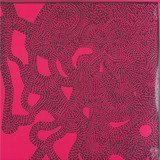
R&S welcome electronic composer Matthew Puffett AKA Future Beat Alliance with his killer single ’Never Forever’ a sublime slice of broken beat techno that originally had a limited release on his “Patience and Distance” album in 2009. It now comes backed with a first rate remix courtesy of R&S regular Afriqua.
A veteran of the UK electronic scene originally from Oxford but now located in Berlin, Puffett made his name in the late 90s with a string of sought after releases on Void Records under the aliases Mode-M and Soul Electrik before settling on the Future Beat Alliance handle. Notching up releases with the likes of Delsin, Rush Hour and Versatile as well as with the storied Tresor imprint, both as a DJ and an artist. In 2019 Matt started his new imprint Reward System to self release new creations.
Life long friend from Oxford, Mo’ Wax and Unkle maestro James Lavelle reached out in 2012, which led to a further creative chapter in Puffett`s story that culminated with him co-writing & programming on Unkle’s 5th studio album ’The Road Part 1’ as well as some singular work in film and television. “The moving image plays a key creative motive in my process,” Matthew explains. “Sound & picture married together is such a powerful combination that always inspires me every time to make my own version, 'Never Forever' is one of my many attempts to try and
capture that.”
Taking cues from modern cinema masters like Denis Villeneuve, Panos Cosmatos, Steven Soderberg and Jonathon Glazer and their respective composers, Puffett's widescreen sonic craftsmanship alongside his irresistible rhythmic sense are a key part of what makes Future Beat Alliance music so alluring; "I want my tracks to guide the listener on a exit route far from this world”
Two years after the drop of his latest solo effort, 'Strangers', Budapest cross-dimensional vibes trader Imre Kiss clocks in on Dalmata Daniel with the eagerly awaited followup to his widescreen, sci-fi ready sonic adventures. Here again, the Hungarian producer - who's made a name for himself through discerning blends of kosmische-infused nostalgia and uplifting emotional apexes, takes us off to a world of sense-awakening wonders and hidden alien treasures, well supported in his quest by Den Haag's legend Intergalactic Gary, up on the flip with a heat-seeking belter of a remix.
Written during a tour across Japan, the title-track 'Oimachi' breaks things in on a punchy yet immersively emotional note, flexing out the blunt Casio arpeggios and muscular bass leads for what results in a soul-whelming, wildly enjoyable trip away from the gridlocked 4/4 paradigm. The further jagged and wonky 'Whipromance' extrudes a weirdo-friendly piece of stretchin' electronics from its squelchy gangue of acid subs and straightforward drumwork, all set against a refreshingly contemplative dawn of pastel-brushed pads and ample beat-free sequences that shall leave weary dancers in a daze.
Flip sides and here comes 'Soft Obsession' - a fine-tuned assembly of organic envelopes, plurally sourced sample library and that idiosyncratic sense of otherworldliness the name of Imre Kiss has become synonymous with. Opening the sunroof onto a luxuriantly arranged and incredibly deep forest of rhythmic folds and textures, this is the very kind of track to send you off to the zone on a one-way trip. Rounding off the journey in true Moebius-esque fashion, Intergalactic Gary lets his unmatched jockey know-how do the talk through a mind-expanding finisher that'll be sure to please both the lovers of stadium-sized epics and all-night-long chock-a-block sweatbox action.
/Baptiste Girou/
The outstanding 1971 debut by piano player and arranger Osmar Milito features his amazing cover of Herbie Hancock's Cantaloupe Island plus several classic Brazilian songs by Marcos Valle, Jorge Ben and Ivan Lins among others. Fierce samba jazz and bossa all the way through! The line-up of performing artists could hardly be more impressive: Quarteto Forma on vocals, Luis Ea, Marcos Valle, Pascoal Meirelles. This brilliant album is up there with the best work of Arthur Verocai and Marcos Valle. Presented in facsimile artwork and pressed on 180g vinyl
During the 90s, a walk around London’s Camden Market inevitably meant listening to the music with groove that the most popular DJs had made fashionable at the time: soul jazz instrumentals and Brazilian music targeting the club dancefloors. Among all those songs that ended up becoming classics of the scene was the amazing cover version of Herbie Hancock’s ‘Cantaloupe Island’ that Osmar Milito had recorded in 1971. This song was probably the main reason that made his LP for Som Livre one of the most sought after Brazilian records by collectors from all over the world. Now we finally have a new opportunity to enjoy this album, reissued on vinyl for the first time.
Along with the aforementioned version of Herbie Hancock’s song, this first album by piano player and arranger Osmar Milito is full of versions of Brazilian classics, from Marcos Valle to Jorge Ben or Ivan Lins. Fierce samba jazz and bossa all the way through! Note that Milito spent the first years of his career as a member of the backing band of big artists such as Elis Regina, Jorge Ben, Nara Leão... and after two years working with Sergio Mendes in the United States, he returned to Brazil and recorded his first LP.
The line-up of performing artists on this album could hardly be more impressive: Quarteto Forma on the vocals, Luis Eça, Marcos Valle, Pascoal Meirelles (what an amazing drummer he is!)... and both sides of the record hide a seamless sequence of solid tune after solid tune with similar doses of instrumental and vocal tracks. Just listen to the magnificent ‘Garra’, ‘Que bandeira’ or ‘Rita Jeep’, or the sweet samba that gives its name to the record, and you will see why this LP should be up there, next to the best works of Arthur Verocai and Marcos Valle.
- A1: The Big Country
- A2: Surfari
- A3: Positive Thoughts & Mind
- A4: Unplanned
- B1: Treatment For A Septic Horn
- B2: Drumming Is A Language
- B3: Mr Whippy Does Djibouti
- B4: Run Come See
- B5: Ran Came Saw
- C1: Blessed Works
- C2: Work Blessed
- C3: More Fluid
- C4: Who Are You?
- D1: Ready You Ready
- D2: Ready You Ready (Part 2)
- D3: What Is The Plan? (Feat Mutabaruka)
- D4: What Is The Plan? (Feat Mutabaruka - Version)
The first album African Head Charge made for OnU since 1993, this 2005 set was a triumphant return that saw longtime collaborators Bonjo Iyabinghi Noah and Adrian Sherwood reunited in the studio once more, the album title referring to the project’s original mission statement (nicked from Brian Eno!)
This album is African Head Charge at their very
best, rich in varied percussion and spiritual chants,
set over hypnotic and transcendent layers of
African rhythms, trippy and bubbling dubbed-out
effects and trademark pounding bass.
This is the first time the album has been released
on vinyl. Cut over 4 sides for maximum dynamics
by King Kevin Metcalfe.
Includes double-sided poster insert featuring a
new interview with Bonjo, two bonus tracks and
digital download card for full contents.
The Prisoners are one of the most influential bands of the 1980s, an astounding live act whose records were the opposite of what pop radio demanded in that era. Raw where they were smooth and full of character where those records needed to be blandly conformist. They hardly sold a record and yet they can count the likes of Noel Gallagher and political journalist John Harris as their fans. Steve Lamacq devoted a whole chapter of his book to his love of them whilst Tim Burgess of The Charlatans once said that at that time he only checked for The Prisoners and New Order. At least two UK hits used their arrangement on Joe South’s ‘Hush’ as their basis. ‘In From The Cold’ was the final shot at success by The Prisoners the only problem was they didn’t want it. Signed by Eddie Piller to his Stiff-backed subsidiary Countdown they were put in the studio with Troy Tate (Teardrop Explodes / The Smiths) and made this astounding album which they then disowned. By 1986 they were an incredible live band and had released three albums of their distinctive 60s influenced garage rock. A four-piece featuring Johnny Symons on drums, future Acid Jazz hitmaker James Taylor on organ, Allan Crockford on bass and backing vocals and the compellingly soulful Graham Day on vocals. Graham also wrote fantastic songs. Ten years later and they would have been lauded as heroes in Brit Pop land but the mid-80s had no place in the mainstream for a band with their influences. ‘In From The Cold’ is full of amazing songs from the hard edges of ‘All You Gotta Do Is Say’, ‘Ain’t No Telling’ and ‘The More That I Teach You’, to the mournful ‘Wish The Rain’ and ‘Be On Your Way’. It is no surprise that Mojo journalist Lois Wilson described this as her favourite album by the band. This reissue on coloured vinyl is the first time the album has been issued in its original form since 1986 when, due to Stiff’s imminent demise, it was deleted very quickly.
Matt Karmil's fifth album is a meditative collection of woozy loops and soft focus house. STS371 is the follow-up to IDLE033, - - - -, ++++ and 2018's acclaimed Will. Matt Karmil is British born - growing up in the rural town of Salisbury, near Stonehenge. Suffering a prolonged illness as a child, he spent much time indoors whiling away the long hours by playing with a classical guitar. Eventually he was well enough to see the world that had almost left him behind, and he spent his early twenties as an international traveller, DJing, record collecting and working as a producer-engineer in London, Paris, Stockholm and Berlin. In 2012 he decided to settle on Cologne âÇ" a city famed for its excellent club scene and ultra-minimal take on techno via the collective of artists and producers around the Kompakt label. With a studio established in Cologne, Matt made his LP debut with the well received (but hard to Google) "----", combining dusty samples and elegant tape hiss with scuba-diving grooves and minimalist vibes. In the same year he released the jubilant club anthem 'So You Say' on Tim Sweeney's Beats In Space label and remixed John Talabot and Axel Boman's (Talaboman) single 'Sideral'. Recent years have seen a raft of new releases from Matt, remixing XPress 2 for Skint, the albums idle 033 and ++++, as well as 12"s for YumAc Records, Idle Hands, Endless Flight and Studio Barnhus, received with great reviews in publications from The Wire to Resident Advisor and beyond. 2016 also saw Matt much in demand for his skills in engineering, mixing and mastering, working extensively with Matias Aguayo for Crammed Discs, Kornel Kovacs for Studio Barnhus and Talaboman for R&S, among many others. At the invitation of artist Christine Sun Kim, Matt composed a sub-20Hz piece for Bounce House at Sound Live Tokyo 2015, while his video collaboration with Boston's MIT Media Lab, Time Moods, was premiered in late 2017.
'Slacking Off'... The sought-after 1973 Bahamas recorded percussion-led gem that landed on the scene thanks to Jared Boxx. Renowned DJ and proprietor of New York's Sound Library, Jared unleashed this elusive monster soul-funk jam onto wantslists worldwide via his 'Thanks For Waiting' mix in 2009 and it's remained unobtainable until now. Recorded at 'King' Eric Gibson's Elite Recording Studio in 1973, the track features Theo Coakley of T-Connection on keys, British engineer Allen Mottershaw aka MOTT on solo guitar and Nassauvians lead vocalist and guitarist Tommy Goodwin, who relocated to the Bahamas at least a decade earlier from the US. Featured b-side 'The Time Is Now' is a previously unreleased dreamy AOR island recording from the vaults of Elite Studios made the following year with his friend Don Lepage, sung together with Tommy on guitar and Don on harmonica. Both cuts now available on limited 7" from Backatcha Records for playback far and wide .
Released on a shoestring by three musician friends in 1978 in Albuquerque, New Mexico, this 'desert soul' double-sider obscurity surfaced onto the collectors scene a decade ago thanks to DJ and label-owner Russell Paine (Super Disco Edits). A genuine rarity recorded "around one or two mics and a mostly-tuned piano" and still pulling heartstrings. Only 250 copies were originally made and given to family and friends with most long gone into the ether. Self-penned, produced and distributed locally by the artists over fourty years ago, this beautiful double-sider complete with Aka Shaic's hand-drawn 'dove design' is available to purchase again for record people everywhere via Backatcha Records.
- A1: Light Spots On A Shark Body
- A2: Oxygen Injections/Seaspray Expressions
- A3: Free Swimming In Link Gel
- A4: Seaweed Covered Hi-Viz Aquanets
- A5: Stingray Motion Fx Logo
- B1: Finspray Of The Mako Shark
- B2: Z-Brushing Tidal Gold
- B3: Avatar Blue Logo Two
- B4: Blue-Green Algae Shadings
- B5: Intertidal Shadezones
- B6: Banshee Foam
Spencer Clark is back with a futuristic eco-friendly record. It’s life on earth as you never heard it.
The story goes like this: Spencer wanted to do a soundtrack for the yet to be made “Avatar 2”. And if you know Spencer’s work, you’ll know that he engaged on this mission reading material that influenced the rich and crazy imaginary world of “Avatar”. If you think about it a little bit, something like “Avatar” could have really come out from the mind of Spencer Clark.
But it didn’t. So, he dwelled around the idea of that soundtrack, working on what is now known as “Avatar Blue”. The record we now release is a selection he made from the 2CD released last year on his own Pacific City Sound Visions.*
Like many of Spencer’s other alias or incarnations, Star Searchers introduces the listener to a new world. Besides making sounds/soundtracks for alternative realities he cares about making a world for his music to live in. It’s never superficial or dedicated just to the act of imagination, Spencer creates sounds that sustain the reality he imagined. That’s why they’re so rich and consequential in the realization of music as a medium.
“Avatar Blue” is music but also literature. And cinema. Star Searchers’ sound creates an absorbent sound about what’s happening in aquatic life. It goes beyond the perception of what we’ve seen or what we’ve known, it’s a neo-future aquatic life, with a world building structure and sounds and narratives that go along with it.
All done with a sound-aesthetics that could be described as slowed-down-trance, that fits 1980s synth nostalgia and dreams of sci-fi to come.
*Note: The 2CD version is available as a digital download with a purchase of the album on selected stores.
James Ruskin & Mark Broom are back as The Fear Ratio with their third album ‘They Can’t Be Saved’.
180G 2x12"
The duo, who are long-term collaborators have created their own signature style with abstract synths, heavy basslines and experimental soundscapes that fit somewhere in between IDM, electronica and ambient.
Their acclaimed debut album ‘Lightbox’ was initially released in 2011 on Ruskin’s Blueprint Records, featuring remixes from Warp aficionados Plaid and Deadhand. Soon after they formed a long-lasting relationship with cult Manchester based label Skam, with the follow-up album in 2015 ‘Refuge of a Twisted Soul’.
2018 saw a four track ‘Live EP’ release made up of exclusive versions of their Autechre supporting slot at the Great Northern Warehouse in Manchester, Several years and various solo productions later, The Fear Ratio return with an album that solidifies their reputation as experimental producers.
From the ethereal opening bars of ‘Sender’ slowly twisting into a brooding dub breakbeat, to the staccato, bugged out atmospherics of ‘Grey Code’, ghostly electronics of ‘Small World’, tripped out, schizophrenic hip hop haunting bass of ‘Game Plan’ and sun-dappled keys of ‘The Final Vision’ Broom & Ruskin flex their techno muscles ever further beyond the floor.
Three years after their critically acclaimed and sold out Abrada LP the great and joyful Japanese afro groovers Ajate are back with their much awaited brand new album Alo!
Ajate is a Japanese band who plays a unique blend of afro-groove dance music mixed with Japanese traditional festival music called "Ohayashi". Formed in 2011 by the band-leader John Imaeda, Ajate consists of 10 Japanese musicians.
Another unique feature of the band is the use of hand-made bamboo instruments as well as traditional Japanese percussion. The "Jahte" is a bamboo-made xylophone or balafon with a piezo pick-up mic attached to each key, connected to a pre-amplifier to obtain a loud sound and to add some touch of dirty distortion to its warm and natural acoustic sonority.
The "Piechiku" is also a bamboo-made string instrument inspired by the west-African "Ngoni" or Moroccan "Guembri" instruments. The Piechiku uses strings of the Japanese traditional "Shamisen". This instrument is also played through a pre-amplifier and John sometimes adds some wah-wah effect to it. All these bamboo instruments are designed, made and named by John Imaeda himself.
On Alo you will also be amazed by the exceptional sound of the Japanese Shinofue flute, which was not on the previous Abrada LP. Now, add to this unique sound some well-crafted Japanese female and male singing and you get a killer mix of Afro-Funk flavored grooves with traditional Japanese music!
Since the release in 2017 of their Abrada LP on the 180g label Ajate has toured Europe twice and has played a memorable concert at the world famous Trans Musicales festival in France in 2018, which has been followed by another great KEXP Live session.
Here is some music you will not be able to hear anywhere else, by one of the most joyful Japanese band to hear on record and to listen live!