Scottish Producer, Stephen Lopkin Is Back On M>o>s Deep With A Great Double Pack Of That Gleaming Sound We Love Him For! Tip!
.
Having Released Two Eps On The Label Since 2014, Stephen Lopkin Now Steps Up To Mos Deep With A 2x12" Release Entitled Clyde Built, Recorded In His Home Town Thornliebank. The Scottish Artist Has Been Making Prickly House And Techno For Almost A Decade. His Style Is Serene And Slick, And Across The 10 Tracks Here He Manages To Conjure Tracks That Work In The Club But That Come With Plenty Of Cerebral Qualities.
He Never Made A Secret He Takes A Lot Of Influence From Early Detroit Techno, Even Several Track Titles Pay Direct Homage To His Musical Heroes Like Derrick May, Kevin Saunderson, Carl Craig And Also The Track New Euro Politique Is Made In Memory Of The Late Uk Producer Matt Cogger Aka Neuropolitique.
'welcome To Nowhere' Kicks Thing Off With Languid House Grooves And Jittery Percussion, 'matrix' Is Awash With Swirling Pads And Astral Grooves And 'new Euro Politique' Is A Blizzard Of Kicks, Panning Percussion And Arpeggiated Synths That Glows Bright. There Are Darker, Driving Cuts Like 'fridays At Pure', Trippy Offerings Like The Title Track And More Thoughtful And Pensive Jams Such As 'qinosen'. The Final Three Tracks Are Busy, Electrifying Pieces That Fire Every Synapse With Their Sci-fi Fx, Crisp Drums And Cinematic Atmospheres.
The Whole Album Is Wrapped Up In Majestic Synth Work And Every Track Reveals More Layers With Each Listen. Offering A Sublimely Complex House And Techno Sound, These Tracks Look Back To Go Forwards And Do So With A Real Timelessness.
Поиск:no made
Все
180-gram vinyl record, limited
Label devoted to old school house music. Every release will have an original version and one or more remixes coming from the artists that made our life worth living in the last 30 years. House music is our religion. We are not interested in hype. We are not interested in becoming famous. We are not interested in djing worldwide. There won't be any repress since we are not interested in making money. We'll release music for personal pleasure only if it' ll satisfy our minimum quality standard. Finally, we won't release any digital download, 'cause we didn't grow-up listening to music that we couldn't touch.
- A1: Freeway - In
- A2: Everything That Shines Ain't Gold
- A3: You're My World
- B1: Coming Together
- B2: I Don't Want Nobody
- B3: Baby Don't Go
- B4: Freeway - Out
Maurice Moore's 'Maurice' is remastered from the original 1/4" studio tapes and available as an official limited vinyl reissue for the first time exclusively on Backatcha Records. 7-track LP with artwork and insert. Limited to 300 copies with original cover portrait by artist Clarence "Pencilman" Pointer.
Recorded in March, 1976 at Pegasus Studios in Maurice Moore's hometown of Warren, Ohio, 'Maurice' personifies what Moore calls the 'Town Sound'. A family soul funk affair with no label constraints, absorbed in the local scene and written, produced and arranged by himself. Moore originally pressed a handful of LP's to pass around sparingly as a demo with only a couple of copies ever re-surfacing. Now made available again from Moore's master reel via London-based Backatcha Records. Includes the sought-after uptempo percussion-led backstreet funk of 'Freeway' and the original cosmic synth-ladened slow burner 'Everything
That Shines Ain't Gold' (the blueprint to the alternative version appearing as a reissue in 2017 on Floating Points' Melodies).
* Arikon is a solo project of Berlin-based drummer & producer, Arik Hayut - half of doom-tech duo Gainstage with Pierce Warnecke. Loyal to the sonic concepts of Gainstage, Arikon presents The Prophet's Blood Is Boiling, a solo enterprise into deepest 'drum & drone'. Hypnotizing distorted polyrhythms puncture through shards of fragmented melodies, producing potent mixtures of desperate tin can banging, a panoramic sonic scope, and the bleakest of soundsystem nightmares. Across the album, Arikon deploys an arsenal of samples plus electronic, acoustic, and self-constructed percussion instruments, constructing eight powerful productions that manage to embody both brute force and delicate decay.
* Formerly active in Tel Aviv's leftfield experimental scene during the 90's, Hayut made Berlin his permanent home for working on his own projects while composing and performing music for off-theater and contemporary dance. In 2004, a severe health crisis initially threw Hayut into crisis, slowing down his activity to a standstill. However, the precarious process of his fortunate recovery contributed to Hayut involving himself more deeply with concepts of time, death, and decay.
* Inspired by the decadent still life paintings of the Flemish Baroque, the cover artwork for The Prophet's Blood Is Boiling comprises a bowl of decomposing fruit. Like the music, its aim is to illustrate the beauty and perfection of the decay process, whilst also referring to the West's hyper-capitalistic, technology-centric culture. In recent years a new form of 'digital life' has been born, whereby all data - regardless of its worth or importance - is mummified, reproduced, and distributed with no real disintegration or loss in quality. This new digital life is resulting in a sort of 'frozen death', ending the hitherto natural cycle of life.
* The songs on themselves are inspired by the 'beasts of holiness' - mythological monsters that appear in the Hebrew bible and the Jewish apocrypha (non-canonical scriptures). There's the punching of bassy thuds out of an oceanic ambient swell throughout 'Tanin Gadol', named after the ancient water monster of Babylonian times. The dense net of fumbling scrapes and amp-busting hits of noise on 'Nahash Akalaton' similarly refer to a titular sea-snake monster, its tendrils lashing out of the speakers aggressively. These demons symbolize a force of evil equal in power, yet in direct opposition to the monotheistic deity of their time. They were therefore neither acknowledged nor canonized in much dominant scripture. Arikon invokes these demons across The Prophet's Blood Is Boiling, setting them loose across these gnarled noisy chambers of pummeling percussion and cracked sampled detritus.
"it Sounded All Right Through Two Walls, So What's The Problem" The Final Words Of 'two Walls', The Fast And Very Catchy Leading Track Of Dj Marcelle's New Record, Sum Up An Aesthetic Almost Lost In Today's Musical Climate, Where Often A Pleasing Attitude And Overproduced Music Sadly Rule, Even In So-called 'alternative' Circles.The Quote Comes From The Late Mark E. Smith (1957 - 2018), Legendary Frontman Of The Fall, And Is Taken From Some Of The Conversations Marcelle Had With Smith Over The Years. Smith Is Referring To A Recording Process But For Marcelle His Words Stand For Something Bigger.Although The Fall Have Been With Marcelle During Her Whole Musical Life (which More Or Less Started In 1977 During The Punk Wars) And She Has A Deep Love For Their Music, It Was Especially Smith's Attitude That Inspired Marcelle.Smith Was An Iconoclast, A Surrealist Dadaist Breaker Of Conventions In Music And Art More Generally. A Magically Creative Individual, A Brain-twisting Wordsmith. An Attacker Of The Pretentious And Dishonest Elements In Society And Music Scenes. An Autodidact Whose Singular Vision, Fired By Both Humour And Sharp Observation, Found A Voice In A Body Of Work Unlike Anything Else.The Day After Marcelle Heard Of Smith's Passing She Created A New Track, Lauding Smith, Whose Name Was An Institution In Itself: Mark E. Smith! Therefore, The Repetitious Use Of A John Peel Sample Pronouncing Smith's Name Celebrates The Life Of This Totally Unique Artist.This Track Opens With Another Smith Quote: "you're Probably Right, Marcelle". And Indeed, The Dutch Producer / Dj Shares Many Of Smith's Attitudes In That She Tries To Stay True To Herself, Doesn't Think Too Much About Audience Expectations And Always Tries To Stay Ahead Of The Public. 'punky' Energy Combined With The Avant-garde And Always Going Forward With Fresh Productions And Dj Sets. To Make And Play Music Which Reflects The Present And Doesn't Rest In The Comfort Zone Of One Dimensional Party Music.There Are Five More Versions Of 'two Walls' On This Ep, But They Differ So Much From The Original That You Can Count Them As Different Tracks. 'dubai Muezzin Dub' Was Partly Recorded In The United Emirates When Marcelle Played There Earlier In 2018. 'problematic Dub' Is Pure Industrial Techno Torn Apart By The Wildest Dub Effects, Its Coming And Going Of Sounds Equals A Ride In A Calypso. 'studio Door Dub' Celebrates The Repetition Of The Fall And The 'emerson, Lake & Palmer Symphony Dub' Is Both Pure Avant-garde And Hilarious Fun. And Belp, Who Owns The Jahmoni Label, Comes With A Wicked Abstract Noise Remix. The 'for' Ep Is The Fourth (get It) Vinyl Release Of Marcelle On The Munich Label Jahmoni Since 2016. As Always, Sleeve And Label Are Very Colourful. Both Labels Show Special Photos: On One Side We See An Old Picture Of Smith Embracing Marcelle, The Other Side Depicts The Label Of A 1985 The Fall Test Pressing That Once Belonged To John Peel But Which Was Stolen Out Of His Car In Amsterdam. Later Marcelle Found The Record On A Flea Market, Recognising Peel's Handwriting. "when I'm Dead And Gone" Smith Sang In The 1979 Song 'psychik Dancehall', "my Vibrations Will Live On, In Vibes On Vinyl Through The Years. People Will Dance To My Waves."Now We Can Listen And Dance To A Vinyl 'for' The Incomparable Mes, Made With Total Commitment And Which - Like The Fall - Defies Comparison.
Released in solidarity with Tiga's anti-tech house crusade, a silent campaign fought everyday on the streets of your hometown, 'Blaze' finds Russian crypto-whiz Dimitri Veimar still dancing with the rawer-than-the-rawest-dog electro that's brought him to the dizzying heights of the mid-tier crags of Mt. Turbo Mountain. Throwing his weight behind what some in the media are probably already calling 'Tiga's War' was absolutely necessary following the events of a recent gig in Moscow. Veimar opened the night by playing no fewer than three Tiga tracks, which anyone who's read Tiga's Taboos can tell you is definitely a Tiga Taboo. Deeply immersed in the practice of pouring his own mineral water, Tiga ignored the hootin' and hollerin' of the VIPs crowding the DJ booth (including Dennis Miller and Diego Maradona), and proceeded to play a set entirely comprised of recordings of every embarrassing thing Veimar had ever said in his life. Four hours later, an emotionally-shot Veimar collapsed into Tiga's arms, with the magnanimous label boss whispering, 'I forgive you, Dimitri' into his ear. The release also features a 'broken techno' remix from mysterious European producer Florian Kupfer, who made us sign a Non-Disclosure-Agreement dictating that we can only describe him as 'mysterious,' 'enigmatic,' and/or 'European,' so we'll have to let the music do the talking.
In the studio Prototype 909 was a group that rarely agreed on a clear idea of exactly what they were trying to accomplish. The entire project was an experiment, and every time they hit record there was nothing better for them to do than to just try stuff.
Whenever it came time to put together an album they would go through what they had recently done and nd the tracks that seemed to fit together well, or that at least sounded like they were made by the same group. That left on the cutting room foor some really amazing worst that somehow just didn't 'fit" their goals at the time. At Schmer, we remember. P-909 leftovers have Schmer written all over them...
These four tracks were all recorded live in the studio in between their three studio albums 93-97. Brenecki ( half of Ontal ) provided his remix inspired by one of them.
"Hyperdrive" and "Datafash" were recorded shortly after Acid Technology was released in 93. They come from the "lets make Acid Technology Vol 2 approach'. That would have made a really cool record had they done it but they decided on making Transistor Rhythm instead. "ANOISE-NYC" aka "The Tracs that Dietrich Hates" is what you get when you let Jason go nuts on a Doepfer MAQ-16
( they never made that mistake again ). "Bobo" is possibly the most prototypical P-909 tracks ever: it took three guys making their own tracks simultaneously almost ignoring what the others
were doing but somehow mixing them into a flow to make this one, but it all comes together nicely in the end. Its amazing that they never released it before.
You've enjoyed the wait, now enjoy your "new" Prototype 909 while it still is new!
WHITE RING mark a triumphant return with a brand new full-length Gate Of Grief, due out on Rocket Girl on 22 June 2018. Their debut album arrives a full eight years since their benchmark EP, Black Earth That Made Me, which sold out almost instantly, making their records some of the most highly sought after on the underground scene and earning them a cult following across the globe. Swerving from aggressively abrasive to beautifully ethereal, musically they draw from varied and challenging palette, whilst tackling themes of loss and acceptance due to struggles with drug addiction and existential dread on a broader scope.
WHITE RING were originally formed by Bryan Kurkimilis and Kendra Malia, before they were joined by Adina Viarengo, with Bryan and Adina currently touring as a duo. One of the most acclaimed proponents of the "Witch House" movement, WHITE RING blend heavy, distorted electronics with eerie, unsettling vocals. However, their new material, created over the course of seven years, pushes the boundaries further, subverting genre ideas and mashing them all together, with industrial, metal, rave, chopped and screwed, rap, grunge, neo folk, post punk and new wave all in the mix. As Bryan Kurkimilis explains; 'We treat our influences like tools to create a certain feeling. We are interested in covering more ground than sticking to a certain formula.'
Bryan and Kendra originally met on Myspace in 2006. At the time Bryan lived in New Orleans and Kendra was in New York, and they didn't even meet face-to-face until 2008 after they had already released a few singles. In 2010 they released the EP Black Earth That Made Me, which was a collection of songs that they mostly recorded before they met in person. The record confounded expectations by selling out immediately on pre-order, making it very rare and highly sought after, with copies going on Ebay for large sums. It was reissued by Rocket Girl in 2011 and still continues to sell in voluminous amounts.
They started playing live in 2009 and rapidly grew a reputation for their captivating performances, usually bringing their own lighting equipment and putting on a spectacular laser show. They have played for large crowds in their hometown of NYC and toured the UK in 2010 in support of their sold out split 7" with oOoOO, playing InTheCity and SWN festivals - which were their first shows outside of New York. They have since shared the stage with the likes of Cold Cave, araabMUZIK, Liturgy, Blank Dogs, Gatekeeper, Blondes, oOoOO, Clams Casino, and others.
They started recording Gate Of Grief in 2010, with the hope of exploring new musical territory, however they took a while to find their path. Bryan and Kendra had some tough personal battles to fight, a sense that pervades the whole album. Thematically it delves in to some pretty dark places whilst exploring the concept of time and what it does to people, relationships and society. As Bryan explains; 'There is a lot of tragedy in this album but there is also hope at the end of it.'
By 2016 pressure was building to finish recording, however due to Kendra's ill health, they needed to bring in someone new to assist with vocals. Fortunately they found Adina Viarengo, who had played in various bands and gave them the impetus needed to complete the album. Shortly after meeting in Brooklyn, Bryan and Adina moved to Joshua Tree, California to finish recording the album, before settling in Massachusetts. Her vocal style fitted in seamlessly with what Kendra had been doing, and although she sang on half the songs, it's almost impossible to tell who is singing on which track, thus making her the perfect addition to the band.
Gate of Grief can be considered the second part of Black Earth That Made Me, or rather, they are the first two chapters in an overarching trilogy about evolution. As Bryan explains; 'First you are born but then you realize what you are and what is against you and it's a flood of emotion that you can only hope to hold on for and let it pass.'
The album title, Gate of Grief, refers to the real gate between Africa and Saudi Arabia that is believed to be the spot where the first humans migrated out of Africa and went on to populate the rest of the world. The album art ties in with this concept, with an image depicting a group of settlers in the USA in early 1900 during a parade. They were actually from a cult in the early 1900s in Bryan's hometown of Fort Myers, Florida.
M 13) Burn It Down
Following up their highly acclaimed debut collaboration 'Last Day on Earth' (L.D.O.E.), the trio from Berlin took it literally and decided to leave this planet's orbit behind. An introductory Epilogue A1.'Prologue (Don't Panic)' sets the tone for the journey to come.Harmoniously but pulsing the traveler leaves the earths gravitational force to reach the title track A2. 'Moon' . an emotional touching and growing Deep House art piece. B. 'Point of no Return' at last leaves the bounding limitations of contemporary club music behind by exploring a completely distinct soundscape, even referencing a certain 80s pop vibe. One thing is for sure: The voyage is just beginning. Godspeed! Moon Made on Earth by Humans
* The two label runners combine forces for the deeply old skool EP. Saiyan and Luna-C bring the simple joy of the old rave sound to their EP, with two tracks cut in the style of the early breakbeat scene of 1992, and one track that stems from a little later, when things got more 4x4 and slightly tougher. All the tracks on the EP are made with a majority of hardware rather than the standard software of today, and the result is a warm, analogue, and absolutely true to its era EP of rolling breaks, deep basslines and uplifting vibes!
"The art of the future, therefore, will not be poorer, but infinitely richer in subject-matter. And the form of the art of the future will also not be inferior to the present forms of art, but infinitely superior to them. Superior, not in the sense of having a refined and complex technique, but in the sense of the capacity briefly, simply, and clearly to transmit, without any superfluities, the feeling which the artist has experienced and wishes to transmit." - Leo Tolstoy, "What is Art"
This statement can be made of Lucky Brown's attempt to "briefly, simply, and clearly" capture the feeling of the sound, soul, smoke and soil of the Texas Hill Country with his upcoming album "Mesquite Suite".
A little more than one year after the release of his firebrand "Mesquite Beat/Justice" single on imprint "Tramp Tapes" (TR-1040) Lucky Brown offers us here another glimpse into the sound and concept of the Mesquite Suite.
Saints & Beggars is a rustic pentatonic horn-led 6/8 anthem that builds upon a simple primitive melody assembled from two opposing figures set against two repeating figures. Brown conceived the motif while in meditation in a yoga-turned-composition studio in San Marcos, Texas. He later delicately draped the parts around it like woodsmoke. The overall effect of the composition is one of economy and restraint - nothing could be added or taken away. The horns, guitar and vintage electric combo organ begin in unison and then the figure brazenly explodes like a flock of white winged doves from a pecan tree in humid dusk. Here are featured extemporizations from Jason Cressey - trombone, Peter Daniel - saxophone, Colin Higgins - guitar, and drummer Ollie Klomp, with an exposition of open horns in the climax. The tune is drenched in shitty reverb which engenders a mysterious dimension begging the record diggers' favorite questions: "...when is this from", "...where is this from".
'Bout To Blow, remaining uncompiled in the upcoming "Mesquite Suite" (exclusively released on this single only), is a specimen of the generic Deep Funk on 45 that lit a fire in Lucky's heart more than 20 years ago. The use of the word generic here is not meant to be derogatory. Rather, it is to transmit the sense that this tune falls squarely within the confines of the so-called Deep Funk canon. 'Bout to Blow offers classic dancefloor essentials: driving bassline, hard drum beat, chanky guitar, and outrageously distorted horns fiercely executing a devastatingly primitive horn line. Also, for devout followers of Lucky Brown's recorded work, there is hidden in the bridge an easter egg in the form of a self-referential quote: the bridge of 'Bout To Blow is also the head of T.D. & The Jimmy James 3's "Jalapeño Pep" (TR-1025)!
It has been Lucky Brown's aim to paint for the world a picture of the vernacular jazz that America's neighborhoods once crafted as their own homegrown cultural heritage. Lucky Brown's music is a rejection of the elitism, classism, and status of the music industrial complex and is an antitoxin to it's resultant homogeneity. He wants with his heart and his art to transmit an everyday people's sound, made by everyday people, dedicated to the upliftment of all people. Could this be the "art of the future" that Tolstoy wrote of in 1904
Key-selling points:
- "Bout To Blow" is available on this 7" release only
- "Saints & Beggars" is taken from the forthcoming album "Mesquite Suite" (out september 2018)
Officially reissued at last! Considered by many to be a genuine 'holy grail' of soul & funk. Featuring 'Miracles' as sampled by Public Enemy, Basement Jaxx, Arrested Development and many more.
Originally from Compton, Los Angeles, the Jackson Sisters were one-hit wonders who briefly shone and made some noise in the early 1970s before quickly fading into obscurity. Their only US chart entry was 'I Believe In Miracles,' a funky slice of bubblegum soul with a catchy, sing-along chorus released on the Prophesy label that briefly saw them make the lower reaches of the R&B charts in September 1973.
Jimi Tenor's mind will travel where his body can't go. Living in isolation in east-Helsinki suburb he picks mushrooms and has exotic musical fantasiesin the calmness of the endless. He has made a quantum connection in Berlin with rhythm geniouses Ekow Alabi Savage and Max Weissenfeldt to create his latest tour de force "Order of Nothingness".
Mind travel is easy and music is a perfect way to illustate the possibilities. Using historical failed experimental keyboard Extravoice from Hammond organ company has opened the floodgates of Jimi's creative passages. Philophon studios in Berlin has a plethora of exotic instruments and they have been extensively used in making this album. JIMI likes to switch between wind instruments and keyboards to get a creative edge.
Is there any meaning in Mysteria Did Salvador Dali design the Chupa Chups logo Was Finland part of the Soviet Union Order of Nothingness might not aswer these question, but instead will confuse you a little bit more.
British DJ/producer Bearface has been on a bit of a roll of later. Aside from releases on his own Beartone label, the London-based label owner has also found time to deliver outstanding cuts to the likes of Exploited Ghetto, which housed his last release, the wonderful 'Moon'. This time around, he comes correct on his own Beartone label with a record that's notable for its quirky demeanour and undoubted eclecticism.
Opening up the release is the sounds of 'Mumbai Nights'. Although it gets us underway in fairly innocuous fashion, it quickly finds its feet thanks to a brilliant, whaling Indian-Inspired vocal that weaves in and out throughout. A whimsical track of that sort that's sure to be a hit with more daring DJs, it's an auspicious start to a release that's never lacking in personality.
As is his forte, Bearface then goes much deeper in search of kicks on 'Data Storm', taking us taking us down the rabbit hole to a place that's full of enticing oddities throughout. After this, the frankly bonkers sound of the electro-leaning title track 'Sista' take centre stage. A thoroughly intense peak-time workout, it's full of attitude and an indication of the producer's more gnarly and abrasive approach. All things considered, it's sure to get the night moving in an altogether different direction wherever it's unleashed.
Closing out the EP is the drum heavy sounds of 'March'. A broody track that's tailor made for the night's more relentless moments, it's a a fitting way with which to sign off an eclectic and dizzying release. The latest chapter in the Beartone story is a captivating listen throughout.
- A1: Henry Mancini - The Evil Theme
- A2: Roger Webb - Moonbird
- A3: Eden Ahbez - Eden's Island
- A4: Lee Hazelwood - The Nights
- A5: Nora Dean - Ay Ay Ay Ay (Angle-Lala)
- B1: Yello - Great Mission
- B2: Quarteto Em Cy With Tamba Trio - Aleluia
- B3: Lena Platonos - Bloody Shadows From A Distance
- B4: Ray Davies - I Go To Sleep
- B5: Alfred Schnittke - Piano Quintet, V
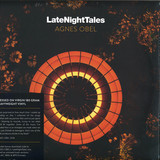
- C1: Agnes Obel - Stretch Your Eyes (Ambient Acapella)
- C2: The Bulgarian State Radio & Television Female Choir - Pilentze Pee (Pilentze Sings)
- C3: Agnes Obel - Glemmer Du
- C4: Agnes Obel - Bee Dance
- C5: Sibylle Baier - The End
- D1: Michelle Gurevich - Party Girl
- D2: Can - Oscura Primavera
- D3: David Lang - I Lie
- D4: Nina Simone - Images (Live In New York 1964)
- D5: Agnes Obel - Poem About Death
to Me, Sounds Have Always Been More Interesting Than Words,' Says Agnes Obel. i Love It When The Voice Becomes An Instrument And You Almost Forget It's A Human Voice.' Never Is This More Apt Than On This Beautifully Programmed And Bewitching Selection Of Music.
Agnes' 2010 Debut Album Philharmonics Went Platinum In France And Belgium And, Unsurprisingly, Quintuple Platinum In Her Native Denmark, Where She Also Won Five Danish Music Awards (equivalent To The Brits) In 2011. The Follow-up Aventine, Released In Late 2013, Was Imbued With The Same Measured Calmness As Her Debut. It Went Platinum In Belgium And Gold In Denmark And France.
For The Mix You Have In Your Hands It Feels Almost As If Agnes Has Scoured The World Looking For Kindred Spirits - Or Kindred Songs. There's A Quietude About It All, The Antithesis Of A Rush Hour, Like A Frozen Lake On A Sunday Morning. This Is Aided By A Veritable Cornucopia Of New Obel Material, Including A Haunting Reading Of Danish Song 'glemmer Du', Inger Christensen's 'poem About Death' Set To Original Music, And An Agnes Original, 'bee Dance'.
Among Them, There's The Enigmatic Jamaican Singer Nora Dean Who Weighs In With The Hypnotic And Slinky Duke Reid Production, 'ay Ay Ay Ay (angie-lala)' And The Sparse, Sardonic 'party Girl' By Michelle Gurevich, So Good It Inspired The Eponymous French Movie. There Are The Plangent Voices, The Bulgarian Folklore Choir, Nina Simone, Ray Davies And Agnes Herself, Ringing True. Somehow, Ms Obel Makes Even Makes The Electronic Tracks Bow To Her Needs As With Yello Whose 'great Mission' Is More Martin Denny Than Underworld And Cult Greek Composer Lena Platonos' 'bloody Shadows From A Distance' Pulses Gently Rather Than Throbs And Can's Recently Rediscovered 'obscura Primavera', Unusually Hushed.
"i Was Surprised At How Much Time I Ended Up Spending On This. I Collected All The Songs Together With My Partner Alex And We Just Spent Time Listening To Records, Trying To See What Would Fit Together. Some Of The Music I've Included Here Is On Mixtapes We Made When We Were Just Friends As Teenagers. Each One Of The Tracks Produces Stories In My Head." - Agnes Obel, February 2018
The fifth release on the Animals Dancing label is a special one. Sourced from recordings of a live set from 2014, Animals Dancing famiglia Jonny Nash & Suzanne Kraft (Diego Herrera) originally created these tracks in L.A. ahead of a series of live performances together. After some finishing touches made in Jonny's studio in Bali in 2016, Animals Dancing are very excited to finally launch these two to the club.
Za Talent will see you now.
- A1: The Hell Raisers - Syd Dale
- A2: The Eyelash - Johnny Hawksworth
- A3: Walk In A Nightmare - Syd Dale
- A4: Beat Street - Johnny Hawksworth
- A5: Walk And Talk - Syd Dale
- A6: Big Bass Guitar - Bill Martin / Phil Coulter
- A7: Mr. Chestertons Dog - Bill Martin / Phil Coulter
- A8: Mods & Rockers - Bill Martin / Phil Coulter
- A9: L.s.d. - Bill Martin / Phil Coulter
- B1: Stand By - David Lindup
- B2: Take A Goosie Gander - Syd Dale
- B3: Juggernaut - David Lindup
- B4: Grand Prix - Johnny Pearson
- B5: Veiled Threat - David Lindup
- B6: Sixth Sense - David Lindup
- B7: Funky Flight - Keith Mansfield
- B8: Raver - Alan Hawkshaw
- B9: The Washington Affair - Syd Dale
Way back in 1967, an animated superhero cartoon was released into the world. It was created by Grantray-Lawrence Animation and was based on a web-spinning, crime fighting blue and red dressed character that had originated in1962, in Marvel Comics by Stan Lee and Steve Ditko. This amazing series (that we're not allowed to mention the name of for legal reasons) ran on ABC TV in the USA, then Canada, then a few years later started to spread its web further, running here in the UK throughout summer holidays, after school and possibly early mornings at weekends in the late 1970s. The series then got released on VHS video (and probably Betamax too) in the mid 1980s and still continues to spin its animated magic around the world through further broadcasts, YouTube and DVDs.
The series was notoriously low budget, with animated errors everywhere and numerous scenes, sequences and backgrounds being re-used all the time, often across the same episode. Even a certain spider logo on a costume would appear with six legs, then eight legs later on, then back to six again in the same show.
Series One opened with a newly written spider theme, a classic, hooky song all about doing whatever spiders can, and had, as Big George (RIP) once pointed out to me, a set of session singers falling slightly out of time with the backing track after the first verse. Series One also featured background music by jobbing composers Bob Harris and Ray Ellis but these cues and master tapes are now believed to be lost.
After Series One the company Grantray-Lawrence went bankrupt, so the amazing spider series (that we're not allowed to mention for legal reasons) was taken on by producer Steve Krantz. He brought in new talent, including animation director Ralph Bakshi who later went on to turn a Robert Crumb strip cartoon into the feature Fritz The Cat. Krantz also slashed the already cripplingly small spider budget, and brought in the idea of using economic library music. Here, thanks possibly to an independent sync agent (it has been suggested that a company called Music Sound Track Services may have been the one) production turned to the KPM catalogue. This was one of the few really established library catalogues around at the time with a modern edge, it was full of fabulous, modern dramatic music tracks - often all on the same LP. But more importantly all the tracks were far longer than the one minute musical cuts that many of the fledgling USA library companies were issuing at the time. Not only would this KPM music be efficient, affordable and very easy to use, it would also mean syndication worldwide would not be held up by any future musical issues. Krantz produced two amazing spider series (that we're not allowed to mention for legal reasons), and both were smothered with KPM music. In fact barely a spider second goes by without music playing in either the background or foreground.
For many years I - and many nostalgic others - have been thinking about putting this vinyl album together. For many enthusiasts this really is formative music - a junior foray into hip swinging crime jazz and esoteric musical grooviness. I've also read on line accounts by DJs from WFMU on the trail of original spider master tapes, and there's even a whole forum dedicated to Spidey-Jazz'. Then recently I was looking at an old spider tracklist and realized that several of my favourite KPM cues were there including Syd Dale's Hell Raisers' and Walk And Talk', both from one of the most elusive and desirable KPM albums of all time (yes, you just try and find yourself a copy of KPM 1002 right now), so I decided to push on and get the album made.
So, what features on this Spider-Jazz Lp Well it's music from the amazing TV series we are not allowed to mention for legal reasons, BUT, not music from Series One. No, but it is all from Series Two and Series Three. From looking at archival cue sheets, over 50 tracks from various early KPM 1000 series albums were used across episodes. I've distilled this down into one exciting and enthralling LP, and if this works a further Spider Jazz album may well swing in to production. If you're interested (and I'm sure you may well be) cues here came from KPM1001, KPM1002, KPM1015, KPM1017, KPM1018 and KPM1043 and were composed by master library composers of the era - Dale, Hawkshaw, Hawksworth, Mansfield etc.
And if you are listening over there in the USA, you may well recognize many of the cues here not just from the amazing TV series (that we're not allowed to mention for legal reasons) but also from classic 1960s and 1970s NFL highlight shows that we are allowed to mention.
"Resist the categories that define and divide"
Uncanny Valley EP sonically explores the uneasy, obscure but familiar relationships between human and machine in contemporary life. This is the debut release on RESIST, the record label launched by experimental club/art hybrid event from Belfast, Northern Ireland. This debut release is by RESIST event and label founder, Koichi. Remix comes from electronic music innovator and Eotrax label owner, Eomac in an anxiety driven, frenzied remix of the title track.
Jagged and angular sonics, and warm organic artefacts are the defining sound of this release, which imitates the theme behind the music. Machines are being engineered to have a place in intimate and personal areas of human life. What does it mean to be human in this increasingly digital world Are we anything more than complicated robots made of flesh Where does humanity stop and the uncanny begin
Koichi returns with a new sound, signalling a departure away from his previous aesthetic and into a new direction breaking free from the boundaries and categories of restrictive genre definitions. His music continues to contain a heavy techno aspect, and also draws on raw industrial and experimental influences.
Koichi is an electronic musician, music researcher, and event curator who explores resisting exclusionary identities and disrupting discourses of power and prejudice through music and live digital art.
Bluestaeb's Evolution From A Beatmaker To A Producer Is His Sophmore Album everything Is Always A Process'.
He Is One Of The Key Figures Of A New Generation Of Up And Coming Hiphop Beatmakers, Who Have Emancipated From Genre Thinking And Instead Merge Old School Aesthetics With A New School Attitude And Organic Instrumentation.
Everything Is Always A Process Re-iterates Bluestaeb's Overall Approach To Life (and Thinking), But Also Has Direct Reference To The Making Of The Album Itself, Which Began With Moving From Berlin To Paris In 2015 In The Search Of New Influences And A New Creative Environment.
Created Between 2015 And Early 2018, Eiaap Embodies The Process Of This Transition - As Well As Collaboration With Instrumentalists And Vocalists From All Over The World And Recording In Different Studios In Paris, London & Berlin.
"meeting All Those Musicians And Trying Out New Ways Of Producing By Using Real Analogue Synths, Rhodes, Drums And Percussion Etc. Made It Possible To Overcome The Creative Boundaries Of A Home Studio With Just A Midi Keyboard" / Bluestaeb
Influenced By Madlib's "shades Of Blue" And Trained In African Drum Techniques Such As Djembé And Daruka, Bluestaeb Had Been Crafting His Own Beats Since His Teenage Years And Gradually Found His Sound Identity Through Experimenting With Hiphop And Jazz - First To Be Heard By A Broader Music Community In 2013, When He Released His Debut Album "1991 Extraterrestrial" (radio Juicy). Since Then The Prolific Young Artist Has Released Numerous Solo And Collaboration Projects ("b.l.u.e. Friday" In 2015 And - sidekicks With S. Fidelity In 2016). In 2016, He Produced Collaborative Album "lit - Lost In Translation With Rapper Juju Rogers, A Keen Manifesto Against Racism, Xenophobia And The Rise Of Anti-heroes Such As Donald Trump.
Today, Bluestaeb Lives And Works In Paris And Berlin And Is Set To
Release His Third Solo Album everything Is Always A Process', A
Smooth Neo Soul-induced Epic Featuring Artists Such As Noah Slee, Harleighblu And Melodiesinfonie, Via Jakarta Records In 2018.
Shunter, the new album by the Berlin-based duo Driftmachine, is their most ambitious work to date. Although instantly recognizable, featuring their trademark Kosmische and Avant-garde sounds, it also presents a new journey into abstract and hallucinatory worlds. Filled with eerie textures, their electronic visions are darker and more vaporous than ever.
Driftmachine's fourth album (also the fourth one for Umor Rex) offers a new perspective on their ample sound spectrum and systemic narratives. Shunter overlaps and mutates their post-industrial-dub motives. It was conceived and produced in search of a very different kind of imagery, with sections of noise and field recordings intersecting with analogue sounds, a mixture of contrasted fragments, where the usual creative process of modular-synthesis leads Gerth and Zimmer to the discovery of a dark, hazy and diffused experience. There is a protean quality to the rhythmic elements, with tempos constantly contracting and expanding, a departure from the mono-beat-rhythms of "Nocturnes" and "Colliding Contours". The first half of Shunter is made of four pieces named "Shift", although individually separated, they are conceptually linked and can be understood as a sort of score. Imagine a late stage of the industrial revolution, with the interaction between heavy machinery and human beings. The second half of the album is not completely separated, but it has three other substantial melodic moments. Somewhere between the hauntological and the realms of archive-music, a huge range of subterranean beats and distinct patterns dotting the landscape of early electronic and post dub music.
All songs written & produced by Driftmachine (Andreas Gerth & Florian Zimmer), Berlin.
Mastered by Rafael Anton Irisarri. Design by Daniel Castrejón.