Major-label debut by You Me At Six, Hold Me Down, was released on Virgin Records in January 2010, after the success of their debut album Take Off Your Colours - Released on vinyl for the first time, hear the album that cemented their reputation pressed on high-quality 180g vinyl. Taking their name from an abbreviation of the time they would meet, You Me At Six were formed in Weybridge, Surrey in 2004 by vocalist Josh Franceschi, guitarists Max Helyer and Chris Miller, and bassist Matt Barnes. Drummer Dan Flint joined in 2007. They first broke through at 2007's Slam Dunk Festival with their brew of heavy, melodic, emo-tinged rock, and after two self-released singles, the band signed to Slam Dunk Records. By 2010, they had signed to Virgin. Working with producers John Mitchell and Matt O'Grady, the band crafted 12 new tunes for Hold Me Down, including the singles Kiss And Tell, Underdog and Liquid Confidence which won Best Single at the 2010 Kerrang! Awards. The album reached No 5 in the UK chart, and fully established them on the vibrant UK rock scene. With a stable line up since 2007, You Me At Six have become one of Britain's most-loved bands, and announced recently that they will be splitting up after playing the Slam Dunk Festival in 2025, with Franceschi stating "Let's have the opportunity to say goodbye properly, versus slipping out the back door."
Search:no name
The hornsman instrumental has a long legacy in the realms of reggae music. Don Drummond, Tommy McCook, Vin Gordon, Rico Rodriguez, Eddie Tan Tan. The list players behind this tradition could go on and on. The notes they played across eras from ska to rock steady to the deepest dubwise steppers bellow through the wind and the wire like a Warrior Charge ….
…It is within this tradition that Ital Counselor’s next weighty contribution to the musical world of QUALITY reggae fits…
…From the very first sonorous note emanating from the mighty Soothsayer’s Horn Section the listener can tell the Dub Organiser means business. That’s right. Once again, the Ital Counselor teams up with Chris Lane of Fashion Records for a cantankerous churning steppers meant to burn out all weak heart sound who try come test.
As evidenced from this 12”s namesake, the humble Soul Dragon Temple of Tone Sound System and IC partners in crime out of Philadelphia, USA, the Soul Dragon Anthem breaths some serious fire. The hard hard rhythm churns relentlessly while the bassline rolls like Dragon’s breath calling all in the dance to spring heel skank straight through all four cuts.
The Dub Organiser stirs a cauldron of dense dub at points conjuring aspects of Lee Perry’s classic Black Ark sound while maintaining his own distinctive spin on the mystical mixing arts. Shards of sound echo and delay. Mr. Lane takes the bassline to aquatic depths as the DRAGON DIVES DEEP……Cut 1…Cut 2…Cut 3…Cut 4…
This one is dedicated to all home town hi-fi’s forwarding reggae and sound system culture outernationally. So without further ado, all soundman and woman worth your salt it is time to DROP the needle on this track. Watch the Dragon FLY and let the Dub Organiser and the Soothsayer Horn’s “Soul Dragon Anthem” BREATH FIRE through your SPEAKER BOX!!!!!!
- 1: Pristine Christine
- 2: Get Out Of My Dream
- 3: Truck Train Tractor
- 4: Once More
- 5: Almost Prayed
- 6: If She Doesn’t Smile (It’ll Rain)
- 7: Talulah Gosh
- 8: Crash
- 9: It’s A Good Thing
- 10: Hang-Ten!
- 11: When It All Comes Down
- 12: Kaleidoscope World
- 13: Somewhere In China
- 14: I’ll Still Be There
- 15: Abandon Ship
- Someone Stole My Wheels
- 2: Dying Day
- 3: Hammering Heart
- 4: Why Does The Rain
- 5: Yesterday
- 6: Ten Miles
- 7: Sensitive
- 8: Brighter
- 9: Adam’s Song (Pour Fenella)
- 10: She Looks Right Through Me
- 11: Therese
- 12: Velocity Girl
- 13: Will He Kiss Me Tonight
- 14: Some Candy Talking
- 15: Candydiosis
Needle Mythology, the label founded by music writer, author and broadcaster Pete Paphides, is thrilled to announce the release of SENSITIVE the first ever vinyl anthology to cover the indiepop scene of the 1980s. SENSITIVE features 30 songs in total by artists who defined the indiepop aesthetic, among them The Jesus & Mary Chain, The Sea Urchins, Primal Scream, The Pastels, Talulah Gosh, Orange Juice, The Field Mice, The Primitives, The Wedding Present, Miaow, Razorcuts, Dolly Mixture, The Bodines, Shop Assistants, The Soup Dragons, The Loft, The Chills, That Petrol Emotion and The Railway Children. SENSITIVE takes its name from the single released by The Field Mice, and marks the first time that The Field Mice have allowed one of their songs to be used on a compilation released by any label other than Sarah Records, who released all their records at the time. Also features on SENSITIVE is Dying Day from Orange Juice’s hugely influential debut album You Can’t Hide Your Love Forever – marking the only time that Edwyn Collins and his wife and manager Grace Maxwell have given permission for an Orange Juice song to be featured on an anthology. Many of the records featured on SENSITIVE have become highly sought-after collectors’ items since their original release. The Sea Urchins’ Pristine Christine changes hands for up to £400. Original mint copies of April Showers’ only single Abandon Ship command up to £380. If you were to try and individually buy all the records featuring the songs on SENSITIVE, you can expect to pay something around £1150. SENSITIVE features 10,000 words of extensive track-by-track notes and an essay by Pete Paphides, who was and remains an avid proponent of the indiepop scene that this collection chronicles. All the songs on SENSITIVE have been newly mastered at Abbey Road by Miles Showell. SENSITIVE will be released on double LP and double CD Needle Mythology Records.
“Powerhouse Duo” (TODAY) The War And Treaty return with their new album Plus One. The album includes "Can I Get An Amen," "Leads Me Home," "Stealing A Kiss," "Called You By Your Name" and “Carried Away” "Every song on this album deals with some aspects of him and some aspects of her and some aspects of us. The ideal of sharing space with someone can be challenging no matter how short or long. We’ve had moments of doubt, moments of clarity, moments of regret and moments of solid faith." - Michael and Tanya
- Prologue Amateur
- Sax Addict
- Otre Soleil Est Mort
- Tinder Surprise
- Igor Stravestit
- Amoureuse
- 5: Th
- Ok Boomer
- Ouais
- Je Cours
- Conversation
- Laura Palmer
- Yaourt A L'italienne
- T'es Ou?
Back in the day, when he was the drummer for Poni Hoax, Vincent Taeger would sing in French whatever came to his mind backstage after concerts, just for fun, to amuse his friend the late Nicolas Ker. Since then, time has flown by, undoubtedly bringing its share of ups and downs. Nonetheless, today, this artist with a long career is finally releasing his debut album as a singer, OK Crooner. It's indeed an album for a singer, but also one for a musician. For this part, Taeger doesn't come alone; he brings along the Jazz Kamasutra, a sexy sextet that knows how to play everything and will later accompany him on stage. To get to this point, Vincent Taeger had to stop playing around with big names like Air, Damon Albarn, Justice, Lenny Kravitz, Skepta, Tony Allen, Oumou Sangaré, Jeff Mills, Archie Shepp, Sampa the Great, Andrea Laszlo de Simone... More than half of the major artists with whom he once collaborated, contributing to their albums or simply laying down a drum, bass, or any other heavy instrument line. Before OK Crooner, he also transformed into Tiger Tigre. This roaring alias was used for a first solo album, instrumental and so deep that one might have thought the ghost of François de Roubaix had taken shape. But that was before, before this exceptional musician decided to dive into the vast ocean of French variety to give a sequel, a culmination to this project. During COVID, Vincent Taeger started frantically listening to Souchon, Chamfort, Gotainer, and Christophe. Inspired by his elders, while not renouncing his attachment to the meticulous arrangements reminiscent of Alain Goraguer's soundtracks, he picked up a pen to jot down snippets of songs to accompany his increasingly sophisticated compositions. And the worst part is that he enjoyed it! Coming from rap, he has a knack for punchlines. Throughout the album, he delivers just as many harsh or soft words as good ones, alternating between risqué humor, Gaulish wit, and poetry. Partially recorded at Studio Ferber, but mainly at home with his partner, known by the alias La Plongée, who co-produced the album for the occasion, OK Crooner is a key album in Vincent Taeger's discography. Besides being the one where he finally unveils his voice to the public, without pretense as it is prominently featured and minimally, if at all, retouched, Taeger also offers music that suits him perfectly. Sharp yet accessible, jazz, pop, baroque, classical, modern, and resolutely marked by Tony Allen's legacy, which he daringly mixes with Beethoven in the Fifth Symphony. His alter ego, Vincent Taurelle, with whom he has produced many albums, took care of mixing this one.
- 45: Lux
- 431: 42
- Vienna Sur Mer
- Runde Um Runde
- Ich Kann Nicht Schlafen
- Alles Ist Gleich
- Tourist
- Verbautes Haus
- Hinter Jalousien
- Der Regen In Wien
- Mädchen Mit Herz
- Lass Uns Spazieren
- Wolfgang Von Kempelens Sprechmaschine
LIMITED 2 LP[30,04 €]
"Wien - die Stadt mit dem wahrscheinlich schönsten Namen. Allein der Klang ist schon Musik." (Andreas Dorau) Grund genug, der österreichischen Hauptstadt ein ganzes Album zu widmen. Die Idee dafür entstand, als Dorau gemeinsam mit zwei Freunden an einem Stadtplan Lübecks arbeitete und dessen brachliegende Geschichten abseits der üblichen Attraktionen erforschte. In Dorau entflammte die Faszination für das Porträtieren einer Stadt aus der Sicht des unvoreingenommenen Touristen, des Besuchers und Außenstehenden. Musikalisch spannt das Album einen weiten Bogen und bietet sowohl wunderschöne Pop-Momente ("Der Regen in Wien"), knarzigen Kawaii-Minimalismus zusammen mit der Kölnerin Stefanie Schrank ("Lass uns spazieren gehen") aber auch Stücke, die sich in ihrem Charakter jeder Einordnung entziehen ("Alles ist gleich"). "Wien" ist somit nicht das erwartbare Album, das der Titel zunächst vermuten lässt. Vielmehr bietet die Platte Einblicke in Andreas Doraus" persönlichen Zugang zur Stadt, die zuweilen auch ein schwierig-schmieriges Verhältnis offenbaren. Und während Popmusik aus und über Österreich im Grunde schon bei Mozart und Schönberg begann, ist Pop aus Deutschland über Österreich vermutlich eher eine Neuerung. Wenn es dann auch noch ein norddeutscher Musiker ist, der ein monothematisches Album über die österreichische Hauptstadt macht, drängt sich fast zwangsläufig die Frage auf: Ist das schon Austro-Pop?
- 45: Lux
- 431: 42
- Vienna Sur Mer
- Runde Um Runde
- Ich Kann Nicht Schlafen
- Alles Ist Gleich
- Tourist
- Verbautes Haus
- Hinter Jalousien
- Der Regen In Wien
- Mädchen Mit Herz
- Lass Uns Spazieren
- Wolfgang Von Kempelens Sprechmaschine
- Platz Auf Erden
- Ottakringer Lightboy
- Rauchen In Wien
- Ich Schwöre
- Tiere Im Prater
- Teddy
- Ein Augenblick Mit Unterschrift
- Schlangen In Der Stadt
- Austropop
- Der Spleen
- Nichts Ist So Wie Es Einmal Schien
Black Vinyl[23,49 €]
"Wien - die Stadt mit dem wahrscheinlich schönsten Namen. Allein der Klang ist schon Musik." (Andreas Dorau) Grund genug, der österreichischen Hauptstadt ein ganzes Album zu widmen. Die Idee dafür entstand, als Dorau gemeinsam mit zwei Freunden an einem Stadtplan Lübecks arbeitete und dessen brachliegende Geschichten abseits der üblichen Attraktionen erforschte. In Dorau entflammte die Faszination für das Porträtieren einer Stadt aus der Sicht des unvoreingenommenen Touristen, des Besuchers und Außenstehenden. Musikalisch spannt das Album einen weiten Bogen und bietet sowohl wunderschöne Pop-Momente ("Der Regen in Wien"), knarzigen Kawaii-Minimalismus zusammen mit der Kölnerin Stefanie Schrank ("Lass uns spazieren gehen") aber auch Stücke, die sich in ihrem Charakter jeder Einordnung entziehen ("Alles ist gleich"). "Wien" ist somit nicht das erwartbare Album, das der Titel zunächst vermuten lässt. Vielmehr bietet die Platte Einblicke in Andreas Doraus" persönlichen Zugang zur Stadt, die zuweilen auch ein schwierig-schmieriges Verhältnis offenbaren. Und während Popmusik aus und über Österreich im Grunde schon bei Mozart und Schönberg begann, ist Pop aus Deutschland über Österreich vermutlich eher eine Neuerung. Wenn es dann auch noch ein norddeutscher Musiker ist, der ein monothematisches Album über die österreichische Hauptstadt macht, drängt sich fast zwangsläufig die Frage auf: Ist das schon Austro-Pop?
Music Brokers’ exploration into legendary Progressive Rock keeps expanding now on vinyl format. We return to the rock sub-genre that combined complex arrangements and improvisation with fantasy aesthetics and lyrics. Krau- trock & Progressive: The Definitive Era digs deep into some of its lesser known artists like Hammer, Harmonia, One, and Agitation Free and combines them with many of the most essential names of the ‘60s and ‘70s like East Of Eden, Mogul Trash, Egg, La Dusselford and Beggars Opera. With fantastic artwork and remastered sound, Krautrock & Progressive: The Definitive Era is another essential addition to your collection on vinyl format; and remember that the album is not available on streaming platforms!
Universally hailed as the King of the Blues, the legendary B.B. King was without a doubt the single most important electric guitarist of the second half of the 20th century. His bent notes and staccato picking style influenced legions of contemporary bluesmen, while his gritty and confident voice -capable of wringing every nuance from any lyric- provided a worthy match for his passionate playing. In The Many Faces of B.B. King we will review many of his most celebrated collaborations including Stevie Ray Vaughan, Etta James, Chaka Khan and Pat Metheny, enjoy plenty of his hits that spanned a six-decade career and finally, enjoy a list of who’s who in The Blues Hall of Fame with names such as Howlin’ Wolf, Elmore James, Slim Harpo y Muddy Waters. The Many Faces Of B.B. King is a fantastic album that showcases the work of one of the most celebrated musicians from our time.
Also, remember that it is not available on any streaming platforms.
- A. You And Me
- B. You Are Giving Me Some Other Love
Blue Valentine Vinyl[15,08 €]
Sometime in 2005, a lone box of master tapes escaped an estate sale and made its way through a network of collectors, record dealers, and “junkers” into the hands of leading Ohio soul expert Dante Carfagna, who linked them to Columbus, Ohio’s mysterious Prix label (See: Eccentric Soul: The Prix Label). A bit of research turned up Prix proprietor George Beter, who identified most of the unlabelled material. All it took was an endless series of phone calls and letters and two fields trips in Columbus. But one complete mystery wended its way onto our final Prix compilation. “You and Me,” a simple but irrepressible demo credited only to Penny & the Quarters, was found tacked onto a mixed studio reel. Our survey of every willing lifer left on the Columbus soul scene, including retired DJs, producers, and important local artists, produced not so much as a glimmer of recognition at the name Penny & the Quarters. Though we loved the song from the first play, it may’ve ended up a bit buried on our original compilation, as #18 of 19 tracks.
- A1: That's All Right
- A2: Mystery Train
- A3: Heartbreak Hotel
- A4: Blue Suede Shoes
- A5: Tutti Frutti
- A6: My Baby Left Me
- A7: Hound Dog
- B1: Don't Be Cruel
- B2: Love Me Tender
- B3: So Glad You're Mine
- B4: All Shook Up
- B5: Let Me Be Your Teddy Bear
- B6: Jailhouse Rock
- B7: Baby I Don't Care
- B8: Doncha' Think It's Me
- C1: King Creole
- C2: Trouble
- C3: Stuck On You
- C4: Fever
- C5: Such A Night
- C6: It's Now Or Never
- C7: Are You Lonesome Tonight?
- D1: Mess Of Blues
- D2: Tonight Is So Right For Love
- D7: Night Rider
- D8: Return To Sender
- D3: Surrender
- D4: (Marie's The Name) His Latest Fame (Marie's The Name)
- D5: Little Sister
- D6: Can't Help Falling In Love
Of all the nicknames given to Elvis, only one of them really seems to reflect his importance in the history of rock: they called him The King.
Together with Chuck Berry, Elvis represented the young generation that vibrated to the music with new rhythms that appeared in the Fifties: Rock’n’Roll. Presley’s personality, not to mention his voice, charm, and a whole series of chart hits, guaranteed Elvis a special place in the hearts of his fans; and not only in his own lifetime, because the same is true some fifty years later.
The thirty titles included in this album are a brilliant demonstration of Elvis’ talents, and the music alone is enough to explain the cult following of his fans, who will worship him forever.
In Todmorden, the oddly-named market border town in West Yorkshire with a habit for embracing the weird and wonderful, a burst of sunshine is a precious thing. Through the thick of Winter, through every season in fact, the town’s folk are used to the wind and rain, fog and mist. As much a part of the town as the trademark deep valley it sits in, here the lay of the land invites the weather in, just as it does the many musicians, artists, and unique characters that have come to call the place home over the centuries.
Bridget Hayden is one such soul who found a home among these hills. The experimental musician, who invites the ghosts in for the classic folk songs that make up her stunning new album, knows only too well about such weather, how rare and treasured the breaks from it are. Her favourite thing to do in the valley, she says, is “to make the most of every tiny minute of sunshine.”
Such aspirations nearly derailed the recording of Cold Blows the Rain, her new eight-song collection released via the Todmorden- based label Basin Rock. Having hired the town’s Oddfellow’s Hall to record these new songs in the late summer of 2022, Hayden says the weather was so good she ended up basking in every second of it, only moving inside to begin recording when the sun was setting, working deep into the night to make up the time.
There’s a good chance, however, that it had to be this way. The songs that make up Cold Blows the Rain are not made for the sunlight. They come, instead, wrapped in mist and coated with drizzle, those elements shaping the album as much as the voice and the instruments held within, as real but ambiguous as the ghosts that linger in the shadows. The sound of the dark valley floor.
Mostly centred around meditative and experimental improvisation, Bridget’s work to-date has seen her spend more than two decades recording and performing on the underground music scene. She’s also toured internationally both as a solo artist and as part of bands such as Schisms and The Telescopes, while working on various side-projects with the likes of Folklore Tapes.
For all of this sonic exploration, so much of her work has been formed around elements of traditional folk aesthetics and, over time, she began to piece together a collection of reinterpreted traditional songs that she absorbed as a child from her mother: through The Dubliners and Muddy Waters, to Bessie Smith and The Leadbelly Songbook. Harvesting her love for Nina Simone, Karen Dalton, Margaret Barry, and more, Bridget takes these traditional songs and transforms them into something uniquely evocative
"It goes back to the womb,” Bridget says of that connection. “I would not call it a memory as it is so deep within my blood and bones. My mum was the source, she sang all the time, as part of life. So it was a very lulling and natural introduction. It seemed common to hear her singing – unbeknownst to her – in time with a raindrop dripping at the window,” Bridget continues. “I’ve always wanted to do a folk record as I love these songs so much. It comes much more naturally to me to sing other people’s words, especially when they’re as beautiful as these old verses.”
Underpinned by waves of analogue reverb, and led by Bridget’s stirring and weather-beaten voice, the songs on Cold Blows the Rain drift and crawl like low heavy clouds on flat-top hills, shaped by the land. The backdrop is equally as arresting, all subtle gloom cast in shadow, a gentle but pronounced swirling of textures, crafted from harmonium and violin courtesy of The Apparitions (Sam Mcloughlin and Dan Bridgewood-Hill).
“The weather speaks the most eloquently about human loss,” Bridget says, articulating such sentiments. “It’s good to feel enveloped by something so much vaster than ourselves. The rain and the tears all become one.”
- La La La
- Cruz
- Lost Angel
- Taquero
- Dream Suite
- The Mystery Of Miss Mari Jane
- Cha Cha Cha
- Sea Changes
- Cinema Lover
- Die Again, Yesterday
- Hollywood Ten
As Jess Sylvester finished his Hardly Art debut as Marinero in the fall of 2020, he realized it was time for a change. Sylvester grew up in Marin County, on the doorstep of San Francisco. It was a nurturing community for a high-school punk with a pompadour and, later, for a sober songwriter with a proclivity for moody psychedelia. But he wanted to be challenged and inspired by a new setting and scenario around strangers who prompted him to approach his music in unexpected ways. So in September 2020, as the world continued to reel in lockdown, Sylvester headed several hours south to Los Angeles, a city that, despite the relative proximity, the film buff knew largely from classic and cult films situated there. When he arrived, he kept digging into that cinematic past-Robert Altman's The Long Goodbye, with John Williams' classic theme, or classic 90s movies about East LA, many featuring Edward James Olmos. They shaped his understanding of his new town just as it began to open. This is one pillar of the multivalent and endlessly lush La La La, Marinero's new album about sobriety, identity, and fantasy that is playfully named both for the city that helped shape it and the sophisticated pop it contains. Sylvester wrote about characters outside of himself, whether considering the heroine reckoning with her own version of keeping clean or the screenwriters whose work was deemed communist simply as a political convenience. He linked those songs with motivational anthems about self-acceptance and playful numbers about flirting through food, shaping a 12-song set rich with humor, empathy, and encouragement. Sure, La La La is a continuation of the slippery genre play Sylvester started with 2021's Hella Love, 2019's Trópico de Cáncer, or even before that. But it also feels like a fresh beginning for Marinero, as Sylvester realizes how boundless this project can be. He began to think about the music of his childhood, how his mother is from San Francisco with Mexican roots, and how he'd heard so much salsa growing up as an impetuous teenager. So he wrote "Taquero," a red-hot salsa tune that uses tacos and their trappings as a source of endless metaphors for come-ons. And then there was the Ray Barreto or Santana-inspired "Pocha Pachanga," with organ gliding and percussion pulsing beneath his yearning vocals, warped as if by desert winds. In Los Angeles, he found a wealth of players who spoke this music like language itself (including Chicano Batman's Eduardo Arenas), all ready to play with and push these familiar forms. Sylvester has also been sober for 21 years, since a cross-country sojourn to attend college in Boston ended in a chemical haze. Today, he sees friends facing the same decisions he made two decades ago, and he brings bits of that experience to bear in songs that feel like self-help anthems. Recorded with a musical hero (and labelmate) of his, Chris Cohen, "Sea Changes" feels like sunshine breaking through dark clouds, as Sylvester acknowledges the newfound confidence and clarity in a friend who has stepped away from destructive habits. In the past, Sylvester has been intractably linked to his identity as a Mexican-American, born to parents from Mexico and Irish- American descent who settled in San Francisco. That can be limiting, of course, tying him to notions of sound and style that aren't always correct. On La La La, he simultaneously steps into and out of those preconceptions, singing tracks above salsa in joyous Spanish or pondering the dynamics of the Hollywood Ten and blacklists above mysterious lap steel and teasing trumpet. His identity, then, should now be clear: He is a Californian, making music shaped by the diversity of encounters and experiences that are a central part of that state's fabric. Never before has he presented himself so fully and unabashedly on tape as with La La La, an album Sylvester built with new inspirations to deliver new charms.
- A1: B-Rock & Mono Junk - My Mind Is Going
- A2: Orchestra Guacamole & Mika Vainio - Theme For The Lost Diamonds
- A3: Mr Velcro Fastener& Mesak - Robotic Appliances (Original Demo)
- B1: Jori Hulkkonen - Whispers (Extended Dance Version)
- B2: Markus & Kristian - Hän Malli On
- B3: Spektor - Rubic`s Cube
- C1: Imatran Voima - It`s Time To Testify
- C2: Decepticons - We Are The Decepticons
- C3: Dr Robotnik - Own Commands
- D1: Feng Shui - Hao Hao (I`m Back)
- D2: Brothomstates - Naeae Eletrok
- D3: Tero - Music
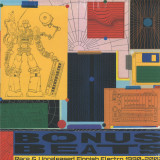
Cold Blow proudly presents Bonus Beats: Rare & Unreleased Finnish Electro 1990–2002, a landmark compilation capturing Finland's underground electro scene from the late 1990s and early 2000s. This double-LP features 9 rare and 3 previously unreleased tracks from pioneering Finnish artists, showcasing a distinctly Nordic approach to the genre. With contributions from notable names such as Jori Hulkkonen, Mr. Velcro Fastener, Mono Junk, and the late Mika Vainio, this release highlights the experimental and DIY ethos that defined Finland's electronic music scene during this period.
Carefully curated by Erkko Lehtinen, a key figure in Finland's electro scene as a DJ and promoter, the compilation explores a broad sonic palette, spanning early techno influences, robotic allure, and dark, bass-heavy tracks. Standout contributions include Decepticons and Dr. Robotnik's unreleased dark electro cuts, with the latter veering into minimal wave territory. Feng Shui feat. Monsieur delivers a striking collaboration that fuses a trance-like lead with raw, industrial beats, uniting members of Huoratron, Nu Science, Polytron, and Op:l Bastards. Keeping alive the legacy of Perttu Häkkinen (aka Randy Barracuda), this release wouldn't be complete without Imatran Voima's bass-driven anthem from their debut EP. Also featured are Spektor's retro synth experiments, Tero's Commodore 64-based creations, Brothomstates' (later a Warp signee) futuristic soundscapes, and a rare cover of Kraftwerk's The Model by the anonymous duo Markus & Kristian. Erkko's extensive liner notes provide additional insight into this culturally and musically significant era. Available in double-LP, this collection is a must-have for electronic music aficionados and vinyl collectors.
j 10: Feng Shui - Hao Hao (I`m Back) feat. Monsieur
- A1: Color Me Blu - Fields Of Laughter
- A2: Apple - Love Melody In E Minor
- A3: Tribal Sinfonia - Do You Want Me
- A4: Harve And Charee - New Me
- B1: Kwartet Frits Kaatee - Easy Evil
- B2: Ernie Scott Trio - Souled Out
- B3: Bunker Hill - Dionysis
- B4: San Diego - Sands Of Malibu
- C1: Synod - Sheryl Song Is Gonna Do My Dancing
- C2: Whiz Kids - Long Time Gone
- C3: Ross Miller - I Can Love Her Anyway
- C4: Thunderbolt The Wondercolt - Ragged Edge
- C5: Eyrle Oliver - Lovely Lady
- D1: Lisa Richards - A Day In The Life Of A Fool
- D2: Joe Bozzi Quintet - Masquerade
- D3: George Melvin Quintet - It ´S Good Not To Forget
Watch out! You are holding the 125th (one-hundred-and-twenty fifth!) album on Tramp Records in your hands! We are honored to celebrate this impressive anniversary with the tenth volume in the Praise Poems series. This time, too, we go on a journey to discover previously unheard regions of jazz, folk and AOR from the 1970s and 80s.
Praise Poems Vol.10 presents sixteen (almost) forgotten rare groove gems, all released between the years 1970 and 1984. One of the many highlights is the opening track: "Fields of Laughter" by Color Me Blu - originally released on an acetate only of which two copies exist worldwide. But there is much, much more to discover. This brandnew volume features a wide range of genres, from AOR (Whiz Kids, Ross Miller, and another previously unreleased track by Harve & Charee) to Latin-Rock a'la Santana (Color Me Blue, Tribal Sinfonia, and Apple) to Soul-Jazz (Ernie Lewis Trio, Joe Bozzi Quintet or Dutch saxophonist Frits Kaatee). Right at the end, one track in particular stands out: the wonderful "It's Good Not To Forget" by George Melvin and his quintet - a fabulously dreamy, thoughtful instrumental piece in the style of Ramsey Lewis with catchy tune potential.
Not many compilation series make it to a tenth edition. And if they do, then you often notice that the quality of the songs goes in the opposite direction to the increasing number of series: namely decreasing. Not so with Praise Poems Vol. 10, which the creators prove in an impressive new way. They have found tracks that were originally either a) pressed by the musicians themselves in very small editions or b) released by small, regional labels. It is understandable that neither the musicians nor these small labels had the necessary knowledge or budget to market their albums or singles professionally. The majority of the bands therefore did not manage to reach a large audience - although they certainly had the potential for the big stage.
"Praise Poems 10 - A journey into soulful jazz and funk from the 1970s" makes these almost 50-year-old treasures accessible to a new audience. We hope that you enjoy discovering your personal favorite song(s) and we are already looking forward to many more releases!
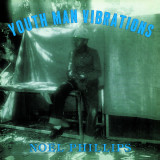
Erstmalige Wiederveröffentlichung seit 1981! Noel Phillips, der bis dato ausschließlich in Sammlerkreisen einen Namen hat, war seinerzeit 17 Jahre alt, als er für den Produzenten Prince Jammy dieses Juwel des Roots Reggae eingesungen hat, das es ab sofort zu entdecken gilt. Mit den Musikern Bass: Robbie Shakespeare, Drums: Sly Dunbar, Guitar: Boo Peep, Dougie, Horns: Deadly Headley, Bobby, Organ: Ansel, Winston Wright, Percussion: Scully, Sticky, Piano: Gladdy. Als CD exklusiv in der Box "Rootsman Vibration At King Jammy's" (VPGSCD7000) - Tipp!
- A1: Progetto Tribale - The Sweep
- A2: Onirico - Echo Giomini
- A3: Open Spaces - Artist In Wonderland
- B1: Alex Neri – The Wizard (Hot Funky Version)
- B2: M C.j. Feat. Sima - To Yourself Be Free - Instrumental Mix Energy Prod
- B3: Mato Grosso - Titanic Expande
- C1: Dreamatic - I Can Feel It (Part 1)
- C2: Carol Bailey - Understand Me Free Your Mind (Dream Piano Remix)
- C3: The True Underground Sound Of Rome - Secret Doctrine
- D1: Don Carlos - Boy
- D2: Lazy Bird – Jazzy Doll (Odyssey Dub)
Vol 2[28,99 €]
Volume 1 of this expertly curated project of 90s Italian House - put together by Don Carlos.
If Paradise was half as nice… by Fabio De Luca.
Googling “paradise house”, the first results to pop up are an endless list of European b&b’s with whitewashed lime façades, all of them promising “…an unmatched travel experience a few steps from the sea”. Next, a little further down, are the institutional websites of a few select semi-luxury retirement homes (no photos shown, but lots of stock images of smiling nurses with reassuring looks). To find the “paradise house” we’re after, we have to scroll even further down. Much further down.
It feels like yesterday, and at the same time it seems like a million years ago. The Eighties had just ended, and it was still unclear what to expect from the Nineties. Mobile phones that were not the size of a briefcase and did not cost as much as a car? A frightening economic crisis? The guitar-rock revival?! Certainly, the best place to observe that moment of transition was the dancefloor. Truly epochal transformations were happening there. From America, within a short distance one from the other, two revolutionary new musical styles had arrived: the first one sounded a bit like an “on a budget” version of the best Seventies disco-music – Philly sound made with a set of piano-bar keyboards! – the other was even more sparse, futuristic and extraterrestrial. It was a music with a quite distinct “physical” component, which at the same time, to be fully grasped, seemed to call for the knotty theories of certain French post-modern philosophers: Gilles Deleuze, Félix Guattari, Paul Virilio... Both those genres – we would learn shortly after – were born in the black communities of Chicago and Detroit, although listening to those vinyl 12” (often wrapped in generic white covers, and with little indication in the label) you could not easily guess whether behind them there was a black boy from somewhere in the Usa, or a girl from Berlin, or a pale kid from a Cornish coastal town.
Quickly, similar sounds began to show up from all corners of Europe. A thousand variations of the same intuition: leaner, less lean, happier, slightly less intoxicated, more broken, slower, faster, much faster... Boom! From the dancefloors – the London ones at least, whose chronicles we eagerly read every month in the pages of The Face and i-D – came tales of a new generation of clubbers who had completely stopped “dressing up” to go dancing; of hot tempered hooligans bursting into tears and hugging everyone under the strobe lights as the notes of Strings of Life rose up through the fumes of dry ice (certain “smiling” pills were also involved, sure). At this point, however, we must move on to Switzerland.
In Switzerland, in the quiet and diligent town of Lugano, between the 1980s and 1990s there was a club called “Morandi”. Its hot night was on Wednesdays, when the audience also came from Milan, Como, Varese and Zurich. Legend goes that, one night, none less than Prince and Sheila E were spotted hiding among the sofas, on a day-off of the Italian dates of the Nude Tour… The Wednesday resident and superstar was an Italian dj with an exotic name: Don Carlos. The soundtrack he devised was a mixture of Chicago, Detroit, the most progressive R&B and certain forgotten classics of old disco music: practically, what the Paradise Garage in New York might have sounded like had it not closed in 1987. In between, Don Carlos also managed to squeeze in some tracks he had worked on in his studio on Lago Maggiore. One in particular: a track that was rather slow compared to the BPM in fashion at the time, but which was a perfect bridge between house and R&B. The title was Alone: Don Carlos would explain years later that it had to be intended both in the English meaning of “by itself” and like the Italian word meaning “halo”. That wasn’t the only double entendre about the song, anyway. Its own very deep nature was, indeed, double. On the one hand, Alone was built around an angelic keyboard pattern and a romantic piano riff that took you straight to heaven; on the other, it showcased enough electronic squelches (plus a sax part that sounded like it had been dissolved by acid rain) to pigeonhole the tune into the “junk modernity” section, aka the hallmark of all the most innovative sounds of the time: music that sounded like it was hand-crafted from the scraps of glittering overground pop.
No one knows who was the first to call it “paradise house”, nor when it happened. Alternative definitions on the same topic one happened to hear included “ambient house”, “dream house”, “Mediterranean progressive”… but of course none were as good (and alluring) as “paradise house”. What is certain is that such inclination for sounds that were in equal measure angelic and neurotic, romantic and unaffective, quickly became the trademark of the second generation of Italian house. Music that seemed shyly equidistant from all the rhythmic and electronic revolutions that had happened up to that moment (“Music perfectly adept at going nowhere slowly” as noted by English journalist Craig McLean in a legendary field report for Blah Blah Blah magazine). Music that to a inattentive ear might have sounded as anonymous as a snapshot of a random group of passers-by at 10AM in the centre of any major city, but perfectly described the (slow) awakening in the real world after the universal love binge of the so-called Second Summer of Love.
For a brief but unforgettable season, in Italy “paradise house” was the official soundtrack of interminable weekends spent inside the car, darting from one club to another, cutting the peninsula from North to centre, from East to West coast in pursuit of the latest after-hours disco, trading kilometres per hour with beats per minute: practically, a new New Year’s Eve every Friday and Saturday night. This too was no small transformation, as well as a shock for an adult Italy that was encountering for the first time – thanks to its sons and daughters – the wild side of industrial modernity. The clubbers of the so-called “fuoriorario” scene were the balls gone mad in the pinball machine most feared by newspapers, magazines and TV pundits. What they did each and every weekend, apart from going crazy to the sound of the current white labels, was linking distant geographical points and non-places (thank you Marc Augé!) – old dance halls, farmhouses and business centres – transformed for one night into house music heaven. As Marco D’Eramo wrote in his 1995 essay on Chicago, Il maiale e il grattacielo: “Four-wheeled capitalism distorts our age-old image of the city, it allows the suburbs to be connected to each other, whereas before they were connected only by the centre (…) It makes possible a metropolitan area without a metropolis, without a city centre, without downtown. The periphery is no longer a periphery of any centre, but is self-centred”.
“Paradise house” perfectly understood all of this and turned it into a sort of cyber-blues that didn’t even need words, and unexpectedly brought back a drop of melancholic (post?)-humanity within a world that by then – as we would wholly realise in the decades to come – was fully inhuman and heartless. A world where we were all alone, and surrounded by a sinister yellowish halo, like a neon at the end of its life cycle. But, for one night at least, happy.
Mit "Nobody Loves You More" veröffentlicht Kim Deal am 22.11.24 auf 4AD ihr erstes Soloalbum. Die elf Songs umfassende Sammlung ist das erste Album der in Dayton, Ohio lebenden Künstlerin unter ihrem eigenen Namen. "Nobody Loves You More" ist Kim Deals Debütalbum, obwohl es nicht das erste Mal ist, dass sie einen Alleingang unternimmt - 2013 veröffentlichte sie im Eigenverlag eine fünfteilige Reihe von zehn Songs, die limitiert als 7" erschienen. Im Einklang mit Deals akribischer Herangehensweise an ihre Kunst, wurde das Album über mehrere Jahre hinweg verfeinert. Die ältesten Songs, "Are You Mine?" und "Wish I Was", wurden 2011 geschrieben und aufgenommen, kurz nachdem Deal von der "Lost Cities Tour" der Pixies zurückkam und nach Los Angeles umzog (frühe Versionen dieser Songs waren in der besagten Vinyl-Serie enthalten). Die letzten Aufnahmen für "Nobody Loves You More" fanden im November 2022 mit dem legendären Tontechniker und engen Freund Steve Albini statt, der den letzten Track "A Good Time Pushed" in seinem Electrical Audio Studio in Chicago einspielte. Auf dem Weg dorthin hat sie eine Vielzahl von Mitstreitern aus der Vergangenheit und Gegenwart hinzugezogen, von den Breeders (Mando Lopez, Zwillingsschwester Kelley Deal, Jim Macpherson, Britt Walford) oder auch Raymond McGinley (Teenage Fanclub), Jack Lawrence (Raconteurs) sowie Fay Milton und Ayse Hassan von den Savages. "Nobody Loves You More" wurde von Marta Salogni gemischt und von Heba Kadry gemastert. Zu jedem Song gibt es eine persönliche Geschichte. Sie handeln von den Winterferien mit ihren Eltern auf den Florida Keys ("Summerland"), einem Hochzeitsband-Cover von "Margaritaville" ("Coast") oder auch der Demenz ihrer Mutter ("Are You Mine?"). Die Platte zelebriert Deals unvergleichliche Kunstfertigkeit, die nicht nur auf die Höhepunkte ihrer Karriere mit gefeierten Bands der Alternative-Landschaft (Pixies, The Amps, The Breeders) verweist, sondern auch auf ihr unverrückbares kulturelles Gewicht, das über Generationen hinweg Musiker und Musikerinnen wie Kurt Cobain und Olivia Rodrigo beeinflusst hat.