Im September 1968 spielte AMON DÜÜL bei den "Internationalen Essener Songtagen", dem ersten fünftägigen Rockfestival Deutschlands, das der spätere Ohr-Labelchef Rolf-Ulrich Kaiser initiiert hatte. Der Berliner Musikproduzent Peter Meisel hörte und sah die Band dort und nahm sie spontan unter Vertrag, zusammen mit Tangerine Dream und Birth Control. AMON DÜÜL stand der Berliner "Kommune 1" nahe und entstand zu einer Zeit, da jeder ein Künstler war, der einer sein wollte. Und so konnte auch jeder, der wollte, ein Musiker sein. Zusammen, im Kollektiv, war alles möglich. Angelika und Helge Filanda, Wolfgang Krischke, Ulrich Leopold, Rainer und Ella Bauer, Peter Leopold sowie Uschi Obermaier spielten in Meisels Studio zeitgemäß high in the sky eine Session ein, die alle Regeln durchbrach und alle Hörgewohnheiten auf den Kopf stellte. Die Aufnahmen wanderten zunächst in den Giftschrank, erst ein Jahr später traute sich Meisel, sie unter dem Titel Psychedelic Underground zu veröffentlichen. Hier ist die Fortsetzung: Die Doppel-LP Disaster/Lüüd Noma erschien 1972, als es die Gruppe AMON DÜÜL schon nicht mehr gab, und sie präsentiert weitere Aufnahmen aus derselben Session. Alle Titel sind surreale, unübersetzbare Wortspielereien, die Stücke sind klanglich besser organisiert, weniger fragmentarisch, klarer voneinander abgesetzt und ausgefeilter nachbearbeitet als auf der ersten LP - der ausgenzwinkernd mitgelieferte Hinweis, alle Störungen und Fehler seien beabsichtigt, hat aber gleichwohl einen wahren Kern. Nun sind diese denkwürdigen Aufnahmen wieder zugänglich, remastered von den analogen Originalbändern. Sie sind das Dokument einer Zeitstimmung, die unwiederholbar geblieben ist. Wer sich für die Anfänge des Krautrocks ernsthaft interessiert, kommt an diesem Album nicht vorbei - das Disaster wartet auf Sie!
Buscar:noma
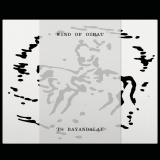
Wind of Oirat is the full length debut by Mongolian independent musician and sound artist Ts Bayandalai. Following his acclaimed 2020 EP Kimel, he now presents a further matured, composed and refined version of his signature sound, which combines traditional Mongolian music and instruments with influences from experimental music and post-rock. Deeply rooted in the cultural traditions of his homeland, Ts Bayandalai, who grew up in a nomadic family in the Mongolian steppe, explores nature and its myths, his ancestral roots, and the relationship between humans, animals and nature.
Artist Bio:
Ts Bayandalai is a Mongolian independent musician and sound artist. His childhood on the steppes shaped a deep sensitivity to natural and ethnic sound. To create his individual, deeply rooted yet modern soundscape, he combines traditional Mongolian musical elements with post-rock, experimental and electronic music, as well as from outernational music influences.
Born into a nomadic family on the steppes, Ts Bayandalai grew up wandering the vast grasslands with shepherds, absorbing the resonances of the horse fiddle and guitar — experiences that remain a primordial source of inspiration in his work.
Founder of the avantgarde band Horse Radio (2012) and the experimental project December3AM (2015), his compositions navigate cultural memory and contemporary aesthetics, reconstructing pastoral landscapes, temporal layers, and emotional spaces through sound.
His EP Kimel, released in 2020, manifested a delicate sculpting of sound, space, and cultural motifs, presenting a listening experience that is at once primal and modern.
Ts Bayandalai’s performances span China, Mongolia, and major independent music venues and festivals across Asia. His artistic vitality and creative autonomy have earned him critical acclaim and a devoted following in the international folk music and experimental music communities.
- 02: Hurriya (We Must Resist)
- 01: Nyama
- 03: Yagé
- 04: Cumana Dub
- 05: Sabir
- 06: Tropikal Halal
- 07: Yallah! (Feat. Merve)
- 08: Sahra Azul
Auf ihrem zweiten Album erweitern Psyché ihre einzigartige Mischung aus Groove und Psychedelia um eine subtile politische Dimension. In Psychés Vision dient ihre Heimatstadt Neapel als pulsierender Schmelztiegel, in dem Klänge aus Nordafrika und dem Nahen Osten auf die Echos ferner Küsten wie Brasilien und Kolumbien treffen. Ihr Sound bewegt sich zwischen Cosmic Funk und Desert Blues, Cumbia, Dub und Jazz und wird durch den Einsatz analoger Synthesizer und treibender Basslines getragen. Die LP gewinnt dank der Zusammenarbeit mit dem tunesischen Sänger Ziad Trabelsi und der türkischen Sängerin MERVE (Altın Gün) an internationaler und politischer Bedeutung. Psyché II ist die Essenz einer Reise durch Kulturen und Identitäten: ein Album, in dem die gegenseitige Befruchtung und ein nomadischer Geist die Grundpfeiler eines zeitgenössischen Sounds bilden – verwurzelt im Mittelmeerraum und gleichzeitig weltoffen.
b 02: Hurriya (We Must Resist) feat. Ziad Trabelsi
b 02: Hurriya (We Must Resist) [feat. Ziad Trabelsi]
[b] 02: Hurriya (We Must Resist) [feat. Ziad Trabelsi]
[b] 02: Hurriya (We Must Resist) [feat. Ziad Trabelsi]
Rave At Your Fictional Borders is not beyond borders. The band simply denies any notion thereof. Driven by a sense of community, it defines human existence as one bio-organism with planet Earth. Now comprising members Dave De Rose, Marius Mathiszik, and Salim Akki, this incarnation of Rave At Your Fictional Borders first released the 'Entanglement' and 'Utopia' tracks in March 2025. Analogue Nomadism is the project's first album release. Recorded in Morocco and then co-produced and mixed by Dan Nicholls, it is an album of dizzying, trance-inducing scope. Rave music stripped of all external signifiers. Repetition, noise, krautrock, avant-garde sensibilities. This is a search for a groove that both connects and interlocks. The soul of improvisation and exploration runs through all seven pieces on Analogue Nomadism. Genres are referenced and transcended. The open-ended is perpetually embraced.
It is neither night nor day, but there is a half-light all the time. What used to be disconcerting is now not alien anymore. The sky boasts a faint light. Certain shapes are laid out, but get changed through communal ritual. Analogue Nomadism is the music of a feeling of community. It builds and breaks down. It is accepting of the psychedelic standards of the groove. Transportative and vertiginous. Endless.
As The Vision, Robert Hood provided Detroit techno a pinnacle of the artform. It may be justifiably best known for the lip-bitingly strong minimalist transport of Detroit: One Circle with its sparing central refrain "Detroit" and spine-playing riffage, or for the killer Explain The Style variant, but for us the EP's shortest and freakiest number Modern And Ancient is also one of its strongest, a mad, half-stepping slice of Afro-futurist electro encryption that still blows our mind today.
Double 12" release
The Story — From the Streets of Rome to the Male Productions Label
In the early 1990s, Rome lived in a kind of suspended moment. The city was still tied to its historic clubs, yet in the outskirts—inside abandoned warehouses, quarries along the coastline, and the wooded parks north of the capital—something new was beginning to stir. A nocturnal, constantly shifting movement fuelled by a hunger for freedom and a sonic curiosity that reached far beyond the mainstream.
Moving through this ferment was Francesco “Chicco” Furlotti. First an organizer of unconventional parties and underground nights, he soon became one of the driving forces behind Rome’s itinerant rave scene. Furlotti sensed that a wave of change was about to sweep across the city. It wasn’t just about parties: it was the rise of a culture, a new way of thinking about music, community, and belonging.
It was within those nights—later held with official permits, properly built sound systems, and an ever-growing crowd—that Furlotti recognized the existence of a distinctly Roman sound, and the need to capture it, preserve it, and give it tangible form.
So, in 1991, he decided to take a bolder step: to found an independent record label—small, determined, and far removed from the commercial logic that dominated at the time.
That was the birth of Male Productions.
Male was not a label like any other: it was a workshop, a gathering point, a creative hub where DJs, producers, friends, and wanderers converged. Within that environment, an artistic core took shape—Stefano Di Carlo, Leo Young, and Mauro Tannino, along with other collaborators orbiting around Furlotti. From their synergy emerged a project whose very name declared its mission:
The True Underground Sound of Rome.
The collective did not simply aim to release music; it sought to tell a story of Rome through sounds that defied categorization: house, techno, ambient, electronic mysticism, psychedelic visions… a unique blend, instantly recognizable, emotional, and experimental. The sessions unfolded using essential yet razor-sharp gear: Roland drum machines, analogue synthesizers, Akai samplers, stripped-down mixers. Few tools, endless imagination.
The first result of this work was the 12” Secret Doctrine, released in 1991 in an extremely limited run—around 500 promotional copies, according to accounts. The record captured something that until then had floated only in the air of Roman raves: enveloping atmospheres, deep rhythms, melodies built to make the mind travel far beyond the dancefloor. A sound that did not imitate what was happening in Detroit, London, or Berlin, but absorbed those influences and re-sculpted them with a distinctly Roman sensibility.
Yet, precisely because it was independent and detached from commercial circuits, Male’s output remained sparse: few EPs, few copies, irregular distribution. Over time, those records became rare artifacts—almost mythical objects within the Italian electronic scene. The legacy of Male Productions seemed destined to survive only in the memories of those early years, in the stories told after raves, and in the private archives of a handful of collectors.
Many years later, thanks to the almost accidental rediscovery of a few original copies of the first two releases issued by Male Productions, it became possible to undertake a meticulous process of recovery and restoration of the audio etched into those grooves, with the aim of preserving as fully as possible the quality and character of that unrepeatable sound.
We are therefore able today to present — at last in a complete and faithful form — the first two mixes created for Male Productions, now released on a double vinyl that brings back into the present the exact moment when it all began: the nomadic nights of the raves, Furlotti’s vision, the creativity of Di Carlo, Young and Tannino, and the sonic identity of a Rome in the midst of transformation.
This is not merely a reissue.
It is a historical document.
A fragment of a culture that changed the city.
The authentic sound of the Roman underground, finally returned to the world.
Le Nomad’s new label and party series, 99 Percent Nice, is finally out in the physical world, following six digital releases since the label’s launch in October 2025.
Marking the first vinyl release, 99PN-001, each side brings a different spice—strange, bold, but always nice. This split EP features two emotionally opposing tracks from Le Nomad himself: deep, forward-pushing, and hypnotic. They’re joined by a driving deep-tech cut from Brazilian-born, New York–based artist Fi-Lo, and French/Valencian artist Jamaimoi’s cheeky electro tool, guaranteed to spark reactions on the floor.
The Black Hole EP continues in the vein of recent Maximum Minimum releases with some hi-octane techno from Ciuciek, Dilks, Luca Pointzero, and Pest Control - all acid artists showing what they can do without their trademark 303 blitzkrieg. Ciuciek pounds the st out on 'Lost In Underground' whilst Dilks and Luca Pointzero create some driving Acid Techno (but without the 303) on their respective tracks 'Blatant Fkery' and 'Virus', whilst Pest Control whips up a stunning old school rave homage on the brilliant 'Nomads Of The Sky'.
James Curd and Osunlade. After years of playing back to back DJ sets and collaborating in the studio, they decided it was time to create something that could represent both the music they make together and the shows they play. Their sound is a natural meeting point between deep house grooves and soulful roots, reflecting both artists’ histories and shared love fortimeless dance music.
The first single from Nomadic’s is “Better Man”. The track was originally signed to Defected Records,but after creative differences about how the release should be presented, the contract was voided. That decision gave James and Osunlade the chance to put the music out exactly as they envisioned, and the song now finds its proper home on Pronto Records. The package includes the original alongside a set of remixes from some of the most exciting names in underground house.
Dutch producer Frits Wentink delivers a remix in his unmistakable style – raw drum programming, warm analogue textures, and the kind of off kilter groove that has made him one of the most respected names in Europe’s house scene. Mr Ho, co-founder of the cult label Klasse Wrecks, adds his own twist with a version that nods to classic rave and electro energy, while keeping things firmly locked for the dancefloor. Finally, LA based duo Too Easy bring a mysterious touch, layering live instrumentation with electronic drive, showing why they’re quickly becoming ones to watch.
With its story of creative independence, heavyweight remixers, and the credibility of two deeplyrespected artists at the helm, “Better Man” is both a club record and a statement of intent for what Nomadic’s represents.
- A1: Dear June – Amon Tobin
- A2: Paisley Knights – Amon Tobin
- A3: Neva – Amon Tobin
- A4: Deep Freda – Two Fingers
- A5: Strange Inside – Amon Tobin
- B1: Hush Say The Wilds – Amon Tobin
- B2: Slow Sun – Amon Tobin
- B3: First Cat Last Cat – Amon Tobin
- B4: Paranova – Amon Tobin Vs Cujo
- B5: Highland Park (The Secret Life Of Button-Down Fashion Bow) – Amon Tobin
Vol 1[26,01 €]
Contains tracks by Amon Tobin, Two Fingers, and Cujo previously only available to members of The Nomark Club, Nomark’s online subscription service.
NOMARK SELECTS Vol.1 includes the first new Cujo music since the Adventures in Foam album (1996)
A compilation of previously publicly unavailable tracks selected by the members of Nomark's online subscription service, The Nomark Club. The album features work from Amon, Two Fingers and sees the return of Cujo, Tobin's earliest alter ego.
As the label floats into it's first release with a set of euphoric tinged VA, featuring 6 tracks from artists with different influences and backgrounds, RYS is proud to present Killer Tracks Chapter 1.
Each rider of the grooves had stamped in their unique sound for rumble & clatter.
This release reveals the diversity and amplitude which label will stand for future releases.
Auf ".5: The Gray Chapter" zeigen die Maskenmänner aus Iowa, was sie drauf haben, und präsentieren gleichzeitig ihren aktuellen Drummer Jay Weinberg.
Musikalisch orientiert sich das Album weniger an seinem Vorgänger "All Hope I Gone" als vielmehr an Slipknots musikalischen Wurzeln zur Zeit von "Iowa" (2001) und "Vol. 3: The Subliminal Verses" (2004).
Mit hohen Chaftplatzierungen und guten Reviews reiht sich ".5: The
Gray Chapter" deshalb in die Liste der Slipknot Klassiker ein.
Unearthed from the Crammed Discs vaults after nearly four decades (Originally recorded in 1987), a hidden gem finally sees the light. Maurice Poto Doudongo’s The Lost Album arrives on vinyl for the first time—limited to 500 copies, with printed inner sleeve featuring release notes and photographs.
Back in the hazy margins of late-’80s Brussels, where boundary-blurring sounds were seeping through the cracks of pop music, a young autodidact named Maurice Poto Doudongo was crafting music that didn’t quite belong to any scene. Born in Kinshasa and growing up in Belgium, Maurice was a sonic nomad—raised on Franco, Miriam Makeba, and Tabu Ley Rochereau, transfixed by James Brown and Prince, and shaped by the fertile collision between African music and experimental electronics occurring all around him.
Leaving school at 16 to concentrate on music full-time, he began recording on borrowed 4-tracks, using cardboard boxes for percussion, and absorbing whatever sounds the airwaves served him: “Music has no frontier,” he says. “You take what you like. Prince, Fela, Papa Wemba—there is no contradiction. It’s all part of the sound.”
The result? A record that’s equal parts analog drum machine funk, homegrown Afro-pop futurism, and new wave R&B-informed synth poetry. Marc Hollander, founder of Crammed Discs, met Maurice through his friend and associate, musician/producer Vincent Kenis and quickly recognized the spark. The two began working in earnest, preparing tracks intended for a full-length release that, for reasons lost to time and memory, never materialized—until now.
Marc remembers: “The album was never completely finished. “Bolingo” was the only track that came out on a Crammed compilation at that time… and the rest sat on the shelf for decades until we started opening the Crammed vaults.”
Maurice recalls the session as being, “like an unstoppable current”. Listening now, the Lost Album feels both of its time and well beyond it. While tracks like “Momo” sound not a million miles away from the slinky and sophisticated Balearic pop ambience of Wally Badarou’s Echoes album, "Passport Train" shakes itself loose of any genre boundaries, veering into free-form Afro-electronica and tough electronic rhythm. Others pulse with a sweet and soulful groove that suggests dance floors dreamed of but never reached.
In decades hence, Maurice never left music, and the music never left him. Now working mainly as an arranger, he describes his job as being like that of a musical psychologist: “Someone comes to me with their sound, and before anything I have to understand their mind and heart,” he explains. That same intuitive fluency can be heard across this entire album—music that listens before it speaks, that absorbs before it asserts.
This reissue is more than a remastering. It’s a second breath. Sourced from cassette roughs and 24-track demos, carefully restored with Maurice’s blessing, and released as a complete album on vinyl for the very first time, The Lost Album isn’t lost anymore.
It just took nearly 40 years to find its way to you. - Editions de Lux
- A1: Bps - Within Reason
- A2: 5Atms - A Dub Called Mondo
- A3: Scott K -Tighter & Tighter
- B1: Gryph - Winona At Sunset
- B2: Ssri - .Omnicallora
- B3: Scott Coats - Be Work Zone Alert (Pw Edit)
- C1: Gold Code & Dave Aju - Yolo Jungle
- C2: Warehouse Preservation Society - Data Bliss
- C3: Stacy Christine - .Smart Move
- D1: Sos - Obsesion Romantica (Free Winona Dub)
- D2: Dave Aju & Moniker - Chuy Luis
- D3: Vastir - Turnpike
LA underground hubs DISCOS XXX aka DX3 and Elbow Grease join forces to proudly present Point Winona Sound Library Vol 1 — featuring 20 distinct artists from the inspired local dance music scene, working under one unified studio roof in various collaborative
formation at the mighty Los Feliz hilltop palace Point Winona, overseeing the city they collectively represent. These timeless warehouse-wrecking tracks all stand on their own, but the compilation as a whole offers a solid geographic sonic statement with shared rhythmic DNA and bold rooted-futurist production blueprints, guided by the champion efforts of studio executive producers/curators Tavish DJ and Dave Aju.
The BPS stage-setting opener evokes crispy A.M. hours with lush Detroit-meets-Cali feels on “Within Reason” — then studio dream team 5 ATMs bring the dubwise floor vibes up a notch on “A Dub Called Mondo” and Chitown-to-LA legend Scott K lays down an FM bass-laced acid house heater with “Tighter & Tighter”. Nashville-born producer Gryph funks things up on the live space boogie bump of “Winona at Sunset” while SSRI, comprised of Underground Resistance’s DJ Dex/Nomadico, Aju, and Black Lodge’s fearless leader Kosmik, drop fierce robo-Italo bliss on “Omnicallora”. Things take a further psychedelic twist with the PW edit of Scotty Coats’ sublime midtempo tripper “Be Work Zone Alert”, then Omakase’s own Gold Code alongside longtime rave brother Aju drop the nasty J Saul-salute “Yolo Jungle”, and Warehouse Preservation Society aka Tavish DJ & TK fully detonate floors inna raucous Wicked Crew stylee with “Data Bliss”. Undisputed LA scene queen Stacy Christine arrives with her shining debut “Smart Move”, where she and Aju trade sly vox lines of party advice over a bouncing tech banger for the ages, before the “Obsesion Romantica (Free Winona Dub)” sees Sisters Of Sound aka Maddy Maia and Tottie's, OG track getting stripped back and fired up to acidic peak time form. Then Dave Aju and SF homies Moniker aka EO & Kenneth Scott unleash wild uptempo melodic bruk heaven on “Chuy Luis”, and Vastir sends us home with the stratospheric drum n bass closer "Turnpike"
An immersive long-form composition in two parts that seamlessly blends a collage of spoken word, field recordings and drones with elements of dub, jazz, fourth world and ambient music.
Son Of Chi is the latest project of Rotterdam-based multi-instrumentalist, composer and producer Hanyo van Oosterom. Van Oosterom’s prolific career spans multiple decades and genres; among countless projects he has been involved in, he is known for founding the Dutch ambient collective CHI in the early eighties, and in recent years for his prolific collaboration with CHI co-founder Jacobus Derwort as Chi Factory. Following Derwort’s passing in 2019, van Oosterom decided to close the CHI circle with the birth of Son Of Chi.
Sonically, the world of ‘We Carry Eden’ is fully immersive; it ripples with depth and shimmers in detail. Motifs, ideas and fragments, arise and disappear like passing thoughts, drawing the listener deeper and deeper inwards. For those familiar with Oosterom’s work as Chi Factory, the depth and meditative nature of the work will come as no surprise; however it is Oosterom’s skill with grooves that shines equally bright here; his infectiously dubby basslines and percussion rise up from the ether, grounding the listener to the earth. ‘We Carry Eden’ at times invokes the fourth world landscapes of Jon Hassell, (with whom Oosterom has collaborated) but as a whole, it remains the unique work of an artist fully in tune with their vision.
Thematically, storytelling traditions lie at the heart of ‘We Carry Eden’, with van Oosterom’s long-time collaborator Omar Ka playing a central role. Ka, who hails from the West African nomadic Fulani tradition of storytelling, responds to the collage of field recordings and sounds collected by Oosterom. His voice is woven throughout ‘We Carry Eden’, creating a narrative that binds the multiple sound sources of the album together.
As with much of van Oosterom’s musical output, inspiration is drawn from the Greek Island of Patmos and the wisdom and prophecies of the Native American Hopi Tribe. Since his work with CHI in the early eighties, van Oosterom has often incorporated quotes from Hopi Elders into his music. Gods, spirits, animals and humans, all existing in one unchangeable relationship tied to nature; ‘We Carry Eden’ is rooted in this philosophy, serving as a peaceful message of beauty, harmony and respect for the wisdom of the Elders and ancient traditions.
Sleeve art and design by Michael Willis.
Venice Affaie seeks only to give humans a look into their own lives, history, suffering, and peace, all while providing a backbeat sprinkled with sexuality, romanticism, and especially entertainment. The concept of “Ascension” is much larger than a description of upward motion; it is the human description of our evolution from four to two, from caves to high rises, from child to elder, and from stardust to flesh. This collection of songs has been in the works since 2021 and meticulously arranged to provide the best possible lens into Venice Affair’s concept of human existence.
The track “Alive” seeks to display the contrast between the wholesomeness of romantic affection and the emotional torture of such affection falling through due to externalities. “Dead of Night” is an observation of emotions one may feel when the subject of their love is away without care, leaving in their path longing and unspecified vitriol. “The Web” is a natural progression of these emotions in the verses, a culmination of feelings that leads one to leave. Leaving a once bountiful love is compared through the analogy of nomadic people leaving a region which was once home, now depleted of resources, rain, and vegetation.
Red Pig Flower brings you her sensational debut album Practice Love, available on Sound Of Vast from 10th April. Her unique sound sits upon the apex of a three-sided pyramid. With Berlin, Tokyo and Seoul as the base, Red is a third culture kid, greater than the sum of her parts. The centre is filled with her incredible appreciation and knowledge of house and electronic music from every pin drop through history.
So taken with Red Pig Flower’s sound, Honey Dijon invited Red to her Southbank Centre show to play alongside her. Moxie loves her that much, that she invited Red to record a mix and to guest on her NTS show. Alan Fitzpatrick, and Just Her are amongst Red’s growing posse of followers.
Practice Love is a culmination of all of Red Pig Flower’s life experiences, brimming with her positive energy and an outlook on life of pure love. Red has collaborated with like-minded artists at every level: the music, the cover art and video all produced with talented friends, who get Red as the wonderful person she is and understand her vision. Her label partner and good friend, Knock in particular helped make Practice Love the incredible album it is. So intuitive is their musical symbiosis, they made 20 tracks and carefully curated and ordered nine of these, making an album of tracks that stand out on their own, yet flow perfectly as an album. Practice Love will make you feel joyous when you play it. By the end, you will feel like you know Red like a friend.
Practice Love kicks off with I don’t care, it makes you feel good: a dreamy, tribal mantra of a track that does exactly what it says on the tin. Next up is I Love To Dance. Red’s beautiful soft vocal is sweet yet poignant, leaving you in no doubt of her sincerity. Thirdly comes Feel Good Music. Are you getting a feel from the track names yet that this is an album of warmth and positivity? You can imagine this one at a Café Del Mar sunset, where those who get the spirituality of Ibiza come together, in the moment to appreciate the beauty of a sunset and understand that no matter how many you see, each is magical and unique.
The three tracks so far have taken you to twilight. The titular Practice Love takes you by the hand onto the dancefloor. There is a double meaning to ‘Practice Love’- The first is to make love your practice. The second is that you need to practice love to be able to become a practitioner of love. The video, shot by her friend Jelly, features Red Pig Flower in Brick Lane, London, wearing a little piggy mask and offering free hugs. The first passersby ignore her sign, but Red isn’t disheartened, spreading the right message, dancing with joy. Her optimism is rewarded, making peoples day better on a cold English afternoon.
Fifth track Sax and Drugs takes things a little sleazier, the beat is filthy and the synths are sexy. Your body starts to move to this one before your brain even realises. The incredible Declan McDermott joins on saxophone, the funkiest synths and Red’s sultry vocal washing your soul with Laurent Garnier inspired sunlight. On Thisiz House Music, again featuring Declan, Red takes you even further back. About Frankie Knuckles O’Clock, with a portal straight to 2025.
By now, you will agree with me that Practice Love flows so, so well. I Wanna Meet Somebody follows incredibly, continuing the feeling that if you close your eyes, you’re dancing with David Mancuso at the Loft. No Money completes this EP-within-an-album. Perfect vocal samples, valve synth riff and 808 drum patterns showing that producers as good as Red Pig Flower make it sound effortless. The best albums finish memorably and No Genre is one of those perfect finishers. Think Andrew Wetherall’s production on Screamadelica. The lights are up in the club, nobody wants to go home, arms in the air wanting more.
Red Pig Flower explains: Practice Love resonates deeply with me because house music has always been a sanctuary—a place for unity, joy, and self-expression. As a nomad and outsider, club culture and house music became my shelter. The cities I’ve lived in—Seoul, Tokyo, Berlin, and London and more—nurtured me and shaped who I am today. That’s why the cover, by the incredible Carlos Sulpizio features their skylines, and the album is multilingual, representing the diverse influences in my life.
Practice Love is like a meal that has been prepared lovingly. They always taste better. And there’s plenty more to come from Red Pig Flower. How was your appetizer?