Ondrej Zajac doesn't practice. Neither does he play his guitar with as little as a hint of striking technical prowess. Despite this, he makes music with the confidence of a master instrumentalist who doesn't let their chops get in the way. This is because Ondrej Zajac understands that the point of playing an instrument is to transcend it.
Such principles have been the source of pride for the idioms of experimental and free music, but these suffer from the chronic peddling of artistic narcissism. Ondrej Zajac works in the confines of these genres, but impressively avoids all their pitfalls. His music is almost pure content, as straight as a line, and so immediate and so fucking honest it leaves you wondering.
I Will Be Forgotten offers plenty of opportunities for such wondering, regardless of whether the composition is sixteen minutes or sixty seconds long. The structure of the whole thing, the appreciation of all properties of sound without indulgence in any of them, the playfulness and composure beyond it all, not even the beautiful sonic grain of the guitar itself, none of this does dwarf the most remarkable accomplishment of this record // its utter artistic integrity.
Recorded live at Divadlo 29 in Pardubice and co-produced and mixed by Václav Šafka, I Will Be Forgotten is the second solo release by Ondrej Zajac (Banausoi, Data Koroptev) and the 19th release by the sincere label Weltschmerzen.
Buscar:none
Acclaimed Americana duo Larry Campbell & Teresa Williams have been called "the first couple of Americana" by MOJO Magazine, while American Songwriter declared: "They have created a sound that is spirited, stirring and timeless"
Initially Larry and Teresa made their marks separately: Larry as indispensable multi- instrumentalist with Bob Dylan, kd lang, Sheryl Crow, Keith Richards and Emmylou Harris among others, and Teresa as a stage actor in productions like Keep On the Sunny Side where she portrayed Sara Carter and Always...Patsy Cline where she starred as none other than Patsy herself.Their performing partnership, however, was born when recording and touring with Levon Helm, iconic drummer and voice of The Band.
"All This Time" by Larry Campbell & Teresa Williams includes the following tracks: "Ride With Me", "I Think About You", "A Little Better", "We Done Earned It" and more.
- A1: Brutal Funk - Featuring Mary Pearce X Dj D-Zire
- A2: Up Is Just A Place - Featuring George Clinton X Fred Wesley X Pee Wee Ellis X Omar X Dennis Bovell X Mws
- A3: Freaky Toe - Featuring Charlotte Kelly
- A4: B Side - Featuring Fred Wesley X Mary Pearce X Derek Green X Mws
- A5: Starkiller - Featuring Victoria Hamilton
- B1: Headache - Featuring George Clinton X Niara Scarlett
- B2 2: Cold 2 Hold - Featuring Mws X Charlotte Kelly X Mitt Gamon
- B3: Our Lives - Featuring Lee ‘Scratch’ Perry X Dennis Bovell X Earl 16
- B4: Still Here - Featuring Mws X James Gardiner-Bateman
Smudge All Stars is Richie Stevens' audio intelligence collective. Richie is the son of the late John Stevens, a pioneer of British free jazz, and a gifted drummer, percussionist and producer in his own right. His talents have found him in constant demand, working with everyone from Horace Andy and Joss Stone to Boy George and Damon Albarn. Now, with Smudge All Stars, Richie leads a funk/soul ensemble that draws on his friendships with many leading black British, Jamaican and US musicians.
Smudge All Stars is Richie’s musical vision writ large. This is a party album in the old school P-funk tradition, all instrumentation is recorded live with Stevens calling on the original Horny Horns Fred Wesley and Peewee Ellis to help build a fat brass groove for the authentic P-Funk vibe and George Clinton vocals for the ultimate seal of funk approval.
The 8-track musical extravaganza commences with ‘Brutal Funk’; a rousing psychedelic funk workout that encompasses a delicious groove cooked up by the famed Jamiroquai member DJ D-Zire and the powerful vocals of British soul singer Mary Pearce. ‘Up is Just a Place Feat. George Clinton’ continues the party vibes by bringing none other than the P-Funk master himself together with Mary Pearce, MWS, Derek 'Dr Mouthquake' Green and the decorated British soul singer-songwriter Omar for a full flavoured aural delight. Cue tight rapping, funky beats and scratching alongside slap bass and a slice of synth for good measure.
Other highlights include, ‘Freaky Toe’ which opts for a smoother groove than its predecessors with seductive vocals courtesy of Soul II Soul’s Charlotte Kelly. ‘B Side’ sees Mary Pearce join Derek 'Dr Mouthquake' Green for another upbeat affair, accompanied by the legendary American trombonist Fred Wesley (James Brown, Parliament-Funkadelic) who adds a distinctive touch to the track.
- A1: This Is Nowhere
- A2: Don't Let Me Go
- A3: Beautiful People (Stay High)
- A4: On The Game
- A5: Only Love Matters
- A6: Candy & Her Friends Feat Lil Noid
- A7: I Forgot To Be Your Lover
- B1: Please Me (Till I'm Satisfied)
- B2: You'll Pay
- B3: Paper Crown Feat Beck & Juicy J
- B4: Live Till I Die
- B5: Read Em & Weep
- B6: Fever Tree
- B7: Everytime You Leave
- 1: Night In Tunisia
- 2: You're My Thrill
- 3: My Reverie
- 4: Stella My Starlight
- 5: Round Midnite
- 6: Jersey Bounce
- 7: Signing Off
- 8: Cry Me A River
- 9: This Year's Kisses
- 10: Good Morning Heartache
- 11: (I Was) Born To Be Blue
- 12: Clap Hands, Here Comes Charlie!
- 13: Spring Can Really Hang You Up The Most
- 14: Music Goes 'Round And 'Round
"Back in the 1990s original Verve pressings of this record were hot items pushed into prominence in great part by write-ups in The Absolute Sound, particularly by my friend Frank Doris. I found a few, and even a few in pretty good condition, but none of them begin to compare to this double 45 RPM set that offers more of everything, particularly transparency and instrumental separation. ...Ella's on a microphone with a slightly rising high end but if it sounds icy, don't blame the recording or the mastering. It's your system. If it's well-balanced and your cartridge is a good tracker, the vocal transparency and clarity are spooky and the sibilant articulation is precise. These double LPs cut at Sterling Sound use the original tapes, not copies of the original tapes and the clarity and transparency coupled with QRP's drop-dead silent pressings are remarkable. The original pre-MGM buyout LP has a pleasingly nostalgic quality and the added warmth produces a bit more room sound, but in my opinion it can't compare to this reissue unless you like hearing things through rose-tinted loudspeakers. Elegantly produced, arranged and recorded and easy to recommend ..." Music = 9/11; Sound = 9/11 - Michael Fremer, February 15, 2013.
Fourteen numbers from the heyday of swing, composed sometime between 1930 and 1945 - played and sung time and time again in ballrooms, or on the radio to advertise biscuits or war bonds, were recorded by Ella in completely new and personal interpretations in 1961. No one should be put off by the rather unfortunate cover. Clap Hands... is absolutely top notch as regards musicality, perfect recording quality, superb accompaniment by a small ensemble, with room for improvisations; it offers a wonderful opportunity to discover something new in these evergreens, despite the occasionally banal lyrics. The songs of this recording conjure up bygone days, with listeners in the 21st century being offered a highly personal homage to one of the most successful periods in the 100-year history of jazz.
Whitney Houston’s self-titled debut album has few parallels. Viewed solely through the lens of sales numbers, Whitney Houston is a watershed statement on par with the most commercially successful and culturally dominant LPs ever released. Having sold more than 14 million copies in the U.S. and upwards of 25 million units worldwide, the 1985 LP became the equivalent of the television show or blockbuster film that everyone collectively experiences and discusses. Nearly four decades later, it’s lost none of its appeal or magnetism — and its artistic significance and historical import have only grown.
Sourced from the original master tapes, pressed at RTI on MoFi SuperVinyl, and strictly limited to 4,000 numbered copies, Mobile Fidelity's 180g SuperVinyl LP of Whitney Houston presents the breakthrough in audiophile sound for the first time. The signature traits Houston exhibits on every song — her three-octave range, radiant warmth, personal conviction, impossibly controlled register — come across with exceptional clarity, focus, and presence. Free of artificial ceilings and constricted dynamics, this reissue plays with an openness, airiness, and balance that put the singer’s once-in-a-lifetime instrument and immortal artistry into proper perspective.
It does the same for the songs’ cascading melodies and captivating arrangements. Individually produced by one of four renowned industry veterans — Kashif, Micheal Masser, Jermaine Jackson, and Narada Michael Walden — each composition feels grander, closer, more genuine. A vocal spectacular, Whitney Houston benefits from the high-end characteristics of SuperVinyl, which include a nearly inaudible noise floor, superb groove definition, and dead-quiet surfaces. This is how an album that changed the direction of popular music — opening previously inaccessible doors for Black artists; bringing smooth-singing vocalists back into the mainstream; kickstarting a movement that soon included several “divas” who would command the charts through the early 21st century — should look and sound.
Though Houston’s seemingly effortless performances suggest otherwise, creating the record Rolling Stone ranks as the 257th Greatest Album of All Time wasn’t easy. Nearly 18 months were required to identify songs suitable for a still-unknown singer who did not fit into the conventional frameworks of the mid ‘80s. Confident, powerful, and prodigiously talented, Houston would forge her own parameters with Whitney Houston. In the process, she obliterated the stubborn lines between R&B and pop, Black and white radio. She dared to reimagine who could be a superstar and then went out and defined the role. Recorded for nearly $400,000 and released on Valentine’s Day, the LP exceeded the wildest expectations of those most closely associated with it — save for Houston and her family.
Having made her first public appearance at the age of 11 singing at a Baptist church, Houston understood pressure and knew her way around, inside, and through a song. The invaluable guidance and support she received from her mother, Cissy, an accomplished gospel vocalist who backed Aretha Franklin and Elvis Presley, are on display throughout Whitney Houston. They arrive in the types of authoritativeness, discipline, and diction rare for even most seasoned veterans — and unheard-of for a 21-year-old newcomer. Houston brings a soulful elegance, understated glamour, and in-the-moment rapture to every note. Moving up, down, or staying in the middle of the vocal ladder; channelling softness or sweetness; showing restraint or increasing the volume, she is a marvel of emotionalism, a dynamo who can seamlessly transition from one mood to another within a verse.
Though the 10-track LP largely concerns itself with the ballad tradition, Houston covers the bases, getting into an R&B groove on the fleet “Thinking About You,” turning up the heat on the duet “Take Good Care of My Heart,” and investing the contagious dance-pop confection “How Will I Know” with all the anxiety, hope, energy, and enthusiasm its lyrics demand. Featuring her mom on background vocals and Houston’s pitch-perfect tone, uncanny precision, and skyscraper highs (no AutoTune here, friends), the synth-based anthem propelled Whitney Houston into the stratosphere, the vocalist into regular MTV rotation, and the term “crossover” into popular parlance. The double-platinum single reached No. 1 on the Hot 100, Hot R&B, and Adult Contemporary charts — a trifecta that foreshadowed accomplishments that would ultimately crown Houston as the most-awarded female artist of all time.
Whitney Houston became the first album by a Black female performer to top the Billboard charts. It remained there for 14 non-consecutive weeks en route to claiming the title of the best-selling LP of 1986. It stands as the first debut and first album by a solo female artist to spawn three No. Hits, as well as the first album by a Black female artist to top the year-end charts in Australia and Canada. These are just a handful of the accolades — along with four Grammy nominations — that surround a set that also contains the unforgettable ballad “Saving All My Love,” string-accompanied “Greatest Love of All,” and sensual “You Give Good Love.”
As TIME observed in an article written two years after the album took the world by storm: “This is infectious, can't-sit-down music, and her performance dares the listener not to smile right back.” We’re still smiling.
- Lil Boys Play With Dolls (Bator /B. James)
- Livin On Livin (Bator /B. James)
- Apocalypso (Bator /B. James)
- Black Girl White Girl (Bator / T. James)
- Downtown (Bator /B. James)
- Partners In Crime (Bator /B. James)
- Pretty Baby Scream (Bator /B. James)
- I Never Believed (Bator /B. James)
- Fresh Flesh (Bator /B. James)
- Method To My Madness (Bator /B. James)
Limited pressing of 700 on splatter vinyl. Remixed from the original 2” master reels at Abbey Road by founder member Brian James to give a rockier contemporary sound. Cover art painting by original Lords cover designer Graham Humphries.
The Lords of the New Church was an English/American gothic rock supergroup with a lineup consisting of four musicians from 1970s punk bands (Dead Boys, Sham 69, The Damned & The Barracudas). They were launched in 1982 until they disbanded in 1989. The band
toured the world none stop adding extra musicians to some tours. Their stage antics became notorious early in their career, with Bators stunts on one occasion reportedly resulting in his clinical death for several minutes. They took advantage of the MTV era by providing as provocative videos as they could get away with (or not, in the case of the Derek Jarman directed promo for ‘Dance with Me’).
Stop. Breathe. Reload. And dive into "El Paso, Elsewhere: The Album". Black Screen Records, Lost In Cult Records and Strange Scaffold are teaming up to bring the original songs of RJ Lake and LAKE SAVAGE to life on glorious vinyl. "El Paso, Elsewhere: The Album" takes aim at the key songs that punctuate the game's dark and introspective journey through haunted hallways - with heavy doses of hip-hop, electronica and Trace-Wave coalescing into a pellucid vision of influences and a deeply entrenched sense of identity, akin to the works of seminal hip-hop artists such as Kendrick Lamar and Open Mike Eagle. All tied together within the beautiful gold foil cover artwork by Bri Neumann. RJ Lake shared some of their thoughts going into the creation of this album: "Months before the first thing I ever started working on with Nelson Dog Airport Game (that's not the actual title, but it might as well be) even came out, he asked me if I knew anyone who could make a horror game. I knew a guy. A few months in, we did a touch-base about the music and mutually agreed that none of it at that point was totally working. It was good (look, I'm not going to put myself down here; even back in 2020, it kicked ass) but it wasn't RIGHT. He gave me a bunch of reference materials and kept pointing to them and saying: 'Okay, but these? These are RIGHT. These have the juice we want.' The thing every single song he showed me had in common, was that every one of them had vocals. After some back and forth, we both agreed: 'El Paso, Elsewhere' had to be a rap record as much as it had to be a game. So, three and a half years later, here we are. This is probably the most lavishly mixed thing I've ever made, full of weird, intricate beats, layered vocals from both myself and Nelson, lyrics that go everywhere from bleak to so-party-that-you'll-die to totally ridiculous, loads and loads of genre switch-ups, and absolutely zero subtlety. For 'El Paso, Elsewhere', I made a full score, but that's not what this is. This vinyl is a fucking album and it's sequenced like one. Play it loud!" Alongside the LP, explore what happens after the events of "El Paso, Elsewhere" within the diaries of James Savage - an exclusive in-world archive of the thoughts and feelings directly from the heart and soul of our protagonist within the liner notes. As well as a 5-page excerpt from the "El Paso, Elsewhere" original script and never before seen concept art by Demente Animation Studio.
96kHz - 48-bit HD Audio with digital booklet including original photography by Christopher Kayfield and liner notes by Shaun Brady.
Pianist Kevin Hays, bassist Ben Street, and drummer Billy Hart reunite for a second, scintillating trio date, BRIDGES, featuring original compositions by Hays and Hart with classics by Wayne Shorter, Bill Frisell, The Beatles, and Milton Nascimento.
Hays Street Hart, the trio of pianist Kevin Hays, bassist Ben Street, and legendary drummer Billy Hart, recorded their acclaimed 2021 debut, ALL THINGS ARE, under less than optimal conditions. The album began life as a performance in honor of Hart’s 80th birthday in December 2020, live-streamed from an empty Smoke Jazz Club in the final weeks of that grueling pandemic year. Despite those adversities, the music they created that night was spectacular enough to convince all involved that it should be released.
Two years later, the trio has reconvened, this time fully cognizant that they were going to record an album at Sear Sound Studios in NYC. The captivating BRIDGES brilliantly spotlights the unique chemistry and shared spirit of exploration that emerged fully formed on that initial impromptu session. The title succinctly hints at some of the reasons why Hays, Street and Hart work so well together: this is a trio that bridges generations, certainly, as well as a wealth of diverse experience and inspiration. But it also sums up a mutual desire to bring people together through music.
“In this world that seems to be crumbling beneath our feet,” Hays explains, “we sense the need to make allies where there might be adversaries. On the most intimate level, interpersonally and inter-psychically we set out to overcome any number of misunderstandings and adversarial situations.”
Not that there was any antagonism to overcome within the trio itself. More than anything, Hays Street Hart is a mutual admiration society of the highest order. The esteem in which the pianist and bassist hold Billy Hart likely goes without saying. The drummer was ordained in 2022 as an NEA Jazz Master, just one of the many honors he has chalked up over a breathtaking career. He began his career with an apprenticeship under the revered vocalist Shirley Horn and went on to make notable music with such luminaries as Miles Davis, McCoy Tyner, Herbie Hancock, Wes Montgomery, Jimmy Smith, Stan Getz, and as part of the quartet Quest featuring David Liebman and Richie Beirach.
But Hart is if anything, even more laudatory toward his younger bandmates. Street has been a member of the drummer’s stellar quartet for two decades, alongside pianist Ethan Iverson and saxophonist Mark Turner, a tenure that speaks for itself. As for Hays, Hart is quick to place the pianist in the exalted company of some of his iconic former collaborators.
“I’ve been lucky enough to have the chance to perform with Herbie Hancock and McCoy Tyner,” says Hart modestly. “Each generation presents their own equivalent, and Kevin is an example of the latest innovations. There was Herbie and McCoy, then it was Chick Corea and Keith Jarrett, and then you have what's coming next. I think Kevin is definitely part of that continuum.”
Though Hays sticks strictly to the piano on BRIDGES, he is also an accomplished singer whose vocal instincts fuel his inventive and lyrical melodicism. Street points to those facets as key to the connection between the pianist and Hart, who has enjoyed several meaningful collaborations with vocalists.
“It always seems to me that Kevin has the capacity to sing in his mind and then accompany himself on the piano,” Street describes. “That makes for such a nice connection with Billy, who has played with and learned from so many singers. I don't even feel like we're playing as a piano trio most of the time; it feels more like a quartet.”
Those qualities are especially clear on Hays’ “Butterfly,” which opens the album. Though it’s performed here as an instrumental, the pianist has composed lyrics for the piece, and its gorgeous, song-like quality shines through. Hays also contributed the breathtaking ballad “Song for Peace,” highlighted by Hart’s gentle, embracing brushwork and Street’s sturdy, stentorian tone. The pianist’s third original, “Row Row Row,” is constructed on a twelve-tone row, but as the playful title suggests, it has none of the more stringent qualities of the serialist composers.
Hart’s stunning “Irah,” originally recorded on his quartet’s self-titled 2006 debut, is dedicated to the composer’s mother and was recorded at Street’s suggestion. The bassist also brought guitarist Bill Frisell’s reflective “Throughout” to the date, imagining Frisell’s Americana influences would resonate with the similarly inclined Hays, who approaches the tune with a harp-like beauty. Hays’ love of pop and rock music is also reflected by the inclusion of The Beatles classic “With a Little Help from My Friends.”
The trio pays tribute to the late, great Wayne Shorter with “Capricorn,” originally released on the composer’s 1969 Blue Note album SUPER NOVA and later included on the Miles Davis Quintet set WATER BABIES. Hart called Shorter one of a kind. I think of the many times I heard him excel – with the Maynard Ferguson Big Band, with Art Blakey's Jazz Messengers, with Weather Report. And in each case, he was innovative.”
BRIDGES closes with the title track, a dazzling piece by the great Brazilian singer and songwriter Milton Nascimento, which Hays calls “one of my favorite compositions ever, by anybody.”
BRIDGES was recorded under ideal studio conditions by a now-established trio with a weeks-long European tour under their belts. Perhaps what’s most remarkable about the album is not that Hays, Street, and Hart play so masterfully together – with three artists of their caliber, who could expect any less? – but that this second outing maintains the bold spirit of inquisitiveness and spontaneity that its predecessor naturally possessed. Credit that to a trio perpetually determined to discover new bridges worth building.
- A1: Hiroshi Kamayatsu - Have You Smoked Gauloise
- A2: Happy End - Haruyo Koi Come Spring
- A3: Yoshiko Sai - Aoi Galasu Dama Blue Glass Ball
- A4: Tadashi Goino Group - Jikan Wo Koero Go Beyond Time
- B1: Jun Fukamachi - Omae You
- B2: Momotaro Pink With Original Pinks - Hachigatsu No Inshow Augusts Impression
- B3: Vol 1 Chap.100 - Heya No Naka In The Room
Nippon Psychedelic Soul 1970-1979 is Time Capsule’s continuation of the deep dive into Japan’s rich history of folk and psychedelic soul music.
Vinyl LP with 4 page insert, original artwork and photos
The kaleidoscopic psychedelia of 1970s Japan captured a fragile and fertile moment as the country sought its future in funk grooves, heavy reverb and lyrical hallucinations.
The follow-up compilation to Time Capsule’s Nippon Acid Folk, Nippon Psychedelic Soul takes myriad pathways into the tripped-out undergrowth of 1970s Japan. Finding their feet at home and looking for inspiration abroad, the musicians featured here were engaged in the communal soul-searching that followed the breakdown of the 1960s protest movements. Some made it big, others drifted into oblivion. The music they left behind shimmers with intensity.
At the core was Happy End, the first project of YMO’s Haroumi Hosono, whose distortion-heavy guitar and crisp back-beat laid the foundations for Japanese lyrics that flipped the paradigm of Japanese rock music on its head. With it came a new found sonic ambition, such as in the bold Philly-soul style arrangements of producer Yuji Ohno, whose work with occult wandered Yoshiko Sai shares some of the bittersweet grandeur of Rotary Connection or David Axelrod.
Then there was Jun Fukamachi, a pioneer of Japanese synthesis, whose debut album was a carnival of orchestral funk, euphoric horn lines and rich production, complete with soaring guitar solos, psychedelic organ and a truly cinematic finale. The first and only time Fukamachi would sing on record, ‘Omae’ rips like the ultimate end-of-nighter.
Influenced by giants of the US soul scene, maverick composer Hiroshi “Monsieur” Kamayatsu (otherwise known as ‘the Brian Wilson of Japan’) went one step further, enlisting Tower of Power to play on ‘Have You Smoked Gauloises?’ The B-side to Monsieur’s biggest-selling single, it coasts with sophisticated cool - a liquid bassline and suave keys comping under a roaring trademark ToP sax solo. No surprise it found favour once more on the Acid Jazz dance floors of ‘90s London.
Such was the spirit of experimentation that big studio productions and private press releases sat side-by-side, with the likes of Momotaro Pink and Kazushi Inamura, taking their hopes of success into their own hands with the resources available to them. More reflective but no less robust, theirs was a heavy, fat-backed drum sound, soaked in dramatic, soulful psychedelia.
If some were dreamers and others space cadets, none were further out than sci-fi writer, musician, activist and self-made scientist Tadashi Goino, who transformed his own fantasy novel Messenger from the Seventh Dimension into an operatic prog odyssey with few discernible musical reference points – a majestic and completely bonkers outlier even among company as strange and brilliant as that which is collected here.
Less a compilation of a scene, as a compilation of a sentiment, Nippon Psychedelic Soul is a wild ride from start to finish, shattering the narratives of the Japanese folk and rock tradition into a million tiny pieces.
Snakes Don't Belong In Alaska have firmly established themselves as a prominent force in the underground UK psych scene, sharing the stage with some of the biggest names in the current generation of psych rock. Notably, they collaborated on a mesmerising album with the legendary Japanese psych artist, Junzo Suzuki, and have had the privilege of performing alongside esteemed bands like Hawklords, 10000 Russos, and The Myrrors, among others.
Originating from the vibrant city of Newcastle upon Tyne, SDBIA embraces an experimental genre non-conforming psych style, blending elements of stoner, kosmische, space rock, prog, and post rock. This captivating fusion of sounds creates a unique musical experience that continues to captivate audiences far and wide.
Their latest offering ‘Navegando Al Paraiso’ sees a slight change of pace from the band, but none less potent. As we’ve now become accustomed to with SDBIA, the band invite you on a transcendent musical journey, effortlessly blending psychedelic rock with waves of folk and post-rock. This album immerses listeners in a dreamscape where ethereal melodies ebb and flow like the tides. Each track evokes a sense of wanderlust, drawing inspiration from timeless musical traditions while pushing the boundaries of sonic exploration. Snakes Don't Belong in Alaska paint an otherworldly soundscape that invites you to lose yourself in the euphoria of musical and introspective discovery.
Available on super ltd edition green & clear vinyl, only 300 copies pressed.
$1 Bin Breaks: Sakura (Edit) by Odetta / On The Hill (Edit) by Oliver Sain / Enchanted Lady (Edit) by Milt Jackson With The Ray Brown Big Band b/w Survival (Edit) by Annette Peacock / Sunrise (Edit) by The Originals / A Few More Kisses To Go (Edit) by Issac Hayes / Go On & Cry (Edit) by Les McCann | Galaxy Sound Company — GSC45-041 | Very special hot-off-the-test-presses donut via the always on-point @galaxy_sound_company crew. This will be number 41 in their cop-on-site 45 series, set to be released in 2024. This time out we are treated to 7 “$1 Bin Breaks” &, as with many in the GSC45 series, these are the sources of some of your fav hip-hop jams.
Side A:
1) “Sakura” by Odetta; Sampled in “Tried By 12” by The East Flatbush Posse
2) “On The Hill” by Oliver Sain; Sampled in “Tell Me” by Pete Rock & C.L. Smooth, “Day One” by D.I.T.C., “Young G’s” by Puff Daddy, The Notorious B.I.G., Jay-Z & Kelly Price
3) “Enchanted Lady” by Milt Jackson With The Ray Brown Big Band;
Sampled in “Dinnit” by De La Soul, “Escape” & “Carmel City” by Pete Rock & C.L. Smooth, & “Ijuswannachill“ by Large Professor
Side B:
1) “Survival” by Annette Peacock; Sampled in “Braggin' Writes” by J-Live, “Rules We Live By” by Lord Finesse, “Scientists of Sound” by Brand Nubian, “Kunta Fly Shit “by Ghostface Killah, “Video Game” by J Dilla
2) “Sunrise” by The Originals; Sampled in “Accepte Mon Concept” by 2 Bal 2 Neg' & “Guess Who’s Back” by Scarface, Jay-Z & Beanie Sigel
3) “A Few More Kisses To Go” by Issac Hayes; Sampled in “Tonight's Da Night” by Redman, “Ain't No Fun (If the Homies Can't Have None)” by Snoop Dogg, “Rough Life” by Shabba Ranks, “Is There a Heaven 4 a Gangsta?” by Master P, “B-Cuz I Got a Girl” by Nate Dogg, “The Life” by Alicia Keys
4) “Go On & Cry” by Les McCann; Sampled in “Tha Next Episode” by Snoop Dogg & Dr. Dre, “Runnin' Wit No Breaks" by Warren G, “No Pain” by Lords of the Underground
Mr. Thelonious Edits
File under: HIp Hop breaks , Jazz Funk, Funk, Samples breaks
NONEXISTER thrives on the interplay of entrancing electronic energy and jarringly heavy catharsis. As if soundtracking an after-hours club at the end of the world, the Zurich, Switzerland band swing like a
pendulum from moments of industrial ecstasy to moshpit-ready fits
We are back, and pleased to introduce you the first ever physical 'Various Artist' release with some of our favourite producers and good friends.Our dear Pily who has been the secret weapon inside many USB's and record bags lately, opens up with A1. 'Bailo En Circuito' sampling Alma Matris vocals, adding an infectious beat, simple and quirky enough to keep you going, masterpiece/.A2. Coming all the way from South America, Uruguayan super newcomer DJ/producer Marcos Coya debuts on DID with a straight fire tune. Hypnotic and with a characteristic acid strength, 'Buahh Trance' has been heavily supported by legendary DJ KOOLT this past summer. Flipping the record B1 is none other than the prince of fast heart-beats, recently moved to Spain, Prince De Takicardie brings the 'Badalona's House', an after-party happy/trippy tune, let's take the ride!.B2 by the Ibizan boy's JNJS (Jacob Saavedra & Jay Nortown) 'X-Money' is an economical broken-tech story, it will make you think about it, if you are deep in dis one enough...B3 is London's upcoming Dub Dealer Eren Arif with 'High Volume' a breakbeat dubby tune to close the V/A.
Immerse yourself into the psychedelic electronic pop of Talee, a rising Dutch artist weaving together the tapestry of contemporary indie dance with threads of early 90s British contaminated indie rock.
A multi-instrumentalist, previously championed by Disco Halal, Talee is set to unleash his debut EP “Waiting for Tomorrow” on the esteemed Californian label Underground Pacific, promising an unforgettable sonic journey.
Talee’s music transcends the boundaries of genre, seamlessly blending the warm rhythms and catchy melodies of Watherall’s Primal Scream and the lysergic groove of Happy Mondays with contemporary electronic textures.
This debut EP serves as a powerful statement of Talee’s artistic vision, showcasing his unique neo-romantic wave songwriting and great capturing riffs. The release also features an exciting collaboration with the acclaimed Irish Sullivan brothers SX2, who lend their signature touch to a captivating remix of “How High?” recalling the early irreverent and raving Underworld energy. Joining them is none other than Cantor, the musician and producer behind Underground Pacific himself, ensuring a Burning Man sunrise-inspired remix of “Be Here Now”.
The EP’s visual identity mirrors Talee’s artistic creativity with artwork conceptualized by the artist himself, complementing the music and offering a glimpse into Talee’s vibrant inner world.
Rock & Roll, indeed. Ruth Brown’s sizzling full-length debut — also known by its eponymous title — symbolizes what was exciting, fresh, invigorating, and raw about the burgeoning style in its halcyon days. Originally released in 1957, and reissued here in audiophile quality for the first time in partnership with Atlantic Records’ 75th anniversary, the set remains a testament to one of the most pioneering and talented vocalists to ever command a stage.
Mastered on Mobile Fidelity Sound Lab's renowned mastering system in California, pressed at RTI, housed in a Stoughton jacket, and strictly limited to 2,000 numbered copies, Mobile Fidelity’s 180g mono LP of Rock & Roll plays with an immediacy, vibrancy, and fullness that showcase the reach, power, and emotionalism of Brown’s voice. The sound of her support musicians — brassy horns, swinging rhythm combos, echoing backing vocalists, rollicking pianists, jaunty guitarists — is made clear and vivid, helping the upbeat fare to jump, juke, and jive with newfound energy and exuberance. In a related manner, Brown’s slower, more understated material crackles with an intimacy and passion that let you know you're in the presence of a woman who has lived what she sings. The longtime Rock and Roll Hall of Fame member deserves nothing less.
In an era dominated by big-throated vocalists, few — if any — came grander than Brown. The singer, whose repeat million-selling ‘50s success with Atlantic Records led many to call the then-indie label “The House That Ruth Built,” charted two dozen R&B hits in the span of a decade for the fledgling imprint. Rightly coined “Miss Rhythm,” the extroverted Brown put Atlantic on the national map, became the best-selling female musician of the ‘50s, and established a precedent that would ultimately lead to Grammy and Tony Awards. Her early works have lost none of their fire or flair.
Akin to many full-length LPs of its era, Rock & Roll doubles as a collection. Its 14 tracks comprise some of the more famous sides Brown recorded for Atlantic, beginning in 1949 with the all-time-great rendition of the ballad “So Long,” and continuing through 1956. After the song caught the public’s ear, the Virginia native briefly became known for her smoldering style with lovelorn material and torch songs, approaching them (see “Oh What a Dream,” “Old Man River”) with a combination of pained sadness and hardened resilience that had no contemporary equal. Encouraged to pursue the style by Atlantic Records co-founder Ahmt Ertegun, her R&B-driven material soon made her a constant chart presence.
Demonstrating what fellow legend Bonnie Raitt deemed “sex with class and dignity,” Brown merges blues and jazz, swing and gospel in electrifying fashion. She dares you not to move, dance, and get on your feet. A majority of Rock & Roll explodes with uptempo runs and jaunty readings of hot-blooded R&B numbers. Sweaty and sultry, bawdy and bold, Brown eclipses the anthemic blare of the saxophones and joyful clatter of the 88s, singing with a slight catch in her voice and hurricane-gale force that threatens to blow the roof off whatever room her voice occupies.
Evidence abounds. Listen to her prod the band and encourage the band members to blow a fuse on a sizzling “Hello Little Boy,” complete with cries and wails; stretch her phrasing to the heavens on the swaying “Wild Wild Young Men,” laden with romp-and-stomp beats; plead and persuade on the snaking “5-10-15 Hours,” which flips the script on the age’s notions of dominance; use her raspy tones, high notes, and breath control to mesmerizing effect on the smash “Mama He Treats Your Daughter Mean,” recorded with a group led by Ray Charles; survey the scene and take charge on the steaming “As Long as I’m Moving”; and tap a classy albeit flirtatious vein on “Lucky Lips,” which dented the pop charts as her first crossover hit.
Throughout Rock & Roll, Brown knows the lyrical connotations and spirited architecture of the songs inside-out. Her assertive voice — never harsh, strident, or false — is the epitome of the passionate desires and sonic strains that turned into nascent rock ’n’ roll. Brown played a pivotal role in helping the style develop, the record a timeless reminder of a lasting legacy that will never be forgotten.
- Mar Vista - Visions Part 1 Her Eyes Are Closed
- Kennlisch - Kennlisch
- Crystal Eyes - Crystalzed
- Warlus - Girl Like You
- Gerard Alfonsi - Fana Stickle
- Geoffroy - Viking
- Amphyrite - Symphonie Pour 3 Oeufs Brouilles
- Eole - Friendship
- Capucine - Les Elephants
- Rictus - Flashes
- Inscir Transit Express
- Polaris - Polaris
- Joel Boutolleau - Force
- Spotch Forcey - Frustre
- Demon Wizard - Black Witch
- Temple Sun - Voyage Sans Retour
- Chantal Weber - Ballade Aux Chataignes Tombees
- Jean-Claude Zemour - X Kmh
- Rhodes Co - Baoum
- Guidon Edmond Et Clafoutis - Stormy Sunday
"For a long time, I'd come across these discs without really understanding what connected them, apart from a button and that famous logo designed by René Dessirier. Then, with a little more digging, I discovered the "self-production" link. For choirs, schools, folk singers, young pop groups, popular homes and even great composers who engraved unique copies of certain recording sessions...
The French equivalent of the English "Derby Service", the Kiosque d'Orphée, formerly at 7 Rue Grégoire de Tours in the 6th arrondissement, was taken over by Georges Batard in 1967 and moved to 20 Rue des Tournelles in the 4th arrondissement of Paris. The adventure lasted until 1991. Georges Batard was a sound engineer who used a Neumann tube engraver to engrave acetates from the tapes he received, before printing the precious vinyls in the press factories of the day, where he was able to produce very small runs of between 50 and 500 copies.
Of course, there were other structures for releasing his records, such as Voxigrave or, later, FLVM, but none of them had so many records in their catalog. Le Kiosque d'Orphée was neither a label nor a publisher, but a structure that allowed you to press your own vinyl, at a time when it was quite an adventure to get your first 45 rpm or 33 rpm album released!
Georges Batard was described as passionate and conscientious. His son, bassist Didier Batard, wrote of him:
"Georges was passionate about recording and reproducing the stereo sound of his great passion, music. He paid close attention to distortion rates, signal-to-noise ratios, response curves, rise times and other damping factors in audio equipment. He was looking for the exact reproduction of concert hall sound in his living room (with the same sound level, if possible...). In the late '50s/early '60s, he found other sound enthusiasts in AFDERS (Association Française pour le Développement de l'Enregistrement et de la Reproduction Sonores). He became its honorary president. Every Saturday afternoon, its members met to test au- dio equipment. Their opinions were published in the monthly Revue du Son.
All you had to do was send in your tapes and choose the number of record copies you'd like to take home with you, so you could finally share your creations and, in a way, exist. You could opt for a generic sleeve, available in several colors, directly customizable with your name and credits, or you could design your dream sleeve yourself in your living room or at a printer's.
This "Do It Yourself" temple gave birth to some superb pouches. Stencilled, hand-written, illustrated with paintings, drawings, illustrations by friends or girlfriends of the time, photo prints hastily stuck in the middle of a blank, white sleeve, on which the traces of time would leave their imprints, so that collectors and the curious would come and buy them decades later, with the promise of a musical discovery, unfortunately not always fulfilled...
What most of these records have in common is the youth of their songwriters, whether or not they've had a career. Stories of buddies, of getting by and dreams of glory made up this catalog. Most of them were amateur productions, both in terms of the level of the musicians and the quality of the recordings, made on a two-track or, the ultimate luxury, a 4-track in a teenager's bedroom or parents' living room.
It was the beginning of the home studio, thanks to the advent of the Revox portable tape recorder. A bit of a shaky DIY system, but, in return, the luxury of setting no limits: one-sided tracks, no outside censorship, no artistic director, no manager, no Barclay or EMI/Pathé Marconi logos...
When you finally had your own record, you could give it away or sell it to friends, family or after concerts. You could also drop it off at the nearest record shop, with undisguised pride.
It was also a calling card that could be sent to radio stations or music labels, in the hope of launching a career...
Many of the protagonists in this story tried to sign with labels, but in those days, bridges were not so easy to build between one's hometown, or even one's village, and the major or more specialized label that might have released these records. At the time, the advertisements published in the press by the Kiosque d'Orphée opened up the field of possibilities for provincial composers. It was now possible to make their own record, without having to go through the process of signing with a label.
Some of the composers who have gone on to make a career have used this channel to release their first record or parallel projects (Claude Engel, Dominique A, Andy Emler, Michel Deneuve, Claude Mairet, Mick Piellard, Tristan Mu- rail...) and sometimes even single or very limited pressings of work or promotional copies (Bernard Parmegiani, Jef Gilson...).
This album is the conclusion of a long investigation, begun six years ago. It took a long time to find the records, scattered all over the place, in the homes of collectors and sometimes the musicians themselves, and then to listen to them, sometimes painstakingly, to unearth these moments of grace.
From this work, 23 tracks remain, but there are dozens of others that could have been included, so we had to choose, and the choice had to be as universal as possible. This selection is obviously not objective, but I hope you'll like it.
Today's music is raw, touching and powerful. "
Jean-Baptiste Guillot - Born Bad Records
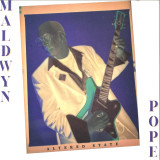
Starting his career with appearances on BBC Radio 1 and signing with Elton Johns label as a teenager, Maldwyn Pope's presence in music has been rich and productive from an early age eventually leading to working with people like Cliff Richards, Art Garfunkel and Bonnie Taylor. However, his presence in Italo-Disco has been quite scarce, but completely on point. "Altered State" is a masterpiece amongst enthusiasts and collectors of dancefloor sleaze and downtempo wellness. Heavy rock influence meets Rimini with this one off experiment from the seasoned multi instrumentalist. Original instrumental remix done by none other than Alessandro Novaga, the entity responsible behind one of Ron Hardy's favorite DJ tools (Faces Drums). B-side features an 11 minute excursion into a completely new altered state of dubby delayed trance, for special cosmic holes only. Re-issued with new full artwork.
- 01: In
- 02: The Big Idea (Feat. Lewis Parker)
- 03: Push
- 04: The Art Of Celebration
- 05: Tea Break
- 06: Chef Yg
- 07: Gringo Lingo (Feat. Red &Amp; Nico Suave)
- 08: I.c
- 09: What Eye See, Pt. 2 (Feat. Devise)
- 10: City Breaks
- 11: Liquid Love
- 12: Everything Is Alright
- 13: Dancing Shoes (Feat. Mr Thing)
- 14: Spit Fire (Feat. Kyza Smirnoff)
- 15: Out
First Word Records is proud to bring you 'The Essance' - the classic debut album by Essa (formerly known as Yungun), originally released in 2004, now released on vinyl & digital for the first time, 20 years on!
A lyricist, lawyer and a Londoner, legendary MC Essa has earned praise over the years from artists such as Nas and Mark Ronson, as well as performing and recording with legends like De La Soul, Wu-Tang Clan, Guru, Slum Village and Pharoahe Monch.
This 15-track album is considered one of the greats to emerge during UK Hip Hop's "golden era"; a vibrant time for the genre when artists such as Ty, Jehst, Roots Manuva, Klashnekoff, Skinnyman, Task Force, Doc Brown and Foreign Beggars were garnering huge fanbases, and an eco-system of shops like Deal Real, club nights like Kung Fu, labels like Lowlife, and stations like Itch FM were prevalent, while BBC 1Xtra was a mere infant.
'The Essance' includes production and features from luminaries such as Harry Love, Mr Thing, Lewis Parker, Kyza, Devise & Ben Grymm, to name a few.
Esteemed author Musa Okwonga says on the reissue liner notes "the most startling thing about 'The Essance' was its range. Yungun (Essa) was one of the few MCs who could perfectly walk the paths of hope and melancholy with equal ease, whose artist name belied the wisdom of his lyrics. Beyond that, his delivery was supremely self-assured, filled with a swagger he could always justify.
Yungun's gifts also extended to the stage, where he was one of the best young actors that many of his contemporaries had seen, and to languages, which saw him writing and rhyming in Spanish with a notable flourish. He was also someone who constantly walked between two worlds, excelling in one of the country's most competitive academic environments during the day and then delivering a soaring radio set by night. Raised in a vibrant vein of North London, endlessly curious about the world around him, Yungun's fine ear for music and passion for the variety of life made him someone who could reach all audiences.
'The Essance' is a beautifully-woven meditation on the human condition, one which takes you from the dancefloor to the summer afternoon barbecue to the bathroom mirror; yet it is also the opening statement of a unique career."
In the words of Essa himself "my key goal for this album was to span so many moods and styles that I couldn't be categorised, leaving me free to then go in whatever direction I chose. I was almost too successful with this – I would later struggle to pin down my own identity, both on and off the mic, as a rapper slash lawyer, of mixed-heritage, blessed to be able to enter many circles but feeling truly at home in none. As I write this, twenty years (plus a marriage and several children) on, I finally feel more at peace with being undefinable, and am getting better at bringing my full, authentic self into as many aspects of life as I can. I am grateful to be able to look both back and forward, with equal passion."
'The Essance' was followed with a collaborative album with DJ Mr Thing ('Grown Man Business'), then some years later on First Word with 'The Misadventures of a Middle Man' in 2014. There's also a forthcoming project in the works, due for release Summer 2024 with all-new material produced by Pitch 92. Both these releases also coincide with the 20th anniversary of the First Word label (named "label of the year" at the 2019 Worldwide Awards).
A timeless piece of work, 'The Essance' is true-skool boom bap through and through that stands up two full decades later, from the ethereal anthem 'Liquid Love', to the uptempo bounce of 'Dancing Shoes', to the grit of 'The Big Idea', to the thought provoking 'What Eye See Pt.2', to bangers like 'Push' or 'Spit Fire', this is an essential addition to the collection of any discerning hip hop head.
'The Essance' is due to be released on vinyl & digital worldwide on February 23rd 2024.
“But into my miserable brain, always concerned with looking for noon at two o’clock" - Charles Baudelaire (1869)
The Foreign Department is the second album by Astrel K, the solo project helmed by Stockholm-based British ex-pat, Rhys Edwards. Those already familiar with Edwards’ work will likely know him for fronting the cultishly great Ulrika Spacek, and given he operates as the principal songwriter in both projects, much of the same hallmarks of his cathartic, elliptical songwriting are present in Astrel K. Nonetheless, The Foreign Department feels like a rubicon moment of sorts, and the album that Edwards has unconsciously been working towards his entire creative life.
As a title, The Foreign Department offers an instructive guide for the listener, framing a life-in-transition/artist-in-exile document that maps two impromptu moves in twelve months for its songwriter: the first from London in pursuit of a relationship, the second between homes in Stockholm as that decade long relationship then suddenly dissolved. Indeed, diffusion, dissolution and reconstitution feel like appropriate touchstones for its recurring themes. Written amidst the flux of two states, at once isolated from home and then any established emotional anchor, the resulting eleven tracks came to represent a precognitive search for shifting identity and with it forming an unwittingly biographical record. It's commendable and somewhat telling that during this shake up, Edwards somehow landed upon his most realised and original work.
With a former life stripped away, there emerged an opportunity to reinvent a sense of self through art, now not just as a writer, but a composer also. Developing the confidence to arrange songs in ways he'd previously considered off-limits, while also taking cues from the opulent string and brass arrangements of records like Mercury Rev's Deserters' Songs and Death of A Ladies Man by Leonard Cohen, Edwards enlisted a range of performers to bring to life the mini-symphonies forming in his head. Perhaps it's inevitable that an album written while facing the consequences of being alone would eventually ossify around the process of bringing people together.
For all its troubled origins, The Foreign Department is a remarkably warm sounding collection. Edwards' lyrics are typically knotty and neurotic, dancing around the poetry of quarter-life anxiety, but the music itself is often joyous and even uplifting, the combination expressing that neat duality of melancholic euphoria. Edwards sings variously of crises, "torrid pieces of art", of "houses on fire" and not "having the guts for it", yet these troubling sentiments are framed by seemingly incongruous swelling strings, chirping horns or motorik percussion, creating that sense of pushing forward or floating above, of wrapping your troubles in dreams, a salve for the moments when you get a bit too much for yourself.
Lead single, 'Darkness At Noon', likely captures this all best. Named for the French idiom "midi a quatorze heures", the maddening idea of attempting the impossible for the sake of some greater possibly pointless cause, it directly grapples with the opposing notions of wanting and not wanting, of being here and being there at the same time. The conflicting and impossible self. It’s something Edwards addresses in the song at perhaps his most open, opining, “I know I want to be seen, but I hate most of what comes out of me”. And yet here is, putting it all out in the open and on the line, the dialectics of his enlightenment up on show.
Maybe your demands of punk are a little too high. Maybe they're a little too exacting - you know what you want, but you don't know how to get it. Maybe you've got an itch that's needed scratching since you first heard '(I'm) Stranded' (sounds like a doctor needs to look at that, mind). Maybe all or none of these things are true and you're just in search of three or four chords and some righteous snot. Reader, you have come to the right place. Split System came sauntering out of Melbourne back in 2022 with a self-titled 7" and a debut LP (the sensibly-titled 'Vol. I'), and as a listener of exquisite taste, one or both of those items will have carved out their own spaces within easy access of your record player. With members of acer-than-ace garage punkas Stiff Richards and Speed Week among their number, not to mention the redoubtable Jackson Reid Briggs, they deal in a gloriously back-to-basics take on punk that's part Undertones, part Royal Headache and part Chris Bailey - all hooks and glory, all the time. They're so much more than the sum of their parts and they make this shit sound effortless. Well, here's an update for you: they're back! Second album (the equally-sensibly-titled 'Vol. II') is now upon us, and a thoroughly tremendous follow-up it is too. As soon as opener 'The Wheel' slams into your speakers, it's clear that they've lost none of the pep or power that made their debut such an essential listen; if anything they're even more raucous and revved-up than before. Yep, that's jargon for 'they rule hard', and let me add here that you could listen to this album 100 times in a row or simply try inserting dynamite sticks with lit fuses into your ear canal; either way, your poor little mind is gonna blow. It's an album made entirely of bangers (still on that explosion metaphor, are we?) - the concise questioning of 'End of the Night' is as pure a punk rock nugget as you could ever wish to uncover, and 'The Drain' is just energy distilled to a perfect series of hooks - with a passion for rock'n'roll in its most scintillating form. Just listen to it. That's all you need to do. Your demands have been met - here's your new favourite record.
. The Classic Example were a Los Angeles singing duet consisting of Curtis Colbert and Harriet Hurst. Their eponymous LP was released in 1972 on GSF Records alongside infamous acts such as Skull Snaps and The Whatnauts. Very little is known about the duo, only one LP was recorded and the group disbanded shortly after release. The backing band for the entire album is none other than Hodges, James, Smith, and Crawford. Newly remasted and pressed on audiophile virgin vinyl.
- 1:
- 2:
- 3:
- 4:
- 5:
- 6:
- 7:
- 8:
- 9:
- 10:
First vinyl edition of the album Rhetorical Islands, originally released by Giuseppe Ielasi in 2012 as a limited-edition CD on his Senufo Editions label, with recordings made in 2011 as a commission for l’Audible Festival, Paris.
The album’s ten tracks have neither titles nor accompanying text, standing for themselves as what Ielasi himself has called “isolated sound worlds”. They are nonetheless unparalleled in their plasticity, acoustic events with a rare degree of tangibility. Ielasi evokes physical objects, some of which seem to have been constructed out of paper and cardboard, others based on a mechanics of elastic materials. Of course these objects are hallucinations, and precisely because Ielasi constructs them so masterfully there’s no need for any further information. Here’s to everyone creating their very own sculptures while listening to Rhetorical Islands!
The front and back cover features 0.058, a work on paper by the artists Thomas & Renée Rapedius. They make sculptures whose form and artistic inspiration are defined by their materials. Like Ielasi’s acoustic islands, their impact derives from self-referentiality, resulting in paradoxical objects that embody both a detailed material study and a potential for free association.
Jesse James returns to the Soul Junction roster with a new 45 that features his own unique interpretation of a classic song that is backed with one of the more popular songs from his 1990 “Looking Back” album now brought to you for the first time as a 45 release.
Beginning with the A-side, “Everybody’s Talking At Me” which is Jesse’s unique cover of the folk rock singer Fred Neil’s penned song “Everybody’s Talkin’”. Which although recorded by Neil originally, was made internationally famous by Harry Nilsson when used as part of the theme score for the acclaimed United Artists 1969 film “Midnight Cowboy”. The song has been much covered in the style of a ballad but Jesse’s version recorded under the production skills of close friend Willie Hoskins (Wilhos Productions and Boola Boola Records) is a great up-tempo piano driven version of the song. “Everybody’s Talking At Me” is yet another find from the unissued tapes from the self- financed sessions that Jesse recorded at the Searra Sound Studios in Berkley C.A during 1971 that also has brought us SJ543 “(The Girl In) Clinton Park” and SJ544 “If A Man Ever Loved A Woman (Baby I Love You)”.
While the b-side, features the much, admired modern soul favourite “You’re More Than A Friend Of Mine” which first gained a release on the 1990 ‘Looking Back’ album (Gunsmoke Records). “You’re More Than A Friend Of Mine” was up to that point a previously unissued mid 70’s recording produced by the late song writer /producer Ron Carson. Carson the original owner of the San Francisco Soul Clock Records label remains highly respected for his work with the hit group, ‘The Whispers’ (both on Soul Clock and some of their later Janus recordings). Carson had produced and co-wrote Jesse’s 1975, 20th Century Records release “If You Want A Love Affair/I Never Meant To Love Her” now regarded worldwide as Jesse’s signature song. Carson had a follow up release in the can, which never came to fruition due to Jesse and 20th Century parting company for the second time. Carson by then had moved on and was heavily involved in the production of the Janus distributed blackploitation album “Black Fist” for Happy Fox records. “Black Fist” was a various artists compilation which also featured the Jesse James composition “The Same Thing Happens (Part1 & 2)”. The shelved, proposed 20th Century follow up release would have been “Your More Than A Friend of Mine/I Don’t Want It To End” recorded during 1976. Carson had pitched the idea of a song in a similar vein to the Jackson Sisters 1973 Prophesy Records release “(Why Can’t We Be) More Than Friends” to the songs original songwriting team William Peele Jr and Warren Sams. They duly obliged, coming up with the aforementioned “Your More Than A Friend Of Mine”. Warren Sams along with his half-sister Christine Adams Tripp and their friend Rachel Sanders were none other than the respected vocal trio “Water & Power” who recorded the acclaimed 1975 album of the same name for Fantasy Records and a solitary 45 “Mr Weatherman/If You Don’t Want Me”.
- A1: Los Megatones De Lucho - El Tumbaleque
- A2: Sonora Venezuela - Pero En Caracas
- A3: Los Megatones De Lucho - Muñeca
- A4: Al Ramos Y Su Orquesta - El Candidato
- A5: Orquesta Sonoramica - Oye Como Suena
- A6: Microbanda Marabina - Maracaibo
- B1: Principe Y Su Sexteto - Salsa De Guaguancó
- B2: Genaro Y Sus All Stars - Mambo Tema
- B3: Orquesta Universidad - Atado A Un Recuerdo
- B4: Los Kenya - No Salgas De Tu Barrio
- B5: Nelson Y Sus Estrellas - Disparo Goajira
- C1: Los Kenya - Pa' Puerto Rico
- C2: Principe Y Su Sexteto - Analiza
- C3: Supercombo Los Tropicales - Juana Guaguancó
- C4: Los Satélites - El Tostao
- C5: Johnny Sedes Y Su Orquesta - Algo Diferente
- D1: Los Satélites - Fiesta En Venezuela
- D2: Rodrigo Mendoza - Lija
- D3: La Renovación - Mi Redención
- D4: Los Blanco - Corta El Bonche
- D5: Grupo Yakambu - Si Eres Tú
Established in 1948 by César Roldán, Discomoda is one of the earliest record labels of Venezuela and the oldest family operated label in the country. Home to one of the most complete folkloric and popular music catalogues of Venezuela, the label also invested heavily in Afro-Caribbean and tropical rhythms that became popular in the 60s and 70s.
In the 1960s and before the Salsa era truly kicked off, Venezuela had a significant dance orchestra and big band movement. Unlike local record competitors dedicated to selling foreign productions, Discomoda achieved its leading position by recording the most important national bands, including Los Megatones de Lucho, Orquesta Sonoramica and Super Combo Los Tropicales; all featured in this compilation.
Later on, surrounding the festivities for the 400th anniversary of Caracas in 1967, the word "Salsa", which had been recently coined by famed radio host Phidias Danilo Escalona, was formalized to identify an Afro-Caribbean musical style with growing popularity in Venezuela and beyond. By then, the country was among the top 20 music markets in the world, with the local label Discomoda leading the way, responsible for one out of every five records sold in the country.
With the prolonged celebrations approaching due to the 400 years of the city, Discomoda and other labels began to capitalize on this new musical style by betting on both established and new local bands, such as Nelson y sus Estrellas, Los Kenya, Principe y su Sexteto and Los Satélites. As a result, this would kick off what could be considered a golden era of Salsa in Venezuela and which lasted until the mid-70s.
As we approach the 80s and with the emergence of new musical styles and bigger multi-national record labels funded by larger pockets, a lot of the previously popular bands begin to disband or choose to leave the country. Nonetheless, a few artists, like Rodrigo Mendoza, La Renovación and Grupo Yakambu, were still pushing out quality music.
We are thrilled and honored to celebrate one of Venezuela's and, equally, Latin America's most significant record labels, and to share a slice of their enduring influence in advancing Venezuelan-made Salsa music.
First vinyl edition of the album »Rhetorical Islands«, originally released in 2012 as a limited-edition CD on Ielasi's Senufo Editions label. The album’s ten tracks have neither titles nor accompanying text, standing for themselves as what Ielasi himself has called ›isolated sound worlds.‹ They are nonetheless unparalleled in their plasticity, acoustic events with a rare degree of tangibility. Ielasi evokes physical objects, some of which seem to have been constructed out of paper and cardboard, others based on a mechanics of elastic materials. Of course these objects are hallucinations, and precisely because Ielasi constructs them so masterfully there’s no need for any further information. read on / listen
Happy we can introduce a new addition to our catalog THINNER005, an EP called
“ & . . “
as the title tells, it’s a joint release by our friends, KOOLMFL, Sonic Weapon &. . Lemmi Ash
“& . . “ EP includes three club tracks, which been power played by Powder over these years in many different moment.
Each track can add a distinctive touch to the night, as like completing your cocktail with lemon and/or lime.
_
KOOLMFL, fka K-LINE and Sonic Weapon is our regular suspects from Nagoya, motor city of JAPAN.
Some may know them putting out a shared EP “G” before on Thinner Groove and now they back to it again.
atonbow by KOOLMFL features words of a space traveller in state of peaceful sorrow, seemingly communicating their honest thought to the loved one who might not be hearing, Can you hear me ? … Hi astronaut, at least we can :)
KOOL’s clicky drum work pass the words to the floor, and the party breaks down with sudden synth and take all of us home.
,
On track HOMIE, Sonic Weapon shows his signature fast boogie style again in a new approach with much dubbed out, ear pleasing, filtering, minimalistic, and stylistic way. The texture keeps changing but keeping the groove.
Feels like the beauty of watching a bridge getting slowly collapsing after somehow you made it to the other side.
& . .
We also want to introduce Lemmi Ash, a Swedish duo formed by Samo DJ and Martinou, newly joining the TG spectrum,
The duo previously had a release from ESP institute and each of them countless solo appearance on various releases . . .
Nonetheless, they a good long time friend and perfect fit for this release.
The duo features comfy calming ear tickling electronic sound with some kiddish, animalistic, or primitive humor in their own balance. This track Presence grooves with a leaning forward racing gamey phrase drifting around the mini synth explosion, feels like a joyful cruise during regardless the intense highway.
Available on vinyl LP & CD (with extra tracks). Robin Way has been making psychedelic music for decades under the name Oak Acetator. Mostly home recorded, Oak Acetator’s world of sound encompasses an intoxicating mix of psychedelia, punk, space rock and pop, with the emphasis strongly on hallucinogenic psych. ‘Power Trip’ is Robin’s seventh album, his previous six coming out on the hallowed Dig The Fuzz label, though strangely, none of his work appears on Discogs! Robin wrote, produced and played everything on ‘Power Trip’ in his Folkestone attic studio, and it is a work of crazed brilliance. Respected musician and writer Louis Wiggett summed it up succinctly when he said of Power Trip ‘Oh, that bonkers genius from Folkestone, can’t get enough of it. So good, almost sounds like a cosmic Stooges with synths and deadpan humour. Love it!’ And he’s absolutely right. Robin exudes his unique, very British style from the first moment to the last, sounding at times like Johnny Rotten backed by Hawkwind, but with touches of Gong and Krautrock thrown in for good measure, but really just like himself. It’s a total joy to be able to put this deranged masterpiece out on Blue Matter. We adore it, and we hope you will too
It’s a family affair. One formed almost thirty years ago, back in the mid-nineties, when the pair joined seminal French jazz combo Olympic Grammofon. For twenty-four years they have worked together as Bumcello, each complementing the other, echoing polar opposites. The Boom in Bumcello is none other than Cyril Atef, incisive drummer, relentlessly pushing beats towards new horizons. The Cello is Vincent Ségal, cellist without blinkers and extraordinary musical alchemist. Since 1999, these two die-hard music fans, coming together for mercurial results, have released one record after the other whilst conquering the hearts of their live audiences, old regulars as well as new recruits. We have all been seduced by the way their music leapfrogs categories - these two experts are much more interested in kindred spirits than pigeonholing, and this very spirit is celebrated on more than one track of this ninth record, whose concept is original to say the least.
Everything began with an idea by Cyril Atef - a soundtrack based upon drawings penned by Marin, Vincent’s son, architect and visual artist. The musicians involved then coached their reaction to these images on a score, and the pair were charged with collating and adjusting the results. These thirteen ink drawings, in a heroic fantasy vein, constituted a matrix which was then to serve as a guide, like a roadmap through a singular and multi-faceted labyrinth. The key to this sonic fresco is in Bumcello’s image – an eclectic aesthetic twinned with a great sense of contrast. Herein lies the trademark of this entity animated by the gift of musical ubiquity, gorged on scales and rhythms, capable of a slap as much as a gentle caress. From classical music to electronics, from improvised music to sophisti-pop, everything is allowed with no preconceived ideas. They can even reclaim the traditions of others, all the better to propel them towards new horizons - this is how the very history of music has always panned out.
If you listen between the lines and look at the details, more than one piece bears witness to the moments and individuals that have impacted the criss-crossing lives of Vincent and Cyril. The track Crash is the perfect excuse to create a Jamaican-style jam with New York inflections, and we can see, in capital letters, the name Hilaire Penda, playing alongside Bumcello at the Apollo Theater in the associated drawing. This bass player from Cameroon, who died on 5th November 2018, was more than just a friend for the two Frenchmen. He was one of the family. Similarly, they give a nod to another Cameroonian, and another departed friend - singer of rock band les Têtes brûlées, Zanzibar, through the vocals of fellow countryman Zanzi. The ghost of Rémi Kolpa Kopul, emblematic voice of Radio Nova, haunts the margins of Spark Av, in a vocal sample with a smattering of effects. As for I Remember Tim, it directly honours the memory of Timothy Jerome Parker, aka The Gift Of Gab, another friend who left us in 2021. Tim is depicted in a drawing with the docks of Oakland in the background, and it’s his alter ego within Blackalicious, Chief Xcel, who remotely added his signature to the track, notably by adding the words of Lateef The Truthspeaker to brass and woodwind sounds.
These are the only additions to Bumcello’s original nucleus, all the better to create a genuine musical concoction where Vincent Taurelle is in charge of production and mixing sessions recorded live and direct. He is also invited for a twinkle on the keys (piano, synths, Wurlitzer, organ), on a handful of tracks. Already at the commands of previous opus Monster Talk, always taking care over the slightest detail, the one that makes all the difference, this pianist is now also part of the family. “Everything he brings is perfect, whether added though slight touches or through very important choices”, say the two members of a combo which today, appears to us under the guise of a trio, adding an extra dimension to a far-reaching mix, in the image of the veiled or more explicit tributes making up the cornerstones of this release.
Booker, a drawing where we see the musicians enter a club, honours James Booker, great pianist from New Orleans who has always fascinated Vincent, in a genre that is off-beat and gender defying. Her Story was created by Cyril in support of the Iranian women’s movement. Aysyen Kampe evokes, even in the original drawing, a tradition that remains impactful for Bumcello – Haitian mysticism, and Ouï Khouïette Ouï conjures up the beats of the Allaoui, a war dance from Western Algeria, one they have taken part in in the past with the help of Cheikha Rabia. They deliver a metal version, original and surprising, especially as Marin Ségal’s drawing features the Nicholas Brothers, those iconic dancers of the 30s jazz scene!
Resolutely hard to pin down, Bumcello’s beats can initially take on the structure of disjointed house, though Sangre begins like a film soundtrack, “in a Mexican style” adds Vincent, who was at the origin of this track. A delicate alap on the cello can open up onto afrobeat rhythms, a well-pitched voice can enchant, like on the amazing The City Has Eyes which has everything of a hummable pop hit. Emblematic of this manner of encompassing all music without being exclusive, Le Grand Sommeil, a direct reference to the Howard Hawks movie inspired by Raymond Chandler, a precursor of David Lynch, begins nice and smooth but ends on a wild tempo, on a drum’n’bass tip, as in the good old days of Cithéa, when this Party story began in the other century.
The Body & Dis Fig are a natural pair. Each has pioneered instantly recognizable worlds of sound all their own that defy any traditional categorizations or boundaries. The Body, Lee Buford and Chip King, continually challenge any conventional conception of metal, collaborating with myriad artists and from the folk-leanings of their work with BIG|BRAVE to their groundbreaking work with the Assembly of Light Choir to the intensity of their collaborations with OAA or Thou. Dis Fig, aka Felicia Chen, pushes electronic music into dark extremes, from warped DJ sets to avant production, from being a member of Tianzhuo Chen’s performance-art series TRANCE to being the vocalist with The Bug. The Body and Dis Fig find kinship in reimagining what it means to make “heavy music”. Their debut Orchards of a Futile Heaven is the perfect synthesis of two forces, twisting melodicism and intoxicating rhythms, layering a dense miasma of distortion with intense beats and a soaring voice clawing its way towards absolution.
Orchards of a Futile Heaven’s walls of sputtering texture and tectonic booms are soaked in the reverence and melancholy of sacred spaces brought to life by palpable intensity by Chen’s voice. Crafted during a time of personal fragility, the album’s devastating force lies beyond any of the expected noise and abrasive textures typically associated with both The Body & Dis Fig. Suffused with a raw vulnerability and a longing for catharsis, Chen’s voice searches for escape in the midst of oppressive atmospheres as if determined to find relief from guilt. “Eternal Hours” patiently unfurls waves of surprising sounds, whispered undulations that are punctuated by sudden crashes, all beneath Chen’s haunting harmonies. “Dissent, Shame” evokes grief and shame with a minimalist drone dirge that gradually builds to an enchanting choral passage. King’s guitar on “Holy Lance” matches the uncanny drone of Chen’s accordion in an all-consuming blast, Chen’s voice transforming the moment from anguish to defiance and empowerment. The album’s arc finishes with “Coils of Kaa” acting as a kind of propulsive exorcism, breaking through a suffocating air before the funeral procession of “Back to the Water” lays the album to rest.
While sampling has long been essential to each, The Body & Dis Fig deftly meld their differing approaches to sampling and creating extreme sounds until the boundaries are entirely blurred. The two found kinship in their desire to find new avenues to make heavy music that looked beyond tropes of metal and electronic music by merging the two. “I always wanted the heavier stuff but I also didn’t really like heavier guitar music,” says Buford. “None of it really felt quite heavy enough to me. A human can’t be as heavy as a machine.” Chen counters, “I love the balance. You could never connect to just a machine as well as you could a human. Which is why the combination is so potent for me. I don’t want to hide. I think nothing connects you more empathetically than another human's voice.”
Orchards of a Futile Heaven affirms The Body & Dis Fig as skilled sound sculptors who have an exceptional ability to make deeply affecting music, bracing as it is touching, harrowing as it is awe-inspiring. Together, the two have harnessed their expansive artistry to make music that is profoundly emotional, and staggering in its beauty.
A new name in the Dutch rock scene. Old acquaintances, new songs, a new album, a new adventure... the past ten years have been dominated by 4 full albums in a row, numerous performances (see selection below), rave reviews in the (inter)national press and all under the name BYT (aka BloYaTop).
The switch to a new band name was obvious when the band entered into collaboration with producer MARIO GOOSSENS (Triggerfinger) and the choice was made to return to the roots of rock music, resulting in a week of live and analog recordings in the already
legendary TRYPOUL RECORDING STUDIOS, allowing the band to capture the live energy for which they are known. Mastering took place in New York by none other than Fred Kevorkian, where greats such as Iggy Pop, Maroon 5 and many others had already found
their way.
Infinity Machine is a duo comprised of Juan MacLean - as in the Juan MacLean, longtime DFA traveler - and Gee Dee, also known as Greg Droggitis, a producer and DJ based in Brooklyn and 1/3 of the Earth Beat DJ troupe. The project name stems from a series of gatherings the two began hosting in various private spaces around New York City shortly after lockdown, though that description is a bit innocuous for the journeys traveled by its attendees. These events, billed as "psychedelic dance ceremonies" lasting 8 or 9 hours, began with a sound meditation to vibrational and acoustic instruments before eventually segueing into a "dance" soundtracked by a DJ set from Juan and Greg. Something clicked - that ceremonial tea! - and so Juan and Greg began playing and recording in their studio using the same approach: improvisation with equal attention placed on traditional acoustic (flute, guitar, gong) and more contemporary electronic (Yamaha DX-7) sounds. After awhile, there was literally three albums worth of material, each of them a voyage into the warm, liminal space between new age, ambient, drone and psychedelia. None of those genres quite fully describe what's across 001, 002, and 003 - available from DFA digitally and on a very limited run of cassettes (150 each!) - but if you've read this far then you're either the right kind of curious or just forgot what you were doing.
Repress!
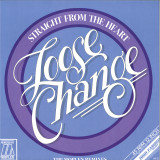
Get ready for an electrifying revelation as we delve into the mind-blowing credits of this extraordinary record! This record has an outrageous lineup as Moplen is let loose to brilliantly remix and reprise Loose Change’s timeless masterpiece, “Straight From the Heart. A track that emerged from the creative genius of none other than Tom Moulton, the legendary maestro behind legendary Donna Summer’s iconic hits. But that’s not all! Enter the realm of Thor Baldursson, the brilliant mastermind known for his groundbreaking concepts and awe-inspiring arrangements. Together, the three of them form a disco dream team!
The twelfth volume of Drumcode’s flagship A-Sides series featuring future-facing cuts spanning the breadth of the techno spectrum, The annual compilation serves to showcase some of Adam Beyer’s favourite demo’s throughout the year, as the label boss enjoys the opportunity to introduce new artists to the label, while showcasing cuts from Drumcode’s mainstays.
Kicking off Part 2 is none-other-than Carl Cox whio makes his Drumcode debut with his remix of Label Boss Beyer's massive Take Me There feat DJ Rush.
Warehouse find!
Since emerging in the early 2000s with releases on the seminal Merck label, Proswell (Joseph Misra) has proven to be one of the most original voices in IDM. People Are Giving And Receiving Things At Incredible Speeds (PAGARTAIS), his debut on Sheffield's Central Processing Unit, is another Proswell record which overflows with creative energy. Containing five widescreen electronic epics, PAGARTAIS showcases some of the most ambitious work in the discographies of both artist and label.
The core sonic palette of PAGARTAIS is one schooled in the IDM and electronica sounds of imprints like Rephlex Records, B12 and Skam. These tracks are helmed by thick washes of keys, an array of playful synth tones and drums so deft it's sometimes hard to tell whether they have been programmed or played live. However, across almost forty minutes of music here Proswell explodes preconceptions about genre and form, his music gleefully jumping from one new sound to the next while assimilating electro, prog, computer game music, post-jazz and pretty much everything in between.
Opener 'PAGARTAIS I' sets the tone for the rest of the record. This is a track which never sits still - beginning with a distorted melee of drums that comes off like a strange new version of breakbeat, 'PAGARTAIS I' moves through some thrillingly idiosyncratic takes on Rephlex-school IDM, stargazing Detroit electro and The Comet Is Coming's futurist electronic jazz across its near-ten-minute runtime. Following number 'PAGARTAIS II' is no less impressive, referencing the hyper-modern computer sounds of Iglooghost and Kai Whiston while containing a driving opening section which could have soundtracked one of the legendary Wipeout games.
Although this fabulously unpredictable record often zips along at high speeds, Proswell is also able to dial things back when he needs to. Indeed, the second half of PAGARTAIS finds him slowing down a tad in order to deliver some of the album's most atmospheric material - 'PAGARTAIS III' blends cutting-edge electronics with sonorous jazz harmonies and fizzing improvised lead lines, the mysterious 'PAGARTAIS IV' is a sort of freeform variation on the maximalist, colourful electronica of Galaxy Garden-era Lone, and the slinking computerised Braindance number 'PAGARTAIS V' recalls Calum Gunn's recent CPU drop Addenda.
Really, though, none of these comparisons quite do justice to the inventive capacity of this music - Proswell's in a lane of his own here. An incredibly innovative fusion record that takes in IDM, prog, computer music, electro and plenty more besides, People Are Giving And Receiving Things At Incredible Speeds (PAGARTAIS) is the sound of a unique musical mind in full flight.
RIYL: Calum Gunn, Kai Whiston, Iglooghost, Rustie, Bogdan Raczynski
It was winter. Six Parts Seven had returned to Ohio after touring out to Washington State, to record Casually Smashed to Pieces. There was down time between the recording and the actual release of that album in January 2007, and we were rehearsing, playing local shows, and collaborating, with most of us involved in other projects to keep the momentum going (Mike w/ Talons, Al w/ Beaten Awake), but the one we all came together over was recording an album with Joey Beltram, the songwriter behind Goodmorning Valentine, a local band we shared players with, a band we deeply admired. The music on Kissing Distance came together over two weekend days. There were a lot of people around; 6P7 and GMV players coming and going from the Saint Ledger House. There were handles of whiskey, there was weed, stacks of Marlboro Reds for the ones still dragging butts. We all went 'dancing' at Thursday's, in Akron, Ohio, on Saturday night. Not sure how we were productive the following day. Chalk that one up to relative youth. Over those two days, songs were cut without any prior rehearsal time. None of us remember how the idea came up. In hindsight, it seems inevitable. The first song on the album, "Mediation in D," had been written a couple of years before, and was the decided spark that set the fire blazing: for both bands, this song was the starting point, an invitation to take things further, to expand, combining players from both bands, our 'toolbox' had increased in size from a single hammer to a toolbox. Everything came easily at this point. "Drunk from the Bottle," is the first of the one-take/one mic songs: an SM58 used for both vocal and guitar, making it impossible to over-think anything: You got the version, or you did not, that simple. "Instrumental #2," is the last full/core band recording by Six Parts Seven. The first piece in our catalog written/arranged by Tim Gerak. This song would have been developed on our follow-up to Casually Smashed to Pieces. Alas, an album never came to be. The ache in this is real. It's there in the bass guitar, tuned high and open, played with a slide, and utilizing one of Jamie Stillman's pre- Earthquaker Devices fuzz pedals. "Lonely Daughter," is another one-take/one-mic song, notable for the lead-guitar, played by James Matthew Haas, who overdubbed his part, months later, standing alone on the deck at Joey's folks place, playing to the moonlight, making magic...
In the beginning was a half-truth, the truth was of war and the half-truth was post-war. Fancying the pretensions of its cultural superiority, a continent chose to hide the truth behind ridiculous jargon and the soothing distance of offshored ?????????. Europe wished itself beyond war because it thought the privilege of peace a birthright, just as it refused to understand that post-war was a euphemism for interbellum. Then the truth has set us free.
The delusion was discarded and war was revealed as an inconceivable horror. Almost immediately it turned familiar and virtually comfortable. Novelty songs of drones gutting tanks became a laughing matter and the burning tanks, their crew inside, entertainment. Consequently, a plurality of people started to collectively dream of new stages of the righteous kind of carnage. This happened within weeks.
Our imagination has swollen to the point of loss of consciousness, compounded by the narrative form long in the sways of atrophy. All of this raises the question of to what degree were the years of peace culturally squandered. The art of the previous age prided itself on self-awareness, today we fail to even notice that we no longer recognize ourselves. But we have arrived where we started and our issues were not too complex for expression.
Since no art form generates action, the most appropriate art for a culture on the edge of extinction is one that simulates pain. In these times we shouldn't produce any other music, none but this, intended to prevent our silence from being misinterpreted.