Поиск:noon
Все
- A1: Noonday Yellows
- A2: Rain
- A3: Dusk
- A4: The Jantzen Rag (Raccoons)
- A5: Pleasant, This Garden
- B1: Bedroom Of The Absent Child Lost Creek Suite
- B2: Bedroom Of The Absent Child Lost Creek Suite Into The Groves
- B3: Bedroom Of The Absent Child Lost Creek Suite Warm Pathways
- B4: Bedroom Of The Absent Child Lost Creek Suite Sunny Banks
- B5: Bedroom Of The Absent Child Lost Creek Suite Fragrant Duff
- B6: Bedroom Of The Absent Child Lost Creek Suite Beaver's Pond
- B7: Track 12
Black Vinyl[22,48 €]
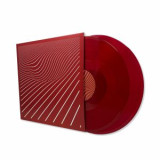
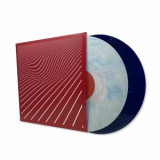
Written and recorded between 1972 and 1982 in Western Oregon, Back to the Woodlands is a previously unreleased, and nearly lost, album made by Ernest Hood during the same era as his near mythical album Neighborhoods . A visionary combination of field recordings, zithers, and synthesizers, Back to the Woodlands offers an unprecedented depth of access to this singular artistic mind. Born into a musical family, Ernest Hood began a promising career as a jazz guitarist during the 1940s, touring internationally with his brother Bill Hood and the saxophonist Charlie Barnet , before contracting polio in his late twenties. The disease left Ernest unable to play the guitar and confined him to a wheelchair for the rest of his life. It also forced him to adapt and innovate around his musical practices in the face of adversity; Hood's value of sound matured with a remarkably democratic and nonhierarchical approach and application. Taking up the zither, a less physically-demanding stringed instrument to the guitar, embarking upon the unprecedented process of incorporating field recordings into his work as early as 1956, and eventually discovering the synthesizer, Hood's music became imbued with optimism and subtle cultural critique. This ethos and technique - refined over the coming decades - would lay the groundwork for a sprawling body of radio work, mail order recordings for homebound listeners, and Neighborhoods , self- issued as a small vinyl edition in 1975. Where Neighborhoods , a nostalgic opus, drawing from a well of collective memory of the 1950s, is defined by traces of human activity, Back to the Woodlands leaves the modern world behind, delving into Hood's love for nature. Only recently discovered in his archives, the album dramatically expands his concept of "musical cinematography," imagistically triggering states of sensory memory from within its zither and synthesizer melodies, intertwined with field recordings made during Hood's extensive travels throughout Oregon. If Neighborhoods is a retreat into the gauzy joys of a romanticized past, Back to the Woodlands is an immersion in the timeless sanctuary of the natural world. A fascinating counterpoint to its predecessor, Back to the Woodlands brings us even closer to Hood's belief in the transportive qualities of sound; that field recordings could serve as a vehicle for the imagination and liberation, particularly for those with similar mobile disabilities as his own. Across the album's twelve compositions, the rippling instrumental harmonics - shifting between abstraction and playful melody - fold so seamlessly into the birdsong, bubbling brooks, and other environmental ambiences, that they often give the impression of having been recording within the landscapes toward which they whisper. Falling somewhere between the immersive calm of healing music and New Age, the creative field recording practices of sound ecologists world building for Folkways, and the jazz infected ambiences during Obscure / Editions EG's highest heights, Back to the Woodlands sculpts an singular proximity of music for its moment; a form of ambient sonic realism that draws the consciousness toward its surroundings as much as within. Working closely with his estate to maintain his original vision, Freedom to Spend has restored and remastered this never before released, lost masterpiece by Ernest Hood from the original tapes. Ernest Hood's Back to the Woodlands will be issued on vinyl, as well as on CD in combination with its contemporary Where the Woods Begin , with new liner notes by Michael Klausman . On behalf of Ernest Hood and Freedom To Spend, a portion of the proceeds from this release will benefit Oregon Wild, an organization dedicated to protecting and restoring Oregon's wildlands, wildlife, and waters as an enduring legacy for future generations.
2022 Repress
Pioneers in their own musical approaches, Alva Noto and Ryuichi Sakamoto, began their exploration of sound in the evocatively titled V.I.R.U.S series in 2002. After more than a decade from the release of the collection's final installment with "Summvs" in 2011, NOTON reissues all the five albums between June and October 2022.
With its impressionistic atmosphere, in this collaborative project two generations met and shared the idea of electronic music as an inspiration source for new musical structures. Over a series of five albums, Vrioon (2002),Insen (2005), Revep (2006), utp_ (2008), and summvs (2011), the duo have explored blending electronic and acoustic sounds into a meditative whole that is at once expressive, breathing and precision-engineered.
Remastered in collaboration with Calyx Mastering, the recordings of Vrioon, Insen, Revep, Utp_, and Summvs are made available on vinyl and CD under the title 'reMASTER, accompanied by exclusive, unreleased compositions and housed in a beautifully designed sleeve with original cover art by Carsten Nicolai.
Written and recorded between 1972 and 1982 in Western Oregon, Back to the Woodlands is a previously unreleased, and nearly lost, album made by Ernest Hood during the same era as his near mythical album Neighborhoods . A visionary combination of field recordings, zithers, and synthesizers, Back to the Woodlands offers an unprecedented depth of access to this singular artistic mind. Born into a musical family, Ernest Hood began a promising career as a jazz guitarist during the 1940s, touring internationally with his brother Bill Hood and the saxophonist Charlie Barnet , before contracting polio in his late twenties. The disease left Ernest unable to play the guitar and confined him to a wheelchair for the rest of his life. It also forced him to adapt and innovate around his musical practices in the face of adversity; Hood's value of sound matured with a remarkably democratic and nonhierarchical approach and application. Taking up the zither, a less physically-demanding stringed instrument to the guitar, embarking upon the unprecedented process of incorporating field recordings into his work as early as 1956, and eventually discovering the synthesizer, Hood's music became imbued with optimism and subtle cultural critique. This ethos and technique - refined over the coming decades - would lay the groundwork for a sprawling body of radio work, mail order recordings for homebound listeners, and Neighborhoods , self- issued as a small vinyl edition in 1975. Where Neighborhoods , a nostalgic opus, drawing from a well of collective memory of the 1950s, is defined by traces of human activity, Back to the Woodlands leaves the modern world behind, delving into Hood's love for nature. Only recently discovered in his archives, the album dramatically expands his concept of "musical cinematography," imagistically triggering states of sensory memory from within its zither and synthesizer melodies, intertwined with field recordings made during Hood's extensive travels throughout Oregon. If Neighborhoods is a retreat into the gauzy joys of a romanticized past, Back to the Woodlands is an immersion in the timeless sanctuary of the natural world. A fascinating counterpoint to its predecessor, Back to the Woodlands brings us even closer to Hood's belief in the transportive qualities of sound; that field recordings could serve as a vehicle for the imagination and liberation, particularly for those with similar mobile disabilities as his own. Across the album's twelve compositions, the rippling instrumental harmonics - shifting between abstraction and playful melody - fold so seamlessly into the birdsong, bubbling brooks, and other environmental ambiences, that they often give the impression of having been recording within the landscapes toward which they whisper. Falling somewhere between the immersive calm of healing music and New Age, the creative field recording practices of sound ecologists world building for Folkways, and the jazz infected ambiences during Obscure / Editions EG's highest heights, Back to the Woodlands sculpts an singular proximity of music for its moment; a form of ambient sonic realism that draws the consciousness toward its surroundings as much as within. Working closely with his estate to maintain his original vision, Freedom to Spend has restored and remastered this never before released, lost masterpiece by Ernest Hood from the original tapes. Ernest Hood's Back to the Woodlands will be issued on vinyl, as well as on CD in combination with its contemporary Where the Woods Begin , with new liner notes by Michael Klausman . On behalf of Ernest Hood and Freedom To Spend, a portion of the proceeds from this release will benefit Oregon Wild, an organization dedicated to protecting and restoring Oregon's wildlands, wildlife, and waters as an enduring legacy for future generations.
OVERVIEW: Field Medic’s latest album doesn’t waste any time getting to what feels like a mission statement for the record with the first lines “I want to fall off the face of the earth and probably die” on opener “Always Emptiness.” The longtime songwriting project of Kevin Patrick Sullivan - Mr. Field himself, the bay-area native who finds himself living in LA these days - has always had moments of melodrama like this, but his latest album grow your hair long if you’re wanting to see something that you can change feels as emotionally charged and poetically devastating as anything he’s ever given us. Sullivan has been turning turmoil into beautiful music for almost 10 years as Field Medic. The project that had origins in busking San Francisco streets has blossomed into a full-time touring act with a few TikTok viral moments. 2018’s full-length Fade Into the Dawn and the pandemic-era mixtape/album hybrid Floral Prince both offered a glimpse into how Sullivan’s songwriting has evolved since his earliest songs
Meet Me at the Gloaming is the long-awaited second album from Los Angeles indie artist A.O. Gerber. Following-on from her acclaimed 2020 album Another Place To Need, which enjoyed support from the likes of Gorilla vs Bear, NPR and The Line Of Best Fit, who gave the record a glowing 9/10 review, the new LP showcases Gerber's knack for subtly infectious indie-pop, crunching, atmospheric alternative-rock and classic acoustic songwriting. Across Meet Me at the Gloaming, A.O. Gerber carefully grapples with the constraints she was taught as a child to reach for the flourishing that comes when we look past the black and white, and into the grey gauze of the in-between. “I was thinking about how damaging it can be to exist in that binary space of good and evil,” Gerber explains. “When we see everything in either/or’s, we lose the nuance and complexity that make life rich enough to be worth living.” By interlocking memory and imagination, Gerber crafts a gleaming future, where the light and the dark don’t just coexist - they create a new colour entirely.
Produced by Prince, this is one of the best albums that came out of the Purple One's Minneapolis funk-rock empire in the 1980s. Featuring the hit title track and “The Belle of St. Mark” (two Prince penned classics), this is another opportunity to celebrate the deeper fabrics within the purple quilt Prince laid across the 80’s pop scene.
If you thought the Erupt-ion was over and done with, think again. Another earful of heavy breaks and hardcore junglism have risen from the ashes to keep your residential area vibrating. This time, the ballistics are blasted out by the label's head man, Bullet S.
Bullet uses his EP to tell a story of growing up around urban decay, and claustrophobic city centres. He translates that angst into three tunes' worth of furious beats and staccato riff overload, with the moody aesthetic to boot. This is the first sign of trouble, you cannot ignore it.
Erupt Records was established in 2016 to cover tougher, faster styles of electronic dance music, with a view of openness towards introducing contemporary influences alongside the familiar; Hardcore that reflects today, not yesterday. The objective? Push the boundaries, keep the drums raw, compromise for noone.
Grab the vinyl while you can to get yourself an exclusive bonus track which won't be on any digital releases of this EP, "No Loss".
Please welcome Barış Karademir, Istanbul's edit master, DJ, and musician with Insanlar on Live At Robert Johnson!
If you're a person that likes to get up late, Barış's first track »Noon« is the one for you. It sort of sets the mood for the whole EP with a groove that is deep and hypnotic and above all psychedelic. There's tremolo en masse plus these in and out fading voices that suck you into Mr. K's world - all kept together by this steady forward marching Barış beat. Pleasure, joy, and happiness - all in on groove - and not only effective at noon.
»La Dame Noir«'s most prominent feature is a mean bass line - plus more of those otherworldly sounds that Barış manages to pull out of his magician's hat while creating a superb shuffling riddim for all you dancers to shuffle along to, throwing in that oh so subtle triangle now and then.
With the last track »Valhalla«, Barış enters the mythological place of Asgard, where Valhalla, Odin's hall of the slain can be found in his Glaðsheimr castle. That kinda sounds a bit archaic and dark but don't be afraid: where there is shadow there is also light - light which can be heard in the first opening lines, lines that do sound a bit like played by our favorite shoegazer band "My Bloody Valentine". To get to Valhalla, Barış accelerates the tempo by a couple of beats, yet throws in all trademark ingredients to cook up a tune for peak time dancing in Valhalla … erm … I mean in the club.
So yes, please let us invite you to Barış K's wonderful world of sound - you won't regret it.
A lot has been said and repeated about the interiority of this club music - how the joyful tremor of the "Raingurl" refrain holds hands with such soft and doubtful verses. How special it is that house music so of New York can contain storytelling cultivated so far away. That repetition is born of people all over the world going out, and staying in, with this music as a compass; songs that define so many late night hangs for crews of friends, singalongs in DJ booths, contemplative 5am walks home from the club. What can get lost in that repetition, in the shifting canonization of these recordings as symbols of any one scene or moment, is what was behind the pair of round glasses reflecting so tirelessly outwards. Yaeji, an exceptional friend only at the very beginning of finding her path as a cross-disciplinary artist and collaborator. Yaeji wrote this music while going out nearly every night of the week to DJ and support her own NYC community of friends at their turns behind the decks. These tracks originated from explorations in dancefloor anonymity, growing from seeds planted by sharing her first musical experiments online.
First one for 030303 by Daniel Pringle aka The Jaffa Kid. Over the course of six tracks, the Newcastle based producer smoothly blends Detroit and UK informed techno with breakbeat vibes. Highlights include Noon - a deep melancholic techno cut with a subtle optimistic melody line keeping it all together, Zap Ting II - a rich ambient take on deconstructed jungle and acid and Izire Baes, where fast paced breaks are oddly slowed down by deep sonic drones. It's definitely a journey into another world, this one and a big recommendation for anyone keen to escape reality.
Repressed !
Hear & Now's Story Is One Of Friendship And A Shared Passion For Music. It Began With A Chance Meeting On The Dancefoor At Red Zone In Perugia, One Of Italy's Most Legendary Clubs
Of The 1990s. Nearly Three Decades On, These Glassy-eyed Clubbers Have Joined Forces To Deliver One Of The Most Magical And Sun-kissed Albums That Claremont 56 Has Ever Released. By The Time Ricky L And Marcoradi Frst Joined Forces In The Studio In 2016, Both Had Become Established Producers Within Italy's Vibrant Deep House Scene. Between Them, They'd Released Records And Remixes On Such Labels As Ibadan, Uomo, Reincarnation, Top Tracks, Restricted
Tracks And Vega. Keen To Step Away From The Dancefoor, They Decided To Simply Create Beautiful Music For Bleary-eyed After-hours Sofa Sessions, Lazy Summer Afternoons And Early
Mornings Spent Blinking At The Rising Sun.
Aurora Baleare, Their Debut Album, Follows On From A Fantastic Double A-side 12' For Claremont 56 In February 2017. Those Two Tracks Take Pride Of Place Amongst An Eight-track Selection Simply Brimming With Evocative Workouts, Gentle Soundscapes And Noon-bright Sonic Bliss. While You'll Fnd Luscious Instrumental Cuts Designed To Inspire Baggy, Glassy-eyed Shuffing - See The Mid-tempo, Spine-tingling Brilliance Of salsedine', Mind-massaging hirundo' And Dreamy Slow-house Treat sabbia Magica' - It's The Effortless Brilliance Of Marcoradi's Improvised Guitar Playing And The Duo's tmospheric Approach That Really Catches The Ear.
Check, For Example, The Heady Horizontal Shuffe Of trasimeno', Where Poignant Ambient Chords, Jazzy Electric Guitar Solos And Deep Space Electronics Tumble Down Over Shuffing Beats And A Squeezable Synthesizer Bassline, And The Sun-down Adriatic Wonder Of stella Dei Venti', A Track So Effortlessly Loved-up And Blissful That You Might Be Overcome By Emotion (it Certainly Had Us Daydreaming Of Days Spent Exploring The Intense Natural Beauty Of Italy's Adriatic Coast).
Moments Like This, Where The Duo's Dreamy Electronics And Smile-inducing Melodies Seemingly Shimmer Across The Sound Spectrum, Can Be Found Dotted Throughout Aurora Baleare. There's The Darting Digital Synthesizer Motifs, Sparse Hand Percussion And Ricocheting Solos Of airone', The Italo-disco-inspired Chugging Positivity Of la Marsa' And The Title Track's Humid Beachside Breeze, Where Intertwined Electronic And Acoustic Lead Lines Seemingly Glimmer Like Rays Of Sunshine Bouncing Off The Surface Of A Becalmed, Crystal Clear Ocean. Their Roots May Be On The Dancefoor, But Hear & Now Are Fast Becoming Down Tempo Masters. You Can Dance If You Want To, But You May Just Want To Hug A Stranger Instead.
24 Songs. A new project from The Wedding Present. A new 7” single every month throughout 2022. 24 Songs sees David Gedge writing with legendary Sleeper guitarist Jon Stewart for the first time, and a more perfect union could not have been predicted. The first release includes a gorgeous duet featuring David and Louise Wener also from Sleeper on ‘We Should Be Together’, and it’s coupled with a rousing new track called ‘Don’t Give Up Without A Fight’ which combines classic Wedding Present feistiness with a Krautrock finale. The notion of a monthly 7” single is not new to The Wedding Present, but 24 Songs shows us that even classic concepts can be reinvented. The series also continues the band’s association with photographer Jessica McMillan, who has created stunning images and films as a visual accompaniment to the recordings.‘We Should Be Together’ will be available to listen to at The Wedding Present’s official YouTube channel from Tuesday 19 October at 12 noon. Subscription details with an early bird incentive can be found at 24songs.scopitones Individual singles and a collector’s box can be ordered from the same site or via all participating record shops. Explaining 24 Songs, David Gedge said: “In 1991, The Wedding Present were rehearsing in a studio in Yorkshire when we hit upon an idea that immediately thrilled us all. Our bass player Keith Gregory had been a member of the ‘Sub Pop Singles Club’ - a service that allowed subscribers to receive 7”s released by that Seattle label on a monthly basis. Keith wondered if we, as a band, could attempt a similar thing. In that instant, The Wedding Present’s Hit Parade series was born and, during 1992, we managed to release a brand new 7” single each and every month. “The Hit Parade went on to become something of a significant milestone in the history of the band and it’s a project about which I’m often asked. As its thirtieth anniversary approached, I began to wonder if we should celebrate it in some way. A ‘Hit Parade Part 2’ didn’t feel quite right, though. Then, someone said to me: “Other bands have released music in similar ways but there has been nothing like the Hit Parade.” And they were right! A 7” single a month seems, somehow, very ‘Wedding Present’. So, inspired by that little idea from three decades ago, we’ve embarked on this new project, 24 Songs. “Even though The Wedding Present have never been known for taking the easy route, the idea of recording 24 tracks and releasing them in this way could seem daunting to any band. However, I’ve been inspired by the music that has been written since Jon and Melanie joined the group. The thought of celebrating this exciting new line-up with an exciting new series has motivated us all… and I suppose we also didn’t want any of these songs to be hidden away in the middle of an album!”
- A1: Move D / Dman - Badboy (Remix For Mc Uproar)
- A2: Sinoesin - Demiconductor
- A3: Robi - Two Spheres
- B1: Dogpatrol - South Side Pool Hall
- B2: Retrogott - Suckerdeejayz
- B3: Форм - Dve Gory
- C1: Ron Trent - 25 Strings (Remix For Dve)
- C2: Am Kinem - 4 Ava
- C3: Paradise Grey - 873
- D1: Lowtec - Roaming The Street
- D2: Jürgen Ratan - Display
- D3: U-I - Noon At Lagoon
- E1: Lauer - Pioneer Housing Area
- E2: Andy Hart - Water
- E3: Tito Wun - Thewayo
- F1: Paingel - Blind Backen
- F2: Will Saul - Avalon
- F3: Jus-Ed - Cachupa (Original Mix)
- G1: Axel Boman - Don’t Breathe Yet
- G2: Damiano Von Erckert - Desert Scorpion
- H1: Cinthie - Ibiza Rave Tune 3000
- H2: Wolfey - Optimism Bias
AVA. Records celebrates its 10th anniversary with 52 artists. “10 Yahre” is a 4LP compilation housing 22 tracks, a printed 30 pages magazin and a mixed CD. All wrapped in a custom made silkscreen sleeve, also including a textile keychain and stickers. Sonically spanning from ambient to techno, 10 Yahre carries new and exclusive material, all woven around the label’s decade focus on dance floor culture, started 2011 in Cologne, Germany.
The 4LP vinyl includes music by: Am Kinem, Andy Hart, Axel Boman, Cinthie, Damiano von Erckert, Dman, Dogpatrol, форм, Jürgen Ratan, Jus-Ed, Lauer, Lowtec, Move D, Paingel, Paradise Grey, Retrogott, Robi, Ron Trent, Sinoesin, Tito Wun, U-I, Will Saul and Wolfey.
The mixed version of the entire compilation is contributed by Sally C.
The full color magazin and video includes works by: Alina Bader, Andy Kassier, Angel, Anna Beil, Ata Macias, Bailey Keogh, Damiano von Erckert, Dirk Jeans & Lou de Bètoly, Funkycan, Guido, Jana Marei, Jana Maria Dohmann, Joana Pratschke, Johannes Wohnseifer, Juri Bader, Kuchenbaum, Manuel Fischer, Maria Sécio, Martin Fengel & Public Possession, Mathias Schmitt, Maximilian Schweizer, Michael Satter, Naum Hirsl, Nicolas Wenz, Peter Wolff, Rein Vollenga, Rucksack Leer, Stelan Mergenthaler, Suzanne Caroline de Carrasco, Twit One and Yves Taron Harouche.
Compiled by Juri Bader and Damiano von Erckert, mastered by Enyang Urbiks. Design and concept by DVE 1989.
- 1: Alfred Newman– How The West Was Won / Das War Der Wilde Westen
- 2: The Movie Orchestra– Jesse James - Mann Ohne Gesetz: Opening Title
- 3: The Movie Chorus– She Wore A Yellow Ribbon She Wore A Yellow Ribbon / Der Teufelshauptmann
- 4: The Movie Chorus– The Girl I Left Behind Me She Wore A Yellow Ribbon / Der Teufelshauptmann
- 5: Tex Ritter– High Noon: Do Not Forsake Me
- 6: The Movie Chorus– The Horse Soldiers / Der Letzte Befehl: I Left My Lov
- 7: Julie London– Saddle The Wind / Vom Teufel Geritten
- 8: The Movie Orchestra– Opening Title Rachel And The Stranger / Sklavin Der Wildnis
- 9: Robert Mitchum– O-He-O-Hi-O-Ho Rachel And The Stranger / Sklavin Der Wildnis
- 10: Elmer Bernstein & Orchestra– The Magnificent Seven / Die Glorreichen Sieben:openi
- 11: The Movie Orchestra– The Big Country/Weites Land: Opening Title
- 12: Frankie Laine– Man Without A Star / Mit Stahlharter Faust
- 13: Jane Russell– The Tall Men / Drei Rivalen: Tall Man
- 14: The Movie Orchestra– Rio Grande: Opening Title
- 15: The Movie Orchestra– Rio Grande: Dixie
- 16: The Movie Orchestra– Rawhide / Zwei In Der Falle: Opening Title
- 17: Marilyn Monroe– River Of No Return / Fluss Ohne Wiederkehr: One Silv
- 18: Marilyn Monroe– River Of No Return / Fluss Ohne Wiederkehr: River Of
- 19: The Movie Orchestra– My Darling Clementine / Faustrecht Der Pr?Rie: Oh My
- 20: The Movie Tune Chorus– The Man From Laramie / Der Mann Aus Laramie
- 21: Burl Ives– Station West / Gangster Der Prarie: The Sun Shining
RSN, producer, DJ and musician from Athens - Greece, delivers his 5th album named “Motion” and his 2nd LP for Agogo Records.
In this 9 track - album (2 instrumental songs and 7 with vocals) RSN shows all of his music influences. From Hip Hop to Electronica and from blues to trip hop.
Thaliah - Mc Yinka - Lefteris Samson - Irene and JB Nimble all feature on the record
The cover is designed by Till Noon
The rarefied music of Ramuntcho Matta returns to Emotional Rescue with the first ever reissue of his album, 24 hrs. Recorded in 1986 - the same year as his influential Ecoute... - the album finds Matta working in a less playful, more experimental framework but with the same ground breaking results.
Again collaborating with a selection of accomplished players, 24 hrs sees Matta (electronics, guitars, marimba, melodica, sanza, vocals) work again with Cacau de Queiroz (flute and saxaphones) and Elie Meideros (vocals), plus Guillermo Fellove (trumpet), Ahmeed Kawa (tablas) and Polo Lombardo (konks) to deserne 6 pieces as part of a performance of Labyrinth by Joan Baixis' (backing vocals) Teatre de la Castra, Barcelona's acclaimed puppetry and visual troupe.
Centred as before, on Matta's guitar, the approach is playful, inventive, a foundation for a texture of musical aphorisms. Against a background of tabla, the elegance of versatility builds, intertwining the players via moods and textures of various traditions in a unique way that is his signature.
An album to be appreciated as one, this archival offered up additional surprises when the Master tapes were examined and so presented here is a longer form, unreleased version of Before Sunrise, as well as the previously unreleased Ramon (Digital only).
COLOURED vinyl[45,42 €]
Over nearly 20 years, Howlin Rain may have become the quintessential independent American rock ’n roll band: a steam-spitting Hydra of cranked guitars, kicking asphalt dust through a kaleidoscoping travelogue of desert motels and dives, volleying forth transmissions of sci-fi poetry from the blacktop veins of this cracked and aching country.
Now, in America 2021, capping these strangest and sorest of times, the band returns with The Dharma Wheel, a six-track, 52-minute dive into a joyous fantasy realm of exaggerated present.
“I wanted The Dharma Wheel to be a portal from our everyday world, the one from which you stand on hard ground and hold the album in your hands and peer into the artwork, and into another universe,” says songwriter, guitarist and vocalist, Ethan Miller. “You enter into that universe with your eyes and ears and mind and take a ride through free-form meditation on these ideas — from big, fundamental concepts about our existence right down to the grease that rolls down the arm of a pulp novel killer as he eats a gas station hot dog in an old Dodge in an alleyway.”
Lyrically, Miller has completed his evolution into a mushroom-plucking Whitman of the West, singing outlandish tales in a topographic blend of Humbead’s Revised Map of the World and an inverted U.S. where downtrodden bodhisattvas roam the back streets and moonless country roads.
“Down in Florida swamps, run by nature’s law, standing in the water, Eden gone. Two men loading rifles, beasts making time, they shot a boy from an orange tree and watched the colored birds take flight, watch the colors as they soar and dive.” — ‘Under the Wheels.’
The band, Jeff McElroy (bass, backing vocals), Justin Smith (drums/percussion, backing vocals) and Dan Cervantes (guitar, backing vocals), again sounds hardwired into Miller’s vision, building tracks that swagger and sway in response to his verse. Lending a hand this time around is the legendary Scarlet Rivera (Bob Dylan’s Rolling Thunder Revue) on violin, and the endlessly inventive Adam MacDougall (Chris Robinson Brotherhood, Circles Around the Sun) on keys.
Songs were shaped via the blast furnace of endless gigs, then recorded often mere hours after the band slipped the stage.
“The captured sonic fact about this record is that it’s the sound of a band that rehearsed this material a lot and put a ton of work into its construction and was on the road a lot and recorded on days off in the tour schedule,” Miller says. “In some cases we were on stage on Saturday night playing these songs at quarter-to-2 in the morning and by Noon the next day we were sipping coffee in the studio playing them for the machine.”
Rivera’s violin is the first sound heard as the album dawns on the instrumental “Prelude.” Soon, the band joins, twirling the theme into a psychedelicized awakening. “Don’t Let the Tears” brings the boogie, with MacDougall’s madcap synth work and wah-wah guitars showering 70’s glitter upon a parquet dance floor of the mind. “Under the Wheels” and “Rotoscope” center the album with taut, compositional epics populated by murdering drifters and fuzz pedal explosions. The blue hour comedown of “Annabelle” meditates upon the weariness of lost love, with Rivera again amping the heartache via her violin strings.
“In the evening the trains go by, and shake the dust from dirty walls, sometimes I feel like a spider in an old mason jar, who threatens only convex light from down the hall. I’ve been lost to the world since the photos of the black hole, landed on my desktop screaming, perhaps the all and nothing all-in-one is just too much to take, for particles and matter that never found their way.” — ‘Annabelle’
The record closes with the 16-minute title track, a multi-movement suite which cycles from Crazy Horse-meets-Traffic jams through colossal, mass-moving funk stomp, eventually cresting and washing into a sing-along gospel lament.
The Dharma Wheel is an album of great depth, and one steeped in good vibes: a rich, glistening world of the ultra-vivid. As illustrated in Arik Roper’s cover art, the grand dharmachakra has been set in motion, churning off the California coast.
“We were trying to build a world big enough that the imagination won’t go soft on you after just a few listens and where our love for this music, and music in general — along with a good dose of audacity — create a magic carpet ride through the world of The Dharma Wheel,” Miller continues. “In pursuing that I think we also managed to make a record that has a lot of joy in it: the joy of playing music, the joy of experiencing music, the joy of storytelling and poetry, the kind of singular joy and extended ecstatic moment that only a real ‘band’ can express in just that way.”
And it’s this joy, this exuberance and dedication to the lines of cosmic expression — all centered in the exalted art of the everyday — that constructs the heart of the record. At its core, The Dharma Wheel is the triumph of a working band, a transmission from a never-paused before arriving for our strange, bruised, spectacular now.”
Black vinyl[39,37 €]
Over nearly 20 years, Howlin Rain may have become the quintessential independent American rock ’n roll band: a steam-spitting Hydra of cranked guitars, kicking asphalt dust through a kaleidoscoping travelogue of desert motels and dives, volleying forth transmissions of sci-fi poetry from the blacktop veins of this cracked and aching country.
Now, in America 2021, capping these strangest and sorest of times, the band returns with The Dharma Wheel, a six-track, 52-minute dive into a joyous fantasy realm of exaggerated present.
“I wanted The Dharma Wheel to be a portal from our everyday world, the one from which you stand on hard ground and hold the album in your hands and peer into the artwork, and into another universe,” says songwriter, guitarist and vocalist, Ethan Miller. “You enter into that universe with your eyes and ears and mind and take a ride through free-form meditation on these ideas — from big, fundamental concepts about our existence right down to the grease that rolls down the arm of a pulp novel killer as he eats a gas station hot dog in an old Dodge in an alleyway.”
Lyrically, Miller has completed his evolution into a mushroom-plucking Whitman of the West, singing outlandish tales in a topographic blend of Humbead’s Revised Map of the World and an inverted U.S. where downtrodden bodhisattvas roam the back streets and moonless country roads.
“Down in Florida swamps, run by nature’s law, standing in the water, Eden gone. Two men loading rifles, beasts making time, they shot a boy from an orange tree and watched the colored birds take flight, watch the colors as they soar and dive.” — ‘Under the Wheels.’
The band, Jeff McElroy (bass, backing vocals), Justin Smith (drums/percussion, backing vocals) and Dan Cervantes (guitar, backing vocals), again sounds hardwired into Miller’s vision, building tracks that swagger and sway in response to his verse. Lending a hand this time around is the legendary Scarlet Rivera (Bob Dylan’s Rolling Thunder Revue) on violin, and the endlessly inventive Adam MacDougall (Chris Robinson Brotherhood, Circles Around the Sun) on keys.
Songs were shaped via the blast furnace of endless gigs, then recorded often mere hours after the band slipped the stage.
“The captured sonic fact about this record is that it’s the sound of a band that rehearsed this material a lot and put a ton of work into its construction and was on the road a lot and recorded on days off in the tour schedule,” Miller says. “In some cases we were on stage on Saturday night playing these songs at quarter-to-2 in the morning and by Noon the next day we were sipping coffee in the studio playing them for the machine.”
Rivera’s violin is the first sound heard as the album dawns on the instrumental “Prelude.” Soon, the band joins, twirling the theme into a psychedelicized awakening. “Don’t Let the Tears” brings the boogie, with MacDougall’s madcap synth work and wah-wah guitars showering 70’s glitter upon a parquet dance floor of the mind. “Under the Wheels” and “Rotoscope” center the album with taut, compositional epics populated by murdering drifters and fuzz pedal explosions. The blue hour comedown of “Annabelle” meditates upon the weariness of lost love, with Rivera again amping the heartache via her violin strings.
“In the evening the trains go by, and shake the dust from dirty walls, sometimes I feel like a spider in an old mason jar, who threatens only convex light from down the hall. I’ve been lost to the world since the photos of the black hole, landed on my desktop screaming, perhaps the all and nothing all-in-one is just too much to take, for particles and matter that never found their way.” — ‘Annabelle’
The record closes with the 16-minute title track, a multi-movement suite which cycles from Crazy Horse-meets-Traffic jams through colossal, mass-moving funk stomp, eventually cresting and washing into a sing-along gospel lament.
The Dharma Wheel is an album of great depth, and one steeped in good vibes: a rich, glistening world of the ultra-vivid. As illustrated in Arik Roper’s cover art, the grand dharmachakra has been set in motion, churning off the California coast.
“We were trying to build a world big enough that the imagination won’t go soft on you after just a few listens and where our love for this music, and music in general — along with a good dose of audacity — create a magic carpet ride through the world of The Dharma Wheel,” Miller continues. “In pursuing that I think we also managed to make a record that has a lot of joy in it: the joy of playing music, the joy of experiencing music, the joy of storytelling and poetry, the kind of singular joy and extended ecstatic moment that only a real ‘band’ can express in just that way.”
And it’s this joy, this exuberance and dedication to the lines of cosmic expression — all centered in the exalted art of the everyday — that constructs the heart of the record. At its core, The Dharma Wheel is the triumph of a working band, a transmission from a never-paused before arriving for our strange, bruised, spectacular now.”
- A1: Intro - (Produced By Domingo)
- A2: We Need To Talk About Kevin - (Produced By Jack Cliff)
- A3: High Noon - Feat. Masta Ace, Rah Digga, Wordsworth & Fatlip - (Produced By Wounded Buffalo Beats)
- A4: Imperfections - (Produced By Hank Venture)
- A5: Take It Back - Feat. Craig G & Edo. G - (Produced By Roccwell)
- A6: The Struggle - Feat. Guilty Simpson, Micall Parknsun & El Da Sensei - (Produced By Jl Beats)
- A7: Dog Food - Feat Dixie Daye - (Produced By Plastic The Funky Mulatto)
- B1: Anyone Home (Interlude) - (Produced By Lax The Monk)
- B2: It's Always Sunny In Croydon - Feat. Boodah, Cracker Jon, The Strange Neighbour & Jay Purpose - (Produced By Jl Beats)
- B3: Legends Never Die - Feat. A.g. - (Produced By Wounded Buffalo Beats)
- B4: I Can't Resist Hearing... (Produced By Keynotez)
- B5: Feed The Foxes - Feat. Boodah - (Produced By Lax The Monk)
- B6: Bloody Marvellous - Feat. Keith Murray - (Produced By Jl Beats)
- B7: Outro - (Produced By Domingo)
Certain Sound Records are pleased to announce the release of the brand-new album from Montener The Menace – Anyone Home?
Anyone Home is the hotly anticipated follow-up to “I Have a Hidden Hobby” and is comprised of 14 superb tracks featuring an ensemble of legendary figures from both the US and UK Hip Hop scenes with appearances by Masta Ace, Rah Digga, Craig G, Keith Murray, Edo.G, Micall Parknsun, Cracker John, AG & Guilty Simpson to name just a few.
Production is handled by such heavyweights as Domingo, Roccwell, Keynotez and all cuts are provided by the legendary JabbaThaKut.
The album campaign was launched with the release of 3 excellent singles – High Noon, The Struggle and Take it Back all of which were met with extremely positive reviews from blogs and magazines alike, in addition to this acclaim the tracks have received airplay on a global scale via stations such as Shade45 and Itch FM.
Montener showcases his massive progression as an artist since his previous release with great confidence while still maintaining his trademark sense of humour that fans have come to love and adore. He demonstrates great diversity throughout by being able to touch on some difficult subjects such as suicide and mental health and parenthood as well as his more traditional upbeat content.
“Its gonna make a great impact on the scene, just what we need, when we need it most.” – Skinnyman
Chuck Moore’s debut as Cartalk, Pass Like Pollen, is an album about holding on to what you’ve had and have—charting an emotional path for moving forward, while understanding the im-portance of looking back. Merging the loud, grungy guitars of classic indie rock and emo with country-esque songwriting and Moore’s undeniably affecting punch of a voice, Pass Like Pollen hits you hard immediately and leaves a beautiful mark.
Pass Like Pollen arrives on the heels of the buzz-building sensation singles “Noonday Devil” and “Wrestling,” the latter of which was picked up by KEXP and resulted in a month-long residency earlier this year at the beloved and now-defunct L.A. music venue The Satellite. Thematically, Pass Like Pollen is a breakup album—a rumination on peering inward, taking stock in what you find and learning to embrace what you have in spite of so much loss. These complicated emo-tions are accompanied by a kaleidoscopic array of sounds rooted in rock and country music, every sonic shade complimenting the intricacies of Moore’s ex¬pressive lyricism; whether they’re cranking up the guitars on slow-burning racers like “Noonday Devil” or zooming in to close-mic’d effect on the intimate “Something or Nothing,” every single emotive beat on Pass Like Pollen rings true.
‘I envisioned the record as a journey through human expression over the course of one day,’ says Chicago composer and ONO member Jordan Reyes.
When planning the album, Reyes wanted to consider the trajectory of American music, drawing a throughline from the oral traditions enmeshed in blues, country, folk to contemporary underground music, splicing together acoustic instrumentation with an experimental, electronic sensibility. The album begins with human-constructed wind on opening song ‘The Pre-Dawn Light.’.
From there, Reyes adds acoustic guitar, electric guitar, lap-steel guitar, trombone, keyboards, and an electronic drum to the compositional mix.’I wanted to push myself compositionally,’ he says. ‘My first album Close was all eurorack synthesizer, a lot of which was automated by control voltage, but Sand Like Stardust has no modular synthesizers, seeking to channel the warmth, immediacy, and vulnerability of hand-played instruments and voice.’
Dark Green Marbled Vinyl
One town, three times of the day, a triarchy of Techno music, rolling into the deep – coming as green marbled vinyl with an exclusively designed festival wristband!
Rico Puestel rears a monument to his growing-up-town „Uslar“ with three different approaches on this second part of the home-loving „Solling“ series that dig deep into a downscaled and natural framework of sound (all recorded and produced right at that place).
The initiation ritual on A1 with Uslar at 6'23 in the morning starts off with an actual electric guitar theme, originally recorded back in 2003, that builds the foundation hub to one crisp and point-blank Techno-Electro ceremony. The clean minimalistic sound will showcase all the details of any structure within while one's certainly getting caught by the overall force of melodic attraction like the sun working its path through the misty valleys.
At 13'35 noon, a rising rhythmical and progressive interpretation of the initial morning sounds makes an appearance on the flipside that doesn't allow much time to leap right into the centre of the da(y)nce, immediately creating the guesswork where side AA is leading all along.
The evening hours at 21'55 then take a flying leap into the mystical peak of the whole process, taking the morning sounds from side A into some uneasy realms and sceneries, prevailed by an almost voodoo-like momentum and a dance into the depths of its surrounding woods that will coherently dignify 90's loop Techno par excellence.
This fourth record on Exhibition is and feels right here and right now, paying tribute to the past and many different streams of Techno while cherishing a future that has yet to be written, celebrating the
Good Company Records awakens from a deep slumber to present two new West Coast dreamscapes, proudly written and recorded on Noongar boodja (its local country). Up first is GCR009, the debut LP from Leaving (Rupert Thomas), featuring deep drones and gutsy ambience recorded between 2013 and 2017 - available digitally and as a limited edition 12” (release forthcoming). Thomas’ inimitable wavescaping is complemented by local photographer Duncan Wright’s aerial landscape on the cover, and speaks to the record’s special connection to its country – sound and image forming the perfect package for a cheeky meditation on your morning commute, first brew of the day in hand, or cuddled up somewhere comfy, resonating harmoniously with your beloved.
Throughout the ‘REFRACTIONS’ EP, Close Counters further signify their skills in blending house, soul, funk and broken beat and to create their own blend of insatiable and infectious grooves through a polished comb-i nation of electronic and organic instrumentation. The duo harness the spirit and energy of the Melbourne soul scene and raise it to new levels in the four polished, dance-floor-ready tunes in REFRACTIONS.
‘The songs were written over the last couple of years following our move from Hobart to Melbourne and was made possible with the help of a number of collaborators, including our live band members Elle Shimada, Lucky Pereira, Paul Bender (Hiatus Kaiyote) on bass, and featuring vocalists Laneous and Wallace.’ – Close Counters
Any botanist will extol the virtues of cross-pollination, and musical hybrids are a Growing Bin speciality. For the latest release Parisian outfit Maât splice jazz with Balearic, dub, house and Afro to create a free thinking LP dedicated to world fusion fore-runners Codona.
If Singu found calm amongst the chaos of Tokyo for ’Siku’ (GBR017), then Maât map out a Sunday stroll through the sun dappled streets of the Parisian banlieue on ’Solar Mantra’. Humming reeds converge into a pre-dawn chorus before dewy sequences and drifting syncopation signal sunrise over La Vilette, a perfect place to start ‘The Walk’. Skirting the Périphérique, the Parisian ensemble pick out a street percussionist by Boulevard d’Algérie then detour to Pré-Satint-Gervais to draw a bassline out of the Metro Area, adding an Environ cool to the uptempo ‘Jaki & Bryn’. With icy bells, brooding guitars and melancholic vocals, ‘Feuglace’ transports Miko’s garten to the 20th arrondissement while the polyrhythmic patter and micro-tuned guitars of ‘Solar Mantra’ see out the A-side with a fourth world hymn.
Chakras cleansed and ready for a B-side rebirth, Maât take us dancing through Père Lachaise via organic house bomb ‘Quetzal Pacino’, an emotive exploration of rhythmic mallets, dreamy pads and propulsive bass, which moves like the Innerzone Orchestra re-arranged by Jon Hassell. Rest comes with the soothing pianos and swelling sine waves of the pastoral ‘Clarière’, a hazy homage to the noon sun on a clearing. Circular motifs, limber grooves and dubby bass mean we’re on the move again, slipping into Montreuil with the echo-drenched scat and firm back beats of ‘Mount Beuvray’, before ‘Llomé Dub’ takes us home in time for a cool beer and much needed smoke on the balcony. Acoustic guitar, lilting piano and a gorgeous female vocal ride the punchy bass and clattering drums to perfection, keeping us company until the day fades into a contented haze.
Patrick Ryder
- A1: Music To My Ears
- A2: Little Journey
- A3: Birds Of A Feather
- A4: Golden Dream
- A5: Chubby Cheeks
- A6: Guiding Light
- B1: Saskamodie
- B2: Somehow Someway
- B3: Jiinti
- B4: Music To My Ears (Reprise)
- B5: Sleepy Time
- B6: For Pepecito
- A1: Birds Of A Feather (Single Edit) 7
- A2: Guiding Light (Gonzales Solo Piano Version) 7
- B1: Birds Of A Feather (Vulfpeck Version) 7
- B2: Birds Of A Feather (Remix Feat Gza) 7
12" + 7"
In 2009 Mocky made a radical decision: after having become one of the cult figures of the leftfield Berlin electronic music scene of the early 2000s, Mocky retired his sampler and travelled to Paris to embark on an all acoustic journey with the producer Renaud Letang in the vintage Studio Ferber, previously inhabited by the likes of Nina Simone and Serge Gainsbourg.
Named after a song he made up when he was 7, using imaginary words, "Saskamodie" was an instant new future/retro classic: a return to pure musical expression by a cutting edge artist who was no longer bound by the electronic music scene. "Saskamodie" was a brave step into unchartered waters, the sound of a musician exploring where his talent can take him with rare confidence and authority. At different points you could hear a vintage soundtrack suite, a debonair jazz record (minus the solos) or a golden era '60s soul ballad recording ... yet, as if all these charming stylistic sorties weren't loveable enough, cut "Saskamodie" through the middle and you'll find that sweet, inescapably infectious melody is the lifeblood trickling through its core.
Mocky is listed as playing drums, bass, rhodes, piano, guitar, percussion, bells, recorder, vocals, whistle, organ and toys as well as writing string arrangements. Taylor Savvy, Gonzales, Jamie Lidell and Feist contribute additional instrumental and backing vocal performances that make this record sound more like a live performance than a studio creation.
"Saskamodie" has definitely stood the test of time and Mocky still successfully follows the path he started with this recording - be it on his series of digital Moxtapes, his album "Key Change", his recent "recorded-in-one-day" jazz album "A Day At United", his score for the japanese Netflix anime "Carole & Tuesday" or his writing and production work for the likes of Feist or Kelela.
Originally only released as CD/Digital Download, this 10 years anniversary limited vinyl edition brings us "Saskamodie" in it's original form, re-mastered for deluxe 180g vinyl and accompanied by an exclusive bonus 7" with a new single edit of the album's hit "Birds Of A Feather", a solo piano version of "Guiding Light" by Chilly Gonzales, the recent coverversion of "Birds Of A Feather" by LA's underground funk sensation Vulfpeck and a remix featuring a collaboration with noone less than the Wu Tang's GZA.
"An exceptionally musical album – there’s no other word for it – that could fail to seduce only the hardest of hearing, or the hardest of hearts" (Pitchfork, 8.0 review)
"An amazing record…a big hit for me" (Gilles Peterson)
"If Saskamodie was a film, it would undoubtedly be The Science of Sleep by Michel Gondry. Please take that as a wholehearted endorsement" (BBC)
Prince will forever be remembered as a commanding live performer, chart-topping recording artist, and music business revolutionary. Yet for all the time he spent in the spotlight over his four-decade-long career, Prince also worked tirelessly behind the scenes to nurture talent and pen songs for the rising artists he respected.
Sourced directly from Prince’s vast archive of Vault recordings, ORIGINALS is a brand new 15-track album featuring 14 previously unreleased recordings that illuminates the vital, behind-the-scenes role Prince played in other artists’ careers. These are more than just demos, the production quality has been kept high and the recordings resemble a pristine quality similar to that of Nothing Compares 2 U released last year.
By the mid-1980s, Prince was dominating the charts even as a writer/producer with songs he’d composed and recorded for others. In addition to releasing nine of his most commercially successful full-length albums, he also wrote and recorded endless reels of material for proteges The Time, Vanity 6, Sheila E., Apollonia 6, Jill Jones, the Family, and Mazarati. Several of the iconic songs found on ORIGINALS were considerable hits for the artists who recorded them.
Packaging: CD / 2x 180g purple vinyl / hardback 12” gatefold book with glued pocket holding 2x 180g purple LP and 24 page 4 colour booklet.
Max Loderbauer, who has so far made consistently engaging contributions to the Arjunamusic family, is back to lend his unique interpretive skills to the master recordings for the Brightbird album by João Paulo Esteves da Silva, Mário Franco and Samuel Rohrer. Loderbauer has set himself up for a chal- lenge, since the original album's completely improvised flow of small-ensemble, conversational jazz feels complete enough without outside intervention. However, Loderbauer's role as electronics operator in the similarly attuned Ambiq trio has already shown that, through his mastery of tone color, he has a talent for teasing out the additional hidden details within an apparently 'complete' sonic environment. It's a task he mana- ges to accomplish without ever overriding or contradicting the cohesive message provided by his collaborators.
Adding to the challenge here, Loderbauer chooses to re- mix using only sounds from the original recordings. By doing so, it might seem he is willfully denying himself the chance to use his own signature tools and turn Brightbird's source materi- al into stunningly new electro-acoustic hybrid blooms. Yet Loderbauer succeeds here by becoming something more like a translator than an augmenter - he finds a way to make mea- ningful syntactical changes to the trio's rich and versatile vo- cabulary, and once again unveils a verdant world of hidden details in the process.
The A-side 'Trusting Heart/Cosmos' has an anxious tone introduced by a set of Doppler-effected piano notes that seem to melt in the sun, and is soon complemented by a va- riegated, chattering rhythm line. Here Loderbauer builds up a tactile tension between rhythmic certainty and sharp-angled, de-tuned, and occasionally scrambled instrumentation, framing a disorienting (yet engaging) virtual space where ob- jects' bright hues rapidly change as they contract and expand along multiple dimensions. For the b-side 'Noontide', Lo- derbauer switches to a more focused and streamlined idiom with an uncanny ease, riding along steady waves of sequencer patterning and silvery, resonant shiverings. Reverberating, ho- lographic piano again provides the tonal center here, and the notes ring with a forward-thinking optimism not far removed from classics of the 'Krautrock' era.
Current supporters of all the artists involved will find this to be an invigorating synopsis of their work to date, while newcomers will be treated to a soundworld where skillful fu- sion (the act itself, rather than the music genre with the same name) is constantly on display.
Six years have passed since the last album by Andi Otto alias Springintgut, ("Park and Ride", City Centre Offices, 2007). In this period, Otto has done nothing less than inventing a new instru- ment: His "Fello" is a cello with movement sensors attached to the bow and a corresponding software. The development has been kicked off at STEIM in Amsterdam already in 2007. Since then, Otto has achieved vital refinements of the system, cooperated with artists of various fields as diverse as choreographers in Macedonia, theatre in Nigeria and Techno DJs in the Berghain Kantine in Berlin or the Fusion Festival. He even played solo with his instrument on different continents. For this third album, "Where We Need No Map" Otto takes the "Fello" to his studio in Hamburg for the first time. He records his instrument which has until today only been presented live on stage. In these Fello Sessions, the bow gestures immediate- ly modulate and process the amplified cello sound. In the subsequent editings he selects and cuts these sessions and merges them with other styles, such as Skweee, House and Jazz. Springintgut's trademark sound, this unique playfulness, is pre- sent throughout, while the live-processed cello adds an unrivaled deepness. The artist's expeditions even add more colour. Two tracks have been recorded in India. The lead voi- ce in "Bangalore Kids" is a field recording of a schoolboy in Cubbon Park, Bangalore. Andi Otto spends three months in Japan as artist- in-residence in the Villa Kamogawa in Kyoto. Du- ring this concentrated period he produces the more contemplative tracks of the album, like "Ka- mogawa Cycling" and "Western Kyoto". In Sri Lan- ka, finally, he meets Sasha Perera, the voice of Berlin's Dub Techno band Jahcoozi. They record two songs together. Especially in "Bullet" one can sense the lazy, muggy, peaceful heat of the after- noons in which this beautiful track has been com- posed. These stories may help to locate the music's orig- ins but still the sound of "Where We Need No Map" points us to unknown territories. The journey itself is the reward, let's listen!
Sechs Jahre sind seit dem letzten Album "Park and Ride" (City Centre Offices, 2007) von Andi Otto alias Springintgut bereits vergangen. Diese Zeit hat der Pingipung-Mitinhaber genutzt, nicht weni- ger als ein eigenes Instrument zu erfinden: das "Fello", ein Cello mit Bewegungssensoren auf dem Bogen und einer dazu gehörigen Soft- ware. Die Grundlagen dafür entstehen bereits 2007 am STEIM in Amsterdam. In der Folgezeit gelingt es Otto, das Instrument immer weiter zu verfeinern, mit unterschiedlichen Künstlern zu kooperieren und international aufzutreten. Für "Where We Need No Map" trägt Otto das Fello erstmals ins Hamburger Studio und nimmt unzählige Sessions auf, in denen die Gesten des Bogens direkt den verstärkten Sound des Cellos verändern und neu formen. Diese Fello-Sitzungen werden anschließend editiert und mit anderen Ein- flüssen vermengt, die von Skweee über House bis hin zum Jazz reichen. Der Markenzeichen-Sound von Springintgut, diese ureigene Verspieltheit, ist weiterhin vorhanden, gewinnt durch das live-pro- zessierte Cello aber eine bisher unerreichte Tiefe. Weitere Farbe erhält das Album durch Ottos zahl- reiche Tourneen in ferne Länder. Zwei Stücke ent- stehen in Indien. Die Stimme von "Bangalore Kids" ist eine Feldaufnahme eines Schuljungen im Cubbon Park in Bangalore. In Japan verbringt Andi Otto drei Monate als "Artist in Residence" in der Villa Kamogawa in Kyoto. Während dieser kon- zentrierten Zeit entstehen die ruhigeren Tracks des Albums wie "Kamogawa Cycling" und "Western Kyoto". In Sri Lanka lernt er dann Sasha Perera kennen, die Stimme von Jahcoozi. Sie nehmen zwei Songs zusammen auf. Vor allem in "Bullet" kann man der faulen Nachmittagshitze nachspü- ren, in der die Stücke entstanden sind. So lassen sich die vielfältigen Entstehungspunk- te von "Where We Need No Map" zwar karto- graphieren, aber der Sound des Albums schickt einen trotzdem in unbekanntes Terrain. "Der Weg ist das Ziel, frag nicht viel, hör mal..."
Over the past fifteen years, Florida-based multi-instrumentalist Eric Lanham has quietly generated a diverse and remarkable body of work both as a solo artist and in group settings. From the disorienting drone/collage ecstasies of Caboladies, his trio with Christopher Bush (Flanger Magazine) and Ben Zoeller, to wildly divergent solo flights under both his own name and as Carl Calm, Lanham’s carefully meted out recordings display the talents of a chameleonic composer who is as capable a sound designer as he is unconcerned with trend in experimental electronic music or notions of prolificness. “Objet Dirt” arrives ten years after “The Sincere Interruption,” his excellent longplayer for the now defunct Spectrum Spools imprint. Captured live, these compositions are brimming with kinetic, elastic, off-grid rhythms, an articulate and enigmatic language that restlessly darts around the stereo field. Of the collection, Lanham says "I haven't made a single piece of music that sounds like this since and it is hard to imagine doing so again.” If this is the case, the 20+ minute closer is a formidable final document. At once chaotic and tightly controlled, it is a torrent of coiling low-end, submerged and stretched rhythms, and seething high-end filigree that is as indebted to the hungry ghosts of free improvisation as it is anything resembling techno.