After a few digital releases, Lunar Convoy delivers a masterfully executed debut EP to inaugurate newcomer belgian imprint NORITE's vinyl series. Counting Northern Electronics, Hypnus Records, Semantica and Prologue among his main influences, Lunar Convoy's first effort is utterly coherent while not failing to evoke a plurality of emotions. Imbued with sacred atmospheres, infiltrated with mysticism, ritualistic melodies and aesthetically charged rhythms, Outer Rim Territories is a testimony of his love for deeper realms. On the A side, Seswenna's trancey lead synth and pumping bass opens the EP with an excursion towards distant planets. Ryloth ventures into darker fields, scattered with whirring and saturated analog complains and haunted by ancient voices. On the flip side, Eriadu sets a more mystical pace with syncopated kicks and floating eerie pad, to embark on a parallel dimension. Allen's take on Ryloth is symptomatic of the US-based producer, speeding things up and offering a stripped down version filled with devastating hi-hats and firing toms to end this solid 4-tracker with the hypnotic-yet-effective sound that got him signed on Attic Music, M_Rec Ltd, PoleGroup or more recently Granulart Recordings. With such a captivating release, Lunar Convoy has set a high bar for the upcoming releases and left us under his sway.
Cerca:north base
- A1: What We've Got (Feat. Flint Eastwood)
- A2: No Reason
- A3: Be Still (Feat. Marina Price)
- A4: Inman
- A5: Pull Me In Part 1 (Feat. Moorea Masa)
- A6: Pull Me In Part 2
- B1: Interlude
- B2: Clementine (Feat. Marina Price)
- B3: Sleeping Puzzle
- B4: The Garden Song (Feat. Moorea Masa)
- B5: Second Guess (Feat. Marina Price)
- B6: Outro
Debut album from Pacific NW rising star, named "Best Electronic Act" in 2015 by the Seattle Weekly. ** Past Press Coverage as included: A NPR Weekend Edition Feature, Spin, Stereogum, KEXP Live in studio performce, CMJ. ** Past performance highlights: Bonarroo Decibel Festical, Bumbershoot, Capitol Hill Block Party, Sasquatch Festival, What The Festival, & Bonnaroo, as well as national tours with acts like Emancipator, Blockhead, Blackbird Blackbird, Chad Valley, Yppah, ** First single from the album "What We've Got" feat. Flint Eastwood passed 500,000 Spotify plays and 135,000 Soundcloud plays in a month's time.
Amidst the lush environs of his northwest roots, Manatee Commune has fermented an organically molded electronic sound that has been teasing the synapses of audiophiles over the last few years. While not a stranger in the Pacific Northwest, Grant Eadie's tracks have grown tentacles that stretch deep into the dance floor, fueled by natural overtones that he extracts from field recordings. Following the head-turning EP 'Thistle' on Brooklyn-based label Bastard Jazz Recordings (Illa J, Lord Echo, & others) from earlier this year, he comes to the label armed with violin arrangements, nuanced programming and pressure-sensitive LED drum breaks peppering the audio-visual experience of his participatory live performances. His debut album Manatee Commune is set for a September 16th release on Bastard Jazz, and displays the elevated confidence and deft touch of a producer truly finding his footing. Already opening for Bonobo, and recently touring with Chad Valley and Blackbird Blackbird, Manatee Commune has been featured on NPR, Stereogum, and Spin, amongst other outlets.
Eadie describes the inspiration behind his approach: "Learning how to share my creative process with my friends completely revolutionized the last of year of music for me. Inviting those I trusted and loved into my studio to spend even just an hour talking or jamming opened fountains of inventive energy for me, especially from the ones who lacked any musical knowledge. I soon found myself incredibly inspired by the originality of even the smallest interactions with people, and so I pointed my field mic at anyone who had a story, a melody, or a stumbling beat they had been absentmindedly drumming, all in the hopes of capturing their individuality and framing it with my ever expanding insight into audio production."
Reimagining his musical approach by opening his studio and microphone to friends, collaborators and loved ones, Eadie was able to release fountains of inventive energy from these deeply personal interactions, inspired by anybody who had a story, a melody or a stumbling beat to share. Key elements are amplified that get Manatee Commune audiences bouncing, while cultivating his warm and textured production aesthetic to further complexity, layer by shimmering layer.
For their latest slice of saucer-eyed Balearic perfection, Leng Records has looked to the North East of England for inspiration.
Lizards is a freshly minted project from Newcastle-based twosome Lee Forster - better known as one third of Balearic house combo Last Waltz, whose impressive releases have appeared on World Unknown, Futureboogie, Endless Flight and Is It Balearic - and long-time friend James Hadfeld of Nein Records' Elizabeth Collective. Despite writing music together on and off for the last 15 years, the duo only made their debut this month. As frst 12' singles go, their Tanni EP on Not An Animal was something of a gem, and featured two winding, ear-pleasing chunks of dreamy, sun-kissed Balearic disco loveliness. Their Leng debut is just as strong. A-side 'Frontier' sets the tone, layering bubbly, psychedelic electronics, vintage synthesizer arpeggio lines
and strummed acoustic guitar riffs over a head nodding, 102 BPM drum machine groove. By the time the jammed-out, eyes-closed electric guitars and jaunty synthesizer melodies come in, you'll be lost in the music. Flipside 'Coming In' stares at the sunset wistfully, effortlessly capturing the twilight humidity associated with lazy Croatian festivals and beautiful Bali beaches. Analogue synth lines futter in the breeze, whilst picked guitar lines,
spinetingling chords and a druggy bassline move the action forwards at a pleasingly loose and groovy pace. Go on, hug a stranger; after all, we're all friends in Lizards' baggy, melody-rich world.
- A1: I Won't Follow You (Feat. Nieve)
- A2: Luck Turns (Feat. Blezz)
- A3: Pause (Feat. Akin Yai)
- A4: Summer Rain (Feat. Chima Anya)
- B1: Outside
- B2: Sunrise 2 Sunset (Feat. Internal Quest & Dj Venum)
- B3: What A Dream Remix (Feat. Nieve)
- B4: The Seance (Feat. Croosh)
- C1: Ride With Us (Feat. Noah King)
- C2: After The Rain
- C3: Woke Up Making Money (Feat. Declaime)
- C4: For My People (Feat. Awon)
- D1: The Picture (Feat. The 49Ers & Nina Kanda)
- D2: Seashore
- D3: Sky High (Feat. Chima Anya)
- D4: Keep It Real (Feat. Hydroponikz)
- D5: Gonna Get It (Feat. Nieve)
Here we are, finally ! After numerous months of hard work,
today is the release day of " Good Vibes "
from SoulChef on Délicieuse Records !
This is definitely a 2.0 project : a beatmaker based in New-Zealand, a french label, some french scratches, some english, north american, swedish emcees, etc. it's a countless number of emails that allowed us to release this beautiful project that you can listen today.
We're so f****g happy to finally be here ! This album sounds old-school, but it's message and conception are definitely modern. Enjoy, Love is the Message !
Soulchef revives with Good Vibes the original spirit of Hip Hop.
The New Zealand beatmaker gives new life to this still living memory that we're honouring on Delicieuse Musique since our inception. Taking us back to our classics, Soulchef shines a new and personal light on hip hop : the result is positive, groovy and true to its initial roots.
Good Vibes is the result of an exchange of more than 18 months between the producer, the label and various rappers. The album is a mapping of a league that helds the oldschool hip-hop standard : there can be found a whole bunch of more or less notorious MCs on it from Declaime to Croosh, a young talent spotted on Soundcloud.
Gathered around the unifying aura of Soulchef, Delicieuse Records decided to step out of its usual field, offering to its public its first Hip Hop release.
Atlanta's TWINS returns with an album of club-ready synthwave for CLEAR. Nothing Left lives on the axis between Wax Trax and WBMX, generating mutant industrial pop for sweaty basement ragers. The record begins with drum machine workout "Can't Go Back", cruises past the electrifying gloom of "Treat Me Like A Freak" and drives straight through to the finale, mechanized torch song "That's What I Never Saw." Matt Weiner, the single entity behind TWINS, is also at the controls of CGI records, a dependable outpost for extraterrestrial club jams. Both solo and as half of Featureless Ghost he's released on Crash Symbols, Night People, Geographic North, Clan Destine, and more. His work has been featured on XLR8R, Pitchfork, Resident Advisor, and Decoder. Forthcoming records from Chicago's CLEAR include two twelves of mind warping techno from locals Mike Broers and Dar Embarks. TWINS may be the first out-of-towner on the imprint but Nothing Left truly echoes the vibe of the city's underground past and present.
- A1: Abayomy - Obatala (Pd)
- A2: Zebrabeat_Zebrabeat Afro - Amazônia Orquestra (Zebrabeat)
- A3: Burro Morto - Lúcifer Colômbia (Daniel Jesi/Burro Morto)
- A4: Ive Seixas - Cervejas Populares (Ive Seixas)
- B1: Iconili - O Rei De Tupanga (Iconili)
- B2: Zulumbi - Zulumbi (Rodrigo Brandão / Lúcio Maia / Pg / Dengue)
- B3: Passo Torto - Faria Lima Pra Cá (Kiko Dinucci / Rodrigo Campos)
- B4: André Sampaio E Os Afromandinga - Ecos De Niafunke (André Sampaio)
- B5: Fabrício - Feito Tamborim, Pará Céu (Fabrício.)
Over the past few decades, there has been a seismic shift in Brazil's musical landscape. A plethora of varying musical undergrounds has developed across the nation. While Rio and São Paulo have been overwhelmed with networks of talented musicians for a long time, creative life is now bursting all over the country. Amplificador exists to document and propagate the wonderfully diverse music currently blossoming from Brazil's vivacious and geographically varied musical undergrounds. Presenting an up-to date insight into Brazilian music, this compilation draws together some of the components of 'Novíssima Música Brasileira' (brand new Brazilian music), ranging from afro-grooves to rock, to modern samba and MPB. The music reaches back across Brazil's incredibly rich musical and cultural traditions, while also taking in influence from other movements around the globe.
Having begun life in 2012 as a Brazilian music blog run by Marcelo Monteiro, Eduardo Rodrigues, Mateus Campos, and Ricardo Calazans, the aim of Amplificador is to document and propel to wider audiences, Brazilian music of the '00s and '10s generation. This is a task made more significant by obvious changes in the way music is consumed. 'People are no longer obliged to listen to what the radio and TV are presenting. There is a whole new generation that wants to listen to new bands and new sounds and we try to connect those bands with other bands, producers, fans and even the mainstream.' These changes in technology and the way music is discovered and shared have developed parallel to the proliferation of these emerging scenes. The ostensible decentralization of the music industry means the promoting and filtering work of journalists and blogs, like Amplificador, have become increasingly important, as people try to keep up with the tsunami of new music and media flooding the country on a daily basis.
Marcelo uses the example of the Mangue Beat movement to explain a trend in contemporary Brazilian music that looks both inwards, to Brazil's own musical traditions and outwards, to movements around the world to create a novel, localised identity: 'The 90's Pernambuco art-social movement was inspired by Coco, Maracatu and Forró all mixed with modern riffs and grooves. The mythical
revolutionary Chico Science, his Nação Zumbi, Mundo Livre, Siba, and many others do this blend perfectly. There are also the references to the older generations and masters - Gil, Caetano, Luiz Gonzaga, João Gilberto, Tim Maia, Jorge Benjor - as a constant inspiration for all bands.' This is very much the case for the Brazilian artists of today.
Music is unquestionably informed by place. Brazil has always been famed for its regional differences in this sense. Indeed there are still pronounced variations between the scenes of Rio, Sao Paulo, Natal, Goiânia, Belo Horizonte and Belém for example, there are also great divergences within cities and while technology has brought changes to the way musical influences are shared, there are cultural differences, rooted in folkloric traditions, that aren't going away. Expressing his appreciation for this fact, while highlighting the potential of Brazil's spread of musical flavours, Marcelo explains that 'what we have now is new ingredients to make an even better mixture.'
This compilation heavily features music from a scene in Brazil's current musical make-up, which draws inspiration from African music, particularly Afro-beat music. Abayomy Afrobeat Orchestra from Rio formed because of their shared love of the music of Fela Kuti, uniting initially in 2009 for a jam session in his honour. But what sets Abayomy apart from other groups of a similar nature, is the fact that their sound also brings with it the songs and rhythms of candomblé. In this sense, Abayomy was the first band of its kind. The thirteen members of the orchestra have a palpable current of Rio's musical heritage - its rhythms and culture - running through them. So while their sound is distinctly African, it is also inherently Brazilian. Similarly, Zebrabeat Afro-Amazônia Orquestra draw upon traditional guitarradas and carimbos from the state of Pará and fuse these with the poly-rhythms of Afrobeat to create another regional hybrid, which stays true to both its Amazonian and African roots, yet which results in a very fresh, Brazilian sound. From Belo Horizonte (capital of Minas Gerais), Iconilli are another key band on Brazil's Afro-groove scene. With influences as varied as funk, jazz and psychedelic rock, congado, mining harmonies, maracatu, coco, ijexá, carimbó, Iconilli somehow manage to balance all of these sounds in such a way that makes it impossible to pin them down. From the Northeastern city of Joao Pessao, Parayba, Burro Morto's pshychadelic afro sound leans more towards rock and funk influences, with hint of regional Brazilian rhythms such as frevo and forro. They add another flavour to the Brazilian afro-groove scene: just one of the many exciting facets of Novíssima Música Brasileira.
While African-inspired music features heavily on the compilation, it is just one of the many styles within. Ive Seixas has a fresh approach to MPB, based on traditional rhythms and instrumentation, punctuated by a pop sensibility, coupled with a powerful female vocal. As an artist she is a product of a 'Do It Yourself' outlook to creativity, taken from her love of rock growing up. In 2013 she embarked on a project of street performance: wandering, like a lonely troubadour with just her guitar. Ive and her project began to gain notoriety and shortly after, her first EP was recorded, featuring some important names of South Rio's underground scene. 'Cervejas Populares' taken from the EP, is a beautiful, sombre piece of modern Brazilian pop, with a traditional samba rhythm. Another artist of the new MPB scene is Fabricio, from the city of Vitoria, who's 'Feito Tamborim' melds rock and funk and is also clearly reminiscent of the old Brazilian masters. It's an appreciation for the national musical heritage, alongside a keen ear for melody and an acceptance of foreign influences that results in these promising new sounds of Brazilian MPB.
Sao Paulo's super group of the underground 'Passo Torto' have been at the helm of an emerging scene in the city: an innovative approach to samba which draws in and experiments with afro grooves, jazz melodies and rock structures. Their sound is naturally very Brazilian, but the nylon twang of Faira Lima Pra Ca, interspersed with ominous strings and light rolling percussion, seems reminiscent of Captain Beefheart or Tom Waits, as the band lament their frustrations with their native city through their music.
The Future of Novíssima Música Brasileira looks very bright. The main challenge (and purpose of this album) is to get the music beyond Brazil's underground and into view of international audiences. In the last 10 years this goal has become somewhat more attainable, as the Brazilian government has begun to see the internationalisation of the nation's culture as a strategic objective, with public projects gaining increased investment and backing. The continuing project of Amplificador is to reinforce this international bridge by writing, filtering and promoting the scene as a whole. There is a wealth of great music currently blooming in Brazil and using new media tools, Marcelo and the team, alongside many others, will passionately continue to get the voices of Brazil's underground heard.
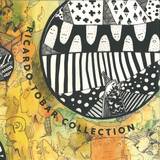
Let's focus on Ricardo Tobar: Born in Chile and now residing in France, Tobar picked the "creative border crossing" as the common thread for his album "Collection". Musical experimentation and crossing musical borders - Tobar refers here directly to the style and sound of the great new-wave-bands of the 80s and 90s. With the help and influence of their new electronic instruments (that often met classic rock guitars) the post-punk-electronic-movement turned almost everything upside down. No matter if the result was moody and mysterious or romantic and hedonistic, all sounded new and different back then and paved the musical path for a whole generation - the reverberations of that episode are noticeable until today.
Tobar plays with the musical approach of the post-punk-era, he mixes, merges and experiments fearless with styles and moods. He creates a wide range of "own styles" and even dives into abstract sound fields - listening electronic in best form! Ricardo Tobar breathes the air of his own musical universe and is not refering to the typical styles of this genre - you won't find any Detroit, Berlin or Sheffield reference here. Although produced in France, Tobar's album doesn't have anything of the sweet and lovely french listening touch. It also won't beam you into the north of England and the grey and cold Sheffield winter like so many other electronic albums try to do.
"Collection" contains full compositions, sound collages, experimental sounds and even proper beat based tunes. Tobar rather creates than produces and is presenting a bigger picture with his collection. Many electronic music artists are trying to do this however Tobar delivers a collection with an impressive range and it seems he did all this in an almost nonchalant way. He plays and combines his instruments and sounds at the same time very sensitive and harmonic but also brave and dissonant without risking to be inaudible at any point. He creates atmospheres by using electronic sounds and layers. Listening to the sound of "collection" almost appears like reading an acoustic book. This album is full of interesting sounds and ideas and is far from being boring or even too demanding.