The Blips self titled debut, 'The Blips', struck lightning when Little Steven's Underground Garage declared "Inside Out" The Coolest Song In The World in the spring of 2021. And here we are with The Blips, 'Again'. Back with more boogie, beast and beauty
This band swaggers like The Stones, Haggards like Merle, and snots like Mike Ness. 'Again' carries you on a not-too-long trip through a varied landscape of far out, well made and dusty rock songs that stick to your black boots and go with you when you go. While there are four different lead singers and writers throughout this album, it is apparent 'Again' is executed by a band, rather than disparate musicians playing along on a track in a cold studio. A band that sweats. The Blips haven't "grown" or "matured" with their "sophomore effort" --These ideas don't apply to the Blips. The band is wholly made up of veteran front men of some of the most revered bands of the Birmingham rock scene. Making records is what all of these guys do on the regular. Once upon a time, The Blips came together, rose above, braved the elements, forced the issue, carried the weight and dealt with the demons that require the making of a record. And now they have done it . . . 'Again'.
Cerca:not glass
- A1: String Quartet No. 5 I
- A2: String Quartet No. 5 Ii
- A3: String Quartet No. 5 Iii
- A4: String Quartet No. 5 Iv
- A5: String Quartet No. 5 V
- B1: String Quartet No. 4 (Buczak) I
- B2: String Quartet No. 4 (Buczak) Ii
- B3: String Quartet No. 4 (Buczak) Iii
- C1: String Quartet No. 2 (Company) I
- C2: String Quartet No. 2 (Company) Ii
- C3: String Quartet No. 2 (Company) Iii
- C4: String Quartet No. 2 (Company) Iv
- D1: String Quartet No. 3 (Mishima) 1957 – Award Montage
- D2: String Quartet No. 3 (Mishima) November 25 – Ichigaya
- D3: String Quartet No. 3 (Mishima) 1934 – Grandmother And Kimitake
- D4: String Quartet No. 3 (Mishima) 1962 – Body Building
- D5: String Quartet No. 3 (Mishima) Blood Oath
- D6: String Quartet No. 3 (Mishima) Mishima/Closing
When Kronos plays a piece, they become fellow composers, true collaborators. Without them, we wouldn’t have the kind of string quartet playing that we find around us today. There are two kinds of string quartet playing: the ‘Before Kronos’ and the ‘After Kronos’.” – Philip Glass
‘Kronos Quartet has broken the boundaries of what string quartets can do.’ – New York Times
Nonesuch releases Kronos Quartet’s acclaimed album Kronos Quartet Performs Philip Glass on vinyl for the first time to coincide with Kronos Quartet: Five Decades, a year-long celebration marking the quartet’s 50th anniversary. Originally released in 1995, the album features David Harrington (violin), John Sherba, (violin), Hank Dutt (viola) and Joan Jeanrenaud (cello) performing Quartet No. 2 (Company) (1983), No. 3 (Mishima) (1985), No. 4 (Buczak) (1990), and No. 5 (1991), the first piece Glass wrote especially for Kronos. Recorded at Skywalker Sound in California, the album was produced by Judith Sherman, Kurt Munkacsi and Philip Glass. The cover art features Francesco Clemente’s painting The Four Corners (1985). At the time of the album’s release, the New York Times said, ‘It contains some of Glass's best music since Koyaanisqatsi. His ear for sumptuous string sonorities is undeniable,’ while the Washington Post called it ‘An ideal combination of composer and performers.’ It was a top 10 hit on Billboard’s Top Classical Albums, and spent 12 weeks on Billboard’s Classical chart.
In his original liner note, critic Mark Swed wrote, ‘Glass’ string quartets may contain his most intimate music. They are works through which a very public composer, perhaps the most important opera reformer of our age and a longstanding collaborator in large-scale music theater, holds up a mirror to himself and his way of composing. “In an odd way,” Glass explains, “string quartets have always functioned like that for composers. I don’t really know why, but it’s almost impossible to get away from it. It’s the way composers of the past have thought and that’s no less true for me. It’s almost as if we say we’re going to write a string quartet, we take a deep breath, and we wade in to try to write the most serious, significant piece that we can.” Glass says that as he sat down to write String Quartet No. 5, he had discovered that perhaps not taking a serious tone might be the most serious way to deal with it. “I was thinking that I had really gone beyond the need to write a serious string quartet and that I could write a quartet that is about musicality, which in a certain way is the most serious subject.”’
Glass’ first numbered quartet was written in 1966; however, he did not return to the string quartet medium until 1983, when he provided incidental music for a dramatization of Samuel Beckett’s prose poem, Company. During those 17 years, Glass had formed an ensemble and developed his style in a series of increasingly elaborate pieces for it. String Quartet No. 3 is also adapted to dramatic music, this time from his score to the 1985 Paul Schrader film, Mishima. It was with the music of Mishima that Kronos became associated with Glass, recording the string quartet sections of the soundtrack and subsequently working extensively with the composer on all five of his numbered quartets. Kronos also gave the first concert performances of Company and Mishima. String Quartet No. 4 was composed in remembrance of the artist Brian Buczak, who died of AIDS in 1988.
As Kronos’ anniversary season continues with further concerts around the world, Nonesuch will reissue Black Angels on vinyl on February 16. First released in 1990, the award-winning album includes George Crumb’s title piece, which inspired David Harrington to found the quartet. Called ‘an unusually elevated and searing Vietnam War protest’ by the New York Times, it sets a dark, powerful tone for this collection, which addresses the political/physical/spiritual consequences of war. Also featured are works by Charles Ives, István Márta, Thomas Tallis, and Dmitri Shostakovich. ‘Stylishly packaged, intelligently programmed, superbly recorded and brilliantly performed,’ proclaimed Gramophone. ‘In short, very much the sort of disc we’ve come to expect from the talented and imaginative Kronos Quartet.’ The Evening Standard included it among its ‘100 Definitive Classical Albums of the 20th Century’.
Born in Baltimore, Maryland, in 1937, Philip Glass is a graduate of the University of Chicago and the Juilliard School. By 1974, he had created a large collection of music for The Philip Glass Ensemble. The period culminated in the landmark opera, Einstein on the Beach. Since Einstein, Glass’s repertoire has grown to include music for opera, dance, theatre, orchestra, and film. His scores have received Academy Award nominations (including Kundun and The Hours, as well as Notes on a Scandal) and a Golden Globe (The Truman Show). Recent works include his memoir, Words Without Music, his first Piano Sonata, opera Circus Days and Nights, and Symphony No. 14. Glass received the Praemium Imperiale in 2012, the US National Medal of the Arts from President Barack Obama in 2016, and 41st Kennedy Center Honors in 2018.
Nonesuch’s relationship with Glass began in 1985, with the release of the score for Paul Schrader’s Mishima featuring Kronos Quartet. Over the years other Glass works on Nonesuch have included Einstein on the Beach (1993), Kronos Quartet Performs Philip Glass (1995), Music in Twelve Parts (1996), Glass Box (2008), as well as the soundtracks for Powaqqatsi (1988), Kundun (1997), Koyaanisqatsi (1998), and The Hours (2002), amongst others.
For 50 years, San Francisco’s Kronos Quartet – David Harrington (violin), John Sherba (violin), Hank Dutt (viola), and Paul Wiancko (cello) – has challenged and reimagined what a string quartet can be. Founded at a time when the form was largely centred on long-established, Western European traditions, Kronos has been at the forefront of revolutionizing the string quartet into a living art form that responds to the people and issues of our time. In the process, Kronos has become one of the most celebrated and influential groups of our era, performing thousands of concerts worldwide, releasing more than 70 recordings of extraordinary breadth and creativity, and collaborating with many of the world’s most accomplished composers and performers. Through its nonprofit organization, Kronos Performing Arts Association, Kronos has commissioned more than 1,000 works and arrangements for string quartet – including the Kronos Fifty for the Future library of free, educational repertoire. Kronos has received more than 40 awards, including three Grammy Awards and the Polar Music, Avery Fisher, and Edison Klassiek Oeuvre Prizes.
Kronos is prolific and wide-ranging on recordings. The ensemble’s expansive discography on Nonesuch includes three Grammy-winning albums: Terry Riley’s Sun Rings (2019), Landfall with Laurie Anderson (2018), and Alban Berg’s Lyric Suite featuring soprano Dawn Upshaw (2003); the 40th-anniversary boxed set Kronos Explorer Series; Nuevo (2002), a Grammy- and Latin Grammy–nominated celebration of Mexican culture; Pieces of Africa (1992), a showcase of African-born composers that simultaneously topped Billboard’s Classical and World Music charts; and Folk Songs (2017), Nonesuch’s 50th album with Kronos, which featured Sam Amidon, Olivia Chaney, Rhiannon Giddens, and Natalie Merchant singing traditional folk songs.
- A1: Love Me Do
- A2: Please Please Me
- A3: From Me To Yo
- A4: She Loves You
- A5: I Want To Hold Your Hand
- A6: All My Loving
- A7: Can't Buy Me Love
- B1: A Hard Day's Night
- B2: And I Love Her
- B3: Eight Days A Week
- B4: I Feel Fine
- B5: Ticket To Ride
- B6: Yesterday
- C1: Help!
- C2: You've Got To Hide Your Love Away
- C3: We Can Work It Out
- C4: Day Tripper
- C5: Drive My Car
- C6: Norwegian Wood (This Bird Has Flown) (This Bird Has Flown)
- D1: Nowhere Man
- D2: Michelle
- D3: In My Life
- D4: Girl
- D5: Paperback Writer
- E1: I Saw Her Standing There
- E2: Twist & Shout
- E3: This Boy
- E4: Roll Over Beethoven
- E5: You Really Got A Hold On Me
- E6: You Can't Do That
- F1: If I Needed Someone
- F2: Got To Get You Into My Life
- F3: I'm Only Sleeping
- F4: Taxman
- F5: Here, There & Everywhere
- F6: Tomorrow Never Knows
- G1: Strawberry Fields Forever (2015 Mix) From (2017 Mix) – 4’10”
- G2: Penny Lane (2017 Mix) – 3’01”
- G3: Sgt. Pepper’s Lonely Hearts Club Band (2017 Mix) – 2’03”
- G4: With A Little Help From My Friends (2017 Mix) – 2’46”
- G5: Lucy In The Sky With Diamonds (2017 Mix) – 3’29”
- G6: A Day In The Life (2017 Mix) – 5’03”
- G7: All You Need Is Love (2015 Mix)– 3’48”
- H1: I Am The Walrus (2023 Mix) – 4’36”
- H2: Hello, Goodbye (2015 Mix)– 3’28”
- H3: The Fool On The Hill (2023 Mix) - 3’00”
- H4: Magical Mystery Tour (2023 Mix) – 2’50”
- H5: Lady Madonna (2015 Mix) From (2023 Mix)– 2’17”
- H6: Hey Jude (2015 Mix) – 7’06”
- H7: Revolution (2023 Mix) – 3’25”
- D6: Eleanor Rigby
- D6: Eleanor Rigby (2022 Mix)– 2’07”
- I1: Back In The U.s.s.r. (2018 Mix) – 2’45”
- I2: While My Guitar Gently Weeps (2018 Mix) – 4’45”
- I3: Ob-La-Di, Ob-La-Da (2018 Mix) – 3’09”
- I4: Get Back (2015 Mix) – 3’12”
- I5: Don’t Let Me Down (2021 Mix) – 3’39”
- I6: The Ballad Of John And Yoko (2015 Mix)– 3’00”
- I7: Old Brown Shoe (2023 Mix) – 3’19”
- J1: Here Comes The Sun (2019 Mix) – 3’06”
- J2: Come Together (2019 Mix) – 4’20”
- J3: Something (2019 Mix) – 3’03”
- J4: Octopus’s Garden (2019 Mix) – 2’51”
- J5: Let It Be (2015 Mix) From (2021 Mix) – 3’53”
- J6: Across The Universe (2021 Mix) – 3’49”
- J7: The Long And Winding Road (2021 Mix)– 3’41”
- K1: Now And Then (2023) – 4’05”
- K2: Blackbird (2018 Mix) – 2’19”
- K3: Dear Prudence (2018 Mix) – 3’55”
- K4: Glass Onion (2018 Mix) – 2’18”
- K5: Within You Without You (2017 Mix) – 5’08”
- L1: Hey Bulldog (2023 Mix) – 3’12” –
- L2: Oh! Darling (2019 Mix) – 3’28”
- L3: I Me Mine (2021 Mix) – 2’26”
- L4: I Want You (She’s So Heavy) (2019 Mix) – 7’48”
- D7: Yellow Submarine (2022 Mix)– 2’39”
- D7: Yellow Submarine
The Beatles 1962 – 1966 & The Beatles 1967 – 1970 (2023 Edition) 6LP BLACK
These landmark compilations have introduced generations of fans to the incredible history of the most storied band in music. For its 50th anniversary, the collections have been expanded: ‘Red’ has 12 additional tracks, including for the first time some of George Harrison’s earliest songs and some classic Beatles versions of R&B and rock ‘n’ roll hits that were so influential on the band. ‘Blue’ has 9 additional tracks including “Blackbird” and “Glass Onion” including the last new Beatles song, “Now And Then” for a total of 21 new additions which are all compiled onto the 3rd disc, effectively creating a ‘new’ LP for each set.
Together the 6LP’s contain 75 tracks, 36 of which have new mixes for 2023. The inserts contains new sleeve notes by journalist and author John Harris. For current fans and future generations alike, the new 1962 – 1966 & 1967 - 1970 collections are a joyous celebration of The Beatles’ timeless musical legacy.
- A1: You May Be Right (Glass Houses (1980))
- A2: Sometimes A Fantasy (Glass Houses (1980))
- A3: Don’t Ask Me Why (Glass Houses (1980))
- A4: It’s Still Rock And Roll To Me (Glass Houses (1980))
- A5: All For Leyna (Glass Houses (1980))
- B1: I Don’t Want To Be Alone (Glass Houses (1980))
- B2: Sleeping With The Television On (Glass Houses (1980))
- B3: C’etait Toi (You Were The One) (Glass Houses (1980))
- B4: Close To The Borderline (Glass Houses (1980))
- B5: Through The Long Night (Glass Houses (1980))
- A1: Allentown (The Nylon Curtain (1982))
- A2: Laura (The Nylon Curtain (1982))
- A3: Pressure (The Nylon Curtain (1982))
- A4: Goodnight Saigon (The Nylon Curtain (1982))
- B1: She’s Right On Time (The Nylon Curtain (1982))
- B2: A Room Of Our Own (The Nylon Curtain (1982))
- B3: Surprises (The Nylon Curtain (1982))
- B4: Scandinavian Skies (The Nylon Curtain (1982))
- B5: Where’s The Orchestra (The Nylon Curtain (1982))
- A1: Easy Money (An Innocent Man (1983))
- A2: An Innocent Man (An Innocent Man (1983))
- A3: The Longest Time (An Innocent Man (1983))
- A4: This Night (An Innocent Man (1983))
- A5: Tell Her About It (An Innocent Man (1983))
- B1: Uptown Girl (An Innocent Man (1983))
- B2: Careless Talk (An Innocent Man (1983))
- B3: Christie Lee (An Innocent Man (1983))
- B4: Leave A Tender Moment Alone (An Innocent Man (1983))
- B5: Keeping The Faith (An Innocent Man (1983))
- A1: Running On Ice (The Bridge (1986))
- A2: This Is The Time (The Bridge (1986))
- A3: Modern Woman (The Bridge (1986))
- A4: Baby Grand (Duet With Ray Charles) (The Bridge (1986))
- B1: Big Man On Mulberry Street (The Bridge (1986))
- B2: Temptation (The Bridge (1986))
- B3: Code Of Silence (The Bridge (1986))
- B4: Getting Closer (The Bridge (1986))
- A1: That’s Not Her Style (Storm Front (1989))
- A2: We Didn’t Start The Fire (Storm Front (1989))
- A3: The Downeaster ‘Alexa’ (Storm Front (1989))
- A4: I Go To Extremes (Storm Front (1989))
- A5: Shameless (Storm Front (1989))
- B1: Storm Front (Storm Front (1989))
- B2: Leningrad (Storm Front (1989))
- B3: State Of Grace (Storm Front (1989))
- B4: When In Rome (Storm Front (1989))
- B5: And So It Goes (Storm Front (1989))
- A1: No Man’s Land (River Of Dreams (1993))
- A2: The Great Wall Of China (River Of Dreams (1993))
- A3: Blonde Over Blue (River Of Dreams (1993))
- A4: A Minor Variation (River Of Dreams (1993))
- A5: Shades Of Grey (River Of Dreams (1993))
- B1: All About Soul (River Of Dreams (1993))
- B2: Lullabye (Goodnight, My Angel) (River Of Dreams (1993))
- B3: The River Of Dreams (River Of Dreams (1993))
- B4: Two Thousand Years (River Of Dreams (1993))
- B5: Famous Last Words (River Of Dreams (1993))
- A1: Reverie ("Villa D'este") (Fantasies & Delusions (2001))
- A2: Waltz #1 ("Nunley's Carousel") (Fantasies & Delusions (2001))
- B1: Aria ("Grand Canal") (Fantasies & Delusions (2001))
- B2: Invention In C Minor (Fantasies & Delusions (2001))
- B3: Soliloquy ("On A Separation") (Fantasies & Delusions (2001))
- C1: Suite For Piano ("Star-Crossed"): I. Innamorato (Fantasies & Delusions (2001))
- C2: Suite For Piano ("Star-Crossed"): Ii. Sorbetto (Fantasies & Delusions (2001))
- C3: Suite For Piano ("Star-Crossed"): Iii. Delusion (Fantasies & Delusions (2001))
- D1: Opus 5. Waltz #2 ("Steinway Hall") (Fantasies & Delusions (2001))
- D2: Opus 9. Waltz #3 ("For Lola") (Fantasies & Delusions (2001))
- D3: Opus 4. Fantasy ("Film Noir") (Fantasies & Delusions (2001))
- D4: Opus 10. Air ("Dublinesque") (Fantasies & Delusions (2001))
- A1: Allentown (Live From Long Island (1982))
- A2: My Life (Live From Long Island (1982))
- A3: Prelude/Angry Young Man (Live From Long Island (1982))
- B1: Piano Man (Live From Long Island (1982))
- B2: Don’t Ask Me Why (Live From Long Island (1982))
- B3: The Stranger (Live From Long Island (1982))
- C1: Scandinavian Skies (Live From Long Island (1982))
- C2: Movin’ Out (Anthony’s Song) (Live From Long Island (1982))
- C3: She’s Always A Woman (Live From Long Island (1982))
- C4: Pressure (Live From Long Island (1982))
- D1: Scenes From An Italian Restaurant (Live From Long Island (1982))
- D2: Just The Way You Are (Live From Long Island (1982))
- D3: Goodnight Saigon (Live From Long Island (1982))
- E1: Stilleto (Live From Long Island (1982))
- E2: Band Intro (Live From Long Island (1982))
- E3: Until The Night (Live From Long Island (1982))
- E4: It’s Still Rock N Roll To Me (Live From Long Island (1982))
- F1: Sometimes A Fantasy (Live From Long Island (1982))
- F2: Big Shot (Live From Long Island (1982))
- F3: You May Be Right (Live From Long Island (1982))
- F4: Only The Good Die Young (Live From Long Island (1982))
- F5: Souvenir (Live From Long Island (1982))
Today we announce The Vinyl Collection, Vol. 2, an 11-LP boxset to follow 2021’s Vol. 1, which includes the remainder of Billy’s catalogue: Glass Houses, The Nylon Curtain, An Innocent Man, The Bridge, Storm Front, River of Dreams. It exclusively features Fantasies & Delusions & Live from Long Island on vinyl for the first time. The boxset includes a 60+ page booklet that highlights the era through photos, quotes, and an essay by Rob Tannenbaum. All albums remastered from original sources at Sterling Sound.
- A1: You May Be Right (Glass Houses (1980))
- A2: Sometimes A Fantasy (Glass Houses (1980))
- A3: Don’t Ask Me Why (Glass Houses (1980))
- A4: It’s Still Rock And Roll To Me (Glass Houses (1980))
- A5: All For Leyna (Glass Houses (1980))
- B1: I Don’t Want To Be Alone (Glass Houses (1980))
- B2: Sleeping With The Television On (Glass Houses (1980))
- B3: C’etait Toi (You Were The One) (Glass Houses (1980))
- B4: Close To The Borderline (Glass Houses (1980))
- B5: Through The Long Night (Glass Houses (1980))
- A1: Allentown (The Nylon Curtain (1982))
- A2: Laura (The Nylon Curtain (1982))
- A3: Pressure (The Nylon Curtain (1982))
- A4: Goodnight Saigon (The Nylon Curtain (1982))
- B1: She’s Right On Time (The Nylon Curtain (1982))
- B2: A Room Of Our Own (The Nylon Curtain (1982))
- B3: Surprises (The Nylon Curtain (1982))
- B4: Scandinavian Skies (The Nylon Curtain (1982))
- B5: Where’s The Orchestra (The Nylon Curtain (1982))
- A1: Easy Money (An Innocent Man (1983))
- A2: An Innocent Man (An Innocent Man (1983))
- A3: The Longest Time (An Innocent Man (1983))
- A4: This Night (An Innocent Man (1983))
- A5: Tell Her About It (An Innocent Man (1983))
- B3: Christie Lee (An Innocent Man (1983))
- B4: Leave A Tender Moment Alone (An Innocent Man (1983))
- B5: Keeping The Faith (An Innocent Man (1983))
- A1: Running On Ice (The Bridge (1986))
- A2: This Is The Time (The Bridge (1986))
- A3: Modern Woman (The Bridge (1986))
- A4: Baby Grand (Duet With Ray Charles) (The Bridge (1986))
- B1: Big Man On Mulberry Street (The Bridge (1986))
- B2: Temptation (The Bridge (1986))
- B3: Code Of Silence (The Bridge (1986))
- B4: Getting Closer (The Bridge (1986))
- A1: That’s Not Her Style (Storm Front (1989))
- A2: We Didn’t Start The Fire (Storm Front (1989))
- A3: The Downeaster ‘Alexa’ (Storm Front (1989))
- A4: I Go To Extremes (Storm Front (1989))
- A5: Shameless (Storm Front (1989))
- B1: Storm Front (Storm Front (1989))
- B2: Leningrad (Storm Front (1989))
- B3: State Of Grace (Storm Front (1989))
- B4: When In Rome (Storm Front (1989))
- B5: And So It Goes (Storm Front (1989))
- A1: No Man’s Land (River Of Dreams (1993))
- A2: The Great Wall Of China (River Of Dreams (1993))
- A3: Blonde Over Blue (River Of Dreams (1993))
- A4: A Minor Variation (River Of Dreams (1993))
- A5: Shades Of Grey (River Of Dreams (1993))
- B1: Uptown Girl (An Innocent Man (1983))
- B1: All About Soul (River Of Dreams (1993))
- B2: Lullabye (Goodnight, My Angel) (River Of Dreams (1993))
- B3: The River Of Dreams (River Of Dreams (1993))
- B4: Two Thousand Years (River Of Dreams (1993))
- B5: Famous Last Words (River Of Dreams (1993))
- A1: Reverie ("Villa D'este") (Fantasies & Delusions (2001))
- A2: Waltz #1 ("Nunley's Carousel") (Fantasies & Delusions (2001))
- B1: Aria ("Grand Canal") (Fantasies & Delusions (2001))
- B2: Invention In C Minor (Fantasies & Delusions (2001))
- B3: Soliloquy ("On A Separation") (Fantasies & Delusions (2001))
- C1: Suite For Piano ("Star-Crossed"): I. Innamorato (Fantasies & Delusions (2001))
- C2: Suite For Piano ("Star-Crossed"): Ii. Sorbetto (Fantasies & Delusions (2001))
- C3: Suite For Piano ("Star-Crossed"): Iii. Delusion (Fantasies & Delusions (2001))
- D1: Opus 5. Waltz #2 ("Steinway Hall") (Fantasies & Delusions (2001))
- D2: Opus 9. Waltz #3 ("For Lola") (Fantasies & Delusions (2001))
- D3: Opus 4. Fantasy ("Film Noir") (Fantasies & Delusions (2001))
- D4: Opus 10. Air ("Dublinesque") (Fantasies & Delusions (2001))
- A1: Allentown (Live From Long Island (1982))
- A2: My Life (Live From Long Island (1982))
- A3: Prelude/Angry Young Man (Live From Long Island (1982))
- B1: Piano Man (Live From Long Island (1982))
- B2: Don’t Ask Me Why (Live From Long Island (1982))
- B3: The Stranger (Live From Long Island (1982))
- C1: Scandinavian Skies (Live From Long Island (1982))
- C2: Movin’ Out (Anthony’s Song) (Live From Long Island (1982))
- C3: She’s Always A Woman (Live From Long Island (1982))
- B2: Careless Talk (An Innocent Man (1983))
- C4: Pressure (Live From Long Island (1982))
- D1: Scenes From An Italian Restaurant (Live From Long Island (1982))
- D2: Just The Way You Are (Live From Long Island (1982))
- D3: Goodnight Saigon (Live From Long Island (1982))
- E1: Stilleto (Live From Long Island (1982))
- E2: Band Intro (Live From Long Island (1982))
- E3: Until The Night (Live From Long Island (1982))
- E4: It’s Still Rock N Roll To Me (Live From Long Island (1982))
- F1: Sometimes A Fantasy (Live From Long Island (1982))
- F2: Big Shot (Live From Long Island (1982))
- F3: You May Be Right (Live From Long Island (1982))
- F4: Only The Good Die Young (Live From Long Island (1982))
- F5: Souvenir (Live From Long Island (1982))
"The Vinyl Collection, Volume 2" vereint Billy Joels monumental erfolgreiche Alben aus dem späteren Teil seiner Karriere: "Glass Houses" (1980), "The Nylon Curtain" (1982), "An Innocent Man" (1983), "The Bridge" (1986) und "Storm Front" (1989), "River of Dreams" (1993). Außerdem gibt es 2 Titel zum ersten Mal auf Vinyl: die Doppel-LP "Fantasies & Delusions" und die 3er-LP "Live from Long Island" aus dem Jahr 1982. Alle Songs stammen von den Original-Album-Mastern, Zudem ist ein über 60-seitiges Booklet mit Billys persönlichen Anmerkungen und einem Essay von Rob Tannenbaum enthalten
The Debut album from Finnish band Graven Sin is a modern classic of godly, Doom-laden Heavy Metal. Veil of The Gods is etched in granite via Svart Records on November 2023 Pristine new Finnish band Graven Sin stomp proudly on the shoulders of giants with their ravishing debut album, Veil of The Gods. Immaculate Heavy Metal, expertly delivered with stunning finesse and elegant Doom perfection, Veil of The Gods is a classic in the making. Rarely has a new band sounded so timeless, serving up a godly platter of first-class Heavy Metal, that Graven Sin seem chiselled in granite to sit side by side at a table with the greats from the very get go. From the galloping charge of opening barn-stormer Morrigan, with jaw dropping solo guitars courtesy of riff master Ville Pystynen, the epic and anthemic She Who Rules Niflheim with soaring vocals from Greek vocalist Nicholas Leptos to the formidable double bass canter of Ville Markkanen’s drums on songs like Beyond Mesopotamia, Graven Sin knows the true riddle of steel. Throughout Veil of The Gods’ eleven cast-iron tracks, we can trace veins of recent Finnish greats such as Sentenced, Amorphis, Reverend Bizarre or their nordic counterparts Grand Magus from Sweden, but there is much more at play here. Graven Sin offers up heavy, doom laden orthodox Heavy Metal in the true, chugging, monumental sense of the term. The knowledge and prowess of Heavy Metal craft on display in Veil of The Gods is second to none, from the Maidenesque command of melody to the swarthy Manowar rhythms, herculean Deep Purple keys and Messiah like Candlemass-rich voice of astonishing vocalist Leptos, these are songs to be inscribed into stone tablets. Where pitch dark mythical themes and occult leanings of the lyrics bring to mind the Heavy Metal running through Black Metal bands like Dissection, the song arrangements swing from gallop to thundering, head-banging mid-sections with such magnificence, you would think you were in the hands of a band with decades of heritage behind their backs. A “where have you been all my life moment” awaits Heavy Metal fans of all shades when Graven Sin hits the speakers, delivering a sound that cuts glass and steel. A refreshing tour–de-force through everything Heavy Metal is loved for, not shrinking from the dark but embracing it with gusto and fierce bravado. Veil of The Gods shows us that real metal lives forever, if crafted with true spirit and belief. Hear the cry of the seer of doom, by heeding Morrigan’s call now: Ville Pystynen - guitar, bass Nicholas Leptos - vocals Ville Markkanen - drums
Vladislav Delay presents the fourth EP in his "Hide Behind The Silence" series with five 10" releases coming throughout 2023. Intuitive and raw music, momentary and reflective, released on Ripatti's own label "Rajaton".
Stillness is a myth. Consider concepts such as ”still water”, or ”still air” for that matter. Go to a restaurant, ask them for a glass of still water, hold it against the light and see where we’re at. Even though the water itself has been captured and imprisoned in the glass, it never stops breathing. It’s filled with tiny particles, dancing. Everything can be explained on a molecular level, but since we’re not scientists – and even if you happen to be – it’s the natural world of perception that moves me.
Still air is very similar. A hot summer’s day with zero wind feels completely still. It’s the closest I have felt to complete stillness. Or for a more urban adaptation, imagine the same vibe inside a normal apartment. In those moments, revelations and mind- blowing experiences can be had with experiments in stillness.
Try this: Just sit down for a minute on a sunny day, making sure there’s enough natural light. Do absolutely nothing. Try not to breathe for a bit. (If you need a mental anchor, you can play Cage’s 4’33” in your head but nothing else.) Watch the tiny dots of dust dancing :..’ ̈.:; ́ ́*°.,’:,. ̈ ̈ ̈ ̈:,.’
The movement is crazy, but the feeling of stillness comes from witnessing how subtle it is. In (perceived) complete stillness, every act of microscopic mobility seems to speak volumes. Yet, it feels both reassuring and oddly threatening that the stillness is never complete. What if we would need absolute stillness? Or is it just enough that we can perceive something as such? Extremes attract, so for both water and air, extraordinary movement is equally fascinating. That is also a luxury item of sorts. For us to enjoy a very ”loud” body of water or air, we need to be safe, in enough control of the situation. So when you are, it’s worthwhile to pay attention and take it all in.
A rapid flowing free with extreme strength and just barely in control. Look at that water go! No still water on this one, only ”sparkling”. A windy day when birds seem surprised how hard it is to fly, but in the end they make it. Trees bend but don’t break. The wind shows you its movement but doesn’t hurt you. It feels friendly, like a big clumsy dog that doesn’t quite understand its size.
It’s beautiful to be a guest of the elements, but not at the mercy of them. A new kind of dialogue forms.
Q&A with Sasu Ripatti:
1) Tell us something about the EP series ”Hide Behind the Silence”, what’s the idea and what can we expect?
Exploration of inaction. Of many kinds. In arts and in personal life, or at bigger and more serious levels. Questioning myself as a human being as well as an artist. Acknowledging the growing activism all around, and the very clear need for it, and how it reflects my own inaction.
Musically speaking, after Rakka, Isoviha and Speed Demon, I finally found some relief, but more importantly lost the need to go musically ever more outward and intensive. I felt quite strongly certain periods/moods from the past and they made me revisit some musical ideas or states of mind I was exploring early on.
It’s about live moments being captured, not much premeditation or editing. More intuitive and raw, even though the end result (to me) feels and sounds quite introspective and calm. It’s not very ambitious. Momentary and reflective.
2) Your music doesn’t sound very silent. Does it come from somewhere behind the silence?
Oh, this time to me it sounds quite quiet and playing with space if not silence. I don’t know what’s actually behind silence, but I think silence is the source of everything. We just don’t understand it yet.
3) What kind of thoughts or experiences gave inspiration to this series?
Writing this in Nov ’22, it’s not a stretch to say the world has been really unwell. Sometimes, like Mika Vainio put it, the world eats you up. I feel a bit like that. And I try to hide in my studio and stay away from it all, but it’s getting harder by the day. I’ve been questioning myself and thinking if what us artists are doing is worth anything, and whether it’s just a selfish thing I’ve been doing for the past 25 years, running away from everything. I haven’t come to a conclusion yet.
4) Is it easy for you to be in silence, or around silence?
Absolutely. I not only hide behind silence but I also love silence. It’s only since I started going back to nature as a grown-up person that I sensed and was enveloped by silence, true silence. I have begun to appreciate it a lot. I think all the people should spend more time in silence.
All tracks composed and produced by Sasu Ripatti.
Artwork by Marc Hohmann, photography by Shinnosuke Yoshimori.
Mastering by Stephan Mathieu for Schwebung Mastering.
Vinyl cut by SST Brueggemann.
Publishing by WARP Music Ltd.
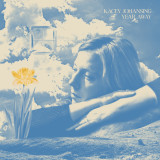
In March of 2020, after learning that a dear friend’s life was coming to an end, Johansing sat down and in one sitting wrote the song “Daffodils”. An elegiac tribute to someone facing death with grace and curiosity, the lyrics confront Johansing’s own mortality by observing the brief lifespan of a Hlower. Only a week later when the world came to an abrupt standstill, she soon found herself processing this recent loss while trying to make sense of a new global reality. Across the ensuing months, Johansing found herself increasingly untethered by a world of isolation and political upheaval.
Having been a frequent touring member of bands like Hand Habits and Fruit Bats, and often being called into the studio to lend her harmonies and multi-instrumental talents to records, Johansing’s phone no longer rang. Living in Los Angeles she feared her musical community was vanishing, as friends and collaborators continually announced they were leaving the city. It was in returning to her piano nightly that she found the greatest solace, feverishly writing the songs that would be collected on her next album. Resulting from this new sense of time and focus was a deepening of her songwriting. As Johansing recalls, “I felt like a metamorphosis happened during that time. There was a lot of personal growth and healing.”
Throughout Year Away Johansing traverses uncharted emotional landscapes brought upon by the changes occurring all around her. The forced self-reflection of the moment is aptly captured by “Old Friend”, featuring an aching melody and swooning production that recalls the best of Harry Nilsson. The epic piano and saxophone-driven “Smile with My Eyes” addresses the loss of community as friends became distant and political divides between family grew. On “Smile” Johansing pushes her vocals further than ever, expanding her range and using her peerless voice as the singular instrument it is. Facing the loss of a family home due to environmental destruction, “Shifting Sands” is marked by soaring Hlutes, Hield recordings and glassy synthesizers that nod to Japanese New Age.
“Daffodils”, the stunning album centerpiece, is built from a pastiche of looping samples, swirling Mellotron and dazzling vibraphone. “Keep your heart open wide, you never know your time / Keep your heart wild, true Hlower child”, Johansing sings as she says goodbye to an elder, while the band reaches a grief-stricken crescendo of woodwinds and chiming bells. On the title track, Johansing takes listeners on an eerily meditative journey of collective experiences. “I wanted to keep the progression simple and repetitive so that musically we could add new elements little by little, while the emotional tone of the lyrics becomes increasingly more strained and expressive”. The song grows to a fever pitch as Johansing sings higher than she thought possible; the tension of the repeating chords Hinally resolving into a hopeful coda as multiple soloists weave around each other.
Amidst heavier themes, Johansing still leaves room for her love of irresistible pop melodies and lush production. The driving “Last Drop” and mid-tempo “Valley Green” are two of her catchiest songs to date. On the former Johansing sings the anthemic chorus, “As if it were the last drop, and nothing ever lasts forever / As if it were the last stop, too far out to come back ever”, longing for a love that she’ll never take for granted, while also admitting that she doesn’t always know how good she has it. “Valley Green” features shimmering layers of 12- string guitars, stacked horns and an impeccable solo by co-producer and multi- instrumentalist Tim Ramsey (Vetiver, Fruit Bats), hinting at a love for bands like NRBQ.
Having been eager to capture the initial spark of songwriting, Johansing booked time at Highland Park’s 64 Sound Studio the week that it reopened. Over the course of three days, she and her band gathered basic tracks for 10 songs, before returning home to Hinish the record with Ramsey. Setting forth to make an album that paid homage to the music that kept them company during the months spent alone together, the duo pulled inspiration from a wide net including Burt Bacharach, John Carroll Kirby & Haruomi Hosono. Ramsey’s newfound love of early digital synthesizers dovetailed effortlessly with Johansing’s fondness for classic 70’s horn and string arrangements, creating a sound that is distinctly modern yet warm and familiar.
Once again Johansing called upon some of the Hinest players of Northeast Los Angeles’ vibrant music community to lend a hand with the record. The 70s R&B-folk of “Watch It Like a Show” features an electric guitar solo from Hand Habits’ Meg Duffy, while album closer “Endless Sound” boasts backing vocals from electronic musician Kaitlyn Aurelia Smith and swooping Indian-inspired violins from Amir Yaghmai (HAIM, The Voidz). The record shines brightly thanks to an ace mix from veteran producer Rob Schnapf (Beck, Elliott Smith, Cat Power), woodwinds from Logan Hone (John Carroll Kirby, Eddie Chacon), and a featured rhythm section of drummer Josh Adams (Jenny Lewis, Bedouine) and bassist Todd Dahlhoff (Feist, Devendra Banhart). Recorded across multiple studios including LA’s famed Sunset Sound, the album remains steadfastly buoyed by the adept engineering of Tyler Karmen (MGMT, Alvvays).
Though born of turbulent times, Year Away is ultimately interested in moving forward. The album ends with “Endless Sound,” where Johansing laments seismic global changes, (“The water is hotter, the mighty thaw / The current’s reversing, the last are lost”) but vows to keep going (“No storm can take me down / Endless light, endless sound”). It’s Year Away’s resilience that shines through despite the darkness. It’s a sound all her own and Johansing’s most cohesive set of songs yet.
- A1: Thunder
- A2: Daddy Pop
- A3: Diamonds And Pearls
- B1: Cream
- B2: Strollin’
- B3: Willing And Able
- B4: Gett Off
- C1: Walk Don’t Walk
- C2: Jughead
- C3: Money Don’t Matter 2 Night
- C4: Push
- D1: Insatiable
- D2: Live 4 Love
- E1: Gett Off (Damn Near 10 Min.)
- E2: Gett Off (Houstyle)
- F1: Violet The Organ Grinder
- F2: Gangster Glam
- F3: Horny Pony
- F4: Cream (N.p.g. Mix)
- G1: Things Have Gotta Change (Tony M Rap)
- G2: Do Your Dance (Kc’s Remix)
- G3: Insatiable (Edit)
- G4: Diamonds And Pearls (Edit)
- H1: Money Don’t Matter 2 Night (Edit)
- H2: Call The Law
- H3: Willing And Able (Edit)
- H4: Willing And Able (Video Version)
- H5: Thunder (Dj Fade)
- I1: Schoolyard
- I2: My Tender Heart
- I3: Pain
- J1: Streetwalker
- J2: Lauriann
- J3: Darkside
- K1: Insatiable (Early Mix - Full Version)
- K2: Glam Slam ’91
- K3: Live 4 Love (Early Version)
- L1: Cream (Take 2)
- L2: Skip To My You My Darling
- L3: Diamonds And Pearls (Long Version)
- M1: Daddy Pop (12" Version)
- M2: Martika’s Kitchen
- M3: Spirit
- M4: Open Book
- N1: Work That Fat
- N2: Horny Pony (Version 2)
- N3: Something Funky (This House Comes) (Band Version)
- N4: Hold Me
- O1: Blood On The Sheets
- O2: The Last Dance (Bang Pow Zoom And The Whole Nine)
- O3: Don’t Say U Love Me
- P1: Get Blue
- P2: Tip O’ My Tongue
- P3: The Voice
- P4: Trouble
- Q1: Alice Through The Looking Glass
- Q2: Standing At The Altar
- Q3: Hey U
- Q4: Letter 4 Miles
- R1: I Pledge Allegiance To Your Love
- R2: Thunder Ballet
- S1: Thunder
- S2: Daddy Pop
- S3: Diamonds And Pearls
- T1: Willing And Able
- T2: Jughead
- T3: The Sacrifice Of Victor
- U1: Nothing Compares 2 U
- U2: Thieves In The Temple
- U3: Sexy M.f
- V1: Insatiable
- V2: Cream/Well Done/I Want U/In The Socket (Medley)
- W1: 1999/Baby I’m A Star/Push (Medley)
- W2: Gett Off
- W3: Gett Off (Houstyle)
- X1: Etching
Paisley Park Enterprises, in Partnership with Sony Music Entertainment and Warner Records, announces expanded reissue of Prince & the New Power Generation’s multi-platinum album Diamonds And Pearls. This 12LP+ Blu-ray features 47 previously unreleased tracks and over two hours of live filmed concert footage in high definition.
Following the successful release of the 1999 Super Deluxe Edition (2019), and Sign O’ The Times Super Deluxe Edition (2020), the Diamonds And Pearls Super Deluxe Edition represents the third deep dive into Prince’s vault. It includes a total of 75 audio tracks across 7x CDs and 12x 180g vinyl records.
The set offers a newly remastered version of the album, plus 15 of the incredible remixes and B-sides from the era, including the never commercially released “Gett Off (Damn Near 10 Min.)” mix. The Super Deluxe Edition also features 33 previously unheard studio gems from Prince’s Illustrious vault, ranging from alternate versions of album tracks to numbers Prince gave away to other artists, and songs recorded while on the road in 1990.
Prince & The NPG previewed the Diamonds And Pearls Tour at Prince’s Minneapolis club, Glam Slam, on January 11, 1992. The sweaty, sold-out, last-minute show captures the sheer joy and sense of endless possibility that came to define this era. This previously unreleased live concert performance has been mixed from the 24-track master and rounds out the audio content of this 12LP set.
This same previously unreleased concert is also presented in stunning 2K video on the Blu-ray disc that accompanies both Super Deluxe Edition formats, in Stereo, 5.1 Dolby True HD, and Dolby ATMOS audio formats. The Blu-ray also features Prince & The New Power Generation’s performance at The Special Olympics at the Metrodome in Minneapolis in July 1991 (also in Stereo, 5.1, and ATMOS), as well as a previously unseen soundcheck.
The Blu-ray is completed by the long out of print Diamonds And Pearls Video Collection, originally released on VHS and LaserDisc in 1993. The 120-page hardback book which accompanies the SDE set features unseen photos by Randee St. Nicholas, and essays by: author & broadcaster Andrea Swensson; Archivist and Senior Researcher for the Prince Estate Duane Tudahl; British music critic and Prince expert Jason Draper; De Angela L. Duff, an Industry Professor at NYU Tandon School of Engineering in Brooklyn; Social Media Personality KaNisa Williams; and an introduction from Public Enemy founder, Chuck D.
“Praying to god whether or not I believe there is one” - PH
Petra Hermanova and Unguarded announce In Death’s Eyes (UGD-009), the debut solo LP under the artist’s own name. This LP features nine tracks utilizing folk and sacred musical technique and instrumentation which drift between song and heavy distorted drones. In a disciplined display of beauty, pain, and astute musicianship, Hermanova brings forth a notable accomplishment of an album. In Death’s Eyes confronts death from start to finish with a rare fervor that leaves one feeling it was utterly necessary for Hermanova to produce - to survive. The transcendent impulse, or the influence of religious music, bears heavily on Hermanova’s compositions in her choir arrangements, but is most apparent in her use of pipe organ, opening the record on Black Glass. Having written organ parts for a significant portion of the record, she sought out the renowned organist Denny Wilke to record with her in the Merseburg Cathedral. Captivated by Wilke's profound skill as a player and knowledge of the Ladegast organ, Hermanova invited him to collaborate on Two Deaths where he delivers an impressive improvisation. While religious music offers spiritual solace from grief, folk speaks to the human and earthly as told by the individual, be they songs of suffering or joy, sin or salvation. To Hermanova, the clean promise of liturgical music is not enough to alleviate the blunt pain of grief. Contrasting the spiritual is the voice of the individual sufferer - the folk musician. For Hermanova, the autoharp embodies this contrast. The autoharp, a familiar sound in Appalachian folk music since its mass production in the late 1800’s, is an affordable instrument designed for the unskilled player. It is the antithesis of the organ which is costly, gargantuan, reserved for skilled players, and quite literally a part of the church. Through In Death’s Eyes the sounds of transcendence blend with the worldly, the tension between them poignantly expressing Hermanova’s struggle for spiritual resolution against the reality of death and loss. Like Hermanova’s lyrics, the artwork, conceptualized by Enes Güç and Evelyn Bencicova, is riddled with symbolism and allusion. We find Hermanova on the cover, digitally rendered. Reclining like an anatomical Venus, her vital organs are exposed, suggesting she is denied a transcendent death and is instead immaculately human. Bearing a sickle, her legs are metallic like armor, both symbols of protection. We see here in this image, as we hear in the nine tracks of IDE, the metaphoric state of someone ravaged by loss, choosing to tear herself open in an attempt to heal. - Reece Cox Petra Hermanova is a musician and visual artist based in Berlin. In 2018, Hermanova began working with the autoharp, which has since become the central pillar of her musical practice. Drawing inspiration from folk, medieval drone, and contemporary textural expressions, as well as Appalachian autoharp music, she creates emotionally driven arrangements accompanied by vocals. In her lyrics, she speaks to the fragility and tenderness of the human condition, religious conceptions of death, and introspective landscapes through narrative and symbolism. Hermanova debuted live at the Berliner Festspiele event The Sun Machine is Coming Down, performed at Trauma Bar und Kino accompanied with her choir, and recently took part in Sorour Darabi’s durational performance From the Throat to the Dawn. Her debut solo album, In Death’s Eyes, is set for release in 2023 on the art platform and label Unguarded. The album, where she wrote for the autoharp, pipe organ, solo voice and choir, features the acclaimed organist Denny Wilke playing the 19th century Ladegast organ of the Merseburg Cathedral. She has toured internationally with previous projects, including extensive sound and visual collaborations with Jon Eirik Boska (Hydropsyche) as well as with her award-winning band Fiordmoss. She was recently announced as a SHAPE+ platform artist.
Having been deck slaying as near their London headquarters as Germany and as far as Canada, goth techno prodigy Lesser Of is steadily approaching double digit release count. With an established residence at queer x trans focused, revolutionary event series Subverted, their efforts have been welcomed to a formidable list of industrial electronic labels and remixed by a tidy sum of high profile scene icons.
Here at Depth.Request our sonars are attuned to emanant potential, and so we conscript Lesser Of to hammer out our fourth acetate offering to date. To this, harsh noise and drone music inspirations are declared, alongside an artistic secret of the trade: lights-off sessions in live room of a recording studio vibrating with the pulse of a bass guitar ran through a freeze pedal were what begot the tracks, and they are well intent on assaulting your headphones with noise. Reeko on the remix - yes, this record fucks.
Prolonged, ominous intro? Nah. Have a face full of Crude Manifestation Of Power instead, as an insatiable, 10-minute long opener braces your ears for a week of ringing with a sonic equivalent of metallic thrashing one could expect from being a sinful, rave-lusting scoundrel. On title-diverting continuation Within My Fragility the words "strength in fragility" are truly alliterated as the pace, abrasiveness and intensity of pummelling are all ramped up fiercely, with linear open hats thrown against them from time to time for good measure. Having reached 140 BPM and concrete mean, Masked proceeds in a well anticipated ra(n)ge: infernal atmosphere, sandy hats and layered tectonic tremors achieved with increasingly undefined low end consisting of a rumble line and rolling kick morphing into abrasive haze. Winding the tempo back a notch, a halftimearranged contemplation Our Descent grows in direct, hyperborean vector: glassy drones and sharp syncopulsation first - atonal reverberations, distorted arpeggios and punchy stabs endwise. Reeko's analog reinvention of Masked convolves the drum structure by borrowing from breakbeat narratives and authorizes the dystopian ambiance to rise and fall on more gradual, panning, confined terms; adding, however, more disorder to the mix with spectrum slicing, high-range chaos.
As you would have learned to expect from Depth.Request, Within My Fragility EP is not an easy listening five-tracker. If by the end of it you find yourself feeling as if you just stepped out of a pounding warehouse at 3AM and you don't know what day it is, you wouldn't have been experiencing this mindspace alone.
Glasser, the elevated electronic project from Cameron
Mesirow, releases her anticipated third album, ‘crux’, via
One Little Independent Records.
‘crux’ takes Glasser’s entrancing blend of dreamy
experimental pop and layered electronics to explore
themes of personal identity, emotional vulnerability, and
the human experience. The album maps journeys of selfdiscovery as she unpacks intimate experiences with a
maturity and cathartic outlook. Specifically, the tracks on
‘crux’ discuss the death of an old friend, her meditations
on the fragility of life and the delicacy of relationships in
times of uncertainty.
More than anything it’s about the importance of creativity
and writing while healing, and on an individual level,
looking inward and the examination of one’s grief, anxiety,
and insecurities. Musically it searches outward, it includes
the use of traditional folk, Celtic to communicate her
Scottish roots, and Eastern-European styles, all introduced
to her lush, atmospheric production, intricate vocal
harmonies, and complex rhythms.
“Soaring vocals with free-flowing, rhythm-obsessed
eclecticism that make for a notably welcoming collection of
atmospheric, electronics-brushed pop” - Pitchfork
“It’s Glasser’s sonic constructions which holds our interest
first and foremost; a bolder and more up-front sound” -
The Line of Best Fit
“Potent, sexually charged and teeming with life. Make no
mistake, this isn’t sex as male-gaze-pandering titillation,
packaged in clichéd, chart-friendly couplets, but sex from a
singular female perspective: intimate, all-encompassing,
ecstatic. This is pop for consenting adults: music for awake
minds” - Dazed
To celebrate Spider-Man’s sensational 60th anniversary, Marvel Entertainment partnered with Semmel Exhibitions to launch Spider- Man: Beyond Amazing - The Exhibition, which chronicles the epic history of the ‘wall crawler’. The exhibition runs from May 26, 2023 through October 1, 2023 in Kansas City, and premiered at the Comic- Con Museum in San Diego where it ran from July 1, 2022 through January 1, 2023.
For this historical display, a soundscape was needed to reflect Spidey’s emotional ups and downs: his moments of isolation and loneliness, but also his courage, determination, and the sheer joy of web-slinging. This is where Sebastian M. Purfürst of LEM-Studios came in. To create a soundtrack that would engage visitors in every single moment of the exhibition, Sebastian employs parallel techniques in his musical compositions and productions - not only writing the notes and melodies but creating a fully realized world of sound.
Marvel’s Spider-Man: Beyond Amazing - The Exhibition is available as a strictly limited edition of 2500 individually numbered copies on crystal clear vinyl with a full-colour Spider-Man print on its side B. The package also includes a 4-page booklet and large exhibition poster.
The inaugural release on KMRU's own fledgling OFNOT imprint, 'Dissolution Grip' is an ambitious project that emerged from his studies at Berlin's prestigious UDK. The Kenyan composer and sound artist is best known for his field recording work, and as he traveled across Europe and the wider world for regular live performances, he made a point to snapshot each city. But the more he studied and the more he examined his practice, the more KMRU began to wonder what the purpose of these recordings were, and what bearing they might actually have on his self-expression. Simultaneously, he'd begun to dive more wholeheartedly into the world of synthesis. In a way, synthesis is the most basic form of sound, and KMRU started to wonder not just how he could harness these sounds but how he might be able to more dynamically combine them with field recordings.
Guided by Jasmine Guffond at Berlin's Universität der Künste (better known as UDK), KMRU looked at waveforms - the visual representation of sound itself - and embarked on a process where he would write scores from the shapes, gradually turning the scores into raw synth sounds. Considering the spaces he was inspired by and shuttled through, KMRU decided that instead of using environmental recordings as an aesthetic marker, he would use these captured moments to guide the waveforms. So each sound is birthed from a field recording, but none of those recordings are audible in their original form. For example, on the digital bonus track 'Along A Wall', KMRU recorded in an old shack on his family's compound in Nairobi, where wind was shaking the building to its foundations. Listening to the finished piece, we can hear subtle electronic tones that rub and vibrate against each other, slowly saturating and mimicking the erratic motion of the wind. The original recording has been removed, but the feeling remains.
The album's opening side 'Till Hurricane Bisect' is a 15-minute epic that evolves at its own glacial pace, carefully transforming blustering wind sounds into gasping drones, glassy oscillations and choked distortion. Cosmic and meditative, it's a testament to KMRU's skill as a sound engineer and patience as a composer, combining the gentle world building of his acclaimed Editions Mego album 'Peel' with the rumbling energy of 'Limen', last year's collaboration with Aho Ssan. On the title track, KMRU takes the opportunity to flex his orchestral muscle, conducting a cast of warbling synth tones into a durational symphony. Starting as quietly as a whisper, 'Dissolution Grip' expands at its own pace until it's a dense wall of harmony, powerful but never completely overwhelming. It's music embedded with a rich sense of place that informs us of KMRU's past and present, and signals where his musical philosophy might take us in the future.
A pungent ooze emanates from the subway. As a sticky drum machine sequence rolls out like thick dark fog, ice cold synth swirls rise from the depths.
Since the debut album Europe By Night, one of the main references associated with Henrik Stelzer and his Metro Riders project has been that of cinema, and particularly the European genre films of the 1980s. With its seedy subject matters manifesting both in visual style and music, the vibe of that era has crystallized over time. Passed down to us from deteriorating video cassettes, it became an invaluable key to decoding our present day reality.
And this is true for this album as well; Stelzer does not hide the fact that he builds heavily on that vibe; referencing it through track titles and utilizing a particular recording setup consisting of a Fostex and a reel to reel in order to achieve and recreate the feeling of those soundtracks — as heard on magnetic tape rather than vinyl.
The motion picture soundtrack as an arbitrary genre definition becomes, in the hands of Stelzer, a pair of X-ray specs for him to envision a kind of music that deals in grains and contrasts rath- er than hooks and choruses. And like Roddy Piper in John Carpenter's 1988 film They Live, he hands those glasses over for us to see the true face of our times.
On Lost In Reality Metro Riders maps out an emotional geography of the cities at night, wherein the cinematic haze becomes a tool by which we can view the cities with new eyes. Not steering away from the darker alleys nor the harsh realities of modern day politics masquerading as progress. Yet escapism, in the end, seems the only viable option. But not as an endgame, but rather a stepping stone for building a new vocabulary for an utopian language.
Miss Tiny is a brand-new musical project featuring acclaimed record producer and Speedy Wunderground label founder Dan Carey (Wet Leg, Slowthai, Fontaines D.C.) alongside Ben Romans-Hopcraft of Warmduscher / Insecure Men / Childhood fame.
A spiritually, and methodically united front, Miss Tiny’s universe is a thoroughly explored romance between heritage, rebellion, and years old friendship; a triptych of variables all gravitating towards one signalled output, with no real sense of time, or external pressures. Having spent the best part of a decade orchestrating haphazard jam-sessions, Carey and Romans-Hopcraft would eventually go on to discover a fundamental principle of their own. One which would come to define Miss Tiny, throughout her various forms and guises.
“We called it anti-recording,” continues Carey. “Only doing it for the pleasure of doing it”. When fully committing to this practice, the music meticulously follows two courses; refine, or degrade. Perfect the moment, or let it go; never to be heard, or re-lived ever again for fear that the action of pressing record, would inevitably take ownership of the occasion and lead the experimentation into a downward spiral towards something all-together tangible.
The irony of a seminal producer and critically revered musician banding together out of mutual distaste for recording, is not one that’s gone amiss. In fact, they’ll be the first to proudly call it into question- and yet still, Miss Tiny holds her own despite all peripheral associations, and would eventually go on to be documented. These aren’t ‘sit-down-and-write-a-song’ kinda songs. These spurts of spontaneity which would, in time, ultimately form the duo's debut EP ‘DEN7’, are years’ worth of trial and error. Trial and elation. A process in which strong technique and melodic-manipulation are the sole foundations required to reinvent the meaning of memory; be it guitar and drums, or flesh and blood.
Produced and recorded at Carey’s ‘Speedy Wunderground’ studio in Streatham, ‘DEN7’ is a masterful introduction to a group whose members need none. Through chopping, editing, and re-defining their improvised segments into songs which they could eventually go on to learn, Carey and Romans-Hopcraft by chance, stumbled upon gold-dust. Like Alice and her looking glass, our two protagonists effortlessly pass through all notions of engineered logic in order to see beyond the expected. The bigger picture perhaps. Or the magic in the small things that matter most.
Critically acclaimed pianist/composer Aaron Diehl's penchant for the past
influencing the future has come full circle with his fully realised suite of
Mary Lou Williams' Zodiac Suite - the first fully-fledged professional
recording of this incredible music
Solely paying tribute to Mary Lou Williams was not the goal, as Diehl's mission is
to give honour and praise to one of the greatest composers of the 20th century
and the forgotten rich history of Black Classical Music.
Joined by the orchestral collective The Knights and special guests Evan
Christopher (clarinet), Nicole Glover (tenor sax), Brandon Lee (trumpet), and
Mikaela Bennett (soprano), Diehl breathes vibrant new life into a masterwork that
the composer herself was never able to fully realize during her lifetime.
Aaron Diehl approaches the piano with a delicately nuanced expressivity and an
exquisitely attuned touch that have garnered him acclaim at the highest levels.
From his collaborations with such jazz innovators as Wynton Marsalis, Cécile
McLorin Salvant and Benny Golson, to his exploratory work in the classical realm
with Philip Glass or the New York Philharmonic, to his own current- crossing
recordings as a leader, Diehl is singularly committed to a journey of musical
discovery regardless of genre or context
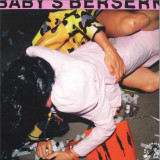
Toy Tonics going New Wave Disco with Baby’s Berserk’s self-titled debut album (to be released on 29 September).
There are many shades of funk in dance music. Berlin’s Toy Tonics label brings up artists that reflect many of these different aspects in dance music. Now the label comes up with a band! A band that is inspired by 1980ies New Wave as well as the Y2K Indie dance scene. Two guys and 2 girls from Amsterdam and Montreal called Baby’s Berserk.
Baby’s Berserk is about taking the freedom to be who you want to be, about being comfortable. Having played in all-girl punk bands since the age of 14, the bands singer Lieselot is an expert on female empowerment. “Dress like a girl and act like a boy,” is a catchphrase she lives up to every day and it clearly is a message that resonates with the band’s wild fans.
In the great tradition of Roxy Music, Throbbing Gristle and Malcolm McLaren, Baby’s Berserk is not just about the edgy music, but also about a very strong own visual style. They readily blend their sounds with underground fashion. What you see is what you get and seeing Baby’s Berserk is feeling right at home. Lieselot is a visionary when it comes to stage presence. Have you always wanted to see an electronic band with a punk attitude perform wearing a mix of haute couture and Flintstone-style rags? Look no further, it’s Baby’s Berserk.
Following on the critically acclaimed singles ‘What I Mean’ (2020) and ‘Toxic Kisses’ (2022), Baby Berserk’s highly anticipated self-titled full-length is now finally about to see the light on Berlin’s Toy Tonics records. Sonically designed for gritty rock venues as well as up-to-date edgy dance clubs, Mano’s lush compositions smoothly intertwine with the highly associative lyrics written by Puggy and Lieselot. Poets and literary addicts may think they’ve just discovered the rock & roll equivalents of Sylvia Plath, Kurt Vonnegut and Allen Ginsberg. To tell you the truth: their wild guess is pretty accurate as the works by these greats lie scattered around the Baby’s Berserk studio for inspiration.
The band was born in a laboratory back in 2019. Tired of being in bands with unruly and unpredictable humans, Mano Hollestelle set out to create a group of high precision robots to create the post-punk sound he had in mind. His outdated technology of floppy disks and cassette tapes worked well to program the androids, until one day a 90s rave mixtape was mistakenly entered into his computer. House music is a feeling and the punk bots instantly got hooked on it upon hearing it for the first time. They could never be reset to factory settings again. Mano worked tirelessly with his androids, currently known by their humanoid names of Lieselot Elzinga, Puggy Beales and Eva Wijnbergen, to fulfil his evil plan to make the rockers dance and the dancers rock. Baby’s Berserk is the fiendish extension of this plot. Beware, the band’s bass driven grooves and computerized beats have been known to cast a spell upon all within earshot.
So what do the songs on ‘Baby’s Berserk’ tell you? That it’s totally fine to have lots of fun in life! To have a boyfriend as an accessory (‘Accessories’), to get inspired by Sponge Bob (‘Dancing with the Fish’) and to blend your spirits with mixers whenever the hell you feel like it (‘Rum ‘n’ Kola’).
Baby’s Berserk member Puggy Beales on ‘Limousine’: “Decant the wine from my tip jar to yours. Soon we'll be on easy street, chauffeured home from the rat race each evening. Is it everything you'd hoped it would be?”
Check not only the debut album but also the forthcoming Remix EP with remixes by Each Other, Niklas Wandt, Sam Ruffillo, Kris Baha and Nicolini.