The Blips self titled debut, 'The Blips', struck lightning when Little Steven's Underground Garage declared "Inside Out" The Coolest Song In The World in the spring of 2021. And here we are with The Blips, 'Again'. Back with more boogie, beast and beauty
This band swaggers like The Stones, Haggards like Merle, and snots like Mike Ness. 'Again' carries you on a not-too-long trip through a varied landscape of far out, well made and dusty rock songs that stick to your black boots and go with you when you go. While there are four different lead singers and writers throughout this album, it is apparent 'Again' is executed by a band, rather than disparate musicians playing along on a track in a cold studio. A band that sweats. The Blips haven't "grown" or "matured" with their "sophomore effort" --These ideas don't apply to the Blips. The band is wholly made up of veteran front men of some of the most revered bands of the Birmingham rock scene. Making records is what all of these guys do on the regular. Once upon a time, The Blips came together, rose above, braved the elements, forced the issue, carried the weight and dealt with the demons that require the making of a record. And now they have done it . . . 'Again'.
Search:blips
Der britische Produzent und DJ WEN veröffentlicht Ende Juli sein Big Dada Debüt auf 12inch (inklusive Download). Die 4-Track EP "Carve + Gaze" folgt auf eine Reihe von EPs und Singles auf Labels wie Tectonic, Keysound und Soundman Chronicles. Bei der Songauswahl wurde er von der "Gaze Theory" inspiriert, einer Theorie, die sich mit der Art und Weise beschäftigt, wie wir Kunst aufnehmen und zum Ziel hat, eine Methode zu entwickeln, um diese in den kreativen Schaffensprozess einzubinden. "Carve + Gaze" begann als eine Ansammlung von Songs, welche WEN auf regnerischen, spätnächtlichen Fahrten durch seine Heimatstadt Margate abhörte und final zusammenstellte. Auf weltweit 700 Einheiten limitiertes schwarzes Heavyweight 12" Vinyl (180g) inklusive Downloadcode.
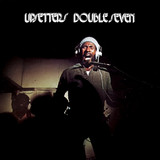
- A1: The Upsetters - Kentucky Skank
- A2: U. Roy* - Double Six
- A3: David Isaacs - Just Enough
- A4: The Upsetters - In The Iaah
- A5: The Upsetters - Jungle Lion
- A6: David Isaacs - We Our Neighbours
- B1: The Upsetters - Soul Man
- B2: U. Roy* - Stick Together
- B3: I. Roy* - High Fashion
- B4: The Upsetters - Long Sentence
- B5: The Upsetters - Hail Stones
- B6: The Upsetters - Ironside
- B7: The Upsetters - Cold Weather
- B8: The Upsetters - Waap You Waa
'Double Seven, released by Trojan in late 1973, was the last album Lee 'Scratch' Perry would release on the label for some considerable time, and it was essentially the final album project he put together before establishing his own Black Ark studio. Opening track 'Kentucky Skank' sets the tone with a slow creeper whose frying sounds underscore its role as a praise song to the Colonel's KFC recipes; the cosmic Moog blips come courtesy of Ken Elliott at Camden's Chalk Farm studio, also prominently featured on U-Roy's double-tracked, stereo-panned gambling ode 'Double Six.' David Isaacs' 'Just Enough' was cut a few years prior, which makes it slightly out of phase with the rest of the set, though the enigmatic 'In The Iaah' sounds mightily fresh, with its uncredited chorus said to come courtesy of the Wailers. Perry's own 'Jungle Lion' has hilarious roars from the maestro at the start, strangely grafted atop a reggae re-make of Al Green's 'Love and Happiness.'
'Overall, Double Seven melds the soul, funk, reggae and dub elements that were constant in Perry's work during this phase. His enhanced audio spectrum and endless reference points would keep his music continually apart from that made by his peers.'
—David Katz (excerpt from the liner notes)
From Germany to Montreal, a cross-continental dialogue takes form as Oovation and Jares unite for The Shift, a sweeping coalition of emotion and rhythm marking both artists’ debut on W. Anchored in cinematic depth and driven by kinetic pulse, The Shift stands as a powerful first statement, further expanded through stunning reinterpretations by Coeus, ACNØR, and Turker.
The original take of “The Shift” finds Oovation & Jares constructing a restrained groove before thumping kicks and meandering blips send us off on a highly narcotic affair. With the foundations in place, a swaying bassline takes control of the piece, infusing it with an irresistible sense of movement. As we venture deeper inside the rabbit hole, a lush arpeggio rummages across the piece, taking us closer to an airy break where echoes osurrender to a new directive.
For the first reimagining, Coeus drives “The Shift” into more dangerous, sensual territory. Built on a thunderous rhythmic foundation, the Serbian producer laces the mix with ghostly vocal traces and a relentless synthetic tension. The result feels cinematic in scope: an after-hours odyssey pulsing with urgency and redemption, where desire and danger move in lockstep.
Next, ACNØR transforms The Shift into a perpetual motion device where tension breathes and recedes like a living organism, shimmering under dim light. Reflective and transportive, this version feels like moving through mirrored corridors. Each twist refracts a new emotion, a new identity, culminating in a tantalizing entropy.
Finally, Turker closes the circle with a radiant reconstruction that leans toward transcendence. Textured percussion, raspy stabs, and a gleaming lead line spiral upward, pushing “The Shift” toward a horizon bathed in gold as vocal phrases drift in and out of focus, painting the mirage in full technicolor for a finale that feels both cathartic and luminous.
For the latest Klasse Wrecks release, the label combine with Japan's finest festival and events crew Rainbow Disco Club to collaboratively present WRECKSRDC. Overrocket were an electro-pop band from Tokyo that enjoyed a grip of great releases in the early 2000s while signed to Neon Discs and its parent label Aten. During a digging session Luca Lozano discovered the forgotten tracks 'Duralumin' and 'Shadow of the Sun' and immediately set out trying to contact the band's members to arrange a re-release and remix. A few months of patient trying, the connection was finally made and wheels were set in motion. Musically the EP conjures up perfectly the sonics of that time, a grey area between analog convention and the unexplored territories of new digital freedom. Shadow Of The Sun is electro-pop perfection, with breezy vocals and a bouncing beat that sounds like nothing else around...past, present or future. Duralumin is a more dancey collection of blips and beats, one that will make sense in the current return to early 2000s aesthetics. To round out the release and propel it into 2025, KW label bosses take a track each and interpret in their own way. Lozano revisits his electro roots with two remixes of Shadow of the Sun, distorted 808s and growling 101 basslines provide a simple backdrop for the perfect vocals. Mr. Ho takes Duralumin into a more driving and pacey direction, upping the energy and excitement with fast percussion and a huge side chained breakdown that recalls the unbridled rawness of the early 2000s, when everything was just a little bit more fun. Keeping within the confines of Japan and in an effort to bring everything full circle, the label enlisted Japanese artist Gonno to master the tracks for an updated modern sound. The tracks themselves being mastered a few miles from where they were originally penned over 20 years ago.
Rudimentary Music garners worldwide high praise with their first release. A strong, fluid and very well-rounded EP with something for every electronic dance fan. The Barcelona based butItalian born artist Deiv, sets the foundation and tone with the stunning 'Paranoik Android' EP forthe fledgling label whose everyday life revolves around and embodies the synergy and spirit of dance music culture. 'Take control of your shit' is the first cut and is the ideal smooth late night electro jam. A sexy, melodic deep machine groove that is nothing short of pure class. Thishighly addictive track is sure to get many repeat plays. To complete the A-side is the technostormer 'Technology'. A body grabbing bassline that will surely get everyone's attention. Thiswicked,robotic workhorse is guaranteed to move the main room by any DJ who selects it.Inspired by the label's search for music that fits every part of life, this track encapsulates thepower of techno in the late night. The reverse side showcases the title track 'Paranoik Android'.It rides a strong balance of house and funk sentiments for the primetime slot on the dancefloor.The killer acid line, island percussion and blips and bleeps, makes this a great ying and yang of futuristic and retro sounds. The title track, it stands out from the crowd but here in this EP, it blends perfectly into the wide array of vibes blossoming here. 'Dolphins' closes out the EP inelegance. With the soothing almost aquatic melody notes it exudes the perfect vibe to drift away your cares to. Overall, this is a very versatile EP with a track for every emotion and time during a night out with dance music
Shift Into The Rogue presents two tracks from an as-yet unreleased album Pier Bucci recorded using only one synthesizer for all parts of the entire project - his 25-year companion, the Moog Rogue.
Combining his unique musical and rhythmic sense, love for alternative electronic music from the 90’s (particularly sounds coming out on WARP Records at the time), and the technical abilities gained from years in the studio, Pier has crafted emotional, groovy, raw yet nuanced tracks - inspired by ‘the analogue, alternative, positive, very beautiful music from that time.’
Drawing from a strong history of electronic influence, Tomashevsky has created his own underworld of foreboding techno. We enter this EP with Incoherent, which exudes ominous sounds - reminiscent of murky radar blips that may be heard deep underwater in the metallic bowels of a submarine. Bubbling electronic delays remain adjoined to these metronomic blips and oer lateral, spontaneous movement around an otherwise sturdy song structure. Jittery melodies scatter nervously under lead elements, remaining disjointed and resulting in increased energy and a darkened excitement.
As we move through the EP, we face ups and downs, both in tempo and mood. Leading on from the first, Rollback is destabilizing, energetic and mean in all the right ways. Wobbling low ends open into a mood of uncertainty, held in place only by the stability of the drums. Rollback suits a peak-time club atmosphere thanks to the gritty synth leads and fast-paced feel.
Ending with the two tracks on the B-side, Tomashevsky still seeks to surprise. Rejected seems to be a distant relative of the Incoherent, following the synthetic blip structure but allowing snares and other percussions to build more prominently. Finally, we arrive at the closing track which marks itself as more obscure. Leaning on kick drum patterns initially reminiscent of electro/breaks, the use of half-time tempo gives a change of pace and a platform for a slightly different song structure and mixing potential.
Mesmeric and entrancing, these songs give any DJ or listener to chance to turn mind chatter o and lock into a hypnotic groove. Drawing on classically techno foundations, Tomashevsky has tipped his hat to the founders of the genre whilst adding his own flavour and subtle techniques that make this EP shine.
London's Release/Sustain imprint returns this April with a four-track package featuring material from Eduardo De La Calle, XDB, Joey Anderson Moody Waters feat. Carolina Damas.
The Release/Sustain imprint has gone from strength to strength over the years, welcoming the likes of Alton Miller, DJ Aakmael, Benjamin Brunn, Losoul, Norm Talley and many more respected names in underground house and techno over its past twenty nine releases.
Here we see this continue with some more welcome additions, first up is Eduardo De La Calle with 'The Protosoul' and as always the Spanish artist offers up a perfectly crafter slice of hazy, groove-driven Techno, led by bleepy arps, winding stabs and robust analogue rhythms. XDB then offers up heady, subtly blooming leads, pulsing subs and shuffled drums with 'Another Night' next.
Opening the flip is New York's Joey Anderson with 'Drum Play' which as the name suggest sees the percussive aspects dynamically evolve throughout amongst choppy bass hits, stutter arpeggio blips and warm string melodies. Moody Waters then teams up with Carolina Damas, vocalist on anthemic house cut 'Sueno Latino' for 'Acid Lovin'', edging into deeper territory with ethereal pads, crunchy drums and squelching 303 licks while Damas' soft, spoken-word Latin vocals wander within.
Austrian Ken Hayakawa keeps up Stripped Down Records' fine run of form with two new tracks that get remixed by John Tejada and Whitesquare.
Hayakawa's mother is Japanese but he hails from Salzburg. He is formally trained in piano and has performed Beethoven's music in a number of prestigious venues. That melodic, minimalist style still informs his own output and over the last decade has come on the likes of Audiomatique and Upon.You.
Superbly soothing opener 'Sonic Wave' is a brilliantly warm and spaced out deep house track that voyages into the cosmos. Dreamy pads drift by as muted acid lines flesh out the supple, subtle drums. It's a late-night groove to really get lost in.
American tech house titan and long-time Kompakt associate John Tejada steps up to remix and takes things even deeper, with pulsing, sonar-like acid blips and icy hi hats all working on melting your mind as warm, gurgling bass drives things forwards.
It is Italian producer and DFTD, 2020 Vision and Freerange house master Whitesquare who then remixes. He brings plenty of spine-tingling chords to his version, which is deep yet driven, with layer upon layer of rich sound all oozing real soul.
Hayakawa then finishes things off in style with 'Lost,' a brilliantly atmospheric track that is cavernous, dubbed out and finished with exquisite ambient details that cannot help but calm you.
This is a beautiful EP of deep, dynamic house music.
Meticulously assembled from a good 15 years' worth of source material, Cong Burn boss John Howes' second Paperclip Minimiser transmission proliferates its predecessor's network of turn-of-the-millennium aesthetics and concepts, bringing us closer to the lost future promised by the mid-digital age. If the debut album rooted itself in 2006, using an era-specific rig to activate its vintage Winamp-ready sound, 'II' pushes the clock forward just a little, recycling an unreleased album that Howes engineered in various locations across the north of England, starting way back in 2011. Working quickly and methodically with his homebrewed "DIY DAW" system, Howes improvised live using the record's bank of sounds, transforming the skittering bio-electronic rhythms, bitcrushed modem whines and inclement Lancs soundscapes into a suite of sleek, bass heavy steppers.
Howes has refined his setup and process over the years to function as an antithesis of contemporary production logic, a system that he can use easily to retreat from the excessive layering, overdubbing and editing that plagues modern electronic music. With only limited separate channels in each track, 'II' sounds both archaic and strangely novel. Showing respect to the early days of techno, when stone-cold classics were jammed out live using just a drum machine, a sampler and a couple of synths, Howes simultaneously acknowledges the promise of the transition to a digital future, as nascent algorithmic technology began to rehydrate stale rhythmic and melodic patterns. Fabricating its wrinkled cyberpunk landscape from shovelware blips and whines, spacious environmental echoes and lustrous, plasticky FM hits, 'II' is dense but never congested. It's a reminder that bass music thrives when it's given the room it needs to breathe.
KIK is the new project of two core strategists of sonic enigma HHY & The Macumbas: Jonathan Uliel Saldanha & João Pais Filipe. Ditching acoustic instruments in favour of drum synthetics & tightly controlled sound design, the duo's debut album NIGHTSHIFT focuses on off-kilter club tracks that thwart 4-on-the-floor flavours whilst maintaining trance-inducing extended cycles. If the devil is in the details, this is all about the spectromophology of the details.
Beginning with moving morse code blips in an odd time signature We Can't Dance announces the characteristic unlife of the album's pulse. Once the kick enters, syncopations progressively accumulate into a weave of interacting rhythmic lines. Smoke Machine's groove is reminiscent of the riddims Saldanha explores in his HHY & The Kampala Unit, adding scintillating pads and snippets of blitzed out laughter.
The album's third track, Proff, hearkens back to the initial pulse, displaced and pitched down in register. Here's a more meditative temperament on display, where the regular geometries of the club have been moved into higher-order structures. Segments rise & fall into earshot. Deepening the meditative mood, Back Room explores a short melodic leitmotif anchoring the track's wander- lust.
The rhythmic assault continues in Tactical Gear, bringing further experiments into polyrhythmic contours exacerbated by preci- sion movements of echo & delay. Limping can be heard as a what-if sonic fiction taking Autechre-inspired abstractions through Durbanoid Gqom terrains. The album closes with its longest track, Night Shift, that segments into shifting sound worlds.
Drawing from industrial grit, cybernetic percussion and the eerie fluorescence of after-hours energy, NIGHTSHIFT exists in the liminal space between body music and abstraction——a soundtrack for phantom warehouses and malfunctioning machines. This isn’t just music; it’s an immersive sonic environment, a journey into the heart of deconstructed dancefloors.
For fans of Rian Treanor, Proc Fiskal, Jlin and Lorenzo Senni.
Most recently, HHY has been collaborating with Nyege Nyege through projects such as Kampala Unit and Arsenal Mikebe, performing live with the ensemble alongside Valentina Magaletti, and producing records for artists like Fulu Miziki, as well as collaborations with Phelimucasi, Rey Sapiens, Kingdom Choir and others. He also released Camouflage Vector: Edits From Live Actions 2017–2019 on the label, a live album featuring two tracks with Adrian Sherwood.
Previous collaborations include Tunnel Vision with Badawi (released on Tzadik), the HHY & The Macumbas album Beheaded Totem on House of Mythology, and Fujako (Wordsound, with MC Sensational), along with double-bill shows with acts such as Clipping and Death Grips.
Final LP of a productive year for Feral Child is an absolute cracker. The latest of a long line of superb full lengths from Stephen James Buckley's incendiary Polypores project. This one is arguably his most adventurous outing to date, the undeniably psychedelic “Hungry Vortex”. Four extended pieces exploring polyrhythmic fixations and cosmic jazz-prog freak-outs. Percussion-heavy opener ‘The Body Is The Spaceship’ is a fine example of the sort of seamless organic growth we tend to see in Polypores’ music, with slewed synth blips and rolling polyrhythms gradually twisting into unrecognisable strands of melody and unconventional groove before your very ears.
The prog-heavy ‘Wizards!’ sees Buckley’s trademarked playful use of time-signature changes, providing such a wealth of emotional and stylistic variance and immeasurable enjoyment without changing key once (honestly, who needs keys). It’s brilliantly evocative too and could indeed perfectly soundtrack a mushroom-trip wizard march. As we flip the record over, the flutey flourishes and minimalist clicks of the title track draw the listener into a trancelike state, repeated movements spiralling like myriad creatures crawling over a candy-coloured horizon, echoing forth into an inviting sonic oblivion. It’s ostensibly electronic, yet somehow more natural organism than machine, with little concern for the grid, or indeed, the rules. Finally, we end on something a little more subdued - the reassuring classicism of the beautiful ‘Void High’, with washes of warm noise and wobbly delay lines whirring and twinkling away, closing the record with an experience that is undeniably emotional, spiritual and as always, uniquely Polypores. This is a wonderful record with which to close the year out, it comes in a magnificent, spot varnished Jake Blanchard sleeve. A superb record released as a one time only vinyl pressing.
- A1: Amotik - Setalis 06 46
- A2: Jin Synth - Manifestation 05 16
- B1: Innersha - Oscen 05 41
- B2: Sr² - Hex 05 42
- C1: Ana Rs - Non Est 05 26
- C2: Sama - Required 06 41
- D1: Vsk - Lost In S 05 11
- D2: Heckerman - Vacuum 05 58
- E1: Casual Treatment - Théia 06 32
- E2: Againstme - Below The Surface 05 07
- F1: Ādam - Aurora Dawn 06 05
- F2: Asec – Terra Nostra 05 25
- G1: Tommy Four Seven - Terminal 06 39
- G2: Yrsen - Z04 05 19
- H1: Pause - Day Zero 05 23
- H2: Linn Elisabet - Braid My Fingers 05 04
- I1: Trismus - Back And Forth 05 11
- I2: Mesh Convergence - Ht104 04 44
- J1: Nørbak - Triste 04 24
- J2: Rommek - Crack Of Dawn 06 07
47 marks TEN YEARS with its 47th and final release, closing the catalogue at 47047.
Launched as an event series by Tommy Four Seven in Berlin’s intimate Arena Club in 2014, the 47 parties paved the way to the label we’ve come to know today, inspiring and encouraging a host of interdisciplinary artists along the way. The imprint opened in 2015 with a V/A, and now, ten years later, 47 comes full circle with the release of its last-ever record and compilation.
As always, the various artist collection reflects the imprint’s long-running ethos of championing underground and upcoming talent. Titled ‘Ten Years’, the record features label debuts from Jin Synth, Casual Treatment, SAMA, Yrsen, and contributions from familiar faces like Pause, Rommek and AgainstMe, to name a few.
Across the 20-track V/A, each artist delivers precise and sonically rich productions, spanning several palettes. You’ll find a dreamy soundscape punctuated by blips and bleeps from Amotik. Claustrophobic atmospheres and winding rhythms by Innersha. Liquid melodies and maximalist basslines from Ana Rs. Moonlit synths and icy motifs by VSK. Club-driven 4/4 techno with a metallic sheen from ASEC. An emotive take on ambient and techno from Linn Elisabet. A spiralling trip with IDM touches from Nørbak, and more.
‘Ten Years’ mirrors the adventurous attitude of 47, celebrating the artists and sounds who’ve helped to build the label’s solid reputation, leaving an indelible signature on electronic music for years to come.
Opener “That’s Magic” features a magician talking us through a convoluted magic trick, to a mysterious synth theme that a celebrity conjurer might use to help the pyramids disappear. It’s probably one of the only pieces of music to draw influences from Paul Daniels. “Carpet Squares” is a hefty slab of squirming machine bass, acid squidges and clanking industrial drums, its samples extolling the virtues of fitting comfortable flooring, with a voiceover recorded on a Canadian golf course. “Vanja & Slavcho” tells the odd story of twins who have an extraordinary ability to a bustle of spiralling arpeggios and comedic sound effects, while “Tiktaalik” has a glam rock beat, guitar twangs, wild synth runs and dance music drum rolls that build to nowhere, plus processed dolphin noises and a vocal about evolution. Then there’s “Piccolo’s Travels”, a spellbinding mix of classical strings and... is that a malfunctioning Clanger?
“Album Titles” lists rejected names for the record to hilarious effect, with outlandish blips, accordion riffs and bubbling percussion setting the scene, “The 38th Parallel” is a wonky slab of electronica, while “Push It” has everything from rock guitar interjections to explosions and birdsong. If “Customer Services” imagines the bewildering experience of dealing with a sentient automated phone call, then the following “Nothing To Write Home About” is a waltz-time organ piece with a nostalgic, bittersweet air. “Ready?” lists practically every genre under the sun and gives you a burst of it, from drill to country & western, hardcore to Miami bass, and the final track, “The Void”, is an AutoTune-laced R&B track with a deep, emotional core.
That’s the genius of Wevie Stonder: their ability to make you laugh one minute, and the next transport you
to an atmospheric reverie.
- 1: I’ll Be With You 3:00
- 2: Left :0
- 3: Carmen Electra 2:45
- 4: Idr 1:3
- 5: Fumbled 1:46
- 6: “Affirmatively.” Pt 1 1:59
- 7: Honey I 2:10
- 8: Could You 3:31
- 9: Recognize Me 2:11
- 10: “Affirmatively.” Pt Ii 3:19
- 11: And 4:16
Blaney describes A Room With A Door That Closes as “a love letter to her blue,” an emotional state that she defines as “a kinetic, intense, and dark energy that needs to be expressed as soon as it is felt.” The eleven songs on the album span radioactive kiss offs, sorrowful meditations on yearning, and gossamer reveries about self image.
The music has a fittingly tumultuous, intricate sound: 1960s soul samples melt into warm drum n bass percussion, blips of glitch ping pong against grating synth, and Blaney’s vocals range from searing punk exclamations to gentle, exploratory croons. It’s the sound of a singer peering deeply within herself and presenting the world with everything she finds, unadulterated, in real time. Blaney produced the new project along with a tight team of three producers: Emerson Fossett, Harlan Steed (Show Me The Body), and Alex Farrar (MJ Lenderman, Wednesday, Squirrel Flower, Snail Mail).
Blaney had just started playing guitar and producing around the time she began writing the songs that would become the album. Being new to both producing and guitar playing opened up a sense of exploration and freedom for her. She felt emboldened to employ more adventurous riffs and unconventional song arrangements when she was writing. A Room With A Door That Closes is a collection of songs that rigorously pursue honesty, that present feelings as they arise without rushing to categorise them or explain them away. In the process of understanding her rage or discomfort, Blaney often lands on a sense of pride and assurance, but that’s never the ultimate goal. She eschews the easy comfort of neat resolution for the excitement of ongoing discovery. The album is an exercise in unfiltered self-expression, and a celebration of life at its messiest.
For our 100th Eccentric Soul 45, Numero returns to our Ohio roots with three replica 45s from the Capsoul universe. Marion Black’s timeless two-sider “Who Knows” b/w “Go On Fool” made a few blipsupon its 1970 release, but has taken on a life of its own soundtracking prestige TV and car commercials around the globe and finally going gold after 65 years. We discovered Ron Harrington’s “Because You’re Mine” demo amongst the Capsoul tapes, a demo cut for founder Bill Moss that never escaped greater Columbus. The mid-tempo harmony joint “It Happened To Me Again” adorns the flip, with a lo-fi funk backbeat tossed in for good measure. Capsoul’s crown jewel group harmony quartet Johnson, Hawkins, Tatum & Durr cut just two records in their short time together, but the quartet’s “You Can’t Blame Me” has endured as a classic example of the raw and unhinged soul sound that Numero is known for. Eccentric Soul from the heart of it all.
- A1: You Can’t Blame Me
- B1: You’re All I Need To Make It
Grass Green[14,08 €]
For our 100th Eccentric Soul 45, Numero returns to our Ohio roots with three replica 45s from the Capsoul universe. Marion Black’s timeless two-sider “Who Knows” b/w “Go On Fool” made a few blipsupon its 1970 release, but has taken on a life of its own soundtracking prestige TV and car commercials around the globe and finally going gold after 65 years. We discovered Ron Harrington’s “Because You’re Mine” demo amongst the Capsoul tapes, a demo cut for founder Bill Moss that never escaped greater Columbus. The mid-tempo harmony joint “It Happened To Me Again” adorns the flip, with a lo-fi funk backbeat tossed in for good measure. Capsoul’s crown jewel group harmony quartet Johnson, Hawkins, Tatum & Durr cut just two records in their short time together, but the quartet’s “You Can’t Blame Me” has endured as a classic example of the raw and unhinged soul sound that Numero is known for. Eccentric Soul from the heart of it all.
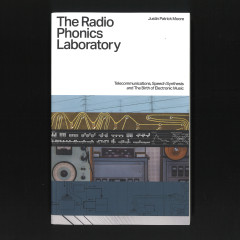
Justin Moore
The Radio Phonics Laboratory - Telecommunications, Speech Synthesis, and the Birth of Electronic Mus
The Radio Phonics Laboratory by Justin Patrick Moore is the story of how electronic music came to be, told through the lens of the telecommunications scientists and composers who helped give birth to the bleeps and blips that have captured the imagination of musicians and dedicated listeners around the world.
Featuring the likes of Leon Theremin, Hedy Lamarr, Max Matthews, Hal 9000, Robert Moog, Wendy Carlos, Claude Shannon, Halim El-Dabh, Pierre Schaeffer, Pierre Henry, Francois Bayle, Karlheinz Stockhausen, Vladimir Ussachevsky, Milton Babbitt, Daphne Oram, Delia Derbyshire, Edgar Varese & Laurie Spiegel.
Quotes
“From telegraphy to the airwaves, by way of Hedy Lamarr and Doctor Who, listening to Hal 9000 sing to us whilst a Clockwork Orange unravels the past and present, Moore spirits us on an expansive trip across the twentieth century of sonic discovery. The joys of electrical discovery are unravelled page by page.”
Robin Rimbaud aka Scanner
“Embark on an odyssey through the harmonious realms of Justin Patrick Moore’s Radio Phonics Laboratory echoing the resonances of innovation and discovery. Witness the mesmerising fusion of telecommunications and musical evolution as it weaves a sonic tapestry, a testament to the boundless creativity within the electronic realm. A compelling pilgrimage for those attuned to the avant-garde rhythms of technological alchemy.”
Nigel Ayers (Nocturnal Emissions)
“In this captivating exploration of electronic music, Justin Patrick Moore unveils its evolution as guided by telecommunication technology, spotlighting the enigmatic laboratories of early experimenters who shaped the sound of 20th century music. A must-read for electronic musicians & sound artists alike—this book will undoubtedly find a prominent place on their bookshelves.”
Kim Cascone
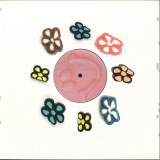
Black Loops is an endlessly creative producer who has brought constant invention to house music since his first release over a decade ago. His widescreen sounds take their cue from funk, soul and disco and are underpinned by a love of 90’s grooves. They appeal to DJs and dancers alike which explains his constant demand for DJ sets around the world as well as his music being played and supported by the biggest names in the scene. After many years of vital 12"s and remixes, he now draws on everything he has learned and raises his levels with a fully realised debut full length album dropping 9th May, 2025.
Ahead of the LP we present the Experience EP which sees Jimpster and Black Loops himself deliver Dub versions of two of the LP’s highlights; Electrical and Experience. Jimpster kicks off with a stripped back, rolling Italo-inspired groover with touches of modular synth sequences, string stabs and dubbed out vocals. Black Loops follows with his own version keeping the funk factor intact with guitar licks, synth blips and extra fat, moog bassline.
Flip over for the original of Experience featuring Marlena Dae with it’s distinctly 90’s, Vogue-era Madge mood. Black Loops then proceeds to take it to the club on his Dancefloor Dub, stripping out the vocals and working up a punchy, minimal groove for the dancers. Closing out the release we have an exclusive original, not included on the LP entitled Inmasoul. Jazzy, deep beats are the order of the day here, making for a perfect warm up track to set the mood.
- Dance In My Mouth
- Kroo
- Keydrum
- Forg
- Gritty Beat
- Hayai
- Secondhand
- Dollar In My Pocket
- Mindset
- Shrekosaurus
- Rockyobody
Haii Usagi is a two piece electronic/exerimental band from Columbia, MO
Members consist of Pete Hansen (Drums and Keyboards) and Eric Burch (Keyboards,
Synths, and Programming).
"Electro-thrash, calling up the ghost of Brainiac, sans vocals and guitar. Haii Usagi brings
the bleeps and blips that drives and veers as opposed to superficially just addressing
your need to dance the night away". - Beer and Pavement
"Haii Usagi approaches it with an emphasis on songcraft, focusing on the hook rather
than the tracks being simply a groove you can dance to. They also manage to hint at a
number of styles from rock to ambient while staying true to their electronic vision. I
know some of the more punk than thou types may find problems with Haii Usagi's
sound, but for those willing to open their minds you'll find a group who manages to make
their own vision of what the genre should be and proves that not all electronic dance
music has to sound generic". - TTWN
As one of the brightest and most prolific new songwriters to emerge from the Birmingham music scene over the past few years, Will Stewart has made a name for himself as both an imaginative storyteller and six string gunslinger whose detailed accounts of life around the Deep South seem to capture the essence of not just the humid, kudzu-covered environs they come out of, but also the creative cultural milieu that makes such narratives possible in the first place. Taking cues from everyone from Big Star and R.E.M., to Phosphorescent and the Drive-By Truckers, and even classic Southern literary figures like Eudora Welty and Barry Hannah, Stewart has managed to carve out a place for himself as a conjurer of time, place and characters— and the stories that swirl around them— in a way that’s simultaneously reflective, empathetic and unapologetic in their presentation.
Now on his fourth solo LP, over his past three studio efforts Stewart has shown a deft touch for not just engaging character arcs and succinct studies in the human condition, but also a range of musical modes that span everything from quiet dissertations on love and loss, to brash rockers and moody explorations of the complicated nature of modern Southern living. As someone who also wears the hat of a highly sought after sideman who lends his talents to friends and fellow travelers like Birmingham locals The Blips, Terry Ohms and Sarah Lee Langford, there are few sonic spaces that Stewart’s hands haven’t touched in some way.
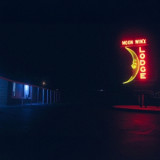
Stewart’s newest offering sees him poised to deliver his most ambitious project yet, with a 10-track song cycle centered around the iconic, and now defunct, Moon Winx Lodge in Tuscaloosa, AL, and some of the characters and scenarios that have played themselves out there over the years.
- A1: Fuses
- A2: People Do It All The Time
- A3: The Free Design
- A4: Blips Drips And Strips
- A5: Italian Shoes Continuum
- B1: Infinity Girl
- B2: The Spiracles
- B3: Op Hop Detonation
- B4: Puncture In The Radax Permutation
- B5: Velvet Water
- C1: Blue Milk
- D1: Caleidoscopic Gaze
- D2: Strobo Acceleration
- D3: The Emergency Kisses
- D4: Come And Play In The Milky Night
Am 28. Februar 2025 machen Stereolab sieben Studioalben erneut als 2LP-Formate erhältlich. Diese verwenden dieselben Remaster wie die erweiterten Vinylausgaben von 2019, die von Bo Kondren bei Calyx Mastering von den Original-1/2-Zoll-Bändern unter der Aufsicht von Tim Gane (Stereolab) geschnitten wurden, jedoch ohne das Bonusmaterial der 3LP-Versionen (die inzwischen eingestellt wurden). Die Idee dahinter besteht darin, Fans und Läden kostengünstigere Formate dieser begehrten Alben zur Verfügung zu stellen. Jede Platte wird im 5 mm dicken Cover mit bedruckten Innenhüllen und einer schützenden PVC-Aussentasche geliefert.
Die Alben:
1. Transient Random-Noise Bursts With Announcements (1993)
2. Mars Audiac Quintet (1994)
3. Emperor Tomato Ketchup (1996)
4. Dots And Loops (1997)
5. Cobra And Phases Group Play Voltage In The Milky Night (1999)
6. Sound-Dust (2001)
7. Margerine Eclipse (2004)
Damon Wild steps up to Synewave with The Mood Machine, a thrilling exploration of some sleek and stylish techno. 'Make Believe' opens with a dancing line of hi-hats over pulsing sonar-like blips and driving bass. It's a future take on Detroit techno that leads into the mystic sounds of swirling pads of 'Reflection'. 'Elevate' slows things down with a more moody blend of pads and glitchy beats over rolling drums and 'Starliner' then melts theming with intricately woven layers of sheet metal snares and linear kicks. All four of these are timeless and high-quality techno tools.
- From Outside A Window Sill
- Side By Side
- The Bug
- Amama
- Genie
- Crushxd
- Nighlty News
- (Alone In) Brussels
- Sleep Talk
- Dust Bunny
- Swarmed
- Xxx
New York psych-pop band Crumb return with AMAMA, their most carefree and open-hearted album to date. A soundscape full of playful and patchwork experimentation _ glitchy pitch-shifted vocals, cell phone recordings, nautical blips, sax mouthpiece solos, blasted drum samples, and piano strings dampened with Silly Putty _ AMAMA continues to deepen the band's hypnotic sound in a cohesive line back through 2021's Ice Melt, 2019's Jinx, and breakout EPs Locket and Crumb. Without a doubt, AMAMA is Crumb _ singer and multi-instrumentalist Lila Ramani, keyboardist and saxophonist Bri Aronow, bassist Jesse Brotter, and drummer Jonathan Gilad _ at their most animated.AMAMA exists at the crossroads of psychedelia, pop, jazz, and rock, and cements Crumb as a band uniquely their own. Released independently on Crumb Records and produced alongside Johnscott Sanford and Jonathan Rado in Los Angeles, AMAMA is an incandescent statement about searching for solid ground, connection, and clarity in a life of nomadic upheaval.
Die New Yorker Psych-Pop-Band Crumb kehrt mit AMAMA zurück, ihrem bisher unbeschwertesten und offenherzigsten Album. Eine Klanglandschaft voller spielerischer und patchworkartiger Experimente - glitchy pitch-shifted Vocals, Handy-Aufnahmen, nautische Blips, Saxophon-Soli, explodierende Drum-Samples und mit Hüpfkitt gedämpfte Piano-Saiten - AMAMA vertieft den hypnotischen Sound der Band in einer kohärenten Linie, die sich durch „Ice Melt“ (2021), „Jinx“ (2019) und die EPs „Locket“ und „Crumb“ zieht. AMAMA ist zweifellos Crumb - Sängerin und Multiinstrumentalistin Lila Ramani, Keyboarder und Saxophonist Bri Aronow, Bassist Jesse Brotter und Schlagzeuger Jonathan Gilad - in ihrer lebendigsten Form und bewegt sich an der Schnittstelle von Psychedelia, Pop, Jazz und Rock. AMAMA wurde zusammen mit Johnscott Sanford und Jonathan Rado in Los Angeles produziert.
The Slovenian label Cogo is back for another unmissable 4-tracker vinyl compilation with the heaviest hitters in the scene who represent the most artistically driven hypnotic techno to date. Jeroen Search, Border One, ORBE, and Tonske all lend a hand to provide an understated and deep vibe to this release full of music actively attempting to remove your mind to otherworldly places hitherto unknown.
Jeroen Search kicks off the release with ''Observer'' expertly drawing you in with a very simplified but polyrhythmic staccato synth and kick combination that slowly builds with modulating and swirling pads until it reaches a climax with a tightly regulated drum track and disorienting LFO sequenced synth patch.
Border One continues the theme of the release of minimalistic aesthetics with ''Contour'' featuring polyrhythmic ideas and evolving dissociative synths. The release culminates in a very simplified and restrained drum track that opens up the doors to a massive sonic environment where you're lost completely within the music, sitting somewhat awestruck by passing elements unfolding in front of your mind's eye.
Not to be outdone, ORBE takes a different tact with ''Wolheim'' by introducing the groove elements first and bringing in his deep understanding of setting the sonic stage with his signature atmospheres and scintillating synth hits. The track also echoes the thematic choices previously laid down by Border One and invites you into this strange alien world full of sonic curiosities and audio biology.
Tonske buttons up the release with ''Droid''. A track that has an overall sense of pulling the sonic environment toward you while you travel as a listener in your mind's eye. Outward synth blips are constantly coming from the outer periphery into view as if they are passing stars while traveling forward at a deliberate and determined pace.
. Legs Akimbo, the latest offering from the eclectic producer and DJ, Skwirl, released by Cold Busted, is a vibrant tapestry of sound that dances boldly across genres, much like its title suggests a stance of uninhibited exuberance. The album is a playground of audacious sounds and rhythms, each track splayed out with a creative audacity that's both refreshing and exhilarating. From the space-age funk of "Ur M8's Jetta," with its electrified beats and wisps of harp, to the orchestral cut-ups and synthetic soul of "Inside," Skwirl crafts a soundscape that is as diverse as it is cohesive. The album is an open invitation to experience the world through Skwirl's genre-agnostic squiggles, blips, and booms, where musical conventions are playfully disregarded. "We'll Be Here" encapsulates this ethos perfectly, blending a snazzy rhythm with snatches of jazz-infused flute, creating an ambiance akin to a midnight fog enveloping city streets. The music, much like the artist himself, is an amalgamation of varied influences and experiences, from teenage roots in the Atlanta suburbs to transformative encounters in Berlin's vibrant music scene. Each track on Legs Akimbo is a testament to Skwirl's unique approach to music-making, where disparate musical universes don't just meet; they dance together in perfect harmony
Hi-NRG synth pioneer Patrick Cowley moved away from his usual robotic steeliness on 1982’s “Primitive World,” drawing instead on the groove rock of early 1970s gay discos. It’s a percussion track influenced by Baba- tunde Olatunji’s 1959 hit “Jin-Go-Lo-Ba,” made more famous by Santana’s 1969 cover. Cowley updated the sound for the 1980s with electronics and drum machines but kept the playful attitude of the original. Two choirs of voices chant back and forth to each other, giving Cowley a chance to include many of his friends from the San Francisco dance music community.
This has been DJ Hifi Sean’s year, with a best-selling album with David McAlmont , count- less live gigs and high-profile remixes to his name. His interpretation of Cowley’s “Primitive World” can be counted among his best, bringing an intense TB-303 acid house vibe that perfectly complements Cowley’s weird electronic blips and bleeps. The effect is a disorienting mix of psychedelic 70’s groove, 80s synth pop, and 90s tacky house vibes. “Primitive World,” is one of the brilliant standouts on Cowley’s final record, Mind Warp, the so-called “death album” written as his health was rapidly sinking. Hifi Sean’s new remixes pay tribute to Cowley’s genius while fusing the track even more strongly to dance music’s electronic future.
grey & green splatter vinyl
A1 - Spacewaves
Opening the EP in thunderous style, Aural Imbalance chops impeccable, clean amen breaks, rolling sublimely into a chorus of fluid, delicate keys. The track whisks the listener atop the crest of wavy edits before a quietly turbulent assortment of blips and notes punctuate a bass-heavy breakdown. The latter half combines the elements in surreal harmony for a triump hant crescendo, buoyed by the truly vibrant breaks.
A2 - Tranquil Sea
A masterclass in subsurface ambience introduces Tranquil Sea, glistening melodies cascade into punchy breakbeats, setting the pace. Brimming with sunken off-key 808 bass resonating unpredictably with the spirit of the ocean, Aural Imbalance gently builds the vibe with soothing waves of mesmerising soundscapes as the beats rumble on, inviting you to dance amidst the swirling currents of his inimitable sound.
AA1 - Concordia
Old school analogue breaks take center stage as Aural Imbalance rewinds the clock for a great dancefloor-friendly slice of history with a modern Spatial twist. Quiet plinky keys bubble underneath long, whooshing ripples of the sea, echoed hi hats and a distinctive classic bassline intertwine perfectly, carrying you to uncharted sonic territories that will linger in the recesses of your mind long after the needle is lifted.
AA2 - Fading Fields
Delicate cymbal work and stirring pads combine deliciously before the listener is lifted to blissful serenity with a sumptuous tapestry of synths and micro melodies set to an immense, head nodding break pattern. The noteworthy kickdrum delivers a classic analogue stomp while the drums joyously encircle them
in their droves, showcasing further the variety and density Aural Imbalance offers.
Faitiche releases the album Improvisations And Edits, Tokyo 26.09.2001 on vinyl for the first time. For the original 2002 CD on Soup-Disk and Sub Rosa (Audiosphere), Jan Jelinek and the Japanese trio Computer Soup (Satoru Hori – trumpet, Osamu Okubo - toys & electronics, Kei Ikeda - toys & electronics) presented eight tracks all recorded one afternoon in the trio’s living room in Tokyo. They are excerpts from a joint group improvisation that subsequently underwent rudimentary editing, on which Jelinek and Computer Soup worked separately.
Jelinek met the three musicians at his first concert in Japan in 2001, at Tokyo’s Yellow club, where Computer Soup performed as the support act. Delighted by their free improvisation on pocket-sized electronic toys, trumpet and oscillators, he arranged to meet Hori, Okubo and Ikeda a few days later for a session at their apartment. The resulting three-hour recording, made on their living room floor, formed the basis for Improvisations and Edits. A few days later, Jelinek returned to Berlin. Over the following months, they separately chose passages from the recording that were then edited and assembled into an album.
Formed in Tokyo in 1996 as a quintet (including Shusaku Hariya and Daisuke Oishi), Computer Soup began by performing with acoustic instruments on the streets of Shibuya. Ikeda und Okubo soon switched instruments, and from then on the group’s minimalistic but densely woven sound was defined by electronic toys, oscillators and Satoru Hori’s trumpet. Their first album was released in 1997 on the Japanese label Soup Disk. Eight further releases followed.
From the reviews of Improvisations and Edits, Tokyo 26.09.2001 in 2003:
"The mind-blowing first track Straight Life is perhaps the best example of what the album has to offer. Jelinek's trademark smears and washes occupy the midrange, like ghosted images of Joe Zawinul's electric piano floating quietly in the wind. DSP jazz modes are set against a walking bassline (possibly computer generated) and a gently tooted trumpet complete with Harmon mute, a dead ringer for Miles Davis' Prestige-era ballads. The effect is something like a three-dimensional film, with different realities on each layer; images of what jazz was manage to interact with a real-time demonstration of all it could be."
pitchfork, 2003
"Improvisations and Edits is a warm and mellow Ambient release with beautiful glitch fragments, static noise bursts and real trumpet intersections. However, there are times where it is the exact opposite, mainly effect-laden, overdriven and bouncy with a lack of melodies and focus, so be aware of these specific tracks."
ambientexotica, 2003
"Often deliciously dreamy and hazy, Improvisations and Edits is like listening to an exceptional instrumental jazz performance while half-conscious or under some sort of chemical influence. Computerised blips and bleeps, loops and treatments and murky sonic skips curl up around desolate horn notes and scattered instrumental noises that culminate in elegant music."
exclaim.ca, 2003
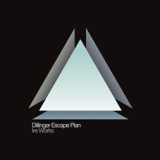
After Miss Machine, Dillinger Escape Plan fans were divided. Many of the folks who were attached to the screaming mathematical metal of Calculating Infinity bailed on the band, disapproving of the experimental musical direction and the meathead appearance of new singer/screamer Greg Puciato. Open-minded listeners were excited about the progressive journey they were taking and many critics hailed the group as a true innovator of metalcore. Ire Works succeeds in many of the same ways that their previous album did, while branching out creatively. They continue to toy with technical metal, blistering hardcore, jazz breaks, and post-punk, but here they evolve again by adding more twists and turns with additional electronic elements. While the merging of too many styles in hardcore can make for a convoluted result (see Avenged Sevenfold's self-titled release), the added instruments and genre changeups enhance the result rather than acting as ornamental distractions. Edgy Aphex Twin-style drill'n'bass drum breaks and stretched and squeezed electro blips feel strangely at home next to the psychotic time-signature changes and manic riffs, especially on the tracks "Sick on Sunday," "Dead as History," and "When Acting as a Wave." Violins, pianos, and trumpets sit nicely in the mix, and the group's willingness to take chances leads to stunning artistic endeavors rather than stale attempts at crossing genres just for the sake of being clever. Original vocalist Dimitri Minakakis makes an appearance, as does Mastodon guitarist Brent Hinds, but the most notable inclusion is drummer Gil Sharone, who proves himself an expert at picking up the slack after the departure of founding member Chris Pennie to play in Coheed and Cambria. Undoubtedly, this act added anger to fuel the fire of their heavier numbers. "82588," "Fix Your Face," and "Party Smasher" are as wicked and manic as their most difficult earlier stuff; conversely, the melodic hooks and falsetto of "Black Bubblegum" and the watery ambience of "Mouth of Ghosts" balance out the album nicely. It can be inaccessible and terrifying all at once, but in a genre overly saturated with formulaic groups, Ire Works is a true standout. If DEP aren't careful and continue down this innovative path, they could easily be labeled the Radiohead of metalcore
Carl Finlow keeps on keepin' on. Not only is Finlow one of the most respected names in electro, a producer who boasts a sprawling catalogue that takes in a wide variety of aliases, but he's also spent recent years establishing himself as a mainstay for Sheffield's Central Processing Unit label. Soft Robotics, the new EP from Finlow's Silicon Scally project, is the fifth Silicon Scally release in five years to boast one of CPU's instantly-recognisable black-and-white covers.
The reason that Silicon Scally and CPU keep linking up is simple; they're a perfect fit for one another. Central Processing Unit has established itself as a haven for post-Drexciya producers since launching in 2012, and there are few artists better than Finlow at building on the Detroit group's sound. The union bears fruit once more on Soft Robotics, an EP of lithe machine-funk jams that will both do damage in the dance and also reward more concentrated home listening.
Things begin at a steadier speed than one might expect. Rather than barrelling off with the kind of sinewy roller one associates with the CPU name, Soft Robotics' title-track takes things at mid-pace. The groove reveals itself without hurry, Silicon Scally adding or subtracting elements - twitchy modular loops, pensive pads, the occasional blurt of low-end - atop the chugging bass/drums groove. It's a track which wins you over with guile rather than force.
As the name of subsequent cut 'Jitters' intimates, this one picks things up a little after 'Soft Robotics'. The tempo is higher here, the central beat more nervy. At their cores, though, 'Jitters' and 'Soft Robotics' are kindred spirits. Here, another slyly insistent bit of drum programming comes swirled up with all sorts of extraterrestrial tones, from little nuggets of melody supplied by the keys to electrifying synth stabs and percussive squelches.
Things limber up further still on first B-side 'Spin Ratio'. The track's 808 kicks are punchier than those of the A-side jams, and there's a dizziness to the bass tone which gives 'Spin Ratio' an intriguingly off-kilter feel. Atop the booming beat we find ourselves hypnotised by cells of melody and harmony interlocking or moving apart - particularly the staccato module at the track's heart. Sure enough, 'Spin Ratio' is the Soft Robotics joint which cleaves closest to Drexciya, invoking other Detroit disciples like Jensen Interceptor in the process.
After Soft Robotics picks up speed in the middle, closer 'Super Fluid Tones' brings us back to where we started. This track returns to the more measured delivery of the record's opener - there's a steady pulse to the drums, and once again Silicon Scally packs the mix with so many intriguing whizzes, bangs, blips and blurts that it's impossible not be won over by this tune's construction. 'Soft Robotics' and 'Super Fluid Tones' bookend Soft Robotics very nicely, and Silicon Scally's smart pacing gives the EP a lovely ebb and flow.
The ever-excellent Carl Finlow drops a Silicon Scally release via Central Processing Unit for the fifth year running. Like its predecessors, Soft Robotics is an excellent and deftly-crafted collection of modern machine-funk.
RIYL: Drexciya, Jensen Interceptor, Fleck E.S.C., The Advent
Available for the first time on vinyl - a 20th anniversary release of The Mystic Chords Of Memory's seminal, unique DIY psych-folk debut. By Beachwood Sparks singer/songwriter Chris Gunst & Aislers Set's Jen Cohen. Mastered at Abbey Road. The seeds of this exquisite album are scattered among the tracks of Make The Cowboy Robots Cry - the LP Beachwood Sparks hung their hats on before a ten year break. A further step forward from west coast country psych towards something with folkier roots but new, mysterious and above all free. Chris and Jen's conjuring of magical, unforced, domestic spirituality. Recorded in a little wood cabin amongst the redwoods overlooking a running creek with a range of collected musical toys. Just give it 5 minutes once you’ve dropped the needle & you’ll be right there. Here’s Amanda Petrussich’s brilliant write up in Pitchfork - “With its soft melodies, sweet vocals, and scratchy DIY production, Mystic Chords of Memory is also an overwhelmingly intimate record, focused and domestic - much closer to Elliott Smith than former-benchmarks the Byrds and Buffalo Springfield…. The duo's wordy moniker was lifted from Abraham Lincoln's first inaugural address, a lecture delivered in the spring of 1861 and boldly eternalised at the base of Mount Rushmore... Appropriately, the band's sound is just as archaic as a truly striking political speech: Gunst and Cohen blend tinkling bells, melodica, harp, keyboards, bits of samples, tinny drums, and strummy guitars, presenting a vaguely contemporary update on the British folk phenomenon of the late 1960s with more blips. Mystic Chords of Memory is a surprisingly coherent re-introduction to Gunst, and his professional coupling with Jen Cohen has proven both a freeing and inspired move.” Two decades later it’s obvious how seminal a record they conjured up. They forged a path that came to define the wave of US indie that followed for a while. In our opinion, the original has a natural, guileless, effortless beauty that trumps them all. Without a whiff of Starbucks. "Mystic chords of memory speech I interpreted the meaning as the underlying psyche fabric we are all creating on this land together. Jen and I thought it would be a great name to inspire our music together. This was really close to post 9/11 times and we were thinking about all of this and also wanting to improve our own contribution to the psychological fabric of the world.” Chis Gunst.
- A1: Rock This Mother
- A2: Talk To Me Girl
- A3: You Can Find Me
- A4: Check This Out
- A5: Jesus Going To Clean House
- A6: Hope You Understood
- A7: Is It What You Want
- A8: Love Is Everlasting
- A9: This Is Hip-Hop Art
- A10: Opposite Of Love
- A11: Do You Know What I Mean
- B1: Saving All My Love For You
- B2: Look Out Here I Come
- B3: Girl You Always Talking
- B4: Have A Great Day
- B5: Take My Hand
- B6: I Need Your Love
- B7: Your Town
- B8: Talk Around Town
- B9: Booty Head/Take A Little Walk
- B10: I Love My Mama
- B11: I Never Found Anyone Like You
Vinyl LP[23,49 €]
As the sun sets on a quaint East Nashville house, a young man bares a piece of his soul. Facing the camera, sporting a silky suit jacket/shirt/slacks/fingerless gloves ensemble that announces "singer" before he's even opened his mouth, Lee Tracy Johnson settles onto his stage, the front yard. He sways to the dirge-like drum machine pulse of a synth-soaked slow jam, extends his arms as if gaining his balance, and croons in affecting, fragile earnest, "I need your love… oh baby…"
Dogs in the yard next door begin barking. A mysterious cardboard robot figure, beamed in from galaxies unknown and affixed to a tree, is less vocal. Lee doesn't acknowledge either's presence. He's busy feeling it, arms and hands gesticulating. His voice rises in falsetto over the now-quiet dogs, over the ambient noise from the street that seeps into the handheld camcorder's microphone, over the recording of his own voice played back from a boombox off-camera. After six minutes the single, continuous shot ends. In this intimate creative universe there are no re-takes. There are many more music videos to shoot, and as Lee later puts it, "The first time you do it is actually the best. Because you can never get that again. You expressing yourself from within."
"I Need Your Love" dates from a lost heyday. From some time in the '80s or early '90s, when Lee Tracy (as he was known in performance) and his music partner/producer/manager Isaac Manning committed hours upon hours of their sonic and visual ideas to tape. Embracing drum machines and synthesizers – electronics that made their personal futurism palpable – they recorded exclusively at home, live in a room into a simple cassette deck. Soul, funk, electro and new wave informed their songs, yet Lee and Isaac eschewed the confinement of conventional categories and genres, preferring to let experimentation guide them.
"Anytime somebody put out a new record they had the same instruments or the same sound," explains Isaac. "So I basically wanted to find something that's really gonna stand out away from all of the rest of 'em." Their ethos meant that every idea they came up with was at least worth trying: echoed out half-rapped exhortations over frantic techno-style beats, gospel synth soul, modal electro-funk, oddball pop reinterpretations, emo AOR balladry, nods to Prince and the Fat Boys, or arrangements that might collapse mid-song into a mess of arcade game-ish blips before rallying to reach the finish line. All of it conjoined by consistent tape hiss, and most vitally, Lee's chameleonic voice, which managed to wildly shape shift and still evoke something sincere – whether toggling between falsetto and tenor exalting Jesus's return, or punctuating a melismatic romantic adlib with a succinct, "We all know how it feels to be alone."
"People think we went to a studio," says Isaac derisively. "We never went to no studio. We didn't have the money to go to no studio! We did this stuff at home. I shot videos in my front yard with whatever we could to get things together." Sometimes Isaac would just put on an instrumental record, be it "Planet Rock" or "Don't Cry For Me Argentina" (from Evita), press "record," and let Lee improvise over it, yielding peculiar love songs, would-be patriotic anthems, or Elvis Presley or Marilyn Monroe tributes. Technical limitations and a lack of professional polish never dissuaded them. They believed they were onto something.
"That struggle," Isaac says, "made that sound sound good to me."
In the parlance of modern music criticism Lee and Isaac's dizzying DIY efforts would inevitably be described as "outsider." But "outsider" carries the burden of untold additional layers of meaning if you're Black and from the South, creating on a budget, and trying to get someone, anyone within the country music capital of the world to take your vision seriously. "What category should we put it in?" Isaac asks rhetorically. "I don't know. All I know is feeling. I ain't gonna name it nothing. It's music. If it grabs your soul and touch your heart that's what it basically is supposed to do."
=
Born in 1963, the baby boy of nine siblings, Lee Tracy spent his earliest years living amidst the shotgun houses on Nashville's south side. "We was poor, man!" he says, recalling the outhouse his family used for a bathroom and the blocks of ice they kept in the kitchen to chill perishables. "But I actually don't think I really realized I was in poverty until I got grown and started thinking about it." Lee's mom worked at the Holiday Inn; his dad did whatever he had to do, from selling fruit from a horse drawn cart to bootlegging. "We didn't have much," Lee continues, "but my mother and my father got us the things we needed, the clothes on our back." By the end of the decade with the city's urban renewal programs razing entire neighborhoods to accommodate construction of the Interstate, the family moved to Edgehill Projects. Lee remembers music and art as a constant source of inspiration for he and his brothers and sisters – especially after seeing the Jackson 5 perform on Ed Sullivan. "As a small child I just knew that was what I wanted to do."
His older brother Don began musically mentoring him, introducing Lee to a variety of instruments and sounds. "He would never play one particular type of music, like R&B," says Lee. "I was surrounded by jazz, hard rock and roll, easy listening, gospel, reggae, country music; I mean I was a sponge absorbing all of that." Lee taught himself to play drums by beating on cardboard boxes, gaining a rep around the way for his timekeeping, and his singing voice. Emulating his favorites, Earth Wind & Fire and Cameo, he formed groups with other kids with era-evocative band names like Concept and TNT Connection, and emerged as the leader of disciplined rehearsals. "I made them practice," says Lee. "We practiced and practiced and practiced. Because I wanted that perfection." By high school the most accomplished of these bands would take top prize in a prominent local talent show. It was a big moment for Lee, and he felt ready to take things to the next level. But his band-mates had other ideas.
"I don't know what happened," he says, still miffed at the memory. "It must have blew they mind after we won and people started showing notice, because it's like everybody quit! I was like, where the hell did everybody go?" Lee had always made a point of interrogating prospective musicians about their intentions before joining his groups: were they really serious or just looking for a way to pick up girls? Now he understood even more the importance of finding a collaborator just as committed to the music as he was.
=
Isaac Manning had spent much of his life immersed in music and the arts – singing in the church choir with his family on Nashville's north side, writing, painting, dancing, and working various gigs within the entertainment industry. After serving in the armed forces, in the early '70s he ran The Teenage Place, a music and performance venue that catered to the local youth. But he was forced out of town when word of one of his recreational routines created a stir beyond the safe haven of his bohemian circles.
"I was growing marijuana," Isaac explains. "It wasn't no business, I was smoking it myself… I would put marijuana in scrambled eggs, cornbread and stuff." His weed use originated as a form of self-medication to combat severe tooth pain. But when he began sharing it with some of the other young people he hung out with, some of who just so happened to be the kids of Nashville politicians, the cops came calling. "When I got busted," he remembers, "they were talking about how they were gonna get rid of me because they didn't want me saying nothing about they children because of the politics and stuff. So I got my family, took two raggedy cars, and left Nashville and went to Vegas."
Out in the desert, Isaac happened to meet Chubby Checker of "The Twist" fame while the singer was gigging at The Flamingo. Impressed by Isaac's zeal, Checker invited him to go on the road with him as his tour manager/roadie/valet. The experience gave Isaac a window into a part of the entertainment world he'd never encountered – a glimpse of what a true pop act's audience looked like. "Chubby Checker, none of his shows were played for Black folks," he remembers. "All his gigs were done at high-class white people areas." Returning home after a few years with Chubby, Isaac was properly motivated to make it in Music City. He began writing songs and scouting around Nashville for local talent anywhere he could find it with an expressed goal: "Find someone who can deliver your songs the way you want 'em delivered and make people feel what you want them to feel."
One day while walking through Edgehill Projects Isaac heard someone playing the drums in a way that made him stop and take notice. "The music was so tight, just the drums made me feel like, oh I'm-a find this person," he recalls. "So I circled through the projects until I found who it was.
"That's how I met him – Lee Tracy. When I found him and he started singing and stuff, I said, ohhh, this is somebody different."
=
Theirs was a true complementary partnership: young Lee possessed the raw talent, the older Isaac the belief. "He's really the only one besides my brother and my family that really seen the potential in me," says Lee. "He made me see that I could do it."
Isaac long being a night owl, his house also made for a fertile collaborative environment – a space where there always seemed to be a new piece of his visual art on display: paintings, illustrations, and dolls and figures (including an enigmatic cardboard robot). Lee and Issac would hang out together and talk, listen to music, conjure ideas, and smoke the herb Isaac had resumed growing in his yard. "It got to where I could trust him, he could trust me," Isaac says of their bond. They also worked together for hours on drawings, spreading larges rolls of paper on the walls and sketching faces with abstract patterns and imagery: alien-like beings, tri-horned horse heads, inverted Janus-like characters where one visage blurred into the other.
Soon it became apparent that they didn't need other collaborators; self-sufficiency was the natural way forward. At Isaac's behest Lee, already fed up with dealing with band musicians, began playing around with a poly-sonic Yamaha keyboard at the local music store. "It had everything on it – trumpet, bass, drums, organ," remembers Lee. "And that's when I started recording my own stuff."
The technology afforded Lee the flexibility and independence he craved, setting him on a path other bedroom musicians and producers around the world were simultaneously following through the '80s into the early '90s. Saving up money from day jobs, he eventually supplemented the Yamaha Isaac had gotten him with Roland and Casio drum machines and a Moog. Lee was living in an apartment in Hillside at that point caring for his dad, who'd been partially paralyzed since early in life. In the evenings up in his second floor room, the music put him in a zone where he could tune out everything and lose himself in his ideas.
"Oh I loved it," he recalls. "I would really experiment with the instruments and use a lot of different sound effects. I was looking for something nobody else had. I wanted something totally different. And once I found the sound I was looking for, I would just smoke me a good joint and just let it go, hit the record button." More potent a creative stimulant than even Isaac's weed was the holistic flow and spontaneity of recording. Between sessions at Isaac's place and Lee's apartment, their volume of output quickly ballooned.
"We was always recording," says Lee. "That's why we have so much music. Even when I went to Isaac's and we start creating, I get home, my mind is racing, I gotta start creating, creating, creating. I remember there were times when I took a 90-minute tape from front to back and just filled it up."
"We never practiced," says Isaac. "See, that was just so odd about the whole thing. I could relate to him, and tell him about the songs I had ideas for and everything and stuff. And then he would bring it back or whatever, and we'd get together and put it down." Once the taskmaster hell bent on rehearsing, Lee had flipped a full 180. Perfection was no longer an aspiration, but the enemy of inspiration.
"I seen where practicing and practicing got me," says Lee. "A lot of musicians you get to playing and they gotta stop, they have to analyze the music. But while you analyzing you losing a lot of the greatness of what you creating. Stop analyzing what you play, just play! And it'll all take shape."
=
"I hope you understood the beginning of the record because this was invented from a dream I had today… (You tell me, I'll tell you, we'll figure it out together)" – Lee Tracy and Isaac Manning, "Hope You Understand"
Lee lets loose a maniacal cackle when he acknowledges that the material that he and Isaac recorded was by anyone's estimation pretty out there. It's the same laugh that commences "Hope You Understand" – a chaotic transmission that encapsulates the duality at the heart of their music: a stated desire to reach people and a compulsion to go as leftfield as they saw fit.
"We just did it," says Lee. "We cut the music on and cut loose. I don't sit around and write. I do it by listening, get a feeling, play the music, and the lyrics and stuff just come out of me."
The approach proved adaptable to interpreting other artists' material. While recording a cover of Whitney Houston's pop ballad "Saving All My Love For You," Lee played Whitney's version in his headphones as he laid down his own vocals – partially following the lyrics, partially using them as a departure point. The end result is barely recognizable compared with the original, Lee and Isaac having switched up the time signature and reinvented the melody along the way towards morphing a slick mainstream radio standard into something that sounds solely their own.
"I really used that song to get me started," says Lee. "Then I said, well I need something else, something is missing. Something just came over me. That's when I came up with 'Is It What You Want.'"
The song would become the centerpiece of Lee and Isaac's repertoire. Pushed along by a percolating metronomic Rhythm King style beat somewhere between a military march and a samba, "Is It What You Want" finds Lee pleading the sincerity of his commitment to a potential love interest embellished by vocal tics and hiccups subtlely reminiscent of his childhood hero MJ. Absent chord changes, only synth riffs gliding in and out like apparitions, the song achieves a lingering lo-fi power that leaves you feeling like it's still playing, somewhere, even after the fade out.
"I don't know, it's like a real spiritual song," Lee reflects. "But it's not just spiritual. To me the more I listen to it it's like about everything that you do in your everyday life, period. Is it what you want? Do you want a car or you don't want a car? Do you want Jesus or do you want the Devil? It's basically asking you the question. Can't nobody answer the question but you yourself."
In 1989 Lee won a lawsuit stemming from injuries sustained from a fight he'd gotten into. He took part of the settlement money and with Isaac pressed up "Saving All My Love For You" b/w "Is It What You Want" as a 45 single. Isaac christened the label One Chance Records. "Because that's all we wanted," he says with a laugh, "one chance."
Isaac sent the record out to radio stations and major labels, hoping for it to make enough noise to get picked up nationally. But the response he and Lee were hoping for never materialized. According to Isaac the closest the single got to getting played on the radio is when a disk jock from a local station made a highly unusual announcement on air: "The dude said on the radio, 107.5 – 'We are not gonna play 'Is It What You Want.' We cracked up! Wow, that's deep.
"It was a whole racist thing that was going on," he reflects. "So we just looked over and kept on going. That was it. That was about the way it goes… If you were Black and you were living in Nashville and stuff, that's the way you got treated." Isaac already knew as much from all the times he'd brought he and Lee's tapes (even their cache of country music tunes) over to Music Row to try to drum up interest to no avail.
"Isaac, he really worked his ass off," says Lee. "He probably been to every record place down on Music Row." Nashville's famed recording and music business corridor wasn't but a few blocks from where Lee grew up. Close enough, he remembers, for him to ride his bike along its back alleys and stumble upon the occasional random treasure, like a discarded box of harmonicas. Getting in through the front door, however, still felt a world away.
"I just don't think at the time our music fell into a category for them," he concedes. "It was before its time."
=
Lee stopped making music some time in the latter part of the '90s, around the time his mom passed away and life became increasingly tough to manage. "When my mother died I had a nervous breakdown," he says, "So I shut down for a long time. I was in such a sadness frame of mind. That's why nobody seen me. I had just disappeared off the map." He fell out of touch with Isaac, and in an indication of just how bad things had gotten for him, lost track of all the recordings they'd made together. Music became a distant memory.
Fortunately, Isaac kept the faith. In a self-published collection of his poetry – paeans to some of his favorite entertainment and public figures entitled Friends and Dick Clark – he'd written that he believed "music has a life of its own." But his prescience and presence of mind were truly manifested in the fact that he kept an archive of he and Lee's work. As perfectly imperfect as "Is It What You Want" now sounds in a post-Personal Space world, Lee and Isaac's lone official release was in fact just a taste. The bulk of the Is It What You Want album is culled from the pair's essentially unheard home recordings – complete songs, half-realized experiments, Isaac's blue monologues and pronouncements et al – compiled, mixed and programmed in the loose and impulsive creative spirit of their regular get-togethers from decades ago. The rest of us, it seems, may have finally caught up to them.
On the prospect of at long last reaching a wider audience, Isaac says simply, "I been trying for a long time, it feels good." Ever the survivor, he adds, "The only way I know how to make it to the top is to keep climbing. If one leg break on the ladder, hey, you gotta fix it and keep on going… That's where I be at. I'll kill death to make it out there."
For Lee it all feels akin to a personal resurrection: "It's like I was in a tomb and the tomb was opened and I'm back… Man, it feels so great. I feel like I'm gonna jump out of my skin." Success at this stage of his life, he realizes, probably means something different than what it did back when he was singing and dancing in Isaac's front yard. "What I really mean by 'making it,'" he explains isn't just the music being heard but, "the story being told."
Occasionally Lee will pull up "Is It What You Want" on YouTube on his phone, put on his headphones, and listen. He remembers the first time he heard his recorded voice. How surreal it was, how he thought to himself, "Is that really me?" What would he say to that younger version of himself now?
"I would probably tell myself, hang in there, don't give up. Keep striving for the goal. And everything will work out."
Despite what's printed on the record label, sometimes you do get more than one chance.
Dutch producer nthng returns to Delsin with another four pieces of melodic, ambient-spirited techno following his 2017 label debut Turn To Gaia. Sub-Sonar opens with the beatless, melancholic reflection of 'Looking Outside' before drifting into the submersion chamber pulse of 'Liberate Truth'. Guided by the hypnotic allure of dub techno, the track follows a linear path through spacious chord drops and understated drum jack. Following a similar rhythmic tract, 'Sub-Sonar' offers up a cloudy, sombre beatdown shot through with winsome sine wave blips. As a surprise parting shot, '1 2 Butterfly' shakes up the scene with a crooked breakbeat treatment which cuts an angular path through the hazy atmospheric tones nthng has made his own. Photography by Wolfgang Tillmans.
- A1: Rock This Mother
- A2: Talk To Me Girl
- A3: You Can Find Me
- A4: Check This Out
- A5: Jesus Going To Clean House
- A6: Hope You Understood
- A7: Is It What You Want
- A8: Love Is Everlasting
- A9: This Is Hip-Hop Art
- A10: Opposite Of Love
- A11: Do You Know What I Mean
- B1: Saving All My Love For You
- B2: Look Out Here I Come
- B3: Girl You Always Talking
- B4: Have A Great Day
- B5: Take My Hand
- B6: I Need Your Love
- B7: Your Town
- B8: Talk Around Town
- B9: Booty Head/Take A Little Walk
- B10: I Love My Mama
- B11: I Never Found Anyone Like You
Cassette[11,72 €]
As the sun sets on a quaint East Nashville house, a young man bares a piece of his soul. Facing the camera, sporting a silky suit jacket/shirt/slacks/fingerless gloves ensemble that announces "singer" before he's even opened his mouth, Lee Tracy Johnson settles onto his stage, the front yard. He sways to the dirge-like drum machine pulse of a synth-soaked slow jam, extends his arms as if gaining his balance, and croons in affecting, fragile earnest, "I need your love… oh baby…"
Dogs in the yard next door begin barking. A mysterious cardboard robot figure, beamed in from galaxies unknown and affixed to a tree, is less vocal. Lee doesn't acknowledge either's presence. He's busy feeling it, arms and hands gesticulating. His voice rises in falsetto over the now-quiet dogs, over the ambient noise from the street that seeps into the handheld camcorder's microphone, over the recording of his own voice played back from a boombox off-camera. After six minutes the single, continuous shot ends. In this intimate creative universe there are no re-takes. There are many more music videos to shoot, and as Lee later puts it, "The first time you do it is actually the best. Because you can never get that again. You expressing yourself from within."
"I Need Your Love" dates from a lost heyday. From some time in the '80s or early '90s, when Lee Tracy (as he was known in performance) and his music partner/producer/manager Isaac Manning committed hours upon hours of their sonic and visual ideas to tape. Embracing drum machines and synthesizers – electronics that made their personal futurism palpable – they recorded exclusively at home, live in a room into a simple cassette deck. Soul, funk, electro and new wave informed their songs, yet Lee and Isaac eschewed the confinement of conventional categories and genres, preferring to let experimentation guide them.
"Anytime somebody put out a new record they had the same instruments or the same sound," explains Isaac. "So I basically wanted to find something that's really gonna stand out away from all of the rest of 'em." Their ethos meant that every idea they came up with was at least worth trying: echoed out half-rapped exhortations over frantic techno-style beats, gospel synth soul, modal electro-funk, oddball pop reinterpretations, emo AOR balladry, nods to Prince and the Fat Boys, or arrangements that might collapse mid-song into a mess of arcade game-ish blips before rallying to reach the finish line. All of it conjoined by consistent tape hiss, and most vitally, Lee's chameleonic voice, which managed to wildly shape shift and still evoke something sincere – whether toggling between falsetto and tenor exalting Jesus's return, or punctuating a melismatic romantic adlib with a succinct, "We all know how it feels to be alone."
"People think we went to a studio," says Isaac derisively. "We never went to no studio. We didn't have the money to go to no studio! We did this stuff at home. I shot videos in my front yard with whatever we could to get things together." Sometimes Isaac would just put on an instrumental record, be it "Planet Rock" or "Don't Cry For Me Argentina" (from Evita), press "record," and let Lee improvise over it, yielding peculiar love songs, would-be patriotic anthems, or Elvis Presley or Marilyn Monroe tributes. Technical limitations and a lack of professional polish never dissuaded them. They believed they were onto something.
"That struggle," Isaac says, "made that sound sound good to me."
In the parlance of modern music criticism Lee and Isaac's dizzying DIY efforts would inevitably be described as "outsider." But "outsider" carries the burden of untold additional layers of meaning if you're Black and from the South, creating on a budget, and trying to get someone, anyone within the country music capital of the world to take your vision seriously. "What category should we put it in?" Isaac asks rhetorically. "I don't know. All I know is feeling. I ain't gonna name it nothing. It's music. If it grabs your soul and touch your heart that's what it basically is supposed to do."
=
Born in 1963, the baby boy of nine siblings, Lee Tracy spent his earliest years living amidst the shotgun houses on Nashville's south side. "We was poor, man!" he says, recalling the outhouse his family used for a bathroom and the blocks of ice they kept in the kitchen to chill perishables. "But I actually don't think I really realized I was in poverty until I got grown and started thinking about it." Lee's mom worked at the Holiday Inn; his dad did whatever he had to do, from selling fruit from a horse drawn cart to bootlegging. "We didn't have much," Lee continues, "but my mother and my father got us the things we needed, the clothes on our back." By the end of the decade with the city's urban renewal programs razing entire neighborhoods to accommodate construction of the Interstate, the family moved to Edgehill Projects. Lee remembers music and art as a constant source of inspiration for he and his brothers and sisters – especially after seeing the Jackson 5 perform on Ed Sullivan. "As a small child I just knew that was what I wanted to do."
His older brother Don began musically mentoring him, introducing Lee to a variety of instruments and sounds. "He would never play one particular type of music, like R&B," says Lee. "I was surrounded by jazz, hard rock and roll, easy listening, gospel, reggae, country music; I mean I was a sponge absorbing all of that." Lee taught himself to play drums by beating on cardboard boxes, gaining a rep around the way for his timekeeping, and his singing voice. Emulating his favorites, Earth Wind & Fire and Cameo, he formed groups with other kids with era-evocative band names like Concept and TNT Connection, and emerged as the leader of disciplined rehearsals. "I made them practice," says Lee. "We practiced and practiced and practiced. Because I wanted that perfection." By high school the most accomplished of these bands would take top prize in a prominent local talent show. It was a big moment for Lee, and he felt ready to take things to the next level. But his band-mates had other ideas.
"I don't know what happened," he says, still miffed at the memory. "It must have blew they mind after we won and people started showing notice, because it's like everybody quit! I was like, where the hell did everybody go?" Lee had always made a point of interrogating prospective musicians about their intentions before joining his groups: were they really serious or just looking for a way to pick up girls? Now he understood even more the importance of finding a collaborator just as committed to the music as he was.
=
Isaac Manning had spent much of his life immersed in music and the arts – singing in the church choir with his family on Nashville's north side, writing, painting, dancing, and working various gigs within the entertainment industry. After serving in the armed forces, in the early '70s he ran The Teenage Place, a music and performance venue that catered to the local youth. But he was forced out of town when word of one of his recreational routines created a stir beyond the safe haven of his bohemian circles.
"I was growing marijuana," Isaac explains. "It wasn't no business, I was smoking it myself… I would put marijuana in scrambled eggs, cornbread and stuff." His weed use originated as a form of self-medication to combat severe tooth pain. But when he began sharing it with some of the other young people he hung out with, some of who just so happened to be the kids of Nashville politicians, the cops came calling. "When I got busted," he remembers, "they were talking about how they were gonna get rid of me because they didn't want me saying nothing about they children because of the politics and stuff. So I got my family, took two raggedy cars, and left Nashville and went to Vegas."
Out in the desert, Isaac happened to meet Chubby Checker of "The Twist" fame while the singer was gigging at The Flamingo. Impressed by Isaac's zeal, Checker invited him to go on the road with him as his tour manager/roadie/valet. The experience gave Isaac a window into a part of the entertainment world he'd never encountered – a glimpse of what a true pop act's audience looked like. "Chubby Checker, none of his shows were played for Black folks," he remembers. "All his gigs were done at high-class white people areas." Returning home after a few years with Chubby, Isaac was properly motivated to make it in Music City. He began writing songs and scouting around Nashville for local talent anywhere he could find it with an expressed goal: "Find someone who can deliver your songs the way you want 'em delivered and make people feel what you want them to feel."
One day while walking through Edgehill Projects Isaac heard someone playing the drums in a way that made him stop and take notice. "The music was so tight, just the drums made me feel like, oh I'm-a find this person," he recalls. "So I circled through the projects until I found who it was.
"That's how I met him – Lee Tracy. When I found him and he started singing and stuff, I said, ohhh, this is somebody different."
=
Theirs was a true complementary partnership: young Lee possessed the raw talent, the older Isaac the belief. "He's really the only one besides my brother and my family that really seen the potential in me," says Lee. "He made me see that I could do it."
Isaac long being a night owl, his house also made for a fertile collaborative environment – a space where there always seemed to be a new piece of his visual art on display: paintings, illustrations, and dolls and figures (including an enigmatic cardboard robot). Lee and Issac would hang out together and talk, listen to music, conjure ideas, and smoke the herb Isaac had resumed growing in his yard. "It got to where I could trust him, he could trust me," Isaac says of their bond. They also worked together for hours on drawings, spreading larges rolls of paper on the walls and sketching faces with abstract patterns and imagery: alien-like beings, tri-horned horse heads, inverted Janus-like characters where one visage blurred into the other.
Soon it became apparent that they didn't need other collaborators; self-sufficiency was the natural way forward. At Isaac's behest Lee, already fed up with dealing with band musicians, began playing around with a poly-sonic Yamaha keyboard at the local music store. "It had everything on it – trumpet, bass, drums, organ," remembers Lee. "And that's when I started recording my own stuff."
The technology afforded Lee the flexibility and independence he craved, setting him on a path other bedroom musicians and producers around the world were simultaneously following through the '80s into the early '90s. Saving up money from day jobs, he eventually supplemented the Yamaha Isaac had gotten him with Roland and Casio drum machines and a Moog. Lee was living in an apartment in Hillside at that point caring for his dad, who'd been partially paralyzed since early in life. In the evenings up in his second floor room, the music put him in a zone where he could tune out everything and lose himself in his ideas.
"Oh I loved it," he recalls. "I would really experiment with the instruments and use a lot of different sound effects. I was looking for something nobody else had. I wanted something totally different. And once I found the sound I was looking for, I would just smoke me a good joint and just let it go, hit the record button." More potent a creative stimulant than even Isaac's weed was the holistic flow and spontaneity of recording. Between sessions at Isaac's place and Lee's apartment, their volume of output quickly ballooned.
"We was always recording," says Lee. "That's why we have so much music. Even when I went to Isaac's and we start creating, I get home, my mind is racing, I gotta start creating, creating, creating. I remember there were times when I took a 90-minute tape from front to back and just filled it up."
"We never practiced," says Isaac. "See, that was just so odd about the whole thing. I could relate to him, and tell him about the songs I had ideas for and everything and stuff. And then he would bring it back or whatever, and we'd get together and put it down." Once the taskmaster hell bent on rehearsing, Lee had flipped a full 180. Perfection was no longer an aspiration, but the enemy of inspiration.
"I seen where practicing and practicing got me," says Lee. "A lot of musicians you get to playing and they gotta stop, they have to analyze the music. But while you analyzing you losing a lot of the greatness of what you creating. Stop analyzing what you play, just play! And it'll all take shape."
=
"I hope you understood the beginning of the record because this was invented from a dream I had today… (You tell me, I'll tell you, we'll figure it out together)" – Lee Tracy and Isaac Manning, "Hope You Understand"
Lee lets loose a maniacal cackle when he acknowledges that the material that he and Isaac recorded was by anyone's estimation pretty out there. It's the same laugh that commences "Hope You Understand" – a chaotic transmission that encapsulates the duality at the heart of their music: a stated desire to reach people and a compulsion to go as leftfield as they saw fit.
"We just did it," says Lee. "We cut the music on and cut loose. I don't sit around and write. I do it by listening, get a feeling, play the music, and the lyrics and stuff just come out of me."
The approach proved adaptable to interpreting other artists' material. While recording a cover of Whitney Houston's pop ballad "Saving All My Love For You," Lee played Whitney's version in his headphones as he laid down his own vocals – partially following the lyrics, partially using them as a departure point. The end result is barely recognizable compared with the original, Lee and Isaac having switched up the time signature and reinvented the melody along the way towards morphing a slick mainstream radio standard into something that sounds solely their own.
"I really used that song to get me started," says Lee. "Then I said, well I need something else, something is missing. Something just came over me. That's when I came up with 'Is It What You Want.'"
The song would become the centerpiece of Lee and Isaac's repertoire. Pushed along by a percolating metronomic Rhythm King style beat somewhere between a military march and a samba, "Is It What You Want" finds Lee pleading the sincerity of his commitment to a potential love interest embellished by vocal tics and hiccups subtlely reminiscent of his childhood hero MJ. Absent chord changes, only synth riffs gliding in and out like apparitions, the song achieves a lingering lo-fi power that leaves you feeling like it's still playing, somewhere, even after the fade out.
"I don't know, it's like a real spiritual song," Lee reflects. "But it's not just spiritual. To me the more I listen to it it's like about everything that you do in your everyday life, period. Is it what you want? Do you want a car or you don't want a car? Do you want Jesus or do you want the Devil? It's basically asking you the question. Can't nobody answer the question but you yourself."
In 1989 Lee won a lawsuit stemming from injuries sustained from a fight he'd gotten into. He took part of the settlement money and with Isaac pressed up "Saving All My Love For You" b/w "Is It What You Want" as a 45 single. Isaac christened the label One Chance Records. "Because that's all we wanted," he says with a laugh, "one chance."
Isaac sent the record out to radio stations and major labels, hoping for it to make enough noise to get picked up nationally. But the response he and Lee were hoping for never materialized. According to Isaac the closest the single got to getting played on the radio is when a disk jock from a local station made a highly unusual announcement on air: "The dude said on the radio, 107.5 – 'We are not gonna play 'Is It What You Want.' We cracked up! Wow, that's deep.
"It was a whole racist thing that was going on," he reflects. "So we just looked over and kept on going. That was it. That was about the way it goes… If you were Black and you were living in Nashville and stuff, that's the way you got treated." Isaac already knew as much from all the times he'd brought he and Lee's tapes (even their cache of country music tunes) over to Music Row to try to drum up interest to no avail.
"Isaac, he really worked his ass off," says Lee. "He probably been to every record place down on Music Row." Nashville's famed recording and music business corridor wasn't but a few blocks from where Lee grew up. Close enough, he remembers, for him to ride his bike along its back alleys and stumble upon the occasional random treasure, like a discarded box of harmonicas. Getting in through the front door, however, still felt a world away.
"I just don't think at the time our music fell into a category for them," he concedes. "It was before its time."
=
Lee stopped making music some time in the latter part of the '90s, around the time his mom passed away and life became increasingly tough to manage. "When my mother died I had a nervous breakdown," he says, "So I shut down for a long time. I was in such a sadness frame of mind. That's why nobody seen me. I had just disappeared off the map." He fell out of touch with Isaac, and in an indication of just how bad things had gotten for him, lost track of all the recordings they'd made together. Music became a distant memory.
Fortunately, Isaac kept the faith. In a self-published collection of his poetry – paeans to some of his favorite entertainment and public figures entitled Friends and Dick Clark – he'd written that he believed "music has a life of its own." But his prescience and presence of mind were truly manifested in the fact that he kept an archive of he and Lee's work. As perfectly imperfect as "Is It What You Want" now sounds in a post-Personal Space world, Lee and Isaac's lone official release was in fact just a taste. The bulk of the Is It What You Want album is culled from the pair's essentially unheard home recordings – complete songs, half-realized experiments, Isaac's blue monologues and pronouncements et al – compiled, mixed and programmed in the loose and impulsive creative spirit of their regular get-togethers from decades ago. The rest of us, it seems, may have finally caught up to them.
On the prospect of at long last reaching a wider audience, Isaac says simply, "I been trying for a long time, it feels good." Ever the survivor, he adds, "The only way I know how to make it to the top is to keep climbing. If one leg break on the ladder, hey, you gotta fix it and keep on going… That's where I be at. I'll kill death to make it out there."
For Lee it all feels akin to a personal resurrection: "It's like I was in a tomb and the tomb was opened and I'm back… Man, it feels so great. I feel like I'm gonna jump out of my skin." Success at this stage of his life, he realizes, probably means something different than what it did back when he was singing and dancing in Isaac's front yard. "What I really mean by 'making it,'" he explains isn't just the music being heard but, "the story being told."
Occasionally Lee will pull up "Is It What You Want" on YouTube on his phone, put on his headphones, and listen. He remembers the first time he heard his recorded voice. How surreal it was, how he thought to himself, "Is that really me?" What would he say to that younger version of himself now?
"I would probably tell myself, hang in there, don't give up. Keep striving for the goal. And everything will work out."
Despite what's printed on the record label, sometimes you do get more than one chance.
A return to form after the departure that was 1980's muddled Panorama, the Cars' Shake It Up bursts forth with a rich assembly of synthesizers, drum machines, electronic blips, and catchy melodies that make it an early 80s pop staple. Known the world over, the famous title track proves the band's arrangement skills were in perfect shape and set the stage for a record overflowing with memorable hooks and complementary rock riffs.
Shake It Up also plays witness to primary songwriter/vocalist Ric Ocasek's increased cynicism and biting wit. While the Cars never took a rosy-eyed view of romance, the songs here impart a newfound sense of sympathy, regret, limbo, and reservation. The beauty of the Cars – and all ten tunes here – is that the music suggests something else entirely. Such subliminal emotions and dynamic contrasts act as a magnet, and the band plays as if it's in on the secret.
Apart from the party vibe of the title cut, the Cars aim for deeper targets and smarter undertones. Shake It Up is defined by an urban edginess and modern feel that comes alive on tunes such as "Cruiser" and circular "I'm Not the One," a pop gem laded with stacked vocals and keyboard lines that double as a horn section. The band's arrangements have never been better – or more involved. Absent the cheesiness that would mar the group's late-period work, the songs ride on the strength of keyboard-heavy lines and layered harmonies. You will not be disappointed.
Recorded at the band's Synchro Sound studios by famed Queen producer Roy Thomas Baker, the album takes advantage of electronic textures and varying timbres in immersing the listener in accessible albeit abstract washes of sound. MoFi's engineers made sure to capture every note and nuance; this marks the first time that Shake It Up has been remastered in any way, let alone from the original tapes.