There's iconic. Then there's *iconic*.
A MASSIVE speaker-smashing release, decades overdue. It's been bootlegged - shamefully so, many times over the years - but finally we present the first ever officially licensed reissue of this truly special Afro-disco-not-disco LP from 1979. A favourite of Harvey, Antal, Young Marco and, er, every great DJ to ever play deep records ever, basically. It's not hard to see - or, indeed, *feel* why.
Gem after gem of relentless, irresistibly funky gold, it's an incredibly revelatory album with endlessly complex drum patterns and basslines to dive into, throughout. Truly, this is uniquely FIRE music, unlike anything else you've ever heard, based on Gwo ka music from the gorgeous islands of Guadeloupe and Martinique. A thrilling synthesis of primal, hypnotic drums - the most tribal of percussive elements high in the mix throughout - with the loping synth pyrotechnics of, amongst a whole host of other greats, Wally Badarou and bass power of disco funk don Sauveur Mallia (Arpadys, Spatial & Co.)
Originally released on the seminal French label Barclay, you'd be hard pressed to even find an original copy in nice condition anywhere, let alone for a reasonable price, so it's high time an officially licensed, remastered reissue came around. It's just the latest in a long line of Be With reissues where the music sounds like the - drop-dead dazzling - cover. This here is a true drum attack. BUY ON SIGHT!
Tumblack was a short-lived project, produced and arranged by electronic wizard Yves Hayat and it can certainly be regarded as one of the first examples of Zouk, mixing powerful disco-funk arrangements with Gwo ka, traditional music from Guadeloupe. Gwo ka is an Antillean Creole term for "big drum". You can say that again! It refers to both a family of hand drums and the music played with them, which is a major part of Guadeloupean folk music.Whilst the first side is credited to the exceptional Tumblack band, the flip is given over to "Tumblack & Friends". These weren't just any old friends. Oh no, they were the absolute cream of the French scene (think Arpadys, Voyage, Le Club, Giant, CCPP, Synthesis, Swing Family) such as Sauveur Mallia, Wally Badarou, Marc Chantereau on percussion, Slim Pezin on guitar and Jean-Paul Batailley and Pierre Alain-Dahan handling drum duties.
The urgent, frantic "Fracas" gets things moving straight away with a cavalcade of drums and percussive funk before giving way to the stratospheric "Invocation", one of the album's many, many highlights. It's effectively one long heavenly drum break, a really hard, raw, tribal drum workout without a whole lot else going on - and all the better for it! One to make you sweat, no question. Up next, "Jubilé" is announced with a bellowing accapella voice, chanting the titular name before the heaviest of kicks smashes out your system and lulls you into an absolute state of bliss for nearly 6 minutes. Whoooooosh! Rounding out the sensational A-Side, "Vaudou" is a scratchy, funky patterned drum workout which - yep, yet again - absolutely slays your neck muscles, making them snap and contract in extraordinary fashion. TURN IT UP!
Ushering in the B-Side, the brief, fidgety, African chant-funk of "Parlement" segues seamlessly, beautifully into "Waka", an overwhelmingly rich gem of percussive funk. You do not want this to end, once it hits its stride. For maximum heavenly drum pleasure, you'd need to go a long way than the moment "Waka" feels like it's fading out before it kick-drum-blend into the mighty "Caraïba (Intro)". It's just staggeringly good. It's a minute-long layered drum prelude to the gigantic track which follows. Indeed, "Caraïba" is arguably the best loved and most well-known cut off the LP. And with good reason...featuring that Mallia bass, warm Rhodes and clavs, synth magic, memorably alto sax lines and, of course, tribal chanting.
Another mighty super-ahead-of-its-time classic, the bouncing bass heavy synth funk of "Chunga Funk" deploys Mallia and Wally Badarou (on Mini Moog) exceptionally well. I mean, come on, that bassline is just ridiculous. Try not to move to this one. This extraordinary record closes out with the more traditional Gwo ka sounds of "Bateau La Passé", the tribal chorus making the hairs on the back of your neck stand up.
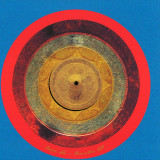
Tumblack really is a gorgeous late-70s disco-not-disco essential. It's an absolute MONSTER that will completely blow you away; and, yes, it's as compelling and trance-inducing as the cover. The audio for Tumblack has been carefully remastered by Be With regular Simon Francis, ensuring it sounds better than ever. Cicely Balston's expert skills have made sure nothing is lost in the cut whilst the records have been pressed to the highest possible standard at Record Industry in Holland. The cover of Tumblack is so iconic and we sought special permission from original artist Hélène Majera to recreate this at Be With HQ. It absolutely zings off the print and serves as the perfect finishing touch to this long overdue re-issue.
Cerca:not me
Promising new talent Joolmad is quickly becoming a name to watch out for, his latest body of work comes in the form of the “Perspective” EP, the third release from the thriving English producer, off the back of his sought after EP on TSOL. Although young Joolmad’s refined taste and years of tweaking his sound enabled him to construct tried and tested underground material, meaning his music and the PILLZ label could not be better suited. Gritty, straight edged peak time action from a producer on the rise. The new school showing their hand here as Joolmad shares his interpretation of mysterious sounds of modern times, melding electro and techno genres as he moves.
Reissue of the 3rd album of Patrick Jean-Marie recorded in 1985, Produced by Mambo Chick for Symbole Records.
Introducing “Women” by Kat-Tet, a unique musical gem straight from Guadeloupe, 1985. This rare album, the only studio-recorded masterpiece by the brilliant pianist Patrick Jean-Marie, transports us to a soundscape where every note is a journey.
It was a true opportunity for Patrick Jean-Marie and his band to showcase their talents, recorded under professional conditions, resulting in a sound of exceptional quality. The meticulous attention to orchestration is evident throughout, revealing a solidly crafted masterpiece.
Following the bold experiments with Atika and a solo album in 1983, “Women” marks a new chapter in Patrick Jean-Marie’s career. The album showcases a more structured approach that allows Kat-Tet to create a magical space for organized solos and climax. The dialogue between Patrick Jean-Marie’s piano and Luther François’s alto saxophone is constantly surprising and some powerful bridges by Patrick Jean-Marie are unforgettable.
A true classic in its genre, “Women” by Kat-Tet LP was an “hard-to-find” treasure in the vinyl world.
Today, Symbole is thrilled to bring this exceptional album back into the spotlight, sharing the beautiful and timeless music from Guadeloupe, 1985, with a high taste of Jazz !
- A1: Intro
- A2: Schizophrenia
- A3: Tom Violence
- A4: White Kross
- A5: Kotton Krown
- B1: Stereo Sanctity
- B2: Brother James
- B3: Pipeline_Kill Time
- B4: (I Got A) Catholic Block
- C1: Tuff Gnarl
- C2: Death Valley '69
- C3: Beauty Lies In The Eye
- C4: Expressway To Yr Skull
- D1: Pacific Coast Highway
- D2: Loudmouth
- D3: I Don’t Wanna Walk Around With You
- D4: Today Your Love, Tomorrow The World
- D5: Beat On The Brat
In October 1987, four months after the release of their critically acclaimed Sister LP, Sonic Youth showcased their latest work in a blistering set at Cabaret Metro, Chicago. The concert was introduced by Big Black's Steve Albini (who at the time was banned from the venue) and subsequently released as a semi-official bootleg under the title Hold That Tiger on writer/provocateur Byron Coley's impishly Geffen-baiting label Goofin' (years later the band would use this nom de guerre for their own imprint).
Hold That Tiger's sterling reputation among the Sonic Youth faithful is well deserved. In fact, it isn't a stretch to suggest that the album is to the first handful of SY releases what It's Alive is to the first three Ramones LPs – a feral and liberatory public snapshot of a band's blossoming imperial phase. Indeed, HTT is the sound of a group at the peak of their powers, presenting new songs alongside a handful of older ones with the kind of wild, cathartic enthusiasm common to rock 'n' roll's most revered live albums.
Taking nothing away from Sister – inarguably one of indie rock's first true masterpieces – it is reasonable that many fans prefer the live versions heard on Hold That Tiger to their studio counterparts. On HTT, Sonic Youth is a spiky, pummeling and confident force, alternately mammoth and meditative. Sister and its predecessor EVOL notably added an airy, dreamlike reverie to the band's turbulent doom-lurch, a stylistic evolution that seems to crystallize on HTT. Throughout, Kim Gordon's sinewy, sumptuous bass and Steve Shelley's propulsive, tom-heavy percussion provide the bedrock groove for Thurston Moore and Lee Ranaldo's ferocious barrages of noise-guitar crunch.
By 1987, the band was confidently articulating their dual lexicon of punk-noir dissonance and supernal, psychedelic sonic calligraphy – bending their jagged, streetwise gnarl into balloon animals of dazzling and beautiful songs. This collision of splendor and chaos would become a hallmark of the group's singular alchemy as well as provide a blueprint for the post-SST American underground they would help invent and ultimately nurture.
Hold That Tiger's encore – four songs by the band's beloved Ramones, which Thurston would later astutely compare to "the perfect pudding after a hearty meal" – serves as a reminder that, like any true punks, Sonic Youth never could resist a good, rousing anthem to send the kids home with their ears ringing, their hearts hot-wired.
This first-time reissue with speed-corrected master comes in a gatefold tip-on jacket. Mastered by Bob Weston from the original tapes. Recorded by Aadam Jacobs. Audio repair/editing by Aaron Mullan.
- A1: Freddie Mcgregor - Beat Down Babylon
- A2: Cornel Campbell - No Man's Land
- A3: Judah Eskender Tafari - Danger In Your Eyes
- A4: Tony & Howie - Fun It Up
- B1: Liberation Group - Namibia
- B2: Winston Francis - Love Me Today, Not Tomorrow
- B3: Roland Alphonso - Jah Shakey
- B4: Joe Higgs - Dinah
- B5: Brown Eagle - Natural Living
- C1: Freddie Mckay - So Long, Farewell
- C2: Jackie Mittoo - Mixing
- C3: The Heptones - How Can I Leave You
- C4: The Skatalites - Sudden Destruction
- C5: Lone Ranger - Dance A Fe Cork
- D1: Horace Andy - Mamie Blue
- D2: Johnny Osbourne - Run Up Your Mouth
- D3: Bob Marley And The Wailers - One Love
- D4: The Cables - What Am I To Do
Soul Jazz Records" Studio One Showcase 45 features a roll call of classic Studio One reggae legends including Horace Andy, Cornell Campbell, Bob Marley and The Wailers, Jackie Mittoo, The Heptones, The Skatalites and more - seminal reggae artists who all launched their careers at the legendary Studio One label. The album was previously only ever released as a long-deleted limited-edition seven-inch box set for Record Store Day. This album has now been expanded into a super double-vinyl album edition as well as first time on CD, with both featuring a massive eight bonus tracks of wicked Studio One classics and rarities.
Next stop... Second reference in the PHASELAB catalog and twenty-third of our PHASE IMPRINT label! What a satisfaction to finally present this project (vinyl and digital) by Aizikovic, the yout from Madrid who is trying to bring an especially fresh, as well as profound, vision to our city. This EP transmits us; altered visions in music, many experiences linked to the dance floor and feelings of light in a dark space. And in case anyone wanted a little more, Comissar Lag aka Lag has prepared a melting remix for us.
Many thanks for the designs to the snowboarder of the strokes @judyisangry, to Mario Castillo for the Master and to Pedro O'Connor for the Mix.
2 tracks by Zinc and Bizzy B made in '93 or '94. Limited vinyl. Bigup Bizzy B forever!! the B side 'Gettin Down' was also released as a bizzy track years ago, but it was called 'Break of Dawn' - Zincwas in a contract at the time, so it couldn't have his name on it - but its the same tune. Note: btw - theres a kind of beat jump at the end of one of the tracks - its not a glitch, it's where the Amiga we were using couldn't cope with the edits! I had the same problem in the middle of 6 million ways, a few DJs used to complain to me about it loads - Zinc
‘Nothing Iz Sacred’ is a statement, a collection of tracks that resist the pull of the fleeting, throwaway nature of today’s music scene. In an age where everything is often stripped down, consumed, and discarded, this 8-track LP stands as both a nudge and a reminder—a poke at the culture that surrounds it - it isn’t here to blend quietly into the background, nor to satisfy the urge for quick hits and shallow thrills.
Each track on the LP is woven with the sounds and textures Workforce has become known for, yet there’s a rawness here—a willingness to push boundaries, to blur the edges of genre and style. The LP is a blend of the familiar and the experimental, where thoughtful moments meet jagged beats, and where soulful undertones collide with darker layers. It’s a space that resists easy categorization, daring listeners to explore without expectation, to find meaning in the spaces between the sounds. This isn’t a record designed for the disposable playlists of tomorrow; it’s for those who know that music can mean more, and who understand that it is meant to live with us, to grow, and to shape the communities around it. This record isn’t about the chase for the next hit or the endless scroll; it’s for the ones who value artistry, who find culture in the smallest details, who want something real to hold onto.
‘Nothing Iz Sacred’ is brought to life with the voices and musicality of some incredible collaborators. Tyler Daley’s unmistakable warmth, Bobbie Johnson’s sharp lyricism, Tamara Blessa’s haunting soul, Leroy Horns’ textured brass, and Ed Zuccollo’s nuanced piano work all carve their own paths through the record. Together, they amplify the album's heartbeat, adding layers of richness and depth.
Meet Kitchen Plug, the Parisian trio that somehow combines the rebellious energy of punk, the synth-driven chaos of electro, and the charisma of a boy band... except, they don’t really dance (yet).
With their new EP "Nice To Meet You," these self-proclaimed nerds have served up an unpredictable, colorful mix of electronic anthems and rock-infused vibes. It's like if your favorite computer-generated juice suddenly turned into an unstoppable emotional rollercoaster.
Expect cheeky melodies, emotional highs (and occasional lows), and enough playful swagger to make you question why you’re not already in their inner circle of "copains" (that’s French for friends, by the way). Kitchen Plug isn’t just making music; they’re creating a sound so lively and full of attitude that you’ll probably feel like you're getting a bear hug from your favorite nerdy best friend — just with more synths and less homework.
"Nice To Meet You" is the kind of EP that doesn't take itself too seriously, but it’ll still make you feel something. So, what are you waiting for? Plug in, and let's see if they can live up to their own hype. (Spoiler alert: They will.)
Mark Grusane presents Midwest Rhythms Vol. 3 on Disctechno: a compilation of five stripped down, off-kilter house tracks from four producers out of Chicago and Detroit and one from Grusane himself. On the A side is a spaced out synth-laden “Memory Blank” from DJ Slush (aka Eric Schwab) and a pulsing, bass-heavy beatdown on “AYYYO” from Deon Jamar. The B side features Jordan Zawideh’s reverb-heavy drum machine & synth duet “Axolotls”, Mark Grusane’s pounding, in-your-face atonal track “The Recoil”, and finishes with Thomas Xu’s grooving arpeggios on “School Street.” Not to be missed for fans of the contemporary Midwest underground."
Because of their mix of hellified gangster shit and progressive compositions, I once jokingly called Clipping "Deathrow Tull." Well, it's not a joke anymore. While Clipping's last few projects have been record-long concepts like classic prog rock, their cyberpunk-infused new album Dead Channel Sky is mixtape-like, a carefully curated collection in which every track is a love letter to a possible present. It sounds crisp and classic at the same time. When something strikes us as retrospective and futuristic at the same time, it's a reminder of how slipshod our present moment truly is. Juxtaposing high-tech, corporate command-and-control systems (the "cyber") with the lo-fi, D.I.Y. underground (the "punk"), cyberpunk proper starts in 1982 and ends in 1999, from Blade Runner to The Matrix. Concurrently, hip-hop matured, went through its Golden Era, then melted into further forms: it went from from Fab 5 Freddy to Public Enemy to Missy Elliott. While other genres flirted with it, hip-hop was fickle and fey. Rap and rock birthed mutant offspring maligned by most, and hip-hop's relations with electronica rarely fared any better. What if someone explicitly merged hip-hop and cyberpunk - those twin suns of the '80s and '90s - into one set and sound? After all, both movements are the result of hacking the haunted leftovers of a war-torn culture that's long since moved on. On Dead Channel Sky, Clipping texture-map the twin histories of hip-hop and cyberpunk onto an alternate present where Rammellzee and Bambaataa are the superheroes of old; where Cybotron and Mantronix are the reigning legends; where Egyptian Lover and Freestyle are debated endlessly, and Ultramag and Public Enemy are the undeniable forefathers; where the lost movements of 1980s and the 1990s are still happening: rave, trip-hop, hip-house, acid house, drum & bass, big beat-the detritus of a different timeline, the survivors of armed audio warfare. Clipping are no strangers to sci-fi: two of their records were nominated for Hugo Awards (one of science fiction's top literary prizes), and a novella spun-off from their music was nominated for a third. On Dead Channel Sky, Clipping's co-conspirators include everyone from the guitarist Nels Cline, to their labelmates Cartel Madras, rapper/actor Tia Nomore, and wordsmith Aesop Rock. Diggs is known for intricate lyrics and rapid-fire rapping, and the tracks that Snipes and Hutson build in the background are no less complex. All of the above serves to give us a glimpse of an adjacent possible present, where hip-hop and cyberpunk are one culture. Binary stars are often perceived as one object when viewed with the naked eye. Like those twin sun systems, it'll take some special equipment and some discerning attention to pull the stars apart on this record. As Diggs barks on the fire-starting "Change the Channel": Everything is very important!
- A1: Boylan, U.s.f, D.o.k - Prime Directives
- A2: Boylan, Slimzee - Mash Up
- B1: Boylan, Slimzee - Box
- B2: Boylan, Trends - Septic Peg
- B3: Boylan, Trends, Slimzee - Thunder Ridge
- C1: Boylan, Youngsta - How Dare You
- C2: Boylan - Podracer
- D1: Boylan, D.o.k - Depth Charge
- D2: Boylan, Slimzee - Mitzi
- D3: Boylan, D.o.k, Youngsta - Just Breathing
The Shard: A colossal feat in engineering, savagely piercing the London skyline with zero f**ks.
Shard View: An uncompromising moment in Boylan’s bass engineering, piercing the London soundscape with even fewer f**ks.
It’s 2025. We’ve officially moved a second closer to extinction and Boylan’s wasting no time. After years of releasing noxious missives on the most influential likes of FWD>>, Artikal, Deep Dark & Dangerous, Sentry and Mean Streets, he finally launches his own label - Shard View.
A brand new vehicle for the potent strain of ice cold apocalyptic breakbeat he and his closest allies are currently making, Shard View is inspired by the vista he and the likes of Slimzee, Trends, D.O.K, U.S.F and Youngsta see every time they’re cooking up a darkness in his Peckham studio.
Coated in visual armor from Simon Oil Gang, Shard View is London, Detroit and Berlin wrapped up in one. It’s bass, it’s techno, it’s tribal, it’s No U-Turn, it’s Virus, it’s Horsepower, it’s warehouse raves. It’s timeless. And it starts with ‘Tunnel’, an extensive 10 track trip into instrumental, full physical, heavily percussive unapologetic breakbeat music. Boylan is the main consistency throughout but all the above-mentioned names are involved and always will be. Like the great collectives of past bass epochs, the energy here is molten as the friends inspire each other with this fresh take on a classic sound.
Two more EPs should follow later this year. And as the world continues to ramp up the turbulence, so will Shard View. This is not a drill.
Any questions about any of these products feel free to get in touch and we'll help you out!
albert.preston@sequence.cc
With Roza Terenzi and Sleep D on the remix, Alfred Czital & Ayu summon divine frequencies across a debut recalling the finest turn-of-the-millennium trance.
Spirits are high as we strive for utopia. Like relics of times passed – a bygone era where the free party reigned supreme – this is a union forged out of a mutual affinity for trippy dancefloor dynamics and live performance.
Rapturous and ecstatic, both originals evoke pure club hedonism. Sensual, sultry gear made of euphoric melodrama, close sweat and lysergic throb. Wide-eyed optimism coursing throughout, but like any good proggy majick, it’s not without a decent dose of shadow and ritual.
Coming in hottt with the remixes and both are befitting a release bent on traversing the wormhole interior. Oyster Cult acolyte Roza Terenzi keeps it taught and tightly-coiled on her rugged, propulsive re-fit, and not to be outdone, Butter Sessions founders Sleep D let atmosphere pull focus with a sprawling, dubby workout.
We are excited to announce the first reissue of Tony Scott's iconic “Manteca” album originally released in 1973. This 180-gram vinyl audiophile edition captures the essence of a true master of contaminated jazz, allowing listeners to experience Tony Scott's vibrant artistry like never before.
Originally described in the album’s liner notes by Sam Charters, "Manteca" embodies the spirit of the jazz musician’s journey—a testament to durability, warmth, and exuberance. Charters notes, “You have to be durable these days to be a jazz man... a musician like Tony Scott has the kind of personality that it takes to be a jazz man today” — a sentiment that perfectly encapsulates the artist's incredible career.
From the bustling club scene of New York in the 1950s to captivating audiences in Japan, Scott's journey brought him to Sweden in the summer of 1973, where he collaborated with exceptional local musicians. The result was a collection of vibrant, uptempo jazz tracks combined with reflective ballads, showcasing the remarkable versatility and inventiveness of Scott's clarinet, baritone, and even his distinctive scat vocals.
The album opens with the titular track "Manteca," setting an exhilarating tone that endures until the final, almost sinister note of "One For Topsy." Complemented by an all-star lineup, including bassist Sture Nordin, drummer Ed Thigpen and legendary percussionist Sabu Martinez, this session embodies the international spirit of jazz—a genre that transcends boundaries and unites souls.
This audiophile edition has been meticulously remastered to provide an unparalleled listening experience, preserving the authenticity of the original while ensuring superior sound quality. With only a limited amount produced, this vinyl reissue is a must-have for collectors and jazz aficionados alike.
Join us in celebrating the reemergence of Tony Scott's "Manteca," a true landmark in jazz history, and immerse yourself in the dynamic sounds that have inspired generations.
First official vinyl reissue
180g virgin vinyl pressing from Pallas / Germany
350g. cover
Original artwork and liner notes
Recorded in Stockholm in 1973
- A1: Mieko Hirota - Soul Lady
- A2: Shinji Maki &Amp; Black Jack - Nabeyoko Soul
- A3: Tan Tan - Happy Day
- A4: Kenji Niinuma - Airenki
- A5: Hatsumi Shibata - Furui Fuku Nanka
- B1: Strawberry Jam - Arimasen
- B2: Mieko Hirota - Anata Ga Inakute Mo
- B3: Akira Yasuda &Amp; Beat Folk - Kaeroka Kaeroka (Single Version)
- B4: Miki Hirayama - Hatachi No Koi
- B5: Masaaki Sakai - Baby, Yuki Wo Dashite
At the start of the 60s, a new wave of gospel-influenced jazz started to emerge, with hits such as Art Blakey & The Jazz Messengers' "Moanin'" and Cannonball Adderley's "Work Song" epitomizing this evolution in the genre. The terms "soul jazz" and "funky jazz" were coined as a way to describe this new sound that was making an impact in the US and also on the other sides of the Atlantic and Pacific oceans.
In 1964, Ray Charles made his first visit to Japan. Then, in 1968, Martha & The Vandellas and Stevie Wonder set foot in the country, followed by Sam & Dave in 1969, Ike & Tina Turner in 1970, and B.B. King in 1971. The TV show "Soul Train" also began airing in Japan in the early 1970s. A watershed moment happened in 1973 when Sammy Davis Jr. was cast in a TV commercial for Suntory whisky — and the influence of the US Black entertainment world had really landed, with soul, jazz, and funk artists becoming household names.
Nippon Columbia played a pivotal role during this turning point. The company had contracts with Buddah Records and Blue Thumb Records, releasing notable works by artists such as Gladys Knight & The Pips, Curtis Mayfield, The Crusaders, and The Pointer Sisters. At the same time, the label was also releasing several Japanese soul, jazz, and funk projects under the lead of music director Jiro Inagaki. Inagaki, a saxophonist who began his professional career in the early 1950s, honed his skills at U.S. military camps, where he shared his love of music with the Black servicemen. In the 1960s, he played with drummer Hideo Shiraki's band, which was widely considered to be Japan's representative group of the funky jazz movement. Later, Inagaki went on to pursue more cutting-edge sounds with his Soul Media project, including being a pioneering figure in the "jazz rock" genre. By working closely with Inagaki and his various musical projects, Nippon Columbia really placed the company at the center of an exciting and important period in Japanese music.
In 1965, Nippon Columbia opened a recording studio in Tokyo's Akasaka neighborhood. Akasaka was also home to the first ever discotheque in Japan, the legendary MUGEN, which ran from 1968 to 1987 and where many acts performed, including Con Funk Shun, the Bar-Kays, Ike & Tina Turner, B.B. King, Sam & Dave, Three Degrees, and Edwin Starr, as well as many local Japanese singers and musicians. This melting pot of creativity in the area led to the recording of many singles and albums by Japanese artists that were infused with the sounds of soul and funk. Most of these recordings were not available outside of Japan and remain rare and unknown musical gems. The selection you are holding in your hands is an explosive collection of 10 essential tracks released by the legendary Nippon Columbia label between 1969 and 1977, capturing the raw, unapparelled energy that was flowing through the air of the Akasaka streets at this electrifying time. Enjoy!
---
180GWALP07 - Manufactured and distributed by 180g.
Modernized disco boogie cover of Klique's 80s classic tune, with vocals by Boston's own Saucy Lady and UK's legendary talent Omar, all masterfully crafted by Yuki Kanesaka as the musical director and producer alongside Saucy Lady on the arrangement. The track not only features a full live brass section and strings with talents from Japan and Boston, it also features Curtis Williams of Kool & the Gang on alto, while David Frank of the mega duo The System on the Oberheim and Moog adding the authentic boogie spice.
Piano overdubs recorded by another production and engineering legend Carl Beatty known as the studio pioneer of all the major label R&B performers of the 70s, 80s, and 90s including Luther Vandross, Aretha, Melba Moore, Mass Production and more. All of which create the melange of groove that the funk universe desperately needs.
On the flip side, French Producer and DJ heavyweight Young Pulse brings a whole new take on the original mix with added vocal layers by Young Pulse himself he brings a more broken beat, house flavor to the classic tune which will undeniably electrify the dance floors.
360 mcn white-white light cardboard paper / one side only hand plasticization / 2 separated parts prints / hand gluing / PVC outers / original artwork / gatefold sleeve / Bandcamp limited edition 30x60 cm insert with extended liner notes by Tony Higgins and Interview with Babs Robert and Sébastien Gorlé with exclusive pictures and self-portrait by Babs Robert himself printed on GF Smith "Takeo Tant Select" Canvas Paper tip-on left jacket panel / Exclusive never released Memorabilia from Babs Robert's vault.
Personnel:
Babs Robert - alt sax, tenor-sax, electric tenor-sax, Bin Recorder, Acme siren, Chinese-bell, sleigh-bells, maracas, tambourine,hand-rattle,claves)
John Van Rymenant - baritone-sax, fluegelhorn, Bala, tambourine, sleight-bells, cowbell, triangle, claves
Johnny Peret - vibes, bongo's, cowbell, maracas, castanets, rattle-snakes, tambourine, drums, woodclock, trinagle
Johnny Brouwers - piano, prepared-piano, triangle, cowbell, sleigh-bells, maracas, caves,hand-rattle, guiro, woodblock, tambourine
Paul Dubois - bass, triangle, cowbell, claves, rattlesnakes, hand-rattle, woodblock, tambourine
Michel Gobbe - bass,Chinese-bell, claves
Robert Pernet - drum, tambourine, seven-notes M'Bichi, guiro, alarm-siren, home-made metal xylophone, African telephone-drum, triangle, sleigh-bells, Siku
Notes:
Despite its modest role on the world stage, Belgium has produced a number of internationally renowned musicians and composers. There is the iconic gypsy jazz guitar maestro Django Reinhardt, whose position remains unassailable, and guitarist/harmonica player Toots Thielemans, who became an internationally renowned artist performing and recording with Bill Evans, Oscar Peterson, Ella Fitzgerald, Peggy Lee, Shirley Horn and Quincy Jones. The other key Belgian figure is composer/arranger Francy Boland, co-leader with US bebop drumming legend Kenny Clarke of Europe's leading big band of the 60s, the Clarke-Boland Big Band.
The Love Planet performed in the main clubs of Brussels, such as Blue Note, Pol's Jazz Place, and Smog as well as in major musical events throughout Belgium including to big festivals in 1969 - the Avant-Garde Festival in Ghent and the First International Jazz Event in Liege – where the Love Planet shared the bill with Miles Davis - and the Bilzen Jazz Festival in 1970. The contrast between the musical architecture of the themes and sonic freedom in the improvised playing perfectly illustrated the polymorphism – an order within disorder – which the Love Planet aimed for.
The initial original quartet line-up was Babs Robert (sax), Paul Dubois (bass), Johnny Brouwers (piano), and Johnny Peret / Robert Pernet (dru- ms). On the album session, the quartet was augmented with the addition of John Van Rjimenant (saxes) and Michel Gobbe (bass). As well as their main instruments, the band members also played an array of unusual instruments, principally percussion. This is the first official re-release
of the 'Babs Robert and the Love Planet'. Original copies of the album fetch many hundreds of Euros on the collecting circuit and it remains a curious and fascinating window into a moment in time that still resona- tes some fifty years later. Come with us to the Love Planet. (Tony Higgins)
- A1: Fading Dreams - Moonseed
- A2: Days Gone By - Luqęt X Strong.al&
- A3: Imperfections - Less Gravity
- A4: Light Roast - Levon Forever X Burbanksy
- A5: Oceanview - Juniorodeo X Levon Forever
- A6: Petrichor - Copacetik X Hoogway
- A7: Starlight - Andrew G
- A8: Stratego - Goson - Stratego
- B1: Golden Memories - Strong.al&
- B2: Time Flies - Otaam
- B3: To The Sea - Neele Harder
- B4: Rainy Day - Jazzyhan
- B5: I'll Miss You - Another Silent Weekend
- B6: Lakeside - Hoogway
- B7: Core Memory - Marsquake X Flowray
- B8: Don't Forget To Care - Mell-Ø X Ambulo
- C1: Oceans, Mountains - Morningtime
- C2: I Will Wait For You Just Like Last Year - Vimef X Copacetik
- C3: The Lovers - Your Magnolia
- C4: For The Flowers - Girl From Nowhere
- C5: Forgotten - Late Night Tones
- C6: Finding Hope - Dimension 32
- C7: Textures - Coils
- C8: Overpour - Burbanksy X Levon Forever
- D1: Wishes - Banks X Socrab
- D2: Beyond The Moon - Andrew G
- D3: Given A Chance - Banks X Tibeauthetraveler
- D4: Always Remember You - Mondo Loops
- D5: Waterlike - Team Astro
- D6: Quiet At Heart - Forever Dreaming X Zycix
- D7: True Story - Dimension 32
Embrace the golden tranquility of summer with Childhood Memories! Let yourself be enchanted by a compilation where each note softly whispers warmth, inviting the essence of summer to dance freely. Envision yourself nestled in a cozy treehouse, surrounded by lush greenery, basking in the warm sunlight as guitar melodies fill the air. Whether you're lost in a captivating book or sharing laughter with cherished friends, allow these laid-back tunes to become the soundtrack to your summer bliss.
- A1: Small Metal Gods
- A2: Died In The Wool
- A3: I Should Not Dare (For No)
- A4: Random Acts Of Senseless Violence
- B1: A Certain Slant Of Light (For Mk)
- B2: Anomaly At Taw Head
- B3: Snow White In Appalachia
- B4: Emily Dickinson
- C1: The Greatest Living Englishman (Coda)
- C2: Anomaly At Taw Head (A Haunting)
- C3: Manafon
- C4: The Last Days Of December
- D1: When We Return You Won't Recognise Us
"First time on vinyl for ‘Died In The Wool’, the 12 song remix companion to David’s 2009 album, ‘Manafon’, plus the non-album track “When We Return You Won’t Recognise Us”
Features remixes by David Sylvian, Dai Fujikura, Jan Bang & Erik Honoré.
“When We Return You Won’t Recognise Us” was specially commissioned by the 2nd Canary Islands Biennial of Architecture, Art and Landscape 2008-2009."
Love Raid is first in a series of cassette-only mixtapes with the cult WFMU show and blog Bodega Pop collecting assorted digs from across New York's bodegas and cell-phone stores. This first edition is focused on leftfield, novelty, and protest 45s from across the Arabic world recorded between 1960 & 1974.
"A series of random discoveries in the mid-1990s led me to abandon American and British pop and focus on non-English-language music, predominantly Arabic, for the next two decades.
Feeding my ears required biking down to Bay Ridge, Brooklyn, or hopping on the subway to Steinway Street in Queens, where I would pop into a handful of the local bodegas and immigrant-run cell-phone stores, some of which offered music from North Africa and the Middle East on cassettes and compact discs.
When CDs spiralled into obsolescence in the mid-2010s, I reluctantly made the switch to vinyl, concentrating on 45s and intentionally filling holes not well represented in the digital era – more artists than not hadn't made the transition from analog in the 1980s. This meant focusing on singles by a lot of artists I'd not heard of, and it quickly became evident just how much of the era – from approximately 1960 to 1974, when 7" records were all but abandoned in Egypt and Lebanon – had been forgotten.
What also became evident was the breadth of popular music issued by even hegemonic titan Sono Cairo. The consensus is that state radio and music publishing ignored traditional folk, shaabi, and other lowbrow pop in favor of the exalted art song we associate with Oum Kalthoum, Abdel Halim Hafez, and Farid al-Atrash.
While this active neglect of the broadest Arabic pop spectrum is mostly true, I accumulated a not inconsequential number of what I can only describe as "novelty" records by mostly one- and two-hit wonders. From catchy gimmicks like the "doktor, ya habibi" of Maha's "Doktor" and the "boom boom boom" of twins Thunai Badr's "Love Raid," to the Monty Python-level silliness of Sayed Mandoline's fake Italian crooning and maniacal laughter in "I Present to You the Mandolin," these were sounds I was genuinely surprised to hear.
Even more remarkable were the songs recorded in English: Karim Shukry's celebratory "Ramadan" and Motyaba & Nada's civil-rights plea "No Black No White" are two of my favorites, and thus included in the present collection.
The tracks compiled here are often as beautiful as they are beguiling, but while the intention was to absolutely put together a solid listen, it was also my hope to slightly expand our understanding of Arabic music of this period beyond not just the usual suspects, but also subjects – and treatment of same."
--Gary Sullivan.