LODE
(by Memory Remains)
present,
unknown.
but well-known artists.
limited vinyl
vorbestellen
Der Artikel ist noch nicht erschienen. Du kannst den Artikel jetzt vorbestellen, dieser ist nach Wareneingang für dich versandbereit.
11,72 €
LODE
(by Memory Remains)
present,
unknown.
but well-known artists.
limited vinyl
Der Artikel ist noch nicht erschienen. Du kannst den Artikel jetzt vorbestellen, dieser ist nach Wareneingang für dich versandbereit.

Our previous remix-EP of Ness' classic album "Flesh Of The Gods" was, for various reasons, a long and slow process. When Ness himself suggested us to ask Vladw for a contribution we finally had a good reason to reach out to a long time favorite @ the Navigare HQ. Although located, literally, on the other side of the planet, his deep, driving and breezy productions ring true to our, slightly northern, musical vision. So we are not surprised that his excellent remix of "Transilient" is, already, one of the most celebrated tracks in our half decade long history. We asked for more, and finally we are able to present three brand new originals, seeded, watered and harvested with a Navigarean intent. Three highly functional pieces, aimed at focused dancefloors underneath open skies, balancing the beautiful and lush with the edgy and slightly twisted. Although being our first ever collaboration, any Navigare listener would understand that Luigi Tozzi has played a huge role for us on our path. Since his first releases with Hypnus we've listened carefully, on repeat, for a dozen years by now. A guiding light for our scene, always curious, always pioneering, yet always on point. His remix of "Drya" takes the harmonix of the original, adds a monstrous bassline and - trust us on this one - that massive clap will cause a mass frisson on the dancefloor. Trust Navigare Audio...
Der Artikel ist noch nicht erschienen. Du kannst den Artikel jetzt vorbestellen, dieser ist nach Wareneingang für dich versandbereit.

Recut and repressed
Every now and then, there are tracks that stand the test of time. Tracks that are more than just another DJ-tool. Tracks to remember. When „Fom Within“ was released 13 years ago. the track found its way into almost every DJ-Case that summer, and to this day, people playit out at special moments. When Gregor Tresher started to mix Celeda´s „Music Is the Answer“ Acapella over it, inofficial remixes popped up everywhere. We decided to actually never release that version, as we believe some things should be in the DJ´s hands, as there´s nothing quite magic as if a DJ-Mix creates something new. We are happy to give to you an official repress of one of the strongest tracks from our label´s history. Play it out and let it work it´s magic.
Der Artikel ist noch nicht erschienen. Du kannst den Artikel jetzt vorbestellen, dieser ist nach Wareneingang für dich versandbereit.

2026 Repress!
Om Unit says of this release 'For me it's another milestone as a DNB fan.. Being allowed to come back to 31 again with another shadow boxing version, being one of only a tiny handful of people being allowed to remix this classic truly is an honour, let alone twice! Also working with Thing on "something ancient" was a real blessing not only because he's original and convincing with his own work but also I think he's like me, he does his own thing without adhering to too many of the insular rules that have made dnb such a closed room over the years, and so creating this cinematic piece just happened naturally and I really love the results.
Der Artikel ist noch nicht erschienen. Du kannst den Artikel jetzt vorbestellen, dieser ist nach Wareneingang für dich versandbereit.

Advanced Art was formed in Tampere, Finland, in 1985 by Jana, Pete, and Vince. Too young to be part of the first wave of Finnish groups inspired by German synth pioneers and New Romantics, they instead forged their own path and soon became pioneers themselves. For the next ten years, Advanced Art defined and dominated Finland’s small but growing electronic underground. They inspired a new generation of Finns to experiment with synthesizers, built an international cult following, and were deeply involved in the local scene—running clubs, organizing events, and performing at some of the very first warehouse parties in the country.
Although the line-up shifted over time, the group’s creative drive consistently came from the partnership between Jana, who supplied the voice and words, and Vince, who shaped the music with his machines. Together they defined the band’s distinctive blend of sharp electronics and lyrical vision.
After several cassette demos and two 7-inch singles, Advanced Art signed to Poko Rekords in 1991. The EPs Scar and Time raised their profile both at home and abroad, especially thanks to valuable exposure on MTV Europe’s 120 Minutes. Known for their perfectionism, they finally released their debut album Product in January 1993. On Product the line-up was Jana (lyrics, vocals), Vince (music, production), and Factor (percussion, studio work). Having moved through phases of synth pop, EBM, and industrial, the album showcased Vince’s vision of a unified sound and style more clearly than ever before.
Force followed in 1994, conceived as a multi-part concept album (Update / Live / Retro). Recorded with live percussionist PW joining Jana and Vince, it expanded on the groundwork of Product with new beats, ideas, and a sharper, more defined identity.
By 1995, exactly ten years after their founding, Jana and Vince decided to bring Advanced Art to a close on the band’s birthday, 13 October. Their run had been precise: one decade of creative output, ending with a legacy that laid foundations for Finland’s electronic scene.
Now, conveniently coinciding with the band’s 40th anniversary, Advanced Art present Forced Product. This double-LP set, fully remastered, features Product in its entirety, alongside the Update and Retro sections of Force, plus additional EP tracks and remixes recorded between 1991 and 1994 at “Audible Art” – less a studio than a concept, existing wherever machines and people met.
Limited to 450 copies, Forced Product comes in a gatefold sleeve with poster and sticker, offering a definitive document of Finland’s pioneering electronic cult heroes — a band that helped invent their country’s scene and left a lasting influence far beyond it.
Bei uns am Lager und sofort versandfertig
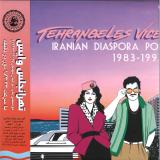
Discotchari is delighted to release a first-of-its-kind various artists compilation: Tehrangeles Vice (Iranian
Diaspora Pop 1983–1993), fully licensed from Taraneh Enterprises. The album is a groundbreaking exposé of
the vibrant subcultural hub of Tehrangeles (portmanteau of Tehran + Los Angeles), and the action–packed, true
story of the Iranian diaspora music industry. Featuring 12 tracks remastered by award–winning Osiris Studio,
lyrics and translations to all featured songs, original cassette covers, a 20+ page album note booklet by Dr.
Farzaneh Hemmasi and more! Sprawling from Westwood to Glendale across the San Fernando Valley, the
Tehrangeles scene was cultivated by the same producers and artists who industrialized the “golden age” of
entertainment in pre–revolution Iran and fled from the 1979 Islamic Revolution along with millions of Iranian
citizens. Through music and visual media, Iranian producers and artists working out of Tehrangeles have
engaged in what the Iranian government calls a “cultural attack” against the Islamic Republic for over 40 years.
The album title Tehrangeles Vice underscores the illicit nature and daring circumstances from which
Tehrangeles pop music was born and compares its legacy within Persian media to one of the most significant
crime–drama TV shows of all time. In the same manner that Miami Vice and its aesthetics had a dynamic
impact on sonic, visual and cultural trends in the United States and around the world, Tehrangeles media was a
shock to the systems of Islamic Republic ideology and Iranian expatriate communities. Listening to these songs
in hindsight, the contribution of Tehrangeles can be better understood as a triumphant effort to preserve Iranian
identity by realizing it in conjunction with prevailing music genres of the ‘80s and ‘90s, and to rebel against the
oppressive regime of the Islamic Republic of Iran through the most seductive of means: dance music.
g C1. Sattar - Khaak ("Home Land")
Bei uns am Lager und sofort versandfertig

Monolith 45 series I
A new chapter emerges within Organic Signs.Conceived as a vessel dedicated to a single frequency, Monolith 45 is born to trace the lineage of progressive trance — that tribal, hypnotic, and ceremonial sound that carved its path during the early 2000s, and which today we reclaim with reverence.
Each release stands as a stone marker along this continuum: timeless signals that resonate equally with memory and vision. As with the broader work of Organic Signs, this new line will follow a dual path: rescuing forgotten gems from the past while also curating new music that embodies the same spirit.
Monolith 45 becomes the place where past and present intertwine, shaping a narrative that honors tradition while opening new doors for exploration.
The first monolith in the series carries with it two totems of the genre:
On the A-side, Magnetrixx – Intraferences, originally released in the year 2000 on the legendary Tatsu Records. Behind this moniker stands Stefan Lewin, not only a key architect of the progressive trance sound but also the mind behind ACL (Audiophile Circuits League), one of the most special modular synthesizer brands..
His work bridges eras: from shaping the trancefloor at the turn of the millennium to designing instruments that define modern electronic creation.On the B-side, Ticon – Lo Mi Hi, a track that saw the light in 2001 on Digital Structures, one of the most influential labels of that era.
Ticon are nothing short of mythical within this universe — pioneers whose sound blurred borders between deep grooves, psychedelic textures, and progressive structures, leaving an indelible mark that still resonates with dancers and producers worldwide.
With Monolith 45, we seek not only to preserve these transmissions but to project them into the present: to reawaken a sound that was always more than music, a tribal pulse, a ritual language that invited bodies and minds into collective trance.
This is our homage, our offering, and our way of extending the path forward.
Bei uns am Lager und sofort versandfertig

DJ Support: Axel Boman, Coyote, Rune Lindbaek, Dr Rob (Ban Ban Ton Ton), Lefto, Johan Blende, Feel Fly, Marco Gallerani and many more
Secret Soul Society, aka South Wales's Cal Gibson, continues his red-hot streak of form with four original jams for Hell Yeah that effortlessly weave decades of influences into intimate, unusual sounds that go from Balearic daydreams to after-hours soul burners.
Gibson was one-half of Nottingham's deep house and downtempo outfit Neon Heights back in the 2000s, a collective that label head Marco has long admired. He has landed here before with the superb Keep The Mystique in 2023, a 15-track collection of brand new curveball cuts built from lovingly sourced samples. Since then, he has continued to collide jazz, funk, Afro, beats, dub, soul and reggae on Paper Wave and Magic Wand.
'To Be Happy' opens with gentle, sun-soaked grooves, swirling keys and dreamy pads that evoke a hazy Mediterranean sunset. Nostalgic soul samples tug at the heart while the track’s laid-back vibe is perfect for golden-hour moments. 'Orange Surprise' is a magical slice of downtempo bliss with hints of romantic vocals. It's built on soft broken rhythms and drifts between ambient soul and laid-back electronica, perfect for introspective moments or late-night winding down.
'Keep On Trying' flips the script with more texture. The synths are crystalline, the pads are sugary, and the meandering bassline unfolds in wonky fashion while soft male vocals bring a steamy edge. Last but not least, 'What You Do To Me' is funky and slow motion disco with 80s synths and reverb that drowns you in good vibes.
This EP is Secret Soul Society at his most expressive and emotive.
Bei uns am Lager und sofort versandfertig
Bei uns am Lager und sofort versandfertig

Transversales is very glad to announce the release of « Unreleased & Rareties » spanning 1972-2002, revelatory collection of short and secret music by electronic music pioneer, Jean SCHWARZ. He served as an engineer at the CNRS in the Ethnomusicology Department of the Musée de l'Homme in Paris, and was a member of the Groupe de Recherches Musicales (G.R.M) from 1969 to 1999.
This compilation allows us to discover some of unreleased rarities from Jean Schwarz’s personal archives and unpublished recordings which were composed for the dance, screen or the performing arts.
Remastered high-resolution audio transferred directly from the original master tapes.
Exclusive liner notes. Deluxe LP with printed innersleeves & OBI
Bei uns am Lager und sofort versandfertig

Support by Green Velvet, Rebolledo, Dr. Rubinstein, Cormac, DJ Hell and many more! Summer 2013, Comeme label's studio - The District Union. Behind the analog console and hardware - 20-year-old Philipp Gorbachev and Djs Pareja from Buenos-Aires. No plugins, reels, or LTE. Sweltering heat, peak of summer EU tour, the musicians had just a few hours to record. The track drops on the label's compilation and immediately lands in a mix by Chicago legend Green Velvet. It spreads afterwards in all possible ways - Do You Believe in House Music? is blasting in bars, DIY spaces, raves, cars and street parties, the lyrics get sprayed on walls or inked as tattoos System 108 proudly presents the official reissue of the original, boosted with brand-new remixes from shining artists of the Russian dance scene - those whose journeys also began in the 2010s and who, in some way, crossed paths with either the track itself or that very vibe of faith and love, without which a dancefloor can hardly pulse with life. A house is not a home, when there's no one living there
Bei uns am Lager und sofort versandfertig

2025 Repress
Powerhouse performer Gretel Hänlyn today releases her highly anticipated second EP Head Of The Love Club, via VLF Records. Premiering as Clara Amfo’s Hottest Record in the World on BBC Radio 1, focus track ‘King Of Nothing’ is a rollicking revenge track, cementing Gretel as one of this year’s most exciting breakout stories.
Gretel Hänlyn has spent the last year stamping her ground as one of female guitar music’s new frontrunners, imbued with a singular vision and wickedly unique voice. Inspired by 90s alternative artists like The Pixies, Smashing Pumpkins and PJ Harvey, Head Of The Love Club is a suitably contemporary stride forward in the hotly tipped artist's sound and marks a definitive departure from the indie-folk textures of her breakthrough debut EP Slugeye. A heady mix of hi-fi grunge, goth-pop and alt/indie ballads, the EP features previous singles ‘Drive’, ‘Today (can’t help but cry)’ and ‘Wiggy’ alongside five other tracks that candidly display Gretel’s exceptional storytelling.
Last year was vital for the rising star: she released her debut EP Slugeye to critical acclaim, collaborated with Mura Masa on his headrush of a single ‘2gether’ (9M+ streams on Spotify alone) and was also playlisted multiple times across UK radio - a rare feat for a fiercely independent artist. This year is set to be her breakout – Hänlyn has already been included in NME’s coveted NME100 list, performed live as part of DIY magazine’s ‘Class of 2023’ series and was dubbed one to watch by The Sunday Times, Metro, Time Out + more.
Bei uns am Lager und sofort versandfertig

Five Again is a striking debut from Mi Ya that spans just six tracks but makes a lasting impact. The album was crafted at Space Talk and reflects on childhood not as a stage to abandon, but as a spirit to protect. Its delicate compositions echo fleeting memories, candles that won't blow out, naps of escape, the quiet joy of rain. Mi Ya describes the work as a refusal to let go of the child within, a reminder of innocence that still whispers. Hazy ambient synths and delicate melodies shine on tracks like 'I Forget Things', while the understated beauty of 'Tickle & Naps' stands out with its sparse, intricate detail. 'My Mom Left Me At The Train Station' is all pensive chords and shimmering percussion - it's musically light but emotionally profound.
Bei uns am Lager und sofort versandfertig

“The Mire Chronicles,” the latest album by Spammerheads, was born from the difficult experience of the floods that hit Valencia on October 29, 2024. During this time, the duo lost part of their studio and actively participated in the cleanup efforts in their city.
This was an experience filled with a mix of emotions—shock, helplessness, fury, resistance, solidarity, and resilience, among others—that shaped what may be their best work to date. Written as a chronicle, the album explores the personal and collective states of people affected by tragedies or catastrophes. The Valencian duo
(through a carefully produced edition released by Banshees Records) offers six tracks (plus two digital bonus tracks) to remind us that despite the difficulties we may face, we must always fight to get ahead, get back on our feet, and not be swept away by the current.
This album is dedicated to the people and communities who face extreme situations and never give up.
Bei uns am Lager und sofort versandfertig

Bruce Springsteen's statewide ode Nebraska '82 is given ample extra space with a new expanded edition, as his 1982 acoustic masterwork is cast in renewed light by its use the forthcoming biopic Deliver Me From Nowhere, which documents the conception of the original album. Now with an extra 17 solo outtakes, including demos of 'Born In the USA' , 'Pink Cadillac', and 'Downbound Train', as well as the fabled Electric Nebraska sessions with the E Street Band, the new dubs illuminate the breadth of Springsteen's vision for a reconciled America, where Springsteen found much inspiration in the folk, literature and short stories of the heartland, particularly in those of Flannery O'Connor, childhood and young-adult memories. Notably, it was deemed by PopMatters to beo one of the first every DIY records made by a major artist, and soon sparked a DIY revolution by folk musicians the globe over.
Bei uns am Lager und sofort versandfertig

Bei uns am Lager und sofort versandfertig

Dark Entries release 'A Boy Alone', a double LP set from Manchester electronic music pioneer Eric Random. Best known for his early recordings for New Hormones and Les Disques du Crépuscule and collaborations with Pete Shelley (Buzzcocks), Cabaret Voltaire and Nico.
As an original member of The Tiller Boys with Shelley, Random injected a healthy dose of Krautrock into the dour Manchester post-punk scene in 1978/79 before going solo the following year. Random's first 7' 'Subliminal'/'23 Skidoo' was released in 1981 via Les Disques du Crépuscule and explored ominous sonic surrounds. That same year also saw the release of a second 7" single on New Hormones, 'Dow Chemical Company'/ 'Skin Deep'. Both tracks offered bubbling, rhythmic sound patterns, and were the first to feature other musicians that would become know as The Bedlamites. Consisting of Lynn Walton on vocals, Ian Runacres and Andy Diagram of Dislocation Dance, and bassist Wayne Worm, aka Wayne Sedgeman. Their debut 12' single 'Subliminal Seduction'/'Bedlam-a-Go-Go' was released in 1982 through Plurex, mixing arid funk textures and sparse melodies. That same year the group contributed proto chill-out track '6.55' to Plurex compilation 'Hours' and the highly filmic track 'In Cassette Conference' to the Touch cassette package 'Feature Mist'. In 1983, Random spent several months in the Himalayas with a group of musicians from the Kulu Valley and studied non-Western instruments such as tabla. On returning to Manchester, Random convened a new group of Belamites including Walton, Sedgeman and drummer Graham Dowdall aka Dids of Ludus. They released the 12' single 'Mad As Mankind'/'Dream Web Of Maya' in 1984 on Cabaret Voltaire's Doublevision, embracing electronic, industrial and dub styles. In 1985 they contributed the soothing 'Pure Power' to Food Records' 'Imminent Episode One' compilation.
Our reissue also includes 4 unreleased bonus tracks from Eric's archives recorded between 1981-1984. The whole set adds up to 115 minutes of sinister, somnambulant Random music. All songs have been remastered by George Horn at Fantasy Studios. Each copy is housed in a gatefold jacket designed by Eloise Leigh featuring a spread of ephemera, photos with liner notes by James Nice of LTM.
Bei uns am Lager und sofort versandfertig
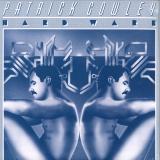
Cybernetic disco maestro Patrick Cowley graces Dark Entries once again with Hard Ware, an LP of far-out funk and synthpop celebrating what would have been Cowley’s 75th birthday. Best known for his chart-topping disco anthems, Cowley left us with an incredible body of work before his tragic death in 1982 due to AIDS-related illness. Since 2009, Dark Entries has been working with Cowley’s friends and family to uncover the singular artist’s lesser-known sides, including his soundtracks for gay pornographic films, which the label chronicled on compilation albums School Daze, Muscle Up, and Afternooners. Hard Ware presents the closing chapter in a trilogy of unreleased Cowley dancefloor bangers that began with 2022’s heavy-hitting Male Box and was continued with the soul and garage-inflected From Behind in 2024. The most expansive release in said trilogy, Hard Ware delivers ten tracks of pure, uncut Cowley: sultry, psychedelic, sarcastic, and just a bit sleazy. Cowley devotees will delight in “Tech-No,” a sparse instrumental demo version of his epically dystopian “Tech-No-Logical World.” You could soundtrack your next aerobics session with cheeky numbers like “Pajama Party Massacre” or “Shake It Up,” both of which feature Cowley himself on vocals. The frenetic “Big Ass in Motion” is built around samples from Rudy Ray Moore and The Madam’s infamous “Sensuous Black Woman,” an X-rated comedy record that would later feature in classic booty house records. Mid-tempo cosmic groovers are well-represented with jams like “Hellfire” and “Megablue,” which perfectly capture Cowley’s bathhouse-in-outerspace sensibilities. No collection of Cowley’s work would be complete without an interstellar floor-filler, and we’ve got quite a few here, like “Jungle Jump,” which pits whirling beats with dub-laced swirls of synth, or “Spellbinding Lover,” a Donna Summer-indebted melancholic boogie masterpiece that features Sylvester backup singer Jeanie Tracy. Hard Ware closes with the chilling synth-hymn ”Ice Age,” in which Loverde vocalist Peggy Gibbons sings of a coming frosty apocalypse. The story told in “Ice Age” mirrors the coming AIDS crisis and feels like a haunting premonition from Cowley. The record comes in a sleeve with a hand-airbrushed circuitboard-inspired design by Gwenaël Rattke, and includes lyrics as well as liner notes by Andrew Ryce and Peggy Gibbons. Hard Ware is another crucial document of a tremendous talent taken too soon.
Bei uns am Lager und sofort versandfertig
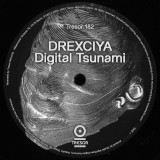
Repress 2025
Classic Drexciyan dance floor moment like 'Digital Tsunami' is considered as the signature track of the 'Harnessed the Storm' album. It is accompanied here by three titles that are not present on the 2LP vinyl version of the album.
Originally released in 2002, 'Harnessed the Storm' was conceived as the opening chapter of the legendary seven Storms - a series of seven albums created within a single year and released via several labels under different names.
'Harnessed the Storm' was the sole one in the series credited under the main Drexciya project.
This 12' also includes 'Aquatic Cataclysm' which ranks with the most abstract, alien and stark in their catalogue.
Another masterful lesson in futurist dance music from one of its strongest forces.
Bei uns am Lager und sofort versandfertig

Bringing together the elder statesman of the Zulu guitar Madala Kunene and internationally acclaimed Sibusile Xaba, kwaNTU pulls two generations of South African guitar mastery into a single point of focus. Under-represented on recordings outside of South Africa, Madala Kunene (b. 1951), the ‘King of the Zulu Guitar’, is revered as the greatest living master of the Zulu guitar tradition. Sibusile Xaba, whose collaboration with Mushroom Hour Half Hour reaches back to his first recording in 2017 (Open Letter To Adoniah/Unlearning), has garnered international acclaim for his unique voice and virtuoso guitar stylings, which bring together multiple South African guitar lineages in an original, spiritualised fusion. Collaborating with Mushroom Hour and New Soil for kwaNTU, the two players come together to weave a filigree sonic fabric which reaches down to the heartwood of Zulu guitar music but moves resolutely outward, building on the past to create a deeply rooted statement about present conditions and future travels. kwaNTU – which can be roughly translated ‘the place of the life-spirit’ – is also conclave of teacher and student, as Xaba has been taught by Kunene for the last decade. Meditative, rich and sonically sui generis, kwaNTU finds these two musicians linking up within the inimitable space of sound and spirit that they share through Kunene’s teaching.
The great masters of South African music have not all had equal exposure. For many years the generation of musicians who were exiled during apartheid took centre stage, as the regime made it very difficult for those at home to be heard. More recently, a new cohort of important voices, especially in jazz, has broken through to international consciousness. But for the generation of musicians in between – those who shone like beacons in the most difficult final years of apartheid and immediately afterward – international recognition has been slow in coming.
Madala Kunene, ‘the King of the Zulu Guitar’, is among this number. A revered figure for current generations of South African musicians, Kunene began his recording career in 1990, at the bitter end of apartheid, with a now classic self-titled LP for David Marks’ storied Third Ear imprint. Born in 1951 in Cato Manor, near Durban, he had determined to be a musician from early childhood, and by the time he first entered a recording studio he had already had a long career as a popular performer. His virtuoso absorption and transformation of the venerable Zulu maskanda guitar tradition and his richly spiritualised approach to music immediately marked him out as someone special, and in the years that followed, Kunene cemented his position as one of South Africa’s musical elders. He is without doubt the grand master of the Zulu guitar tradition, but his sound and sensibility ranges far beyond it into varied sonic terrain, and he has collaborated with a wide range of musicians both at home and abroad. Now in his mid-seventies, he remains a shining light for those that are making music in contemporary South Africa.
‘He is really an amazing person,’ says the guitarist Sibusile Xaba, who has been mentored by Kunene for over a decade, and now invites a collaboration with him on kwaNTU. ‘As a mentor, he's really powerful in showing us the way. For us to have this opportunity to make music together and have a project together is really a blessing to me.’
Xaba himself grew up in Newcastle, KwaZulu-Natal, where his mother had been in a band and his father sang in a church choir, and from early childhood Xaba played homemade tin guitars. He only later realised that music was his calling. ‘I just loved music. I was fortunate. My parents loved music. And when it was time for me to leave home and go to study outside Newcastle, I knew that music was what I wanted to do. There was no second option. It was just music.’ Moving to Pretoria to study music formally, Xaba committed himself to his craft, developing a unique style that draws on both US jazz masters such as Wes Montgomery and Jim Hall, and the rich and varied heritage of the South African guitar, from inspirational jazz players such as Allen Kwela and Enoch Mthalane, to the music of the Malombo groups and Dr. Philip Tabane (Xaba has previously collaborated with Dr. Tabane’s late son, Thabang), and the Zulu guitar tradition embodied by Kunene.
‘I was really in love with the jazz guitar, I really admired it, and I was digging a lot in that direction,’ says Xaba, recalling his first encounter with Kunene’s music, over a decade ago. ‘And then one day on my timeline, Kunene popped up, and I was like – “What's this sound?” I was so connected to it. It really touched me deep. I started checking out his records, and then I found out he's from the same region as I am, which is Zululand.’ After Kunene played a show at the Afrikan Freedom Station in Johannesburg, Xaba make contact with him, and visited him at home in Durban. They struck up a friendship, and Xaba became the elder’s student, as Kunene began to pass on his knowledge and his inimitable way of playing.
kwaNTU is a tribute to this relationship and the deep learning that has defined it. The album was recorded in Zululand in the town of Utrecht, at a cultural centre called Kwantu Village, which gives its name to the album. ‘It's such a broad word,’ Xaba says, ‘but the elders teach us that Ntu is basically an energy, almost chi, an energy, a force that all living beings have within them. It's a living energy, so kwaNTU is like, almost the place of this energy.’ The two men sequestered themselves for five days of jamming, improvising and planning, and then the session was recorded in one take over a single night, with Gontse Makhene joining on percussion and backing vocals and Fakazile on vocals. Other voices and overdubs were later added in the studio in Johannesburg.
The result is a rich and meditative recording that finds two generations in a deeply engaged dialogue. Teaching and passing on his knowledge, the elder Kunene has brought Xaba into a space of sound and knowledge that they now share; Xaba’s own practice of deep communion with nature and his dedication to his musical craft make him the perfect interlocutor for Kunene. The result is an album that foregrounds the two musicians engaged at the highest levels of responsive listening, sympathetic unity, and collaborative concentration. Bringing an elder statesman of South African music to an international listening audience for the first time in decades by pairing him with one of South Africa’s most important new voices, kwaNTU is a meeting of generations and a powerful demonstration of musical lineage and continuity.
‘Before music, there is sound,’ Xaba observes, speaking of Kunene’s unique approach to music. ‘And sound is like a common compartment…it's not restricted to particular people or particular geographic places, you know what I mean? It's sound. Everybody can hear it. So when he constructs that sound into music, I think everybody resonates with the energy behind his construction of sound into song. Here at home, we really love him for preserving our history through the guitar, through his stories as well the music, the songs that he writes. We really, really admire him.’
Bei uns am Lager und sofort versandfertig
